Olive green and cream work especially well on a crochet dog turtleneck poncho because the silhouette already provides two strong color zones: a fitted neckline and a looser cape-like body. Olive green can carry the broad draped panel, while cream can make the turtleneck, shoulder transition, or outer edge easier to distinguish.

The balance does not have to stay the same in every design. A cream turtleneck over an olive body keeps the poncho dark and earthy, while a cream body with olive edging looks lighter and places more attention on the outline. Stripes and color blocks can add variety, but the broad poncho panel generally benefits from enough uninterrupted color to preserve its drape and stitch texture.
Some credited tutorials below demonstrate dog ponchos or pet capes directly, while others support compatible dog-sweater and turtleneck construction. The olive green and cream layouts are independent color adaptations rather than claims about the colors used by each creator.
Quick List:
- Olive Green Body and Cream Turtleneck Crochet Dog Poncho
- Cream Body and Olive Green Turtleneck Crochet Dog Poncho
- Olive Green Crochet Dog Poncho With Cream Cape Border
- Olive Green and Cream Double-Stripe Crochet Dog Turtleneck Poncho
- Olive Green Textured Crochet Dog Poncho With Cream Collar
- Cream Shoulder Yoke and Olive Green Crochet Dog Poncho
- Olive Green Crochet Dog Poncho With Cream Side Edging
- Cream Crochet Dog Poncho With Olive Green Lower Border
- Olive Green and Cream Wide-Block Crochet Dog Turtleneck Poncho
- Olive Green Crochet Dog Poncho With Cream Ribbed Turtleneck
- Cream Center Panel and Olive Green Crochet Dog Poncho
- Olive Green Center Panel and Cream Crochet Dog Poncho
- Olive Green Crochet Dog Poncho With Cream Scalloped Edge
- Olive Green and Cream Framed Crochet Dog Turtleneck Poncho
Let Olive Green or Cream Clearly Lead the Dog Poncho
The broad cape-like body usually determines which color the finished poncho appears to be. If most of that surface is olive green, even a substantial cream turtleneck will still read as a green garment. Reverse the distribution and olive becomes a darker framing shade instead.
This hierarchy matters more on a compact dog garment because the turtleneck, shoulder section, and lower edge sit close together. Giving all of them equal-width color changes can create several competing bands before the eye reaches the main poncho panel.
Choose the dominant color first, then decide whether the second shade belongs at the neckline, shoulder transition, outer edge, or one repeated stripe.
Use Cream to Clarify Olive Green Turtleneck and Cape Boundaries
Olive green and cream usually provide noticeable light-and-dark separation, making cream useful around areas where the garment changes structure. A cream turtleneck can clearly separate the neck from an olive cape, while a cream lower edge can emphasize the flare of an otherwise solid green panel.
That does not mean every boundary needs cream. Outlining the turtleneck, sides, lower edge, and every opening can make the neutral almost as visually strong as the main green.
For textured crochet, place the largest uninterrupted color area where the texture matters most. A solid olive surface generally allows raised or openwork details to remain easier to read than frequent two-color switches.
Keep Olive Green and Cream Placement Compatible With Poncho Drape
A dog poncho should gain its cape-like appearance from the actual construction, not from color placement alone. Follow the selected tutorial’s measurements and shaping, then place olive and cream within those existing sections.
Keep the underside practical and make sure the draped portion does not interfere with the front legs. A turtleneck should also fit according to the construction rather than being made tighter simply because a contrasting cream or olive collar looks more defined.
1. Olive Green Body and Cream Turtleneck Crochet Dog Poncho
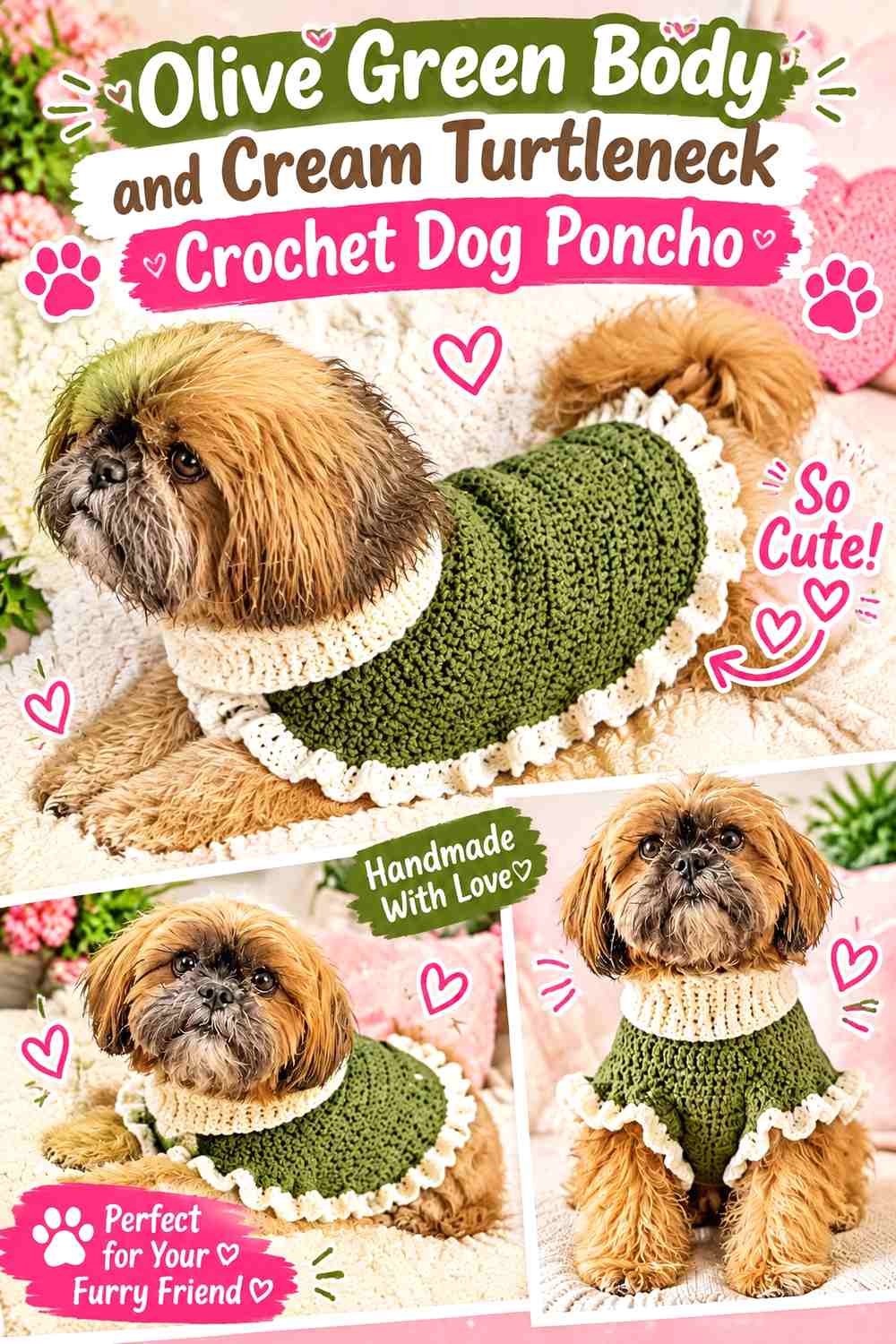
This is the clearest two-color version: olive green covers the cape-like body while cream is concentrated entirely at the turtleneck. The light collar becomes a strong visual starting point, but the broad green panel still determines the overall appearance.
Cream Can Separate the Turtleneck From the Olive Green Poncho Body
Use cream across the full neckline when you want the collar to look like a deliberate separate section. The light value creates enough distinction that another cream stripe immediately below the collar is usually unnecessary.
Let the color change coincide with the actual transition from neck to shoulder shaping.
Olive Green Should Stay Broad Below the Cream Turtleneck
Keep the shoulder and back areas olive once the collar ends. A broad green field preserves the cape silhouette and gives any crochet texture more room to show.
If cream needs to repeat, use it narrowly at the outermost edge rather than breaking the center of the poncho.
Creator Credit: TwinStarHooks 💫
2. Cream Body and Olive Green Turtleneck Crochet Dog Poncho
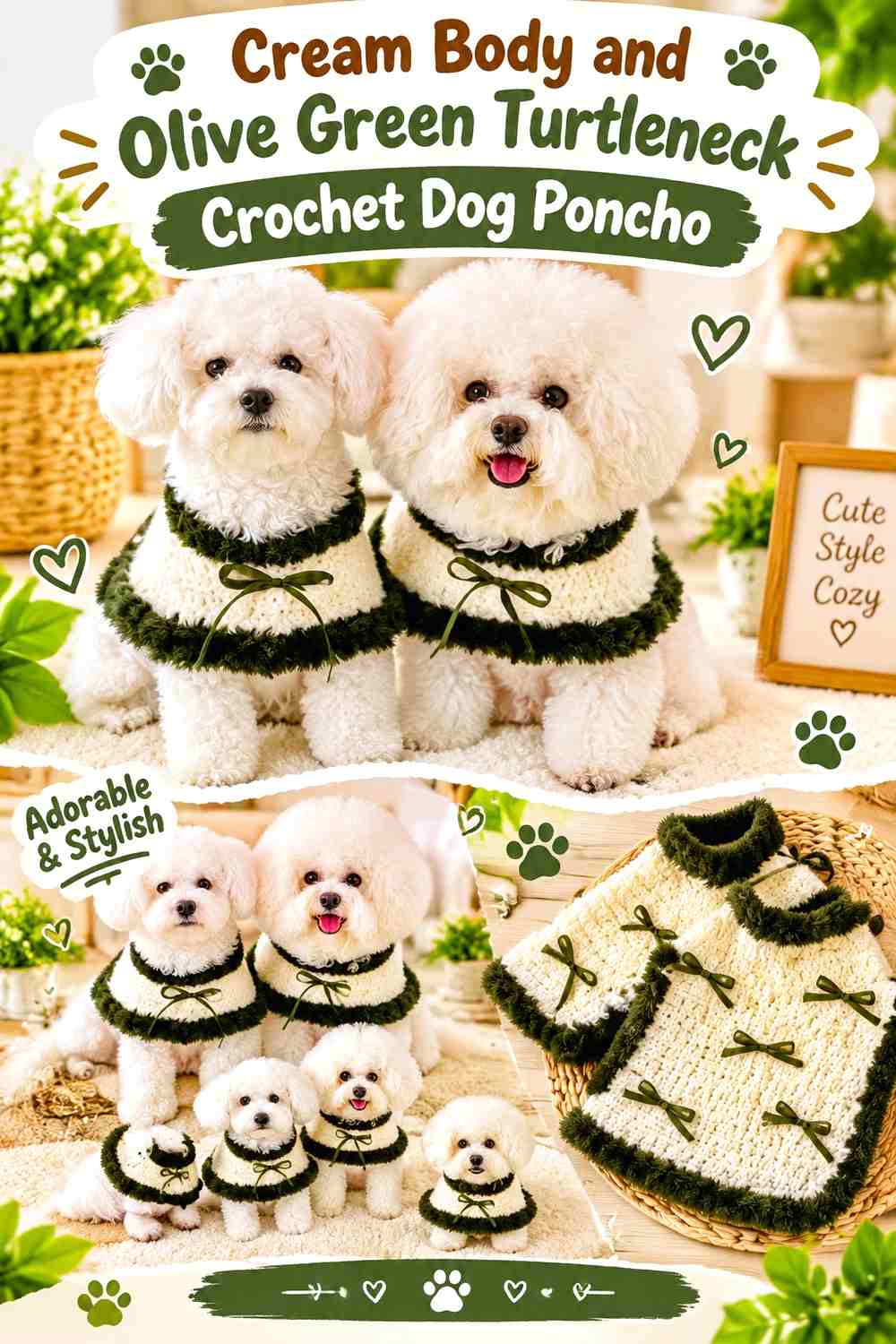
Reversing the colors creates a much lighter garment. Cream covers the flared body, while an olive green turtleneck adds concentrated depth around the neck. The darker collar can carry substantial visual weight even though it occupies much less surface.
Olive Green Gives a Cream Dog Poncho a Strong Turtleneck Anchor
Use olive across the full collar rather than reducing it to a thin neckline edge. A solid dark neck section gives the two-color scheme enough structure before the lighter body begins.
If the collar includes ribbing, keeping it entirely olive also lets the texture remain coherent.
Cream Needs Enough Uninterrupted Space Below Olive Green
Leave the shoulder spread and most of the lower cape cream. Adding several olive bands immediately beneath the turtleneck can visually shorten the light body.
A narrow olive lower edge can repeat the collar color without taking over.
Creator Credit: 숩니공방 soobni’s knitting
3. Olive Green Crochet Dog Poncho With Cream Cape Border
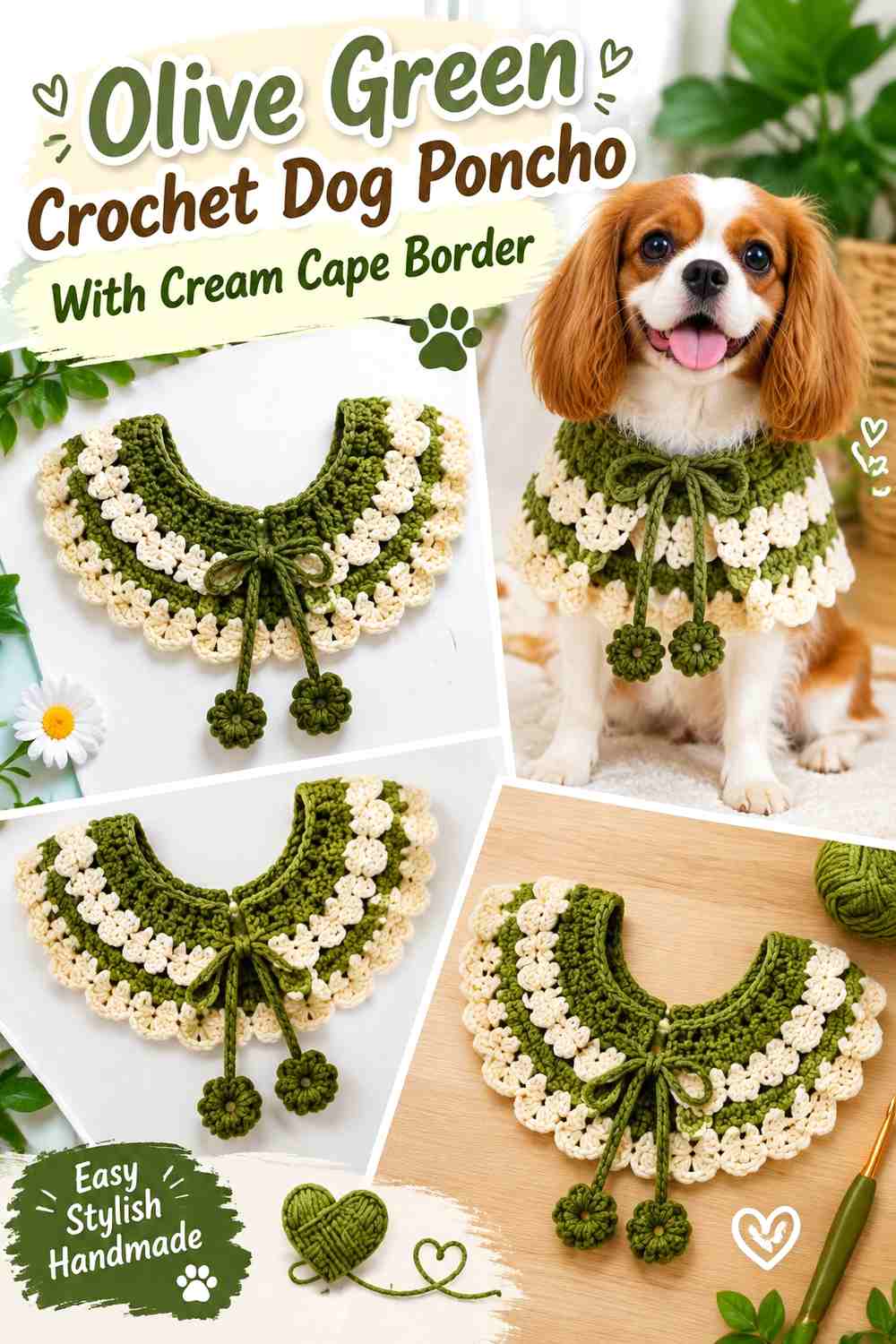
Here, olive green carries both the turtleneck and the main body, while cream appears only around the lower cape edge. This keeps the garment predominantly green and uses the neutral specifically to emphasize the poncho’s flare.
Cream Can Trace the Olive Green Poncho Silhouette
A cream lower border makes the outer contour easier to see, especially when the green body is relatively dark. Keep the contrast at the perimeter instead of adding cream stripes through the center.
The border should follow the actual finished edge rather than altering the drape to make the cream section deeper.
Olive Green Can Keep the Cream Border From Looking Overdone
Retain olive at the turtleneck and shoulders so cream remains a true finishing accent. The green field above the border also gives textured stitches an uninterrupted background.
If the border already surrounds a broad outer edge, additional cream side trim may be unnecessary.
Creator Credit: 달려라디노
4. Olive Green and Cream Double-Stripe Crochet Dog Turtleneck Poncho

Two cream stripes can cross an olive green poncho below the shoulder area, producing more color movement without turning the whole cape into alternating bands. Keep the turtleneck and most of the body olive so the stripe zone has clear surrounding space.
Cream Double Stripes Need Olive Green Between Them
Leave a meaningful olive interval between the two cream bands. If they sit too close together, they can read as one broad neutral block rather than two intentional stripes.
Olive should also remain visible above and below the stripe zone.
Olive Green Should Control the Cream Stripe Proportion
Make the total olive surface noticeably larger than the combined cream bands if you want a green-led result. Narrower cream stripes are particularly useful when the poncho already has openwork or noticeable surface texture.
Keep the turtleneck olive to reinforce that hierarchy.
Creator Credit: Creaciones Gabriela
5. Olive Green Textured Crochet Dog Poncho With Cream Collar

This version gives texture priority. Olive green covers the entire textured cape body, while cream stays confined to a simpler turtleneck or collar. That separation prevents strong color changes from competing with the stitch surface.
Olive Green Keeps Textured Poncho Stitches Visually Connected
Use one green shade throughout the decorative body. Whether the texture is ribbed, raised, or open, a consistent field allows shadow and stitch direction to create the detail.
Avoid inserting cream through every texture repeat solely to make the palette more visible.
Cream Can Frame Olive Green Texture From the Turtleneck
A solid cream neckline gives the neutral enough presence without touching the textured panel. The collar therefore acts as a clean frame above the more detailed green body.
A tiny cream lower edge can be added if needed, but the collar may already provide sufficient repetition.
Creator Credit: Last Minute Laura
6. Cream Shoulder Yoke and Olive Green Crochet Dog Poncho
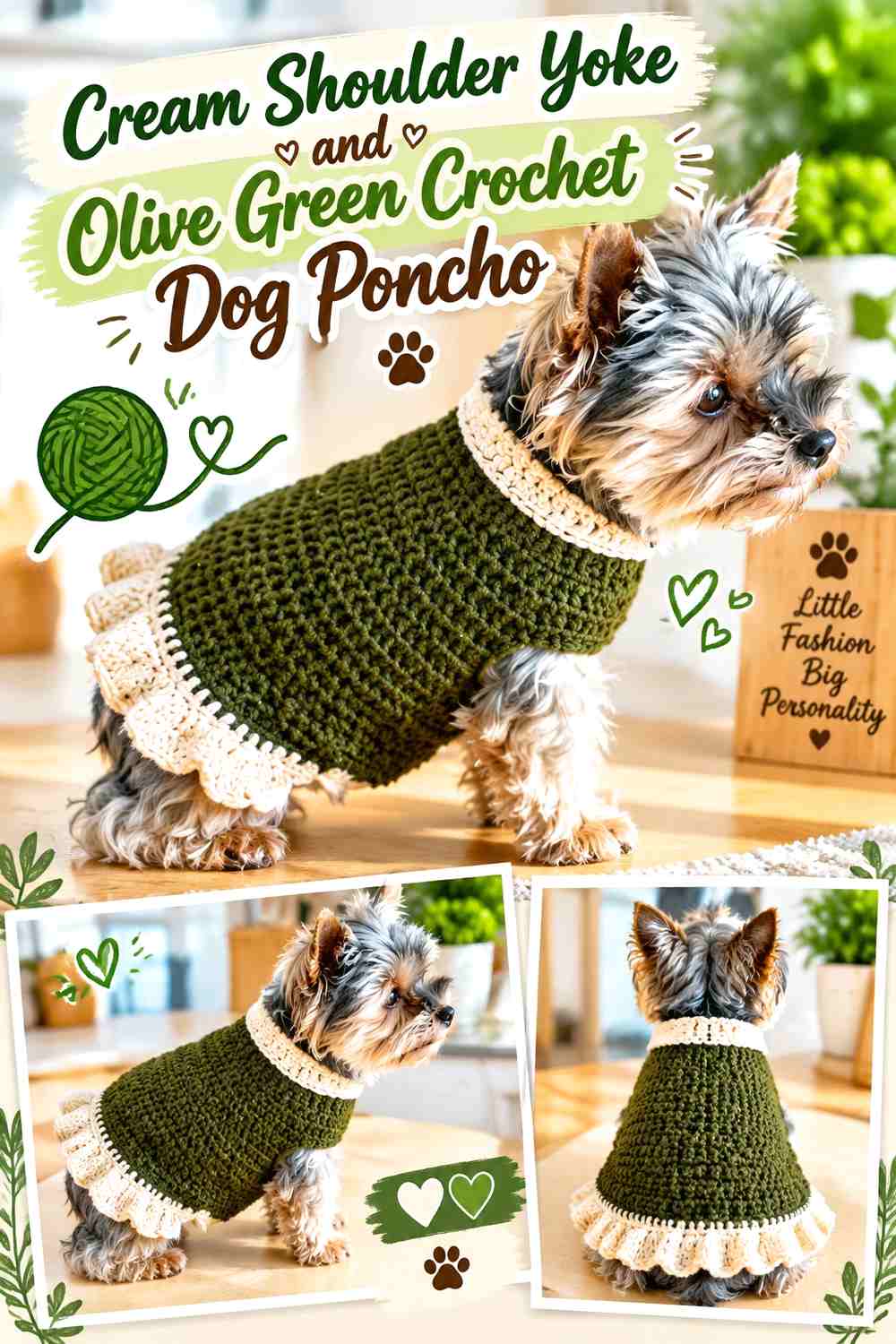
A cream shoulder section can sit between an olive turtleneck and olive lower cape, creating a lighter transition across the widest upper area. Because the green returns below it, cream becomes a defined yoke rather than the main body color.
Cream Can Give Olive Green Shoulder Shaping More Definition
Use cream through one complete shoulder zone instead of scattering pale stitches across several areas. The lighter band helps show where the fitted neck expands into the wider poncho.
Keep the transition aligned with actual shaping rather than creating an arbitrary stripe.
Olive Green Should Return Strongly Below the Cream Yoke
Once the cream section ends, let olive continue through the main draped body. That return makes green unmistakably dominant and prevents the yoke from visually splitting the poncho into equal halves.
An olive turtleneck further connects the top and lower green areas.
Creator Credit: Woll-Fee
7. Olive Green Crochet Dog Poncho With Cream Side Edging

Instead of coloring the full lower border, place cream along the side edges while keeping the center and hem olive. This creates subtle vertical framing and can make the central green panel appear more continuous.
Cream Side Edging Can Frame an Olive Green Poncho Center
Keep the cream bands narrow enough that they identify the sides without reducing the green center to a thin strip. The broadest visible section should remain olive.
This strategy works especially well when the middle of the poncho contains noticeable stitch texture.
Olive Green Should Continue Through the Cream-Framed Lower Edge
Leave the lowest central portion green rather than connecting the two cream side bands with a broad neutral hem. That keeps the framing effect vertical instead of turning it into a full outline.
An olive turtleneck reinforces the continuous center.
Creator Credit: Heart Hook Home
8. Cream Crochet Dog Poncho With Olive Green Lower Border

This is a neutral-led version in which cream covers the turtleneck, shoulders, and main drape. Olive green appears only near the outer edge, giving the lower silhouette a darker visual base.
Olive Green Can Ground the Cream Poncho at the Bottom
A darker olive border adds definition where the cream body flares outward. It is particularly effective when the neutral body has openwork or a relatively airy appearance.
Keep the green band proportional to the poncho rather than making it so deep that the lower half becomes olive.
Cream Should Remain Continuous Above the Olive Green Border
Preserve a large cream field from neckline through most of the body. This open surface makes the dark lower edge look intentional and keeps the poncho light overall.
A green collar is optional; leaving the turtleneck cream creates the clearest contrast with the dark hem.
Creator Credit: The Crochet Crowd
9. Olive Green and Cream Wide-Block Crochet Dog Turtleneck Poncho
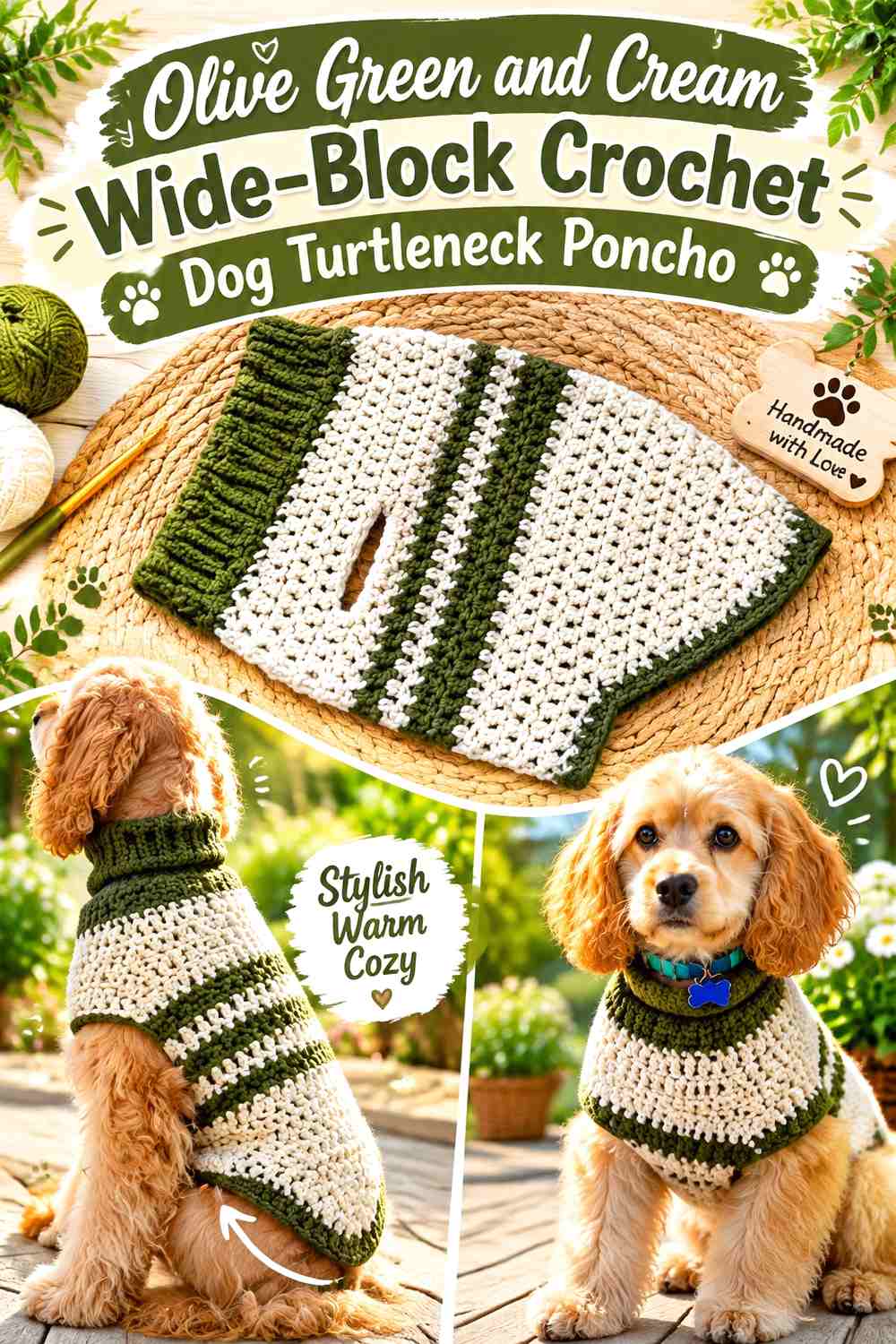
Large color blocks provide a stronger two-tone treatment than stripes. Olive can cover the upper half and turtleneck, while cream takes a broad lower cape section. The division works best when it aligns with a logical transition in the garment.
Olive Green Should Own the Upper Poncho Before the Cream Block Begins
Keep the collar, shoulders, and a meaningful part of the back olive. This establishes the dominant darker section before the lower color changes.
Avoid beginning cream so close to the collar that olive looks like nothing more than neck trim.
Cream Needs One Clean Boundary Against Olive Green
A single broad transition is usually enough. Adding several thin olive stripes within the cream lower section weakens the color-block effect.
Let the physical flare of the poncho and the large cream field work together.
Creator Credit: it’s erin b.
10. Olive Green Crochet Dog Poncho With Cream Ribbed Turtleneck
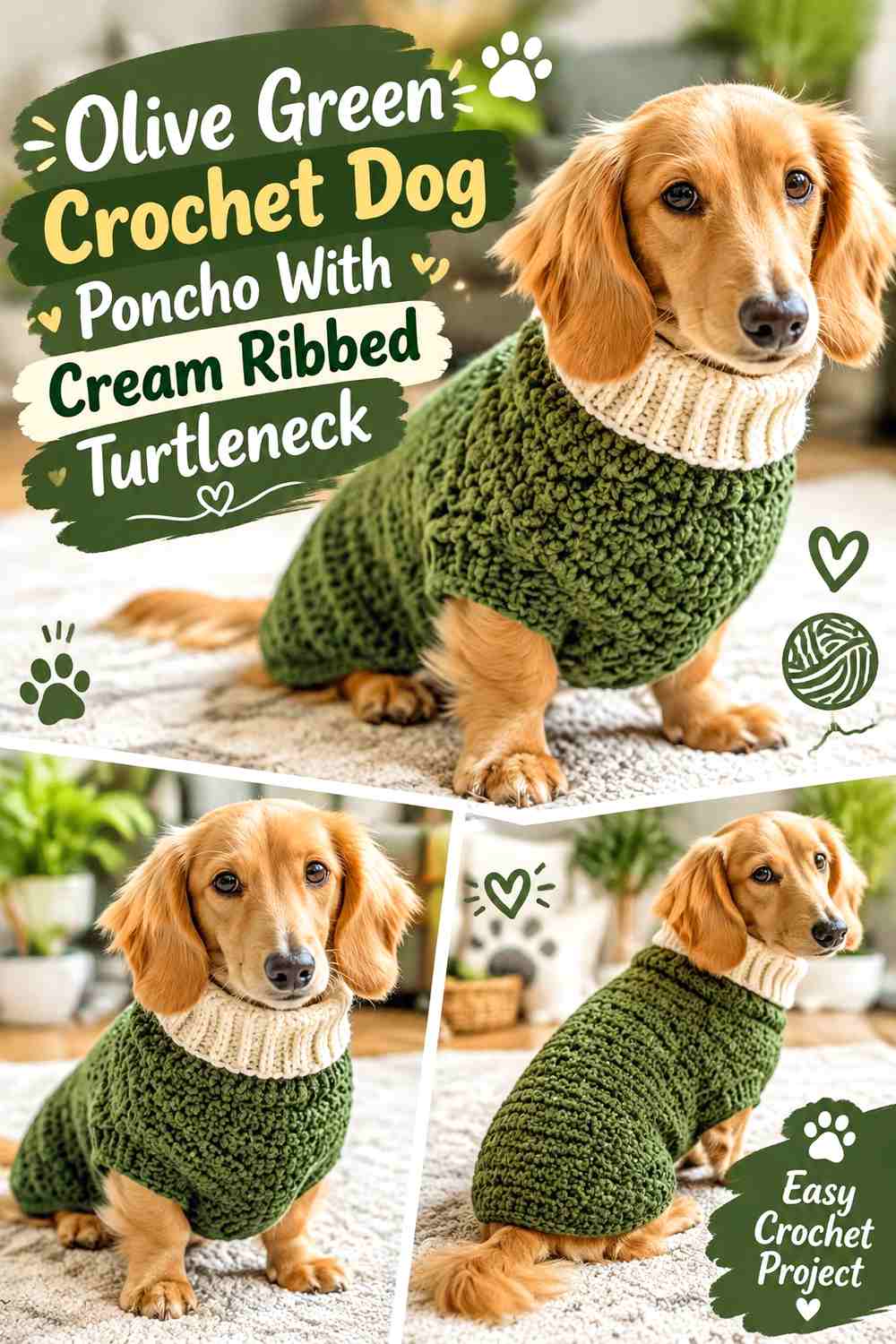
A pronounced ribbed turtleneck gives cream more texture while the olive body remains comparatively smooth or differently textured. This makes both color and stitch structure change at the neckline.
Cream Ribbing Can Become the Main Contrast Against Olive Green
Keep the entire ribbed turtleneck cream so the vertical texture reads clearly. Because the collar already has both textural and color contrast, it does not need extra decoration.
The olive shoulder area should begin immediately below the ribbing for a clean transition.
Olive Green Can Keep the Cream Turtleneck From Dominating
Use olive on the full poncho body and most finishing edges. The dark field balances a substantial light collar and keeps the garment green-led.
If cream repeats at the hem, make that second application considerably narrower than the turtleneck.
Creator Credit: Crochet with Tiffany
11. Cream Center Panel and Olive Green Crochet Dog Poncho

A broad cream center can run down the back while olive green occupies the turtleneck and outer cape sections. This places the light color where it can elongate the center visually without turning the whole garment neutral.
Cream Needs Enough Width Between Olive Green Poncho Sides
Make the central section substantial enough to read as a panel rather than a narrow stripe. At the same time, preserve olive on both sides so the outer silhouette remains dark.
The panel boundaries should follow the natural shaping wherever possible.
Olive Green Can Connect the Turtleneck to Both Sides of the Cream Panel
Keeping the neckline olive visually ties the two darker side areas together. That makes the cream center feel contained within one green garment instead of appearing as a separate insert.
Avoid adding cream to every outer edge if the center is already prominent.
Creator Credit: Crochet It
12. Olive Green Center Panel and Cream Crochet Dog Poncho
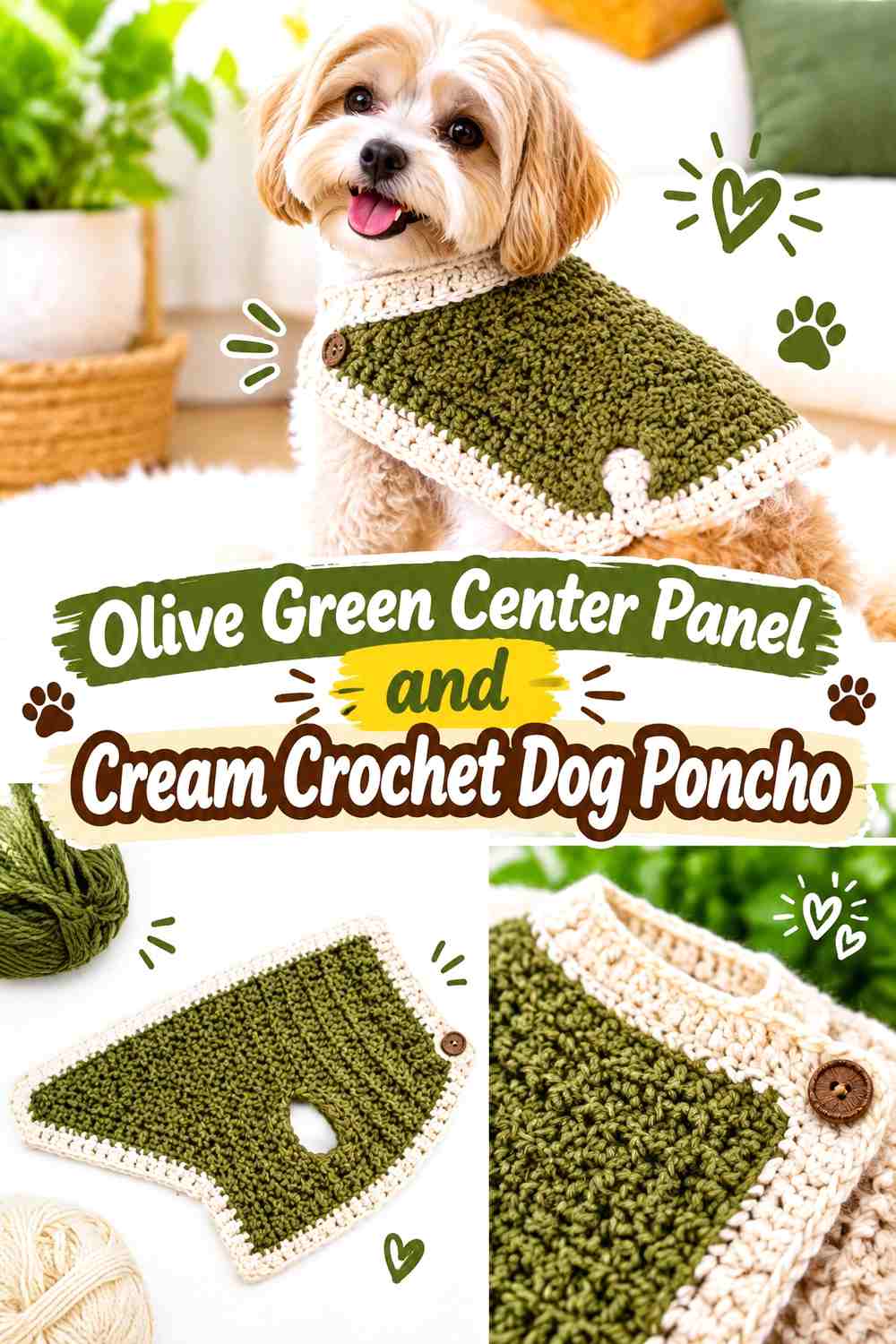
Reverse the previous distribution by giving olive green the central back and cream the outer cape sections. The dark center becomes the visual anchor, while the cream sides make the overall poncho appear lighter.
Olive Green Should Be Broad Enough to Anchor the Cream Poncho
A thin olive stripe will not have the same effect as a real center panel. Give green enough width for the eye to follow it from near the shoulders toward the lower back.
This is a good place to concentrate any stronger stitch texture.
Cream Can Keep Olive Green From Making the Poncho Feel Too Dark
Use cream on the less-detailed outer sections and let it reach the side edges. The lighter color visually opens the cape without interrupting the green center.
A cream turtleneck strengthens the light outer frame, while an olive turtleneck makes the center feel more continuous.
Creator Credit: Loops Only Crochet
13. Olive Green Crochet Dog Poncho With Cream Scalloped Edge

A cream scalloped or gently decorative outer edge adds detail without requiring color changes through the full poncho body. Olive stays dominant from turtleneck to lower panel, while cream is reserved for the final silhouette.
Cream Can Clarify an Olive Green Scalloped Poncho Edge
The light contrast makes each curve easier to distinguish against the darker body. Keep the cream treatment consistent around the visible cape edge rather than adding unrelated pale patches.
The decorative border should remain compatible with the existing construction and drape.
Olive Green Should Fill the Area Inside the Cream Scallops
Preserve green through the full main body so the scalloped cream finish looks like edging rather than a separate lower panel.
If the border is already visually detailed, keep the turtleneck mostly olive as well.
Creator Credit: Briana K Designs
14. Olive Green and Cream Framed Crochet Dog Turtleneck Poncho

The final scheme uses cream at both the turtleneck and lower edge, effectively framing an olive green central cape. It gives the two colors strong repetition while leaving the green body uninterrupted.
Cream Can Bookend the Olive Green Poncho From Neck to Hem
A cream collar and cream lower border create two clear light zones. They do not need to be equal in depth; the turtleneck can be broader while the hem remains narrow.
Keeping the side edges olive prevents the garment from looking outlined on every boundary.
Olive Green Needs Enough Space Between the Cream Frame
The center should remain the largest single color area. On a short poncho, oversized cream sections at both ends can squeeze the olive panel and change the intended hierarchy.
Reduce the lower cream border before sacrificing the central green field if space is limited.
Creator Credit: Crochet Guru
Which Olive Green and Cream Dog Turtleneck Poncho Layout Should You Choose?
For the clearest olive-led design, choose an olive body with a cream turtleneck, lower border, side edging, or scalloped finish. These layouts keep the largest cape surface dark and use cream to clarify specific boundaries.
For a lighter result, start with a cream body and use olive at the turtleneck, lower border, or center panel. Because olive has greater visual weight, a relatively small amount can still give the garment a strong two-color identity.
The wide-block and center-panel versions work well when you want both colors to occupy substantial areas. Double stripes offer more repetition, while a single cream collar or border keeps the palette quieter and gives crochet texture more room to show.
Conclusion
Olive green and cream suit a crochet dog turtleneck poncho particularly well because the two shades can divide the neckline from the draped body without requiring a complicated palette.
Use olive across the cape when you want an earthy, darker garment, then place cream at the turtleneck, hem, or selected edges. Reverse the hierarchy for a lighter cream poncho with olive framing. For more obvious color blocking, dedicate whole panels or broad sections to each shade rather than inserting frequent narrow changes.
Keep the poncho’s drape, neck fit, and movement requirements separate from decoration. Follow the credited construction tutorials for their demonstrated shaping, and use the olive-and-cream arrangements as independent color planning rather than changing fit simply to accommodate a stripe or border.
Frequently Asked Questions
Should Olive Green or Cream Be the Main Color in a Crochet Dog Turtleneck Poncho?
Either can lead. Olive green creates a darker, earthier cape and allows cream to act as a strong light accent. A cream body produces a lighter garment in which even relatively narrow olive sections can carry substantial visual weight.
Where Should Cream Go on an Olive Green Crochet Dog Poncho?
The turtleneck, lower cape edge, side edging, shoulder yoke, or one broad stripe are useful choices. Pick the locations that reinforce the poncho’s actual structure rather than outlining every edge automatically.
Does an Olive Green Turtleneck Work With a Cream Poncho Body?
Yes. The darker neckline can anchor the lighter cape and create a clear distinction between the fitted neck and draped body. Repeating olive once at the lower edge can connect the palette if desired.
How Can I Make Olive Green Crochet Texture More Visible?
Keep textured sections mostly one color and examine a swatch under ordinary lighting. If a very dark olive hides raised stitches, a somewhat lighter olive can preserve the palette while giving the surface more definition.
Can I Stripe an Olive Green and Cream Dog Poncho?
Yes, but concentrate stripes in one area rather than automatically alternating colors from turtleneck to hem. Two cream stripes on an olive field can create movement while preserving a clearly dominant green body.
Should the Cream Turtleneck and Cream Hem Be the Same Width?
No. The turtleneck may naturally need more visual depth than the lower border. Repeating the same cream shade is enough to connect the two areas; identical proportions are unnecessary.
Can I Adapt a Regular Crochet Dog Sweater Into a Turtleneck Poncho?
Only when the underlying shaping is compatible with the looser cape-style body. A sweater tutorial can support collar, fit, or measurement concepts, but a true poncho needs its own suitable drape and coverage. Use the direct dog-poncho or pet-cape tutorials when that silhouette is the main goal.