Poetcore crochet bags work especially well when the design feels useful first and romantic second. Think messenger flaps, worn-library colors, flower motifs, patchwork squares, soft fringe, visible texture, and crossbody shapes that look at home beside a notebook or stack of paperbacks. The strongest version does not need every literary detail at once.

These 15 Crochet Poetcore Satchel Bag Ideas cover several construction directions, from structured book bags and customizable messenger styles to lined granny-square crossbodies, compact slings, floral bags, and relaxed boho shapes. The supporting tutorials do not all use the word poetcore themselves; instead, they provide compatible bag constructions you can adapt through yarn color, motifs, closures, lining, and finishing. That makes it easier to choose a bag for its real function before deciding how strongly you want to push the bookish aesthetic.
Quick List
- Crochet Ink-and-Rose Messenger Satchel
- Crochet Patchwork Poetry Granny Satchel
- Crochet Library Book Satchel
- Crochet Folded Manuscript Crossbody Satchel
- Crochet Fringe-and-Folio Boho Satchel
- Crochet Wax-Seal Flap Satchel
- Crochet Pocket Journal Sling Satchel
- Crochet Cozy Archivist Messenger Satchel
- Crochet Commonplace Granny Square Satchel
- Crochet Pressed-Flower Garden Satchel
- Crochet Checkerboard Café Satchel
- Crochet Sunflower Verse Crossbody Satchel
- Crochet Bohemian Chapbook Satchel
- Crochet Sunburst Field-Note Satchel
- Crochet Retro-Granny Zipper Satchel
What Makes a Crochet Satchel Feel Poetcore?
A convincing poetcore bag is usually more about restraint than adding every possible vintage detail. Start with the silhouette. A rectangular messenger bag, compact crossbody, deep book bag, or simple flap purse already creates a practical foundation. Then introduce one or two literary-looking details: muted ink, parchment, moss, oxblood, faded rose, tobacco brown, charcoal, or antique cream; a floral or celestial motif; an understated ruffle; or a closure that becomes a focal point.
Texture matters too. Dense stitches can make a bag read more like a substantial satchel, while open floral work and granny motifs create a softer, collected-over-time feeling. If you plan to use appliqués, embroidery, charms, or decorative buttons, decide on their placement before attaching a lining or final closure so the decoration does not interfere with the bag opening.
Structure, Strap Stretch, and Lining Matter More Than the Color Palette
A satchel that looks perfect while empty can behave very differently after you put everyday items inside it. Softer crochet fabric may stretch or sag, particularly across a long unsupported strap. Before finishing the strap, hold the bag at the intended wearing position and consider how much additional stretch may occur once the bag is loaded.
Lining is especially worth considering for open granny squares, loose fabric, or bags intended to carry small objects. It can also help the crochet body retain a cleaner silhouette, although it should not be treated as a guarantee that a bag can safely carry heavy loads. For a notebook-oriented poetcore bag, compare the actual finished opening and body dimensions given by the creator with the objects you intend to carry rather than assuming any “book bag” will accommodate every book or tablet.
Plan Motifs, Flaps, and Closures as One Design
Poetcore motifs can become distracting when the flap, front panel, closure, and strap all compete for attention. A useful approach is to choose one visual hero. On a messenger bag, that might be a rose or tapestry-style pocket. On a granny-square satchel, the motifs themselves can carry the design, leaving the strap and edging quiet. With a plain body, a distinctive button, scalloped edge, or narrow stripe can do more.
Closure choice also changes function. An open top offers quick access but less containment. A flap adds coverage without necessarily sealing the opening. Buttons provide a defined fastening point, while a properly fitted zipper creates a more enclosed interior. Before adapting a tutorial, check whether the original construction leaves enough stable fabric for the closure you want to add.
Crochet Ink and Rose Messenger Satchel
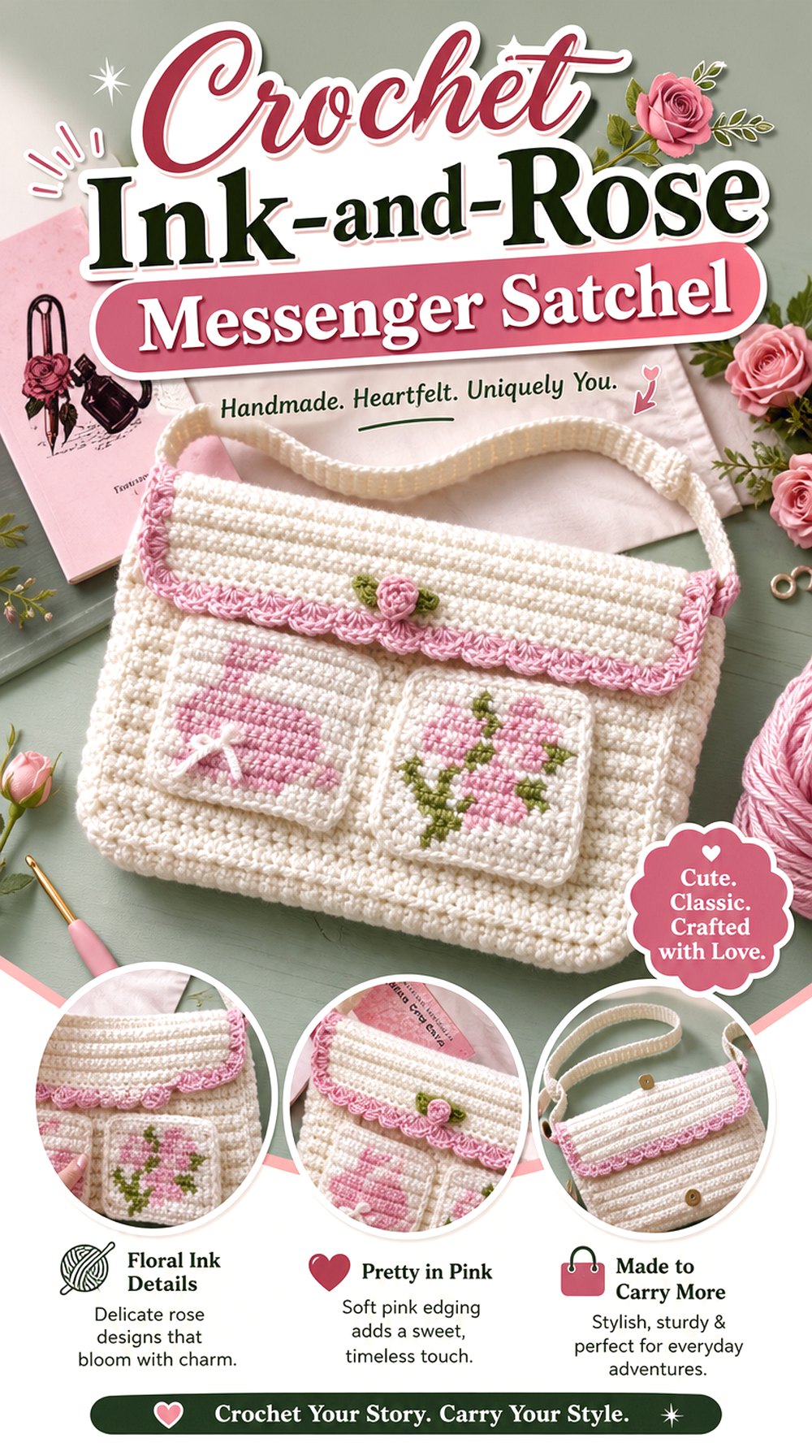
This is the most flexible direction for a highly personalized poetcore bag. Start with the rectangular messenger silhouette, then treat the front pocket or flap as a small illustrated page. A rose, book, moth, moon, initials, botanical sprig, or tiny monochrome motif can give the bag literary character without changing its basic function.
The supporting tutorial is particularly useful because the messenger construction is intended to accommodate custom sizing and decorative pixel-grid pockets. That makes this option different from the motif bags later in the list: the imagery can be concentrated on one controlled area rather than repeated across the entire satchel.
Keep the Illustration Secondary to the Pocket Shape
A detailed motif needs enough surrounding negative space to remain readable. Before choosing a graphic, compare its proportions with the intended front pocket or panel. A tall motif squeezed into a shallow pocket can look cramped even if the crochet itself is correct.
For stronger poetcore styling, consider restrained two- or three-color artwork rather than a complicated rainbow grid. The practical checkpoint is alignment: center the motif visually on the finished panel rather than assuming the first and last stitches automatically create balanced margins.
A Decorative Flap Can Change the Whole Mood
This construction gives you room to treat the flap separately from the front pocket. A plain flap keeps a detailed illustration from becoming too busy, while a soft shell or ruffled edge can push the design toward romantic poetry-journal styling.
Check the flap length while the bag contains a realistic amount of bulk. A flap that reaches the intended closure point on an empty bag may sit differently when the body expands. Make that assessment before committing to decorative edging or button placement.
Decide Where the Strap Weight Meets the Bag
For a messenger-style shape, the strap connection affects how neatly the satchel hangs. Watch whether the sides collapse or twist when the bag is suspended. If you adapt the size substantially, the original strap proportions may no longer feel balanced.
This is also where lining can become useful. If the bag is meant for notebooks or several small everyday items, consider whether the side seams and strap attachment would benefit from additional stabilization rather than relying only on decorative crochet.
Crochet Patchwork Poetry Granny Satchel
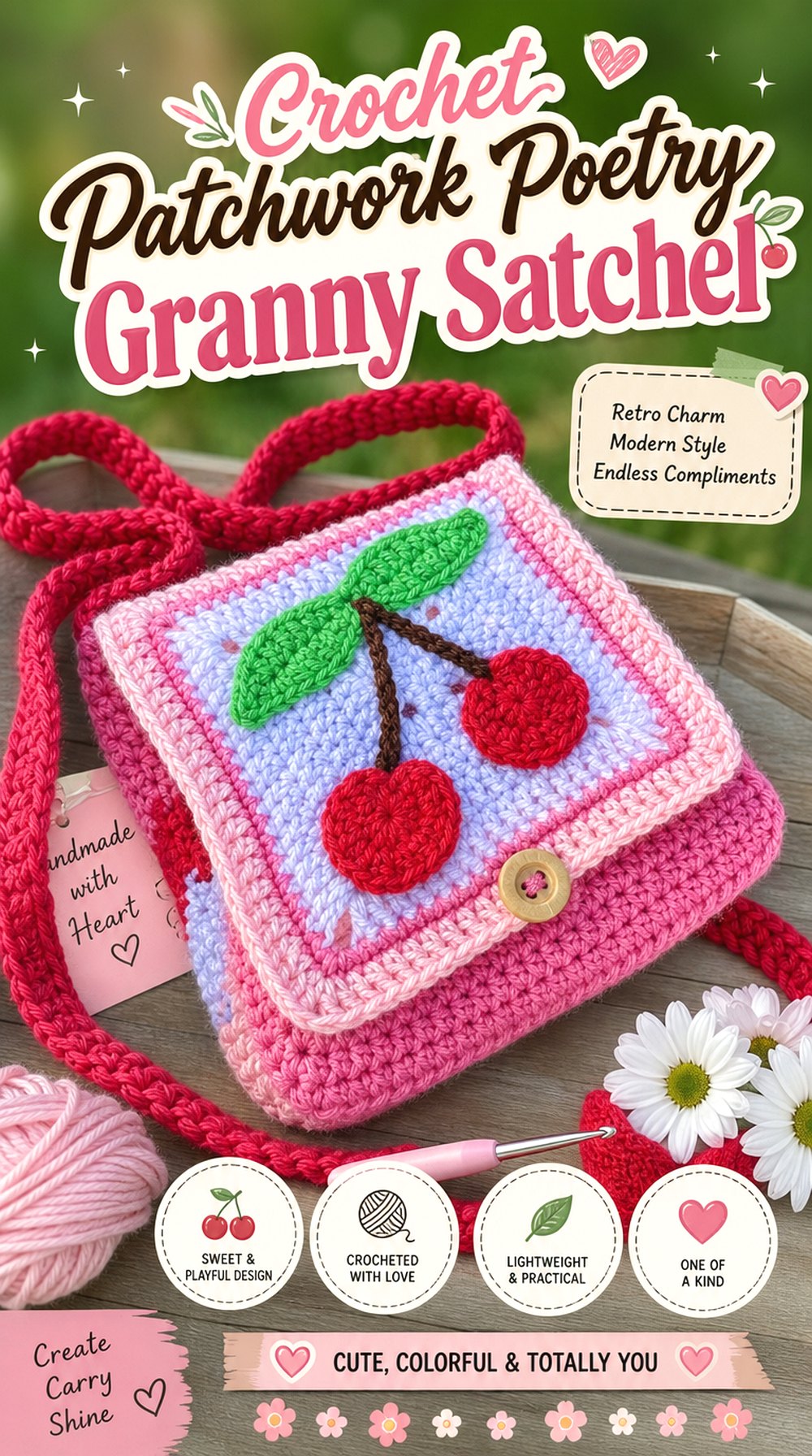
A granny-square messenger bag has a collected, handmade quality that suits poetcore especially well. Instead of making every square identical, you can build a controlled patchwork around a small palette: parchment, dried rose, olive, brown, faded blue, or charcoal. The finished satchel can look reminiscent of mismatched notebook covers or old textile scraps without depending on literal book motifs.
This version is a better choice than a solid messenger bag when you want the joins and individual squares to remain part of the visual story. The tutorial provides a clear granny-square messenger foundation, while your main planning job is keeping the finished squares compatible before assembly.
Block the Squares Before Judging the Layout
Granny motifs that look similar while freshly crocheted can settle at slightly different dimensions. Lay the finished, prepared squares together before deciding which ones belong on the front, back, or flap area.
This matters even more if you mix different center motifs. A decorative square that finishes noticeably smaller than its neighbors can pull at the seams and distort the panel. Correct compatibility before joining rather than expecting the final edging to hide a dimensional mismatch.
Use the Front Panel as the Main Composition
A poetcore palette can become visually noisy if every square demands equal attention. Consider putting the strongest flower, star, heart, moon, or high-contrast motif where it will remain visible on the front and keeping neighboring squares quieter.
Check orientation before seaming. Directional motifs can accidentally turn sideways or upside down during assembly, and the mistake becomes much harder to correct once the complete bag structure is joined.
Do Not Let the Strap Compete With the Patchwork
When the body already contains multiple colors and motifs, a simpler strap usually gives the eye somewhere to rest. One of the background shades from the squares can connect the different motifs without introducing another major element.
Function matters as much as appearance. Test the strap length against your body and consider likely stretching before permanently finishing it. If you plan to carry denser contents, assess whether the chosen strap fabric feels sufficiently stable for that use.
Original Tutorial and Creator Credit
Creator: Strong Earth Creations
Crochet Library Book Satchel
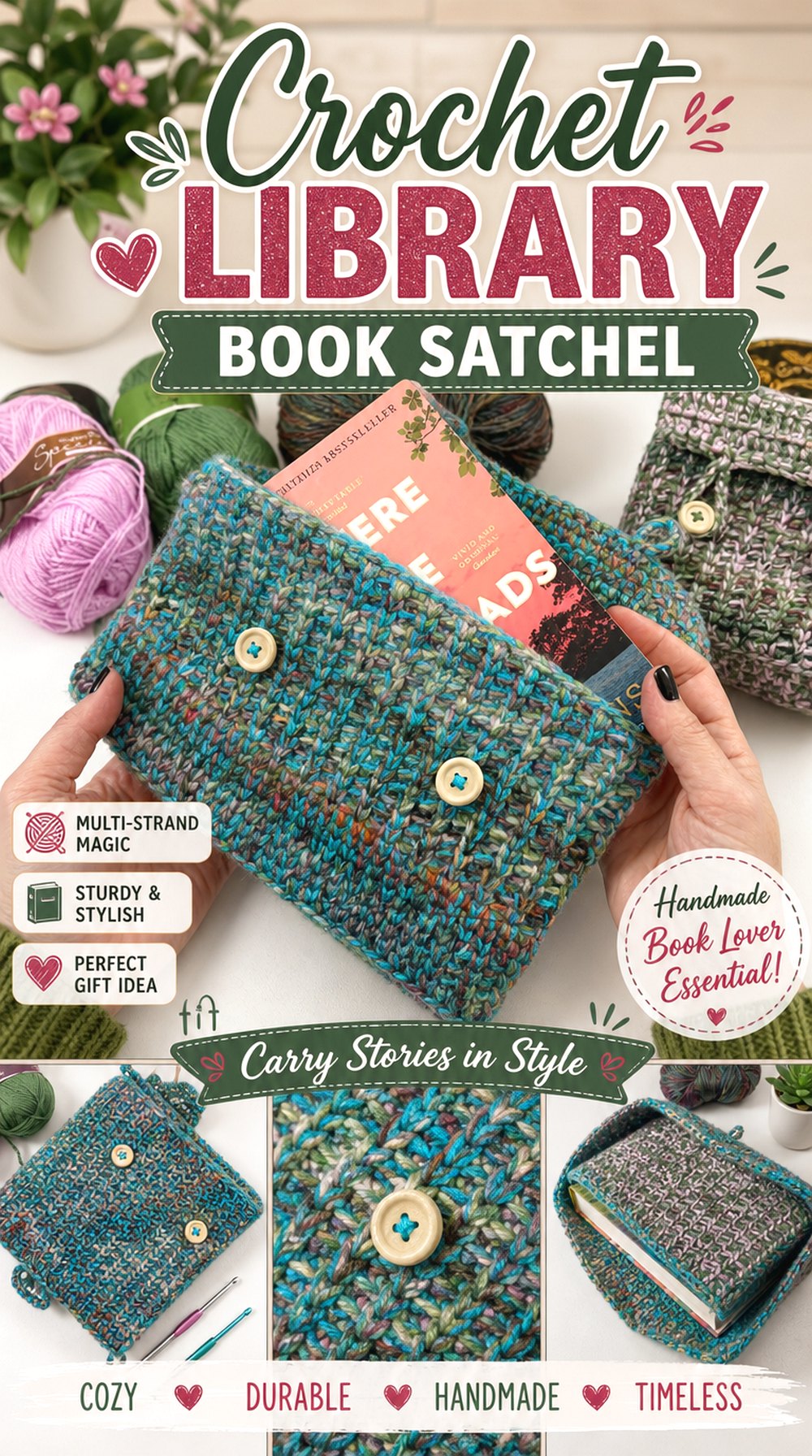
For a poetcore bag that leans toward actual library use rather than purely decorative styling, a deeper book-bag construction is a strong starting point. This version has a more substantial body, a flap, and button details, so it can be styled like a soft handmade alternative to an old school or reading-room satchel.
The tutorial uses multiple strands of yarn and builds a bag with a defined base, sides, and flap. That construction makes this project notably different from a flat crossbody. Before choosing it specifically for books, however, compare the tutorial’s finished size with the books or notebook you personally want to carry rather than relying on the project name alone.
Measure Your Largest Intended Book First
Book dimensions vary enormously, so begin with the actual object rather than an imagined “standard” paperback. Compare its width, height, and thickness with the finished bag dimensions or construction information supplied by the creator.
Allow room for the opening and flap to function without forcing the crochet fabric around hard corners. If the intended object only barely matches the bag body, the finished satchel may feel more strained than a slightly roomier construction.
Multiple Strands Create a Different Kind of Fabric
Holding several strands together can create a visually substantial fabric and pronounced stitch texture. That works well for an archivist-inspired bag, especially in heathered browns, smoky grays, or intentionally mixed leftovers.
The trade-off is bulk. A thicker fabric can add weight before anything is placed in the bag. Consider the balance between the substantial look you want and the overall carrying experience, particularly if you also plan to add lining or decorative hardware.
Place Buttons After Checking the Loaded Flap
Buttons can give this bag the strongest traditional-satchel character in the collection. Their position should be determined by the way the finished flap naturally falls, not just by how the empty bag looks flat on a table.
Temporarily place the intended contents inside, fold the flap into its resting position, and then evaluate the fastening point. This prevents a closure from pulling the flap too tightly or sitting too low after the bag gains depth.
Original Tutorial and Creator Credit
Creator: Ophelia Talks Crochet
Crochet Folded Manuscript Crossbody Satchel
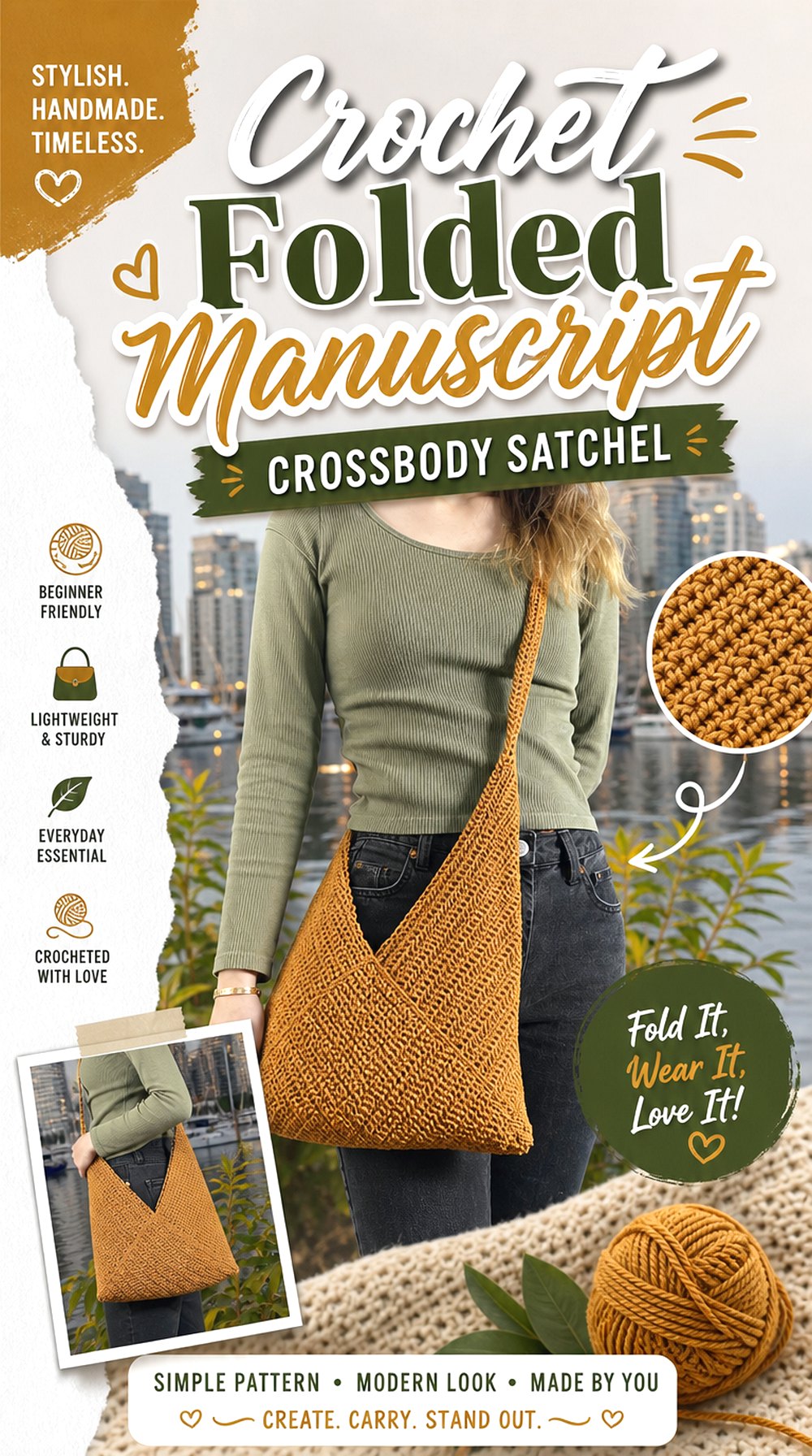
This pared-back idea suits a quieter interpretation of poetcore. The supporting bag begins as a single rectangle that is folded and sewn into a crossbody shape, leaving a broad uninterrupted surface that can be styled like a folded manuscript cover. Use one subdued color for a minimalist version, or reserve a contrasting shade for a narrow border or strap.
Because the construction is straightforward, this is also a useful choice when you care more about yarn texture and proportion than decorative motifs. A lightly speckled, tweedy-looking, marled, or muted solid yarn can carry the aesthetic without requiring appliqués or complicated colorwork.
The Fold Determines the Finished Proportions
Before finishing the seams, mock up the fold and check what portion of the rectangle becomes the usable pocket. A beautiful long rectangle does not automatically translate into the depth or opening you need once part of it is folded into the final form.
This is the ideal moment to check whether your intended phone, small notebook, or other everyday object fits comfortably. Adjustments are easier while the project is still flat than after the edges have been permanently joined.
Keep Embellishment Away From the Fold Lines
A simple body makes embroidery, surface crochet, or a small appliqué tempting, but placement matters. Decorative work that crosses a fold or seam can become distorted once the rectangle changes shape.
For a poetcore treatment, consider one small motif near the lower corner or centered on the visible outer panel. Mark the final front area while the rectangle is folded first, then unfold it for decoration so you know exactly where the motif will appear.
Original Tutorial and Creator Credit
Creator: VivCrochets
Crochet Fringe and Folio Boho Satchel
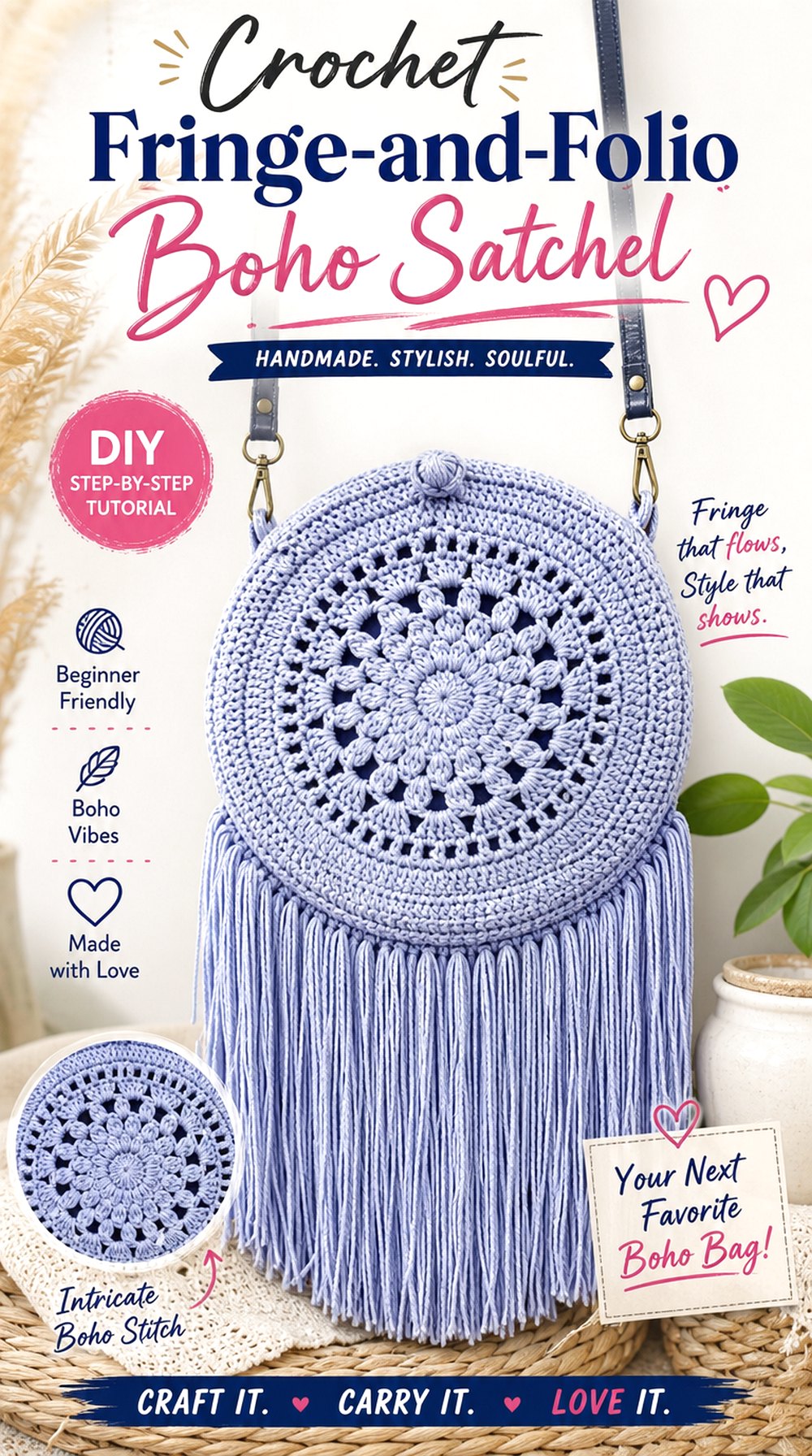
Fringe pushes poetcore in a more wandering-writer direction. Instead of a neat academic satchel, this version feels softer and more bohemian, making it a good match for layered clothing, field journals, botanical themes, or a more romantic outdoor interpretation of the aesthetic.
The supporting tutorial focuses on a crocheted boho bag with fringe and includes related finishing details such as a crochet button and Romanian cord. Rather than adding flowers, embroidery, tassels, fringe, and charms all at once, let the fringe remain the dominant movement. A deep brown, rust, faded wine, moss, or parchment palette can make the silhouette feel more literary than festival-focused.
Fringe Needs a Deliberate Stopping Point
Long fringe can visually lengthen a compact bag, but too much can also obscure the body and catch on surrounding objects. Decide whether the fringe should frame the bottom edge, emphasize the flap, or become a full statement.
Trim only after the bag has been hanging naturally for a while. Different strands may settle unevenly, and final trimming is easier when gravity has already shown you how the fringe behaves.
A Crochet Cord Gives the Strap Its Own Character
A handmade cord can complement the old-world feel of this satchel better than visually heavy modern hardware, but comfort should still guide the choice. A very narrow cord can concentrate pressure when the bag is loaded.
Try the finished strap with the bag containing the sort of light everyday contents you expect to carry. If the cord feels too narrow or stretchy, consider adapting the concept with a broader strap while preserving the same muted color and handmade character.
Let the Closure Be a Small Focal Detail
A crocheted button can create a softer finish than shiny hardware and keep the whole bag visually cohesive. For a poetcore version, it can function almost like a wax seal on an envelope: small, centered, and noticeable without overwhelming the texture.
Check that the closure actually catches securely before treating it as decorative only. Fringe and textured fabric can hide the fastening point, so the loop and button should remain easy to locate during normal use.
Original Tutorial and Creator Credit
Creator: Handwork diy
Crochet Wax Seal Flap Satchel
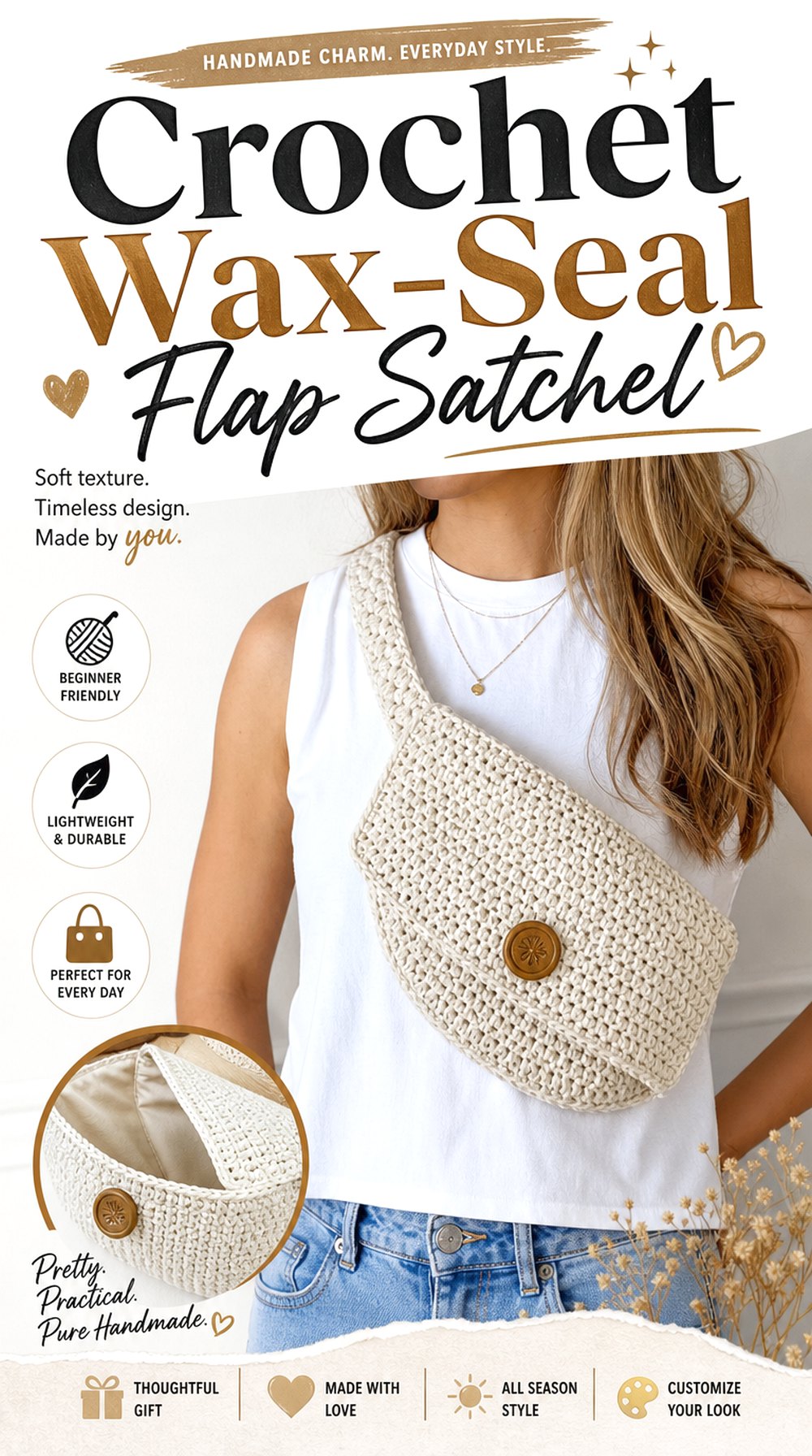
This compact flap bag offers one of the clearest routes to the traditional satchel look without committing to a large messenger. The original Ulla design can be worn as a belt or crossbody-style bag and includes a crocheted flap and strap, giving you a useful foundation for a smaller poetcore accessory.
Treat the flap like an envelope. A single dark wooden-looking button, subdued closure detail, narrow embroidered border, or tiny botanical motif can create the “wax seal” impression without needing literal costume props. Because the body is relatively compact, decoration should stay scaled to the bag rather than borrowing motifs designed for much larger totes.
The Flap Already Gives You a Strong Visual Center
A tapered or shaped flap naturally pulls attention toward the middle of the bag. Use that to your advantage instead of adding decoration everywhere else.
If you introduce a contrasting “seal” color, repeat it sparingly—perhaps in one narrow stripe or tiny strap detail. Too many repeats can turn a subtle poetcore accent into a graphic color-blocked design. Pin or temporarily position decorative elements before sewing them on so you can judge the balance with the flap closed.
Strap Length Changes How the Small Bag Reads
A compact bag worn high against the torso feels different from the same bag hanging low at the hip. The original design provides multiple strap-size options, which makes fit an especially important part of choosing this tutorial.
Do not select strap length from a label alone. Check the creator’s sizing information, compare it with your preferred wearing position, and test the bag against your body before final seaming. Layered coats or sweaters may also affect where you want it to sit.
A Smaller Opening Rewards Simple Organization
Compact bags can become frustrating if decorative finishing reduces the usable opening. Check the flap, side shaping, and closure together before adding any extra border.
If you want a lining, keep it neatly fitted so excess fabric does not bunch inside the opening. A small satchel benefits from every usable bit of interior space, so elaborate internal additions may be less helpful than one clean lining and a reliable closure.
Original Tutorial and Creator Credit
Creator: Lakeside Loops
Crochet Pocket Journal Sling Satchel
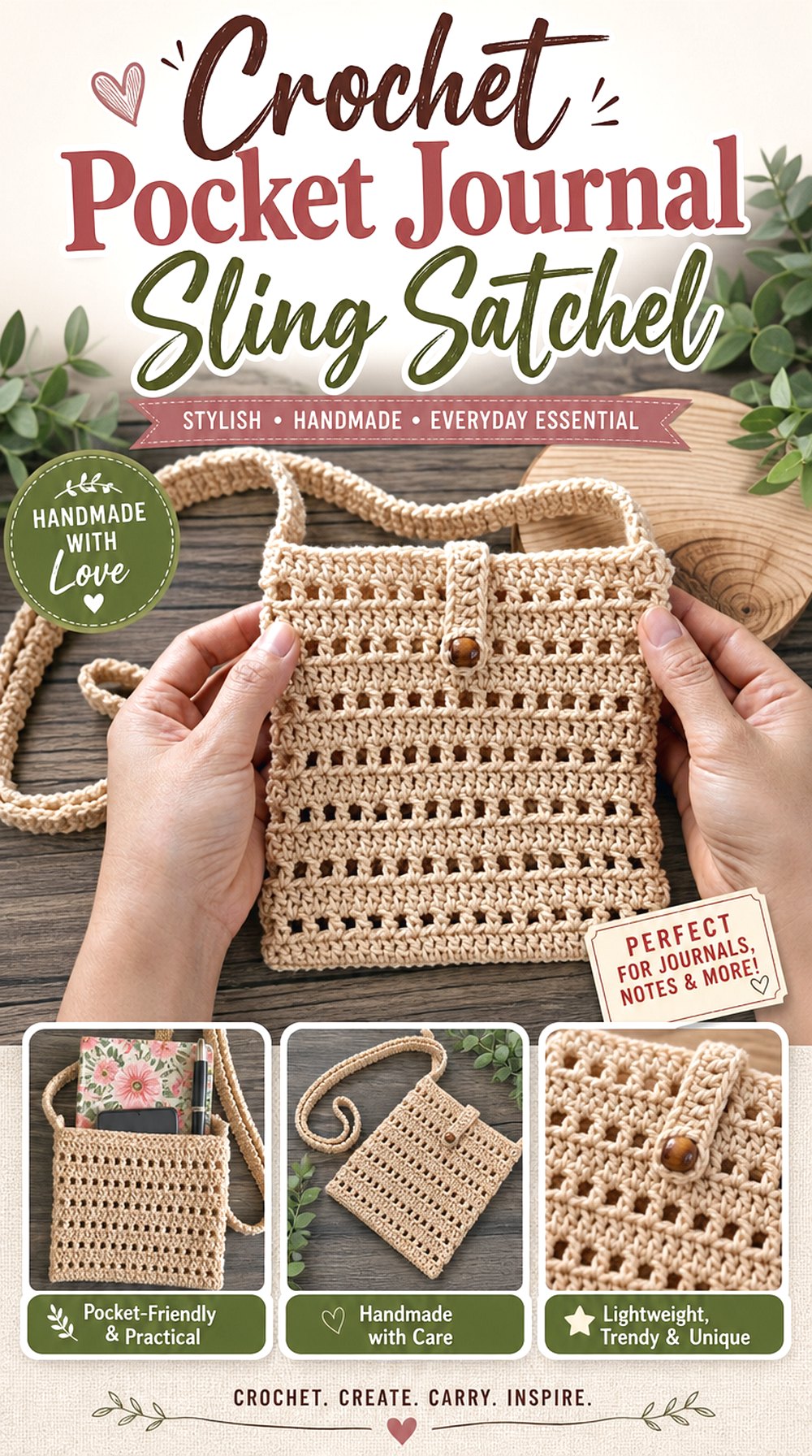
For a small everyday poetcore bag, this sling-style construction keeps the focus on proportion rather than elaborate decoration. The creator’s finished example is compact, making this a better direction for essentials than a library-sized satchel. A dark ink blue, sepia brown, faded olive, burgundy, or cream can make the simple silhouette feel intentional.
Because the form is narrow and crossbody-oriented, it pairs naturally with a tiny journal theme. You could keep the surface plain and let the bag resemble a miniature field-notebook case, or add one small stitched initial or botanical mark after confirming where the front center will sit.
Size the Idea Around Real Contents
A compact crossbody should be chosen by what needs to fit inside it. The tutorial provides finished measurements, so compare those directly with your phone, wallet, small notebook, or other essentials before deciding that the project suits your purpose.
Do not assume that increasing every dimension will leave the strap, opening, and proportions equally successful. A significant size change can alter the visual balance and may require additional structural decisions beyond simply crocheting a larger body.
Check the Strap Before Final Attachment
The tutorial includes a defined strap length, but your preferred crossbody drop may be different. Hold a temporary strap or measuring tape from the intended attachment points and check where the bag lands on your body.
If you wear bulky layers frequently, repeat the test over those layers. The best poetcore styling still needs a comfortable carrying position; a beautiful compact bag that sits awkwardly will be used less often.
Original Tutorial and Creator Credit
Creator: Chompu Handicrafts
Crochet Cozy Archivist Messenger Satchel
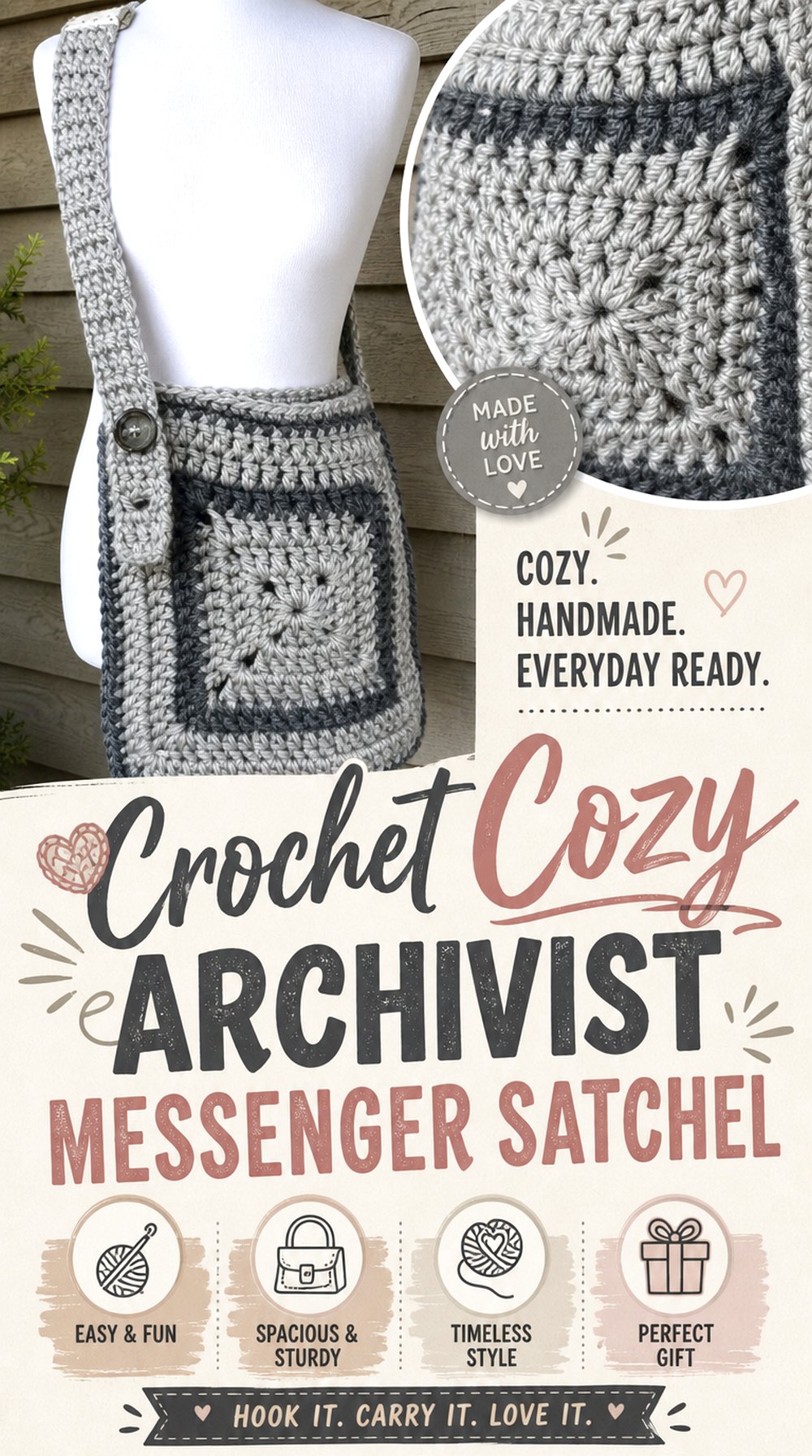
This square-based messenger idea has a softer, chunkier personality than the slimmer library satchels above. Two solid granny-style squares create the main bag body, while the strap crosses over and buttons at the front. That visible button-and-strap arrangement gives you an immediate archivist or old-school-bookbag detail without requiring additional surface motifs.
The substantial square panels also suit understated color blocking. Charcoal with warm gray, brown with parchment, or burgundy with dusty cream can create depth while keeping the construction easy to read. Because the bag is visually broad, this option works best when you want the silhouette itself to make the statement.
Solid Squares Give More Coverage Than Open Motifs
A solid square construction reduces the visual openness associated with classic granny clusters. That can be useful when you want a quieter, more satchel-like surface rather than a colorful patchwork bag.
Still, crochet fabric remains flexible. If you intend to carry small objects or want a cleaner interior, consider lining separately. The tutorial’s solid construction does not mean every possible object or load will behave the same way inside the finished bag.
Buttonholes Make Strap Fit Part of the Design
The tutorial incorporates more than one buttonhole into the strap, creating an adjustable feature that is visually obvious on the finished bag. For poetcore styling, that functional detail can become part of the vintage character rather than something to hide.
Test each available position with the bag on your body. The most attractive button placement while the bag is flat may not create the most comfortable drop once the satchel is actually worn.
Original Tutorial and Creator Credit
Creator: Fiber Flux
Crochet Commonplace Granny Square Satchel
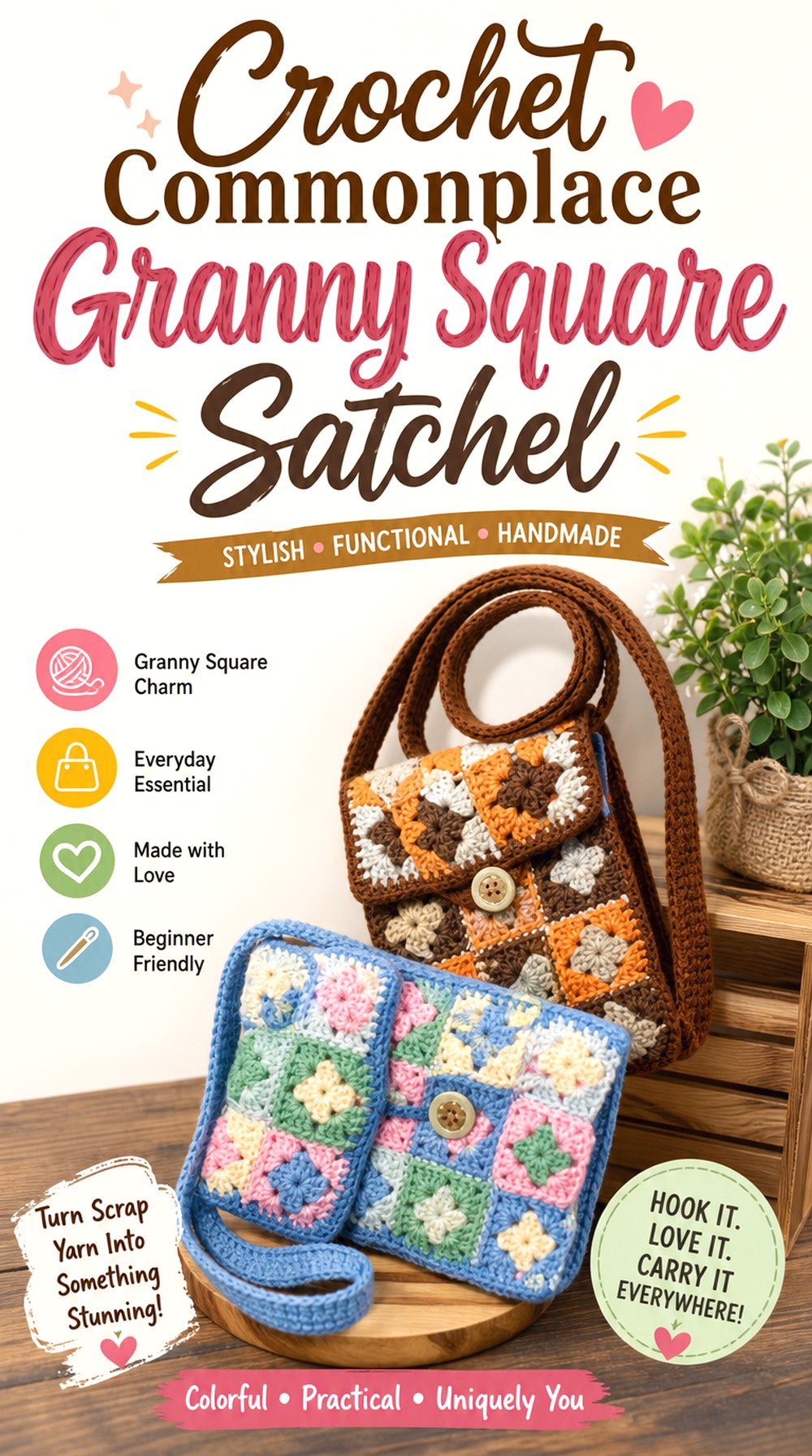
A commonplace book collects observations, quotations, scraps, and ideas; this satchel can take the same visual approach. The supporting project uses scrap yarn granny squares, making it well suited to a deliberate mix of muted leftovers rather than a perfectly matched palette.
Unlike the earlier patchwork messenger, this construction specifically incorporates lining and a button into the finished crossbody bag. That makes it a practical choice if you like the irregular charm of granny squares but want another layer between the open crochet fabric and the bag contents. A limited family of faded colors will keep the scrap aesthetic looking curated rather than random.
Sort Scraps by Value as Well as Hue
Several different colors can still look cohesive when their lightness or darkness is controlled. Before joining the squares, photograph them in grayscale or simply squint at the arrangement to see whether one motif suddenly dominates.
For a poetcore palette, one pale parchment-like neutral can help separate deeper greens, browns, reds, or blues. Arrange all squares at once rather than selecting each seam individually; the whole front panel matters more than any single color pairing.
Treat the Lining as Part of the Finished Design
A lining is not only hidden structure. It may be visible through granny-square openings, which means its color can quietly change the appearance of every motif.
Place possible lining fabrics behind a completed square before committing. A dark fabric can increase contrast inside the openings, while a similar-toned fabric can make the surface feel calmer. The choice should support the crochet rather than accidentally becoming the most noticeable color in the bag.
Keep the Button Accessible Between Motifs
A button closure needs a stable, easy-to-find location. If it lands against a highly open or visually complicated section of crochet, the fastening point can feel less clear.
Plan the front-facing square orientation and button area together. If you change the original layout, check that the closure still has enough surrounding fabric to sit neatly and that the corresponding loop reaches it without pulling the top edge out of shape.
Original Tutorial and Creator Credit
Creator: Crochet Musings
Crochet Pressed Flower Garden Satchel
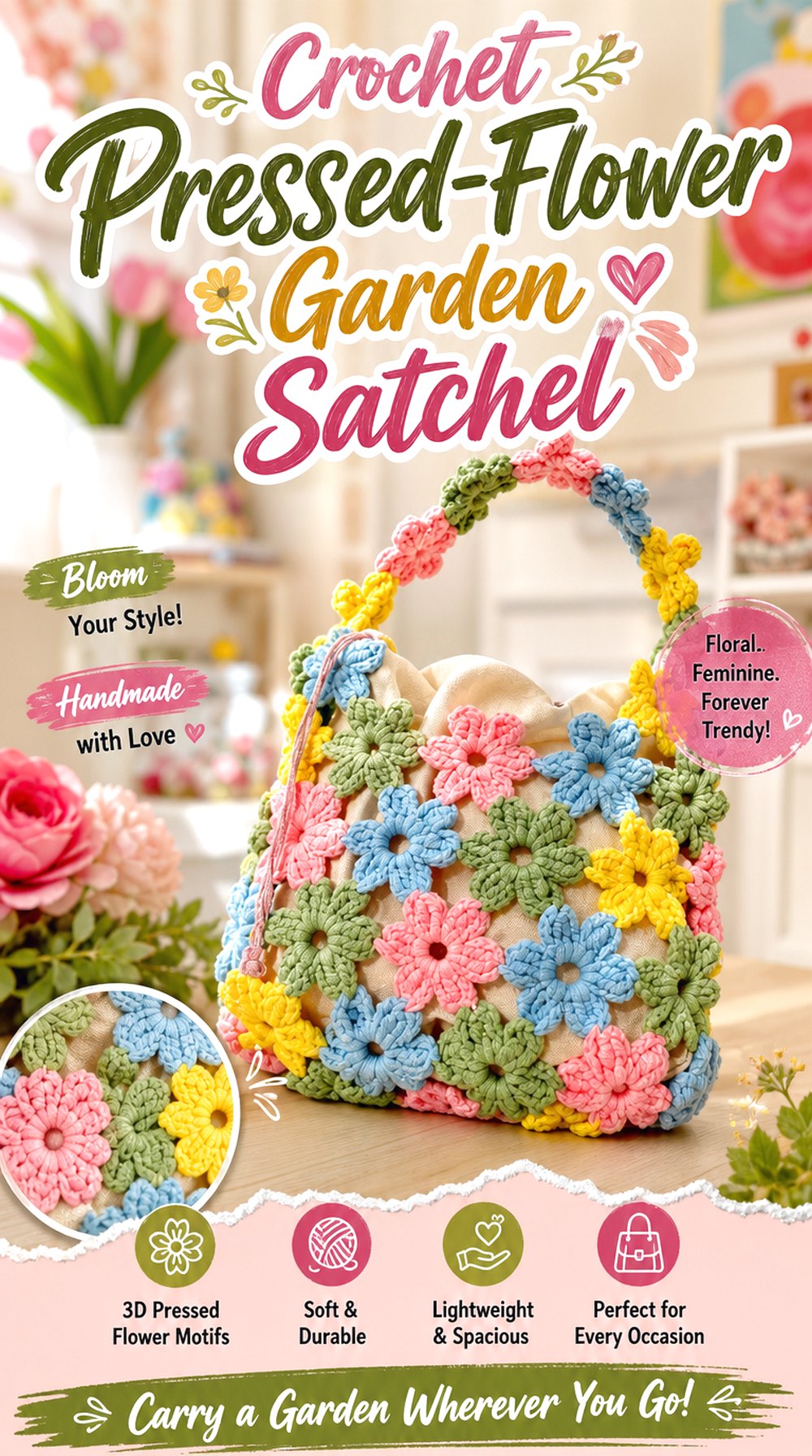
Instead of decorating a plain bag with one appliqué, this idea turns the crochet fabric itself into a field of flowers. The supporting tutorial forms a bag from connected flower structures, producing a softer, more open visual effect than the solid messenger constructions elsewhere in the article.
That makes this a romantic poetcore choice rather than a traditional academic satchel. Imagine dried-herbarium colors rather than bright garden shades: faded rose, parchment, sage, dusty cornflower, brown, or muted gold. Since the flowers create much of the structure and visual interest, additional literary charms or heavy trim are usually unnecessary.
Flower Placement Controls the Visual Rhythm
Repeated floral units can look orderly or deliberately eclectic depending on how the colors are distributed. Lay out the palette before you commit to repeated placement so one strong shade does not unintentionally form a stripe or cluster.
If you want the “pressed flower” feeling, vary flower colors within a limited muted range while keeping one background or connecting shade consistent. That creates variety without losing the sense that all the motifs belong to the same bag.
Open Floral Fabric Changes What You Carry
A flower-based surface can leave more visible spaces than a dense satchel fabric. Before using the finished project for small objects, inspect the openings rather than assuming everything will remain contained.
If your adaptation needs more coverage, consider whether a lining is compatible with the finished construction. A lining can also create an interesting backdrop behind the flowers, but test the color first because it will influence how every open space appears.
Let the Floral Body Replace Extra Ornament
The bag already contains strong dimensional and color interest, so adding fringe, large charms, ribbons, embroidered quotes, and decorative hardware can quickly overwhelm it. Choose one finishing direction.
A quiet strap and clean opening can make the individual flowers feel more like botanical specimens on a page. If you do add a poetcore accent, a single small charm or understated closure is enough to establish the theme.
Original Tutorial and Creator Credit
Creator: Vivi Crochet 🌷
Crochet Checkerboard Café Satchel
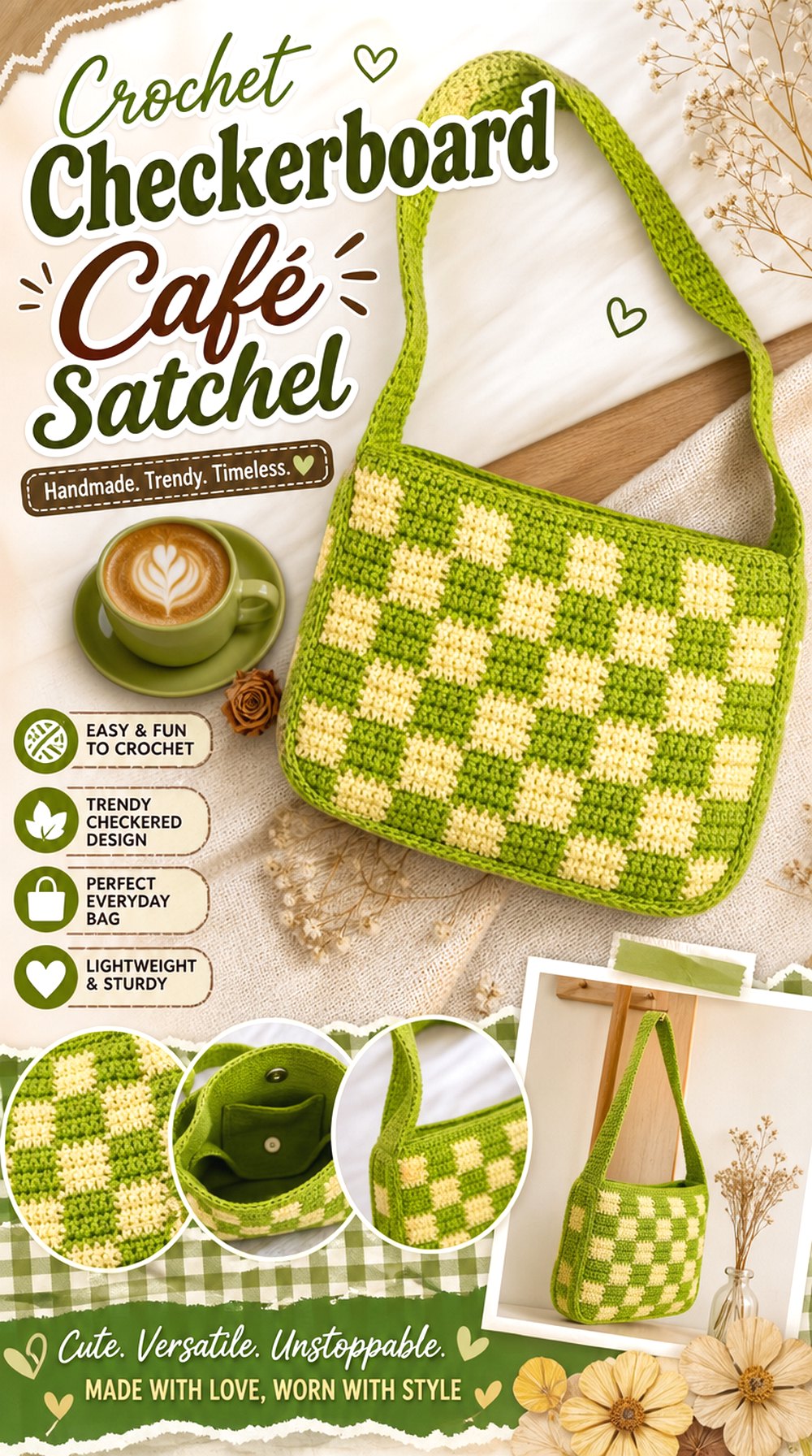
Checkerboard crochet can move surprisingly well into poetcore when the colors are softened. Instead of a bold black-and-white graphic, picture espresso with parchment, olive with mushroom, oxblood with dusty rose, or charcoal with faded blue. The pattern reads like café tiles or a worn notebook cover rather than a sporty checkerboard.
The supporting tutorial creates a shoulder bag with a checkerboard body and integrated crochet strap construction. It is not a classic flap messenger, so this idea suits readers who want poetcore color and texture more than a strict satchel silhouette. Its graphic surface is already strong enough that the rest of the finishing can stay minimal.
Low-Contrast Squares Feel More Vintage
The greater the contrast between the two colors, the more assertive the checkerboard becomes. If you want a subdued poetcore result, choose shades with some visual relationship rather than automatically using the darkest and lightest yarn available.
Make a small swatch or place the two skeins together under natural light. Colors that look harmonious indoors can separate much more sharply in daylight, changing the bag from muted to highly graphic.
Keep Additional Details Geometrically Quiet
A checkerboard creates many edges and repeated focal points, so complicated floral borders or several decorative charms may compete with it. A plain strap, simple edge, or one small closure keeps the design coherent.
If you want to combine checks with a literary element, consider one restrained embroidered initial or tiny bookish charm rather than another large pattern. Place it only after the bag body is assembled so you can identify the true visual center.
Original Tutorial and Creator Credit
Creator: Chenda DIY
Crochet Sunflower Verse Crossbody Satchel
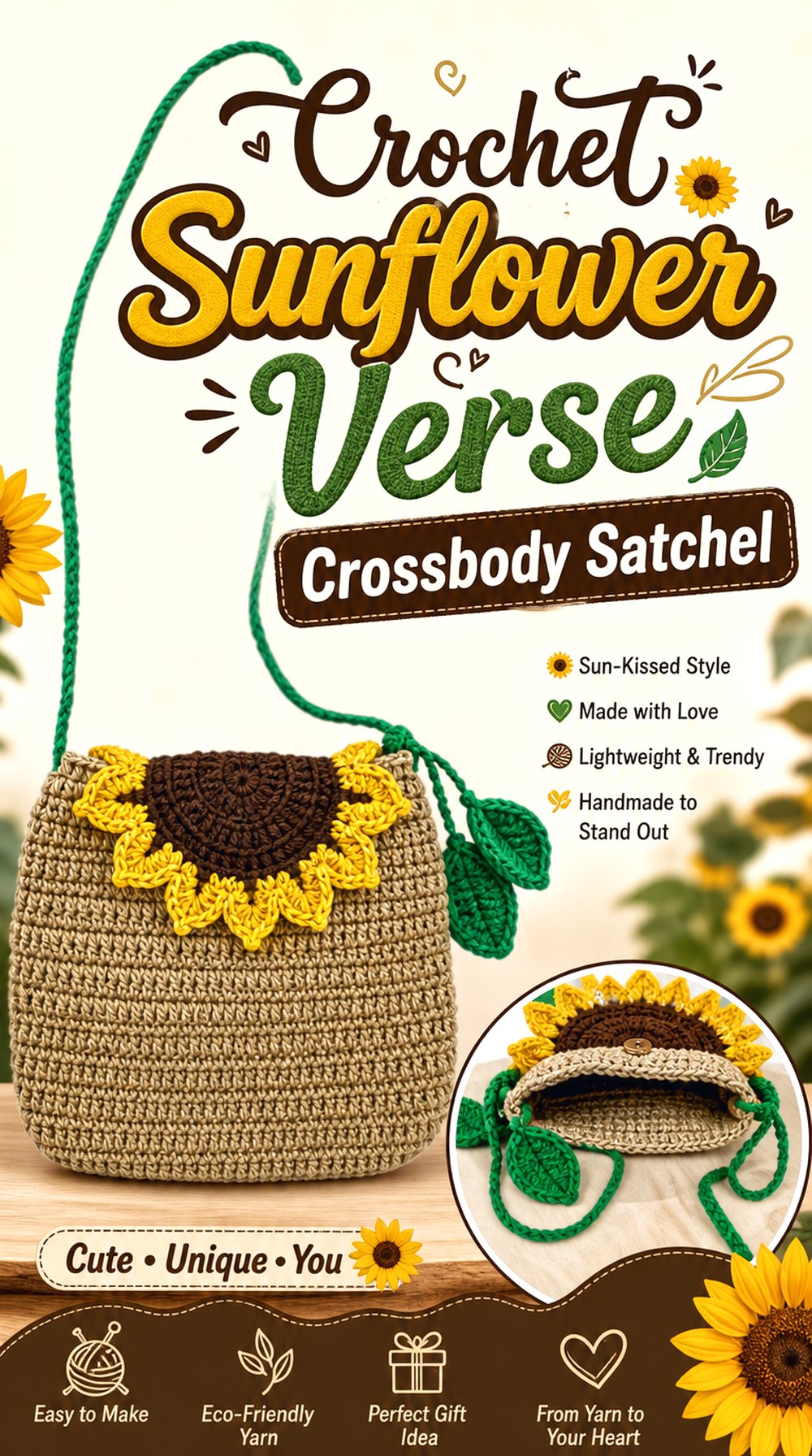
A single sunflower creates a very different poetcore mood from an all-over flower bag. Here the floral element behaves like an illustration on the cover of a poetry collection: one recognizable image against a simpler crossbody form.
The supporting tutorial creates the bag body and sunflower as separate design elements before bringing the components together. That makes this a useful route if you want to reinterpret the flower. A sunflower is warm and pastoral, but the same general visual strategy can inspire a more subdued botanical palette or a single focal appliqué, provided you use an appropriate compatible motif rather than trying to force a differently sized decoration into the exact same placement.
Give the Flower Enough Empty Space
A central motif is strongest when it does not collide visually with the bag edges, strap attachment, or closure. Before sewing on any flower, position it with pins or removable markers and view the bag from a normal carrying distance.
If the motif looks crowded, reducing the surrounding decoration may be more effective than changing the flower itself. The goal is to make one botanical element look intentional rather than filling every available surface.
Check the Appliqué After the Bag Has Shape
A flower positioned beautifully on a flat crochet panel can tilt or curve after the bag is filled. Form the bag first, then assess the final attachment area whenever the construction allows.
Consider how the petals behave near bends and edges. A central location on the broadest front area usually gives a dimensional flower more room to sit naturally than a spot close to a side seam.
Original Tutorial and Creator Credit
Creator: Crocheting is passion
Crochet Bohemian Chapbook Satchel
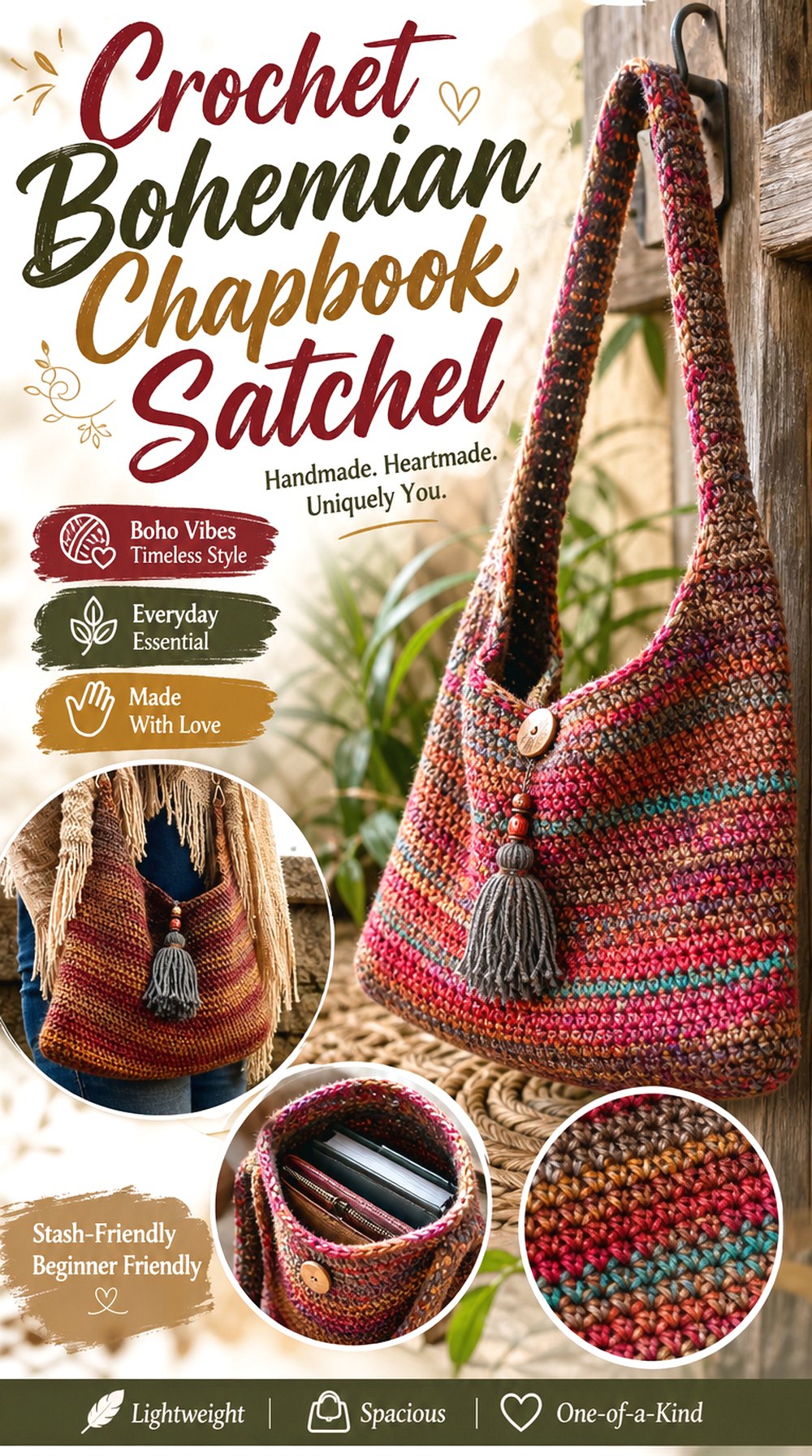
This relaxed crossbody direction has enough room to feel substantial without requiring rigid structure. The supporting Jolie Knots design is worked as an everyday boho crossbody and allows customization of both body size and strap length, making it a useful foundation for a softer poetcore satchel.
A chapbook-inspired version could use two strands in closely related muted colors for a marled, aged-paper effect or stay completely solid to emphasize texture. Because the form is relaxed rather than sharply tailored, it suits the romantic side of poetcore: loose cardigans, long skirts, field notes, botanical sketches, and understated handmade accessories.
Double-Stranded Fabric Changes Both Look and Hand
The original design includes options involving yarn held together, which can create a thicker visual texture and interesting mixed-color effect. If you adapt that approach, remember that changing yarn combinations can alter more than the color.
Crochet a useful swatch and handle it rather than judging by appearance alone. Ask whether the resulting fabric bends the way you want, whether it feels too bulky for your intended bag size, and whether the stitch definition still supports the quiet poetcore texture you imagined.
Customize the Strap Around Wearing Style
One advantage of this construction is that the strap can be adjusted. Decide first whether you want the bag high at the hip, lower and more relaxed, or converted toward shoulder-bag proportions.
Measure against your body instead of copying a strap length purely from appearance. A poetcore outfit with layered knitwear may need a different drop than a light dress or shirt, and crochet straps can behave differently once the bag contains actual belongings.
Original Tutorial and Creator Credit
Creator: Jolie Knots Crochet
Crochet Sunburst Field Note Satchel
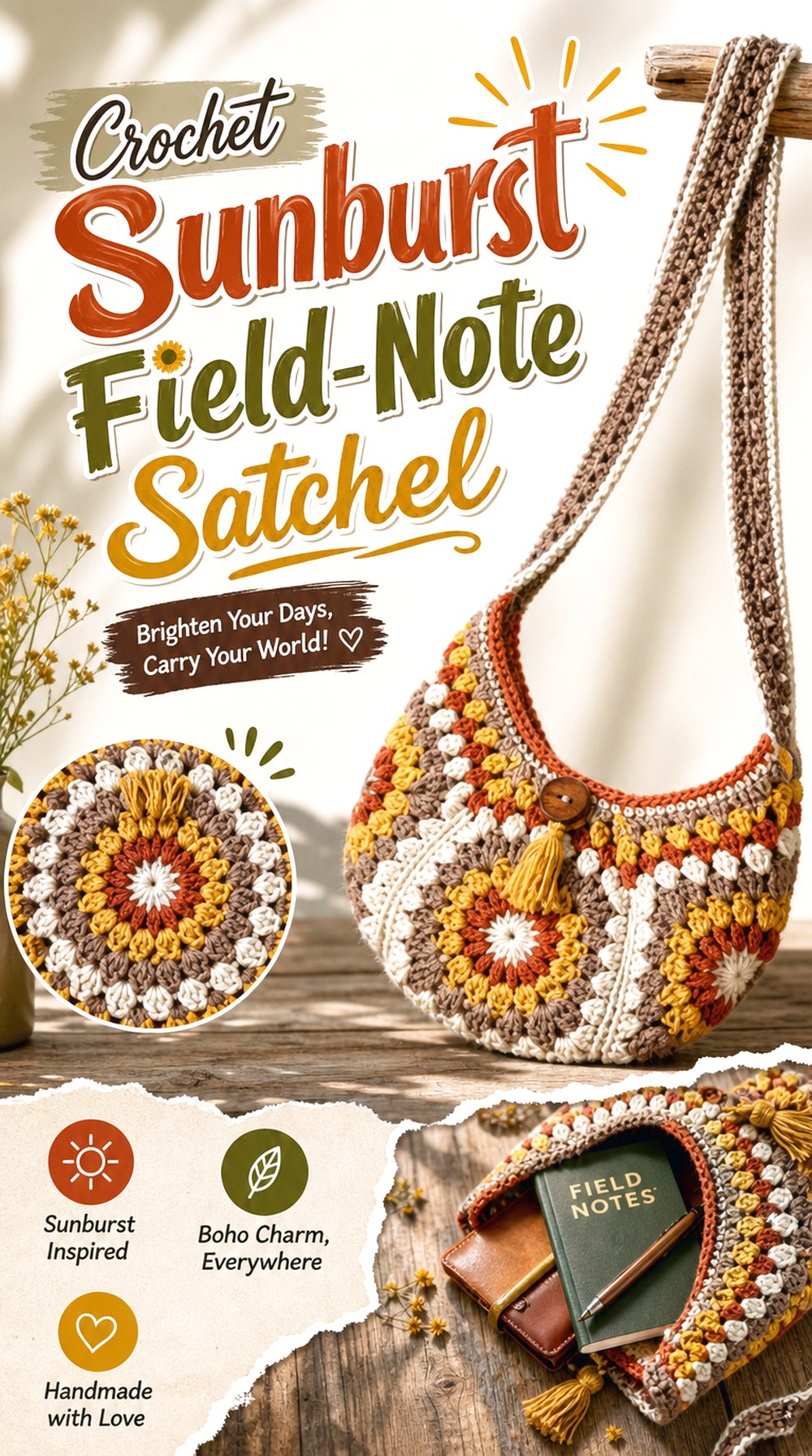
Sunburst granny squares bring warmth and radial movement to a satchel without relying on literal book or poetry imagery. This crossbody-oriented bag has a compact festival-style shape, making it a useful foundation for a “field notes” version designed around walks, sketching, nature journaling, or lighter everyday essentials.
To shift the sunburst away from bright summer styling, use a more weathered palette: rust around a dark brown center, muted gold with olive, cream with tobacco, or faded rose with charcoal. The motif itself remains the focus, while a restrained strap and lining keep the finished bag from becoming visually overloaded.
Radial Motifs Need Consistent Orientation
Sunburst motifs are symmetrical at first glance, but color placement can still create an apparent top, bottom, or directional flow. Arrange all completed squares before assembly and decide whether the strongest color transitions should mirror one another or vary intentionally.
Take a quick photograph of the layout. Seeing the composition flattened into an image can make an awkward color concentration more obvious before you commit to joining.
Lining Can Make a Motif Bag More Practical
The tutorial includes useful lining guidance, which is especially relevant for a granny-square design intended to hold smaller daily objects. A lining can reduce the chance of little items working through visible openings and can give the interior a cleaner finish.
Choose fabric after completing the crochet. Put candidate fabrics behind a motif and check whether the lining color changes the perceived contrast. A dramatic backing may make the sunburst much brighter than you intended.
Original Tutorial and Creator Credit
Creator: Day’s Crochet
Crochet Retro Granny Zipper Satchel
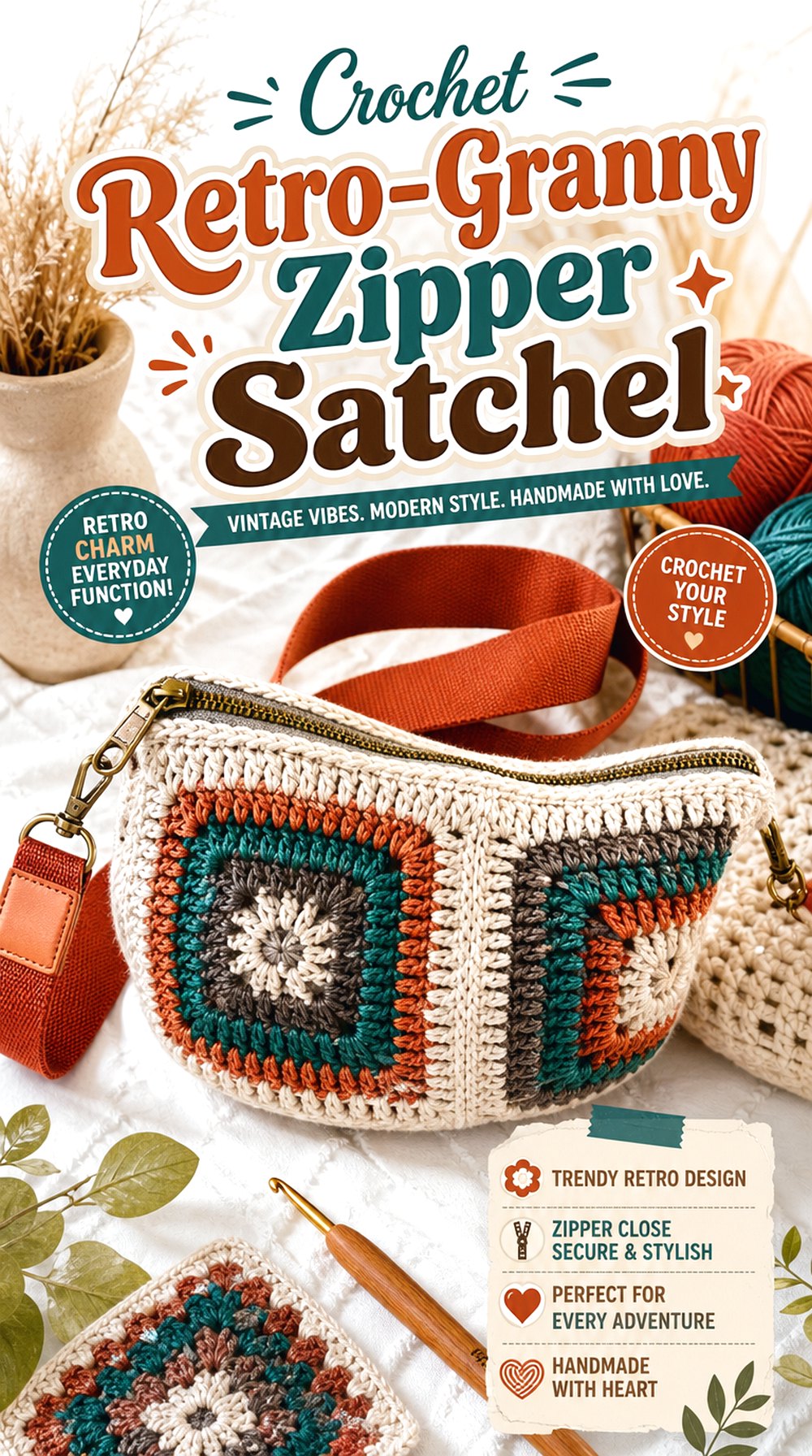
This final idea is for readers who like granny squares but want a more enclosed, finished-looking bag opening. CJ Design’s cross bag combines retro motifs with a fabric lining, zipper, D-rings, and detachable-style strap hardware, creating a construction that sits between handmade patchwork and a more conventional purse.
For poetcore styling, choose granny colors that resemble old bookcloth or faded interiors instead of bright retro shades. Brown, moss, parchment, faded terracotta, deep blue, and dusty cream can make the four-square construction feel collected and literary. The zipper also makes this option meaningfully different from the buttoned and open-top bags elsewhere in the list.
Plan the Lining Before Buying Decorative Fabric
The lining needs to work with the actual finished crochet dimensions, not the dimensions you expect before completing the squares and joins. Finish the exterior first and use its shape as the planning reference.
Because the fabric may peek near the zipper, treat its color as part of the palette. Tiny florals, subtle stripes, or a plain coordinating cotton can all support poetcore styling, but avoid a print so dominant that it distracts from the granny squares.
A Zipper Changes the Top Edge Requirements
A zippered opening needs a reasonably controlled edge so the fastener can sit cleanly. If you substantially alter the square size, joining arrangement, or top trim, confirm that the resulting opening remains compatible with the zipper method before purchasing hardware.
Do not force an existing zipper to fit a dramatically different opening. The closure and crochet body should be planned together so neither has to distort the other during installation.
Hardware Can Be Modern or Quietly Vintage
D-rings and a removable strap introduce visible hardware that many of the all-yarn projects do not have. For a poetcore interpretation, choose hardware deliberately rather than treating it as invisible.
A subdued finish can complement earthy yarn colors, while highly polished hardware creates a sharper contrast. Whatever look you choose, make sure the attachment points are properly secured and appropriate for the intended use rather than selecting components for appearance alone.
Original Tutorial and Creator Credit
Creator: CJ Design
Which Poetcore Satchel Direction Should You Choose?
| If you want… | Start with… | Main planning issue |
|---|---|---|
| The most customizable illustrated messenger | Crochet Ink-and-Rose Messenger Satchel | Keep pocket graphics proportional |
| A classic patchwork look | Crochet Patchwork Poetry Granny Satchel | Match blocked motif dimensions |
| A substantial book-oriented shape | Crochet Library Book Satchel | Verify your actual book dimensions |
| Minimal construction | Crochet Folded Manuscript Crossbody Satchel | Check the fold before seaming |
| Romantic movement and texture | Crochet Fringe-and-Folio Boho Satchel | Control fringe and strap comfort |
| A small flap silhouette | Crochet Wax-Seal Flap Satchel | Fit the strap and closure together |
| Lined granny-square construction | Crochet Commonplace Granny Square Satchel | Coordinate lining with open motifs |
| Strong botanical styling | Crochet Pressed-Flower Garden Satchel | Let the flowers remain the focal point |
| A more enclosed opening | Crochet Retro-Granny Zipper Satchel | Plan zipper, lining, and hardware together |
The biggest choice is therefore not the exact poetcore color scheme. It is whether you want a true messenger shape, a small crossbody, a soft motif bag, or a more structured lined and zippered finish. Once that decision is made, the literary styling becomes much easier to control.
Conclusion
The strongest Crochet Poetcore Satchel Bag Ideas begin with a bag construction that suits what you actually carry. Choose the Ink-and-Rose or Patchwork Poetry designs when you want a recognizable messenger silhouette, the Library Book Satchel for a deeper book-oriented form, the Wax-Seal or Pocket Journal ideas for compact carrying, and the floral or sunburst versions when the surface design matters most.
If stretch, small-object containment, or a cleaner interior concerns you, give extra attention to the lined options, particularly the Commonplace and Retro-Granny satchels. Use muted color, one thoughtful motif, and restrained finishing to create the poetcore character rather than adding decoration everywhere. For exact construction, measurements, materials, and assembly, follow the original creator tutorials linked with each project.
Frequently Asked Questions
What makes a crochet satchel look poetcore without making it feel like a costume accessory?
Use recognizable everyday bag construction first, then add only a few literary or vintage cues. A brown messenger flap, faded floral granny squares, muted burgundy, moss, parchment, a small botanical motif, or one antique-looking closure can establish the mood. You do not need books, quills, bows, charms, lace, flowers, and handwritten words on the same bag. Restrained details generally let the crochet texture and satchel shape remain believable for daily use.
Which Crochet Poetcore Satchel Bag Ideas make the most sense for carrying books?
Look first at the Library Book Satchel and larger messenger constructions, but verify dimensions rather than relying on their names. Measure the specific paperback, journal, planner, or tablet you intend to carry and compare those dimensions with the creator’s finished measurements where supplied. Also consider the object’s thickness and the amount of room needed for the flap or closure. Crochet is flexible, so lining or reinforcement may be worth considering for more structured use.
Should I line a granny-square poetcore satchel?
Lining is particularly useful when the granny fabric has openings large enough for small belongings to work through or when you want a cleaner interior silhouette. It can also change the appearance of the squares because the fabric may show behind them. Test lining colors behind a completed motif before sewing anything. The Commonplace Granny Square Satchel, Sunburst Field-Note Satchel, and Retro-Granny Zipper Satchel are especially useful references if lining is an important part of your project choice.
How can I reduce stretching in a crochet satchel strap?
Begin with the tutorial’s intended strap construction and avoid assuming a longer strap will behave identically. Yarn fiber, stitch structure, strap width, bag weight, and added length can all affect stretching. Try the strap at the intended wearing position before final attachment and test it with realistic contents. If your bag will carry more than very light essentials, consider whether a less stretchy strap construction or compatible reinforcement would be appropriate rather than relying on appearance alone.
Can I add a zipper or magnetic closure to any crochet satchel tutorial?
Not automatically. The bag needs a suitable opening and enough stable fabric for the chosen closure. A zipper works most cleanly when its length and the finished opening are compatible, while a magnetic closure needs a secure attachment area. A flap can also change where either type of fastening belongs. If closure security matters, choosing a tutorial that already demonstrates a similar finish—such as the Retro-Granny Zipper Satchel—is safer than assuming the same hardware will transfer cleanly to every construction.
How do I turn a regular crochet crossbody tutorial into a poetcore satchel without changing the pattern?
Keep the original construction and change the visual decisions around it. Use a literary-inspired palette such as parchment, moss, oxblood, faded rose, tobacco, charcoal, or ink blue; select a restrained lining; and add one compatible detail such as a botanical motif, vintage-style button, narrow scalloped edge, or subtle surface embroidery. This approach preserves the creator’s proven construction while allowing the finished object to move toward poetcore through styling rather than an unverified structural rewrite.