Crochet East West bags are defined more by proportion than by one specific stitch or construction method. The recognizable look comes from a body that stretches horizontally, often sitting neatly beneath the arm or carrying like a compact handbag. Within that shape, though, the options vary considerably: slim baguette bags, rounded barrels, structured Boston-inspired bags, slouchy shoulder purses, and textured motif versions can all create a different result.

These 20 ideas focus on those meaningful differences. Some tutorials already produce a clearly elongated bag, while others offer a useful shoulder-bag construction that can be adapted toward a wider-than-tall East West profile. Compare the body structure, opening, strap position, yarn behavior, and finishing before choosing, rather than treating every horizontal bag as interchangeable.
Quick List
- Crochet Classic Minimal East West Baguette Bag
- Crochet Center-Panel East West Shoulder Bag
- Crochet Magnetic-Snap T-Shirt Yarn East West Bag
- Crochet Bow-Accent East West Baguette Bag
- Crochet Chunky Compact East West Shoulder Bag
- Crochet Elongated Barrel East West Bag
- Crochet Lace Barrel East West Handbag
- Crochet Structured Boston-Style East West Bag
- Crochet Zippered Macramé East West Handbag
- Crochet Cluster-Texture East West Bag
- Crochet Bobble-Texture East West Shoulder Bag
- Crochet Ruched Popcorn East West Bag
- Crochet Soft Everyday East West Shoulder Bag
- Crochet Mini Underarm East West Bag
- Crochet Folded-Rectangle East West Bag
- Crochet Panel-Built East West Carry Bag
- Crochet Slouchy East West Hobo Bag
- Crochet Zippered Rope East West Shoulder Bag
- Crochet Wavy Edge East West Shoulder Bag
- Crochet Flower-Square East West Shoulder Bag
What Makes a Crochet Bag Read as East West?
The strongest visual clue is a width that clearly dominates the height. A compact bag can still qualify, but if the body becomes almost square or much taller than it is wide, it starts reading more like a conventional shoulder bag or tote. The bottom depth matters too. A slim base emphasizes a baguette silhouette, while a deeper gusset pushes the design toward a Boston or barrel bag.
Before adapting a general shoulder-bag tutorial, look at the body before the strap is added. Ask whether widening that body will affect the side shaping, opening, closure, or handle attachment. Simply adding extra width is not always enough. The strap should still emerge from visually balanced points, and a zipper or flap needs to remain compatible with the new opening.
Structure and Stretch Matter More on a Horizontal Bag
Long crochet bodies can sag through the center if the fabric stretches more than expected. That is especially noticeable on an East West bag because the horizontal line is part of the design. Dense crochet, firm cord, a supportive lining, or reinforcement at the base and opening can all change how successfully that shape is retained.
The right solution depends on the look you want. A slouchy East West hobo can tolerate movement and drape, while a compact baguette usually benefits from a more controlled profile. Do not assume a yarn substitution will behave like the tutorial yarn. Make a small fabric sample, pull it gently in both directions, and consider the weight of the finished fabric itself before deciding whether extra support is worthwhile.
Choose the Opening and Strap as Part of the Silhouette
A short shoulder strap keeps an East West bag tucked beneath the arm and emphasizes the horizontal body. Longer straps create more movement and may make the same bag feel closer to a conventional shoulder or crossbody purse. Adjustable hardware gives more flexibility but introduces additional attachment points that need sufficient support.
Open tops work visually well on simple baguette bags but offer little containment. Magnetic snaps keep the upper line relatively clean, while zippers provide a more enclosed opening and can help define the long top edge. Flaps and decorative buttons add another visible layer, so check that they do not make a shallow body look crowded. Decide how you intend to carry and access the bag before finalizing the decorative details.
Crochet Classic Minimal East West Baguette Bag

A clean baguette body is one of the most direct ways to interpret the East West trend. This version keeps attention on the narrow horizontal silhouette instead of relying on complicated motifs or hardware. Faz Crochê’s baguette tutorial provides a useful reference for the basic form, making this direction suitable when you want the bag shape itself to be the main design feature.
A solid color can make the proportions especially clear, while contrasting edging or a different strap texture can add definition without interrupting the long line. Before changing yarn weight or hook size, remember that both can alter the relationship between width, height, and firmness.
Keep the Body Noticeably Wider Than Tall
The defining feature here is proportion. If you customize the project, compare the width and height periodically rather than waiting until the bag is finished. Adding height can quickly turn a sleek baguette into a more ordinary shoulder purse.
Lay the unfinished body flat and view it from several feet away. That simple visual checkpoint is often more useful than chasing one universal measurement because the ideal proportion depends on yarn thickness, strap scale, and how much depth the bag develops after assembly.
Let the Strap Support the Minimal Shape
A narrow, uninterrupted body works best when the strap feels intentional rather than oversized. Before permanently attaching it, temporarily pin or position the strap and hold the bag at shoulder height.
Check whether the body sits where you want it beneath the arm and whether the attachment points pull the upper corners inward. If the bag distorts before anything is placed inside it, revisit the strap placement or reinforcement rather than expecting the fabric to correct itself through use.
Crochet Center Panel East West Shoulder Bag
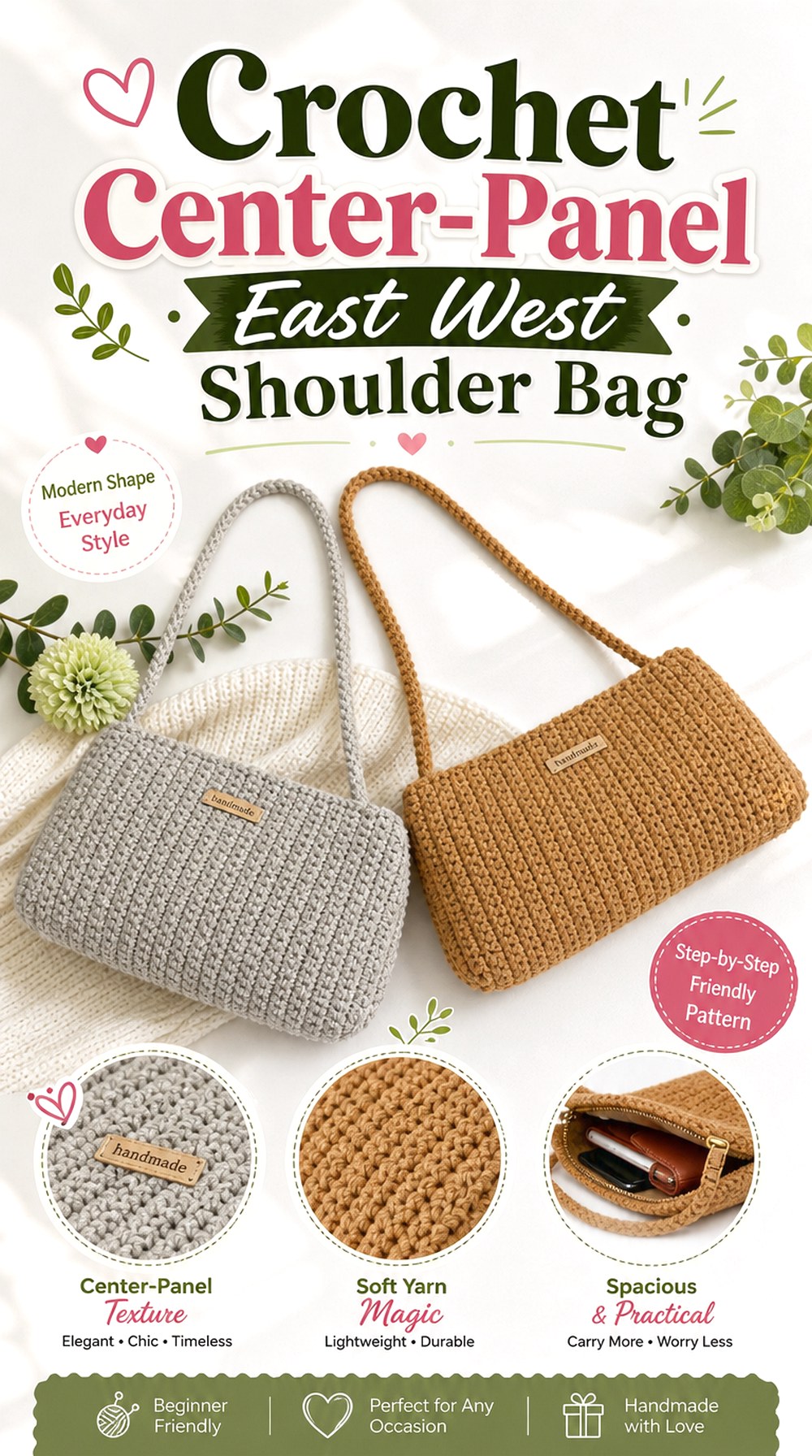
This idea uses a more visibly constructed body. Cleyoché Crafts organizes its baguette tutorial around a center panel, sides, buttons, and strap, giving readers a useful alternative to a simple tube-style bag. The resulting design still has the compact East West character, but the panel divisions can make the silhouette feel more deliberate and shaped.
This direction is worth considering if you enjoy seeing how individual sections establish the final form. It also creates opportunities for controlled color blocking. Instead of changing color randomly, you can let the center panel remain the focal area and use quieter side sections to frame it.
A Center Panel Gives You a Natural Focal Point
When a bag is built around a visible central section, decoration does not need to cover the entire surface. A contrasting texture, stripe, or color placed only in that area can create interest while keeping the horizontal form readable.
Before adding a dramatic motif, compare its scale with the completed panel. Oversized decoration can visually shorten a long bag by dividing the front too strongly. Smaller or lower-contrast details generally preserve more of the East West line.
Check the Side Depth Before Increasing Width
A wider front does not automatically require a deeper bag. Increasing both dimensions at once can move the design away from a compact shoulder purse and toward a boxier handbag.
If you adapt the width, inspect how the side sections connect and whether the opening still feels proportionate. Make width, depth, and strap decisions as separate choices instead of scaling every part by the same amount.
Original Tutorial and Creator Credit
Creator: Cleyoché Crafts
Crochet Magnetic Snap T Shirt Yarn East West Bag

T-shirt yarn creates a noticeably different kind of East West bag. Chenda DIY’s shoulder-bag tutorial combines this thicker material with a magnetic button, giving the finished purse a firmer, more substantial appearance than lightweight yarn versions. The material itself becomes part of the design because the stitches read boldly and the body develops visual weight quickly.
This style works well when you prefer a compact horizontal bag that feels less delicate. Because thick yarn enlarges every stitch, however, small changes can affect the final proportions quickly. Judge the shape as you work instead of assuming a thinner-yarn baguette can simply be translated stitch for stitch.
Thick Yarn Can Change the Scale Faster Than Expected
T-shirt yarn makes each row and stitch physically substantial. That is useful for creating a strong-looking body, but it can also turn a petite East West bag into a much larger purse if you increase dimensions casually.
When adapting the tutorial, compare the growing body directly with an item you already carry or with the intended underarm position. Size decisions based on visual proportion are safer than assuming another yarn’s measurements will transfer unchanged.
A Magnetic Snap Keeps the Upper Line Uncluttered
The source design uses a magnetic button, which is a useful closure concept when you want the long top edge to remain visually simple. Unlike a full flap, a small central closure does not cover much of the front panel.
Placement still matters. Check that the upper edge meets naturally before attaching hardware and that the crochet around the closure can support repeated opening. If the fabric is very stretchy, additional support at the attachment area may be worth considering.
Original Tutorial and Creator Credit
Creator: Chenda DIY
Crochet Bow Accent East West Baguette Bag
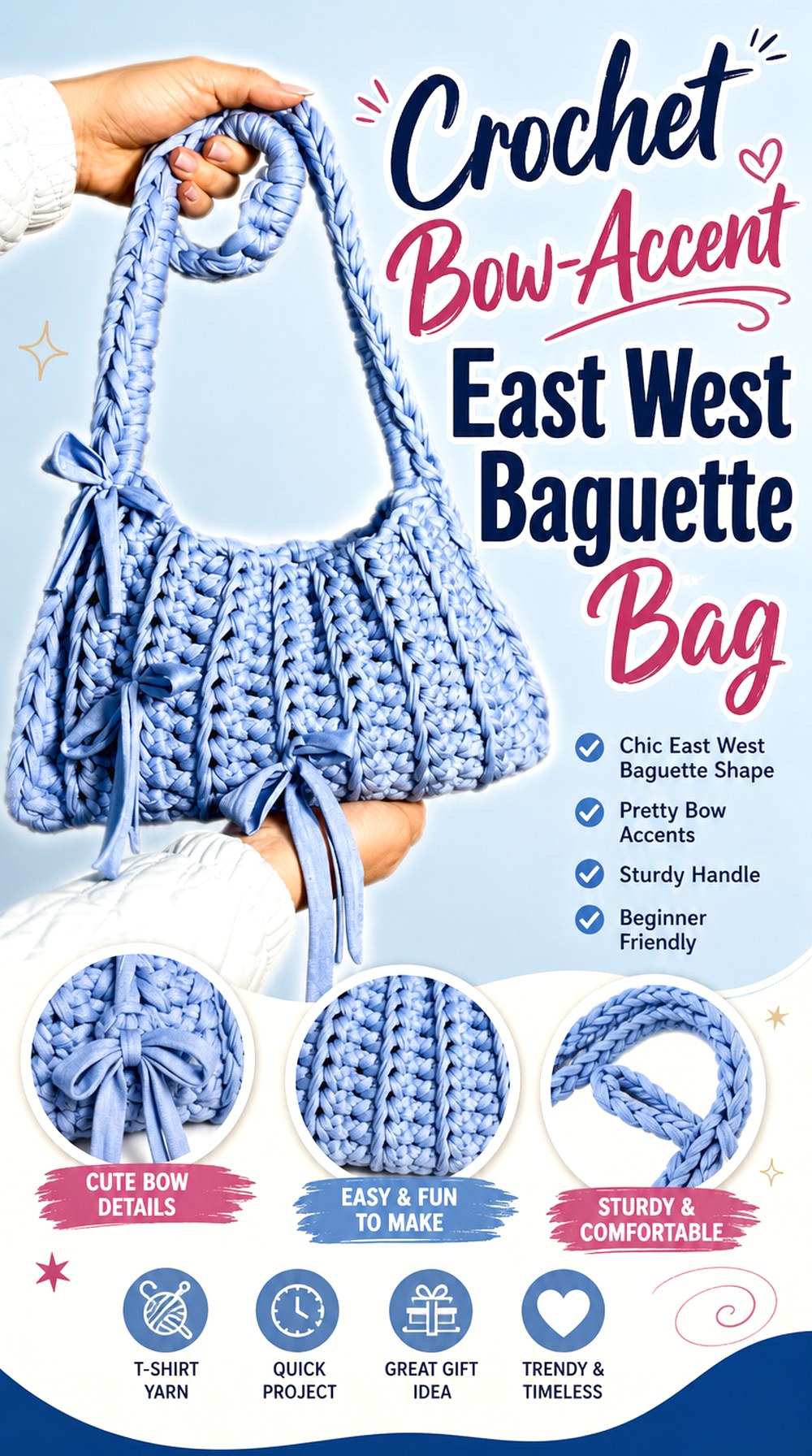
A bow can soften the clean geometry of an East West bag without changing the underlying silhouette. Lerugi Crochets demonstrates a t-shirt-yarn baguette shoulder bag with bow details and a substantial handle, creating a useful reference for a more decorative interpretation of the trend.
The important decision is scale. A horizontal body naturally accommodates bows because their shape follows the same direction, but too many large accents can make a small bag look crowded. Keep enough plain crochet visible around the decoration so the elongated body remains recognizable. This design is a good choice when you want the bag to feel playful while still functioning as a compact shoulder purse.
Place Bows Where They Will Not Interfere With Carrying
Decorative elements near the upper corners can end up directly beneath the arm. Before securing a bow, wear or hold the unfinished bag in its normal carrying position and notice where your arm contacts the body.
A small placement adjustment can help the embellishment keep its shape and prevent unnecessary friction. This is especially important with thick yarn, where even a soft bow can become relatively bulky.
Keep the Handle in Proportion to the Body
A visually heavy strap can compete with a petite horizontal bag. Conversely, a very thin handle may look out of place against substantial t-shirt-yarn fabric.
Evaluate the body and handle together before final finishing. The goal is not to match their thickness exactly, but to make sure neither element overwhelms the other. Strap reinforcement can also be considered separately from decorative thickness if stretching becomes a concern.
Original Tutorial and Creator Credit
Creator: lerugi crochets
Crochet Chunky Compact East West Shoulder Bag
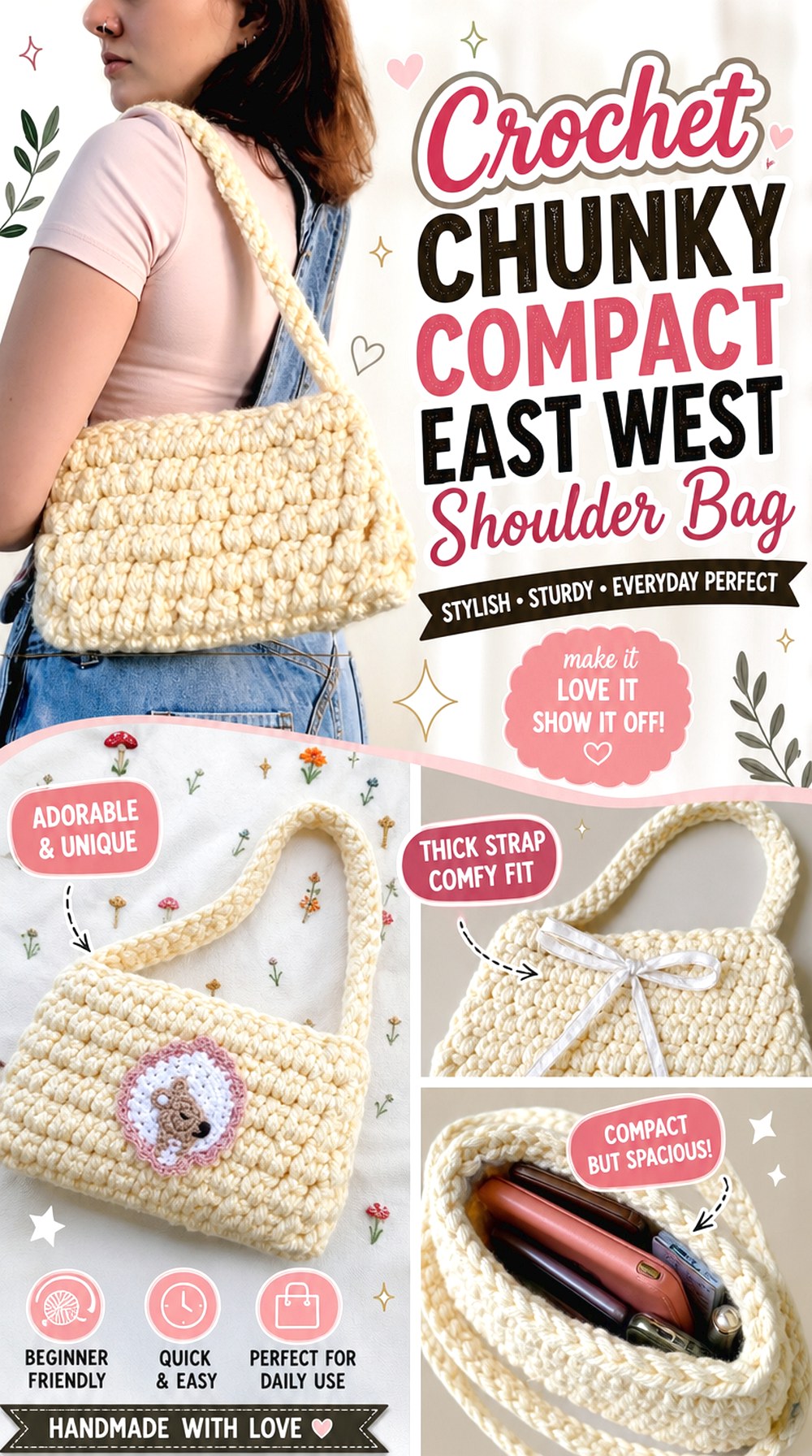
Chunky yarn can make a small East West bag feel plush and substantial without requiring elaborate stitch texture. Thisfairymade’s tutorial demonstrates a chunky baguette shoulder bag and gives this idea a softer visual character than the firmer cord-based options.
The design works best when the body stays compact enough for the thick stitches to feel intentional. A very large bag made from the same scale of yarn could lose the petite baguette effect. If you substitute yarn, pay attention not only to gauge but also to how stiff or compressible the fabric becomes. The same silhouette can look crisp, pillowy, or slouchy depending on that choice.
Chunkiness Adds Visual Size Before Actual Size
A thick stitch creates more volume around every edge. Because of that, a modestly sized body can already appear generous when viewed from the side or worn beneath the arm.
Before increasing the pattern dimensions, finish enough fabric to judge its true bulk. Consider the depth as well as front width; a thick side wall can make the bag feel much larger than a flat photograph suggests.
Keep Surface Detail Simple When Stitches Are Large
Chunky crochet already produces a strong texture. Additional high-relief motifs, bulky edging, and multiple decorative colors can compete for attention on a small horizontal body.
If you want customization, changing the strap, closure, or a single narrow accent may preserve the clean East West silhouette better than covering the whole surface. This is particularly useful when the yarn itself has a distinctive twist or fuzzy texture.
Original Tutorial and Creator Credit
Creator: thisfairymade
Crochet Elongated Barrel East West Bag

An elongated barrel introduces more three-dimensional shaping than a flat baguette. KJ KORN’s Bowie Barrel tutorial specifically demonstrates a long shoulder bag with an extended form, making it one of the clearest choices for readers who want East West width without a completely rectangular body.
Rounded or shaped ends soften the profile while the length still provides the defining horizontal emphasis. This design also gives you more opportunity to explore side construction and accessories. Keep in mind that a deeper or rounder body may project farther from the body than a slim baguette, so the carrying experience can be noticeably different even at a similar front width.
Rounded Depth Changes How the Bag Sits
A barrel-shaped body has volume extending away from the front panel. That extra depth can make the bag feel more substantial beneath the arm, even when its height remains low.
Before changing the side shape, consider where you prefer the bag to sit. A shallower barrel emphasizes the long silhouette, while greater depth creates more of a compact luggage-inspired form. Neither is inherently better; they simply produce different East West interpretations.
Use Embellishment Without Hiding the Long Profile
Bows, charms, or hardware can work well on a barrel bag because the smooth elongated body provides a clear backdrop. The safest approach is to treat decoration as a focal point rather than covering every surface.
Hold the unfinished bag horizontally and identify where the eye naturally lands. A centered detail, an end accent, or strap hardware can provide enough interest while leaving most of the horizontal outline uninterrupted.
Original Tutorial and Creator Credit
Creator: KJ KORN
Crochet Lace Barrel East West Handbag

This barrel idea takes the silhouette in a lighter-looking direction. Nadezhda Lab demonstrates a crochet lace barrel bag with a zipper and hardware, pairing an elongated body with a more open decorative surface. That contrast makes it very different from dense t-shirt-yarn or macramé versions.
Openwork can make a long bag feel less visually heavy, but it also changes practical considerations. Small belongings may show through or push against the fabric, and the opening or base may need more thought if you want a polished everyday purse. Consider lining based on the fabric behavior and intended use rather than treating it as an automatic requirement.
Openwork Makes the Interior More Visible
A decorative lace surface lets light and background color pass through the bag, which becomes part of the design. If you add lining, its color will therefore have a stronger visual effect than it would inside dense crochet.
Test possible lining fabric behind a small section before committing. A close color match makes the lace pattern feel quieter, while contrast can emphasize every opening and turn the fabric structure into a stronger feature.
A Zipper Can Give a Soft Body a Clear Top Edge
The source includes a zipper, which is useful on an elongated bag because it creates a definite boundary across the opening. That can help the top look more controlled even when the crochet body is visually airy.
When combining openwork with hardware, inspect the attachment area carefully. A smoother or denser upper edge may provide a cleaner place to secure the closure than very open stitches.
Original Tutorial and Creator Credit
Creator: Nadezhda Lab
Crochet Structured Boston Style East West Bag
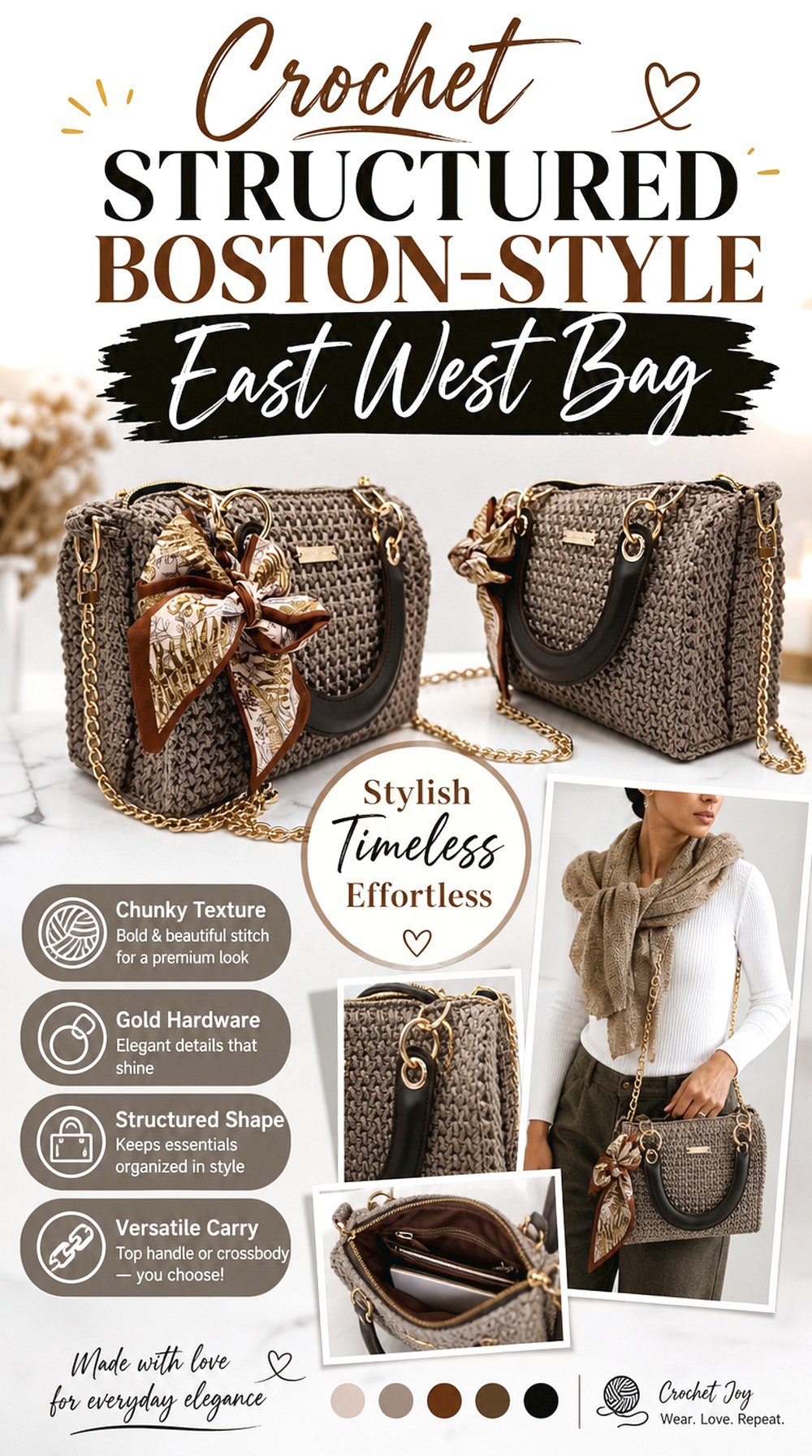
A Boston-inspired crochet bag creates a much more architectural East West shape. Cathérine Crochet’s tutorial demonstrates a structured handbag made from polyester macramé cord and incorporates a zipper, handles, hardware, and optional internal support. The result offers a useful contrast to soft underarm baguettes.
This direction makes sense when you want the horizontal silhouette to remain clearly defined even when the bag is placed on a surface. Because multiple components affect the final shape, modifications should be planned carefully. Changing body width without considering the zipper, base, ends, and handles can create proportion problems. Treat the bag as an integrated structure rather than a simple rectangle with straps.
Structure Starts at the Base, Not the Handles
A firm-looking handbag depends on more than a sturdy handle. The lower section influences whether the body stands cleanly or collapses toward the center.
If you adapt the tutorial, examine how your chosen crochet fabric behaves before adding optional support. Some cord fabrics may already feel substantial, while softer substitutions could need additional consideration. The goal should be enough support for the desired silhouette rather than maximum stiffness everywhere.
Multiple Hardware Points Need Visual Balance
Boston-style bags often have more visible components than minimalist baguettes. Zippers, handle attachments, rings, and optional strap hardware can quickly become major design features.
Lay out the hardware before attaching it and view the bag as a whole. Symmetry becomes more noticeable on an elongated structured body. Even small placement differences at opposite ends can make an otherwise neat horizontal silhouette appear uneven.
Original Tutorial and Creator Credit
Creator: Cathérine Crochet
Crochet Zippered Macramé East West Handbag
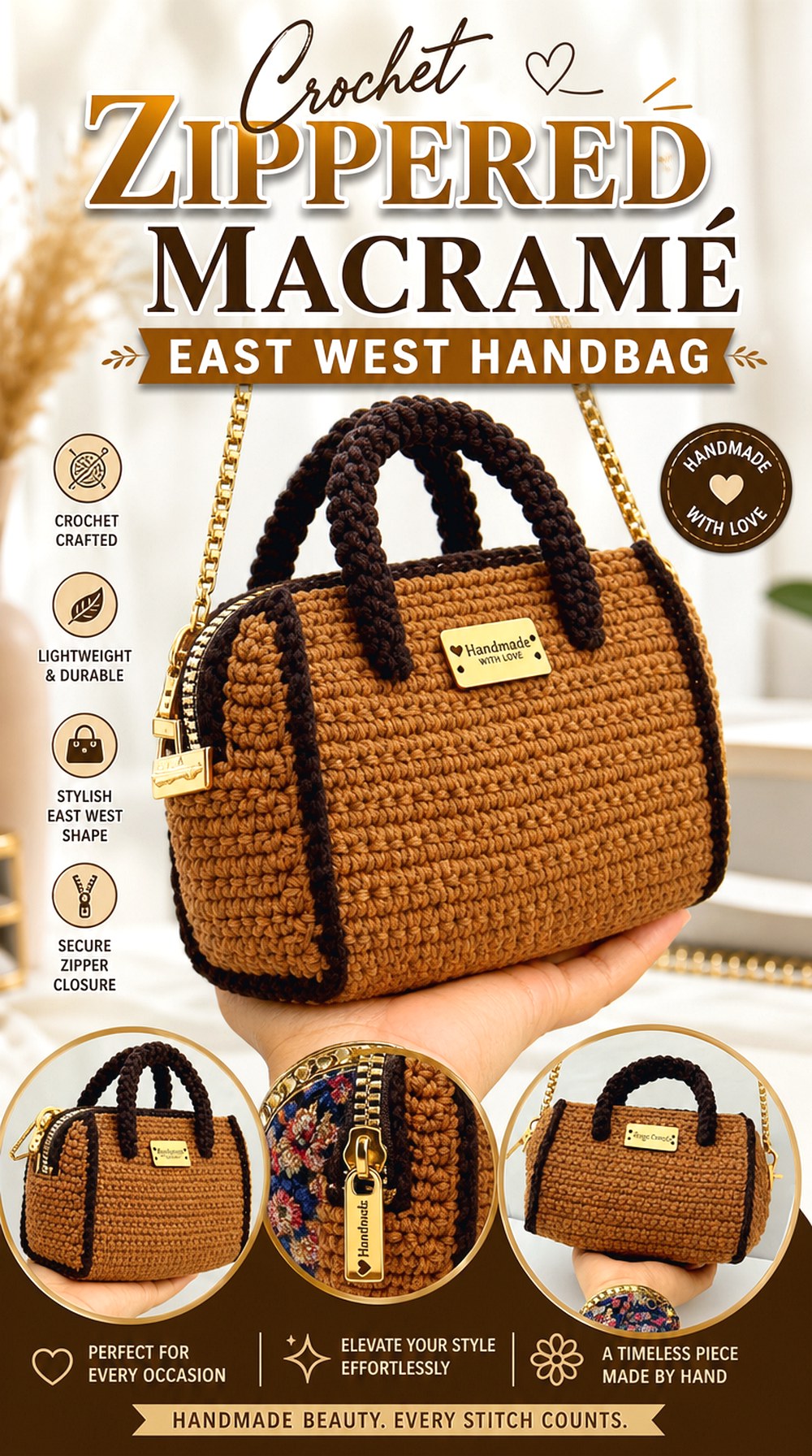
Amena Crochet Bags demonstrates a compact crochet handbag made with cotton macramé yarn and a sewn zipper. Its wider-than-tall proportions make it a useful reference for a polished East West interpretation, especially when you prefer a contained opening rather than an open-top baguette.
The combination of firm-looking cord and a defined zipper line gives this option a clean, controlled shape. If you want to personalize it, consider changing surface texture or strap style before changing overall proportions. The opening, side depth, and width work together, so major dimensional adjustments can affect more than the front panel alone.
Treat the Zipper Length as a Design Constraint
Once a zipper becomes part of the plan, the opening cannot be treated as an afterthought. Choose or confirm compatible hardware before finalizing a customized body width.
A zipper that is too short can make a long bag awkward to access, while forcing one into an opening it does not suit can distort the upper edge. Keep the closure and crochet body in conversation from the beginning.
Macramé Yarn Emphasizes Clean Stitch Placement
Cord-like yarn often makes individual stitches and small irregularities more visible than fuzzy yarn does. That can be an advantage on an East West bag because the firm surface reinforces the geometric outline.
It also means edges deserve attention. Check the top, corners, and side transitions before attaching hardware. Correcting uneven shaping is easier while the body is still accessible than after a zipper and strap components have been added.
Original Tutorial and Creator Credit
Creator: Amena Crochet Bags
Crochet Cluster Texture East West Bag
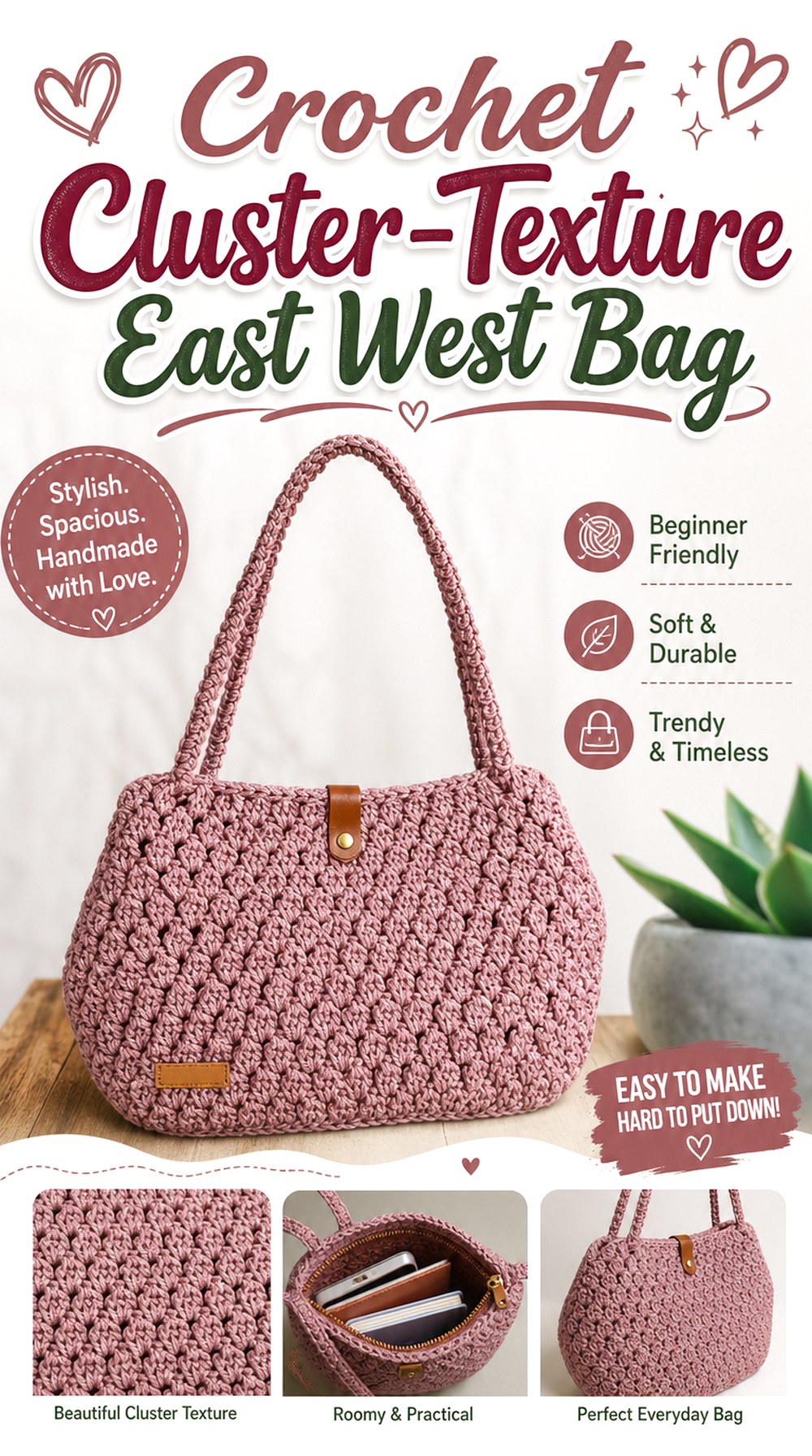
Texture can replace complicated colorwork when you want the front of an East West bag to feel more decorative. MirrymasCrafts demonstrates a wider-than-tall macramé-cord handbag featuring cluster texture, providing a useful reference for combining structure with a pronounced stitch surface.
Because raised stitches add visual density, this version already has a strong front-panel identity. Consider keeping the strap and hardware comparatively simple so the texture remains legible. If you change the yarn, remember that a softer or fuzzier strand may reduce stitch definition. Make sure the feature you are choosing the design for will still be visible in the material you intend to use.
Raised Texture Can Visually Shorten the Bag
Large repeated clusters create vertical and horizontal rhythm across the front. On a very compact East West body, prominent texture can make the surface feel busier and less elongated.
Stand back from your work periodically instead of judging it only from close range. If the body is beginning to look square, preserving more plain space near the edges or adjusting the overall proportions can help restore the long visual line.
Choose Yarn That Lets the Pattern Be Seen
A complex surface is wasted if the yarn hides every stitch. Smooth cord or clearly plied yarn generally reveals texture more strongly than long-pile or highly fuzzy material.
That does not mean fuzzy yarn cannot be used, but it changes the purpose of the stitch pattern. Decide whether you want visible structure or simply a soft uneven surface before substituting. Swatching is especially valuable for this type of design.
Original Tutorial and Creator Credit
Creator: MirrymasCrafts
Crochet Bobble Texture East West Shoulder Bag

Bobble or bean-style texture gives a compact shoulder bag a softer, more dimensional appearance than flat single-color crochet. xStitchesAndCo Crochet demonstrates a chunky textured shoulder bag using doubled DK yarn, making this option useful when you want tactile interest without relying on motifs or hardware.
For an East West adaptation, keep the body shallow enough that the raised stitch surface does not overwhelm the silhouette. The texture already adds physical and visual thickness, so the design can feel substantial at a relatively small size. A restrained strap and simple upper edge help balance the more active front and back surfaces.
Raised Stitches Add Thickness as Well as Decoration
Bobble-style fabric does not behave exactly like flat crochet. The surface can become thicker and may require more room inside a narrow bag than you expect.
Before deciding on final depth, fold or hold a sample in the approximate bag shape. This gives a more realistic impression of how the fabric layers behave together and whether the intended East West profile still feels compact.
Avoid Competing With the Texture at the Opening
A highly textured body can support a visually simple opening. Adding a large flap, oversized edging, and multiple decorative closures may create unnecessary competition near the top.
If security matters, choose the closure primarily for function and then assess how visible it needs to be. Keeping the upper line quiet allows the bobble surface to remain the obvious design feature.
Original Tutorial and Creator Credit
Creator: xStitchesAndCo Crochet
Crochet Ruched Popcorn East West Bag
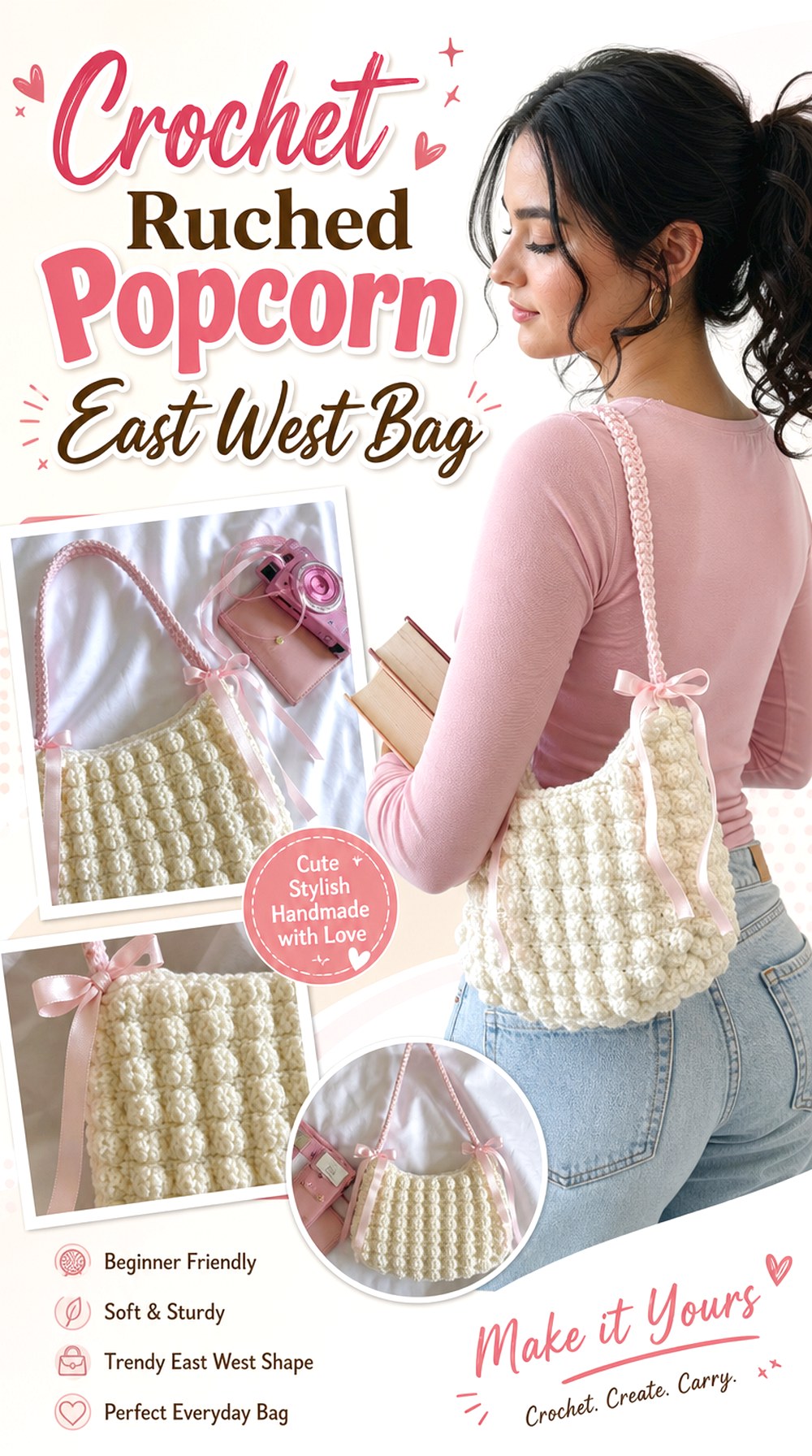
Mahum’s ruched popcorn bag offers a more dramatic textured option. The tutorial is designed to be customizable and can produce different bag formats, including shoulder-sized versions, while the puff or popcorn surface introduces a gathered, dimensional look unlike the cleaner rectangular bags in this collection.
For an East West interpretation, concentrate on a shallow horizontal body rather than increasing both height and width. The ruched surface naturally makes the bag look fuller, so restraint in overall size can keep it wearable beneath the arm. The source also includes a zipper, giving you a useful construction reference if you want an enclosed textured purse rather than an open-top version.
Ruching Changes the Apparent Size of the Surface
A gathered or puffed fabric can look smaller in one area and fuller in another even when the underlying construction is regular. That makes visual checking especially important.
Lay the bag flat without stretching it and examine the natural resting shape. The proportions should be judged from that relaxed state, not by pulling the fabric into a perfectly rectangular outline that it will not maintain while carried.
A Zipper Helps Define a Very Textured Opening
When the surface is full of raised stitches, the opening can visually disappear into the texture. A zipper creates a clear functional boundary and may make the bag easier to understand at a glance.
Keep bulky stitches clear of moving zipper parts. If necessary, consider a tidier transition area around the upper edge rather than forcing maximum texture right up against the closure.
Original Tutorial and Creator Credit
Creator: mahum 🎀
Crochet Soft Everyday East West Shoulder Bag
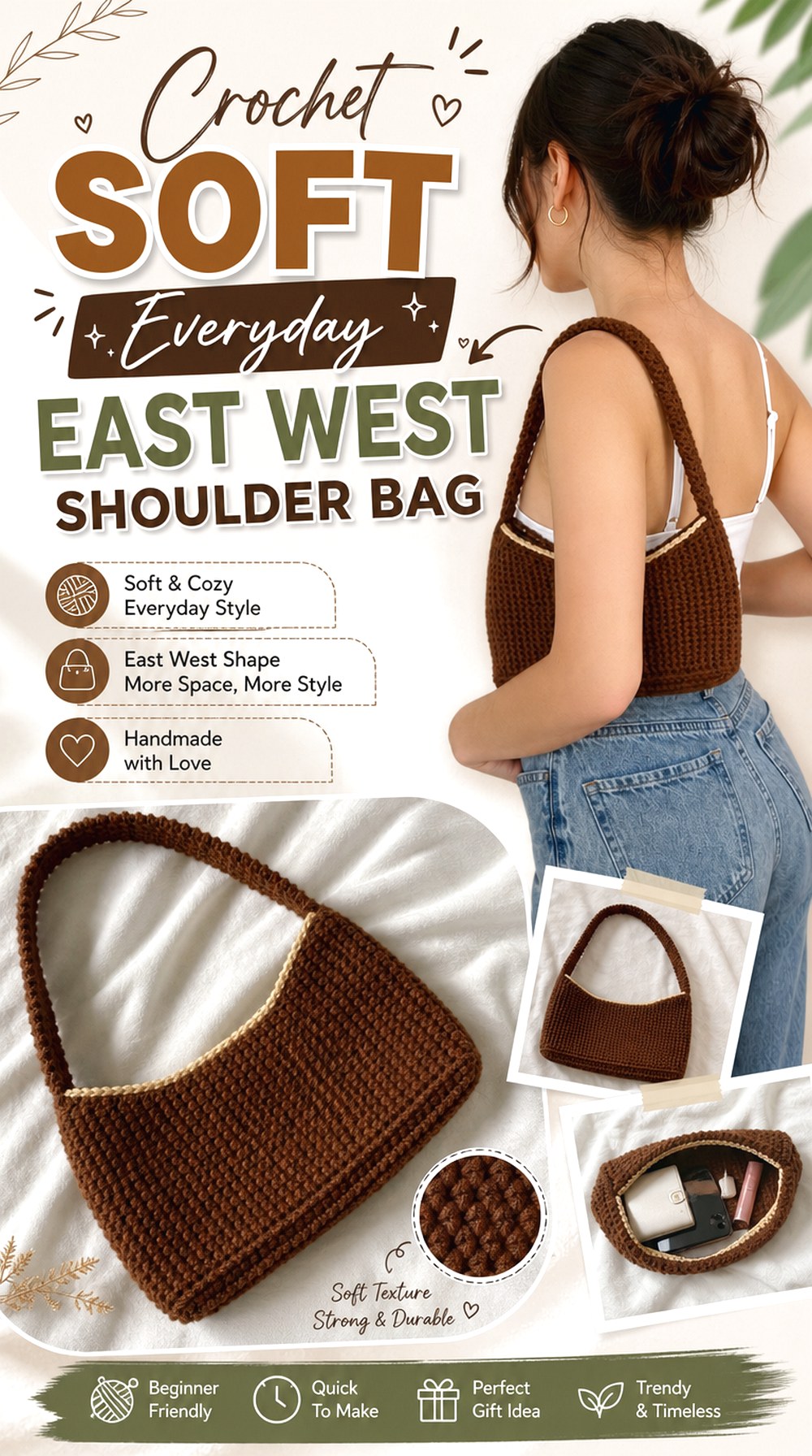
Not every East West bag needs hardware or dramatic texture. Crochet daniela’s shoulder-bag tutorial demonstrates a straightforward soft bag made with medium-weight yarn, providing a useful base for a relaxed everyday interpretation.
This style suits readers who prefer the horizontal profile but do not want the stiffness of cord or plastic support. The main trade-off is shape retention. Softer yarn can create a more comfortable underarm bag, but it may stretch or sag more noticeably. If maintaining a crisp East West line matters, test the body with a few lightweight everyday objects before deciding whether lining or additional support would improve the result.
Soft Fabric Creates a More Casual Carry
A flexible bag tends to conform to its contents and the body rather than maintaining a rigid outline. That can be comfortable for a shoulder bag and may suit casual styling particularly well.
Decide whether that movement is part of the look you want. If the empty bag already collapses more than expected, increasing its width may exaggerate the effect. Structure can be added selectively instead of turning the entire project rigid.
Pay Attention to Strap Stretch Before Final Length
A crochet strap that looks perfect while the bag is empty may sit noticeably lower after the fabric relaxes. Before committing to the final carrying length, gently load the unfinished bag and observe how the strap behaves.
This is a practical checkpoint rather than a reason to avoid crochet straps. Different yarns and stitch fabrics stretch differently, so the behavior of the actual project is more informative than a universal strap-length recommendation.
Original Tutorial and Creator Credit
Creator: crochet daniela
Crochet Mini Underarm East West Bag

A miniature shoulder bag makes the East West proportion especially obvious because very little vertical space is needed. VivCrochets’ mini shoulder-bag tutorial demonstrates a compact baguette-style form worked in rounds with an integrated-looking shoulder strap.
This is a useful direction when you want a small accessory rather than a roomy handbag. Because capacity is naturally limited, plan around the belongings you actually expect to carry rather than increasing the body randomly. A phone, card case, or other essential may determine the minimum useful opening more effectively than appearance alone. Keep in mind that the source creator provides specific dimensions for the demonstrated version; adaptations should be checked independently.
Check the Opening Against Your Real Essentials
A mini bag can look perfectly proportioned while still being inconvenient if its opening does not suit the items you expect to use most often.
Before completing the upper edge, compare the width and flexibility with those belongings. Do not judge only by external width because side seams, fabric thickness, and the opening construction can reduce usable interior space.
Small Bags Magnify Strap-Proportion Mistakes
Because the body is petite, an oversized strap can dominate the finished design. At the same time, a very narrow strap may stretch or visually disappear.
Temporarily position the strap before finishing and view the whole bag on the body. This helps determine whether the shoulder drop supports the intended underarm look and whether the attachment points keep the miniature body level.
Original Tutorial and Creator Credit
Creator: VivCrochets
Crochet Folded Rectangle East West Bag
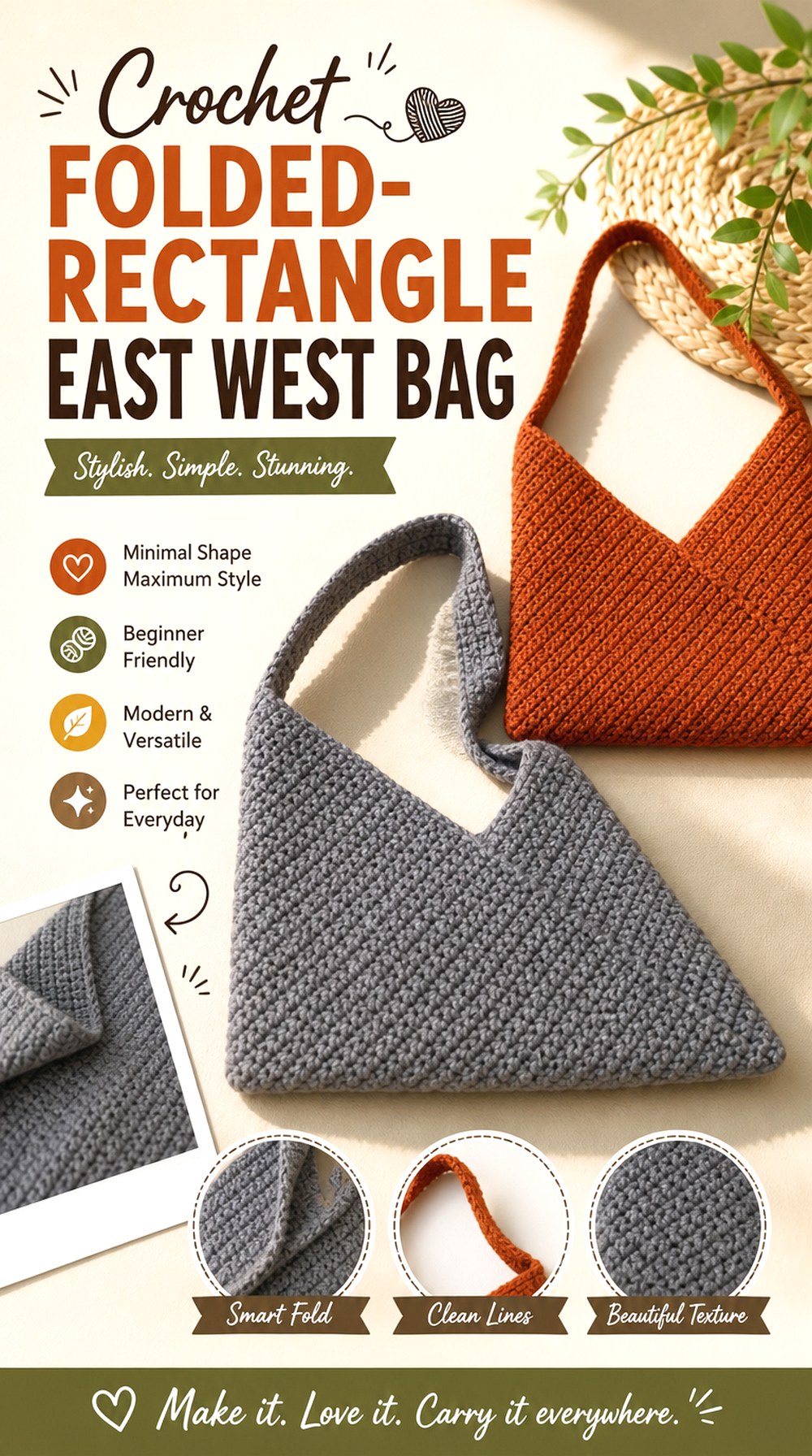
Stitchly Stitched demonstrates how a crochet rectangle can be transformed into a bag, making this idea valuable for readers who prefer starting from a simple geometric piece rather than shaping an entire handbag in the round.
For an East West version, the rectangle’s final folded proportions become the major planning decision. A wider, shallower finished front will give the desired horizontal appearance; a deeper fold can make the same concept look much more like a standard purse. This construction is also interesting for stripes or directional stitch patterns because the orientation of the original rectangle can remain visible after assembly.
Plan the Fold Before Finishing the Entire Rectangle
A flat panel may look very different once sections overlap or become sides. Instead of relying only on the dimensions of the flat piece, mock up the fold periodically with removable clips.
This reveals the actual front width, height, and opening position before too much work is committed. It is especially helpful if you are modifying the source concept toward a more pronounced East West silhouette.
Directional Texture Can Emphasize Width
Rows, ribs, or color bands running horizontally can visually reinforce an elongated bag. Vertical texture can create the opposite effect and make the body appear taller.
Neither orientation is wrong, but it is worth deciding deliberately when the bag begins as one large rectangle. Consider the finished folded orientation before selecting stripes or other directional details.
Original Tutorial and Creator Credit
Creator: Stitchly Stitched
Crochet Panel Built East West Carry Bag
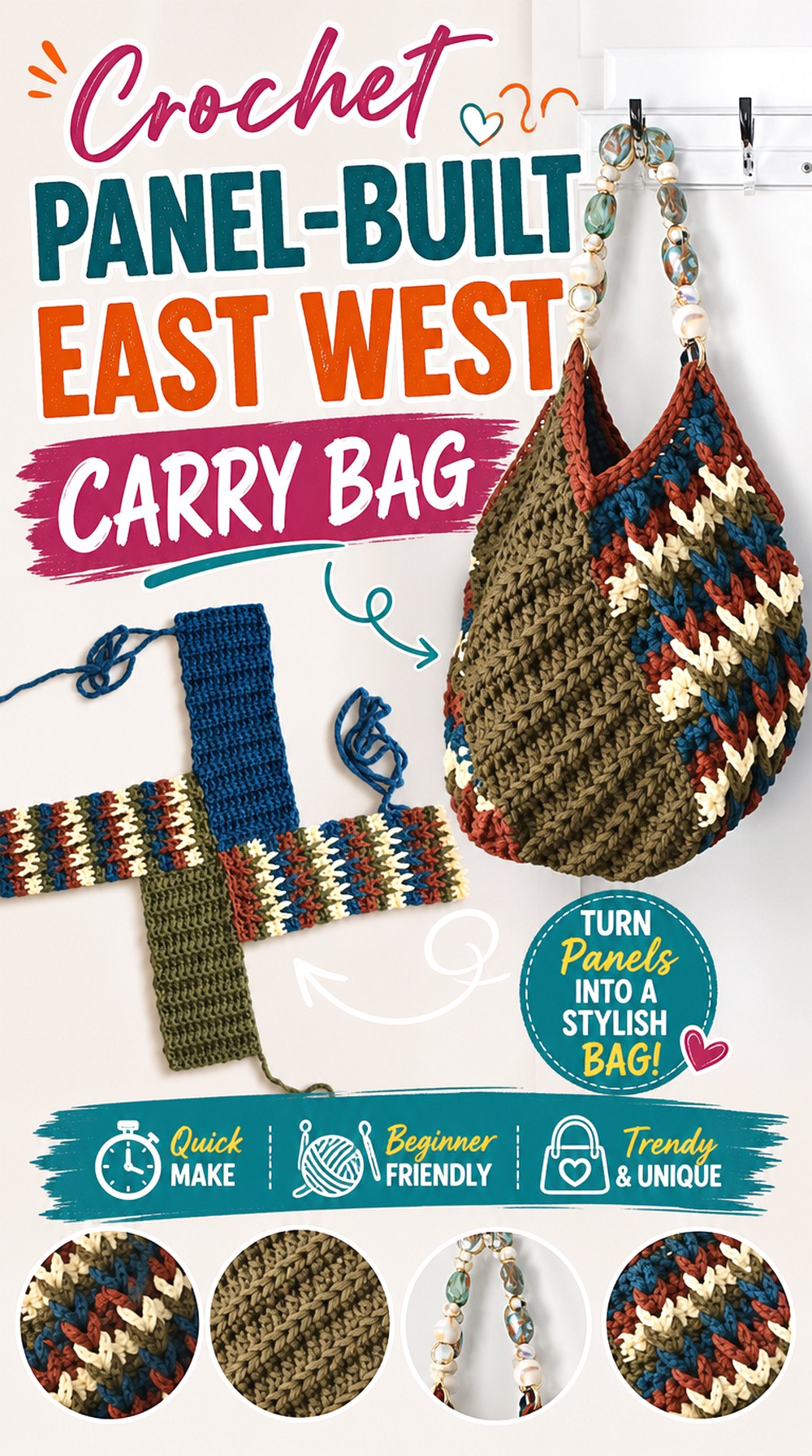
Brunaticality’s tutorial builds a crochet bag from panels and finishes it with handles, offering another construction route that can be adapted toward a broad East West profile. Rather than relying on one continuous tube or motif grid, the bag develops through separate fabric sections that are later assembled.
For an East West interpretation, keep the front and back width dominant and avoid adding excessive height. The panel format also makes controlled color blocking practical because each piece can have a clear visual role. This option suits readers who enjoy planning the finished geometry before joining rather than allowing the body to develop continuously in rounds.
Match Panel Dimensions Before Joining
Even panels intended to be identical can change slightly because of tension. Differences that seem small while the pieces are separate may create uneven corners or a twisted top after assembly.
Lay matching panels directly on top of one another before joining. If dimensions vary, address the discrepancy at that stage rather than expecting seams or handles to hide it.
Use Color Blocking to Reinforce the Long Shape
Panel construction gives you natural places for color changes, but highly contrasting vertical blocks can visually divide the width. If you want the bag to look especially long, consider how each panel boundary guides the eye.
Broad horizontal areas, subtle contrast, or repeated edge colors can preserve more visual continuity. Strong vertical divisions work too, but they create a more segmented East West look.
Original Tutorial and Creator Credit
Creator: Brunaticality
Crochet Slouchy East West Hobo Bag
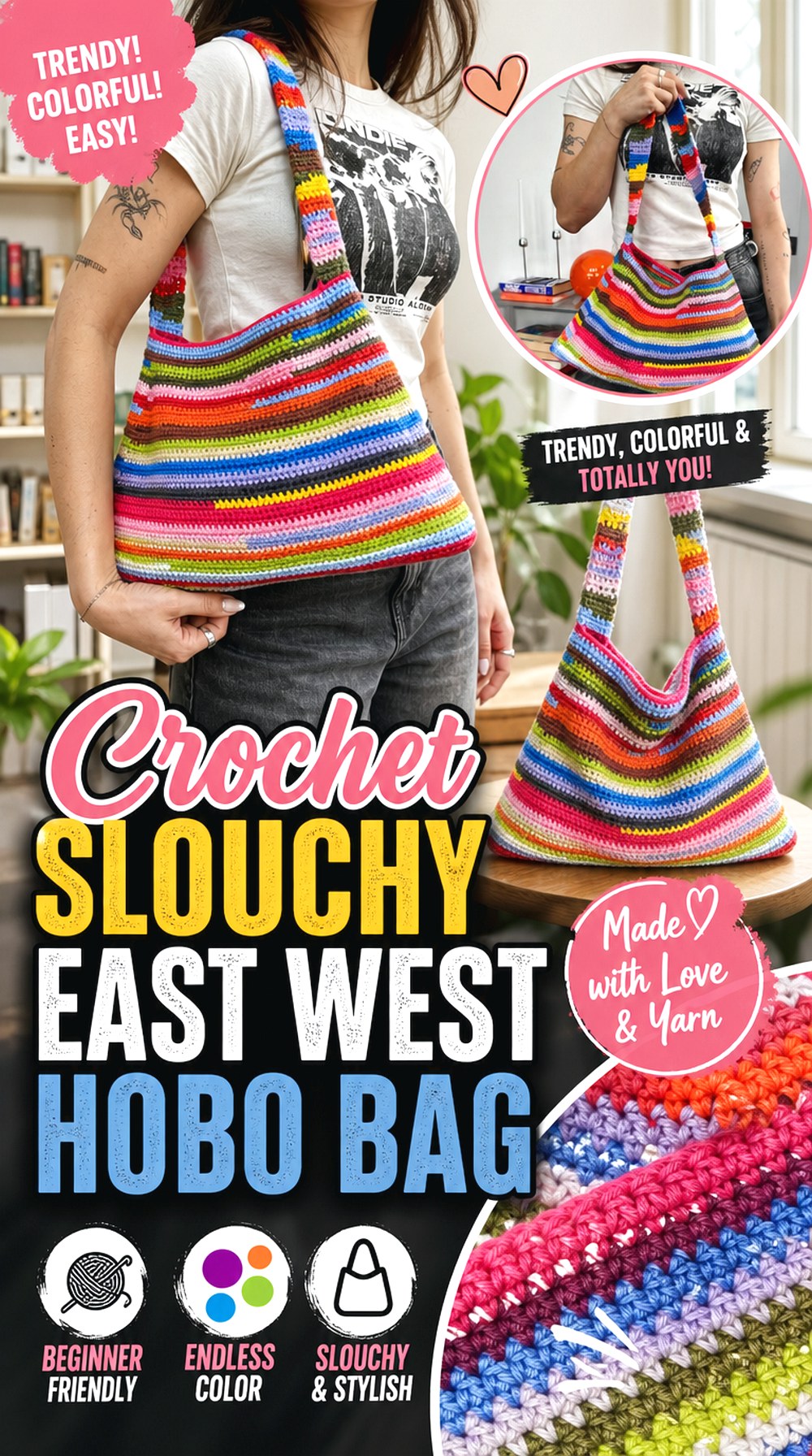
An East West bag can be soft and curved instead of rectangular. Kenikse Crochet’s slouchy bag tutorial demonstrates a relaxed body with integrated handle development, providing a useful reference for a horizontal hobo variation.
To keep this adaptation within the East West family, aim for a shallow body with generous width rather than turning it into a deep tote. The softer silhouette works well when you want the bag to fold and drape naturally against the body. That flexibility also means the exact empty shape may change once the bag is carried, so judge it both flat and with a modest amount inside.
Preserve Width Without Adding Too Much Depth
A hobo already has visual fullness because of its curved or slouching body. Adding substantial vertical depth can quickly overpower the horizontal emphasis.
When adapting the proportions, compare the side profile with the front. A bag that looks long when empty may become much rounder once filled, especially when made from soft cotton or another flexible yarn.
Integrated Handles Change the Upper Silhouette
A handle that grows from the bag body creates a smoother transition than separately attached hardware. It can also pull the upper corners inward and make the opening narrower.
Before finalizing the body width, consider this narrowing effect. The finished East West line is determined by the carried shape, not just the widest point of the flat crochet fabric.
Original Tutorial and Creator Credit
Creator: Kenikse Crochet
Crochet Zippered Rope East West Shoulder Bag
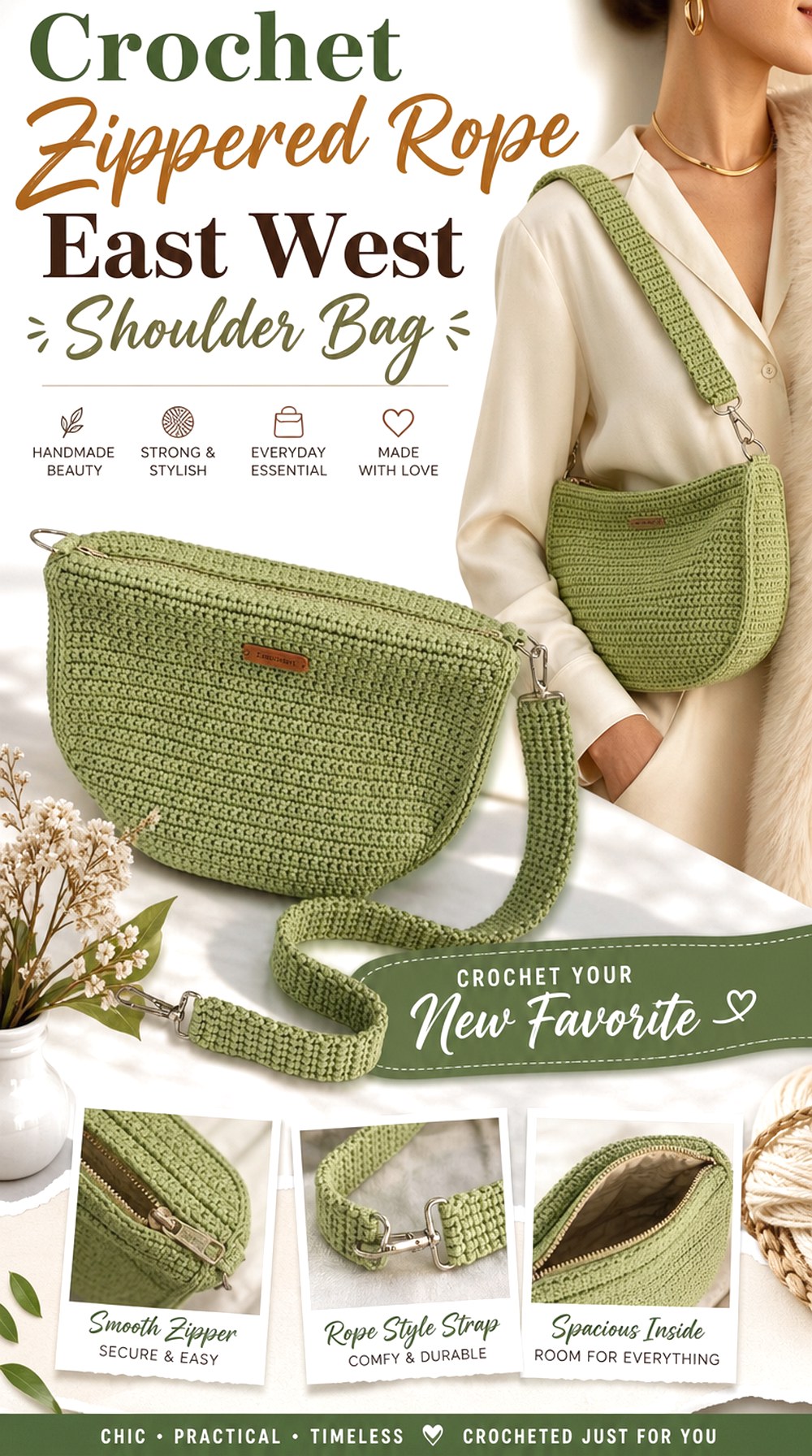
Kane Crochet demonstrates a shoulder bag made with polypropylene or macramé-style rope, a zipper, D-ring hardware, and detachable strap components. Those details give this idea a distinctly finished handbag character and make it useful for an East West version intended to look more structured than a soft yarn purse.
The demonstrated source bag is a general shoulder-bag construction rather than an explicitly named East West pattern, so adaptation should focus on proportion rather than copying dimensions. Keep the width clearly dominant over height and verify that the zipper, side depth, and strap attachments remain balanced after any modification.
Detachable Hardware Adds Carrying Options
D-rings and clasps make it possible to treat the strap as a separate design element. You could keep a short shoulder carry as the primary East West look while allowing another compatible strap for different situations.
The attachment points need to be considered early, however. Make sure the crochet fabric around them remains neat and sufficiently supported before adding the weight and movement of hardware.
Rope Yarn Creates a Sharper Outline
Firm cord or rope tends to show edges and corners more clearly than soft, fuzzy yarn. That can help preserve the long geometry of an East West bag.
It also means uneven joins or distorted zipper edges may be more noticeable. Examine the body from the front and top before completing assembly, and correct shape issues while the pieces are still easy to handle.
Original Tutorial and Creator Credit
Creator: Kane Crochet
Crochet Wavy Edge East West Shoulder Bag

A wavy silhouette breaks up the straight lines usually associated with East West bags. Ella Ethier’s tutorial builds a shoulder bag around repeated wave shaping, creating a distinctive option for readers who want the width of a horizontal bag without a rigid rectangular outline.
The wave pattern already provides strong movement, so additional decoration can remain minimal. Color changes are an obvious way to emphasize the curves, but a single shade can make the shaping itself more prominent. Because shaped edges change the visual width from point to point, judge the overall silhouette from the widest and narrowest areas rather than expecting every section to align like a rectangle.
Let the Waves Be the Main Design Feature
When a bag has a strongly shaped outline, complicated motifs may compete with the silhouette. Decide whether you want the eye to follow the curves or focus on surface decoration.
If the wavy construction is the priority, a limited palette and restrained strap generally help. For more playful styling, contrasting bands can emphasize each rise and dip without requiring separate appliqués.
Check Whether the Opening Still Feels Practical
A sculpted bag body can create narrower sections near the top. Before finishing the carrying edge, check how easily you can reach into the bag and whether the opening remains useful for its intended contents.
This is especially important when adapting width or wave count. A visually successful East West profile still needs an opening that makes sense in everyday handling.
Original Tutorial and Creator Credit
Creator: ella ethier
Crochet Flower Square East West Shoulder Bag

Flower motifs provide the most decorative interpretation in this collection. Azariah Crochets demonstrates a shoulder bag assembled from flower squares and finished with a scalloped upper treatment and strap. For an East West adaptation, arrange the motif layout so the finished front remains clearly wider than tall instead of drifting into a square tote shape.
This approach lets individual motifs provide the visual interest, making extra surface embellishment unnecessary. It is also a good use case for careful blocking because independently crocheted squares need compatible dimensions before joining. The East West silhouette will only look clean if the motif grid itself remains consistent.
Block the Flower Squares Before Planning the Final Grid
A motif can change slightly after blocking, especially around corners and petal-heavy sections. Planning the bag from unblocked pieces may therefore give a misleading estimate of finished width and height.
Prepare the motifs consistently, then arrange them on a flat surface before committing to the joins. This is the point to decide whether the layout is sufficiently horizontal for the East West look.
Keep the Scalloped Edge From Overcrowding the Flowers
The source includes a scalloped treatment along the upper area. Decorative edging can complement floral motifs, but both elements demand attention.
View the joined body before choosing additional color changes or embellishments around the opening. If the flowers already create a busy surface, a quieter scallop color can frame them instead of competing with them.
How to Choose Between These Crochet East West Bag Styles
Start with structure rather than decoration. If you want a clean, close-fitting underarm bag, the classic baguette, mini shoulder, center-panel, or chunky compact versions keep the profile relatively simple. For a handbag that holds a more defined three-dimensional form, look toward the Boston-style, macramé zipper, rope, or barrel constructions.
Texture changes the visual weight. Bobbles, popcorn stitches, clusters, and flower squares create stronger surfaces, while the plain everyday and minimalist baguette versions leave more room for color or hardware to stand out. The slouchy hobo is the most relaxed option, while the wavy bag changes the silhouette itself. If security is important, prioritize the zipper or magnetic-snap designs before choosing based solely on appearance.
Conclusion
The strongest Crochet East West bag idea is the one that matches both the silhouette you want and the way you plan to carry it. Choose a slim baguette or mini bag for a close underarm profile, a barrel or Boston-inspired design for more three-dimensional structure, or a bobble, popcorn, flower, cluster, or wavy version when surface character matters more.
Yarn behavior deserves as much attention as color. Softer fibers encourage drape, while cord and rope can make the horizontal outline more defined. Closures and straps can also change the final appearance significantly. Once you have chosen your direction, use the original creator tutorials for their exact construction details and verify any measurements or materials you plan to adapt.
Frequently Asked Questions
What shape makes a crochet bag an East West bag?
An East West bag is generally recognized by a width-dominant silhouette: the body runs farther from side to side than it does vertically. It can be rectangular, curved, barrel-shaped, or softly slouched. There is no single required crochet construction. When adapting another bag design, judge the finished carried shape rather than the flat fabric alone, because side depth and strap tension can change the apparent proportions.
What yarn works well for a Crochet East West bag?
That depends on whether you want structure or drape. Firm cotton, cord, t-shirt yarn, and similar materials can help emphasize a defined horizontal outline. Softer yarns can create a relaxed underarm or hobo effect but may stretch more. Rather than assuming a particular fiber is universally best, crochet a small sample and check its stretch, thickness, stitch definition, and recovery before committing to the entire bag.
Should a Crochet East West bag be lined?
Lining is useful when you want to reduce stretching, contain small objects, hide the reverse side of colorwork, or add a more finished interior, but not every design requires it. Openwork and very stretchy bags are stronger candidates for lining than dense compact crochet. Check how the completed fabric behaves first. If you add lining, avoid making it so small that it pulls the crochet body out of shape.
How can I stop an East West crochet bag strap from stretching?
Start by checking the actual strap fabric under gentle load, because yarn and stitch choices behave differently. A very stretchy crochet strap may benefit from a denser construction, a less elastic reinforcing material, or another supported strap concept. Attachment points matter too. Reinforcing only the center of a strap will not solve distortion if the upper corners of the bag are being pulled out of shape.
Can I turn a regular shoulder-bag tutorial into an East West bag?
Often, but changing width alone may affect the entire construction. Check how the front and back connect to the sides, how wide the opening needs to be, where straps attach, and whether the closure still fits. A general shoulder-bag tutorial is easiest to adapt when the body dimensions can change independently. More structured bags may require coordinated changes to the base, ends, zipper, or hardware.
Is a zipper better than a magnetic snap for a Crochet East West bag?
They solve different problems. A zipper gives more containment and creates a clear line across a long opening, making it useful for structured or everyday handbags. A magnetic snap is visually quieter and can suit a compact baguette when easy access matters. Consider the crochet fabric as well: either closure needs an attachment area that can tolerate repeated opening without becoming distorted.