Crochet opera masquerade masks can range from delicate thread lace to firm graphic eye coverings, so choosing a design involves more than deciding between black, gold, or jewel tones. Some masks rely on openwork and shaping for their drama, while others use scalloped borders, sequins, pearls, wire, or a bold silhouette to create a stronger theatrical effect.
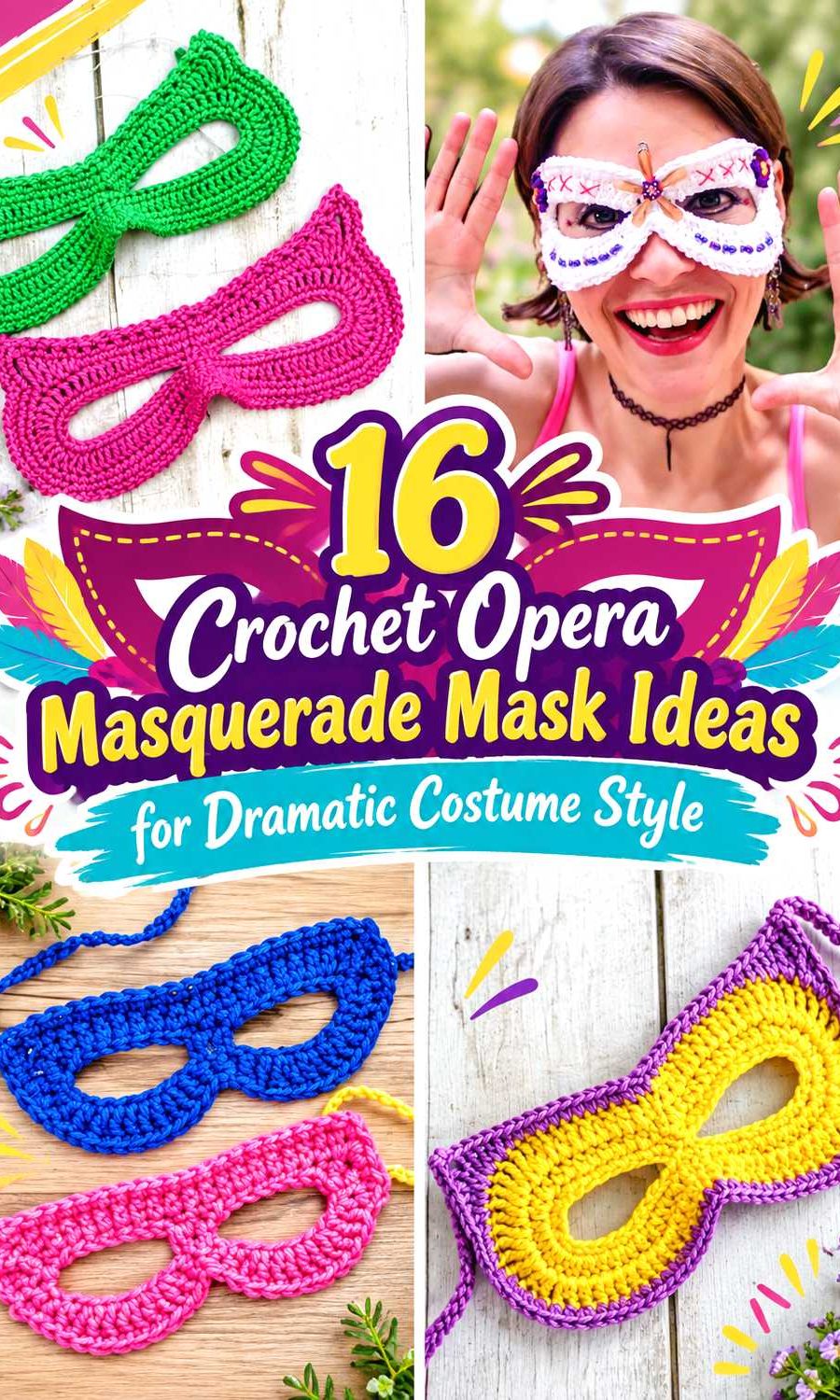
The tutorials in this collection include genuine masquerade and carnival masks along with a few simpler costume-mask constructions that can serve as practical foundations for a more formal opera interpretation. The comparisons focus on fit, structure, eye visibility, fastenings, embellishment weight, and how much adaptation each concept needs before it suits an evening masquerade.
Quick List
- Gothic Wire-Framed Crochet Opera Masquerade Mask
- Lace-Fan Crochet Masquerade Ball Mask
- Fine-Thread Crochet Carnival Eye Mask
- Jewel-Accent Crochet Opera Carnival Mask
- Classic Crochet Venetian Eye Mask
- Scalloped Crochet Opera Masquerade Mask
- Rounded Crochet Carnival Masquerade Mask
- Pearl-Centered Crochet Evening Mask
- Sequin-Trim Crochet Gala Eye Mask
- One-Piece Picot Crochet Masquerade Mask
- Sugar-Skull Crochet Opera Costume Mask
- Catrina-Inspired Crochet Floral Mask
- Multi-Size Crochet Formal Eye Mask
- Minimal Crochet Shadow Masquerade Mask
- Twin-Oval Crochet Opera Eye Mask
- Skull-Accent Crochet Halloween Masquerade Mask
Choose the Mask Structure Before Adding Opera Drama
Fine crochet thread creates the closest visual connection to traditional lace masquerade masks because small openings and pointed borders remain easy to distinguish. It also produces a lighter-looking piece that may need deliberate shaping or structural support. Crocket Crochet’s gothic design, for example, incorporates wire into its mask structure, while other carnival tutorials depend more heavily on the crocheted fabric itself.
A thicker yarn creates a more graphic eye-mask silhouette and can be useful when you want the crochet itself to remain obvious across a ballroom or stage setting. The trade-off is reduced lace delicacy. Decide whether the finished mask should read first as textile lace, a sculpted costume accessory, or a decorated solid form. That choice should guide yarn substitutions, border treatment, stiffening, and embellishment rather than trying to force every tutorial into the same appearance.
Fit the Eye Openings Before Decorating the Mask
The most elaborate mask can still fail as a wearable accessory if its eye openings sit incorrectly. Check the relationship between the wearer’s eyes, nose bridge, temples, and overall mask width while the piece can still be adjusted. Several source tutorials approach sizing differently: Laura Brian provides multiple wearer sizes, while EasyBreezyFlow explicitly says the demonstrated mask is not a standard adult or child size and can be customized.
Fastenings matter too. Ribbon provides adjustability and fits traditional masquerade styling particularly well, while elastic can disappear more easily beneath hair. Whatever you choose, test the mask under actual wearing tension before adding heavy beads or sequins. If the fastening pulls the outer corners backward, the eye openings may narrow or tilt even though they appeared balanced while the mask was lying flat.
Make a Carnival Tutorial Look More Like an Opera Mask
Opera-inspired styling does not require covering every available surface with decoration. Start with silhouette. High outer points, defined brows, scalloped lace, elongated sides, or a dramatic center peak can create theatrical presence before the first bead is attached. Black, burgundy, midnight blue, plum, antique gold, or deep green can move a brighter carnival construction toward a more formal evening mood.
Then choose one dominant finishing language. A lace-forward mask may need only a narrow metallic thread accent. A solid mask can carry a stronger jeweled border. Sequins can highlight outer corners, while one pearl or crystal focal point can emphasize the center. Keep embellishments away from the inner eye edges and check peripheral vision after every significant addition. More decoration is not automatically more dramatic if it obscures the crochet or makes the mask difficult to wear.
Gothic Wire Framed Crochet Opera Masquerade Mask
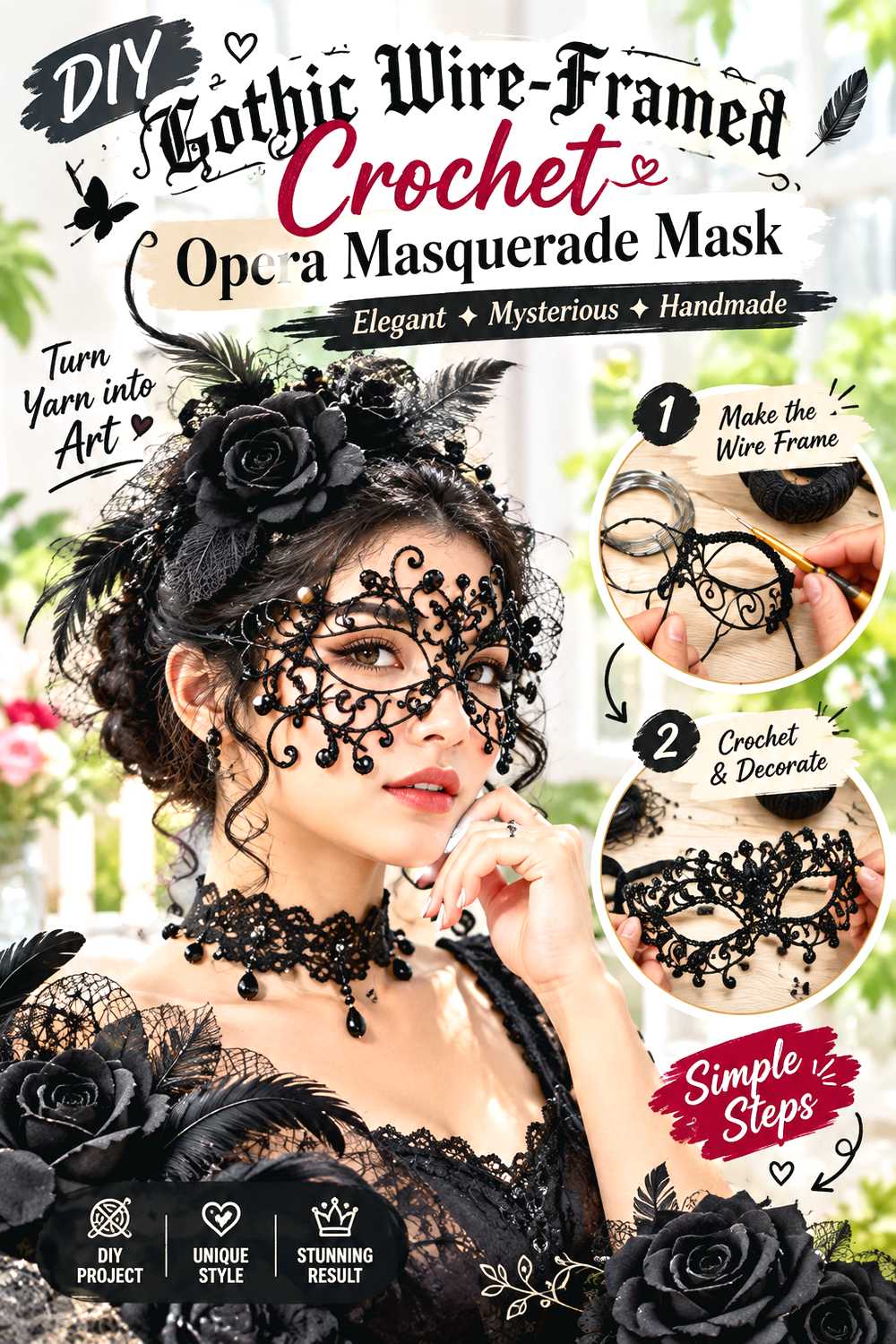
This is the most directly opera-ready concept in the collection. Crocket Crochet’s tutorial combines fine black crochet with a wire framework, rhinestone beads, crystal details, and ribbon, producing a much more sculptural result than a soft yarn-only eye mask. The high, elaborate outline suits a gothic ballroom, dark-romantic costume, or formal masquerade where the mask is expected to become a central accessory rather than a small finishing detail. Because the support system is integrated into the design, this idea is particularly useful when you want crisp lace contours that will not simply collapse against the face.
The Wire Frame Controls the Theatrical Outline
The tutorial uses separate wire considerations for the main framework and eye area, making structure part of the design rather than a later correction. That matters for an opera mask because tall points and elaborate outer curves need to remain deliberate when worn. Fit the basic frame carefully before treating the lace as finished. A dramatic silhouette should follow the face comfortably rather than creating sharp bends or pressure points around the brow and temples.
Crystals Work Best as Defined Focal Points
The source incorporates rhinestone and crystal details, but the openwork still deserves to remain visible. If you adapt the embellishment, identify a few structural points that deserve sparkle instead of filling every opening. A center accent, symmetrical brow details, or controlled outer-corner decoration can catch light while preserving the contrast between the crocheted lace and the wearer’s skin. That negative space is a large part of what makes the mask look refined.
Coordinate the Choker Without Making a Costume Set Too Busy
The original tutorial also pairs the mask with a gothic choker. For an opera-inspired outfit, that gives you a useful styling choice: repeat one material or motif between the two pieces rather than duplicating every decoration. A shared bead type, ribbon finish, or thread color can establish connection while keeping the mask as the main focal point.
Original Tutorial and Creator Credit
Creator: Crocket Crochet
Lace Fan Crochet Masquerade Ball Mask
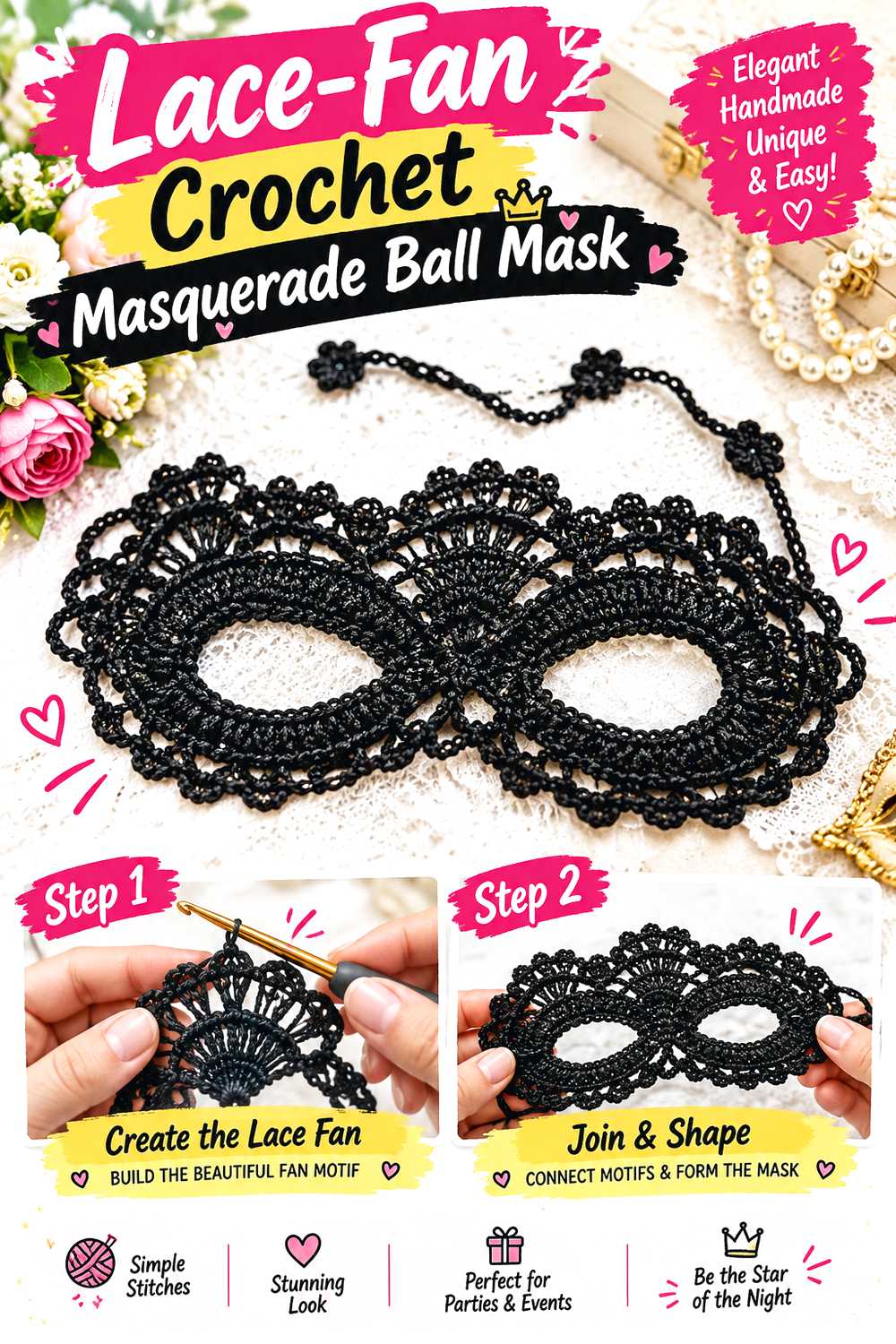
Crochet Lyn’s masquerade-ball tutorial is a natural starting point for readers who want recognizably decorative eye-mask styling without moving all the way into a heavily engineered wire piece. The finished concept is more ornamental than a plain superhero mask, giving it stronger potential for opera, evening photography, costume balls, and theatrical styling. A monochrome version would emphasize the crochet shapes, while selective metallic details could make its wider decorative sections stand out under event lighting. Compared with the first project, this direction puts more emphasis on the crochet silhouette itself and less on jewelry-like framework.
Keep the Decorative Spread Balanced Around the Eyes
A wider ornamental border creates presence, but it can also make small fitting errors more noticeable. Check that the left and right sides sit at comparable heights once the mask is on the face. Do this before adding any permanent side embellishment because extra visual weight can exaggerate an already uneven tilt.
Use Contrast to Show the Lace From a Distance
Very dark yarn can make smaller details blend together in low light. If you want a black opera mask, consider allowing the open spaces to supply most of the contrast and keeping decorative thread or beads limited to the strongest edges. Deep burgundy, charcoal, or midnight blue can also give the mask a dark formal character while retaining more visible stitch definition than a completely black-on-black costume.
Original Tutorial and Creator Credit
Creator: Crochet Lyn
Fine Thread Crochet Carnival Eye Mask
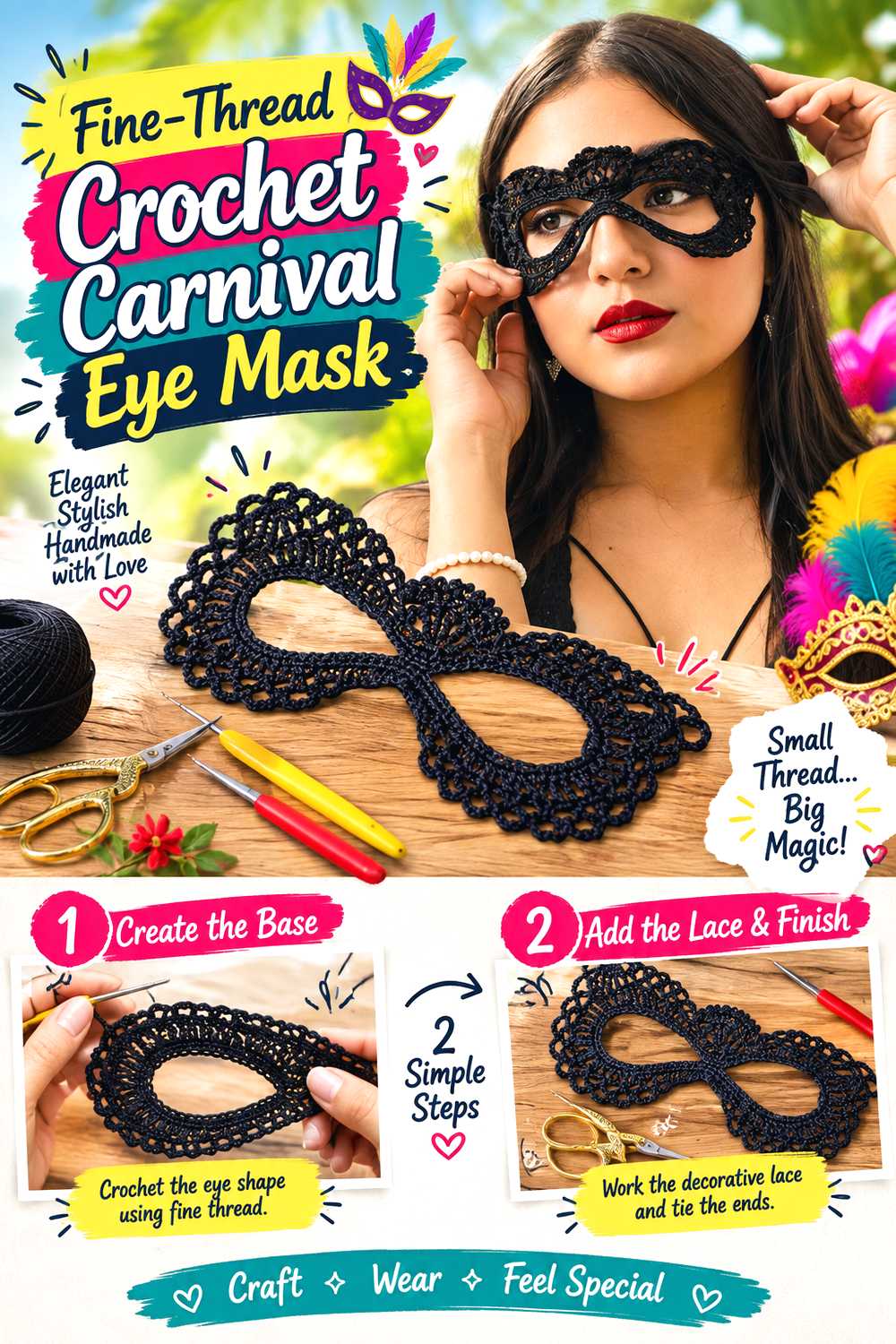
Auder Crochet’s carnival eye mask uses a much finer visual scale than the heavier costume-mask options later in this collection. The source specifies mercerized acrylic thread and presents a single-size carnival mask, giving you a useful base when the desired opera look depends on crisp edges rather than thick fabric. The relatively restrained surface also leaves room for styling after the crochet is complete. Deep wine, ink blue, antique gold, or black could move this construction away from daytime carnival color and toward a more controlled evening aesthetic without changing its basic identity.
Fine Thread Rewards Careful Edge Finishing
Narrow thread makes small irregularities more visible because each point contributes to the overall outline. Before considering the piece finished, compare the two eye openings and inspect the outer border for sections that pull inward or flare unexpectedly. Blocking or another source-appropriate finishing approach can matter more here than it would with a deliberately chunky costume mask.
One Size Still Needs a Real Face Check
The source presents the demonstrated project as one size, but that does not guarantee identical alignment on every wearer. Check actual eye spacing and bridge position before adding a rigid embellishment or shortening any fastening. A slight fitting adjustment is easier before sequins, crystals, or a structured border restrict the fabric.
Original Tutorial and Creator Credit
Creator: Auder Crochet
Jewel Accent Crochet Opera Carnival Mask
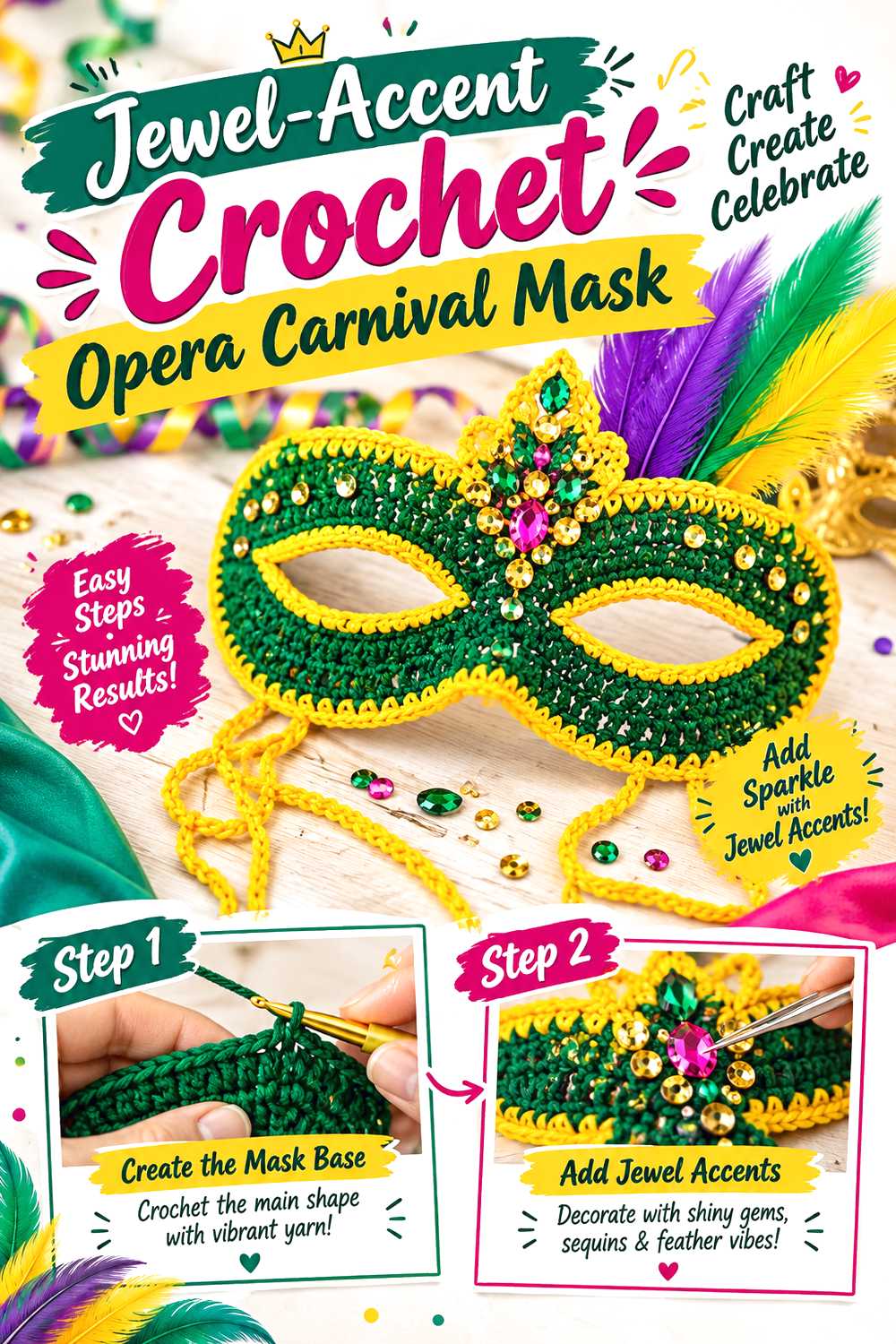
Armarinhos Nodari’s carnival-mask tutorial offers a useful decorative base when you want several related mask shapes rather than one extremely ornate lace construction. That makes the concept well suited to an opera party where couples, attendants, or a themed group might need masks that coordinate without being identical. Instead of repeating one color across every version, use the same visual rule—such as a dark ground plus one metallic accent—while allowing the crochet edge or embellishment placement to change. The resulting masks can feel connected while still giving each wearer a separate character.
Build a Small Mask Collection Around One Detail
For coordinated event masks, repetition works best when it is controlled. You could repeat one bead family, ribbon finish, or metallic thread across several masks while changing the main crochet color or border shape. That creates a stronger visual connection than making several near-identical pieces distinguished only by yarn color.
Check Decoration After the Mask Is Curved
A gem or bead arrangement that looks centered while flat may appear differently once the mask wraps toward the temples. Temporarily position larger decorative elements, curve the mask to the intended wearing shape, and then reassess the balance. This is particularly important with asymmetrical opera styling where one jeweled side is intentionally heavier than the other.
Original Tutorial and Creator Credit
Creator: Armarinhos Nodari
Classic Crochet Venetian Eye Mask
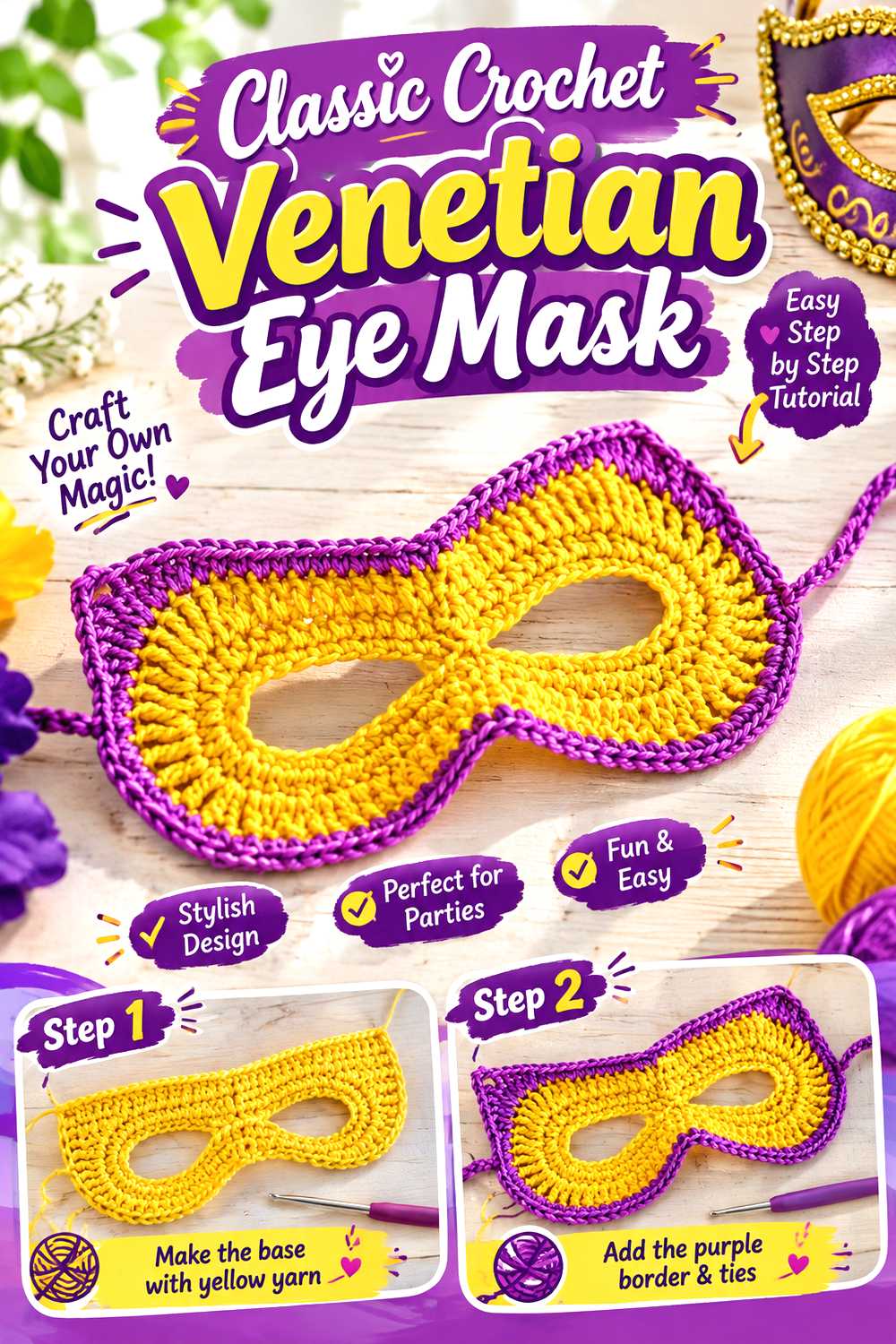
The Aprendendo Crochê tutorial provides a traditional carnival-mask direction that works particularly well when the goal is an understated Venetian or opera-ball accessory rather than a fantasy character. Its recognizable eye-mask proportions create a neutral foundation for sophisticated finishing: black-on-black texture, a narrow antique-gold edge, burgundy ribbon ties, or small crystals around selected outer points. This option is most useful for readers who want the costume to carry some of the drama while the mask remains elegant and readable. It offers a visual break from the exaggerated gothic and skull-themed projects in the collection.
Restraint Can Make the Shape Look More Formal
A classic mask does not need several types of decoration. Choose a single focal treatment and allow the outline to remain clean. For example, a defined outer edge can provide enough contrast without requiring beads across the entire surface. This approach also keeps added weight low around the temples.
Ribbon Can Become Part of the Opera Styling
If you choose ties rather than hidden elastic, consider them visible costume elements. A ribbon can echo a dress sash, neck detail, gloves, or hair accessory and create a deliberate link between mask and clothing. Check the knot position with the intended hairstyle so the fastening does not become bulky or difficult to reach.
Original Tutorial and Creator Credit
Creator: Aprendendo Crochê
Scalloped Crochet Opera Masquerade Mask
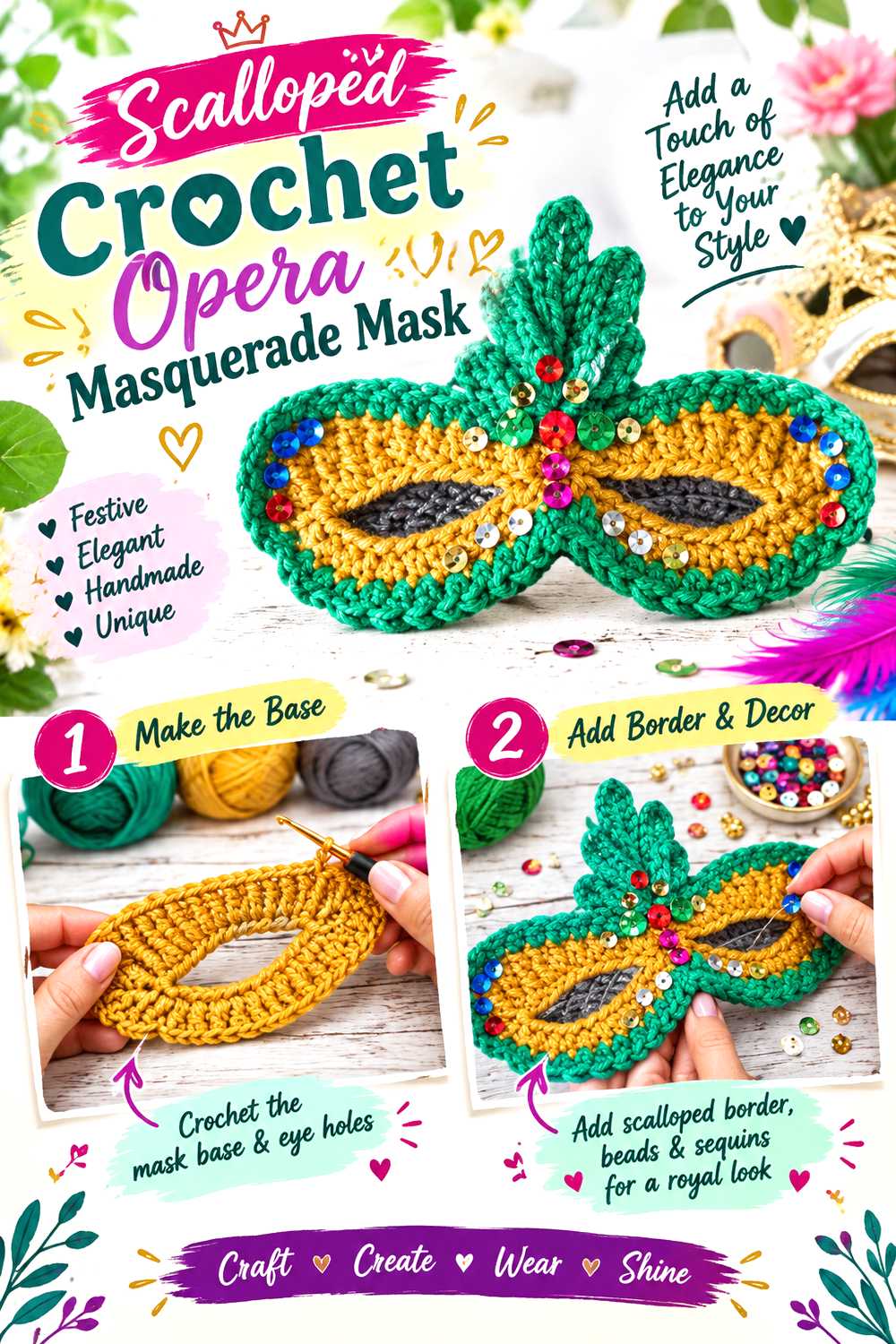
EasyBreezyFlow’s mask stands out because its decorative edging gives a softer, scalloped alternative to sharply pointed gothic masks. The creator also notes that the demonstrated mask is not presented as a standard adult or child size, which makes customization especially relevant. That limitation can become an advantage for an opera adaptation because it encourages you to plan around the intended wearer’s face rather than treating the sample as universally proportioned. A dark monochrome version with a contrasting outer edge could highlight the scallops while preserving the light, ornamental character.
Establish Wearable Scale Before Extending the Border
The source allows the mask to be considered for decorative applications as well as wear, so determine its purpose early. For a face mask, eye spacing and temple width take priority over producing the largest possible decorative edge. A larger outline may look impressive on display but become awkward once it reaches the wearer’s peripheral field of view.
Scallops Need Consistent Shaping to Read Clearly
Repeated decorative curves attract attention to inconsistencies. Once the crochet is complete, compare the corresponding left and right sections before adding a contrasting border or bead. A strong metallic edge can emphasize attractive shaping, but it will also emphasize uneven shaping.
Original Tutorial and Creator Credit
Creator: EasyBreezyFlow
Rounded Crochet Carnival Masquerade Mask
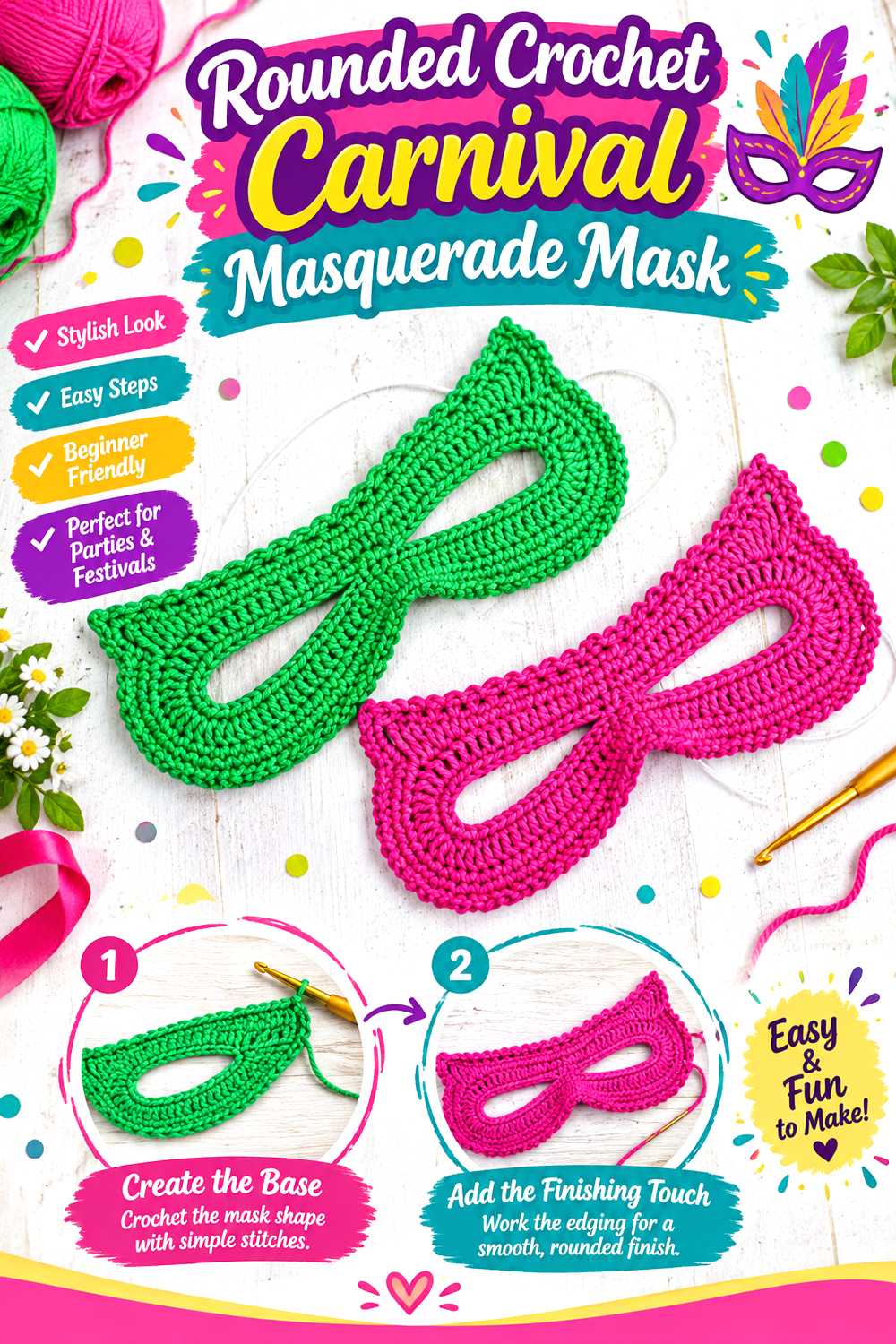
Teje con ilusión’s crocheted carnival mask offers another route to a formal accessory: rely on an approachable, recognizable eye-mask body and let color placement or finishing create the event character. This idea suits an opera costume where you do not want tall ears, skull motifs, or an elaborate wire frame competing with the clothing. The comparatively compact outline could work with a dramatic gown, jacket, cape, or headpiece because the face accessory remains visually contained. For a more formal adaptation, keep the palette controlled and focus attention near the outer corners rather than turning the whole surface into a dense embellishment panel.
A Compact Mask Leaves More Room for Hair and Headpieces
Large outer flourishes can collide visually or physically with elaborate hairstyles, veils, hats, or head jewelry. A more contained mask is easier to pair with those costume elements. Try the unfinished piece with the entire head-and-shoulder look before deciding that it needs additional width or height.
Use the Outer Corners as the Main Accent Zone
When the mask body is simple, the outer corners are useful places for restrained drama. A small bead cluster, pointed extension, or textural contrast can change the character without interfering with the nose bridge or inner eye edges. Keep additions light enough that they do not drag the corners downward.
Original Tutorial and Creator Credit
Creator: Teje con ilusión
Pearl Centered Crochet Evening Mask
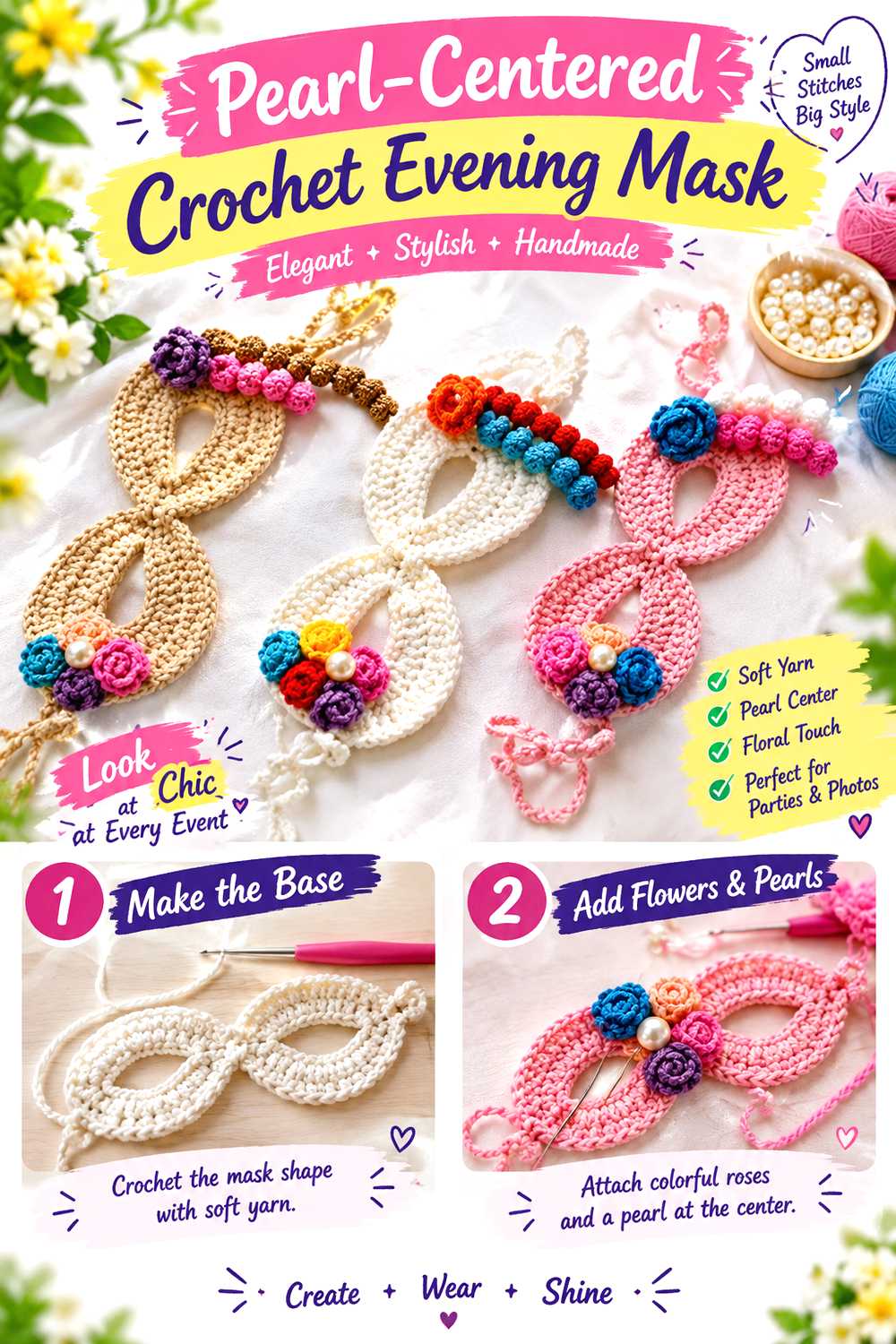
Márcia Souza’s carnival-mask tutorial uses a different material scale from the finest thread masks and includes a pearl among the listed finishing materials. That immediately suggests a more dimensional evening treatment. Rather than scattering several unrelated embellishments, use the pearl concept as a focal feature and build the color plan around it. A dark base with one light center or side accent can produce stronger visual hierarchy than an evenly decorated surface. This idea is particularly suitable for readers who want the crocheted fabric to remain substantial and visible rather than disappearing into extremely fine lace.
Heavier Yarn Changes the Visual Weight
The source uses more than one yarn type and hook size, so this is not the same delicate textile effect as a very fine thread mask. Let that difference work for you. A broader stitch texture can create a bold costume accessory, but it should be checked against the wearer’s face so the mask does not become visually oversized around the eyes.
Give the Pearl a Purpose
A single pearl can mark the center, emphasize one outer corner, or connect the mask visually with pearl earrings or another costume detail. Decide what the accent is supposed to do before attaching it. A focal bead loses impact when surrounded by several competing decorations of equal size and brightness.
Original Tutorial and Creator Credit
Creator: Márcia Souza
Sequin Trim Crochet Gala Eye Mask
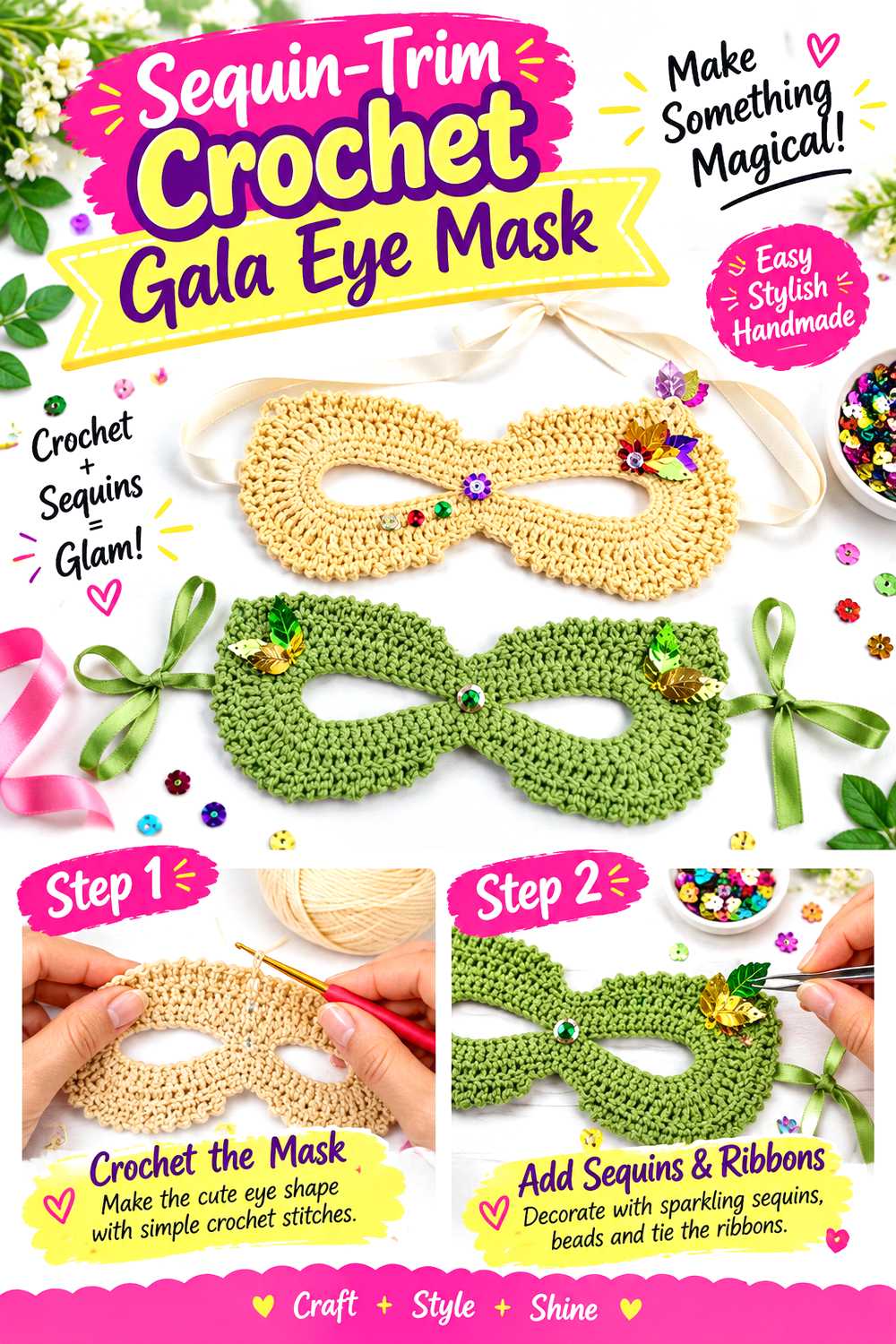
Gloriarte’s carnival mask is a strong source for an opera adaptation because sequins are already part of the project’s decorative language. The creator also discusses fitting the starting size to the wearer’s face and suggests optional ways to give the mask more body. Those details make this more than a color inspiration: structure, sizing, and decoration can all be adjusted deliberately. For a gala version, dark crochet with limited sequins along the brow or outer edges can create sparkle without covering the stitchwork. Satin ribbon ties would reinforce the traditional masquerade character.
Fit Comes Before Sequin Placement
The source specifically encourages adjustment to the wearer, so finalize the mask width and eye alignment before sewing on reflective details. Moving the mask shape after embellishment can leave a decorative line off-center or change how the sequins frame the eyes.
A Backing Can Change the Entire Character
Gloriarte mentions the possibility of adding felt behind the mask for more body. That creates a useful choice. Leaving the crochet more open emphasizes textile texture and negative space; adding support produces a firmer, more graphic accessory. Pick the approach based on the look you want rather than assuming every opera mask must be heavily stiffened.
Satin Ties Strengthen the Masquerade Look
Ribbon ties create a visible connection to classic ballroom masks and can look especially effective when hair is worn up. Because the fastening may be seen, coordinate its width and finish with the scale of the mask. Very heavy ribbon can visually overpower fine crochet, while an overly narrow tie may look incidental next to a richly decorated edge.
Original Tutorial and Creator Credit
Creator: Gloriarte
One Piece Picot Crochet Masquerade Mask
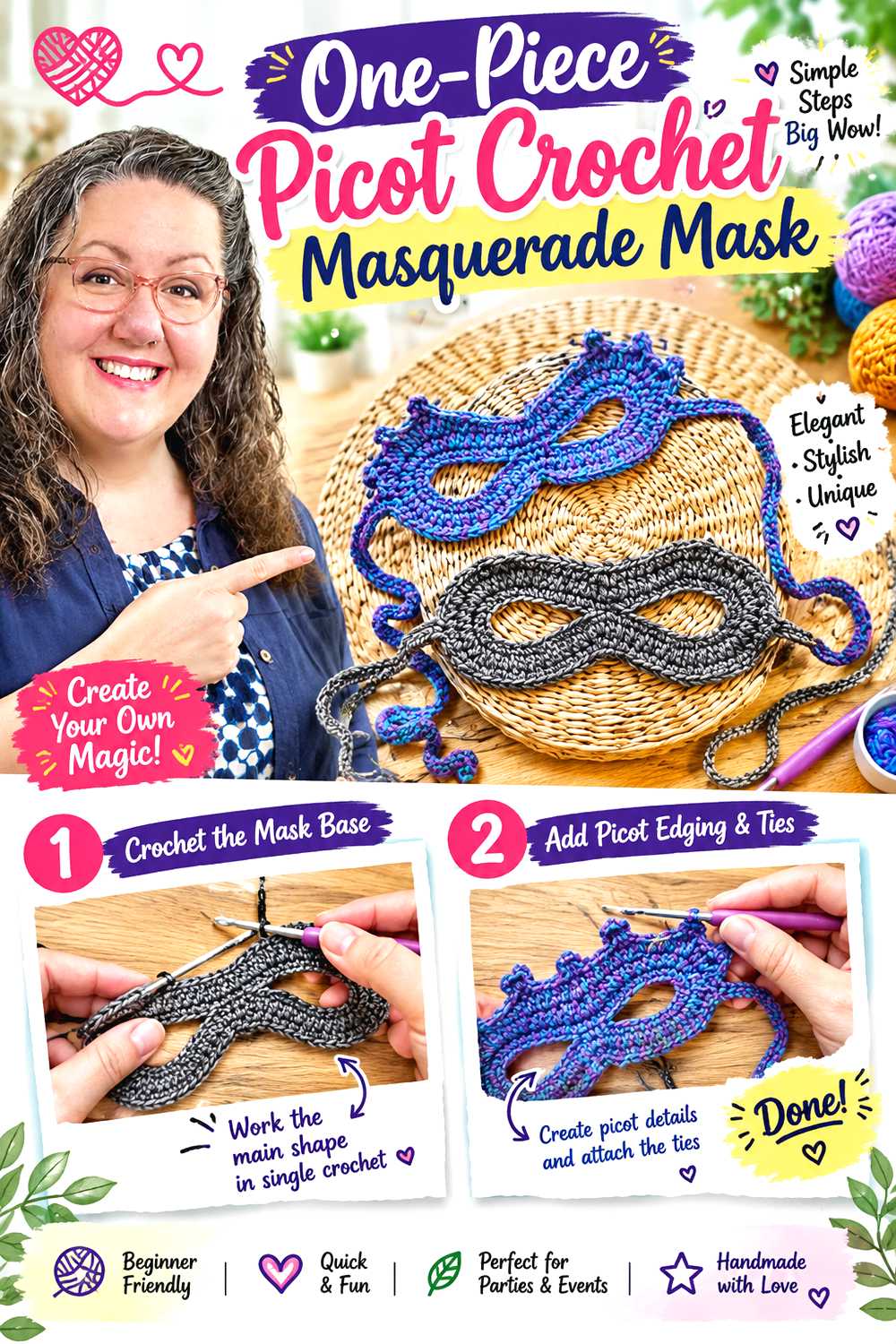
Missouri Star’s tutorial is one of the clearer examples of a simple costume-mask base that can intentionally move toward masquerade styling. The source describes the mask as worked in one piece and specifically notes that picot stitches can be added when a fancier masquerade effect is wanted. That makes it a practical choice if you prefer to establish fit and construction first, then decide how ornate the finished object should become. For opera styling, a dark one-piece body with a deliberately decorative outer border can look cleaner than attaching several separate motifs after construction.
One-Piece Construction Keeps the Base Visually Calm
A continuous mask body gives embellishment a neutral background. If you want an ornate border, this can be an advantage because there are fewer competing joins or central motifs. Concentrate detail around the perimeter and let the center remain relatively simple.
Picots Can Suggest Lace Without Full Thread Crochet
The source explicitly points to picot detail as a way to make the mask fancier. That makes this concept useful if you like ornamental points but do not want the same fine-thread construction as the most elaborate lace masks. Keep the border consistent so the points look intentional rather than randomly distributed.
Original Tutorial and Creator Credit
Creator: Missouri Star
Sugar Skull Crochet Opera Costume Mask
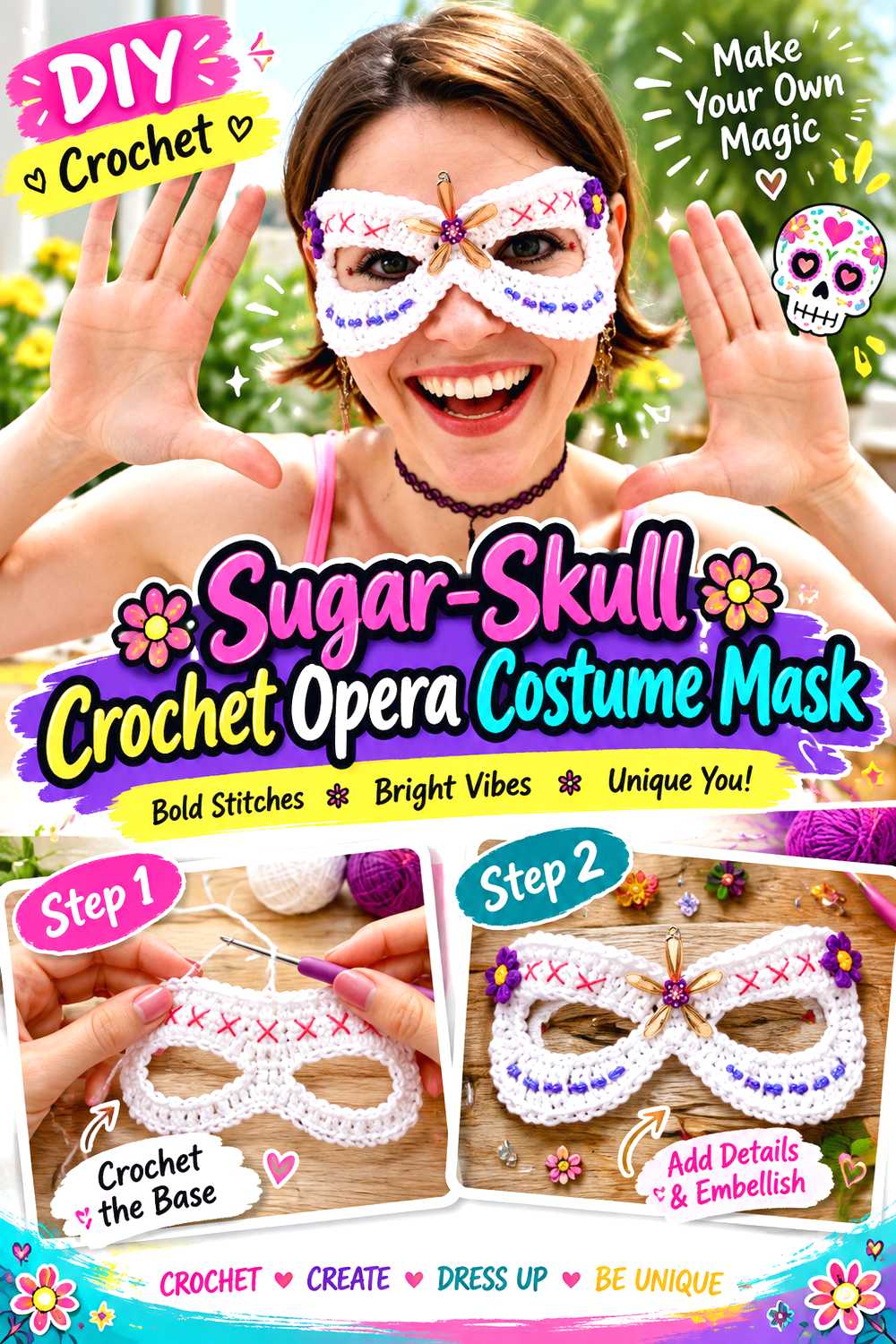
Jayda InStitches’ tutorial uses a basic wearable mask as a foundation for much stronger decorative identities, including sugar-skull or superhero styling. The creator specifically suggests decorating with elements such as beads, ribbon, and buttons, giving this concept far more surface-customization potential than a mask whose character comes entirely from lace. For an opera interpretation, you could retain the bold face-framing base but replace playful embellishment with a tighter color scheme and more controlled beadwork. This makes the project a good bridge between graphic costume masks and richly decorated masquerade accessories.
Decide Between Graphic and Ornamental Before Decorating
Sugar-skull styling can carry a large amount of visual information. If the goal is a formal masquerade rather than a bright costume, decide which elements deserve emphasis and remove the rest. A dark ground with symmetrical light or metallic details can preserve the strong face framing without turning the mask into an unrelated collection of decorations.
Keep Raised Pieces Clear of the Inner Eye Line
Buttons, beads, flowers, and other dimensional elements need enough distance from the eye openings to remain comfortable. Position the mask on the wearer before permanently adding anything bulky. An ornament that looks well placed on a flat table may sit much closer to eyelashes or peripheral vision once the fabric curves.
Adapt the Theme Without Erasing Its Identity
If you use the sugar-skull direction, treat it as a deliberate visual theme rather than simply calling every skull-like mask an opera mask. If you want a more neutral formal result, use the same mask construction as a foundation and develop a different decorative scheme rather than relabeling cultural imagery.
Original Tutorial and Creator Credit
Creator: Jayda InStitches
Catrina Inspired Crochet Floral Mask
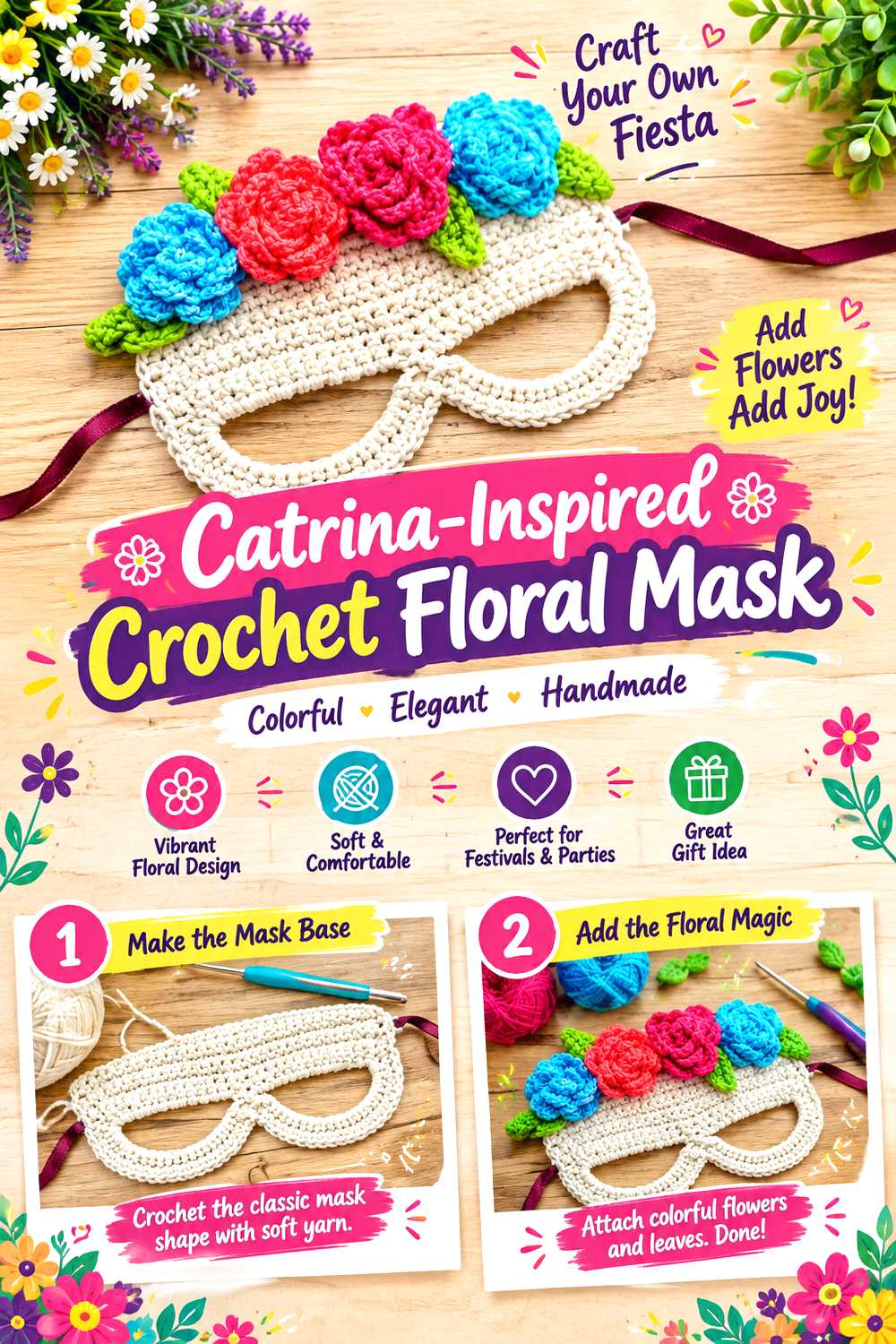
Coricobell’s Catrina mask introduces a fuller, more illustrative costume direction than the narrow ballroom eye masks. The source presents it for Day of the Dead or Halloween use, so this project should retain that specific Catrina context rather than being treated as a generic Venetian motif. Within an opera-themed event, it can work as a theatrical character mask when the wider costume supports the same visual story. Rich floral colors against a dark ground would preserve its identity better than stripping the design down to plain black simply to match the rest of the collection.
Let the Character Theme Lead the Costume
This mask already communicates a strong identity, so the surrounding outfit should support it instead of competing with unrelated motifs. Repeat selected floral colors, a dark base, or one decorative texture elsewhere in the costume to make the overall presentation intentional.
Preserve Visibility Around a Fuller Mask
A more illustrative face accessory occupies more space than a thin lace strip. Before adding flowers, beads, or extra decorative elements, check direct and peripheral vision. Anything that extends inward toward the openings deserves more scrutiny than decoration positioned farther toward the temples.
Original Tutorial and Creator Credit
Creator: Coricobell
Multi Size Crochet Formal Eye Mask
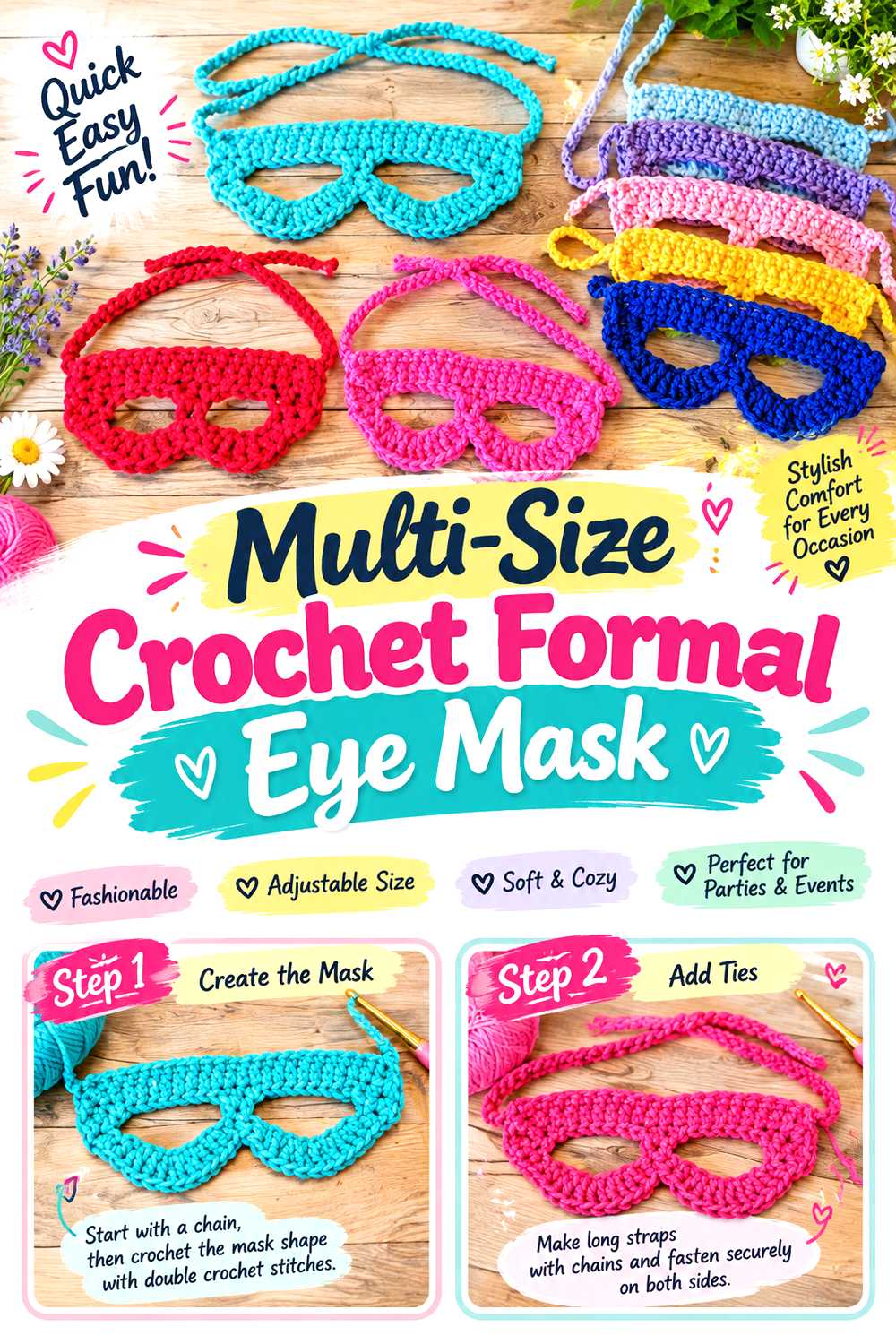
Laura Brian’s superhero tutorial becomes useful to this collection for one practical reason: the source explicitly provides toddler, child, and adult versions. Its underlying silhouette is much plainer than a true opera mask, so it should be treated transparently as a fitted base for adaptation. For an adult masquerade interpretation, the clean shape leaves space for an ornamental border, restrained metallic embroidery, or a small applique at each outer corner. Readers who care more about beginning from a clearly differentiated wearer size than starting with intricate lace may find this construction more manageable to customize.
Start With the Source Size Before Adding Width
Decorative borders can increase the apparent size of an eye mask, so choose the appropriate base first. Do not try to correct an undersized foundation by attaching large lace motifs at the temples; that changes appearance without necessarily improving eye spacing or bridge alignment.
A Plain Base Makes Symmetry Easier to Judge
One benefit of a clean costume-mask shape is that fitting errors are easier to see before decoration distracts from them. Check the mask straight on, then turn the head and confirm that the side edges remain level. Only after that should you begin converting the superhero appearance into a formal masquerade treatment.
Original Tutorial and Creator Credit
Creator: Laura Brian
Minimal Crochet Shadow Masquerade Mask
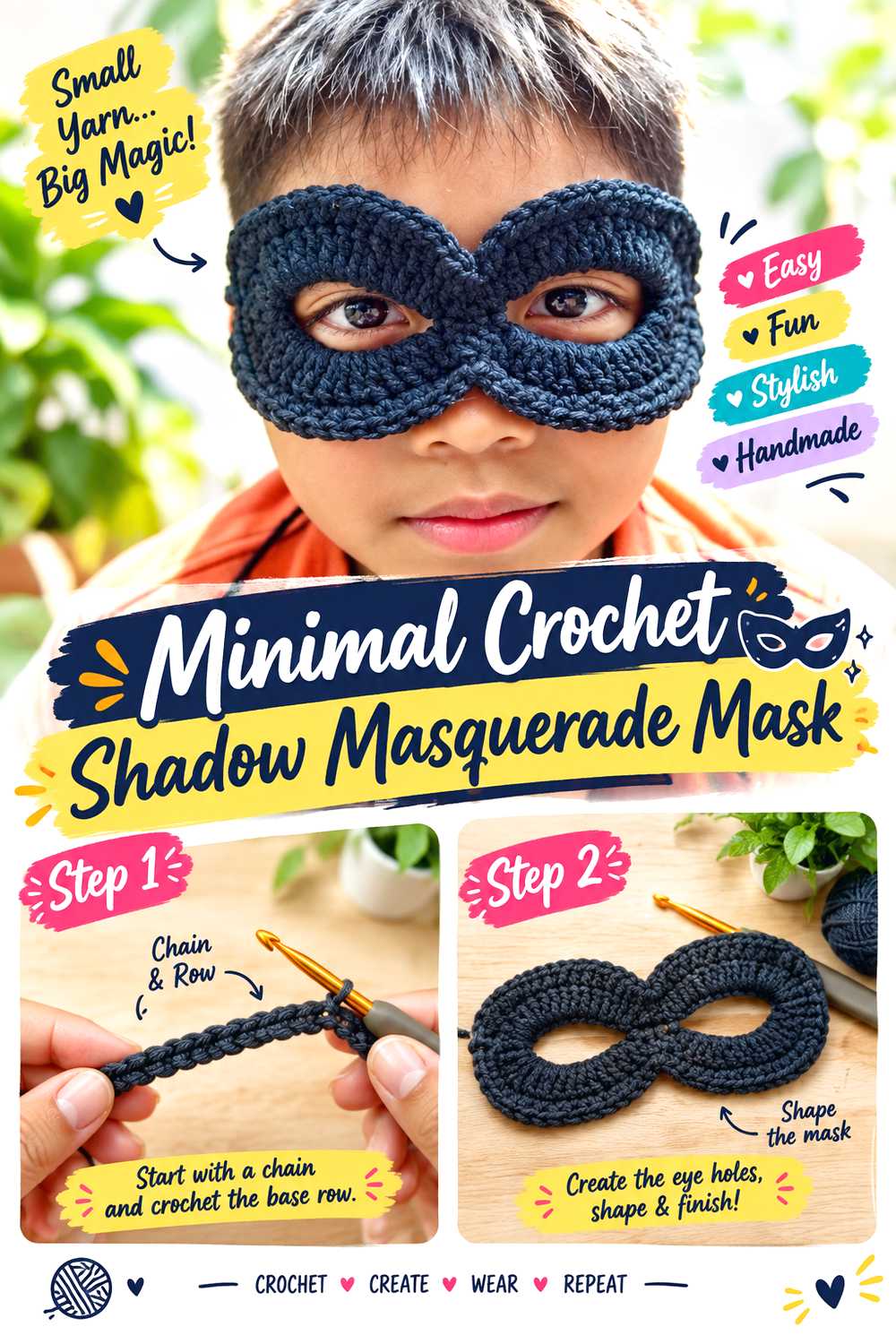
Guidecentral English’s superhero mask is another intentionally simple foundation, but its value is different from the multi-size option. This concept suits a minimalist opera or villain-inspired costume where the goal is a dark, graphic eye shape rather than lace. Think tailored black clothing, a cape, dramatic shoulders, or a monochrome stage look where an ornate mask would compete with the silhouette. Instead of disguising the simple origin with excessive decoration, use a precise border and strong fit to make the finished piece feel intentional. A charcoal-on-black combination can provide more visible crochet texture than a completely uniform dark surface.
Minimalism Makes the Outer Line More Important
When a mask has little surface decoration, the viewer notices its outline. Check the lower eye curve, nose bridge, and temple shape carefully. A clean contour contributes more to a sophisticated result here than adding extra beads after the fact.
Pair It With a Strong Costume Silhouette
This option works best when the mask is one part of a larger look. A high collar, cape, tailored jacket, or sculptural hair arrangement can provide the theatrical element while the crochet remains streamlined. That division of visual work can look more deliberate than asking every costume component to be equally ornate.
Original Tutorial and Creator Credit
Creator: Guidecentral English
Twin Oval Crochet Opera Eye Mask
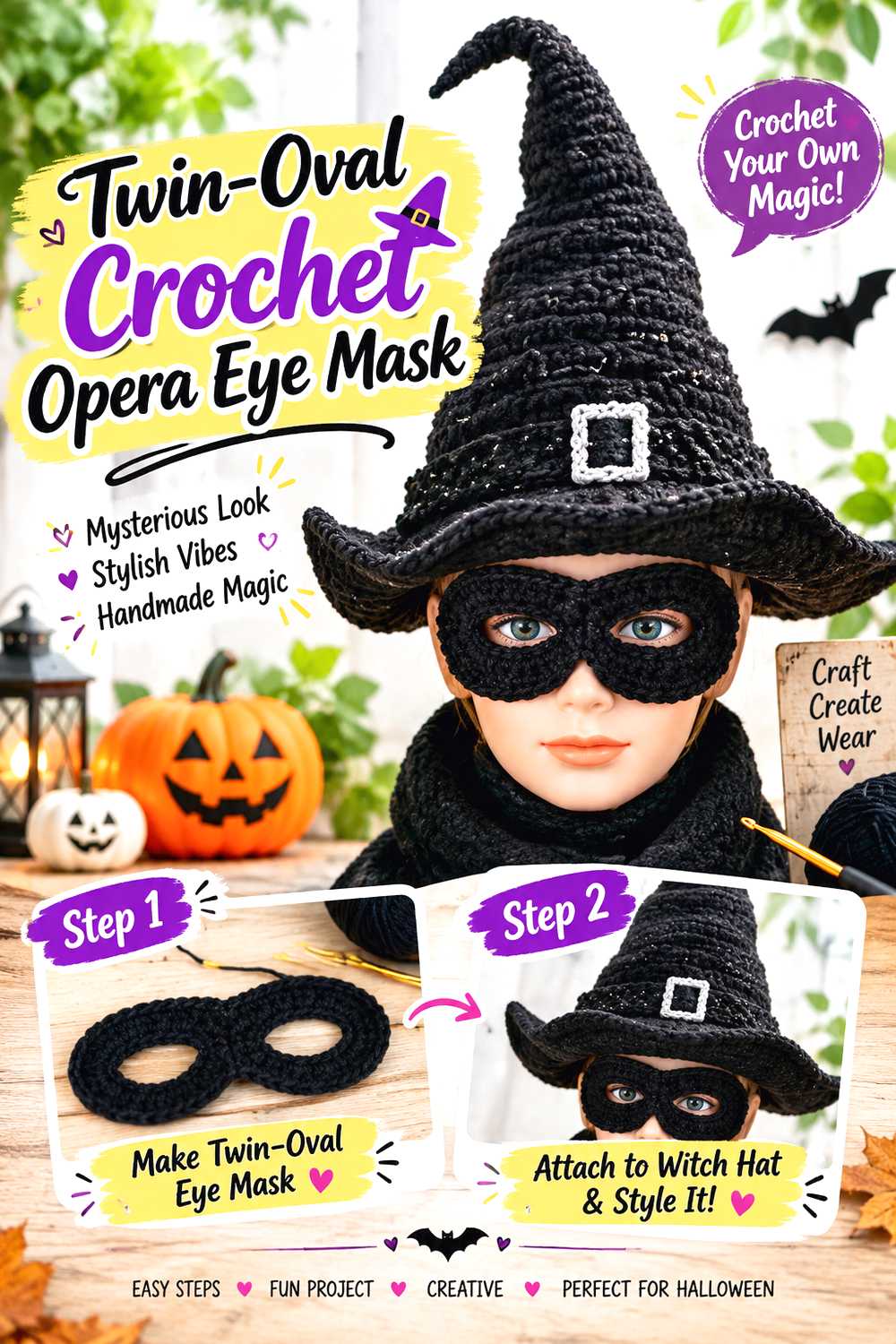
Hectanooga1’s super-hero eye-mask tutorial takes an unusual visual route: the source describes two similar circular eye sections connected at the bridge. That gives the mask a fundamentally different construction idea from long one-piece strips and makes it interesting for an opera adaptation. The paired eye shapes could be emphasized with a contrasting outer line, subtle metallic thread, or symmetrical bead placement. Rather than trying to hide the roundness, make it the defining design feature. This is a useful concept for readers who prefer a compact mask concentrated around the eyes instead of a wide decorative piece reaching far toward the temples.
Treat the Two Eye Sections as a Matched Pair
Because the construction emphasizes separate eye shapes, visible differences between them can become obvious. Compare their dimensions and how they sit relative to the bridge before final assembly or decoration. A small discrepancy becomes more noticeable once a contrasting edge highlights both forms.
Keep the Bridge From Becoming the Weak Visual Point
The connection between the two eye sections determines how the whole mask sits. Check that it keeps the openings level without allowing them to rotate toward or away from each other. If you add decorative detail, let it reinforce the balance rather than placing a heavy focal bead exactly where the fabric already needs to maintain alignment.
Original Tutorial and Creator Credit
Creator: Hectanooga1
Skull Accent Crochet Halloween Masquerade Mask
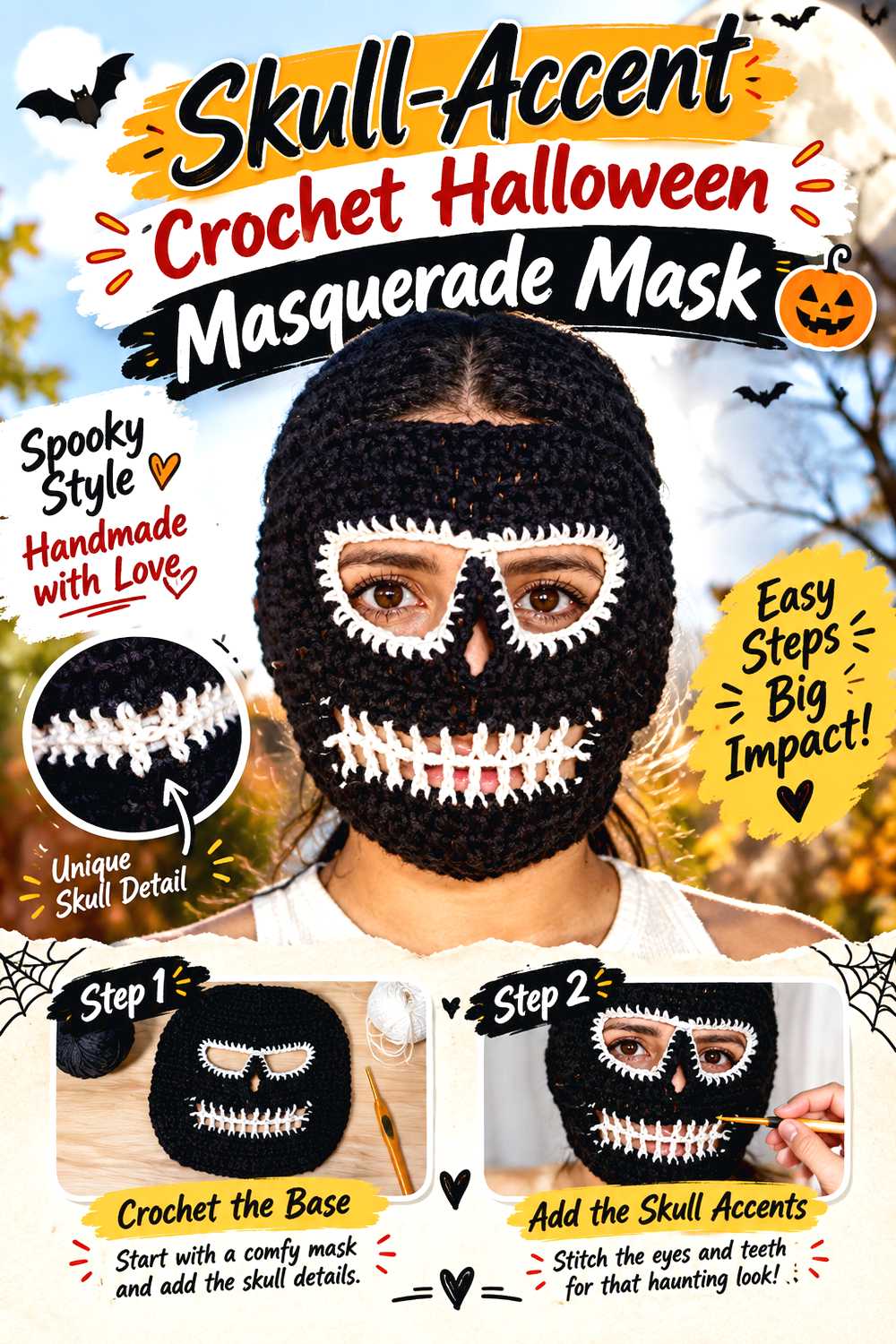
Teje con Judith’s Halloween mask closes the collection with a darker costume direction that can be refined for a dramatic masquerade without duplicating the more culturally specific Catrina project. The source presents an original crocheted Halloween mask, so use its darker character as a starting point for gothic opera styling rather than automatically covering it in traditional carnival colors. Black, gray, wine, or tarnished-metal accents could strengthen the theatrical mood. This option suits a masquerade with horror, gothic theater, haunted ballroom, or villain themes where a delicate romantic lace mask would feel too restrained.
Let the Dark Theme Come From Shape as Well as Color
Simply making a conventional mask black does not automatically create a gothic result. Pay attention to angular edges, eye framing, and the way negative space affects the expression of the mask. These structural cues can carry the mood even before decorative details are added.
Avoid Crowding the Eye Area With Horror Details
A Halloween concept may invite extra appliqués or dimensional pieces, but visibility still comes first. Keep raised or dangling decorations away from the inner openings and test the finished mask while turning the head. An embellishment that never blocks straight-ahead vision can still become distracting in the wearer’s peripheral view.
Original Tutorial and Creator Credit
Creator: Teje con Judith
Which Crochet Opera Masquerade Style Should You Choose?
For the most formal lace effect, the Gothic Wire-Framed, Lace-Fan, Fine-Thread, Classic Venetian, and Sequin-Trim options are the closest matches to traditional ballroom styling. They emphasize openwork, decorative outlines, or controlled sparkle instead of relying on a recognizable character.
The One-Piece Picot, Multi-Size Formal, Minimal Shadow, and Twin-Oval masks are better adaptation foundations. Choose them when fit, a cleaner construction, or a strong graphic outline matters more than starting with ornate crochet. The Sugar-Skull, Catrina-Inspired, and Skull-Accent masks sit at the theatrical end of the range and make more sense for a themed opera, gothic event, costume production, or character-driven masquerade. Pearl and jewel-accent options fall between those groups, allowing decoration to supply much of the formal character.
Conclusion
These 16 crochet opera masquerade mask ideas range from fine gothic lace and sequin-edged carnival masks to graphic eye coverings and theatrical skull designs. The most important choice is not color but construction: decide whether you want delicate negative space, a supported sculptural outline, a compact solid mask, or a character-driven costume piece.
Once the basic direction is clear, check eye alignment, nose-bridge placement, fastening tension, and peripheral vision before adding permanent decoration. Then use beads, ribbon, pearls, metallic accents, or darker colors selectively so the crochet remains visible. For exact construction, sizing, and source-specific finishing details, follow the original tutorials linked with each project.
Frequently Asked Questions
What makes a crochet masquerade mask look suitable for an opera-style costume?
Silhouette usually matters more than the amount of decoration. Fine lace, defined eye curves, extended outer corners, pointed borders, controlled symmetry, and an intentional fastening can all create a formal appearance. Dark jewel colors and metallic accents can reinforce the effect. A simple mask can also work when the rest of the costume carries the theatrical drama, so do not assume every opera mask needs dense beads, feathers, and sequins.
Should a crochet opera mask use thread or regular yarn?
Either can work, but the results are different. Fine thread generally supports smaller openwork details and produces a lighter lace appearance. Thicker yarn makes the crochet easier to see and creates a stronger, more graphic silhouette. Do not substitute one for the other while assuming the dimensions will remain unchanged. Compare the developing mask with the intended wearer and follow the source tutorial’s material guidance when fit depends on scale.
How do I check whether the eye openings are correctly positioned?
Place the unfinished mask where it will actually sit and check both eyes independently rather than judging only the total width. Look straight ahead, then move your eyes and head left, right, up, and down. The openings should not require the fastening to stretch them into position. Make these checks before attaching heavy embellishments, firm backing, wire finishing, or anything else that will make later adjustments more difficult.
Do crochet masquerade masks need stiffener or wire?
Not every design does. Some tutorials intentionally build structure with wire or other shaping methods, while simpler masks rely more on their fabric and fastening. The appropriate approach depends on the yarn, silhouette, and size of any extended decorative sections. If the source design includes structural support, treat it as part of that construction rather than automatically omitting it. For another tutorial, do not assume additional wire is necessary simply because the finished object is a mask.
Can I add beads, sequins, or pearls to any crochet mask?
They can be added to many designs, but placement and weight matter. Fine crochet edges can distort if too much decoration is concentrated at one point, and embellishments near the eye openings may affect comfort or visibility. Temporarily position larger pieces and evaluate the mask while it is curved against the face. If sparkle is the goal, a few strategically placed reflective accents can often define the silhouette more effectively than covering the entire surface.
How can I adapt a simple superhero-style crochet mask for a formal masquerade?
Use the simple tutorial for its base construction rather than pretending it is already an ornate opera mask. After fitting the underlying shape, refine the outer edge, choose a controlled formal palette, and add one consistent decorative language such as picots, narrow metallic edging, matching ribbon, or symmetrical bead accents. Keep the original eye placement functional. The adaptation should enhance the mask’s existing structure rather than burying it beneath unrelated decorations.