Handmade Christmas gifts are easier to plan when you start with the recipient rather than the size of the project. This collection ranges from small bookmarks, scrunchies, and bath accessories to fitted winter wear, useful storage, a full blanket, and decorations made specifically for Christmas.

The practical differences matter. A beanie, slippers, or fingerless gloves need meaningful sizing decisions, while a coaster or ornament is much less dependent on the recipient’s measurements. Bags and sleeves are useful when you know what they need to hold, and home pieces such as baskets and pillow covers work best when you already understand where they will be used.
Each of these 25 ideas is paired with a public tutorial from a different YouTube channel, so you can compare a genuinely varied group of projects rather than seeing small variations of one maker’s catalog.
Quick List
- Crochet Thread Bookmark
- Crochet Ruffled Scrunchie
- Crochet Puff-Stitch Face Scrubbies
- Crochet Drawstring Soap Saver
- Crochet Granny-Square Mug Cozy
- Crochet Shell-Edged Round Coaster
- Crochet Buttoned Eyeglass Case
- Crochet Phone Pouch
- Crochet Drawstring Pouch
- Crochet Simple Headband
- Crochet Flat-Top Beanie
- Crochet Fingerless Gloves
- Crochet Rectangle Slippers
- Crochet Infinity Scarf
- Crochet V-Stitch Gift Cowl
- Crochet Sharma Shawl
- Crochet Everyday Tote Bag
- Crochet Buttoned Laptop Sleeve
- Crochet Customizable Basket
- Crochet Buttoned Pillow Cover
- Crochet One-Row-Repeat Blanket
- Crochet Thick Potholder
- Crochet Christmas Stocking
- Crochet Snowflake Ornament
- Crochet Snowman Amigurumi
Choose the Gift by How Much Information You Have
Some crochet Christmas gifts can be chosen with almost no sizing information. A bookmark, coaster, face scrubbies, soap saver, basket, or snowflake ornament leaves plenty of room for color personalization without requiring you to estimate somebody’s body measurements. These are useful choices when the gift needs to remain a surprise.
Wearables deserve more preparation. A beanie, headband, fingerless gloves, slippers, cowl, and even an infinity scarf depend on circumference, length, stretch, or preferred bulk. When possible, compare the planned item with something the recipient already wears comfortably instead of assuming a standard size will suit them. For device sleeves and cases, measure the actual object or obtain its dimensions before beginning. A beautiful finish cannot compensate for a pouch that will not close or a sleeve that is noticeably too small.
Plan the Finishing Before You Pick Your Yarn
Color is usually the easiest part of a gift to personalize, but construction should guide the larger decisions. A drawstring pouch needs an opening that still works after you change its proportions. A pillow cover needs to relate to its insert. A basket needs to suit its intended contents, while a wearable has to retain the dimensions that made you choose that tutorial in the first place.
Treat yarn substitutions as real changes rather than automatic equivalents. Different yarn constructions can alter thickness, stretch, surface texture, and drape even when labels appear similar. For fitted projects, make a useful size check before committing to the whole piece. For containers and sleeves, compare the developing fabric with the object it must hold. For decorative gifts, decide whether extra beads, buttons, tassels, or raised details actually improve the recipient’s use of the item before adding them.
1. Crochet Thread Bookmark
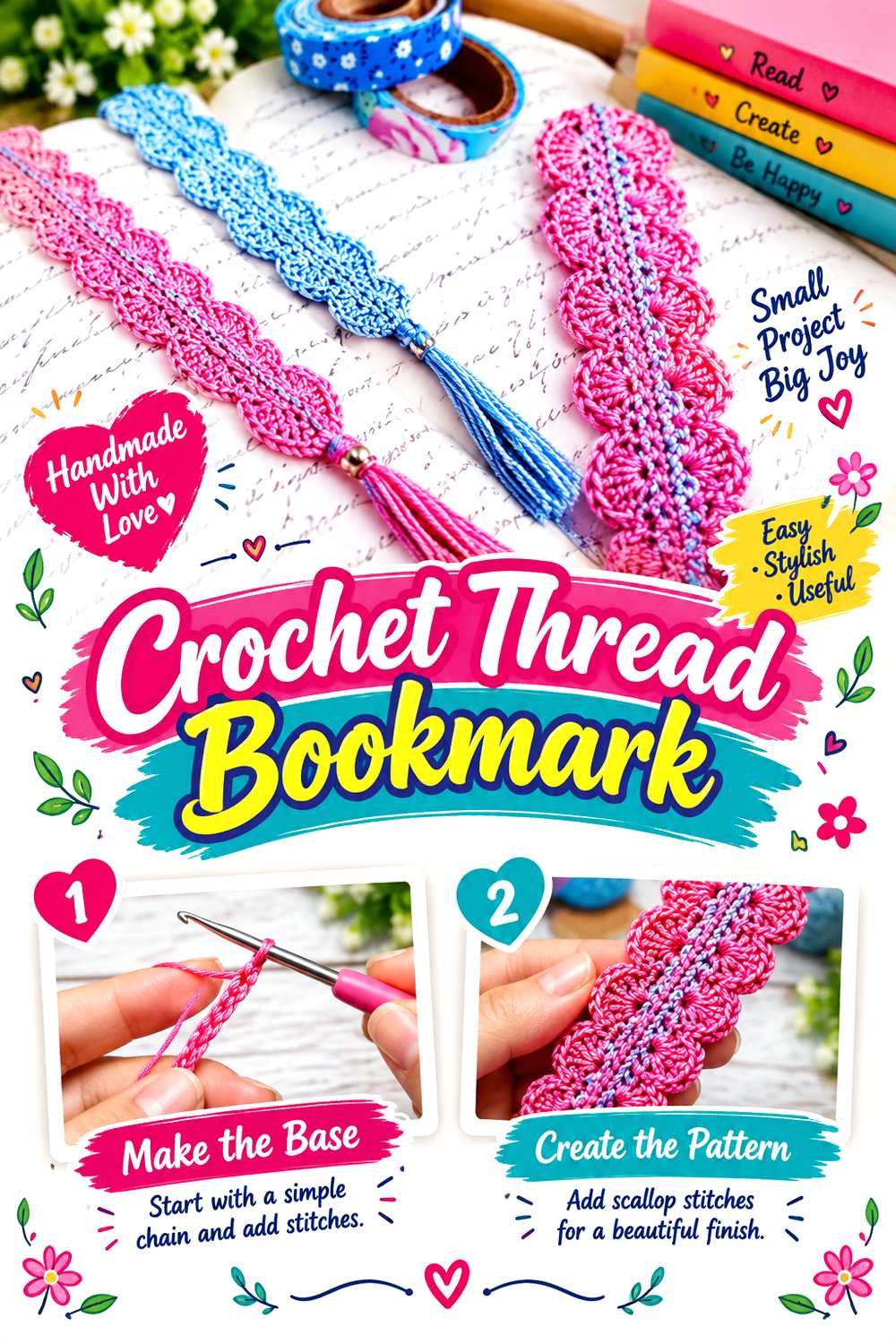
A narrow crochet bookmark is a particularly good Christmas choice for someone who reads, journals, or keeps a planner. LovelyMiracle’s tutorial produces a slender decorative piece using cotton thread, with optional beads included among the materials. That finer scale separates this project from bulkier yarn gifts: the bookmark is intended to sit between pages rather than function as a small textile mat.
The main gifting decision is thickness. Decorative elements can make the bookmark more distinctive, but a very raised embellishment also changes how it sits inside a closed book. If you are unsure what the recipient reads, keeping the central section comparatively flat is the more adaptable direction. Pairing it with a novel, cookbook, devotional, or journal also gives the small crochet piece a clear purpose without requiring you to guess clothing sizes.
Keep the Book in Mind
Before finishing several matching bookmarks, test one in an actual book. Close the cover and look at how the crochet lies between the pages. This tells you more than judging the bookmark loose on a table. If you plan to add beads, their placement becomes especially important because they may work better beyond the page edge than within the section that is pressed between pages.
Turn One Design Into a Gift Set
A bookmark does not need structural changes to feel personalized. You can use coordinated colors to make a small set for someone who reads several books at once, or match the palette to the book you are giving. This is a safer type of customization than changing the width or adding heavy three-dimensional pieces that could make the original function less convenient.
Creator: LovelyMiracle
2. Crochet Ruffled Scrunchie
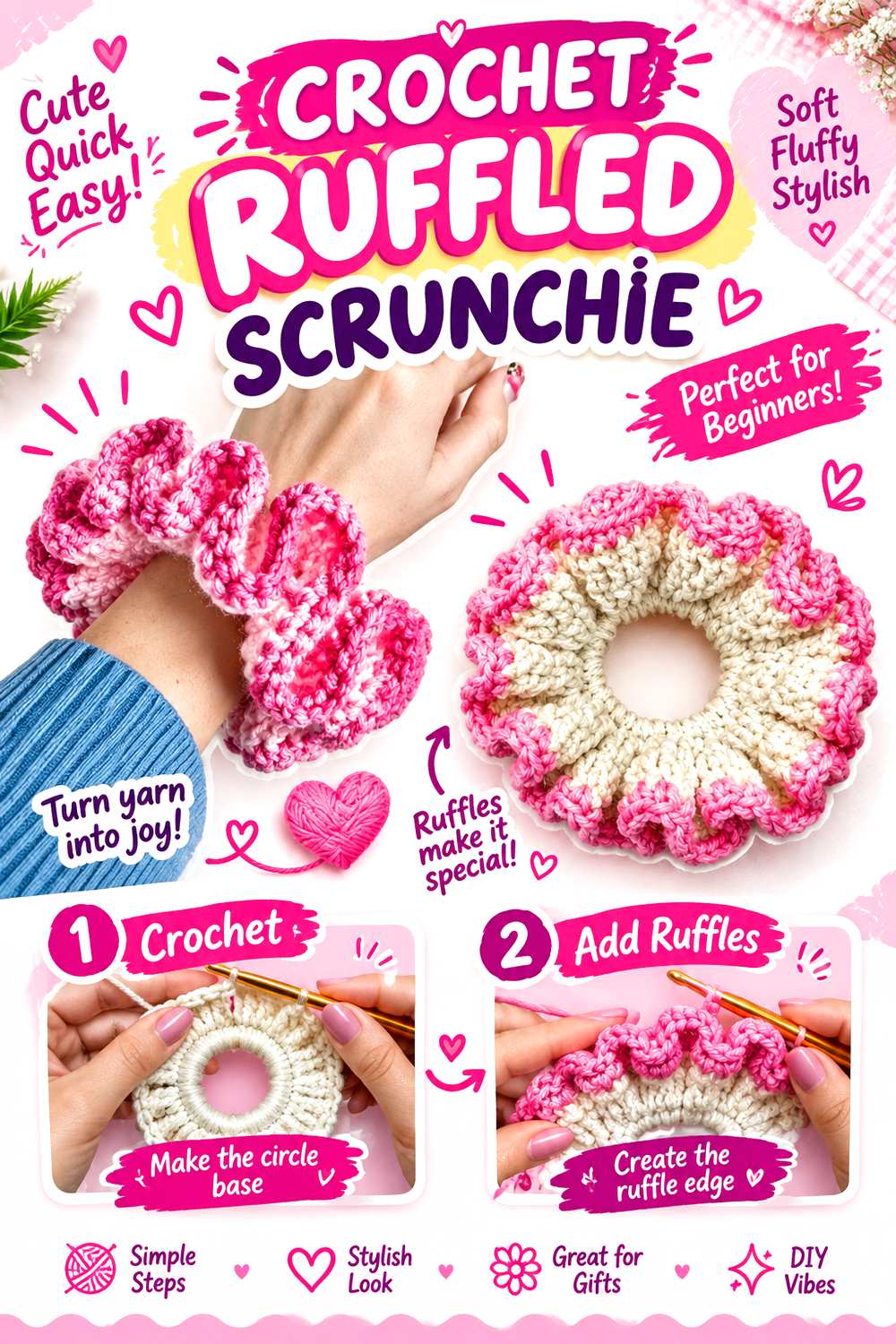
A crochet scrunchie works well as a small Christmas gift because the crochet is built around an existing hair elastic rather than asking the fabric itself to provide all the stretch. ElyseCrochets’ tutorial demonstrates the project from the starting slip knot through single- and double-crochet rounds and final weaving in.
The visible fullness comes from the crochet arranged around that elastic, so this gift gives you plenty of room to make an impression through color and texture without redesigning the underlying form. One scrunchie can be tucked into a stocking, while several coordinated versions can become a more substantial set. The main limitation is recipient preference: someone who rarely ties back their hair may get more use from another small accessory in this collection.
Decide How Much Fullness You Want
A scrunchie that looks understated on the table and one with a pronounced ruffle can feel like very different accessories. Follow the tutorial before improvising the amount of crochet around the elastic, because extra fullness changes both appearance and how much fabric has to gather when the elastic contracts. Make your first one as demonstrated, then decide whether a variation is actually needed.
Coordinate Instead of Reconstructing
This project is especially suited to color-based personalization. A neutral everyday version, a festive Christmas color, and a shade connected to the recipient’s wardrobe can form a coherent three-piece gift without requiring three different constructions. That keeps the work repeatable while allowing each scrunchie to have a distinct reason for being in the set.
Creator: ElyseCrochets 💌
3. Crochet Puff-Stitch Face Scrubbies
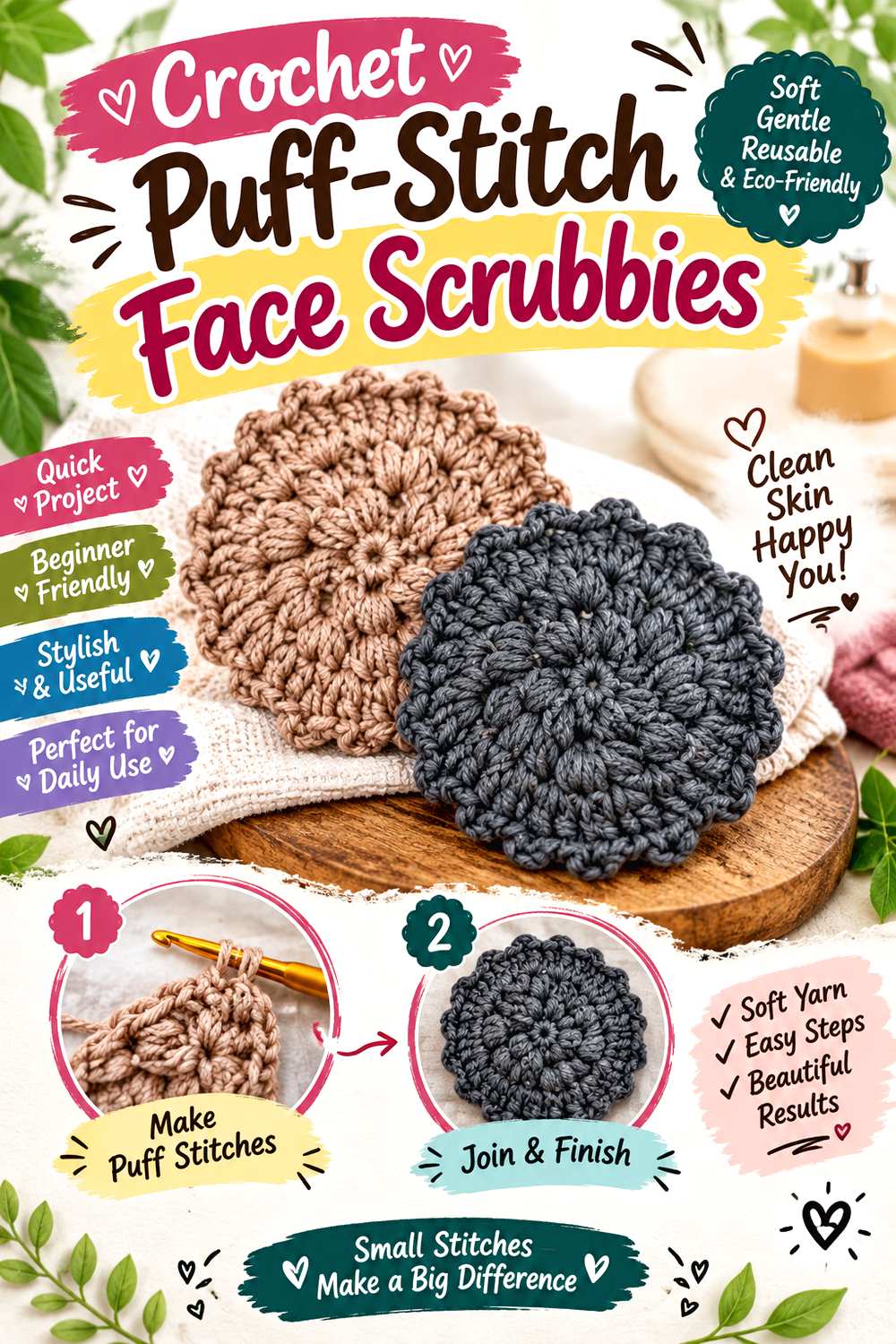
These small round face scrubbies use a puff-stitch texture rather than the flat surface of a basic crochet circle. The tutorial from love.life.yarn. by Amanda Saladin works through four rounds and uses DK cotton in the demonstrated version, creating a compact reusable textile that can be given individually or grouped into a set.
For gifting, their advantage is repetition. Once you know the construction, you can make several matching pieces without introducing a new fit problem each time. Think about how the set will be stored as well as how it looks when wrapped. A small washable pouch or basket can make the gift feel more complete, but that is an optional presentation idea rather than part of the scrubbie tutorial itself.
Texture Is the Point of Difference
The puff stitches give this design a more dimensional surface than a plain circular pad. That means the recipient’s preferences should influence your yarn choice and finishing. A very fuzzy or novelty yarn would change the feel considerably from the tutorial’s cotton version, so substitution deserves more thought here than simply matching a favorite color.
Make the Quantity Deliberate
A set feels more useful when the number of pieces reflects how they might actually be rotated rather than being chosen just because they are small. Make one first, assess its finished thickness and drying space, then decide how many make sense for the recipient. Repeating one tested piece also gives you a better chance of producing a visually consistent set.
Creator: love.life.yarn. by Amanda Saladin
4. Crochet Drawstring Soap Saver
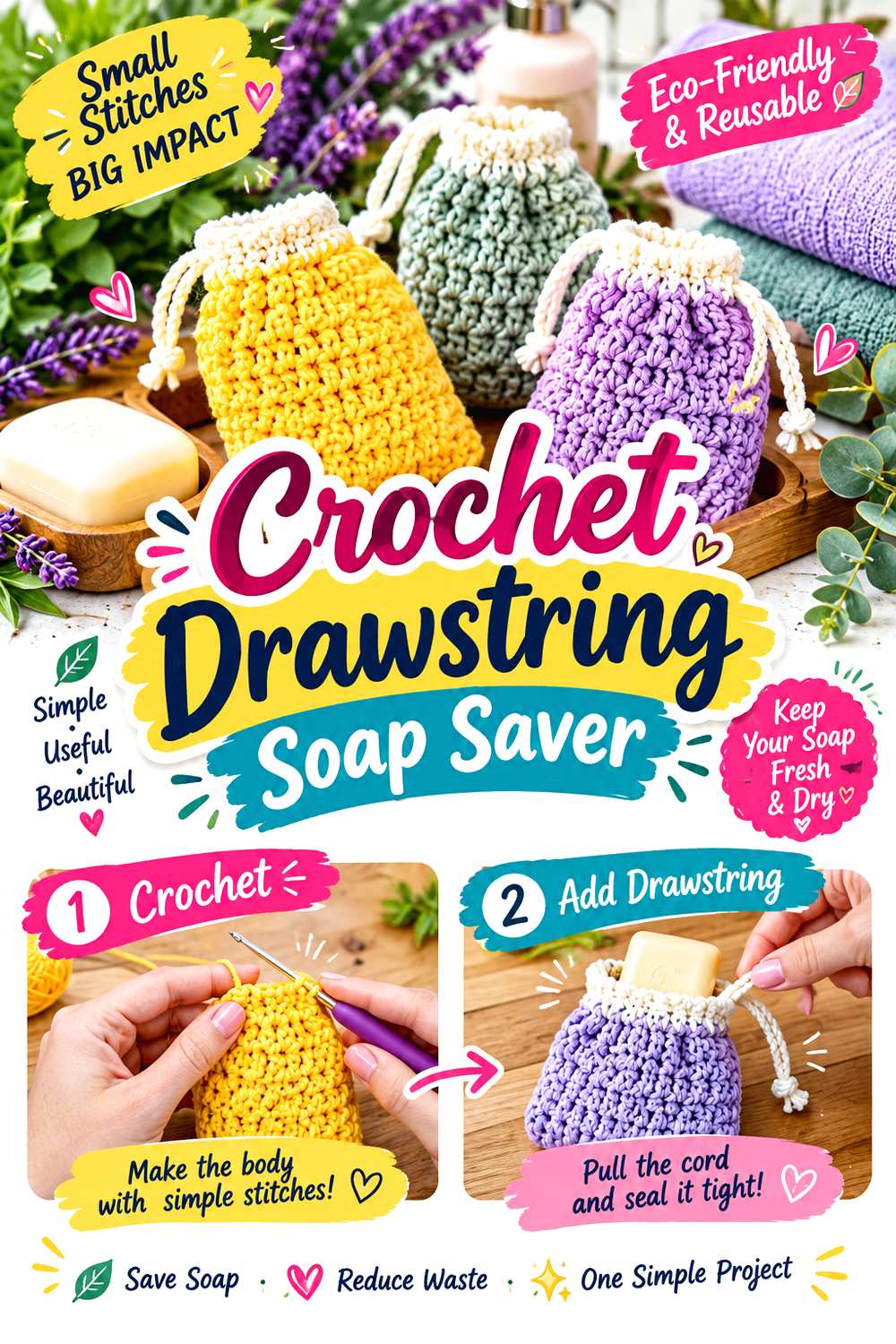
A soap saver is a small drawstring bag designed around a bar of soap, so it offers a different kind of bath gift from flat face scrubbies. Lullaby Lodge’s tutorial uses a cotton yarn and shows the textured bag through to its drawstring closure.
The closure is the important feature to preserve if you customize it. Making the body larger may seem harmless, but the opening and drawstring still need to gather in a useful way. For a Christmas gift, the soap saver can be paired with a bar that fits inside it, which also lets you confirm the dimensions before wrapping. That is more reliable than assuming every soap bar has the same proportions. Avoid adding bulky decorations around the opening if they interfere with tightening the drawstring.
Check the Intended Bar Before Finishing
If you already know which soap will accompany the gift, compare it with the developing bag before completing the top. You are checking both width and opening access. A bag can technically be large enough inside while still being awkward to load if the mouth is too restrictive, so the closure deserves its own fit check.
Keep Bathroom Finishing Simple
This is one project where extra decorative pieces may add more complication than value. A clean color combination or contrasting drawstring can personalize it without creating additional attachments. Because the item is intended for a wet environment, also follow the tutorial’s material direction rather than treating an unrelated decorative yarn as an automatic substitute.
Creator: Lullaby Lodge
5. Crochet Granny-Square Mug Cozy
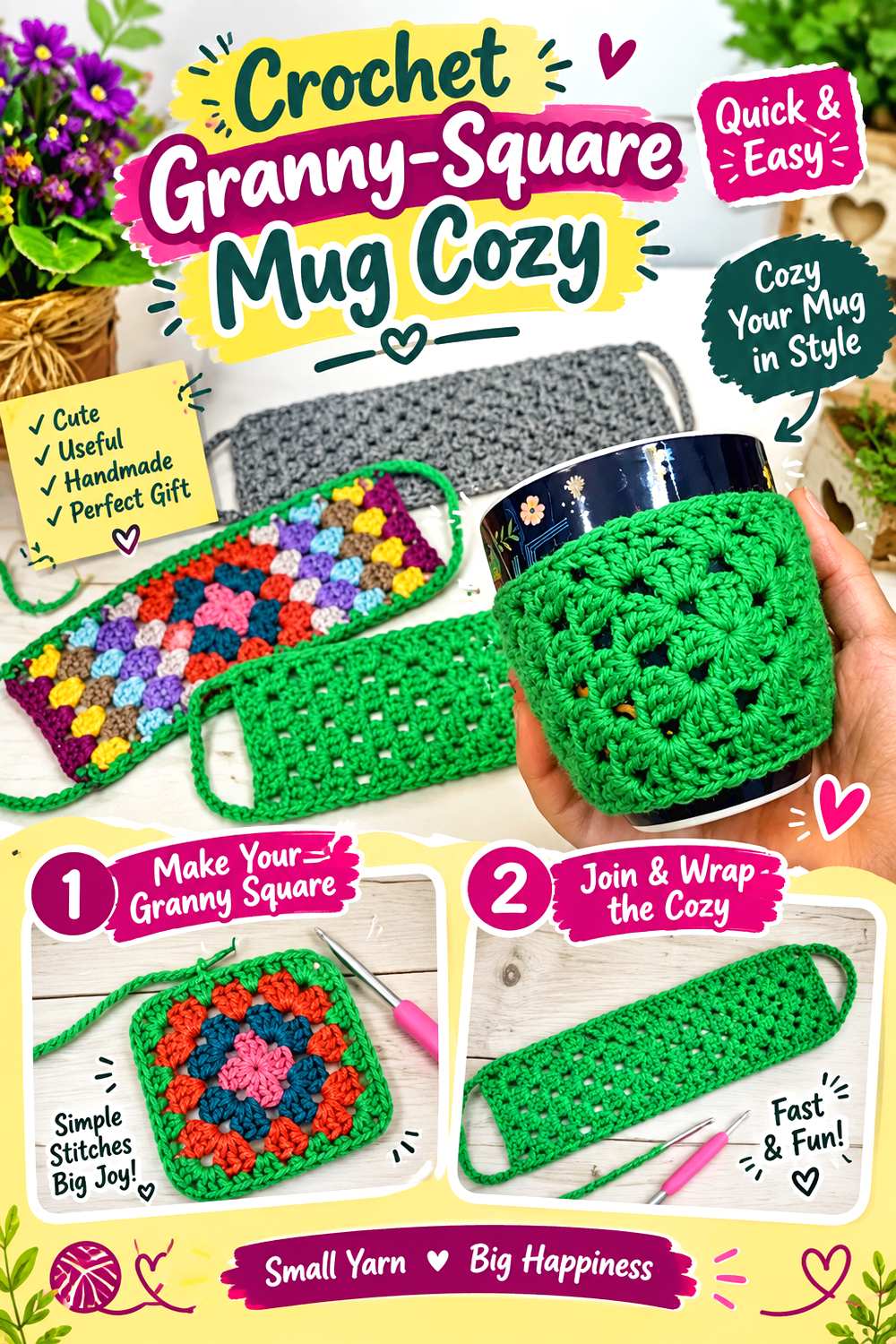
Katia Creates’ mug cozy begins with a small granny-square section and continues into side sections that form the wearable cover around a mug. The tutorial specifically discusses adjusting the construction around the mug handle, making the actual cup an important part of planning.
This makes a good gift when you can pair the cozy with the mug it is meant to fit. Instead of trying to produce a universal size, crochet for that particular shape and handle position. A coordinated mug-and-cozy combination also lets the handmade piece feel intentional rather than like an accessory the recipient has to find a vessel for later. Treat the crochet as a decorative textile accessory rather than assuming it provides a specific level of heat protection.
Fit the Handle, Not Just the Mug Body
Two mugs with similar capacities can have very different handle shapes. Before you finish the cozy, wrap the developing piece around the intended mug and check that the handle remains comfortable to reach. This resolves a more important question than simply measuring the mug’s circumference.
Let the Granny Square Carry the Color
The granny-square portion already provides natural places for color changes. That gives you an easy personalization route without altering the construction. A restrained two-color version can look quite different from a multicolor one even when both follow the same tutorial, making this a useful option for several recipients without pretending each palette is a different project.
Creator: Katia Creates
6. Crochet Shell-Edged Round Coaster
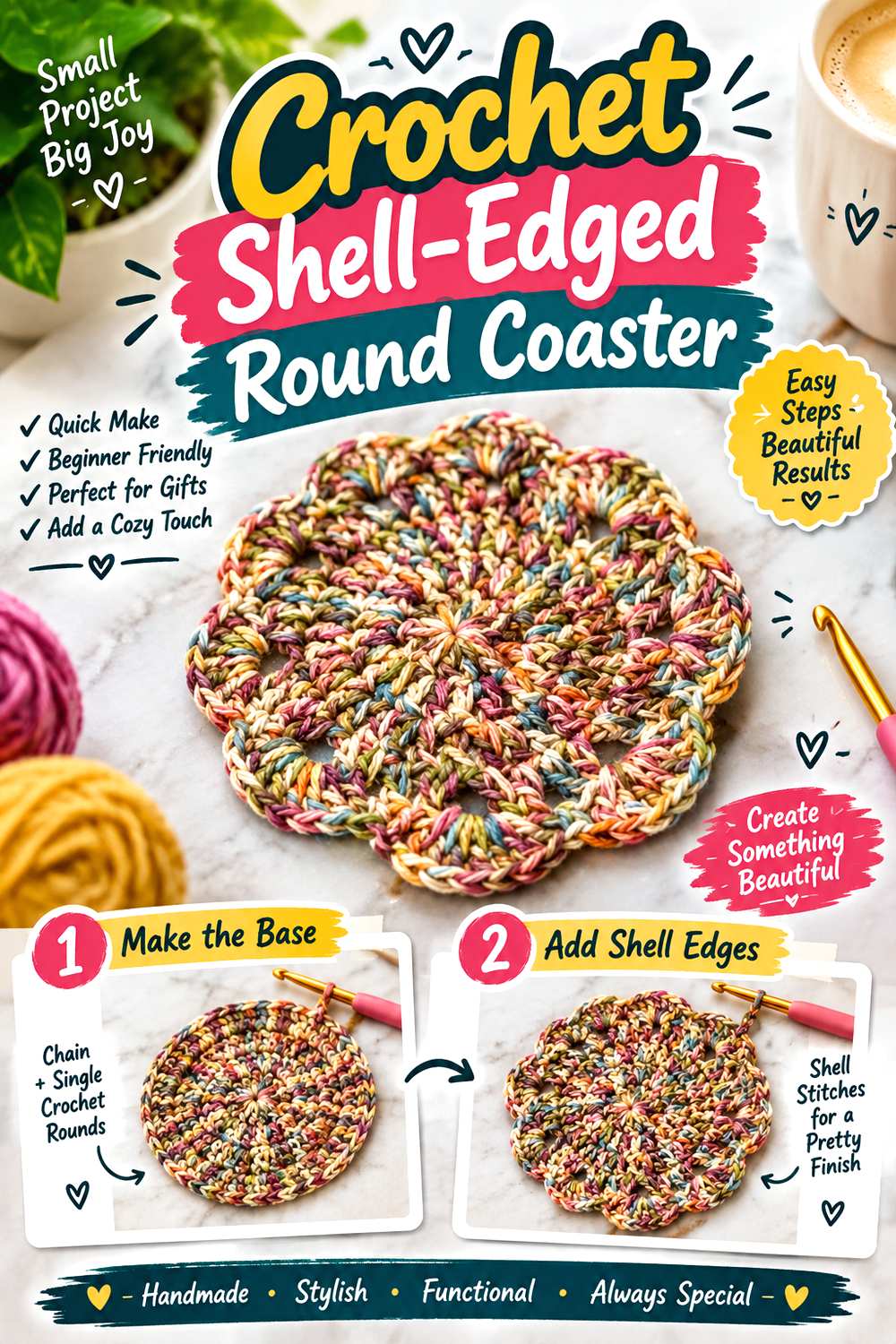
This round coaster from Designs by Phanessa finishes with a pronounced shell-style outer edge, so the border becomes the main visual feature rather than an afterthought. The creator’s updated tutorial is paired with a written project page showing the circular construction and shell finish.
As a Christmas gift, coasters are useful when you want something for the home that does not depend on body size. The shape is also easy to evaluate while you work: place the finished sample under the type of cup or glass you expect it to accompany and decide whether the proportions make sense. If you create a set, consistency across diameter and edging will matter more than making every coaster a different color.
Decide Between a Matching or Mixed Set
A single color across four coasters gives the set a more unified appearance, while coordinated colors can help each piece stand apart on a crowded table. Because the shell edging already contributes visual detail, you do not necessarily need complicated color changes to make the gift interesting.
Check the Surface Before Multiplying
Make one complete coaster and place it on the type of table where it is likely to be used. Look at whether it sits as you expect and whether the border stays clear of the drinkware. That first finished piece becomes a more useful template for the rest of the set than relying only on an unfinished circle.
Creator: Designs by Phanessa
7. Crochet Buttoned Eyeglass Case
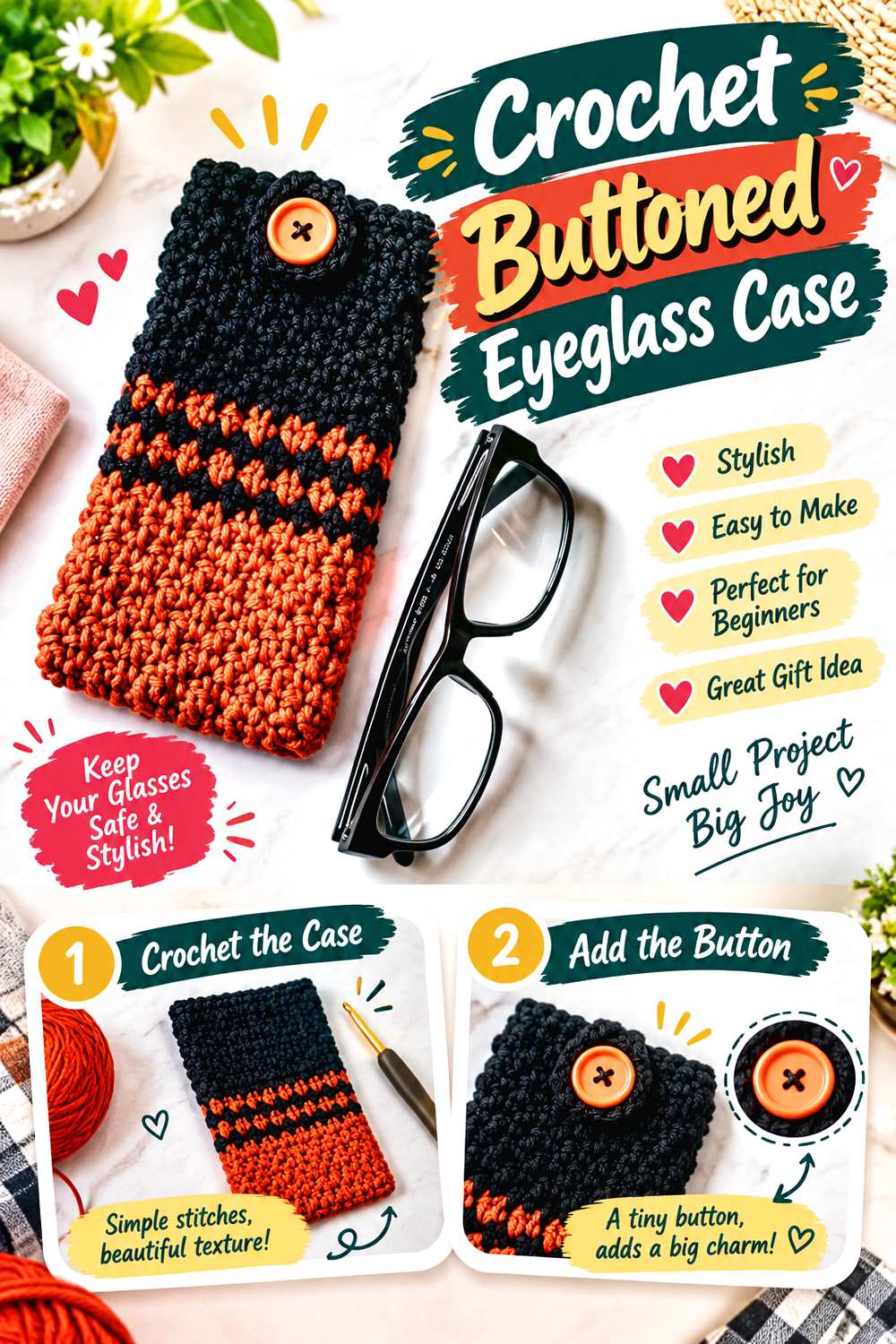
TLH Patterns demonstrates a textured eyeglass case with a button closure, turning a simple pouch shape into a gift with a specific job. The tutorial gives finished measurements for its sample and shows the case step by step, which is useful because glasses vary significantly in width and frame depth.
Before choosing this project, find out what the recipient actually carries. Slim reading glasses and large sunglasses may need very different interior space. If you cannot measure the pair directly, compare published dimensions for the frame with the tutorial’s finished dimensions rather than assuming one case will fit every style. The button also introduces a second planning point: the flap or closure must meet naturally without forcing the contents.
Allow for the Thickest Part of the Glasses
Frame width alone does not tell the whole story. Fold the glasses and look at the thickest point created by the arms, hinges, and lenses together. That profile is what the crocheted case has to accommodate comfortably, so it is the more useful comparison when judging the tutorial’s sample size.
Treat the Closure as Functional
A decorative button can personalize the case, but it still has to work with the loop or flap shown in the construction. If you substitute a dramatically larger button, check that it can pass through the closure without stretching the crochet excessively. Small finishing changes are most successful when they preserve the original action.
Creator: TLH Patterns
8. Crochet Phone Pouch
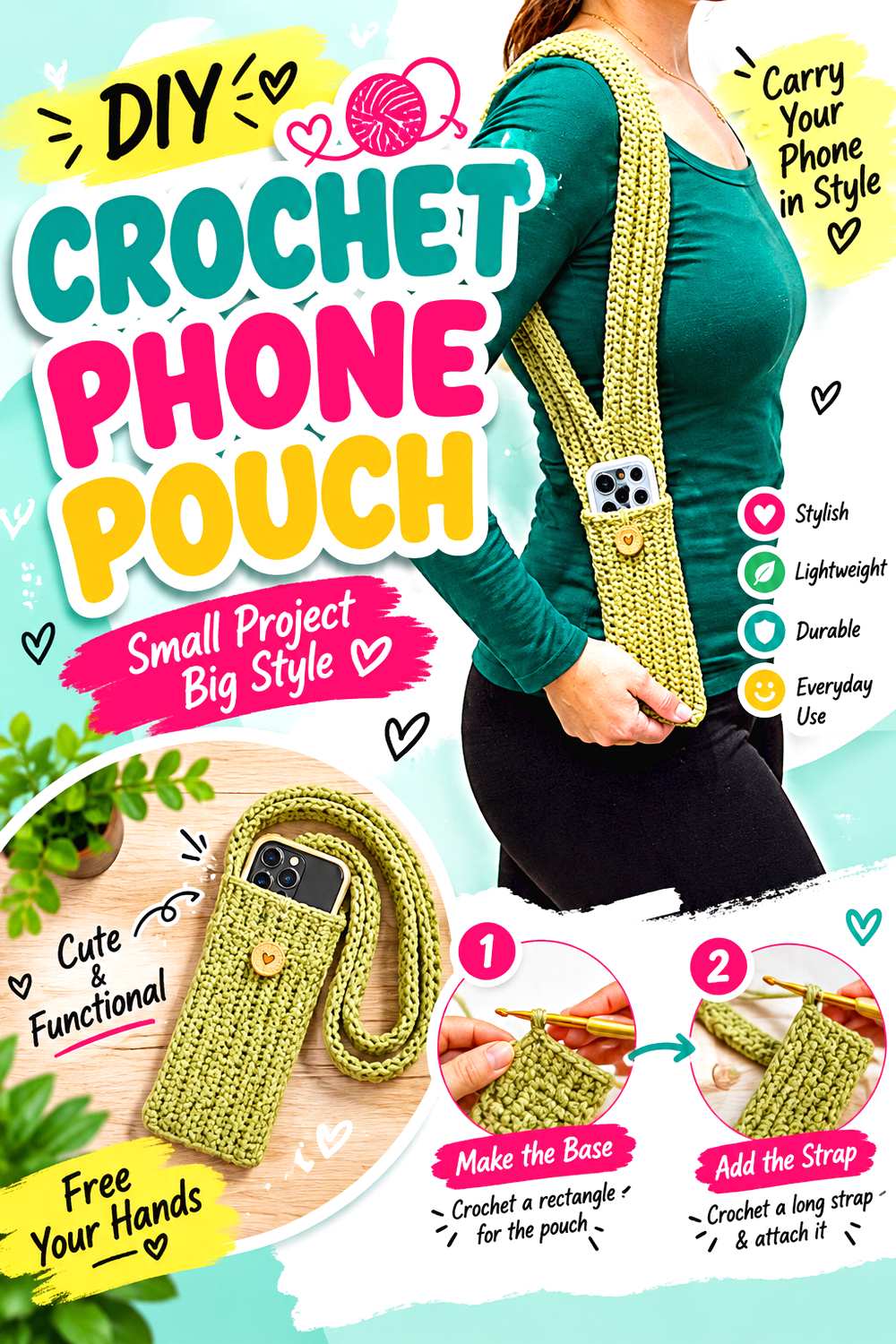
A phone pouch is a useful Christmas gift when you know the recipient’s device size and prefer a small practical project over a decorative ornament. Crochet Jewel’s tutorial demonstrates a beginner-oriented phone pouch intended to hold a smartphone.
The important word here is “phone,” not “pouch.” A generic small bag can be close in size and still be inconvenient if the device barely clears the opening or disappears too deeply inside. Measure the phone with its everyday case attached, because that is the object the recipient will actually insert. If you want to adapt the dimensions, change them deliberately and recheck the opening as the fabric grows. Do not assume the crochet provides impact protection simply because the device fits inside.
Measure the Phone in Its Real-World Form
Remove nothing the recipient normally keeps on the device. A protective case, grip, or other permanent accessory can change both width and thickness. Compare those dimensions with the emerging crochet rather than fitting to a bare phone the recipient never actually carries.
Keep Access Convenient
A phone pouch should not make the recipient wrestle with the device every time it rings. Before weaving in the final ends, insert a similarly sized object and see how naturally it goes in and comes back out. That simple test can reveal a too-tight opening before the gift is finished.
Creator: Crochet Jewel
9. Crochet Drawstring Pouch
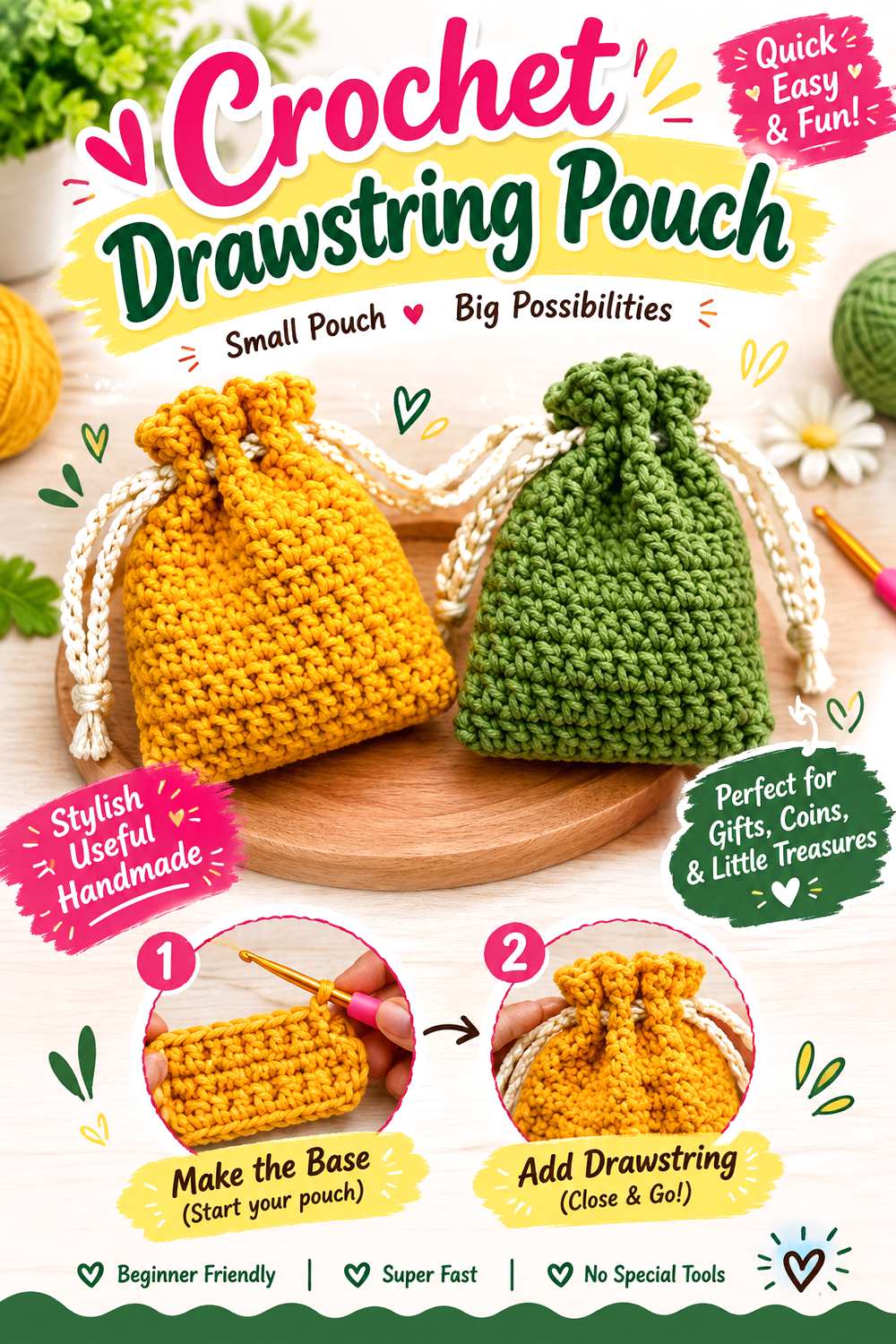
VivCrochets’ tutorial makes a small drawstring pouch with a crocheted body and separate drawstrings threaded through the upper section. The creator presents it as a place for small everyday items or as a gift bag, giving this project two useful Christmas roles.
As a reusable gift container, the pouch can become part of the present rather than disposable wrapping. That works especially well for jewelry, wrapped treats, small craft supplies, or another compact object whose dimensions you know. The drawstring creates a softer closure than a zipper or button, but it also means the top gathers inward. Leave enough room that the intended contents can pass through the opening before it is cinched.
Choose the Contents First
If the pouch is going to hold another present, pick that item before you begin adapting dimensions. Measure its widest point and consider whether it can pass through the opening without turning or forcing it. This prevents the frustrating situation where the pouch body is spacious enough but the gift cannot be inserted easily.
Let the Drawstring Do the Decorating
Contrasting drawstrings can give the pouch a finished gift-ready look without adding appliqués or hardware. This is especially useful when you are making several pouches and want variation while preserving the same construction. Color changes around a functional feature are easier to manage than structural changes to the base or opening.
Creator: VivCrochets
10. Crochet Simple Headband
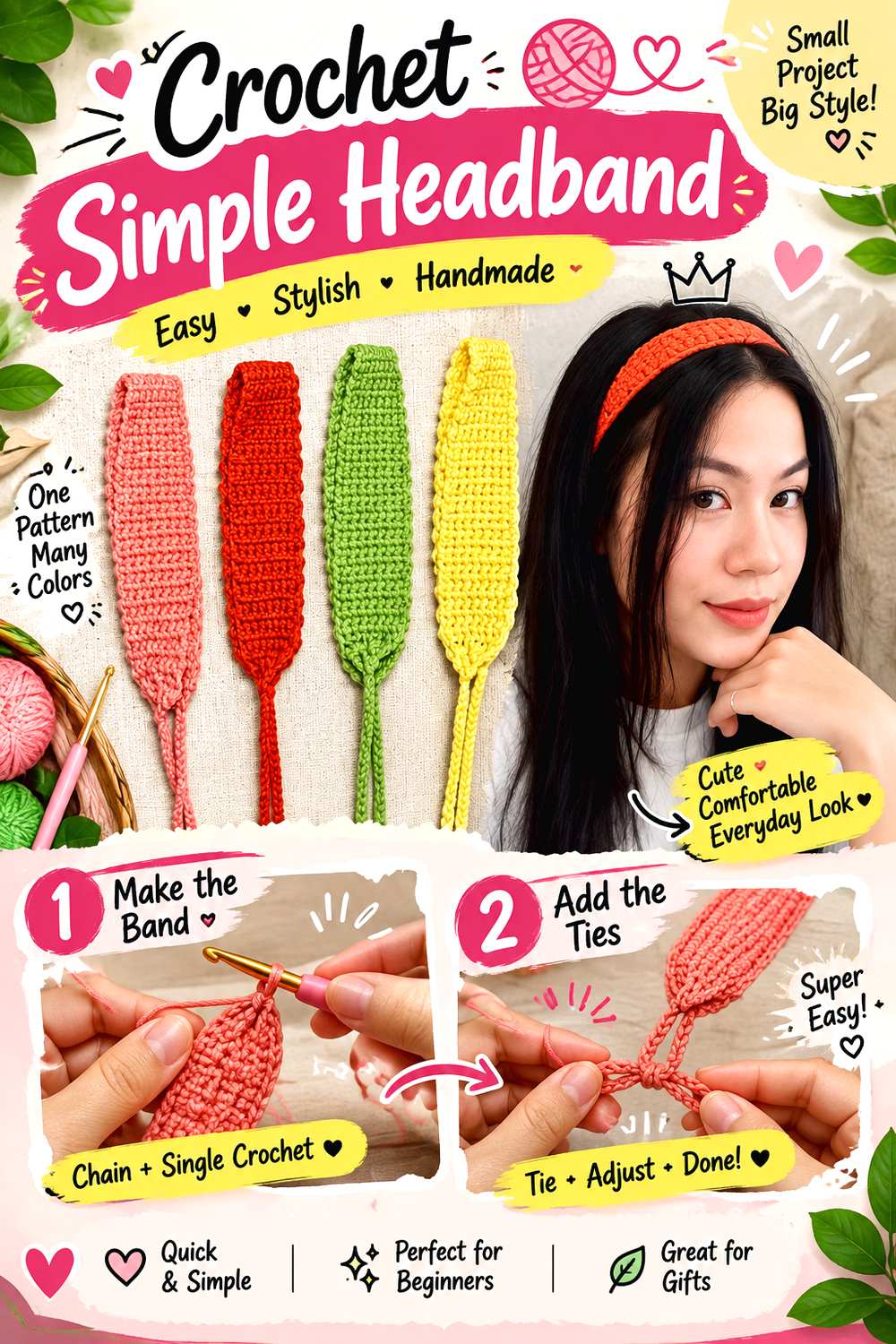
Molina DIY’s headband tutorial creates a wearable band using basic crochet techniques and includes caption support for the pattern details. The project sits between a tiny stocking stuffer and a full hat: it is wearable and fit-dependent, but it leaves the crown uncovered.
That makes it worth considering for someone who likes hair accessories or prefers lighter head coverage. Circumference is the key decision. A headband that is attractive but too loose can move out of position, while one made too small may be uncomfortable. Compare with a headband the recipient already wears if possible. If that information is unavailable, another non-fitted project in this collection may be a safer surprise gift.
Compare Stretch as Well as Length
A flat measurement does not tell you exactly how the finished band will behave when worn. Crochet fabric can stretch differently depending on yarn, stitch structure, and tension. If you substitute materials, compare the developing band with the tutorial’s intended construction instead of relying on length alone.
Make Color the Personal Detail
Headbands sit close to the face, so a familiar wardrobe color can make the gift more wearable than an elaborate embellishment. If you know the recipient favors neutrals, jewel tones, or a particular coat color, that information can guide the project without forcing you to alter the sizing or construction.
Creator: Molina DIY
11. Crochet Flat-Top Beanie
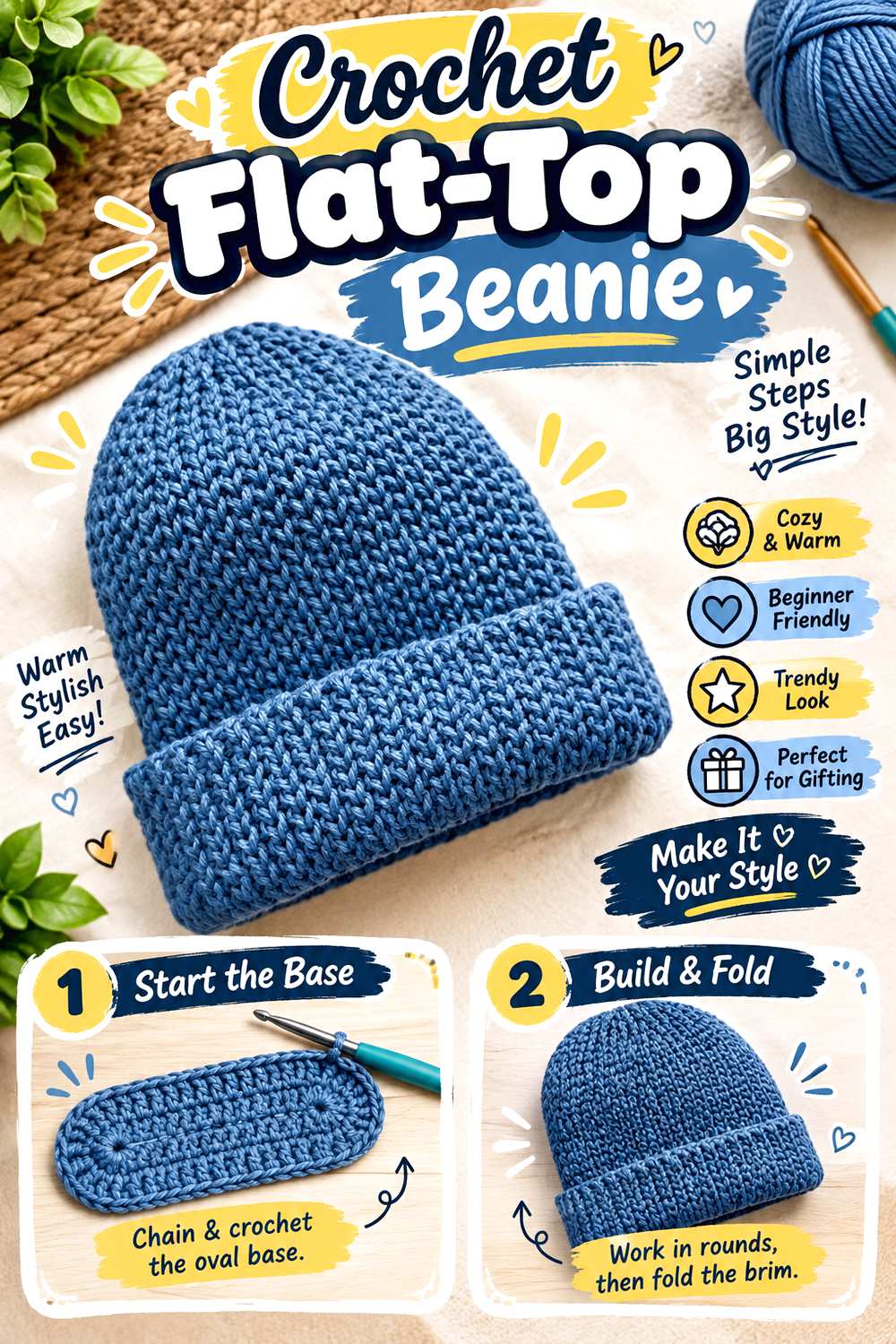
This beanie tutorial from lerugi crochets focuses on a minimal, knit-look crochet hat with a crown finish designed to avoid excessive bunching at the top. The creator demonstrates the full process from the foundation through joining and closing the crown, and the tutorial specifies the size used for the demonstrated adult hat.
A beanie can feel like a highly personal Christmas gift, but it is less forgiving than a scarf because circumference and depth both affect the result. Whenever possible, measure a hat the recipient already likes or get their head measurement discreetly. If you plan to change yarn, remember that stretch may change with it, so the tutorial’s sizing information should not be treated as universal after substantial substitutions.
Crown Shape Is the Distinguishing Feature
The relatively clean top is what separates this beanie from designs that rely on a heavily gathered rectangle. Preserve that feature when you customize. Adding extra length or changing the number of repeats without understanding the consequence can alter how much fabric has to be closed at the crown.
Fit Before Decoration
A pom-pom, patch, or color blocking can be considered after the basic hat dimensions are settled. None of those finishing choices will correct a beanie that is too shallow or too loose. Prioritize circumference and crown depth first, then decide whether the recipient’s style calls for anything more.
Creator: lerugi crochets
12. Crochet Fingerless Gloves
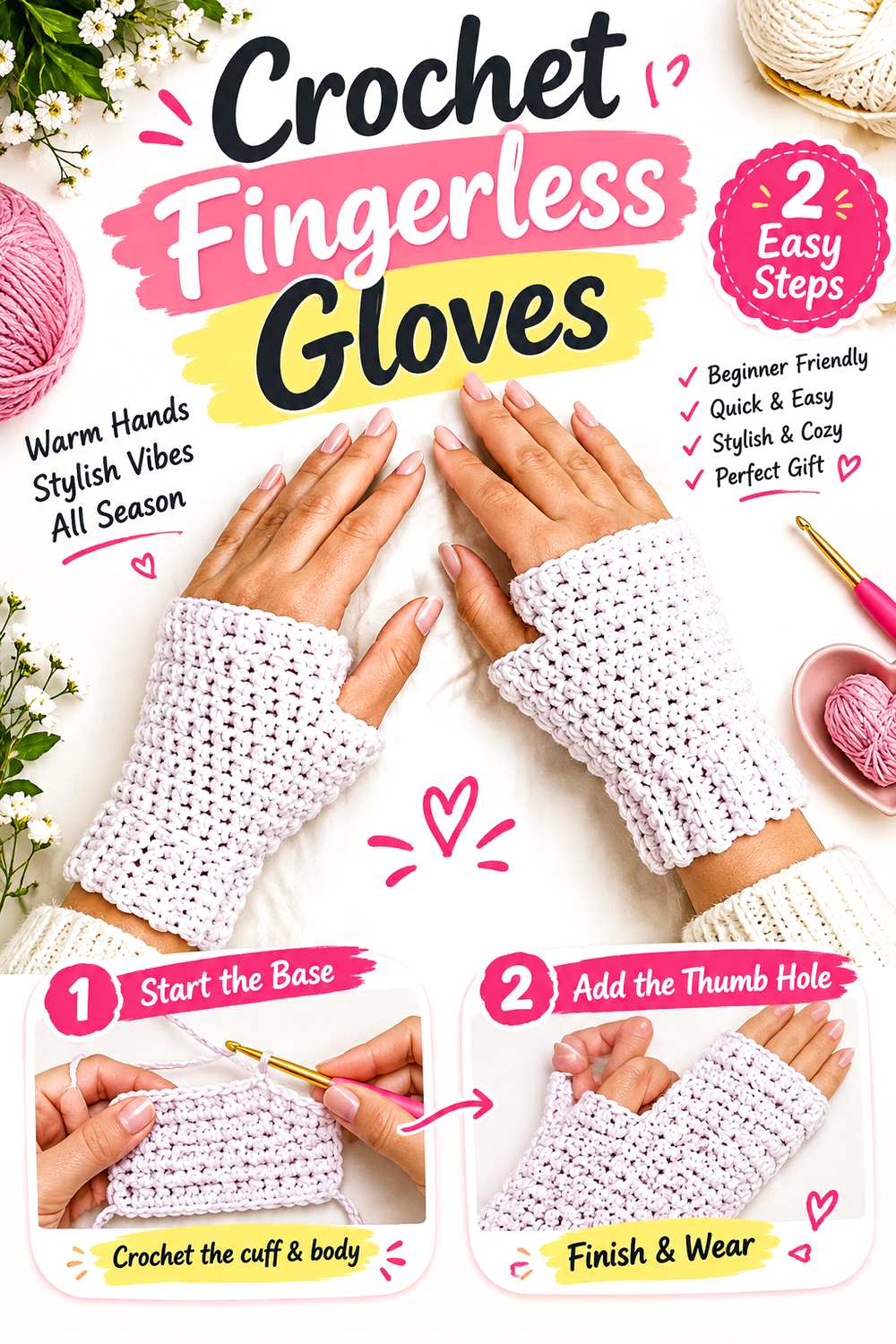
Cherilyn Q’s fingerless-glove tutorial includes the thumb opening, decreases, and ribbing, and it specifically notes that the beginning chain determines width. That makes the project a good example of why wearables need more planning than their photographs suggest.
Fingerless gloves are useful for someone who wants hand coverage while keeping the fingers free, but the gift needs to make sense around both the hand and wrist. If possible, compare with a glove or mitten that fits the recipient. When that is not possible, avoid making a large structural change to the tutorial just to “play it safe”; an oversized glove can be as inconvenient as a tight one.
Pay Attention Around the Thumb
The thumb opening is a local fit problem rather than simply another decorative gap. As you follow the tutorial, treat that area as a checkpoint. If you are making the gloves for yourself as a test before making the gift pair, notice whether the opening sits comfortably and how changing width affects its position.
Make the Pair Match Before Finishing
Work with a repeatable counting system so the two gloves develop the same length and shaping. Comparing the pieces periodically is more reliable than discovering a mismatch after both have been finished. If you personalize with color changes, mirror their placement unless an intentionally mismatched pair is part of the recipient’s style.
Creator: Cherilyn Q
13. Crochet Rectangle Slippers
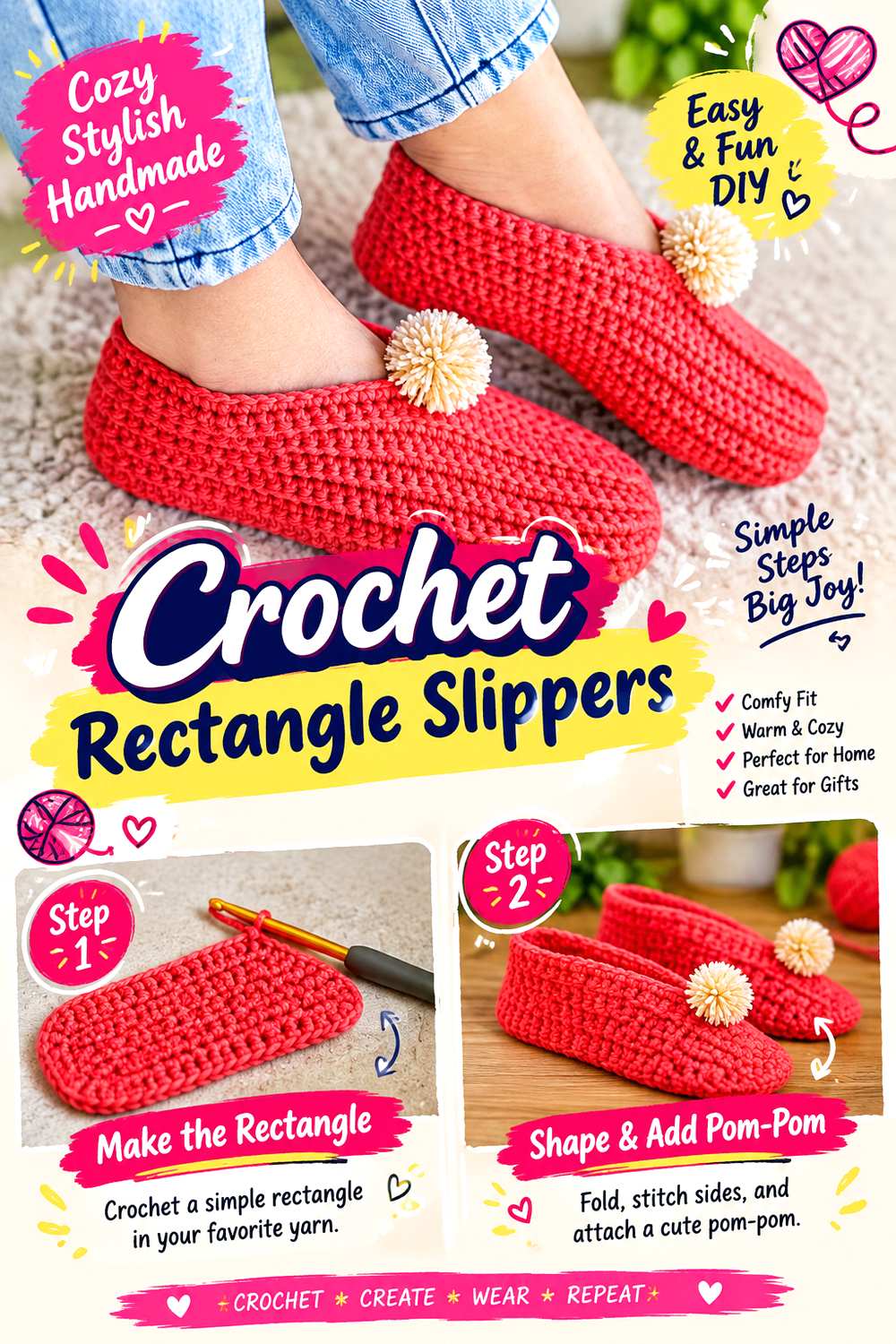
Naztazia’s slipper tutorial begins with a rectangle worked in back-loop single crochet, then uses folding, cinching, and seaming to create the footwear shape. The creator bases the rectangle on foot length and the circumference around the upper part of the foot rather than asking viewers to rely on one fixed size.
That measurement-driven approach is what makes these appealing as a Christmas gift, but it also means you need reasonably accurate information about the recipient. Slippers are not an ideal surprise project if you have to guess wildly at foot dimensions. They are best treated as indoor textile footwear, and the tutorial does not establish a universal slip-resistant sole, so do not assume a crocheted bottom provides traction on every floor.
Measure the Foot, Not the Shoe Label
Shoe sizes vary among brands and styles. The tutorial’s construction is designed around actual foot dimensions, so those measurements are more useful than a number printed inside a shoe. If you can borrow an existing slipper that fits, its length and upper width can also give you a practical reference.
Keep Both Rectangles Identical
Because the shaping begins from a flat piece, consistency between the two starting rectangles matters. Count rows and compare them before assembly. Correcting a difference at this stage is easier than trying to disguise unequal finished slippers after the toe and heel have already been formed.
Creator: naztazia
14. Crochet Infinity Scarf
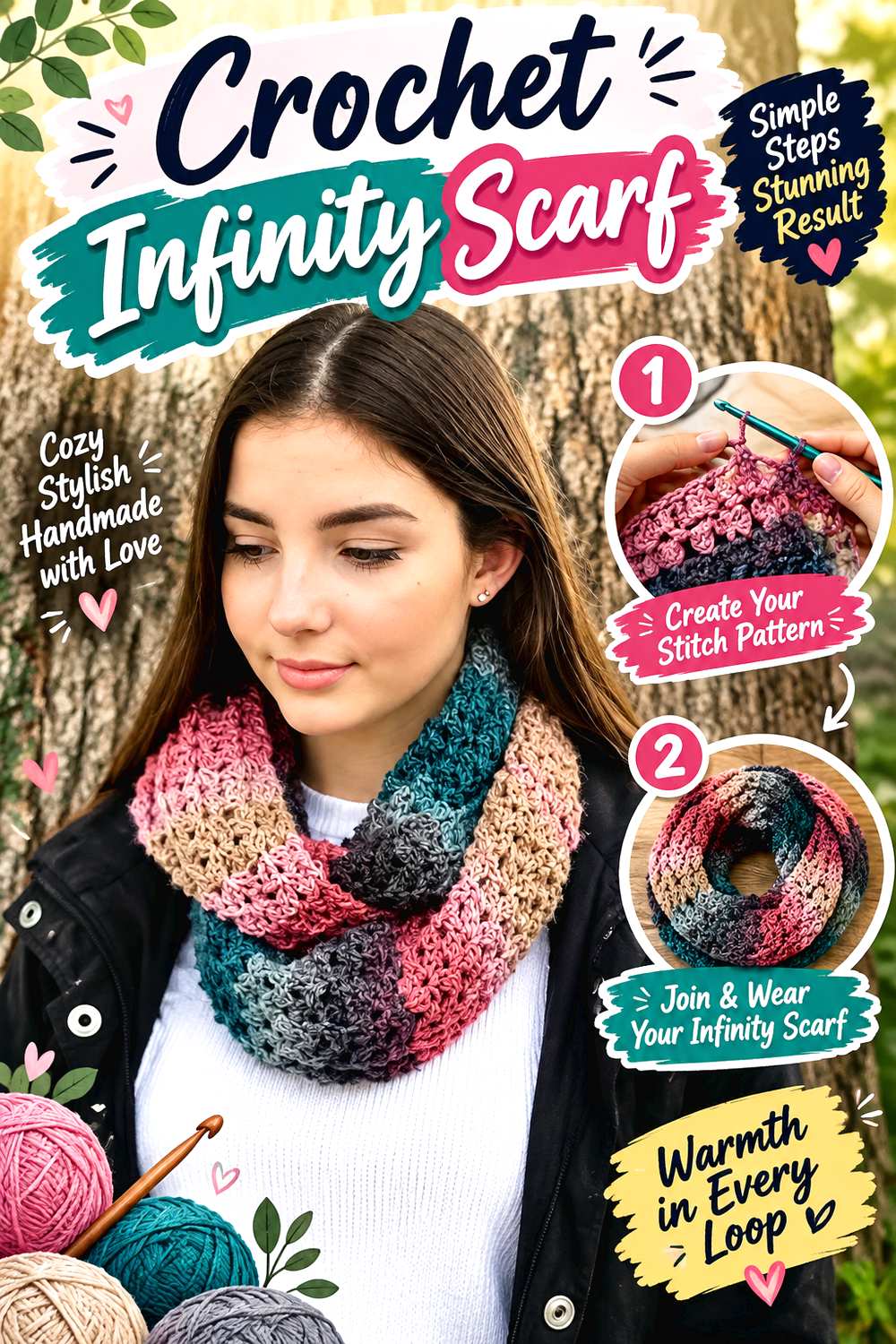
Ophelia Talks Crochet’s Rachel Scarf tutorial creates an infinity scarf: a continuous loop rather than a scarf with two loose ends. The demonstrated version uses a variegated yarn, giving the simple overall form visual movement without requiring separate decorative pieces.
An infinity scarf reduces some of the sizing pressure of fitted gloves or a beanie, but circumference and bulk still affect how it wears. Think about whether the recipient prefers a close neck loop or a longer piece that can wrap with more drape. Changing yarn thickness can make the same circumference feel substantially fuller, so a substitute should be judged in terms of the finished fabric as well as color.
Think in Terms of Wrapped Bulk
A scarf can look moderate when laid flat but become much fuller once it is looped around the neck. If the recipient wears structured coats or dislikes bulky accessories, that matters. Compare the developing fabric folded into its intended layers before deciding to make the scarf wider.
Use Long Color Changes Deliberately
Variegated yarn can create a gift that looks visually complex without adding construction steps. If you choose a multicolor yarn, consider how frequently the colors change across the scarf. Longer transitions and rapid changes produce very different effects even when the crochet pattern stays exactly the same.
Creator: Ophelia Talks Crochet
15. Crochet V-Stitch Gift Cowl
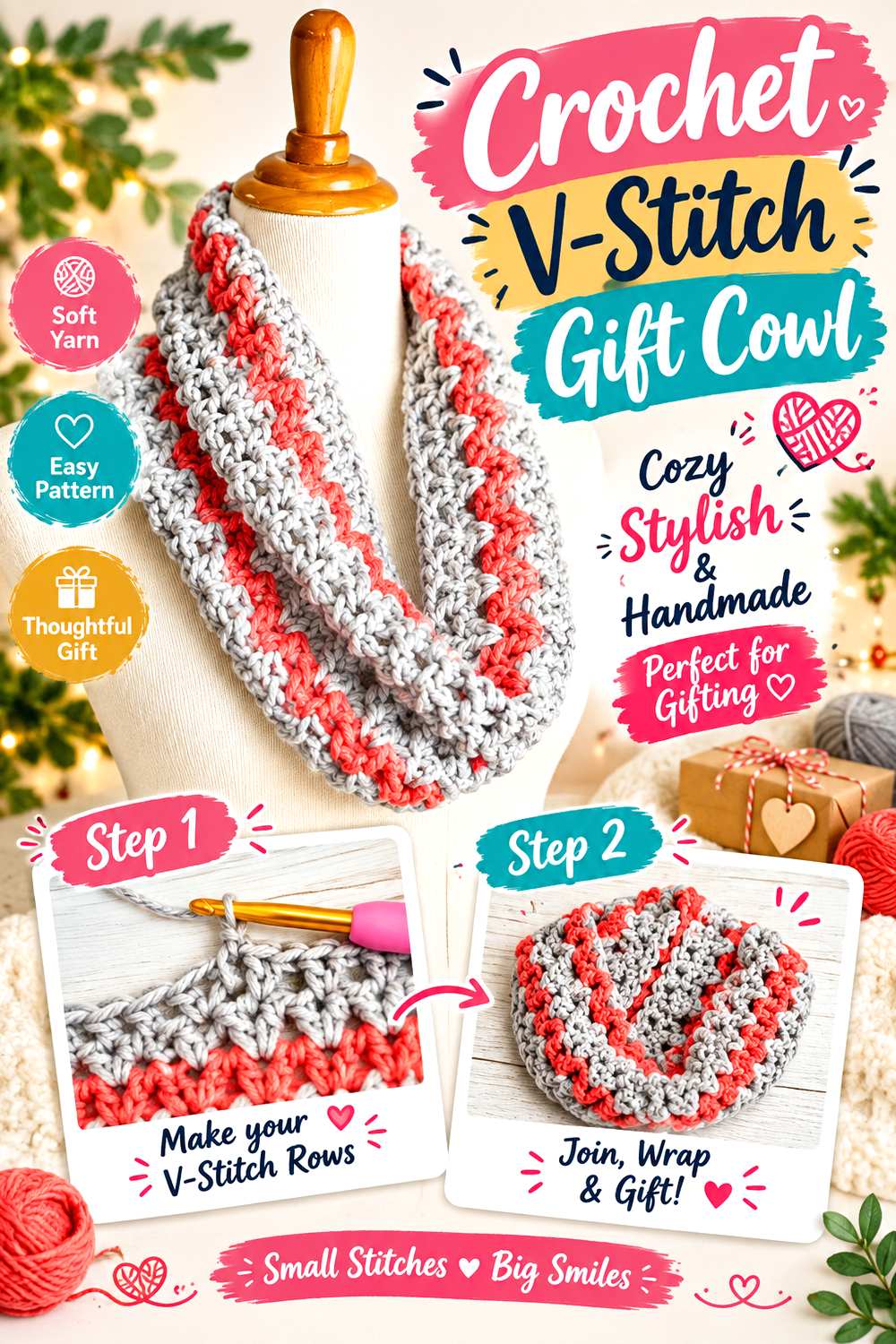
Fiber Flux’s Quick Gift Cowl is worked in the round with a V-stitch pattern, producing a short neck accessory rather than the longer loop of an infinity scarf. The accompanying project information shows a striped sample and identifies the construction as a cowl worked continuously around.
This is a useful alternative when the recipient likes neckwear but does not want the extra length of a scarf. The opening must still pass comfortably over the head, and the height determines how much fabric sits around the neck. Those are more meaningful planning points than simply calling the project “one size.” If you alter the starting circumference, make sure you preserve the stitch structure required by the original design.
Check Head Access Before Height
A cowl can have generous neck room yet still be awkward to pull on if its opening is too small. Once the foundation has formed the ring, check the intended circumference before investing in the full height. This is particularly important after changing yarn or tension.
Stripes Change the Emphasis
The tutorial’s striped version shows how color can highlight the horizontal construction. A solid version shifts the attention toward stitch texture instead. Choose between those effects based on the recipient rather than adding stripes automatically; the cowl already has enough structure to work without them.
Creator: Fiber Flux
16. Crochet Sharma Shawl
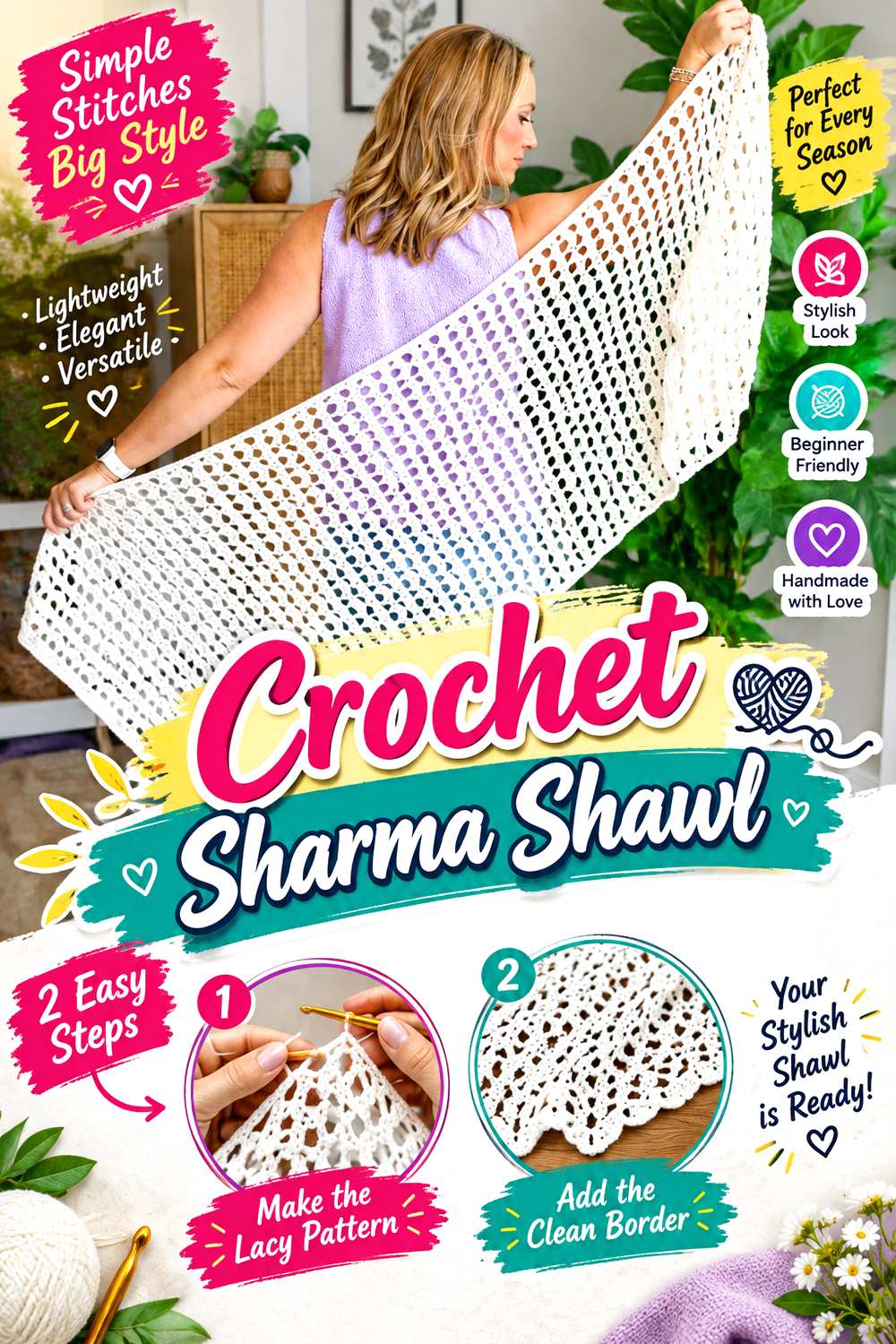
The Sharma Shawl from Bella Coco is an oblong wrap, not a triangular shawl. It is crocheted in one piece in rows and finished with a border worked around the outside, creating a long rectangular form that can be draped over the shoulders or worn more like a scarf.
That shape makes it a thoughtful Christmas option for someone who enjoys lightweight wraps and layering pieces. Because the project has considerably more surface area than the small accessories above, color choice becomes more visually dominant. Before changing the yarn type, consider how the substitute fabric drapes; a stiffer material can change the character of an open, lacy wrap even if the measurements remain similar.
Decide Whether the Recipient Is a Shawl Wearer
The rectangular format is versatile, but it is still a substantial accessory. Think about the recipient’s actual wardrobe. Someone who regularly wears scarves, wraps, or light shoulder layers is more likely to use it than someone who prefers compact winter accessories.
Give the Border Enough Attention
Because the border runs around a large finished piece, inconsistencies there can be more noticeable than on a tiny motif. Follow the tutorial’s finishing sequence before improvising. If you want a different color border, that is a relatively clear cosmetic change, but changing its structure affects the final edge and should be considered more carefully.
Creator: Bella Coco
17. Crochet Everyday Tote Bag
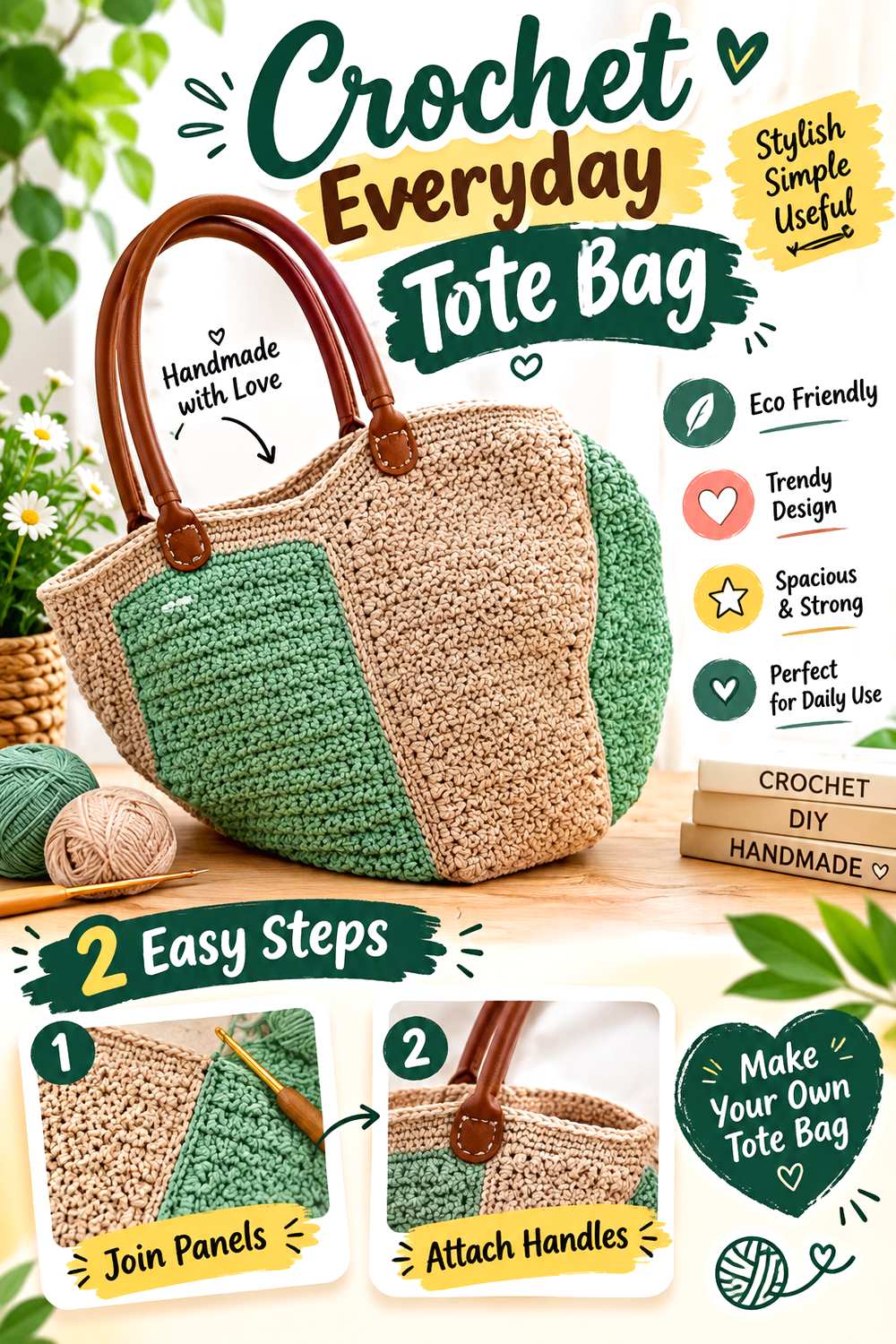
Sirin’s Crochet provides a complete tutorial for an easy crochet tote bag, moving this collection from small pouches into a larger carry-all format.
A tote is most useful when you think about what the recipient is likely to carry rather than assuming “bigger” automatically means “better.” An everyday project bag, book tote, or light shopping bag may need different proportions. Pay particular attention to the opening and handles because those are the areas the user interacts with most. If you substantially enlarge a tutorial-designed tote, remember that changing dimensions also changes how much fabric and weight the handles must manage; a larger version is not simply the same object scaled without consequence.
Choose a Purpose Before Changing Size
Give the tote a job before you modify its dimensions. A bag for yarn, books, or everyday small items does not need the same depth. Defining that purpose helps you decide whether the tutorial already fits the gift rather than altering it simply because customization feels expected.
Consider Small-Item Containment
Crochet fabric can have visible gaps depending on its stitch structure and how it stretches. If the recipient is likely to carry loose small objects, inspect the finished fabric under gentle tension. A lining could be considered as a separate adaptation, but it introduces additional sewing and should not be assumed to be part of the tutorial.
Creator: Sirin’s Crochet
18. Crochet Buttoned Laptop Sleeve
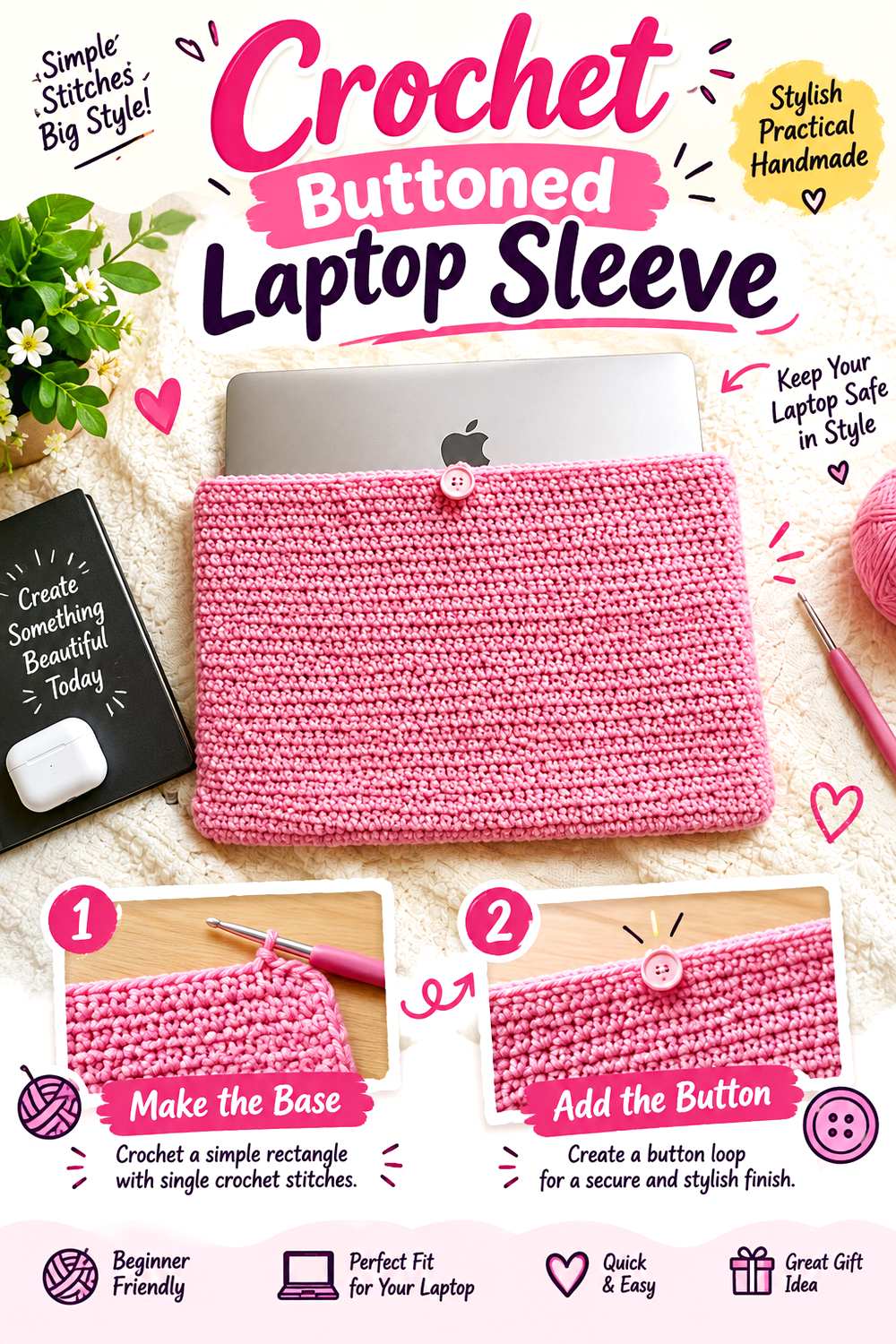
Alice’s Crochet Corner demonstrates a laptop sleeve built with half double crochet and finished with a loop-and-button closure. The tutorial provides sample dimensions while also explaining that the size can be adjusted, making measurement central to the project.
For a Christmas gift, measure the recipient’s closed laptop across width, height, and thickness rather than relying only on the advertised screen size. Two computers with the same diagonal display can have different bodies. The sleeve should be treated as a crocheted cover, not as evidence of drop or impact protection. If the recipient transports the laptop in another bag, a reasonably close fit may also be more convenient than a loose oversized sleeve.
Include the Device Thickness
Flat width and height measurements are not enough because the crochet has to wrap around the sides as well. Compare the developing base with the real laptop or a cardboard template that includes its full outer dimensions. This helps prevent the closing edge from being pulled out of shape.
Place the Closure After Checking Fit
A button-and-loop closure works best when the body already fits correctly. If the sleeve is too short or overfilled, the closure may be asked to compensate for a sizing problem. Check the device first, then assess where the button naturally meets the loop without forcing the top edge.
Creator: Alice’s Crochet Corner
19. Crochet Customizable Basket
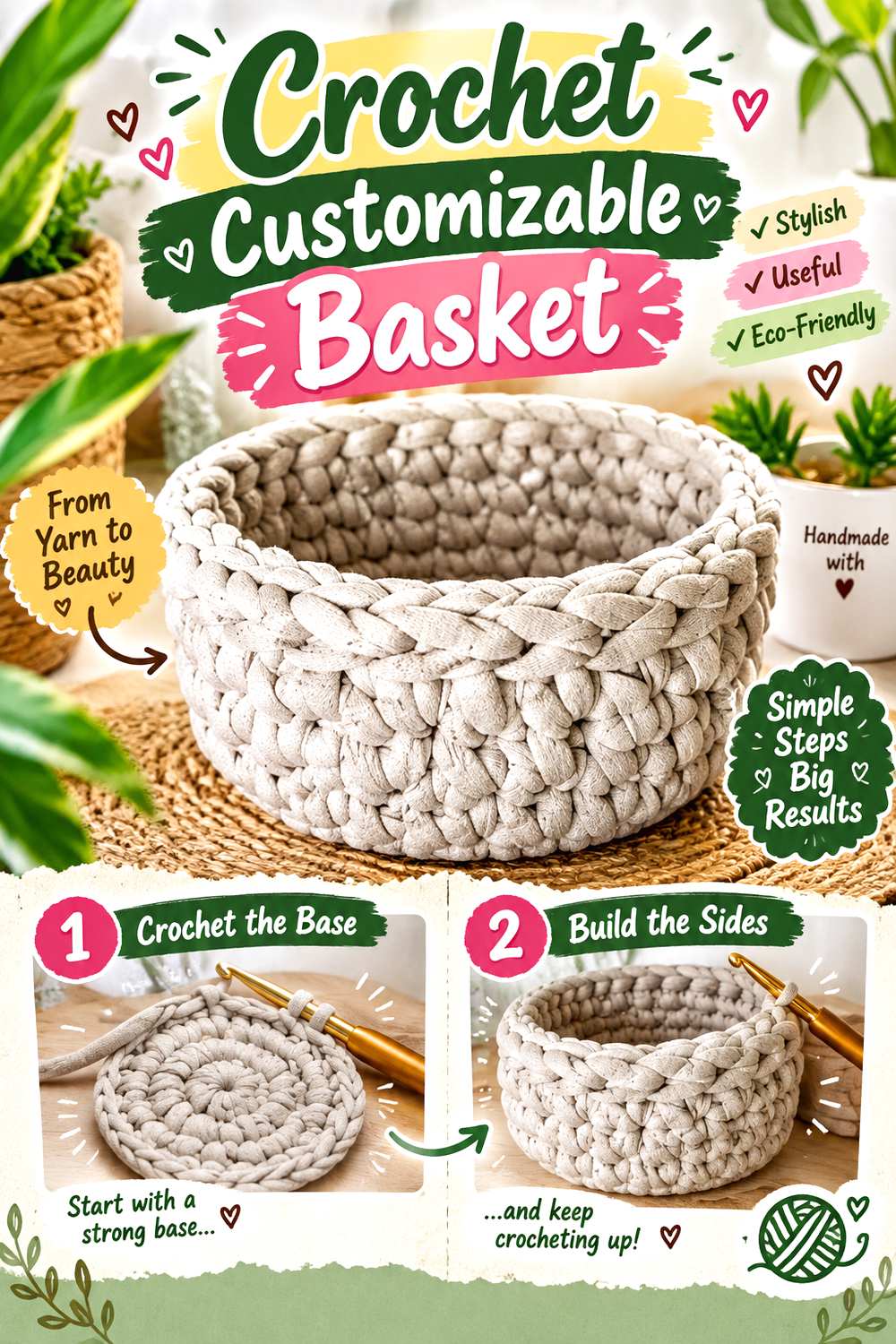
Lallaulab’s step-by-step basket tutorial uses ribbon yarn and is explicitly presented as customizable to the maker’s needs and taste. English subtitles are available for the tutorial.
A crochet basket works especially well when the gift is really about organization: yarn beside a chair, small accessories on a dresser, or lightweight items on a shelf. Before altering the dimensions, decide what belongs inside it and where it will sit. Wider and taller are not automatically improvements because a larger basket also asks more of the fabric’s shape. Do not assume a crocheted basket will remain rigid under every load; that depends on materials, construction, and use.
Match the Opening to the Contents
For frequently used items, an open basket should make access easier rather than hiding everything in a deep container. A shallower form may suit a bedside table, while taller sides may make more sense for loose craft supplies. This is a placement decision as much as a crochet decision.
Test the Shape Empty
Before giving the basket, set it down empty and then with the lightweight contents you expect it to hold. That simple comparison tells you whether the proportions suit the use. If you decide it needs structural modification, treat that as a design change rather than assuming a smaller hook or heavier yarn automatically solves every shape issue.
Creator: Lallaulab
20. Crochet Buttoned Pillow Cover
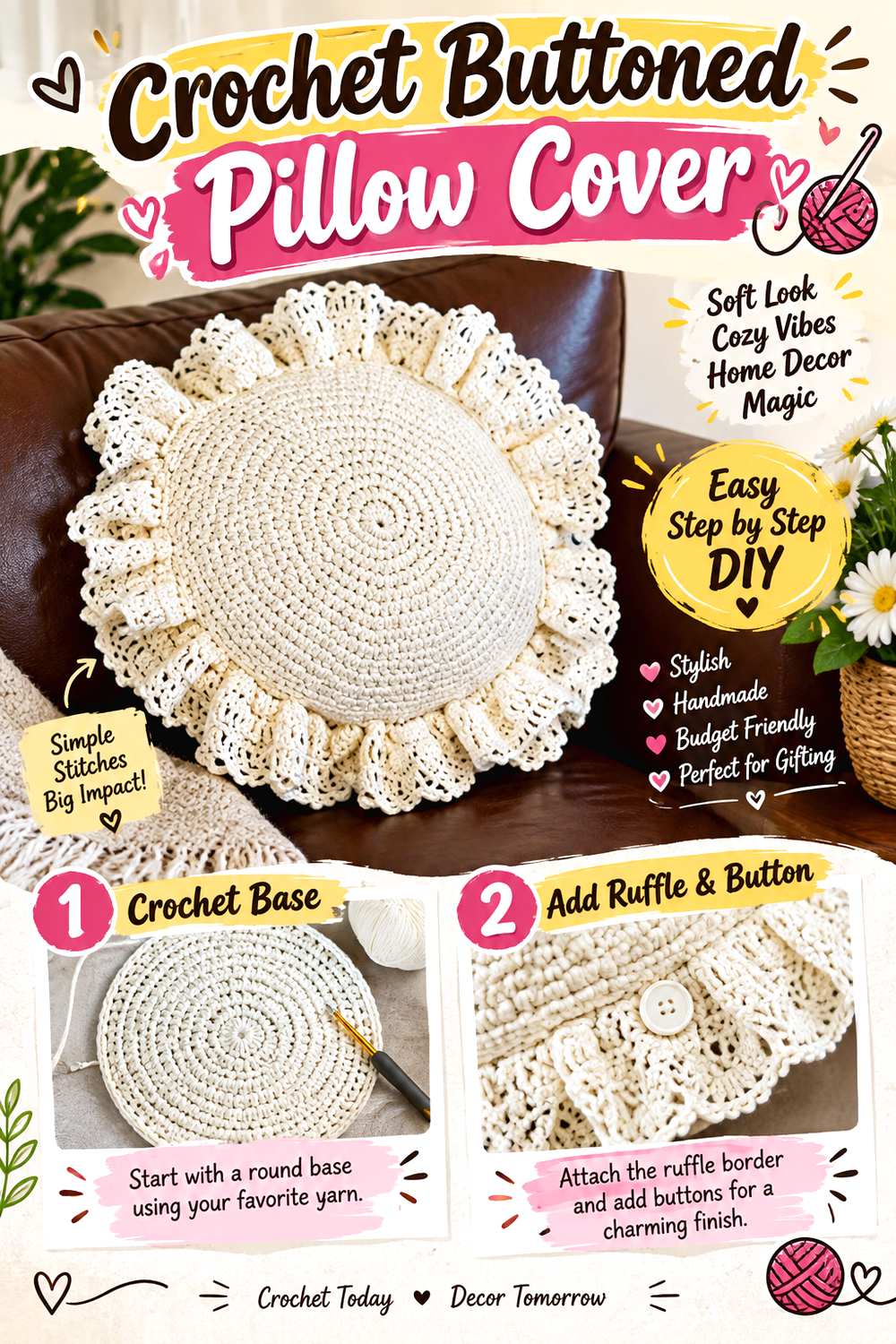
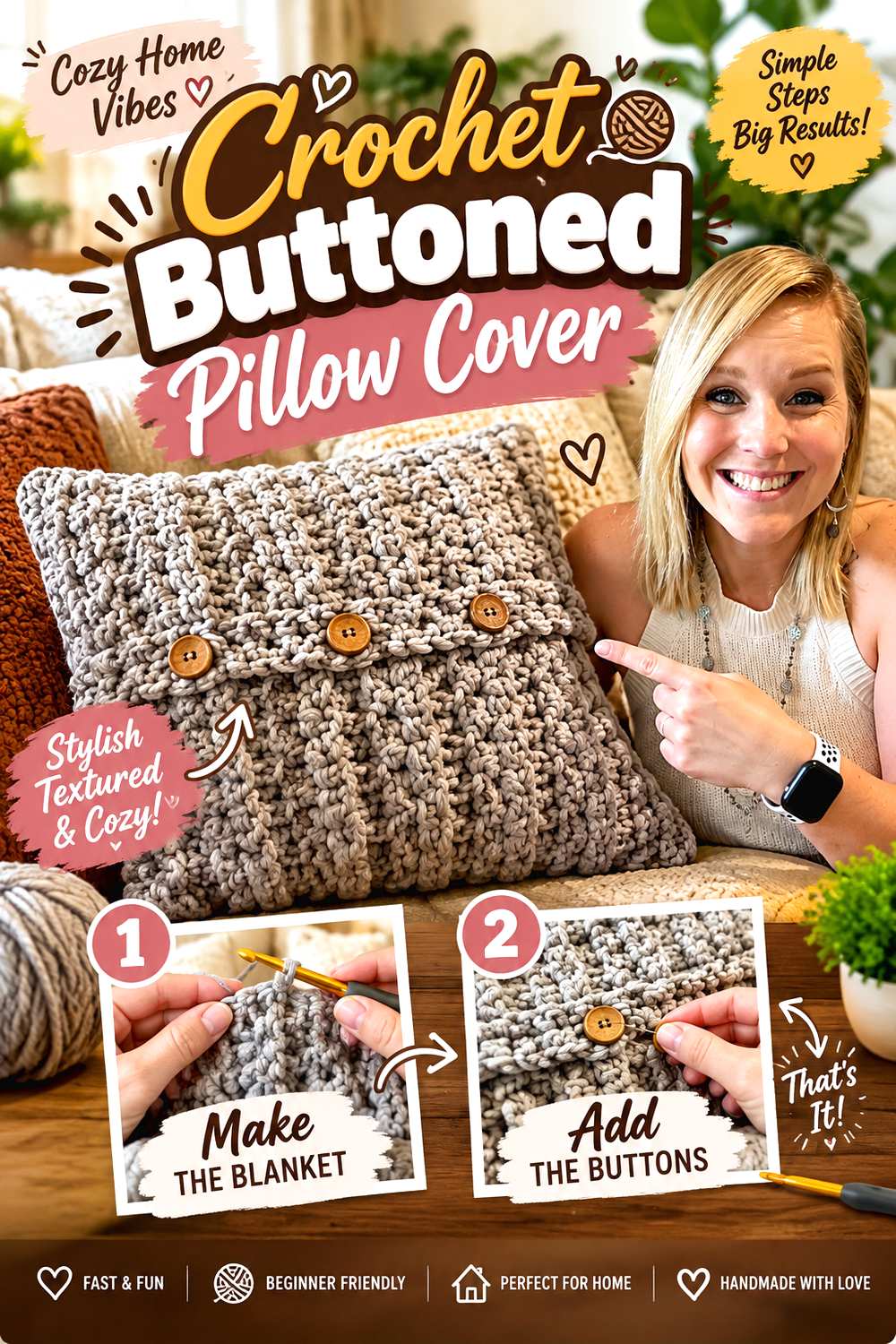
HelenMay Crochet’s tutorial covers a crocheted pillow cover and demonstrates finishing options involving a button, while also showing how the crochet can become a complete pillow project.
For a Christmas gift, a removable cover has a different practical value from a permanently closed cushion. If you already have a pillow insert, use that object to guide the dimensions rather than selecting a random number from another pattern. A cover that is slightly too small can distort the insert, while one made too large may look loose at the corners. The button can become a decorative focal point, but first decide whether the recipient would prefer an easily removable cover.
Start With the Insert
Pillow proportions vary, so the insert is the most useful measuring tool. Lay the crochet against it as the panels develop and remember that thickness has to be accommodated as well as face dimensions. This is particularly important after switching yarn because the new fabric may stretch differently.
Make the Back Intentional
People often focus exclusively on the decorative front, but a gift pillow will be handled from every side. If you choose a removable buttoned construction, keep the opening neat and easy to recognize. A carefully planned back makes the cover more practical without requiring additional surface decoration.
Creator: HelenMay Crochet
21. Crochet One-Row-Repeat Blanket
Crochet With Tiffany’s beginner blanket uses a repeating row structure and includes guidance for choosing among different blanket dimensions. It is the largest commitment in this collection and occupies a different gift category from quick accessories.
A blanket makes sense when you know the recipient will value a substantial home textile and you have enough time and material for the planned size. Decide whether you are aiming for lap coverage, a throw, or another specified size before buying yarn or extending the foundation. Changing dimensions influences material requirements directly, so do not invent yardage from a smaller sample. Use the creator’s sizing information for the exact version you intend to make.
Pick the Size Before the Palette
Color planning is enjoyable, but blanket dimensions determine the real scope of the project. Settle the intended use first, then choose a palette that works across that larger surface. A shade you love in a small swatch can have a much stronger presence when repeated across an entire throw.
Make an Early Fabric Check
Work enough of the repeat to understand the actual texture and drape before committing to the full length. This is especially useful with substituted yarn. If the fabric feels significantly denser or looser than you expected, it is better to reconsider early than after most of the blanket has been completed.
Creator: Crochet With Tiffany
22. Crochet Thick Potholder
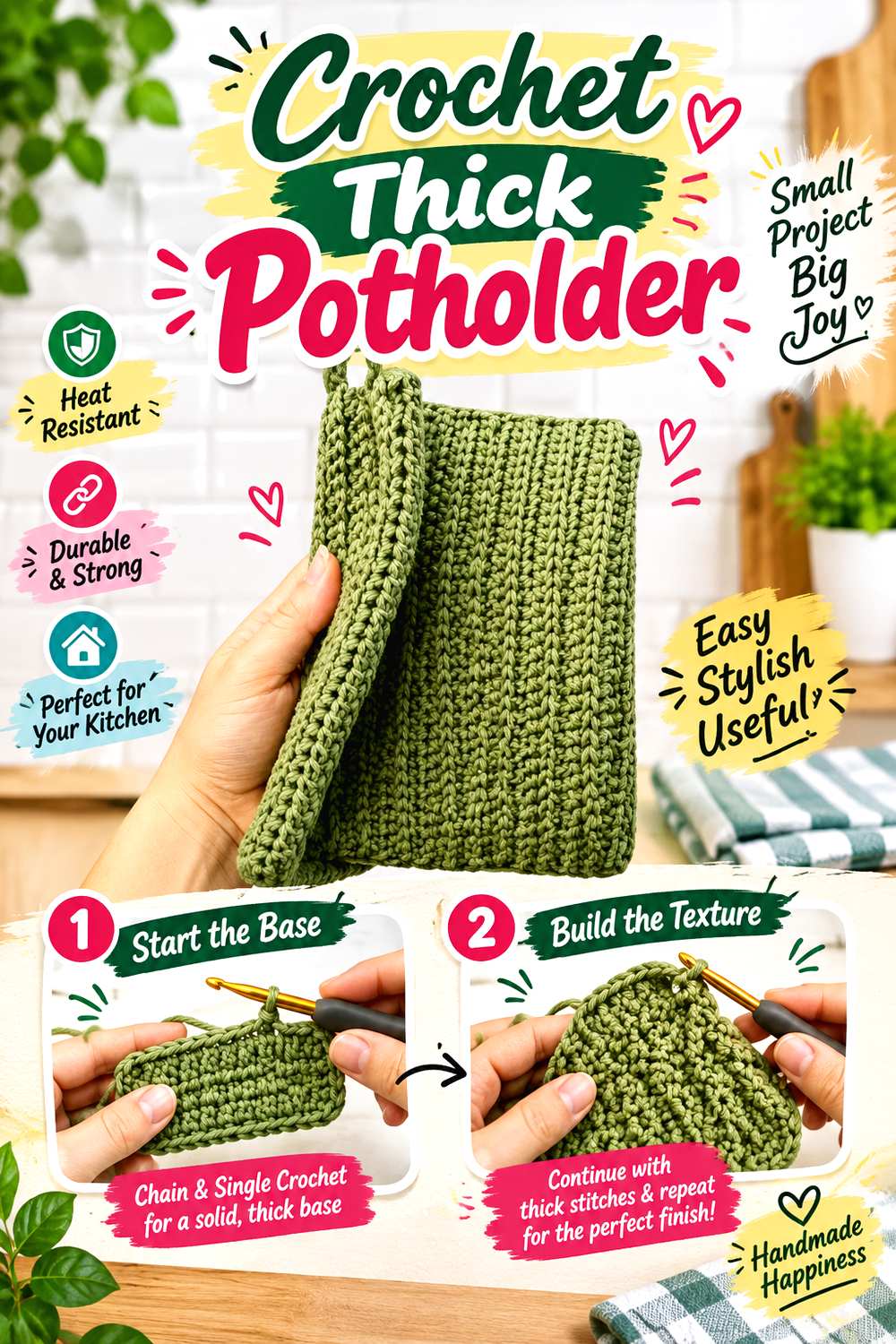
Diving Ducks Crochet demonstrates a thick potholder based on a repeating stitch sequence and uses 100% cotton in the tutorial. The video carries the project through seaming and the finished potholder.
This can be a useful kitchen gift, but a potholder is different from a decorative coaster because it is intended for heat-adjacent use. Follow the creator’s material and construction guidance closely instead of casually replacing the yarn with a decorative alternative. The existence of a crochet tutorial does not establish the performance of every fiber or altered version. If you want to personalize the gift, color is a much cleaner variable than reducing thickness or substantially changing the fabric structure.
Preserve the Thickness
The dense construction is part of the project’s identity. Making the fabric more open simply because another stitch works faster would create a different object with different behavior. Follow the demonstrated structure before considering cosmetic variations.
Give It a Clear Kitchen Role
If you make more than one, matching potholders can be paired with other non-crochet kitchen gifts without needing to redesign the crochet itself. A coordinated color scheme is enough to make the pair feel planned. Avoid decorative hardware or dangling embellishments that complicate how the potholder is handled.
Creator: Diving Ducks Crochet
23. Crochet Christmas Stocking
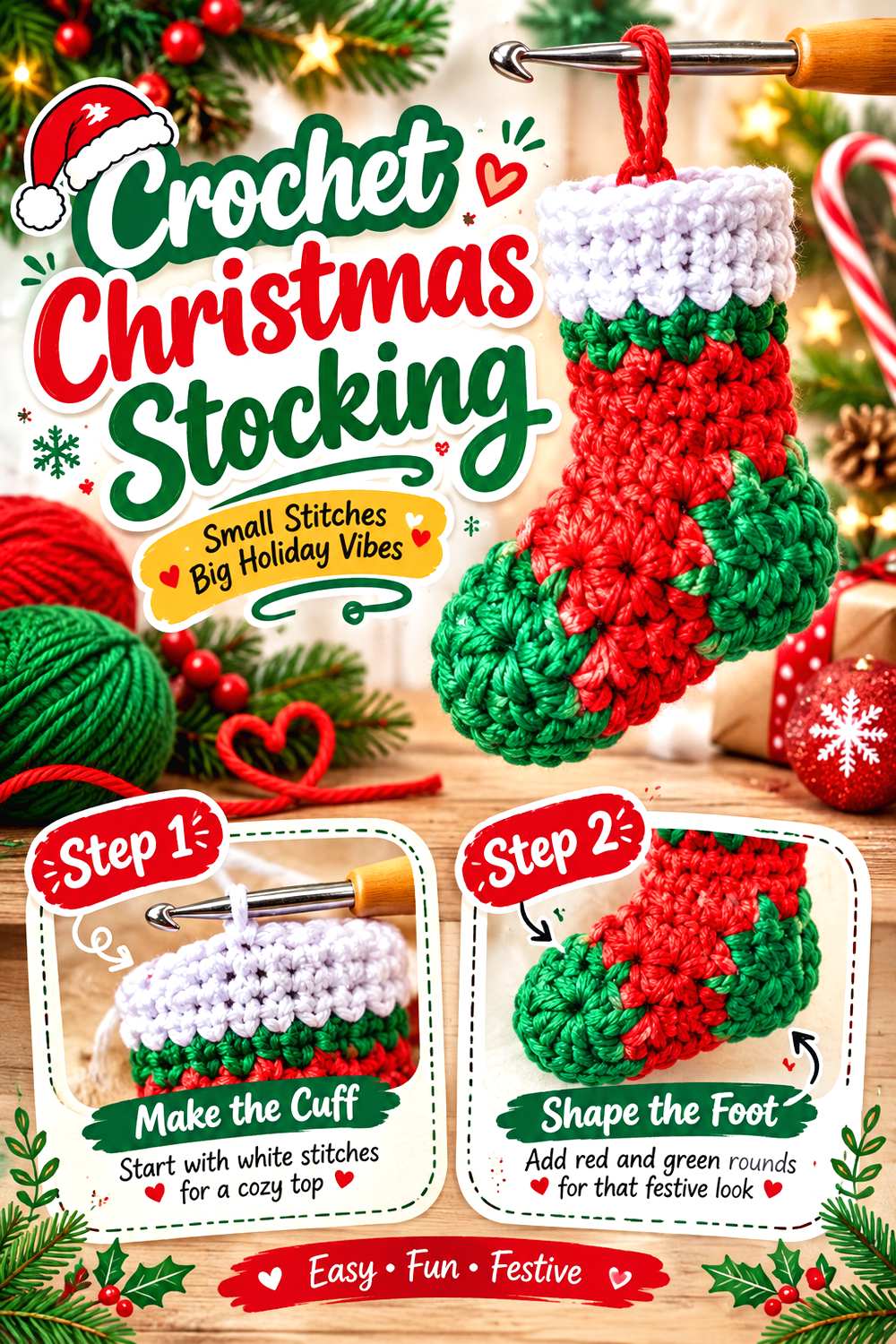
Tuba Crochet’s tutorial is specifically devoted to a full Christmas stocking rather than a miniature ornament, making it one of the most overtly seasonal projects in the collection. The creator presents the construction step by step as a holiday decoration and gift project.
A stocking can be given empty as reusable Christmas decor or presented with lightweight small gifts inside. Before filling it, consider how the stocking will actually be displayed. A crochet loop and decorative mantel placement should not be treated as evidence that the piece can support an unlimited load. If you want to personalize it, stripes, a coordinated cuff, or a separately planned initial can change the appearance without altering the heel and foot shaping that define the stocking.
Decide Whether It Is Decor or Packaging
A stocking intended mainly to hang as decoration has different demands from one you plan to stuff heavily with gifts. Set that expectation before making adaptations. If the crochet itself is the gift, a few lightweight additions inside can preserve the shape rather than asking the hanging point to carry unnecessary weight.
Coordinate With Existing Christmas Decor
Unlike an everyday tote or scarf, this project may only appear for a few weeks each year. Look at the recipient’s holiday palette if you know it. Traditional red and green are not required; matching their existing neutral, metallic, rustic, or colorful decorations can make the stocking feel much more personal.
Creator: Tuba Crochet
24. Crochet Snowflake Ornament
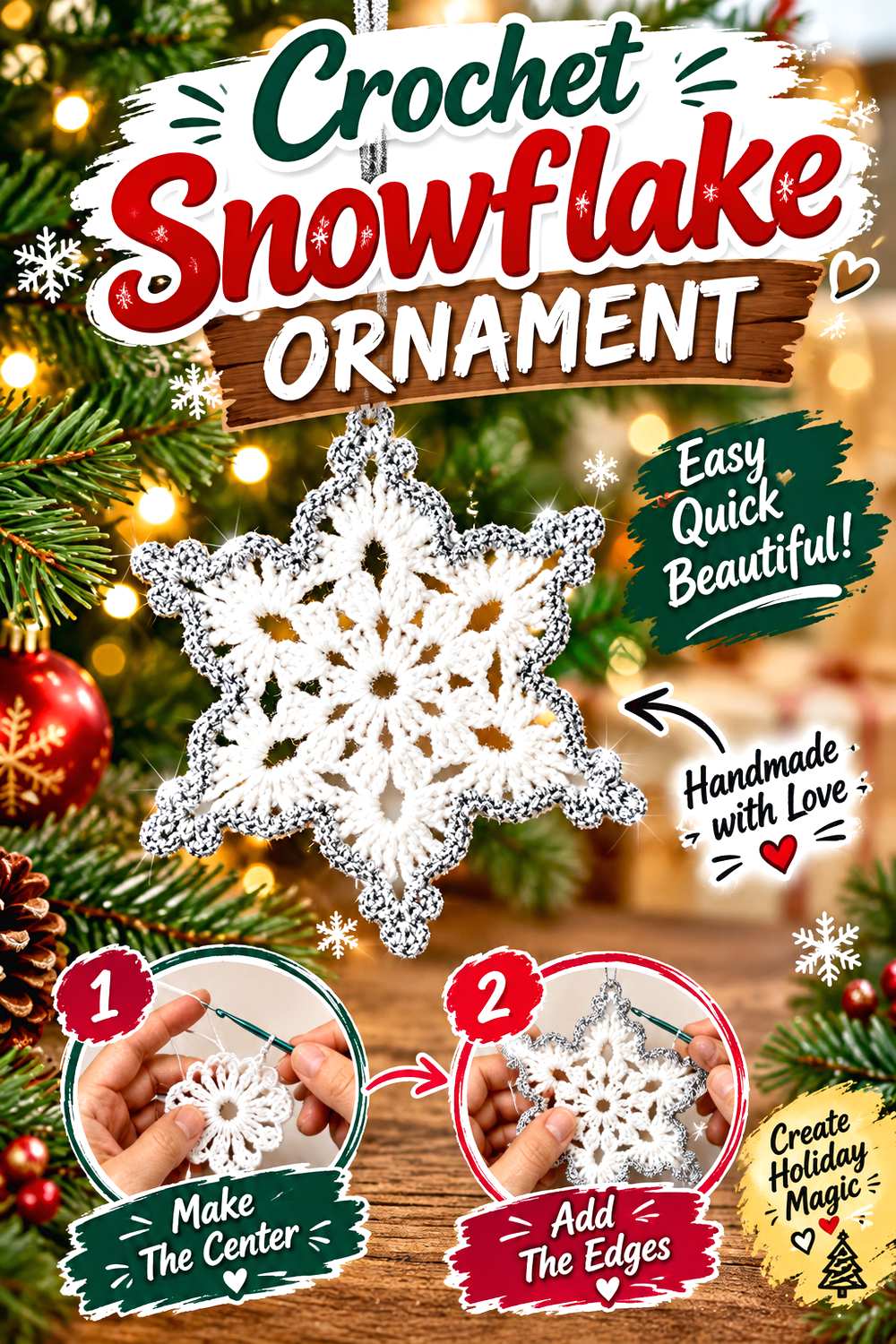
Crochet Craftsman’s snowflake tutorial builds a radiating ornament through several rounds and finishes with an additional sparkly layer in the demonstrated version. The video progresses through the foundation, open spaces, pointed shaping, detailing, and final finish.
This is a strong choice when you want an unmistakably Christmas-themed gift that does not require a body or device measurement. A single snowflake can accompany a card or wrapped package, while several can become a coordinated ornament set. Because the shape depends on evenly distributed points, consistency matters more here than with an intentionally soft pouch. After finishing, lay the ornament flat and inspect the spacing before deciding whether your set is ready to wrap.
Judge It From Viewing Distance
An ornament will often be seen on a tree rather than inches from someone’s face. Hold the finished snowflake at roughly the distance from which it will be viewed and check whether the silhouette reads clearly. That can help you decide whether subtle color changes are visible enough to be worthwhile.
Keep Sets Consistent
If you make several ornaments, use the first successful snowflake as a physical reference. Compare the later pieces against it for point spacing and overall scale. A coordinated set can vary in color while still looking intentional because the underlying silhouettes remain related.
Creator: Crochet Craftsman
25. Crochet Snowman Amigurumi
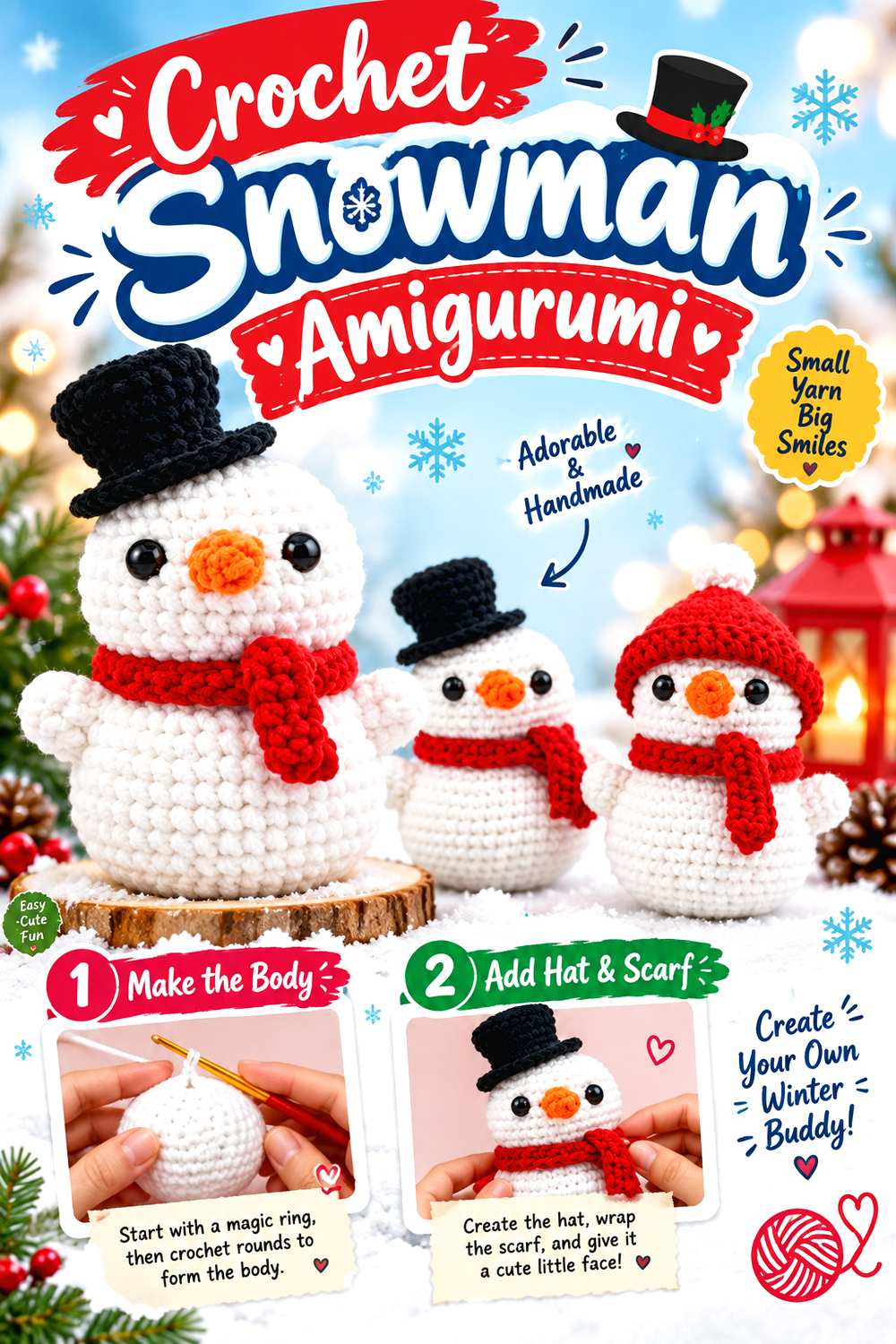
DIY Fluffies’ snowman has a rounded stuffed body, separate arms and nose, a scarf, and hat options. The creator demonstrates both a smaller version made with sport-weight cotton and a larger plush version using thicker chenille yarn, showing how strongly yarn scale can change the same basic character.
For Christmas gifting, decide first whether you want a small seasonal decoration or a larger plush display piece. Do not assume that changing yarn only changes size; stuffing, facial components, and the prominence of attached details all change with scale. The demonstrated versions use safety eyes, so consider the intended recipient and component choices carefully rather than automatically treating every amigurumi version as suitable for young children.
Choose the Scale Before Buying the Details
Eye size, hook choice, stuffing quantity, and the visual weight of the accessories all relate to the version you make. Decide whether you want the small or larger interpretation first, then follow the matching material guidance rather than mixing components from different scales.
Note the Multipart Tutorial
This is the one multipart source in the collection. Part 1 covers the body and begins the complete project, while the creator links directly to Part 2, which continues with the nose, arms, scarf, and hat. Both essential parts are public and connected, so start with the linked first video rather than expecting that single video to contain every finishing step.
Creator: DIY Fluffies
Conclusion
The best crochet Christmas gift depends on how much you know about the recipient. For low-risk surprise gifts, the Crochet Thread Bookmark, Shell-Edged Round Coaster, Drawstring Soap Saver, Customizable Basket, or Snowflake Ornament avoid most fit questions. When you know measurements, the Flat-Top Beanie, Fingerless Gloves, Rectangle Slippers, and Laptop Sleeve become much stronger personalized choices.
For a larger present, choose the Sharma Shawl or One-Row-Repeat Blanket. For reusable gift presentation, the Drawstring Pouch can hold a second small present. And when Christmas itself is the theme, the Stocking and Snowman give you two very different seasonal directions.
Use the original tutorials for exact construction details, especially where fit, closures, assembly, or multipart instructions matter.
Frequently Asked Questions
Which crochet Christmas gifts are easiest to plan without knowing the recipient’s size?
Start with objects whose usefulness does not depend on body measurements. The Thread Bookmark, Face Scrubbies, Soap Saver, Shell-Edged Coaster, Drawstring Pouch, Customizable Basket, and Snowflake Ornament are all easier to plan as surprises. You may still need to consider intended contents or placement, but you are not guessing head, hand, or foot circumference. Wearables become better choices when you can obtain a real measurement or compare with an existing item that fits the recipient.
Which projects need the most careful measurements before I start?
The Flat-Top Beanie, Simple Headband, Fingerless Gloves, Rectangle Slippers, Phone Pouch, Eyeglass Case, and Laptop Sleeve deserve the closest attention. The first four interact directly with the body, while the last three must accommodate a specific object. Measure the actual recipient or intended object whenever possible. For electronics, include any case normally left attached. For slippers and hats, an existing well-fitting item can also provide a useful comparison.
Can I substitute any yarn if I keep the same crochet pattern?
Not safely as a blanket rule. Yarn changes can alter thickness, stretch, stiffness, drape, and finished dimensions. A substitution is less consequential on a decorative snowflake than on slippers, a fitted beanie, or a laptop sleeve. Begin by comparing the new yarn with the construction the creator demonstrates, and make an early size or fabric check. For heat-adjacent projects such as the potholder, follow the tutorial’s material guidance rather than treating an unrelated fiber as interchangeable.
What are good projects when I need several matching Christmas gifts?
Choose something repeatable whose dimensions are easy to control, such as the Ruffled Scrunchie, Puff-Stitch Face Scrubbies, Thread Bookmark, Shell-Edged Coaster, Soap Saver, or Snowflake Ornament. Make one complete sample first. Once you are satisfied with its size and finishing, use that physical piece as a reference for the rest. Varying color while keeping the construction consistent is usually more efficient than trying to invent a different shape for every recipient.
How can I personalize these gifts without changing the construction?
Color is the simplest option because it usually leaves the functional shape alone. You can also create coordinated sets, choose a contrasting drawstring, select a distinctive button where the tutorial already uses one, or pair the finished crochet with a related item such as a book, mug, soap bar, or pillow insert. More structural changes—enlarging bags, altering wearable dimensions, replacing closures, or adding raised motifs—deserve extra planning because they can change fit or use.
Are all 25 projects taught in a single YouTube video?
Most are presented through one primary tutorial. The Crochet Snowman Amigurumi is the exception: DIY Fluffies divides the project between two connected public videos. The first covers the main body and links viewers to the second part for the remaining features and accessories. Because those finishing components are essential to the pictured snowman, use both parts rather than treating the starting video as a complete standalone construction guide.