Olive green gives a crochet polo enough color to feel distinctive while still working comfortably with neutrals, earthy shades, darker accents, and softer contrasting colors. The key is deciding whether olive green should cover the body, define the collar, repeat through stripes, or act as the connecting shade between several smaller details.
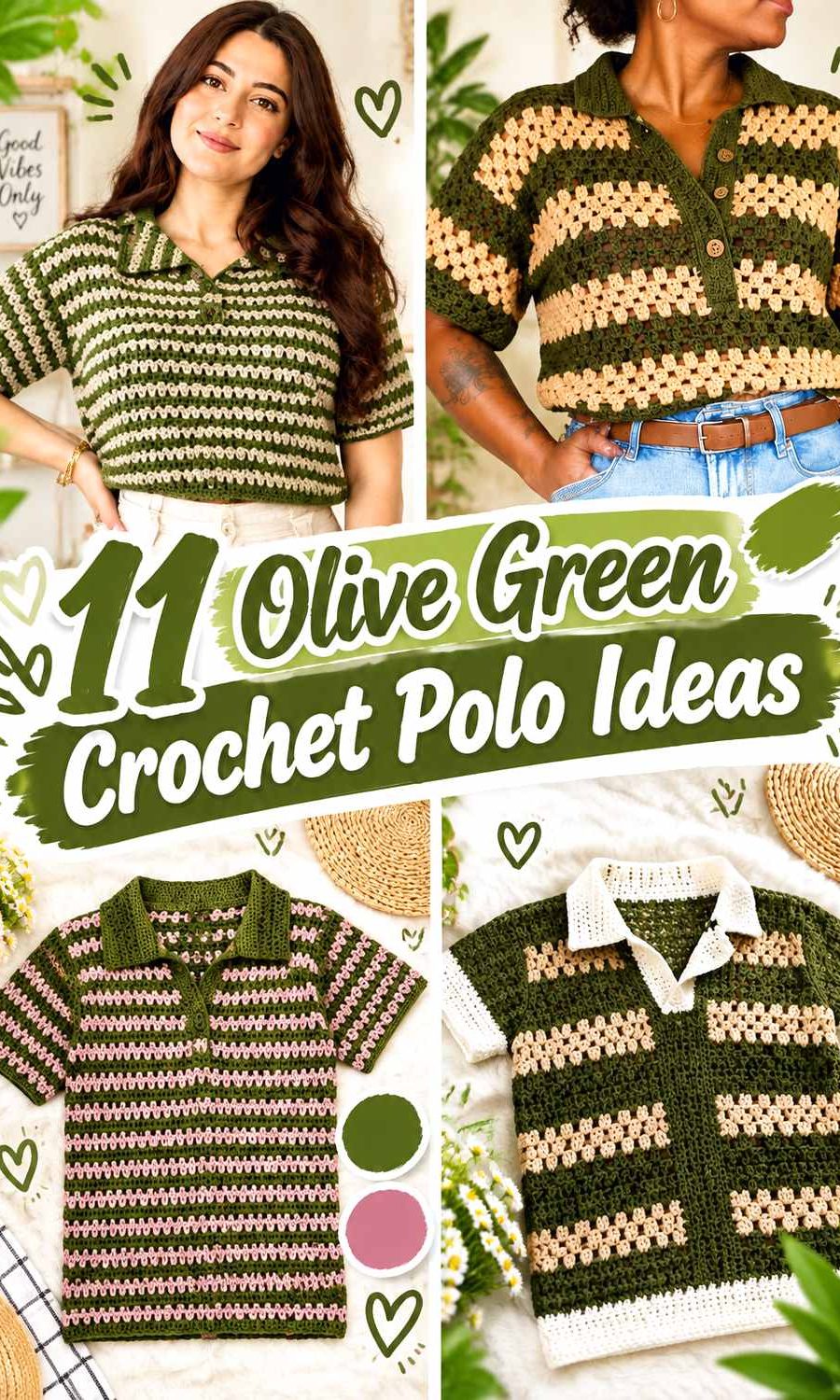
Polo construction gives you several natural places to change color without making the shirt look scattered. The collar, front placket, sleeve cuffs, hem, pocket area, and controlled stripes can each carry a supporting shade while olive green remains dominant across the larger body panels.
The tutorials credited below support the crochet polo construction concepts. The olive green palettes are independent editorial color plans, so the creators are not being presented as using these exact color combinations.
Quick List
- Olive Green And Cream Crochet Polo Shirt
- Olive Green And Chocolate Brown Crochet Polo Shirt
- Olive Green And Oatmeal Crochet Buttoned Polo Shirt
- Olive Green And Rust Crochet Polo Shirt
- Olive Green And Warm White Crochet Polo Shirt
- Olive Green And Charcoal Crochet Polo Shirt
- Olive Green And Camel Crochet Polo Shirt
- Olive Green And Burgundy Crochet Polo Shirt
- Olive Green And Deep Teal Crochet Openwork Polo Shirt
- Olive Green And Dusty Rose Crochet Polo Shirt
- Olive Green And Navy Crochet Mesh Polo Shirt
Keep Olive Green Dominant on a Crochet Polo
If olive green is the reason you chose the palette, give it the largest uninterrupted areas. The front and back body panels are the most obvious places, with the sleeves providing additional green repetition.
A secondary color does not need equal coverage. A cream collar, brown cuff, or rust stripe can be visually noticeable even when it occupies much less yarn than the olive green body. Clear color hierarchy usually makes the polo easier to read than dividing every section evenly between two shades.
Check Contrast Around an Olive Green Crochet Collar and Placket
Collars and plackets are relatively narrow, so value contrast matters more there than on a broad body panel. Olive green and another medium-dark earthy shade may look different as separate yarns but become much less distinct when worked into a narrow border.
Place the yarns side by side and check them from a distance. A grayscale photo is also useful: if both colors turn into nearly the same gray, expect a subtle rather than sharply defined collar.
Plan Olive Green Crochet Cuffs, Stripes, and Hem Together
The finishing details should feel connected. If cream defines an olive green collar, repeating cream at narrow sleeve cuffs can make the choice look intentional. If brown already appears in several body stripes, olive green cuffs may be better because they restore the dominant color at the sleeve ends.
Make these decisions as a group rather than choosing each detail independently.
1. Olive Green And Cream Crochet Polo Shirt
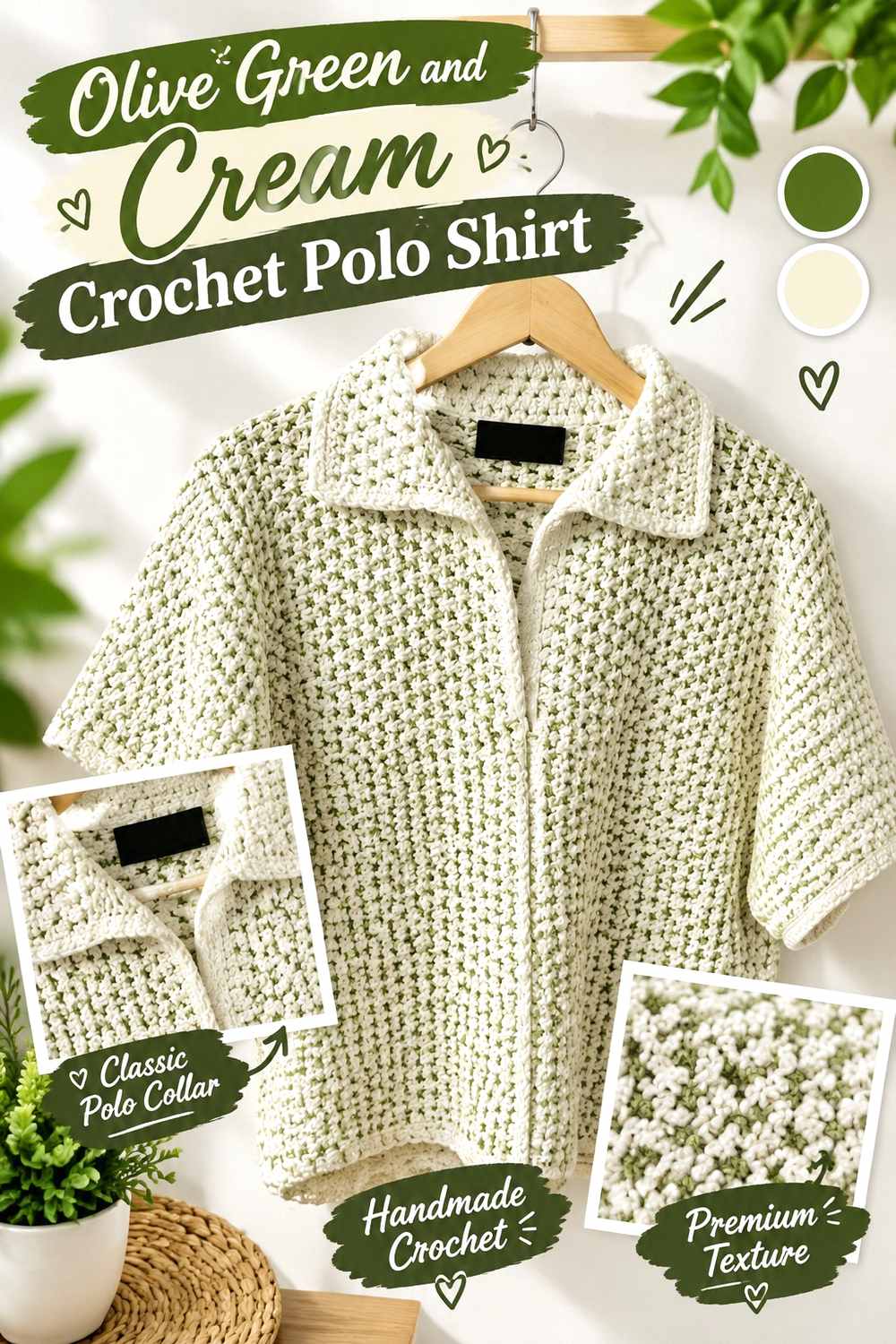
Cream gives olive green a clear light-dark contrast without introducing another strong hue. Let olive green cover the torso and most of the sleeves, then use cream where you want the classic polo construction to stand out. The collar and placket are especially effective because they create a light frame through the upper center of the shirt.
Olive Green Should Cover the Main Crochet Polo Body
Keeping the front, back, and most of the sleeves olive green establishes a strong base before any cream is added. If cream occupies large body blocks as well as the collar and cuffs, the polo begins to read as an evenly balanced two-color garment.
For a clearly olive-led result, keep cream concentrated around finishing details.
Olive Green Looks More Defined With Cream Crochet Polo Edging
Cream can outline the collar, sleeve cuffs, or lower hem, but it does not need to cover all three. A cream collar and narrow cuffs may provide enough repetition.
If the contrast looks stronger than expected after swatching, keep the hem olive green so the lighter color does not completely frame the shirt.
Creator Credit: FTK Crochet
2. Olive Green And Chocolate Brown Crochet Polo Shirt

Chocolate brown deepens olive green without taking the palette away from an earthy direction. Because both shades can be fairly dark, broad brown details generally read more clearly than very narrow outlines.
Olive Green Needs Clear Separation From Chocolate Brown Crochet Details
Compare the two yarns before assigning brown to a narrow placket. Deep olive and chocolate brown can sit close together in value even though their hues are different.
If the distinction is too subtle, use chocolate brown across a broader collar or cuff where there is enough area for the brown tone to become recognizable.
Olive Green Can Keep Chocolate Brown Crochet Sleeves Balanced
Brown sleeve sections create a substantial visual block, so bring olive green back at the cuffs or upper sleeve. This links the arms to the torso instead of allowing the brown to form isolated side panels.
A mostly olive body with brown collar and cuff details creates a quieter alternative.
Creator Credit: Honey Loop Stitches
3. Olive Green And Oatmeal Crochet Buttoned Polo Shirt
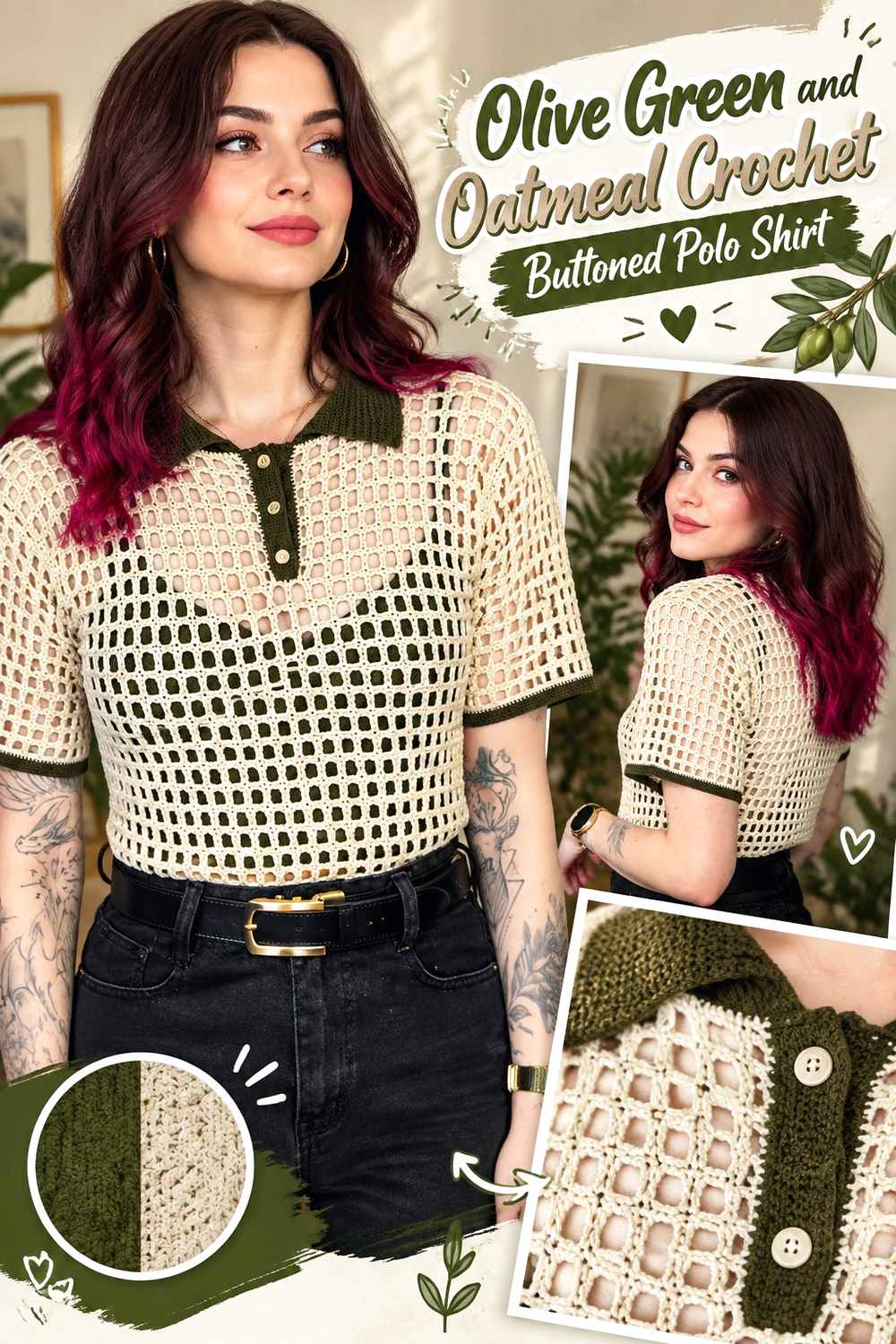
Oatmeal gives olive green softer contrast than cream or white. It is particularly useful around a visible button placket because the lighter shade can distinguish the center front without becoming overly stark.
Olive Green Should Frame an Oatmeal Crochet Button Placket
Keep olive green on both sides of the placket so oatmeal remains a focused center detail. Extending the light shade into broad chest sections changes the balance and makes the polo considerably lighter overall.
The same oatmeal can reappear narrowly at the cuffs if the front needs another visual connection.
Olive Green and Oatmeal Crochet Collars Need Proportion Control
A full oatmeal collar can become a substantial light area because it sits against the face and above the darker body.
For softer contrast, keep most of the collar olive green and use oatmeal only as edging. For a more obvious collar, reverse that relationship and keep the remaining finishing areas predominantly olive.
Creator Credit: Masha Handmade
4. Olive Green And Rust Crochet Polo Shirt
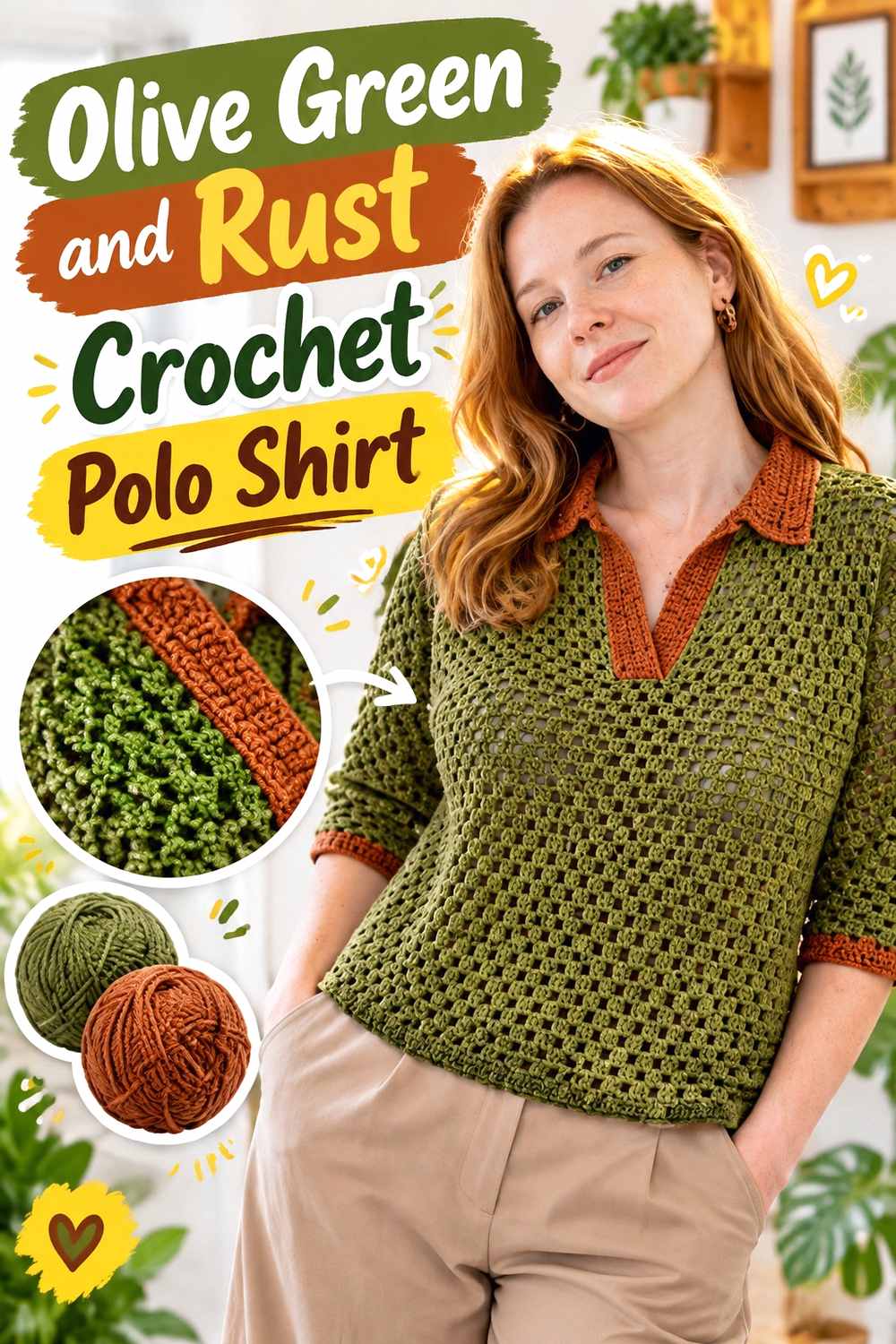
Rust adds a warmer orange-brown accent that makes olive green feel more autumnal. Both shades have enough visual character that the polo benefits from choosing one obvious leader rather than using equal sections everywhere.
Olive Green Should Outweigh Rust Across the Crochet Polo
Use olive green across the broad torso and reserve rust for the collar, cuffs, or controlled stripe groups. This keeps the green recognizable even though rust naturally attracts attention through its warmer color.
If you want larger rust sleeves, retain olive green at both the shoulder and cuff to reconnect them to the body.
Olive Green Can Separate Repeated Rust Crochet Stripes
Instead of placing several rust bands directly beside other accent colors, let olive green run between them. The main green shade then acts as a visual reset.
Wider olive sections and narrower rust stripes create a more green-led polo, while equal widths produce a stronger two-color statement.
Creator Credit: WOWder
5. Olive Green And Warm White Crochet Polo Shirt

Warm white produces some of the strongest contrast in this collection. It can make the collar and placket immediately visible against olive green, so relatively small amounts are usually sufficient.
Olive Green Needs Only Narrow Warm White Crochet Accents
A slim warm white edge around an olive green collar can be more noticeable than a much broader camel or brown detail. Start with a limited amount if your goal is a predominantly green shirt.
Repeating warm white at narrow cuffs can connect the neckline without turning every garment edge light.
Olive Green Can Anchor a Warm White Crochet Polo Collar
If the collar is entirely warm white, keep the shoulder and upper chest olive green so the light section has a strong surrounding frame.
An olive green placket beneath a white collar can also reduce the amount of light color through the center front while still retaining the contrasting neckline.
Creator Credit: Ascarcrochets
6. Olive Green And Charcoal Crochet Polo Shirt

Charcoal makes an olive green polo darker and more understated. The cool neutral can define finishing details without producing the hard contrast of black, but very dark charcoal may sit surprisingly close to deep olive.
Olive Green and Charcoal Crochet Details Need a Value Check
Before making a charcoal collar, compare the yarn directly with olive green. If both shades appear nearly the same in grayscale, the collar will create a subtle change rather than a strong outline.
That subdued effect can work well when you want the polo silhouette and stitch texture to matter more than the color blocking.
Olive Green Should Return at Charcoal Crochet Polo Cuffs
If charcoal appears prominently around the neckline, using olive green at the cuffs keeps the sleeves tied to the main body.
Alternatively, narrow charcoal cuffs can repeat the collar while olive green remains dominant everywhere else. Avoid unnecessarily enlarging all the charcoal sections at once unless you want a much darker polo.
Creator Credit: AC Crochets
7. Olive Green And Camel Crochet Polo Shirt
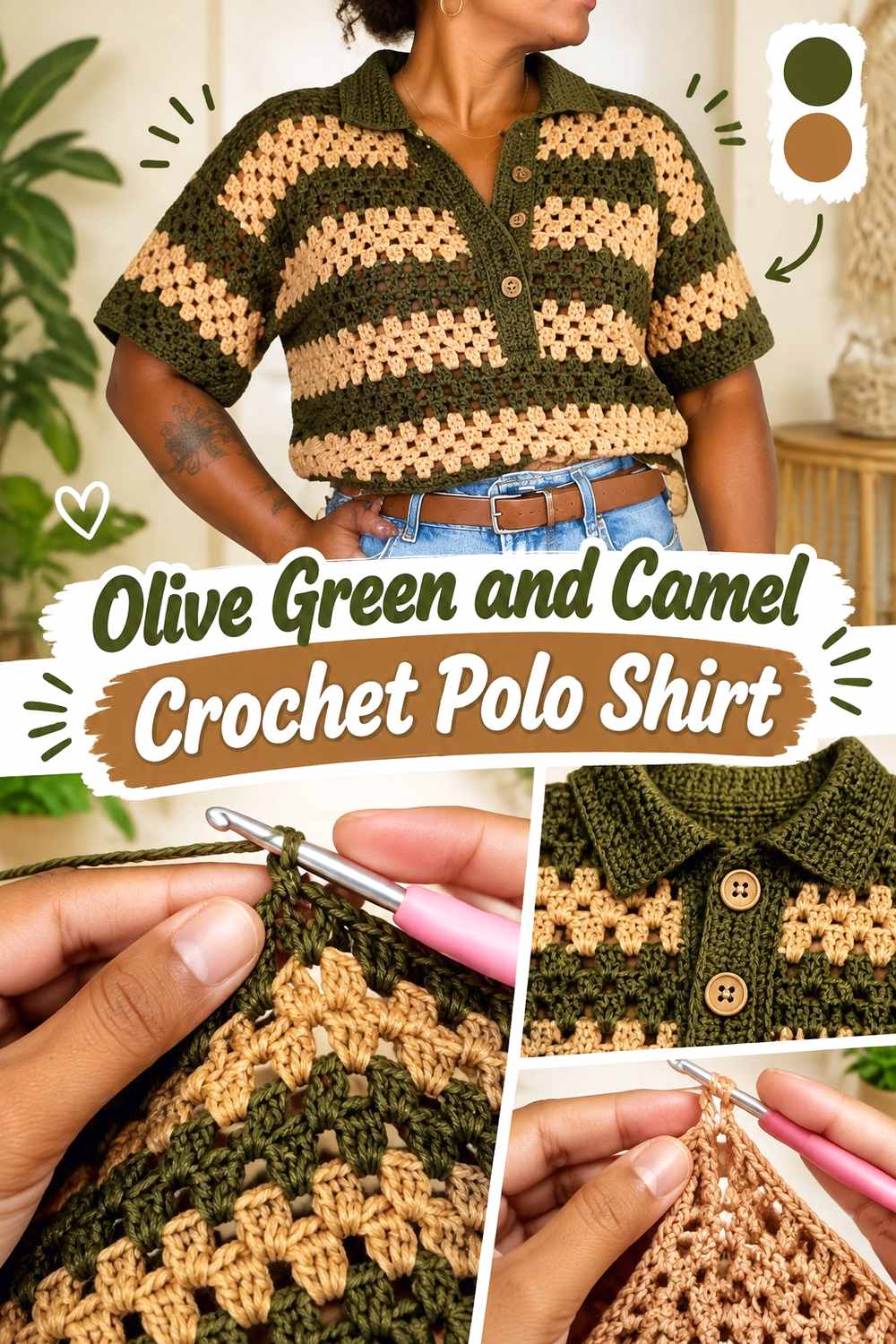
Camel creates a warmer but relatively low-contrast partner for olive green. This combination is useful when you want color variation without strongly outlining every polo detail.
Olive Green Should Stay Continuous Around Camel Crochet Accents
Keep olive green across the main torso and let camel appear on the collar, sleeve edge, or one body section. The continuity prevents a soft, similar-value palette from becoming visually fragmented.
Camel works particularly well in broader details where its warm tan character has enough room to show.
Olive Green and Camel Crochet Polo Edges Need Enough Contrast
If your camel yarn is medium-dark, test it beside olive green before using it for very narrow edging. Similar values can merge once crocheted.
A lighter camel creates more separation, while a deeper camel is better suited to a blended, earthy effect across larger areas.
Creator Credit: Deivedy Oaques
8. Olive Green And Burgundy Crochet Polo Shirt

Burgundy gives olive green a deep red contrast that feels richer than cream but more colorful than brown or charcoal. Both colors can be dark, so placement should allow the hue difference enough space to register.
Olive Green Needs Broad Areas Beside Burgundy Crochet Sections
A narrow burgundy line may disappear against a deep olive body, while a collar, sleeve block, or wider stripe gives the red-purple shade more visual presence.
If the two colors are close in value, avoid depending on burgundy for tiny details that need sharp definition.
Olive Green Can Ground a Burgundy Crochet Polo Collar
A burgundy collar becomes a strong upper-body feature, so keep the shoulders and chest solid olive green to give it a clear frame.
For additional repetition, use a narrow burgundy cuff rather than adding another large body block. That connects the palette without competing with the collar.
Creator Credit: Aliche
9. Olive Green And Deep Teal Crochet Openwork Polo Shirt

Deep teal introduces cool color contrast while staying within a rich, muted palette. On openwork crochet, the underlayer also affects how both dark colors appear, so the polo should be judged over clothing rather than only against a tabletop.
Olive Green Should Lead the Main Openwork Crochet Polo Surface
Use olive green through the largest openwork sections and keep teal concentrated around the collar, shoulders, or selected sleeve areas.
Frequent switches between two dark colors can make the open stitch structure harder to read, especially when the garment underneath is also dark.
Olive Green and Deep Teal Crochet Need an Underlayer Test
Place your swatch over light and dark tops. A lighter underlayer makes every opening more obvious and separates the olive and teal stitches from the background.
A dark underlayer produces a quieter result and can make deep teal appear closer to olive green than it did as an isolated yarn.
Creator Credit: 🧶Mihankushea🧶
10. Olive Green And Dusty Rose Crochet Polo Shirt

Dusty rose creates a soft warm contrast that is clearly different from olive green without being as bright as coral or yellow. It works especially well when restricted to smaller structural areas.
Olive Green Should Surround Dusty Rose Crochet Collar Details
A dusty rose collar stands out most clearly when the shoulders, upper chest, and placket remain olive green.
If the entire upper body also becomes rose, the palette shifts away from a green-led polo. Keeping the pink concentrated around the neckline gives it a specific role.
Olive Green Can Balance Dusty Rose Crochet Sleeve Cuffs
Repeating dusty rose at narrow cuffs connects the sleeves to the collar while preserving large olive green sleeve areas.
If the rose is very pale, even small cuffs may be visually strong. In that case, keeping the hem completely olive green can prevent the light accent from framing every edge.
Creator Credit: İlmekle Nimet
11. Olive Green And Navy Crochet Mesh Polo Shirt
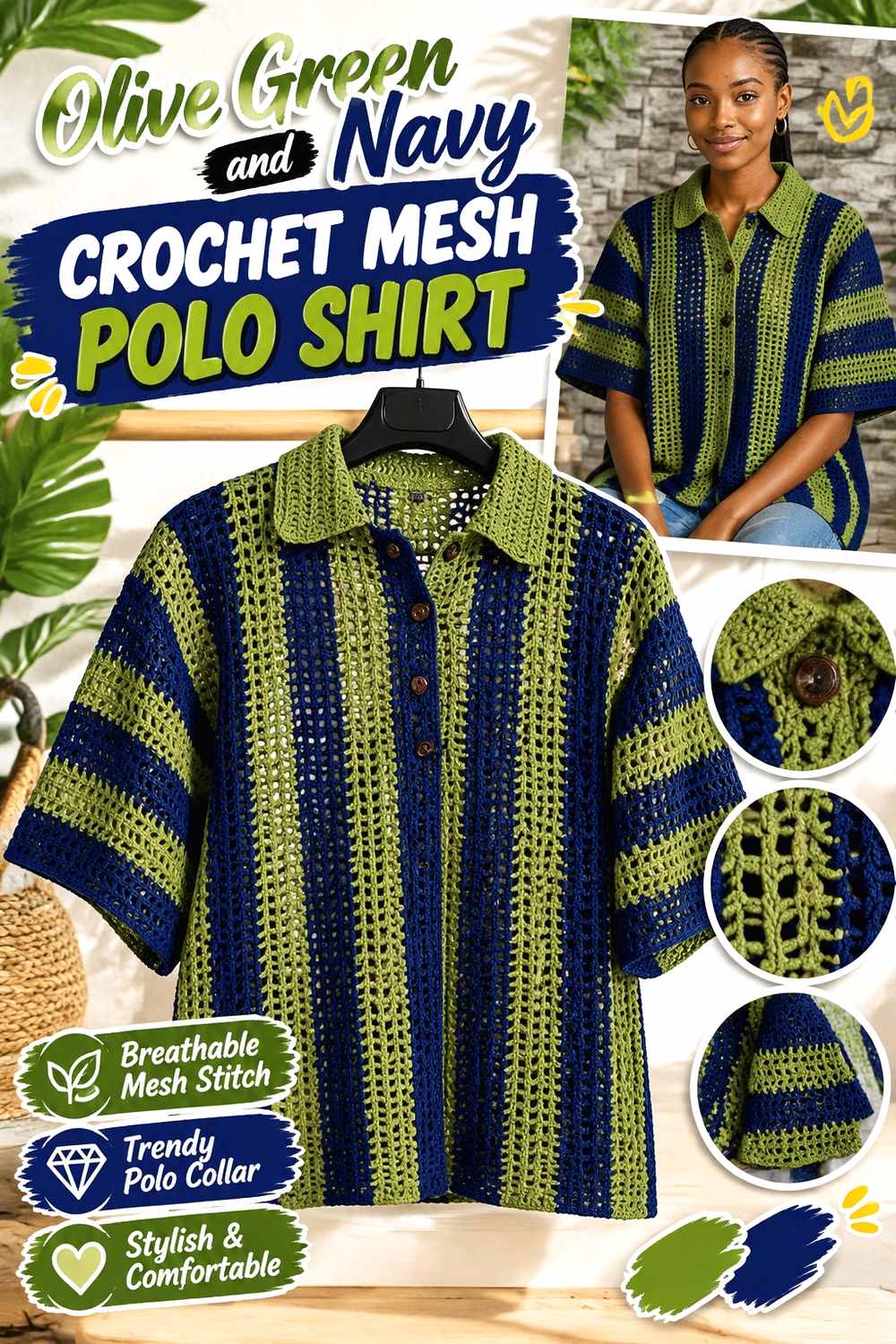
Navy gives olive green a dark cool partner and can produce a restrained mesh polo with less obvious contrast than cream or white. Because both shades can sit low in value, broad placement is more reliable than tiny navy details.
Olive Green Should Remain Visible Across the Crochet Mesh Body
Use olive green for most of the torso so the open fabric retains a clear green identity. Navy can define the collar, cuffs, or one selected section without overtaking the shirt.
If navy occupies large areas of both the sleeves and torso, the finished garment may read much darker than the yarns suggest separately.
Olive Green and Navy Crochet Mesh Need Enough Visual Separation
Check both colors in the actual mesh stitch. Open space and the underlayer can change their apparent contrast considerably.
If navy and olive green nearly merge, use navy in a broader collar or sleeve section where the hue difference has enough surface to remain recognizable.
Creator Credit: ZoeCrochetR🧶
Comparing the Olive Green Crochet Polo Color Directions
For a lighter polo, cream, oatmeal, and warm white give olive green clear separation around collars, plackets, and cuffs. Oatmeal creates the softest transition, while warm white usually creates the strongest contrast.
For an earthy palette, chocolate brown, rust, mustard, and camel keep the shirt warm. Chocolate brown is the darkest option, camel is more tonal, and mustard or rust creates a stronger colored accent.
Charcoal and navy move olive green toward a darker, quieter palette, while deep teal introduces richer cool contrast. Dusty rose and burgundy bring red-family shades into the garment, with dusty rose producing a lighter effect and burgundy creating a deeper one.
Conclusion
Olive green works especially well for crochet polos because the color can cover broad shirt panels while smaller supporting shades emphasize the construction. Cream, oatmeal, and warm white are useful when you want the collar or placket to be clearly visible. Camel, brown, mustard, and rust create earthier combinations, while charcoal, navy, and teal keep the overall shirt darker.
Dusty rose and burgundy provide more noticeable color contrast without requiring a highly saturated palette.
Before committing to the full polo, test the colors together in the planned stitch and decide which shade belongs on the collar, placket, cuffs, and hem. If olive green should remain dominant, keep those supporting areas controlled and allow the main body panels to carry most of the green.
Frequently Asked Questions
What colors work well with olive green in a crochet polo?
Cream, oatmeal, warm white, camel, chocolate brown, rust, mustard, charcoal, navy, deep teal, dusty rose, and burgundy can all create useful olive green palettes. The choice depends on whether you want light contrast, earthy warmth, darker styling, or a more colorful accent.
Should an olive green crochet polo have a contrasting collar?
It can, but a contrasting collar is not necessary. Cream or white makes the collar highly visible, while camel or brown creates softer separation. Keeping the collar olive green puts more attention on the crochet texture and shirt silhouette.
How do I keep olive green dominant in a two-color crochet polo?
Give olive green the largest uninterrupted areas, particularly the front, back, and most of the sleeves. Limit the second shade to the collar, placket, cuffs, controlled stripes, or another clearly defined feature.
How can I check contrast with olive green yarn?
Place both yarns together, crochet a small sample, and view it from several feet away. You can also photograph the colors in grayscale. If they become nearly identical gray values, expect small details to look subtle.
Where should I add a second color to an olive green crochet polo?
The collar, placket, sleeve cuffs, hem, pocket area, and stripes are practical locations because they already have a structural reason to change visually. Repeating the accent in two connected areas can help the palette feel intentional.
Can olive green work in a striped crochet polo?
Yes. Make olive green the wider or more frequently repeated stripe when it should remain dominant. Stronger colors such as mustard or warm white usually need less surface area to stay noticeable.
Does olive green work for a crochet mesh polo?
Yes, but remember that the clothing underneath becomes part of the visible palette. Test the olive green mesh over the underlayer you expect to wear so you can judge the real contrast before finishing the shirt.