Cinnamon is especially useful for crochet cardigans because it can function as a warm main color without limiting you to an all-brown garment. Pair it with a pale neutral and the stitch texture becomes more defined; add a dark cool shade and the cardigan gains stronger contrast; combine it with neighboring earthy colors and the result becomes softer and more tonal.
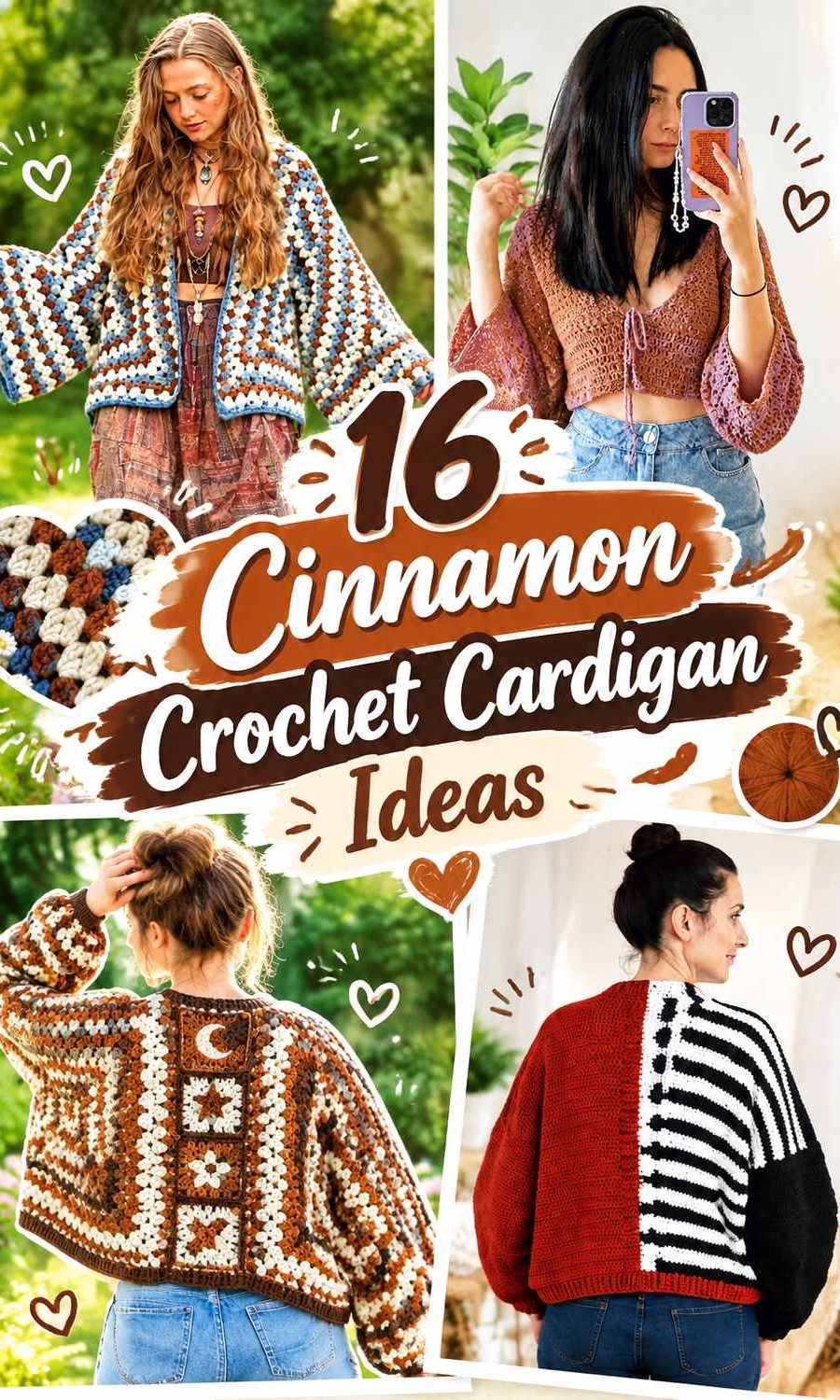
The important decision is not simply which colors look good beside cinnamon. A cardigan has several separate visual areas—body panels, sleeves, cuffs, neckline, edging, pockets, motifs, and joins—and changing where the secondary color appears can completely alter the finished balance.
The tutorials linked throughout this collection support the cardigan construction concepts. The cinnamon palettes are independent color adaptations, so the proposed colors should not be read as the colors used by the original creators.
Quick List
- Cinnamon Cream And Charcoal Patchwork Crochet Cardigan
- Cinnamon And Olive Mesh Crochet Cardigan
- Cinnamon And Dusty Rose Cropped Crochet Cardigan
- Cinnamon And Navy Panel Crochet Cardigan
- Cinnamon And Oatmeal Pocket Crochet Cardigan
- Cinnamon And Deep Teal Buttoned Mesh Crochet Cardigan
- Cinnamon And Camel Collared Crochet Cardigan
- Cinnamon And Mustard Oversized Crochet Cardigan
- Cinnamon And Black Front Tie Mesh Crochet Cardigan
- Cinnamon And Sage Granny Stitch Crochet Cardigan
- Cinnamon And Burgundy Relaxed Crochet Cardigan
- Cinnamon Espresso And Ivory Granny Back Crochet Cardigan
- Cinnamon And Forest Green Raglan Crochet Cardigan
- Cinnamon Golden Yellow And Cream Flower Crochet Cardigan
- Cinnamon And Mauve Cropped Crochet Cardigan
- Cinnamon Denim Blue And Ivory Hexagon Crochet Cardigan
Let Cinnamon Lead the Crochet Cardigan Without Covering Every Detail
When cinnamon is the defining color, it should appear across enough of the garment to remain recognizable from the front and back. That does not require making every panel cinnamon. On a patchwork cardigan, cinnamon can repeat across several blocks; on a solid cardigan, it can fill the body while a second color handles cuffs and edging; on a granny or hexagon cardigan, it can return consistently between accent rounds.
Think about visual area rather than the number of colors. A cardigan containing three colors can still read primarily as cinnamon when the other two are limited to smaller motifs, bands, or repeated details.
Use Light and Dark Contrast to Protect Cinnamon Crochet Texture
Cinnamon and another warm midtone may look clearly different as yarn balls but appear much closer once worked into a textured fabric. This matters around ribbing, raised stitches, granny clusters, flower details, and decorative borders.
Before committing to a large cardigan, place the yarns beside one another and check their light/dark relationship. A quick grayscale photo can also reveal whether two different hues occupy nearly the same value range. When small details need definition, reserve the lighter or darker shade for those areas instead of distributing similar-valued colors evenly.
Place Cinnamon Around Cardigan Edges With Intention
Cuffs, front bands, necklines, hems, and pocket edges occupy less surface area than the body, but their position gives them considerable visual influence. Repeating cinnamon in several of these locations can connect a multicolor cardigan even when large body sections use secondary shades.
The reverse also works. If cinnamon already dominates the main body, using another shade for the edging can create a clear frame. Decide which role you want before finishing the garment so the final border supports the palette instead of introducing an unrelated last-minute color.
1. Cinnamon Cream And Charcoal Patchwork Crochet Cardigan
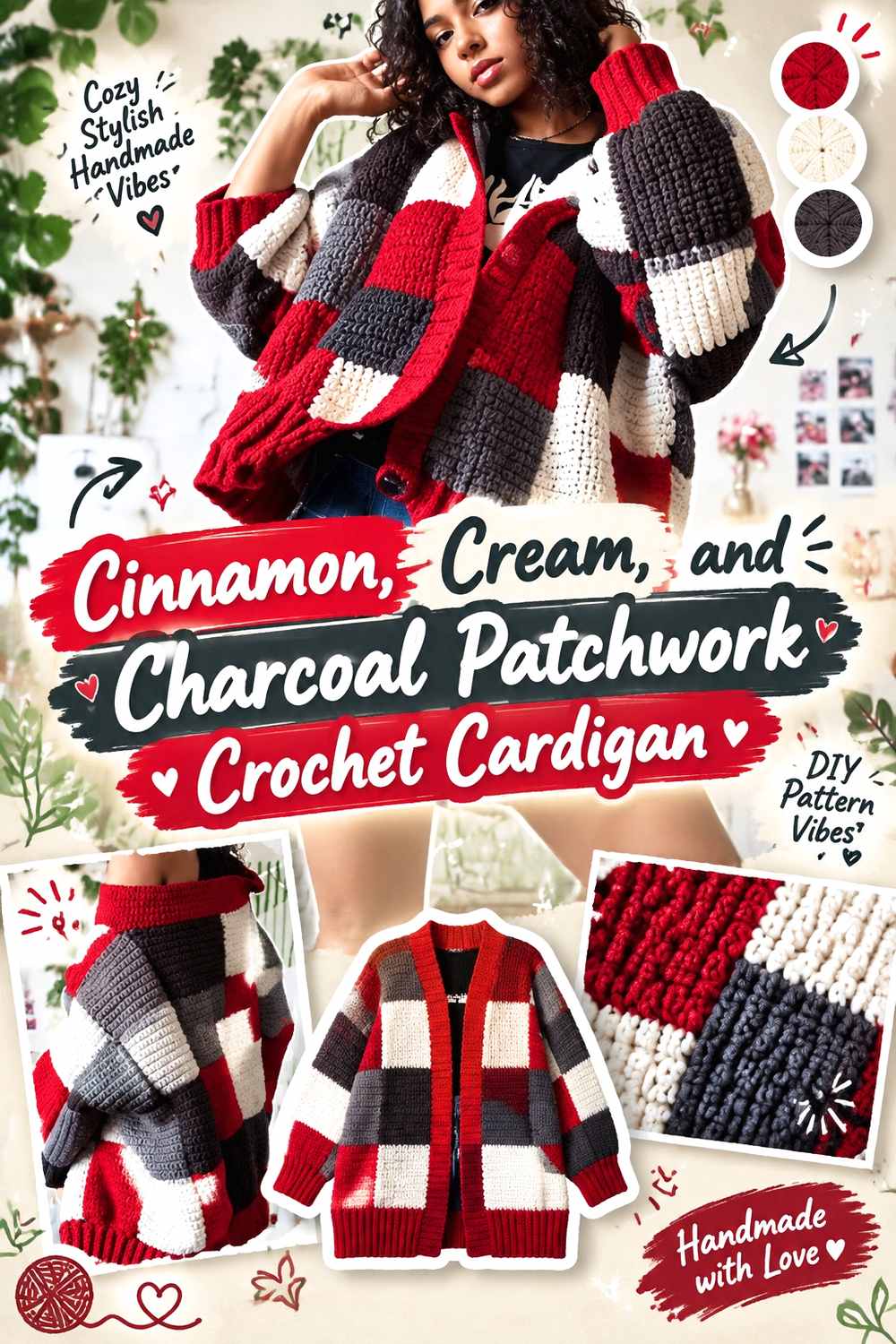
Patchwork gives you enough separate blocks to make cinnamon the obvious main color without creating one uninterrupted brown-orange surface. Use cinnamon across the largest share of squares, cream as a light break, and charcoal in smaller amounts where you want stronger definition. Keeping charcoal more limited than cream prevents the darkest shade from becoming the visual leader. The arrangement also gives you control over whether the cardigan feels mostly warm and soft or more graphic.
Keep Cinnamon Repeating Across the Patchwork Cardigan
Avoid placing all of the cinnamon blocks on one sleeve or one side of the body. Repeating cinnamon across the fronts, back, and sleeves makes it function as the connecting color instead of looking like one isolated part of a mixed-yarn project.
Before joining the sections, view the full cardigan layout from a distance. If one area looks noticeably lighter or darker, exchange a cream or charcoal block with a cinnamon block before the seams make the arrangement permanent.
Use Cream and Charcoal to Separate Cinnamon Crochet Blocks
Cream provides the strongest light break around cinnamon, while charcoal gives it a darker edge. They do not need equal coverage. Cream can occupy larger supporting sections, with charcoal reserved for selected blocks, ribbing, or edging.
When several cinnamon squares touch one another, the surface can begin to read as one large field. Inserting a cream or charcoal block between some of them restores the patchwork rhythm without reducing cinnamon’s overall dominance.
Creator Credit: ikoxun
2. Cinnamon And Olive Mesh Crochet Cardigan
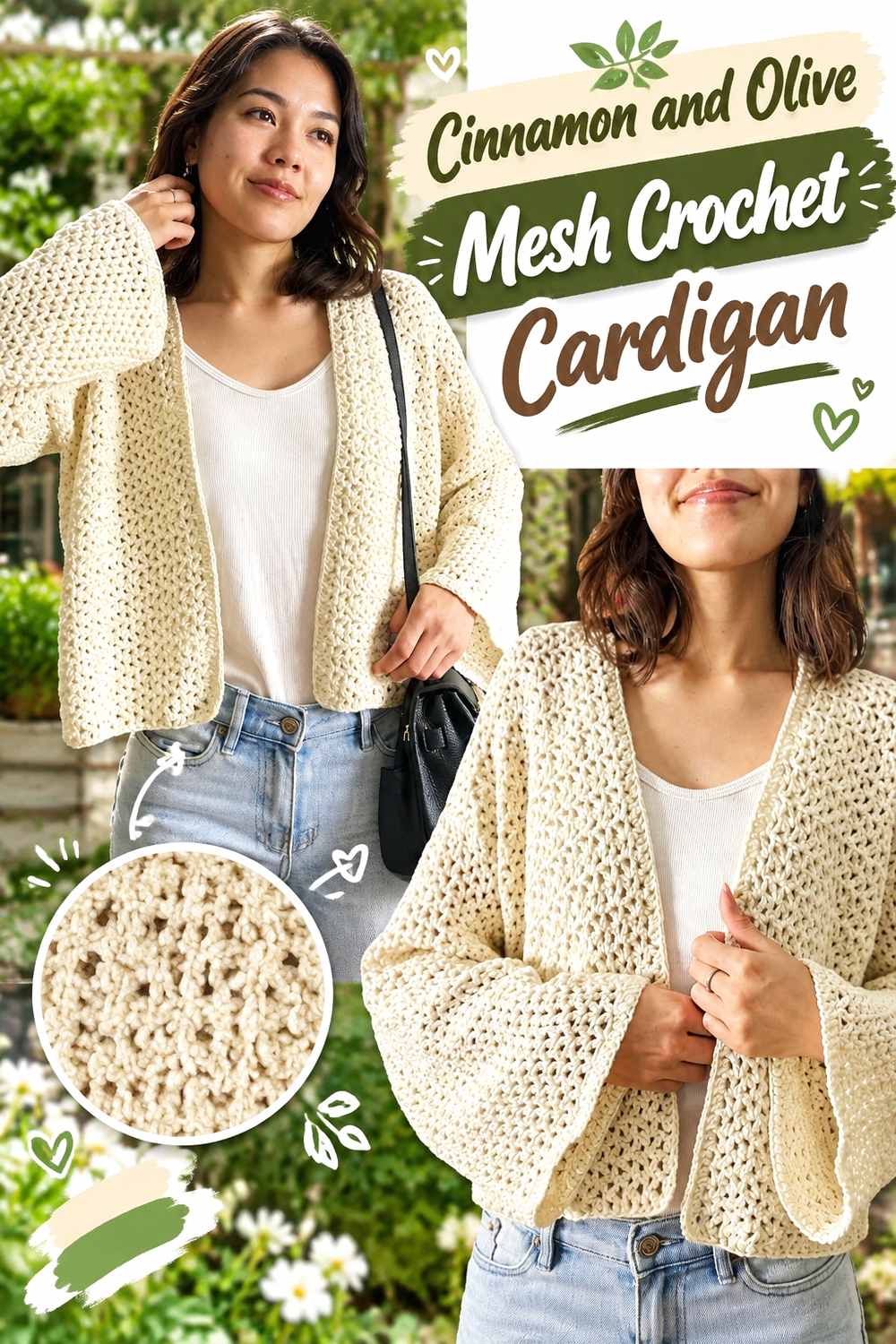
Cinnamon and olive create an earthy two-color direction that can work particularly well with an open mesh cardigan because the underlying outfit becomes a third visible element. Let cinnamon cover most of the crochet fabric and use olive strategically around borders or selected garment sections. Since both colors can sit in a medium-to-dark range, check their value difference before relying on color changes to define small details.
Let Cinnamon Carry Most of the Mesh Crochet Cardigan
Large stretches of cinnamon keep the open fabric visually coherent. If cinnamon and olive alternate too frequently across a mesh structure, the combination of color changes and open spaces can make the surface busier than intended.
A simpler approach is to keep the main body cinnamon and introduce olive at sleeves, cuffs, or another clearly defined area. That makes the color division readable even when the garment is layered over a contrasting top.
Keep Olive Clearly Distinct From Cinnamon at the Edges
Choose an olive that remains visibly different from cinnamon when the two are viewed from several feet away. If they are nearly identical in lightness, a narrow olive border may disappear into the cinnamon body.
When you want a subtler result, that low contrast can be useful. When you want the edging to define the cardigan opening, select an olive with enough light/dark separation to remain visible around the cinnamon front panels.
Creator Credit: VivCrochets
3. Cinnamon And Dusty Rose Cropped Crochet Cardigan
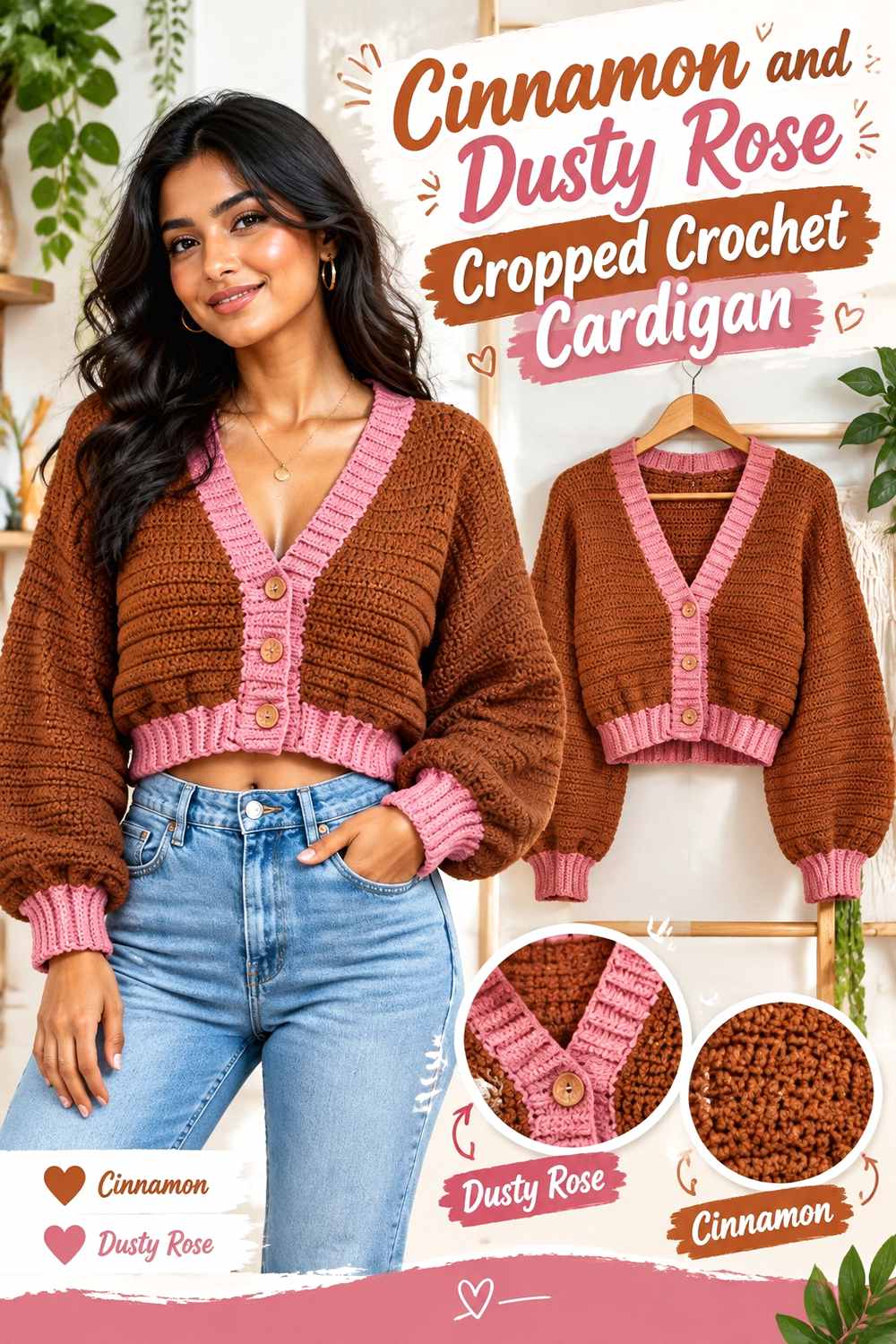
Dusty rose gives cinnamon a softer warm companion without simply moving into another brown neutral. A cropped cardigan concentrates the color into a smaller body area, so even modest accent sections can become noticeable. Cinnamon can lead the body and sleeves while dusty rose appears around cuffs, front bands, or a limited lower edge. Keeping the pink softened rather than highly saturated helps preserve cinnamon as the stronger garment color.
Keep Cinnamon Dominant Across the Cropped Cardigan Body
A short cardigan has less body length available to establish a dominant color. Give cinnamon the largest uninterrupted sections rather than breaking the torso into equal cinnamon and dusty rose bands.
If you want more dusty rose, the sleeves offer additional visual area without taking over the center front. Repeating a smaller dusty rose detail near the neckline can then connect those sleeves back to the body.
Use Dusty Rose to Soften Cinnamon Cuffs and Front Bands
Dusty rose is useful where you want a visible change without the sharpness of black, navy, or bright white. A dusty rose cuff can separate from a cinnamon sleeve while keeping the overall cardigan warm and muted.
Check the two yarns side by side before using dusty rose on narrow ribbing. If the values are nearly identical, the change will read as tonal. Choose a noticeably lighter dusty rose when you want the cuff construction itself to stand out.
Creator Credit: ToriaCrochet_
4. Cinnamon And Navy Panel Crochet Cardigan
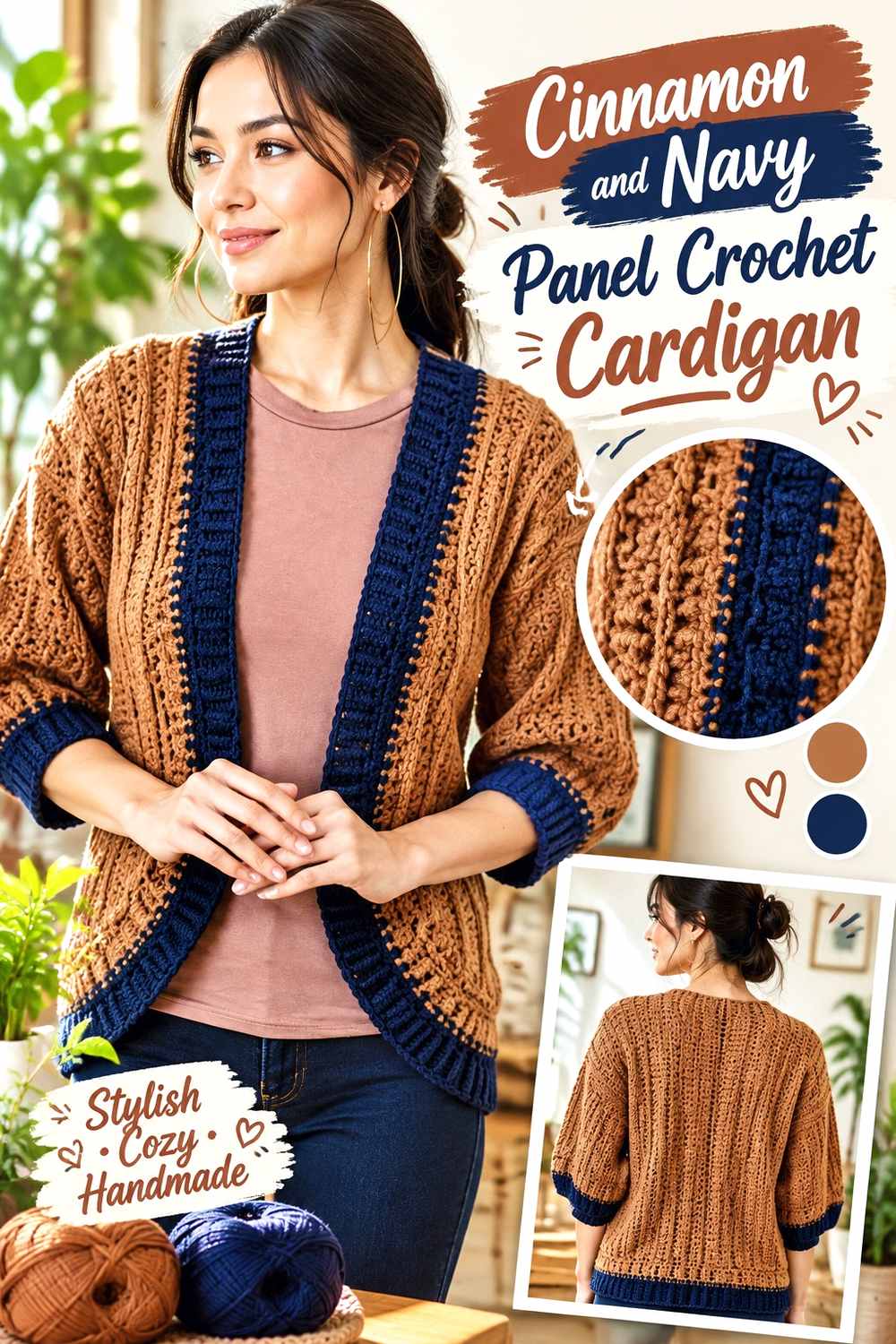
Navy gives cinnamon a distinctly cooler and darker partner. On a cardigan assembled from clear front, back, and sleeve sections, that contrast can be assigned to whole garment areas instead of scattered randomly. Cinnamon can cover the main panels, while navy defines cuffs, front bands, or selected sleeve sections. Keeping cinnamon visible around the face and center front prevents the navy from changing the cardigan into a primarily dark garment.
Frame Cinnamon Front Panels With Navy
A navy front band can draw a clean line around cinnamon body panels. Because the opening runs vertically through much of the garment, even a relatively narrow dark band can have substantial visual weight.
If the navy feels too dominant, continue the cinnamon body color through the hem rather than framing every outer edge in navy. That preserves the contrast around the neckline and opening without enclosing the entire cinnamon cardigan in a dark border.
Repeat Cinnamon on Navy-Accented Sleeves
When navy appears on the sleeves, bring cinnamon back at the cuffs or another repeated section. This stops the sleeves from looking visually detached from the main cinnamon torso.
The same principle works in reverse: cinnamon sleeves with navy cuffs can echo a navy front band. Repeating a secondary shade in two or three controlled areas usually creates more connection than introducing it once in a large isolated block.
Creator Credit: TCDDIY
5. Cinnamon And Oatmeal Pocket Crochet Cardigan
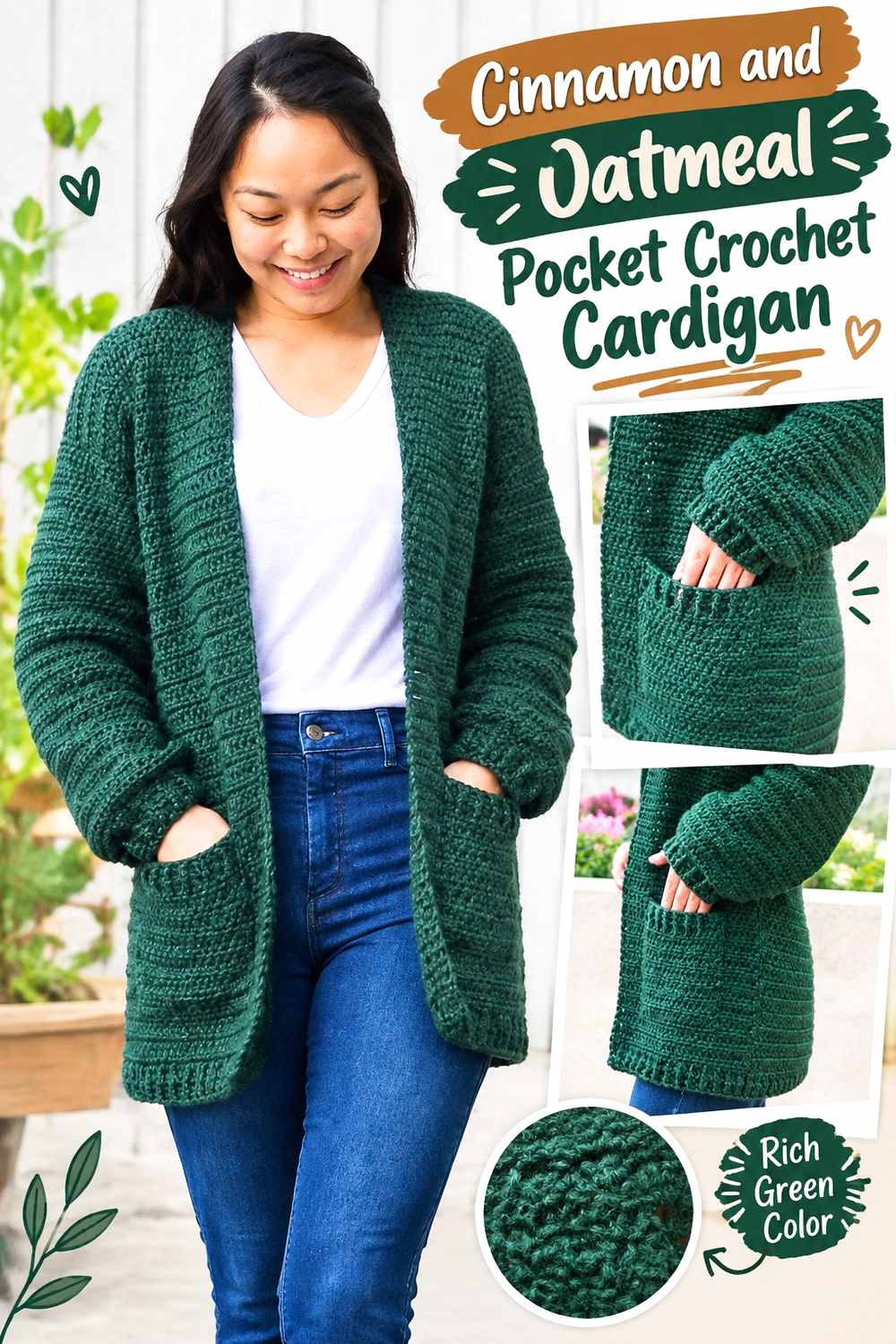
Oatmeal creates a gentler contrast with cinnamon than bright cream, making this a useful direction for an oversized cardigan where the broad body and sleeves already create plenty of visual presence. Keep most of that surface cinnamon and use oatmeal to clarify pockets, cuffs, or the front edge. Because pockets sit directly on the body panels, their color can either blend into the cardigan or become a deliberate focal feature.
Let Cinnamon Cover the Oversized Cardigan’s Largest Areas
On a roomy cardigan, a supporting color can become dominant surprisingly quickly because sleeves, pockets, and broad borders occupy more area than they might on a fitted garment. Keeping the back and main front panels cinnamon establishes the hierarchy first.
After that, decide how much oatmeal the silhouette actually needs. A cuff and pocket treatment may provide enough relief without adding another large oatmeal body section.
Use Oatmeal to Define Cinnamon Crochet Pockets
Oatmeal pockets on a cinnamon body make the pocket shape visible, while cinnamon pockets with oatmeal edging create a quieter effect. Decide whether the pocket should be a feature or simply a functional part of the surface.
If you choose contrasting oatmeal pockets, repeat oatmeal somewhere else—such as cuffs or front edging—so the light rectangles do not look unrelated to the rest of the cinnamon cardigan.
Creator Credit: forthefrills
6. Cinnamon And Deep Teal Buttoned Mesh Crochet Cardigan
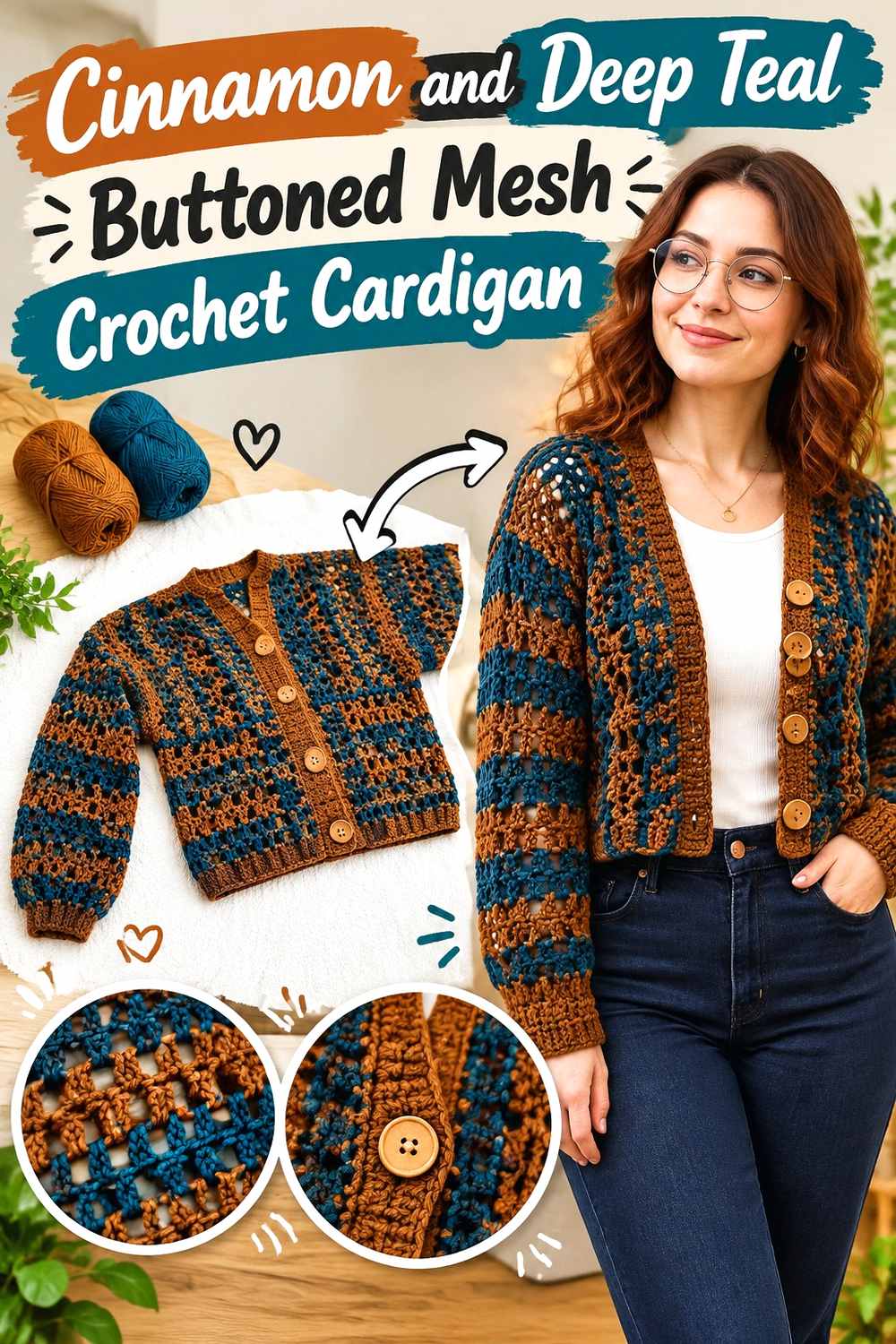
Deep teal pushes cinnamon in a cooler, more colorful direction than neutral pairings. A buttoned mesh cardigan gives you several useful placement points: body panels, sleeve edges, front bands, decorative lower edging, and the button area. Cinnamon can remain the principal field while deep teal is repeated in smaller structural details. Since both shades can be visually strong, unequal coverage helps prevent them from competing.
Give Cinnamon More Surface Area Than Deep Teal
Use cinnamon for the broad back and front portions when you want the cardigan to remain recognizably cinnamon. Deep teal can then appear as a controlled contrast around the opening, cuffs, or selected lower details.
Equal cinnamon and teal striping would create a much more balanced two-color garment. That is valid when intentional, but it changes the purpose of the palette from cinnamon-led to true two-color color blocking.
Keep Deep Teal Crisp Against Cinnamon Mesh Details
Openwork can make colors appear less dense because the underlying shirt or skin shows through the fabric. For that reason, inspect deep teal and cinnamon in an actual crochet sample rather than judging only the yarn skeins.
A deep teal trim may look more pronounced against dense cinnamon edging than against very open cinnamon mesh. Use that difference to decide where you want the contrast to be strongest.
Creator Credit: Brunaticality
7. Cinnamon And Camel Collared Crochet Cardigan
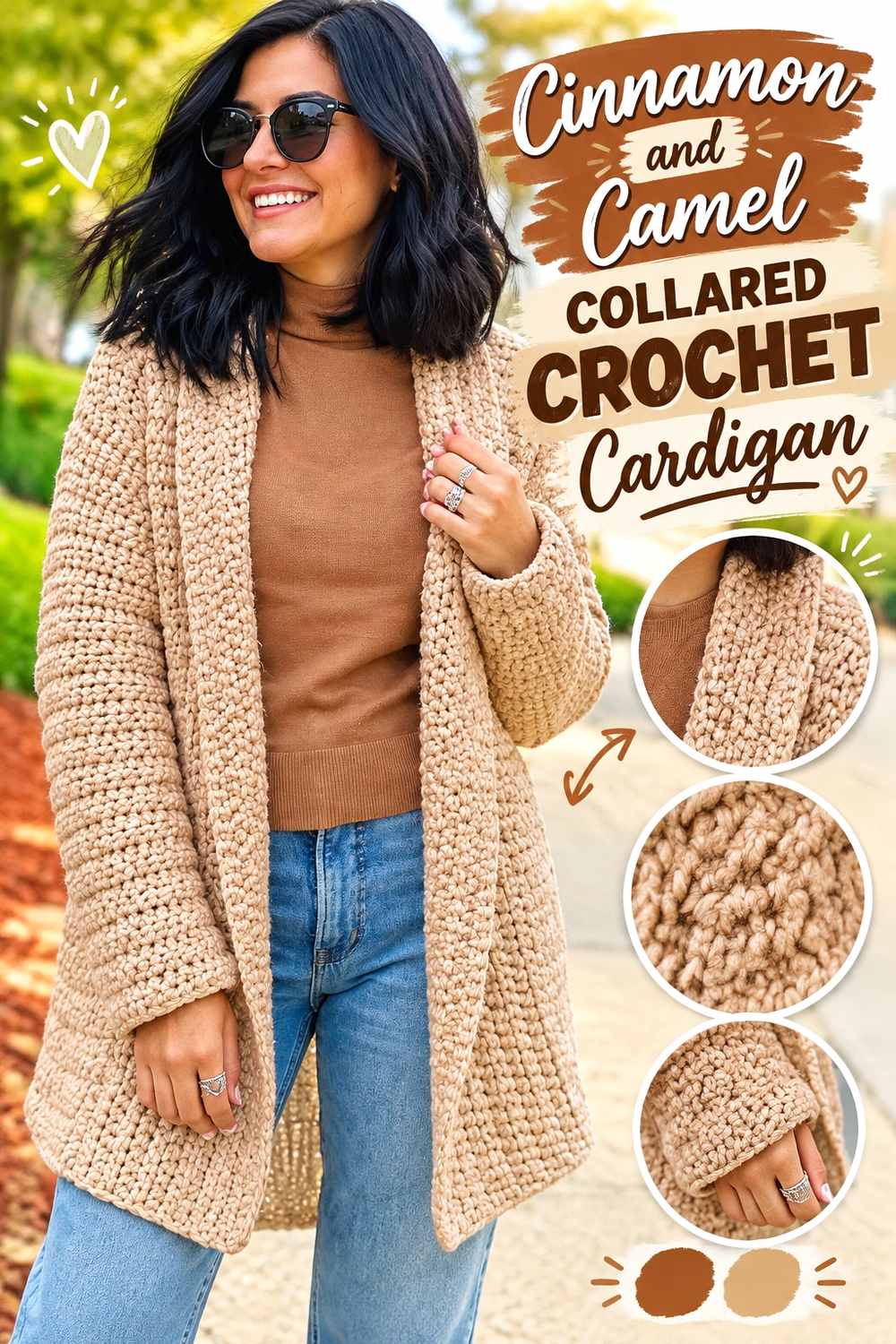
Camel creates one of the most tonal options in this collection. Because it stays near cinnamon’s warm neutral family, the palette depends more on controlled lightness differences than strong hue contrast. Use cinnamon through the body and let camel define the collar, front edge, or cuffs. This approach suits a cardigan where you want the construction and texture to remain more noticeable than the color changes.
Keep Camel Lighter Than Cinnamon Around the Collar
A collar sits directly beside the main body and front opening, so a slight value shift can be enough to separate it. Choose camel that remains clearly lighter than cinnamon if you want the collar shape to be readable.
If your camel and cinnamon are almost identical in value, treat that as a deliberate tonal effect. The distinction will be subtle, and texture rather than color will need to define the collar.
Repeat Cinnamon Beyond the Body Panels
A tonal palette can look unfinished if camel is used for every piece of edging while cinnamon appears only in the center body. Bring cinnamon back into at least some finishing areas, such as cuffs or a hem, to keep the main shade distributed through the complete silhouette.
This repetition is especially useful with a wide collar, which can otherwise give camel more visual weight than expected.
Creator Credit: KnitcroAddict
8. Cinnamon And Mustard Oversized Crochet Cardigan

Mustard adds a stronger golden note without leaving the warm side of the palette. On an oversized cardigan, use it in measured areas so the garment does not divide into two equally loud color fields. Cinnamon works well as the broad grounding shade, with mustard concentrated at cuffs, front bands, pockets, or a limited stripe section.
Keep Mustard Smaller Than Cinnamon on the Oversized Cardigan
Because mustard can be noticeably brighter than cinnamon, it does not need equal surface area to be visible. A few repeated mustard sections can carry enough color to change the cardigan’s overall direction.
Start with cinnamon across the body and decide where mustard contributes to the silhouette. Adding mustard only because an area feels empty can lead to accents that have no relationship to one another.
Use Cinnamon Between Mustard Accent Sections
If mustard appears at several points, allow cinnamon to sit between those sections instead of placing every accent directly beside another accent. The cinnamon areas act as visual pauses across broad sleeves and body panels.
This is particularly helpful when the cardigan already has strong texture. Color repetition should clarify the garment rather than compete with the stitch pattern.
Creator Credit: Chenda DIY
9. Cinnamon And Black Front Tie Mesh Crochet Cardigan

Black creates one of the strongest graphic contrasts with cinnamon. A front-tie mesh cardigan is a useful place for that combination because the tie, borders, and open neckline naturally attract attention. Use cinnamon for the mesh body if you want warmth to remain dominant, then restrict black to areas that benefit from clear definition.
Keep Cinnamon Across the Mesh Body and Sleeves
Large cinnamon mesh sections allow the open stitch structure to remain the main feature. If black occupies too much of the torso, the dark shade can visually outweigh cinnamon even when the actual yarn amounts are similar.
A cinnamon body with smaller black details also makes it easier to layer the cardigan over black clothing without losing the cinnamon crochet surface.
Use Black to Outline Cinnamon Front-Tie Details
The front tie is small compared with the body, but its central placement gives it high visibility. Black can define that closure and connect naturally to a narrow black front border.
If both the tie and a wide border are black, assess the front view before adding more black to cuffs or hem. The goal is to frame cinnamon rather than progressively reduce it to isolated center panels.
Creator Credit: mahum 🎀
10. Cinnamon And Sage Granny Stitch Crochet Cardigan

Sage creates a muted botanical contrast that is softer than forest green or teal. Granny stitch naturally breaks the fabric into visible clusters and spaces, giving you several ways to distribute the two shades. Cinnamon can dominate through longer color sections, while sage can interrupt it periodically or appear at edging and cuffs.
Repeat Cinnamon Frequently Through the Granny-Stitch Cardigan
Granny fabric can accommodate many color changes, but a two-color cinnamon-and-sage scheme does not need constant alternation. Longer cinnamon sections establish the main color more convincingly than switching shades after every small repeat.
If sage begins to appear equally often, step back and view the complete cardigan rather than focusing on the current row. Adjust later color sections so cinnamon remains visually prevalent across both body and sleeves.
Give Sage Enough Contrast Against Cinnamon Clusters
Muted sage and cinnamon can be different in hue while still remaining close in value. When that happens, the transition looks blended rather than sharply striped.
Choose a lighter sage if you want individual green sections to be immediately visible. Choose a medium sage closer to cinnamon’s value when you prefer a quieter, earthier transition through the granny-stitch fabric.
Creator Credit: AC Crochets
11. Cinnamon And Burgundy Relaxed Crochet Cardigan

Burgundy deepens the warm palette rather than lightening it. Because both shades can carry substantial visual weight, the most useful distinction often comes from making cinnamon the broader field and burgundy the darker defining color. On a relaxed cardigan, burgundy can work around cuffs, lower edging, or selected sleeve sections without changing the entire garment into a dark layer.
Keep Cinnamon Visible Around the Center Front
If burgundy covers both front bands and large front-panel sections, it can become the first color seen when the cardigan is worn open. Preserve cinnamon around enough of the center-front area to keep the garment aligned with the cinnamon theme.
Burgundy can then move toward cuffs or lower edges, where its depth gives the silhouette a darker finish without taking over the torso.
Use Burgundy to Deepen Cinnamon Without Flattening Texture
Dark accent yarn can make textured edges easier to see when there is sufficient value separation. Before assigning burgundy to detailed ribbing, compare it directly with cinnamon in similar stitches.
If the two colors are too close in darkness, the color change may be less visible than expected. In that case, use burgundy in a larger simple section where hue difference matters more than fine stitch definition.
Creator Credit: Sirin’s Crochet
12. Cinnamon Espresso And Ivory Granny Back Crochet Cardigan

A cardigan with granny-square detail across the back gives a three-color palette a natural focal area. Cinnamon can lead the larger cardigan sections, while espresso and ivory build contrast inside the back motifs. Keeping those two accents more concentrated in the decorative panel lets the front remain comparatively calm.
Let Cinnamon Connect the Granny Back to the Cardigan Sides
Include cinnamon inside the granny-square panel instead of treating the motifs as a completely separate espresso-and-ivory insert. Repetition creates a visual bridge between the decorative center and the cinnamon hexagon or body sections around it.
The same idea can carry onto the sleeves through a small cinnamon-led sequence rather than introducing an entirely new motif palette there.
Use Ivory and Espresso to Give Cinnamon Granny Motifs Depth
Ivory can clarify smaller motif sections, while espresso supplies the darkest anchor. Avoid giving both accent shades the same amount of space automatically. A little espresso can define a motif strongly, whereas ivory may need a slightly larger area to create a light break.
Before joining the back panel, arrange all squares together and check whether the cinnamon repeats feel evenly distributed across the full width.
Creator Credit: Alyssia Creates
13. Cinnamon And Forest Green Raglan Crochet Cardigan

Forest green gives cinnamon a deeper botanical partner than sage or olive. A raglan cardigan offers continuous lines from neckline toward the underarm, so color placement near the yoke has a strong effect on the whole garment. Cinnamon can dominate the torso, while forest green marks cuffs, hem, collar, or another finishing area.
Keep Cinnamon Continuous Through the Raglan Body
A largely uninterrupted cinnamon torso emphasizes the shape of the cardigan and prevents the dark green from breaking up the raglan construction unnecessarily. Use the yoke area carefully because a contrasting color there will be prominent around the shoulders and neckline.
If forest green is reserved for finishing, repeat it at more than one edge so it feels integrated rather than added after the cinnamon body was completed.
Use Forest Green to Ground Cinnamon Ribbing
Forest green can provide strong definition at a cinnamon cuff or lower hem. Because these ribbed sections usually form narrow visual bands, they can carry a dark shade without overwhelming the larger cinnamon surface.
Check the front band as a separate decision. Making every ribbed area green produces a strong outline; keeping the front band cinnamon creates a softer center while the green remains concentrated at outer edges.
Creator Credit: MJ’s Off The Hook Designs
14. Cinnamon Golden Yellow And Cream Flower Crochet Cardigan

Flower details create a clear reason for using three colors because the motif can hold the brightest shade while the cardigan body stays grounded. Let cinnamon cover the main cardigan, use golden yellow in flower centers or selected petals, and bring cream into smaller motif areas or edging. This keeps the decorative detail readable without turning every garment section into a separate color statement.
Keep Cinnamon Behind the Golden Flower Details
A cinnamon background gives golden yellow a warmer field to sit against, but the two shades should still have enough value separation for the flowers to remain visible. If the yellow is too dark, small petals may merge into the cinnamon surface.
Cream can be inserted where additional separation is needed, particularly around compact decorative details where hue difference alone does not create enough definition.
Repeat Cream Sparingly Across the Cinnamon Cardigan
Cream can connect the flower motifs to the rest of the cardigan through cuffs, a narrow edge, or another small detail. It does not need to become a third large body color.
When cream appears in too many broad areas, the finished garment can shift from a cinnamon cardigan with flower accents to a balanced three-color cardigan. Keep that distinction in mind as the motifs accumulate.
Creator Credit: Krystal Everdeen
15. Cinnamon And Mauve Cropped Crochet Cardigan

Mauve brings a muted purple-pink contrast that moves farther from the earthy combinations while remaining subdued enough to sit beside cinnamon. On a cropped cardigan, use cinnamon as the body anchor and mauve in focused sections such as sleeves, cuffs, front ties, or edging. The short silhouette means those secondary areas represent a larger percentage of the visible garment, so a little mauve can go a long way.
Protect Cinnamon’s Role on the Cropped Body
If the sleeves are mauve, keep both front and back body areas predominantly cinnamon. If the body includes mauve, bring cinnamon back strongly on the sleeves or center front.
The goal is not a fixed percentage but an obvious hierarchy. View the cardigan laid out as a whole before finishing to make sure cinnamon still reads first.
Choose Mauve That Separates Clearly From Cinnamon
Muted colors can collapse together when their light/dark values are too similar. A mauve that is slightly lighter than cinnamon will usually show more clearly in narrow cuffs or ties than one with almost identical depth.
If you deliberately prefer low contrast, enlarge the mauve sections rather than expecting a tiny tonal stripe to create strong definition.
Creator Credit: Dana B
16. Cinnamon Denim Blue And Ivory Hexagon Crochet Cardigan
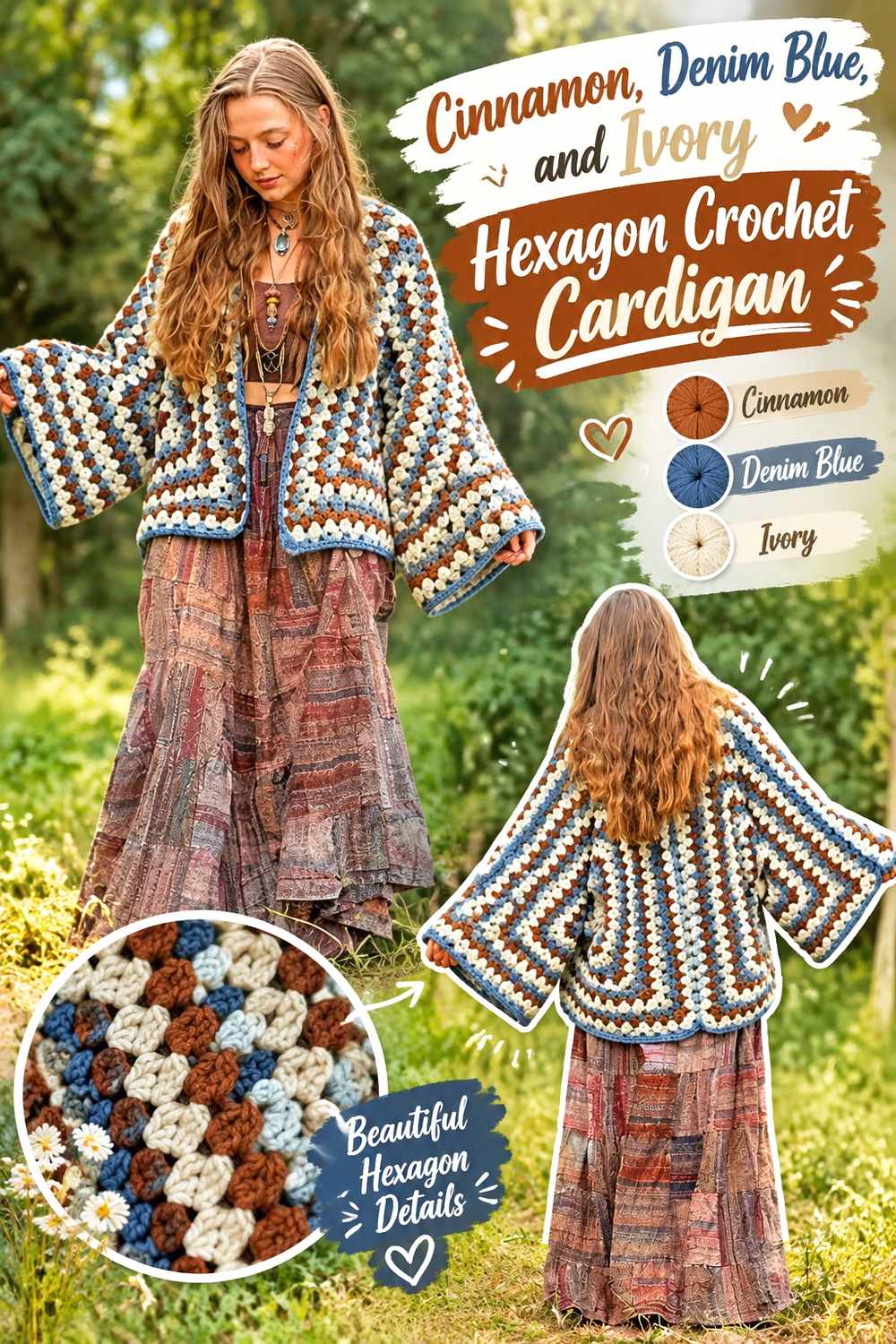
Denim blue introduces a casual cool contrast, while ivory prevents the two medium-depth colors from becoming visually dense when repeated through a hexagon cardigan. Make cinnamon the recurring anchor, use denim blue as the main contrasting hue, and insert ivory where the color sequence needs a lighter break.
Repeat Cinnamon Through Both Hexagon Halves
Because a hexagon cardigan begins with two major mirrored garment sections, color distribution can become noticeably unbalanced if cinnamon dominates one half while denim dominates the other. Plan enough cinnamon repetition in both pieces to keep the finished front and back connected.
You do not need identical stripe sequences, but the overall color weight should make sense once the halves are placed side by side.
Use Ivory to Separate Cinnamon From Denim Blue
Ivory is useful between cinnamon and denim when those two shades have similar light/dark values. A narrow light section can keep adjacent color bands readable and prevent the cardigan from becoming one continuous field of medium-depth colors.
Reserve ivory for purposeful intervals rather than adding it after every cinnamon or blue section. Too much light yarn can quickly shift the cardigan away from cinnamon as the dominant color.
Creator Credit: Hannah Drapinski
Choosing Between These Cinnamon Crochet Cardigan Palettes
For a softer, neutral-heavy cardigan, start with cinnamon and oatmeal, camel, or cream. These combinations keep the warm main shade obvious while relying on relatively gentle contrast.
For an earthy color direction, olive, sage, and forest green each change cinnamon differently. Olive stays grounded and muted, sage creates a lighter transition, and forest green introduces considerably more depth.
If you want stronger separation, look toward black, navy, deep teal, or denim blue. These cool and dark shades make cinnamon more distinct across cuffs, borders, panel divisions, and openwork.
Mustard, burgundy, dusty rose, mauve, and golden yellow keep more warmth in the garment while introducing recognizable accent color. Multicolor patchwork or granny designs give you the most freedom, but they also benefit the most from establishing cinnamon as the recurring anchor before distributing the supporting shades.
Conclusion
A cinnamon crochet cardigan does not have to stay within a predictable brown-and-cream palette. The color can move from soft and tonal with camel or oatmeal to graphic with black and navy, earthy with olive and sage, or more colorful with teal, mauve, mustard, and denim blue.
Choose the palette by deciding first how much contrast you want and where it should appear on the garment. Body panels determine the dominant impression, while cuffs, borders, pockets, motifs, ties, collars, and joins can introduce secondary colors in controlled amounts.
For multicolor cardigans, repeat cinnamon across several parts of the garment instead of concentrating it in one place. For two-color designs, decide whether the second shade should quietly support cinnamon or create an obvious frame around it. Once that hierarchy is clear, the color placement becomes much easier to plan.
Use the linked creator tutorials for the exact construction details of each cardigan style, then adapt the palette separately to suit the cinnamon color direction you want.
Frequently Asked Questions
What colors go well with a cinnamon crochet cardigan?
Cream, oatmeal, camel, black, navy, denim blue, teal, olive, sage, forest green, burgundy, dusty rose, mauve, mustard, and muted golden yellow can all create distinct directions with cinnamon. The more important consideration is contrast and placement. A pale neutral makes cinnamon look more defined, while a similarly deep earthy shade creates a softer transition.
Should cinnamon be the dominant color in a cinnamon crochet cardigan?
Usually, yes, if you want the finished cardigan to clearly read as cinnamon. Dominance does not require using cinnamon everywhere. It can cover the main body or repeat consistently across panels, sleeves, motifs, and borders while one or two other shades handle smaller supporting areas.
How can I keep cinnamon crochet texture visible?
Check the light/dark value of any color placed beside cinnamon. Raised stitches, granny motifs, ribbing, and small decorative elements can become difficult to distinguish when adjacent shades have similar values. A lighter cream or a distinctly darker accent can provide more separation where texture needs to remain visible.
Can cinnamon and black make a crochet cardigan look too dark?
They can create a strong dark contrast when black covers large areas, but the balance is adjustable. Keep cinnamon across the main body and reserve black for front edging, cuffs, ties, or smaller sections when you want a graphic outline without allowing black to dominate the cardigan.
What should I substitute if I cannot find the exact cinnamon yarn color?
Look for another warm brown-orange or reddish-brown that preserves the role you want cinnamon to play. More importantly, compare the substitute with the supporting colors. If your new cinnamon is significantly lighter or darker, you may need to adjust the cream, green, blue, or other accent so the intended contrast remains visible.
How should cinnamon be used in a granny-square or hexagon crochet cardigan?
Repeat cinnamon throughout the major garment sections rather than confining it to one cluster of motifs. It can appear in motif centers, outer rounds, larger hexagon bands, joining areas, or edging. The exact placement can vary, but regular repetition helps cinnamon visually connect the fronts, back, and sleeves.