Afrohemian decor works especially well with crochet because both favor visible handwork, texture, repeated motifs, strong geometry, and objects that feel collected rather than mass-produced. In this collection, “Afrohemian” describes a decorating direction that blends bohemian craft texture with Afro-inspired color, graphic pattern, rhythmic repetition, and warm artisan details. It does not mean that every tutorial below is presented by its creator as an Afrohemian design.
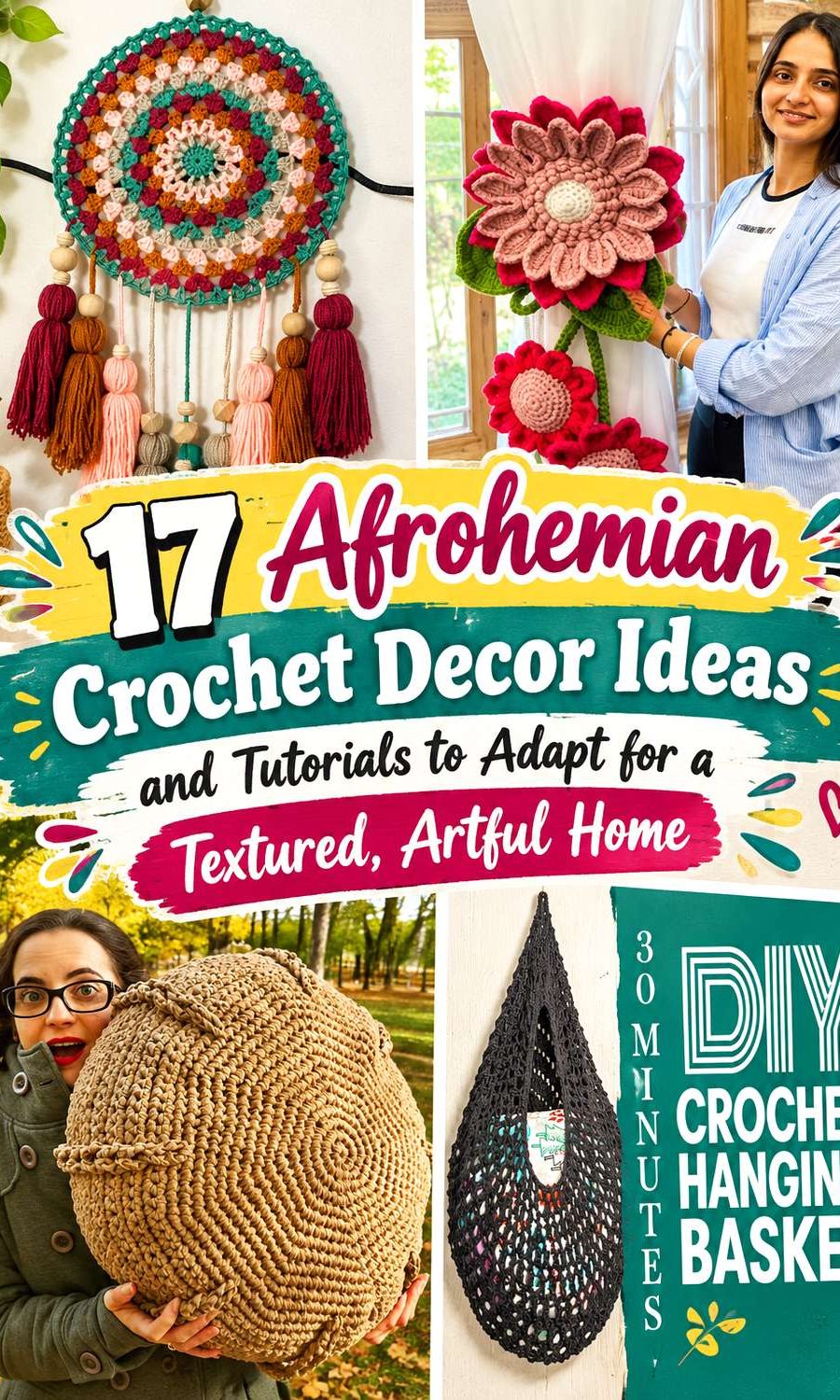
The 17 tutorials cover wall art, plant decor, storage, table pieces, floor accents, cushions, and smaller finishing details. Some already lean strongly boho through fringe, beads, natural-looking cord, or geometric surfaces; others are useful bases to reinterpret through palette and placement. That distinction matters: use the original tutorials for construction, then make your styling choices around the room you are actually decorating.
Quick List
- Crochet Geometric Fringe Wall Hanging
- Crochet Beaded Plant Hanger
- Crochet Textured Storage Baskets
- Crochet Heart-Motif Plant Pot Cover
- Crochet Boho Placemat
- Crochet Fringed Round Coasters
- Crochet Graphic Tapestry Wall Hanging
- Crochet Floor Pouf
- Crochet Double-Hoop Mandala Wall Hanging
- Crochet Round Fringe Rug
- Crochet Diamond Bobble Pillow Cover
- Crochet African Flower Pillow
- Crochet Netted Hanging Basket
- Crochet Embossed Boho Table Runner
- Crochet Bobbled Stool Cover
- Crochet Floral Curtain Tie
- Crochet Beaded Mandala Wall Hanging
Build the Afrohemian Look Through Repetition, Not Excess
You do not need every project to contain fringe, beads, several colors, and a bold motif. A room usually feels more coherent when one or two ideas repeat. For example, a geometric wall hanging can establish the graphic language, while a plain basket repeats its cream and rust palette without competing with it. A beaded plant hanger can echo the wooden support used for another wall piece.
For color, consider building around a small family rather than choosing each project independently. Cream, warm brown, rust, ochre, black, earthy green, indigo, and clay-inspired shades can be mixed in many ways, but they are suggestions rather than requirements. A high-contrast black-and-cream scheme will emphasize geometry; closer earthy tones will let raised stitches and fringe carry more of the visual weight.
Choose Decor by the Space It Has to Fill
Before selecting a tutorial, decide whether you need a focal point, a functional object, or a finishing layer. Wall hangings, tapestry, and mandalas can occupy blank vertical space without taking up furniture. Baskets, a plant hanger, and a pot cover combine decoration with storage or display. Rugs, a pouf, pillows, and a stool cover bring crochet lower into the room and make the texture feel distributed instead of concentrated on one wall.
Also consider scale before changing a pattern. Enlarging a wall piece may change its weight and hanging needs; enlarging a basket changes its opening as well as its capacity. When a tutorial is written for a specific pillow, pot, or stool, measuring your real object first is more reliable than assuming a simple hook change will create the fit you want.
1. Crochet Geometric Fringe Wall Hanging
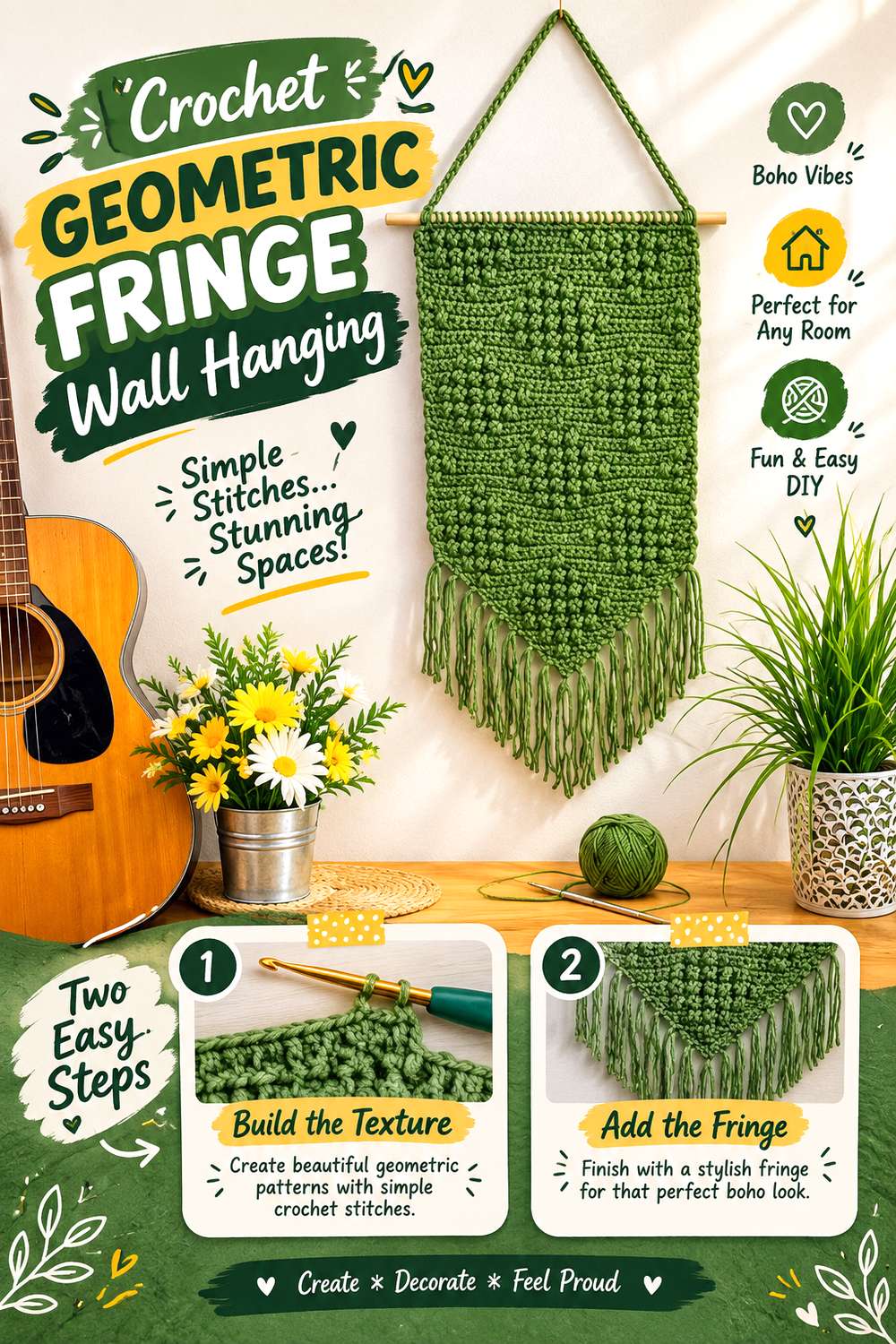
A wall hanging is one of the clearest ways to establish the direction of an Afrohemian room without having to coordinate several small objects first. Jo to the World Creations teaches a complete boho wall decoration built around a structured geometric crochet panel, a hanging support, and long fringe. The tutorial progresses through the crocheted body before covering the hanging strap and fringe, so the decorative finish is part of the actual project rather than an imagined adaptation.
Its strength is the contrast between an orderly upper panel and the movement below it. That combination works particularly well on a narrow section of wall, above a console, or between taller furnishings where a framed print could feel too rigid. For an Afrohemian interpretation, color can do more than extra embellishment: a restrained two- or three-color scheme can make the geometry prominent while letting the fringe remain visually light.
Decide How Strong the Geometry Should Read
Contrast determines how quickly the eye recognizes a geometric crochet surface. Closely related earthy colors will soften the pattern and make texture more important, while dark and light values can turn the same structure into a strong graphic statement. Consider nearby artwork before choosing. If the wall already holds patterned objects, a quieter palette can prevent the crochet from competing with everything around it.
Give the Fringe Clear Space
Fringe needs empty wall beneath and around it to be visible. Placing furniture or another textile directly against the lower edge can make the hanging appear crowded and can interrupt the clean vertical drop. Before committing to a location, hold a paper or fabric rectangle against the wall that approximates the crocheted body and leave additional space below for the fringe.
Creator: Jo to the World Creations
2. Crochet Beaded Plant Hanger
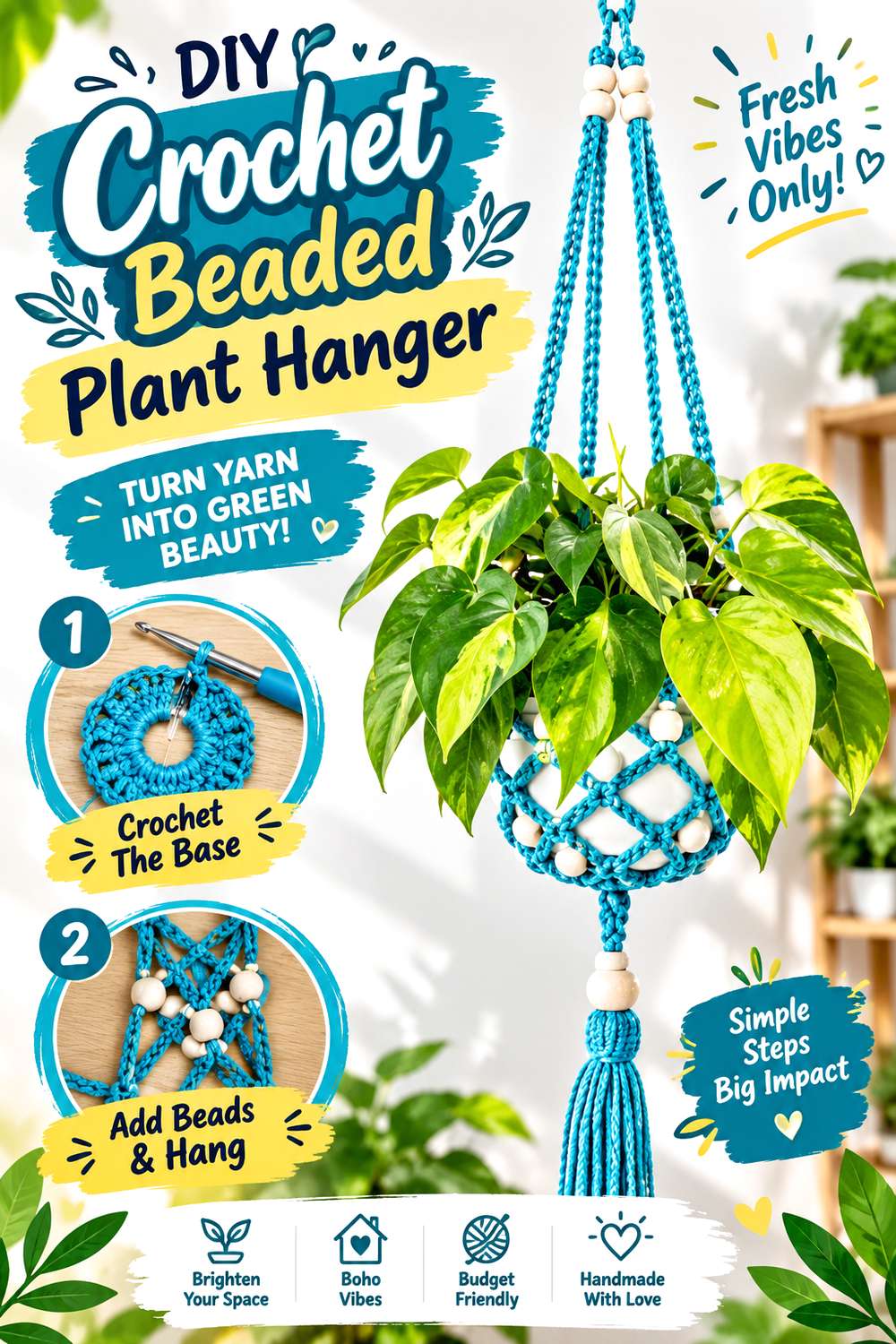
A hanging planter introduces height and greenery while keeping floor and tabletop space open. The tutorial from You Should Craft makes a bohemian plant hanger intended for a small pot and incorporates wooden beads and a tassel into the finished design. Those additions make it particularly useful for this collection because the hanger already combines crochet with natural-looking decorative elements rather than relying on yarn alone.
Instead of treating the plant as separate from the decor, use the pot, foliage, hanger, and mounting position as one composition. Trailing leaves will create a very different silhouette from an upright plant, and a highly patterned pot may compete with beads and tassel details. A plain terracotta-colored, cream, black, or similarly restrained pot is one possible way to give the crocheted structure more attention. The tutorial is designed around a particular small-pot range, so changing to a substantially different planter should be treated as a new fit and support decision.
Let the Pot and Hanger Share the Visual Work
If the yarn has strong color variation, a simpler pot can keep the combination readable. With neutral yarn, the planter itself can carry more pattern or color. This is a useful place to repeat a color from a rug, cushion, or wall hanging because the plant introduces that shade at a different height without requiring another large textile.
Treat a Larger Planter as More Than a Size Change
A larger pot changes width and weight together. Do not assume that merely adding stitches gives the original hanger the same suitability for a heavier container. Use the tutorial for its intended construction and assess any different planter and mounting hardware separately. For decor planning, choosing the pot first is usually the cleaner route because it gives you a fixed object to design around.
Creator: You Should Craft
3. Crochet Textured Storage Baskets
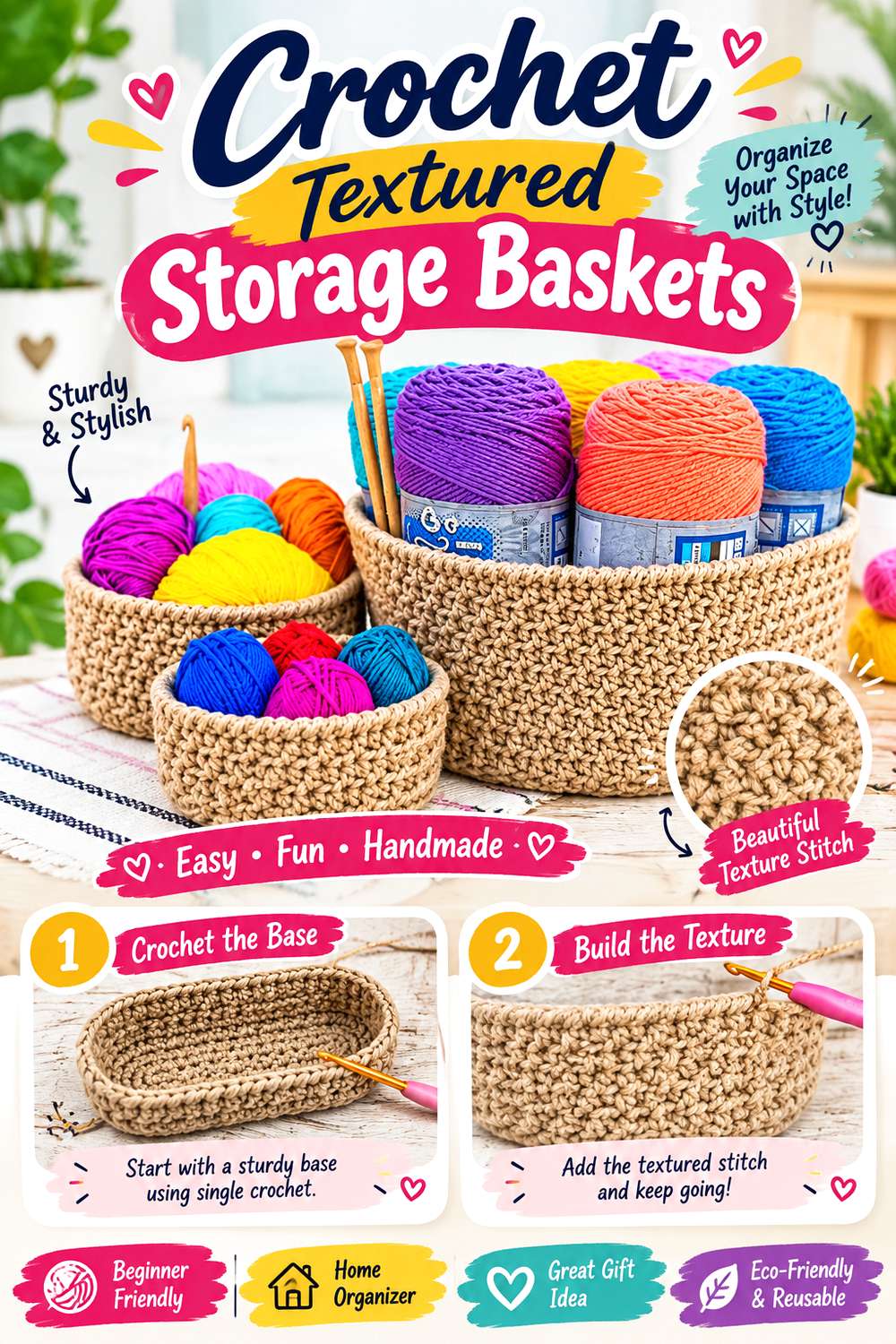
Storage baskets can prevent an Afrohemian room from becoming visually busy because they give small objects somewhere to disappear while still contributing handmade texture. Naztazia’s tutorial demonstrates crochet baskets in three sizes, producing rounded containers that can be displayed together or separated around a room. The creator works with two strands of yarn held together, giving the project a noticeably substantial crocheted surface.
Rather than assigning all three baskets the same job, think about what needs containment. One might sit beside a chair for current yarn or craft materials, while a smaller one can collect lightweight everyday items on a shelf. A coordinated set can also replace several mismatched containers in an open bookcase. For the Afrohemian direction, the basket form itself is enough; you do not need to add fringe to every piece. Repeating two colors already used elsewhere can connect the baskets to more decorative objects without turning storage into another focal point.
Use a Group When the Shelf Needs Rhythm
Three related forms create an intentional progression of scale. They can be arranged together on a long surface or distributed vertically through shelving. If the surrounding room already contains several bold patterns, keeping the baskets comparatively simple gives the eye a resting point while preserving the handmade texture.
Match the Opening to What You Actually Store
An attractive basket becomes inconvenient if the opening is too narrow for the objects you reach for frequently. Before choosing a size, gather the intended contents and consider how you naturally pick them up. Open everyday storage should make access simple; items that are mostly decorative or rarely used can tolerate a tighter arrangement.
Creator: naztazia
4. Crochet Heart-Motif Plant Pot Cover
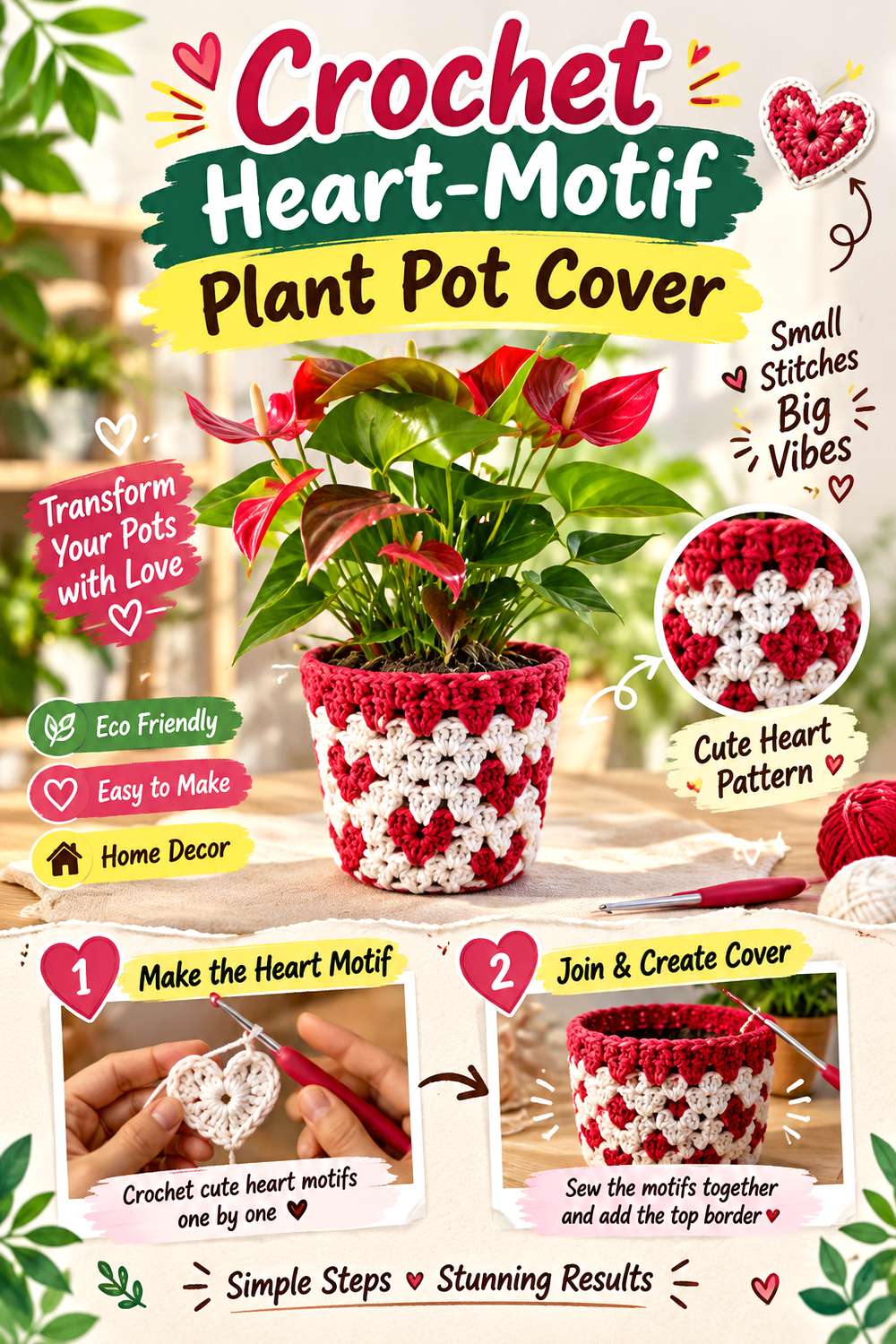
A pot cover is useful when you want crochet near plants without suspending anything overhead. Ocezai’s tutorial builds a cover that is measured around the planter and incorporates a charted heart section into the body. The video has no voice-over; the process, diagram, written notes, and visible stitch work provide the instructional guidance instead. The creator also explains how the foundation is adjusted around the pot, making fit part of the planning rather than an afterthought.
For an Afrohemian version, you do not have to emphasize the heart motif through a romantic palette. A low-contrast combination such as clay and sand can make the pattern subtle, while black and cream can turn it into graphic surface decoration. Because the cover wraps an existing pot, it is also a relatively contained place to test a stronger color pairing before repeating it on a large wall hanging or cushion.
Measure the Pot Where the Cover Has to Sit
Plant pots often change width from bottom to top, so a single circumference does not describe every part of the form. Follow the tutorial’s fitting approach rather than choosing the chain length from appearance alone. If your planter has a pronounced rim, check that the finished opening will move over it rather than fitting only the narrower body.
Use Motif Contrast Deliberately
A motif does not always need maximum contrast. Soft contrast creates texture that becomes clearer up close, while strong contrast makes the pot cover read as a patterned object from across the room. Choose based on its placement: a pot on a high shelf may benefit from clearer graphics, while one beside a heavily patterned textile may work better in quieter colors.
Creator: Ocezai
5. Crochet Boho Placemat
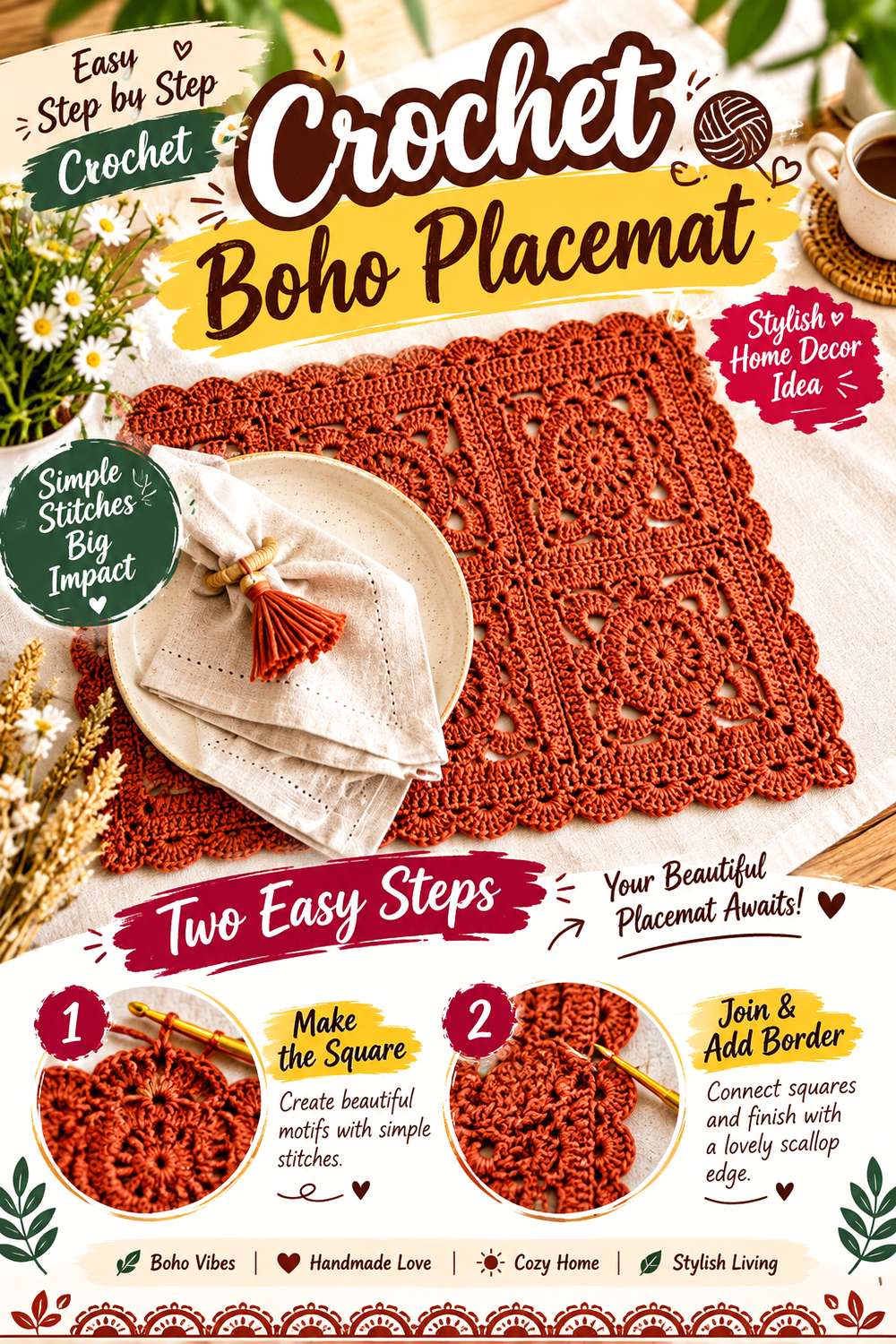
Studio Boho Crochê’s tutorial teaches a complete rectangular boho-style placemat with a clearly defined decorative surface. This gives the collection a useful table option that is more structured than the circular fringed coasters that follow. The creator provides a full step-by-step process and a finished rectangular format, making it suitable as a direct project rather than merely a stitch sample to enlarge.
An Afrohemian table does not need every place setting to be identical in color. One approach is to keep the crochet pattern consistent while alternating a controlled group of earthy shades. Another is to use one neutral placemat color and introduce stronger tones through napkins, ceramics, or a table runner. The rectangular silhouette is especially useful on a table that already contains round plates and bowls because it creates a visible frame around each setting instead of repeating every circular shape.
Check the Table Before Committing to a Full Set
Make one placemat and place your usual dinnerware on it before crocheting several. This reveals how much crochet remains visible around the plate and whether neighboring mats feel crowded. It also helps determine whether the chosen color has enough distinction from the tabletop itself.
Let the Placemat Be the Quiet Layer
If you plan to add a runner, patterned ceramics, or colorful serving dishes, the placemats do not also need to be the dominant feature. A subdued base can be more versatile from meal to meal. Save the highest contrast for a table with otherwise simple objects where the crochet pattern has room to be noticed.
Creator: Studio Boho Crochê
6. Crochet Fringed Round Coasters
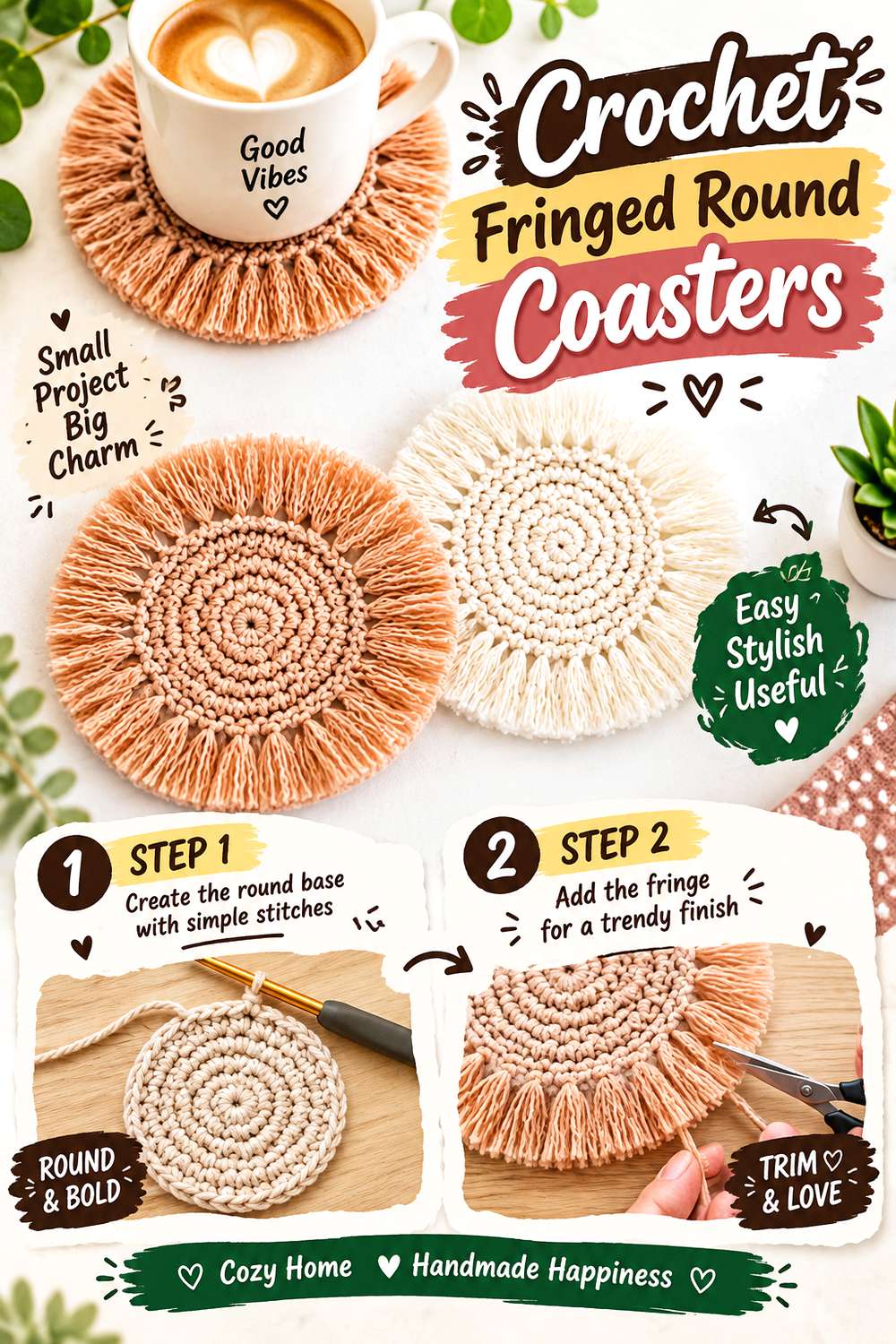
Small fringed circles are an easy way to repeat the handmade texture of a larger Afrohemian piece without filling the room with more large crochet. The forthefrills tutorial covers boho coasters and expands the same spiral idea into additional sizes for use beneath larger table objects or as placemats. The finished pieces use fringe around the edge, which gives a macramé-adjacent appearance while keeping the center clearly crocheted.
Because the source already supports multiple scales, this is a useful project for creating a coordinated surface grouping. A mini version can sit beneath a mug while a larger one anchors a vase or bowl. That visual repetition can be more effective than adding unrelated crochet objects to the same table. If you use several sizes together, consider limiting the palette so that scale and fringe—not an excessive number of colors—provide the variation.
Use Scale to Connect Separate Objects
A family of circles in different sizes can visually link a coffee table, side table, and dining surface. Repeating one or two yarn colors makes them feel connected even when they are not displayed together. This is particularly useful when larger Afrohemian pieces in the room already contain several motifs and colors.
Keep Fringe Proportionate to the Surface
Fringe changes the apparent diameter of a coaster or mat. Before trimming it, place the piece where it will actually be used. A generous fringe can be attractive beneath a vase, while the same length around a small drinking coaster may occupy more table space than expected.
Creator: forthefrills
7. Crochet Graphic Tapestry Wall Hanging
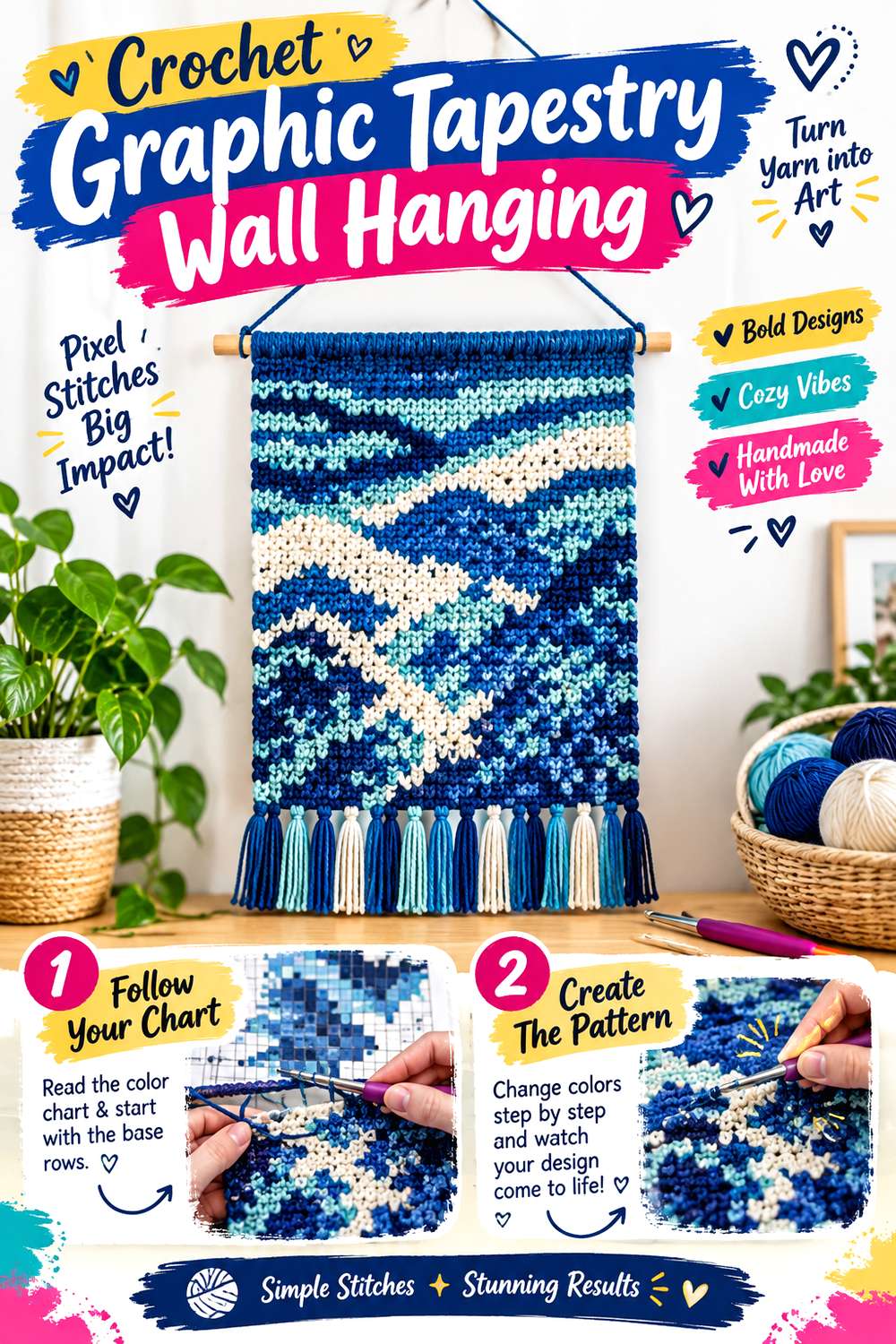
This project is less about copying one fixed motif and more about learning a method for turning an image into crochet wall art. Knitting With Katherine demonstrates a tapestry crochet approach that begins with selecting an image and translating it into a pixel-style chart before crocheting the color changes. The tutorial also covers adding structure, a backing, and a hanging support to turn the crocheted panel into a finished wall piece.
That makes it particularly useful for an Afrohemian collection because the graphic content can be chosen independently from the construction. Instead of reproducing a creator-specific motif, you could develop your own simple geometric composition using stepped lines, diamonds, blocks, or other chart-friendly shapes. Keep the design original and relatively clear at the intended viewing distance. Complex artwork may technically fit a grid but can become visually muddy once reduced to crochet stitches.
Design for the Grid, Not Just the Screen
A motif that looks elegant as a digital image may not translate cleanly into a limited crochet grid. Test the chart at small scale first and look at it from several feet away. If two shapes merge or a line disappears, simplify the artwork before investing time in the full hanging.
Decide Whether the Wall Piece Should Be Soft or Structured
The tutorial adds backing and structure to its finished tapestry. That creates a different presentation from a loose crochet panel hanging freely from a dowel. Consider the rest of the room: a structured tapestry can behave more like framed graphic art, while fringe-heavy or softer pieces introduce more movement.
Creator: Knitting With Katherine
8. Crochet Floor Pouf
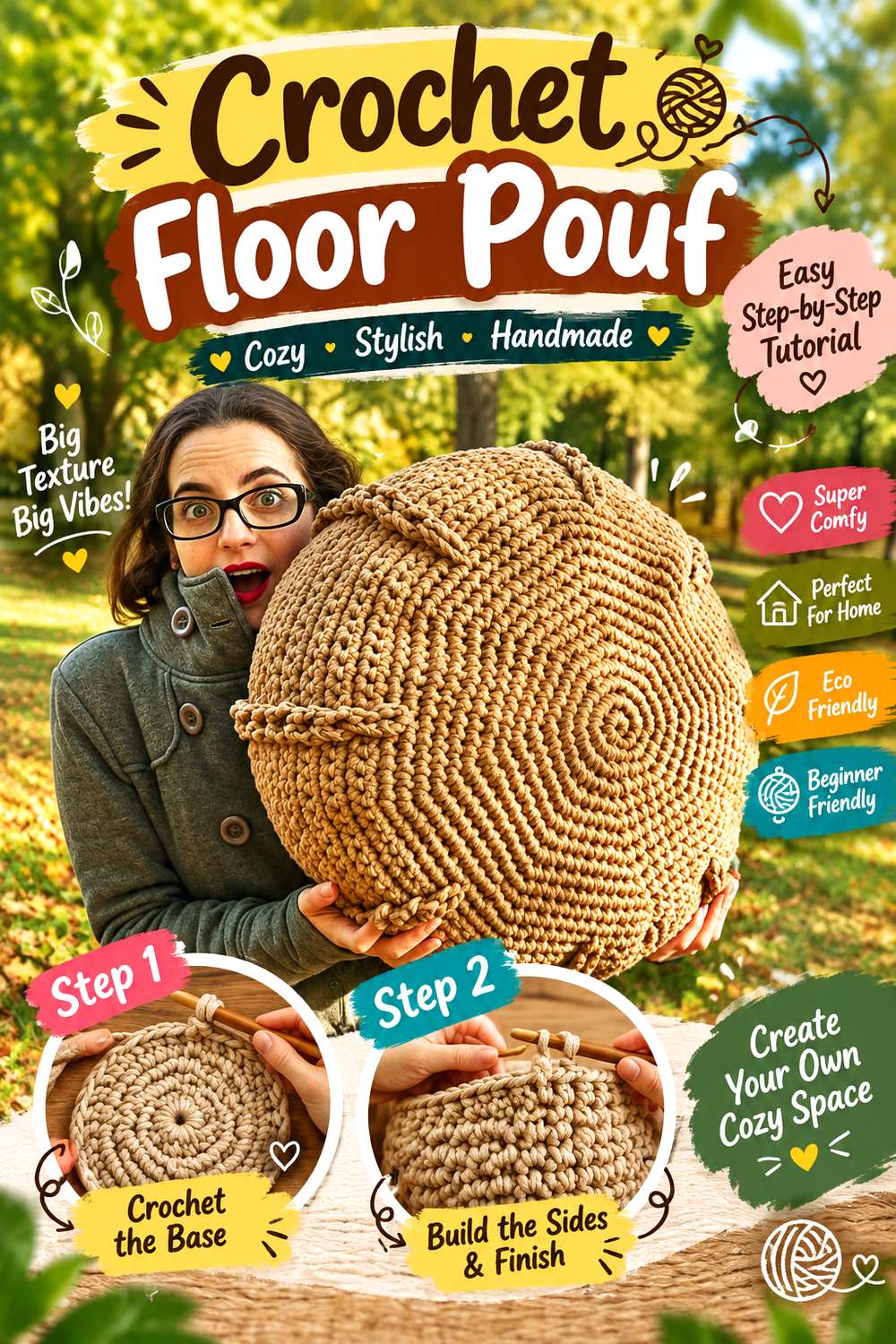
A floor pouf introduces crochet at furniture scale, making it one of the more substantial projects in this collection. QrkokoTV’s full tutorial covers the base, side wall, upper shaping, finishing, filling, sewing, and decorative braid. The video also provides English subtitles, which is useful because the project contains considerably more construction than a coaster or wall motif.
Visually, a pouf can act as a grounded block of texture beneath more delicate wall pieces. In an Afrohemian scheme, that makes it a good candidate for a quieter color: rust, clay, warm brown, cream, olive, or another tone repeated elsewhere can give the room weight without turning a large object into a competing pattern. Before beginning, decide where it will live. A floor piece occupies real circulation space, and its diameter matters differently from the dimensions of something displayed on a wall.
Use the Pouf as a Visual Anchor
If your wall contains multiple small handmade pieces, a solid or subtly varied pouf can balance them from below. Conversely, a room with plain walls may support a stronger pouf color. The important choice is distribution: avoid placing every high-texture object at the same height.
Plan the Insert Before the Outer Cover Is Finished
The tutorial includes filling and sewing rather than treating the crocheted shell as the entire project. Keep those finishing requirements in mind when gathering supplies. Changing the size of the outer crochet also changes what the internal insert needs to accommodate, so substantial resizing should be planned as a complete construction change.
Creator: QrkokoTV
9. Crochet Double-Hoop Mandala Wall Hanging
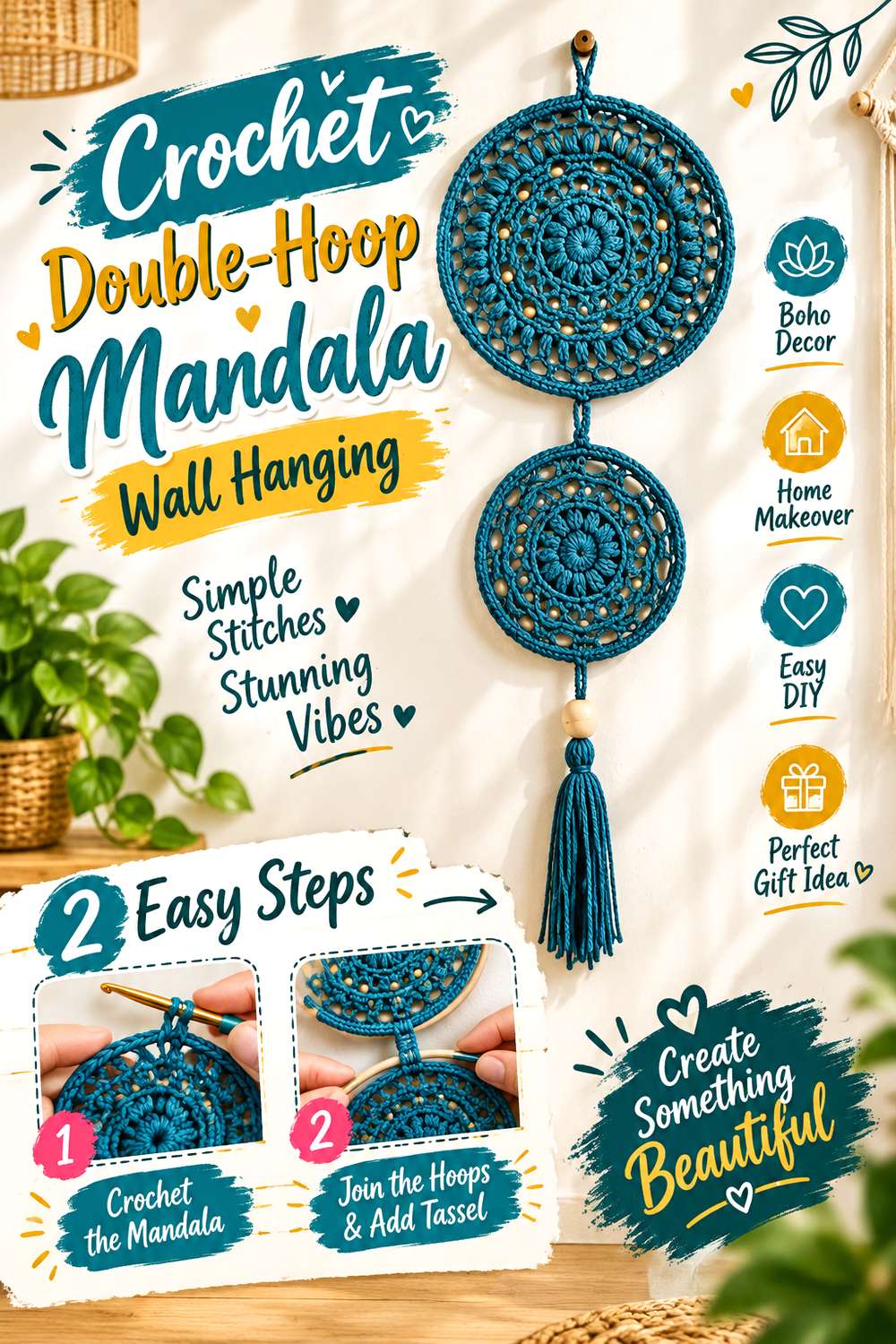
The mum2makes tutorial builds a mandala-style wall decoration across two metal rings, producing a layered circular form rather than a single flat disc. The creator works through the smaller ring, extends the crochet for the larger ring, connects the circles, and finishes the hanging with a tassel; a wooden bead is an optional detail. US crochet terms are used in the tutorial.
Circular decor is useful in a room dominated by rectangular furniture, shelves, and frames. This double-hoop format softens those lines while still offering plenty of repeated crochet geometry. For an Afrohemian interpretation, consider whether the rings should visually disappear or become part of the composition. Matching yarn closely to the rings creates a unified disc, while a contrasting outer edge emphasizes the concentric structure. It can also sit effectively beside a rectangular tapestry because the two pieces contribute different silhouettes without requiring unrelated materials.
Use Circular Decor to Break Up Hard Edges
A mandala works especially well near rectangular shelves, doors, frames, or tall furniture because its outline immediately changes the rhythm of the wall. Rather than centering it automatically, try an asymmetrical grouping with one rectangular textile and one smaller object to create a collected arrangement.
Repeat One Detail Elsewhere
If you keep the bead or tassel detail, echo that material only once or twice elsewhere—perhaps in a plant hanger or another wall piece. Repetition helps the room feel intentional, while adding beads to every project can make individually interesting details lose their effect.
Creator: mum2makes
10. Crochet Round Fringe Rug
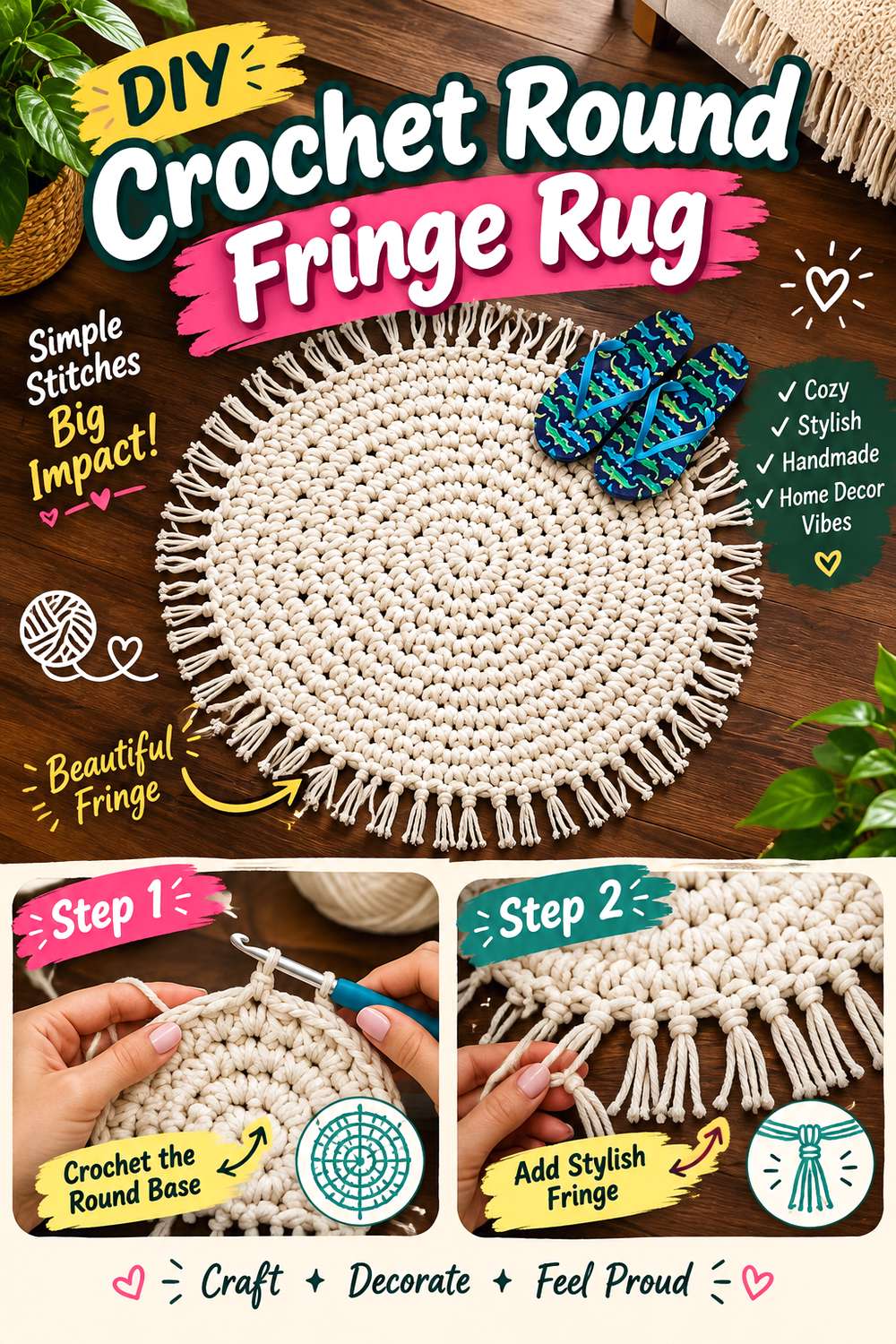
A round rug brings the boho fringe idea to floor level and can connect furniture that otherwise feels visually separate. Yarn Stash with Marching North teaches a circular rug worked in continuous rounds using large braided cord, then adds optional fringe around the edge. The source demonstrates the complete rug rather than only the circular stitch technique.
The circular footprint makes this especially useful beside a chair, under a small round table, or in another area where a rectangular rug would create too many competing straight edges. For Afrohemian styling, the rug does not have to carry a complex motif: cord texture and fringe already provide significant visual information. A neutral version can support more colorful cushions and wall pieces. The tutorial does not establish slip-resistant performance, so floor grip should be considered separately for the surface where you intend to place it.
Check Furniture Clearance and Walking Paths
Lay out the intended diameter with paper, string, or painter’s tape before making the rug. This quickly shows whether chair legs will sit awkwardly on the edge or whether fringe will extend into a high-traffic route. It is easier to change the plan before the circle reaches full size.
Treat Floor Grip as a Separate Requirement
A handmade rug being visually suitable for a room does not prove that it will resist movement on a particular floor. Smooth tile, timber, and other surfaces can behave differently. Evaluate an appropriate rug pad or other floor-specific solution separately rather than assuming crochet texture alone provides traction.
Creator: Yarn Stash with Marching North
11. Crochet Diamond Bobble Pillow Cover
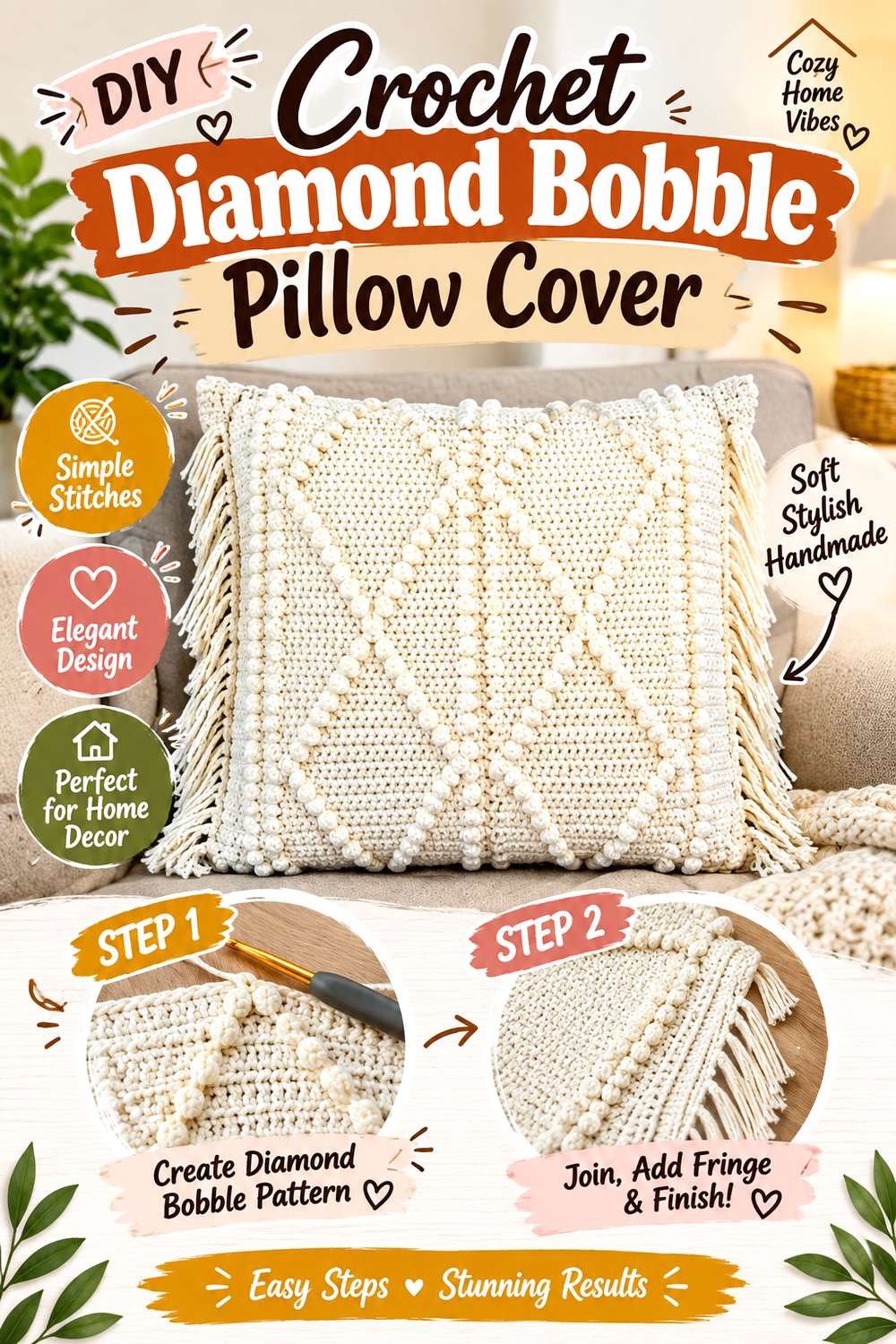
Raised bobbles can create strong pattern without requiring frequent color changes, which makes this pillow useful when an Afrohemian room already contains a varied palette. Crazy Cool Crochet’s design uses bobbles to form large diamond shapes across the front and finishes the sides with twisted fringe. The source is specifically written around an 18-inch square pillow insert and notes that the pattern is not designed as a size-adjustable version.
That fixed format is worth respecting. Rather than trying to force the design onto a very different insert, choose the insert with the pattern in mind. The combination of raised diamonds and twisted side fringe gives the pillow enough texture to work effectively in one color. This is a useful counterpoint to the multicolored African Flower pillow later in the collection: one relies on relief, the other on repeated colored motifs.
Let Texture Replace Extra Color
A single-color pillow can still be visually prominent when light catches the bobbles and twisted fringe. This is helpful on a sofa that already carries patterned throws or several colors. Choose a shade that has enough contrast with the upholstery for the raised geometry to remain visible.
Start With the Correct Insert
Because the source is built around a specific square size rather than offering broad resizing instructions, measure your insert before beginning. A significantly different pillow changes both panel dimensions and the placement of the diamond design, so it should not be treated as a casual substitution.
Creator: Crazy Cool Crochet
12. Crochet African Flower Pillow
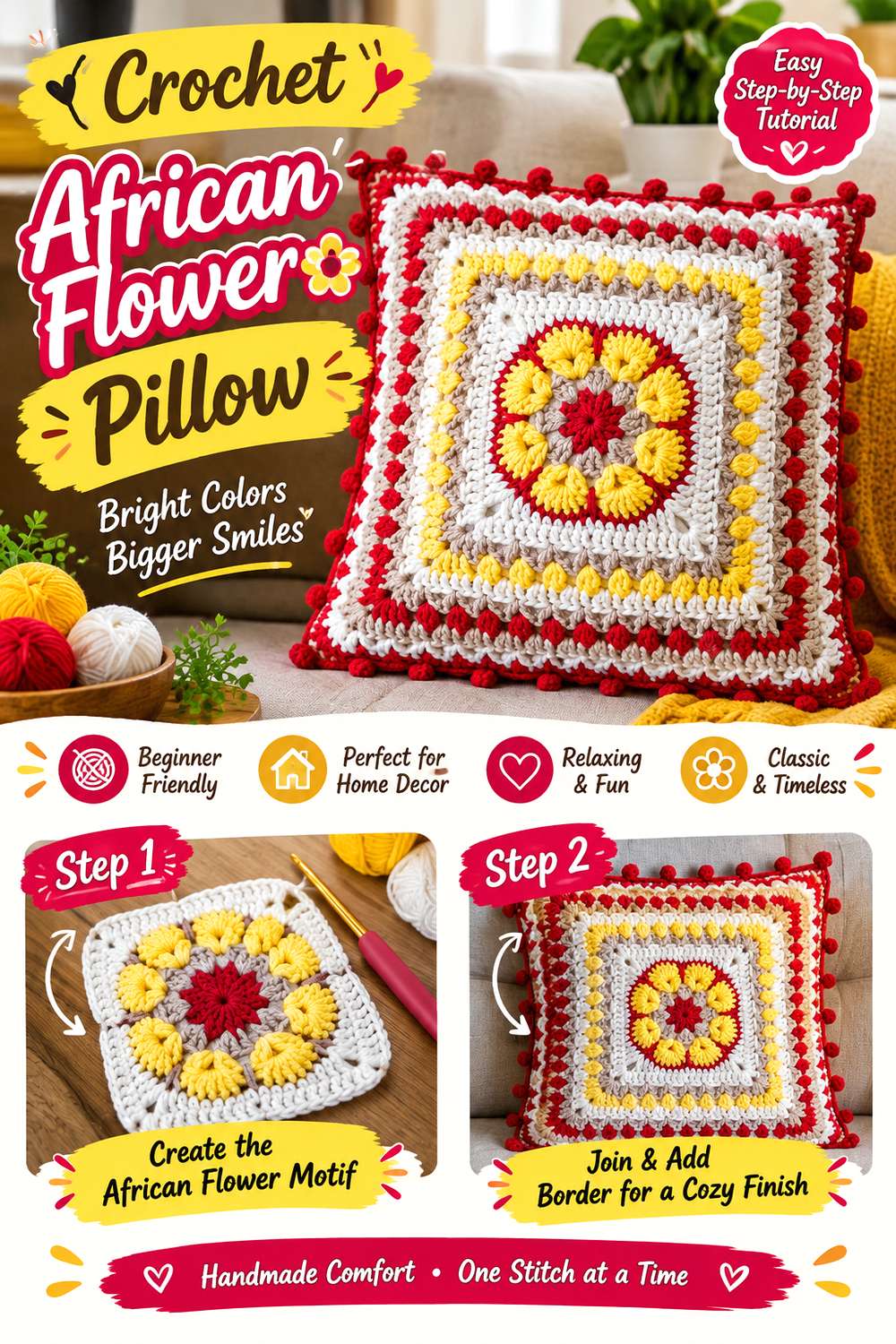
The African Flower motif introduces a different kind of pattern language: repeated petal forms arranged into a complete cushion rather than raised stitches on a solid panel. Crochet Builder’s tutorial teaches an African Flower pillow cover and walks through the motif-based construction as a finished home-decor project.
This is one of the most directly useful pieces for adding layered color to the collection. Instead of choosing each flower independently, develop a small palette first and rotate those colors through the motifs. That creates variety without making the pillow look random. You can also reverse the usual emphasis: a darker joining or outer color can make each flower read as a separate graphic unit, while similar values create a more blended surface. Because the pillow already contains repeated floral geometry, it pairs well with simpler baskets and solid-texture floor pieces rather than another equally busy cushion immediately beside it.
Build a Palette Before Crocheting Multiple Motifs
Place the yarn colors together in the room where the pillow will be used. Artificial and daylight can change how close two earthy shades appear. Once you settle on a small group, repeat them systematically rather than introducing a new color whenever a motif begins.
Give Motif Patterns a Quieter Neighbor
A strongly patterned pillow often looks clearer beside a solid cushion, plain upholstery, or the textured bobble pillow above. Putting several unrelated motif designs together can reduce the impact of each. Use repetition elsewhere in smaller doses, such as a coaster or pot cover that picks up one color.
Creator: Crochet Builder
13. Crochet Netted Hanging Basket
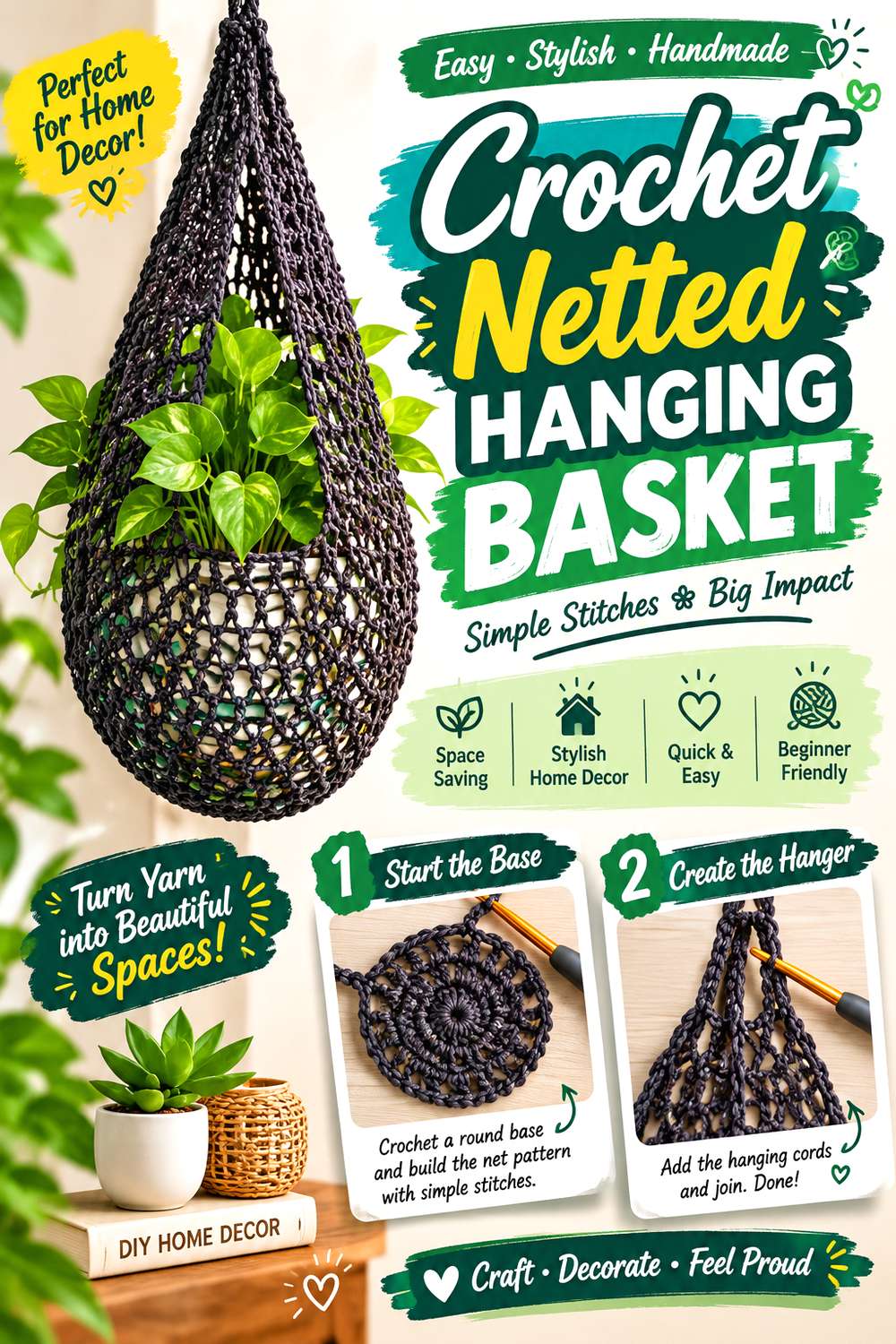
Crochet With Julie’s hanging basket provides open storage rather than the denser container style used earlier. The tutorial creates a loose, netted basket intended for a wall or door, and the creator notes that the fabric can stretch over time. Suggested uses in the source focus on lightweight items such as scarves, socks, fabric, and yarn.
That openness gives it a distinctly different role from a sturdy shelf basket. Contents become part of what you see, so it works best when the stored objects contribute rather than create clutter. Rolled textiles, spare yarn, or another group of relatively soft items can add color behind the crochet mesh. For an Afrohemian room, consider hanging it from a wooden peg rail or another existing display area where it can sit near baskets, plants, and woven objects without pretending to be rigid storage.
Choose Contents That Suit an Open Basket
A netted basket does not visually hide what it contains. If you fill it with many unrelated small objects, the open structure can make the wall look busier. A limited group of soft items creates a clearer shape and lets the crochet remain visible.
Expect Soft Structure
The creator explicitly notes that the basket may stretch with time, so use that characteristic when deciding what belongs inside it. This is a different storage category from a firm container on a shelf. Keep heavier or shape-sensitive storage in a more appropriate basket instead of expecting open mesh to behave like a rigid bin.
Creator: Crochet With Julie
14. Crochet Embossed Boho Table Runner
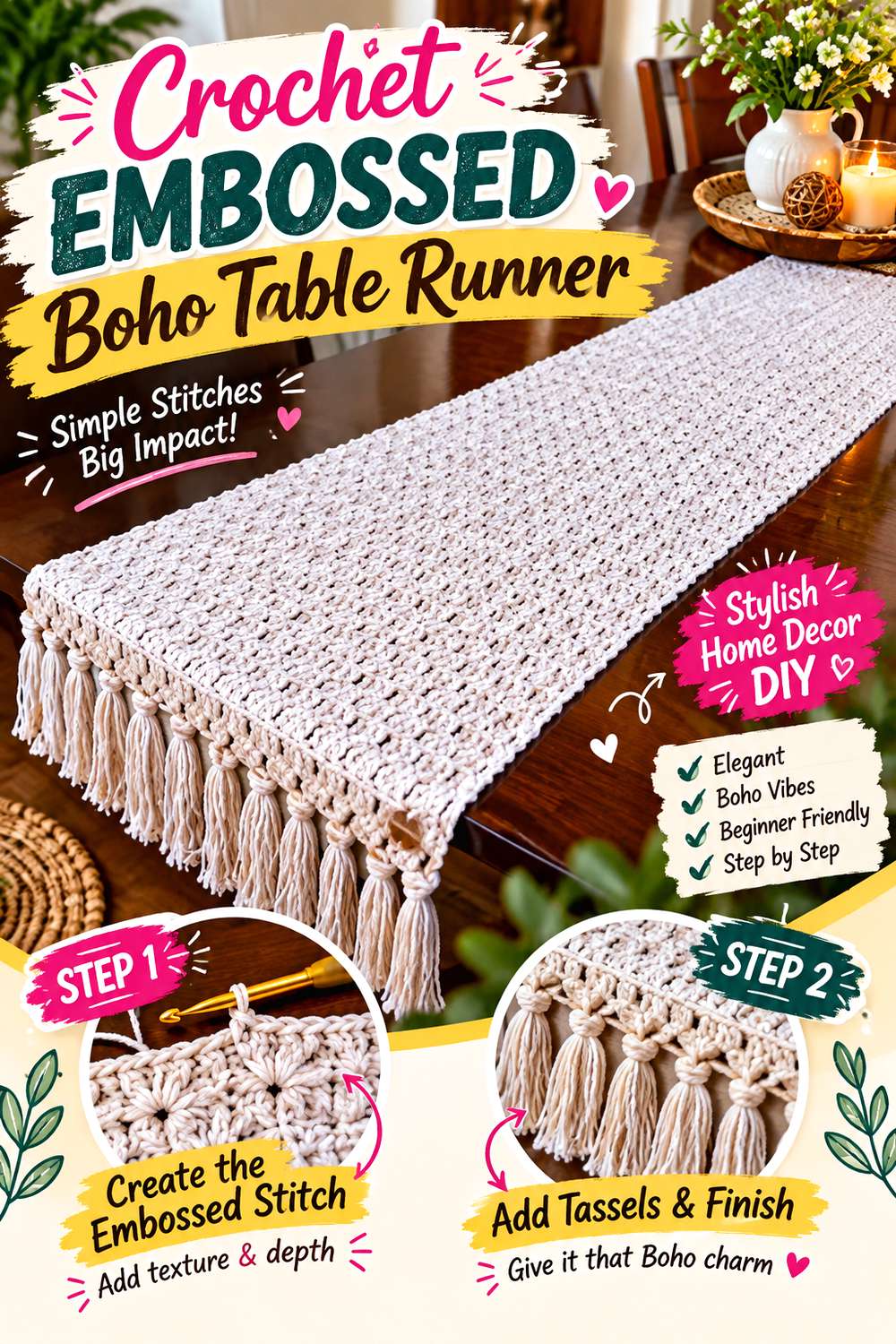
A table runner can connect the colors of an Afrohemian dining area without covering the whole tabletop. Janaartesan’s tutorial teaches a boho runner with raised or embossed-looking crochet details and fringe at the ends, giving it both surface pattern and movement. The project is shown as a complete runner rather than a general stitch demonstration.
Unlike placemats, a runner creates one uninterrupted line through the center of the table. That makes it useful when you want to visually connect a centerpiece, serving pieces, or candles without repeating crochet at every seat. A neutral runner also gives you flexibility to change dishes and napkins later. For an Afrohemian interpretation, think of the fringe as one end of a visual conversation: tassels or fringe elsewhere in the room can echo it, but they do not need to match exactly.
Measure Around the Centerpiece
A runner can look generous when empty but crowded once bowls, vases, or serving dishes are placed on top. Arrange the objects you normally use and measure the clear center strip before deciding how wide you want the finished textile to feel.
Use One Long Line to Calm Smaller Patterns
If your placemats, ceramics, or cushions already contain multiple motifs, a runner in one restrained color can unite the scene. The raised details still provide interest, but the long uninterrupted form gives the table a visual center rather than adding another cluster of competing colors.
Creator: Janaartesan
15. Crochet Bobbled Stool Cover
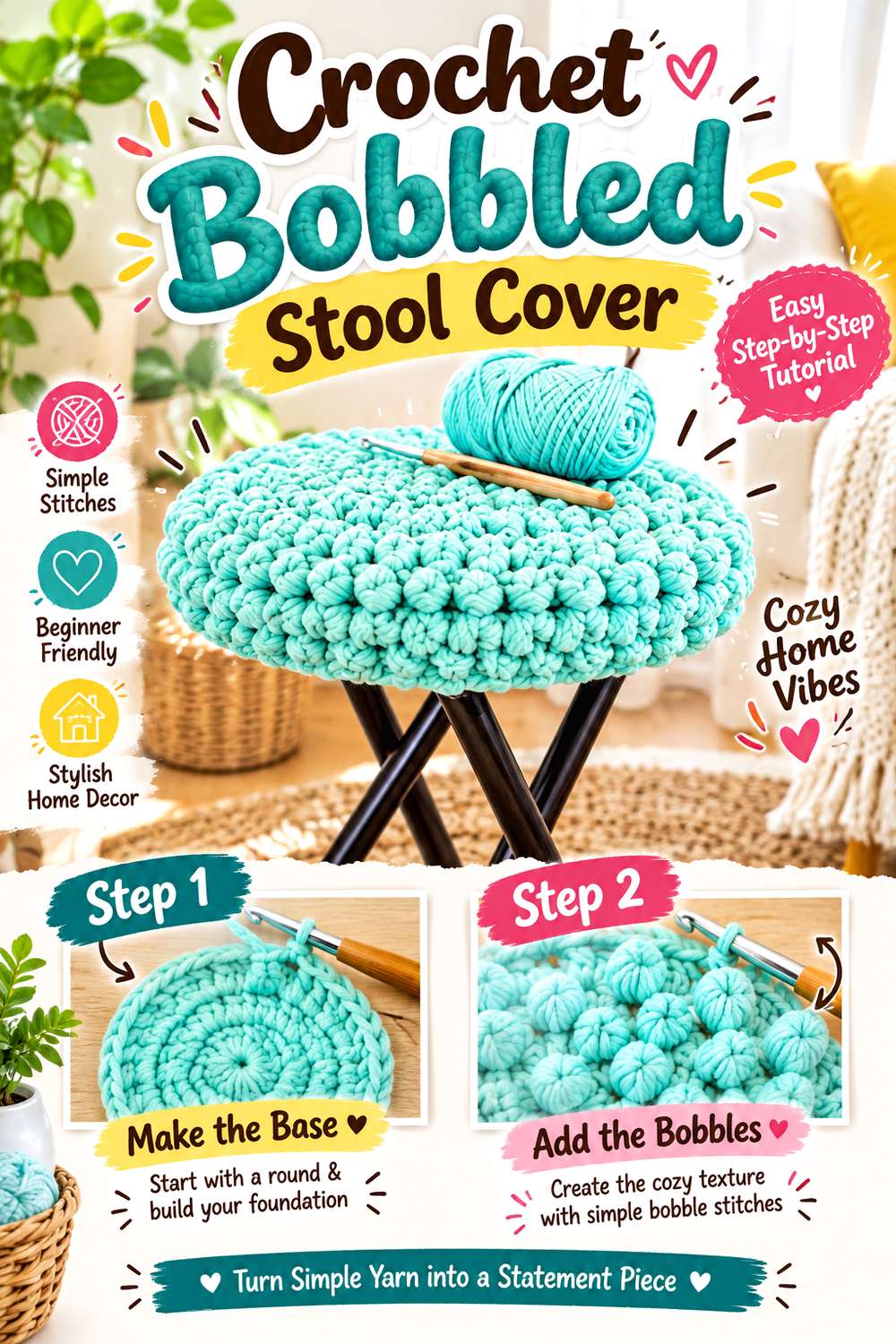
A stool cover is a useful middle ground between making an entirely new piece of furniture and adding another loose cushion. Amelia Makes teaches a circular bobbled cover through all nine rounds of the project and explains where extra rounds may be needed when fitting a padded stool. That fitting note is important because the existing seat, rather than the crochet alone, determines the final shape.
The bobbles create enough relief that this can work as a solid-color accent, particularly on a simple wooden stool. For an Afrohemian variation, tassels around the lower edge are a possible styling idea mentioned by the designer on the accompanying pattern page, but they are optional rather than part of the required look. Consider whether the stool already has interesting legs or wood grain before covering too much of its silhouette.
Fit the Actual Seat, Not a Generic Stool
Measure across the top and examine whether the stool is flat, padded, rounded, or sharply edged. The source specifically allows for additional rounds in some padded cases. Check the cover against the stool as you work instead of assuming that every seat with a similar diameter has the same profile.
Decide How Much Furniture to Leave Visible
On a carved, woven, or attractive wooden stool, a compact top cover can add crochet without hiding the furniture itself. On a plain seat, extra edge texture may make sense. The best balance depends on whether the stool’s existing material is part of the room’s Afrohemian mix.
Creator: Amelia Makes
16. Crochet Floral Curtain Tie
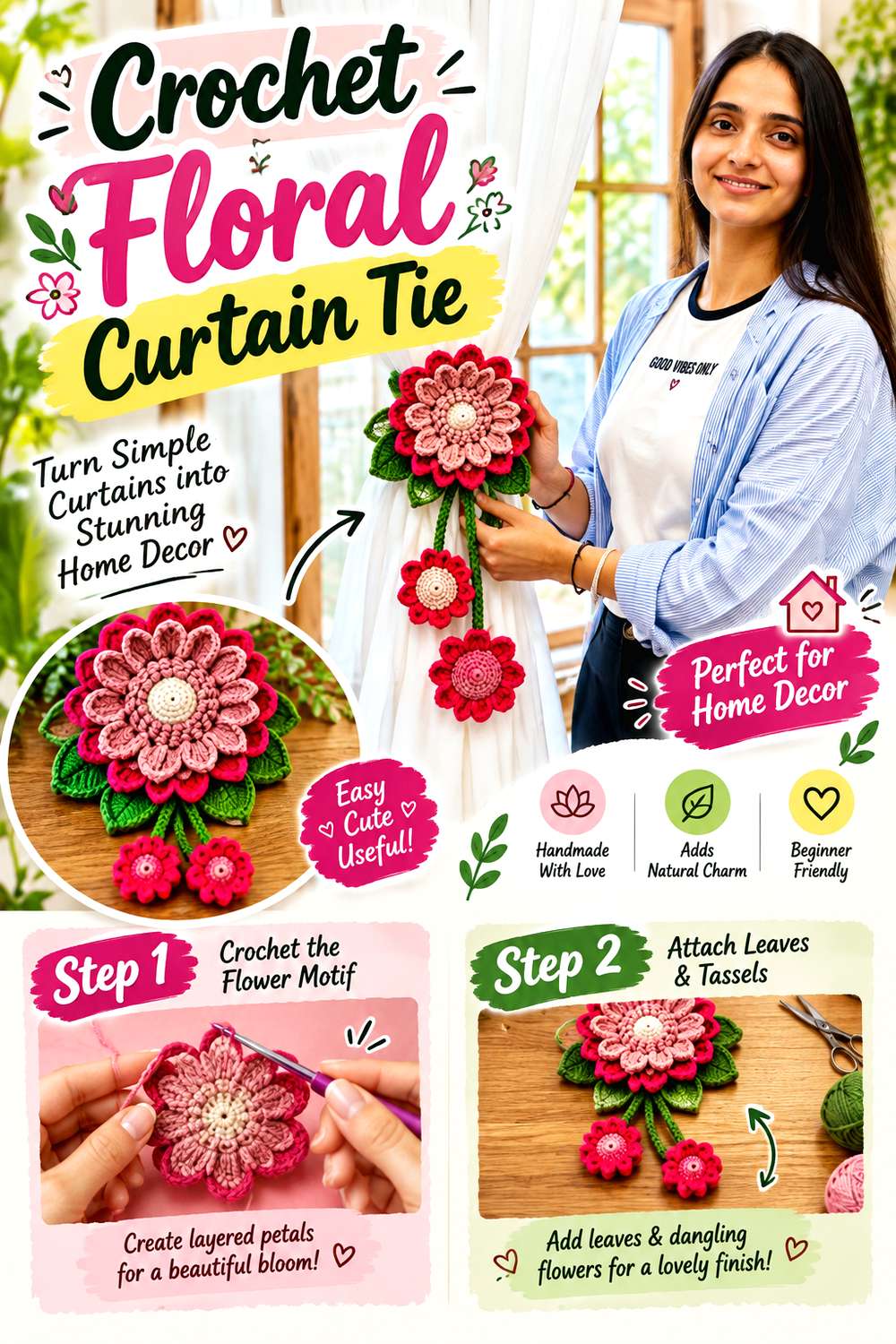
Small window details can carry the color of a room into areas that are often left undecorated. The Embroidery art tutorial teaches a floral curtain tie made from crocheted flowers, leaves, and a long strap, and it includes the assembly of those pieces rather than stopping at individual motifs. Floral wire is also used in the demonstrated project, so this is more involved than a plain crocheted band.
For an Afrohemian interpretation, the flowers do not have to imitate realistic garden colors. Ochre, rust, cream, brown, muted green, or another room-specific palette can make the cluster feel integrated with geometric cushions and wall art. Because a curtain tie sits against a large area of fabric, its contrast matters: a strongly colored tie can become a small focal point on plain curtains, while a closely related shade creates quieter dimensional detail.
Check the Curtain Gather First
Wrap a temporary cord around the curtain at the height where you want the tie to sit. This shows how much fabric is being gathered and where the decorative flower cluster will face. A tie that looks balanced on a narrow curtain may disappear into a much fuller panel.
Use Florals as a Counterpoint to Geometry
If diamonds, stripes, and angular tapestry motifs dominate the rest of the room, one floral detail can soften the composition. You do not need to repeat flowers everywhere. Pick up one of the flower colors elsewhere instead, allowing the curtain tie to remain distinctive.
Creator: Embroidery art
17. Crochet Beaded Mandala Wall Hanging
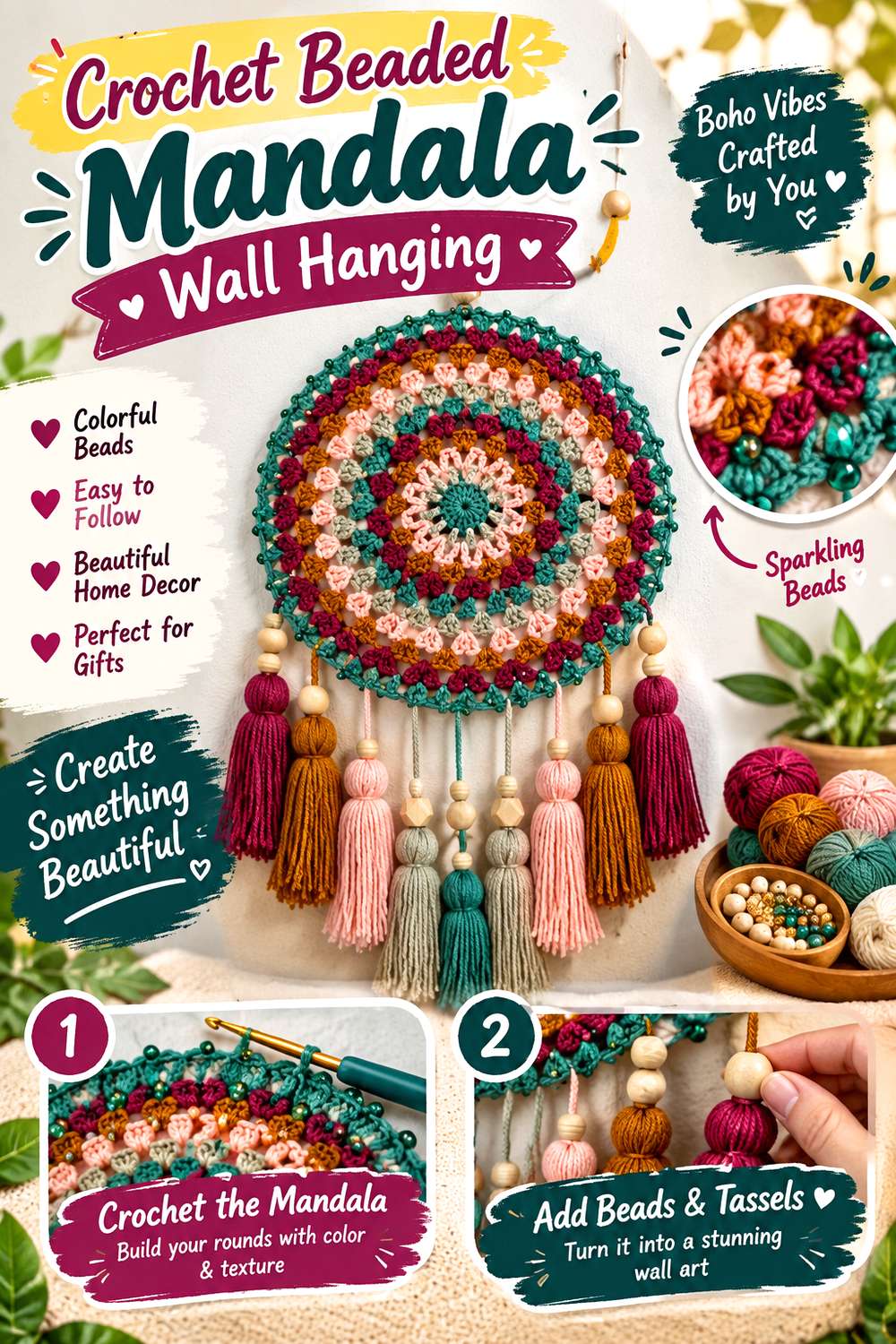
This mandala offers a different finishing approach from the double-hoop project earlier. Ophelia Talks Crochet demonstrates how to turn a previously crocheted mandala into a ring-mounted wall hanging, then covers sealing the ring, making and attaching tassels, adding beads, and creating the hanging loop. The crocheted mandala itself comes from an earlier tutorial that is directly linked from the wall-hanging video, so this is a multipart project rather than a single-video start-to-finish mandala.
That separation can actually be useful if you already have a suitable circular motif: the wall-hanging lesson focuses on presentation and finishing. For an Afrohemian arrangement, beads can connect visually with a plant hanger or other wood details, while tassels repeat the softer movement of a rug or table runner. Compared with the two-ring mandala, this version puts more emphasis on how a single crochet disc is framed and embellished.
Choose Between a Motif and Its Frame
A high-contrast mandala can be the main event, with restrained beads and tassels. A quieter crochet disc gives the finishing elements more prominence. Decide which layer you want people to notice first rather than making every component equally strong.
Account for the Multipart Tutorial
The credited video teaches the conversion of a mandala into the finished wall hanging, but the original mandala is made in the earlier tutorial linked by the creator. Review both before starting so you understand the complete project and do not reach the framing stage without the required crochet center.
Creator: Ophelia Talks Crochet
Conclusion
The most convincing Afrohemian crochet rooms usually come from selecting a few complementary roles rather than making every idea at once. Use the Geometric Fringe Wall Hanging or Graphic Tapestry when you need a focal point; the African Flower Pillow when color and repeated motifs are missing; and the Floor Pouf, Round Fringe Rug, or Textured Storage Baskets when the room needs crochet lower down.
For smaller layers, the plant hanger, coasters, runner, pot cover, and curtain tie can repeat colors or materials already established elsewhere. Leave some objects simple so the strongest motifs have room to register. Once you choose a project, use its original tutorial for the exact construction details and treat palette, grouping, and placement as the part you adapt to your own space.
Frequently Asked Questions
What makes crochet decor feel Afrohemian rather than simply boho?
In this collection, the difference comes from the combination rather than one required stitch. Bohemian elements such as fringe, tassels, beads, plants, handmade texture, and mixed natural-looking materials can be paired with stronger graphic geometry, rhythmic repeated motifs, and a warm or high-contrast palette. You do not need all of those features in every object. Repeating two or three across the room is usually more coherent.
Do all 17 tutorials specifically teach Afrohemian decor?
No. Several tutorials explicitly present boho-style objects, while others teach useful decor forms or construction methods that can be adapted through color and placement. The Graphic Tapestry Wall Hanging is the clearest example: the source teaches how to convert an image into tapestry crochet, while your chosen original geometric artwork determines the final decorative direction. The adaptation should remain separate from what the creator actually teaches.
How many crochet pieces should I use in one room?
There is no fixed number. Start by distributing function and scale. One substantial wall piece, one floor or furniture-scale textile, and one or two smaller accents can already establish a clear handmade thread through the space. Adding more can work when the objects have different jobs and silhouettes. Problems arise when several similarly sized, highly patterned pieces compete within the same small area.
Can I use one color throughout an Afrohemian crochet scheme?
Yes. Texture can carry much of the design. The Diamond Bobble Pillow, Floor Pouf, storage baskets, and fringed wall pieces can all create visual depth without relying on several colors. A monochrome or tightly limited palette is especially useful when the room already contains artwork, patterned rugs, carved furniture, plants, or other strong decorative elements.
What should I measure before choosing one of these projects?
Measure the object or space that controls the fit. For the pillow, check the insert; for plant decor, measure the actual pot; for the stool cover, measure and inspect the seat profile; for a rug or pouf, mark the footprint on the floor; and for wall pieces, consider both width and the open space needed for fringe or tassels. Measuring the real placement prevents decorative changes from becoming accidental construction problems.