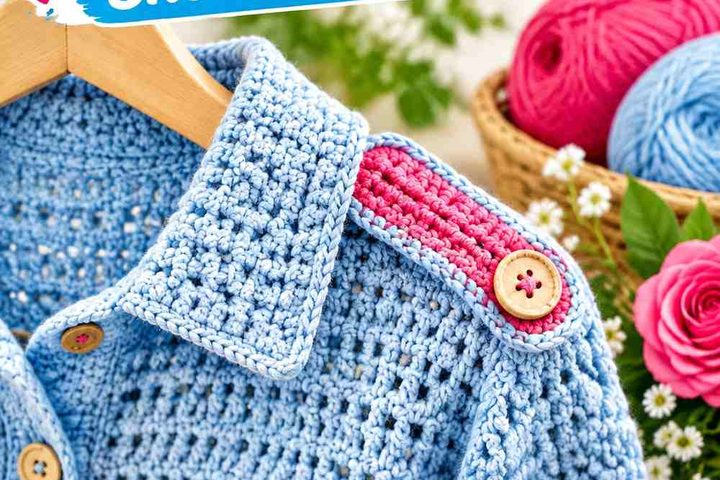
Black cherry gives a crochet polo a dark red foundation that can look crisp, earthy, tonal, or dramatic depending on the colors placed around it. The polo shape makes those decisions especially visible because the collar, front opening, sleeve edges, and hem naturally create places for a second or third shade.

A black cherry body with cream trim creates obvious light-dark separation. Pairing the same main color with charcoal or black produces a much quieter transition, while camel, oatmeal, taupe, olive, dusty rose, and denim blue each push the garment in a different direction.
The 17 ideas below focus on how those palettes can be distributed across an actual crochet polo. The tutorials support the garment or collared-top construction concept; the proposed black cherry palettes are independent adaptations rather than claims about the colors used by the creators.
Quick List
- Black Cherry And Cream Classic Crochet Polo
- Black Cherry And Charcoal Relaxed Crochet Polo
- Black Cherry And Camel Everyday Crochet Polo
- Black Cherry And Blush Cropped Crochet Polo
- Black Cherry And Olive Openwork Crochet Polo
- Black Cherry And Oatmeal Long Sleeve Crochet Polo
- Black Cherry And Dusty Rose Cropped Collared Crochet Polo
- Black Cherry And Soft Gray Granny Stitch Crochet Polo
- Black Cherry And Taupe Soft Structure Crochet Polo
- Black Cherry And Navy Clean Line Crochet Polo
- Black Cherry And Mocha Longline Crochet Polo
- Black Cherry And Black Minimal Crochet Polo
- Black Cherry And Denim Blue Mesh Crochet Polo
- Tonal Black Cherry Burgundy And Wine Crochet Polo
- Black Cherry And Forest Green Drop Shoulder Crochet Polo
Plan Black Cherry Around the Polo Collar and Placket
A crochet polo has more color-placement opportunities than a basic crew-neck top. The collar can match the body, contrast with it, or repeat an accent used at the sleeve cuffs and hem. The front opening or placket can also carry a supporting color, but using too many contrasting elements around the neckline can make the upper garment busier than the body.
If black cherry is meant to remain the unmistakable main color, keep it across the largest continuous areas. The front and back panels are the most obvious choice. Then decide whether the collar should reinforce that uninterrupted black cherry field or provide the first visible color break.
A contrasting collar has more visual impact than a narrow contrasting hem because it sits close to the face and central neckline. That makes the collar one of the first color decisions worth settling before distributing accents elsewhere.
Check Black Cherry Contrast Before Adding Polo Details
Two yarns can have different hues while remaining close in light-dark value. Black cherry beside charcoal, chocolate brown, burgundy, or navy can therefore create a much subtler division than black cherry beside ivory or oatmeal.
That distinction matters when a color is confined to narrow polo details. A cream placket can remain obvious even when it is slim, while a dark brown placket may disappear into black cherry unless it occupies more area.
Before committing to collars, stripes, or small edge details, compare the yarns side by side. A grayscale photo can help reveal whether they provide enough value contrast for the placement you have planned.
1. Black Cherry And Cream Classic Crochet Polo

Black cherry and cream create one of the clearest polo palettes because the colors can take very different jobs. Let black cherry cover the body and most of the sleeves, then use cream to emphasize the collar, placket, or sleeve finish. The lighter shade becomes noticeable quickly, so it does not need equal surface area.
Keep Black Cherry Across the Main Crochet Polo Body
A continuous black cherry torso gives the polo a strong central color block and allows the stitch texture to remain visible without frequent interruptions. Carrying black cherry onto most of the sleeves also keeps the garment from appearing divided into unrelated sections.
If you want a traditional two-color distribution, reserve cream for structural details rather than inserting it repeatedly through the body.
Use Cream to Define the Black Cherry Polo Collar
A cream collar creates strong separation from a black cherry neckline and immediately emphasizes the polo shape. Repeating cream once at the sleeve cuffs can connect the upper and lower parts of the garment.
If the collar is already broad, keep the placket black cherry for a restrained result. Making both the collar and placket cream produces a stronger outlined neckline.
Creator Credit: WOWder
2. Black Cherry And Charcoal Relaxed Crochet Polo

Charcoal keeps a black cherry polo dark without creating the sharper division of black or cream. This is useful for a relaxed polo where broad color blocks can carry the palette and the collar does not need to become a bright focal point.
Let Black Cherry Lead the Relaxed Crochet Polo Panels
Use black cherry across the front and back while allowing charcoal to occupy smaller sections such as the sleeve cuffs or lower hem. The large uninterrupted main color keeps the relaxed silhouette visually connected.
If you want more charcoal, putting it on the sleeves generally creates a clearer deliberate block than adding many narrow charcoal stripes.
Keep Charcoal Broad Enough to Separate From Black Cherry
Because charcoal and black cherry can both be dark, very narrow accents may blend from a distance. Give charcoal enough area to register, particularly on cuffs, collars, or a lower-body band.
If the two yarns appear almost identical in grayscale, treat that similarity as a tonal feature rather than expecting sharply defined colorwork.
Creator Credit: FTK Crochet
3. Black Cherry And Camel Everyday Crochet Polo

Camel introduces a warmer, lighter partner without producing the high contrast of ivory. It works particularly well when the goal is an everyday polo with clearly defined finishing details rather than a strongly graphic two-color layout.
Keep Black Cherry Central on the Everyday Crochet Polo
Let black cherry fill most of the torso and upper sleeves. This gives the polo a dependable dominant shade while camel provides smaller breaks around the edges.
A camel hem can work well when you want the lighter color lower on the garment, while a black cherry collar keeps attention on the main shade.
Repeat Camel Around Black Cherry Polo Cuffs and Placket
Using camel at the cuffs and a narrow placket gives the accent two separated locations. Repetition makes the secondary shade look planned without requiring camel to cover a large part of the polo.
If the placket is visually narrow, check that your camel remains sufficiently lighter than black cherry to stay visible.
Creator Credit: İlmekle Nimet
4. Black Cherry And Blush Cropped Crochet Polo

A cropped polo has less torso area for distributing color, so restraint becomes important. Black cherry and blush provide a tonal red-based combination in which the deeper shade can anchor the body while blush softens the collar or sleeves.
Make Black Cherry the Main Cropped Crochet Polo Color
Keeping the shorter torso predominantly black cherry preserves a strong, uninterrupted body. Too many horizontal color changes can visually divide an already abbreviated length.
Use blush on one major finishing feature first, then decide whether the garment needs the color repeated elsewhere.
Let Blush Lighten the Black Cherry Polo Collar
A blush collar provides softer separation than cream and keeps the palette within a related warm direction. Blush cuffs can repeat the collar color without turning the body into a striped design.
Choose a blush that remains noticeably lighter than black cherry if you want the collar shape to remain clearly defined.
Creator Credit: TCDDIY
5. Black Cherry And Olive Openwork Crochet Polo

Olive moves the palette away from neutrals while still maintaining an earthy direction. Openwork fabric adds another variable because whatever is worn underneath can influence how the black cherry and olive sections appear.
Use Black Cherry to Anchor the Openwork Crochet Polo
Keep black cherry across the largest openwork body areas so the garment has one consistent visual base. Olive can work as a collar, sleeve band, or deliberately spaced stripe.
Broad color areas are easier to read across open stitches than many small alternating sections.
Place Olive Beside Black Cherry Where the Polo Pattern Is Clearest
Olive can define the collar or a solid finishing band where the yarn itself remains visually prominent. In very open sections, some of the apparent color will be influenced by the clothing underneath.
If you want the black cherry-and-olive relationship to remain the focus, consider how the polo will look over both dark and light base layers before finalizing the distribution.
Creator Credit: Ascarcrochets
6. Black Cherry And Oatmeal Long Sleeve Crochet Polo

Long sleeves create much more surface area than a short-sleeve polo, making them useful for a supporting neutral. Oatmeal lightens black cherry without creating as sharp a boundary as a bright white.
Keep Black Cherry Dominant Through the Long-Sleeve Crochet Polo Torso
Use black cherry on the body and upper sleeve area to establish the main color before introducing oatmeal. This stops the expanded sleeve area from shifting the garment into an oatmeal-dominant palette.
A black cherry collar further reinforces the darker foundation.
Break Up Black Cherry Sleeves With Oatmeal Cuffs
Oatmeal cuffs can provide a substantial light finish at the wrist. If they are wide, repeat a smaller amount of oatmeal at the hem or placket so the sleeve color does not appear isolated.
For a quieter option, use narrower oatmeal cuffs and leave both the collar and body fully black cherry.
Creator Credit: HookedByJessica
7. Black Cherry And Dusty Rose Cropped Collared Crochet Polo

Dusty rose gives black cherry a muted tonal partner that is lighter without becoming a neutral. On a cropped collared top, it works best when its placement supports the collar rather than competing with the shortened body.
Keep Black Cherry Strong Across the Cropped Crochet Polo Torso
A black cherry torso creates a clean base between the collar and hem. Because there is less vertical space, avoid dividing the body into numerous equal bands unless stripes are the specific goal.
Dusty rose can instead appear at the sleeves and neckline.
Use Dusty Rose to Soften the Black Cherry Polo Collar
A dusty rose collar creates visible but restrained separation. Repeating the same shade at the sleeve edges makes the two-color plan easier to read across the entire polo.
If dusty rose and black cherry are closer in value than expected, increase the width of the dusty rose areas rather than relying on tiny trim.
Creator Credit: CJ Crochet
8. Black Cherry And Soft Gray Granny Stitch Crochet Polo

Granny stitch already gives a polo visible rhythm through clustered stitches and spaces. Black cherry and soft gray can reinforce that rhythm, but excessive color changes may make the fabric busier than necessary.
Let Black Cherry Repeat Through the Granny Stitch Crochet Polo
Use black cherry for the majority of the granny-stitch rows or clusters so the dominant color remains obvious across the open fabric.
Soft gray can appear at controlled intervals instead of alternating with black cherry every time the color changes.
Use Soft Gray to Separate Black Cherry Polo Sections
A soft gray collar creates a calm boundary around a black cherry granny-stitch body. Another option is to use gray for occasional stripes and return to black cherry before the neckline.
If the body already contains several gray bands, keeping the collar black cherry may create better balance than introducing another large gray section.
Creator Credit: Creative Hands by SHAY
9. Black Cherry And Taupe Soft Structure Crochet Polo
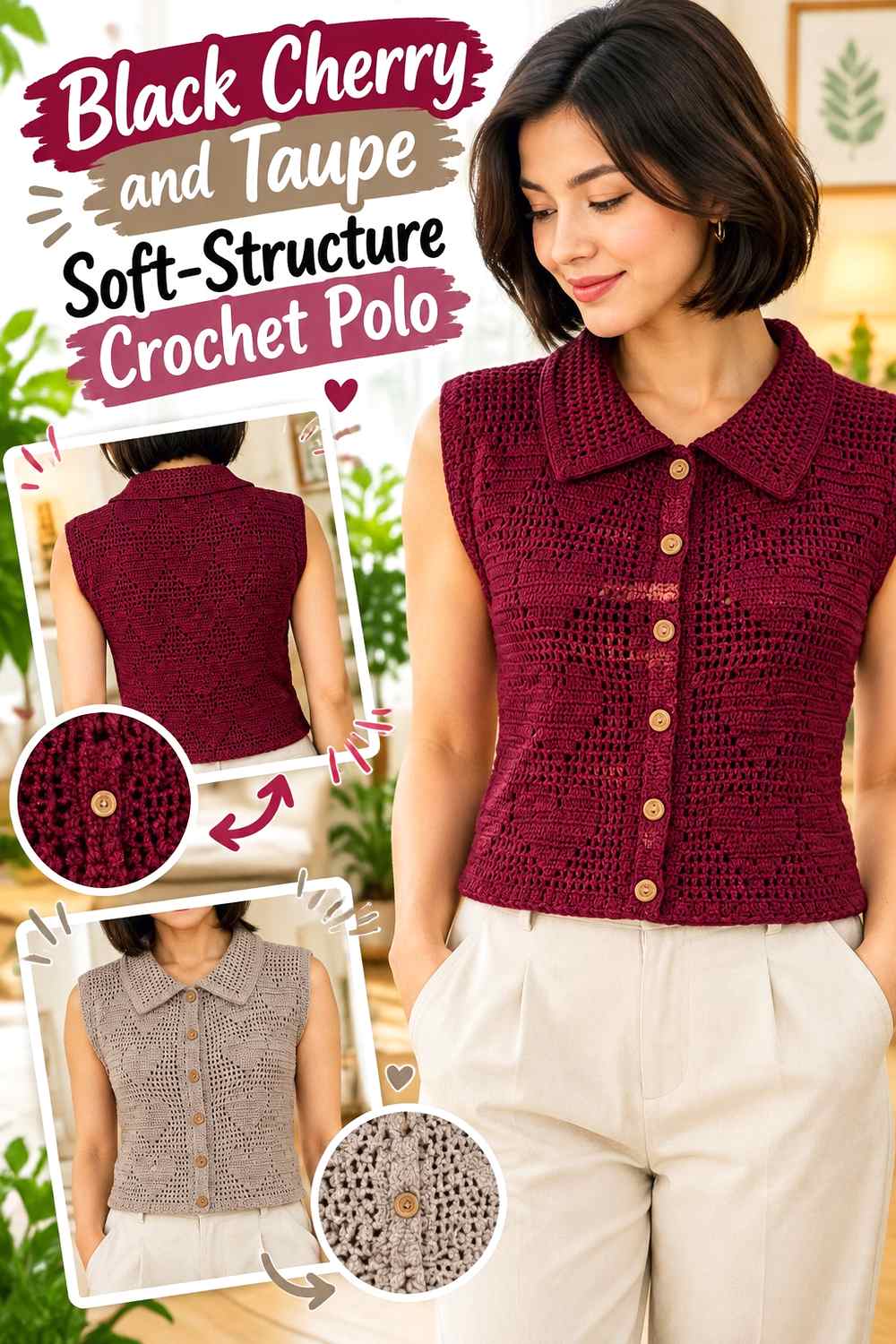
Taupe gives black cherry a muted neutral partner that can define the polo without creating a highly graphic effect. It is especially useful when the garment has a softer collar or more relaxed fabric.
Let Black Cherry Carry the Soft-Structure Crochet Polo Body
Keep black cherry across the main torso so the relaxed fabric still has a strong color anchor. Taupe can move to the collar, cuffs, or lower band where it provides quiet separation.
Avoid splitting the body into equal dark and neutral halves unless color blocking is intentional.
Use Taupe to Quietly Frame the Black Cherry Polo Neckline
A taupe collar distinguishes itself from black cherry without becoming the lightest possible focal point. This works well when you want the polo structure visible but understated.
If the collar is narrow, choose a taupe that remains sufficiently lighter than the black cherry yarn so the edge does not disappear.
Creator Credit: Ler Crochet
10. Black Cherry And Navy Clean Line Crochet Polo

Navy gives black cherry a cool dark partner. The two shades can create a polished low-contrast combination, but they need deliberate placement because narrow navy details may be difficult to distinguish from the main color.
Keep Black Cherry Broad on the Clean-Line Crochet Polo
Black cherry should occupy most of the front and back panels if it is meant to lead. A navy collar or sleeve section can then provide contrast without breaking the simple body into multiple competing areas.
This is a palette where broad color blocks generally communicate more clearly than tiny stripes.
Separate Navy From Black Cherry Through Polo Placement
Try navy on the collar and cuffs while leaving the placket black cherry. That creates two recognizable navy areas without surrounding every edge in the darker cool color.
Check the yarns under ordinary indoor light before committing, since two deep shades may appear closer together than expected.
Creator Credit: Honey Loop Stitches
11. Black Cherry And Mocha Longline Crochet Polo
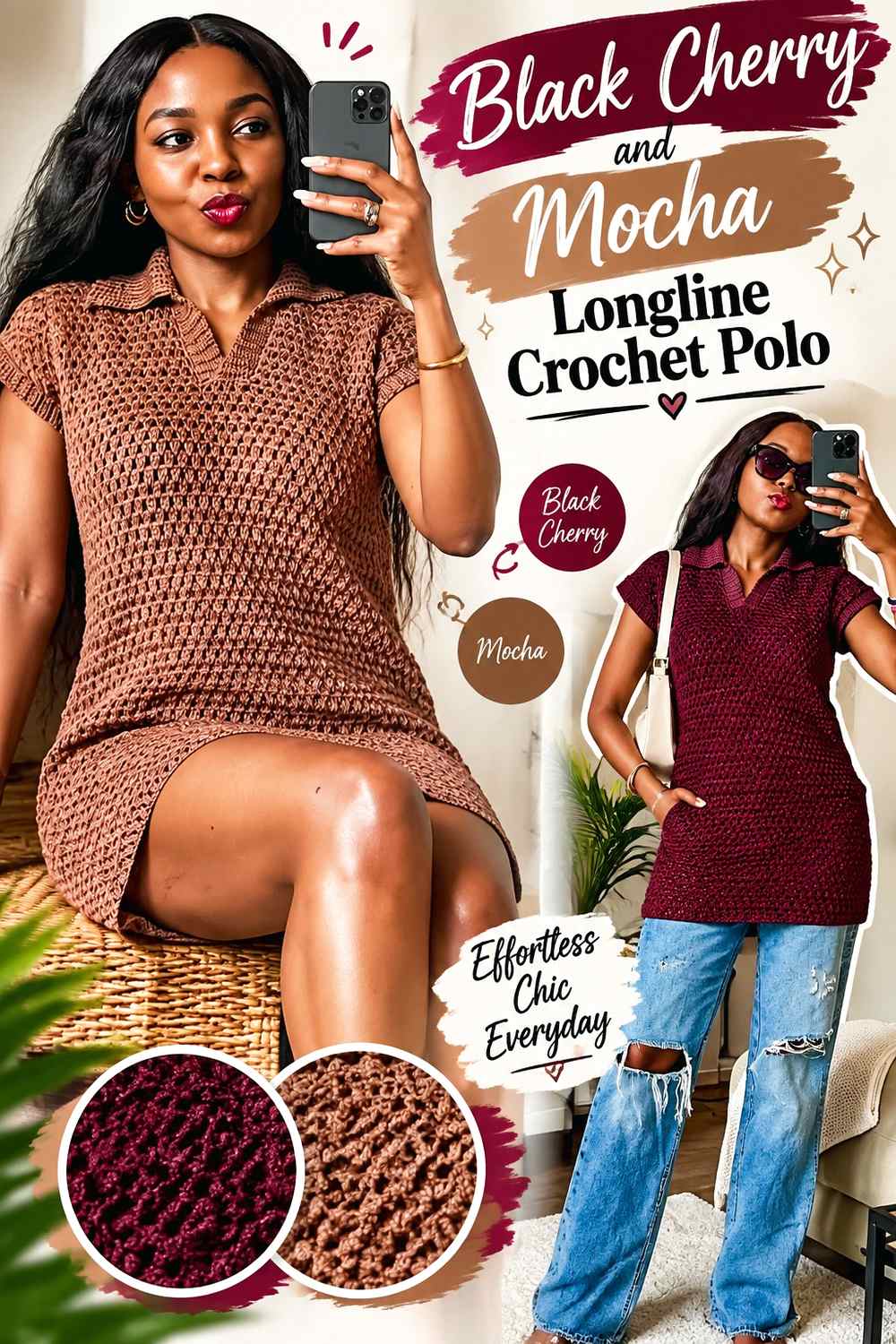
A longer polo provides more vertical space for color placement, making mocha useful as a substantial supporting shade rather than a tiny accent. Because both colors are dark and warm, the result can remain cohesive even with larger blocks.
Let Black Cherry Control the Upper Longline Crochet Polo
Keeping black cherry through the shoulders, collar area, and upper torso places the dominant shade where the polo structure is most visible.
Mocha can begin lower on the body or occupy a broader hem section without taking attention away from the neckline.
Give Mocha Enough Space Beside Black Cherry to Stay Visible
A narrow mocha stripe may blend into black cherry. A wider lower-body band or sleeve section gives the brown tone enough area to register.
If you want more definition, place a smaller lighter neutral between the two only as an optional adaptation; otherwise, embrace their low-contrast relationship.
Creator Credit: AC Crochets
12. Black Cherry And Black Minimal Crochet Polo

Black and black cherry create the darkest palette in this collection. The goal is not strong color separation but subtle definition, which makes placement and surface area more important.
Let Black Cherry Remain the Main Minimal Crochet Polo Color
Keep the torso and most sleeves black cherry so the garment does not become primarily black. The red depth should occupy enough area to remain visible as the central color.
Black works particularly well as a controlled edge rather than an equal partner.
Reserve Black for Black Cherry Polo Collar and Cuff Definition
A black collar can create a dark frame around the neckline without introducing a new hue family. Matching black cuffs repeat the effect at the sleeves.
Because the contrast is intentionally subtle, avoid relying on black for tiny decorative details that need to remain clearly readable from a distance.
Creator Credit: BELINA BELLWOOD
13. Black Cherry And Denim Blue Mesh Crochet Polo

Denim blue introduces a cooler mid-tone against black cherry while keeping the palette casual. Mesh construction means color placement needs to account for open spaces and the layer underneath the polo.
Keep Black Cherry Dominant Across the Mesh Crochet Polo
Use black cherry for the largest mesh sections so the shirt retains a continuous dark-red identity. Denim blue can appear on the sleeves, collar, or wider stripes where it will be easier to distinguish through the open fabric.
Very narrow blue accents may lose impact once the mesh is viewed over another garment.
Use Denim Blue to Cool the Black Cherry Polo Collar
A denim blue collar creates a clear temperature shift from the warm dark body without requiring a very light shade. Repeating blue once at the cuffs can connect the palette across the polo.
Consider the intended underlayer when comparing the two yarns because a visible shirt or camisole beneath the mesh effectively becomes another color in the finished outfit.
Creator Credit: ZoeCrochetR
14. Tonal Black Cherry Burgundy And Wine Crochet Polo

This three-color palette keeps the entire polo within a dark red family. The main challenge is preventing black cherry, burgundy, and wine from collapsing into one indistinct field.
Give Black Cherry the Largest Tonal Crochet Polo Role
Assign black cherry to the body and use burgundy and wine more selectively. A clear hierarchy matters more in a tonal palette because hue differences alone may be subtle.
For example, burgundy can handle the collar while wine appears only at the sleeve cuffs and hem.
Separate Burgundy and Wine From Black Cherry by Value
Compare all three yarns side by side rather than relying on their names. If they appear nearly identical in grayscale, their stripes and finishing details may not be obvious.
You can still use closely matched shades deliberately, but broader bands will communicate the tonal changes better than very narrow accents.
Creator Credit: Chenda DIY
15. Black Cherry And Forest Green Drop Shoulder Crochet Polo

Black cherry and forest green create a deep two-color palette suited to a roomy drop-shoulder polo. The wider upper body provides enough visual space for larger color blocks, which is helpful because both shades can be relatively dark.
Keep Black Cherry Central on the Drop-Shoulder Crochet Polo
Use black cherry across the torso and possibly the upper sleeves so the generous silhouette remains visually unified. Forest green can begin farther down the sleeves or appear at the collar and cuffs.
Large black cherry panels also prevent the broad shoulder line from being broken into too many competing sections.
Give Forest Green Broad Contrast Against Black Cherry
Since forest green and black cherry may be similar in value, use the green in areas large enough to register clearly. A full collar plus substantial cuffs will be more effective than scattered narrow green lines.
If you want the collar to remain black cherry, use forest green on the lower sleeve sections and repeat it once at the hem.
Creator Credit: ByKaterina Designs
Comparing the 17 Black Cherry Crochet Polo Palettes
For the clearest light-dark contrast, cream, ivory, oatmeal, and stone make collars and other polo finishing details easiest to distinguish from black cherry. Those palettes are useful when the neckline, cuffs, placket, or granny-stitch sections should remain visually obvious.
Camel, taupe, mocha, and soft gray create gentler transitions. They still break up the main black cherry surface, but the result is less sharply outlined.
Charcoal, black, navy, and forest green move in the opposite direction. These darker pairings work particularly well with broad collars, cuffs, sleeves, or color blocks because tiny accents may not provide enough separation.
Blush, dusty rose, burgundy, and wine keep the palette closer to black cherry itself. They suit a tonal direction where gradual shade changes matter more than high contrast. Olive and denim blue provide more noticeable hue changes and can shift the polo away from a purely red-and-neutral color story.
Conclusion
The first decision for a black cherry crochet polo is how strongly you want the supporting color to separate from the body. Choose cream, ivory, oatmeal, or stone when the collar and cuffs should stand out clearly. Camel, taupe, gray, and mocha create softer neutral transitions, while charcoal, black, navy, and forest green keep the entire polo deep and understated.
For a more tonal garment, blush, dusty rose, burgundy, and wine keep the palette connected to black cherry. Olive and denim blue introduce a stronger color change without requiring a pale neutral.
Whichever direction you use, give each shade a defined job before starting the full garment. Keeping black cherry on the largest body areas, assigning secondary colors to deliberate polo features, and repeating accents in a controlled way makes it easier to preserve the intended hierarchy across the collar, placket, sleeves, and hem.
Frequently Asked Questions
What colors work well with a black cherry crochet polo?
Cream, ivory, oatmeal, camel, taupe, soft gray, charcoal, black, brown, olive, forest green, denim blue, navy, blush, dusty rose, burgundy, and wine can all create useful directions. The choice depends on whether you want high contrast, a muted neutral pairing, a dark combination, or a tonal red-based palette.
Should the collar match the black cherry crochet polo body?
It can. A black cherry collar creates a continuous single-color neckline, while a contrasting collar makes the polo structure more noticeable. Light neutrals create the clearest separation; dark colors such as charcoal or navy produce a subtler result.
How can I keep black cherry dominant in a multicolor crochet polo?
Give black cherry the largest continuous areas, usually the front, back, and substantial portions of the sleeves. Use secondary colors on the collar, placket, cuffs, hem, or controlled stripes instead of dividing every garment section equally.
How can I check whether another yarn contrasts enough with black cherry?
Compare the yarns side by side from a short distance and then farther away. You can also photograph them in grayscale. If they appear nearly identical without color, expect a subtle tonal transition rather than strongly defined details.
Should a black cherry polo placket be contrasting?
Only when you want to emphasize the front opening. A cream, ivory, or oatmeal placket creates strong definition, while black cherry keeps the neckline quieter. With a contrasting collar already in place, leaving the placket black cherry can prevent the upper body from becoming overly outlined.
Can I use three colors in a black cherry crochet polo?
Yes, but establish a hierarchy. Black cherry can dominate the body, a second shade can support larger features such as the collar or sleeves, and the third can remain a smaller accent at cuffs, hem, or stripes. Giving all three colors equal visual area creates a much busier polo.
How should I substitute a black cherry shade if I cannot find the exact color?
Choose another deep muted red, burgundy-red, or wine-influenced shade that maintains the same role relative to the other yarns. What matters most is preserving the intended light-dark contrast and keeping the dominant, supporting, and accent relationships intact.