Charcoal gives a crochet hooded cardigan a strong neutral foundation without the absolute darkness of black. That makes it especially useful on a garment with large visual areas such as a hood, long front panels, sleeves, pockets, cuffs, and an extended hem.
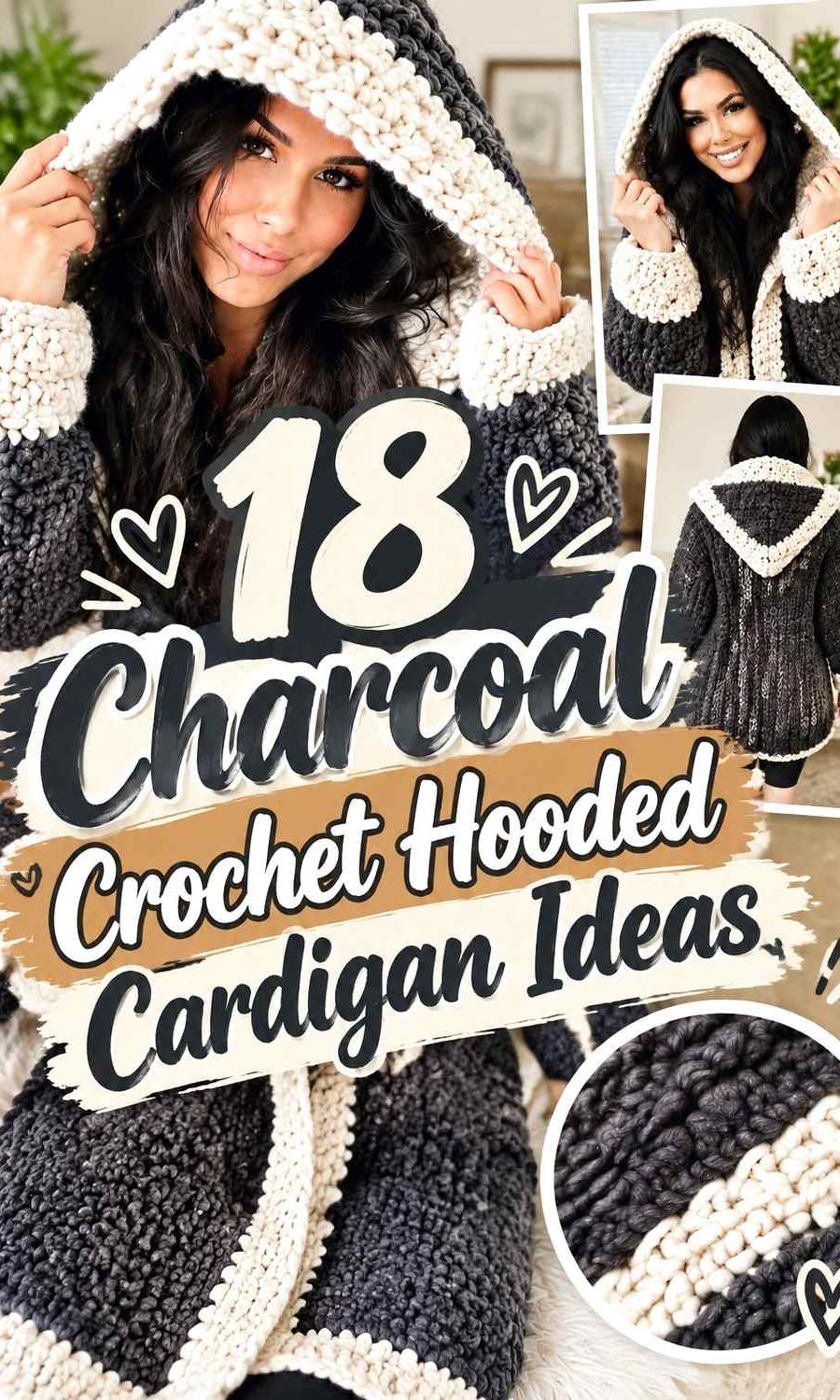
The supporting color determines whether charcoal looks crisp, earthy, tonal, warm, cool, or dramatic. Cream can sharpen the hood opening, rust can warm the sleeves, sage can soften granny-stitch sections, and black can create a deliberately low-contrast edge. Because a hood occupies more visible area than a standard neckline, even a small palette change there can affect the balance of the entire cardigan.
These 18 ideas treat charcoal as the dominant color while changing contrast, placement, and supporting shades. The linked tutorials support different hooded-cardigan construction concepts; the proposed palettes are independent color adaptations rather than claims about colors used by the creators.
Quick List
- Charcoal And Cream Classic Crochet Hooded Cardigan
- Charcoal And Oatmeal Oversized Crochet Hooded Cardigan
- Charcoal And Rust Hexagon Crochet Hooded Cardigan
- Charcoal And Burgundy Coat Length Crochet Hooded Cardigan
- Charcoal And Sage Granny Stitch Crochet Hooded Cardigan
- Charcoal And Black Ribbed Crochet Hooded Cardigan
- Charcoal And Camel Pocketed Crochet Hooded Cardigan
- Charcoal And Ivory Buttoned Crochet Hooded Cardigan
- Charcoal And Dusty Rose Chunky Crochet Hooded Cardigan
- Charcoal And Mustard Zip Front Crochet Hooded Cardigan
- Charcoal And Forest Green Fall Crochet Hooded Cardigan
- Charcoal And Taupe Longline Crochet Hooded Cardigan
- Charcoal And Terracotta Octagon Crochet Hooded Cardigan
- Charcoal And Soft Gray Tonal Crochet Hooded Cardigan
- Charcoal And Plum Chenille Crochet Hooded Cardigan
- Charcoal And Navy Granny Hexagon Crochet Hooded Cardigan
- Charcoal And Teal Everyday Crochet Hooded Cardigan
Decide Whether the Charcoal Hood Should Blend or Contrast
The hood is one of the largest color decisions on this type of cardigan. Keeping it charcoal extends the body color upward and creates one continuous dark frame around the shoulders and neckline. A contrasting hood makes a stronger statement because it remains visible even when the cardigan is worn open.
If the supporting shade is very light, such as cream or ivory, you may not need the entire hood in that color. A lighter inner edge, border, or hood trim can provide enough contrast. Darker partners such as navy, black, or burgundy usually need broader placement to remain visibly separate from charcoal.
Use Charcoal to Connect Cardigan Panels, Pockets, and Sleeves
Charcoal works particularly well as a connecting shade when a hooded cardigan includes several construction areas. Repeating it across the back panel, front bands, hood edge, or motif borders can keep sleeves and pockets from looking like unrelated color blocks.
This is especially useful with hexagon and granny-stitch cardigans. A supporting shade may appear often inside motifs, but charcoal outer rounds, joins, or edging can restore a clear visual hierarchy once the pieces are assembled.
Check Light-Dark Contrast Before Crocheting Charcoal Details
Charcoal and another dark color can look distinct in the skein but much closer once crocheted. Burgundy, forest green, navy, plum, and black may all create relatively subtle contrast depending on the exact yarns chosen.
If a small pocket border, hood stripe, or cuff needs to remain obvious, compare the yarns from a distance or photograph them in grayscale. When the values are close, use larger blocks or choose a lighter version of the supporting color rather than expecting narrow details to carry the contrast.
1. Charcoal And Cream Classic Crochet Hooded Cardigan
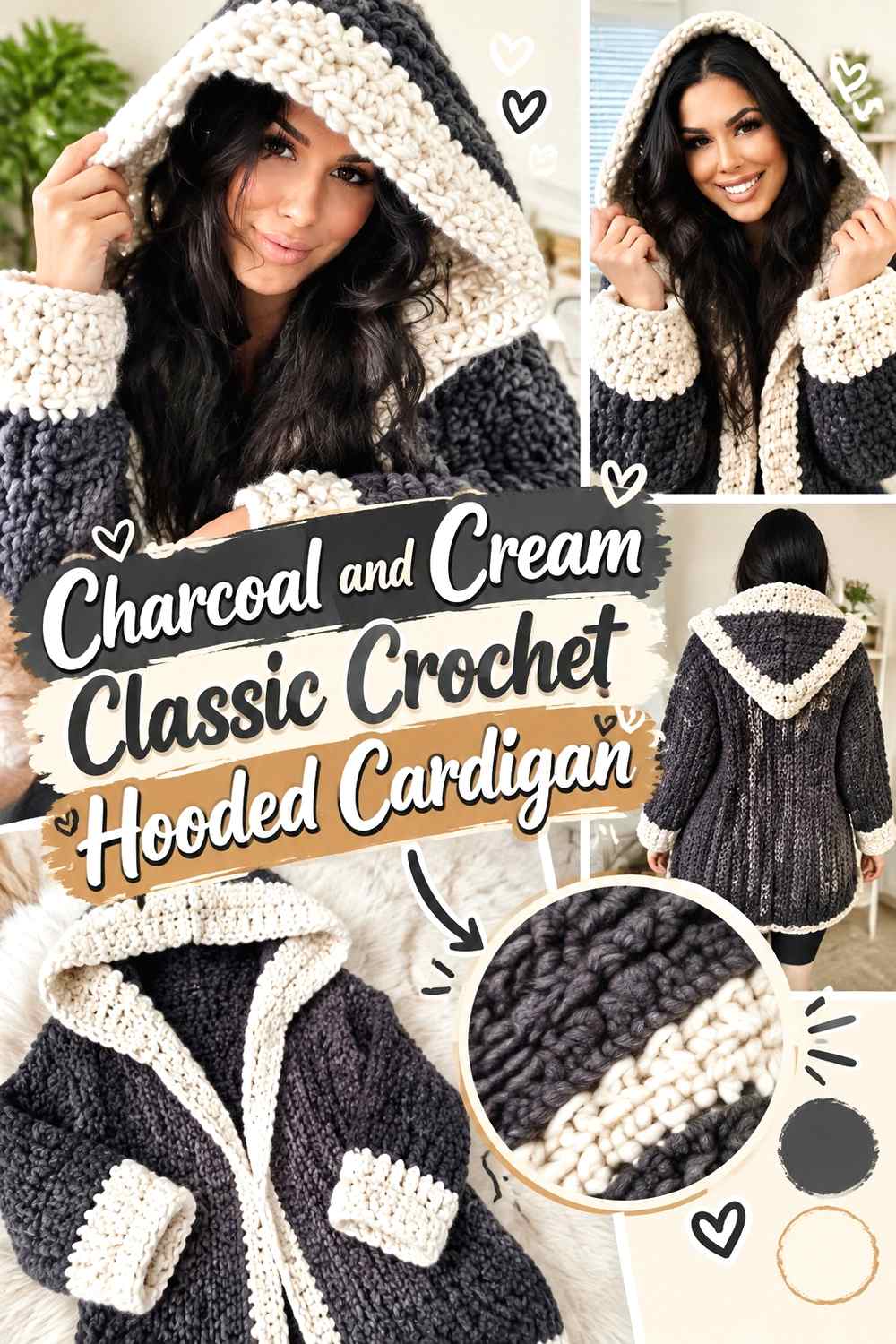
Cream creates one of the strongest visual breaks against charcoal. Keep charcoal across the body and most of the sleeves, then use cream where the cardigan benefits from definition: around the hood opening, front edge, cuffs, or pocket tops. Because cream is much lighter, a relatively small amount can influence the whole garment.
Keep Charcoal Dominant Across the Hooded Cardigan Body
Using charcoal continuously across the back and front panels gives the garment a stable dark center. It also prevents cream from taking over once the hood and long front edges are added.
If you want an unmistakably charcoal cardigan, keep the hood itself charcoal and introduce cream only at its outer edge.
Use Cream to Outline the Charcoal Hood and Front Bands
A cream edge can make the hood shape and open front easier to distinguish against a charcoal body. Repeating cream at the sleeve cuffs connects that contrast to the lower half of the cardigan.
Avoid outlining every pocket, cuff, hem, and seam unless a heavily framed look is intentional. One or two repeated cream details are usually enough.
Creator Credit: Crafty with Jackie
2. Charcoal And Oatmeal Oversized Crochet Hooded Cardigan
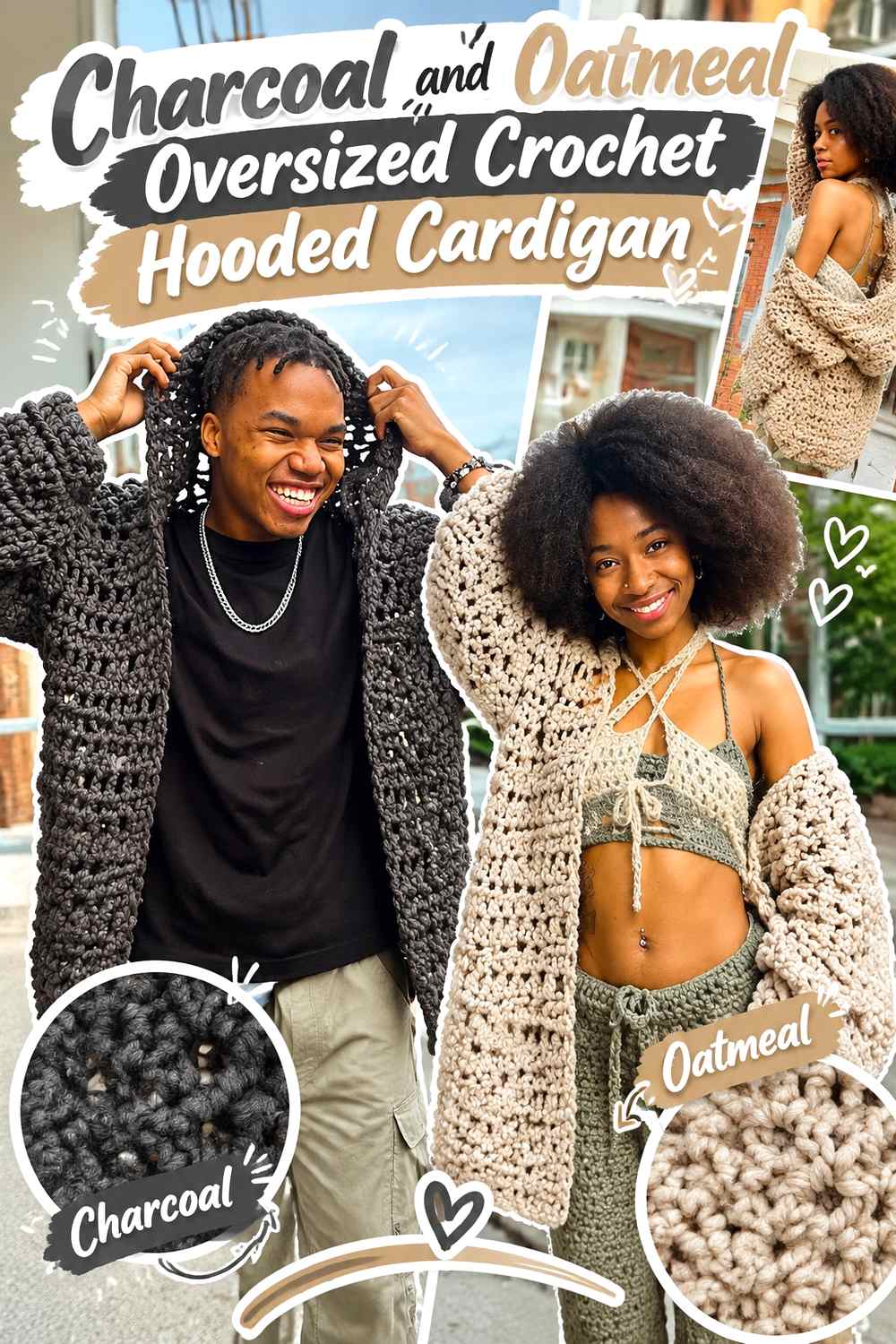
Oatmeal lightens an oversized charcoal cardigan without creating the starkness of bright white. The larger silhouette provides enough space for substantial secondary-color sections, but charcoal should still occupy the biggest continuous areas if it is meant to lead.
Let Charcoal Control the Oversized Hooded Cardigan Panels
Keep the main front and back sections charcoal so the wide silhouette reads as one garment rather than several disconnected color blocks. Oatmeal can then appear on the sleeves, lower band, or hood border.
A charcoal hood helps visually balance the larger body and keeps the darkest shade near the shoulders.
Add Oatmeal Where the Charcoal Cardigan Needs a Softer Break
Wide oatmeal cuffs can interrupt long charcoal sleeves without creating an abrupt black-and-white effect. An oatmeal hem band can produce the same result lower on the cardigan.
If both the cuffs and hem are substantial, consider keeping the hood completely charcoal so the light neutral does not become dominant.
Creator Credit: brianna sipp
3. Charcoal And Rust Hexagon Crochet Hooded Cardigan
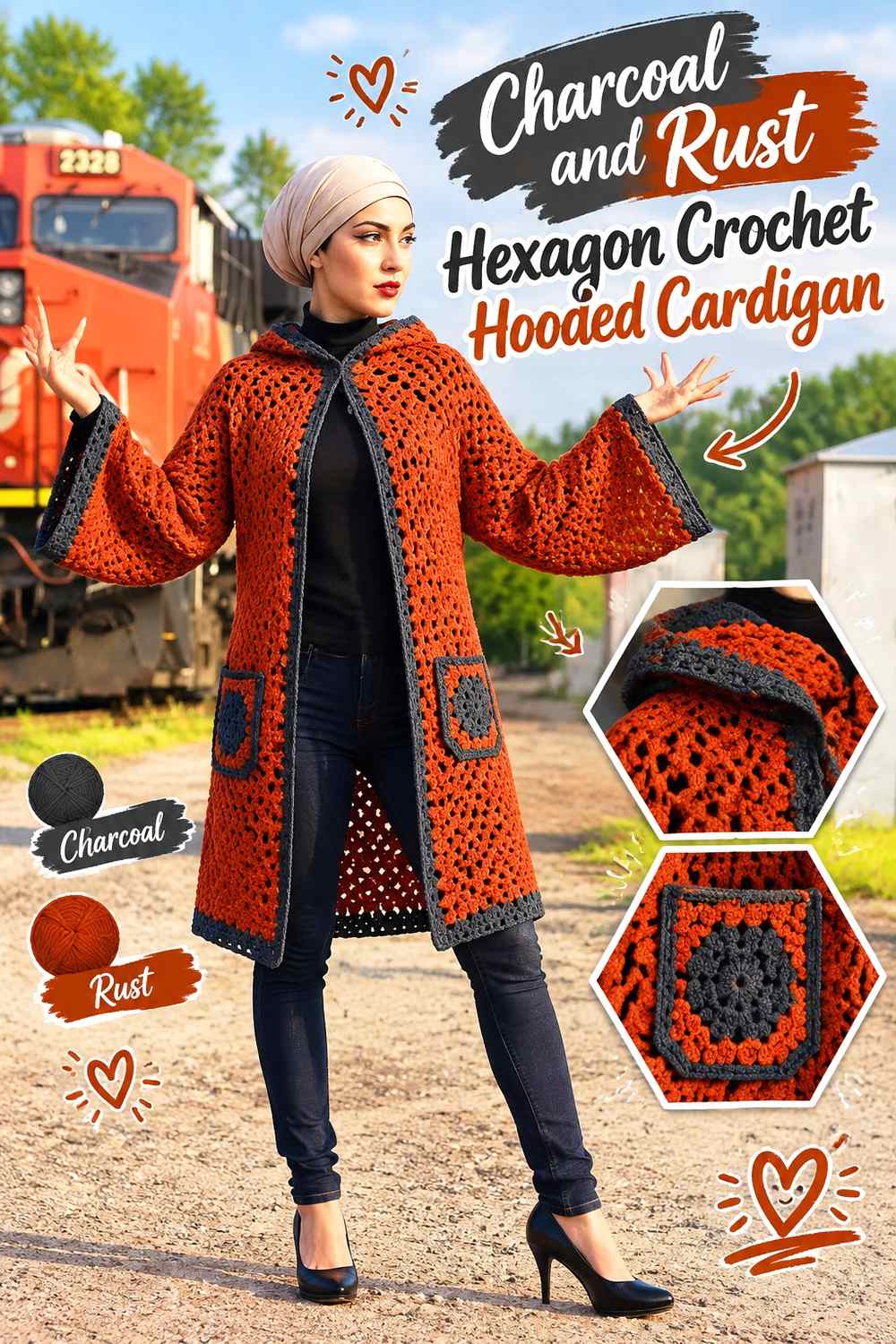
Rust brings warm contrast to charcoal and works especially well in repeated hexagon or granny-style sections. The key is controlling repetition: a rust accent that looks small in one motif can become a major color once it appears across two large cardigan halves.
Use Charcoal Around Repeated Hexagon Cardigan Sections
Let charcoal occupy outer rounds or substantial portions of each hexagon so it remains visible once the pieces are folded and joined. This also helps the sleeve and body areas relate to one another.
If rust sits at every motif edge, the finished garment may read as rust-dominant even if charcoal appeared more prominent in a single piece.
Repeat Rust Inside the Charcoal Hooded Cardigan Without Equal Coverage
Rust can appear as selected motif rounds, sleeve bands, or a hood stripe rather than covering half the garment. That keeps the warmer shade noticeable while preserving charcoal as the main field.
Use the same rust placement rule on both cardigan halves so the color distribution feels deliberate after assembly.
Creator Credit: Fuad Azmat / YARNutopia by Nadia
4. Charcoal And Burgundy Coat Length Crochet Hooded Cardigan
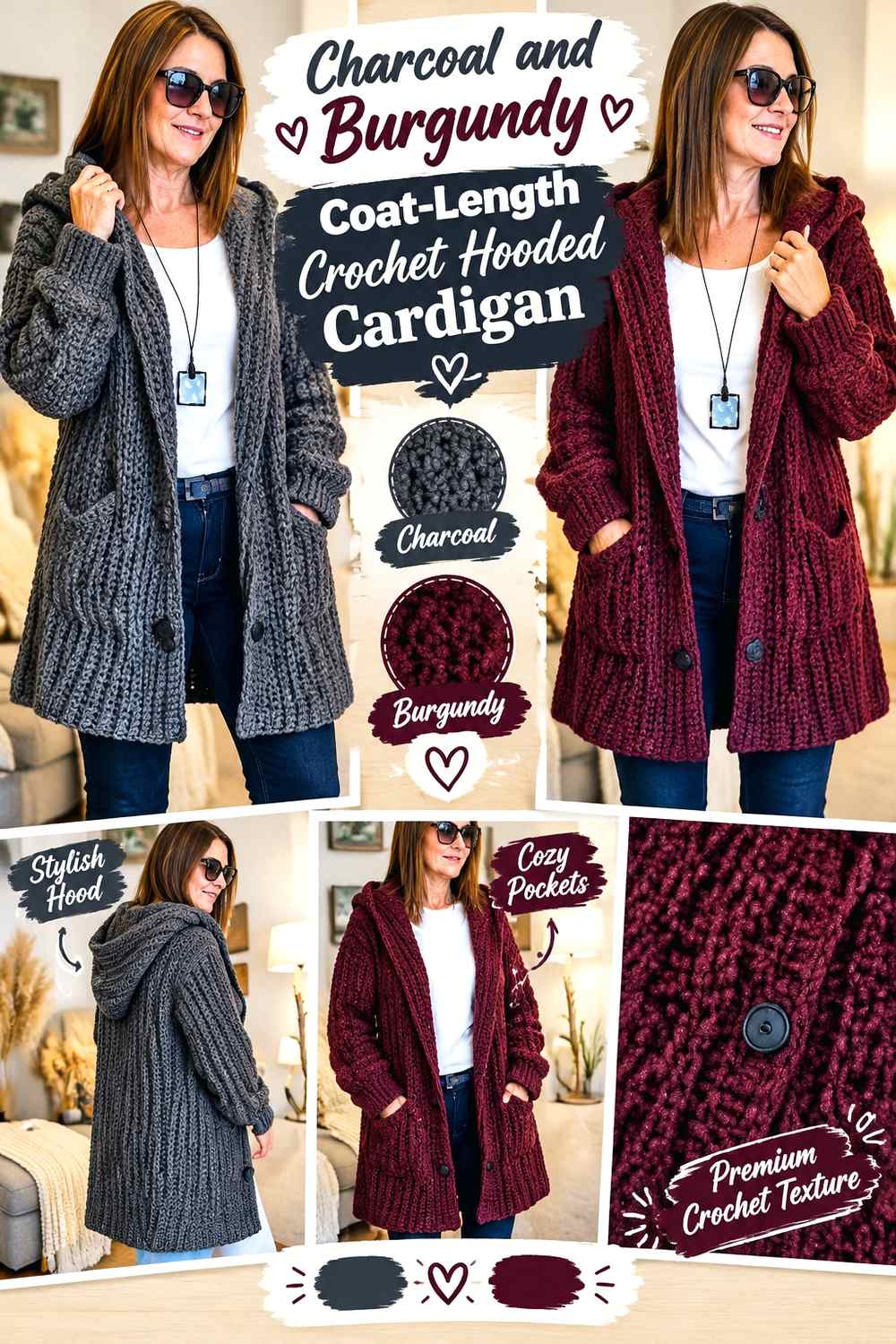
A coat-length cardigan creates a large vertical surface, making charcoal and burgundy well suited to broader blocks rather than tiny alternating details. Both shades are dark, so the result can remain rich and restrained rather than sharply color-blocked.
Keep Charcoal Through the Upper Hooded Cardigan and Hood
Using charcoal from the shoulders through the hood creates a strong upper frame. Burgundy can begin lower on the body or appear in substantial sleeve sections where it has enough area to separate visually.
This arrangement also prevents the darker red from competing directly with the hood opening.
Give Burgundy Enough Width to Register Against Charcoal
A narrow burgundy line may disappear beside charcoal. A wider lower-body band, cuff, or pocket section makes the relationship easier to see.
If your chosen burgundy is very dark, compare it with charcoal before deciding on small edging or seam details.
Creator Credit: BCNcrochet
5. Charcoal And Sage Granny Stitch Crochet Hooded Cardigan
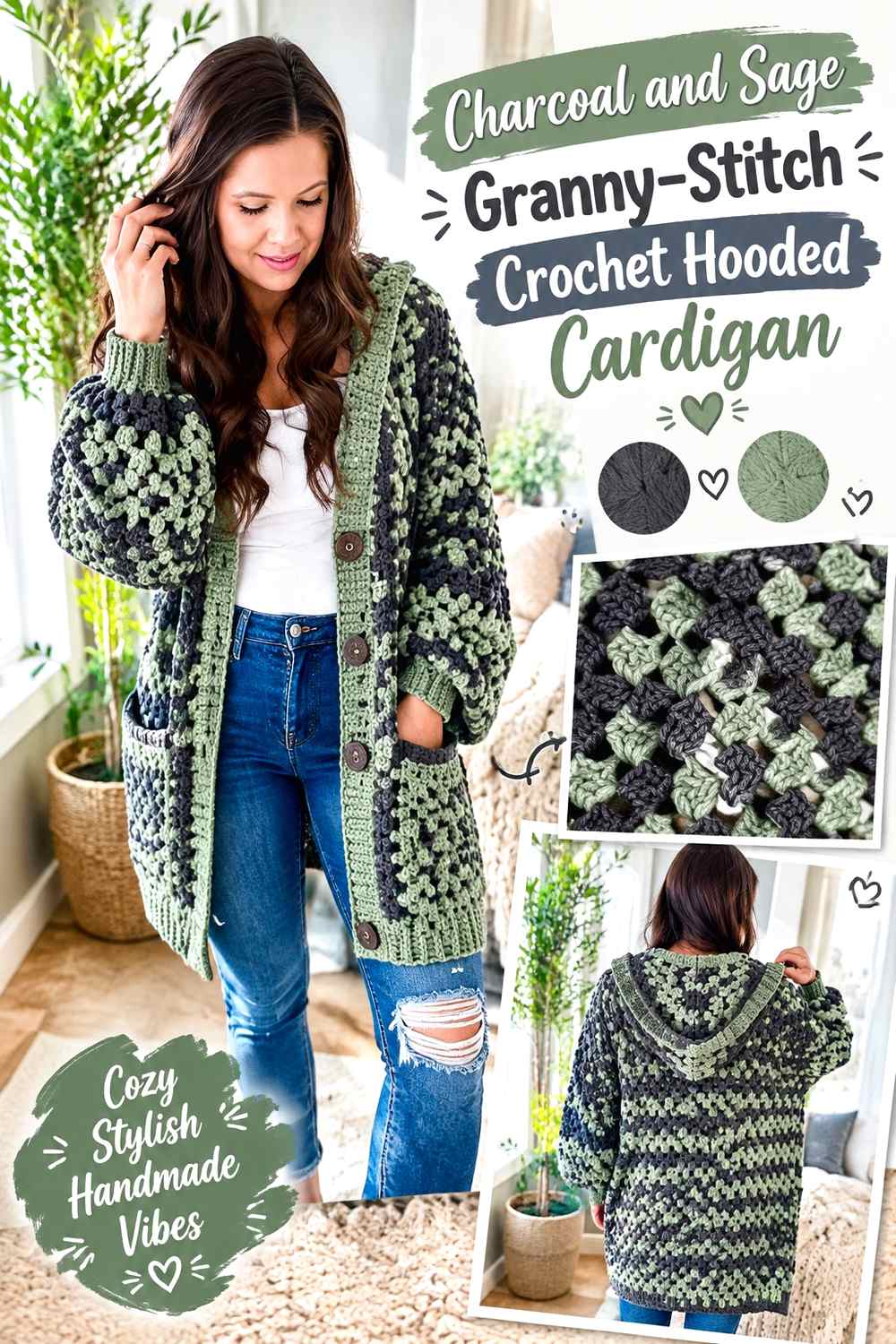
Sage softens the darker neutral and gives granny-stitch fabric an earthy, muted direction. Because open granny clusters create their own rhythm, the colors do not need to change frequently to keep the surface interesting.
Let Charcoal Form the Main Granny-Stitch Cardigan Field
Charcoal can cover most of the body clusters while sage appears at controlled intervals. This keeps the open fabric visually grounded and prevents the cardigan from becoming evenly striped.
A charcoal hood also provides a solid-looking frame above a more varied body.
Place Sage Between Charcoal Cardigan Sections for Gentle Contrast
Sage stripes or motif areas can interrupt charcoal without producing the high contrast of cream. It can also work well on the cuffs or pockets if you want the supporting shade concentrated in functional areas.
Choose a sage light enough to remain visible against charcoal, particularly if the granny-stitch openings already create visual complexity.
Creator Credit: MJ’s Off The Hook Designs
6. Charcoal And Black Ribbed Crochet Hooded Cardigan
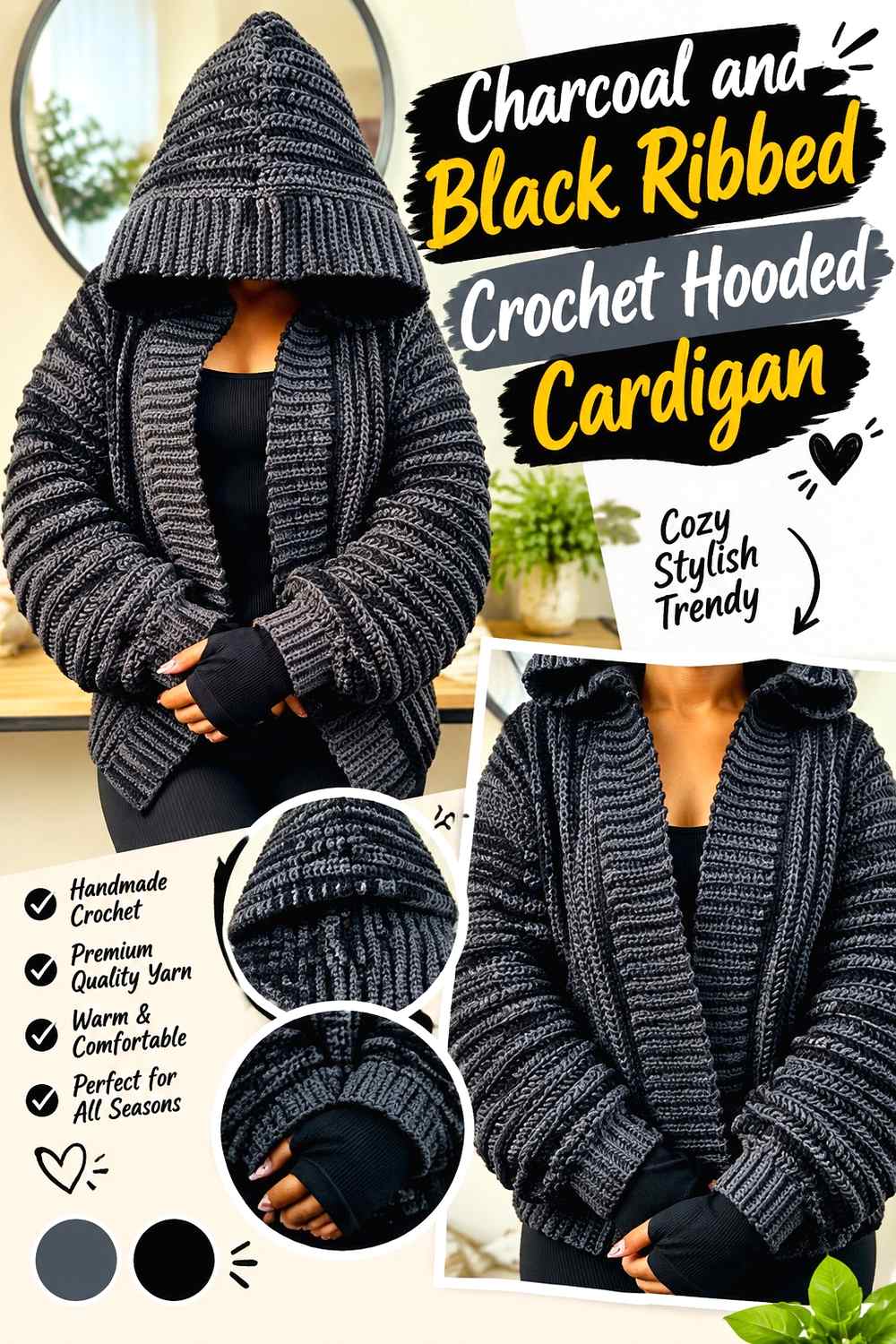
Charcoal and black create the lowest-contrast palette in this collection. That makes texture especially important. Ribbing, cuffs, front bands, and the hood edge can provide separation even when the colors themselves remain close.
Keep Charcoal Across the Ribbed Hooded Cardigan Surface
Use charcoal through the main ribbed panels so the subtle vertical or horizontal texture remains the focus. Black can define the garment edges without interrupting the surface too often.
This works particularly well if you want the cardigan to read as mostly charcoal from a distance.
Reserve Black for Charcoal Hood, Cuff, and Front-Band Definition
Black can be concentrated at the hood opening, cuffs, or front border where dark definition is useful. Broad black edging will be easier to distinguish than tiny decorative stripes.
If the yarns look nearly identical in ordinary light, treat the effect as intentional tonal shading rather than expecting obvious color blocking.
Creator Credit: seven_made
7. Charcoal And Camel Pocketed Crochet Hooded Cardigan
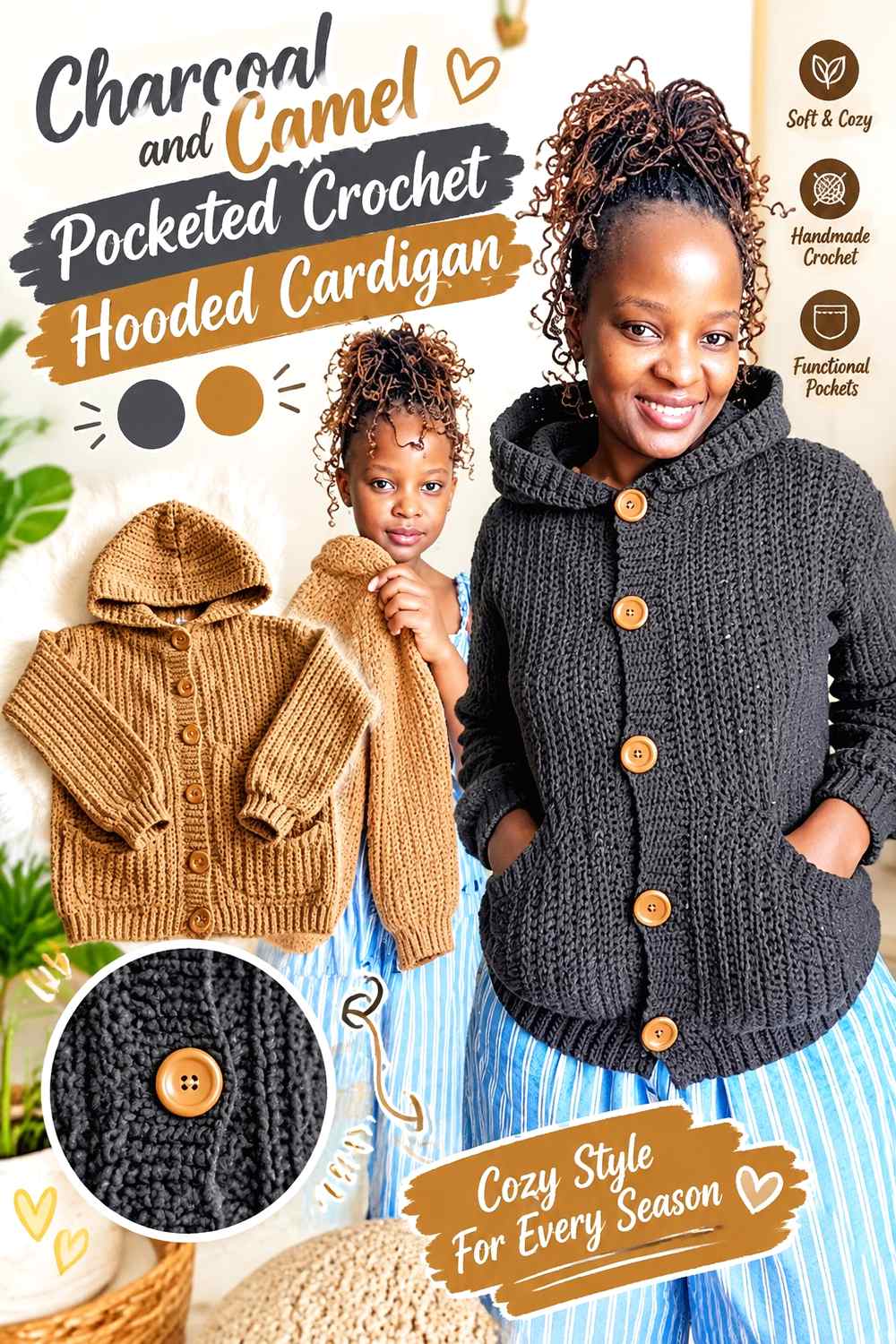
Camel brings warmth to charcoal and works particularly well around pockets because the lighter brown can make those front details easier to see. The main question is whether the pockets should blend with the body or become deliberate color features.
Keep Charcoal Across the Main Pocketed Cardigan Panels
A charcoal body provides a consistent background for both the pockets and hood. Keeping the pockets charcoal as well creates a quieter garment, while camel trim can still define their openings.
This approach is useful if you want the front of the cardigan to remain visually simple.
Use Camel to Mark Charcoal Pocket Openings and Cuffs
Camel pocket edges can create functional-looking contrast without turning the entire pocket into a second-color block. Repeating camel at the cuffs links those details across the front and sleeves.
For more impact, a camel hood lining or border can complete the repetition, but keep the majority of the hood charcoal if the main color should stay dominant.
Creator Credit: LaDenser Crochets
8. Charcoal And Ivory Buttoned Crochet Hooded Cardigan
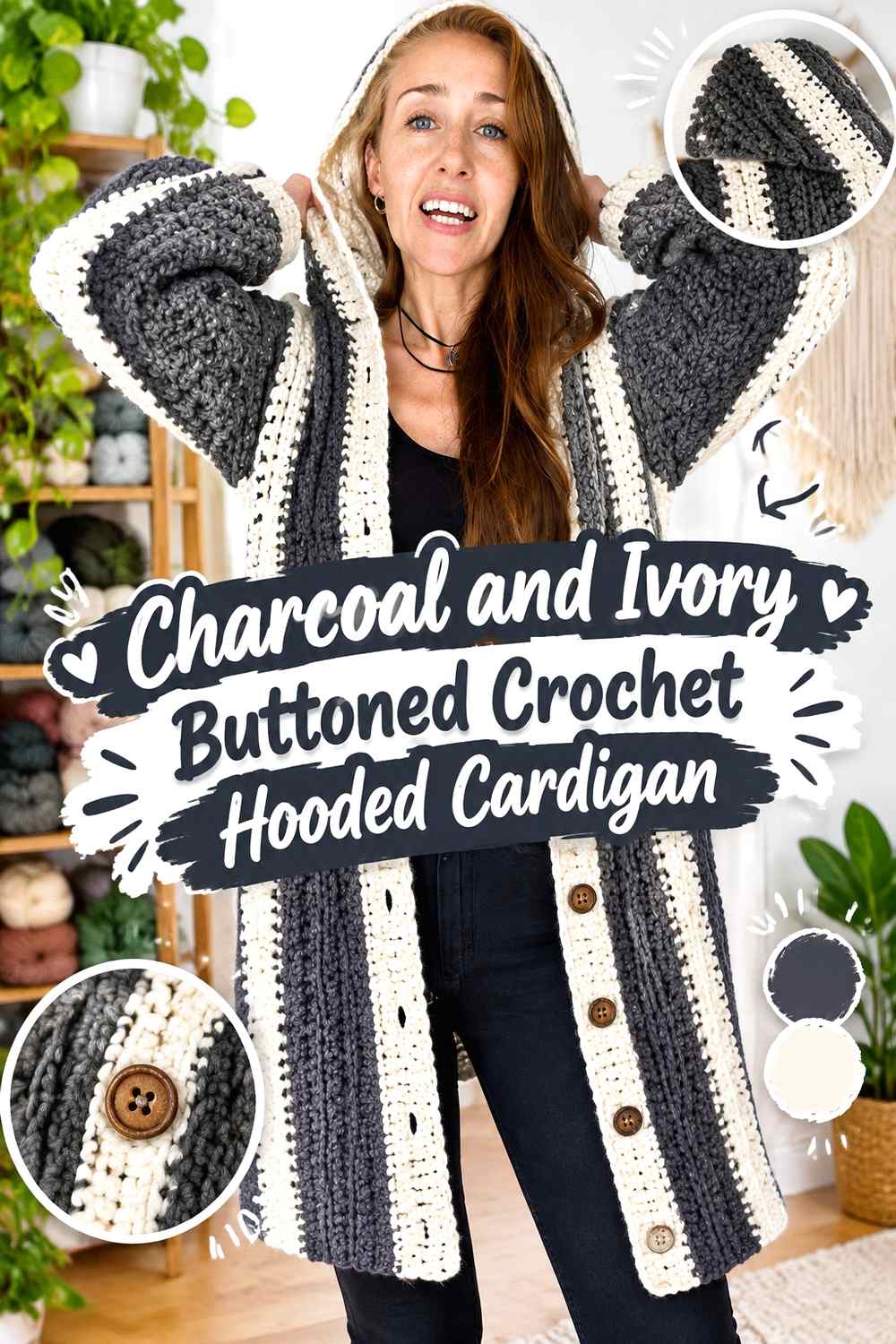
Ivory gives charcoal a clean light-dark relationship that can emphasize buttons, front bands, and the hood opening. Because a buttoned cardigan has more structure across the front than an open style, the contrast should be placed carefully.
Keep Charcoal Around the Buttoned Cardigan Front
Using charcoal for the primary front bands keeps the closure integrated with the body. Ivory can then appear at the hood border or sleeve cuffs rather than outlining every button.
This prevents the front opening from becoming disproportionately light compared with the rest of the garment.
Add Ivory Around the Charcoal Hood for Clear Separation
An ivory hood border creates immediate definition around the neckline and face. If you want to repeat the shade, use it at the cuffs or lower hem rather than adding several separate ivory sections near the buttons.
The lighter color will carry significant visual weight, so small repeated areas can be enough.
Creator Credit: Hilados Malen
9. Charcoal And Dusty Rose Chunky Crochet Hooded Cardigan
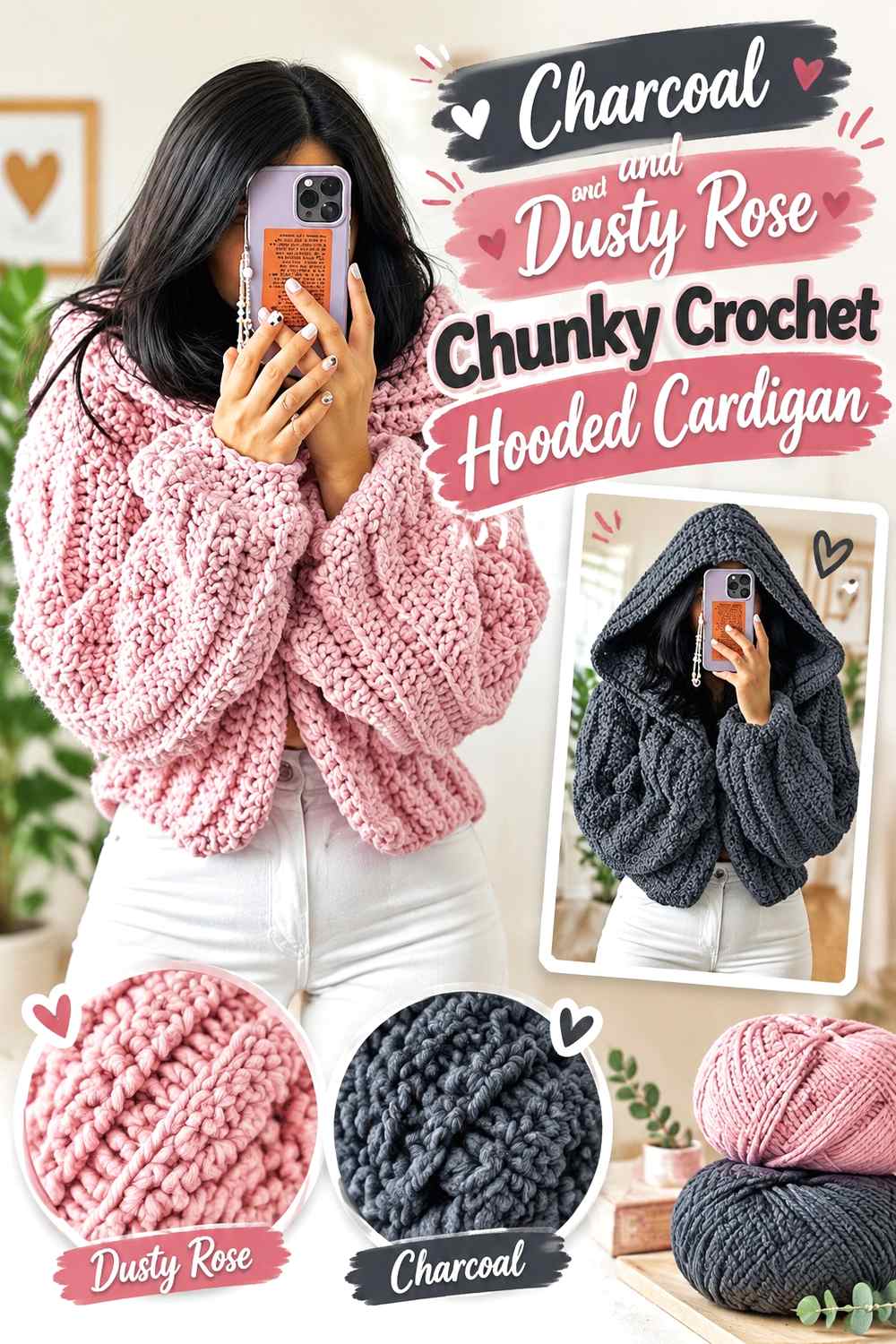
Dusty rose softens a chunky charcoal cardigan while preserving a muted palette. On thicker fabric, broad color areas tend to read more successfully than narrow stripes because the stitches themselves already create strong texture.
Use Charcoal as the Main Chunky Hooded Cardigan Block
Keep charcoal across the torso and most of the sleeves so the bulky surface has a consistent visual base. Dusty rose can appear on oversized cuffs, a hood border, or a lower body section.
Limiting the number of transitions also keeps large stitches from competing with frequent color changes.
Let Dusty Rose Lighten Charcoal Cuffs and Hood Edges
Wide dusty rose cuffs can provide enough contrast to make the sleeves feel intentionally finished. Repeating the same shade around the hood opening connects the color from wrist to neckline.
If the rose is very pale, you may need less of it than expected because the contrast with charcoal will already be strong.
Creator Credit: Dana B
10. Charcoal And Mustard Zip Front Crochet Hooded Cardigan
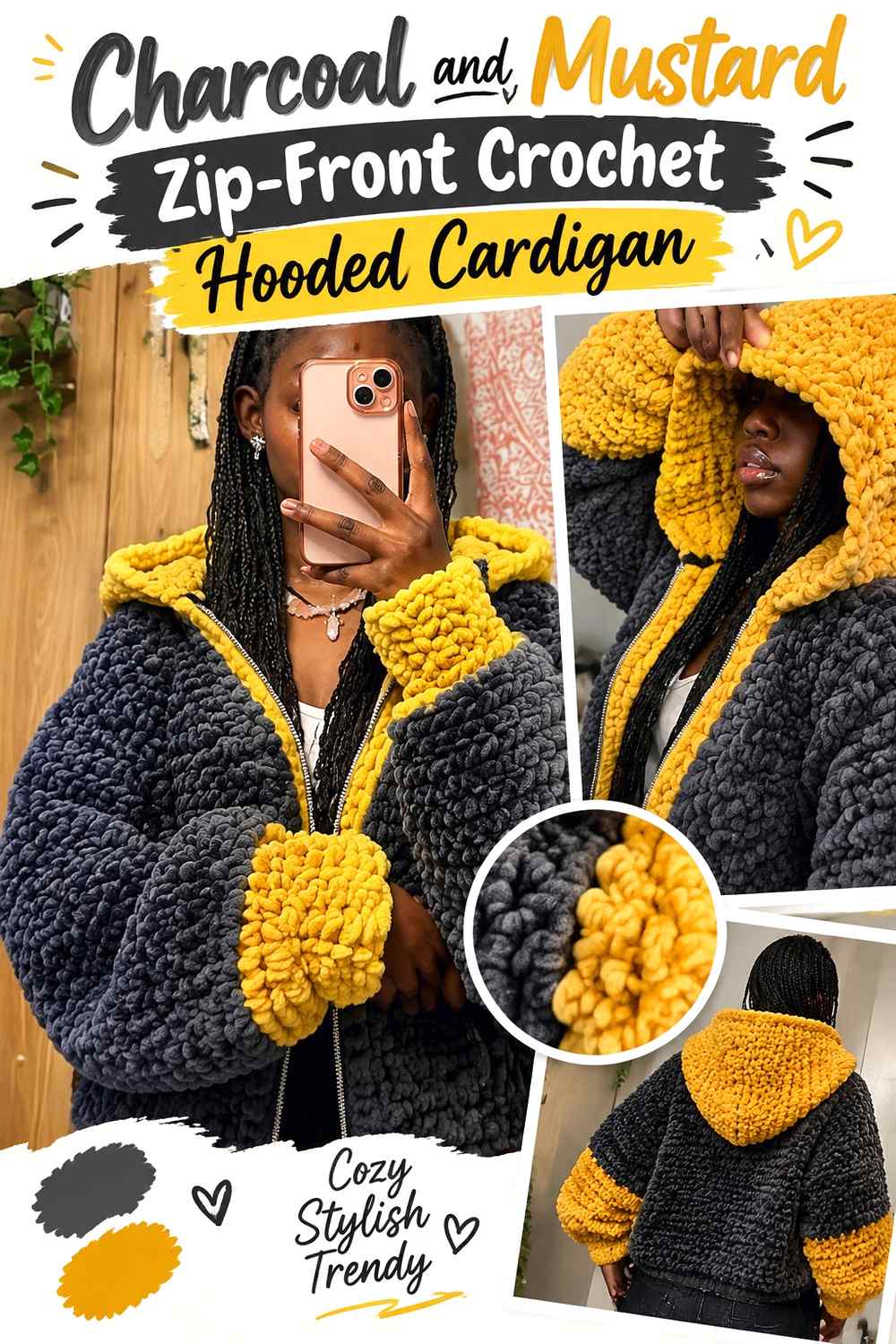
Mustard gives charcoal a strong warm accent that can work particularly well around a front closure. Because a zipper creates a firm visual center line, mustard should support that structure rather than compete with it through too many additional sections.
Keep Charcoal Around the Zip-Front Cardigan Opening
Use charcoal for most of the body and front edge so the closure remains integrated with the garment. Mustard can then appear immediately beside the opening or in a controlled lower-body band.
This keeps the central line clean while still allowing a warmer accent to show.
Repeat Mustard Against Charcoal at the Hood or Cuffs
A mustard hood border or cuff creates a second location for the accent, making it feel connected rather than isolated beside the zipper.
Avoid adding several additional mustard stripes unless a more graphic cardigan is the goal. The strong hue can dominate quickly against charcoal.
Creator Credit: Fisayo & Crochet
11. Charcoal And Forest Green Fall Crochet Hooded Cardigan
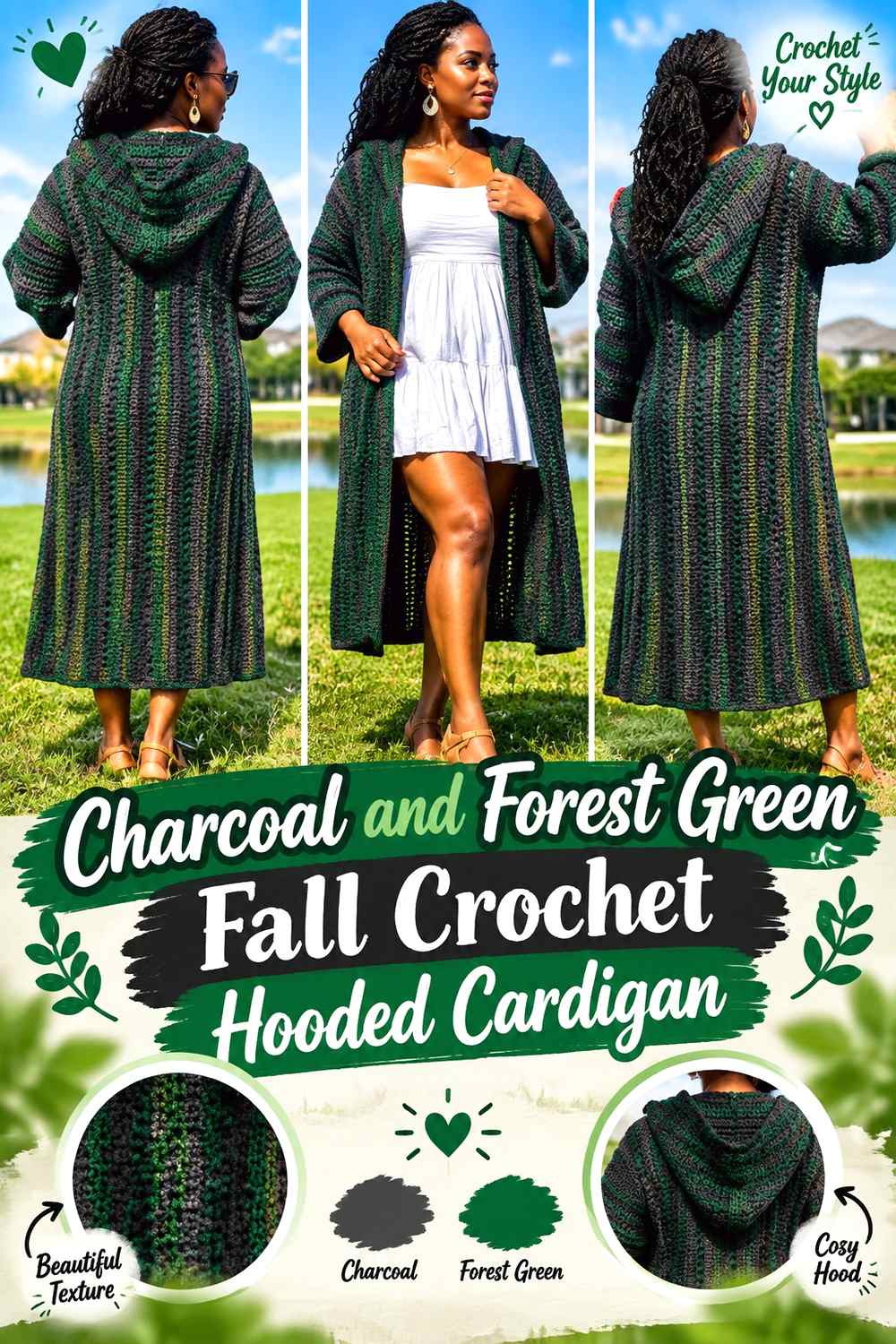
Forest green and charcoal create a dark, low-contrast combination with an earthy direction. Since neither shade is light, the garment benefits from broad blocks and repeated placement rather than tiny accent lines.
Keep Charcoal Central on the Fall Hooded Cardigan
Use charcoal across the torso and hood so the darkest neutral remains the garment’s anchor. Forest green can occupy sleeves, lower panels, or pockets where it has enough area to remain visible.
A charcoal front border can help reconnect those greener sections.
Give Forest Green Space Beside Charcoal Cardigan Panels
Forest green works better as a substantial sleeve or hem section than as a narrow trim when the values are close. If you want smaller accents, choose a slightly lighter green.
Check the two yarns in both natural and indoor light before relying on them for small motif or pocket details.
Creator Credit: Crochet State of Mind
12. Charcoal And Taupe Longline Crochet Hooded Cardigan
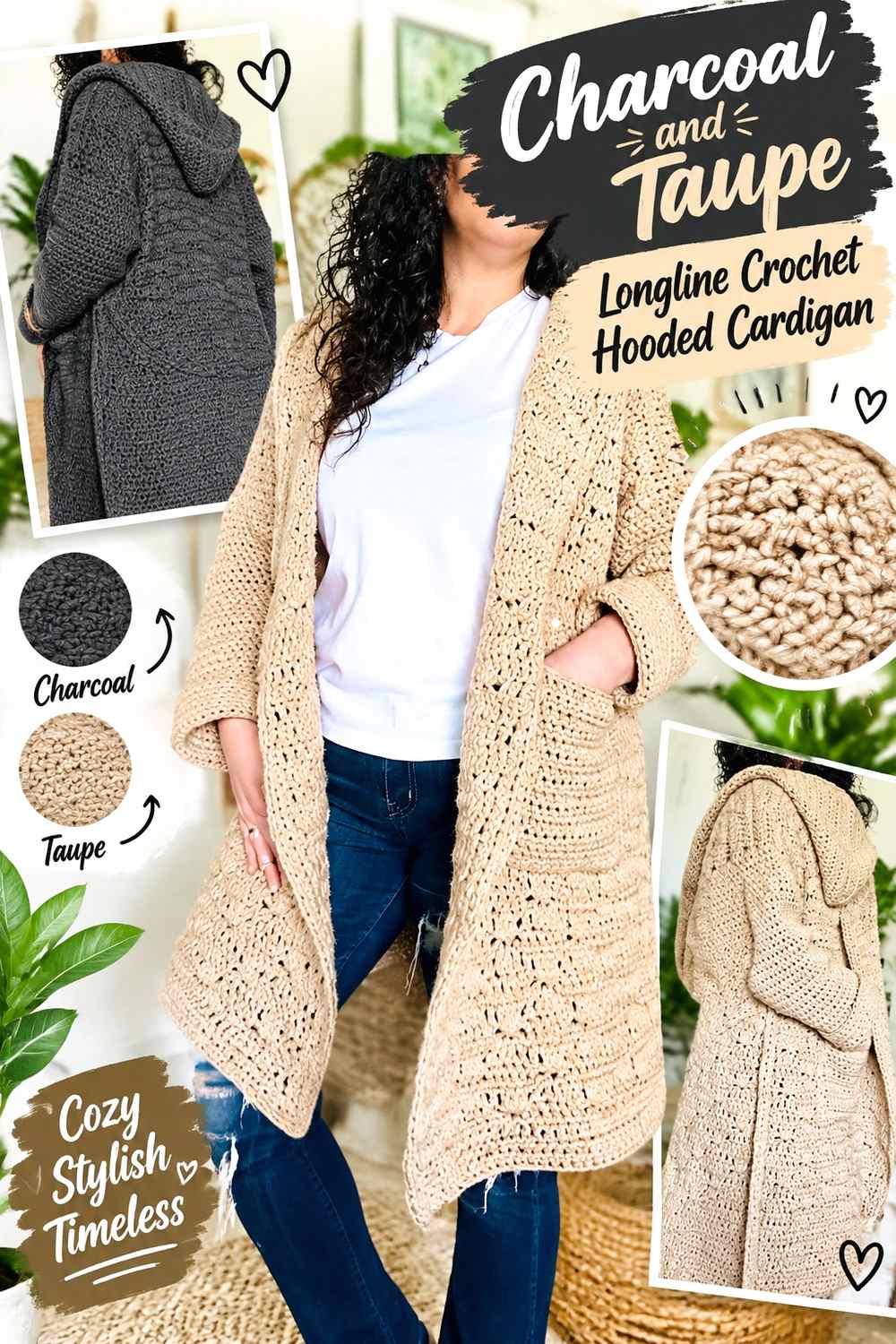
Taupe gives charcoal a muted neutral partner well suited to a longer cardigan. The softer contrast can break up the vertical surface without creating strong horizontal divisions.
Keep Charcoal Through Most of the Longline Cardigan Length
A continuous charcoal body makes the cardigan appear cohesive from shoulder to hem. Taupe can occupy cuffs, pockets, or a lower border rather than cutting the full length into equal blocks.
This is especially useful if the cardigan already has a substantial hood.
Use Taupe to Soften the Charcoal Hood and Hem
A taupe hood border can lighten the upper edge while a matching hem creates balance lower on the garment. The two placements connect without interrupting the center body.
If your taupe is very close to charcoal in value, make those bands wider so the difference remains visible.
Creator Credit: JolieKnots Handmade
13. Charcoal And Terracotta Octagon Crochet Hooded Cardigan
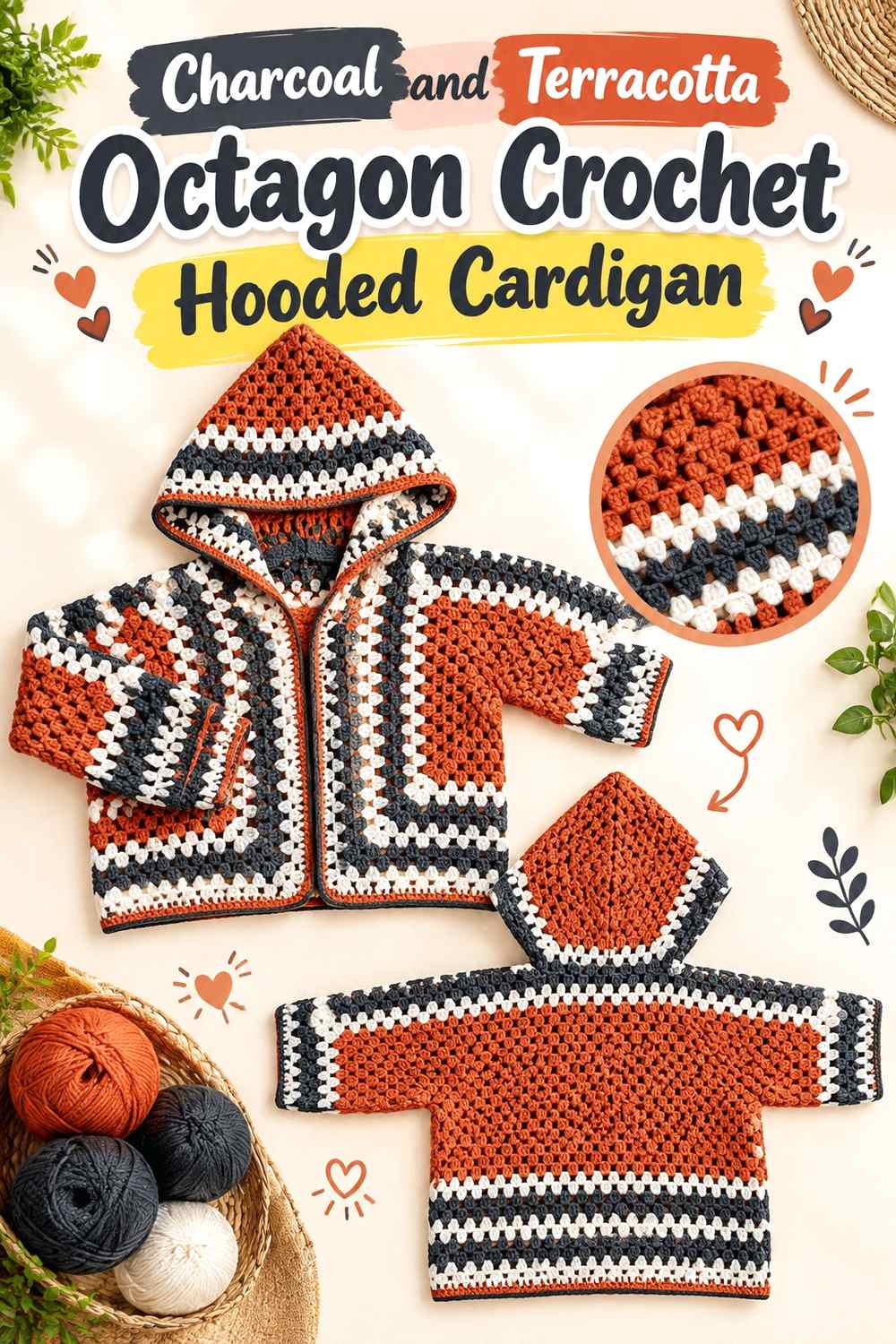
Terracotta gives geometric construction a warm counterpoint to charcoal. In an octagon-based cardigan, color changes can emphasize the expanding geometry, but too many terracotta rounds may make the warmer color more dominant than planned.
Use Charcoal to Anchor the Octagon Cardigan Shape
Place charcoal in the broadest repeated portions of the octagon so it remains visually dominant after the piece is folded into cardigan form. This also gives the geometric construction a consistent dark framework.
Terracotta can then appear in fewer repeated bands.
Space Terracotta Carefully Through the Charcoal Cardigan Geometry
Rather than alternating terracotta with charcoal every round, leave larger charcoal sections between warm accents. That gives each terracotta band more impact while preserving the main neutral.
Repeat a small amount of terracotta around the hood or cuffs if the body needs a stronger connection to those finishing areas.
Creator Credit: Masha’s Maschen
14. Charcoal And Soft Gray Tonal Crochet Hooded Cardigan

Soft gray creates a tonal neutral palette where the focus stays on value rather than hue. This direction works well when you want the hood, sleeves, and pockets to be distinguishable without introducing a separate color family.
Keep Charcoal on the Main Tonal Hooded Cardigan Body
Use charcoal through the torso and hood, then place soft gray on secondary sections. The darker main color supplies visual weight while gray prevents the garment from becoming one solid block.
This can be particularly useful on a cardigan with large sleeves.
Let Soft Gray Separate Charcoal Sleeves and Pockets
Soft gray cuffs, pocket panels, or selected sleeve sections provide enough contrast to show construction without creating a strongly multicolor result.
Choose a gray clearly lighter than charcoal. Two nearly identical grays may not provide enough distinction once worked into textured crochet.
Creator Credit: Crochet Örgü Atölyesi
15. Charcoal And Plum Chenille Crochet Hooded Cardigan
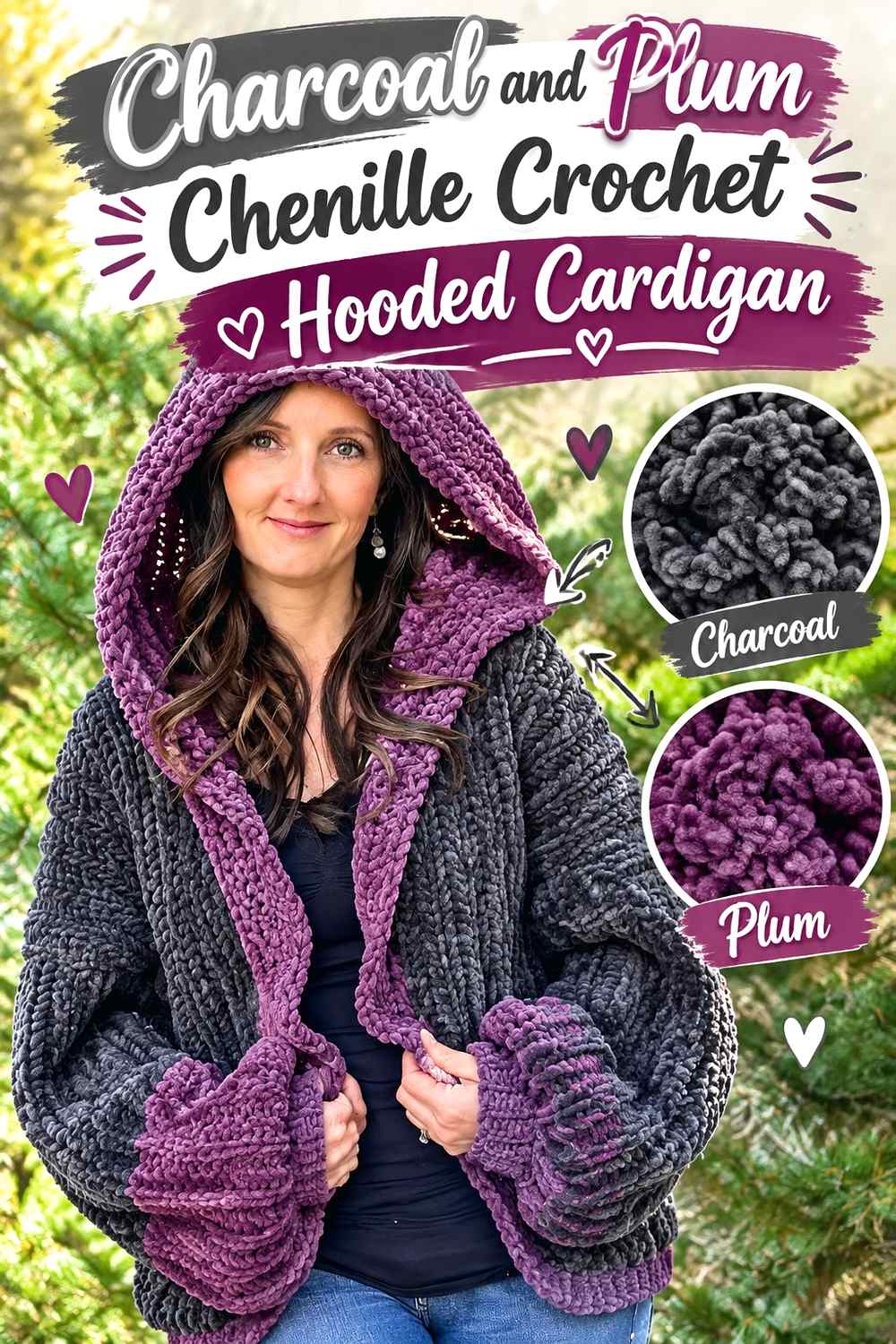
Plum adds a dark purple-red direction to charcoal while keeping the overall palette deep. On a chenille-style cardigan, the softer surface can reduce stitch definition, so broad color placement becomes particularly useful.
Let Charcoal Cover the Largest Chenille Cardigan Sections
Use charcoal across the back, fronts, and much of the hood so the plush surface has one clear foundation. Plum can appear on sleeves or wide cuffs where its color remains recognizable.
Small plum details may be less noticeable if the yarn surface softens their boundaries.
Give Plum Broad Contrast Against the Charcoal Hooded Cardigan
A substantial plum sleeve band or lower-body section creates a clearer color statement than narrow edging. Repeating plum around the hood opening can connect the upper and lower accents.
If charcoal and plum are similarly dark, check them side by side before committing to smaller pocket or seam details.
Creator Credit: Kismet Crochet
16. Charcoal And Navy Granny Hexagon Crochet Hooded Cardigan
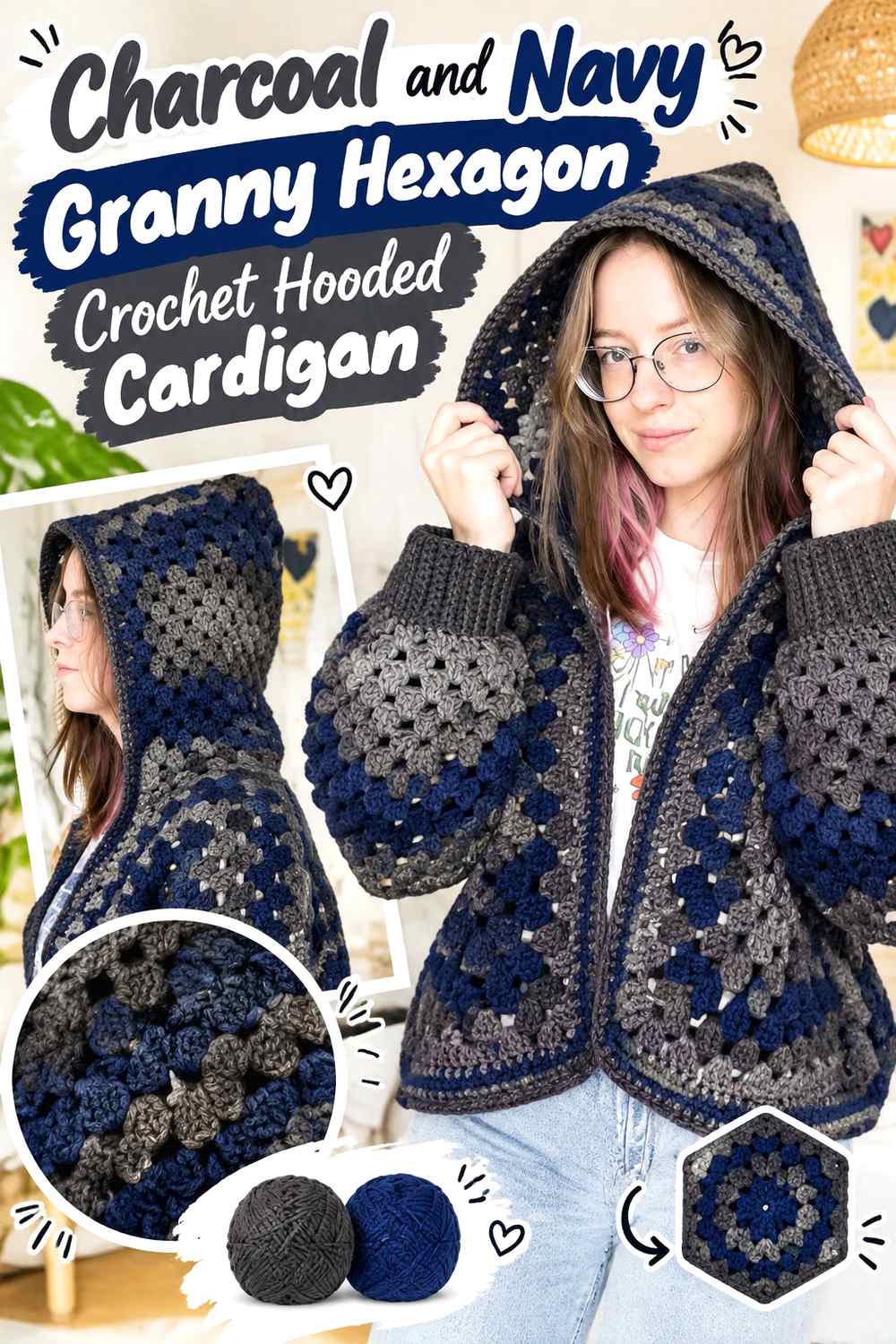
Navy and charcoal produce a cool, dark palette that lets granny-hexagon structure carry much of the visual interest. Because the two shades may be close in value, placement should emphasize large sections rather than tiny alternating details.
Make Charcoal the Main Granny Hexagon Cardigan Framework
Use charcoal for outer motif rounds or repeated large sections so it visually connects the two cardigan halves. Navy can occupy inner rounds or controlled sleeve areas.
A charcoal hood border can further unify the finished garment after the hexagon pieces are joined.
Keep Navy Broad Enough to Read Beside Charcoal
Navy needs sufficient space to remain visible against charcoal. A full motif band or sleeve section will generally communicate more clearly than a narrow final round.
If the yarns appear almost identical in grayscale, use their subtle difference intentionally rather than depending on the navy for strong pattern definition.
Creator Credit: PassioKnitKelsie
17. Charcoal And Teal Everyday Crochet Hooded Cardigan

Teal introduces a cooler, more saturated color without requiring a pale neutral. Against charcoal, it can become a clear accent while still feeling grounded enough for a full cardigan.
Let Charcoal Lead the Everyday Hooded Cardigan Body
Keep charcoal across the front and back panels so the cardigan remains easy to coordinate with simple layers. Teal can appear on the cuffs, pockets, lower sleeves, or hood border.
Using teal in two or three intentional locations gives the color enough repetition without allowing it to dominate.
Use Teal to Lift the Charcoal Hood and Pocket Details
A teal hood edge can draw attention upward, while teal pocket tops repeat the accent lower on the front panels. This creates a clear visual path through the garment.
If the teal is especially vivid, use narrower bands. A more muted teal can usually occupy larger areas without competing as strongly with charcoal.
Creator Credit: Hey Carrie
Comparing These Charcoal Crochet Hooded Cardigan Palettes
Cream and ivory provide the strongest separation from charcoal, making them useful when the hood opening, cuffs, pockets, or front bands need to remain clearly defined. Oatmeal, camel, taupe, and soft gray create gentler neutral transitions and keep the overall garment quieter.
Rust, terracotta, and mustard add warmer contrast. They are particularly effective when repeated in controlled bands or motif sections rather than spread equally across the cardigan.
Sage, forest green, denim blue, teal, and navy move the palette toward cooler or earthy color relationships. Sage and denim usually provide more obvious separation, while forest green and navy can become much more tonal beside dark charcoal.
Burgundy, plum, and black create the deepest combinations. These palettes depend more on broad placement, texture, and garment structure because narrow details can blend into charcoal from a distance.
Conclusion
The easiest way to narrow these 18 charcoal crochet hooded cardigan ideas is to decide what you want the hood to do visually. Cream, ivory, or oatmeal can make it a clear contrasting feature. Charcoal itself keeps the hood integrated with the body. Burgundy, navy, plum, black, or forest green create a darker tonal frame, while rust, terracotta, mustard, sage, or teal turn the hood or trim into a stronger accent.
From there, repeat the supporting color strategically. Cuffs can echo the hood, pockets can connect with a front border, and motif colors can reappear in the sleeves or hem. Keeping charcoal on the largest continuous surfaces gives the garment a clear hierarchy even when several cardigan details use a secondary shade.
Frequently Asked Questions
What colors pair well with a charcoal crochet hooded cardigan?
Cream, ivory, oatmeal, camel, taupe, soft gray, black, rust, terracotta, mustard, burgundy, plum, sage, forest green, denim blue, navy, and teal can all create useful directions. The main difference is how strongly each shade separates from charcoal.
Should the hood be charcoal or a contrasting color?
A charcoal hood keeps the garment visually continuous from body to neckline. A contrasting hood makes the upper portion much more noticeable. If you want something between those extremes, keep the hood charcoal and change only its border or inner edge.
How can I keep charcoal dominant in a multicolor hooded cardigan?
Use charcoal across the largest continuous areas, such as the back, front panels, or hood. Supporting colors can then appear on cuffs, pockets, motif rounds, hems, front bands, or selected sleeve sections.
How do I know if another dark yarn contrasts enough with charcoal?
Place the yarns together and view them from several feet away. A grayscale photo can also help reveal their value difference. If the two shades look almost identical without color, use larger blocks rather than relying on narrow details.
Should charcoal pockets match the cardigan body?
Matching charcoal pockets create a quieter front, while contrasting pockets become a noticeable design feature. A middle option is to keep the pocket body charcoal and use a second shade only around the pocket opening.
Can charcoal work in a granny-square or hexagon hooded cardigan?
Yes. Charcoal can function as motif centers, outer rounds, joins, or repeated background sections. Decide its role before making many motifs because a color that seems minor in one square can occupy much more visual area once repeated across the full cardigan.
How can I substitute a charcoal yarn shade?
Choose another dark neutral gray that keeps the same relationship with the supporting color. If the original concept relies on strong contrast with cream, preserve that light-dark difference. If the palette is tonal with black or navy, keeping the substitute similarly dark may matter more than matching the exact gray.