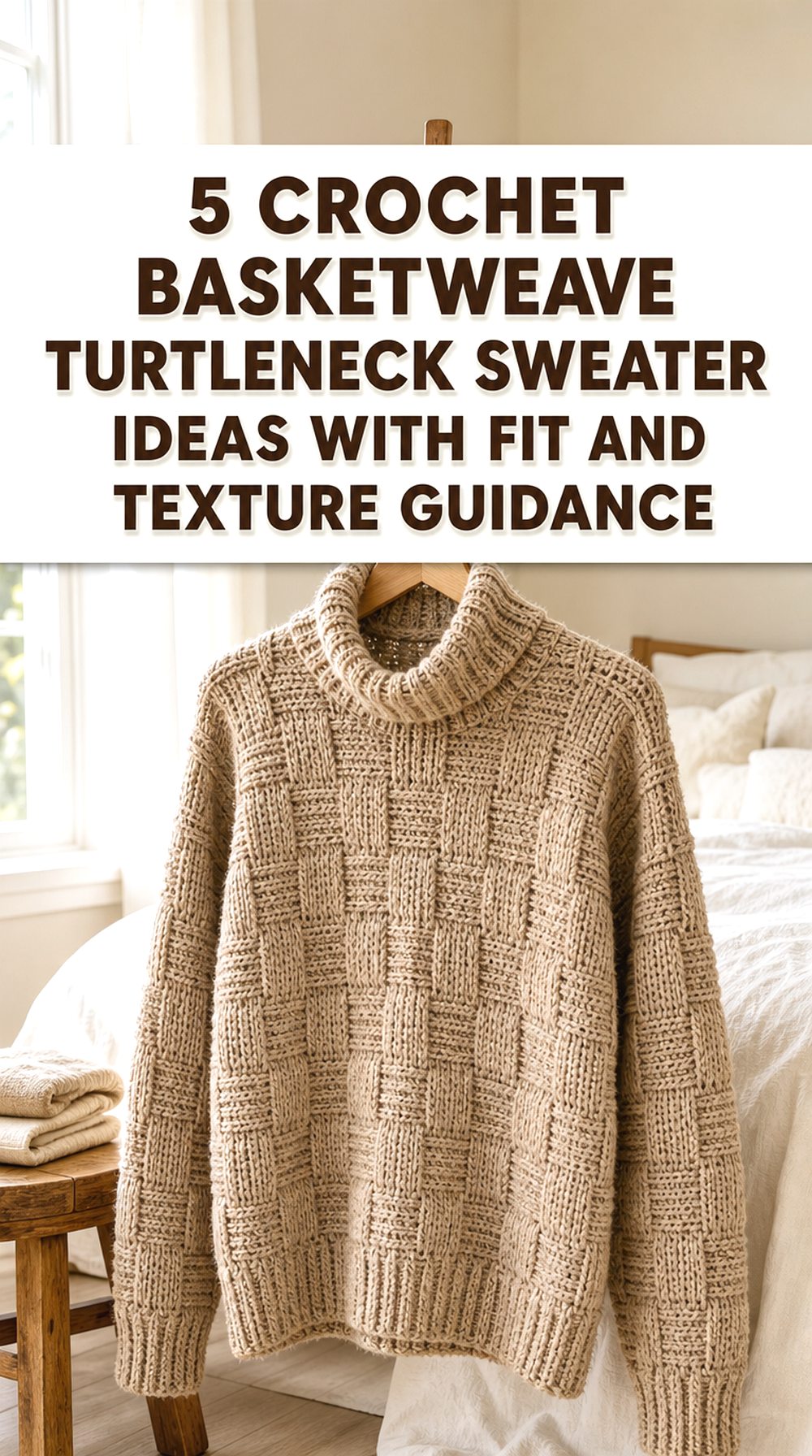
A Crochet basketweave turtleneck sweater combines two noticeable features: a raised woven-looking surface and a neckline that adds warmth without a separate scarf. Because publicly available designs pairing both elements are limited, these ideas are presented as practical design routes. Some linked projects establish the basketweave body, while others demonstrate mock-neck, roll-neck, or cowl construction that can inform a customised version. You will find fitted and relaxed silhouettes, all-over texture, centred panels, colour changes, and different collar shapes. The guidance also covers Crochet fabric density, positive ease, sleeve proportions, seaming, and neckline comfort, helping you decide which construction is closest to the sweater you want before attempting modifications.
Quick List
- Crochet All-Over Basketweave Mock-Neck Sweater Route
- Crochet Centre-Panel Basketweave Turtleneck Sweater Route
- Crochet Two-Tone Turtleneck Sweater with Basketweave Focus
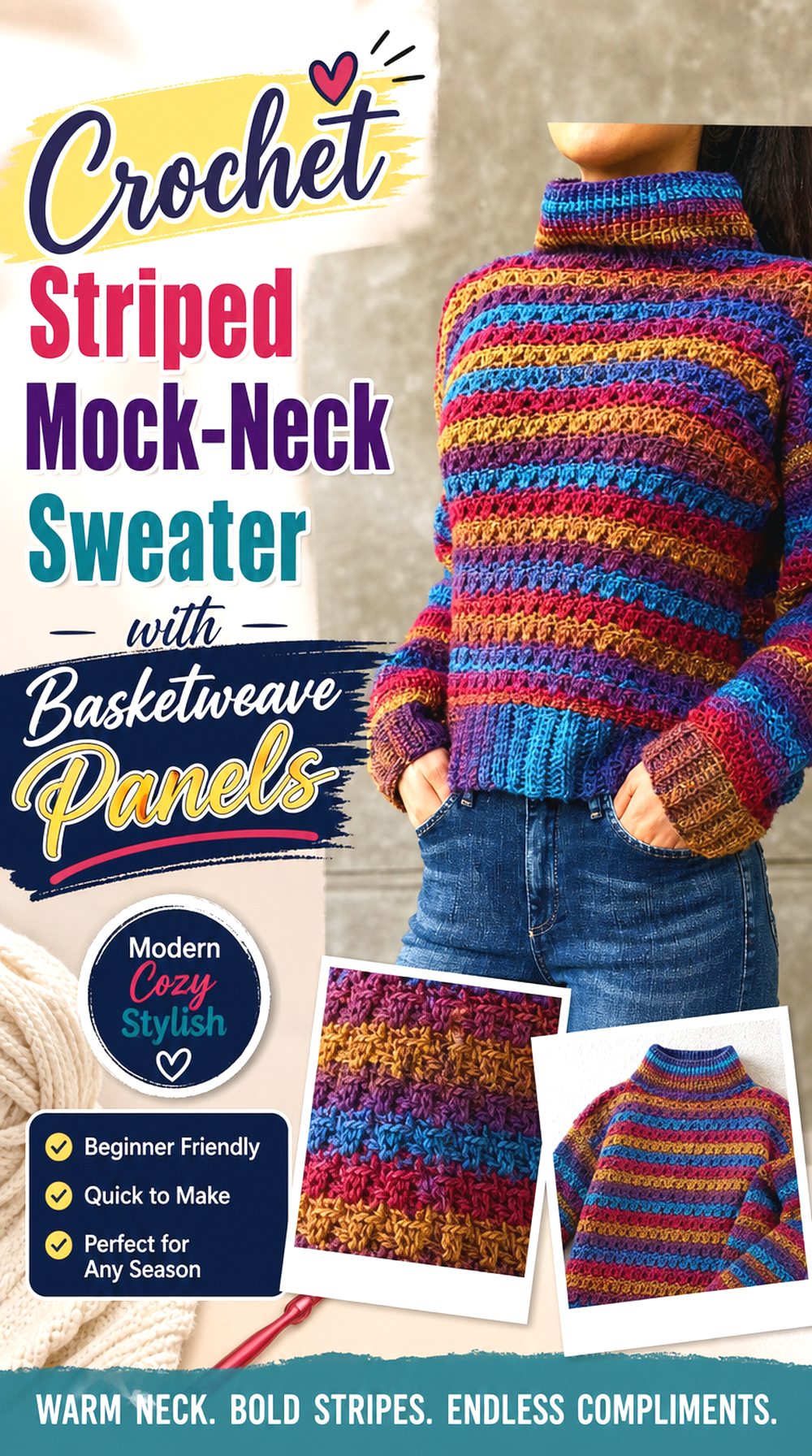
- Crochet Striped Mock-Neck Sweater with Basketweave Panels
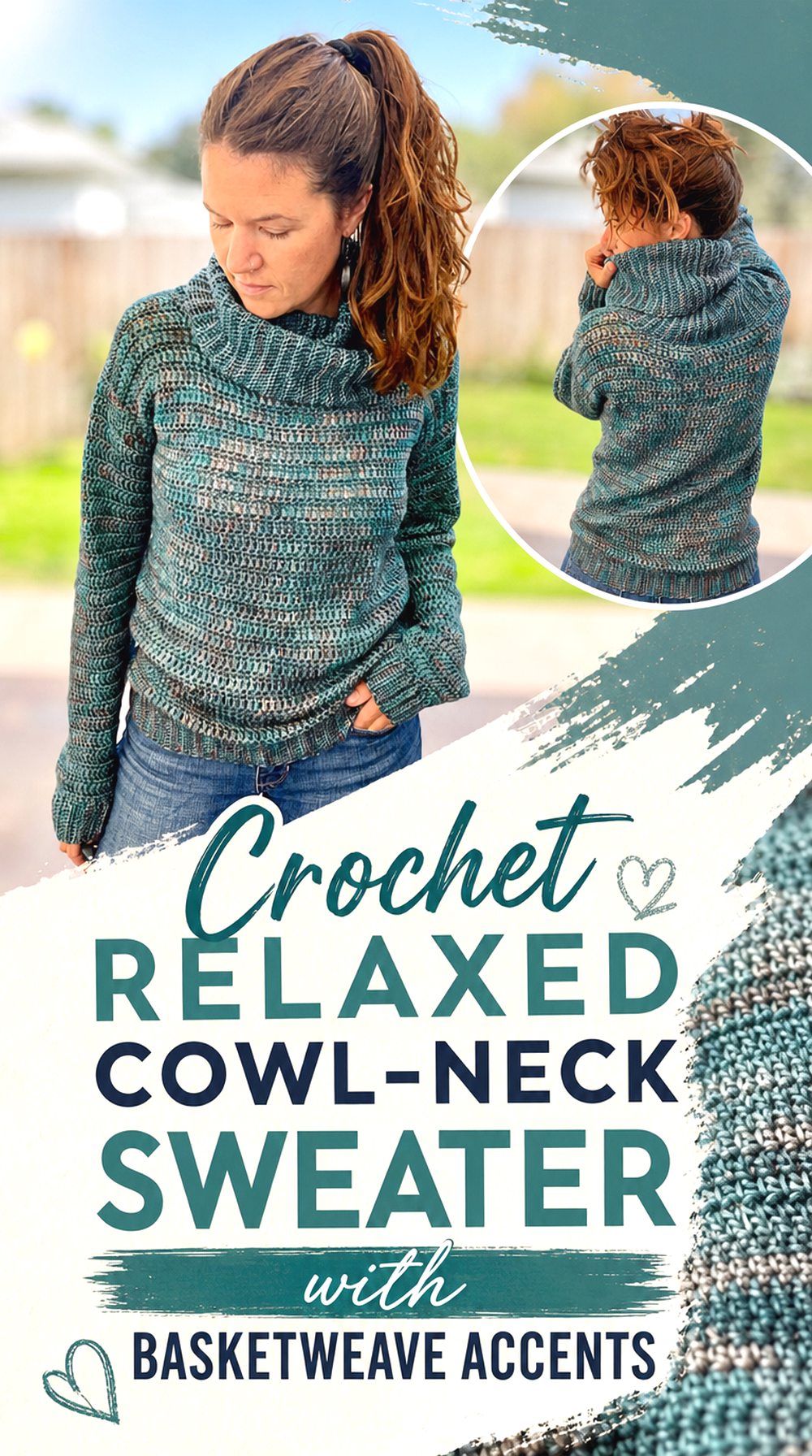
- Crochet Relaxed Cowl-Neck Sweater with Basketweave Accents
How to Choose a Crochet Basketweave Turtleneck Sweater
Begin with the fabric. Post stitches create the raised blocks associated with Crochet basketweave, but that extra texture can produce a thicker, less fluid sweater than plain stitches. Swatch enough rows to see the completed repeat, then check the fabric around your shoulders and under a jacket rather than judging only its flat appearance. The basketweave designs linked below use panel construction, ribbed edges, and seaming, with one placing the texture across the sweater and another concentrating it in a centre panel.
Next, consider the collar opening. A turtleneck must pass comfortably over the head while remaining stable enough to stand or fold. A mock neck offers less bulk, while a cowl provides more room and softer drape. The high-neck references below demonstrate adjustable, made-to-measure, ribbed, and fold-over approaches.
Finally, allow suitable ease. Dense basketweave across the entire body may need more room than a sweater with one textured panel. Check bust width, armhole depth, sleeve mobility, and collar comfort before completing every seam.
Crochet All Over Basketweave Mock Neck Sweater Route
Design Details
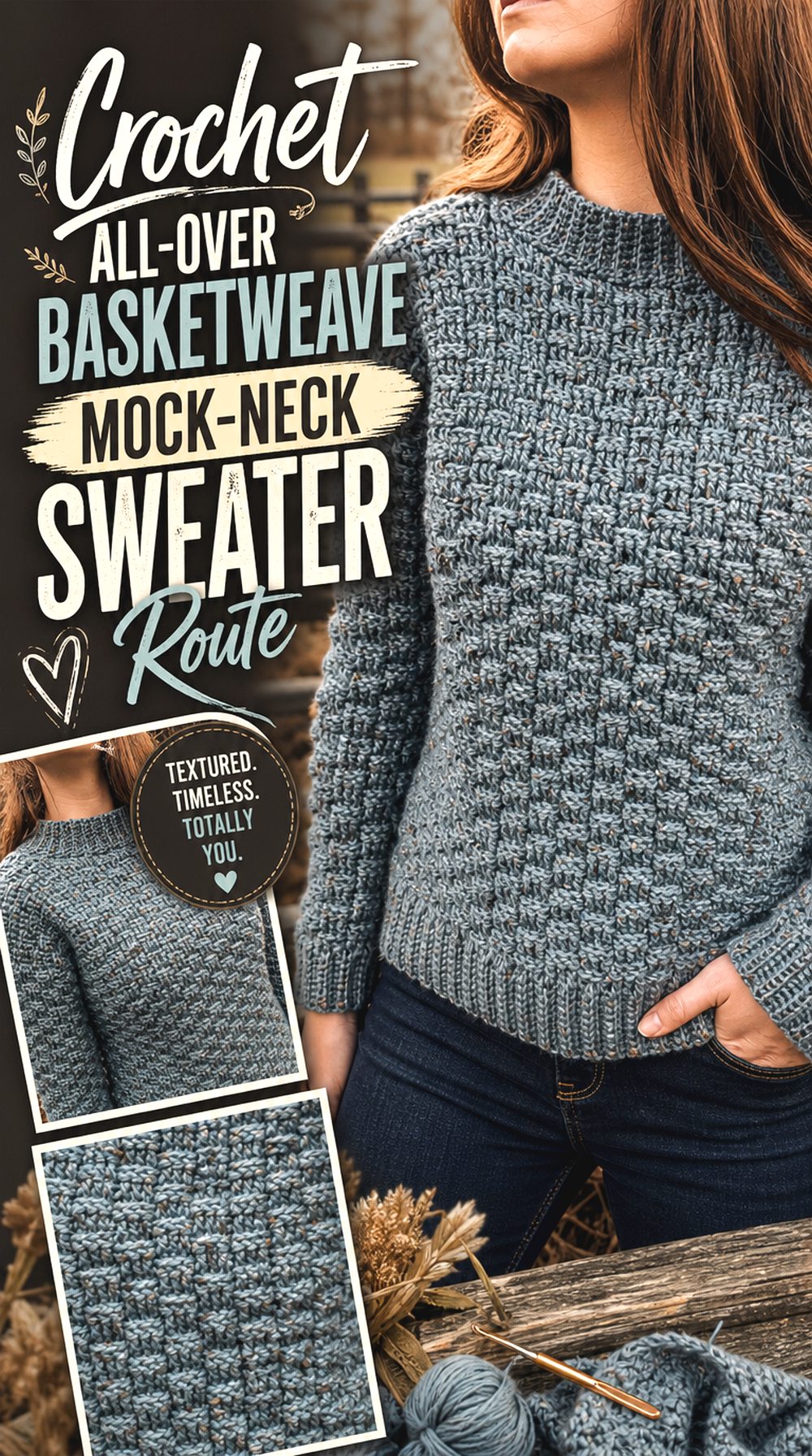
The linked Crochet sweater places raised basketweave-style texture across the body and sleeves. Front-post and back-post double crochet create the alternating surface, while ribbing finishes the lower edge, cuffs, and original neckline. The garment is assembled from separate front, back, and sleeve panels worked from the bottom upward.
Customisation Idea
This is the strongest starting point for an all-over textured mock-neck version. A short collar in matching ribbing would preserve the balanced finish without adding the weight of a deep fold-over neck. A solid, lightly heathered colour can keep the stitch blocks clear.
Before You Choose
The published tutorial finishes with a lower ribbed neckline, not a mock neck. Any higher collar is therefore a personal modification and is not covered by the instructions. Test the opening before extending it, because dense texture offers less forgiving stretch than loose fabric.
Crochet Centre Panel Basketweave Turtleneck Sweater Route
Construction Focus
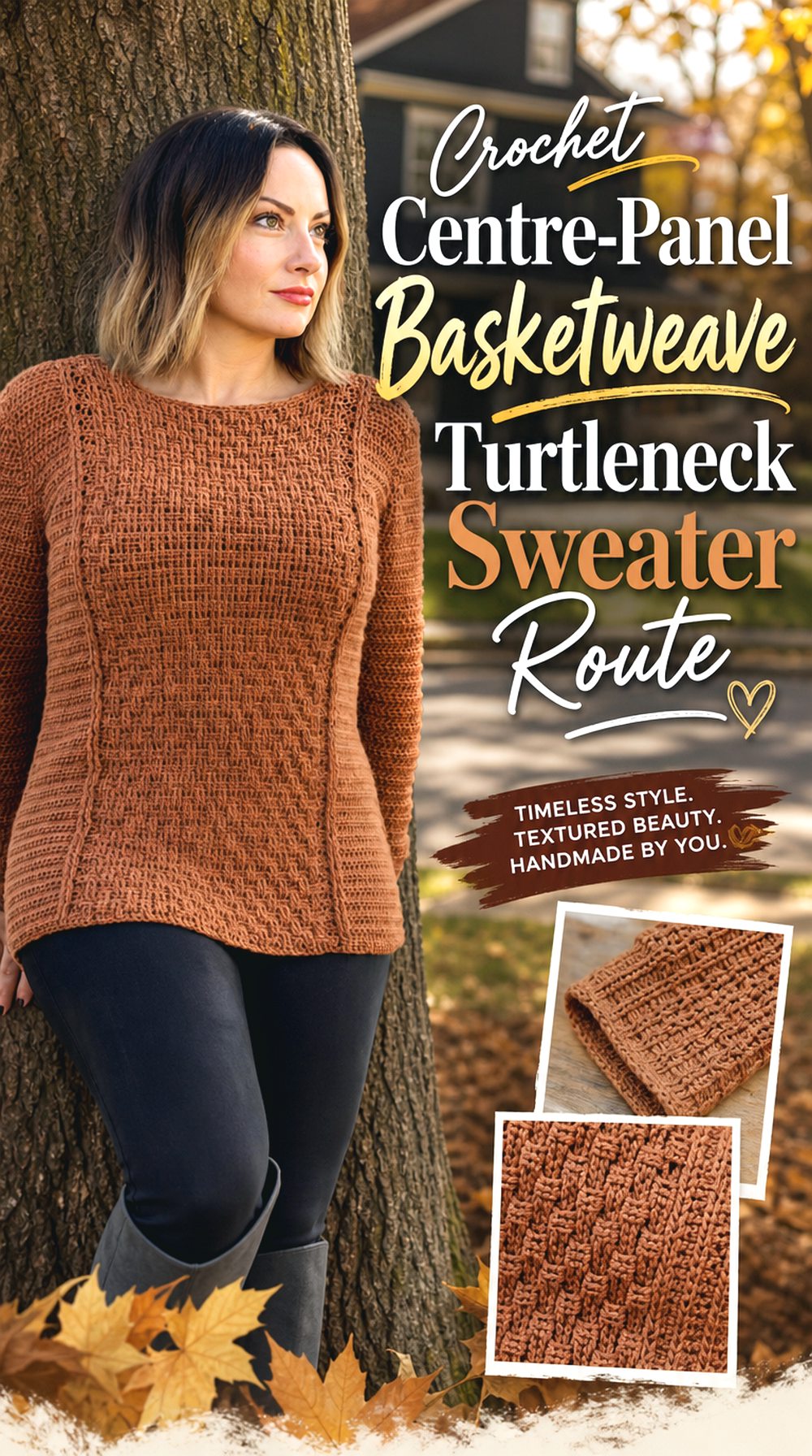
Rather than covering the entire garment, this Crochet pullover concentrates post-stitch basketweave in a centre panel surrounded by smoother half-double crochet. The lighter background lets the woven section become a focal point without giving the whole sweater the same thickness. Shaped sleeve caps and set-in sleeves create a more tailored shoulder line than a simple dropped sleeve.
Best Use
This route suits a cleaner turtleneck sweater that can be worn with tailored trousers, an A-line skirt, or under a coat. Extending the central panel visually lengthens the torso, especially when the sweater and collar remain one colour.
Practical Point
The original neckline uses edging added after the four main pieces are seamed; it does not include a turtleneck. A customised collar must fit the existing neck opening and coordinate with the lighter fabric. The shaped armholes also require more careful seaming than a boxy panel sweater.
Crochet Two Tone Turtleneck Sweater with Basketweave Focus
What Stands Out
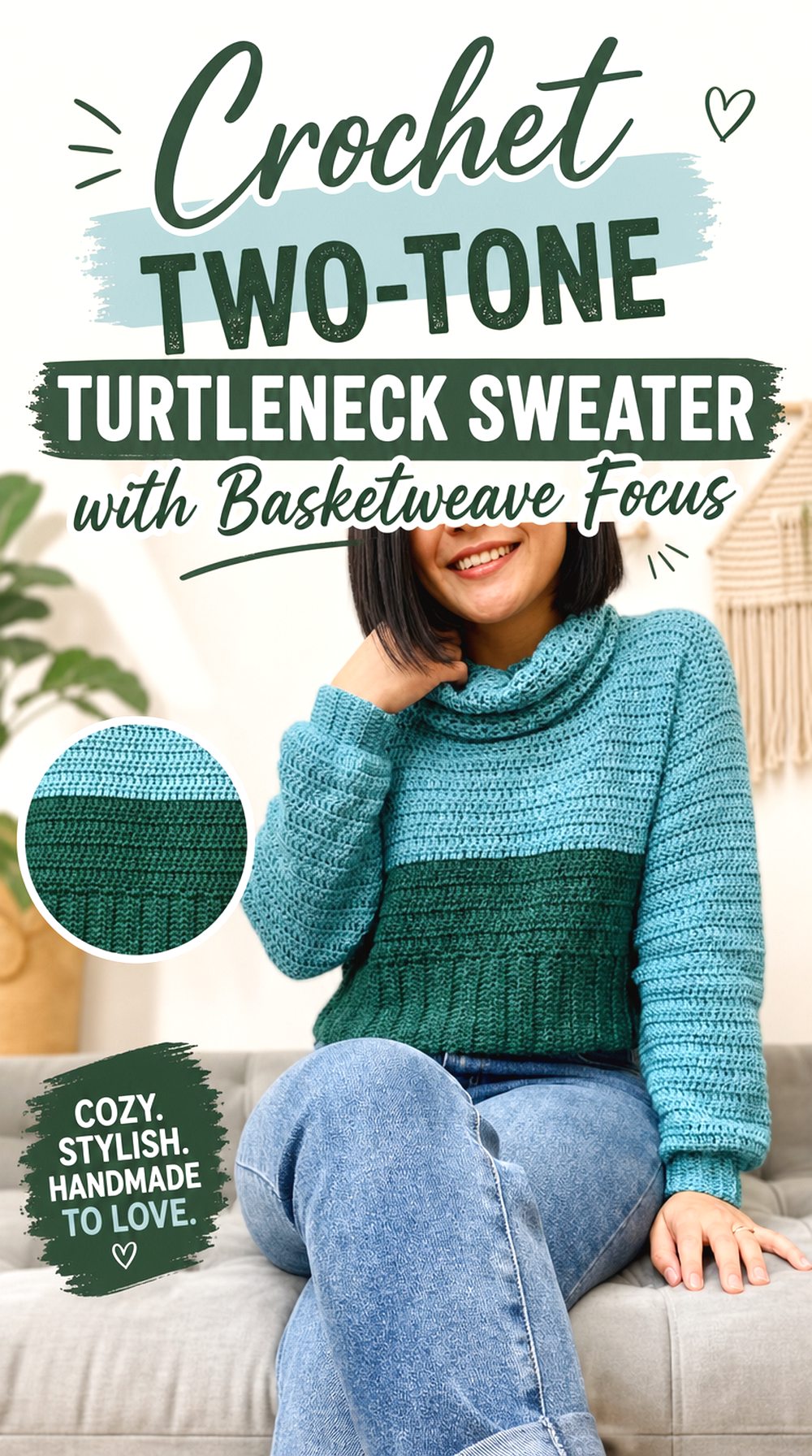
This Crochet turtleneck provides a useful reference for a true foldable high collar. Its body is made from four bottom-up pieces, with the collar added after assembly. The linked version also demonstrates a two-colour arrangement, ribbed lower sections, straight sleeves, and an airy V-stitch collar that can be shortened or lengthened.
Colour Direction
A darker basketweave body paired with a lighter hem, cuffs, and collar would frame the raised texture. A single-colour version would feel quieter and make any changes in stitch direction more visible. Keep colour changes away from complicated post-stitch transitions unless you are comfortable managing extra ends.
Good to Know
The source does not contain basketweave fabric; it supplies the turtleneck shape and panel proportions for this idea. Replacing its body stitch with basketweave would alter gauge, width, drape, and yarn use, so the two fabrics cannot simply be exchanged stitch for stitch.
Crochet Striped Mock Neck Sweater with Basketweave Panels
Fit and Finish
The linked Crochet design has a loose, made-to-measure body, long sleeves, ribbed cuffs, a ribbed hem, and a high mock neck that can be adjusted in width and length. Its collar may remain upright or become slightly rolled, making it a useful fitting reference for anyone who finds a full turtleneck restrictive.
Customisation Idea
Place basketweave only on the front and back panels, leaving the sleeves and neckline smoother. This can reduce bulk near the elbows and face. Self-striping yarn produces unpredictable colour blocks, whereas planned solid stripes can align more neatly with the basketweave repeat.
Before You Choose
The original sweater uses basic stitches rather than basketweave, so its made-to-measure instructions do not calculate a substituted textured panel. Crochet a generous swatch and compare its finished width with the source fabric. Significant positive ease may suit the thicker texture, but too much can make the shoulders and sleeves feel heavy.
Crochet Relaxed Cowl Neck Sweater with Basketweave Accents
Why It Works
A cowl offers the visual warmth of a turtleneck with more space around the neck. The linked Crochet sweater combines a ribbed hem, a body worked as a bottom-up tube, alternating single and double crochet rows, and a separate ribbed cowl attached so it folds over the joining seam. The pattern includes multiple graded sizes and relatively little body seaming.
Styling Direction
Basketweave could be limited to a broad front section, lower border, or sleeve band rather than replacing the full body fabric. This maintains a relaxed silhouette while introducing a clear woven feature. A softly twisted solid yarn will usually show the raised accents more clearly than a busy multicolour yarn.
Care Note
The original pattern does not provide a basketweave variation. Added post stitches may change the fabric’s circumference and the way the cowl balances above it. Check the weight of a completed swatch and avoid making the collar so deep that it pulls the front neckline downward.
Useful Crochet Notes
Swatch the Complete Basketweave Repeat
A small square containing only one or two rows will not show the final thickness, contraction, or block definition. Crochet several complete basketweave repeats, wash or block the swatch as appropriate for the yarn, and measure it again. Compare the finished fabric with any smoother sections intended for the sleeves, collar, or side panels.
Check the Neck Opening Before Adding Height
Join or temporarily pin the shoulder seams, then confirm that the opening passes over the head comfortably. Test this before adding a mock neck, turtleneck, or cowl. A collar can become narrower as height is added, particularly when it uses firm ribbing, dense post stitches, or a tighter hook than the sweater body.
Support Heavy Seams and Shoulders
All-over basketweave may carry more weight than plain Crochet fabric. Sew panel seams evenly without pulling them tight, and pay particular attention to the shoulders and sleeve joins. Store the finished sweater folded rather than leaving it on a narrow hanger, which may stretch the neckline or create points along the shoulders.
Conclusion
Choose the all-over basketweave route when texture is the main priority, or the centre-panel option for a lighter, more tailored appearance. The two-tone and striped ideas offer greater colour flexibility, while the cowl-neck route provides a relaxed alternative to a close collar. Before combining features from separate tutorials, compare swatches carefully and treat changes to the stitch pattern or neckline as garment-design modifications rather than direct substitutions.
FAQs
Can basketweave stitch be used for an entire Crochet turtleneck sweater?
It can, but the resulting fabric may be thicker and heavier than a sweater made with basic stitches. Check the weight, flexibility, and stretch of a large swatch first. Extra ease may improve movement, while smoother underarm sections or sleeves can reduce bulk without removing the main basketweave effect.
How much ease should a basketweave sweater have?
The right amount depends on yarn, stitch density, and preferred styling. A structured sweater may need enough room for comfortable arm movement and layering, but excessive width can make dense fabric hang heavily. Compare the finished swatch with a well-fitting sweater and measure the bust, shoulders, armholes, and sleeve width separately.
Which neckline is most comfortable for dense Crochet fabric?
A short mock neck generally creates less weight and facial bulk than a deep folded turtleneck. A cowl is roomier but uses more fabric. Sensitive wearers may prefer a wider opening and soft, smooth yarn. Whatever the style, confirm that the unfinished neck opening passes easily over the head.
Can I replace a plain sweater stitch with basketweave directly?
Not reliably. Basketweave may have a different stitch gauge, row gauge, thickness, and yarn requirement from the original fabric. Replacing stitches one for one can change the sweater’s width and length. Make both swatches, compare their measurements, and recalculate the panel dimensions before beginning the full garment.
How should a Crochet basketweave turtleneck sweater be stored?
Fold it on a shelf or in a breathable storage container, supporting the collar rather than crushing it tightly. Long-term hanging may stretch a heavy sweater or distort the shoulders. Clean the garment according to its yarn label, dry it in a supported position, and store it only when completely dry.


