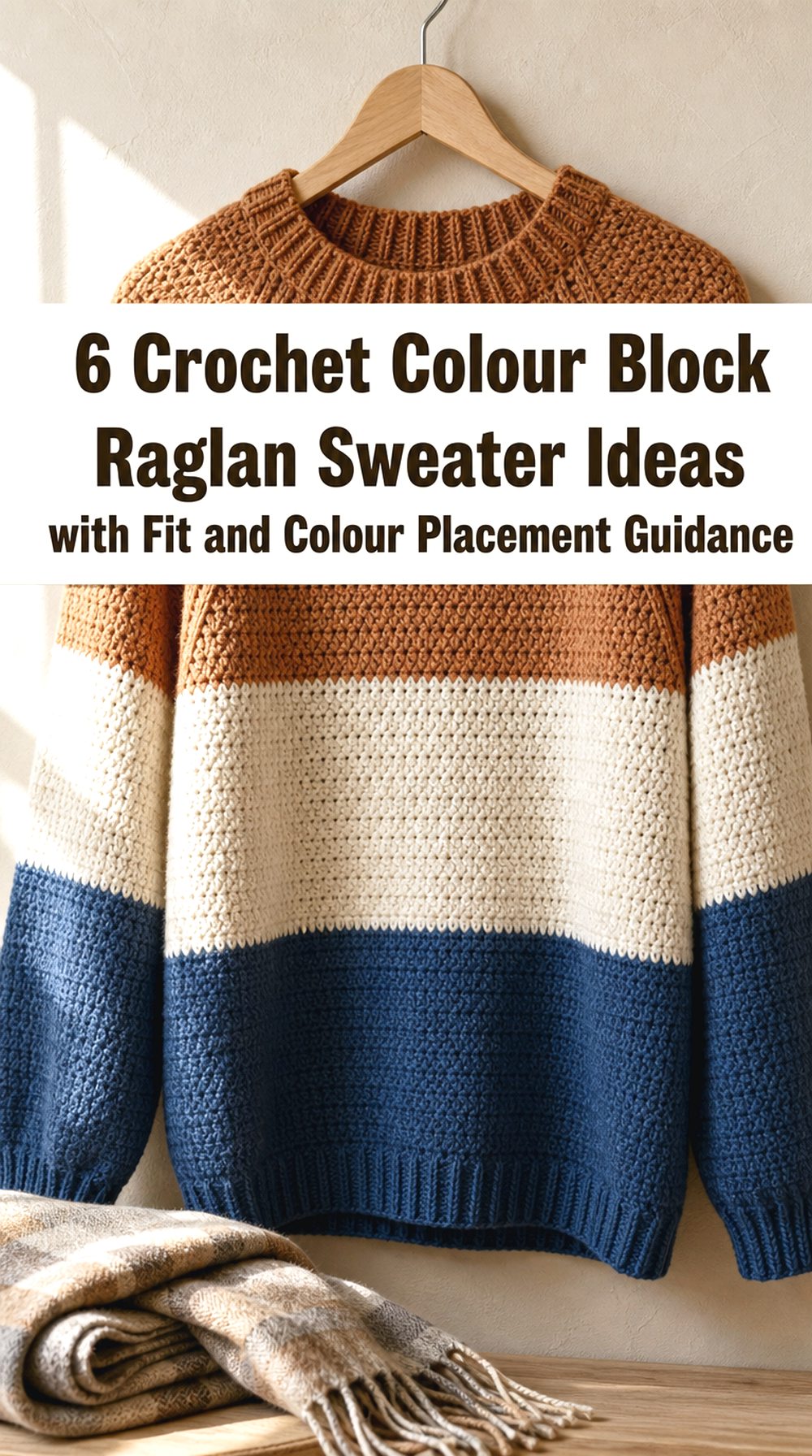
Colour blocking gives a raglan sweater more than a new palette: it can emphasise the diagonal yoke lines, draw attention to the sleeves, or visually divide the body into balanced sections. These six Crochet colour block raglan sweater ideas range from chunky three-band pullovers to slim two-tone designs, graduated stripes, and contrast-focused sleeves. Each linked project uses raglan shaping, but the finished silhouettes vary in yarn weight, ease, neckline treatment, sleeve finish, and colour distribution. The guide below explains what to check before choosing a size, how broad or narrow blocks affect the overall look, and where extra attention may be needed at colour changes. You will also find practical Crochet notes on swatching, layering, blocking, and keeping joins neat.
Quick List
- Three-Band Crochet Colour Block Raglan Sweater
- Chunky Waist-Length Crochet Colour Block Raglan Sweater
- Two-Tone Crochet Colour Block Raglan Sweater
- Graduated Stripe Crochet Colour Block Raglan Sweater
- Statement-Sleeve Crochet Colour Block Raglan Sweater
- Variegated-and-Solid Crochet Colour Block Raglan Sweater
How to Choose a Crochet Colour Block Raglan Sweater for Fit and Comfort
Start with the finished bust measurement rather than the size label. Raglan designs can range from close fitting to deliberately roomy, and the underarm depth matters as much as chest width. A top-down construction lets you check the yoke before separating the body and sleeves, but remember that washing and blocking may change the fabric.
Next, compare yarn weight and stitch density. Bulky yarn creates strong, graphic blocks and a warmer layer, while DK or worsted yarn generally gives finer colour transitions and less bulk under a coat. Keep all chosen colours similar in fibre content and thickness so one section does not stretch or shrink differently.
Plan the block boundaries around the body. A colour change directly below the yoke highlights the raglan lines; sleeve-only stripes keep the torso quieter; broad horizontal bands make the strongest statement. Finally, inspect neckline and cuff ribbing. A firm edge can stabilise an open neckline, but overly tight ribbing may affect comfort. Swatch every colour, mark raglan corners clearly, and try the sweater on before committing to long body or sleeve sections.
Three Band Crochet Colour Block Raglan Sweater
Design Details
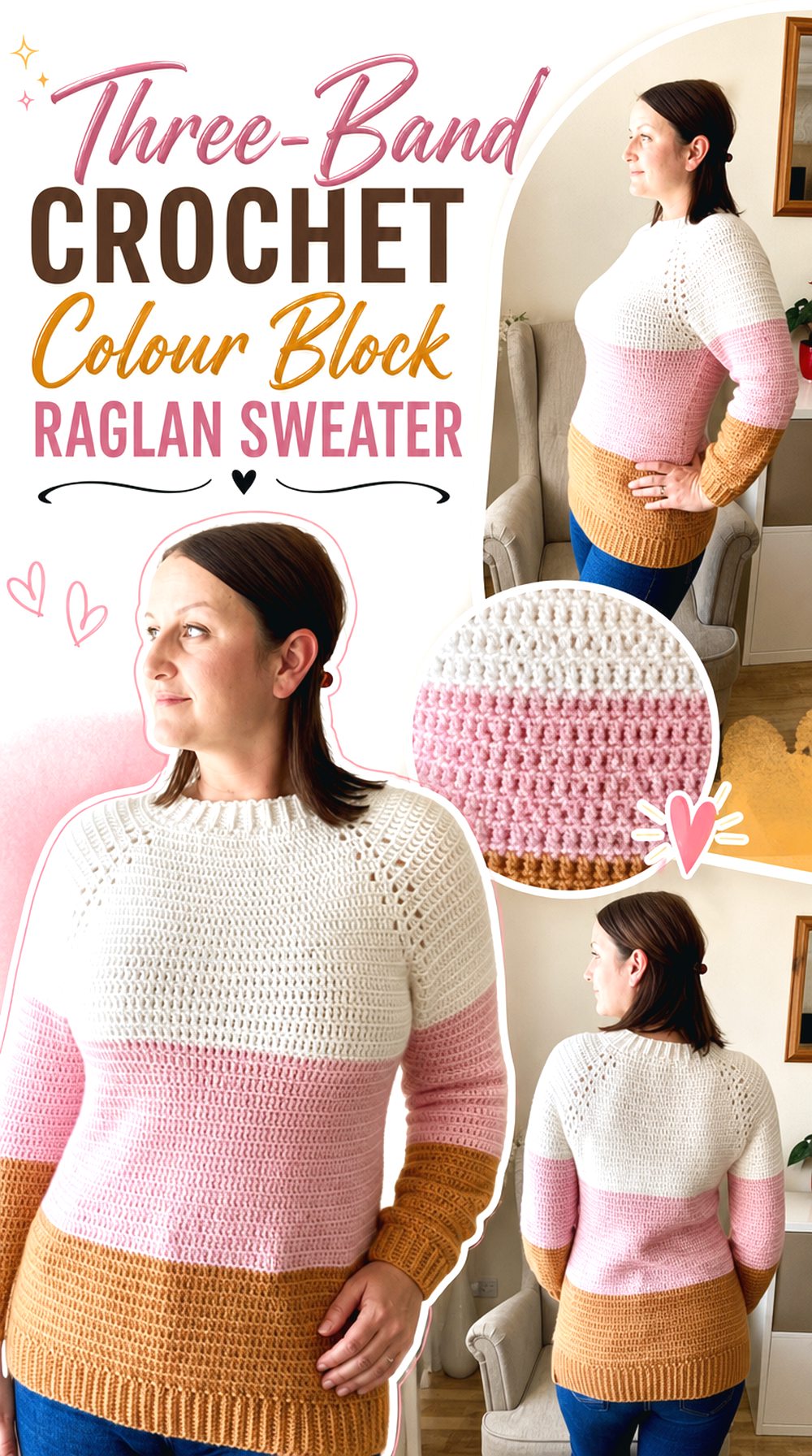
The Ada sweater uses three broad horizontal colour sections across a long, straight raglan silhouette. Its neckline, hem, and cuffs have ribbed-looking finishes, while open spaces along the raglan increases make the diagonal shaping visible rather than hiding it inside the colour changes.
Why It Works
This Crochet colour block raglan sweater suits readers who want equal visual weight from all three shades. Repeating the block sequence on the sleeves keeps the garment coordinated from every angle, and the top-down construction allows body and sleeve length to be checked as work progresses.
Before You Choose
The design is intended with little ease, so compare the finished chest measurement with the amount of room you prefer. Three large blocks also make uneven round height noticeable. Swatch each colour, keep tension consistent at joins, and choose shades with enough contrast to preserve the graphic effect.
Chunky Waist Length Crochet Colour Block Raglan Sweater
What Stands Out
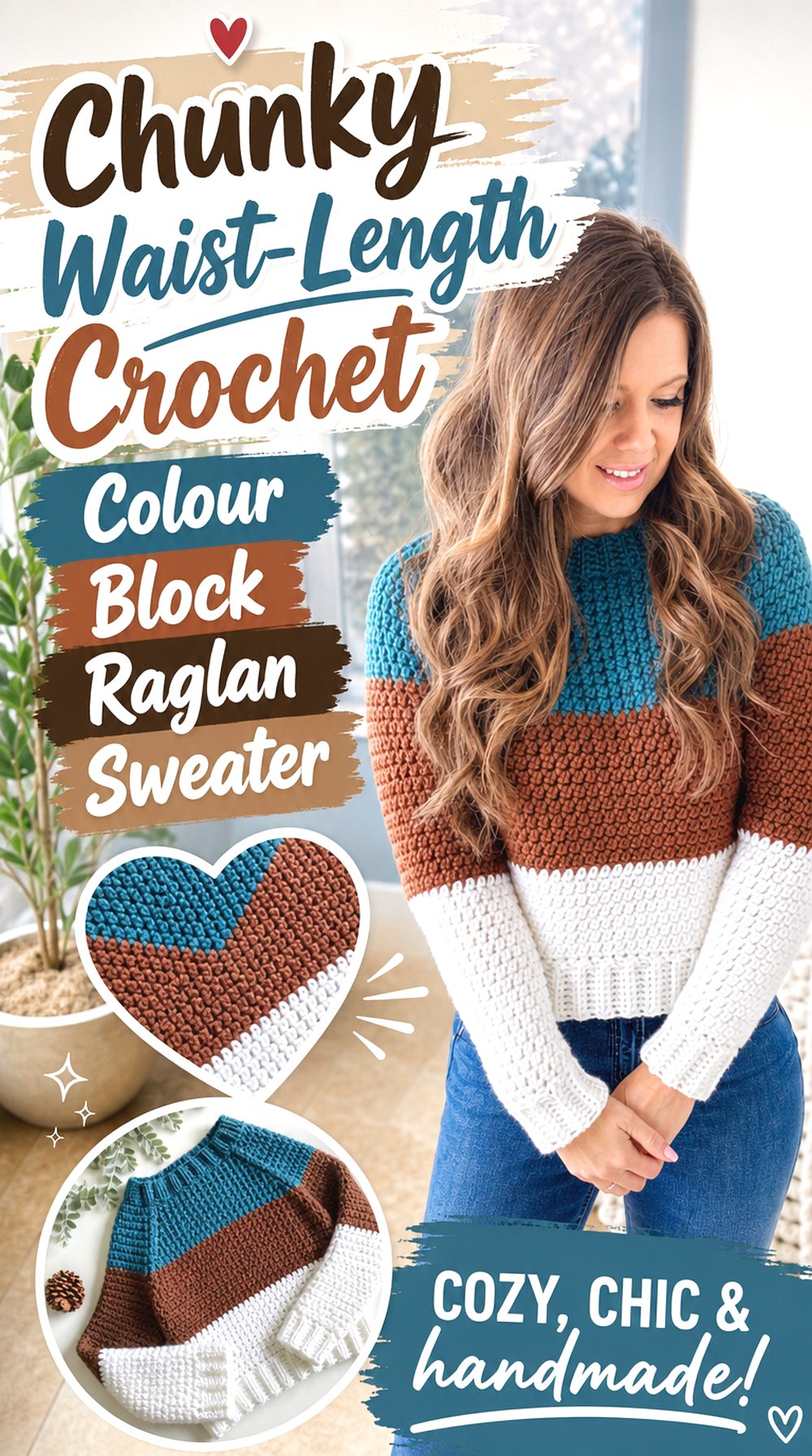
This waist-length Crochet raglan sweater uses three substantial colour bands, a defined neckline, and matching ribbed edges. The bulky yarn and simple surface texture make each block read clearly, while the seamless top-down construction keeps the colour changes continuous around the body.
Best Use
The compact length works well with high-rise trousers, jeans, or skirts, especially when the lowest band contrasts strongly with the waistband. Readers who prefer a longer layer can extend the body before adding the hem, as the linked instructions allow length adjustment.
Practical Point
Bulky yarn produces a warm, pronounced fabric that may feel less flexible under a fitted coat. Check the yoke and upper-arm room before continuing, and avoid adding excessive positive ease unless a deliberately oversized shape is wanted. A light centre band between two deeper colours can keep the broad blocks from looking visually heavy.
Two Tone Crochet Colour Block Raglan Sweater
Colour Direction
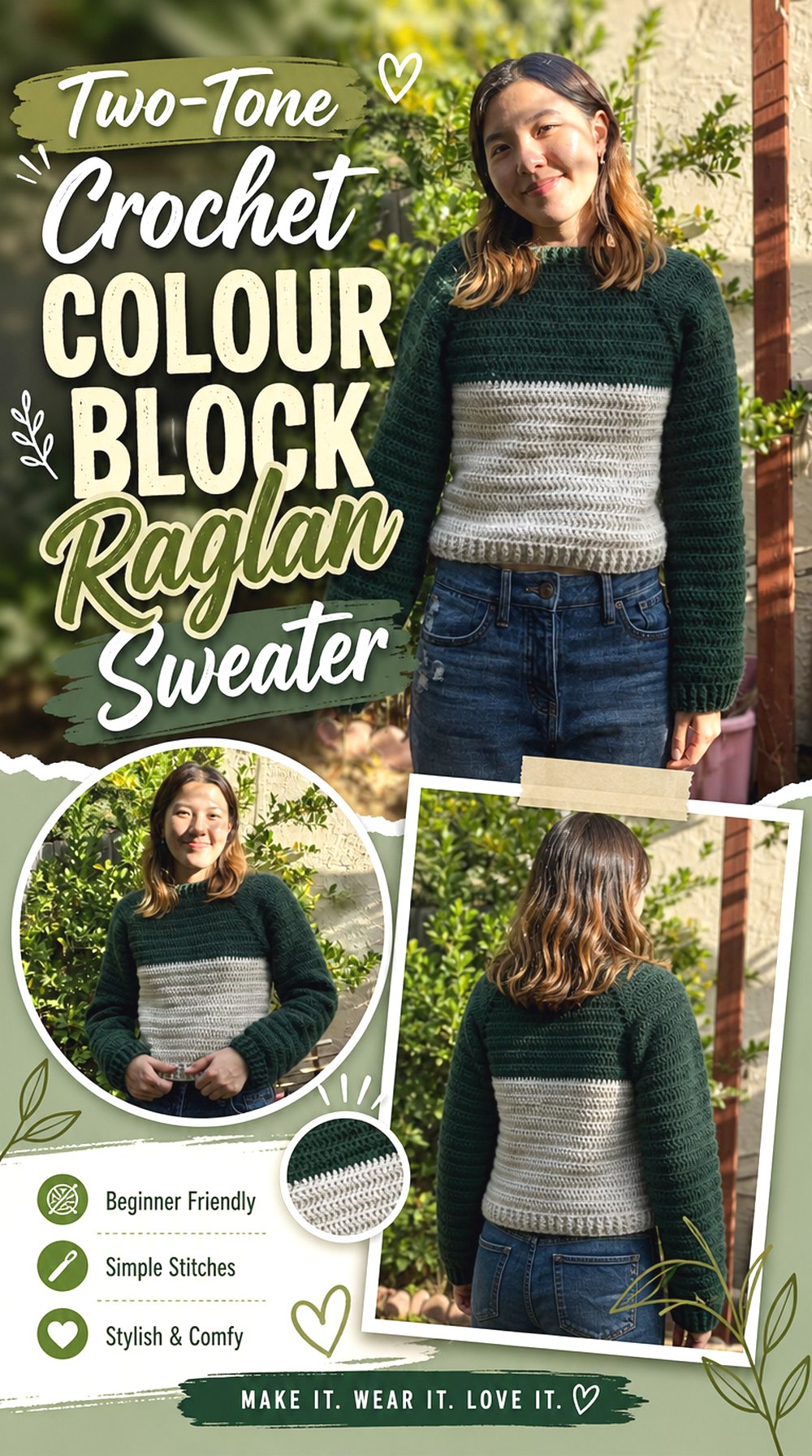
The two-tone layout separates a darker yoke and sleeves from a lighter body, creating one clean boundary below the armholes. Double crochet gives the fabric an even texture, and post-stitch ribbing finishes the collar, cuffs, and hem without adding another colour.
Who It Suits
This Crochet colour block raglan sweater suits anyone who prefers a restrained palette but still wants clear contrast. The darker upper section draws attention to the shoulders and raglan lines, while the lighter torso keeps the lower half visually open.
Fit and Finish
The tutorial explains how to add width when splitting the yoke and taper the body or sleeves with decreases. That flexibility makes frequent try-ons important. Keep the body colour change level, secure the yarn ends carefully, and consider reversing the light-dark placement if the paler yarn is more transparent.
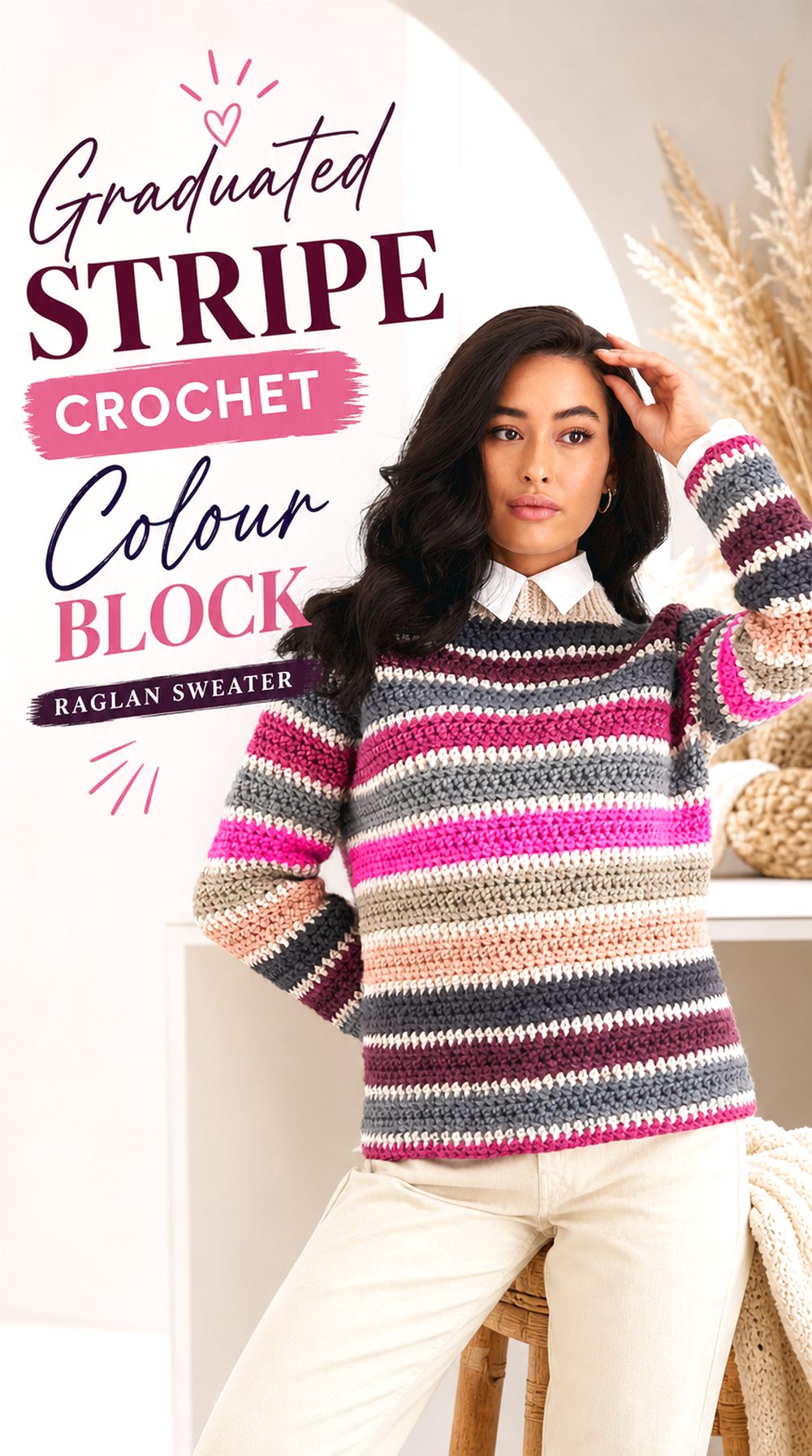
Graduated Stripe Crochet Colour Block Raglan Sweater
Design Details
This Crochet raglan sweater uses coordinated horizontal stripes from the neckline downward, with the colour sequence continuing across body and sleeves. Half double crochet creates a compact surface, while slip-stitch ribbing gives the neckline and edges a firm frame.
Everyday Use
The repeated stripes suit readers who enjoy several related shades without planning separate large blocks. Its roomy finished measurements support comfortable layering, and the top-down construction keeps the stripe order aligned around the garment.
Good to Know
Pre-coordinated yarn simplifies colour selection, but the stripe depth should still be planned before beginning the sleeves. Readers who want exact symmetry can record the colour-change rounds or use individual solid shades. Check the pattern’s finished bust rather than assuming the grouped size label will provide a close fit, and dry the sweater flat to help preserve the raglan shape.
Statement Sleeve Crochet Colour Block Raglan Sweater
What Stands Out
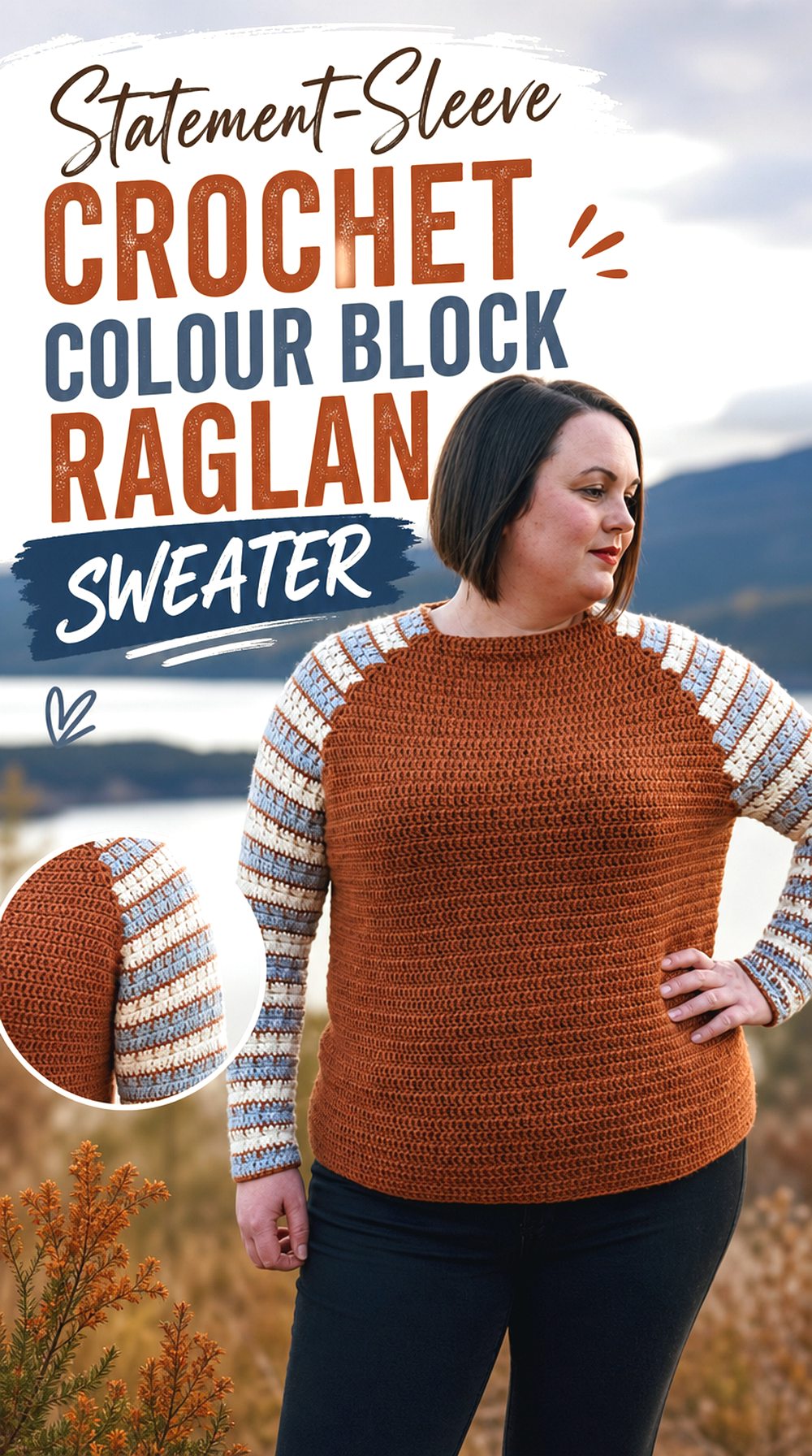
The torso stays mainly in one colour while the sleeves carry contrasting stripes and repeating texture. Raglan increases frame the upper body, and the colourwork begins within the yoke so the sleeve emphasis runs from neckline to cuffs.
Why It Works
This Crochet colour block raglan sweater sits between a plain pullover and an all-over striped design. Keeping the body quiet makes the sleeves the focal point, while three shades provide enough contrast for the texture to remain visible.
Construction Focus
The pattern works top down and carries or changes yarn through the sleeve-colour areas. That reduces some finishing, but tight colour changes can affect the yoke. Keep the inactive yarn relaxed, mark each raglan section, and compare both sleeves often. The body has positive ease while the sleeves fit more closely, so check both measurements before choosing a size.
Variegated and Solid Crochet Colour Block Raglan Sweater
Colour Direction
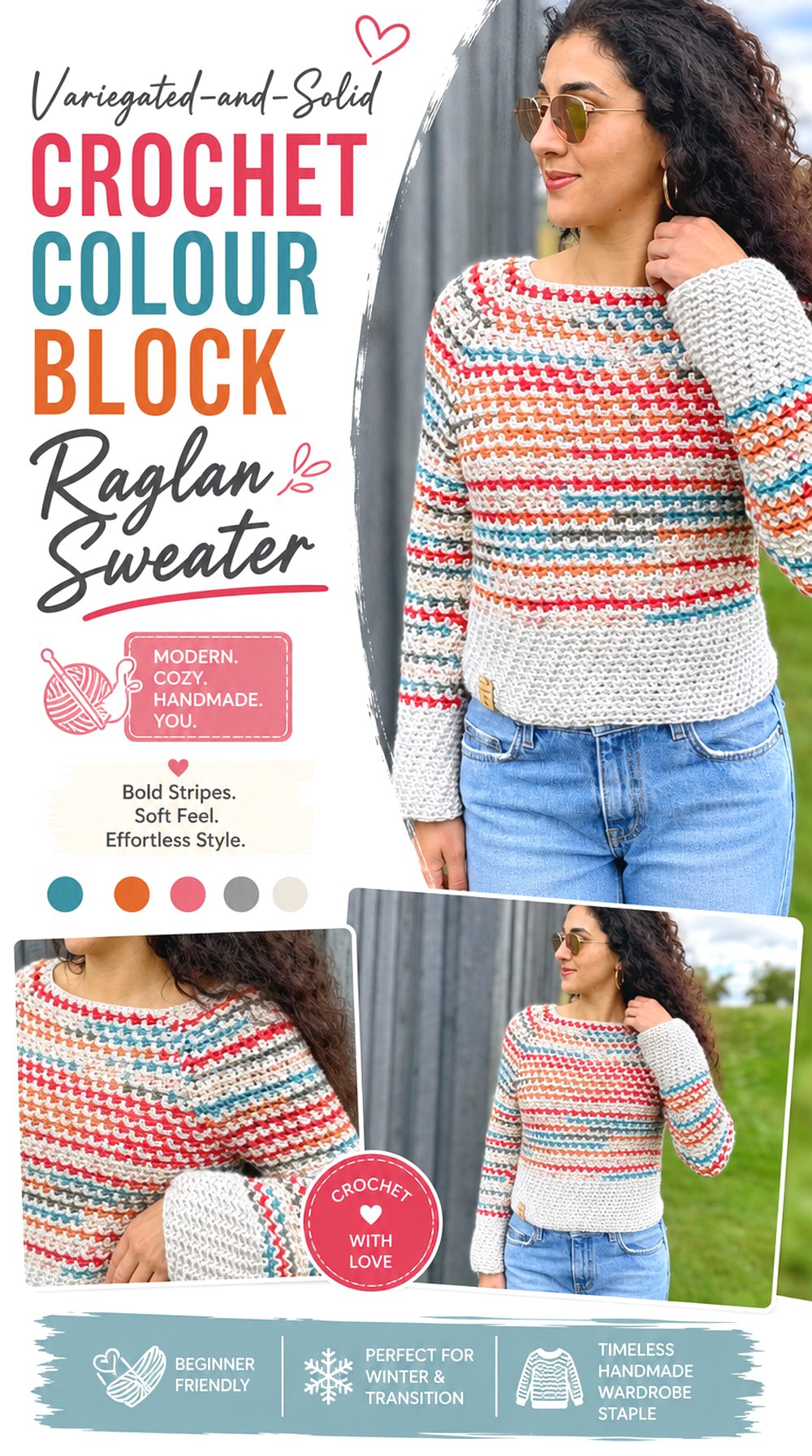
The Amber sweater combines a solid shade with variegated or self-striping yarn, allowing colour movement to form broad, irregular bands across a long-sleeved raglan shape. The simple stitch surface keeps the changing shades readable, while solid sections give the eye a place to rest.
Who It Suits
This Crochet colour block raglan sweater suits readers who want a multi-colour result without coordinating several separate skeins. It can also make a highly variegated yarn easier to wear by pairing it with a calm neutral.
Before You Choose
Colour repeats vary by sweater size, so the finished placement may not match the sample exactly. Alternate skeins when necessary to soften abrupt dye-lot changes, and reserve enough solid yarn for balanced sections on both sleeves. The pattern includes fit-adjustment guidance, but the yoke should still be tried on before the body and sleeves are separated.
Useful Crochet Notes
Choose Compatible Yarns
Choose yarns with matching weight, fibre behaviour, and washing instructions. A denser or less elastic colour can pull one block narrower than the others, especially across the yoke. Crochet and wash a joined colour swatch rather than testing each shade separately. This reveals whether the fabrics relax evenly and whether any strong dye transfers onto a pale section.
Plan Matching Sleeves
Decide where each colour will begin before starting the body and sleeves. Count rounds rather than relying only on length, because sleeve shaping can change the apparent depth of a block. For symmetrical sleeves, record every colour-change round on the first sleeve and repeat the same sequence on the second.
Keep Round Joins Neat
Abrupt colour changes can create small steps at the back join when a sweater is worked in joined rounds. Follow the tutorial’s joining method, change yarn on the final pull-through of the preceding stitch, and keep the new strand relaxed. After finishing, block the sweater to smooth the transition without stretching the ribbed edges out of shape.
Conclusion
Choose the Ada or chunky pullover when broad, graphic colour sections are the priority. The two-tone version gives a quieter finish, while the Caron and Amber designs suit readers who enjoy shifting stripes. For a mostly solid wardrobe staple with stronger sleeve interest, the statement-sleeve raglan is the clearest option. Whichever style you select, let the intended fit, yarn weight, and number of colour changes guide the final decision.
FAQs
How can I make colour changes look neat?
A tidy colour block usually begins at the start of a new round. Complete the final pull-through of the previous stitch with the new colour, then continue using the joining method specified by the tutorial. Keep both yarn tails relaxed and weave them securely after checking that the boundary does not pucker.
How should I choose the correct raglan sweater size?
Use the finished garment measurements and compare them with a sweater you already enjoy wearing. Check bust width, yoke depth, upper-arm circumference, and intended ease. Raglan sweaters can fit closely through the sleeves even when the body is roomy, so choosing by bust measurement alone may be misleading.
Can I substitute a different yarn weight?
Yes, but the substitute should produce the required gauge and a similar fabric. A heavier yarn can make the yoke deeper and the blocks more rigid, while a lighter yarn may create excess drape. Swatch in the actual colours, wash it, and judge both stitch size and flexibility before continuing.
How can I keep both sleeves symmetrical?
Work the first sleeve completely, recording the round numbers for every decrease and colour change. Repeat that written sequence on the second sleeve rather than measuring by eye. When using self-striping yarn, matching the starting point in the colour repeat may require separating or rewinding part of the skein.
How should a Crochet colour block sweater be washed?
Follow the care instructions for the most delicate yarn in the sweater. Before washing the finished garment, test dark and saturated shades for colour transfer. Support the sweater’s weight when wet, reshape the raglan lines and edges on a flat surface, and store it folded so the shoulders do not stretch on a hanger.


