A Crochet cable stitch sweater vest brings raised texture to a practical layering piece, but the finished look can vary widely. Some designs place bold cables down a V-neck pullover, while others use diamond motifs, open backs, hoods, or buttoned fronts. The five ideas below show how cable placement changes structure, warmth, and visual weight. You will also find guidance on choosing ease, checking armhole depth, matching yarn to the desired drape, and finishing edges without flattening the relief. Whether the vest is intended for a collared shirt, a fitted turtleneck, or a simple long-sleeved top, these Crochet options make it easier to compare shape and function before committing to a larger wearable.
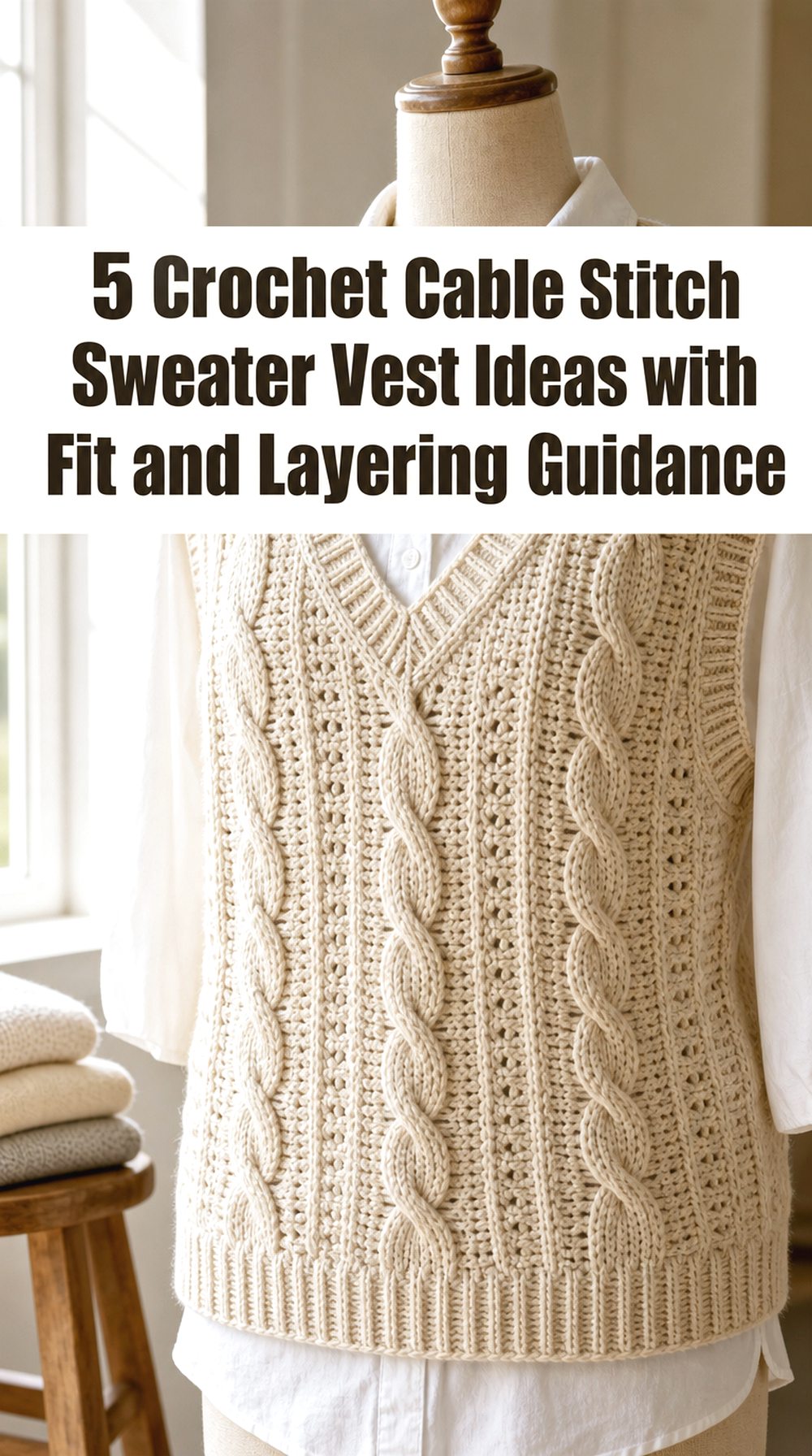
Quick List
- Crochet V-Neck Cable Panel Sweater Vest
- Crochet Diamond and Swirl Cable Sweater Vest
- Crochet Open-Back Cable Collar Sweater Vest
- Crochet Hooded Longline Cable Sweater Vest
- Crochet Button-Front Cable Sweater Vest
How to Choose a Crochet Cable Stitch Sweater Vest for Fit and Layering
Begin with the intended layer. A vest worn over a crisp shirt needs more room through the bust, back, and armholes than one worn over a thin tee. Compare the finished garment dimensions with both your body and the clothing underneath rather than choosing by label alone. Cable stitches can draw fabric inward, so a generous-looking panel may finish narrower than plain Crochet worked with the same stitch count.
Next, consider weight and drape. Closely packed post-stitch cables create a firmer, warmer surface, while lighter yarn and wider areas of plain fabric reduce bulk. Check whether the design is fitted, oversized, open-front, or adjustable before substituting yarn.
Neckline and armhole finishing also affect comfort. Ribbing can pull edges inward; a simple border may feel looser. Swatch the cable section, wash it as the yarn label recommends, and measure again. Finally, plan length around your usual trousers or skirts. Adding repeats may change both yarn use and the position of the cable motif.
Crochet V Neck Cable Panel Sweater Vest
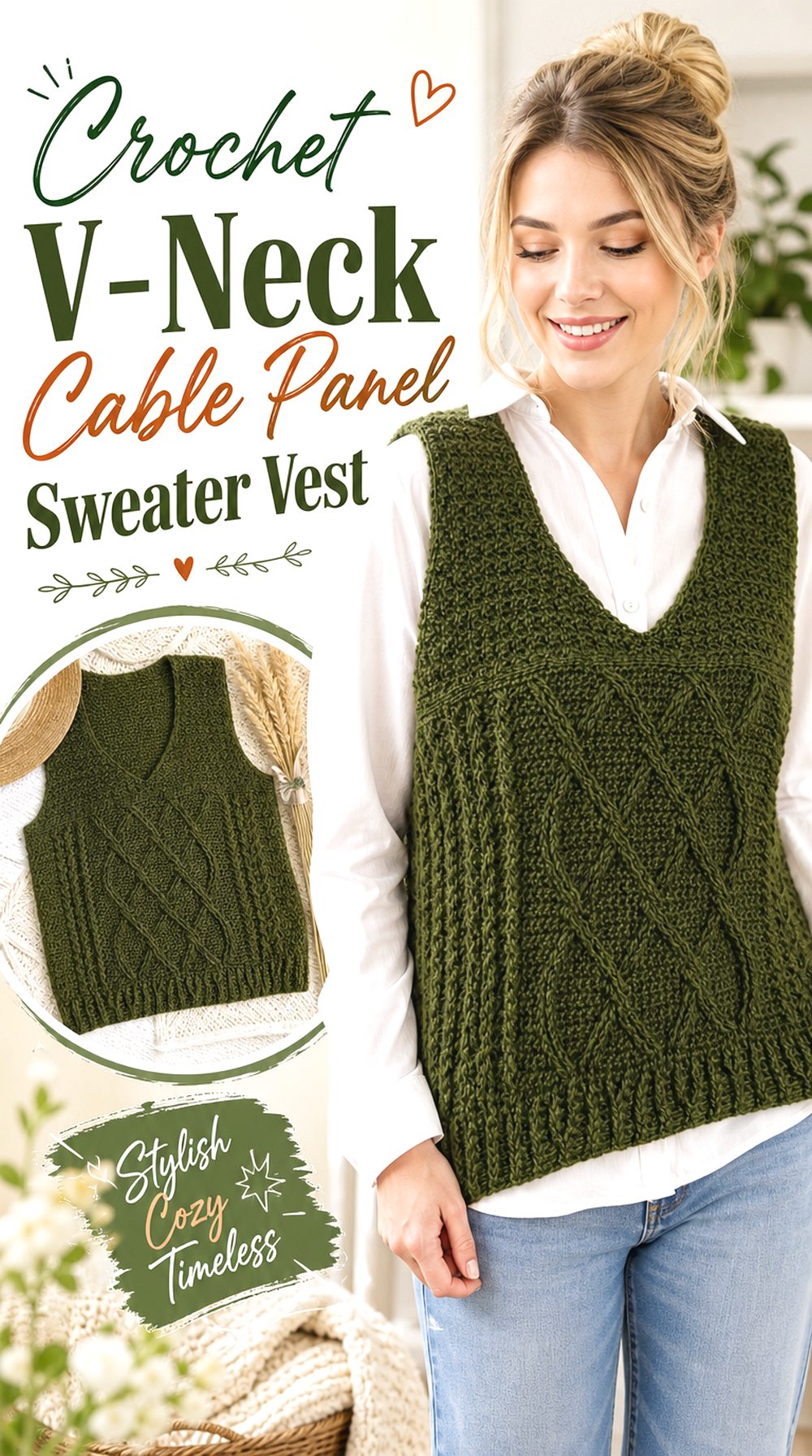
Design Details: This V-neck pullover places several raised cable sections across the front and back, balancing the relief with flatter areas so the Crochet fabric does not look uniformly heavy. The source describes a slightly oversized fit and provides four grouped sizes from XS/S through 3XL/4XL.
Best Use: Its clean neckline works well over a collared shirt or fitted turtleneck. The simple neck and armhole borders keep attention on the cable panels, while extra edging rounds can reduce an opening that feels too loose.
Practical Point: The body length can be extended with another cable set, but that adjustment changes yarn use and the motif position. Marking the beginning and end of larger cable sections can also reduce placement errors.
Crochet Diamond and Swirl Cable Sweater Vest
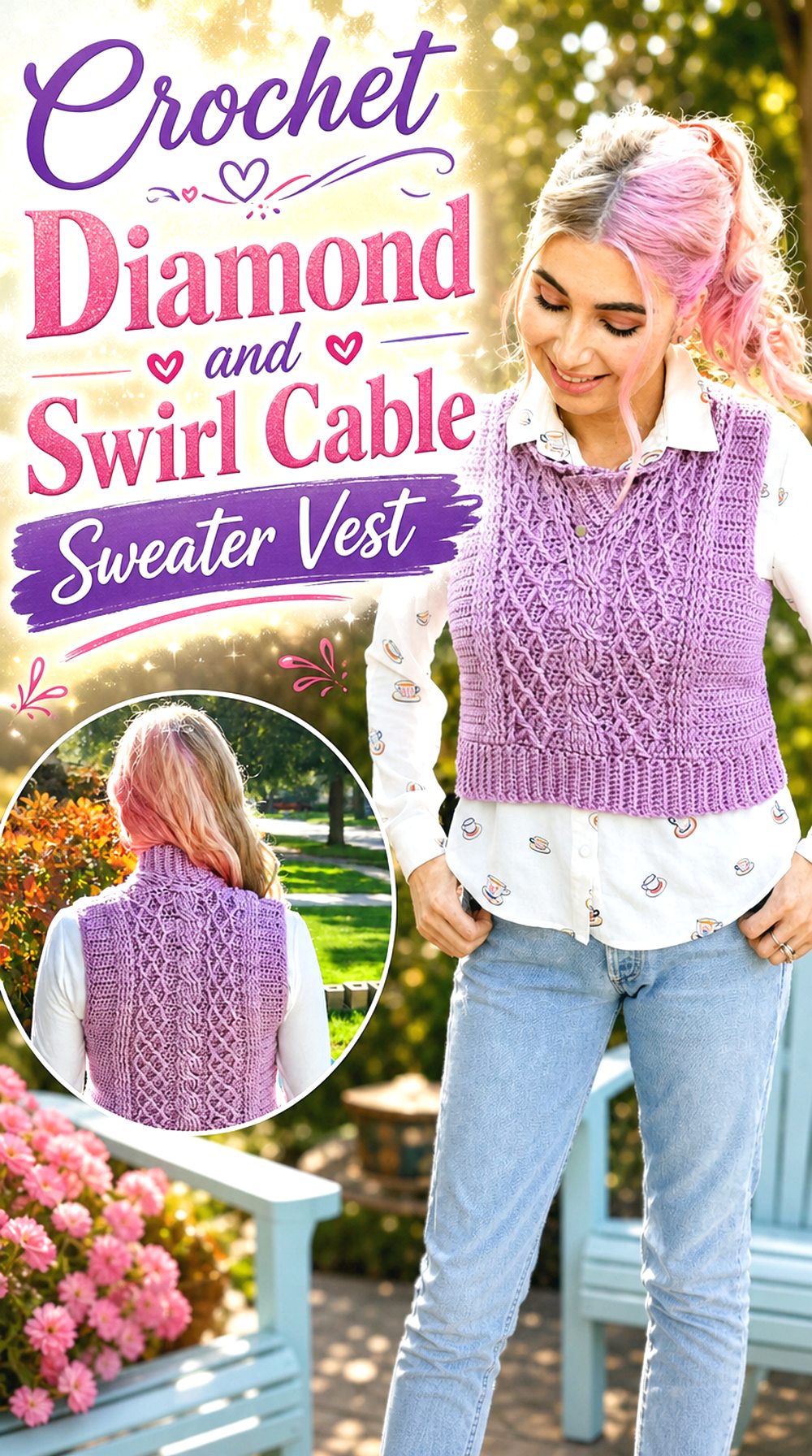
What Stands Out: Diamond texture and a swirling central cable give this Crochet sweater vest a more intricate, fitted appearance. A ribbed hem anchors the lower edge, while shaped armholes and narrow finishing rounds create a tidy sleeveless outline.
Who It Suits: The design is written from XS through 5X and is intended to fit close to the body. Readers planning to layer it over anything thicker than a fine shirt may prefer the next size, as the source itself recommends sizing up for a looser result.
Before You Choose: The cable sequence combines several raised textures, so a full motif swatch is more useful than testing only a plain section. A close fit shows the pattern clearly, but it offers less room for bulky layers and makes accurate gauge especially important.
Crochet Open Back Cable Collar Sweater Vest
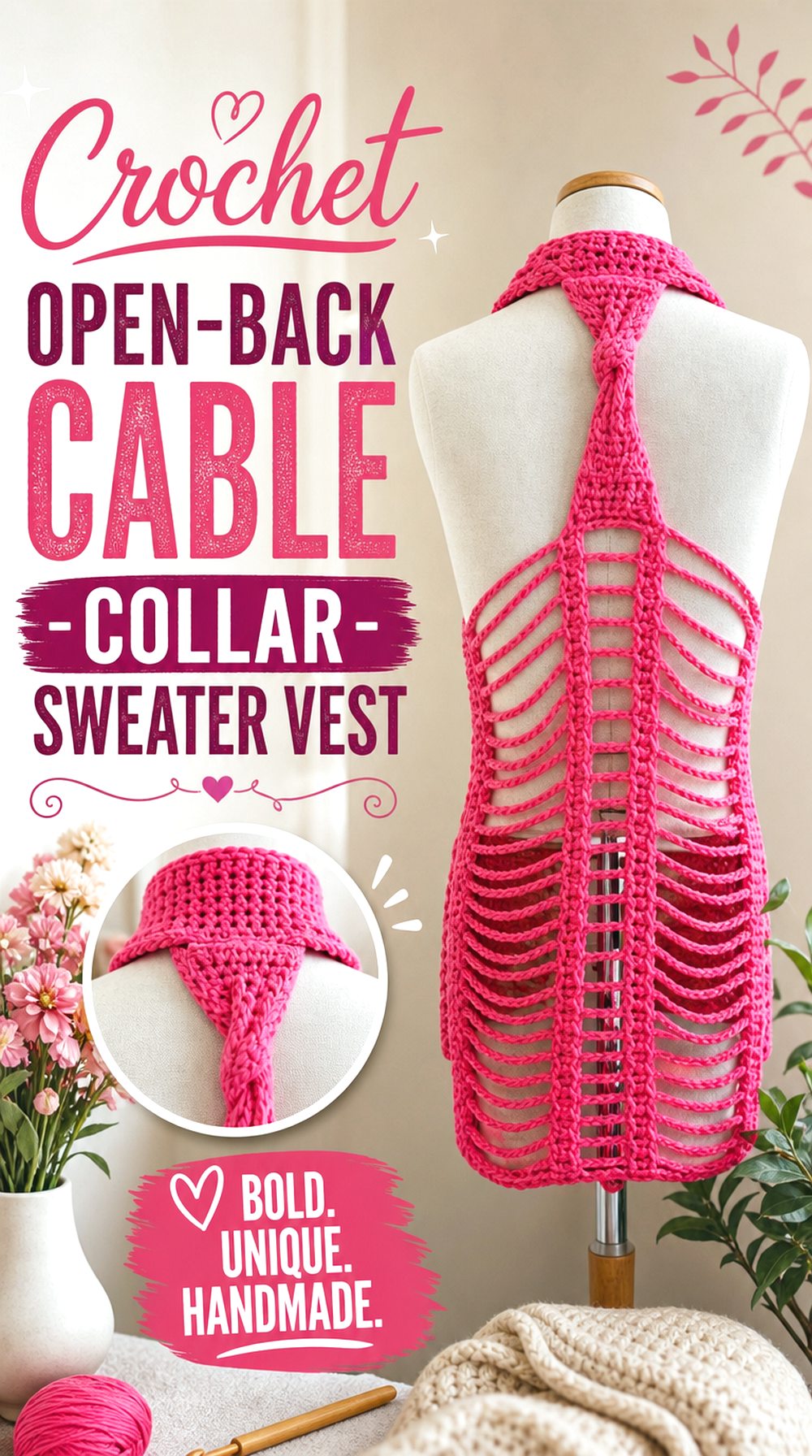
Design Details: Rather than forming a conventional pullover, this Crochet vest uses long cabled front bands that continue into a collar. The back is highly open, with horizontal strands joining a central textured spine, so the garment reads as a statement layer rather than a warmth-first sweater vest.
Best Use: Wear it over a fitted tank, dress, or long-sleeved top that you are happy to keep visible. A strong contrast between the vest and base layer can make the open-back construction easier to see.
Care Note: The linked instructions include small, medium, and large options, but the decorative back has many exposed sections. Rings, bag hardware, and rough chair backs may catch them, so folded storage is safer than a narrow hanger that could stretch the long collar bands.
Crochet Hooded Longline Cable Sweater Vest
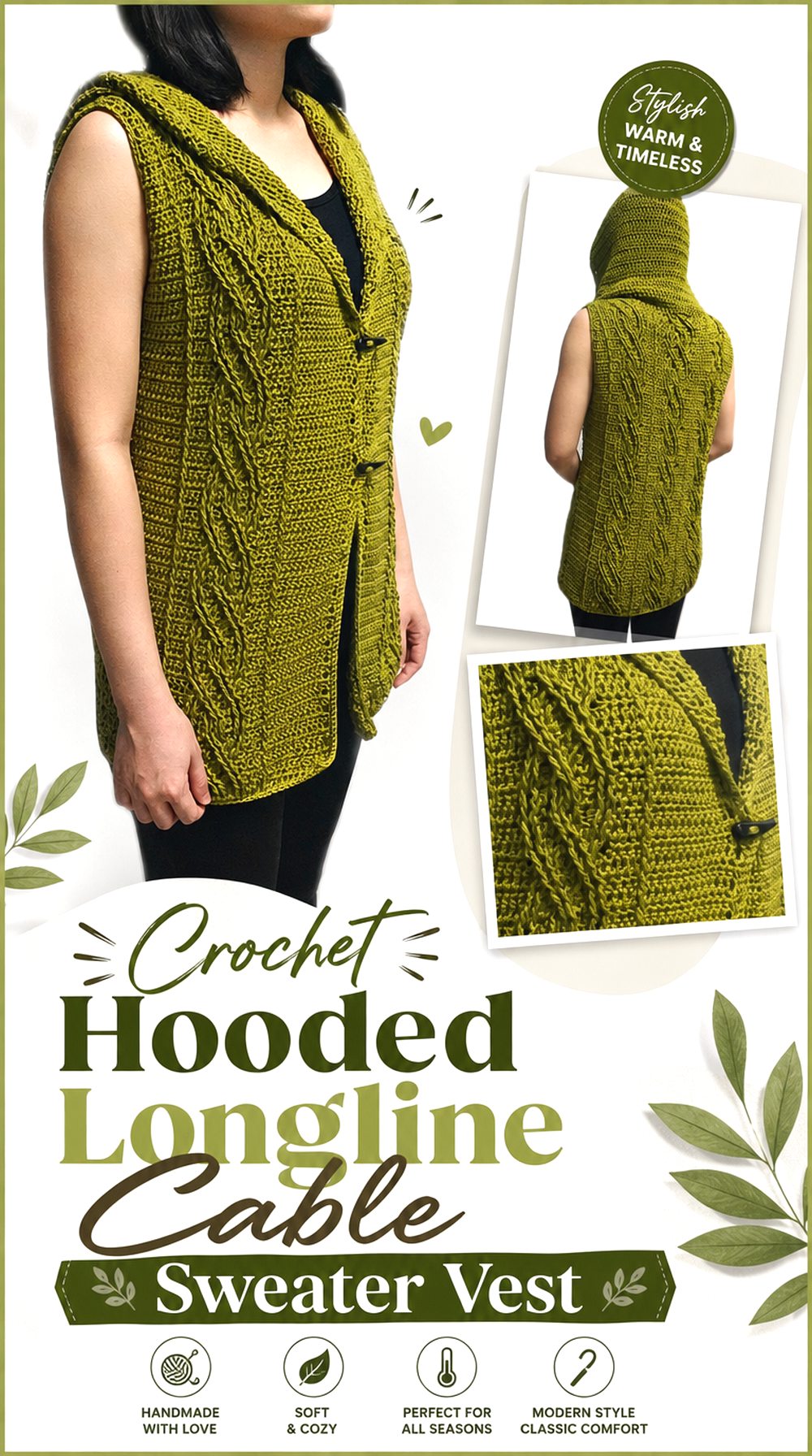
Why It Works: This longline Crochet vest combines vertical cable panels with a roomy hood, an open front, and button-loop closures. The cables continue across the back, while plainer side areas keep the surface from becoming visually crowded. Its longer hem gives the piece more coverage than a standard waist-length sweater vest.
Fit and Finish: The hood and front bands add weight around the neckline, so shoulder fit matters. Place the button loops only after checking how the fronts meet over the clothing you plan to wear underneath.
Good to Know: The complete on-page instructions are written for size L. Additional sizes are offered separately by the designer, making the free version less flexible for readers who need a different fit. A lighter yarn may reduce bulk, but any substitution still requires a careful gauge check.
Crochet Button Front Cable Sweater Vest
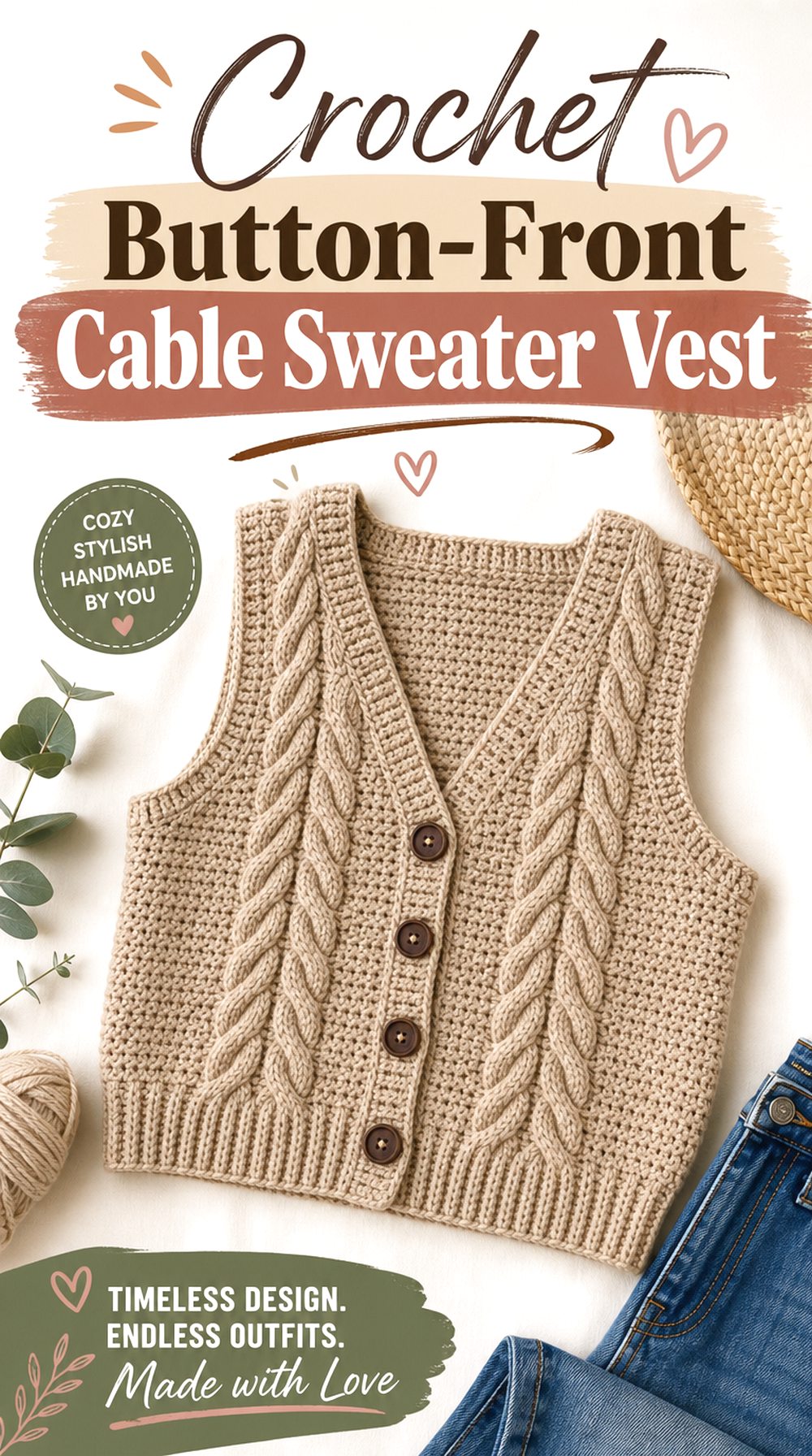
Construction Focus: This button-front Crochet cable sweater vest uses paired vertical cables near the fronts, ribbed side borders, shaped armholes, and a V-shaped opening. The buttonholes are formed by using spaces in the ribbing, keeping the closure visually integrated rather than adding a separate band.
Who It Suits: The displayed sample is sized for a four- to five-year-old child. The designer explains how to adjust the starting width from a chest measurement, so the idea can suit makers comfortable calculating rather than following a full graded size chart.
Customisation Idea: Choose smooth, securely sewn buttons that are proportionate to the ribbing gaps. Because the pattern relies on custom measurement for other sizes, check armhole depth and shoulder length separately; changing only the starting chain may not produce balanced proportions.
Useful Crochet Notes
Swatch the Full Cable Repeat
Cable fabric often narrows and thickens compared with nearby plain stitches. Make a swatch large enough to include the complete crossing sequence, not just one raised column. Wash and dry it according to the yarn label, then compare the relaxed width and height with the stated gauge before choosing a size.
Plan for the Clothes Underneath
Measure over the shirt or top you expect to wear with the vest. Check bust ease, upper-back width, and armhole depth while moving your arms forward. A fitted Crochet vest can look neat over a thin layer yet feel restrictive over a blouse with gathered sleeves or a heavier turtleneck.
Block Without Flattening the Texture
Use light, controlled blocking and support the garment at its finished dimensions. Avoid pressing raised cables flat, especially with direct heat. Shape the neckline, hem, and armholes first, then arrange each cable gently so the crossings remain defined. Let the vest dry fully before moving or hanging it.
Conclusion
Choose the V-neck pullover for familiar everyday layering, the fitted diamond vest for concentrated texture, or the open-back style when visual impact matters more than warmth. The hooded option offers the most coverage but has limited free sizing, while the button-front child design suits makers comfortable adjusting measurements. Match the project to your preferred fit and willingness to track cable placement carefully.
FAQs
What yarn works well for a Crochet cable stitch sweater vest?
A smooth yarn with clear stitch definition makes crossings easier to see. Very fuzzy fibres can soften the cable outline, while a heavy yarn may create more bulk than expected. Match the source yarn’s weight and test the complete cable repeat before deciding whether a substitute has suitable drape.
How much ease should a cable sweater vest have?
Ease depends on the intended layer and silhouette. A close-fitting vest may need only enough room for a thin top, while a pullover worn over shirts needs additional space through the bust, back, and armholes. Compare finished dimensions with measurements taken over your planned outfit.
Why does my cable panel look narrower than expected?
Crossed post stitches pull fabric inward and add depth, so cable sections commonly contract more than plain rows. Check that skipped stitches are handled exactly as directed and that the crossing is worked around the correct posts. A washed cable swatch gives a more reliable width than an unfinished sample.
How can I keep the neckline and armholes neat?
Work edging at an even tension and distribute stitches consistently around curves and row ends. Too many edging stitches can make an opening flare; too few can cause puckering. Try on the vest before fastening off, then adjust the border rounds or stitch spacing while correction is still simple.
How should a finished Crochet cable vest be cared for?
Follow the yarn label and any care directions provided with the linked design. Washing can relax cable fabric and alter its dimensions, so support the vest when wet and reshape it carefully. Drying flat generally helps protect the shoulders and raised texture from stretching under the garment’s weight.


