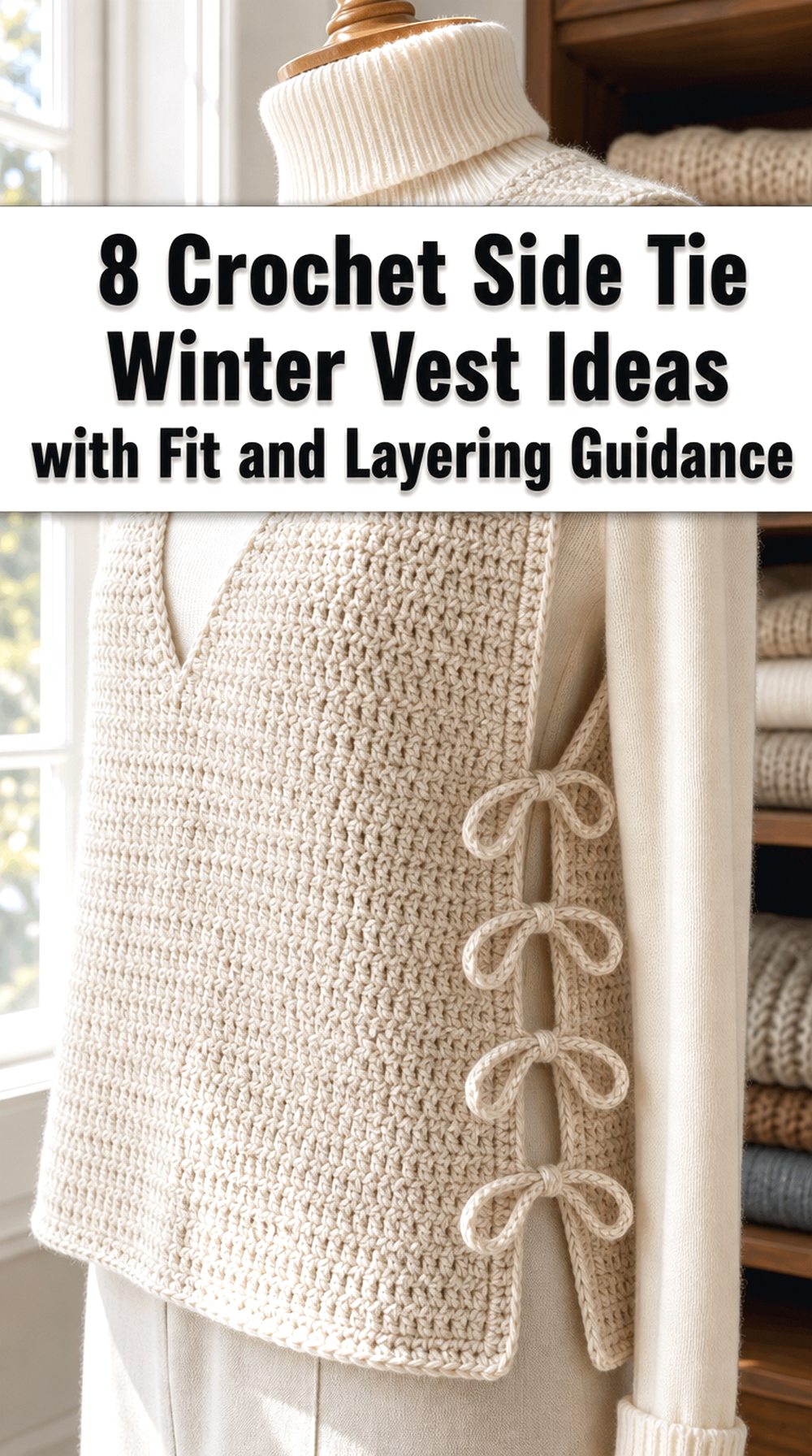
Side tie vests are especially useful in winter because their open construction leaves room for shirts, dresses, and fine sweaters without adding tight armholes or bulky side seams. These eight Crochet ideas range from granny-stitch and floral-eyelet layers to chunky turtleneck and textured tabard shapes. Some include adjustable cords or ribbon bows in the original instructions, while two open-side designs are included as clearly identified foundations for adding ties. Alongside each Crochet project, you will find notes on visible texture, fit, layering, colour, and practical trade-offs. The guide also explains how to allow enough ease for winter clothing, position ties comfortably, choose yarn with suitable drape, and keep panels from stretching during wear or storage.
Quick List
- Granny Stitch Crochet Side Tie Winter Vest
- Shell-Panel Crochet Side Tie Winter Vest
- Tweed-Texture Crochet Side Tie Winter Vest
- Vertical-Texture Crochet Side Tie Winter Vest
- Granny-Panel Crochet Ribbon Side Tie Winter Vest
- Chunky Turtleneck Crochet Open-Side Winter Vest with Added Ties
- V-Neck Crochet Open-Side Winter Vest with Added Ties
- Flower Eyelet Crochet Side Tie Winter Vest
How to Choose a Crochet Side Tie Winter Vest for Fit and Layering
Start with the clothing you expect to wear underneath. Measure over that layer rather than over a bare torso, then compare the result with the finished garment dimensions. A winter vest generally needs positive ease, but too much width can make the front and back panels swing away from the body.
Tie placement affects both comfort and shape. Ties near the natural waist define the silhouette, while lower ties create a straighter tabard line. Keep the upper opening deep enough for arm movement, and avoid placing bulky knots directly beneath the arm.
Next, consider stitch density and fibre behaviour. Granny and eyelet fabrics show the underlayer and provide less wind protection. Dense or chunky stitches feel warmer but can become heavy, especially with long panels. A resilient wool blend may add warmth, while cotton often gives clearer stitches and less insulation. Whatever yarn you choose, make a washed swatch. It reveals stretch, drape, and whether the finished panels may lengthen. Block both panels to matching dimensions before adding ties or joining shoulders.
Granny Stitch Crochet Side Tie Winter Vest
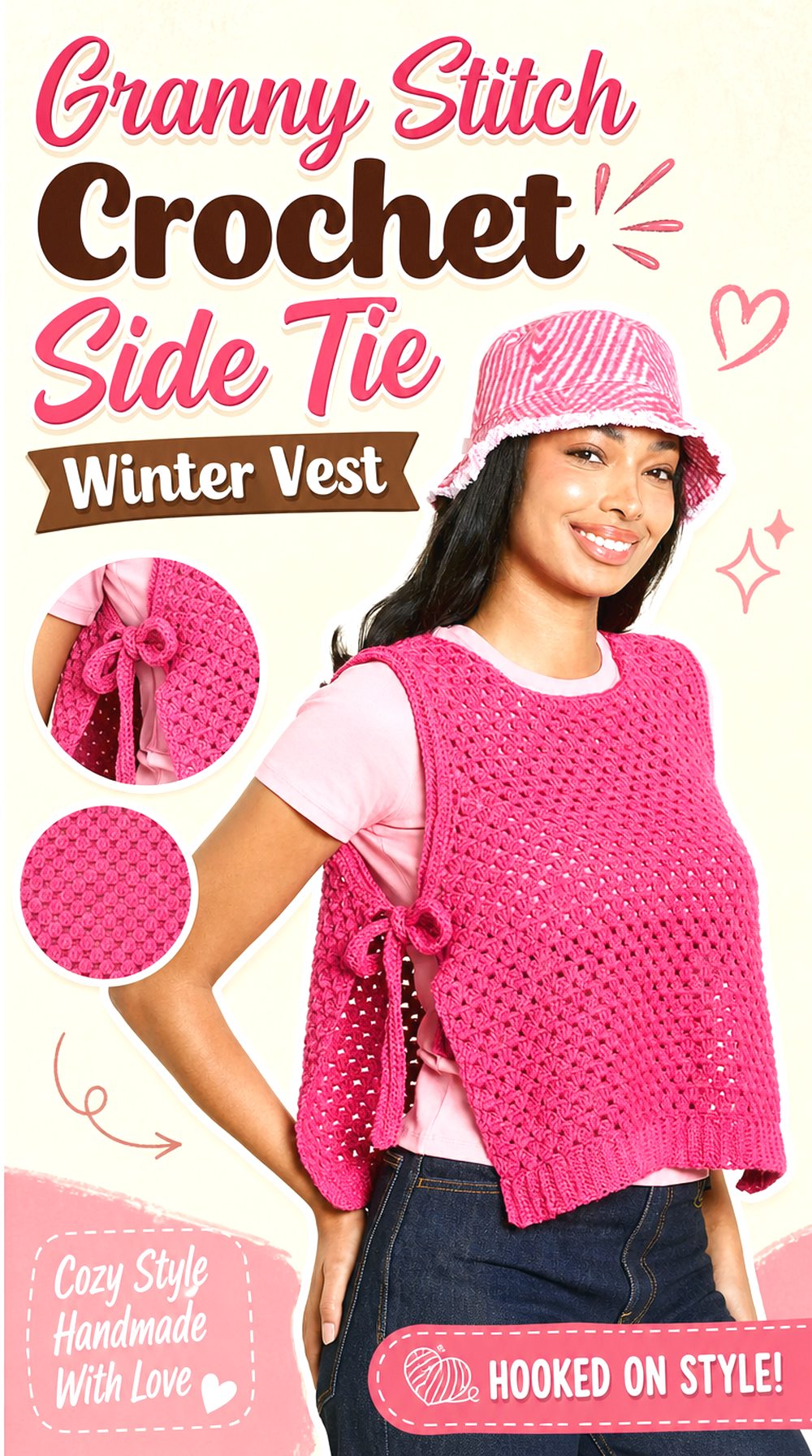
Design Details: This Crochet side tie winter vest uses an open granny-stitch fabric framed by a firmer ribbed-looking border. The straight front and back panels create a clean tabard shape, while the side cords let the wearer adjust how closely the vest sits over a shirt or fine sweater.
Best Use: The generous arm openings make it useful for layered outfits where a closed side seam might feel restrictive. A solid neutral will emphasise the grid-like texture, while a bright shade gives the simple silhouette more impact.
Before You Choose: Open granny spaces do not block much wind, so this is better as an indoor or transitional layer than a substitute for outerwear. Check the finished chest measurement and swatch before choosing a size, especially when planning to wear it over thicker sleeves.
Shell Panel Crochet Side Tie Winter Vest

What Stands Out: The Solya Crochet tie vest combines a mostly solid body with a decorative shell-and-eyelet feature running through the front. Its two flat panels join at the shoulders, and four long side ties finish the open edges. The tasseled ends add movement without changing the basic tabard outline.
Fit and Finish: This shape can work over a fitted turtleneck, collared blouse, or long-sleeve dress. Tie the cords loosely for visible side openings or closer to the body for a neater line. A tonal colour keeps the front motif subtle; contrast tassels would make it more prominent.
Practical Point: The original garment uses cotton, so it may feel less insulating than a wool-rich winter version. Any fibre substitution can alter stretch and panel dimensions, making a gauge check essential before committing to the full Crochet vest.
Tweed Texture Crochet Side Tie Winter Vest
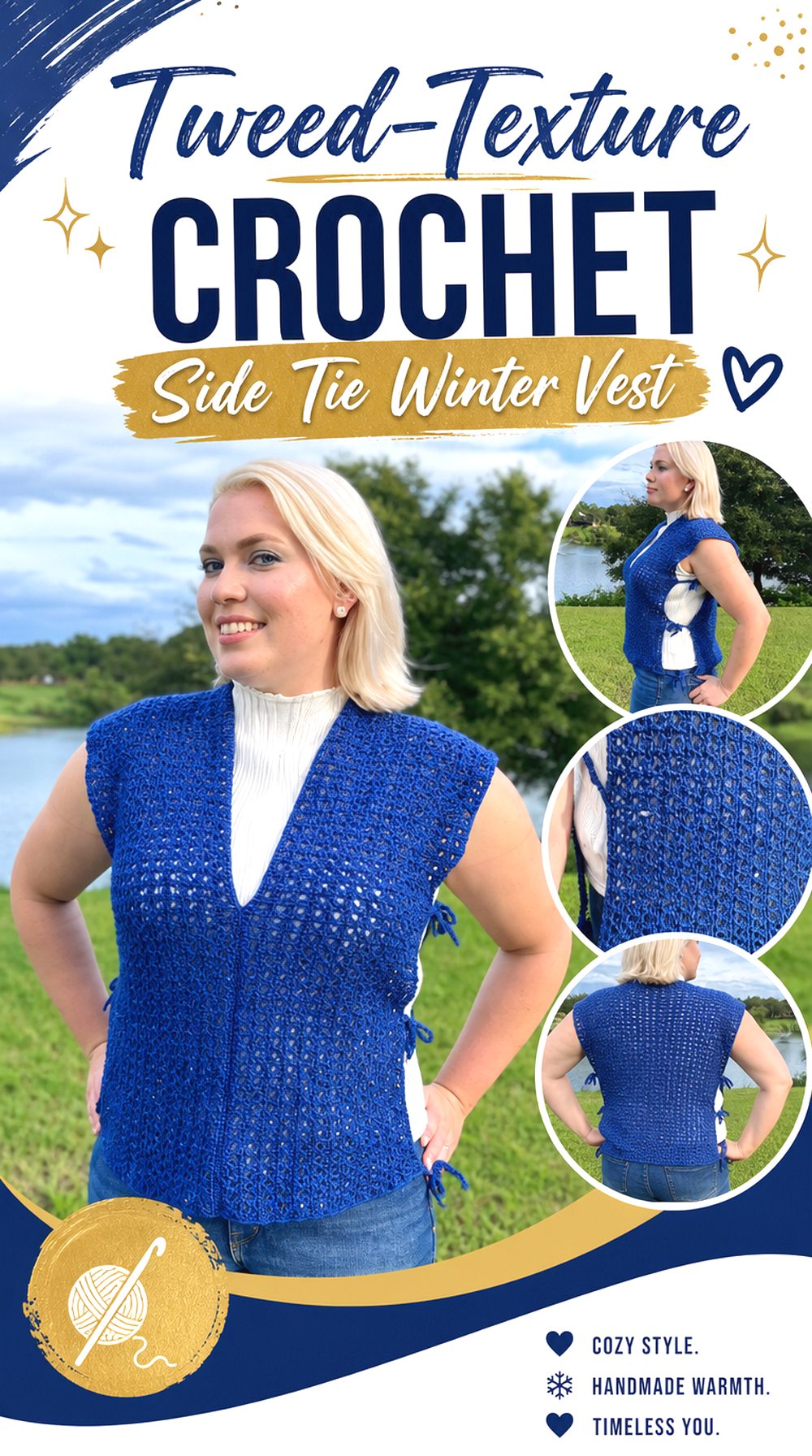
Construction Focus: The Tied Up in Tweed Crochet vest is built around textured cross-stitch fabric and clearly defined side ties. The flecked yarn shown on the source page gives the surface a softly speckled look, while the open sides keep the silhouette relaxed rather than sweater-like.
Why It Works: This is a useful option for autumn-to-winter outfits because the texture remains visible over a plain mock neck or long-sleeve top. The ties can be adjusted around the wearer’s layers, and a longer underlayer prevents exposed skin at the sides.
Care Note: Textured stitches and tie cords can stretch differently after washing. Follow the care instructions for the chosen yarn, dry the vest supported rather than hanging, and reshape the panels while damp. The available size range is more limited than several other ideas here, so compare actual garment measurements before beginning.
Vertical Texture Crochet Side Tie Winter Vest
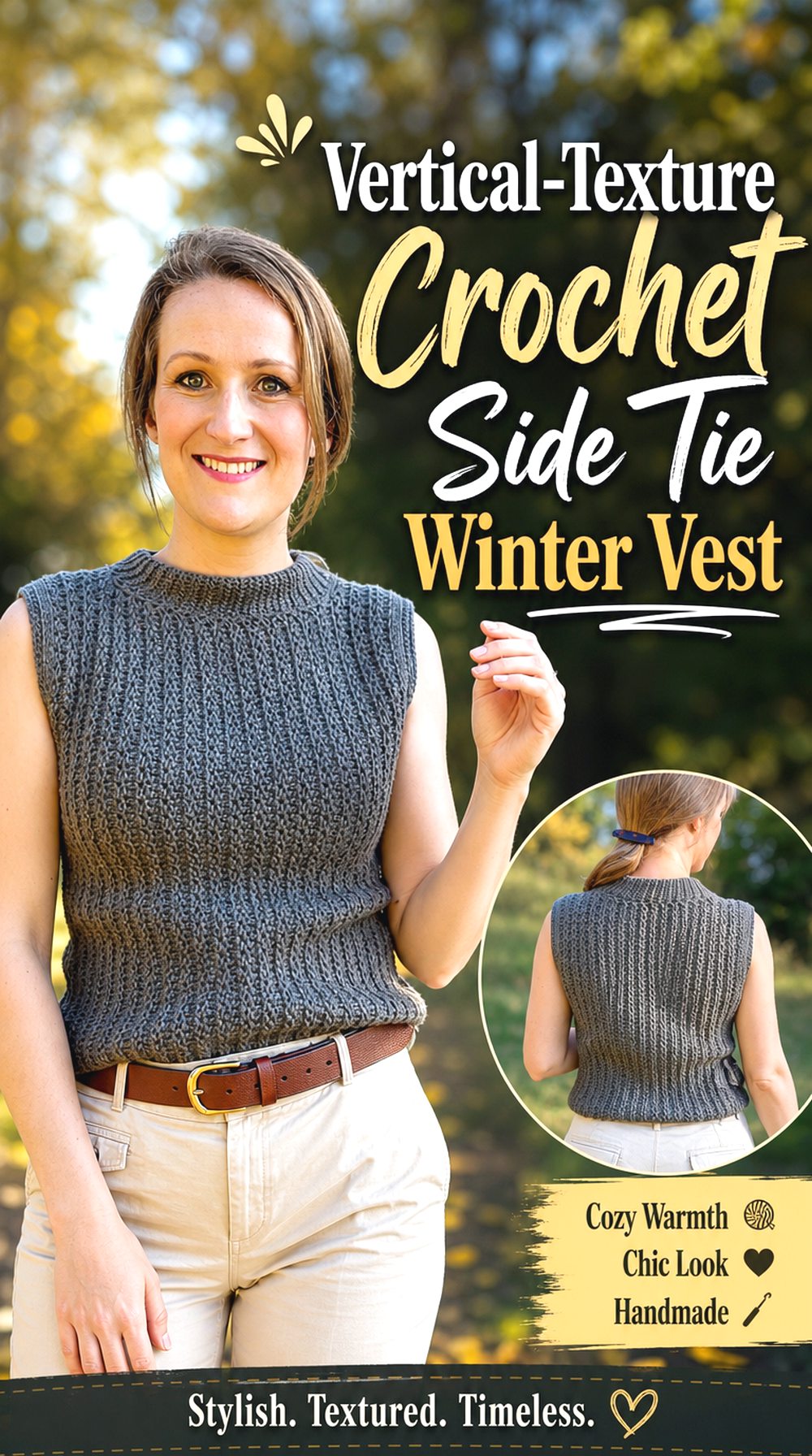
Design Details: The Chloe Tabard Crochet vest is worked vertically from side to side, creating long lines and a dense, textured surface. The source includes an unseamed tabard option with four short ties, plus a ribbed-look collar that gives the neckline a more substantial winter finish.
Who It Suits: Because the design can be sized up for an oversized silhouette, it suits readers who want room over shirts, fine knits, or dresses. The open sides prevent the wider version from becoming too boxy, while the ties provide a controllable waist point.
Customisation Idea: Place the side ties at the natural waist for definition or slightly lower for a straighter drape. Avoid pulling them so tightly that the panels buckle. The vertical construction makes length and width behave differently from a bottom-up vest, so use the pattern’s measurements rather than relying only on a usual ready-to-wear size.
Granny Panel Crochet Ribbon Side Tie Winter Vest

What Stands Out: The Aisha Crochet side tie winter vest uses warm-coloured granny-style panels and slim ribbon bows at the sides. Joined shoulders keep the front and back aligned, while the open arm area leaves plenty of space for a blouse or fitted sweater underneath.
Colour Direction: The retro structure suits earthy combinations such as rust, cream, olive, and brown, but a two-colour version would look calmer and make the bow closures more noticeable. Ribbon can create a polished contrast; crocheted cords would produce a more unified handmade finish, although that change is not shown in the source.
Good to Know: Narrow ribbon can loosen or crease with repeated wear, so sew each attachment securely and inspect it before use. The chart-led instructions may be less convenient for readers who prefer fully written English directions. Block the granny sections evenly before attaching the side bows so matching points sit at the same height.
Chunky Turtleneck Crochet Open Side Winter Vest with Added Ties
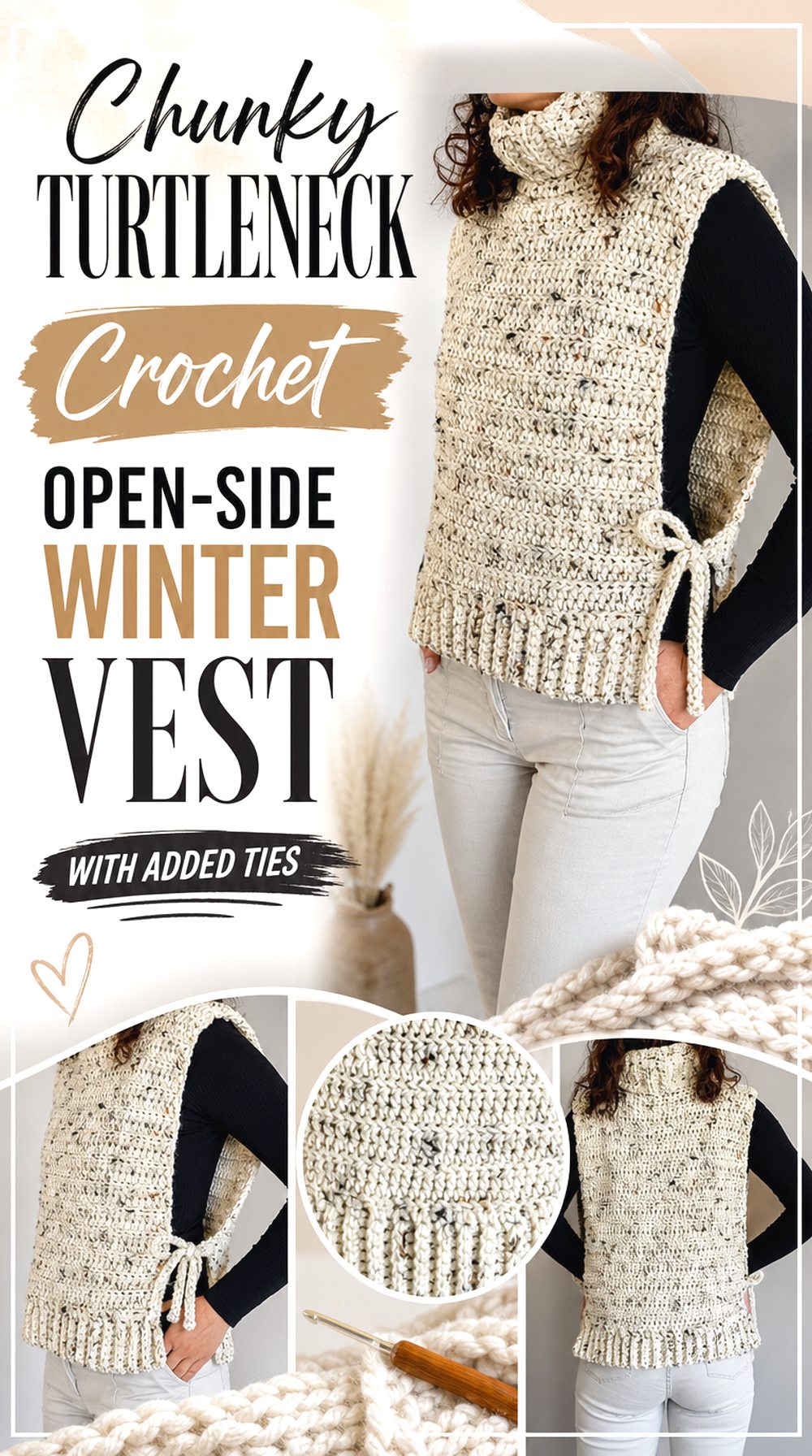
Design Details: Wheat Fields is an oversized Crochet vest with a high turtleneck, chunky texture, and fully open sides. The source presents it as a cosy winter layer worn over blouses, sweaters, or T-shirts. Broad front and back panels provide coverage while leaving the underarm area unrestricted.
Customisation Idea: To turn this open-side foundation into a side tie winter vest, add paired Crochet cords to reinforced edge points after checking the fit over the intended base layer. This tie addition is a personal modification and is not included in the linked instructions.
Before You Choose: Chunky fabric can become bulky where cords are attached, so use firm edging and avoid oversized knots beneath the arms. The high neck already adds volume; simple ties and a quiet colour palette can balance the silhouette. Measure the shoulder width carefully, because an overly broad panel may slip or restrict arm movement.
V Neck Crochet Open Side Winter Vest with Added Ties
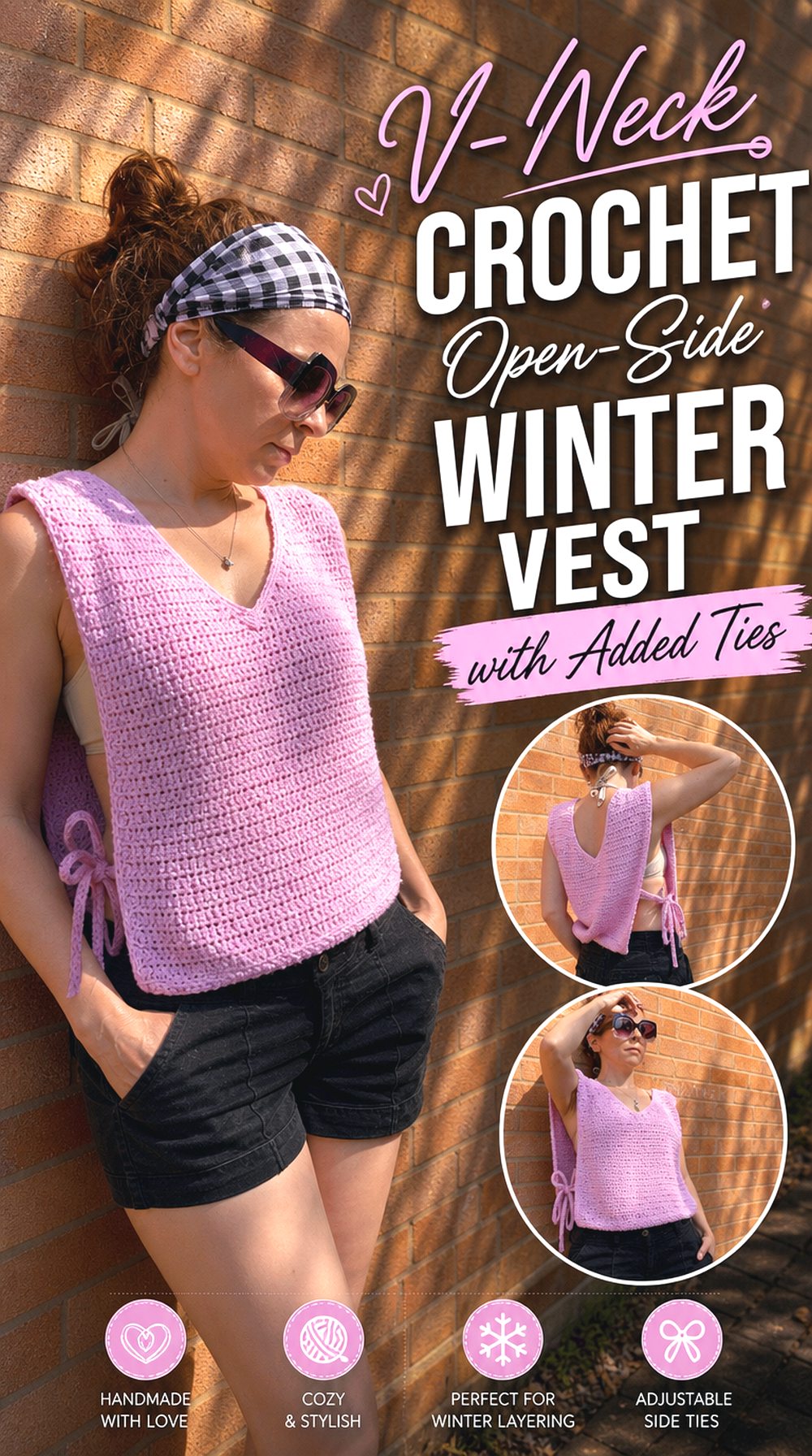
Fit and Finish: The Summertime Hangout Crochet top has two flat panels, a relaxed V-neck, shaped shoulders, and sides that may be left open. A closer waistband anchors the lower edge, while neat slip-stitch trim defines the neckline and side openings. The source also notes that wool can be used as an alternative fibre.
Winter Styling: Worked in a season-appropriate yarn and layered over a close-fitting roll neck, the open design can become a lighter winter vest. Paired cords may be added at the waist to create the requested side-tie look, but that modification is not part of the original instructions.
Practical Point: Keep any added ties clear of the shaped waistband so they do not distort it. This Crochet design relies on relaxed drape, so a heavy substitution could make the V-neck sag. Swatch, wash, and hang the sample briefly to judge growth before deciding on panel length and cord placement.
Flower Eyelet Crochet Side Tie Winter Vest
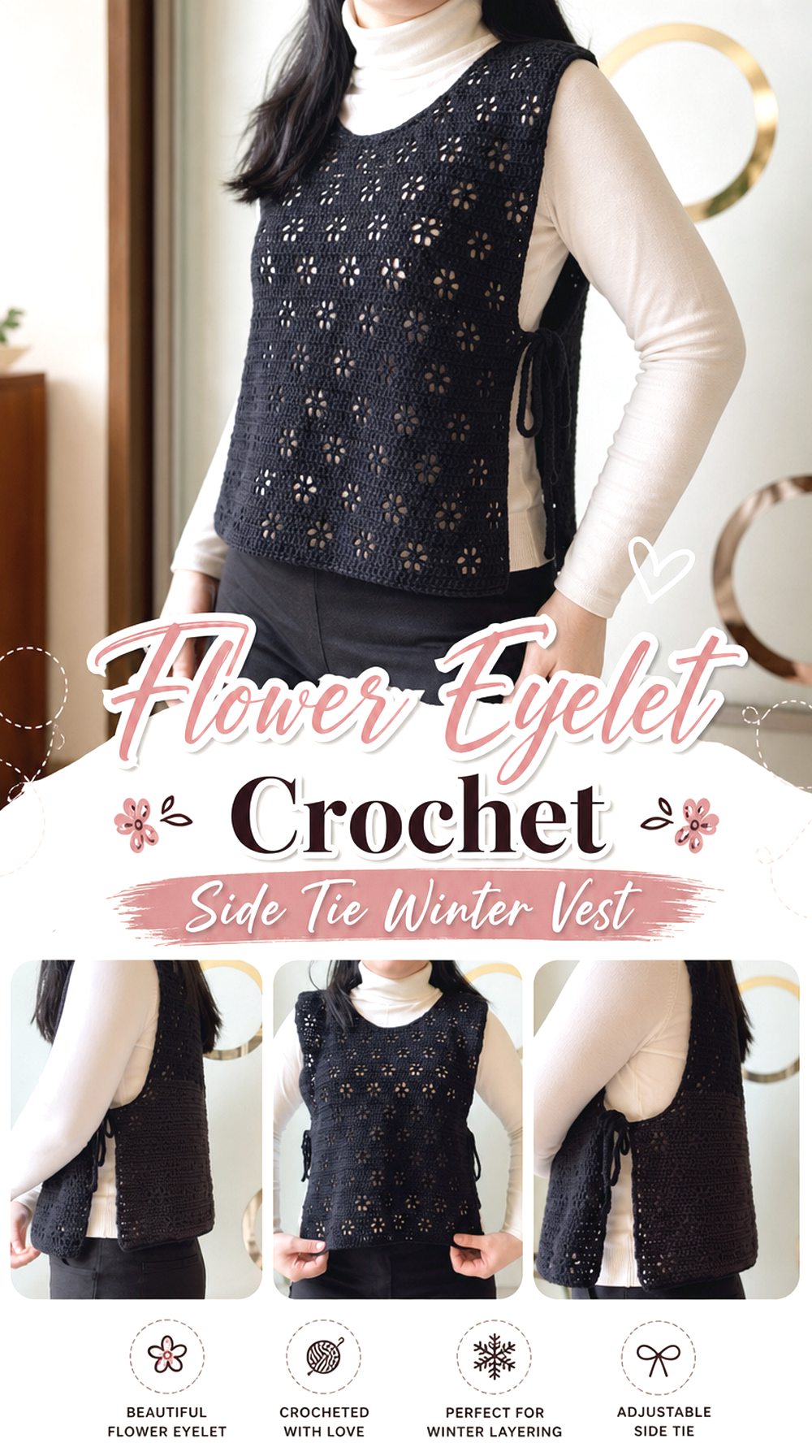
What Stands Out: The Flower Eyelet Crochet vest uses a repeated floral lace motif across separate front and back panels. Shoulder seams connect the pieces, and side ties are added at the end, leaving the motif uninterrupted across the body. The open pattern gives a decorative layer rather than dense insulation.
Best Use: It can bring texture to a plain winter turtleneck without adding the bulk of a closed sweater vest. A single colour highlights the flower shapes; a darker underlayer increases contrast and makes every eyelet easier to see.
Before You Choose: Fine lace is more likely to snag on jewellery, bag hardware, or coat fastenings. Keep the side bows compact and wear the vest beneath smooth-lined outerwear. The video teaches a specific sample rather than offering an extensive written size range, so compare the panel width with a well-fitting vest and plan adjustments before completing both pieces.
Useful Crochet Notes
Measure Over the Intended Layers
A vest that fits well over a T-shirt may pull across a winter sweater. Take the chest and shoulder measurements while wearing the thickest likely base layer. Compare those figures with the finished dimensions, not only the size label. Pin paper or fabric panels at the proposed tie points to test movement before committing to cord placement.
Reinforce Every Tie Attachment
Side cords concentrate strain at small points along the panel edges. Work them into a firm border or sew them through several secure stitches rather than attaching them to one open cluster. Match each pair carefully so the vest hangs level. After washing, inspect the joins and retighten any woven ends before wearing the garment again.
Block Panels Before Final Assembly
Front and back panels can look equal while being slightly different in length or shoulder width. Block them to the pattern measurements, let them dry fully, and compare them flat before joining. Add ribbon or Crochet ties only after the edges are stable. This prevents mismatched bows, twisted shoulders, and one side hanging lower than the other.
Conclusion
Choose the vest that matches both your preferred texture and your winter wardrobe. Dense tabards and chunky turtleneck shapes offer stronger visual coverage, while granny and eyelet styles work best when the underlayer is part of the look. Adjustable side ties are useful for changing layers, but their placement deserves careful testing. Begin with the construction and sizing format you find clearest, then personalise colour, cord length, and overall ease.
FAQs
Are Crochet side tie vests warm enough for winter?
They can add a useful torso layer, but warmth depends on stitch density, fibre, and what is worn underneath. Open granny or eyelet designs allow air through and work better indoors or under a coat. Chunky, dense panels feel warmer, though the open sides still make these vests layering pieces rather than outerwear.
How much ease should a winter vest have?
Measure over the shirt or sweater you plan to layer beneath the vest. A small amount of positive ease usually allows comfortable movement without making the panels flare. Because side ties provide adjustment, prioritise adequate shoulder width and arm opening depth. Always compare your layered measurement with the pattern’s finished dimensions.
Which yarn works well for a Crochet winter vest?
Choose a yarn that balances warmth, weight, stitch definition, and skin comfort. Wool and wool blends may provide warmth and resilience, while cotton often creates crisp stitches but less insulation. Avoid substituting a much heavier yarn without recalculating gauge, because extra weight can lengthen panels and place strain on the ties.
How can I stop the side ties from stretching?
Use a firm stitch or braided construction, keep the cords only as long as needed for secure bows, and attach them to reinforced edging. Cotton may stretch less than some loosely spun fibres, though behaviour varies by yarn. Store the vest flat and untied so constant tension does not pull on the attachment points.
Should I wash the vest before attaching ribbon ties?
For washable yarn, blocking the completed Crochet panels before adding ribbon is helpful because it reveals growth and settles the edges. Follow the yarn label and pattern care guidance. Let every piece dry completely, align the panels, then sew ribbons at matching points. Test colourfastness first when using dark or strongly dyed ribbon.