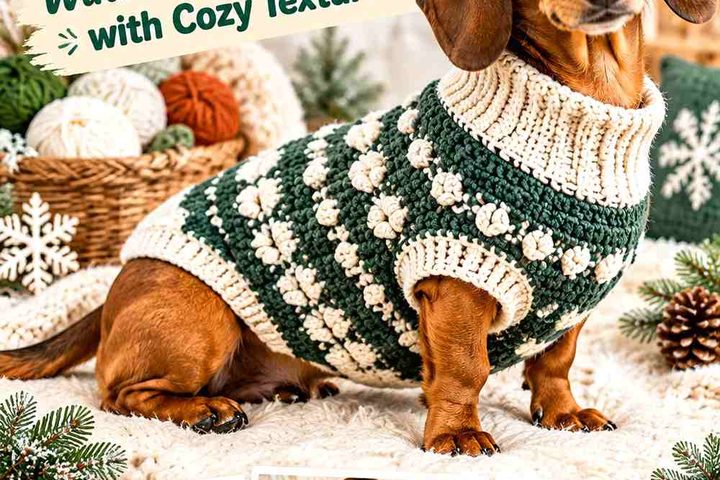
Soft pastel colors work especially well on crochet cat sweaters because the garment already occupies a noticeable portion of the cat’s body. Blush, powder blue, mint, lavender, peach, butter yellow, and soft cream can add winter color without making every collar, cuff, stripe, and sleeve compete for attention.
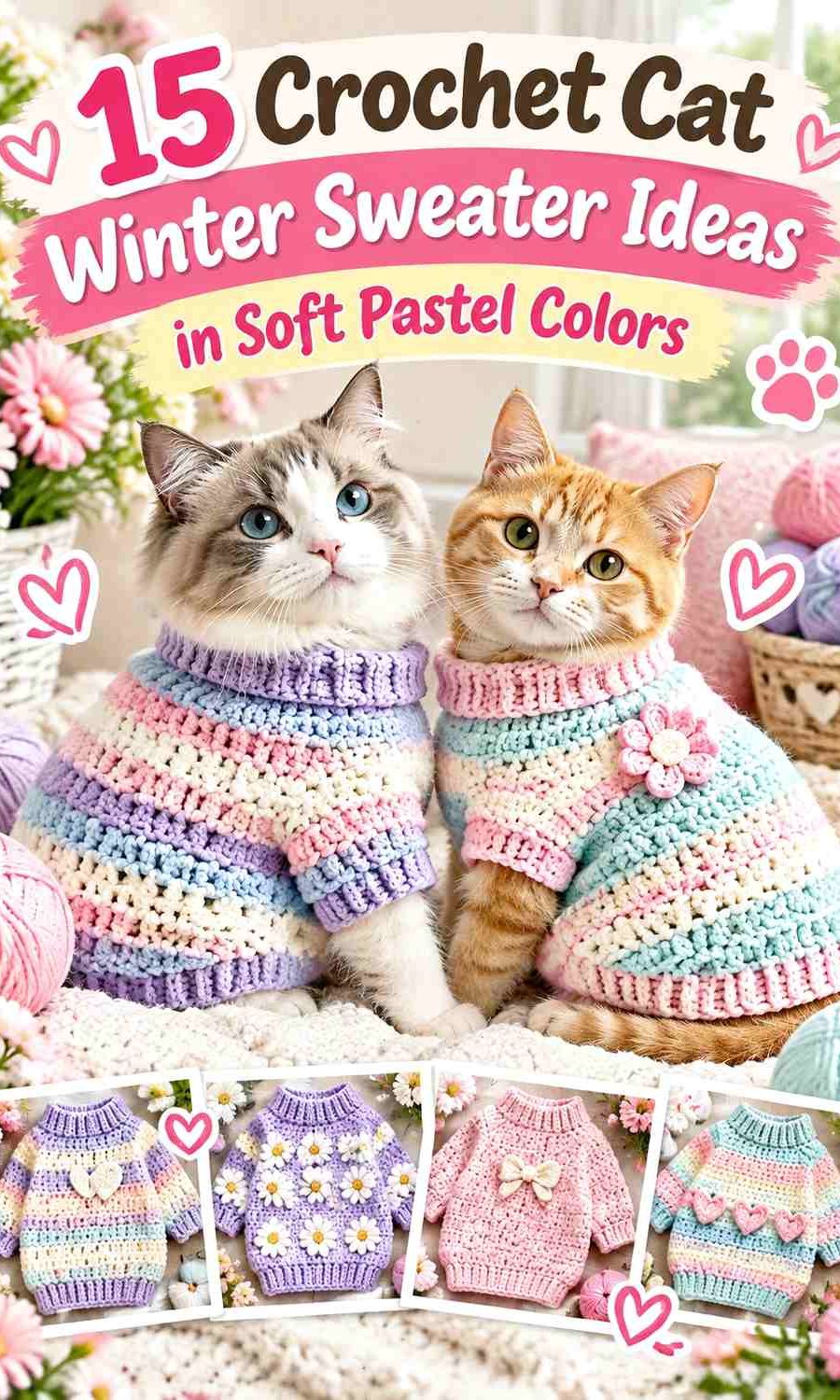
The most useful color placement happens across the back, neckline, chest, and leg openings. A powder-blue body can use ivory only around the collar, while a lavender sweater can place cream at the leg openings to make the garment shape easier to see. For striped or colorwork sweaters, keeping one pastel dominant usually creates a calmer result than giving every shade equal space.
Fit matters more than decoration. Measure the actual cat rather than transferring another pet’s sizing directly, keep the neck and front-leg openings comfortable, and check that the sweater does not restrict normal movement. Only use clothing on a cat that tolerates it comfortably, and supervise while the garment is being worn.
The tutorials below include cat-specific sweaters plus adaptable pet and dog-sweater constructions. The soft pastel palettes and cat-focused color placements are independent adaptations rather than claims that the creators used these exact colors.
Quick List
- Blush Pink and Cream Crochet Raglan Cat Winter Sweater
- Powder Blue and Ivory Crochet Simple Cat Winter Pullover
- Mint Green and Butter Yellow Crochet Pastel Cat Winter Sweater
- Lavender and Pearl Cream Crochet Granny-Style Cat Winter Sweater
- Peach and Soft Ivory Crochet Kitten Winter Sweater
- Baby Blue, Blush, and Cream Crochet Tiny Cat Winter Sweater
- Pistachio and Cream Crochet Cable-Back Cat Winter Sweater
- Lilac and Oatmeal Crochet Textured Cat Winter Sweater
- Dusty Rose and Cream Crochet Long-Sleeve Cat Winter Sweater
- Pale Aqua and Ivory Crochet Cowl-Neck Cat Winter Sweater
- Butter Yellow and Powder Blue Crochet One-Piece Cat Winter Sweater
- Mint and Lavender Crochet Classic Cat Winter Sweater
- Blush Pink and Sage Crochet Buttoned Cat Winter Sweater
- Powder Blue and Peach Crochet Adjustable Cat Winter Sweater
- Cream, Lavender, Mint, and Blush Crochet Pastel Colorwork Cat Winter Sweater
Keep One Soft Pastel Dominant Across the Cat’s Back
The back is usually the largest uninterrupted area of a cat sweater, so it establishes the overall color direction. Use blush, lavender, mint, powder blue, or another pastel across most of that area before deciding where the second shade belongs.
Collars, hems, and leg openings are useful supporting-color zones because they explain the garment structure. Random small color changes through the middle of the back can make a simple sweater look more fragmented than intentionally multicolored.
Use Cream and Ivory to Define Pastel Cat Sweater Edges
Two pastels can be different hues but still look very similar in lightness. Mint beside powder blue or peach beside blush may need cream, ivory, or oatmeal between them when the individual sections should remain obvious.
The neutral does not have to become a third equal color. A narrow collar, cuff, hem, or leg-opening edge can provide enough separation.
Check Pastel Placement Around the Cat’s Front Legs and Neck
Decorative color is most useful when it also clarifies where the sweater changes shape. Contrasting leg-opening edges can make the openings easier to see while dressing the cat, and a distinct neckline can visually separate the collar from the body.
Avoid adding bulky decorative borders simply for color. The garment should remain comfortable around moving areas, with the pastel treatment supporting rather than complicating the construction.
1. Blush Pink and Cream Crochet Raglan Cat Winter Sweater
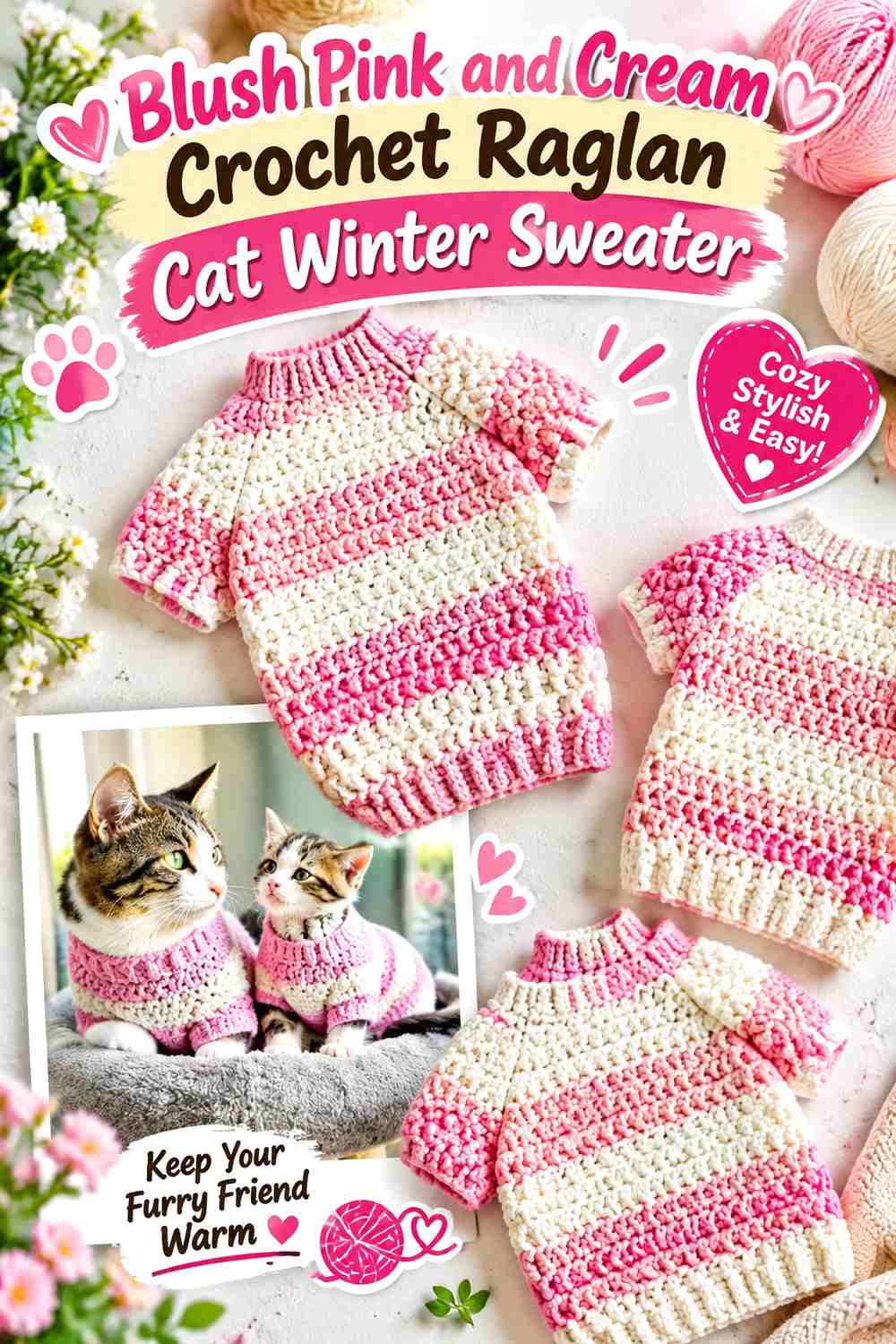
Blush pink can cover most of this cat sweater from neckline through the back, while cream defines the collar, front-leg openings, and lower edge. The light two-color arrangement keeps the raglan-style shaping visually calm while still making the sweater boundaries easy to distinguish.
Instead of striping the entire body, let cream appear only where the sweater changes direction or meets the cat’s body.
Blush Pink Should Lead the Crochet Cat Sweater Back
Use blush continuously across the largest back and side sections. A broad uninterrupted pastel area keeps any shaping lines from competing with multiple color changes.
If you want one additional detail, repeat cream once near the lower back rather than inserting several alternating stripes.
Cream Should Define the Blush Pink Cat Sweater Neckline
A cream collar creates a visible transition between the pink sweater and the cat’s neck.
The same cream can outline the leg openings, but keep those edges narrow so blush remains the obvious main color.
Creator Credit: MJ’s Off The Hook Designs
2. Powder Blue and Ivory Crochet Simple Cat Winter Pullover
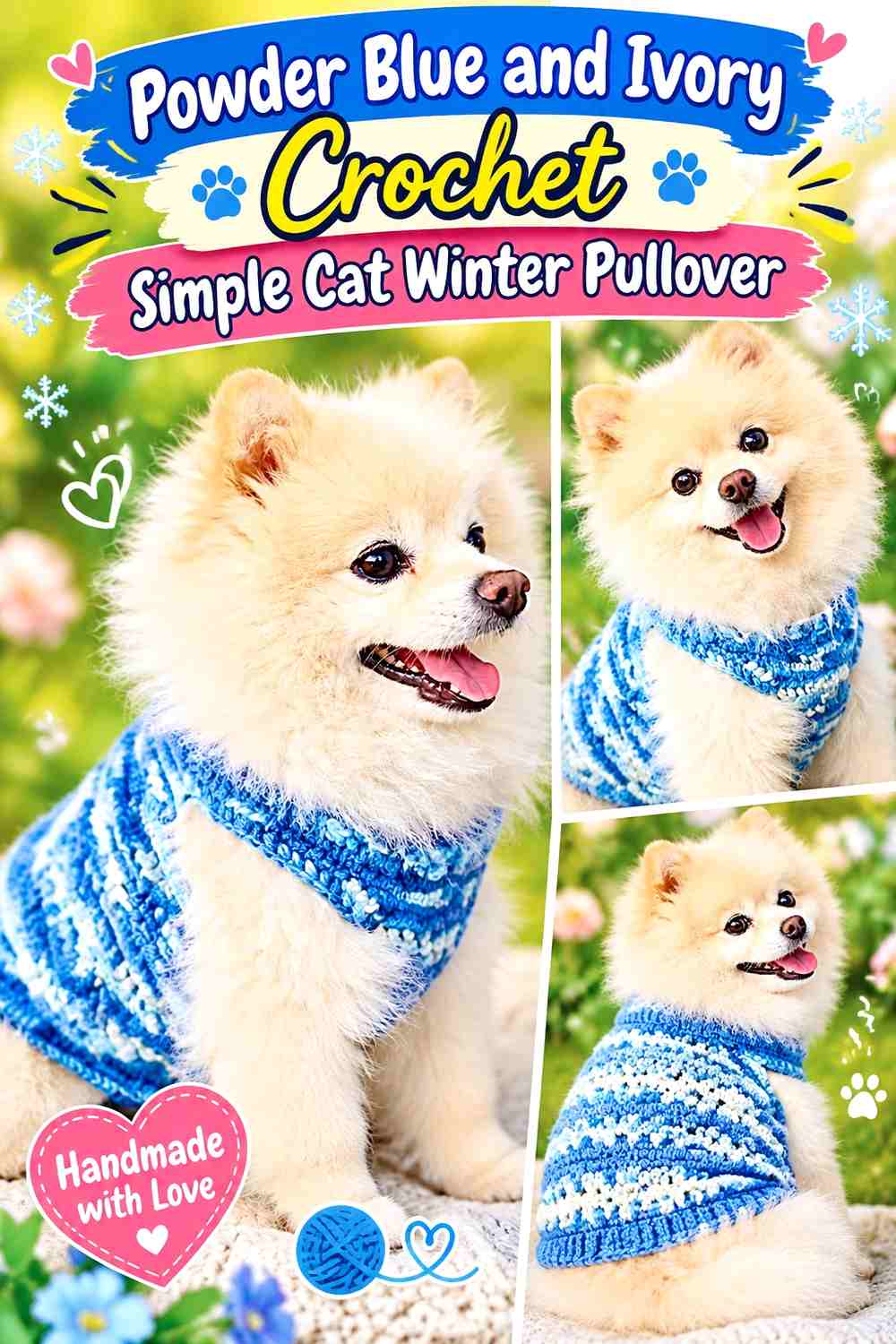
Powder blue gives a straightforward pullover a cool winter direction, while ivory can lighten the neckline and hem. This palette works especially well when you want the sweater construction to remain more noticeable than decorative striping.
Let blue extend continuously across the shoulders and back, then use ivory at only two or three structural edges.
Powder Blue Should Cover Most of the Crochet Cat Pullover
Keep powder blue through the central body rather than alternating it with ivory every few rows.
The uninterrupted color makes the sweater appear longer and calmer across the cat’s back.
Ivory Should Keep the Powder Blue Cat Sweater Edges Clear
Use ivory at the collar and lower hem, with an optional narrow repeat around the front-leg openings.
If the cat has very pale fur, deepen the powder blue slightly rather than widening the ivory sections until they disappear against the coat.
Creator Credit: TheHappyHues🍁
3. Mint Green and Butter Yellow Crochet Pastel Cat Winter Sweater
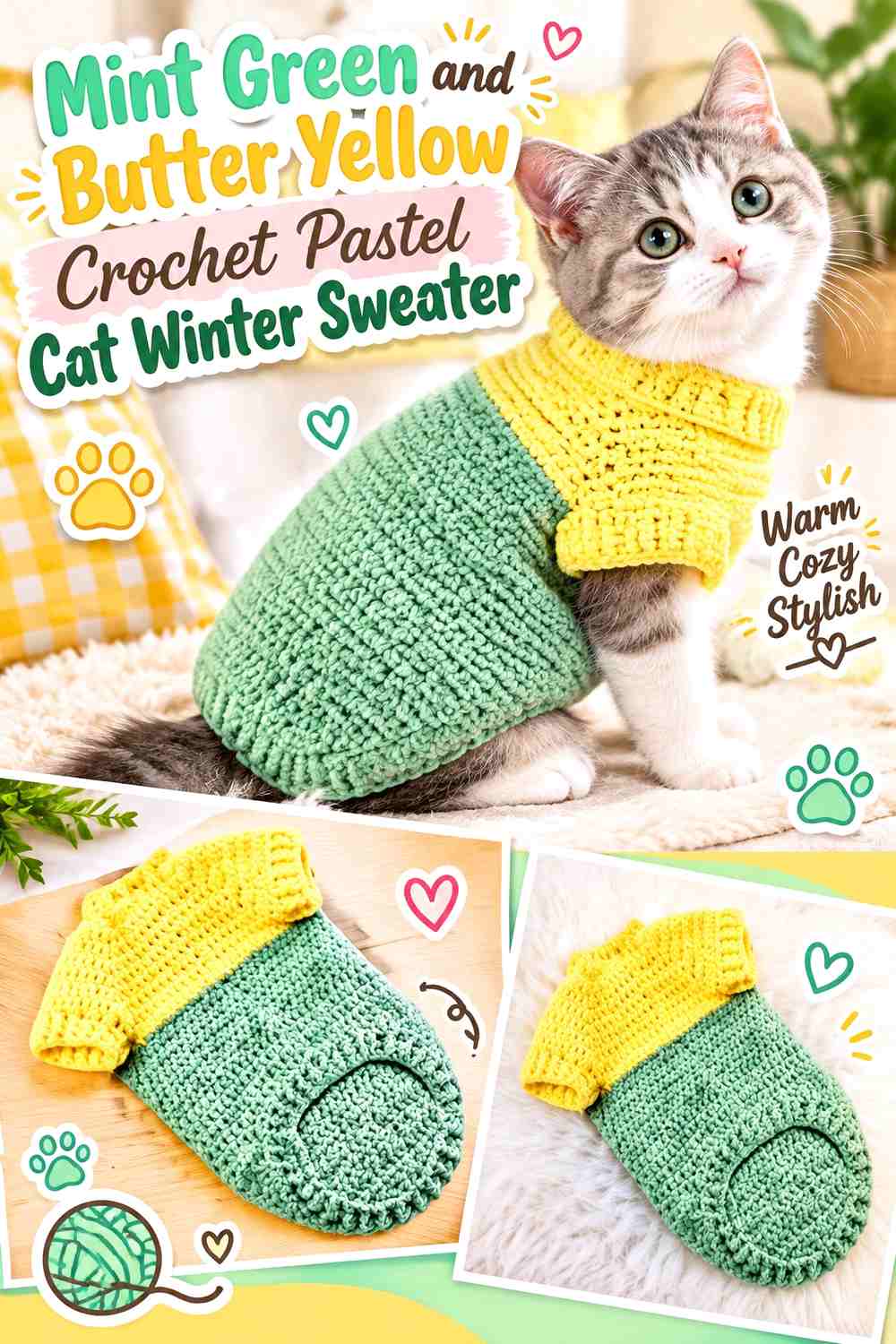
Mint green can form the main sweater body while butter yellow creates a soft collar or single back stripe. Both colors are light, so their roles should remain clearly separated rather than constantly alternating.
A cream-free two-pastel palette can work when the mint is visibly cooler and slightly deeper than the yellow.
Mint Green Should Dominate the Butter Yellow Crochet Cat Sweater
Use mint across the back, chest, and main side areas so the sweater has one obvious color at first glance.
Butter yellow can then draw attention to the collar without taking over the garment.
Butter Yellow Should Stay Concentrated Against Mint Green
Use yellow at the neckline, hem, or one broad back band rather than in numerous narrow stripes.
If mint and yellow look too similar from a distance, place a very narrow cream transition between them instead of adding more colors.
Creator Credit: ÖRGÜPEREST
4. Lavender and Pearl Cream Crochet Granny-Style Cat Winter Sweater
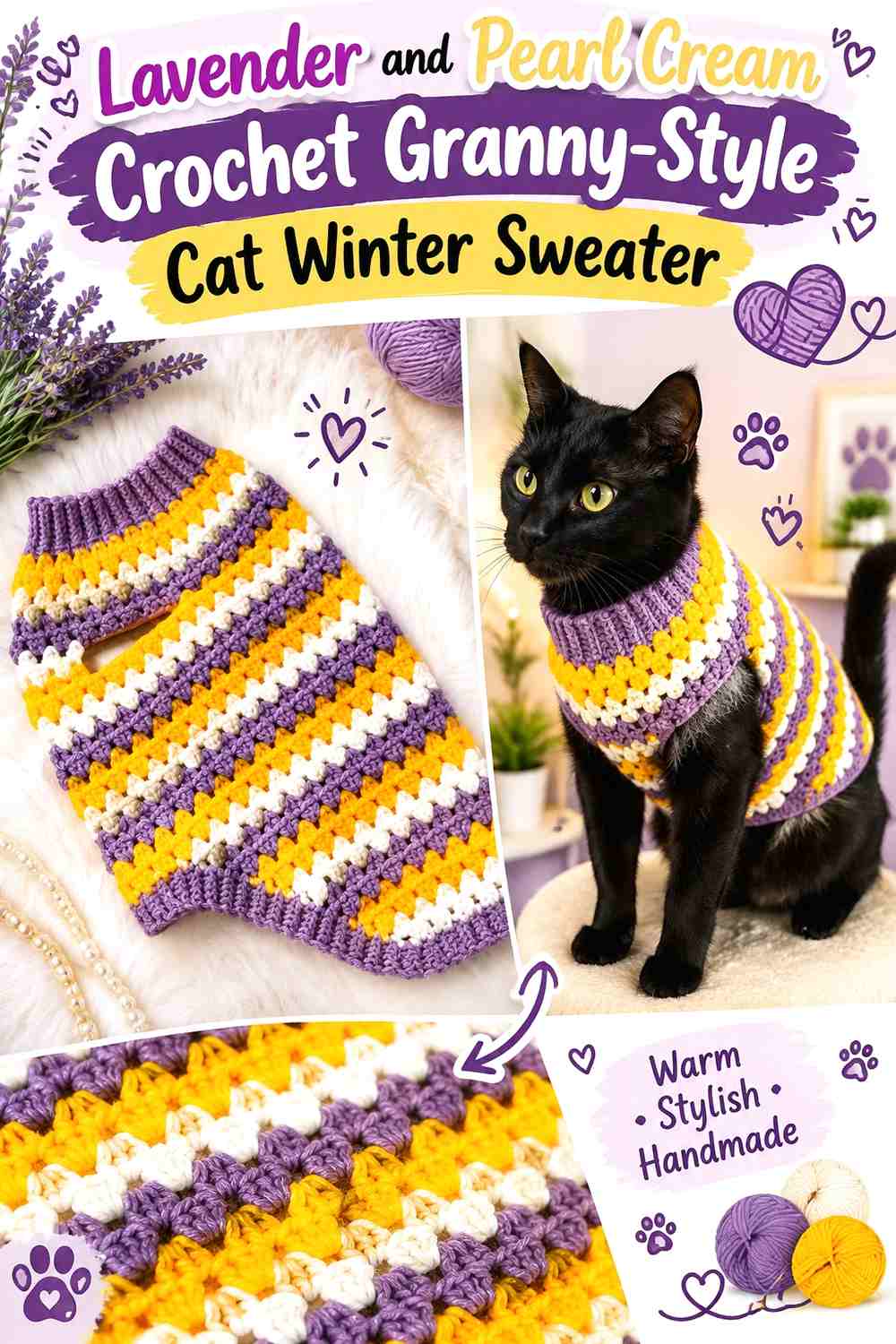
A granny-style sweater naturally contains more visual texture, so lavender should carry most of the color while pearl cream marks only selected rounds or edges. This keeps the open or clustered stitch pattern from becoming overly busy.
Use cream strategically around the collar and leg openings, where it can also help clarify the garment’s shape.
Lavender Should Repeat Through Most of the Crochet Granny Cat Sweater
Keep lavender present across the majority of the body rounds so the sweater remains visually connected from shoulder to back.
If cream appears in every alternating round, the garment may become strongly striped rather than lavender-led.
Pearl Cream Should Highlight Lavender Around the Cat’s Leg Openings
Use cream where the sweater separates around the front legs and returns to the main body.
This structural placement makes the lighter shade useful rather than purely decorative.
Creator Credit: Zlatapryaja_animals
5. Peach and Soft Ivory Crochet Kitten Winter Sweater
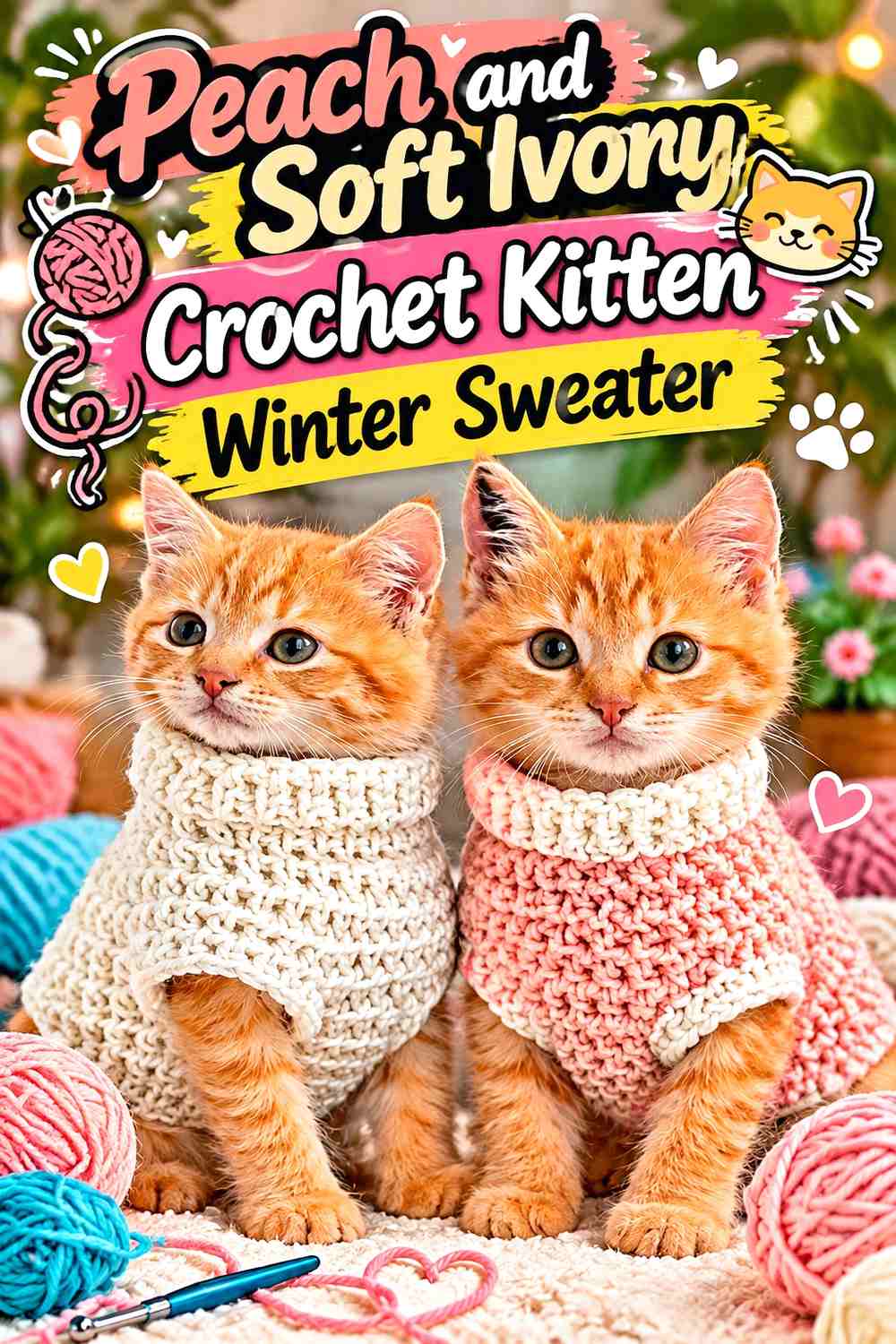
Peach creates a warm pastel sweater that remains softer than coral or orange. Soft ivory can define the neckline and lower edge while keeping the tiny garment light.
For a smaller sweater, avoid several decorative bands. There is less back area available, so broad color zones usually read more clearly.
Peach Should Carry the Main Crochet Kitten Sweater Body
Use peach continuously through the shoulders and back so the small garment does not look divided into several miniature sections.
A clean peach field also makes the ivory edging easier to notice.
Soft Ivory Should Stay Narrow Against the Peach Cat Sweater
Use ivory around the neckline and perhaps one lower border.
Keep the leg openings mostly peach or use only a very narrow ivory finish so the small sweater does not become predominantly neutral.
Creator Credit: Punto a punto y más
6. Baby Blue, Blush, and Cream Crochet Tiny Cat Winter Sweater

Baby blue can lead the body, blush can become one back stripe or collar detail, and cream can separate the two pastels. This three-color approach works because each shade has a specific location rather than appearing evenly throughout the sweater.
Keep the strongest contrast around the upper body where the color changes are easiest to see.
Baby Blue Should Remain Broader Than Blush on the Crochet Cat Sweater
Use blue across most of the back and sides.
A single blush band is enough to add warmth without breaking the sweater into equal pink-and-blue halves.
Cream Should Separate Baby Blue From Blush on the Tiny Cat Sweater
Place a narrow cream line where blue and blush meet if their values are close.
Repeat cream at the collar only when you want the upper edge to connect visually with that back detail.
Creator Credit: LittleGemsCreations – Fibre Artist
7. Pistachio and Cream Crochet Cable-Back Cat Winter Sweater
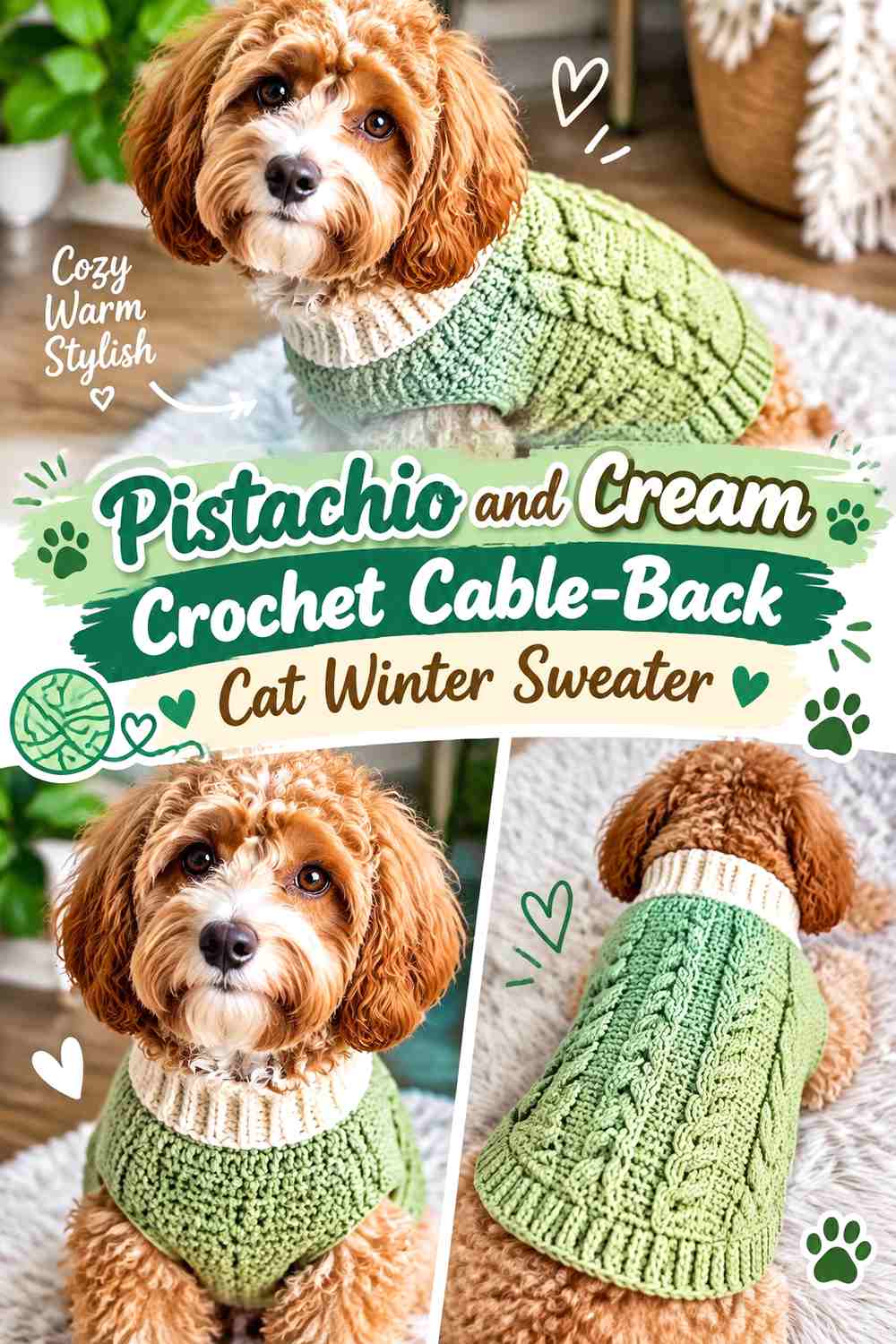
A cable or raised central detail already gives the back plenty of texture, so pistachio green can cover most of the sweater while cream stays at the collar and hem. Keeping the cable the same pistachio as the surrounding body lets texture, rather than extra color, create the central focal point.
If you want more definition, use cream beside the cable only in a very narrow supporting area.
Pistachio Should Stay Continuous Across the Crochet Cat Cable Back
Work the largest back field in pistachio so the raised cable remains part of one cohesive sweater.
Changing the cable itself to cream may make the design more graphic but can also visually divide a narrow cat back.
Cream Should Frame the Pistachio Cat Sweater Rather Than the Cable
Use cream at the neckline, lower edge, or front-leg openings.
This keeps attention on the texture across the back while the lighter neutral clearly finishes the garment.
Creator Credit: Maria’s Blue Crayon
8. Lilac and Oatmeal Crochet Textured Cat Winter Sweater
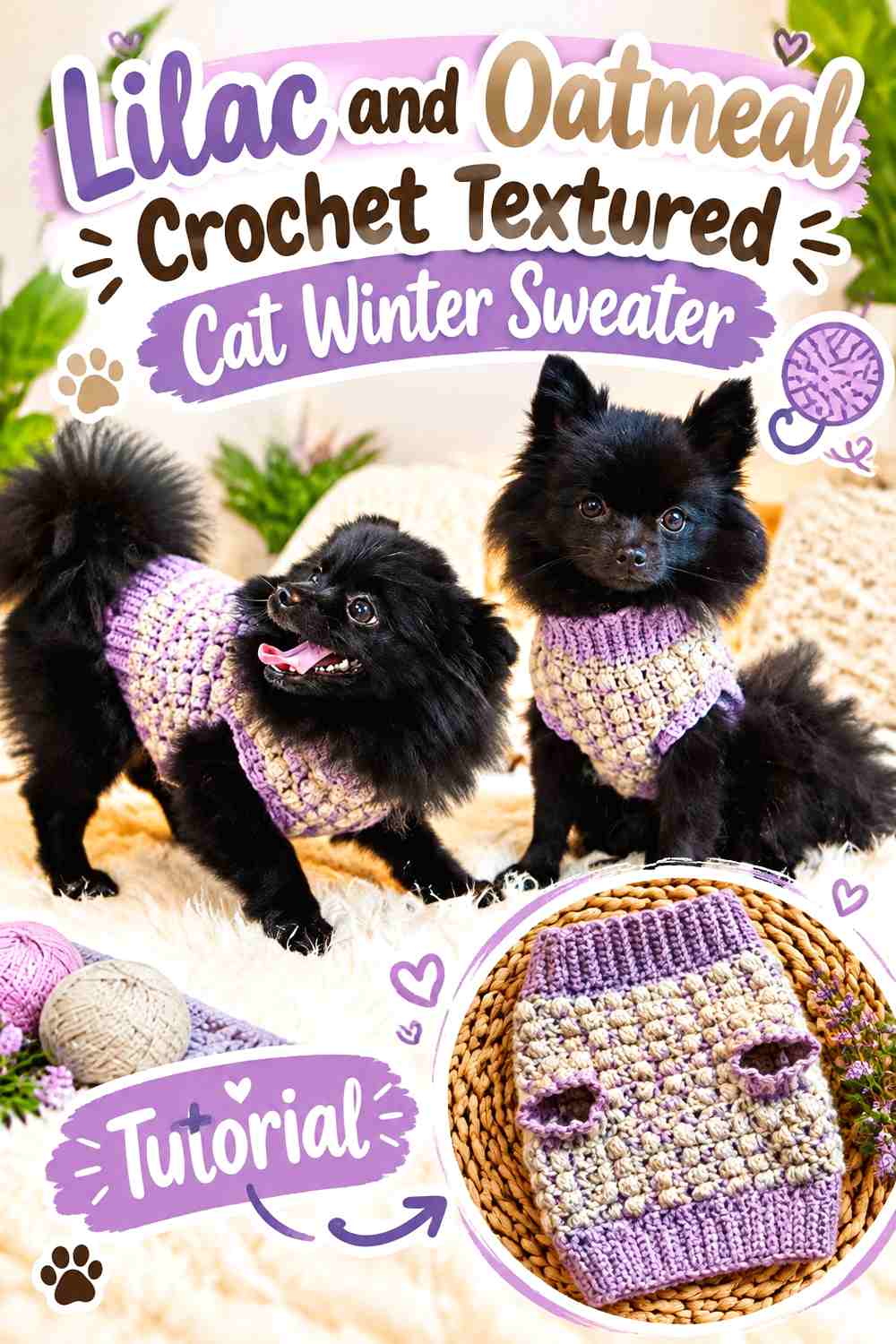
Lilac can give a puff- or texture-focused sweater a soft pastel surface, while oatmeal creates warmer edging than bright white. Because raised stitches create their own shadows, the body does not need frequent color changes.
Use oatmeal where the sweater meets the cat rather than inside every textured section.
Lilac Should Carry the Crochet Cat Sweater Texture
Keep the raised or puff-style body primarily lilac. A single color makes the texture easier to follow and prevents the surface from becoming visually cluttered.
If you want a second lilac value, use it once rather than alternating continuously.
Oatmeal Should Soften the Lilac Cat Sweater Collar and Hem
A warm oatmeal collar gives gentle contrast without creating a stark white outline.
Repeat it at the lower edge if needed, but leave the main textured back completely lilac.
Creator Credit: SheiLa Teré
9. Dusty Rose and Cream Crochet Long-Sleeve Cat Winter Sweater

Dusty rose can cover the body and short sleeve sections, while cream defines the neckline and sleeve ends. On a cat, sleeve fit deserves particular attention because the front legs need to move freely.
If adapting a longer-sleeved pet sweater, shorten or simplify the sleeves when necessary for the individual cat rather than prioritizing the original silhouette.
Dusty Rose Should Connect the Crochet Cat Body and Sleeves
Use the same rose across the back and sleeve sections so the leg openings do not look like separately attached pastel pieces.
The continuous color also helps the sweater remain visually calm around the moving front legs.
Cream Should Stay Narrow on Dusty Rose Cat Sweater Sleeves
A small cream edge can mark the sleeve end without creating a bulky cuff.
Keep the cream border flexible and visually light rather than treating it like a thick human-sweater cuff.
Creator Credit: Vibes with Dani
10. Pale Aqua and Ivory Crochet Cowl-Neck Cat Winter Sweater
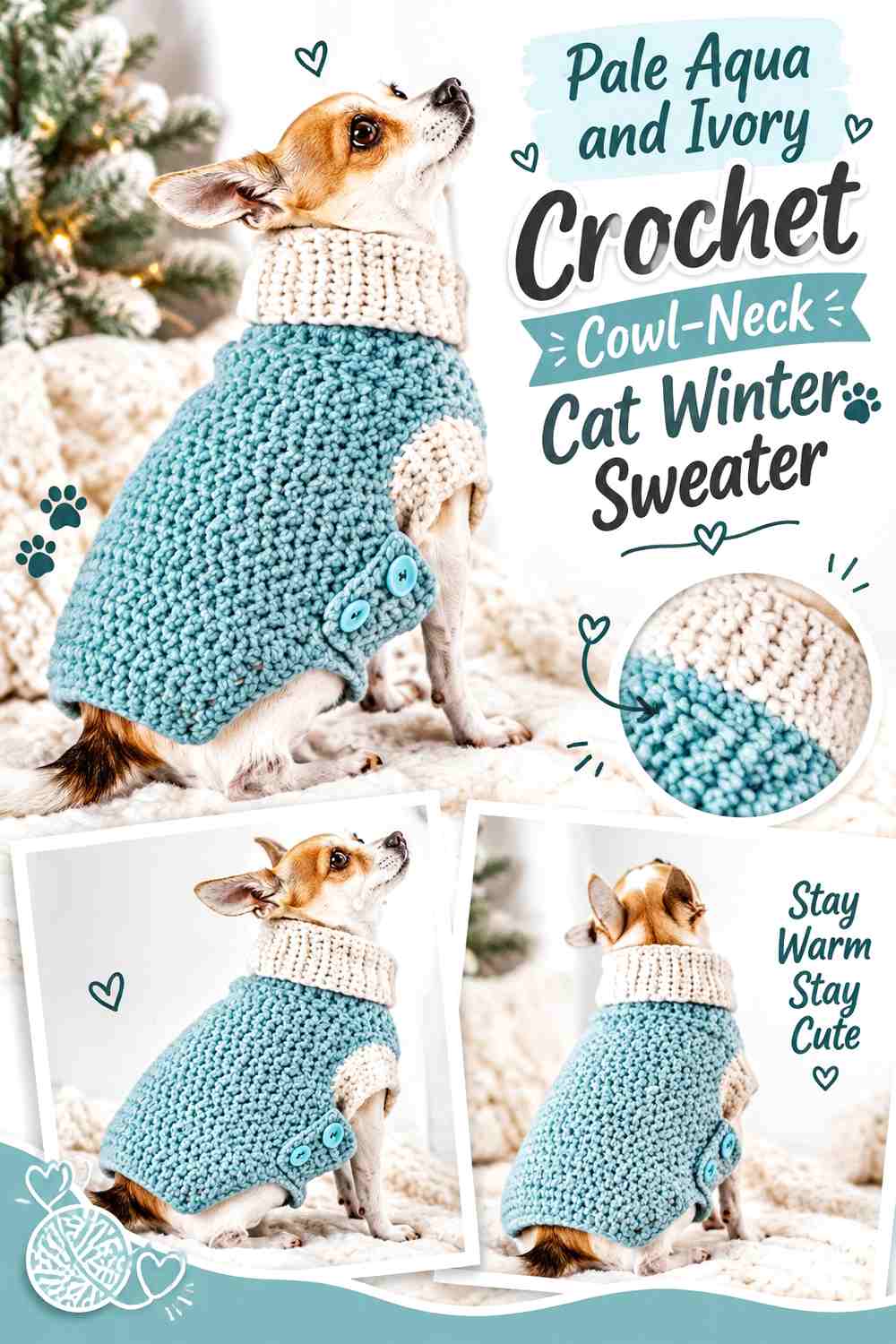
Pale aqua makes a folded or taller collar visually distinct from the cat’s fur, while ivory can define the collar edge and lower body. The cowl should remain proportionate to the cat rather than extending high enough to crowd the chin or ears.
Use aqua across both collar and back if you want the garment to feel connected rather than like an ivory-trimmed neckpiece attached to a different sweater.
Pale Aqua Should Connect the Crochet Cat Cowl to the Back
Repeat aqua continuously from the neckline into the main sweater body.
This keeps the collar from looking visually detached even when its texture or direction differs from the torso.
Ivory Should Stay at the Edge of the Pale Aqua Cat Cowl
Use ivory in a narrow finishing section where the collar turns or ends.
Too much ivory around a tall neckline can make it visually heavier than the rest of the pastel sweater.
Creator Credit: Yarnspirations
11. Butter Yellow and Powder Blue Crochet One-Piece Cat Winter Sweater
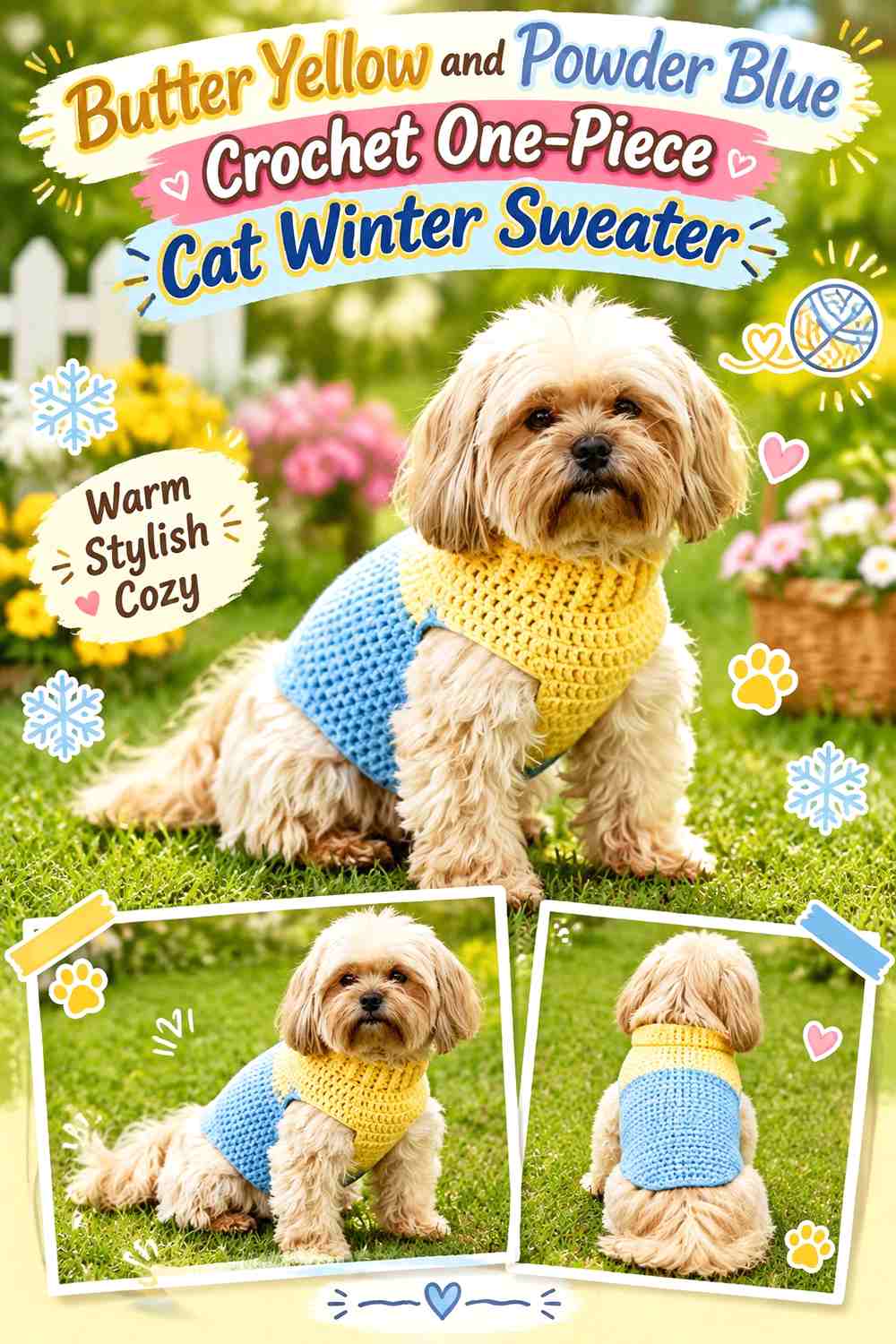
Butter yellow can create the broad sweater body while powder blue defines the collar and lower back. The one-piece construction makes this a good place for larger color blocks because there are fewer seams or separately attached areas competing with the palette.
Keep yellow dominant so the blue reads as a cool winter accent.
Butter Yellow Should Lead the Crochet One-Piece Cat Sweater
Use yellow through most of the torso and shoulders.
A pale color can still feel organized when it occupies one continuous area rather than appearing in alternating bands.
Powder Blue Should Mark the Butter Yellow Cat Sweater Ends
Use blue around the collar and lower back edge to give the garment a clear beginning and ending.
Avoid placing a third pastel between them unless more contrast is genuinely needed.
Creator Credit: Crochet It
12. Mint and Lavender Crochet Classic Cat Winter Sweater
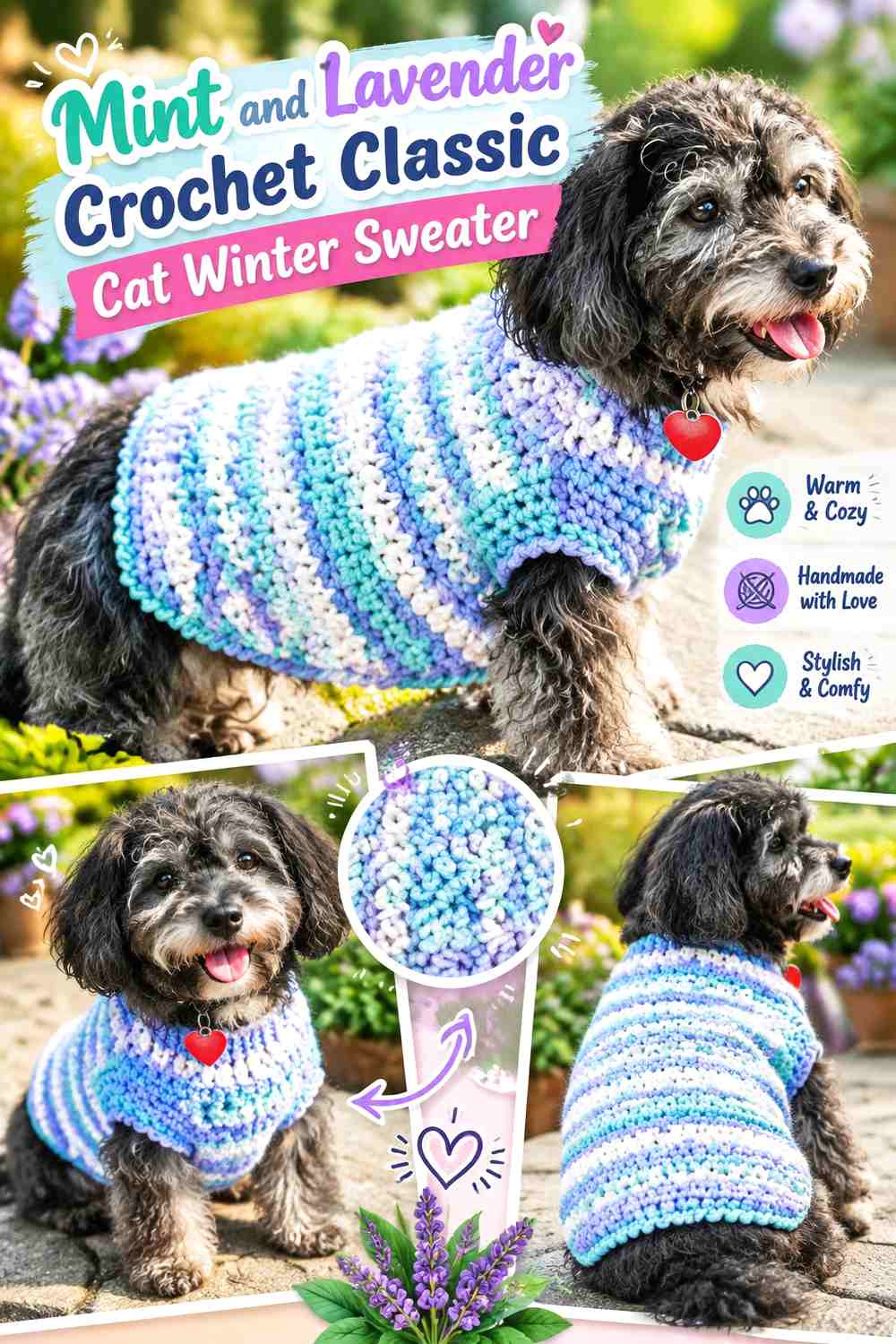
Mint and lavender create a cool two-pastel combination, but their similar softness means one should clearly dominate. Let mint cover the sweater body and use lavender around the collar, leg openings, or one broad stripe.
A tiny amount of cream can be introduced only when the two shades do not separate enough on the finished fabric.
Mint Should Cover More of the Crochet Cat Sweater Than Lavender
Use mint continuously across the back and chest.
Lavender can define the upper edge or one decorative area without turning the sweater into equal pastel color blocking.
Lavender Should Stay Concentrated Against the Mint Cat Sweater
Place lavender where it explains the sweater construction, such as the neckline or leg-opening edges.
If those openings already contain enough visual detail, use lavender at the hem instead of adding color everywhere.
Creator Credit: The Crochet Crowd
13. Blush Pink and Sage Crochet Buttoned Cat Winter Sweater
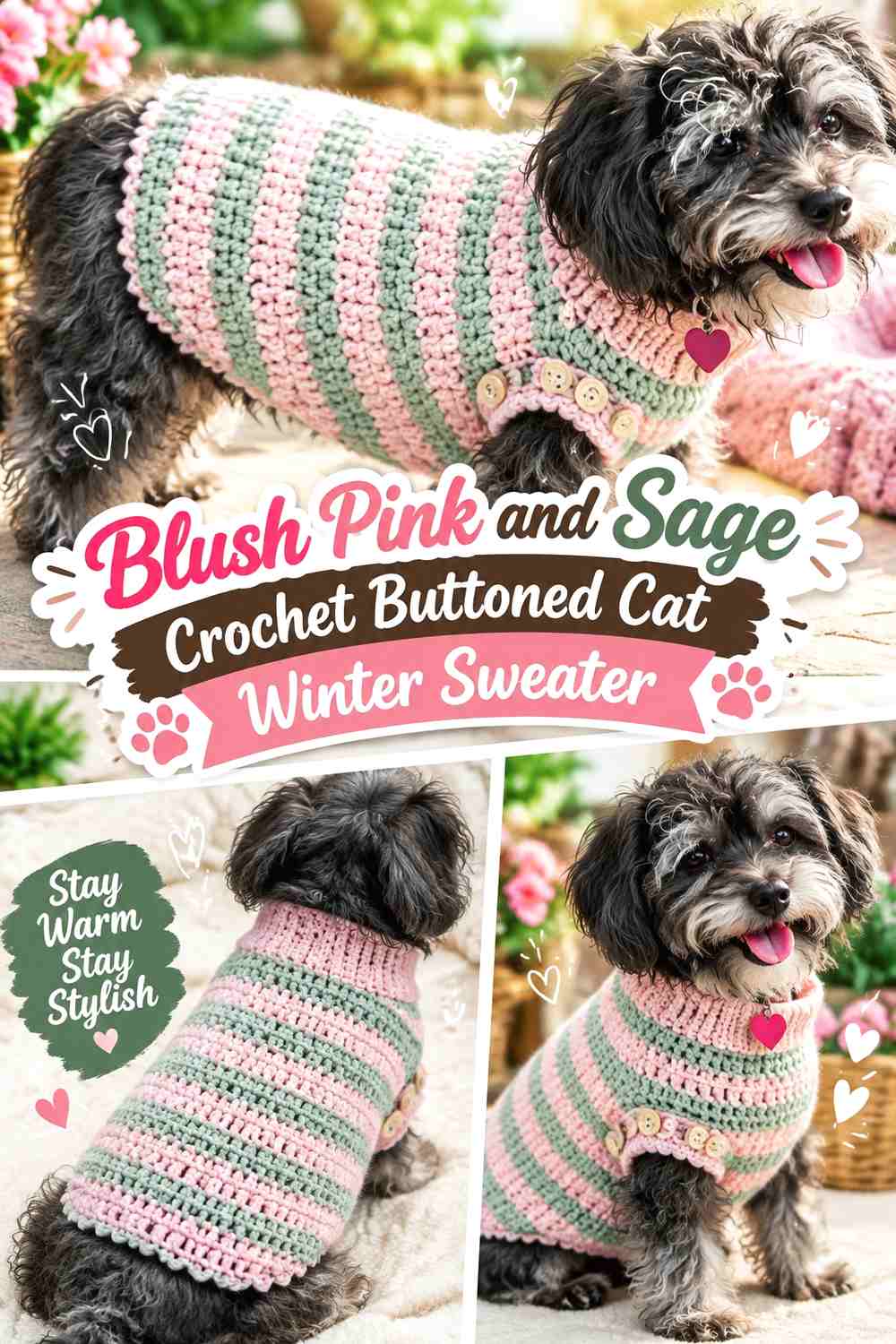
A buttoned or fastening-style sweater can use blush pink as the broad body color and sage around the opening or fastening edge. The contrasting edge makes the opening easier to distinguish without filling the whole back with green.
Keep any button area visually simple so color does not distract from how the sweater fastens.
Blush Pink Should Remain Broad Around the Sage Crochet Cat Opening
Use blush across most of the back and side panels so sage remains a structural accent.
A wide green panel may make the fastening side appear heavier than the opposite side.
Sage Should Define the Blush Pink Cat Sweater Fastening Edge
Place sage directly around the edge or tab where the sweater opens.
That gives the second pastel a practical visual role instead of scattering green through unrelated sections.
Creator Credit: Last Minute Laura
14. Powder Blue and Peach Crochet Adjustable Cat Winter Sweater
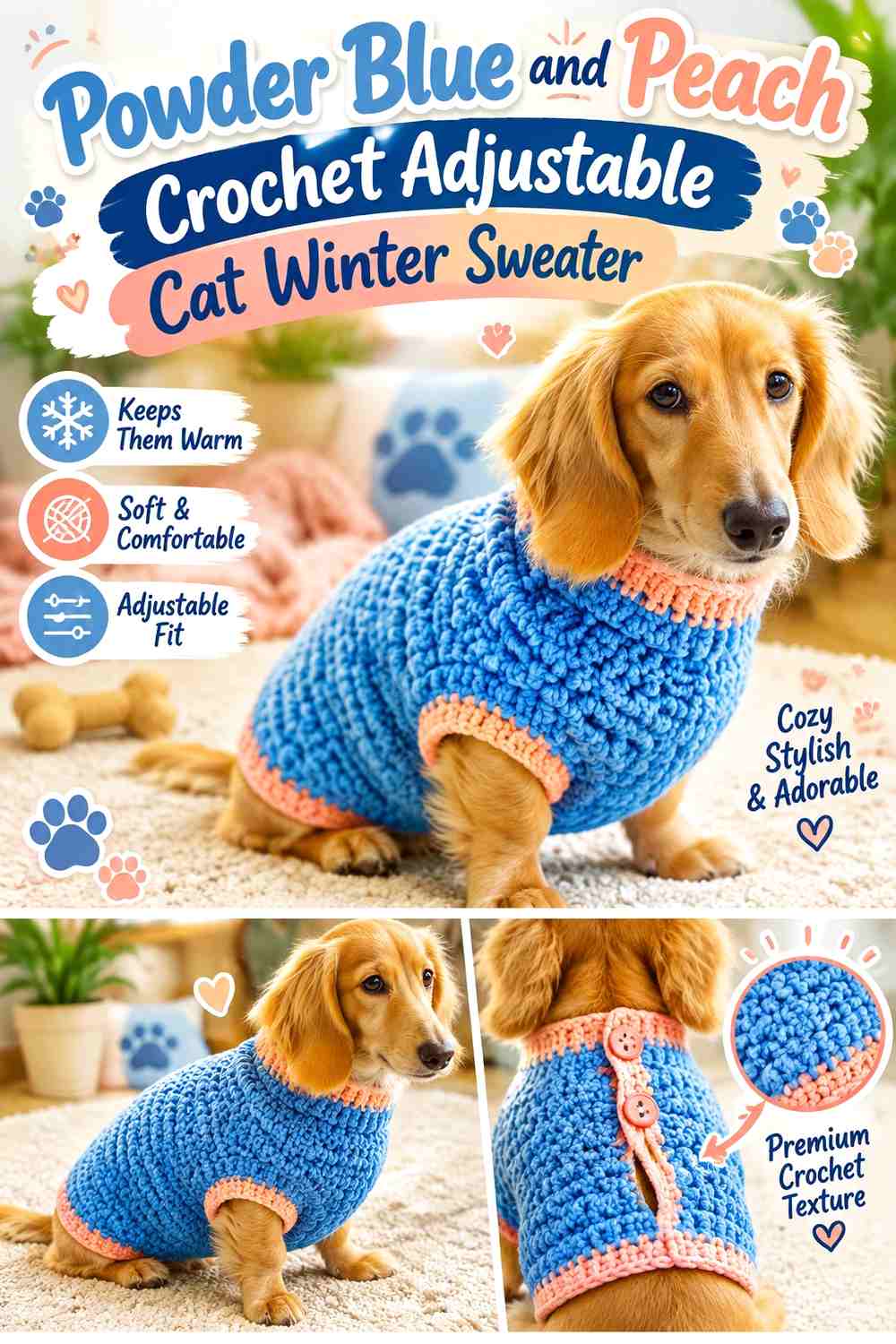
Powder blue and peach provide clear warm-cool contrast while remaining soft enough for the pastel theme. Blue can lead the main body while peach marks the collar or lower edge.
An adjustable pet-sweater concept should be fitted to the actual cat rather than relying on another animal’s size labels or proportions.
Powder Blue Should Carry the Adjustable Crochet Cat Sweater Body
Use blue across the broadest areas so the garment keeps one stable color while fit changes are made.
This also prevents adjustment points from becoming the busiest-looking sections.
Peach Should Highlight Powder Blue Cat Sweater Edges
Use peach around a neckline, fastening area, or hem.
The warm accent stands out clearly against blue even when the peach section remains narrow.
Creator Credit: Crochet with Tiffany
15. Cream, Lavender, Mint, and Blush Crochet Pastel Colorwork Cat Winter Sweater
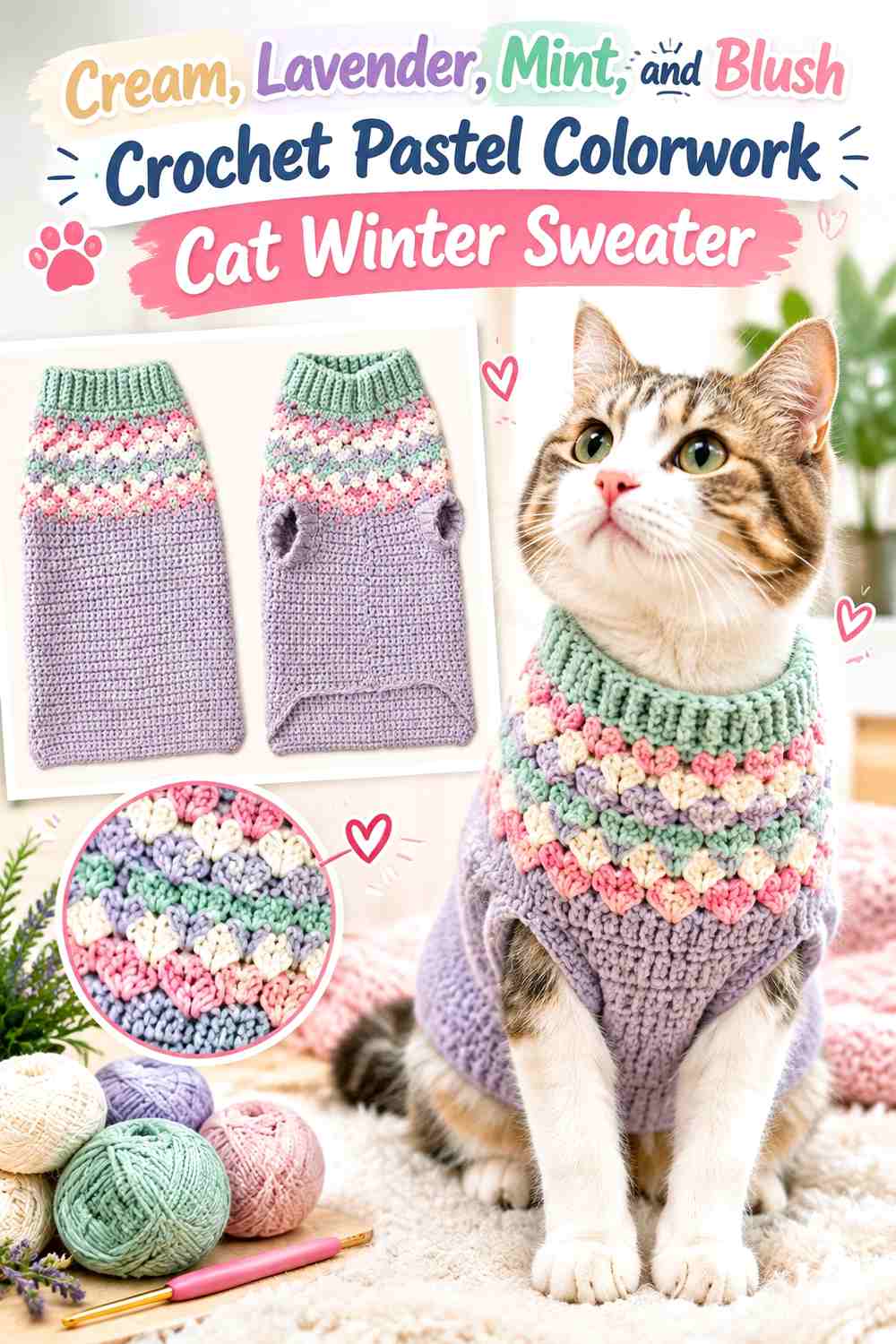
A colorwork yoke gives you room to use several soft pastels without scattering them randomly through the whole sweater. Cream can become the main body and background, while lavender, mint, and blush appear in a controlled upper colorwork section.
Keeping the lower body mostly cream prevents four pastel colors from competing across the cat’s entire back.
Cream Should Ground Lavender, Mint, and Blush Crochet Colorwork
Use cream between the colored motifs and across most of the sweater body.
The neutral background gives the three pastel shades enough visual separation to remain individually readable.
Lavender, Mint, and Blush Should Stay Concentrated Near the Cream Cat Sweater Yoke
Keep the multicolor section near the shoulders or upper back and simplify the lower sweater.
This creates one deliberate pastel focal zone while leaving the cat’s overall silhouette calm.
Creator Credit: Marly Bird
Which Soft Pastel Cat Sweater Palette Should You Choose?
For the quietest winter palette, powder blue with ivory, pistachio with cream, pale aqua with ivory, or lilac with oatmeal keeps the color contrast gentle while still defining collars and edges.
Blush, peach, dusty rose, and butter yellow create warmer sweaters. Pair them with cream, sage, mint, or powder blue when you want enough contrast to show the neckline, leg openings, or hem without introducing a dark shade.
If you want several pastels in one sweater, concentrate them in a yoke, broad stripe, or another defined zone. A cream body with lavender, mint, and blush colorwork usually looks more organized than distributing all four colors evenly from neck to lower back.
Conclusion
Soft pastel crochet cat sweaters can feel very different even when the garment construction is similar. Blush creates a warm romantic direction, powder blue and aqua feel cooler, mint and pistachio give the sweater a gentle green palette, while lavender and dusty rose add more visible color without becoming highly saturated.
Use the largest back area for the dominant pastel, then give the second shade a specific structural role at the neckline, leg openings, fastening edge, sleeves, or hem. Cream, ivory, and oatmeal are most useful when two pastels need clearer separation.
Most importantly, build the sweater around the individual cat. Check the neck, chest, front-leg openings, and back length as the project develops, and make sure the finished garment allows comfortable movement. If the cat resists wearing clothing, remove the sweater rather than prioritizing the finished look. Follow each credited tutorial for its original cat, dog, or pet-sweater construction and adapt the fit and pastel placement independently.
Frequently Asked Questions
What soft pastel colors work well for crochet cat winter sweaters?
Blush pink, dusty rose, peach, butter yellow, mint, pistachio, sage, powder blue, pale aqua, lavender, lilac, cream, ivory, and oatmeal all work well. Choose one dominant pastel and use one or two supporting colors in smaller structural areas.
How can I combine two pale colors without losing contrast on a cat sweater?
Put a narrow cream, ivory, or oatmeal section between them, or use the two pastels in clearly separate areas. For example, a mint body with a butter-yellow collar is easier to read than frequently alternating both colors across the back.
Where should a contrasting color go on a crochet cat sweater?
The collar, leg openings, lower hem, fastening edge, and sleeve ends are useful locations because the contrast also helps define the garment’s construction.
Can I make a striped crochet cat sweater in pastel colors?
Yes. Use broader stripes rather than many tiny color changes, and let one shade repeat more often than the others. This keeps the cat’s back from looking visually fragmented.
How can I use several pastel colors in one cat sweater?
Concentrate them in one defined section such as a yoke or broad upper-back pattern. Keep the rest of the sweater in cream or another dominant pastel so the multicolor area has a clear boundary.
What should I check when fitting a crochet sweater on a cat?
Check the neckline, chest, front-leg openings, and overall back length, and make sure the cat can move comfortably. Fit the actual cat rather than assuming another pet’s pattern measurements will transfer directly.
Do all the linked tutorials make the exact pastel cat sweaters described here?
No. Several teach cat or cat-and-dog sweaters directly, while others demonstrate adaptable pet or dog sweater constructions. The soft pastel palettes, cat-specific color placement, and individual adaptations in this article are independent ideas; follow each creator’s tutorial for the construction it actually demonstrates.