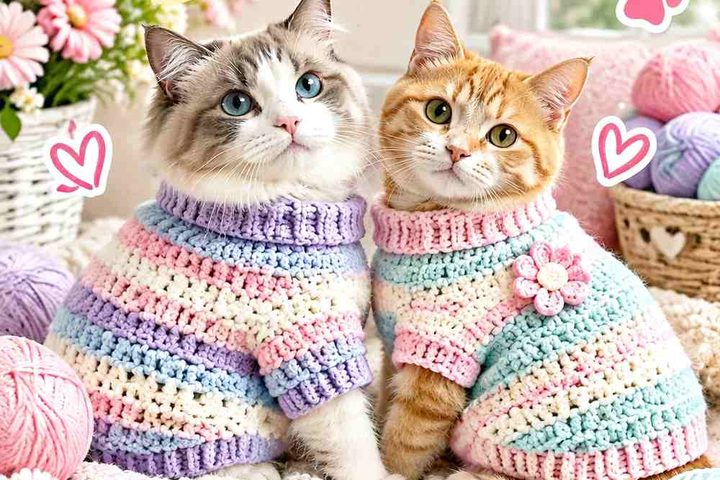
A dachshund sweater needs a different visual balance from a short-bodied dog sweater. The long back gives crochet texture more room to show, while the shorter legs and relatively low underside make collar depth, leg openings, belly coverage, and back length especially important when adapting a general dog-sweater construction.
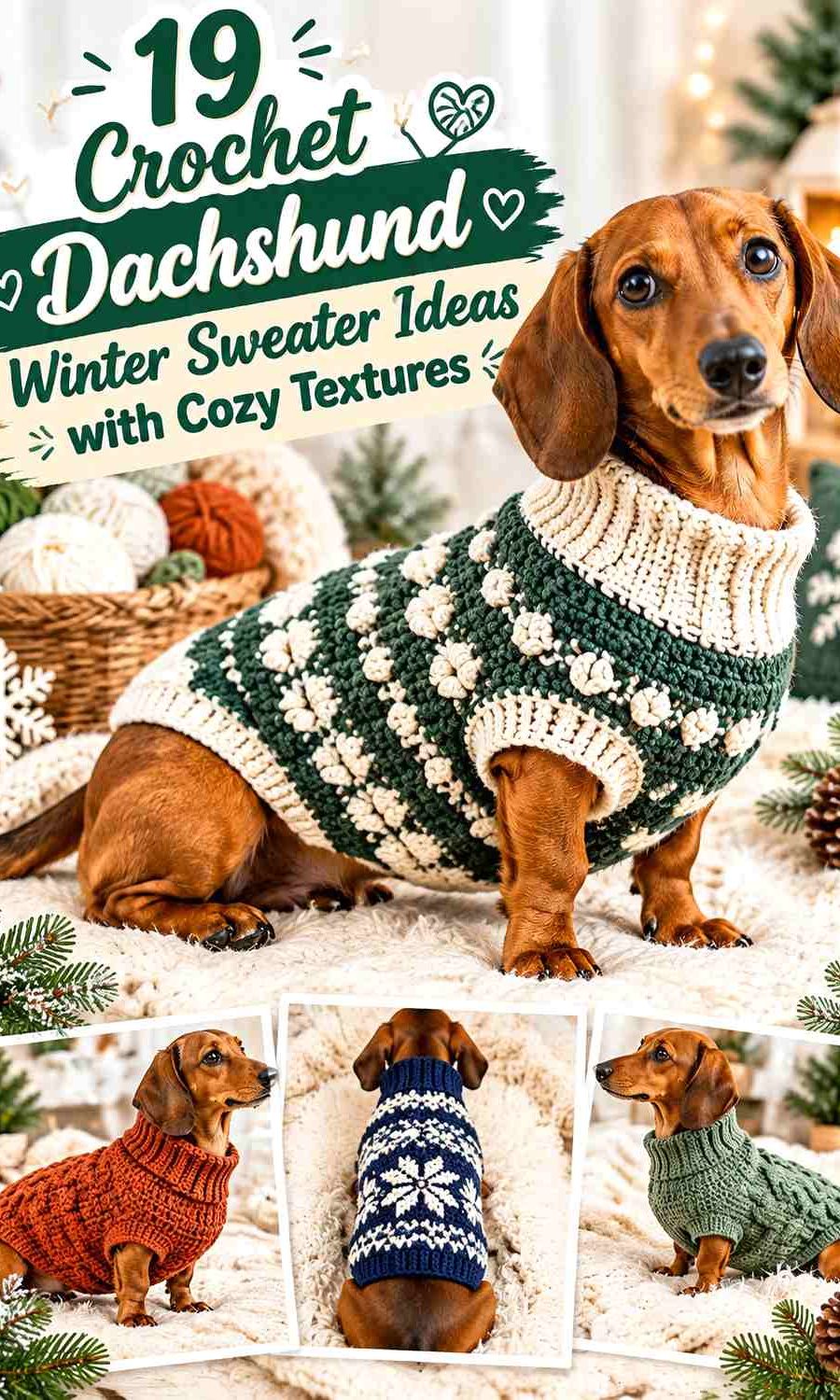
Color can make those proportions work visually. A darker body with a lighter ribbed collar can frame the neck, while vertical cables or long ribs can emphasize the back without adding several competing shades. Two-color textures such as houndstooth need more planning because the pattern already creates substantial visual activity.
These 19 ideas combine winter palettes with different crochet textures, including ribbing, wheat stitch, moss stitch, cables, waffle stitch, basketweave, alpine texture, berry texture, and houndstooth. The credited tutorials include dog-sweater constructions and stitch tutorials; when a source teaches only the texture, use it as the stitch reference while fitting the sweater independently to the dachshund.
Quick List
- Oatmeal and Forest Green Crochet Ribbed Dachshund Winter Sweater
- Rust and Cream Crochet Wheat-Stitch Dachshund Winter Sweater
- Charcoal and Camel Crochet Moss-Stitch Dachshund Winter Sweater
- Navy and Cream Crochet Cable-Back Dachshund Winter Sweater
- Sage and Oatmeal Crochet Waffle-Texture Dachshund Winter Sweater
- Burgundy and Camel Crochet Turtleneck Dachshund Winter Sweater
- Mustard and Chocolate Crochet Houndstooth Dachshund Winter Sweater
- Deep Teal and Ivory Crochet Basketweave Dachshund Winter Sweater
- Plum and Oatmeal Crochet Alpine-Texture Dachshund Winter Sweater
- Cocoa and Rust Crochet Berry-Texture Dachshund Winter Sweater
- Forest Green and Cream Crochet Long-Sleeve Dachshund Winter Sweater
- Dusty Blue and Charcoal Crochet Cowl-Neck Dachshund Winter Sweater
- Cranberry, Oatmeal, and Navy Crochet Colorwork Dachshund Winter Sweater
- Camel and Burgundy Crochet Suzette-Texture Dachshund Winter Sweater
- Slate Blue and Mustard Crochet Long-Back Dachshund Winter Sweater
- Deep Olive and Cream Crochet Ribbed-Collar Dachshund Winter Sweater
- Terracotta and Charcoal Crochet Textured-Cuff Dachshund Winter Sweater
- Navy and Rust Crochet Two-Tone Dachshund Winter Sweater
- Chocolate, Sage, and Cream Crochet Bobble-Back Dachshund Winter Sweater
Fit Cozy Crochet Texture to a Dachshund’s Long Back
Measure the individual dog rather than relying only on a general size label. Back length, chest circumference, neck opening, front-leg placement, and underside length all affect whether a sweater made for another small breed can be adapted successfully.
Texture also changes the fabric. Deep post stitches, cables, bobbles, and waffle patterns can create a thicker surface than flatter crochet, so swatch the intended texture before deciding how much of it belongs across the chest or underside.
Keep Dachshund Winter Sweater Texture Away From Crowded Leg Areas
The back panel offers the most uninterrupted space for strong texture. Cables, wheat stitch, alpine stitch, and basketweave can become focal details there without adding the same bulk around the short front legs.
Use simpler crochet around leg openings and the lower chest when a raised pattern begins to crowd those areas. The sweater should allow ordinary movement without rubbing or bunching.
Let Color Clarify the Dachshund Sweater’s Neck, Back, and Belly
A contrasting collar can make the neck opening easy to identify, while a darker belly section can visually recede beneath the body. On the long back, broad uninterrupted color often shows texture better than frequent stripes.
If using three colors, assign them separate jobs: body, trim, and small accent. This keeps the sweater readable even when the stitch pattern is already complex.
1. Oatmeal and Forest Green Crochet Ribbed Dachshund Winter Sweater

Oatmeal can cover the long back while forest green defines the ribbed neck, leg openings, and lower edge. The contrast is strong enough to show the sweater structure without interrupting the long body with repeated stripes. Ribbing also gives the collar a different visual texture from the flatter back.
Oatmeal Should Keep the Crochet Dachshund Back Long and Uninterrupted
Use oatmeal across most of the top panel so the eye follows one continuous line from shoulders toward the tail end. Several narrow green bands across the back could visually shorten that length.
Forest Green Should Define the Oatmeal Crochet Dachshund Collar and Edges
Repeat green at the neck and selected finishing edges rather than through the entire body. This makes the trim feel coordinated while oatmeal remains the obvious dominant shade.
Creator Credit: Crochet It
2. Rust and Cream Crochet Wheat-Stitch Dachshund Winter Sweater

Rust is well suited to a pronounced wheat-like texture because the shadows within the stitch remain visible without requiring another color inside every repeat. Cream can lighten the ribbed collar and narrow leg borders.
Rust Should Carry the Crochet Wheat Texture Along the Dachshund Back
Keep the wheat texture concentrated across the broad upper body where its repeated raised pattern has room to develop. A single rust field also prevents the stitch definition from being interrupted by constant color changes.
Cream Should Frame the Rust Crochet Dachshund Sweater Sparingly
Use cream around the neckline or lower edge rather than inserting it into every wheat repeat. The lighter neutral is most useful as a boundary color.
Creator Credit: Briana K
3. Charcoal and Camel Crochet Moss-Stitch Dachshund Winter Sweater
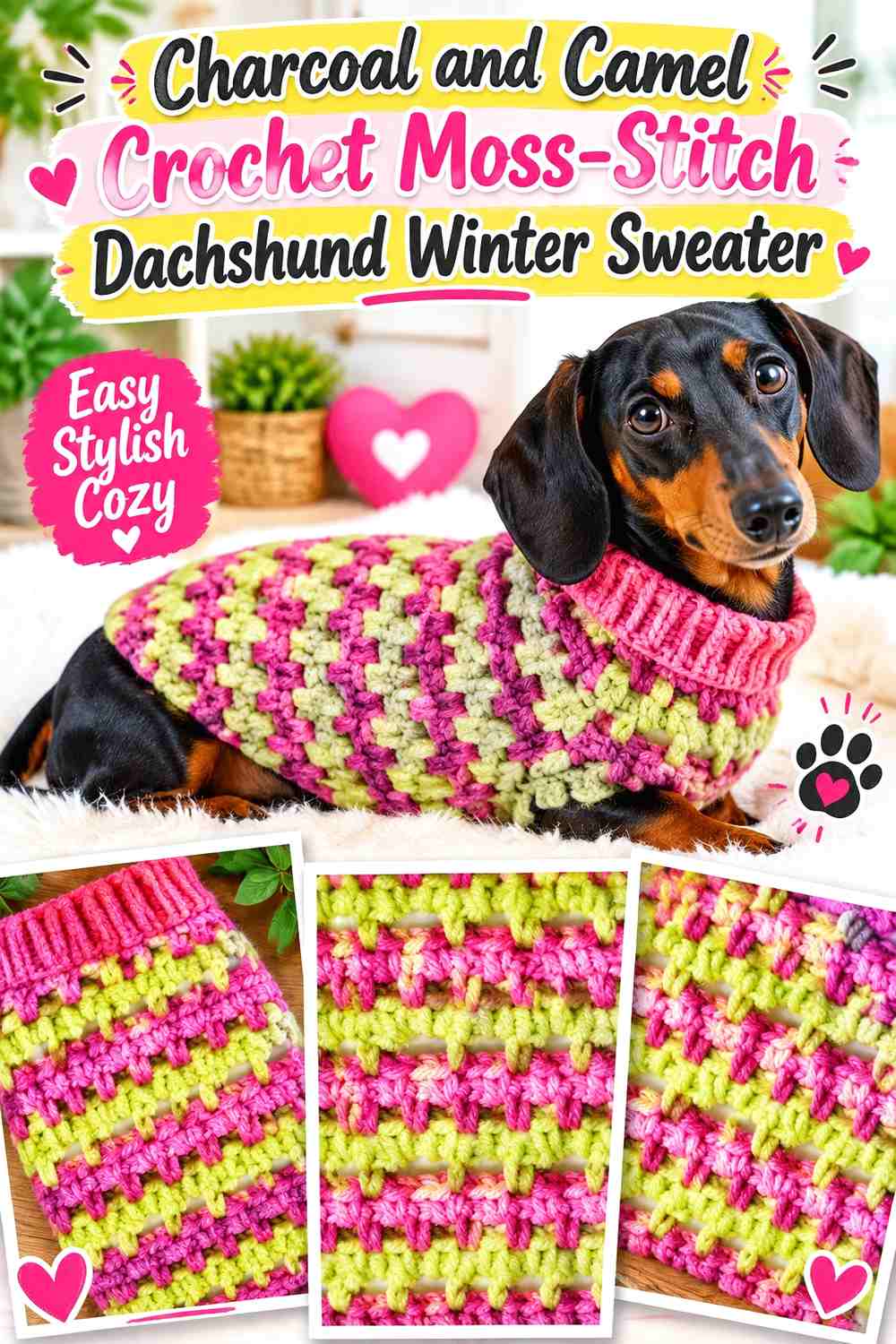
Charcoal can form the main moss-stitch body, while camel softens the collar and belly edge. Moss stitch creates a more woven-looking surface than large raised cables, making it useful when you want visible texture without a heavily dimensional back.
Charcoal Should Keep the Crochet Moss-Stitch Dachshund Body Cohesive
Use charcoal from the shoulder area through most of the back so the subtle texture remains the main surface detail. A darker continuous field also works well with a warmer camel neck.
Camel Can Warm the Charcoal Crochet Dachshund Neck and Hem
Place camel where a softer boundary is useful, especially around the neck or rear edge. Keep the moss-stitch body primarily charcoal so the two-color treatment does not become narrow striping.
Creator Credit: Crochet with Tuula Maaria
4. Navy and Cream Crochet Cable-Back Dachshund Winter Sweater
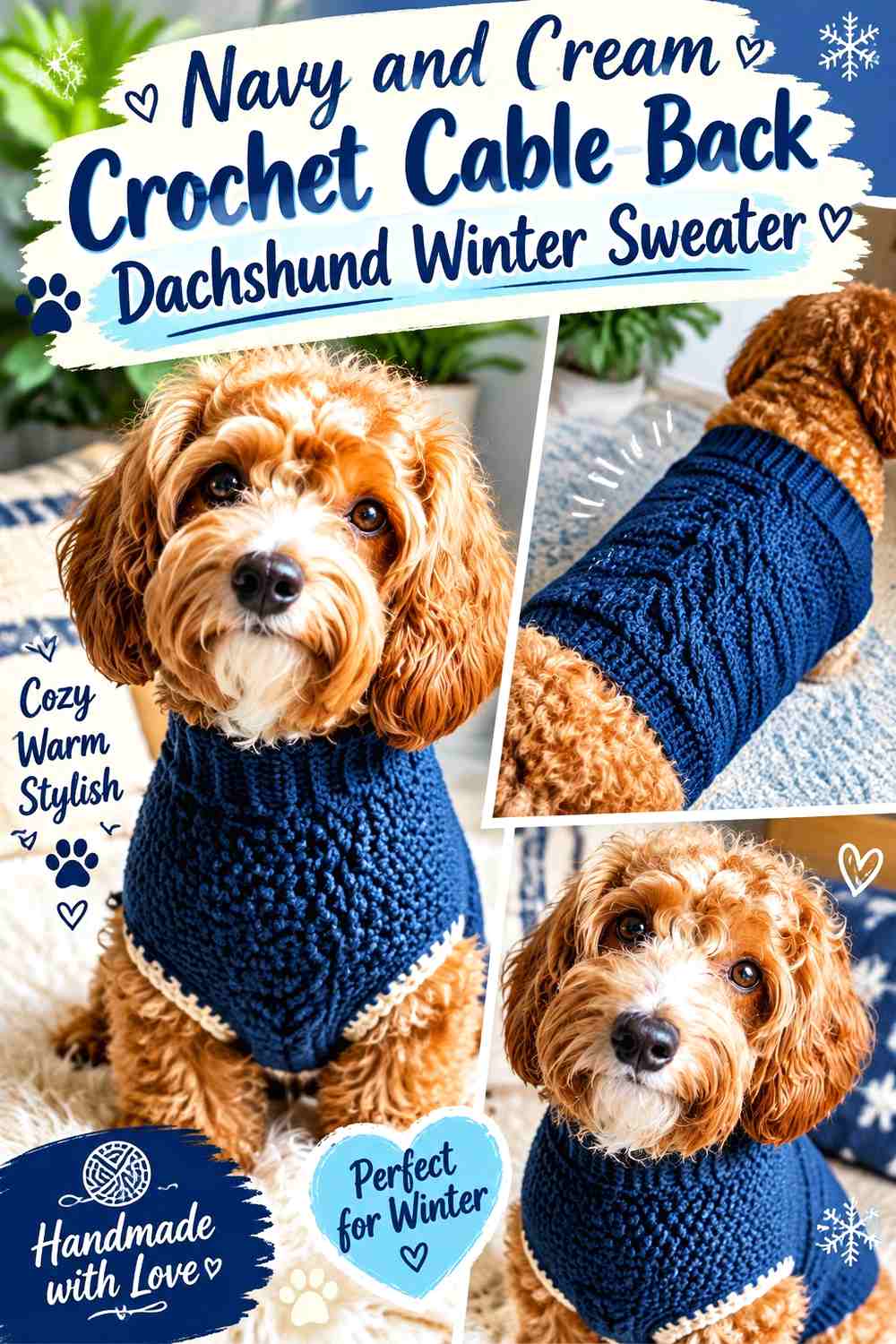
A long dachshund back gives one central crochet cable enough room to become the primary decorative feature. Navy can cover the body and cable, while cream defines a ribbed collar or narrow side edge.
Navy Should Keep the Crochet Dachshund Cable Continuous Down the Back
Work the visual cable in the same navy as the surrounding fabric so light and shadow reveal the texture. Changing cable color repeatedly can distract from the twists themselves.
Cream Should Frame the Navy Crochet Cable Dachshund Sweater
Use cream away from the cable, such as on the collar and simple finishing edge. This lets the pale color outline the sweater without splitting the central textured panel.
Creator Credit: Maria’s Blue Crayon
5. Sage and Oatmeal Crochet Waffle-Texture Dachshund Winter Sweater

Sage creates a soft woodland winter body, while oatmeal can lighten the collar and back edge. Waffle texture is visually substantial, so it is better treated as a broad back feature than repeated around every part of a small-bodied garment.
Sage Should Carry the Crochet Waffle Texture Across the Dachshund Back
Keep sage uninterrupted over the main waffle section so the grid-like relief stays easy to see. Multiple colors inside the cells can make an already strong texture unnecessarily busy.
Oatmeal Should Keep Sage Crochet Waffle Edges Quiet
Use oatmeal on simpler crochet around the neck or rear finish. That contrast gives the waffle panel a clean boundary without adding more raised texture around the legs.
Creator Credit: Rich Textures Crochet
6. Burgundy and Camel Crochet Turtleneck Dachshund Winter Sweater

Burgundy can form the main sweater while camel defines a foldable or extended neck. A pronounced collar is particularly noticeable on a long, low silhouette, so keep the body color simple if the neck already has substantial texture.
Burgundy Should Keep the Crochet Dachshund Body Visually Long
Use burgundy throughout most of the back and side body rather than adding several horizontal bands. The uninterrupted dark red gives the long torso a clean line.
Camel Should Clearly Define the Burgundy Crochet Dachshund Turtleneck
Keep camel concentrated around the neck. If the collar folds, the lighter shade will naturally create a strong focal area without needing extra patterning on the back.
Creator Credit: Last Minute Laura
7. Mustard and Chocolate Crochet Houndstooth Dachshund Winter Sweater

Houndstooth already depends on two-color repetition, so mustard and chocolate should remain the only major body colors. Chocolate can also handle the collar and lower trim if you want a darker frame around the patterned back.
Mustard and Chocolate Should Repeat Consistently Across the Crochet Dachshund Back
Keep the two-color sequence stable over the largest panel. Interrupting it frequently with a third shade can weaken the recognizable staggered check.
Chocolate Should Ground the Mustard Crochet Dachshund Houndstooth Edges
Use solid chocolate around the neckline and simple borders. The darker framing creates a visual rest after the busy two-color body.
Creator Credit: Crochet with GG
8. Deep Teal and Ivory Crochet Basketweave Dachshund Winter Sweater
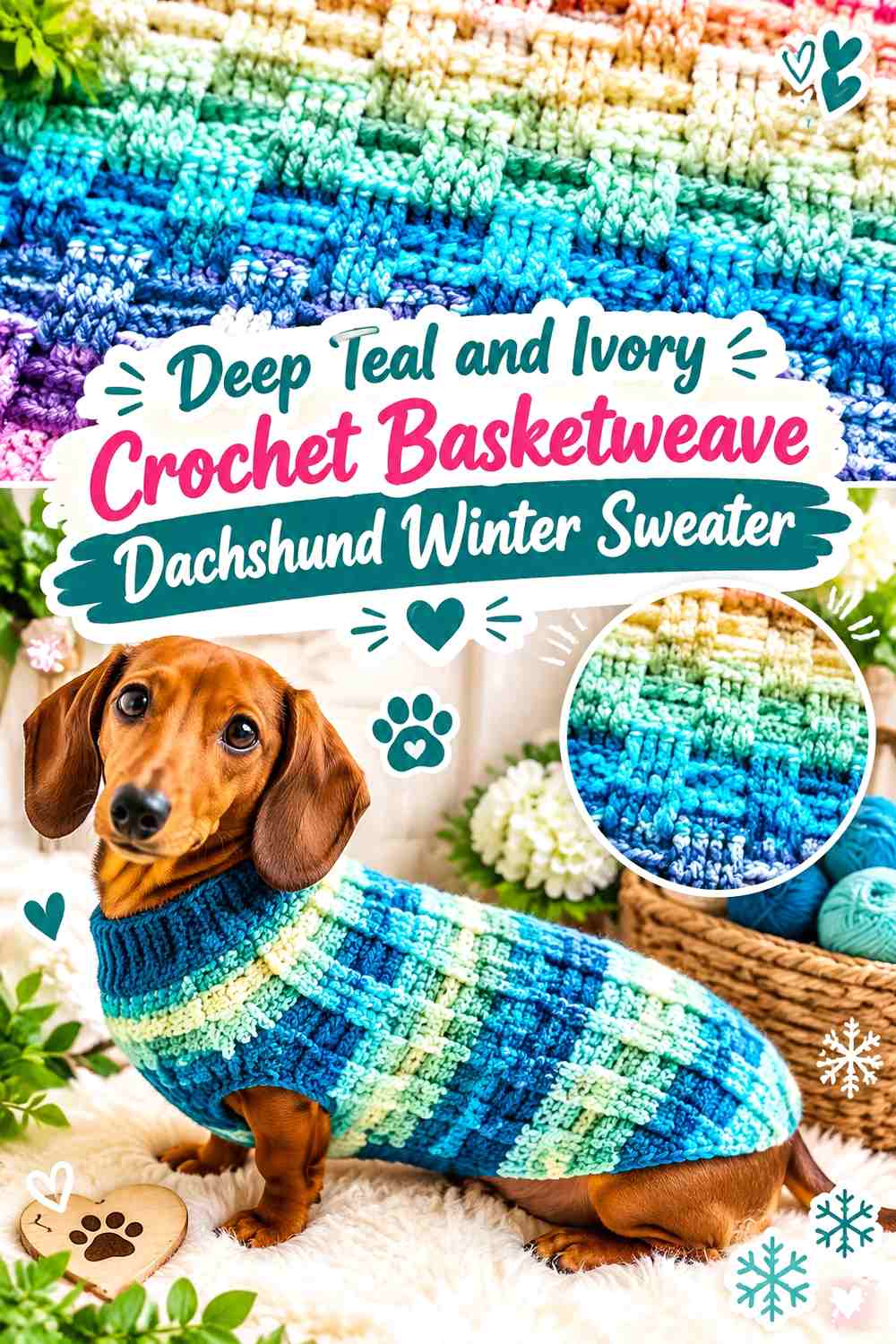
Deep teal gives basketweave texture enough shadow to appear clearly, while ivory can outline the neckline and rear edge. Because basketweave is visually dense, keep it primarily on the broad back rather than forcing the same structure into narrow leg openings.
Deep Teal Should Hold the Crochet Basketweave Across the Dachshund Back
Use teal across the textured upper section so the alternating raised blocks remain connected. A consistent color makes the relief easier to see.
Ivory Should Simplify the Deep Teal Crochet Dachshund Borders
Work ivory in flatter edging around selected openings. This separates the basketweave panel from the smaller structural areas and prevents the whole sweater from looking equally heavy.
Creator Credit: Hooked by Robin
9. Plum and Oatmeal Crochet Alpine-Texture Dachshund Winter Sweater
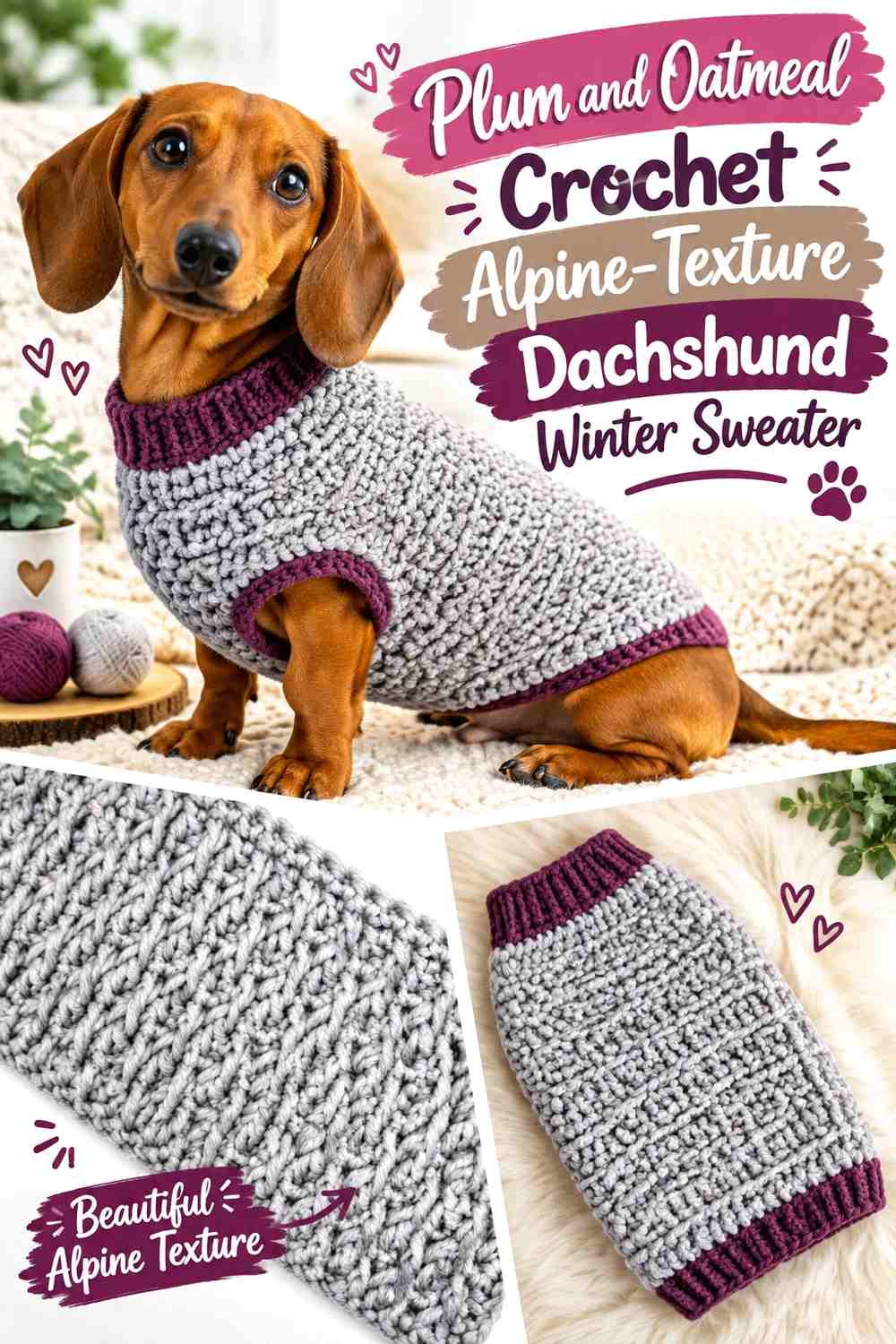
Plum gives alpine stitch a rich winter surface, and oatmeal works as a quiet neutral around the collar. Alpine texture has a strong vertical quality that can look especially effective along a long back.
Plum Should Run the Crochet Alpine Texture Lengthwise on the Dachshund
Keep the raised plum texture extending through the main top panel instead of breaking it with horizontal color changes. The long uninterrupted section emphasizes the sweater’s cozy surface.
Oatmeal Should Keep the Plum Crochet Dachshund Collar Light
Use oatmeal on the ribbed or simple neck section. The neutral creates clear separation from the textured body and gives the neckline a softer finish.
Creator Credit: Bella Coco
10. Cocoa and Rust Crochet Berry-Texture Dachshund Winter Sweater
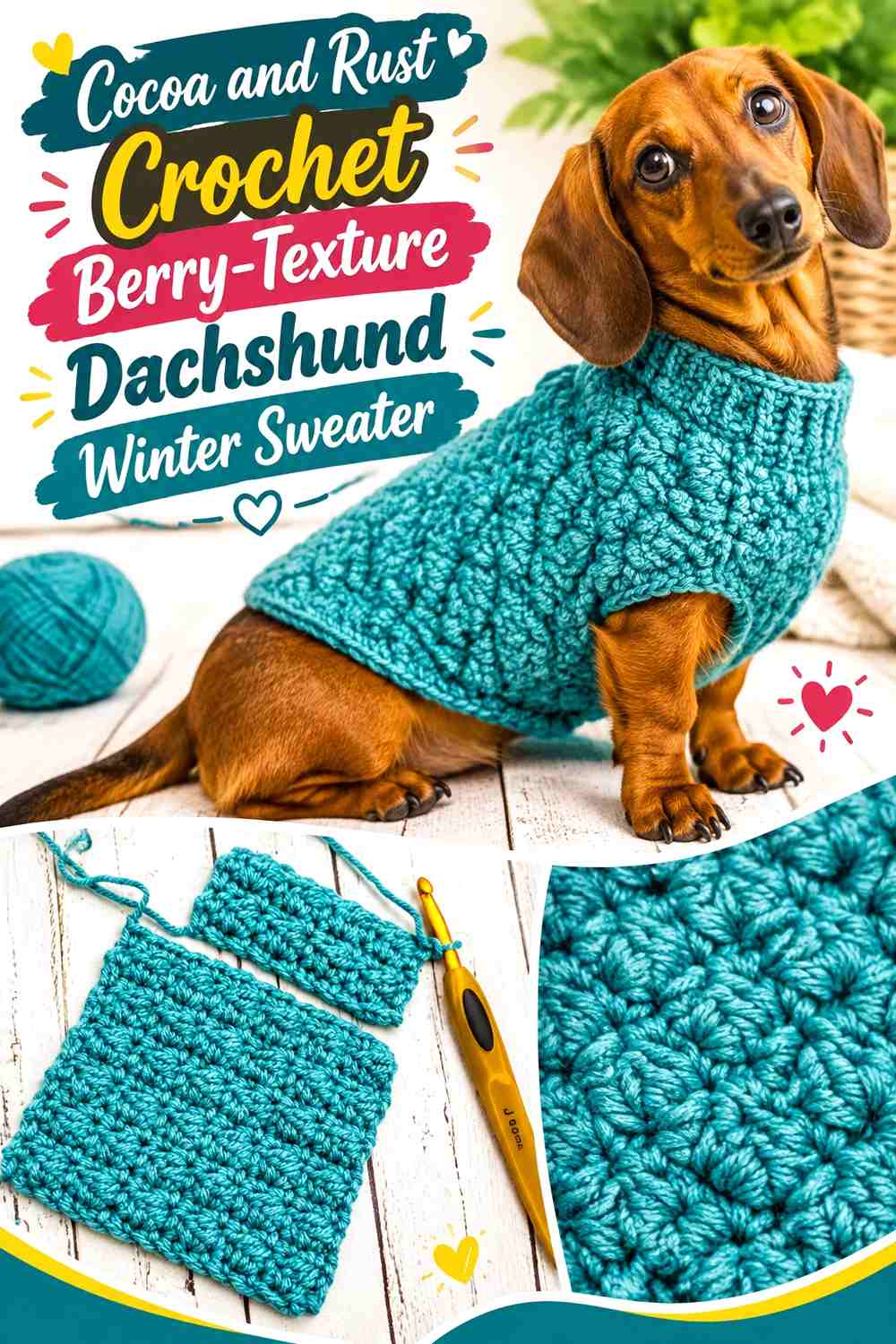
Cocoa can dominate the main body while rust creates a controlled berry-textured back panel. The raised dots should stay concentrated rather than wrapping densely around the chest and belly.
Rust Should Concentrate the Crochet Berry Texture on the Cocoa Dachshund Back
Use rust for one central textured strip or selected back section. Keeping the bobble-like berries together makes them a deliberate focal panel rather than scattered bumps.
Cocoa Should Surround the Rust Crochet Dachshund Berry Panel
Leave broad cocoa sections around the textured strip. This plain surface prevents the raised rust details from overwhelming the sweater’s long proportions.
Creator Credit: Hope Corner Farm Crochet
11. Forest Green and Cream Crochet Long-Sleeve Dachshund Winter Sweater

Forest green can cover most of this sweater while cream appears around short sleeve cuffs and the neckline. For a dachshund adaptation, leg coverage should be considered carefully because short legs leave less room for long fabric tubes.
Forest Green Should Keep the Crochet Dachshund Long-Sleeve Body Simple
Use green over the torso so sleeve construction, rather than extra colorwork, provides the main variation. The back can remain long while the underside stays appropriately clear for the individual dog.
Cream Should Define Forest Green Crochet Dachshund Sleeve Openings
Use cream around short cuffs or leg borders where it helps distinguish the openings. Avoid adding oversized decorative cuffs that could crowd movement.
Creator Credit: TwinStarHooks 💫
12. Dusty Blue and Charcoal Crochet Cowl-Neck Dachshund Winter Sweater
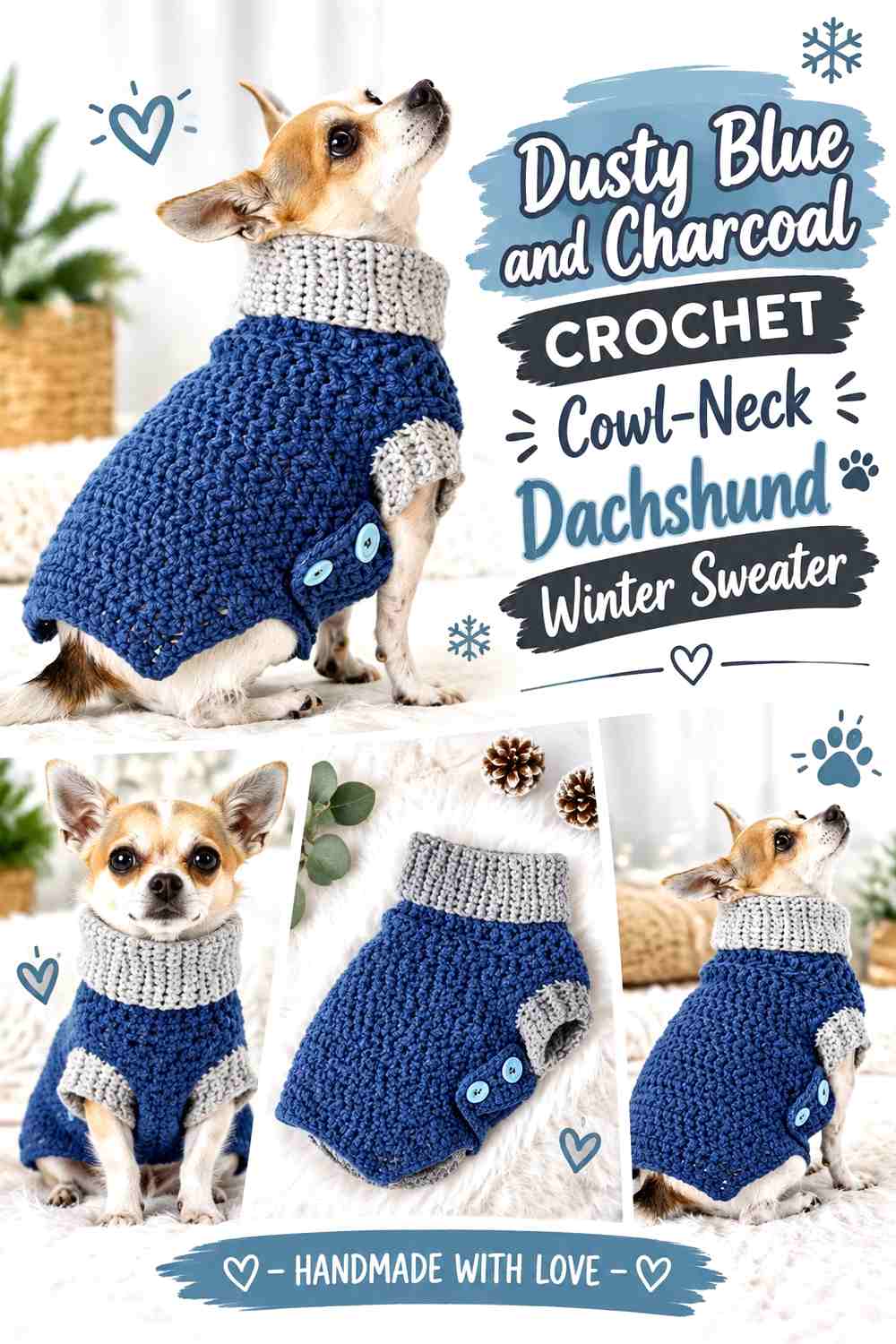
Dusty blue can form the body while charcoal gives the cowl neck and simple lower edge more visual weight. A cowl creates substantial fabric near the neck, so the rest of the sweater benefits from a quieter surface.
Dusty Blue Should Keep the Crochet Dachshund Cowl Sweater Body Calm
Use dusty blue across the long back without additional large motifs. This allows the collar to remain the obvious structural feature.
Charcoal Should Ground the Dusty Blue Crochet Dachshund Cowl
Place charcoal around the cowl or narrow trim. Check that the finished neck still sits comfortably and does not interfere with the dog’s normal head and neck movement.
Creator Credit: Yarnspirations
13. Cranberry, Oatmeal, and Navy Crochet Colorwork Dachshund Winter Sweater
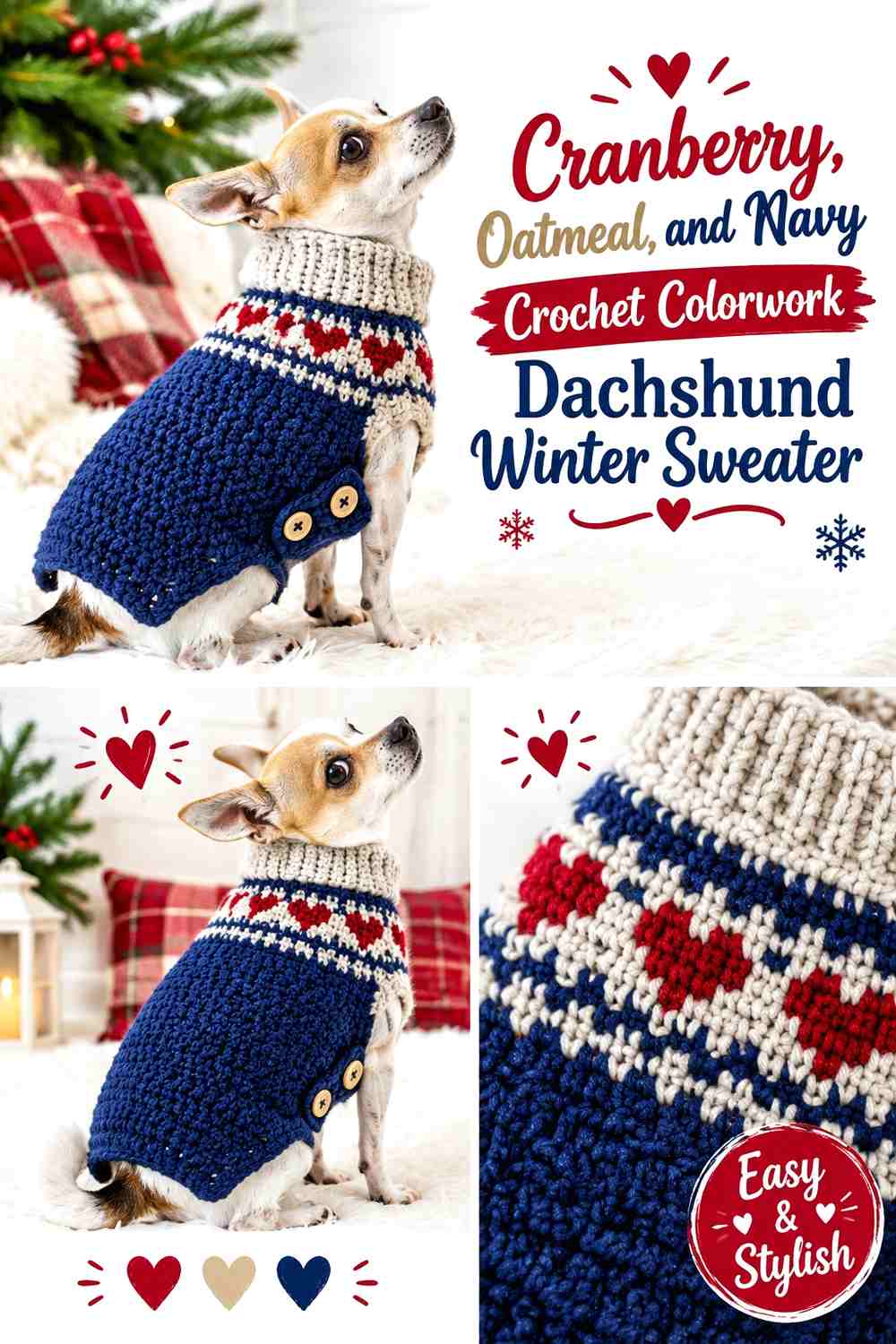
Cranberry can form the main body, oatmeal can create the clearest colorwork motifs, and navy can provide a smaller dark accent. Because a dachshund offers a long back panel, keep the motif sequence spaced rather than filling every row.
Cranberry Should Remain the Main Crochet Dachshund Colorwork Field
Let cranberry dominate the full back so oatmeal motifs have enough plain background around them. The sweater should still read first as cranberry rather than an equal three-color pattern.
Navy Should Accent Oatmeal Motifs on the Cranberry Crochet Dachshund Sweater
Use navy on selected small shapes or trim rather than alternating it equally with oatmeal. The darker accent can sharpen the pattern while preserving cranberry as the main field.
Creator Credit: Marly Bird
14. Camel and Burgundy Crochet Suzette-Texture Dachshund Winter Sweater

Camel is light enough to reveal Suzette-style texture clearly, while burgundy creates a darker collar and rear edge. This compact repeating texture works well over a long body because it adds surface interest without one oversized motif.
Camel Should Keep the Crochet Suzette Dachshund Body Consistent
Use camel across most of the back and side panels. The repeated stitch texture supplies variation, so extra striping is unnecessary.
Burgundy Should Frame the Camel Crochet Dachshund Sweater
Repeat burgundy around the neck and selected lower edges. The dark trim can give the pale sweater more definition against a light-colored coat.
Creator Credit: Heart Hook Home
15. Slate Blue and Mustard Crochet Long-Back Dachshund Winter Sweater
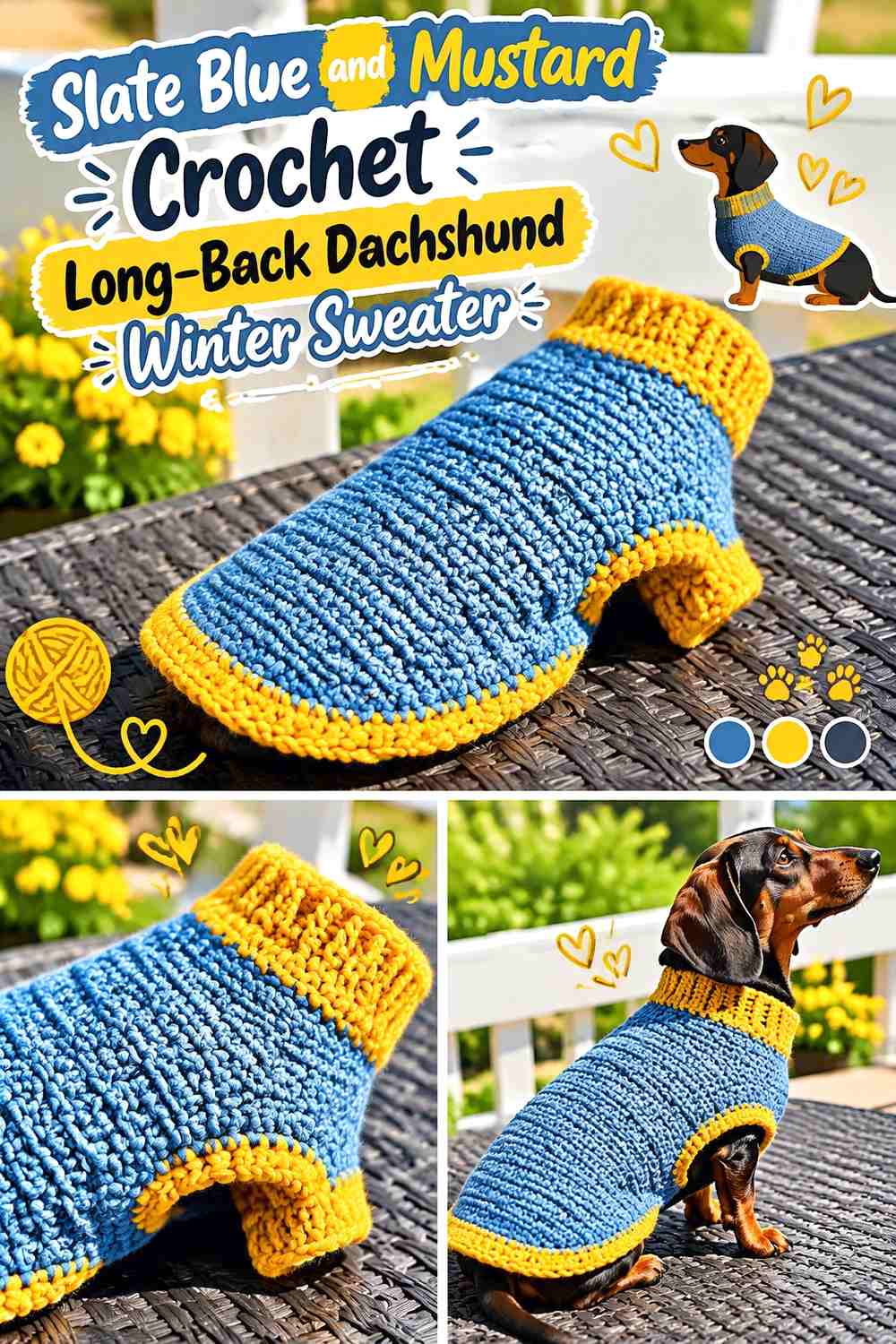
Slate blue can dominate an intentionally lengthened back, with mustard used only around the neck and tail-end border. This project puts proportion before complex texture: a long uninterrupted top panel becomes the main design feature.
Slate Blue Should Emphasize the Crochet Dachshund’s Long Back
Keep slate blue continuous from shoulders through the extended upper panel. Avoid using mustard in repeated horizontal stripes that visually break that length into short sections.
Mustard Should Mark the Slate Blue Crochet Dachshund Sweater Ends
Use mustard at the neckline and a narrow rear edge. Repeating the same accent at both ends makes the long blue middle look intentional.
Creator Credit: Fifty Shades of Yarn
16. Deep Olive and Cream Crochet Ribbed-Collar Dachshund Winter Sweater
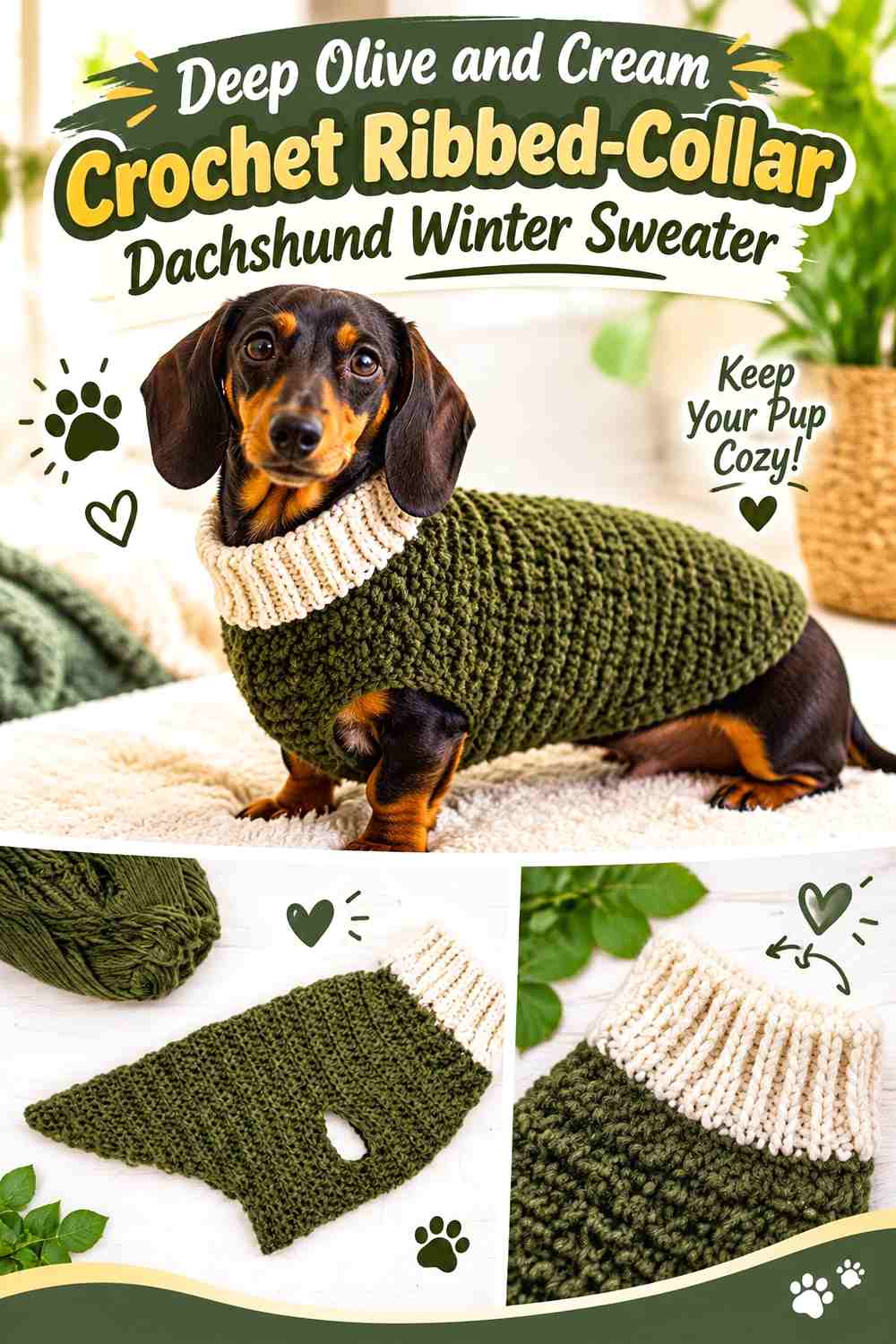
Deep olive creates a practical dark body color, while cream brings attention to the ribbed collar and leg borders. The collar should stretch comfortably enough for the intended pull-on construction and return without becoming loose.
Deep Olive Should Carry the Crochet Dachshund Sweater Body
Use olive through the broad torso and back so the sweater remains visually streamlined. A long-bodied dog already gives the color plenty of surface area.
Cream Should Highlight the Deep Olive Crochet Dachshund Ribbed Collar
Keep the strongest cream area at the neck and repeat it only in narrow finishing sections. The contrast makes the collar structure obvious without turning the body into a striped sweater.
Creator Credit: Loops Only Crochet
17. Terracotta and Charcoal Crochet Textured-Cuff Dachshund Winter Sweater

Terracotta can form the body, while charcoal defines a ribbed neck, short cuffs, and lower trim. The combination is warm but still high enough in contrast for small structural details to remain visible.
Terracotta Should Stay Dominant Across the Crochet Dachshund Back
Use the warm color uninterrupted through the long body so the darker trim has a clear supporting role.
Charcoal Should Keep Terracotta Crochet Dachshund Cuffs Compact
Use charcoal in short, controlled finishing areas. On a dachshund, oversized cuffs can look disproportionately heavy beside short legs, so the dark texture is more effective when kept narrow.
Creator Credit: Crochet With Tiffany
18. Navy and Rust Crochet Two-Tone Dachshund Winter Sweater
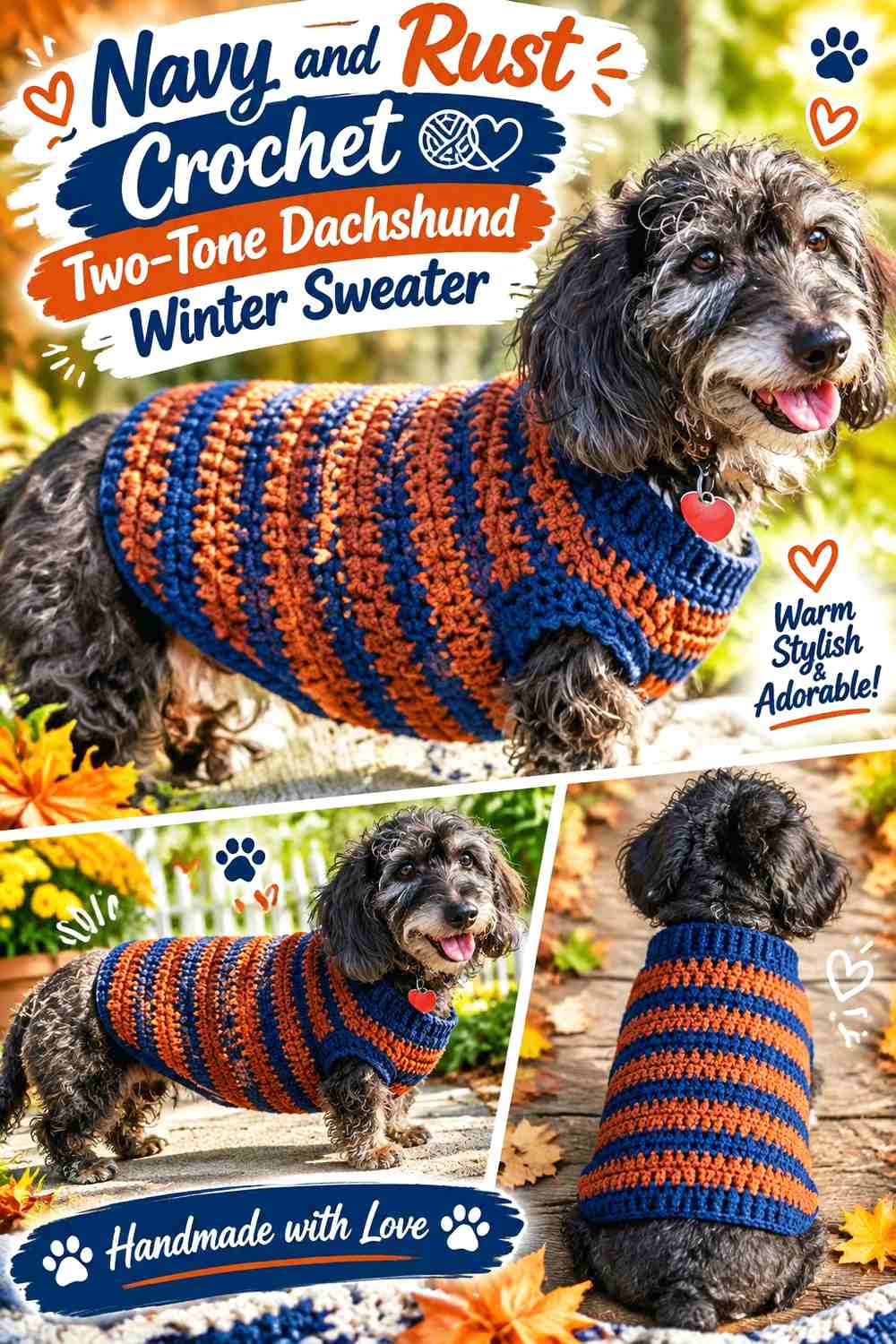
Navy and rust create a straightforward winter contrast that works well when the sweater construction itself is the main interest. Navy can dominate the body while rust handles the collar, selected stripes, or a lower border.
Navy Should Cover Most of the Crochet Dachshund Winter Sweater
Keep navy over the long back to maintain a stable dominant field. Too many equal rust sections can divide the torso visually.
Rust Should Repeat Strategically Against the Navy Crochet Dachshund Body
Use rust at the collar and one additional structural area rather than every few rows. This creates cohesion without making the sweater a narrow stripe pattern.
Creator Credit: The Crochet Crowd
19. Chocolate, Sage, and Cream Crochet Bobble-Back Dachshund Winter Sweater
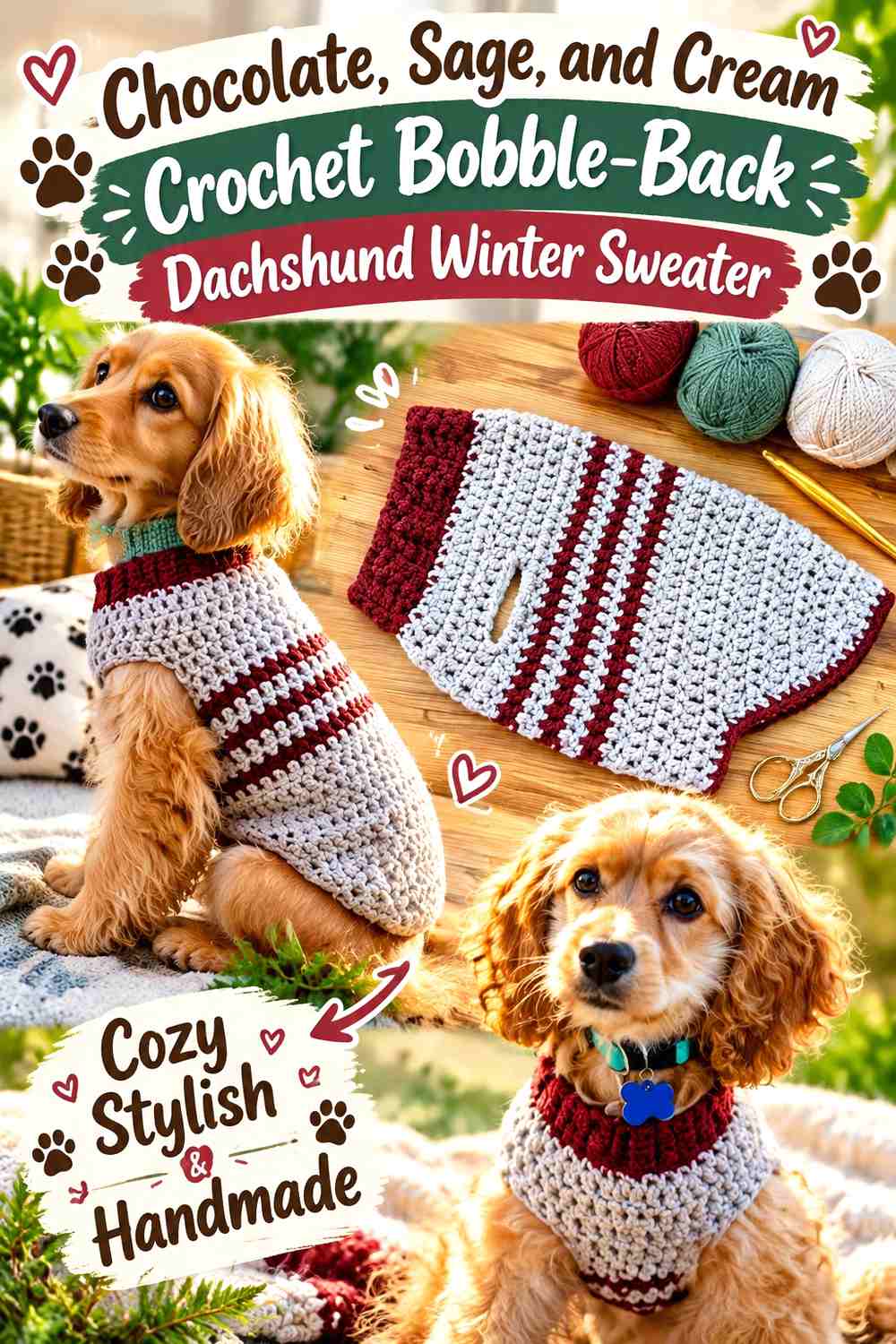
Chocolate can form the main sweater, sage can define a central bobble or berry-style back panel, and cream can lighten the collar. The raised texture should stay on top of the body, where it can be seen without adding the same bulk underneath.
Sage Bobbles Should Stay Centered on the Chocolate Crochet Dachshund Back
Use sage in a controlled stripe or repeated motif along the upper body. Scattering raised texture down the sides and belly can make the garment visually and physically heavier.
Cream Should Separate the Chocolate and Sage Crochet Dachshund Neckline
Keep cream on the collar or a narrow edge so it acts as a light boundary rather than a third competing textured section.
Creator Credit: it’s erin b.
Which Cozy Crochet Texture Works Best for a Dachshund Sweater?
For a cleaner, less bulky surface, ribbing, moss stitch, Suzette texture, or a simple long-back construction can provide visible interest without covering the entire sweater in raised stitches. These are useful when color and fit should carry more of the design.
For a stronger winter texture, cables, wheat stitch, alpine stitch, waffle stitch, basketweave, and berry details work especially well across the top of the back. Keep the underside and leg openings simpler if the raised texture becomes too thick there.
For two-color impact, houndstooth and controlled colorwork create the strongest patterns. Give them a quiet collar or border so the sweater still has areas where the eye can rest.
Conclusion
A crochet dachshund winter sweater should begin with the individual dog’s proportions, then use texture where the shape gives it room to work. The long back is the natural place for cables, raised stitches, colorwork, and textured panels, while the chest, leg openings, and underside often benefit from simpler construction.
Color can reinforce that plan. Let one shade dominate the body, reserve a second for the collar or texture panel, and use a third only where it clarifies an edge or motif. Deep winter colors such as forest green, navy, charcoal, burgundy, plum, cocoa, and teal pair especially well with cream, oatmeal, camel, mustard, rust, and sage.
Use the credited dog-sweater tutorials for construction guidance and the stitch-specific tutorials for texture reference, then fit and test the finished garment for the dachshund who will actually wear it.
Frequently Asked Questions
What crochet textures work well on a dachshund winter sweater?
Ribbing, moss stitch, wheat stitch, cables, Suzette texture, alpine stitch, waffle stitch, basketweave, and controlled bobble details can all work. Place deeper textures mainly across the back if they feel too bulky around the chest or legs.
How should I adapt a general dog sweater for a dachshund?
Measure the actual dog’s neck, chest, back length, leg placement, and underside rather than choosing a size only by breed or weight. A dachshund may need a different back-to-chest proportion than the dog used in the original tutorial.
Where should the strongest crochet texture go on a dachshund sweater?
The broad upper back is usually the clearest visual location. It gives cables, basketweave, waffle texture, or bobbles enough uninterrupted space while allowing the underside and leg openings to stay simpler.
What winter colors work well for crochet dachshund sweaters?
Forest green, burgundy, navy, charcoal, cocoa, plum, teal, rust, olive, and slate blue all pair well with lighter neutrals such as cream, oatmeal, camel, ivory, or sage.
How can I make a dark dachshund sweater easier to see on dark fur?
Use a lighter collar, leg edging, or rear border. Cream, oatmeal, camel, mustard, or sage can create enough contrast without changing the entire sweater body.
Should a dachshund sweater extend all the way underneath the body?
Fit the underside to the individual dog and intended use. Keep enough clearance that the sweater does not interfere with normal movement or toileting, and check the garment while the dog is standing and walking rather than judging fit only while it is lying flat.
How can I tell if a crochet dachshund sweater is uncomfortable?
Check whether the dog can move normally and whether the neck, chest, leg openings, or underside appear restrictive or rub during movement. Remove or adjust the sweater if the dog shows persistent discomfort, struggles to move normally, or the garment shifts into an awkward position.