A fawn-print crochet baby blanket can bring woodland color into a nursery without requiring a full animal illustration. The recognizable idea comes from the relationship between a warm brown, tan, or camel field and lighter irregular spots, which can be scattered across the blanket, arranged in bands, worked into blocks, or concentrated around a fawn motif.

The strongest palettes usually give those colors clear roles. Camel, chestnut, cocoa, or golden tan can form the main coat color; cream or ivory can create the spots; and sage, moss, forest green, rust, or oatmeal can appear in borders and supporting sections. If every woodland shade receives equal space, the fawn print becomes harder to identify.
The credited tutorials below support deer motifs, fawn-inspired crochet, baby-blanket construction, C2C colorwork, spots, ripples, shells, and other compatible techniques. The exact woodland palettes and fawn-print layouts are independent adaptations rather than claims that the creators used these color schemes.
Quick List
- Camel, Cream, and Sage Crochet Classic Fawn Print Baby Blanket
- Golden Tan, Ivory, and Forest Green Crochet Scattered Fawn Spot Baby Blanket
- Chestnut, Oatmeal, and Cream Crochet Fawn Appliqué Baby Blanket
- Taupe, Cream, and Moss Green Crochet Moss-Stitch Fawn Print Baby Blanket
- Cocoa, Ivory, and Rust Crochet Deer-Panel Fawn Print Baby Blanket
- Fawn Brown, Cream, and Olive Crochet C2C Woodland Baby Blanket
- Caramel, Oatmeal, and Sage Crochet Granny-Square Fawn Print Baby Blanket
- Rust Brown, Cream, and Forest Green Crochet Ripple Fawn Print Baby Blanket
- Mushroom Brown, Ivory, and Moss Crochet Bobble-Spot Fawn Print Baby Blanket
- Warm Taupe, Cream, and Deep Olive Crochet Textured Fawn Print Baby Blanket
- Golden Brown, Parchment, and Sage Crochet Shell-Stitch Fawn Print Baby Blanket
- Camel, Ivory, and Rust Crochet Polka-Dot Fawn Print Baby Blanket
- Cocoa, Cream, and Muted Green Crochet Woodland Fawn Spot Baby Blanket
Make the Fawn Spots Different From Ordinary Polka Dots
A fawn-inspired pattern usually looks more organic when the pale spots are not arranged as a perfectly regular grid. Vary their spacing, interrupt some rows, or let the spot pattern become denser through one section and quieter through another.
The blanket still needs visual order, however. Repeat the same cream or ivory spot color throughout so the irregular placement looks intentional rather than like unrelated color changes.
Let Woodland Greens Support the Fawn Brown and Cream
Sage, moss, olive, and forest green work particularly well around borders because they reinforce the woodland theme without interfering with the coat pattern in the center.
If the blanket body already contains several browns, keep the border simpler. One green plus a repeated cream edge is often more effective than adding several additional forest colors.
Keep Baby Blanket Fawn Details Flat and Integrated
For a blanket intended for a baby, colorwork, flat spots, and securely integrated motifs are generally more practical than relying on loose decorative pieces. Avoid making detachable buttons, beads, or other small embellishments part of the fawn markings.
If you add an appliqué, make sure it is attached appropriately for the blanket’s intended use and does not become the only place where the fawn-print idea appears. Repeating color elsewhere helps the blanket remain visually cohesive.
1. Camel, Cream, and Sage Crochet Classic Fawn Print Baby Blanket

Camel can cover most of this blanket so the surface immediately suggests a warm fawn coat. Cream should form the scattered spots, while sage stays mainly around the border. This gives the central print enough uninterrupted room to remain recognizable.
Camel Should Dominate the Crochet Fawn Print Baby Blanket
Use camel through the majority of the blanket body and interrupt it with cream rather than alternating equal bands of both colors. A large continuous coat color makes the spots feel embedded in the surface instead of turning the blanket into stripes.
Cream Spots Need Sage Space Around the Camel Blanket Border
Keep sage mostly outside the spotted field. A green border can frame the fawn print clearly, while cream repeated in one narrow finishing line connects the edge back to the spots.
Creator Credit: Bizzy Crochet
2. Golden Tan, Ivory, and Forest Green Crochet Scattered Fawn Spot Baby Blanket

Golden tan creates a lighter fawn base, ivory supplies the spots, and forest green provides the darkest woodland contrast. Scatter the ivory marks rather than aligning every one vertically so the blanket feels more natural and less like a standard dot pattern.
Golden Tan Should Keep the Crochet Fawn Spots Warm and Visible
Use golden tan across the broad background so ivory spots remain lighter without creating harsh contrast. If the tan is too pale and the ivory nearly disappears, move slightly darker with the base rather than adding another spot color.
Forest Green Should Frame Golden Tan and Ivory Without Entering Every Spot Row
Keep forest green at the border or in a limited end section. Bringing dark green repeatedly into the central coat pattern can compete with the ivory spots and weaken the fawn-print effect.
Creator Credit: Yarnspirations
3. Chestnut, Oatmeal, and Cream Crochet Fawn Appliqué Baby Blanket

This version combines a simple blanket field with a flat fawn motif. Chestnut can create the animal shape or selected coat areas, oatmeal can cover most of the blanket, and cream can repeat in both fawn markings and border details.
Chestnut Should Give the Crochet Fawn Appliqué a Clear Silhouette
Keep the main fawn shape predominantly chestnut so ears, head, and body remain visually connected. If every part uses another woodland shade, the animal can become harder to identify from a distance.
Cream Should Repeat Beyond the Chestnut Crochet Fawn Motif
Carry cream into a narrow border, small blanket spots, or another flat color detail so it does not appear only inside the appliqué. Repetition makes the fawn feel integrated into the blanket instead of added afterward.
Creator Credit: Kerri’s Crochet
4. Taupe, Cream, and Moss Green Crochet Moss-Stitch Fawn Print Baby Blanket
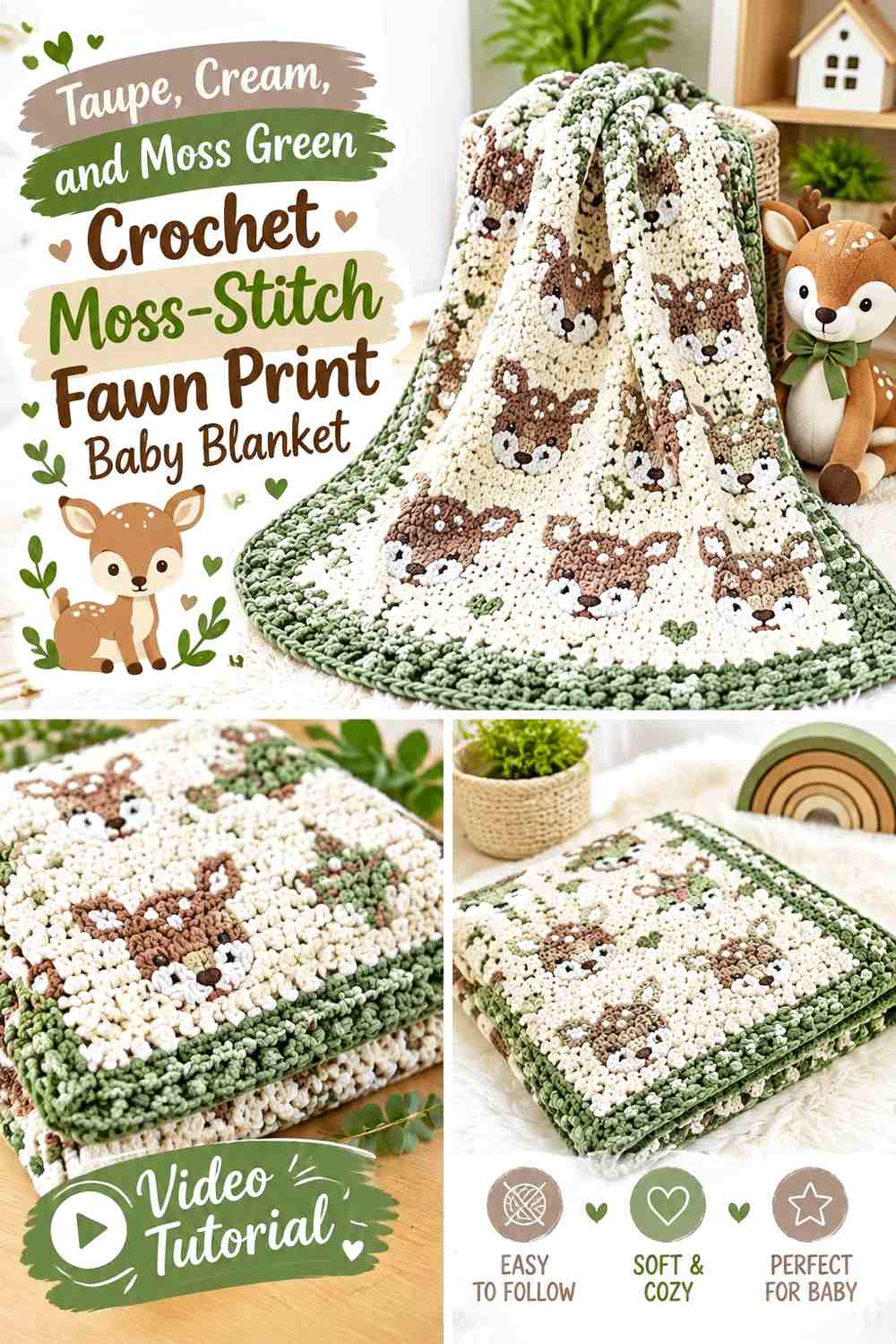
A moss-stitch field gives fawn spots a quieter textured background. Taupe can dominate the blanket, cream can appear in scattered blocks or short spot-like interruptions, and moss green can frame the entire piece.
Taupe Should Stay Continuous Through Most of the Crochet Moss-Stitch Blanket
Let taupe carry long sections so the small stitch texture remains visible. Too many rapid color changes can make both the moss stitch and the fawn print difficult to read.
Cream Should Form Controlled Fawn Spots While Moss Green Frames Taupe
Use cream in irregularly spaced areas rather than every few stitches with exact regularity. Moss green works better around the perimeter, where it can reinforce the woodland palette without interrupting the spotted field.
Creator Credit: Jo to the World Creations
5. Cocoa, Ivory, and Rust Crochet Deer-Panel Fawn Print Baby Blanket

A central deer panel can become the focal point while smaller fawn spots continue around it. Cocoa can define the animal silhouette, ivory can create the light markings, and rust can appear in a restrained border or framing band.
Cocoa Should Anchor the Crochet Deer Panel
Keep the main deer motif cocoa so its silhouette does not compete with the surrounding spot pattern. The central animal can be darker than the rest of the blanket without requiring the whole field to become equally dark.
Ivory Fawn Spots Should Continue Outside the Cocoa Crochet Deer
Repeat ivory in scattered areas around the panel so the blanket still reads as fawn print rather than simply a deer picture with a plain background.
Rust can stay around the edge as the warmer woodland accent.
Creator Credit: Crochet Jewel
6. Fawn Brown, Cream, and Olive Crochet C2C Woodland Baby Blanket
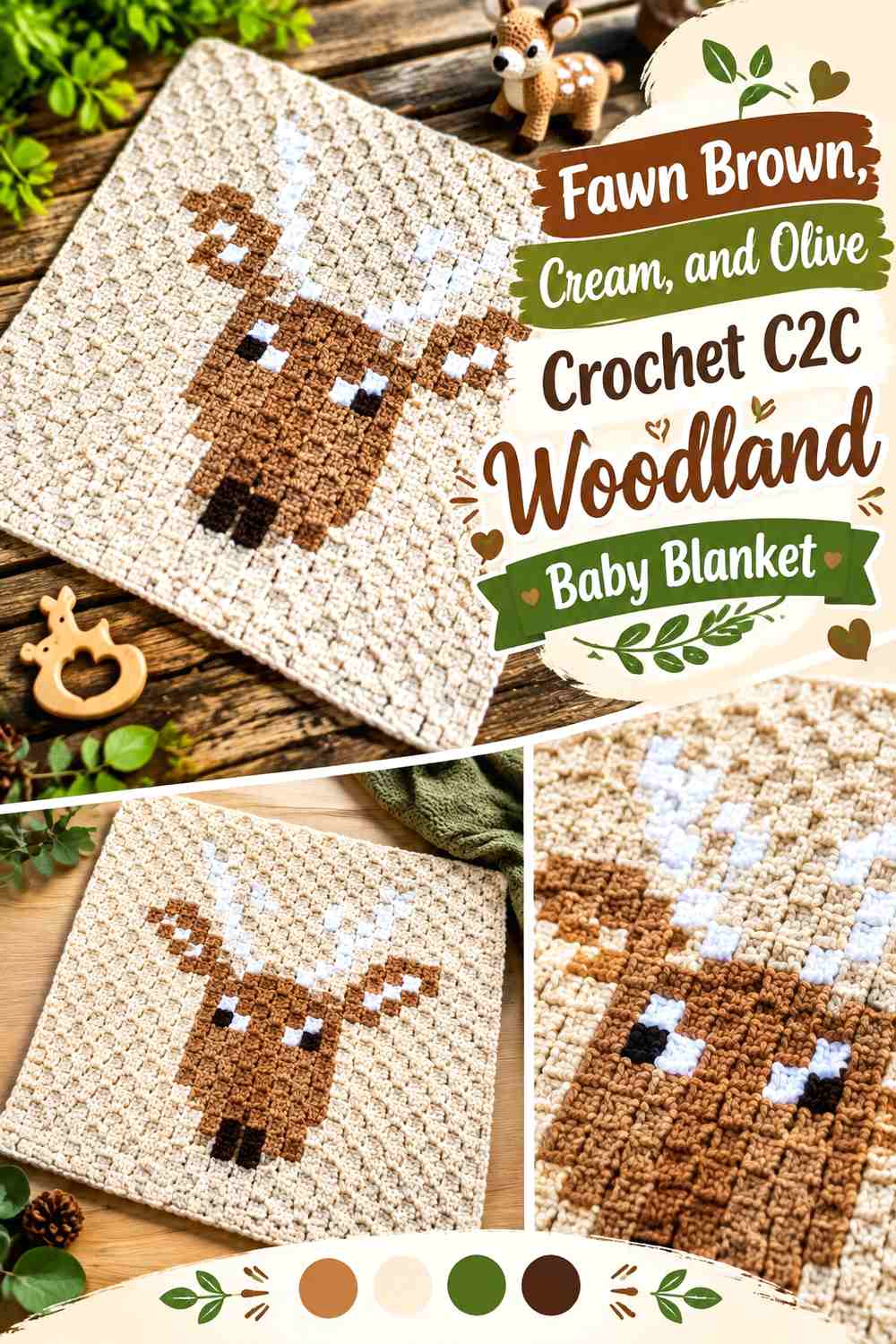
Corner-to-corner construction can support a larger fawn or deer colorwork section while still leaving room for spotted areas. Fawn brown should dominate, cream can define the markings, and olive can frame or occupy controlled background sections.
Fawn Brown Should Keep the Crochet C2C Blanket Visually Unified
Use the warm brown repeatedly across the diagonal construction so the finished surface still has one dominant coat color. Too many unrelated woodland blocks can distract from the fawn theme.
Cream Should Define Fawn Details While Olive Stays Secondary
Give cream the light spots or facial markings and use olive in a border or secondary field. The contrast between brown and cream should remain more important than the contrast between brown and green.
Creator Credit: Elimee Designs
7. Caramel, Oatmeal, and Sage Crochet Granny-Square Fawn Print Baby Blanket
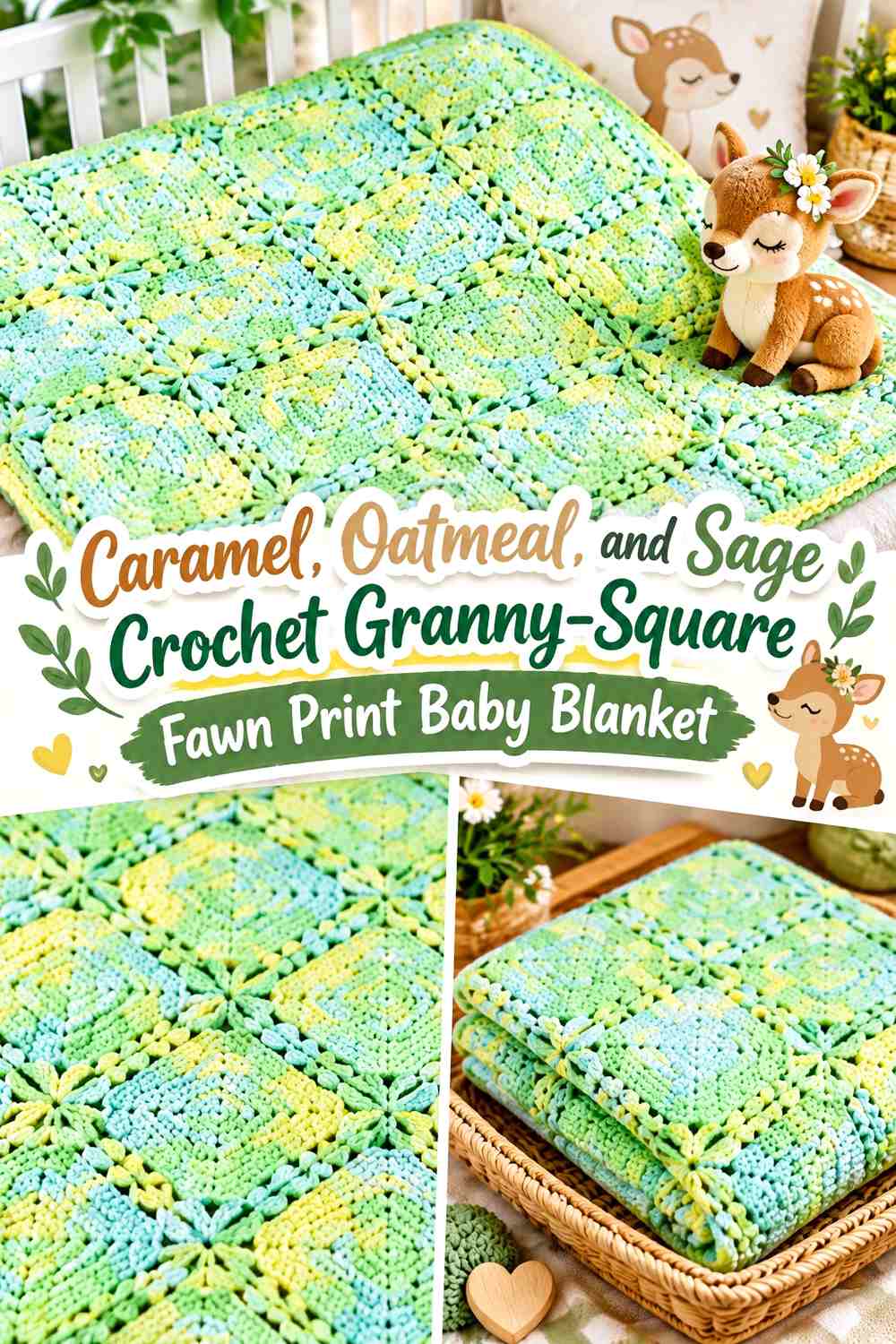
A granny-square blanket can break the fawn print into repeating blocks instead of scattering spots across one uninterrupted field. Caramel can dominate most squares, oatmeal can appear as the fawn spots or centers, and sage can join or frame the blocks.
Caramel Should Repeat Across Most Crochet Fawn Print Granny Squares
Keep caramel as the shared base from square to square so the patchwork does not become a general woodland sampler. Consistent coat color is what connects the separate blocks into one fawn-print blanket.
Oatmeal and Sage Should Have Different Roles in the Caramel Crochet Squares
Use oatmeal inside the fawn markings and sage mainly around joins or borders. Separating those roles protects the spot pattern from becoming confused with the block construction.
Creator Credit: Crochet MC
8. Rust Brown, Cream, and Forest Green Crochet Ripple Fawn Print Baby Blanket
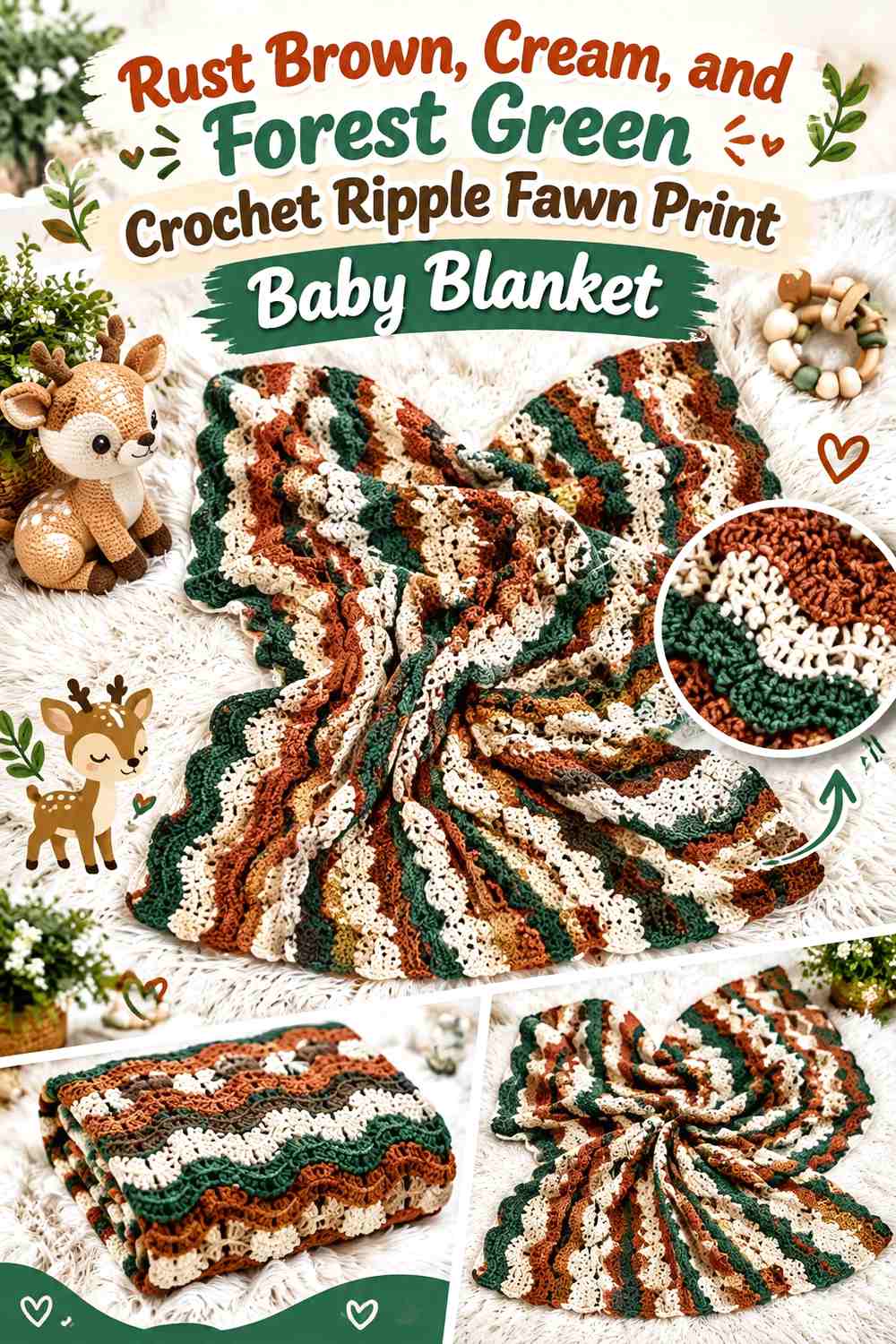
Ripple construction introduces movement, so the fawn print should remain relatively simple. Rust brown can cover most of the waves, cream can appear in interrupted spot sections, and forest green can anchor the top and bottom edges.
Rust Brown Should Carry the Crochet Ripple Pattern
Let rust run through several consecutive ripple sections so the eye can follow the wave shape. Changing colors at every peak can turn the blanket into a striped chevron instead of a fawn-inspired surface.
Cream Fawn Spots Should Interrupt Rust Brown Without Following Every Ripple
Place cream irregularly across selected portions rather than tracing the full zigzag. Forest green can then provide a quiet woodland frame without adding another patterned layer.
Creator Credit: Life and Yarn
9. Mushroom Brown, Ivory, and Moss Crochet Bobble-Spot Fawn Print Baby Blanket

Bobble texture can turn the pale fawn spots into slightly raised visual accents. Mushroom brown should remain the main field, ivory can define the bobbles, and moss green can frame the textured center.
Mushroom Brown Should Keep the Crochet Bobble Blanket Calm Between Spots
Leave enough plain brown space between ivory bobbles for each spot to remain separate. Clustering too many raised details can make the blanket feel more like an allover textured pattern than fawn print.
Ivory Bobbles Should Stay Consistent Against Mushroom Brown and Moss
Use one light spot color rather than alternating cream, white, and beige. Moss should stay mainly along the border so the raised ivory details remain the main secondary feature.
Creator Credit: Daisy Farm Crafts
10. Warm Taupe, Cream, and Deep Olive Crochet Textured Fawn Print Baby Blanket
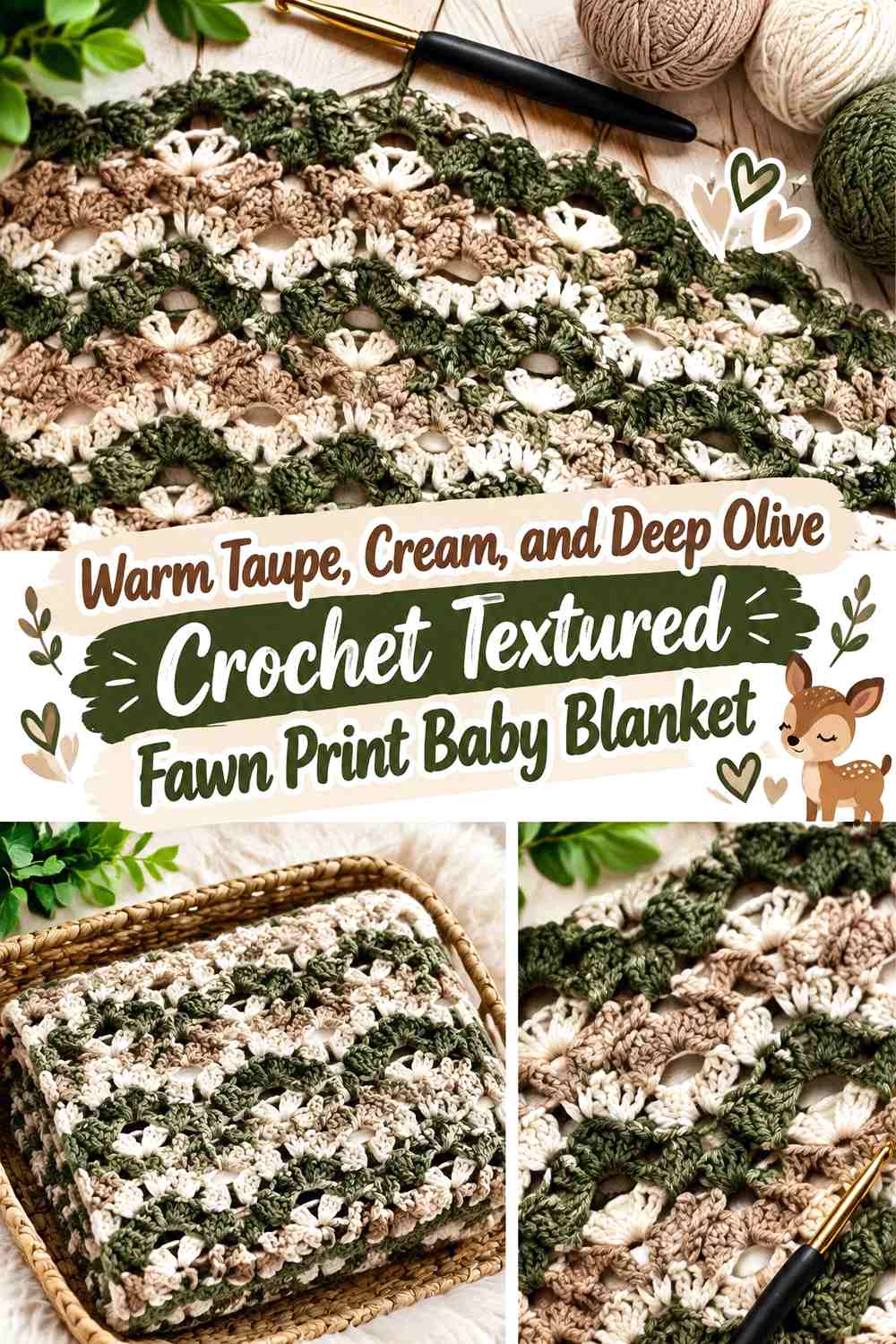
This version lets stitch texture provide visual interest while the fawn colors remain restrained. Warm taupe can dominate the blanket, cream can mark scattered spots, and deep olive can add a narrow outer edge.
Warm Taupe Should Stay the Main Crochet Texture Color
Use taupe continuously through most of the textured stitch so shadows and raised areas remain visible. Frequent multicolor changes can make subtle surface texture harder to appreciate.
Cream Should Mark Fawn Spots While Deep Olive Defines the Taupe Edge
Keep cream inside the blanket field and olive mostly around the outside. That division gives each supporting shade a clear job and prevents the print from becoming a general three-color texture.
Creator Credit: Rich Textures Crochet
11. Golden Brown, Parchment, and Sage Crochet Shell-Stitch Fawn Print Baby Blanket
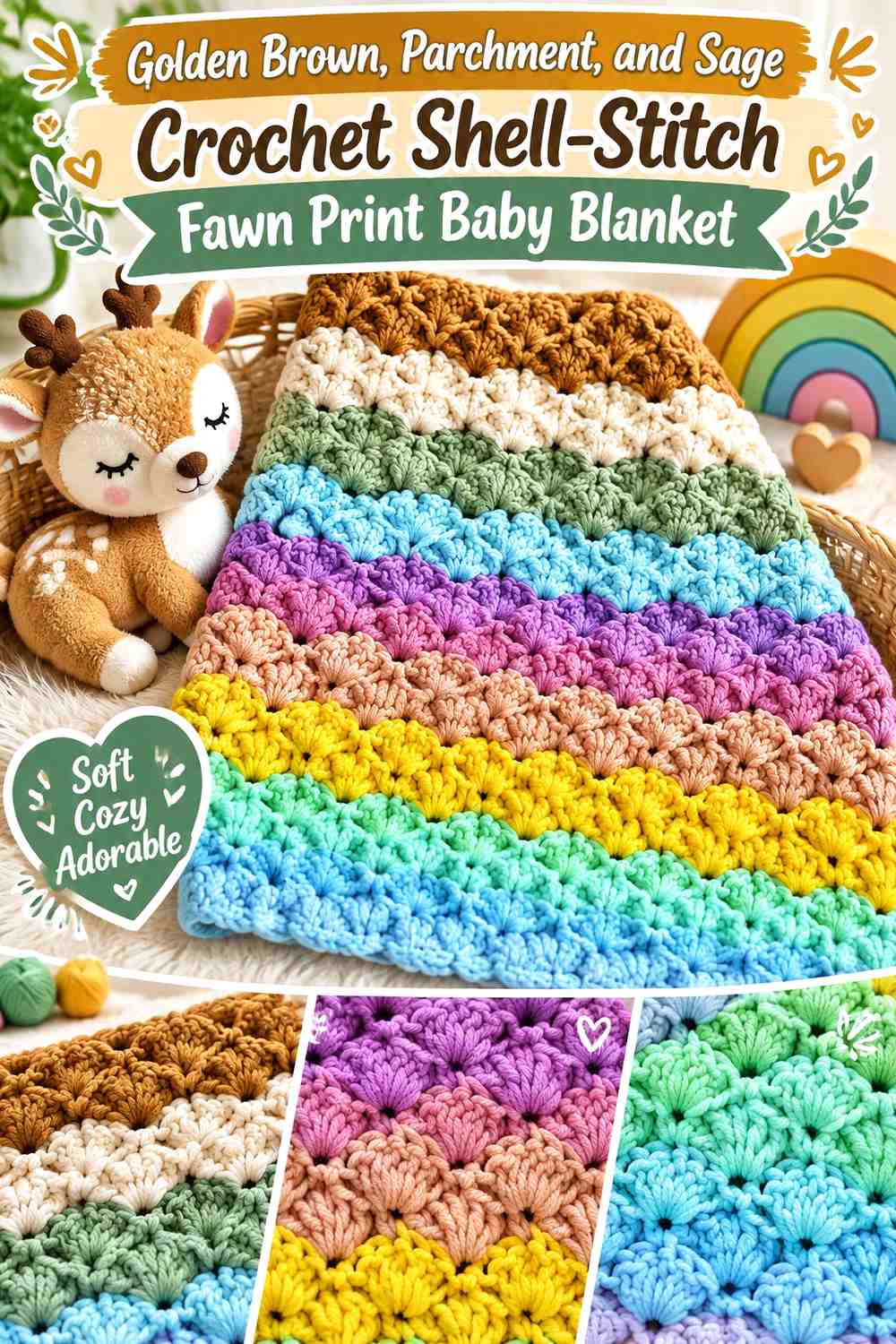
Shell stitch creates repeated fan-like sections, so the fawn pattern can be introduced through occasional parchment-colored shells instead of individual tiny spots. Golden brown should form most of the blanket, while sage remains a quiet border shade.
Golden Brown Should Dominate the Crochet Shell-Stitch Fawn Blanket
Keep most shells brown so the stitch pattern reads as one flowing surface. If parchment alternates regularly with every brown shell, the result will look more striped than spotted.
Parchment Should Appear Irregularly Against Golden Brown While Sage Frames the Blanket
Use parchment in occasional separated shell groups. The larger pale shapes create a stylized fawn-print effect without requiring tiny colorwork details.
Creator Credit: naztazia
12. Camel, Ivory, and Rust Crochet Polka-Dot Fawn Print Baby Blanket

A polka-dot blanket technique can be shifted toward fawn print by changing both the palette and the dot distribution. Camel should dominate, ivory should form most of the spots, and rust can provide a narrow border or occasional darker woodland accent.
Camel Should Turn the Crochet Polka Dots Into Fawn Print
The coat color is what changes the visual context. Use camel across the entire main field and avoid introducing several unrelated background shades.
Ivory Dots Should Look Less Regular Against the Camel Crochet Field
Where the construction allows adaptation, vary the spacing or reduce the sense of rigid rows so the pale marks feel more like coat spots. Rust should remain outside the central print or appear only in very small amounts.
Creator Credit: Yarnspirations
13. Cocoa, Cream, and Muted Green Crochet Woodland Fawn Spot Baby Blanket
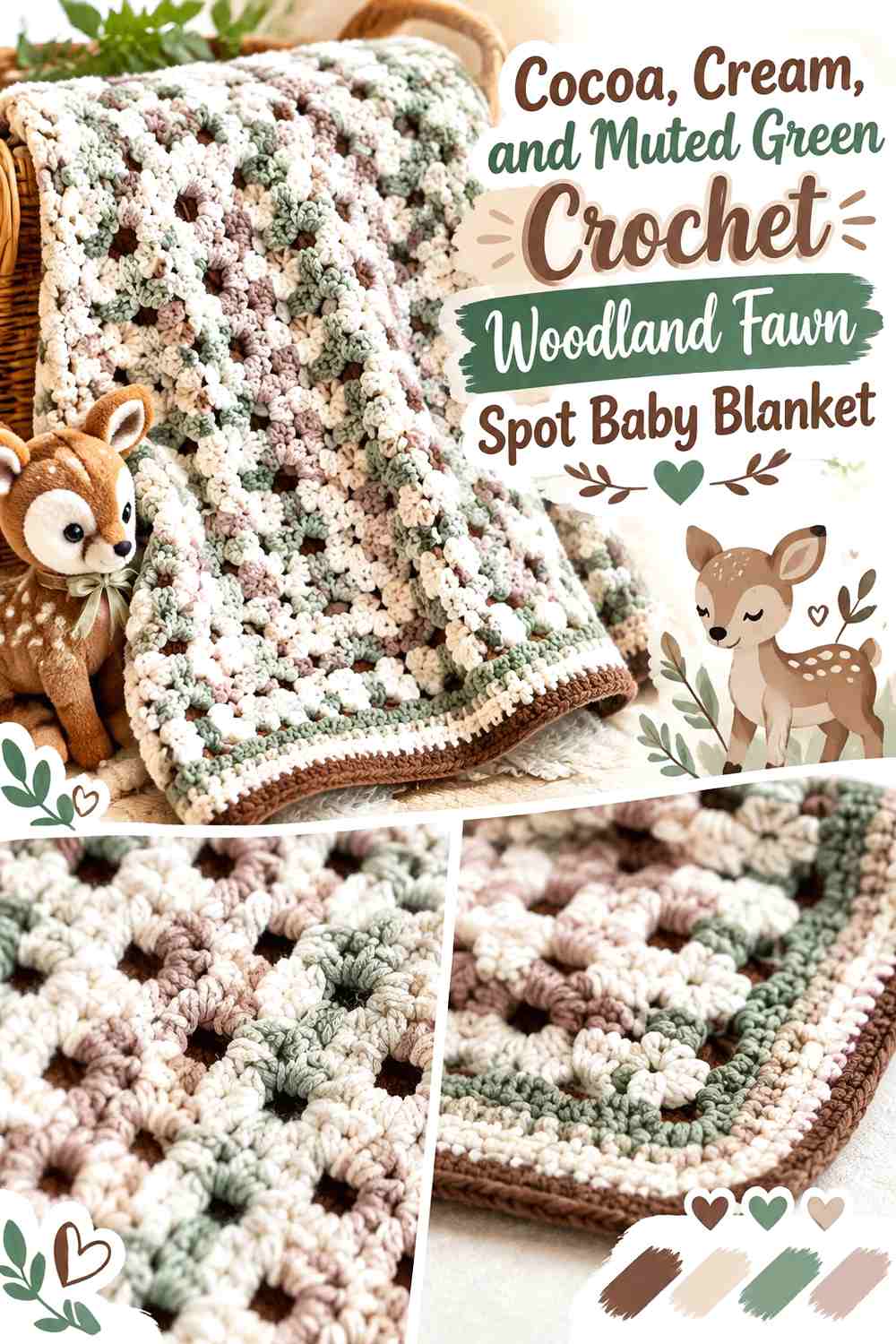
This final palette uses cocoa as the deepest fawn base, cream for high-contrast markings, and muted green as the woodland border. The stronger dark-light relationship makes the fawn pattern especially clear, so the spot shapes themselves can stay simple.
Cocoa Should Give the Crochet Fawn Spot Blanket Its Deepest Woodland Base
Use cocoa broadly enough that the blanket remains brown-led even after the cream spots are added. A dark base can support fewer markings because each pale spot attracts more attention.
Muted Green Should Frame Cocoa and Cream Without Competing With the Fawn Print
Keep green around the perimeter or in one restrained band. Because cocoa and cream already create substantial contrast, the woodland accent does not need to be saturated.
Creator Credit: The Crochet Crowd
Which Woodland Fawn Print Palette Should You Choose?
For the most recognizable fawn direction, pair camel, golden tan, caramel, or warm brown with cream or ivory spots. These palettes keep the blanket close to the natural light-and-warm contrast associated with a spotted fawn coat.
For a softer nursery palette, use taupe, oatmeal, mushroom brown, sage, or moss. The fawn print will become quieter, so make sure the spot color still differs enough in value from the base to remain visible.
For a richer woodland look, add rust, forest green, deep olive, or cocoa around the border. Keep those darker shades outside most of the spotted field so the brown-and-cream relationship remains the central design.
Conclusion
A crochet fawn-print baby blanket does not need a complicated animal scene to communicate a woodland theme. The simplest approach is often the strongest: one warm coat color, one lighter spot color, and one restrained woodland accent.
The construction can then change the personality of the print. Moss stitch makes the surface quieter, bobbles turn spots into texture, granny squares divide the pattern into blocks, C2C allows a larger deer motif, and ripples or shells create more stylized versions of the markings.
For a baby blanket, keep the decorative choices integrated and practical. Flat colorwork and securely attached motifs can deliver the fawn idea without relying on loose embellishments. Use the credited tutorials for their construction concepts, then adapt the woodland colors and spot placement independently.
Frequently Asked Questions
What colors work well for a crochet fawn print baby blanket?
Camel, caramel, golden tan, chestnut, cocoa, taupe, cream, ivory, oatmeal, sage, moss, olive, forest green, and rust all fit the woodland direction. Use one brown or tan as the dominant coat color and a lighter neutral for most spots.
How do I make crochet fawn spots look less like ordinary polka dots?
Avoid perfectly regular spacing when the construction allows it. Mix larger and smaller visual gaps, interrupt repeated rows, or concentrate the markings through only part of the blanket while keeping the spot color consistent.
Should a fawn print baby blanket have a green border?
It does not have to, but sage, moss, olive, and forest green can strengthen the woodland theme. Keep the green secondary if brown-and-cream fawn markings are meant to remain the main feature.
Can I add a crochet deer appliqué to a fawn print blanket?
Yes. A flat deer or fawn motif can create a focal point, especially when the blanket also repeats the same brown and cream colors elsewhere. Attach any appliqué appropriately for the blanket’s intended use.
How many colors should I use in a woodland fawn baby blanket?
Three colors are enough for many designs: one coat color, one spot color, and one woodland border shade. A fourth shade can be added when it has a clear role, but additional colors are not necessary simply to make the blanket more decorative.
Can I make fawn print with bobbles instead of colorwork?
Yes. Raised bobbles can represent the pale spots while the surrounding field remains brown or tan. Leave enough space between them so the blanket still reads as a spotted coat rather than an allover bobble texture.
What should I avoid on a fawn print baby blanket?
Avoid loose buttons, beads, or other small detachable pieces as decorative spots. The fawn effect can be created effectively with integrated colorwork, texture, or securely attached flat motifs instead.