Crochet lace bandanas can look remarkably different even when they share the same basic triangular shape. Some rely on large mesh spaces for an almost weightless headscarf, while others use tiny floral details, filet motifs, granny clusters, scallops, or decorative picots to create a more structured finish. Tie width and triangle depth also change how much hair a bandana actually covers.

The 15 ideas below cover that wider range rather than repeating one basic granny triangle. You’ll find delicate flower lace, geometric diamonds, a skull filet design, multi-wear mesh, and denser options where the lace effect comes mainly from the edging. Use the comparisons to choose a tutorial based on the amount of coverage, drape, detail, and structure you actually want.
Quick List
- Crochet Diamond Lace Point Bandana
- Crochet Floral Lace Multi-Wear Bandana
- Crochet Intricate Openwork Triangle Bandana
- Crochet Lacy Floral Summer Bandana
- Crochet Lace-Edge Tie Bandana
- Crochet Airy Everyday Lace Bandana
- Crochet Open-Mesh Triangle Bandana
- Crochet Cottage Openwork Headscarf Bandana
- Crochet Floral Motif Lace Bandana
- Crochet Skull Filet Lace Bandana
- Crochet Linked Filet Scallop Bandana
- Crochet Textured Picot-Edge Bandana
- Crochet Fine-Yarn Granny Lace Bandana
- Crochet Long-Edge Mesh Scarf Bandana
- Crochet Lightweight Milk-Cotton Lace Bandana
Choose Lace Density by How You Plan to Wear It
Large chain spaces and mesh give a bandana a light appearance and allow more hair to remain visible. That can work especially well when the goal is a decorative layer over loose hair or a bun. The trade-off is that extremely open fabric has less visual weight and may feel less substantial than a closer filet or granny fabric.
Denser lace is useful when you want the triangle itself to read clearly from a distance. Diamond filet, linked crochet, and closely spaced granny clusters provide more coverage while still leaving deliberate openings in the fabric. Before choosing a tutorial, look at the finished triangle rather than judging by the word “lace.” Two lace patterns can differ considerably in coverage, stretch, and how securely they sit on the head.
Yarn, Drape, and Stitch Definition Change the Result
Smooth yarn generally makes geometric holes, flower shapes, picots, and filet motifs easier to see. A fuzzy yarn can soften those details, while a very stiff yarn can make a lightweight bandana sit away from the head instead of following its shape. Neither result is automatically wrong; it depends on the style you want.
Yarn thickness matters too. Fine yarn can produce a delicate, scarf-like fabric but usually creates smaller stitches, while heavier yarn enlarges the visual scale of the lace. When substituting yarn, do not assume the tutorial’s row count will still produce the same fit. Work until the actual triangle gives you the coverage you need, provided the original construction is designed to be adjustable.
Check Coverage, Ties, and Edges Before Finishing
The most useful fitting checkpoint is before the final border and ties are completed. Hold the triangle where you intend to wear it and check three things: whether the front edge reaches the desired points beside your head, whether the back point falls where you want it, and whether the ties will meet comfortably without pulling the fabric.
Also watch the two diagonal edges. Lace can look uneven while it is still being worked, but persistent cupping or ruffling may signal a tension or shaping problem rather than something a border will completely hide. Blocking can improve lace definition and settle minor waviness, but it should not be expected to correct a substantially distorted triangle.
Crochet Diamond Lace Point Bandana
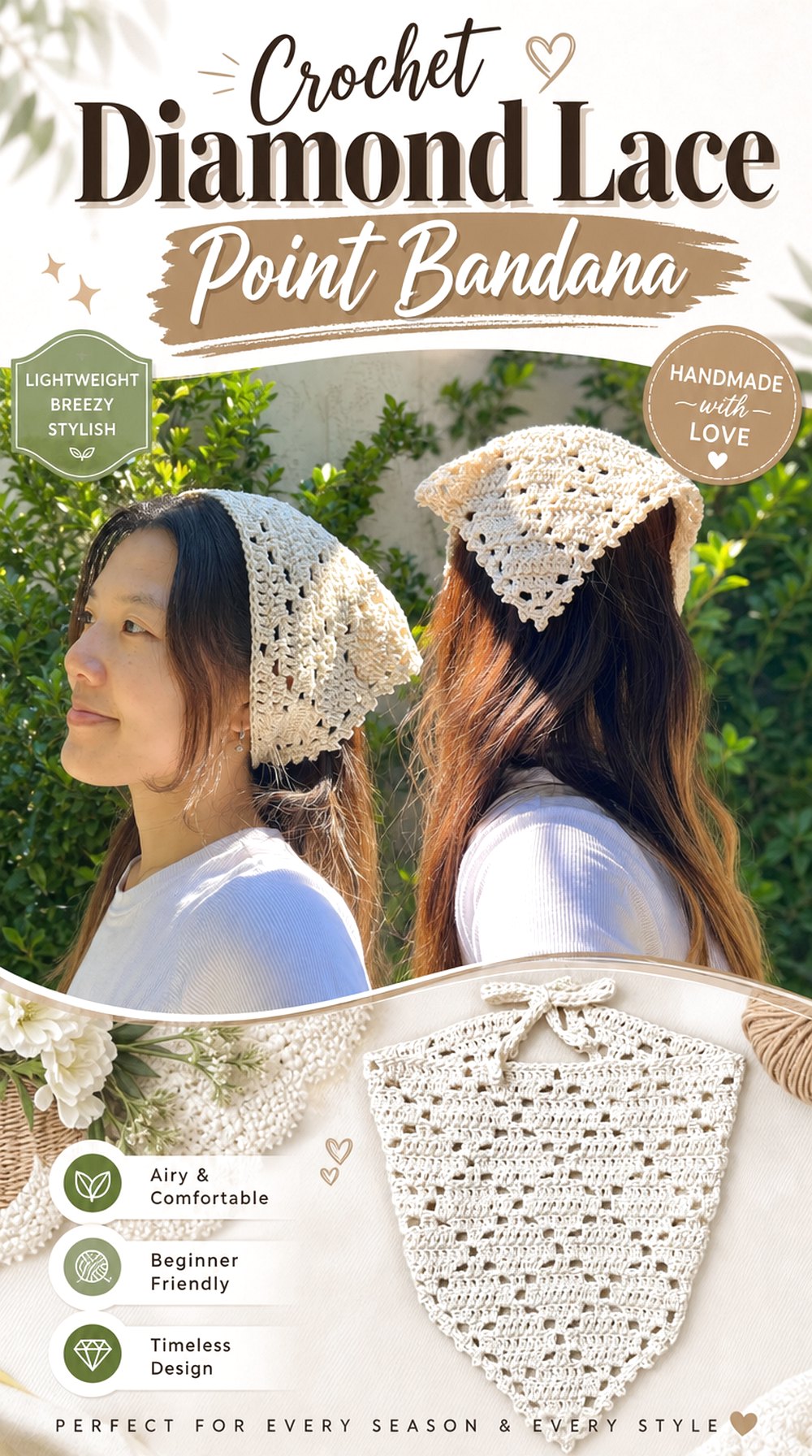
Diamond openings give this crochet bandana a more geometric appearance than ordinary granny-style openwork. The repeated negative space becomes the main design instead of simply separating stitch clusters, so the triangle looks decorative even in one solid yarn color. VivCrochets also presents the design with optional picots, making the edge treatment another point of customization rather than an inseparable part of the body.
This option suits anyone who wants a recognizable lace motif without moving into separately joined flower pieces. Because the diamonds need to remain visually consistent, stitch placement and even tension matter more here than they would in a deliberately irregular mesh.
Let the Diamond Pattern Stay Visible
A smooth yarn helps the straight sides and openings of each diamond read clearly. If you substitute a heavily textured or fuzzy fiber, the geometric pattern may become less obvious even when the stitch work is correct.
Before committing to a large section, look at the first completed lace motifs from normal viewing distance. If the holes disappear visually, changing yarn may improve the finished effect more than changing color.
Watch the Triangle Edges as the Lace Expands
Geometric lace makes uneven shaping noticeable because the eye naturally follows the motif lines. Check that both sides of the triangle are growing at a similar angle instead of concentrating only on the center diamonds.
The tutorial specifically includes guidance on counting the rows within the diamond pattern as well as straightening the edges, which makes it useful when the repeating geometry is the part you most want to understand.
Crochet Floral Lace Multi Wear Bandana
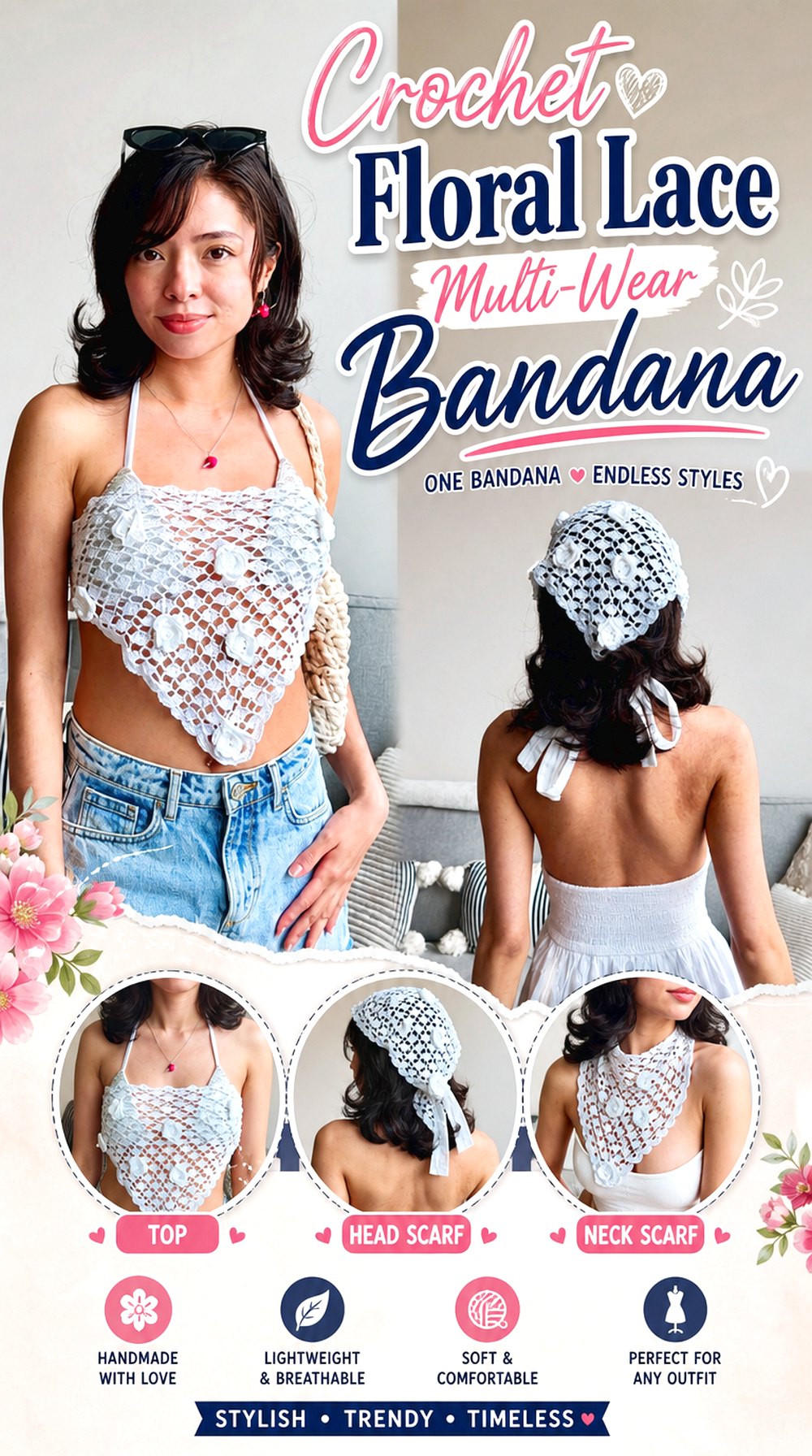
This design pushes the idea of a crochet bandana closer to a miniature lace scarf. Its fine open body is combined with floral details and a shell border, creating more visual movement than a plain triangular mesh. The tutorial also presents the finished piece as a multi-wear accessory rather than limiting it to one headscarf arrangement.
That flexibility makes it especially interesting if you prefer a longer, lighter accessory that can change roles instead of a compact head-covering triangle. The trade-off is that fine lace emphasizes every tension change, so neat edges and consistent open spaces contribute strongly to the finished appearance.
Decide Whether You Want Head Coverage or Scarf Versatility
A piece designed to work in several configurations may extend farther than a small tie-back bandana. Before deciding on the final size, consider which use matters most. More width can improve styling flexibility, but it also changes how much fabric gathers when the piece is tied behind the head.
Try the unfinished lace in its main intended position before assuming a larger triangle will automatically fit better.
Floral Details Need Breathing Room
The flowers are more effective when they remain visually separate from the surrounding lace. If a substitution produces dense or fuzzy stitches, those details can merge into the background.
Fine, smooth yarn emphasizes the contrast between open mesh, shell edging, and floral decoration. Blocking can also help separate decorative elements, provided the chosen fiber can be blocked according to its care requirements.
Original Tutorial and Creator Credit
Creator: petpetcrochets
Crochet Intricate Openwork Triangle Bandana
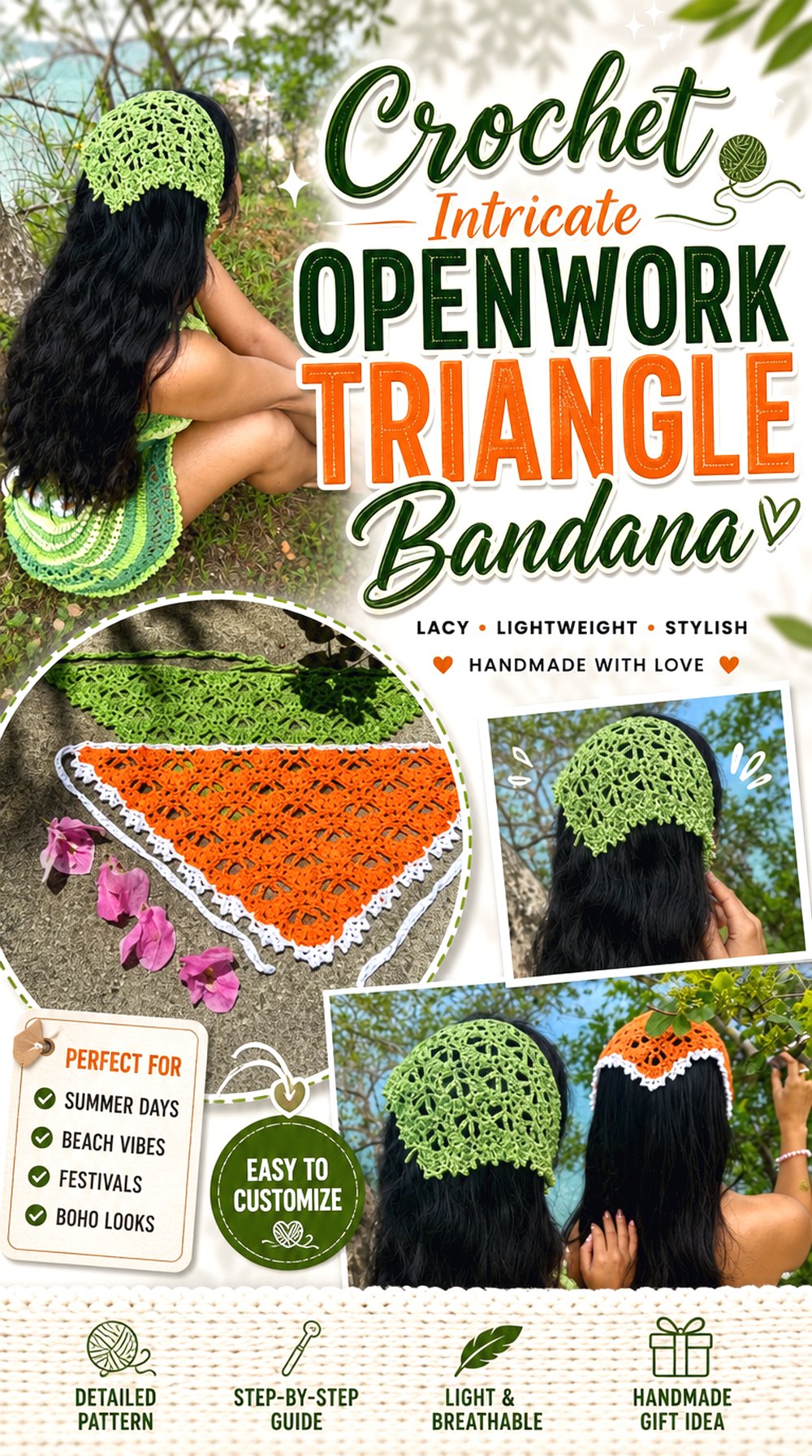
If simple mesh feels too plain, this crochet lace bandana offers a more detailed direction. Crochet Corner Ph presents the project specifically as an advanced crochet tutorial, so it is better approached for its decorative stitch work than as the quickest route to a basic hair scarf.
The finished idea works well as a statement bandana where the openwork itself is the focal point. Instead of relying on multicolor stripes, allow the texture and negative space to create the interest. A solid shade can make complicated lace easier to read, while high-contrast variegation may compete with the stitch pattern.
Complex Lace Rewards an Early Swatch
When a design contains more involved openwork, a small trial section can answer several questions before you commit: Are the holes opening clearly? Is the yarn splitting? Can you identify the repeat without repeatedly losing your place?
That checkpoint is especially useful when substituting yarn. A fiber that works beautifully for a solid granny project may make a detailed lace repeat unnecessarily difficult to read.
Keep Decoration from Overwhelming the Shape
An elaborate stitch pattern already provides substantial visual detail. Adding tassels, beads, multiple borders, and frequent color changes can hide the underlying construction rather than improve it.
For a cleaner result, choose one primary feature—the lace body—and let the ties and finishing support it. This also keeps the triangular silhouette easy to recognize when the bandana is actually being worn.
Original Tutorial and Creator Credit
Creator: Crochet Corner Ph
Crochet Lacy Floral Summer Bandana
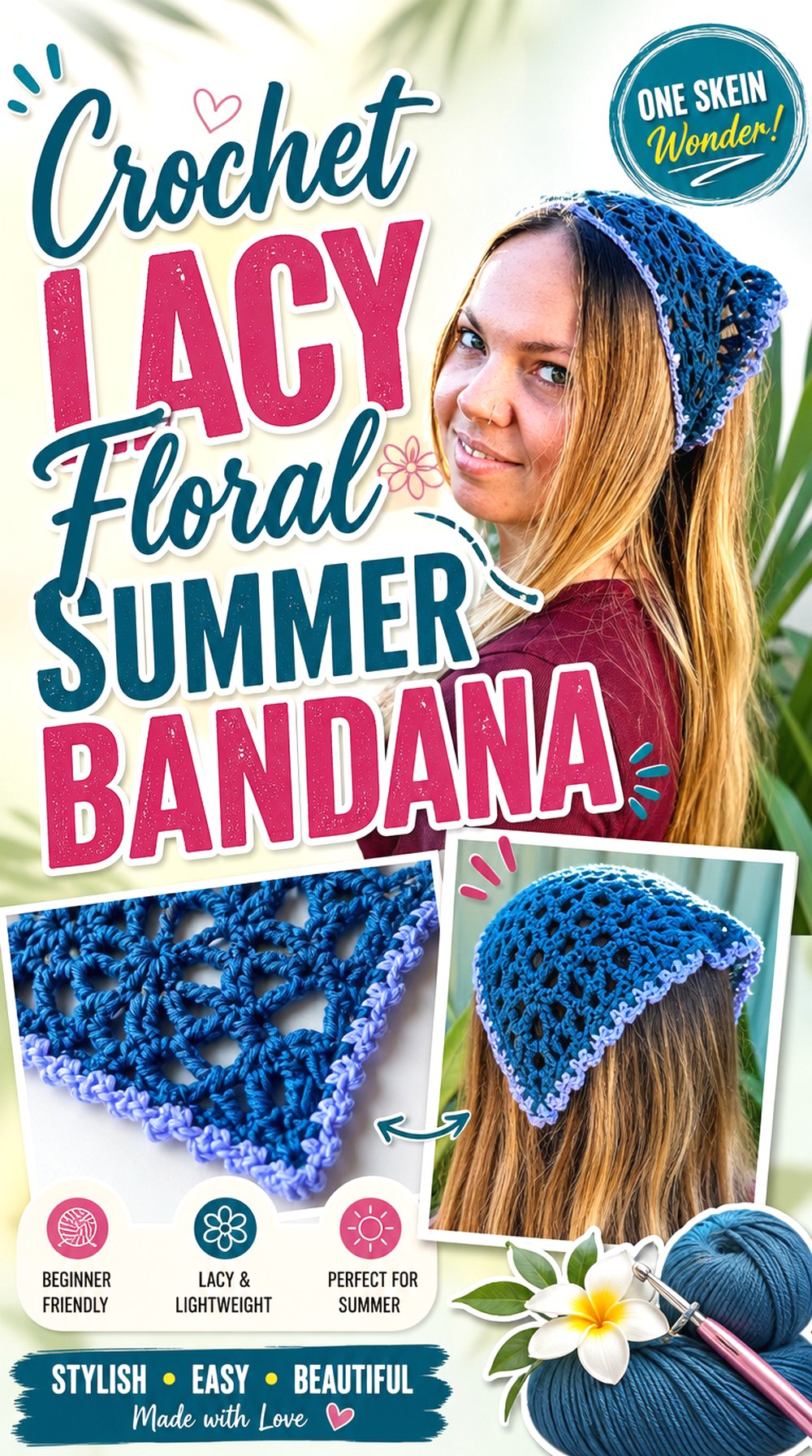
Carley Rose Studio’s version combines an airy triangular body with a clearly floral lace effect, making it a softer alternative to strict geometric diamonds. The tutorial uses lightweight cotton and shows the project progressing into a delicate warm-weather accessory rather than a dense head covering.
This approach works particularly well when you want the bandana to look decorative against the hair. Floral openwork creates irregular curves and petal-like spaces, so the fabric reads differently from standard square mesh even in a neutral shade. It is also a useful choice for someone who wants floral character without assembling separate granny-square motifs.
Check the Flowers from Both Near and Far
A lace motif may look obvious while it is on the hook yet become less distinct once the entire triangle is viewed from a distance. Periodically lay the work flat and look at the repeated floral pattern as a whole.
If individual flowers visually collapse into a general mesh texture, a smoother yarn or slightly stronger color contrast may show the motif more effectively.
Border Tension Can Change the Final Drape
An edging is not merely decorative. If it is much tighter than the body, it can pull the two sloping sides inward; if it is too loose, the perimeter can ripple.
Compare the edge with the relaxed lace before fastening off. The goal is not to force the body into shape but to finish the existing triangle cleanly.
Original Tutorial and Creator Credit
Creator: Carley Rose Studio
Crochet Lace Edge Tie Bandana
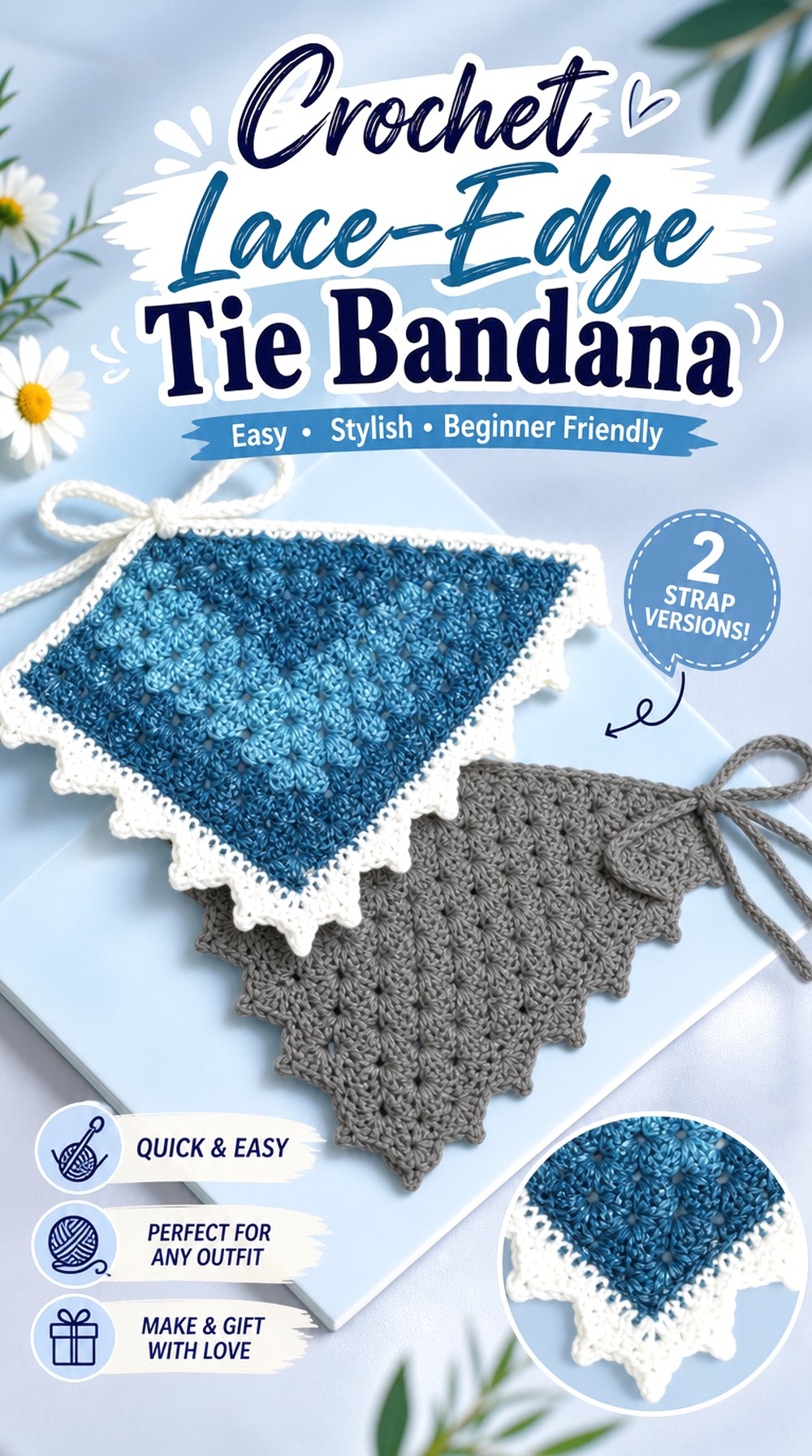
Not every lace bandana needs openwork across the entire triangle. Ashten Stitches uses a lacy edging as a major finishing feature and includes both thicker and thinner strap approaches in the tutorial.
This creates a useful middle ground for readers who like delicate borders but prefer more visual substance through the center of the headscarf. The lace becomes a frame around the bandana rather than the whole fabric. That can also make the finished shape easier to see against the hair, especially when the body and edging are worked in one color.
Strap Width Changes More Than Appearance
Thin ties create a lighter finish and can disappear more easily under hair. Wider ties have more visual presence and distribute tension over a larger area, but they can also add bulk at the knot.
Consider how you usually wear your hair before choosing. A decorative bow may benefit from a more substantial tie, while a low-profile knot often suits a slimmer strap.
Treat the Lace Border as a Fit Checkpoint
Because the edging adds material around the triangle, evaluate the body before starting that final section. If the bandana already feels larger than intended, an elaborate edge will not make it smaller.
Conversely, do not rely on the border to compensate for a triangle that lacks enough front-edge width to tie comfortably.
Original Tutorial and Creator Credit
Creator: Ashten Stitches
Crochet Airy Everyday Lace Bandana
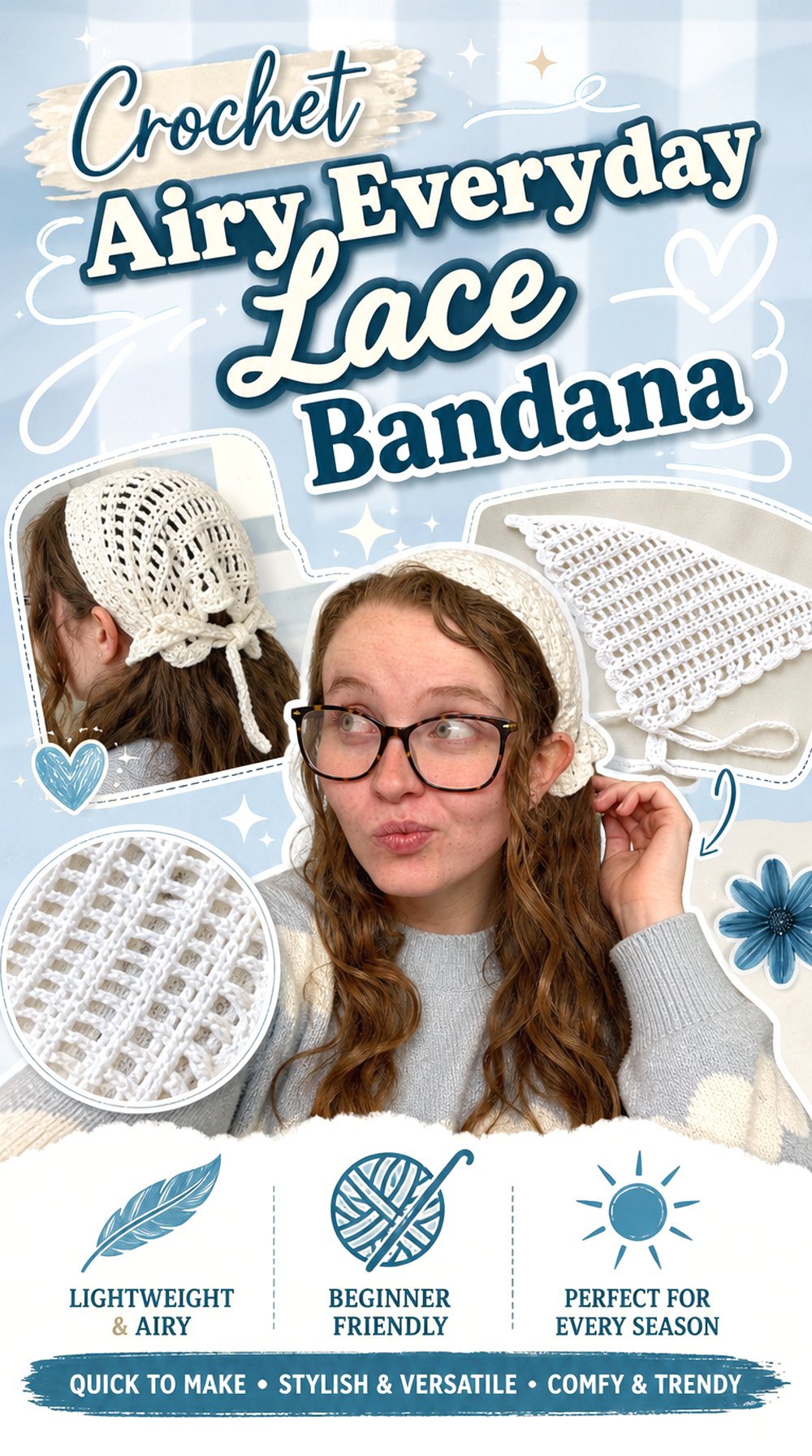
Riana Crafts offers a straightforward lace bandana with a light, open appearance and a strong focus on the finished headscarf shape. The creator’s tutorial discusses clean edges and fit in addition to the basic construction, which makes this a useful option when wearability matters as much as decorative stitch work.
The design sits in the practical center of this collection: airier than a dense kerchief but less visually complicated than floral or motif-based lace. It is a good model for experimenting with color because the repeat itself remains easy to see. A tonal or solid yarn will emphasize the open spaces, while a gently changing yarn can add movement without introducing separate motifs.
Use the Straight Edge to Judge Wearability
The long edge across the front determines where the bandana sits relative to the temples or ears. Check that dimension on your own head before worrying about how long the lower point looks.
A triangle can have an attractive depth yet still be awkward to tie if its upper edge is too short for the intended placement.
Openwork Still Needs Stable Finishing
Airy fabric can stretch more noticeably when ties are pulled firmly. Avoid using the knot to force a too-small bandana into place.
Instead, aim for a triangle that reaches the intended tying points comfortably before the straps take over. That keeps the lace from being distorted each time the accessory is worn.
Original Tutorial and Creator Credit
Creator: Riana Crafts
Crochet Open Mesh Triangle Bandana
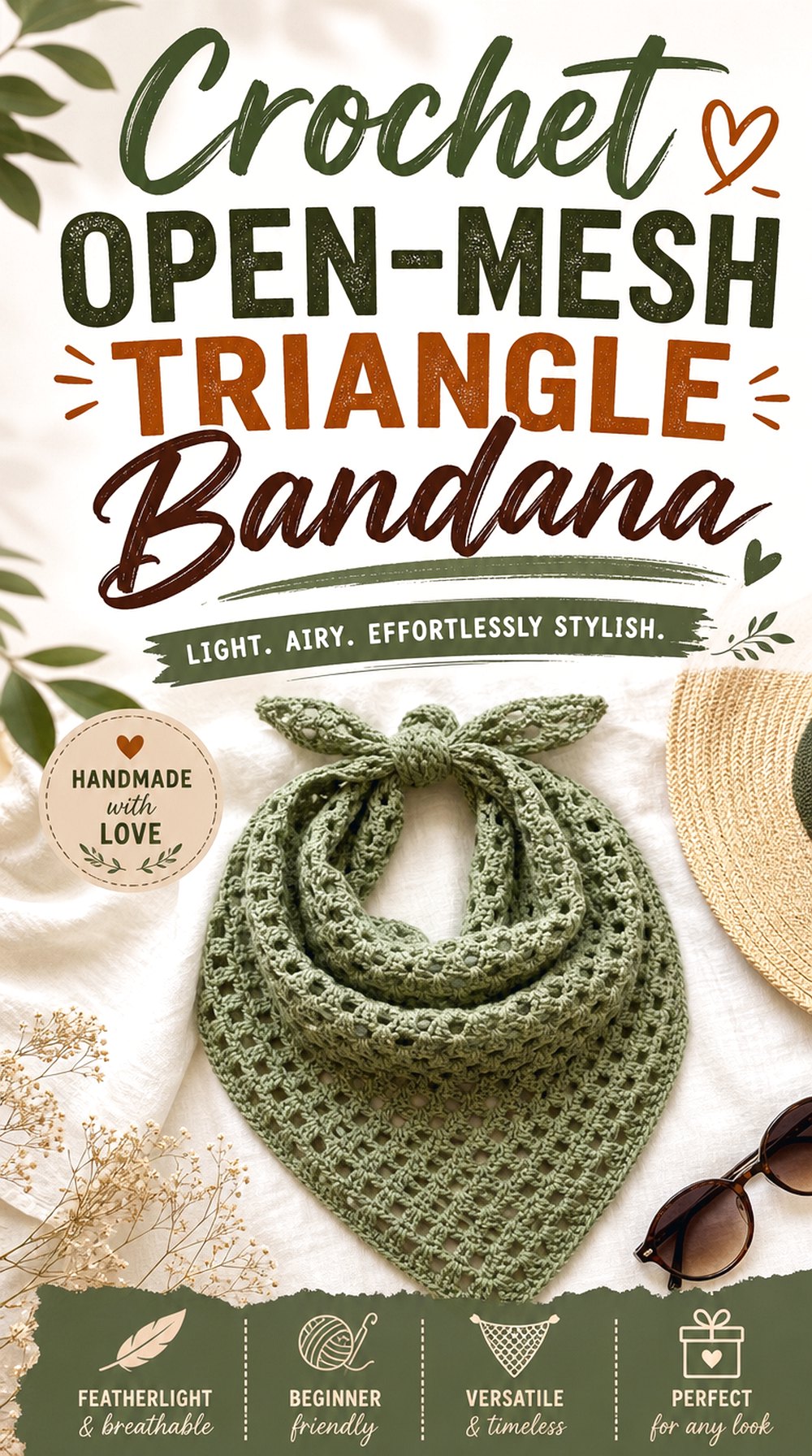
This mesh crochet bandana keeps the structure intentionally sparse. Sarah’s tutorial uses repeating open spaces to form the triangle, giving the finished accessory a more transparent look than granny clusters or filet blocks.
Because so little solid fabric interrupts the mesh, hair color becomes part of the visual result when the bandana is worn. That makes this a strong choice for styling rather than coverage. The construction is also useful for seeing how repeated chains and anchoring stitches can create a complete wearable shape without relying on dense rows.
Mesh Size Controls the Visual Scale
Large openings create a bolder, net-like appearance, while smaller openings make the same general idea look finer and more textile-like. Changing yarn or hook size can therefore alter the personality of the bandana substantially.
Rather than judging the first few rows alone, stretch the fabric gently into its natural shape and look at how large the openings appear against hair.
Keep the Foundation Relaxed
A tight starting section can make an otherwise flexible mesh triangle pull upward at its point. Since openwork has relatively little fabric to disguise a tension problem, the foundation deserves extra attention.
If the early rows refuse to lie naturally even when relaxed, correcting them early is usually better than hoping later rows will conceal the issue.
Original Tutorial and Creator Credit
Creator: Sarah
Crochet Cottage Openwork Headscarf Bandana
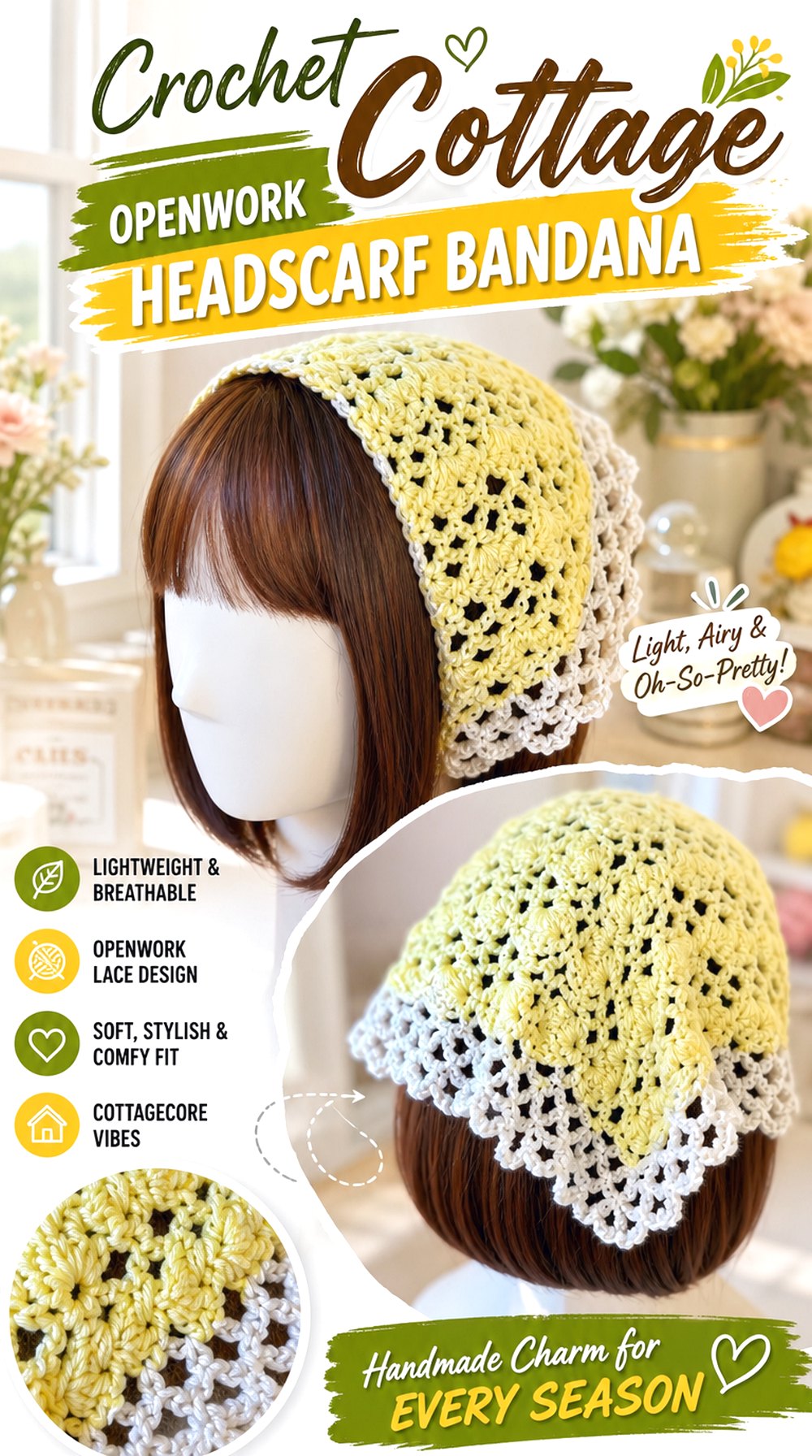
Vivi Crochet’s headscarf uses repeated chain spaces and basic stitches to build an open triangular accessory with a cottage-style feel. The tutorial includes the straps as part of the complete project and presents the finished piece specifically as a bandana/headscarf rather than a larger shawl.
This is a useful direction if you want regular, orderly openwork instead of obvious flower or diamond motifs. The repeated spacing gives the fabric rhythm while keeping the overall silhouette simple. That makes it adaptable to muted neutrals, soft pastels, or stronger colors without losing the handmade lace effect.
Regular Openings Make Tension Easy to Compare
When each row contains similarly sized spaces, inconsistent tension becomes visible quickly. Compare openings from the center with those near the edges. A steady change may be part of shaping, but random differences can signal that chains or anchor stitches are being worked at different tensions.
Catching that early helps the finished triangle look deliberate rather than accidentally uneven.
Think About the Point-to-Front-Edge Proportion
Some wearers prefer a shallow triangle that leaves more hair visible, while others want the point to extend farther down the back of the head. The ideal proportion is personal.
As the piece grows, test both the front width and the depth instead of using only one measurement to decide when to stop.
Original Tutorial and Creator Credit
Creator: Vivi Crochet 🌷
Crochet Floral Motif Lace Bandana
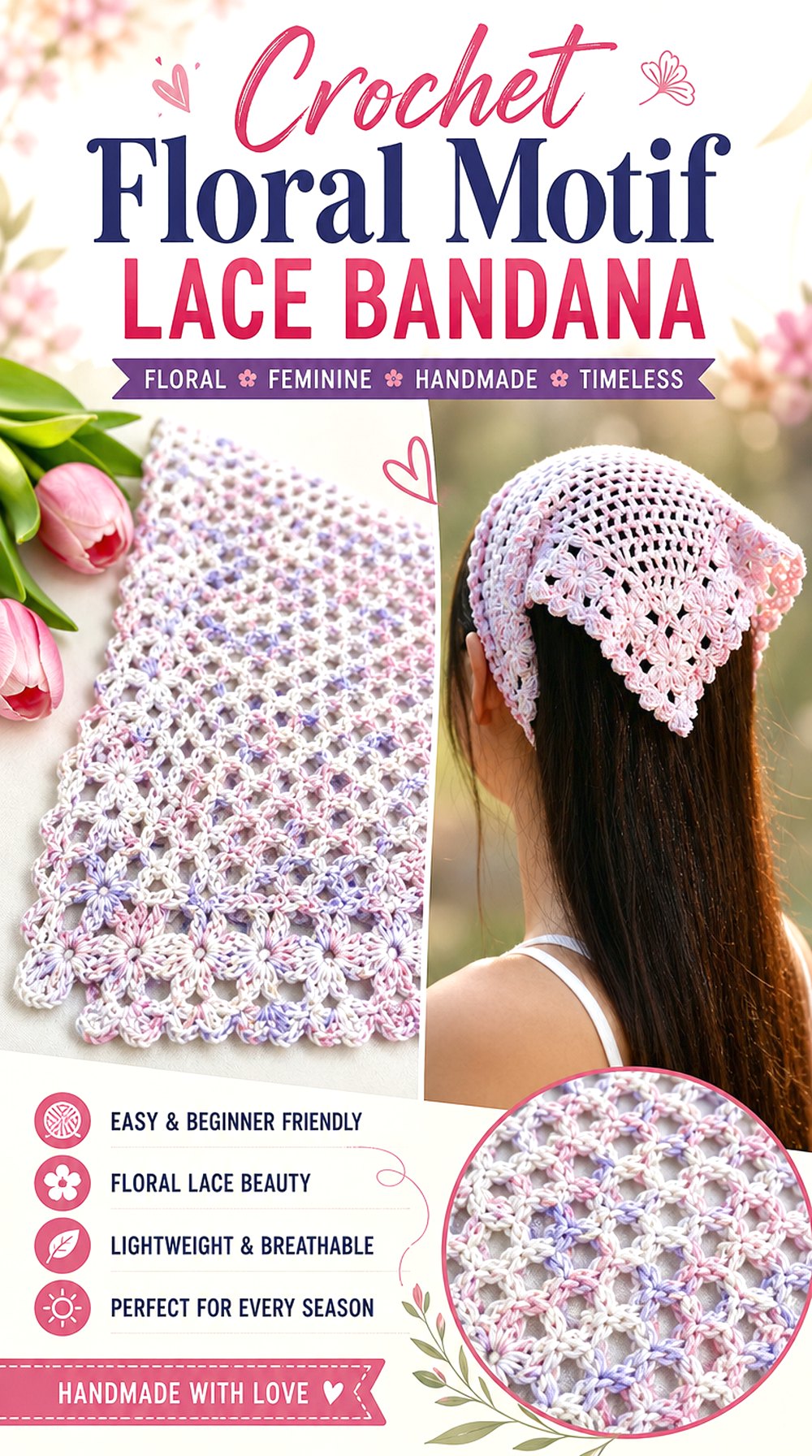
Chenda DIY’s floral bandana makes the flowers part of the actual identity of the headscarf rather than adding a single decorative bloom afterward. The tutorial uses lace-weight cotton and a small hook, supporting a finer finished scale than many chunky granny bandanas.
This is a strong choice when you want the project to feel visibly botanical. Floral construction introduces more visual checkpoints than basic mesh: the motifs need to read clearly, the triangle still needs to lie flat, and the finished edges must connect those details into one wearable shape.
Fine Yarn Keeps the Floral Pattern Delicate
Increasing yarn thickness can make small flowers substantially larger and can also change the number of motifs or repeats needed for the desired head coverage.
If you substitute materials, base your final decision on the actual blocked or relaxed fabric rather than assuming the tutorial’s proportions will transfer unchanged.
Plan Color Before the Motifs Multiply
Floral bandanas invite multiple colors, but too many changes can make individual flowers harder to identify. Decide whether you want the flowers themselves to contrast with the surrounding fabric or whether you prefer a more subtle monochrome lace effect.
A simple color plan also reduces the number of ends that need to be concealed in an open fabric.
Keep Joins Visually Consistent
Where floral sections meet surrounding crochet, inconsistent tension can create little bumps or narrow spots. Lay the work flat periodically and compare equivalent connection points.
If one area is noticeably tighter, correcting it before additional rows are added can prevent the entire triangle from being pulled off-center.
Original Tutorial and Creator Credit
Creator: Chenda DIY
Crochet Skull Filet Lace Bandana
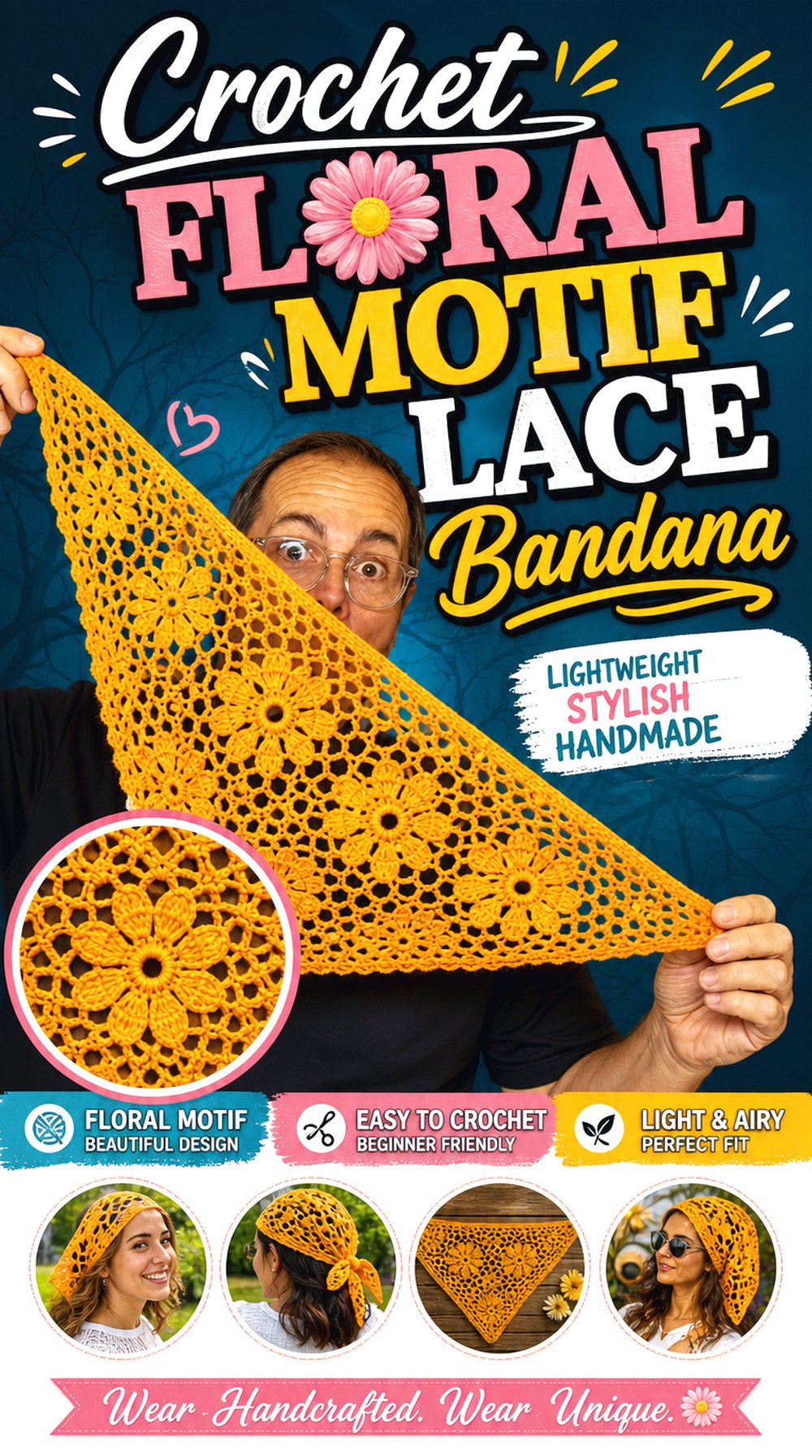
Filet crochet can turn empty and filled spaces into an actual picture, and this skull bandana demonstrates that concept in a dramatic way. Totally Fierce Crochet Channel adapts a skull design into a triangular hair bandana and includes the border and strap finishing in the tutorial.
The result is quite different from romantic flower lace: the negative space carries a graphic motif with a gothic or Halloween direction. It is useful for anyone who wants a lace bandana that reads as an illustration rather than simply a repeating texture.
Filet Motifs Depend on Consistent Squares
A picture built from a grid can become distorted if some sections are noticeably taller or wider than others. Check the developing motif from a short distance instead of focusing only on individual stitches.
If the image looks stretched, adjusting general tension or material choice early is more effective than trying to reshape a severely distorted motif afterward.
Contrast Comes From Open and Filled Space
The skull image does not require many yarn colors because the motif is created through the relationship between solid crochet and openings. That gives you freedom to choose one strong color and let the structure carry the design.
Hair or clothing visible through the lace can also affect how clearly the motif appears when worn.
Original Tutorial and Creator Credit
Creator: Totally Fierce Crochet Channel
Crochet Linked Filet Scallop Bandana
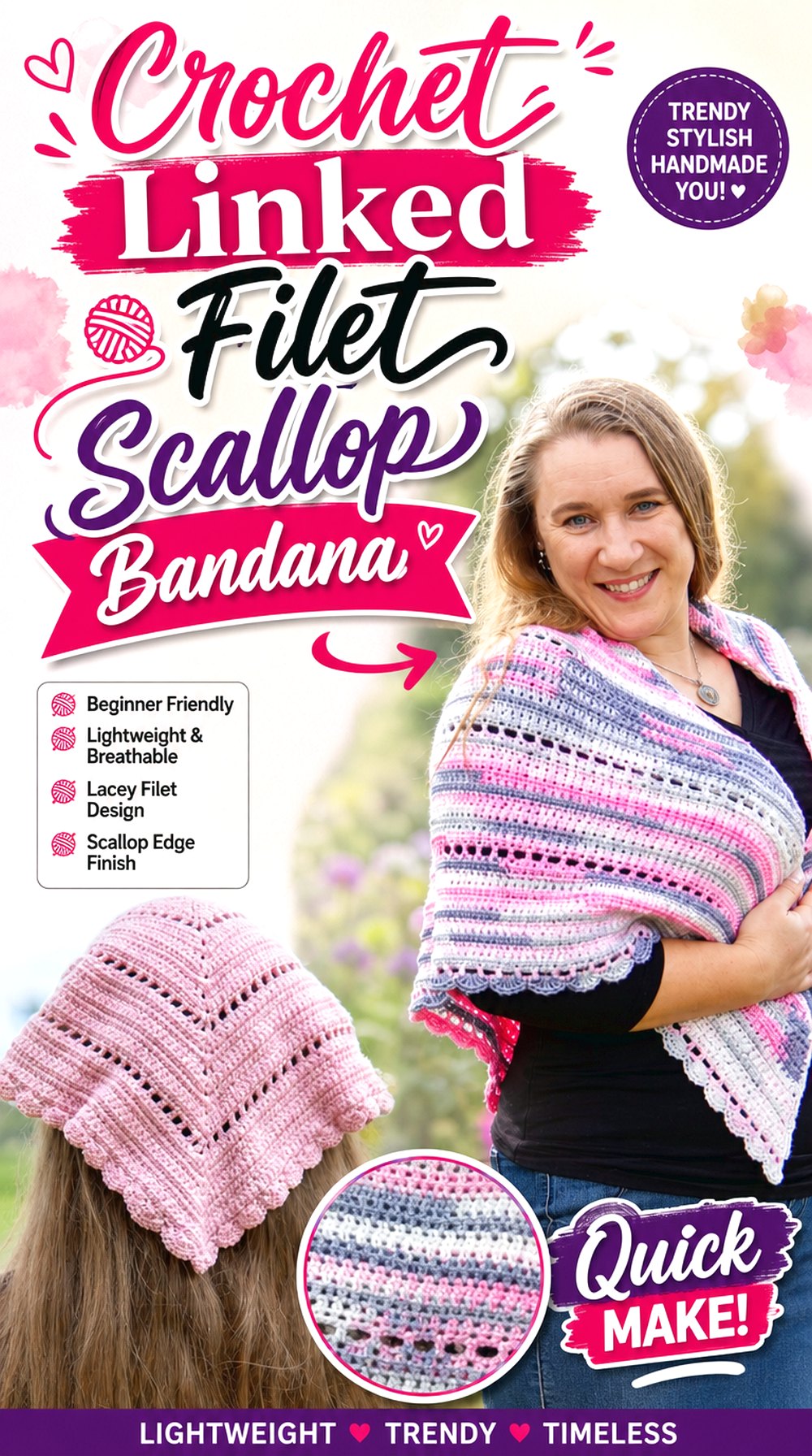
Nicki’s Homemade Crafts combines linked crochet, filet sections, and a scalloped shell border in one head bandana. That mixture creates a useful contrast between more substantial fabric and deliberate open rows rather than making the entire triangle equally transparent.
This option makes sense when you like lace but still want areas with stronger visual structure. The scallops then reinforce the triangular outline at the perimeter. It also demonstrates how a stitch concept can scale between a larger triangular shawl and a smaller bandana, which is useful for understanding proportion without treating the two items as identical.
Mixed Density Changes How the Fabric Hangs
Solid linked sections carry more yarn than the open filet areas. That difference can influence how the triangle folds and settles on the head.
Before adding the final edge, let the piece hang naturally for a moment. Check whether the heavier areas pull the point off-center or whether the fabric remains balanced.
Scallops Should Frame, Not Fight, the Lace
A shell border is most effective when it follows the existing edge without severe ruffling. If the main fabric is lying flat but the border begins to wave aggressively, revisit spacing rather than assuming blocking will remove every ripple.
A stable perimeter keeps the contrast between linked crochet, filet openings, and scallops readable.
Original Tutorial and Creator Credit
Creator: Nicki’s Homemade Crafts
Crochet Textured Picot Edge Bandana
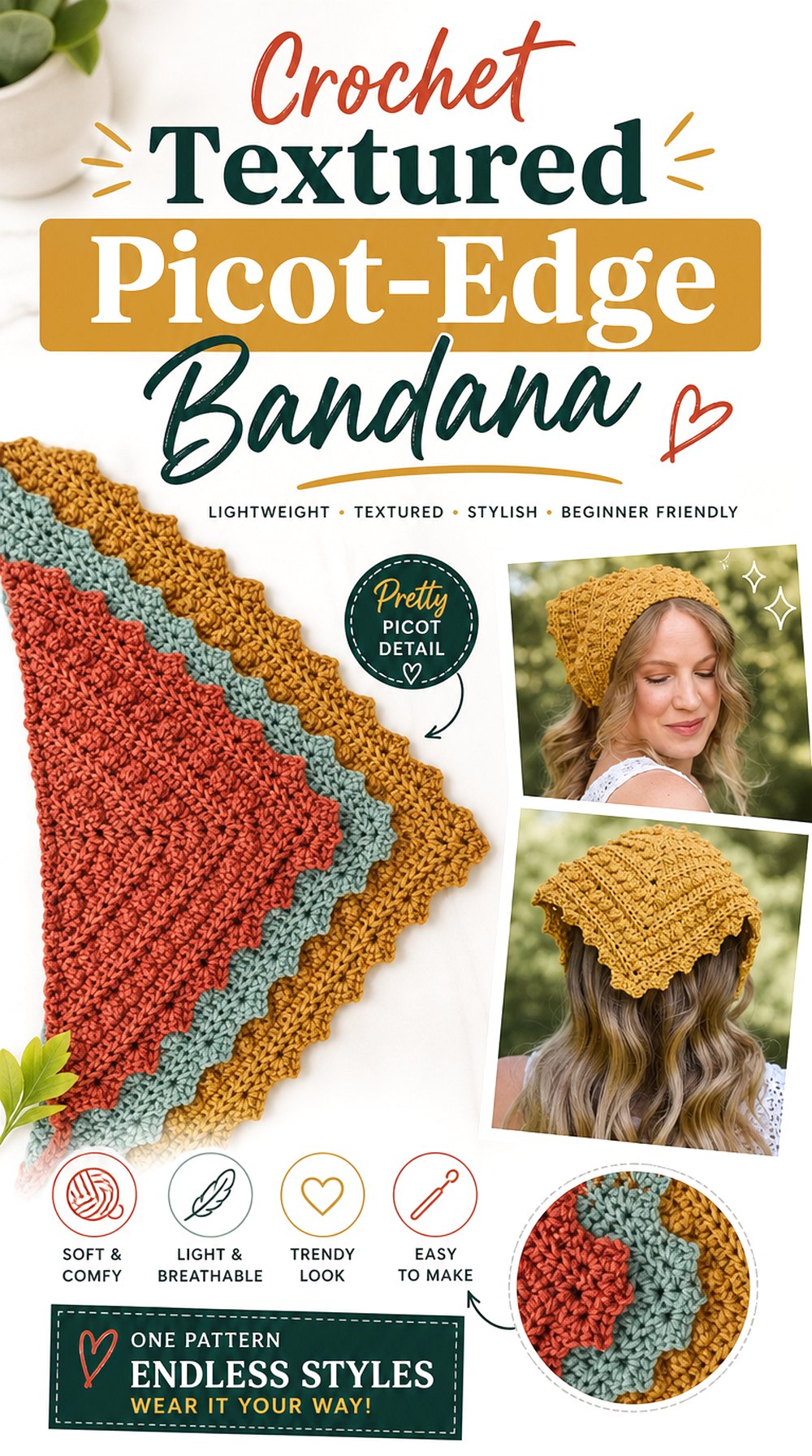
The Turtle Trunk’s Picot Bandana is a useful alternative when you want a more substantial body with delicate edge detail instead of a fully open lace fabric. The pattern is presented in three sizes, and the picot texture gives the surface and perimeter more visual interest than a plain solid triangle.
Within a lace-bandana collection, this serves as the denser option. It suits wearers who like the pointed, decorative quality associated with lace but want more coverage through the center. The important choice here is whether your priority is transparent openwork or a clearer, more textured fabric with ornamental finishing.
Picots Create Detail Without Large Holes
Small points can give an edge a lace-like delicacy while leaving most of the bandana relatively solid. That makes this approach useful when large mesh openings are not your preferred look.
Picots also show up well along the outside silhouette, so a contrasting background—hair, clothing, or even a different yarn shade—can make the edge more noticeable.
Size Should Be Chosen by Placement
A size label alone does not tell you how the bandana will sit with your hairstyle. Consider where you want the front corners to end and how much of the back of the head you want covered.
If you are between looks, compare the tutorial’s finished examples and measure the intended placement on your own head before choosing the version to follow.
Original Tutorial and Creator Credit
Creator: The Turtle Trunk
Crochet Fine Yarn Granny Lace Bandana
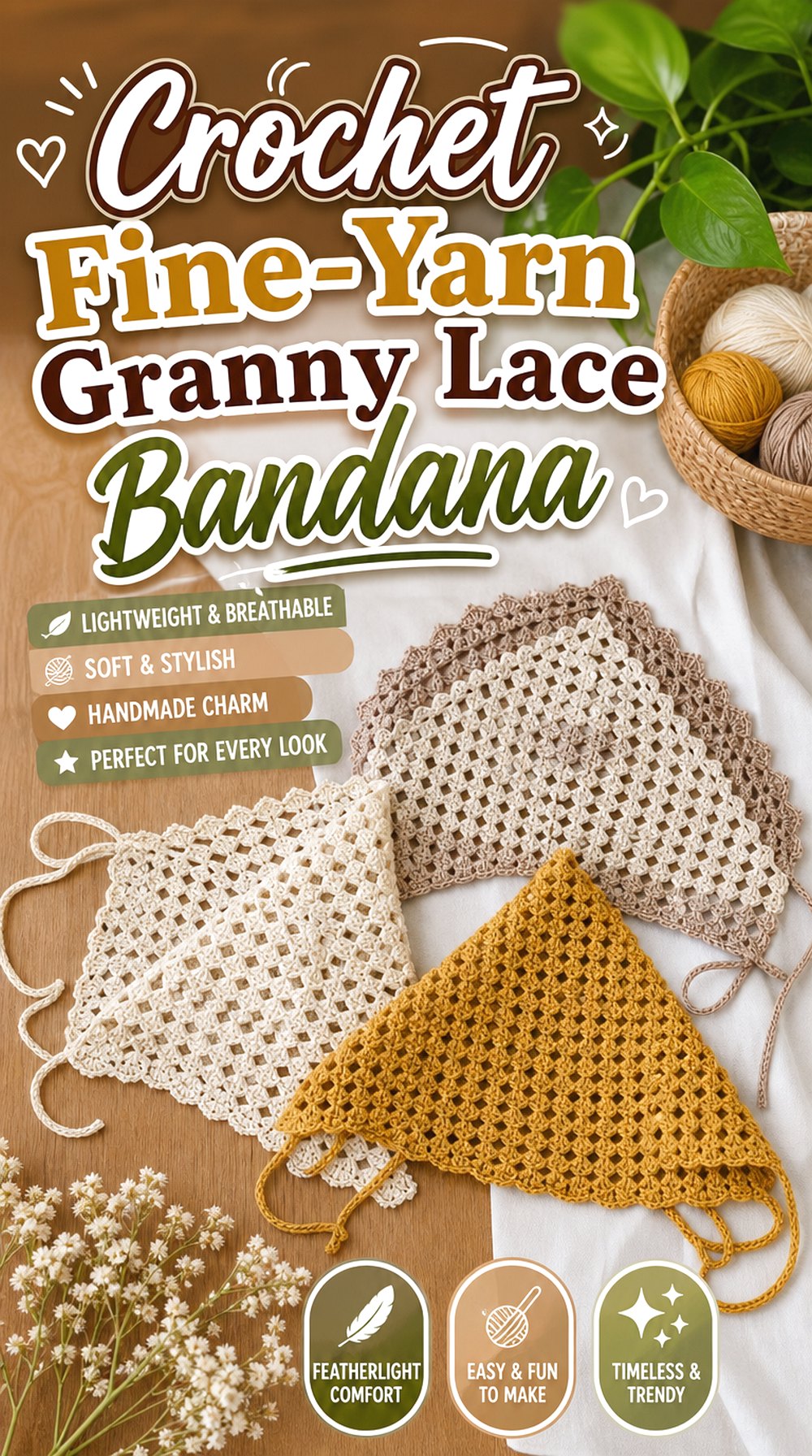
HayHay Crochet’s granny triangle uses fine or light yarn, which changes the character of familiar granny clusters. Instead of feeling chunky or blanket-like, the repeated spaces and finer scale create a softer, more delicate bandana. The design also includes optional picot edging.
This is a useful route for anyone comfortable with the visual logic of granny crochet but wanting a lighter head accessory. It demonstrates that lace effect does not always require an unfamiliar stitch family; changing scale, yarn, and spacing can make a classic cluster construction feel considerably airier.
Finer Granny Clusters Reduce Visual Bulk
Granny stitches can look heavy when made with thick yarn, especially along the sides of a small triangle. A finer material allows the open gaps to become more prominent relative to the clusters.
If substituting a thicker yarn, expect the entire motif scale to grow. Stop based on fit rather than automatically repeating the same number of rows.
Picots Can Be Optional, Not Automatic
The open granny body already supplies texture, so the edge does not need extra decoration to function as a bandana. If your yarn is busy or multicolored, a simpler edge can prevent the finish from looking crowded.
For a solid fine yarn, picots can add a subtle second layer of detail without changing the basic construction.
Original Tutorial and Creator Credit
Creator: HayHay Crochet
Crochet Long Edge Mesh Scarf Bandana
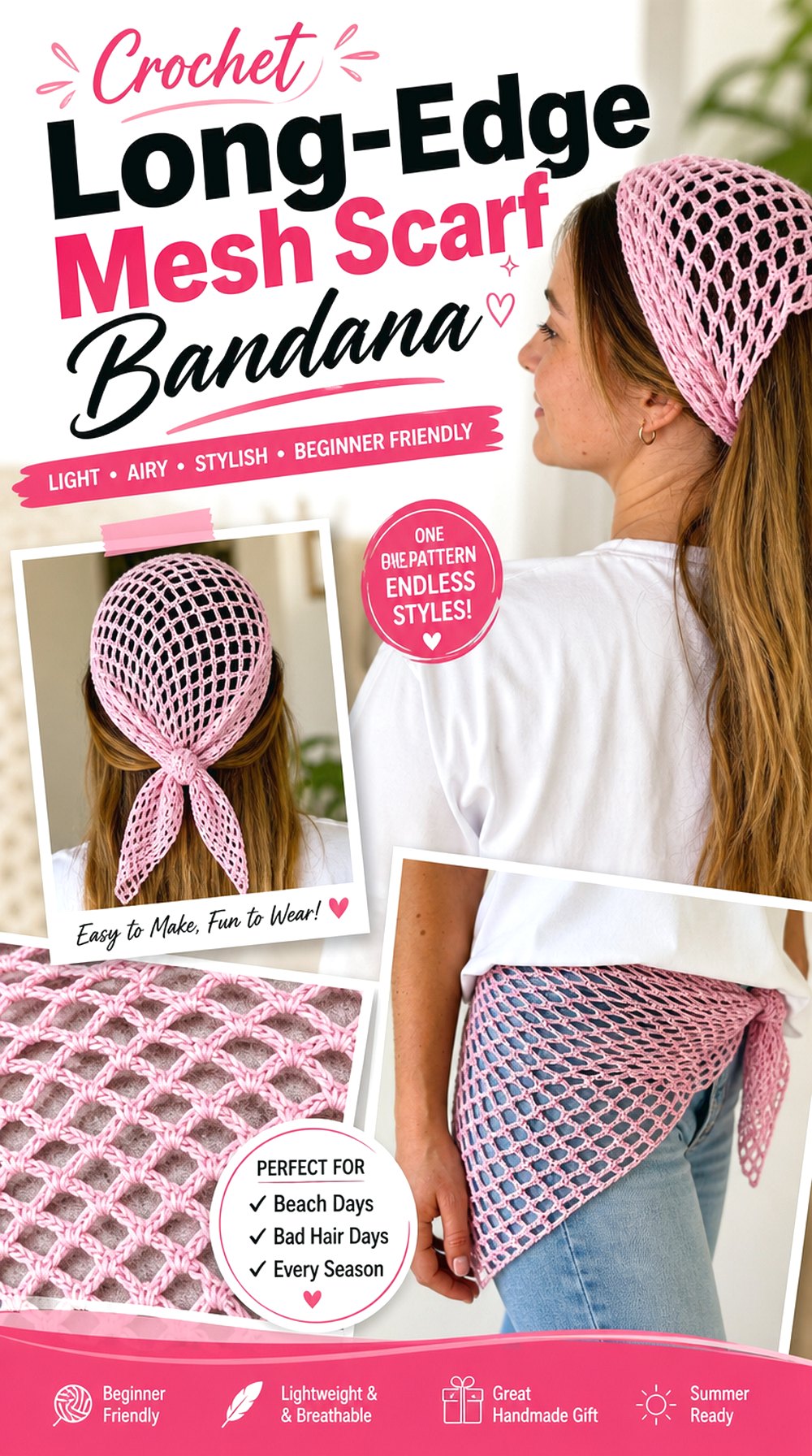
Lerugi Crochets takes the mesh triangle beyond a small head kerchief and presents it as a versatile scarf that can also be styled as a bandana, hip scarf, belt, shawl, or wrap. That larger scale is what sets this idea apart from the compact tie-back projects in the collection.
Choose it when you want fluid styling options and generous drape rather than a bandana designed for one fixed placement. The mesh keeps the broader triangle from looking visually heavy. Because the edge is longer, however, the amount of fabric gathered or wrapped around the head deserves more attention.
More Width Creates More Styling Options
A long upper edge can wrap or knot in ways that a compact bandana cannot. The trade-off is additional fabric around the head when you use it in its smallest configuration.
Before committing to the full scale, decide whether the alternative scarf and hip-wrap uses genuinely matter to you. If the piece will only ever be worn as a head bandana, a smaller triangle may be more practical.
Drape Becomes More Important as Scale Increases
A stiff mesh can stand away from the body when enlarged, while a flexible fabric settles more naturally in multiple styling positions. The tutorial uses fine yarn for its mesh scarf, reinforcing the lightweight direction of the design.
When substituting yarn, make a small mesh sample and let it hang vertically as well as lie flat.
Original Tutorial and Creator Credit
Creator: lerugi crochets
Crochet Lightweight Milk Cotton Lace Bandana
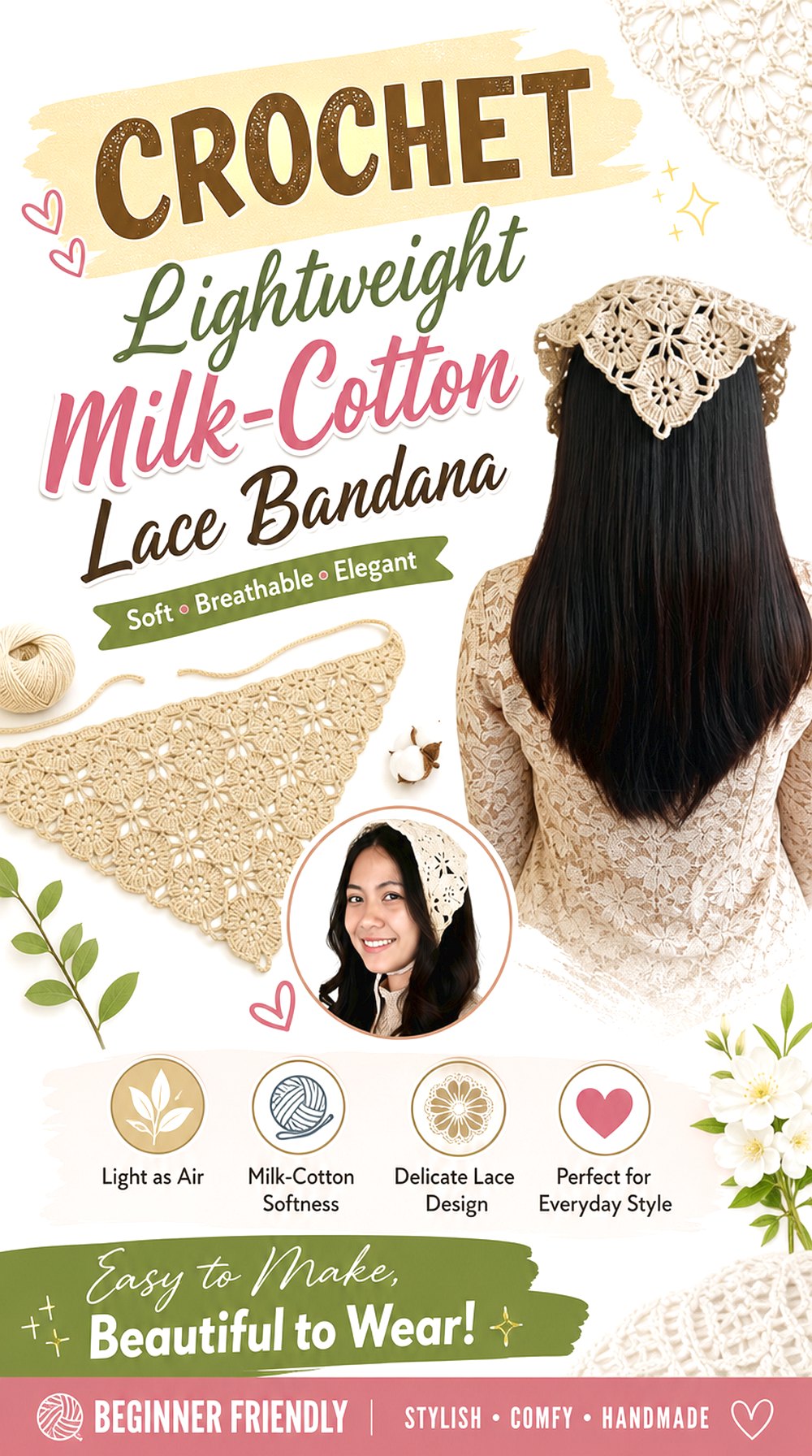
The Crochet Channel’s 2026 tutorial focuses directly on a lightweight lace bandana and uses 4-ply milk cotton with a small hook in the demonstrated project. The result offers a fine-scale alternative to the larger-loop mesh and heavier granny options elsewhere in this list.
This style works well when you want a conventional triangular headscarf where the lace is visible but not oversized. A smaller stitch scale can produce a more polished, textile-like appearance, especially in a solid light shade. It is also a good final comparison point because it shows how material scale alone can separate delicate lace from more rustic openwork.
Small-Scale Lace Benefits From Smooth Yarn
When holes and stitch groups are relatively fine, clear stitch definition becomes important. A smooth yarn lets the repeat remain visible without needing exaggerated openings.
If you prefer a fuzzier fiber, test it first. The same halo that feels soft against the skin can blur the edges of a delicate lace pattern.
Confirm the Tie Fit Before Weaving In
Fine fabric can feel comfortable when held loosely but stretch when the ties are pulled into a knot. Check the intended wearing position with gentle tension before completing all finishing work.
The bandana should fit because its triangle and ties are appropriately sized, not because the lace body has been stretched tightly across the head.
Which Crochet Lace Bandana Style Should You Choose?
For the clearest geometric lace, start with the Crochet Diamond Lace Point Bandana. The Floral Lace Multi-Wear Bandana, Lacy Floral Summer Bandana, and Floral Motif Lace Bandana put flowers and softer curves at the center of the design instead.
Choose the Open-Mesh Triangle Bandana when you want maximum openness, or the Long-Edge Mesh Scarf Bandana when styling flexibility matters as much as headwear. The Skull Filet Lace Bandana is the strongest graphic option, while the Linked Filet Scallop Bandana offers a useful balance between solid and open fabric.
For a familiar crochet rhythm, the Fine-Yarn Granny Lace Bandana is less motif-heavy. If you want greater coverage with decorative edges, the Textured Picot-Edge Bandana or Lace-Edge Tie Bandana keeps the center more substantial.
Conclusion
The right crochet lace bandana depends less on color than on how much fabric, openness, and detail you want around your hair. Diamond and filet designs make the lace itself the focal point; floral versions feel softer and more decorative; mesh creates the lightest visual effect; and granny or picot styles offer more structure.
Before choosing, compare the triangle depth, width, tie treatment, and density of the finished fabric. Those details determine whether a bandana feels like a small head covering, an airy hair accent, or a versatile scarf. Once you have chosen the shape that fits your needs, use the original tutorials for the creators’ exact construction details.
Frequently Asked Questions
What yarn works well for a crochet lace bandana?
A smooth yarn is useful when you want diamonds, flowers, filet squares, or other openwork to remain clearly visible. Lightweight cotton and cotton blends are common in several tutorials in this collection, but the correct substitution depends on the individual pattern. A different yarn weight changes both stitch scale and finished dimensions, so do not assume you can change thickness while keeping the same number of rows.
How can I size a lace bandana if the tutorial does not give my exact measurement?
Focus on the actual placement of the triangle. Before finishing the border, hold the long edge where you want the bandana to sit and check whether both corners reach the intended tying area without stretching the lace. Also check the depth of the point at the back. If the construction is designed to grow by repeating rows, stop when those proportions suit you rather than relying on an assumed universal size.
Are granny stitches really suitable for a lace bandana?
They can be. Granny clusters create repeated gaps between groups of stitches, and with fine or light yarn those openings can produce a distinctly airy fabric. The effect is different from filet or floral lace because the open spaces form a regular clustered texture rather than a drawn motif. If you want a delicate result, pay attention to yarn thickness and drape so the clusters do not become visually bulky.
Should I block a crochet lace bandana?
Blocking can help open lace, smooth minor waviness, and make geometric or floral motifs easier to see. The appropriate method depends on the fiber, so follow the yarn manufacturer’s care guidance rather than applying one blocking method to every material. Blocking is a finishing tool, not a substitute for correct shaping. A severely uneven triangle or overly tight border should usually be corrected before the project reaches that stage.
Why does my crochet bandana ruffle along the edge?
Ruffling can come from several causes, including too much fabric being added along a border, inconsistent tension, or shaping that expands faster than the triangle needs. Lay the unfinished piece flat and determine whether the waviness begins in the main body or only after the edging. If the body lies flat and the border does not, the edge spacing is the first area to review.
How do I stop the ties from distorting delicate lace?
The bandana should reach its intended tying points before the straps are pulled firmly. If you have to stretch the triangle considerably just to make the ties meet, the body may be too small for that placement. Also consider tie construction: very narrow straps concentrate tension, while wider ties distribute it over more fabric. Whichever style you choose, knot it snugly enough to stay in place without using the ties to force the lace into size.