Crochet pillow covers can change the mood of a living room without replacing the whole sofa setup. Some covers bring soft texture, some add bold pattern, and others work as simple seasonal layers that can be changed when the room needs a refresh.
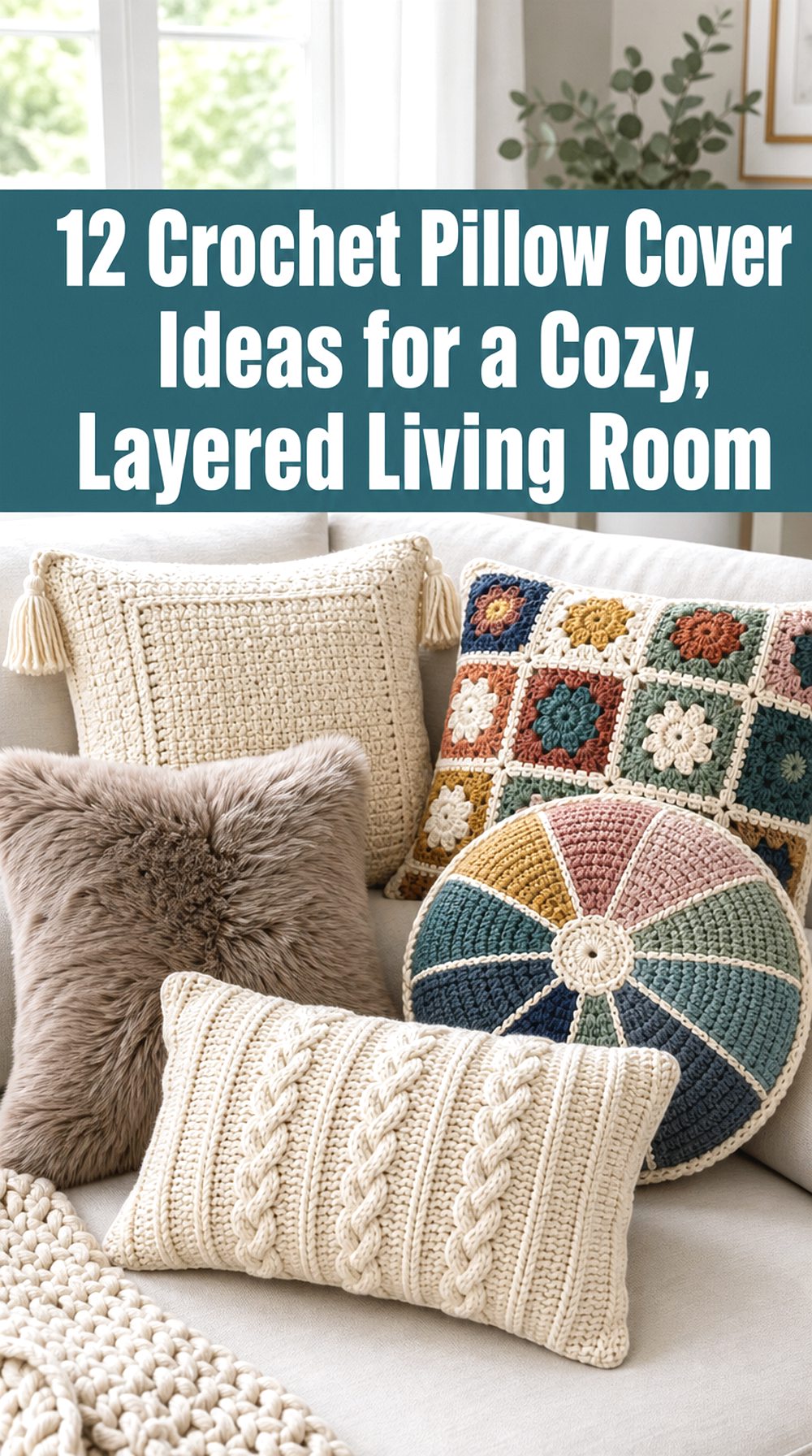
This collection includes square covers, motif covers, a round cushion, raised textures, fluffy finishes, and closure-focused designs. The mix helps readers compare shape, surface detail, and practical use before choosing a tutorial. A sofa with several pillow styles often looks more collected when the covers differ in scale, texture, and structure instead of all using the same stitch pattern.
Quick List
- Crochet Farmhouse Tassel Pillow Cover
- Crochet African Flower Granny Square Cushion Cover
- Crochet Faux Fur Pillow Cover
- Crochet Waffle Stitch Pillow Cover
- Crochet Popcorn Stitch Cushion Cover
- Crochet Chunky Cable Pillow Cover
- Crochet Removable Pillow Cover Base
- Crochet One-Piece Envelope Pillow Cover
- Crochet Daisy Pillow Cover
- Crochet Mosaic Pillow Cover
- Crochet Round Color Wheel Cushion Cover
- Crochet Chevron Pillow Cover
Why These Crochet Pillow Covers Are Worth Making
Pillow covers are useful living room projects because they sit in plain view and can be changed without replacing the pillow insert. A textured cover can soften a plain couch, while a motif cover can introduce color in a controlled way. Removable and envelope styles also make sense when a pillow needs to be stored, switched, or handled often.
The strongest choice depends on how the cover will be used. A decorative front panel may suit an accent chair, while a sturdy envelope or removable cover may suit a family sofa. Larger textures, cables, and faux fur finishes can stand alone, while granny square, daisy, mosaic, and chevron designs work well when the room needs pattern.
Crochet Farmhouse Tassel Pillow Cover
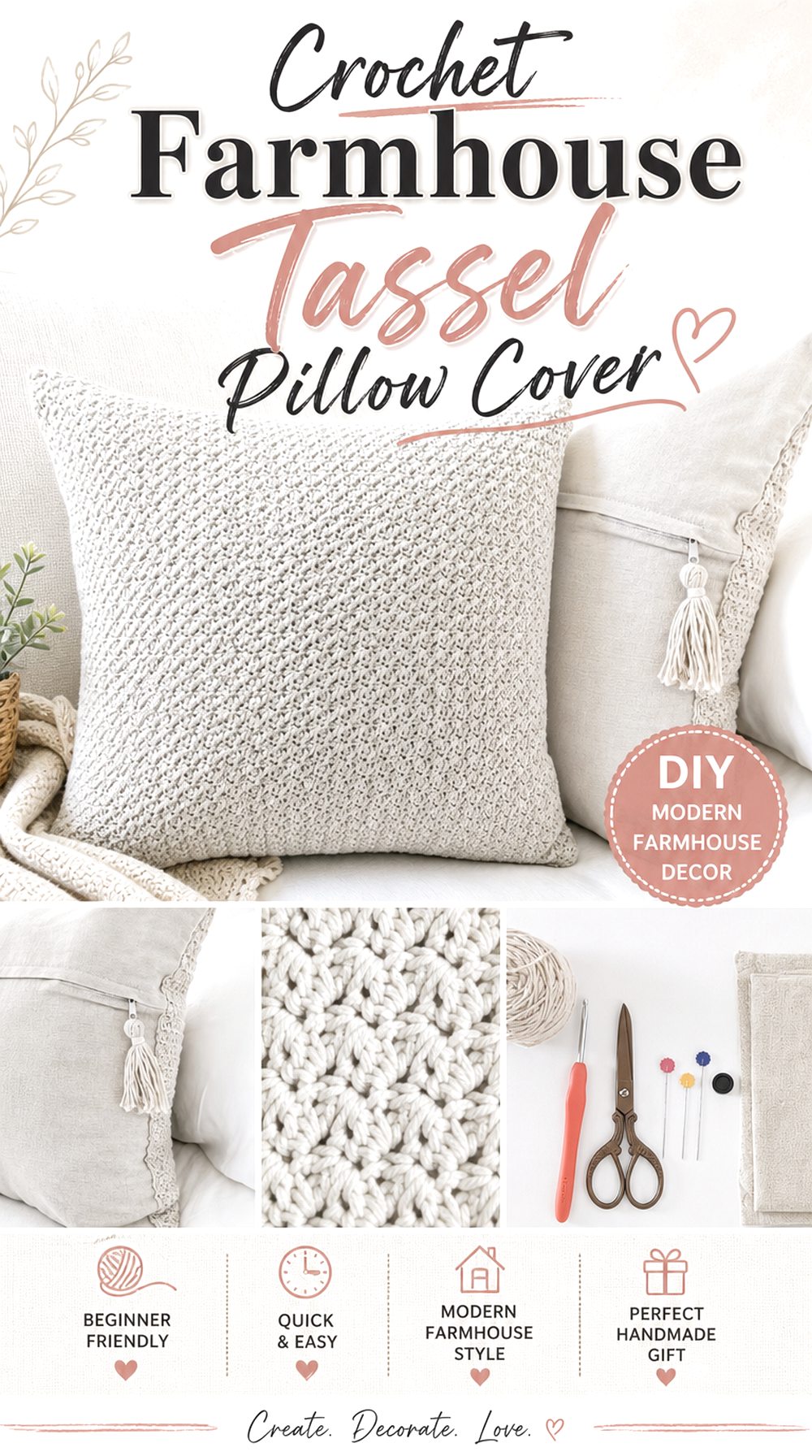
A simple square shape gives this pillow cover a calm farmhouse look, while the corner tassels or pom-pom style finishing can make it feel less plain. The project works well for a sofa, chair, or bed where the goal is soft texture rather than a busy pattern. Its fabric-backed approach also makes it different from fully crocheted covers in this list, so readers can consider it when they want crochet on the visible front without covering every side.
Think About the Fabric Backing
This style is useful when the crocheted panel is meant to sit on the front of an existing pillow cover. That can reduce bulk on the back and keep the crochet surface focused where it will be seen. Readers should check how the backing is attached and whether they are comfortable with any sewing or finishing used in the original guide.
Keep the Corner Details Balanced
Corner tassels or pom-poms can make a plain square cover feel more finished, but they also change how the pillow sits against other cushions. A living room pillow that will be leaned on often may need lower-profile details, while a decorative pillow can handle more movement and texture at the corners.
Confirm the Pillow Insert Size
A neat square cover depends on the crocheted front matching the pillow insert or pillow cover beneath it. Before buying supplies, readers should confirm the finished size used by the creator and compare it with the insert they plan to use. This matters most when the finished cover needs to sit flat rather than pull at the edges.
Original Tutorial and Creator Credit
Creator: Jewels and Jones
Crochet African Flower Granny Square Cushion Cover
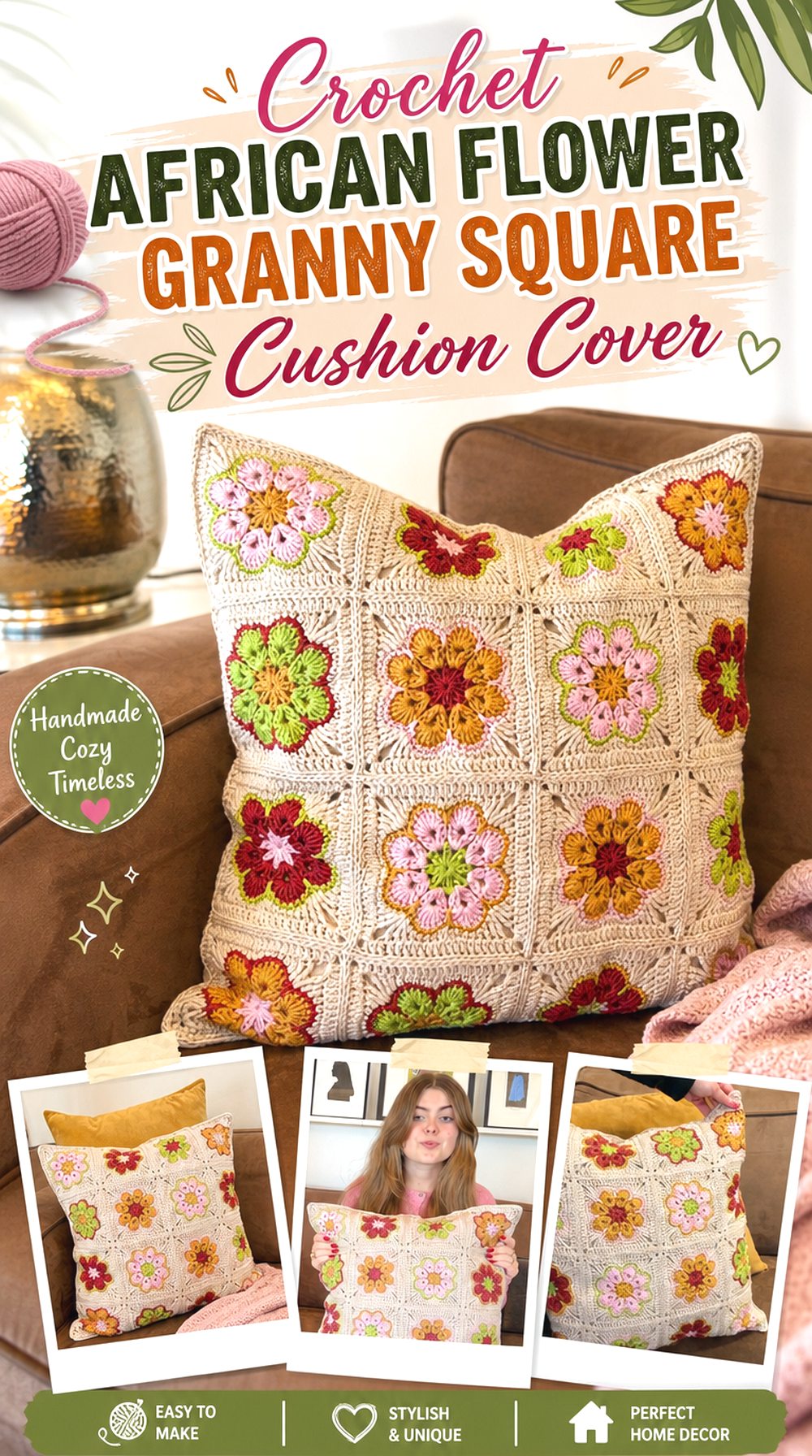
Joined African flower motifs give this cushion cover a patterned front with clear individual blocks. The floral centers create a more decorative look than a plain square panel, while the joined layout can spread color across the whole cover. This idea suits a living room that needs a handmade focal point, especially on a solid sofa. It is different from the daisy cover later in the list because the flowers are built into repeating motif squares rather than reading as one main daisy design.
Plan the Motif Layout
Motif covers need a little visual planning before assembly. The color placement, flower direction, and border contrast can change the whole look of the finished cushion. Readers may want to lay the squares out before joining so the final front feels balanced, especially if several colors are used across one living room pillow.
Watch the Joining Stage Closely
The joining method affects the seams, spacing, and finished shape of a granny square cushion cover. A careful join can make the squares look intentional instead of crowded. This is the part to slow down, because uneven seams may show more clearly on a pillow front than they would on a larger blanket.
Check How the Cover Is Attached
This project uses crocheted squares as part of a cushion cover, so readers should look carefully at how the crochet section meets the backing or base cover. That attachment choice matters for daily handling, especially if the pillow will be moved around often or placed where the back may be visible.
Original Tutorial and Creator Credit
Creator: Crochet with Linni
Crochet Faux Fur Pillow Cover
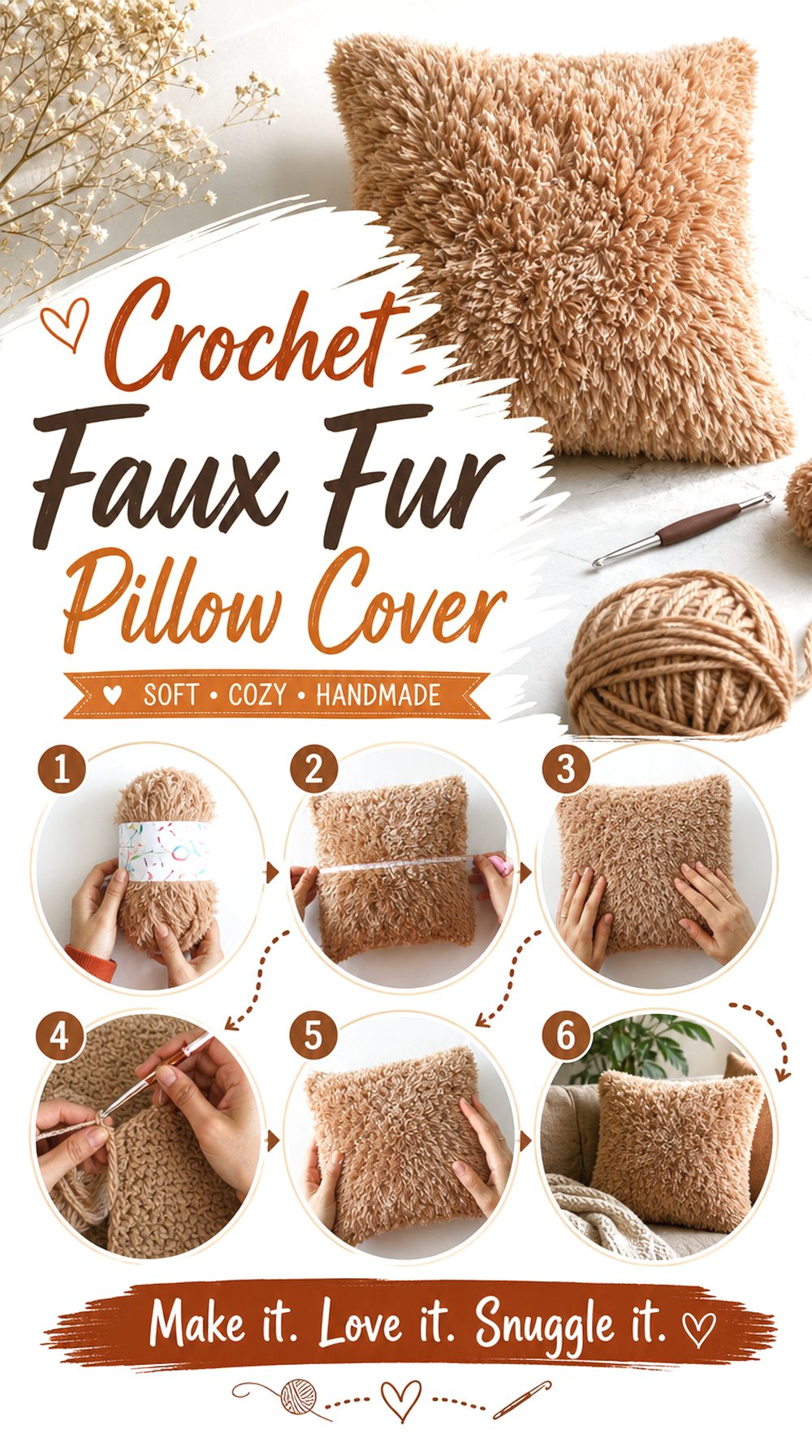
A faux fur crochet pillow cover brings a softer, fuller surface than a typical stitch-texture cover. The fuzzy finish can help warm up a leather sofa, a neutral chair, or a winter living room corner without relying on a busy pattern. Because the yarn texture becomes the main feature, this idea is best compared with smoother covers in the list, such as the envelope, mosaic, or chevron options. It creates comfort through surface feel rather than visible stitch detail.
Consider the Visibility of Stitches
Faux fur yarn can hide stitch definition, so readers should decide whether they want a plush surface more than crisp visible texture. This type of cover may look soft from a distance, but it may not show every stitch clearly. Following the original guide carefully is important because texture can make skipped or uneven stitches harder to spot.
Confirm the Cover Structure
A fluffy pillow cover still needs a reliable shape under the surface. Readers should check whether the tutorial creates panels, works around an insert, or uses another structure. The construction matters because a fuzzy cover can look bulky if the insert is too full or loose if the cover is not sized carefully.
Think About Room Placement
Faux fur works especially well as a soft accent, but it may not be the best choice for every sofa spot. A cover used mostly for display can keep its fluffy surface visible, while a heavily used pillow may need extra care. Readers should check the yarn label and creator notes before deciding how to clean or store it.
Crochet Waffle Stitch Pillow Cover
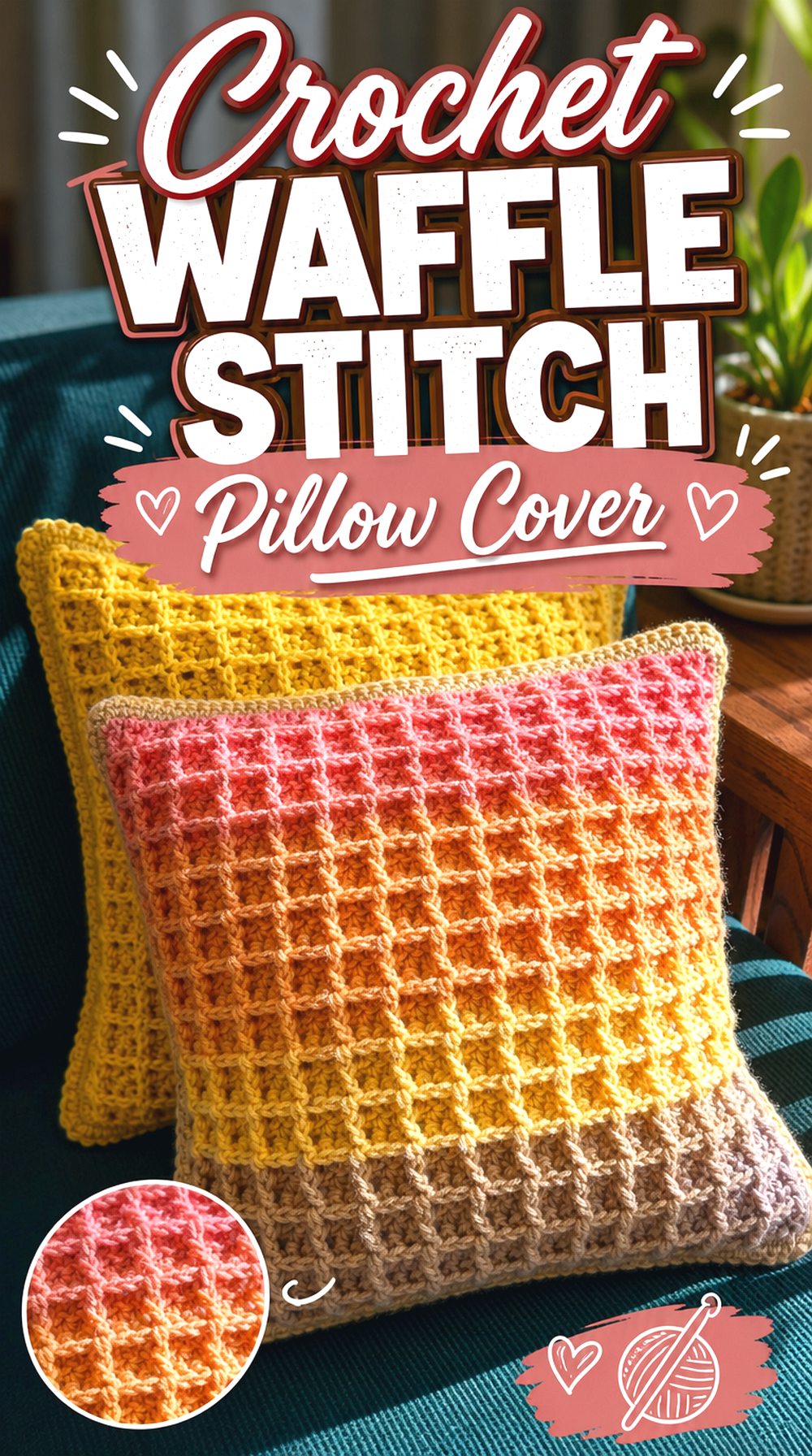
Raised waffle texture gives this pillow cover a deep, grid-like surface that feels more structured than a flat panel. It can sit well beside plain pillows because the texture supplies interest without needing many colors. For a cozy living room, this design may work as a middle layer between a simple solid cover and a bold motif cover. Its standout feature is the repeated texture, so it differs clearly from the floral, mosaic, and chevron designs.
Use Texture as the Main Feature
A waffle stitch cover does not need a complicated color plan to make an impact. The raised sections create light and shadow across the front, which can make a neutral shade feel less flat. Readers choosing this style should think about where the pillow will sit, because strong texture shows best where natural light can catch the surface.
Confirm the Front and Back Panels
This style depends on the cover coming together neatly around the insert. Readers should check how the front and back panels are made and how the edges are finished. A pillow cover with a textured front can look uneven if the back panel or edge join pulls tighter than the main textured section.
Compare the Shape as You Work
A textured panel can draw in differently than a plain stitch panel. Checking the shape against the pillow insert during progress can help readers notice whether the cover is becoming too narrow, too loose, or uneven at the sides. The original tutorial should be used for the exact counts and finishing method.
Original Tutorial and Creator Credit
Creator: Cozy Loop Crochet
Crochet Popcorn Stitch Cushion Cover
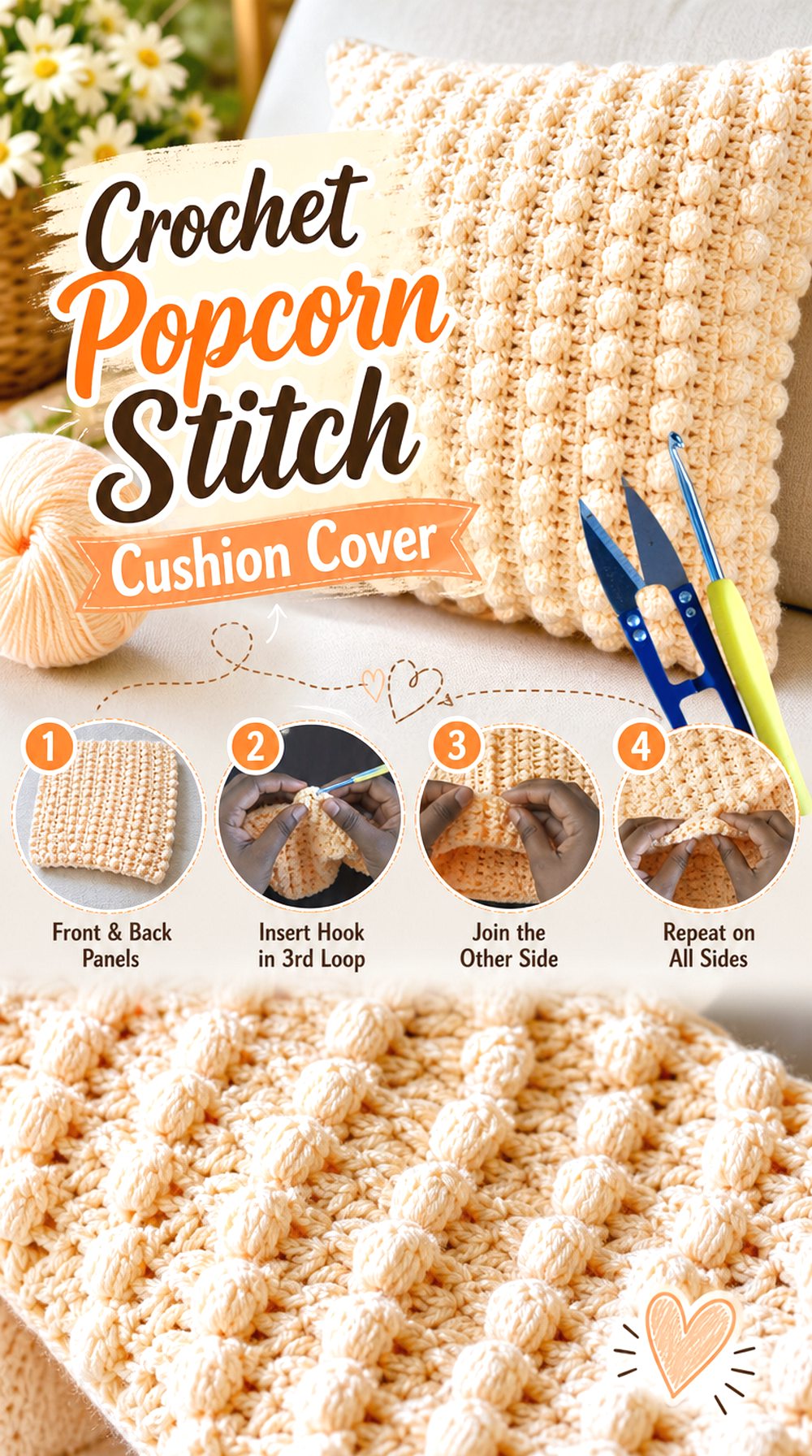
Popcorn stitch creates a raised, dotted texture that can make a cushion cover feel fuller and more decorative. Unlike waffle texture, which forms a grid, this project brings small raised shapes across the surface. It can work well on a plain couch when the room needs texture but not a strong picture or motif. The finished look is especially useful for mixing with smooth pillows, because the raised stitches create contrast without needing a large color pattern.
Keep the Raised Texture Clear
The popcorn texture is the main reason to choose this cover, so the finished surface should remain easy to see. A solid or softly toned yarn may help the raised areas stand out, while high-contrast variegation could compete with the texture. Readers should compare the creator’s finished view before choosing colors for a living room set.
Check the Thickness of the Cover
Raised stitches can add extra depth to a pillow cover. That may be useful for a cozy sofa, but it also means the finished fabric can feel more substantial than a plain panel. Readers should confirm the recommended supplies and insert size so the cover does not become too tight or overly bulky around the corners.
Slow Down Repeated Texture Sections
Popcorn-style sections can look uneven if the texture placement shifts unexpectedly. Rather than trying to memorize the whole project at once, readers may find it helpful to pause at repeating areas and compare the surface to the creator’s finished example. The original tutorial should remain the source for the exact stitch placement.
Original Tutorial and Creator Credit
Creator: Club Crafteria
Crochet Chunky Cable Pillow Cover
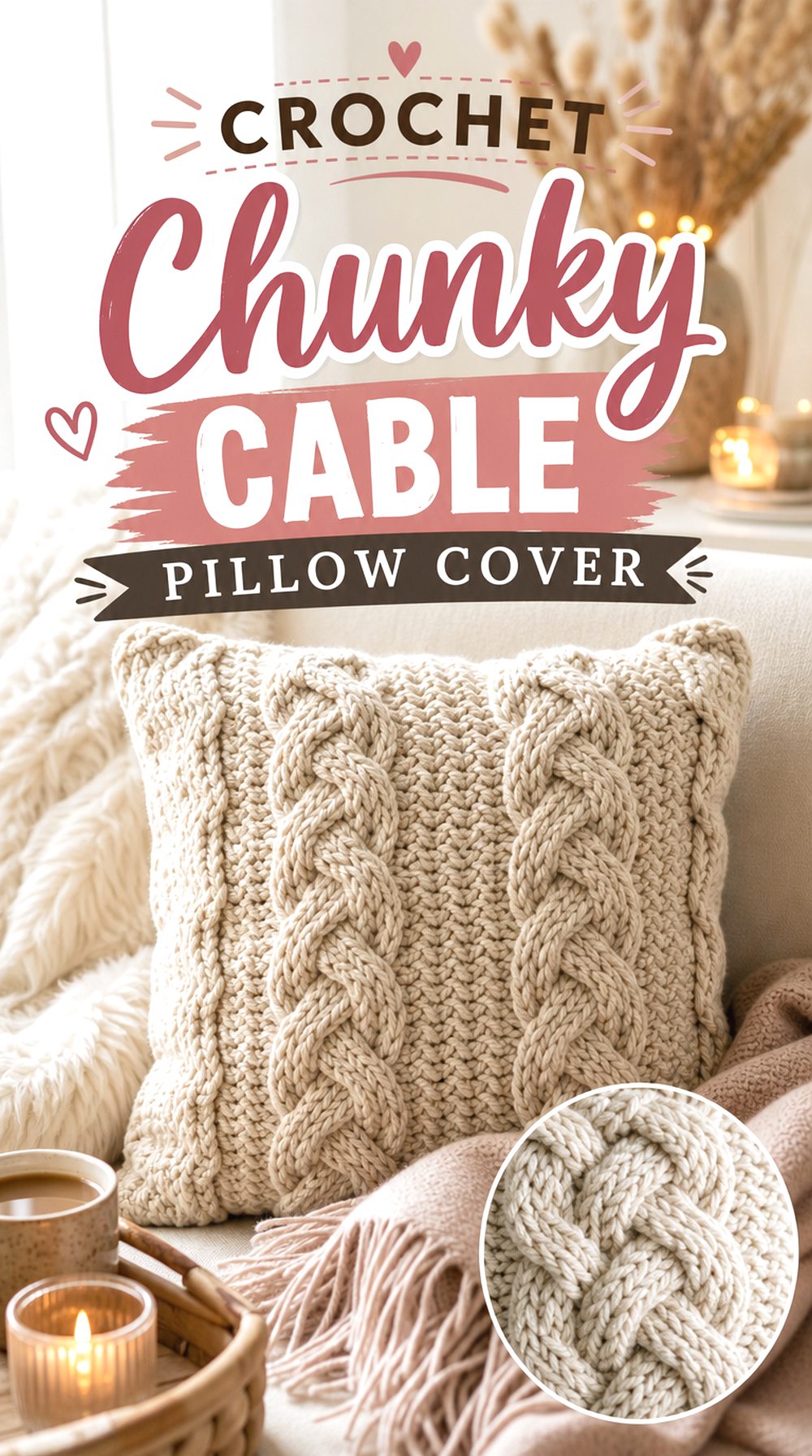
Chunky cable texture gives this pillow cover a sweater-like look that feels well suited to a layered living room. The raised cable front creates a stronger feature than a simple rib or flat square, while the back panels and insert step help it function as a cover rather than just a decorative swatch. This idea works best when the room already has simple pillows and needs one piece with heavier texture and a more defined center design.
Let the Cable Design Stand Out
Cable texture can become the focal point of a sofa arrangement, so it is worth giving this pillow enough visual space. Pairing it with smoother covers can keep the living room from looking too crowded. A close look at the finished front helps readers decide whether the cable scale matches the size of their couch or accent chair.
Confirm the Back Panel Arrangement
This project includes separate back panels and an insert stage, so the back structure matters as much as the cable front. Readers should check how the overlap or closure area is handled before starting. That detail affects how easily the pillow insert can be placed and how tidy the back looks when the cushion is moved.
Prepare for Detailed Texture Work
Cables often require more attention than a plain stitch panel because the raised sections need to stay aligned. Readers who choose this cover should review the full guide first and note where the major texture changes happen. Using the original tutorial for exact construction details keeps the project from becoming guesswork.
Original Tutorial and Creator Credit
Creator: MJ’s Off The Hook Designs
Crochet Removable Pillow Cover Base
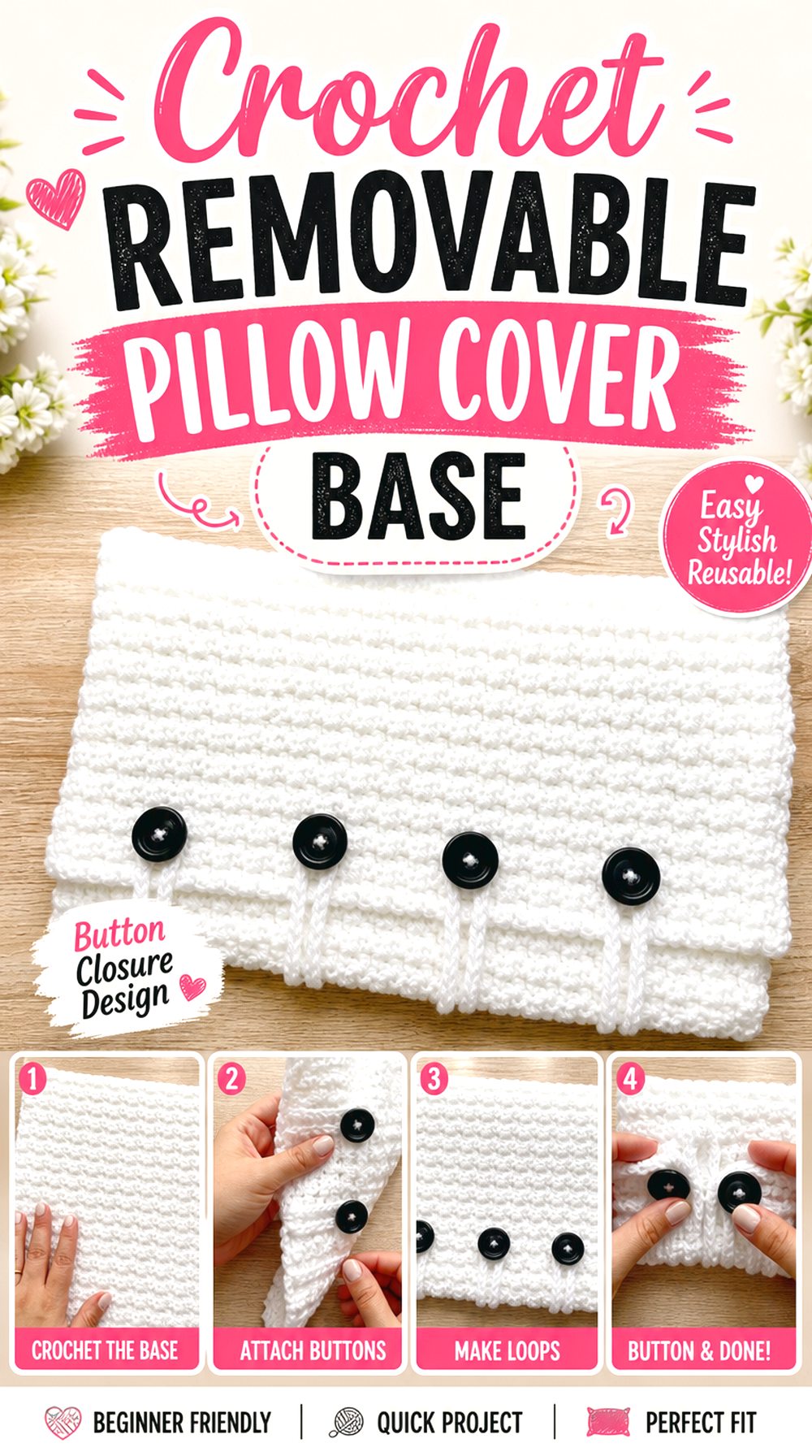
A removable pillow cover base is a practical choice when the living room pillows need seasonal changes, washing checks, or different fronts over time. This tutorial is especially useful as a foundation idea because it focuses on cover structure instead of one heavy decorative motif. It can support holiday pillows, character pillows, or simple solid covers. Compared with the more textured projects in this list, this one is about function and flexibility first.
Think About Seasonal Changes
A removable cover is useful when the same pillow insert will be used with different covers during the year. Readers can think about whether the cover needs to coordinate with fall, winter, spring, or everyday decor. The practical value is in being able to change the surface without storing many bulky pillows.
Look Closely at the Closure
The closure is the main feature to understand in this project. A removable pillow cover should hold the insert neatly while still allowing access when the cover needs to come off. Readers should watch how the creator handles the opening and decide whether that closure style fits the way the pillow will be used.
Confirm Which Pillow Style It Supports
This cover method is connected to several themed pillow patterns from the same creator, so readers should confirm which pillow size and style they plan to follow. A base cover can be useful, but it still needs to match the intended insert and front design. Checking those details early prevents an awkward fit later.
Crochet One Piece Envelope Pillow Cover
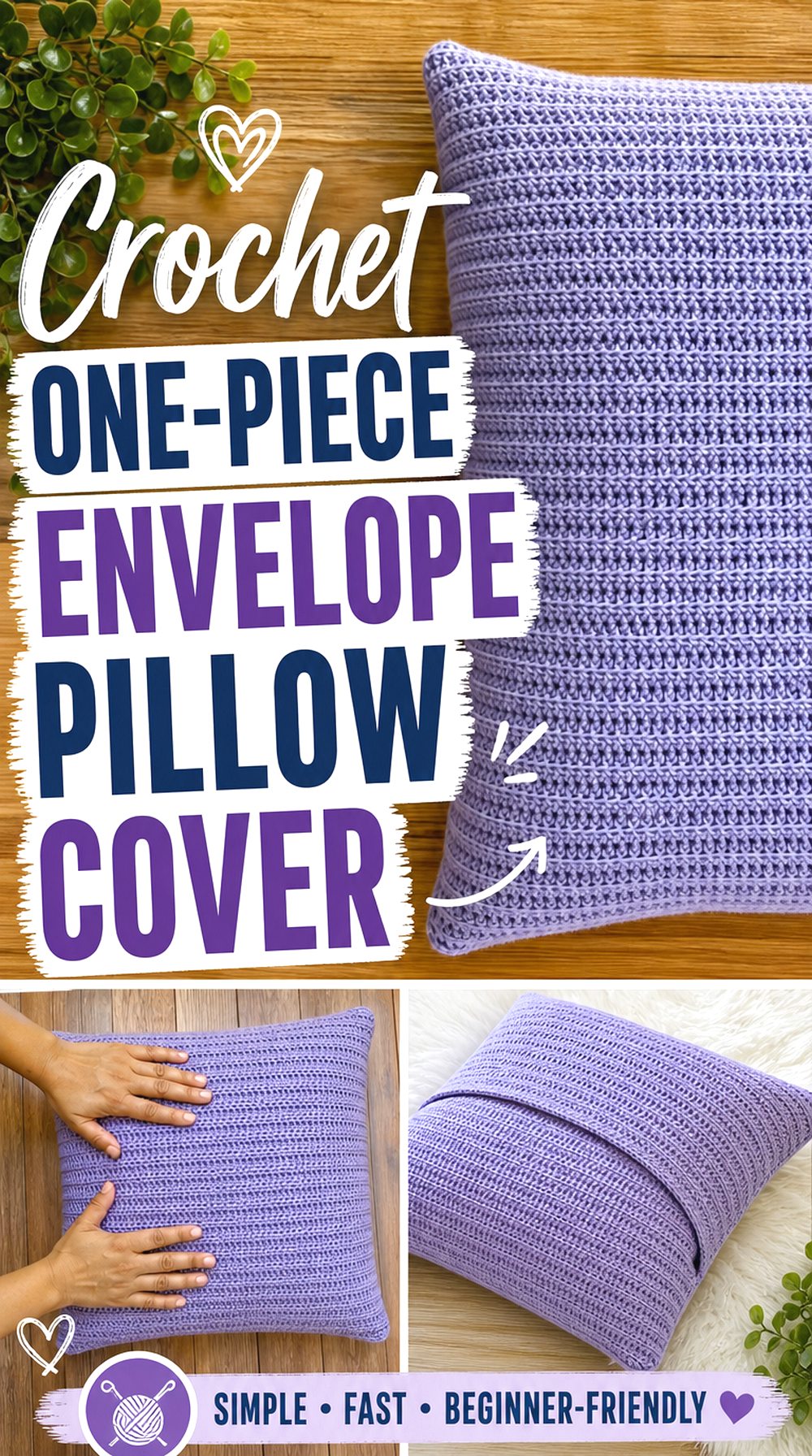
A one-piece envelope pillow cover has a simple practical appeal: the cover wraps around the insert with an overlapping back instead of relying on a separate decorative front. This option suits readers who want a clean cover structure for everyday couch pillows. It differs from the removable base above because the envelope shape is the main construction feature, not a support method for themed fronts. The finished look can be kept plain or adjusted through color.
Understand the Envelope Back
The envelope back is useful because it creates an opening without needing a zipper. Readers should look at how much overlap the creator uses and how the back sits after the insert is placed inside. A shallow overlap may gap, while too much bulk can make the back feel thick when the pillow is leaned against.
Confirm the One-Piece Construction
One-piece construction can reduce the number of separate panels, but it still requires careful sizing. The length of the crocheted piece affects how the front, back, and overlap line up. Readers should compare their pillow insert with the creator’s size notes before relying on the finished cover for a living room pillow.
Check the Edge Finish
A simple envelope cover depends on neat edges because there may not be a large decorative motif to distract the eye. The side seams, corners, and top edge should sit evenly around the insert. Readers may want to watch the finishing portion closely so the final cover looks intentional from both front and back.
Original Tutorial and Creator Credit
Creator: Carol Basic Craft Inspirations
Crochet Daisy Pillow Cover
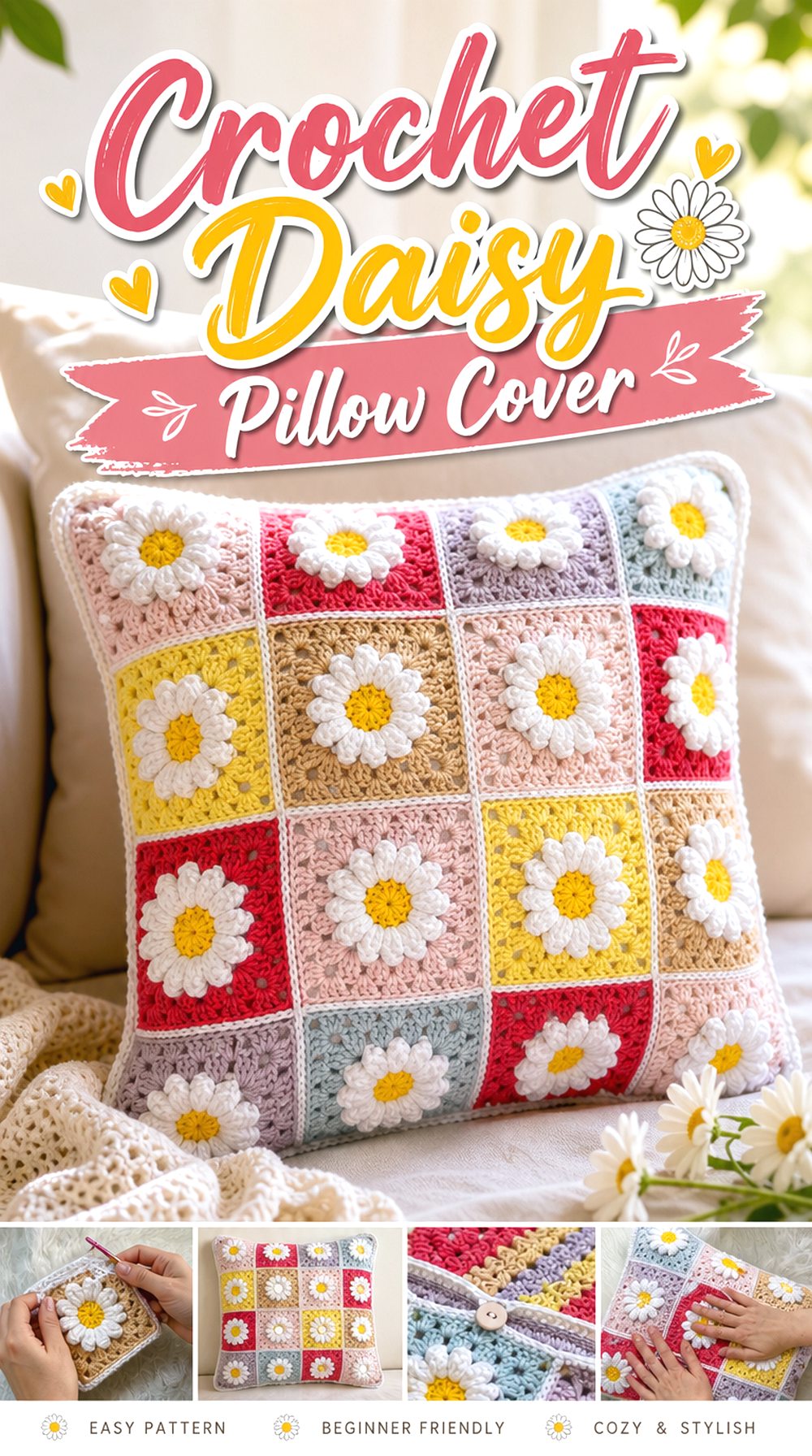
A daisy pillow cover brings a cheerful floral detail into the living room without covering the whole sofa in flowers. The design has a clear decorative identity, especially when the flower colors contrast with the background. It differs from the African flower motif cover because the daisy reads more directly as a single repeated floral statement. This project can work as a bright accent pillow among plainer covers, especially in spring or summer color palettes.
Keep the Daisy Contrast Clear
A daisy design depends on the flower shape staying easy to read. Readers should think about contrast between the petals, center, and background before choosing yarn colors. If the colors are too close, the floral detail may disappear from across the room. A clear finished view from the creator can help guide that decision.
Check the Button Details
This cover includes button information in the creator’s materials list, so readers should pay attention to how the closure is placed and how visible it becomes. Buttons can be practical and decorative, but their size and position matter. They should suit the cover’s scale without pulling attention away from the daisy front.
Match the Cover to the Room
A daisy pillow can feel fresh and light, but it may stand out strongly beside darker or heavily textured pillows. Readers can use it as a single accent or pair it with quieter solid covers. The key decision is whether the living room needs one floral focal point or several softer pattern layers.
Original Tutorial and Creator Credit
Creator: Crochet with Bambkuss
Crochet Mosaic Pillow Cover
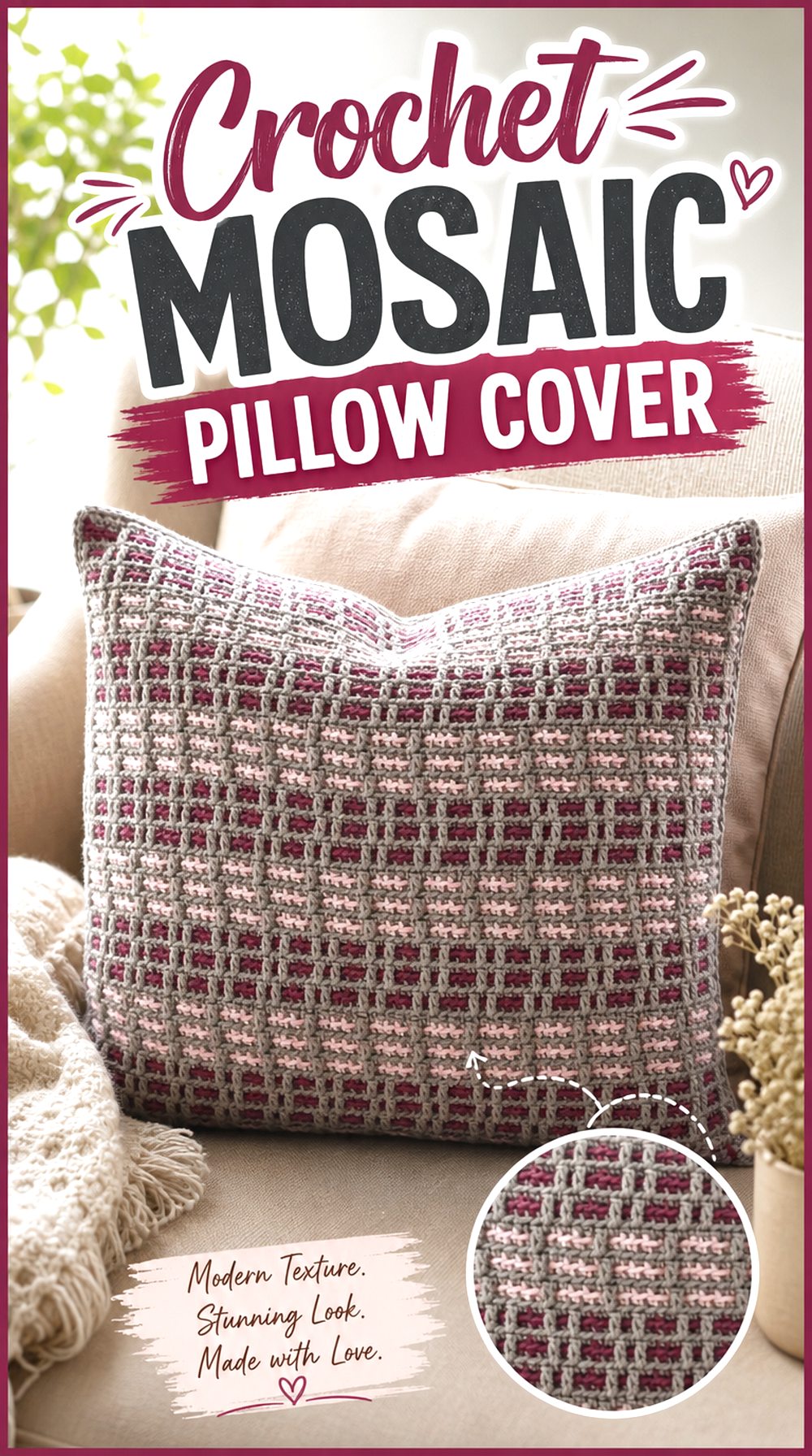
A mosaic crochet pillow cover adds pattern through color placement and geometric contrast rather than raised cables or fuzzy yarn. This makes it useful for a living room that needs a sharper graphic accent. The easier mosaic version is a strong option when readers want a patterned cover that still feels controlled. It differs from granny square covers because the design reads as one continuous panel instead of a set of joined motifs.
Choose a Clear Color Pairing
Mosaic crochet relies on contrast, so the color pairing needs to make the pattern visible. Two colors that are too similar may soften the design more than expected. Readers should look at the finished sample and decide whether they want high contrast for a bold sofa accent or gentler contrast for a calmer living room.
Follow the Chart or Written Support
The creator mentions a written pattern connected to the mosaic pillow, which can help readers who like to check instructions away from the screen. A patterned cover is easier to manage when the visual and written information match. Readers should confirm what support is available before choosing this over a plain textured cover.
Mark Progress Carefully
Mosaic designs can be harder to correct if a pattern shift is noticed late. Readers may want to mark stopping points, pause after repeat sections, and compare the emerging design with the finished pillow. The goal is not speed; it is keeping the geometric front aligned so the final cover looks clean.
Original Tutorial and Creator Credit
Creator: 2LOOPZ crochet
Crochet Round Color Wheel Cushion Cover
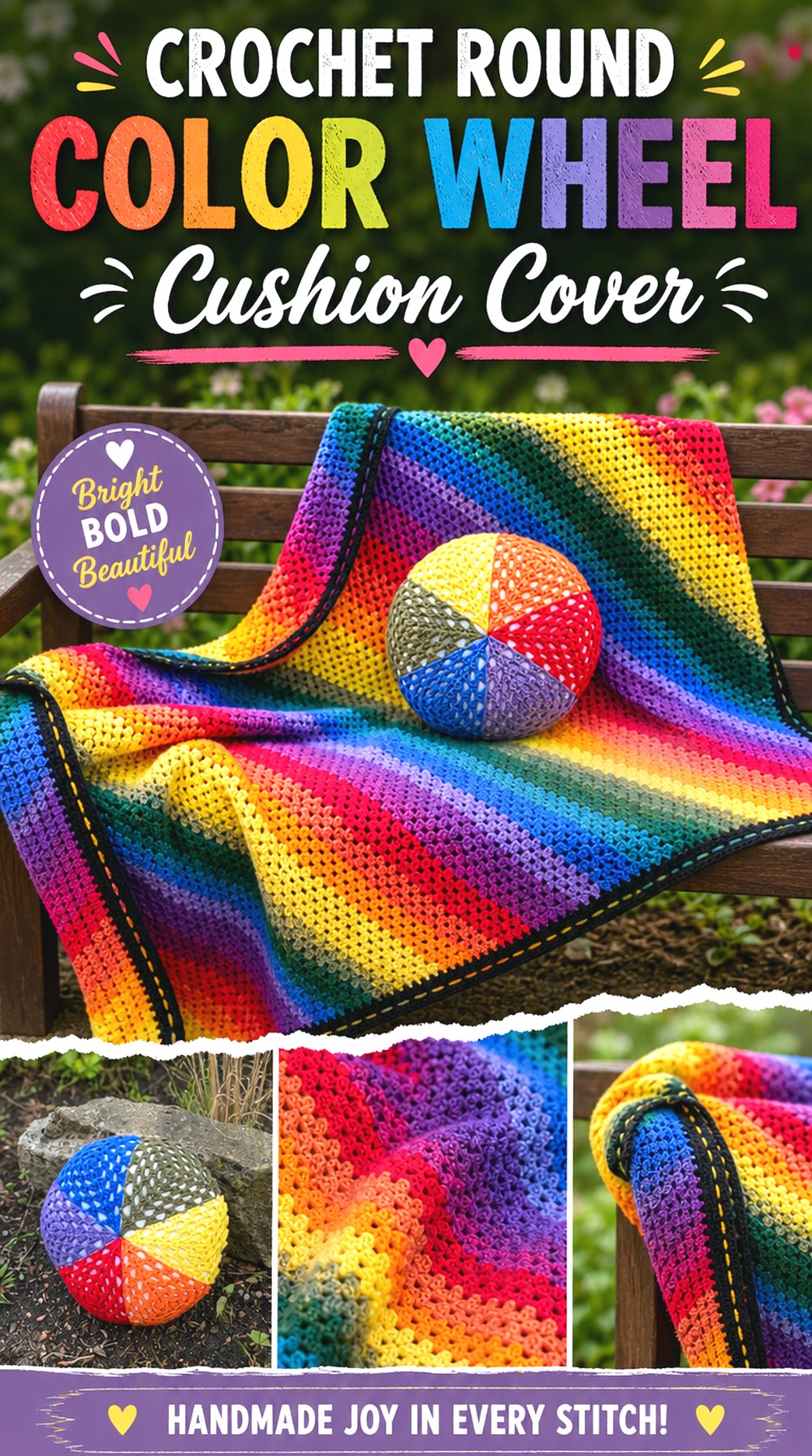
A round crochet cushion cover changes the shape of a pillow arrangement immediately. Instead of another square on the sofa, this design brings a circular outline and a color wheel effect. It can soften the straight lines of a couch, chair, or rectangular pillow set. This option differs from the other projects because the finished silhouette is the main feature, making it useful when the room needs shape variety as much as texture.
Use the Round Shape Intentionally
A round cushion can break up a row of square pillows, but it should have enough space to be seen. It may work well in the center of a sofa arrangement, on an accent chair, or layered in front of larger square pillows. Readers should think about placement before choosing colors so the round outline remains visible.
Check How the Circle Is Built
Round covers need steady shaping to avoid rippling or cupping. Readers should follow the creator’s exact construction details and compare the piece as it grows. If the circular panel starts behaving differently from the finished example, it is better to pause and review before continuing into the closing or joining stage.
Plan the Color Wheel Effect
The color wheel style is the visual identity of this cushion, so color order matters. Readers can follow the creator’s palette or choose a room-based version with fewer or softer shades. Before starting, it helps to decide whether the cushion should be a bright focal point or a quieter circular accent.
Original Tutorial and Creator Credit
Creator: Ophelia Talks Crochet
Crochet Chevron Pillow Cover
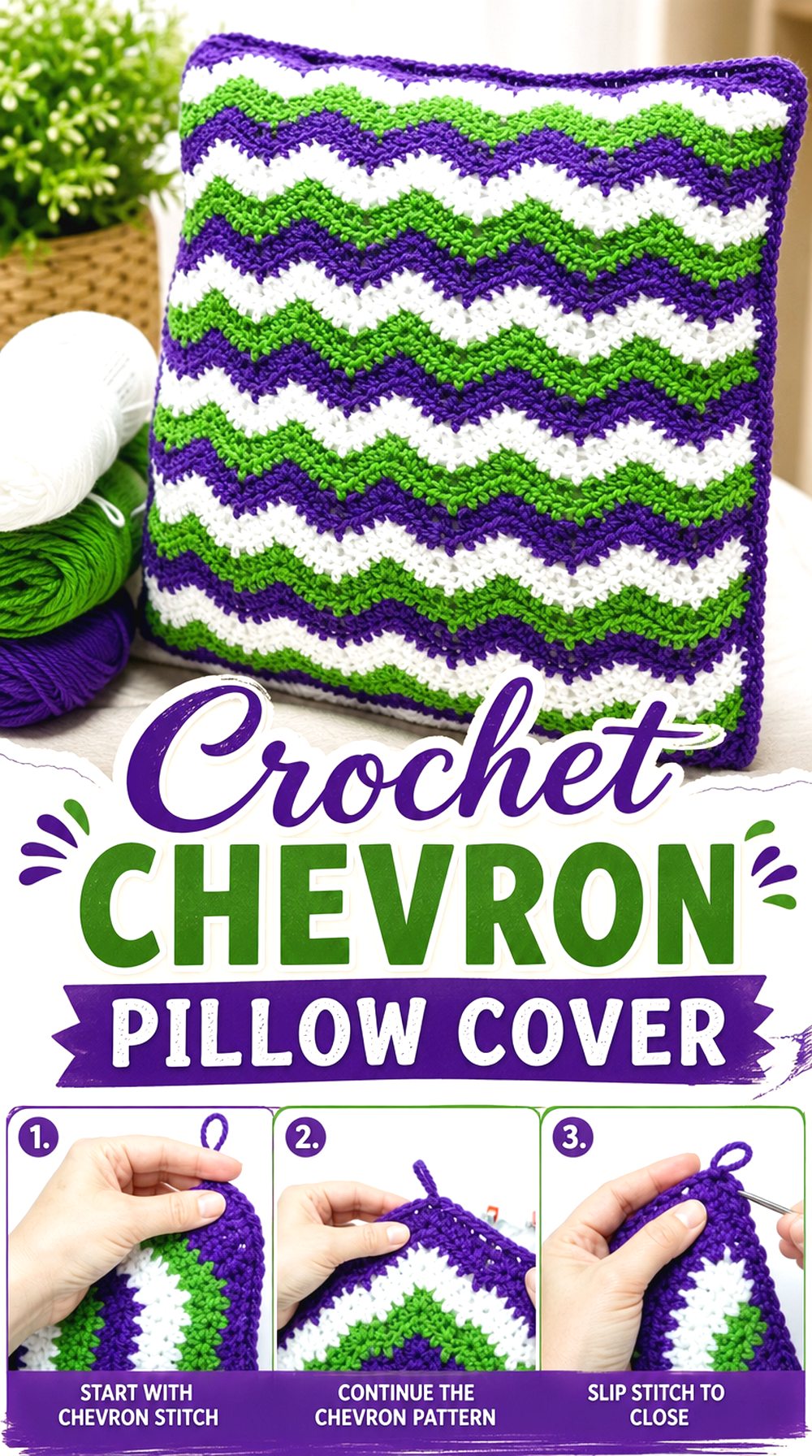
A chevron pillow cover brings movement to a living room through a zigzag pattern. It works well when a sofa needs a directional design but not a detailed picture or flower. The chevron lines make it different from the mosaic cover because the pattern feels softer and more wave-like. It can also pair nicely with solid textured pillows, especially when one color is repeated elsewhere in the room.
Decide How Bold the Zigzag Should Be
Chevron can look subtle or strong depending on the color contrast. A high-contrast version becomes a focal pillow, while softer tones can blend into a layered sofa setup. Readers should decide whether they want the zigzag to stand out from across the room or simply add movement among other cozy living room covers.
Confirm the Pillow Size
Chevron patterns depend on repeat spacing, so changing the size should be handled carefully. Readers should check the creator’s pillow size information and any adjustment notes before starting. This is especially important if the cover needs to fit a specific insert already owned rather than a new insert purchased for the project.
Watch the Pattern Direction
A chevron cover looks best when the pattern direction stays consistent across the front. Readers should compare the project during progress and pay attention before joining or finishing. Once the insert is inside, uneven direction or shifted stripes may be more noticeable because the pillow surface is stretched into its final shape.
Original Tutorial and Creator Credit
Creator: Pamela’s Adoring Crochet\
Conclusion
These crochet pillow cover ideas offer different ways to make a living room feel layered. Choose the farmhouse tassel or envelope cover for a simpler shape, the waffle, popcorn, or cable cover for texture, and the daisy, African flower, mosaic, round, or chevron cover when the sofa needs more pattern. Faux fur is the softest-looking option, while removable covers are practical for switching styles. Use the original tutorials for exact construction details, sizing, and finishing before starting.
FAQs
How do I choose a crochet pillow cover style for my living room?
Start with what the sofa is missing. A plain sofa may benefit from a cable, waffle, mosaic, or floral cover. A busy sofa may look better with a simple envelope or farmhouse cover. For a layered look, mix one strong pattern with one or two calmer textures instead of using several bold designs together.
Should crochet pillow covers be removable?
Removable covers are practical when pillows are used often, changed seasonally, or stored between holidays. They also make it easier to replace an insert. Not every decorative crochet pillow cover is designed the same way, so readers should check the closure, back panel, or envelope structure before choosing a tutorial.
What should I check before changing yarn for a pillow cover?
Changing yarn can affect size, texture, drape, and how well the cover fits the insert. A yarn that is thicker, thinner, fuzzier, or less stretchy may change the finished shape. Before switching yarn, compare the creator’s materials, pillow insert size, and any gauge or sizing notes given with the tutorial.
Can I mix several crochet pillow cover patterns on one sofa?
Yes, but the mix usually looks better when each cover has a clear role. Pair one bold motif or chevron cover with quieter textured pillows, or combine one round cushion with square covers for shape contrast. Repeating one color across several pillows can help different patterns feel connected.
Can I sell pillow covers made from YouTube tutorials?
Do not assume selling is allowed. Check the creator’s terms, blog post, video description, and any paid pattern license before selling finished items. Some creators allow finished item sales with credit, while others set limits. Local business, labeling, and safety requirements may also apply depending on where items are sold.