Jade can give a crochet cardigan a rich green focal point without locking the garment into one style. Pair it with cream or oatmeal for a lighter cardigan, charcoal or navy for stronger definition, camel and brown for an earthy direction, or rose and coral when you want jade to contrast with a warmer accent.

Cardigans also give you more color-placement choices than a simple pullover. Front bands, open edges, cuffs, pockets, sleeves, collars, granny squares, joins, button bands, and hems can all carry a secondary color without taking over the garment. The important decision is deciding where jade should remain continuous and where another shade should deliberately interrupt it.
The tutorials credited below support the cardigan construction concepts. The jade palettes are independent editorial color plans, so the creators are not being presented as using these exact color combinations.
Quick List
- Jade And Cream Crochet Mesh Cardigan
- Jade And Oatmeal Crochet Buttoned Mesh Cardigan
- Jade And Charcoal Crochet Patchwork Cardigan
- Jade And Warm White Crochet Patchwork Cardigan
- Jade And Copper Crochet Patchwork Cardigan
- Jade And Dusty Rose Crochet V Neck Cardigan
- Jade And Camel Crochet Oversized Cardigan
- Jade And Mustard Crochet Hexagon Cardigan
- Jade And Chocolate Brown Crochet Pocket Cardigan
- Jade And Ivory Crochet Everyday Cardigan
- Jade And Burgundy Crochet Textured Cardigan
- Jade And Navy Crochet Panel Cardigan
- Jade And Sage Crochet Raglan Cardigan
- Jade And Black Crochet Button Cardigan
- Jade And Pale Gray Crochet Lightweight Cardigan
- Jade And Sunflower Yellow Crochet Floral Cardigan
- Jade And Cream Crochet Zippered Granny Square Cardigan
- Jade And Blush Crochet Flower Cardigan
- Jade And Coral Crochet Striped Cardigan
- Jade And Soft Gold Crochet Granny Square Cardigan
- Jade And Stone Crochet Cropped Cardigan
- Jade And Midnight Blue Crochet Lace Cardigan
Decide Where Jade Should Lead the Crochet Cardigan
If jade is the reason you chose the palette, give it enough uninterrupted surface to establish itself. On a panel cardigan, that may mean jade front and back pieces with another shade limited to cuffs and edging. On a motif cardigan, jade can repeat around square borders or joins so separate motifs still feel connected.
Equal quantities of every color are not necessary. In fact, many cardigan palettes become easier to read when jade is dominant, one shade supports it, and any third color is restricted to smaller accents.
Use Jade Contrast Carefully Around Crochet Cardigan Bands and Cuffs
Cardigan edges are narrow, so value contrast matters. A charcoal band will remain obvious against medium jade, while another medium green may nearly disappear even though the hues are technically different.
Compare the yarns side by side before committing to the entire front band. If the supporting color and jade look nearly identical in grayscale, consider using that combination for broad panels instead of tiny edging.
Let Jade Repetition Connect Crochet Cardigan Motifs
Granny-square and patchwork cardigans can become visually scattered when every square follows a completely different palette. Repeating jade in centers, outer rounds, joins, cuffs, or front bands gives separate motifs a shared reference point.
You do not need jade in exactly the same location on every motif. The goal is enough repetition that the green feels intentional across the full cardigan rather than appearing in isolated blocks.
1. Jade And Cream Crochet Mesh Cardigan
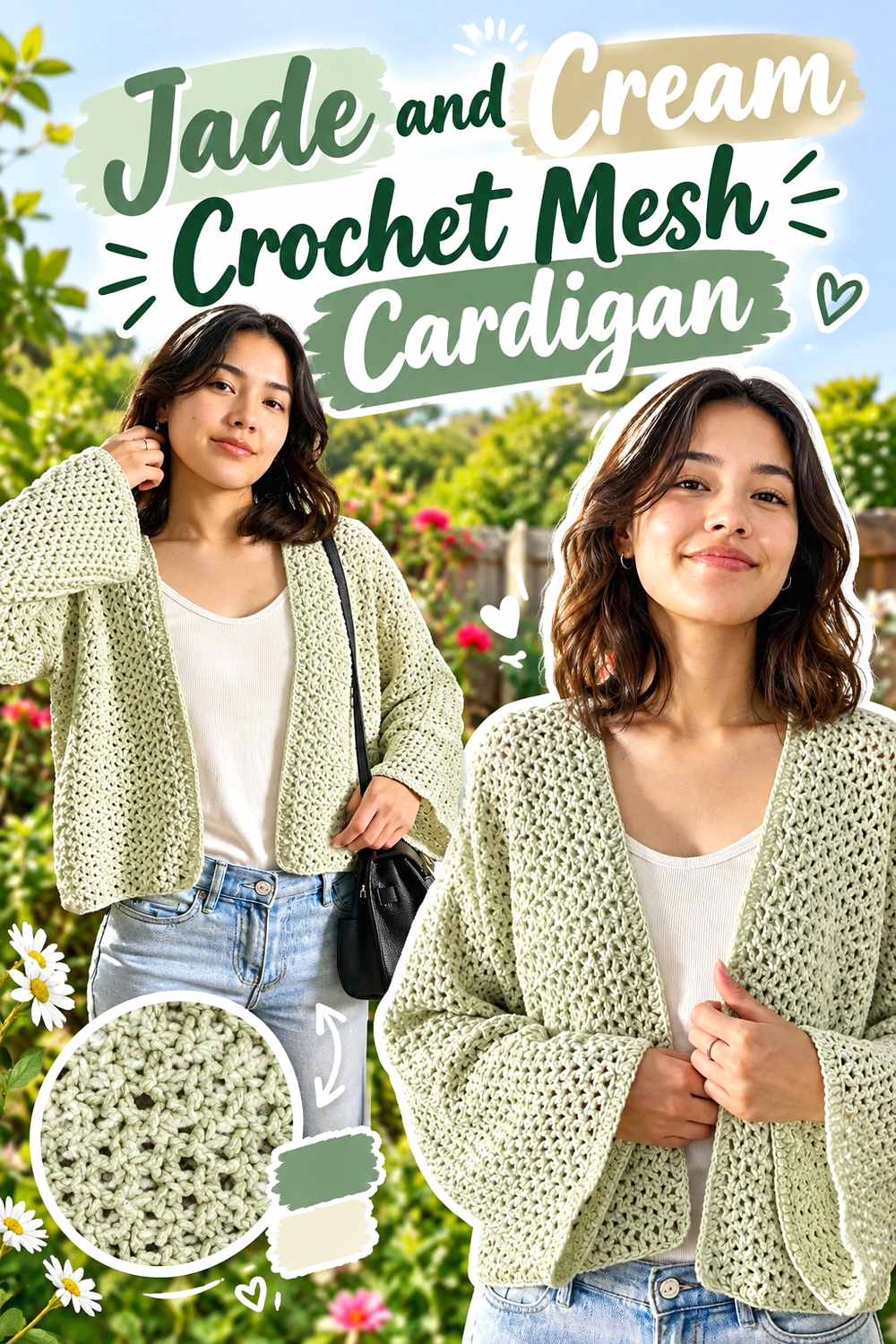
Jade can carry most of an open mesh cardigan while cream gives the garment lighter boundaries. Because open stitches reveal the clothing underneath, the finished color effect depends on both the yarn palette and the underlayer. Keeping jade through the main panels provides continuity even when the mesh creates large areas of negative space.
Jade Works Best Across the Main Crochet Mesh Panels
Use jade throughout the back, front panels, and most of the sleeves if you want the cardigan to remain recognizably jade from every angle. Frequent cream stripes can compete with the mesh pattern, since both the open spaces and color changes already divide the surface.
A broad jade field allows the stitch openings to provide most of the visual movement.
Jade and Cream Need a Consistent Crochet Edge Strategy
Cream can outline jade effectively at cuffs, front edging, or the hem. Pick one or two of those locations rather than automatically applying cream everywhere.
If the cardigan already has a prominent light front band, jade cuffs can keep the sleeves connected to the body instead of adding another competing cream boundary.
Creator Credit: VivCrochets
2. Jade And Oatmeal Crochet Buttoned Mesh Cardigan
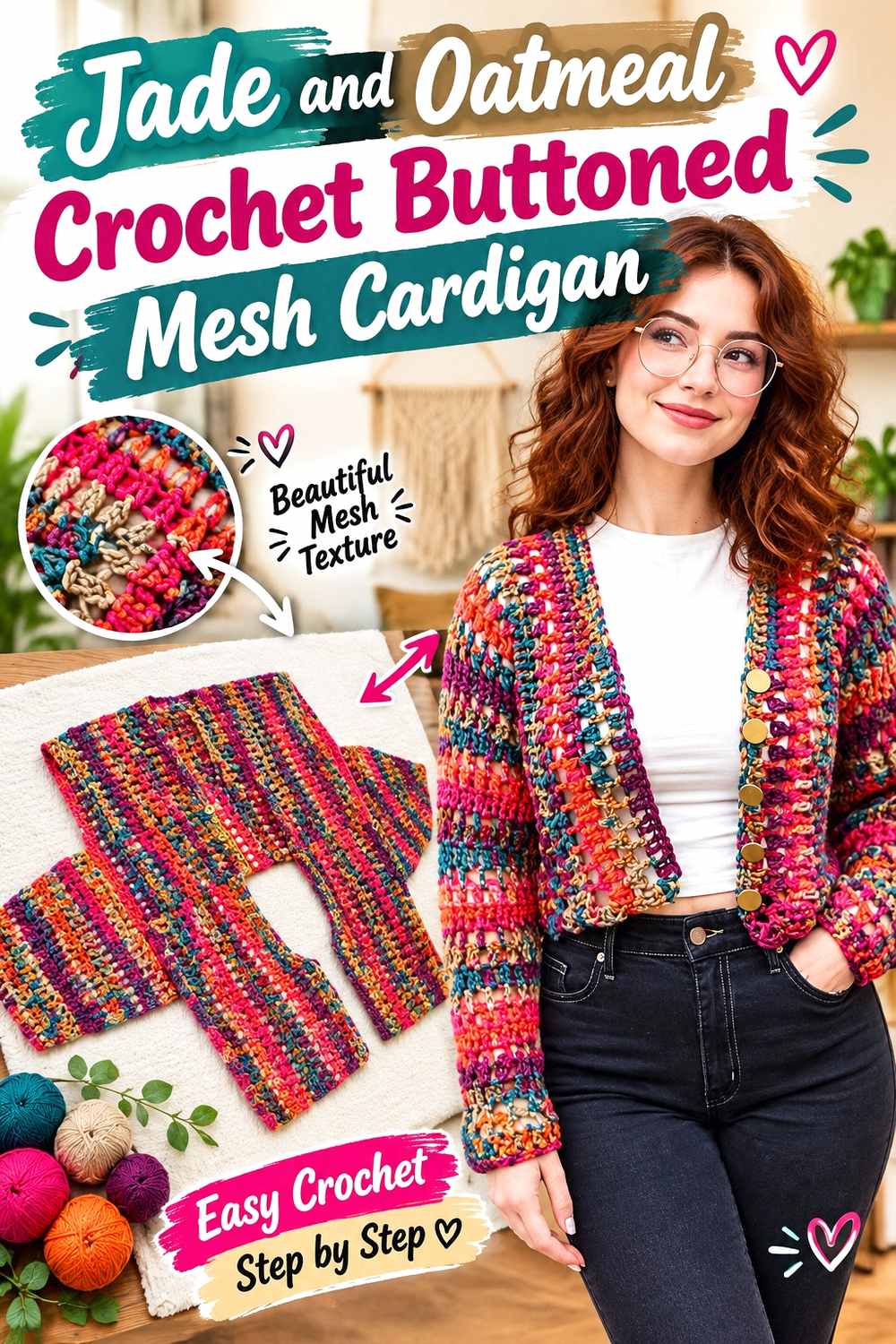
Oatmeal provides softer contrast than bright cream, which can suit a jade cardigan with visible buttons or shell-style edging. Jade can remain dominant through the open body while oatmeal distinguishes the finishing areas without turning them into stark outlines.
Jade Should Remain Continuous Around the Crochet Mesh Body
Mesh already breaks jade into smaller visible segments, so broad uninterrupted color placement is useful. Keep the primary panels jade rather than alternating oatmeal through every openwork section.
This gives the finished cardigan a clearer green identity even when an underlayer shows through the stitches.
Jade Looks Softer Beside Oatmeal Crochet Borders
Use oatmeal when you want the cardigan edge to separate from jade without becoming the brightest part of the garment. A narrow oatmeal front edge, cuff, or shell detail can be sufficient.
Before adding oatmeal buttons or button surrounds as well, look at the entire front. Too many small light details can make the edge busier than the mesh body.
Creator Credit: Brunaticality
3. Jade And Charcoal Crochet Patchwork Cardigan

Charcoal gives jade patchwork a strong visual anchor. Instead of mixing both colors randomly, use jade as the repeated feature and charcoal to separate blocks, frame selected squares, or define ribbing.
Jade Needs Repetition Across Crochet Patchwork Squares
A jade square on one sleeve and another near the hem may feel unrelated if nothing connects them. Repeat jade through several major areas—such as both fronts, one part of each sleeve, and selected back blocks.
The repetitions do not have to be symmetrical, but they should be frequent enough that jade reads as the main color story.
Jade and Charcoal Crochet Blocks Need Unequal Visual Weight
Charcoal can become dominant quickly because of its darkness. If jade should lead, give jade more blocks or larger areas and reserve charcoal for separation and grounding.
Charcoal ribbing can also frame the patchwork without requiring dark squares throughout every panel.
Creator Credit: ikoxun
4. Jade And Warm White Crochet Patchwork Cardigan

Warm white pushes jade patchwork in a much lighter direction than charcoal. The contrast is clear, so even relatively small warm-white blocks remain noticeable.
Jade Can Anchor a Light Crochet Patchwork Layout
Place jade across the larger squares or central body blocks and let warm white provide breathing room between them. If white occupies most of the front and back, the cardigan may read as white with jade accents instead.
Keep jade especially visible around the upper body or sleeves if you want the green to remain dominant while the cardigan is worn open.
Jade and Warm White Crochet Ribbing Should Echo the Patchwork
If warm white appears inside several squares, repeating it at a cuff or hem can connect those light areas. If the body already contains large white blocks, use jade ribbing instead to restore the main color around the garment edges.
The finishing shade should support the block layout rather than act like an unrelated third design element.
Creator Credit: Crochet with Karu
5. Jade And Copper Crochet Patchwork Cardigan
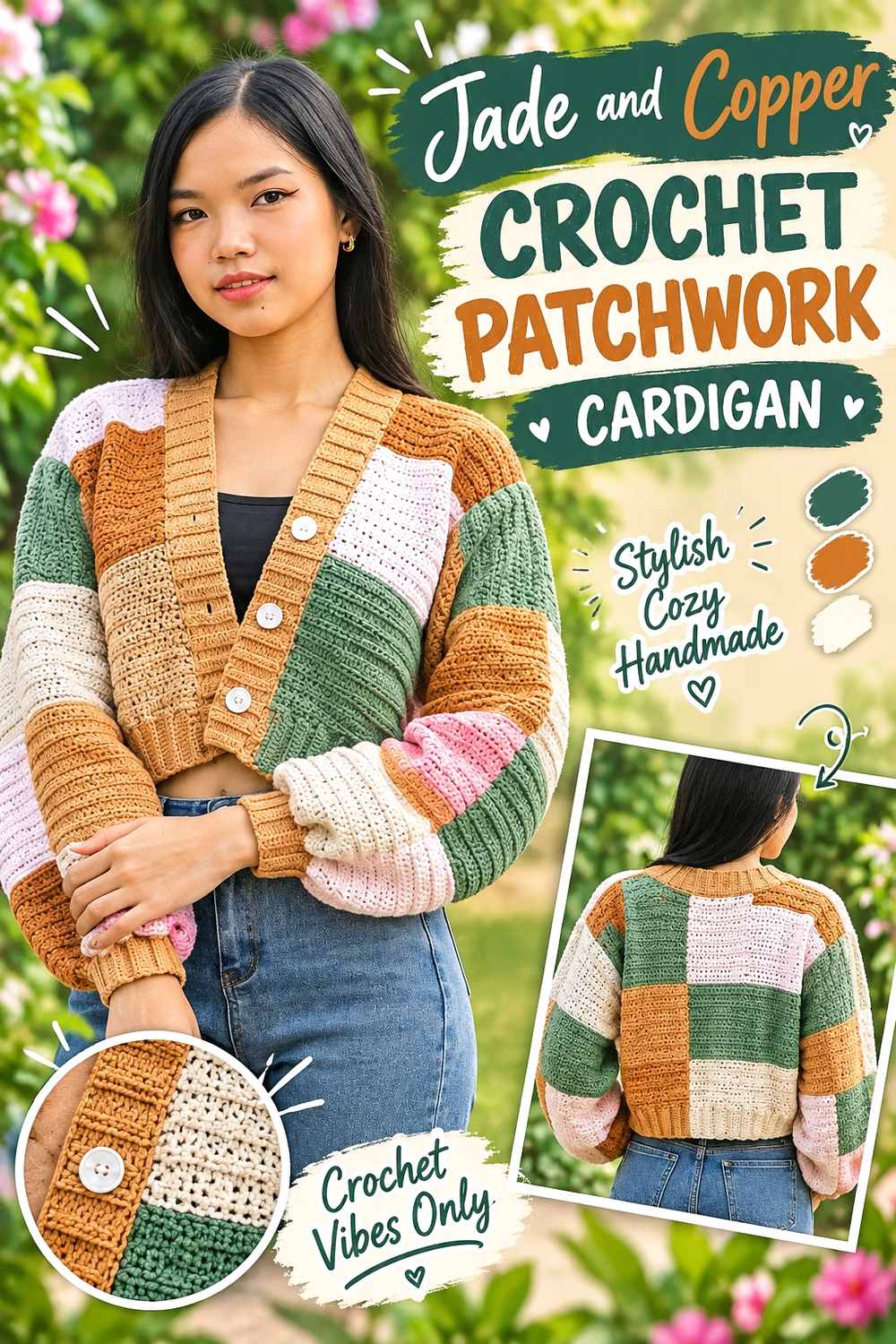
Copper adds a strong warm contrast to jade without relying on a neutral. Because both colors have substantial presence, the cardigan benefits from a deliberate hierarchy rather than a fifty-fifty distribution.
Jade Should Outnumber Copper in Crochet Patchwork Blocks
Give jade the greater number of squares or the larger panel areas if you want the cardigan to remain green-led. Copper can then punctuate the layout at the shoulders, sleeve sections, or lower body.
This prevents two saturated colors from competing equally across every visible area.
Jade and Copper Need a Controlled Crochet Ribbing Color
When the body is already colorful, the ribbing can simplify the result. Jade ribbing ties the cardigan back to the dominant shade, while copper ribbing makes the warm accent considerably stronger.
Choose the ribbing after laying out the blocks so you can see which color needs reinforcement.
Creator Credit: Chenda DIY
6. Jade And Dusty Rose Crochet V Neck Cardigan
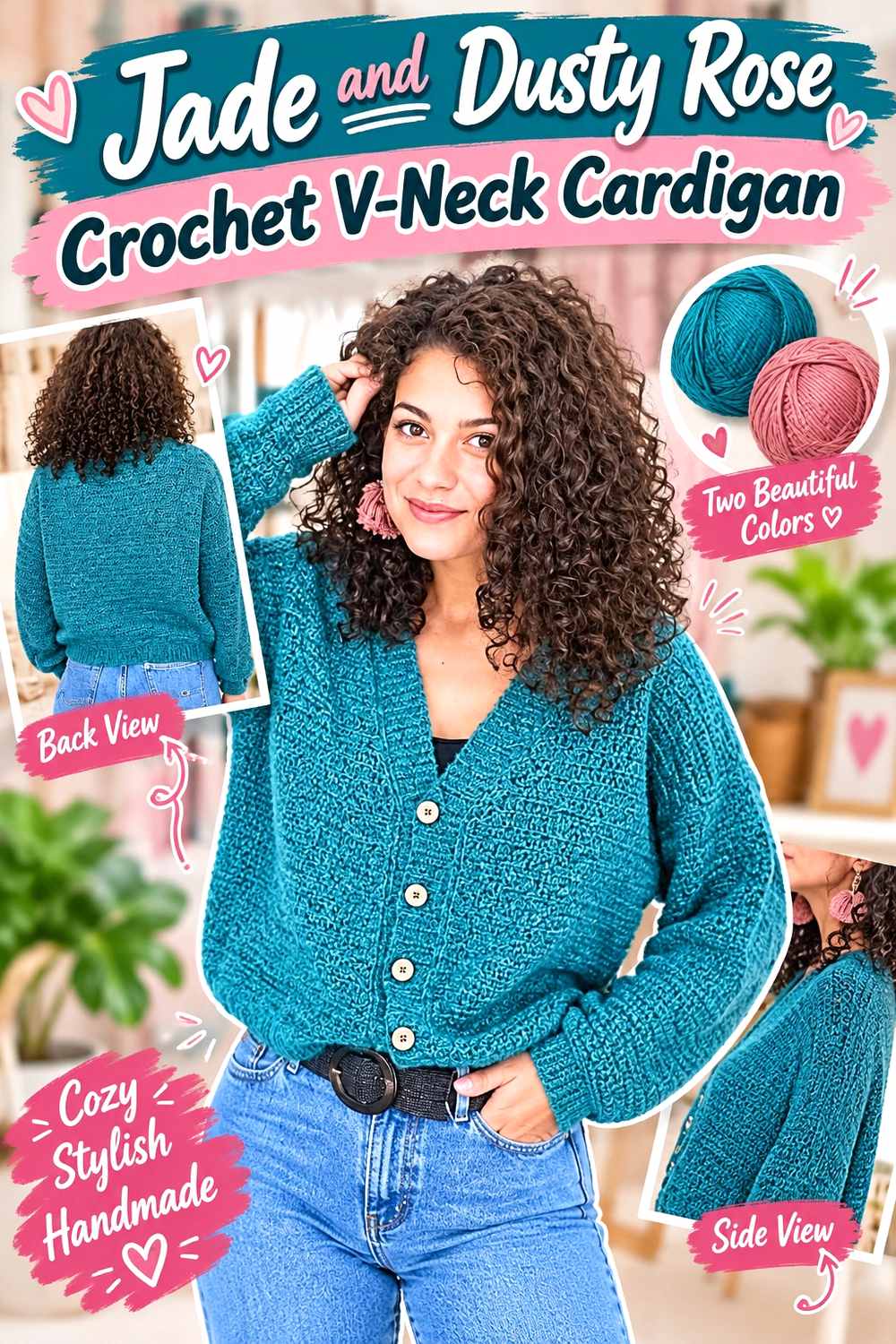
Dusty rose softens jade by introducing a muted warm contrast. A V-neck and button band create natural places to use the pink without covering large areas of the cardigan.
Jade Can Keep the Crochet V-Neck Body Visually Grounded
Use jade across the body panels and sleeves so the open V remains framed by the main green color. A dusty rose neckline works most effectively when it is surrounded by enough jade to make the contrast deliberate.
If the rose band becomes very wide, it may start to dominate the front even when the torso is mostly jade.
Jade and Dusty Rose Crochet Cuffs Need Repetition
A dusty rose neckline can feel isolated if no rose appears anywhere else. Repeating a narrower rose detail at the cuffs or hem creates a connection without dividing the entire jade body.
Keep the second repetition smaller if you want the V-neck to remain the main accent location.
Creator Credit: ByKaterina Designs
7. Jade And Camel Crochet Oversized Cardigan
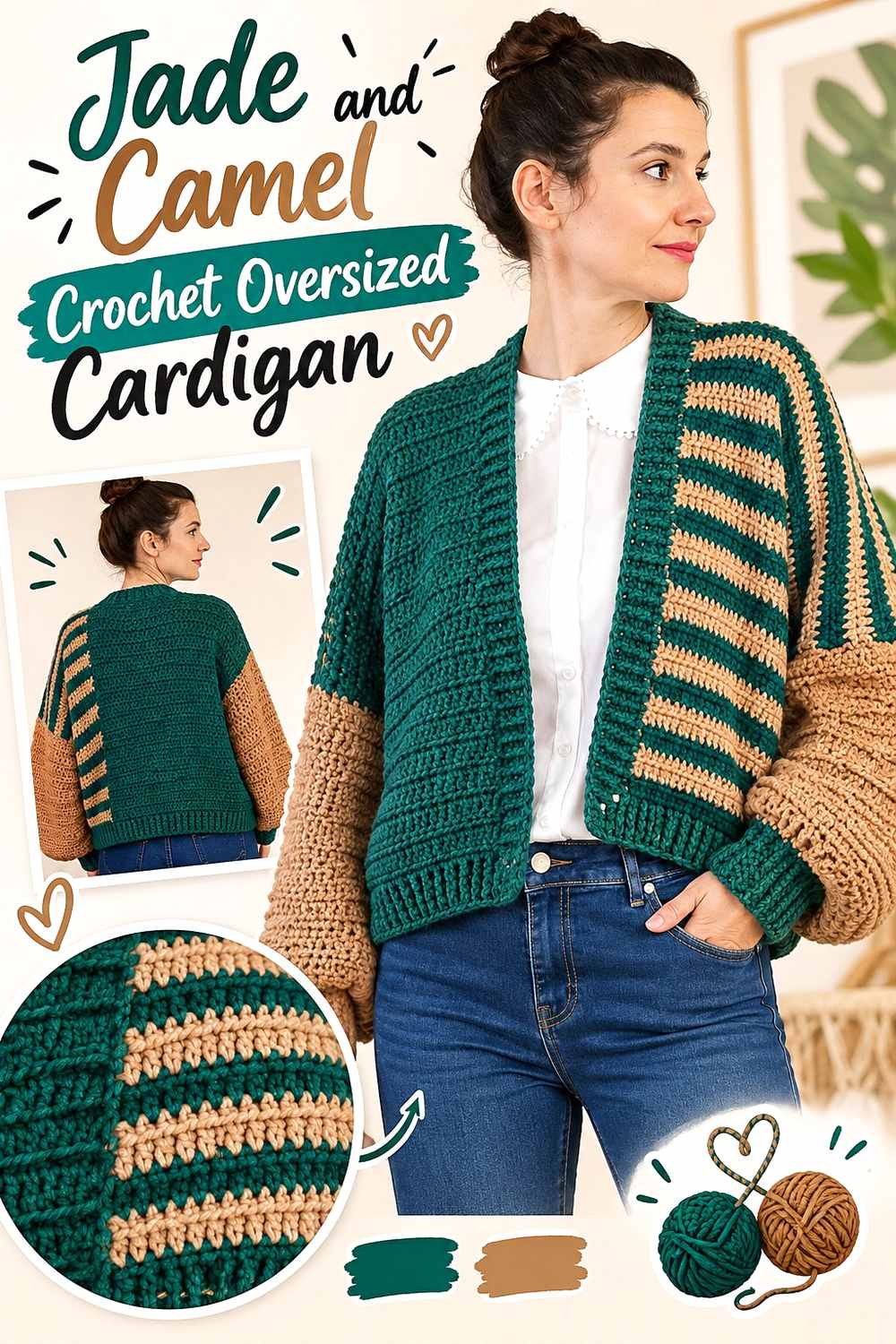
A large cardigan gives jade a considerable amount of visual surface. Camel can warm the edges while keeping the palette quieter than yellow, orange, or cream.
Jade Should Cover the Broad Crochet Cardigan Panels
Oversized fronts, backs, and sleeves magnify every color choice. Let jade cover the widest areas rather than breaking them into many camel sections if your goal is a relaxed green cardigan.
Broad jade panels also give textured or repetitive stitches more continuity.
Jade and Camel Crochet Cuffs Create a Tonal Earthy Finish
Camel cuffs and a narrow front band can warm jade without sharply outlining the garment. Make sure the camel remains visibly different from jade, particularly if both yarns are muted.
For an even quieter result, use camel only on pockets or cuffs and keep the entire front opening jade.
Creator Credit: Sirin’s Crochet
8. Jade And Mustard Crochet Hexagon Cardigan

A hexagon cardigan naturally creates radiating stitch lines, which makes color placement especially visible. Mustard can highlight selected sections, while jade should recur often enough to keep both folded halves connected.
Jade Should Repeat Across Both Crochet Hexagons
Avoid making one half strongly jade and the other strongly mustard unless you intentionally want a split-color cardigan. Repeating jade across both hexagons helps the sleeves and body look related after folding.
You can vary the width of jade sections while still maintaining the same overall balance.
Jade and Mustard Crochet Sections Need a Clear Dominant Color
Mustard can attract attention quickly, even when it occupies less space. Use narrower mustard sections or fewer repeats if jade should remain the first color noticed.
Jade cuffs or edging can restore the green emphasis after several mustard sections have been added.
Creator Credit: Fiber Flux
9. Jade And Chocolate Brown Crochet Pocket Cardigan
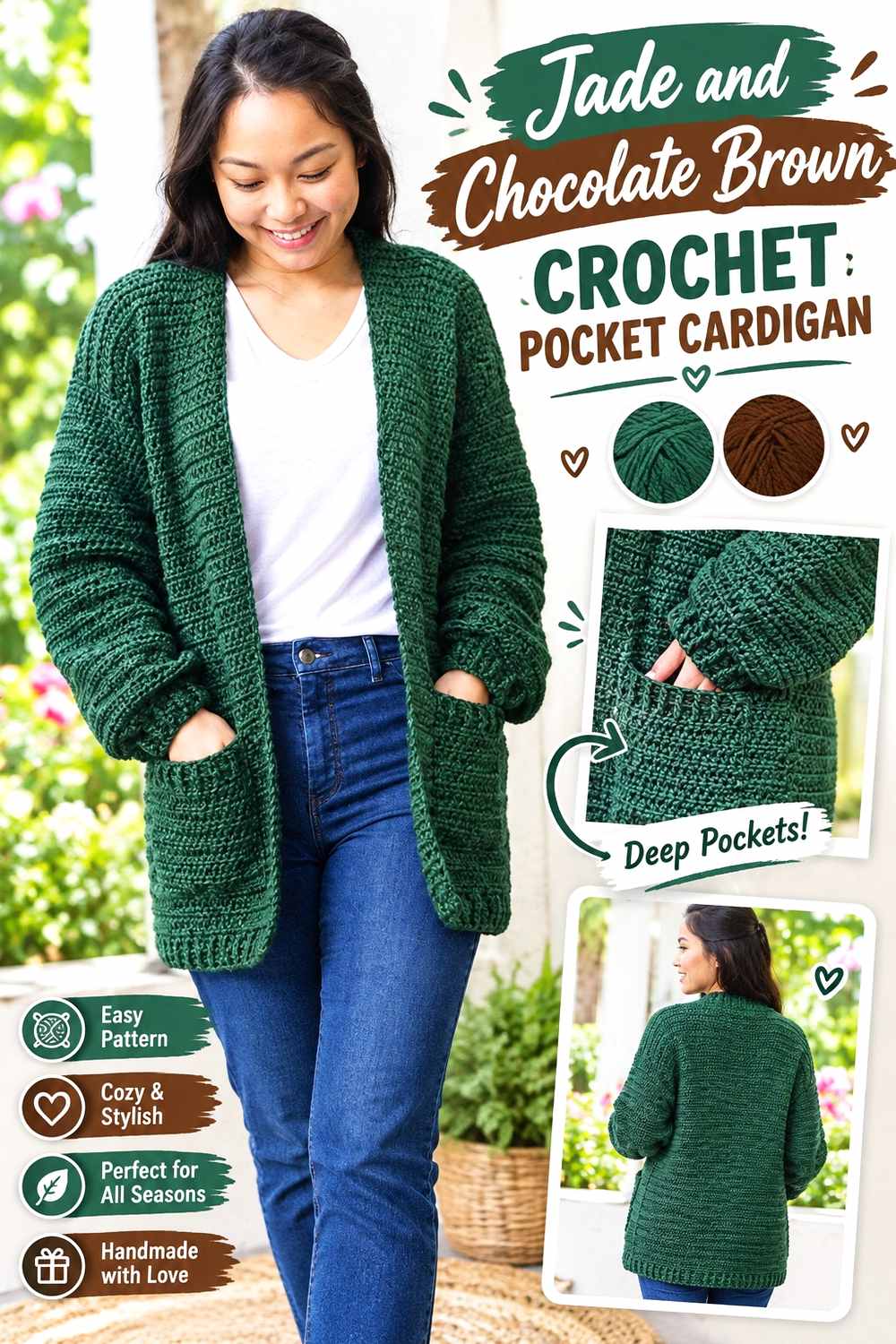
Chocolate brown gives jade an earthy, dark frame and works particularly well around practical cardigan details such as pockets and ribbing.
Jade Should Surround Chocolate Brown Crochet Pockets
Brown pockets placed directly on jade panels create strong, contained color blocks. If the pockets are large, keep the surrounding front panels jade so the brown does not overwhelm the lower half of the cardigan.
Matching brown cuffs can connect the pockets without requiring additional brown body panels.
Jade and Chocolate Brown Crochet Ribbing Can Define the Silhouette
A dark brown hem or front band creates a more obvious boundary around jade than camel or oatmeal would. That is useful on an oversized cardigan where the edges might otherwise blend into the main body.
If you want a softer appearance, restrict brown to the pockets and keep jade around the neckline and hem.
Creator Credit: forthefrills
10. Jade And Ivory Crochet Everyday Cardigan

Ivory gives jade clean contrast without the harder effect of pure white. On a straightforward everyday cardigan, small ivory areas can make the front opening and cuffs more visible.
Jade Should Remain the Main Crochet Everyday Color
Keep the torso, back, and sleeves primarily jade if you want the garment to remain versatile and easy to layer. Ivory can then handle the front border, button area, or narrow sleeve finishing.
Large ivory body panels change the garment from a jade cardigan into a balanced two-color design.
Jade and Ivory Crochet Stripes Need Restraint
If you want stripes, consider limiting them to one area such as the sleeves or lower body. Repeating narrow ivory stripes everywhere can break the jade surface into many small sections.
A mostly solid jade body with one controlled striped area gives the palette a clearer hierarchy.
Creator Credit: LoveCrafts
11. Jade And Burgundy Crochet Textured Cardigan

Burgundy gives jade a dark red contrast that suits pronounced stitch texture. Because the shades can both be deep, their lightness needs checking before using burgundy on tiny details.
Jade Keeps Crochet Texture More Unified Across Large Panels
Use jade through the main textured body if raised stitches or repeating surface details are a major part of the cardigan. Frequent jade-to-burgundy changes can compete with the texture.
Burgundy works more cleanly on the pockets, cuffs, or front trim where the stitch structure naturally changes.
Jade and Burgundy Need Enough Crochet Value Separation
A dark jade and dark burgundy can look surprisingly similar from a distance. If you want burgundy edging to be obvious, compare both yarns in grayscale or choose a burgundy with enough value difference.
If the shades are intentionally close, use burgundy in larger panels instead of narrow outlines.
Creator Credit: Evelyn And Peter Crochet
12. Jade And Navy Crochet Panel Cardigan

Navy gives jade a cool, dark partner that can produce understated color blocking. The two hues are different, but very dark versions may still merge in narrow details.
Jade Should Take the Larger Crochet Cardigan Panels
Use jade on the back and major front sections, then reserve navy for sleeve blocks, bands, or lower panels. This gives the cardigan depth without allowing the dark navy to replace jade as the dominant color.
A navy front band can be particularly effective if the rest of the torso stays solid jade.
Jade and Navy Crochet Sections Need a Lightness Check
Before assigning navy to cuffs or narrow edging, check whether it separates clearly from jade. If both become nearly the same gray in a photo, the color difference may only be noticeable at close range.
Broader navy blocks can still work when the contrast is subtle.
Creator Credit: TCDDIY
13. Jade And Sage Crochet Raglan Cardigan
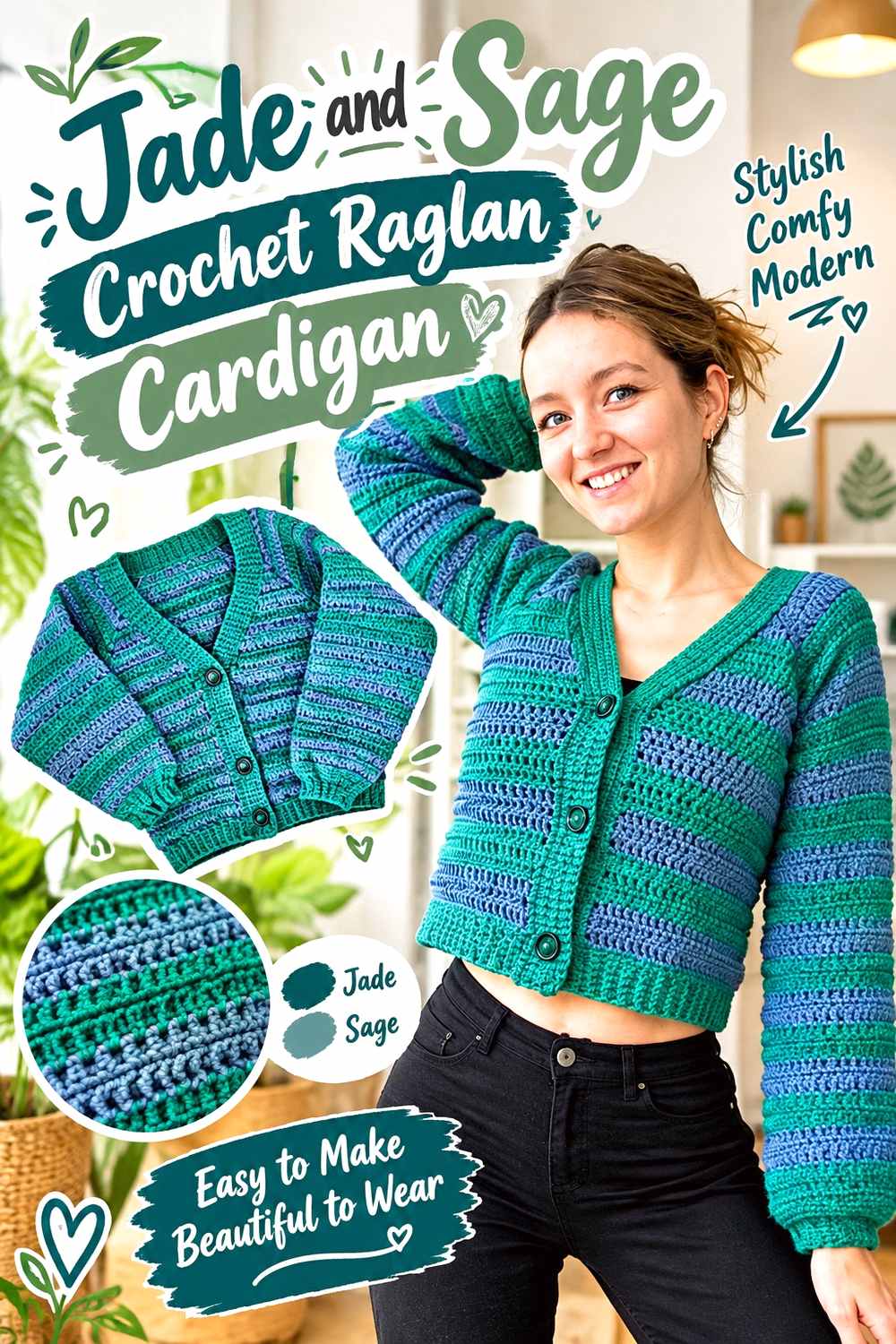
Jade and sage create a green-on-green cardigan with tonal rather than dramatic contrast. Raglan lines provide useful places to separate or transition between the shades.
Jade Should Be Darker Than Sage on the Crochet Raglan
Choose a sage that is visibly lighter or softer than jade if you want the raglan details to remain clear. Two similar medium greens can collapse into one visual field.
Keeping jade on the torso while sage follows upper-body accents creates a controlled tonal effect.
Jade Can Reappear at Crochet Raglan Cuffs and Hem
If sage occupies part of the upper cardigan, bring jade back strongly at the cuffs or hem. That repetition prevents the lighter green from taking over the garment as the construction moves downward.
Jade finishing also creates a darker visual boundary around the softer sage sections.
Creator Credit: by Kristine
14. Jade And Black Crochet Button Cardigan
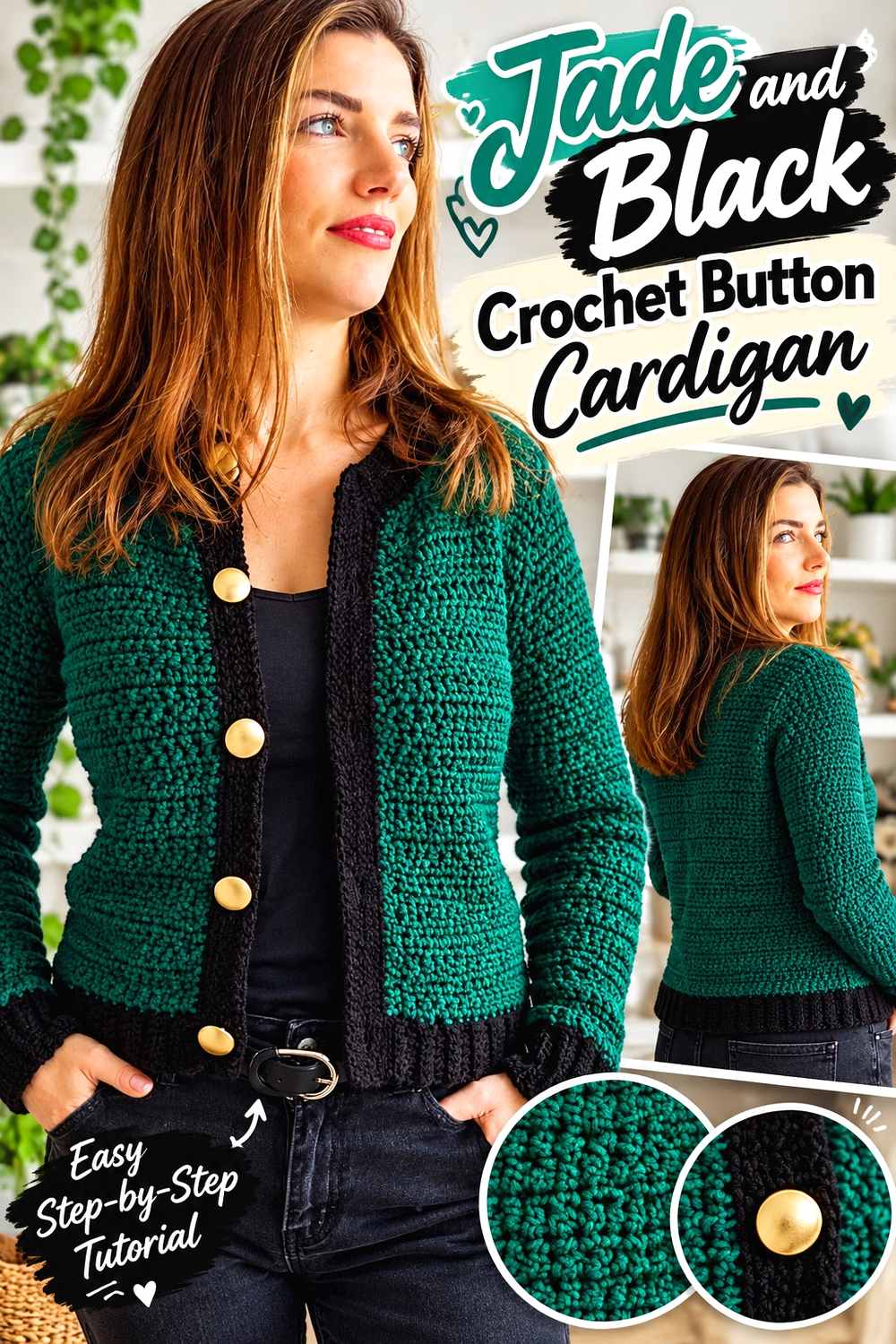
Black creates one of the strongest framing colors for jade. A button-front cardigan gives you several narrow structural areas where black can provide definition without covering much of the body.
Jade Needs More Surface Than Black on the Crochet Cardigan
Black carries heavy visual weight, so keep jade across the torso and most of the sleeves if green should remain dominant.
A black button band may already be enough contrast. Adding black cuffs, hem, and large shoulder blocks can shift the balance much further toward black.
Jade Looks Sharper Beside a Black Crochet Button Band
A black front band creates a straight dark boundary through the jade cardigan and makes the closure area more prominent.
If you want a softer result, keep the band jade and use black only for buttons or narrow edging rather than a broad strip.
Creator Credit: Cat Kemble
15. Jade And Pale Gray Crochet Lightweight Cardigan

Pale gray gives jade cool neutral contrast while keeping a lightweight cardigan visually calm. It can work well around open edges because it is lighter without becoming as bright as white.
Jade Should Carry the Main Lightweight Crochet Panels
Keep the long body sections jade if you want the cardigan to retain a strong green presence despite a delicate stitch pattern.
A pale gray front edge or sleeve finish provides contrast without interrupting the center of each panel.
Jade and Pale Gray Crochet Seams Can Become Part of the Design
If seams or panel boundaries are visible, pale gray can deliberately emphasize them. If you would rather hide construction lines, keep those areas jade and move gray to cuffs or borders instead.
The location of the light shade matters as much as the amount used.
Creator Credit: KnitcroAddict
16. Jade And Sunflower Yellow Crochet Floral Cardigan

Sunflower yellow creates a vivid floral accent against jade and can turn the green into a background for motif centers or petals. Because yellow is visually strong, it needs relatively little area to make an impact.
Jade Works Well as the Crochet Floral Background
Use jade around the motifs, joins, or larger garment sections so the flowers remain distinct instead of blending into a multicolor background.
A consistent jade outer motif round can also make separate floral squares easier to combine into one cardigan layout.
Jade Should Outweigh Sunflower Yellow in Crochet Flower Motifs
If yellow appears in every flower, you may not need it in the cuffs and borders as well. Repeating a small amount across many motifs already gives it substantial visual presence.
Jade edging can calm the final layout and reconnect the floral sections to the main cardigan color.
Creator Credit: Colour Ceilidh Crochet
17. Jade And Cream Crochet Zippered Granny Square Cardigan
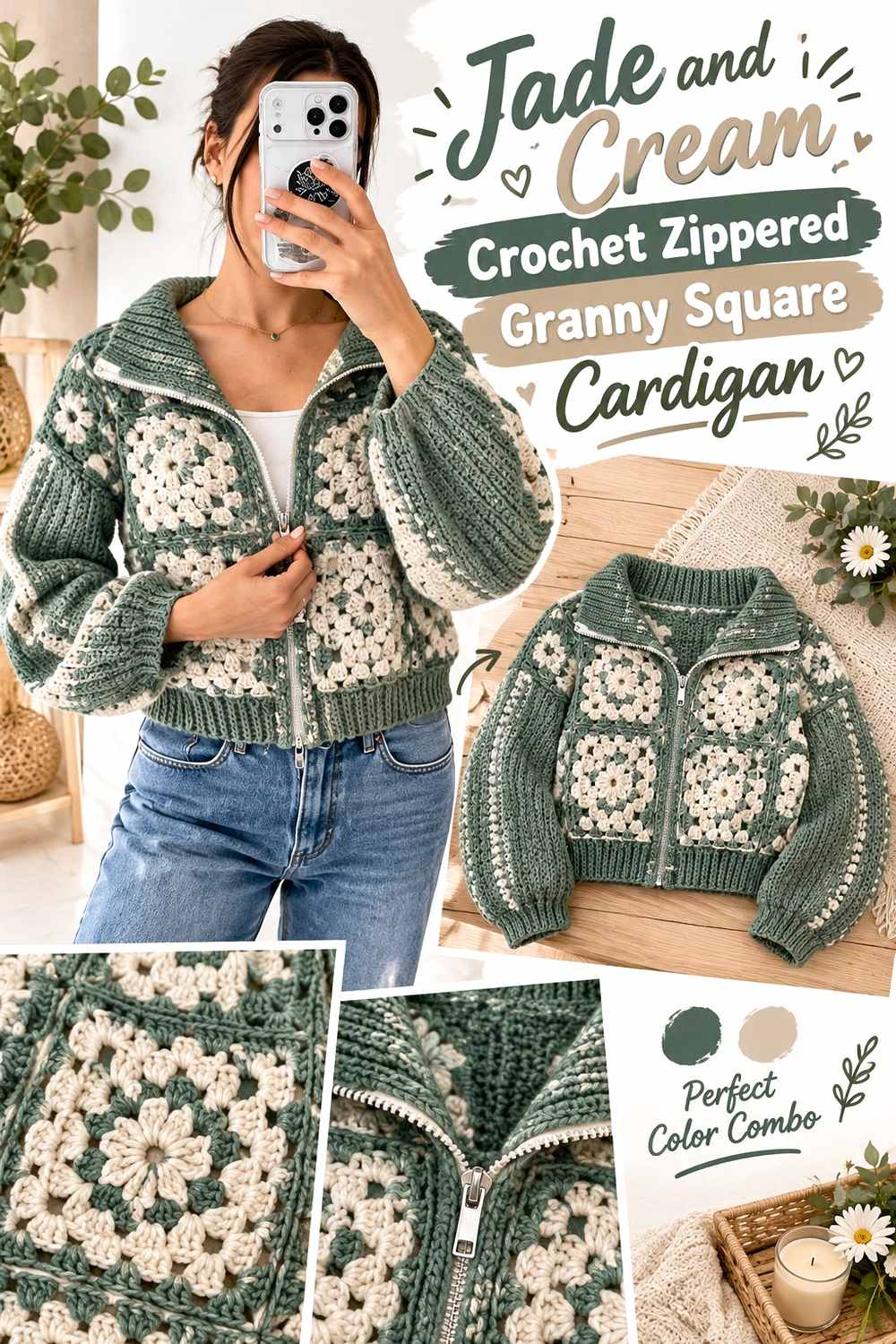
A zipper creates a strong vertical line through the center of a granny-square cardigan, so color distribution around both front edges matters. Jade and cream can keep the motifs readable while maintaining a simple two-color direction.
Jade Should Repeat on Both Sides of the Crochet Zipper
Place jade motifs or jade outer rounds on both front panels so the zipper does not divide the garment into visually unrelated halves.
The squares do not need to mirror each other exactly, but similar jade density on each side helps the cardigan stay balanced when open or closed.
Jade and Cream Crochet Squares Need Consistent Borders
Cream centers with jade outer rounds create one effect; jade centers with cream edges create another. Decide on a repeat before making many squares.
Using jade consistently in the outermost round can be especially useful because those edges become part of the joined surface.
Creator Credit: Nora Moon – handmade clothes with love
18. Jade And Blush Crochet Flower Cardigan

Blush creates a softer floral contrast than yellow or orange. Jade can act as the leafy background while blush is restricted to flower details or selected panels.
Jade Should Surround Blush Crochet Flowers
Using jade around flower motifs gives the pink shapes a consistent background and keeps the cardigan connected to its main color.
If each flower uses a different background shade, the floral pattern may become more visually important than the jade palette.
Jade and Blush Crochet Sleeves Need Balanced Motif Density
If the body contains several blush flowers, consider whether the sleeves need the same number. Fewer blush motifs on the sleeves can keep the cardigan from becoming overly busy.
Repeating jade strongly at cuffs also gives the patterned sleeve a defined endpoint.
Creator Credit: Krystal Everdeen
19. Jade And Coral Crochet Striped Cardigan

Coral gives jade a lively warm contrast and works well when controlled through horizontal stripes. The palette becomes much stronger than a jade-and-neutral combination, so stripe width deserves attention.
Jade Should Use Wider Crochet Stripes Than Coral
Wider jade bands allow green to remain dominant while coral acts as a recurring accent. Equal stripes create a much more balanced two-color garment.
If you want only a hint of coral, place it between larger jade sections rather than repeating it at every possible interval.
Jade Can Frame Coral Crochet Stripes at the Cardigan Edges
Jade cuffs, hem, and front bands can contain the striped body and return the eye to the main shade.
Using coral for all the finishing areas as well as the stripes can make the warm accent disproportionately strong.
Creator Credit: MJ’s Off The Hook Designs
20. Jade And Soft Gold Crochet Granny Square Cardigan
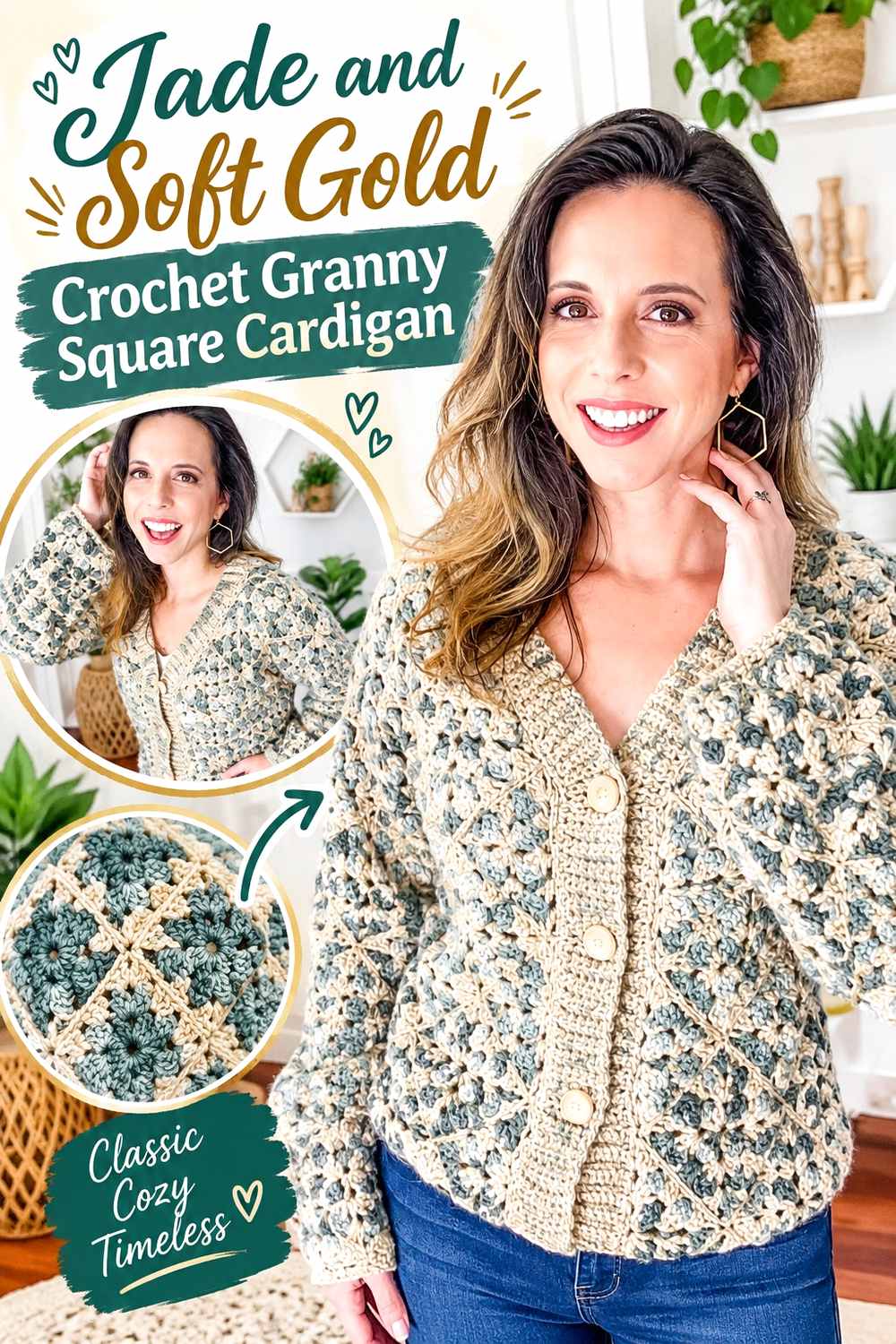
Soft gold gives jade motifs warmth without the brightness of clear yellow. Granny-square construction lets the gold appear in controlled centers or secondary rounds.
Jade Outer Rounds Can Unite Soft Gold Crochet Squares
Use jade around the outside of multiple squares even if the inner color arrangement changes. A shared jade edge creates repetition across the cardigan and makes the joins feel more deliberate.
This is especially helpful when soft gold appears in different motif positions.
Jade Should Continue Beyond the Crochet Granny Squares
Carry jade into the cuffs, front bands, or hem rather than limiting it to motif rounds. That keeps the garment connected when the square layout becomes visually complex.
Soft gold can remain a motif accent instead of needing to appear in every finishing detail.
Creator Credit: Briana K Designs
21. Jade And Stone Crochet Cropped Cardigan
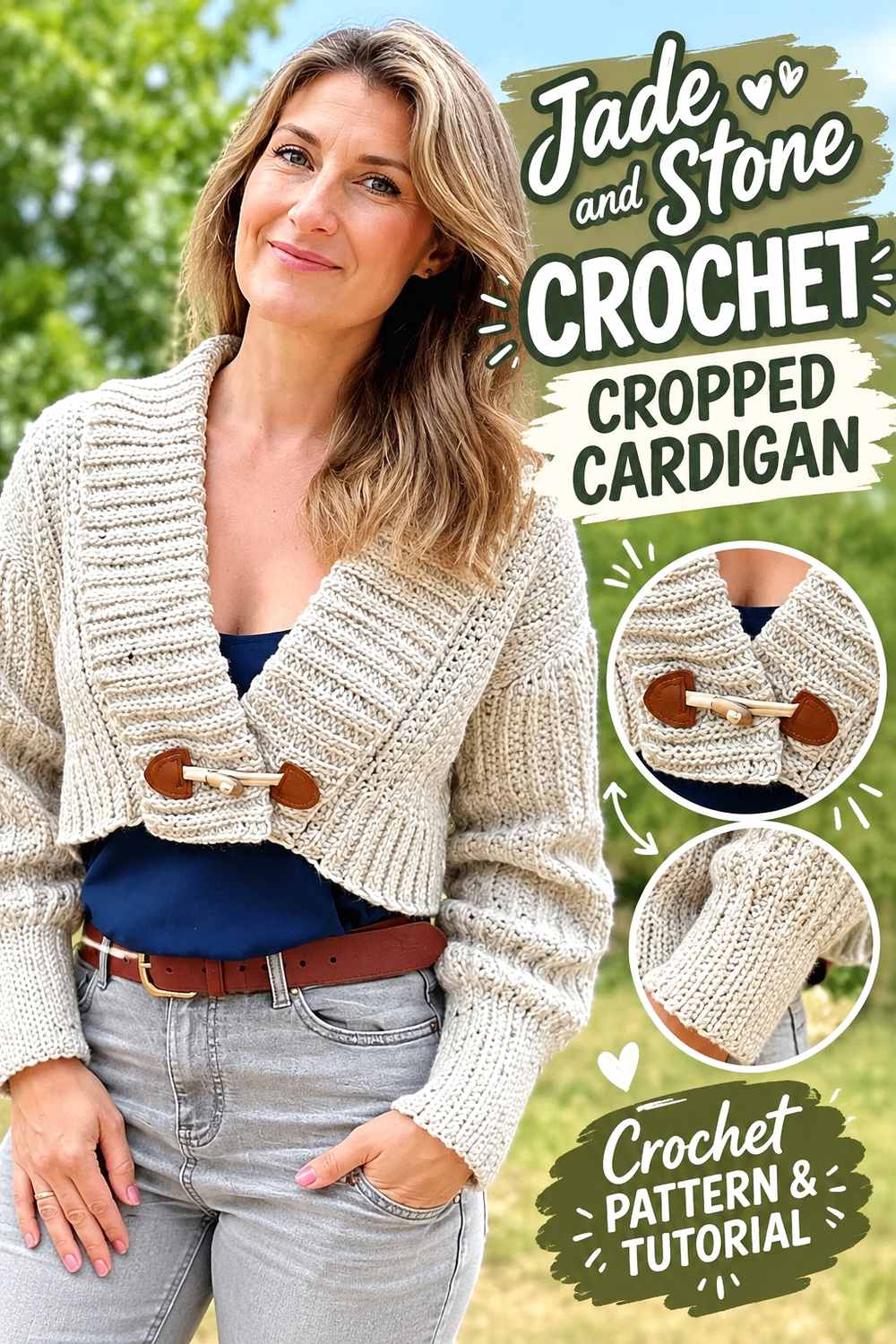
Stone offers a muted neutral contrast that works well with a shorter cardigan because it does not compete strongly with the compact silhouette. Jade can cover most of the cropped body while stone distinguishes the collar or finishing edges.
Jade Should Stay Strong Across the Cropped Crochet Body
A cropped cardigan has less torso area available, so a wide contrasting band occupies a larger percentage of the garment than it would on a long cardigan.
Keep jade across most of the front and back if you want green to remain dominant despite the shorter proportions.
Jade and Stone Crochet Collars Need Proportion Control
A broad stone collar can become one of the largest visible areas on a cropped cardigan. If that is too much neutral, reduce stone to a narrower edge and keep the collar jade.
Stone cuffs can then provide a smaller secondary repetition without overpowering the body.
Creator Credit: HanJan Crochet
22. Jade And Midnight Blue Crochet Lace Cardigan
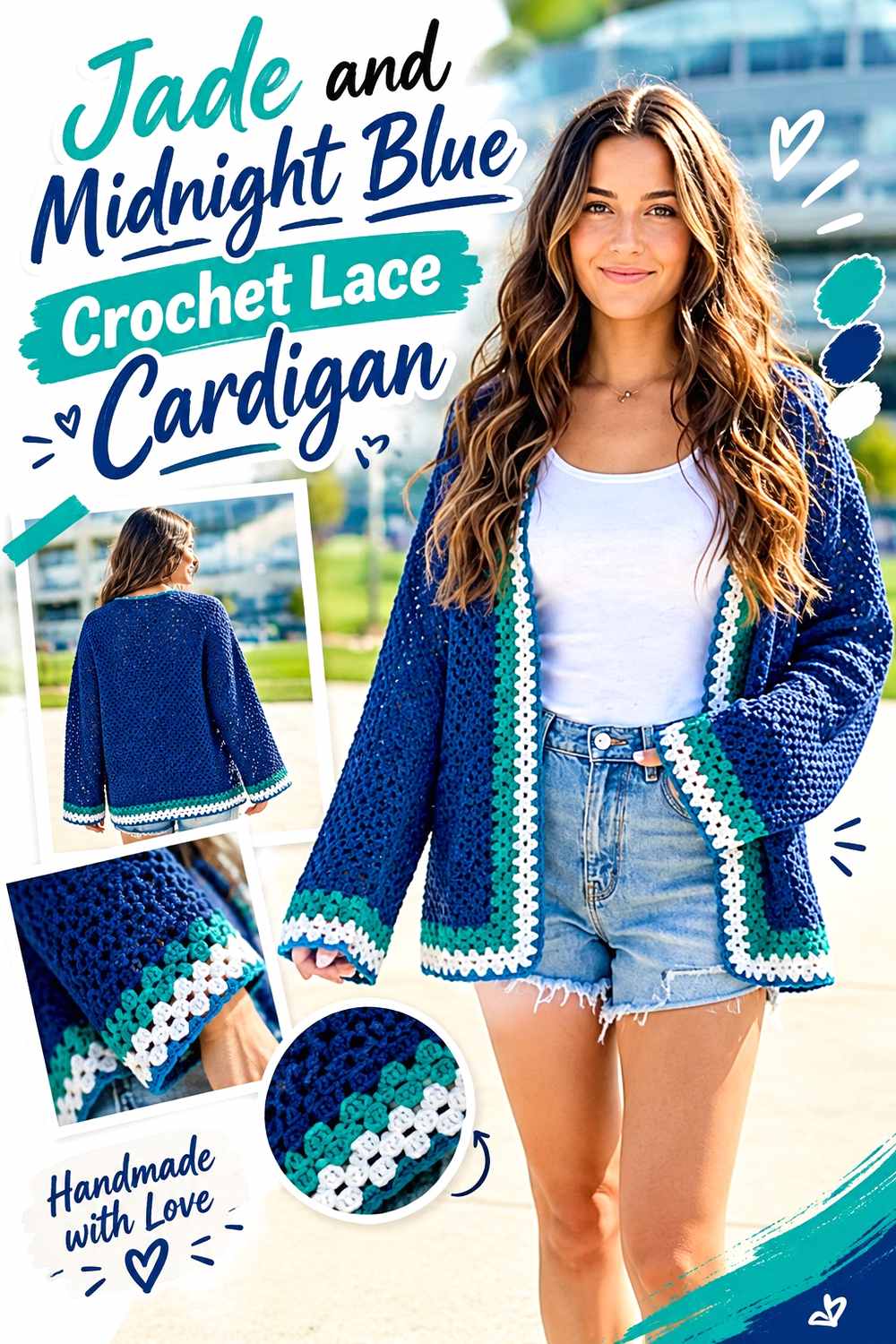
Midnight blue gives jade a dark cool contrast while preserving a richer color palette than black or gray. Lace makes the relationship more complex because open areas introduce the color of the clothing underneath.
Jade Should Lead the Crochet Lace Surface
Use jade across the primary lace panels and let midnight blue define the border, sleeves, or selected bands. Too many dark blue interruptions can make delicate openwork appear heavier.
Jade also helps the cardigan retain a clear green identity when the lace is viewed over different underlayers.
Jade and Midnight Blue Crochet Lace Need an Underlayer Check
Place a swatch over the tops or dresses you expect to wear beneath the cardigan. Light clothing makes the open spaces much more visible, while a dark underlayer can reduce the apparent contrast between jade and midnight blue.
The underlayer effectively becomes another color in the finished outfit, so evaluate all three together.
Creator Credit: The Knotty Lace
Comparing the 22 Jade Crochet Cardigan Color Directions
For a light, clean jade cardigan, cream, oatmeal, ivory, warm white, pale gray, and stone keep the green prominent while giving collars, cuffs, bands, and borders visible separation.
For an earthy direction, camel, chocolate brown, mustard, copper, soft gold, and sage add warmth or natural-looking contrast. Sage creates the most tonal effect, while copper and mustard produce a stronger color statement.
Charcoal, black, navy, burgundy, and midnight blue create darker framing. These shades work especially well when you want front bands, patchwork boundaries, pockets, or cuffs to stand out against jade.
Dusty rose, blush, coral, and sunflower yellow create the clearest colorful contrast. Because these shades attract attention quickly, they usually work better as controlled motifs, stripes, borders, or finishing details when jade should remain dominant.
Conclusion
Jade can move in very different directions depending on what surrounds it. For a cardigan that feels light and easy to layer, pair jade with cream, oatmeal, ivory, pale gray, or stone and reserve the lighter color for front bands, cuffs, collars, or motif details.
For richer palettes, camel, chocolate brown, mustard, copper, burgundy, navy, and midnight blue give jade more depth. Floral and playful cardigans can use blush, coral, sunflower yellow, or soft gold in smaller repeated areas.
Whatever combination you choose, establish the color hierarchy before beginning. Decide which large panels or motifs will remain jade, where the second shade will repeat, and which finishing color will connect the sleeves, front opening, cuffs, and hem. That planning matters even more on patchwork and granny-square cardigans, where many small color decisions eventually become one large garment.
Frequently Asked Questions
What colors work well with jade for a crochet cardigan?
Cream, oatmeal, ivory, warm white, pale gray, stone, camel, chocolate brown, mustard, copper, soft gold, sage, dusty rose, blush, coral, burgundy, navy, charcoal, black, and midnight blue can all create distinct jade cardigan palettes. Choose based on the amount of contrast and warmth you want.
How do I keep jade dominant in a multicolor crochet cardigan?
Give jade the largest continuous areas and repeat it across important parts of the garment. On panel cardigans, use jade for the body. On granny-square or patchwork cardigans, repeat jade across motifs and finishing bands rather than allowing it to appear in only one isolated section.
What color should I use for the border of a jade crochet cardigan?
A light cream or ivory border creates clear contrast, while camel or stone creates a softer edge. Charcoal, navy, chocolate brown, or black makes the border darker and more defined. A jade border is useful when the body is already highly multicolored and needs a unifying finish.
How can I check whether two green shades work with jade?
Place the yarns beside each other and compare their lightness as well as their hue. A grayscale photo can help. If jade and the second green become almost identical gray values, small stripes or narrow edging may merge even though the greens look different up close.
Should a jade granny-square cardigan use jade in every square?
Not necessarily. Jade can appear in most squares, alternate across the layout, or remain consistent only in the outer rounds or joins. What matters is enough repetition to make the palette feel connected across the finished cardigan.
How can I make a jade patchwork crochet cardigan look less busy?
Limit the number of equally dominant colors. Use jade as the repeated anchor, give one secondary shade a supporting role, and keep any additional accent to smaller blocks. Repeating the same cuff, hem, or front-band color can also visually organize varied patches.
Does the color underneath matter with a jade mesh or lace crochet cardigan?
Yes. Open stitches reveal the clothing beneath them, so an underlayer can function almost like another color in the palette. Test jade mesh or lace over light and dark clothing before deciding whether the contrast matches the look you want.