Lavender gray gives a crochet shrug a softer direction than standard gray while remaining more muted than a clear pastel purple. Since commercial yarns use color names differently, treat lavender gray here as a softened gray-purple family rather than one exact yarn shade.

That subtle color works particularly well on shrugs because the garment has relatively little body area compared with a cardigan or sweater. Sleeves, cuffs, a narrow back section, open fronts, mesh surfaces, and borders may account for most of what is visible. A second color can therefore change the finished look even when it occupies only a small area.
The 16 ideas below keep lavender gray dominant while changing contrast, temperature, and placement. The linked tutorials support the shrug or bolero constructions; the proposed lavender gray palettes are independent adaptations rather than claims about the creators’ original colors.
Quick List
- Lavender Gray And Winter White Ribbed Crochet Shrug
- Lavender Gray And Charcoal Mesh Crochet Shrug
- Lavender Gray And Dusty Plum Crochet Bolero Shrug
- Lavender Gray And Silver Gray Lace Crochet Shrug
- Lavender Gray And Sage Granny Square Crochet Shrug
- Lavender Gray And Soft Black Cropped Crochet Shrug
- Lavender Gray And Oatmeal Cocoon Crochet Shrug
- Lavender Gray And Navy Open Mesh Crochet Shrug
- Lavender Gray And Cream Four Square Crochet Shrug
- Lavender Gray And Deep Teal Lace Crochet Shrug
- Lavender Gray And Burgundy Granny Stitch Crochet Shrug
- Lavender Gray And Ice Blue Sleeve Crochet Shrug
- Lavender Gray And Mauve Crochet Bolero Shrug
- Lavender Gray And Camel One Panel Crochet Shrug
- Lavender Gray And Mushroom Taupe Cozy Crochet Shrug
Keep Lavender Gray Visible on a Small Crochet Shrug
A shrug offers less uninterrupted surface than a cardigan, so color proportions behave differently. A dark cuff or border that would be minor on a long sweater can occupy a substantial portion of a cropped shrug.
If lavender gray is supposed to remain the main color, use it across most of the sleeves and the central back or shoulder section. Place stronger supporting colors at cuffs, neckline edges, mesh borders, or selected motifs rather than allowing them to cover equal areas.
Pale combinations need a different check. Lavender gray paired with silver, blush, ice blue, or cream can become very subtle. Put the yarns beside each other before starting and decide whether you want visible separation or a deliberately tonal result.
Use Lavender Gray Contrast Around Sleeves and Open Edges
Sleeves often carry most of a shrug’s visual area, so they are an important place to establish the main color. Keeping the sleeve lengths lavender gray and limiting contrast to the cuffs can preserve a clear hierarchy.
The open front or neckline is another useful accent location. A darker border can define a pale lavender gray shrug without adding stripes across the sleeves.
Mesh and lace constructions also introduce the color of the layer underneath. A dark top worn beneath lavender gray mesh will make the openings much more obvious than a pale gray or cream layer. Consider that background color part of the finished visual plan.
1. Lavender Gray And Winter White Ribbed Crochet Shrug
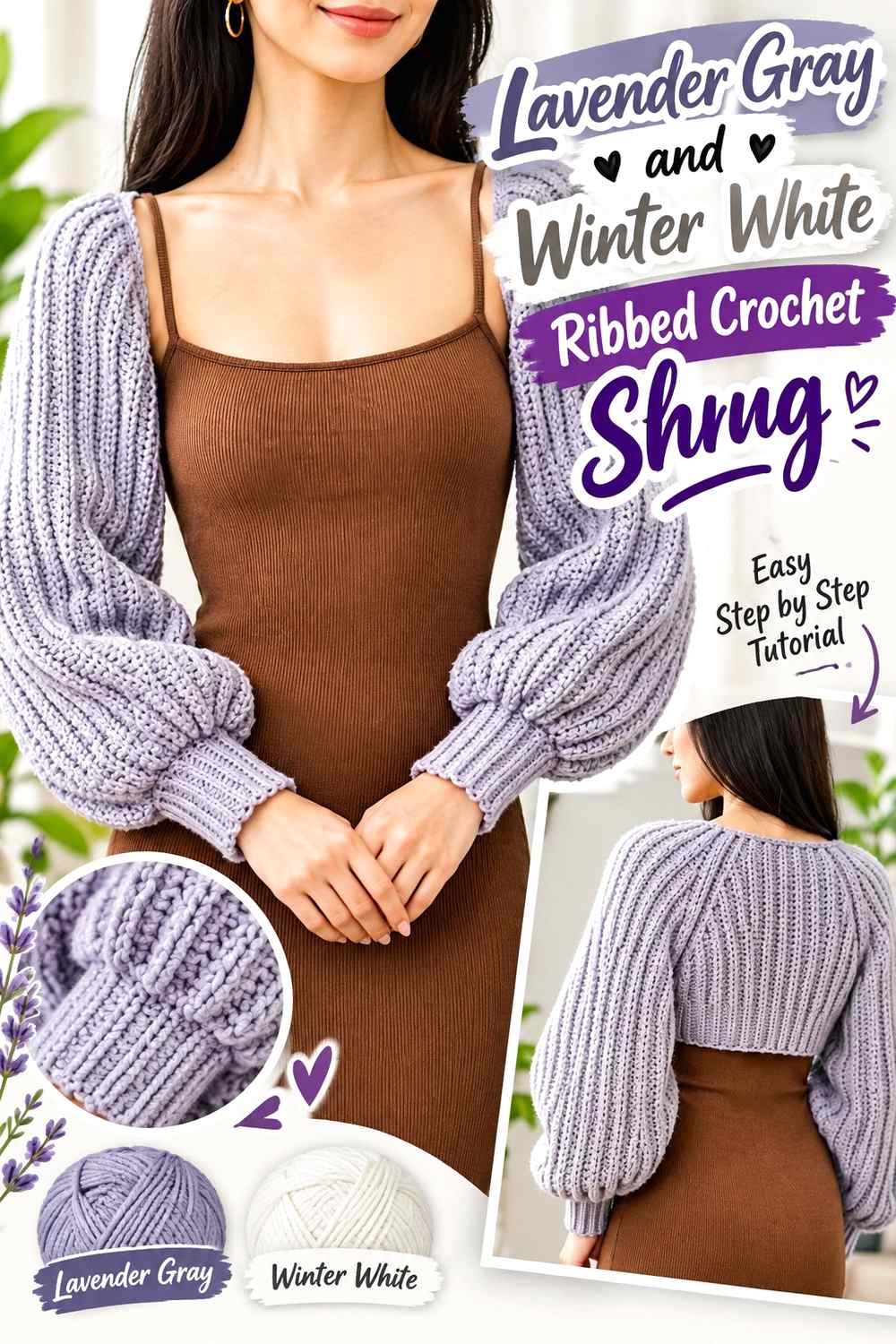
Winter white gives lavender gray a clean light contrast without creating the severity of black. For a ribbed shrug, lavender gray can cover the sleeves and short back section while winter white appears around cuffs or the open front. The change in both color and texture can make those finishing areas easier to distinguish.
Lavender Gray Should Lead Across the Ribbed Crochet Shrug Sleeves
Keep the long sleeve sections lavender gray so the main color remains obvious from both front and back. Because a shrug has such a small torso section, turning the sleeves winter white as well would quickly reverse the intended color balance.
Use the pale accent where the ribbing changes direction or the garment ends.
Winter White Can Define Lavender Gray Shrug Cuffs
A winter-white cuff creates a visible stopping point on a lavender gray sleeve. If you repeat winter white around the neckline, keep the second accent relatively narrow so the pale color frames the shrug instead of surrounding every lavender gray surface.
Creator Credit: TCDDIY — YouTube tutorial
2. Lavender Gray And Charcoal Mesh Crochet Shrug
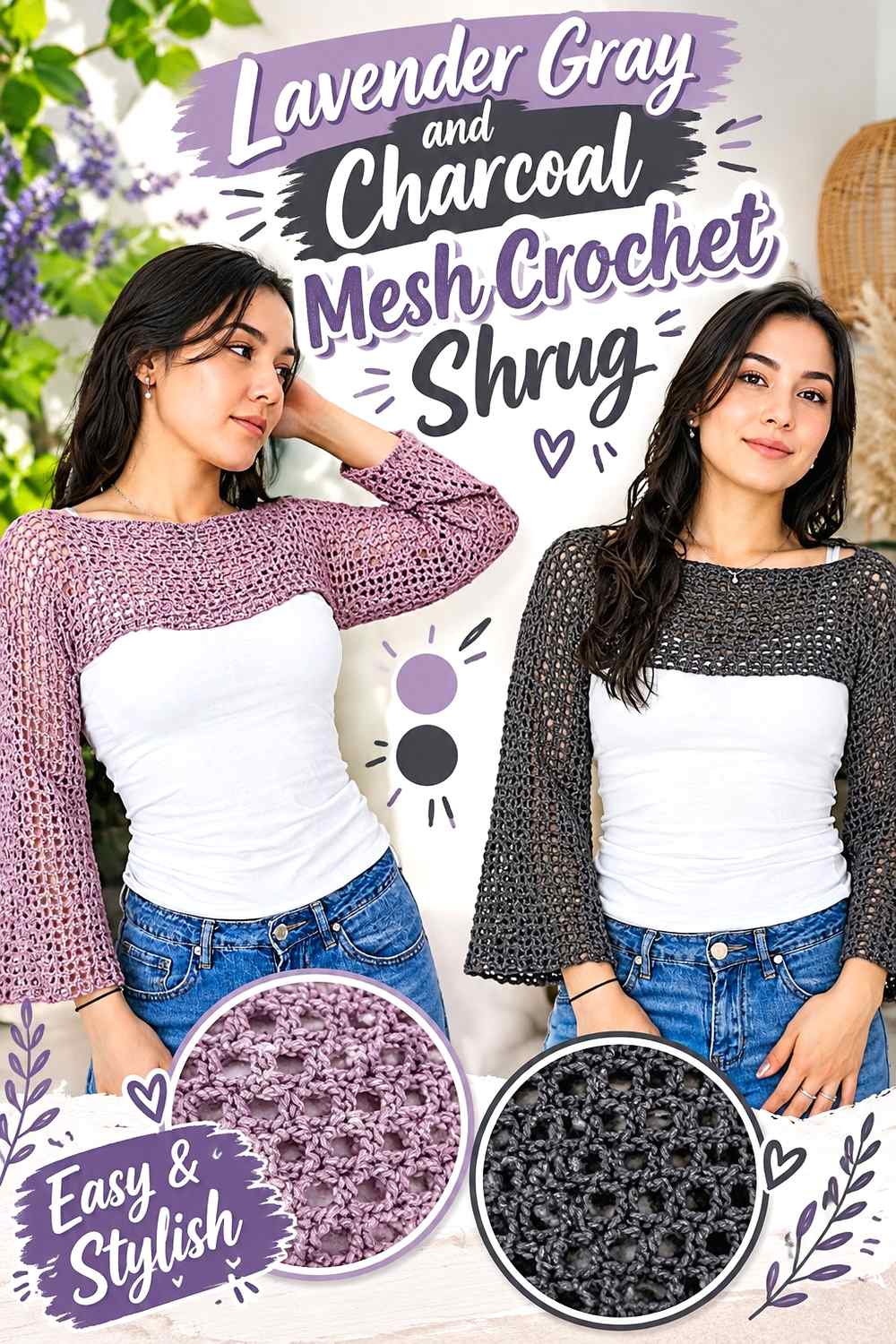
Charcoal creates one of the strongest contrasts with lavender gray. On a mesh shrug, that difference can be concentrated along cuffs and borders while lavender gray fills the open sleeve and shoulder sections. This preserves the airy mesh pattern while giving the pale main color a darker frame.
Lavender Gray Keeps the Mesh Crochet Shrug Light
Use lavender gray throughout most of the mesh so the openings remain the main source of surface movement. Alternating frequently with charcoal can make the color pattern compete with the grid itself.
Larger lavender gray sections keep the mesh visually continuous.
Charcoal Can Outline Lavender Gray Mesh Shrug Edges
Charcoal works particularly well around cuffs or a narrow open-front edge because only a small amount is needed for clear definition. A dark top beneath the lavender gray mesh can also increase apparent contrast without adding more charcoal yarn to the shrug itself.
Creator Credit: VivCrochets — YouTube tutorial
3. Lavender Gray And Dusty Plum Crochet Bolero Shrug
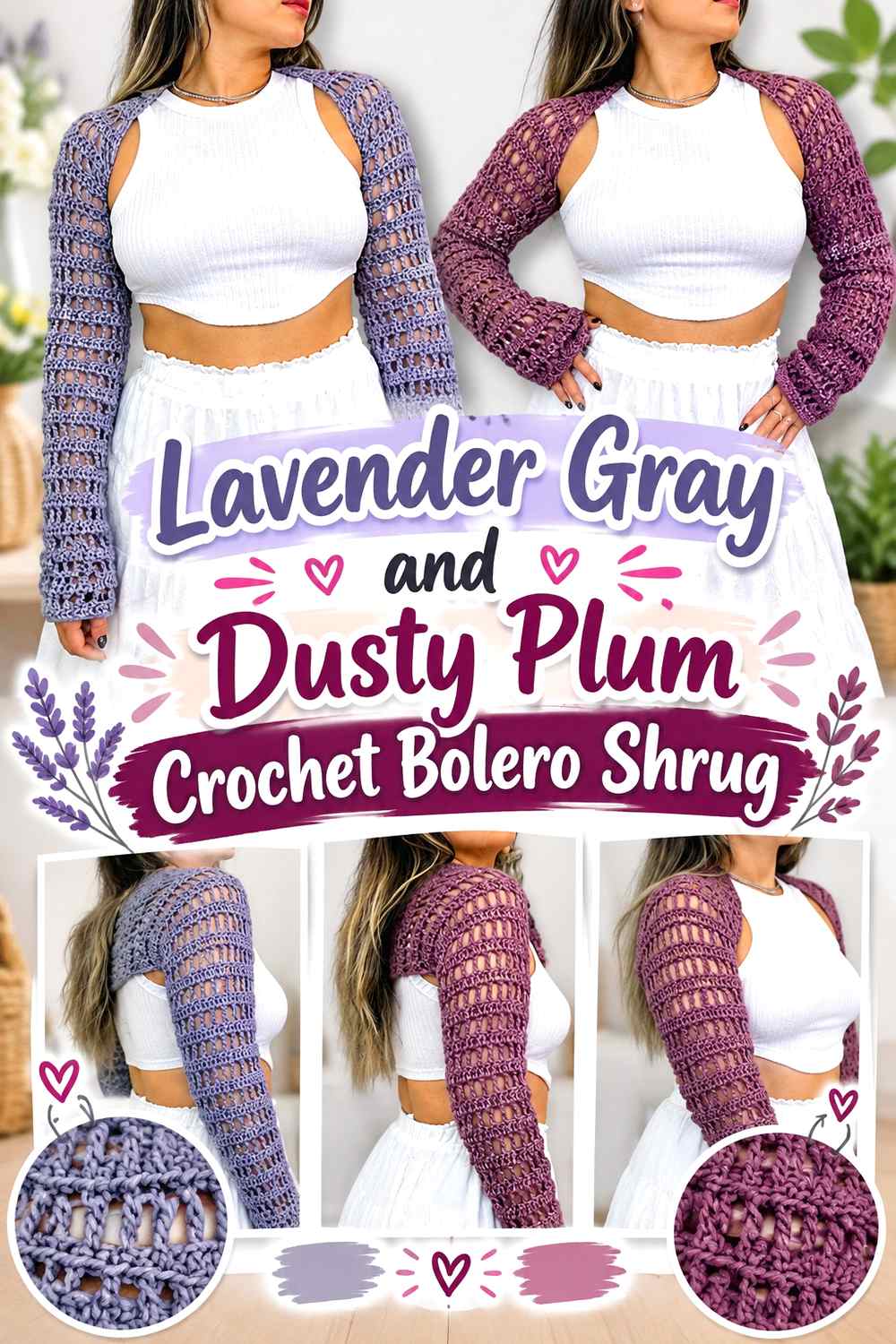
Dusty plum stays within the purple family while providing more depth than lavender gray. That makes it useful for a tonal bolero where you want the color change to be noticeable without switching to a neutral.
Lavender Gray Should Cover the Main Bolero Shrug Surface
Let lavender gray run across most of the sleeves and upper back. Use dusty plum near the cuffs, neckline, or short lower edge so the shrug remains lavender-gray-led.
Since a bolero has limited body area, even moderate plum sections can become visually prominent.
Dusty Plum Can Deepen Lavender Gray Crochet Shrug Edges
A dusty plum border can make the open silhouette easier to see against a light shirt or dress. Repeat the plum in one other location, such as the cuffs, rather than introducing small purple sections throughout every part of the shrug.
Creator Credit: Cherilyn Q — YouTube tutorial
4. Lavender Gray And Silver Gray Lace Crochet Shrug
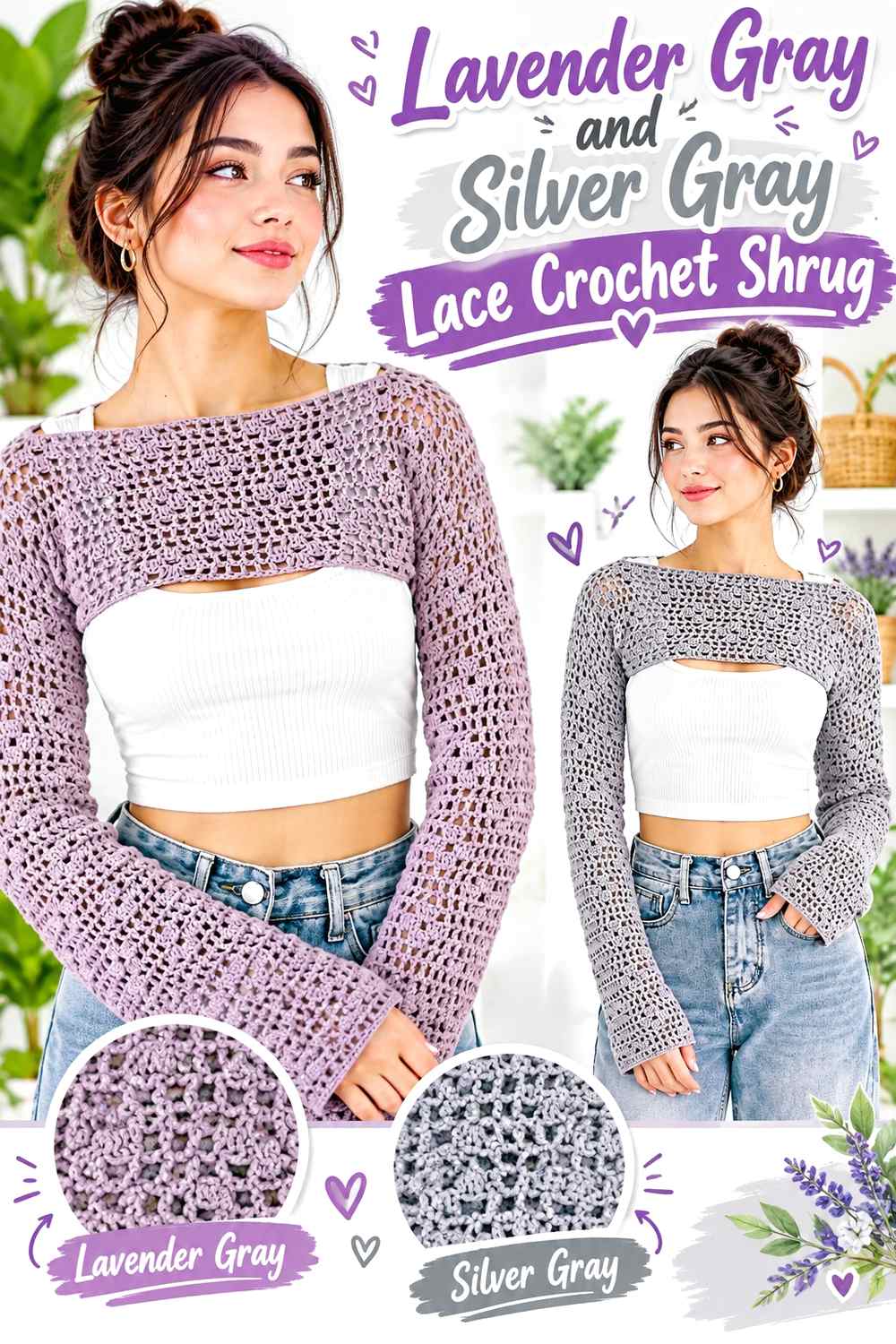
Silver gray creates a low-contrast neutral palette that lets lace texture carry more of the visual interest. Lavender gray can dominate the lace body while silver gray identifies edges where the open stitch needs a subtle boundary.
Lavender Gray Lets Lace Texture Carry the Crochet Shrug
Use lavender gray continuously across the main lace section rather than alternating two similar pale colors through every repeat. This gives the stitch openings a cleaner background and prevents small color changes from getting lost within the lace.
Silver Gray Can Quietly Frame a Lavender Gray Lace Shrug
Silver gray cuffs or edging can separate the lavender gray lace from the skin or clothing underneath without creating a dark outline. Check the colors side by side first: if they are almost identical in value, expect an intentionally blended result.
Creator Credit: Chenda DIY — YouTube tutorial
5. Lavender Gray And Sage Granny Square Crochet Shrug
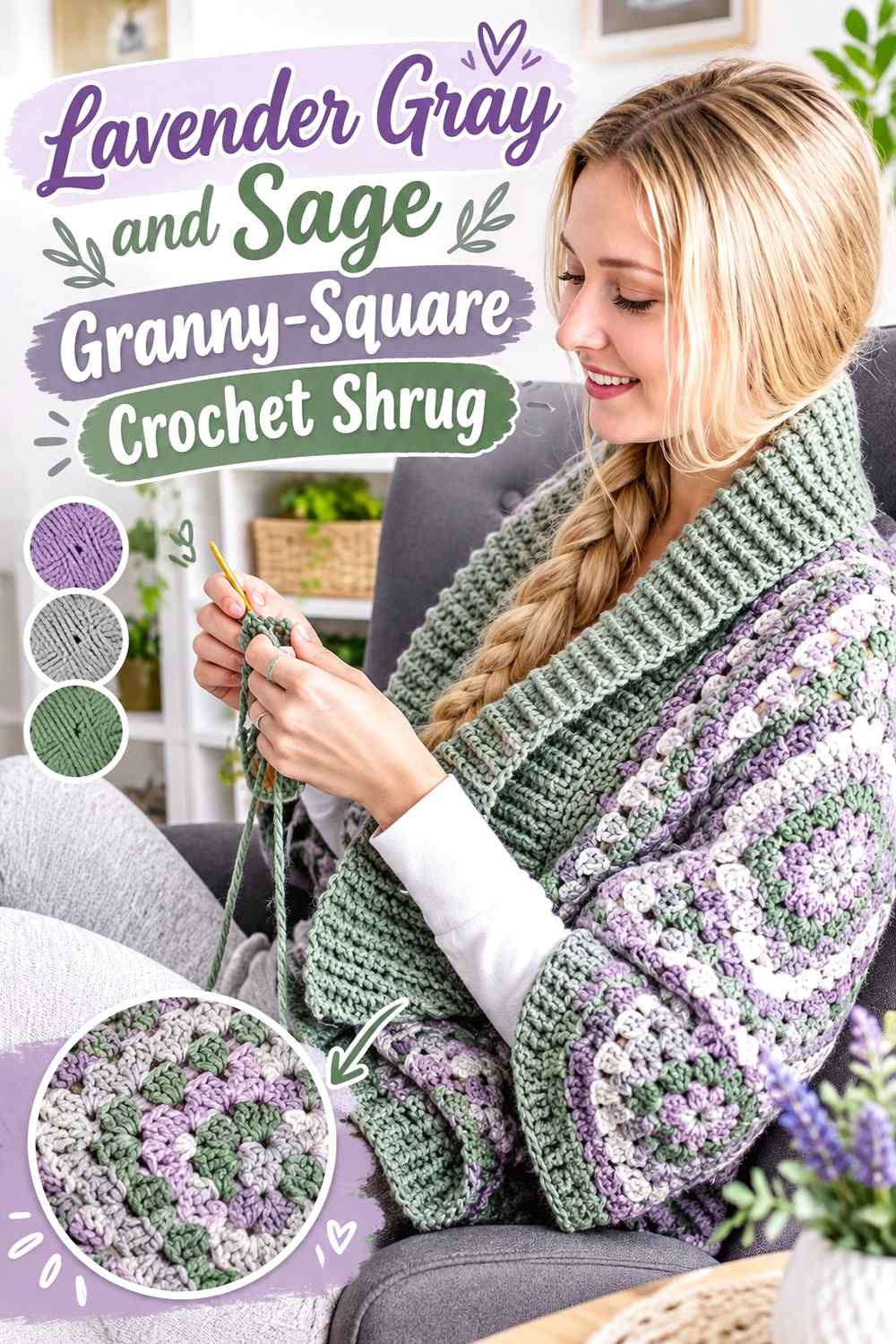
Sage introduces a muted green contrast that still feels restrained beside lavender gray. Granny-square construction gives you several placement options, but consistent repetition is important because the shrug has fewer motifs than a full cardigan.
Lavender Gray Can Connect Sage Granny Squares Across the Shrug
Repeat lavender gray in the same general part of several squares, such as the outer area or motif center. This creates a visible thread across the shoulders and sleeves even if sage placement varies slightly.
Avoid concentrating all sage-heavy motifs on one sleeve.
Sage Should Support Lavender Gray Rather Than Split the Shrug Equally
If lavender gray is the main color, let it occupy more area across the motif layout. Sage can appear in centers, selected rounds, or borders without matching lavender gray square for square.
Lay the motifs together before assembly to check the overall balance.
Creator Credit: The Crochet Crowd — YouTube tutorial
6. Lavender Gray And Soft Black Cropped Crochet Shrug
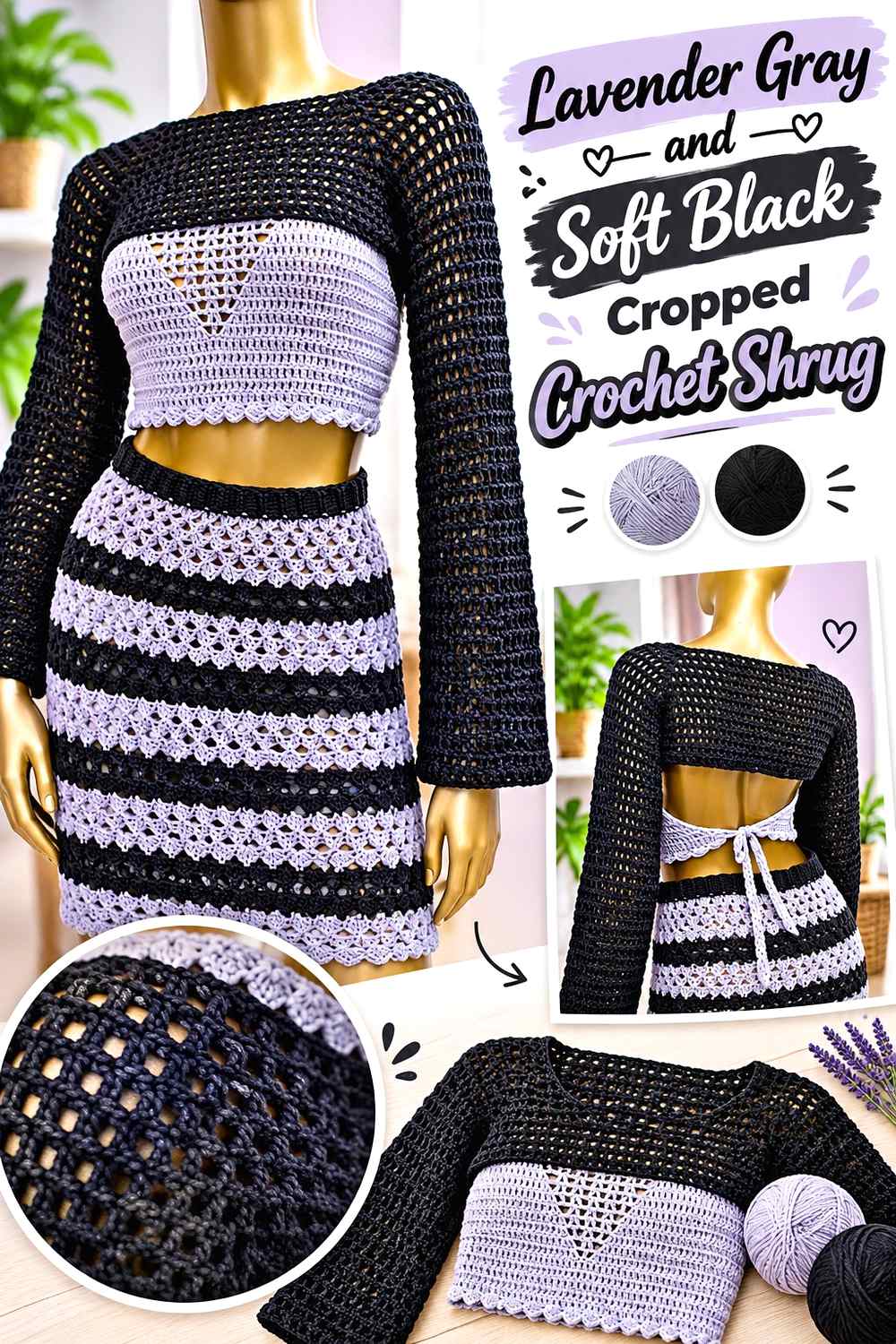
Soft black gives a cropped lavender gray shrug strong graphic definition. Since the garment exposes most of the torso and concentrates fabric around the shoulders and arms, black does not need much surface area to make an impact.
Lavender Gray Needs Enough Sleeve Area on a Cropped Shrug
Keep the sleeves predominantly lavender gray so black cuffs and edging do not become the most noticeable part of the garment. The shortened back provides little extra lavender gray area to rebalance oversized dark accents.
Soft Black Can Sharpen Lavender Gray Crochet Shrug Openings
Use black around the cuffs or neckline when you want the open shape to remain clearly defined. If both areas are already dark, avoid automatically adding a broad black lower edge as well.
Creator Credit: Shyler crochets — YouTube tutorial
7. Lavender Gray And Oatmeal Cocoon Crochet Shrug
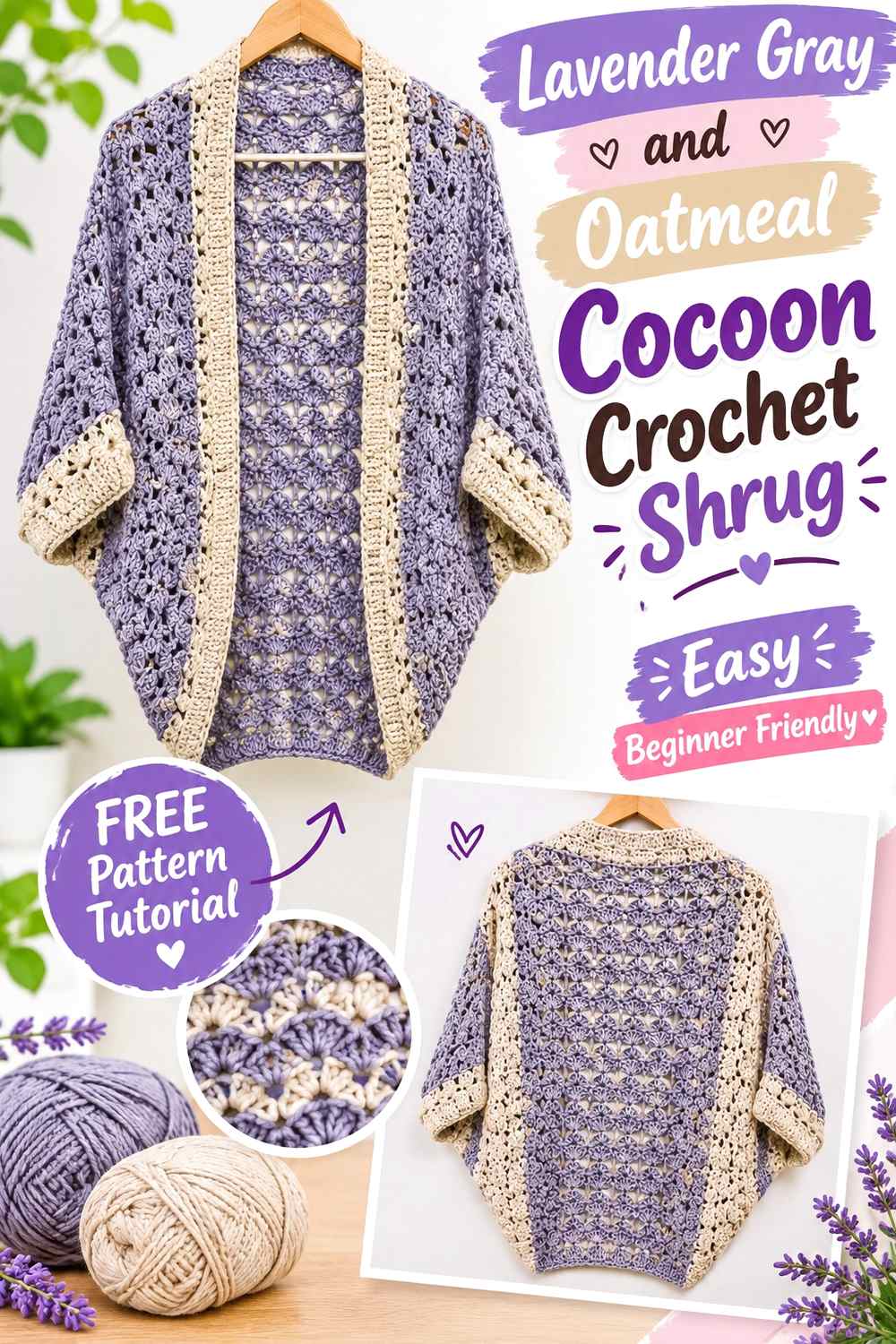
Oatmeal brings a warmer neutral into lavender gray without the brightness of cream. A cocoon shape has more central fabric than a sleeve-only shrug, giving the main color enough room to dominate even with a visible contrasting border.
Lavender Gray Can Fill the Cocoon Crochet Shrug Body
Use lavender gray across the large central rectangle or back area so the garment reads as one continuous muted purple-gray field. This is particularly useful on a cocoon shrug, where the folded construction already creates natural visual divisions.
Oatmeal Can Soften Lavender Gray Around the Cocoon Opening
An oatmeal border around the main opening can lighten the front without interrupting the lavender gray body. Repeating oatmeal at the arm openings can connect the finishing details, but keep the border width controlled if lavender gray should remain dominant.
Creator Credit: Let’s All Crochet — YouTube tutorial
8. Lavender Gray And Navy Open Mesh Crochet Shrug
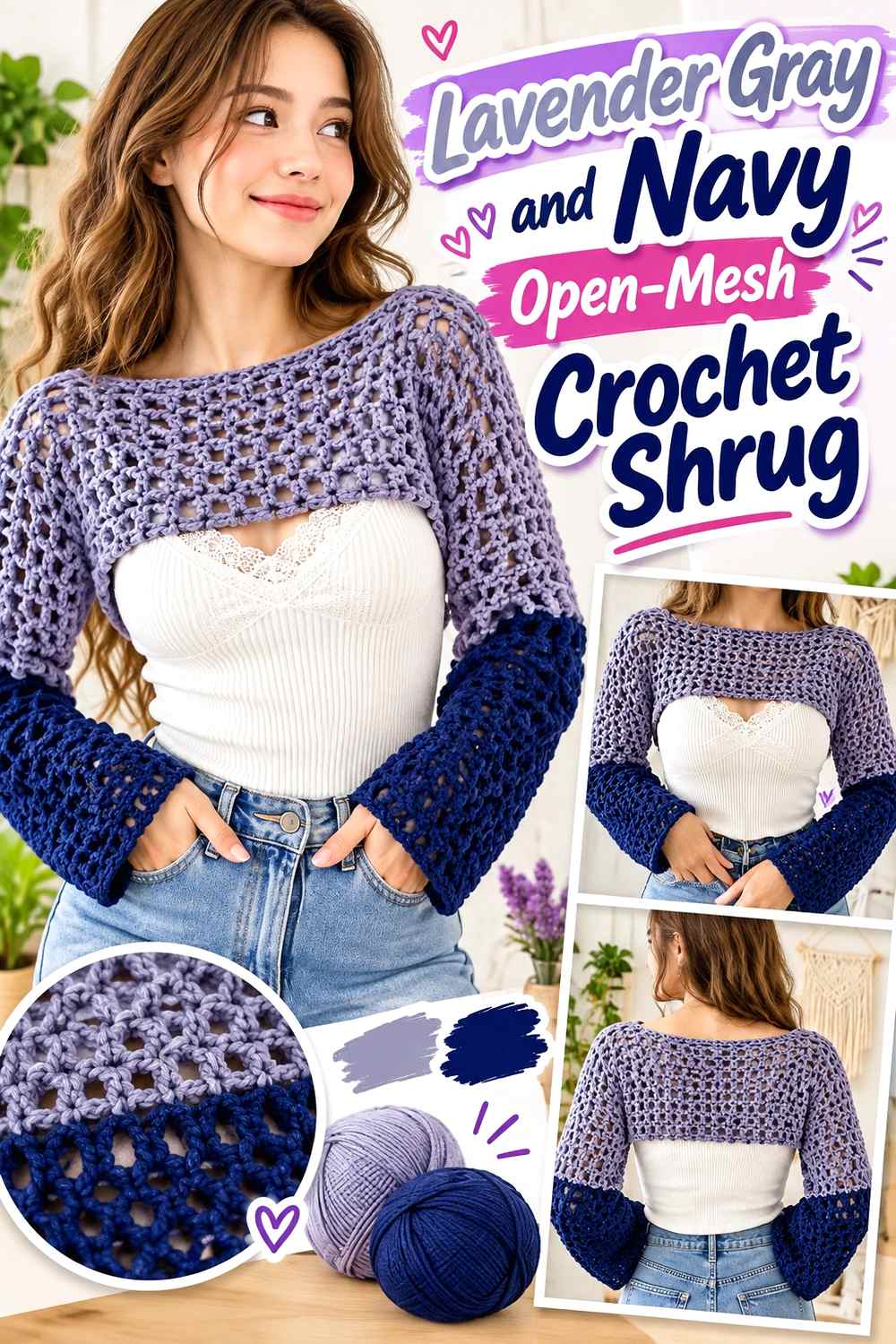
Navy gives lavender gray a deep cool contrast that works particularly well on open mesh. The darker blue can define the edges while the softer lavender gray keeps the actual mesh surface light.
Lavender Gray Should Carry the Open-Mesh Shrug Surface
Keep most of the sleeve and shoulder mesh lavender gray rather than alternating with navy throughout. This preserves one continuous open texture and prevents the dark shade from visually fragmenting the shrug.
Navy Can Anchor Lavender Gray Crochet Shrug Cuffs
A navy cuff can give a pale mesh sleeve a clear endpoint. Repeating a small amount around the neck or upper edge ties the dark accent together without creating several separate navy blocks.
Creator Credit: 75 emma — YouTube tutorial
9. Lavender Gray And Cream Four Square Crochet Shrug
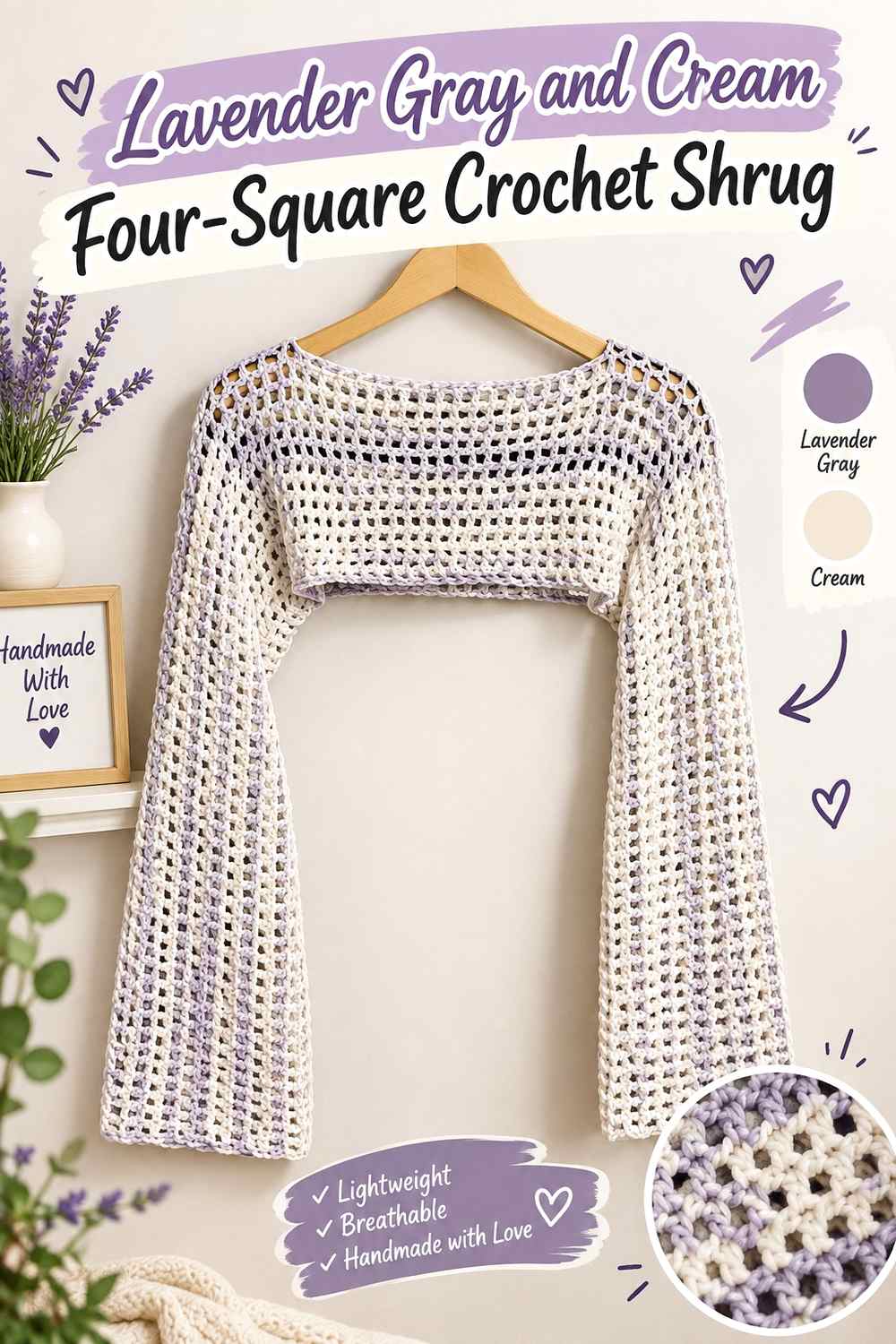
Cream creates enough contrast to separate motif edges while remaining softer than bright white. On a shrug built from a small number of large granny squares, each color placement carries considerable visual weight.
Lavender Gray Should Repeat Across Every Four-Square Shrug Section
Include lavender gray in each major motif so one sleeve or side does not lose the main color. Repeating it consistently is more important than making every square identical.
Cream Can Separate Lavender Gray Crochet Shrug Motifs
Use cream around outer motif sections or joining areas when you want the square construction to remain clearly visible. If cream occupies every large outer round, check that lavender gray still covers enough of the motif centers to remain dominant.
Creator Credit: DIY From Home — YouTube tutorial
10. Lavender Gray And Deep Teal Lace Crochet Shrug
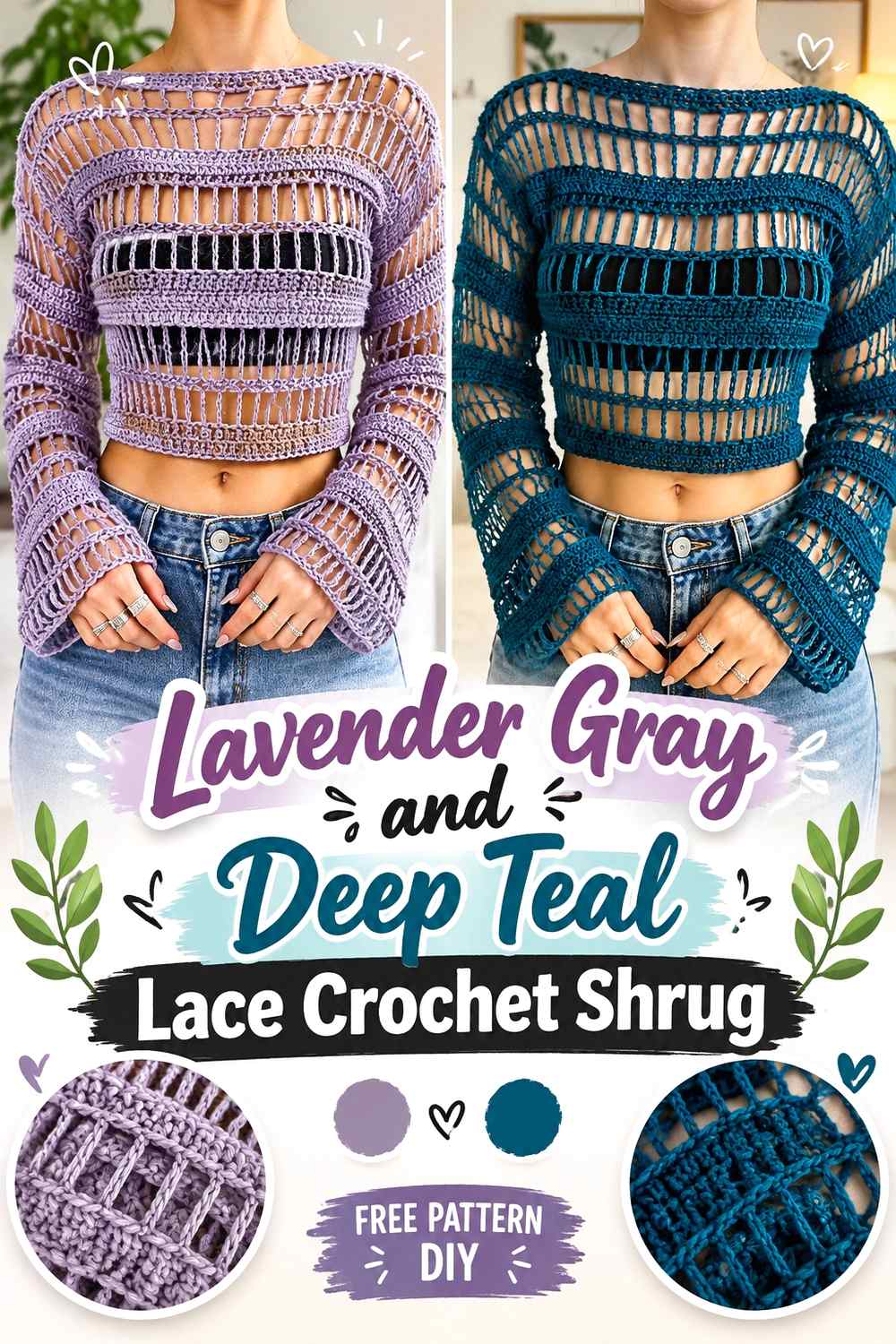
Deep teal gives lavender gray a darker blue-green partner. On lace, the contrast is strong enough that only a limited amount of teal is needed to define edges and sleeve endings.
Lavender Gray Keeps the Lace Crochet Shrug From Becoming Too Dark
Let lavender gray cover the main lace field so the open spaces and stitch shapes stay visually light. Large teal lace sections would significantly change the overall balance because dark yarn occupies more visual weight.
Deep Teal Can Ground Lavender Gray Crochet Shrug Edges
Consider teal for cuffs or a narrow border around the opening. If you use it at both, evaluate the shrug before adding more teal elsewhere; the dark shade may already provide enough structure.
Creator Credit: Kenikse Crochet — YouTube tutorial
11. Lavender Gray And Burgundy Granny Stitch Crochet Shrug

Burgundy creates a richer warm contrast that can make granny clusters much more obvious beside muted lavender gray. The key is to avoid giving both strong texture and dark color equal coverage everywhere.
Lavender Gray Should Occupy Wider Granny-Stitch Shrug Sections
Use longer lavender gray sections between burgundy accents if the shrug should remain light overall. Frequent one-row alternation creates a balanced stripe pattern rather than a lavender gray base with burgundy support.
Burgundy Can Mark Lavender Gray Crochet Shrug Cuffs and Edges
Burgundy works well in smaller finishing areas where its depth can define the shrug. If it also appears in the granny-stitch body, repeat it at deliberate intervals rather than introducing isolated dark clusters.
Creator Credit: Ella.Price.Crochet — YouTube tutorial
12. Lavender Gray And Ice Blue Sleeve Crochet Shrug
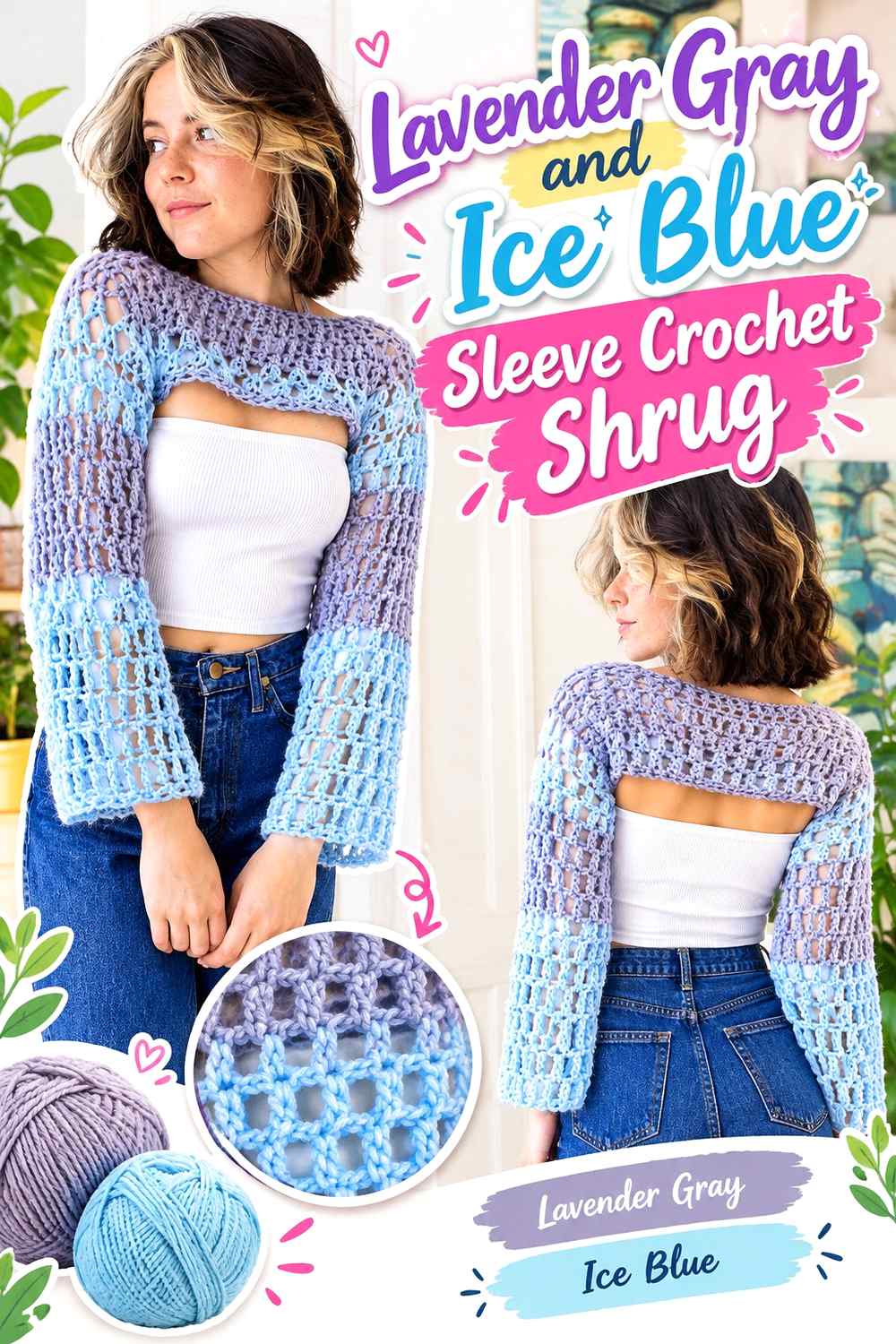
Ice blue creates one of the quietest cool combinations in the collection. Both colors can remain pale, so the result relies on their hue difference and on the shape of the sleeves rather than strong light-dark separation.
Lavender Gray Should Remain the Main Crochet Shrug Sleeve Color
Keep most of each sleeve lavender gray if you want the purple-gray direction to remain obvious. Ice blue can be concentrated around cuffs or selected upper-sleeve details.
Equal areas of both shades would create a balanced pastel shrug instead.
Ice Blue Needs Enough Separation From Lavender Gray
Check the actual yarns in grayscale as well as full color. If ice blue and lavender gray are nearly identical in value, a narrow cuff may appear tonal rather than clearly contrasting.
That can work well, but it should be an intentional choice.
Creator Credit: made in the moment — YouTube tutorial
13. Lavender Gray And Mauve Crochet Bolero Shrug

Mauve keeps the palette within a softened purple family while adding warmth and depth. It suits a bolero when you want visible color variation without bringing in an unrelated neutral.
Lavender Gray Can Keep a Mauve Bolero Shrug Light
Use lavender gray on the broadest sleeve and shoulder sections, then bring mauve into smaller borders or cuffs. This allows the bolero to remain softly colored rather than becoming uniformly deep purple.
Mauve Can Create a Tonal Edge Around Lavender Gray
A mauve neckline or open-front border gives lavender gray enough tonal variation to clarify the bolero shape. Choose a mauve that is noticeably deeper if small details need to remain visible from a distance.
Creator Credit: Ascarcrochets — YouTube tutorial
14. Lavender Gray And Camel One Panel Crochet Shrug

Camel adds warmth and creates a stronger temperature contrast against lavender gray. A one-panel shrug provides a broad uninterrupted surface, so keeping that panel lavender gray allows the warm accent to stay focused around finishing areas.
Lavender Gray Should Cover the Main One-Panel Crochet Shrug
Let the large central fabric area remain lavender gray. Breaking it into several camel sections can weaken the simple one-panel look and make the shrug appear more heavily color-blocked.
Camel Can Warm Lavender Gray Around the Shrug Border
Use camel along the opening or arm edges when you want warmth without adding stripes through the center. A narrow repeated border gives the accent enough presence while preserving the lavender gray field.
Creator Credit: Crazy Cool Crochet — YouTube tutorial
15. Lavender Gray And Mushroom Taupe Cozy Crochet Shrug

Mushroom taupe creates a muted neutral pairing that sits between cool gray and warmer brown. On a more substantial shrug, it can distinguish a collar-like edge or cuff while preserving a soft low-contrast palette.
Lavender Gray Should Carry the Cozy Crochet Shrug Body
Keep the larger body section lavender gray so the shrug does not become a general neutral piece. Mushroom taupe works best as support around areas that already have structural importance.
Mushroom Taupe Can Frame Lavender Gray Crochet Shrug Openings
A taupe border can mark the opening without creating the hard line of black or navy. If the border is wide, keep the cuffs narrower so taupe does not occupy too much of the relatively compact shrug.
Creator Credit: KnitcroAddict — YouTube tutorial
Comparing the Lavender Gray Crochet Shrug Palettes
For stronger definition, charcoal, soft black, navy, deep teal, and burgundy create the clearest contrast with lavender gray. They work particularly well at cuffs and open edges where a small amount of dark yarn can clarify the shrug’s shape.
Winter white, cream, oatmeal, camel, and mushroom taupe create lighter or warmer neutral directions. These pairings are useful when you want lavender gray to remain soft rather than graphic.
Silver gray, ice blue, blush, and mauve keep the palette closer together. In these combinations, stitch texture, mesh openings, sleeve shape, and borders become more important because the color contrast itself is restrained.
For granny-square and granny-stitch shrugs, repetition matters as much as contrast. Repeat lavender gray consistently across motifs or broader stitch sections so the small garment does not become fragmented by several equally prominent colors.
Conclusion
Lavender gray works particularly well on crochet shrugs because it can function as either a quiet neutral-like base or a muted color statement. Charcoal and black sharpen it, cream and winter white lighten it, camel and oatmeal warm it, while sage, teal, navy, ice blue, mauve, and plum create more colorful pairings.
To keep a shrug recognizably lavender gray, give the main color most of the sleeves and central back or shoulder section. Reserve supporting shades for areas where they explain or frame the garment: cuffs, open edges, mesh borders, granny motifs, collar-like bands, or selected stitch sections.
Because shrugs have less fabric than sweaters and cardigans, check the entire color distribution before adding another accent area. A small change at both cuffs can affect the overall balance more than it would on a larger garment.
Frequently Asked Questions
What colors work well with a lavender gray crochet shrug?
Winter white, cream, oatmeal, silver gray, charcoal, black, navy, teal, sage, blush, mauve, plum, burgundy, camel, and ice blue can all create useful combinations. Choose according to whether you want a tonal, warm, cool, or high-contrast result.
How do I keep lavender gray dominant on a small crochet shrug?
Use lavender gray through most of the sleeves and central shoulder or back area. Restrict the secondary color to smaller structural areas such as cuffs, edging, borders, or selected motifs.
How can I tell whether lavender gray and another pastel have enough contrast?
Place the yarns side by side under the same lighting and view them from a short distance. You can also photograph them in grayscale. Similar grayscale values create a more blended result, while stronger light-dark separation makes details easier to distinguish.
Should a lavender gray mesh shrug have contrasting cuffs?
It can, especially if you want the sleeve ends to be clearly defined. Dark charcoal, navy, teal, or burgundy create stronger endpoints. Cream, silver, blush, and ice blue produce a quieter transition.
Can lavender gray work with another purple on a crochet shrug?
Yes. Dusty plum and mauve can create tonal purple palettes. Keep the second shade noticeably lighter, darker, warmer, or more saturated if you want the two colors to remain clearly distinguishable.
How should I distribute colors in a lavender gray granny-square shrug?
Repeat lavender gray throughout the motifs so it appears across both sleeves and the back or shoulder area. Lay the squares together before joining and check that stronger supporting colors are not accidentally concentrated on one side.
Why does lavender gray look different in an open-mesh crochet shrug?
Open mesh allows the color underneath the garment to show through. A dark underlayer increases visible contrast through lavender gray openings, while cream, pale gray, or another light layer creates a softer appearance. Consider the underlayer when evaluating the finished palette.