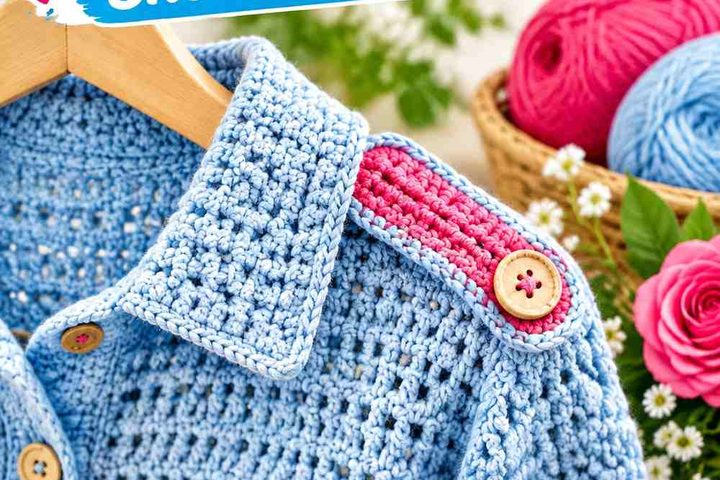
Jade gives a crochet winter cardigan enough color to feel distinctive while still working easily with dark neutrals, warm browns, pale winter shades, and neighboring greens. Because “jade” can describe several green directions, treat it here as a medium-to-deep blue-green family rather than one exact commercial yarn shade.

On a cardigan, color placement matters as much as the pairing itself. Jade across the main body panels creates a strong green foundation, while contrasting cuffs, front bands, pockets, collars, hems, granny-square borders, or raglan sections can change how structured or tonal the finished piece appears.
These 15 ideas keep jade central while varying contrast, temperature, and color distribution. The linked tutorials support the cardigan construction concepts; the jade palettes are independent adaptations rather than claims about the colors used by the creators.
Quick List
- Jade And Cream Raglan Crochet Winter Cardigan
- Jade And Charcoal Oversized Pocket Crochet Winter Cardigan
- Jade And Camel Cable Panel Crochet Winter Cardigan
- Jade And Soft Black Alpine Texture Crochet Winter Cardigan
- Jade And Oatmeal Classic Crochet Winter Cardigan
- Jade And Burgundy Patchwork Crochet Winter Cardigan
- Jade And Ivory Granny Stitch Crochet Winter Cardigan
- Jade And Navy Top Down Crochet Winter Cardigan
- Jade And Heather Gray Chunky Crochet Winter Cardigan
- Jade And Forest Green Granny Square Crochet Winter Cardigan
- Jade And Stone Gray Hexagon Crochet Winter Cardigan
- Jade And Mustard Mosaic Crochet Winter Cardigan
- Jade And Cocoa Basketweave Crochet Winter Cardigan
- Jade And Ice Blue Oversized Crochet Winter Cardigan
- Jade And Plum Long Sleeve Crochet Winter Cardigan
Decide Where Jade Should Dominate a Winter Cardigan
For a cardigan that clearly reads as jade, keep the main front and back sections in jade and treat the second color as support. Front bands, cuffs, pockets, collars, hems, and selected sleeve sections are useful places for contrast because they already define the cardigan’s structure.
A stronger secondary shade can occupy less space and still have significant impact. Black, charcoal, burgundy, navy, and plum can therefore work in narrow bands, while cream, oatmeal, gray, and ice blue may need slightly broader placement when you want them to be clearly visible.
Motif cardigans need a different approach. Granny squares, patchwork blocks, hexagons, and mosaic surfaces already divide the garment visually, so repeating jade consistently somewhere in every motif can help connect the cardigan.
Use Jade Contrast to Keep Cardigan Texture Visible
A textured cardigan can lose detail when jade and the supporting shade are too similar in value. This matters with cables, alpine texture, basketweave, ribbing, granny clusters, and mosaic patterns where surface definition contributes heavily to the finished look.
If two yarns seem different in color but you are unsure about their value contrast, place them side by side and look at them from a distance. A grayscale photo can also reveal whether one is noticeably lighter or darker.
Strong contrast is not mandatory. Jade with forest green or another nearby tone can create a deliberately blended cardigan. Just expect the stitch texture and panel arrangement to do more visual work than the color boundary.
1. Jade And Cream Raglan Crochet Winter Cardigan
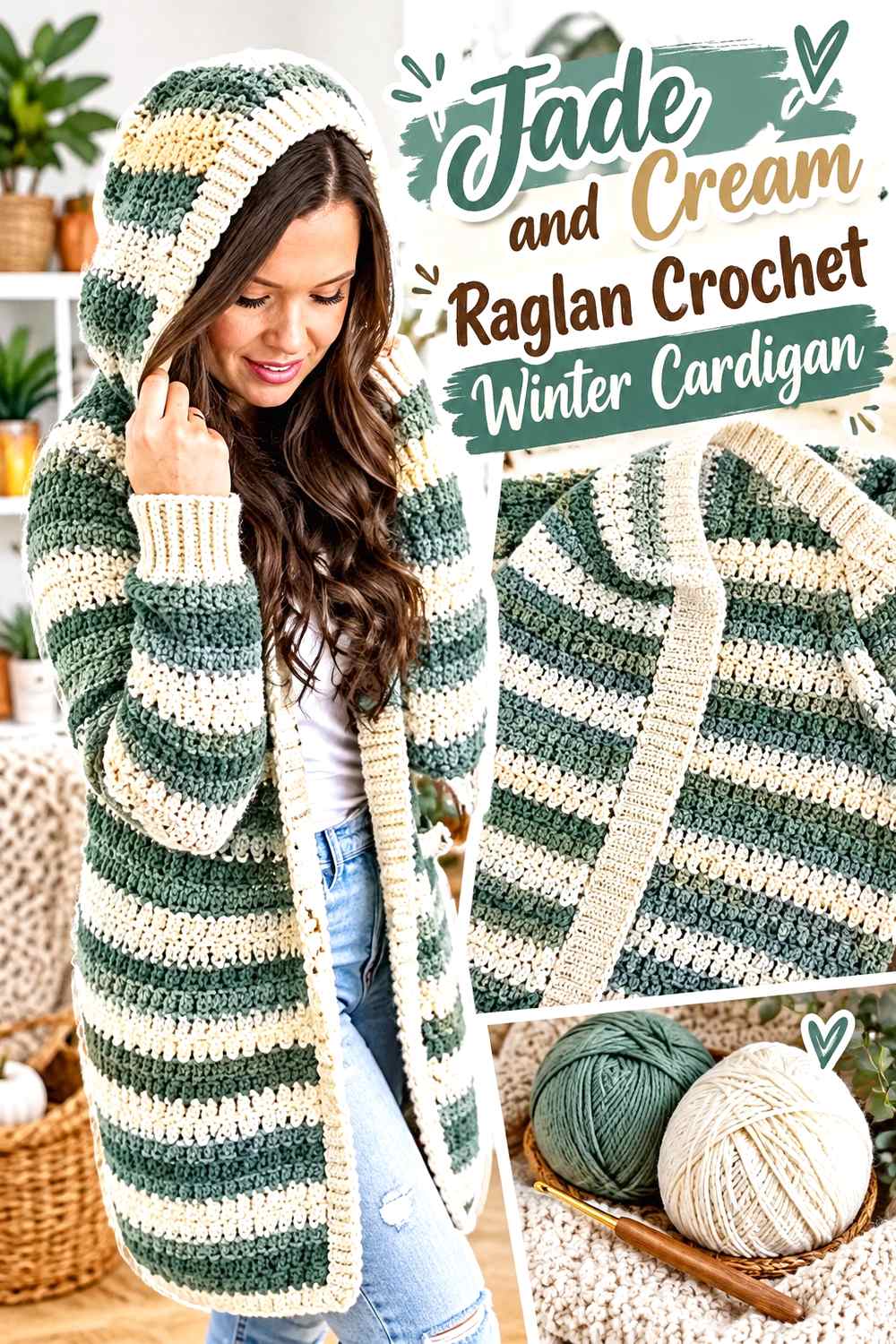
Cream gives jade a light winter contrast that can emphasize a raglan neckline without making the entire cardigan highly graphic. Use jade through most of the body and sleeves, then introduce cream around the front band, collar, cuffs, or selected upper-yoke details.
Jade Should Lead the Raglan Crochet Winter Cardigan Body
Keep jade continuous through the larger torso sections so the diagonal raglan shaping does not compete with excessive color blocking. A broad jade field also gives you more freedom to use cream selectively at the upper and lower edges.
If cream occupies the entire yoke and wide cuffs, check whether jade still has enough surface area to remain dominant.
Cream Can Clarify Jade Raglan Cardigan Edges
A cream front band creates clear separation between the two jade front panels while keeping the overall palette light. Repeating cream at the cuffs can connect the vertical opening with the sleeves.
If you also add a cream hem, consider keeping it narrow so the pale framing does not surround every jade section equally.
Creator Credit: MJ’s Off The Hook Designs
2. Jade And Charcoal Oversized Pocket Crochet Winter Cardigan

Charcoal gives an oversized jade cardigan a strong neutral anchor. Because the silhouette already has broad panels and roomy sleeves, use charcoal where it helps organize the shape rather than dividing every large section.
Jade Keeps the Oversized Winter Cardigan From Becoming Too Dark
Let jade cover the main front, back, and sleeve surfaces. This gives the oversized shape one continuous color field and prevents broad charcoal sections from visually weighing down the entire cardigan.
Charcoal can then act as a clear finishing shade instead of competing for equal coverage.
Charcoal Can Frame Jade Pockets and Cuffs
Pockets are a natural place for darker contrast because their edges can otherwise blend into a jade front panel. A charcoal pocket border or fully charcoal pocket creates stronger separation.
Repeating charcoal at jade sleeve cuffs can connect those pocket details with the rest of the cardigan.
Creator Credit: forthefrills
3. Jade And Camel Cable Panel Crochet Winter Cardigan
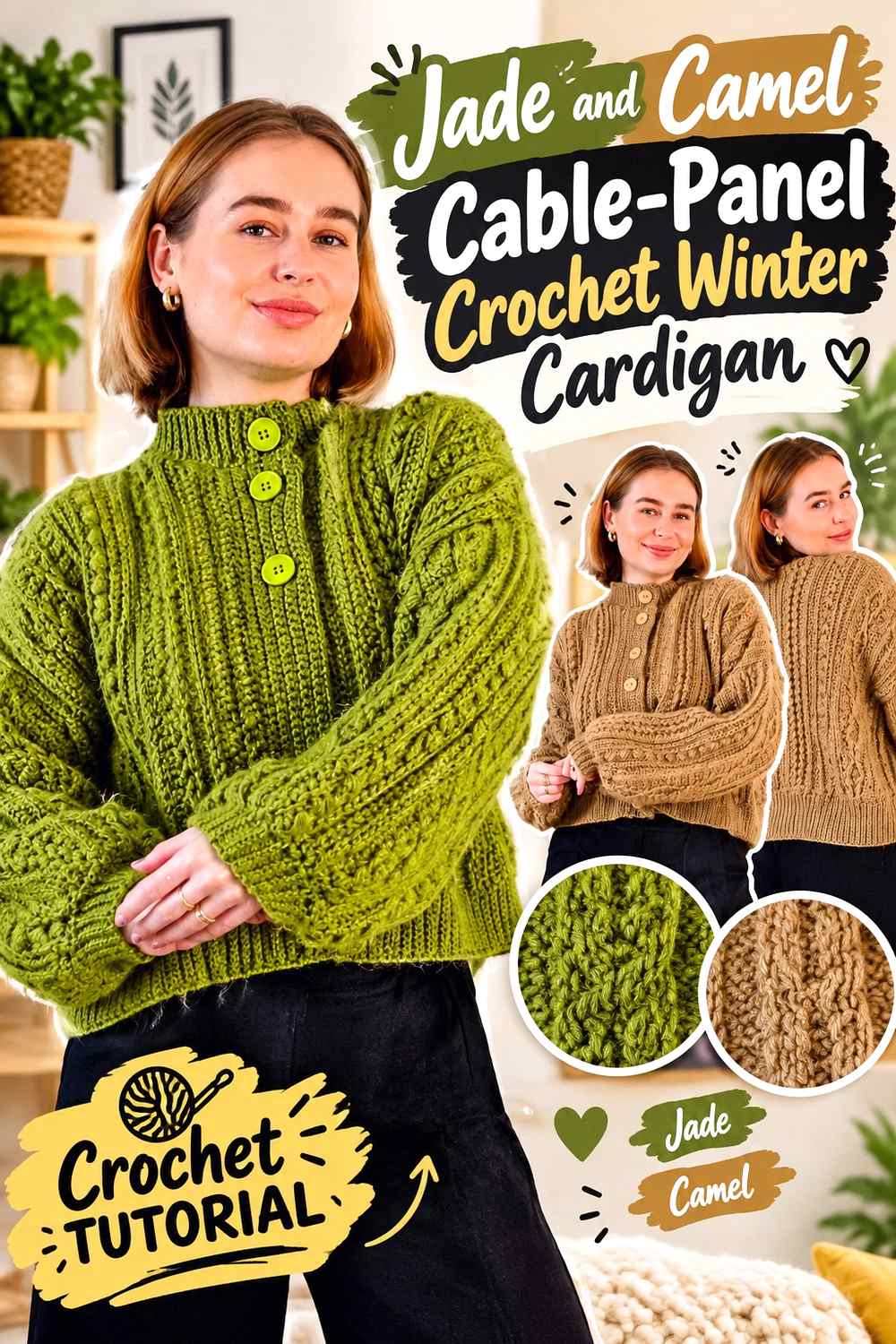
Camel adds warmth to jade while giving cable panels enough contrast to stand apart. Since both cable texture and contrasting color attract attention, keep the camel placement deliberate rather than covering every raised section.
Jade Gives Camel Cable Panels a Strong Cardigan Background
Use jade across the majority of the cardigan, then reserve camel for one selected cable panel, front band, or cuff treatment. This makes the accent easier to read than distributing thin camel details randomly across several textured areas.
Camel Can Warm Jade Along the Winter Cardigan Front
A camel front edge provides a warm vertical line against jade without requiring a large body color block. Repeat camel at the cuffs if you want the accent to travel through the whole garment.
When the cable panels are already visually prominent, a narrow camel band may be enough.
Creator Credit: Katie Joslin
4. Jade And Soft Black Alpine Texture Crochet Winter Cardigan
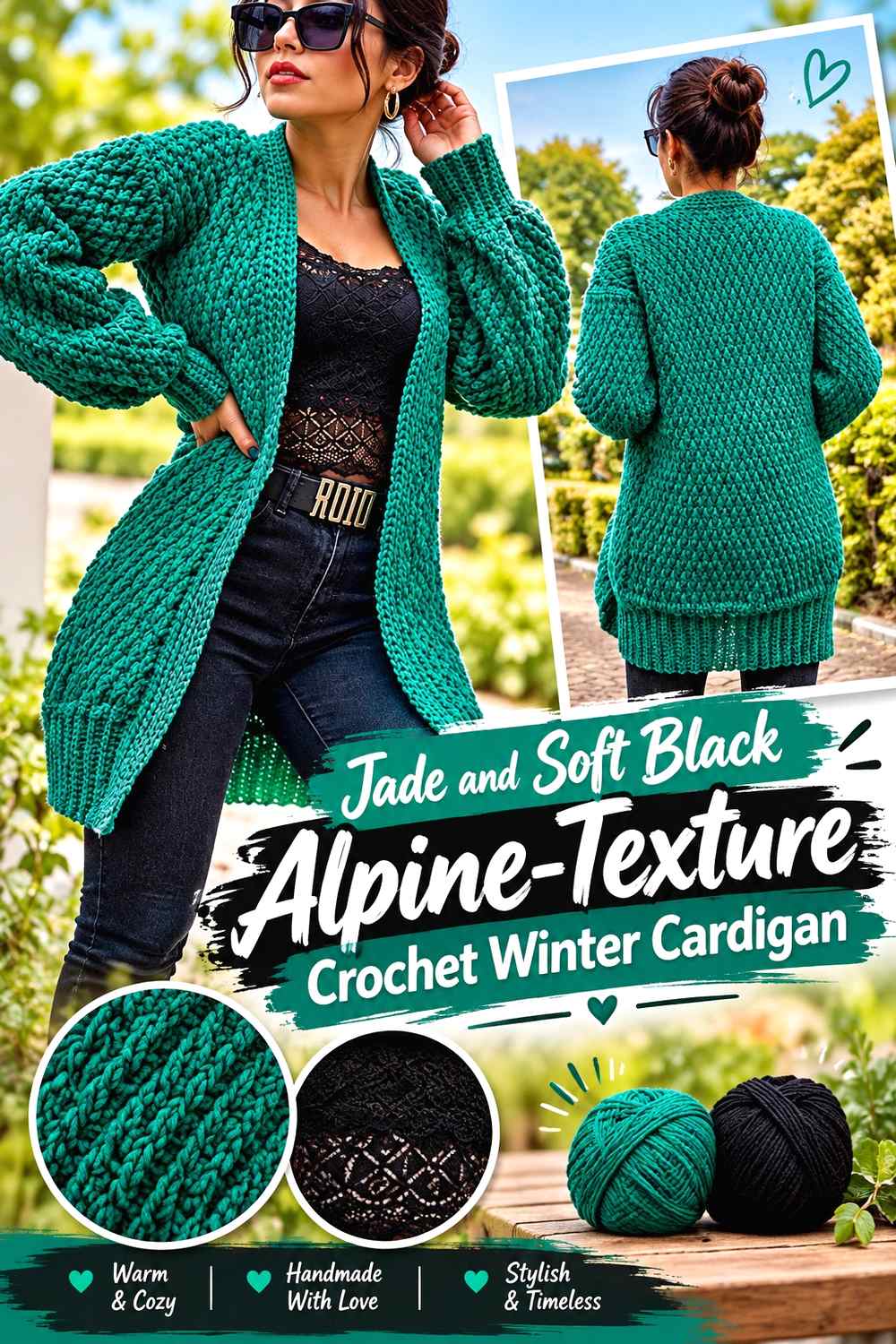
Soft black creates one of the strongest contrast directions for jade. Alpine texture already has noticeable raised and recessed areas, so black is most effective around structural borders rather than mixed into every textured repeat.
Jade Lets Alpine Texture Carry the Winter Cardigan Surface
Keep the main alpine-texture panels jade if you want the stitch surface itself to remain the focus. Dark black sections placed through every repeat could compete with the raised texture.
Using one main color across the textured field allows shadow to do some of the visual work.
Soft Black Gives Jade Cardigan Ribbing a Defined Finish
Consider soft black for cuffs, a front band, or the lower edge. These areas can form a dark frame around jade without interrupting the body panels.
If the front band is substantial, you may not need equally wide black sections at every other edge.
Creator Credit: AC Crochets
5. Jade And Oatmeal Classic Crochet Winter Cardigan

Oatmeal offers a softer neutral contrast than cream. It can warm jade slightly while keeping the cardigan understated, especially when used along wide front bands and cuffs.
Jade Should Cover the Classic Winter Cardigan Panels
Use jade across both front panels, the back, and most of the sleeves. A classic cardigan benefits from this continuous body color because the front opening already provides a strong vertical division.
Oatmeal can then highlight finishing details instead of creating additional large blocks.
Oatmeal Can Soften Jade Around the Cardigan Opening
An oatmeal front band gives jade visible separation without the brightness of white. Repeat oatmeal at the cuffs or neckline if you want the accent to feel connected.
Make sure the oatmeal is noticeably lighter than jade if narrow edging needs to remain clear.
Creator Credit: TCDDIY
6. Jade And Burgundy Patchwork Crochet Winter Cardigan
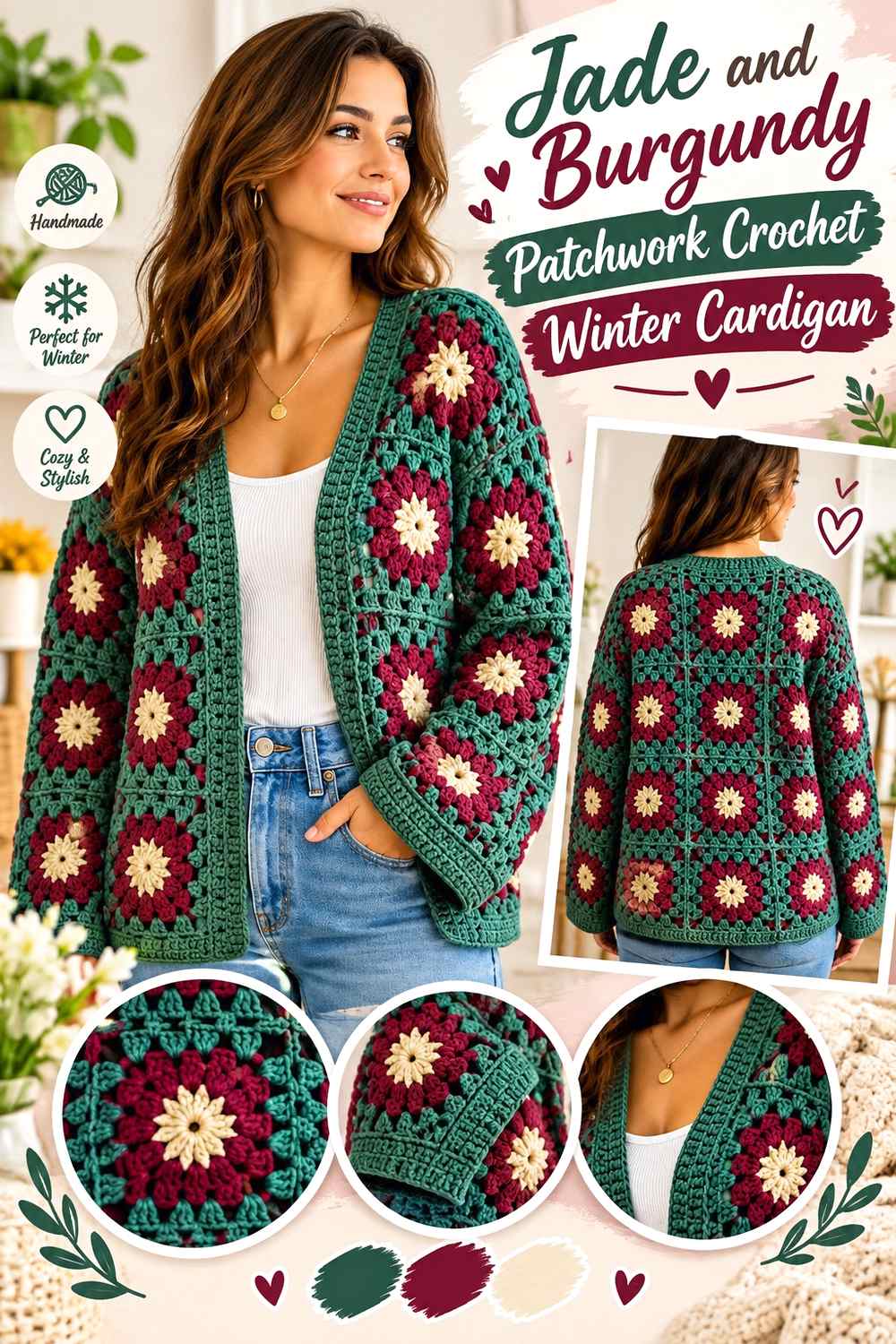
Burgundy creates a rich warm contrast that suits patchwork because the garment is already divided into blocks. Jade should appear consistently across the layout so burgundy does not take over simply because it is darker.
Jade Should Repeat Across the Patchwork Winter Cardigan
Include jade in multiple body and sleeve blocks rather than isolating it in one area. Repetition distributes the main color across the cardigan and prevents one side from appearing much darker or warmer than the other.
Lay the blocks out before joining so jade remains visually balanced across the front.
Burgundy Needs Controlled Placement Beside Jade Patchwork
Use burgundy in fewer or smaller blocks if jade is intended to dominate. Burgundy can attract more attention because of its depth, particularly when several dark squares touch.
Separating strong burgundy areas with jade or a lighter supporting section can keep the patchwork easier to read.
Creator Credit: crochet-crosia
7. Jade And Ivory Granny Stitch Crochet Winter Cardigan
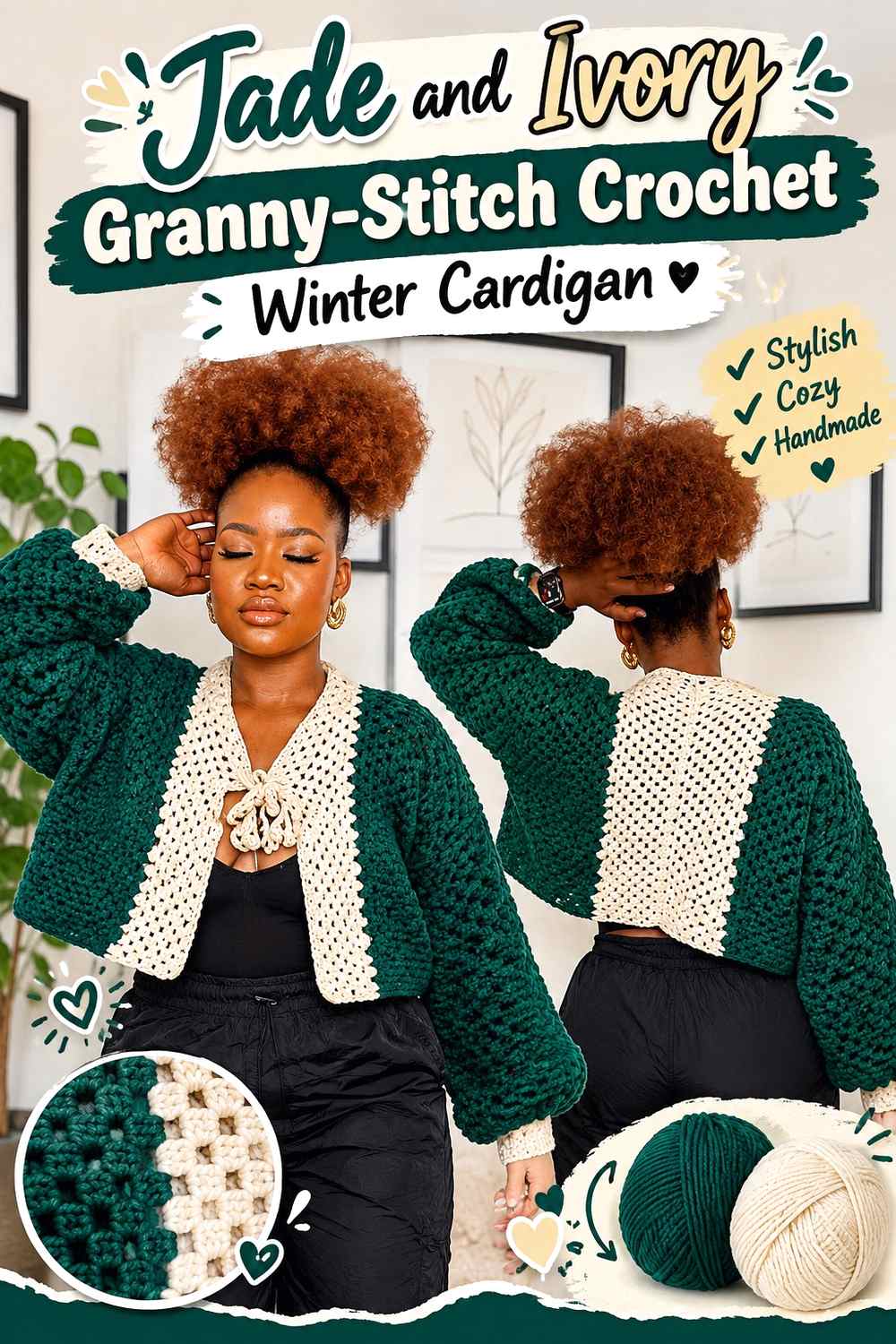
Ivory lightens a jade granny-stitch cardigan while preserving a softer winter palette than bright white. Because granny clusters repeat continuously, longer jade sections can help prevent the garment from becoming a balanced stripe pattern.
Jade Should Occupy More Granny-Stitch Cardigan Rows
Use jade through broader sections of the torso and sleeves, then insert ivory selectively. This keeps the cardigan green-led even though the open cluster construction makes each color change highly visible.
Narrow alternating rows would create a very different, more evenly striped result.
Ivory Can Separate Jade Granny-Stitch Cardigan Borders
Ivory works well along the front opening, cuffs, or hem because those borders naturally interrupt the repeated jade clusters. The lighter edge can give the cardigan a clearer outline without changing the entire granny-stitch field.
Creator Credit: 🧶Mihankushea🧶
8. Jade And Navy Top Down Crochet Winter Cardigan

Navy gives jade a dark, cool partner that can follow the structure of a top-down cardigan. Use it around the neckline, yoke, or lower ribbing rather than making every section equally dark.
Jade Can Carry the Main Top-Down Winter Cardigan Body
After any contrasting upper section, let jade continue through most of the torso. This creates a clear transition from the darker navy detail into the main cardigan color.
Keeping the sleeves largely jade also connects them visually with the body.
Navy Can Define Jade Around the Cardigan Yoke
A navy yoke accent creates separation near the shoulders while keeping the cool palette cohesive. If you repeat navy at the cuffs, limit its width so the yoke remains the principal dark feature.
The contrast is strong enough that small navy areas can still register clearly against jade.
Creator Credit: by Kristine
9. Jade And Heather Gray Chunky Crochet Winter Cardigan

Heather gray gives jade a practical neutral break on a cardigan with broad, substantial-looking sections. The gray can define ribbing and buttons while letting jade remain uninterrupted across the larger body.
Jade Should Stay Broad on a Chunky Winter Cardigan
Large stitch scale already creates strong surface movement. Keeping the body jade prevents extra color changes from making the cardigan overly segmented.
Use the gray where there is already a construction change, such as ribbing or edging.
Heather Gray Can Break Up Jade Ribbing and Sleeves
Heather gray cuffs provide a softer ending than charcoal. A small matching detail at the lower hem or front edge can connect the sleeves to the body.
If the gray is very pale, compare it directly with jade to confirm that the ribbed sections still show the amount of contrast you want.
Creator Credit: Shirleyrosey
10. Jade And Forest Green Granny Square Crochet Winter Cardigan
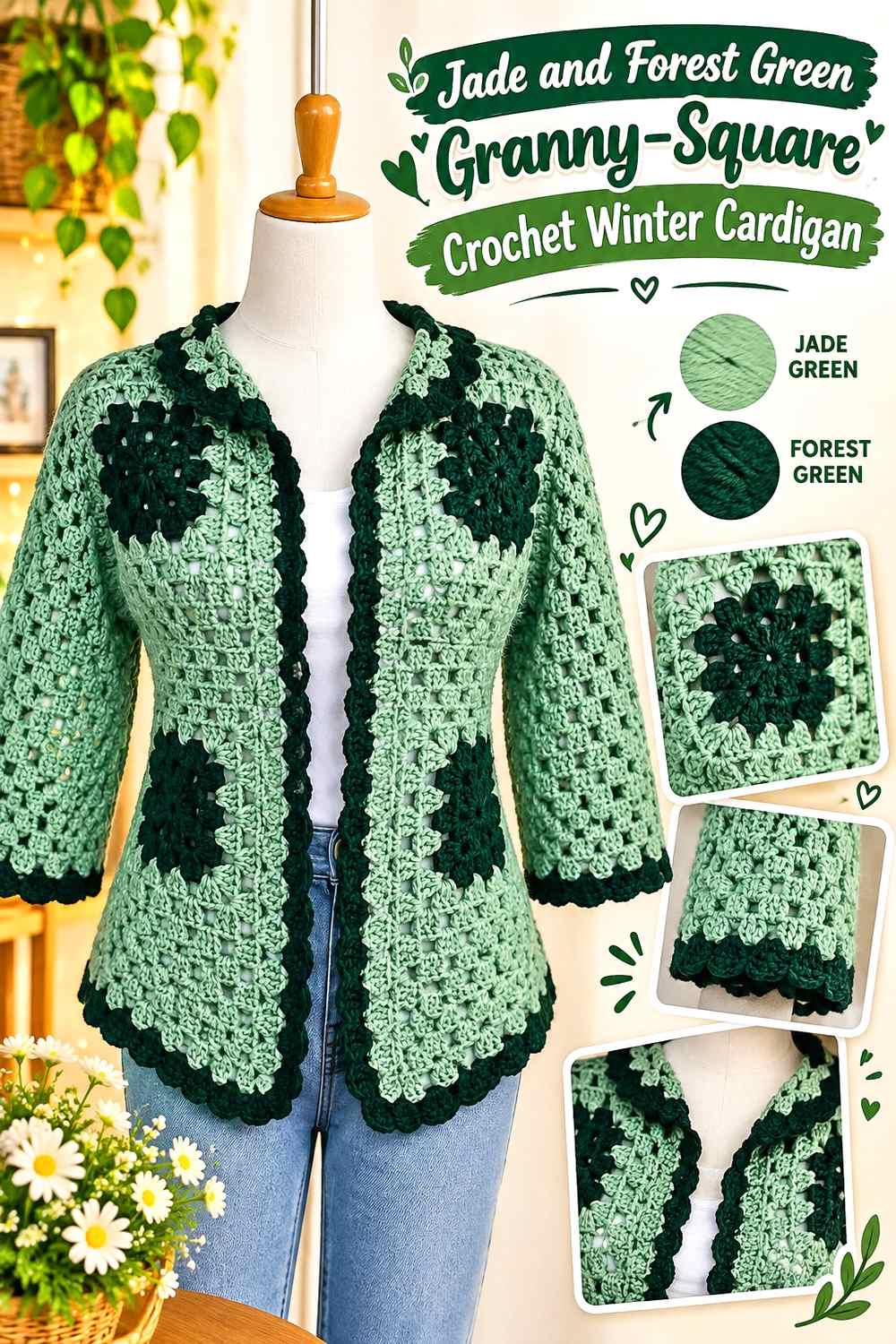
Forest green creates a tonal green cardigan rather than a high-contrast one. In granny squares, use jade consistently as the lighter or more visible repeated green and place forest green where deeper definition is useful.
Jade Can Connect Forest Green Granny Squares
Repeat jade in the same general position across many motifs—such as centers or outer sections—to give the cardigan a common visual thread.
The motifs do not need to be identical, but consistent jade repetition helps a tonal green layout feel organized.
Forest Green Can Give Jade Granny Motifs More Depth
Use forest green in smaller areas if you want jade to remain the recognizable main shade. Dark motif centers or selected borders can add depth without turning the entire garment forest green.
Before joining, view the squares together to check whether the darker motifs are clustering in one area.
Creator Credit: Nati Crochet
11. Jade And Stone Gray Hexagon Crochet Winter Cardigan

Stone gray gives a jade hexagon cardigan a balanced neutral accent without the sharpness of black. Because the construction produces large repeated shapes, color can be organized in broader bands rather than tiny details.
Jade Should Take the Largest Share of the Hexagon Cardigan
Use jade through the widest visual sections of each hexagon if the cardigan should remain green-led. Repeating that placement on both sides helps the finished garment feel balanced when the hexagons become the body.
Stone Gray Can Separate Jade Hexagon Sections
Stone gray works well between larger jade bands or at cuffs and edging. Its neutral character creates a resting point between repeated green areas.
Avoid adding several additional accent colors unless you intentionally want a multicolor hexagon cardigan rather than a jade-focused one.
Creator Credit: Annie | Hooks and Heelers
12. Jade And Mustard Mosaic Crochet Winter Cardigan

Mustard gives jade a strong warm contrast that suits mosaic surfaces, where color relationships can become part of the visible pattern. Give one color a clear lead so the cardigan does not become visually crowded.
Jade Can Ground a Mustard Mosaic Winter Cardigan
Use jade as the broader or more frequently repeated field when you want the mosaic effect to remain connected to the article’s main color.
The exact distribution can vary, but jade should appear consistently enough that mustard reads as the accent rather than a second dominant shade.
Mustard Makes Jade Mosaic Details Easier to Notice
Mustard can highlight selected pattern areas because its warm hue is clearly different from cool jade. Keep it repeated rather than random so the color contrast supports the mosaic structure.
If the pattern itself is intricate, two clearly organized colors may provide enough visual interest without a third shade.
Creator Credit: Annoo and The Unruly Stitch
13. Jade And Cocoa Basketweave Crochet Winter Cardigan

Cocoa gives jade a warm, dark neutral that complements the strong geometry of basketweave texture. Rather than interrupting every raised block with color, use cocoa around finishing areas and let jade carry most of the textured field.
Jade Keeps Basketweave Texture Continuous Across the Cardigan
A large jade basketweave panel allows the alternating raised texture to remain easy to follow. Frequent changes between jade and cocoa can make color compete with the woven-looking surface.
Reserve cocoa for sections where clear separation adds more value.
Cocoa Can Frame Jade Basketweave Cardigan Edges
Cocoa cuffs, front bands, or a lower border can create a defined warm frame. If the cardigan already has wide cocoa front bands, narrower cuffs may be enough to repeat the accent without making the edges overly heavy.
Creator Credit: Anns Closet
14. Jade And Ice Blue Oversized Crochet Winter Cardigan
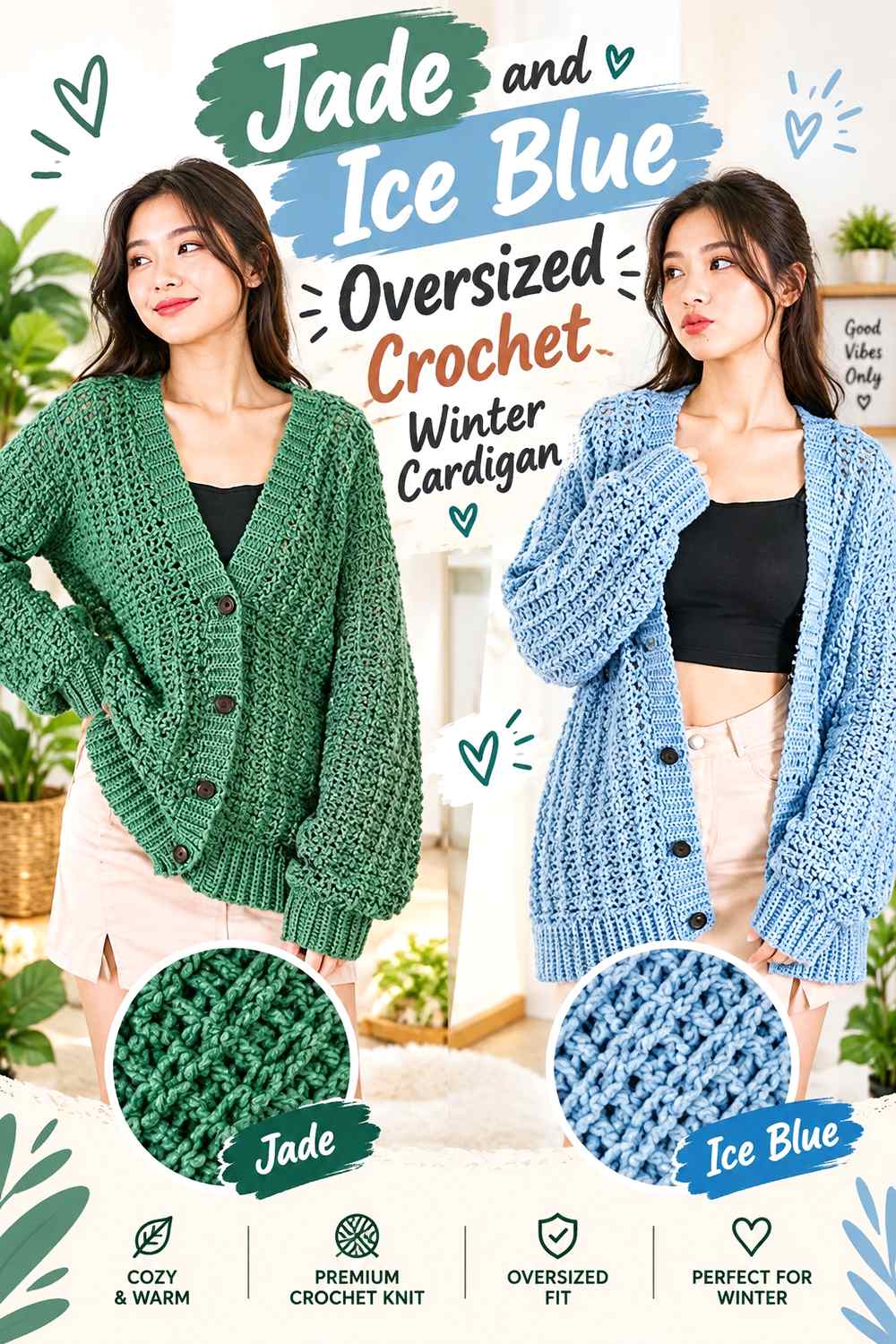
Ice blue gives jade one of the coolest and lightest pairings in the collection. On an oversized cardigan, use the pale blue selectively so the large silhouette does not become divided into too many equally noticeable color blocks.
Jade Should Cover Most of the Oversized Winter Cardigan
Let jade fill the broad front, back, and sleeve sections. This establishes a strong color foundation while the oversized silhouette supplies visual interest through shape.
Ice blue can then lighten specific edges without competing with the body.
Ice Blue Can Brighten Jade Cardigan Cuffs and Front Bands
Use ice blue on cuffs or a narrow front border when you want a crisp cool contrast. Because it is much lighter than a deeper jade, relatively small sections can still be noticeable.
Check the full cardigan before adding ice blue to every edge; two repeated accent locations may be enough.
Creator Credit: Chenda DIY
15. Jade And Plum Long Sleeve Crochet Winter Cardigan

Plum gives jade a deep complementary-feeling contrast without relying on another neutral. On a long-sleeve cardigan, concentrate plum near the ends and opening so the main green surface remains uninterrupted.
Jade Should Continue Through the Long Winter Cardigan Sleeves
Keep most of each sleeve jade if the torso is also jade. Matching those large surfaces creates continuity from shoulder to cuff and prevents the dark plum accent from visually shortening the sleeves.
Plum Can Give Jade Winter Cardigan Edges More Weight
Use plum at cuffs, the front band, or a narrow hem to create a darker boundary. Because both colors are rich, you do not need wide plum sections for them to register.
If you want a softer result, reduce the amount of plum rather than introducing another light accent that changes the two-color relationship.
Creator Credit: Make & Do Crew
Comparing the Jade Winter Cardigan Color Directions
For strong contrast, jade with charcoal, soft black, burgundy, navy, or plum gives cardigan edges and structural sections clear definition. These combinations are useful when you want cuffs, front bands, patchwork divisions, or yokes to remain prominent.
Cream, ivory, oatmeal, stone gray, and heather gray create lighter transitions. They can open up a dark jade cardigan without competing strongly with the main color.
Camel, cocoa, and mustard move jade in a warmer direction. Forest green creates the most tonal green option, while ice blue pushes the palette cooler and lighter.
For motif-heavy cardigans, focus less on choosing the most dramatic second color and more on repeating jade consistently. A clear color hierarchy can prevent granny squares, patchwork pieces, hexagons, and mosaic sections from feeling disconnected.
Conclusion
Jade works across several crochet winter cardigan styles because it can function as both a statement color and a stable background for texture. Cream and ivory make it lighter, charcoal and black sharpen the edges, camel and cocoa warm it, while navy, forest green, and ice blue develop cooler color relationships.
If you want the finished garment to read unmistakably as a jade cardigan, keep jade across the largest body and sleeve areas. Put the supporting color where it explains the construction: front bands, cuffs, hems, pockets, yokes, cable panels, motif borders, or selected patchwork blocks.
For textured and motif-based cardigans, check the palette before committing to the full garment. The best supporting shade is not simply one that looks appealing beside jade in a skein; it should also create the amount of separation your chosen cardigan surface needs.
Frequently Asked Questions
What colors pair well with a jade crochet winter cardigan?
Cream, ivory, oatmeal, gray, charcoal, black, navy, camel, cocoa, mustard, burgundy, plum, forest green, and pale blue can all work with jade. The right choice depends on whether you want strong contrast, a warm accent, or a more tonal cardigan.
How do I keep jade dominant in a multicolor crochet cardigan?
Use jade across the largest visual areas and repeat it throughout the garment. On a paneled cardigan, that usually means the main body and sleeves. On granny-square, patchwork, hexagon, or mosaic cardigans, repeat jade consistently across motifs rather than confining it to only one section.
Should a jade winter cardigan have dark or light cuffs?
Either can work. Dark charcoal, navy, plum, or cocoa cuffs create a stronger endpoint on jade sleeves. Cream, oatmeal, gray, or ice blue cuffs produce a lighter transition. Choose based on how much you want the cuff to stand apart from the sleeve.
How can I make jade crochet texture easier to see?
Good lighting and visible stitch relief can be enough when working in one color. If the texture remains difficult to distinguish, use a contrasting shade around nearby ribbing, borders, cables, or panel edges rather than changing the entire textured section.
Can jade and forest green work together in one cardigan?
Yes. They create a tonal green direction rather than strong contrast. Keep enough difference in lightness or saturation if you want motif borders or other small details to remain visibly separate.
Does cream or charcoal create a better contrast with jade?
They create different effects rather than one being universally better. Cream makes jade appear lighter and gives dark green surfaces a pale break. Charcoal produces a deeper, more defined edge. Your choice should depend on whether you want a light winter palette or a darker framed cardigan.
How should I distribute color in a jade granny-square or patchwork cardigan?
Repeat jade across both sides of the body and through the sleeves so the main color does not become concentrated in one area. Lay the motifs or blocks out before joining and check whether darker supporting colors are clustering. Moving a few pieces can often improve the overall color balance without changing the motifs themselves.