Marigold and Aubergine give a crochet hair claw cover a strong warm-and-deep contrast that works especially well on a small accessory. Marigold can carry the flower, bow, heart, or other focal motif, while Aubergine can cover the claw’s curved outer spine and create a darker visual base. Reverse those roles, and the clip becomes more subdued with smaller Marigold details standing out against the deeper purple.
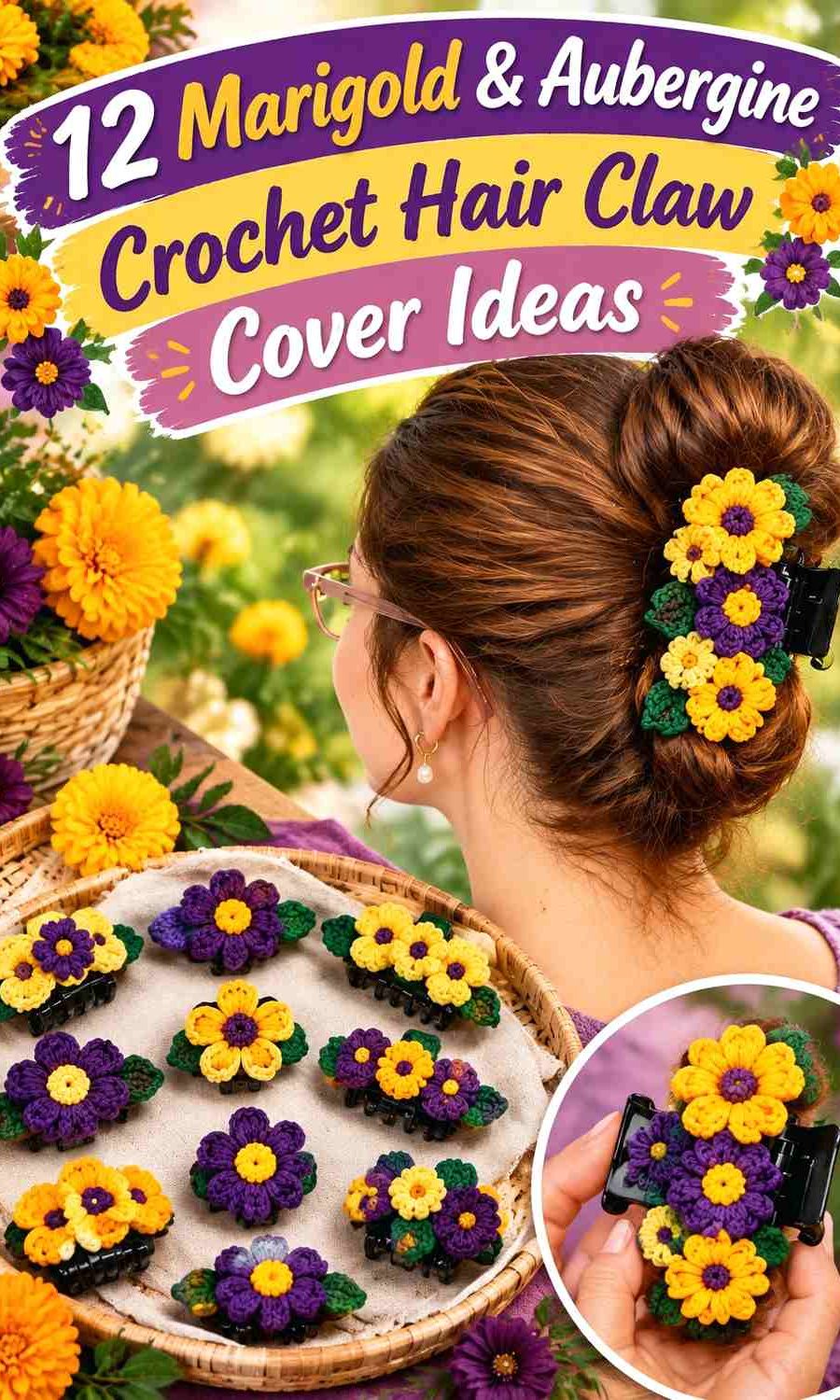
A hair claw also requires more careful placement than a flat barrette. The spring, hinge, teeth, and gripping surfaces need room to function, so the crochet decoration is better concentrated on the visible outer shell or spine rather than wrapped indiscriminately around the complete clip. The most noticeable color should usually appear where the claw is visible from the back or side once it is worn.
The credited tutorials below include one direct crochet claw-clip project plus flower, bow, rose, butterfly, heart, cherry, tulip, ribbon, and star hair-clip constructions that can support decorative adaptations. Use each source for its demonstrated motif or attachment concept, then adapt the coverage to your particular claw clip and apply the Marigold-and-Aubergine palette independently.
Quick List
- Aubergine Spine And Marigold Flower Crochet Hair Claw Cover
- Marigold Daisy And Aubergine Center Crochet Hair Claw Cover
- Marigold Bow And Aubergine Center Wrap Crochet Hair Claw Cover
- Aubergine Band And Marigold Mini Flower Crochet Hair Claw Cover
- Marigold Rose And Aubergine Leaf Crochet Hair Claw Cover
- Aubergine Butterfly And Marigold Wing Crochet Hair Claw Cover
- Marigold Heart And Aubergine Spine Crochet Hair Claw Cover
- Marigold Cherry And Aubergine Stem Crochet Hair Claw Cover
- Aubergine Tulip And Marigold Accent Crochet Hair Claw Cover
- Marigold Oversized Bow And Aubergine Edge Crochet Hair Claw Cover
- Aubergine Ribbon Wrap And Marigold Accent Crochet Hair Claw Cover
- Marigold Star And Aubergine Center Crochet Hair Claw Cover
Keep Marigold and Aubergine Away From the Hair Claw Teeth and Hinge
Before planning the color scheme, open and close the claw several times and identify which areas move, flex, or grip the hair. Crochet covering should not be placed where it prevents the teeth from meeting normally or blocks the hinge and spring.
That usually makes the outer curved spine the most useful area for color. Aubergine can cover that visible central strip while Marigold sits above it as a flower or bow. Another option is a Marigold spine with small Aubergine motifs positioned well away from the moving parts.
Check the cover again with the claw fully open and fully closed. A decorative section that appears clear when the clip is resting may shift toward the hinge or teeth when the claw moves.
Use Marigold and Aubergine Where the Crochet Hair Claw Is Actually Visible
A claw clip is usually viewed from the back and slightly from the side, so the upper spine, outside arms, and any raised motif carry more visual weight than crochet hidden underneath.
If Marigold is intended to be the main color, give it more than one tiny central stitch. Use it across a complete bow, flower, heart, or substantial spine section. If Aubergine dominates, let the deep shade cover the long base and repeat Marigold at one or two clear focal points.
This also helps on larger claws. A few large color zones tend to remain easier to read than many narrow Marigold-and-Aubergine stripes following every curve of the clip.
Check Marigold and Aubergine From Both the Top and Side
Raised crochet motifs can look balanced from the top but much larger from the side. A Marigold rose, for example, may project farther from the claw than a flat Aubergine butterfly or heart.
Place the unfinished motif against the clip before attaching it permanently. Check whether the Marigold and Aubergine areas still look proportional when the claw is worn horizontally, vertically, or at an angle. If one motif visually overwhelms the claw, reducing that motif usually gives a cleaner result than adding more decoration to balance it.
1. Aubergine Spine And Marigold Flower Crochet Hair Claw Cover
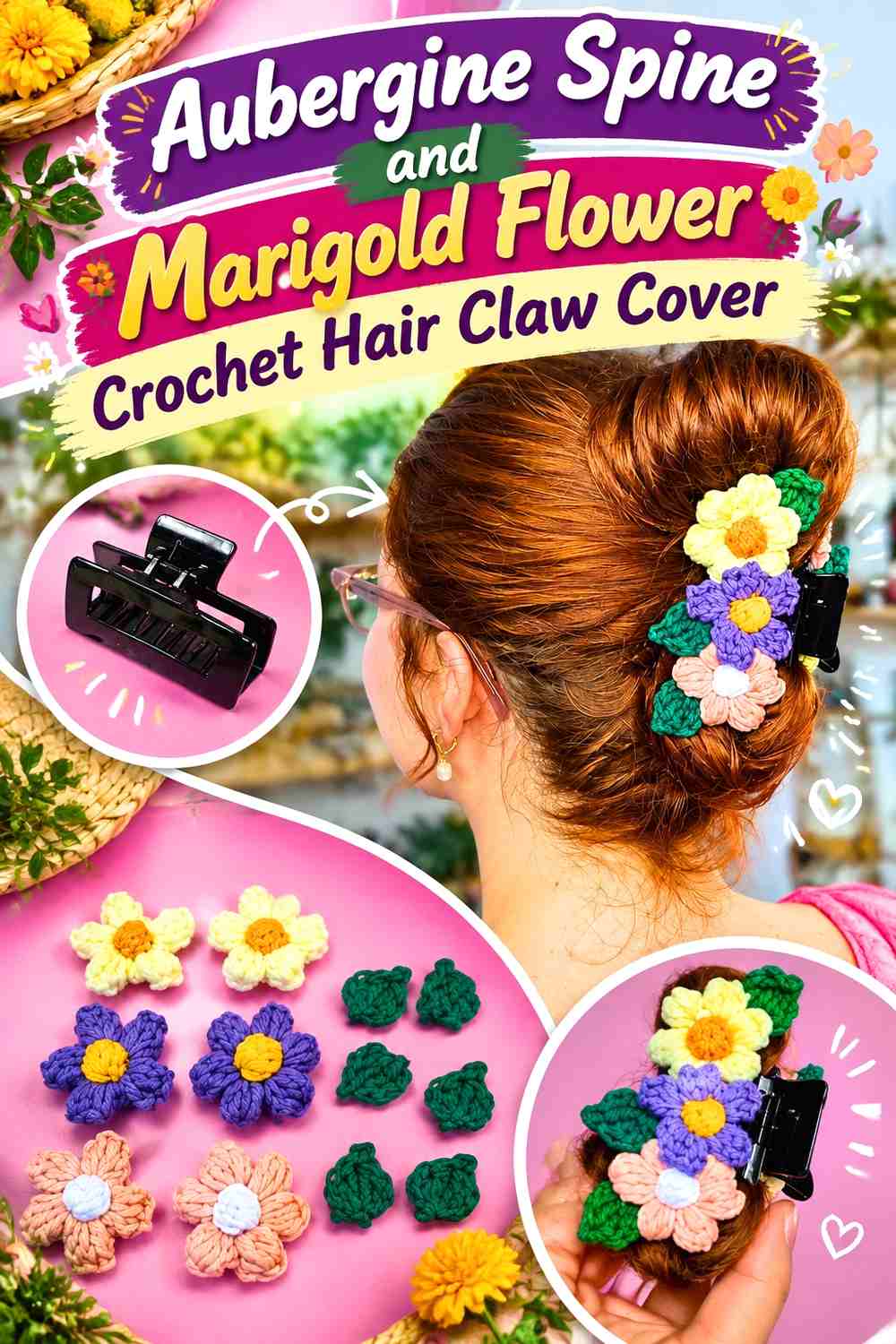
A flower-cluster treatment gives Marigold a natural focal role while Aubergine provides the darker base along the claw’s outer spine. The combination works particularly well because several warm flowers can remain visually separate from the clip structure instead of requiring the whole claw to be wrapped in both colors.
Let Aubergine Cover the Crochet Hair Claw Spine
Use Aubergine along the visible outer strip where the flower decorations will sit. A continuous darker base creates visual separation between the clip itself and the Marigold motifs above it.
Keep the Aubergine treatment clear of the spring, hinge, and inner gripping surfaces rather than extending the cover simply to use more color.
Repeat Marigold Across the Aubergine Crochet Flower Cluster
Use Marigold consistently across the main flowers so the group reads as one decorative feature. If several flower shapes are used, varying their placement can provide enough visual interest without changing their dominant color.
A small Aubergine center or leaf can connect individual Marigold flowers back to the spine when you want the two shades to interact within the motif.
Creator Credit: Brunaticality
2. Marigold Daisy And Aubergine Center Crochet Hair Claw Cover
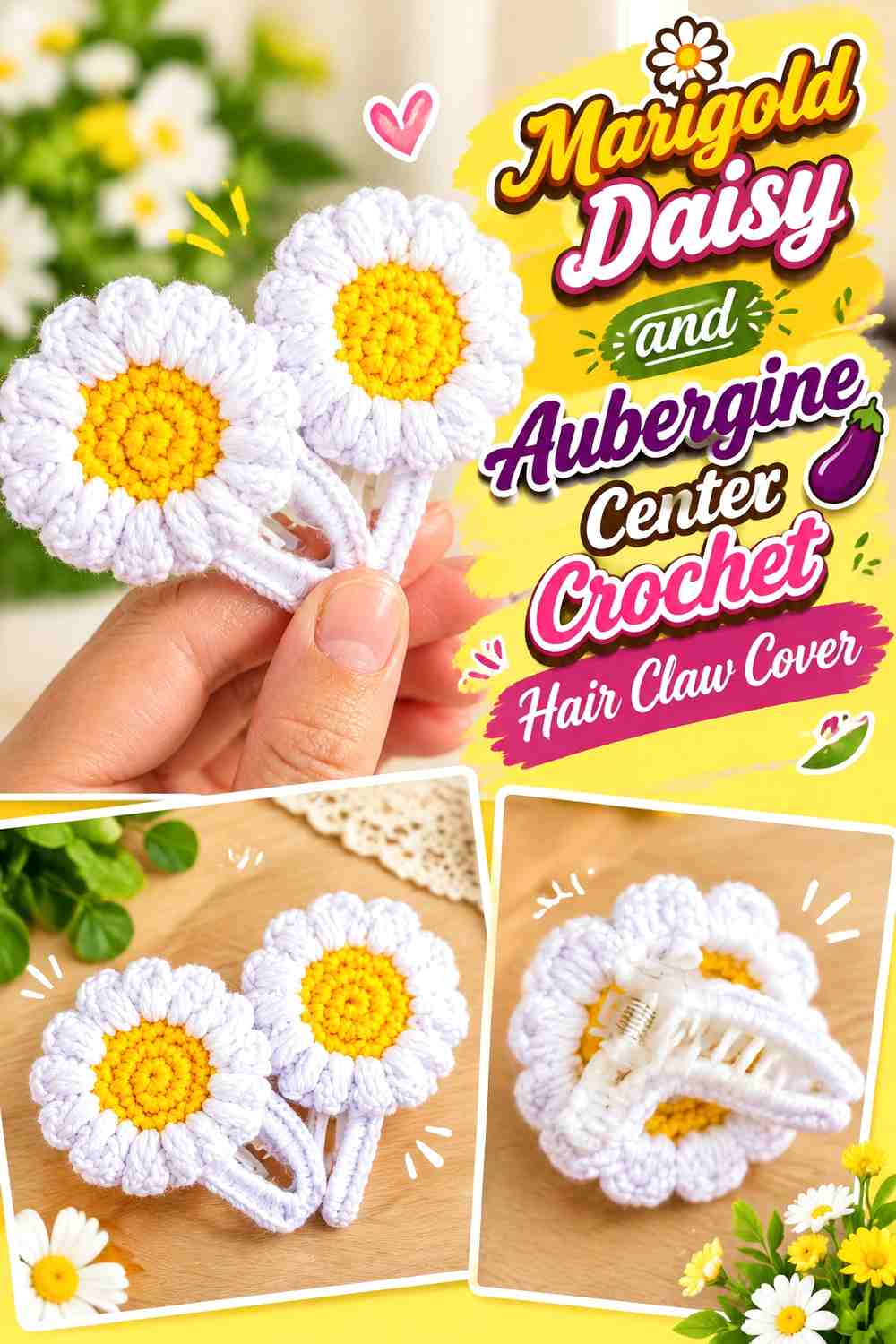
A daisy creates a flatter floral treatment than a layered rose or cluster. Marigold can spread across the petals while Aubergine stays concentrated in the center and along the claw spine. This lets the flower remain the focal point without putting raised decoration over the complete clip.
Repeat Marigold Around the Crochet Daisy Petals
Keep all of the petals Marigold if you want the flower outline to remain unified. Alternating every petal with Aubergine would make the small motif more segmented and reduce the impact of the warm color.
For a larger claw, two smaller Marigold daisies can often create clearer repetition than one flower that covers most of the spine.
Use Aubergine to Anchor the Marigold Crochet Daisy
An Aubergine center gives the Marigold petals a strong visual starting point and can match an Aubergine strip covering the clip underneath.
If the center becomes visually heavy, reduce its area instead of adding additional Marigold details elsewhere on the claw.
Creator Credit: Crochet Square & Tutorials
3. Marigold Bow And Aubergine Center Wrap Crochet Hair Claw Cover
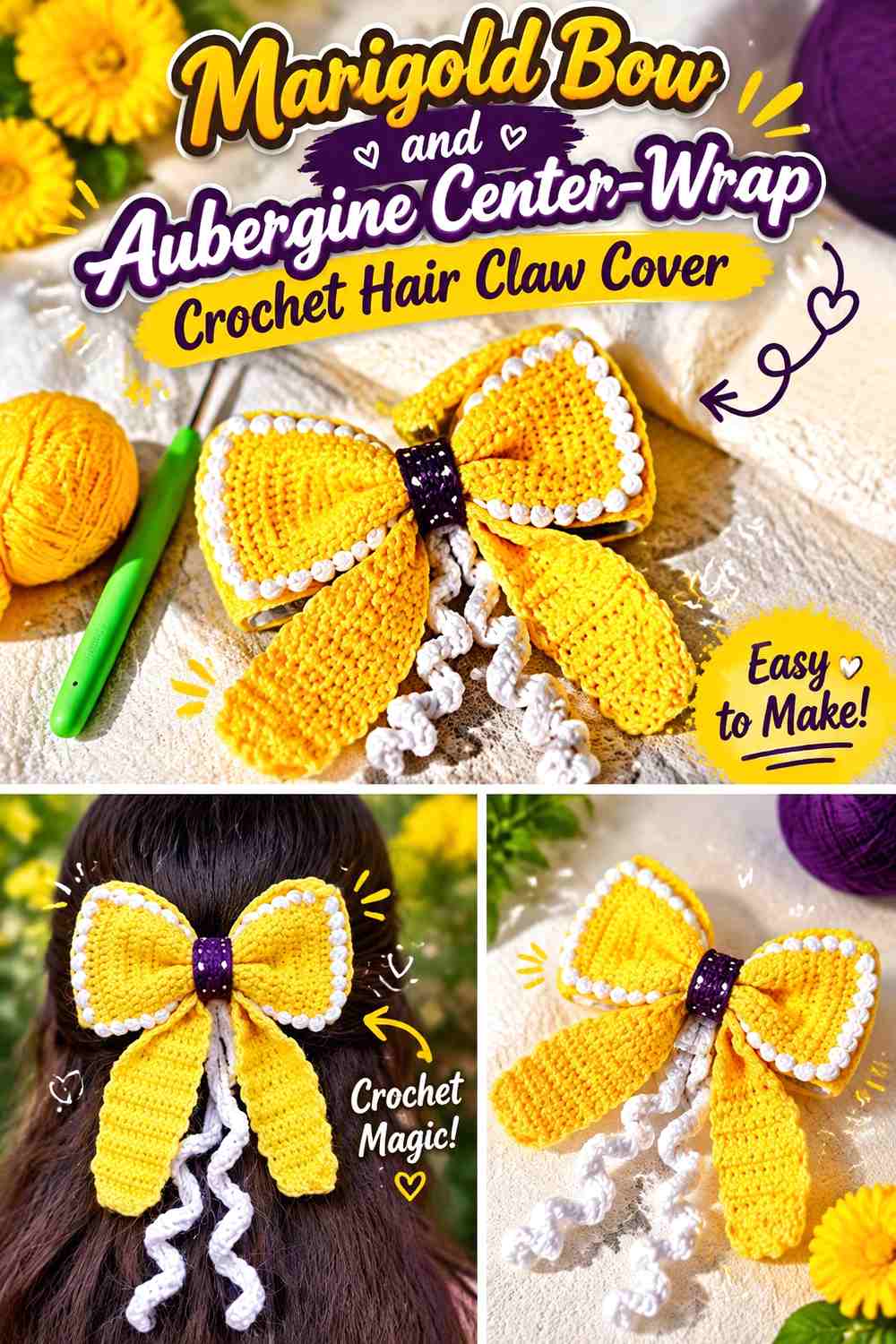
A bow works particularly well across the long upper spine of a hair claw because its two loops naturally spread to either side. Marigold can dominate both loops, while Aubergine forms the center wrap and the narrow covered base beneath them.
Keep Marigold Symmetrical Across the Crochet Bow
Use Marigold for both loops rather than splitting the bow into one Marigold and one Aubergine side. Symmetrical color helps the bow stay visually balanced when the claw is worn at an angle.
The tails can remain Marigold as well if they do not extend into the moving or gripping parts of the clip.
Wrap Aubergine Around the Marigold Crochet Bow Center
The middle is an efficient place for Aubergine because even a relatively small dark section can visually pull the two Marigold sides together.
Repeat Aubergine along the spine beneath the bow if you want the center wrap to look connected to the claw rather than like an isolated color patch.
Creator Credit: atar crochet
4. Aubergine Band And Marigold Mini Flower Crochet Hair Claw Cover
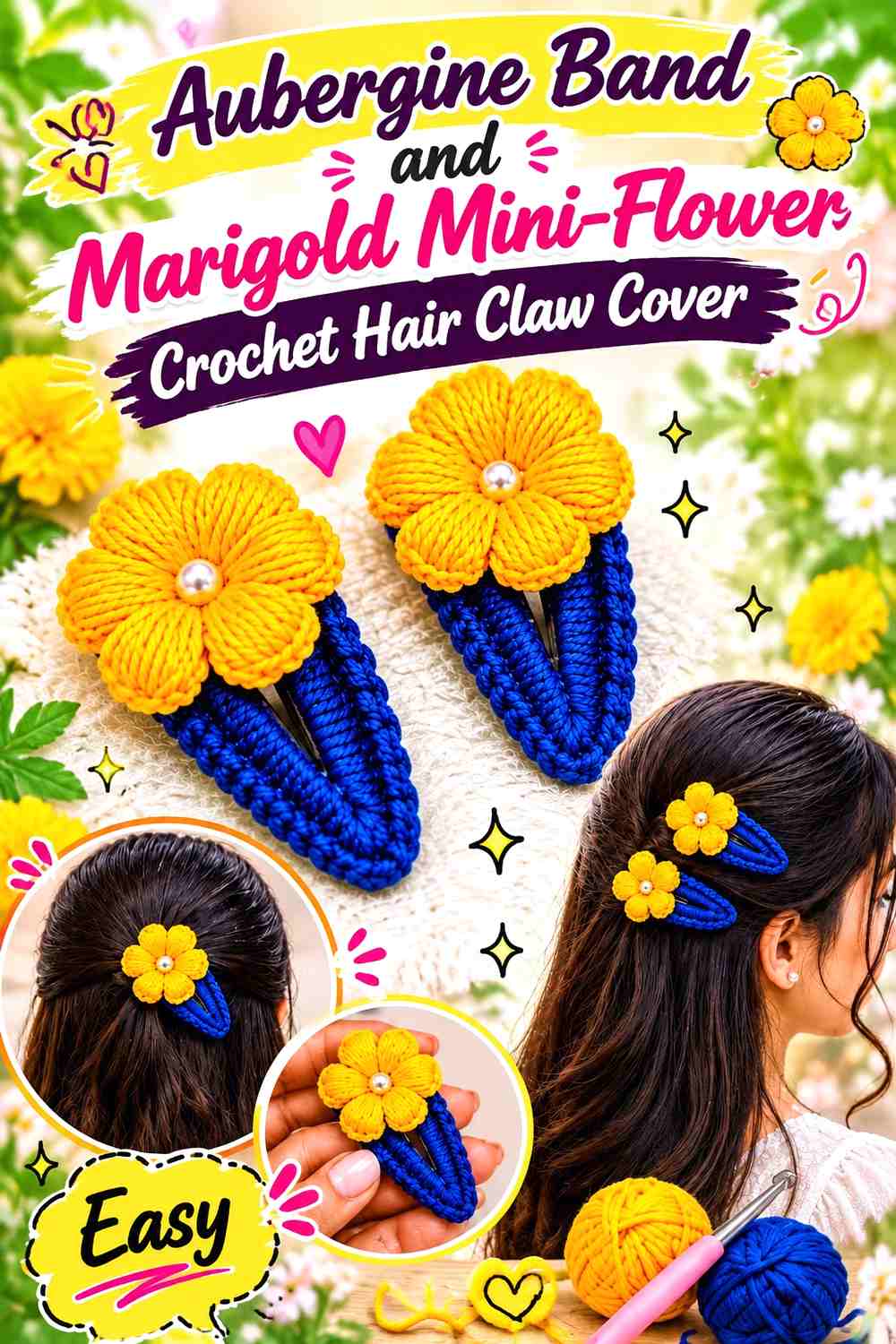
A covered-band approach is useful when you want the crochet itself to wrap more of the visible spine before adding a small motif. Aubergine can cover the main outside section, while one or more Marigold flowers provide contrast without overwhelming the claw.
Keep Aubergine Continuous Across the Crochet Hair Claw Band
Use Aubergine through the long visible strip instead of changing colors every short distance. A continuous cover emphasizes the shape of the claw and creates a stable background for smaller decorative elements.
Place Marigold Flowers Where the Aubergine Crochet Band Stays Visible
Position the Marigold flowers so some Aubergine remains visible around them. Completely covering the neutral-dark base with flowers would remove the visual reason for using the second color.
A centered flower gives the clip a more formal symmetry, while two small flowers offset toward one side produce a less rigid layout.
Creator Credit: Anubha’s Crochet
5. Marigold Rose And Aubergine Leaf Crochet Hair Claw Cover
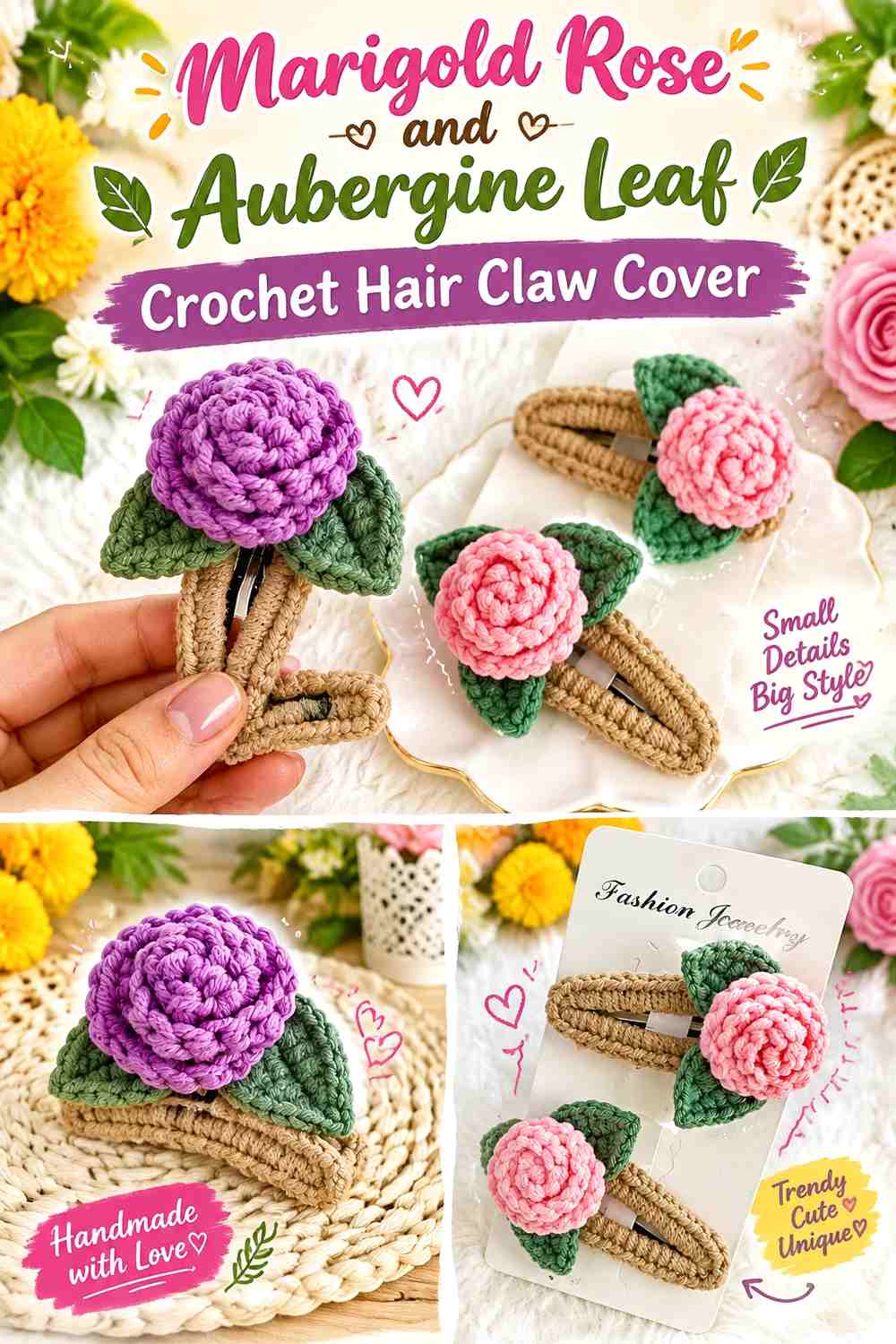
A rose introduces more dimensional texture, so the color scheme can stay simple. Marigold can cover the complete flower, while Aubergine provides the leaf, backing, and visible strip beneath it.
Keep Marigold Continuous Through the Crochet Rose
Use one Marigold field throughout the rose layers so the folds create the variation. Alternating Aubergine through every layer could make a small flower harder to read and visually heavier.
Check the rose from the side before attaching it because a dimensional flower can project farther from the claw than its top view suggests.
Place Aubergine Beside the Marigold Crochet Rose
An Aubergine leaf or two can extend the motif along the claw without making the flower itself multicolored. The darker shape also provides a transition between the warm rose and an Aubergine spine cover.
Keep the leaves clear of the hinge area where the two arms move.
Creator Credit: Kane Crochet
6. Aubergine Butterfly And Marigold Wing Crochet Hair Claw Cover
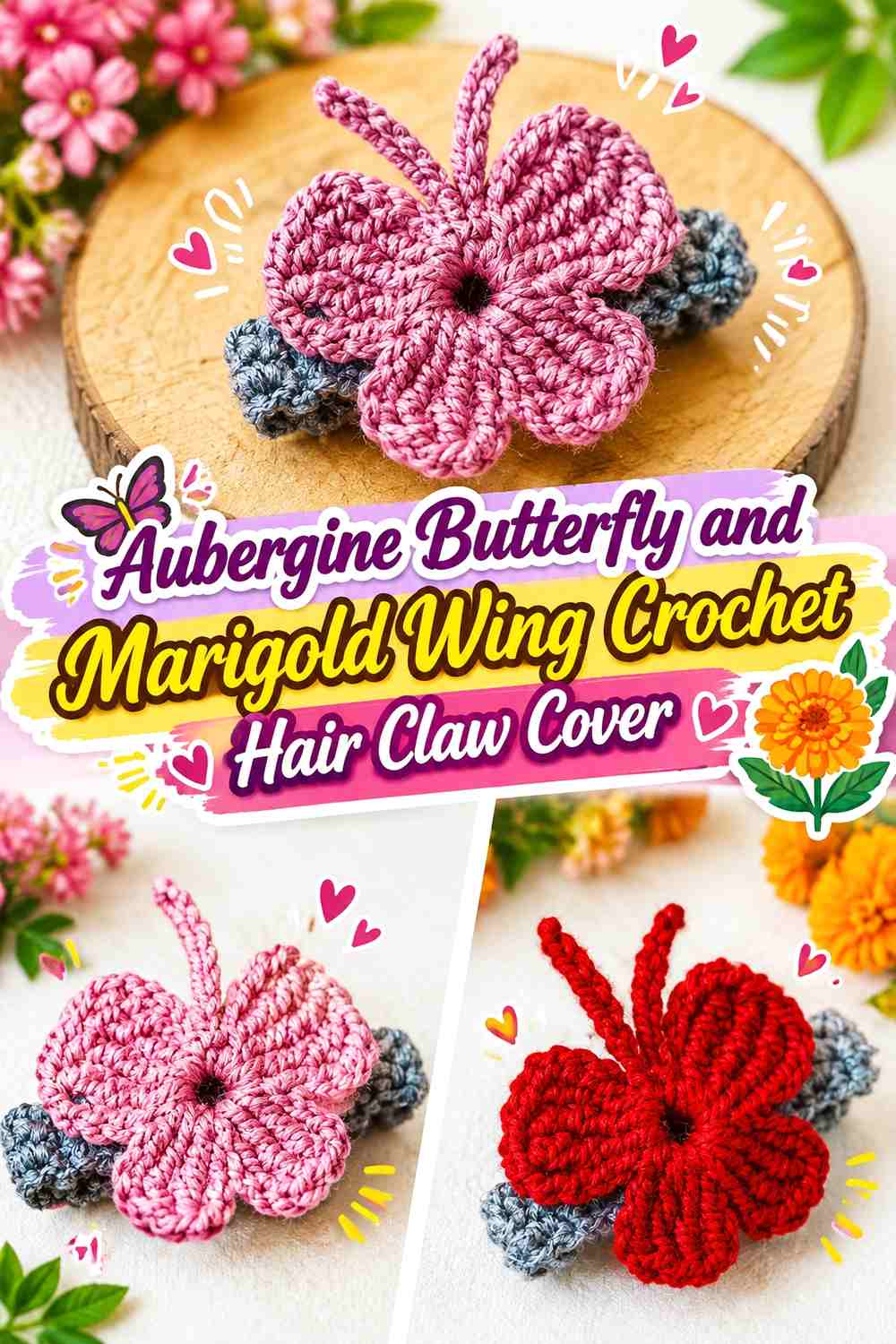
A butterfly can follow the curve of the claw with its body aligned along the spine and its wings spreading outward. Aubergine can define the body and underlying cover, while Marigold appears symmetrically on both wings.
Keep Aubergine Through the Crochet Butterfly Center
Use Aubergine for the body so the two Marigold wings remain clearly separated. Extending the same Aubergine shade onto the covered spine can make the butterfly look integrated with the clip.
Mirror Marigold Across the Aubergine Crochet Butterfly Wings
Place Marigold in corresponding sections of both wings. Symmetry matters on such a small motif because noticeably different color areas can make one side appear visually heavier.
If the claw is narrow, keep the wing shapes compact so they do not extend too far beyond the outer curve.
Creator Credit: Poplar Crochet
7. Marigold Heart And Aubergine Spine Crochet Hair Claw Cover
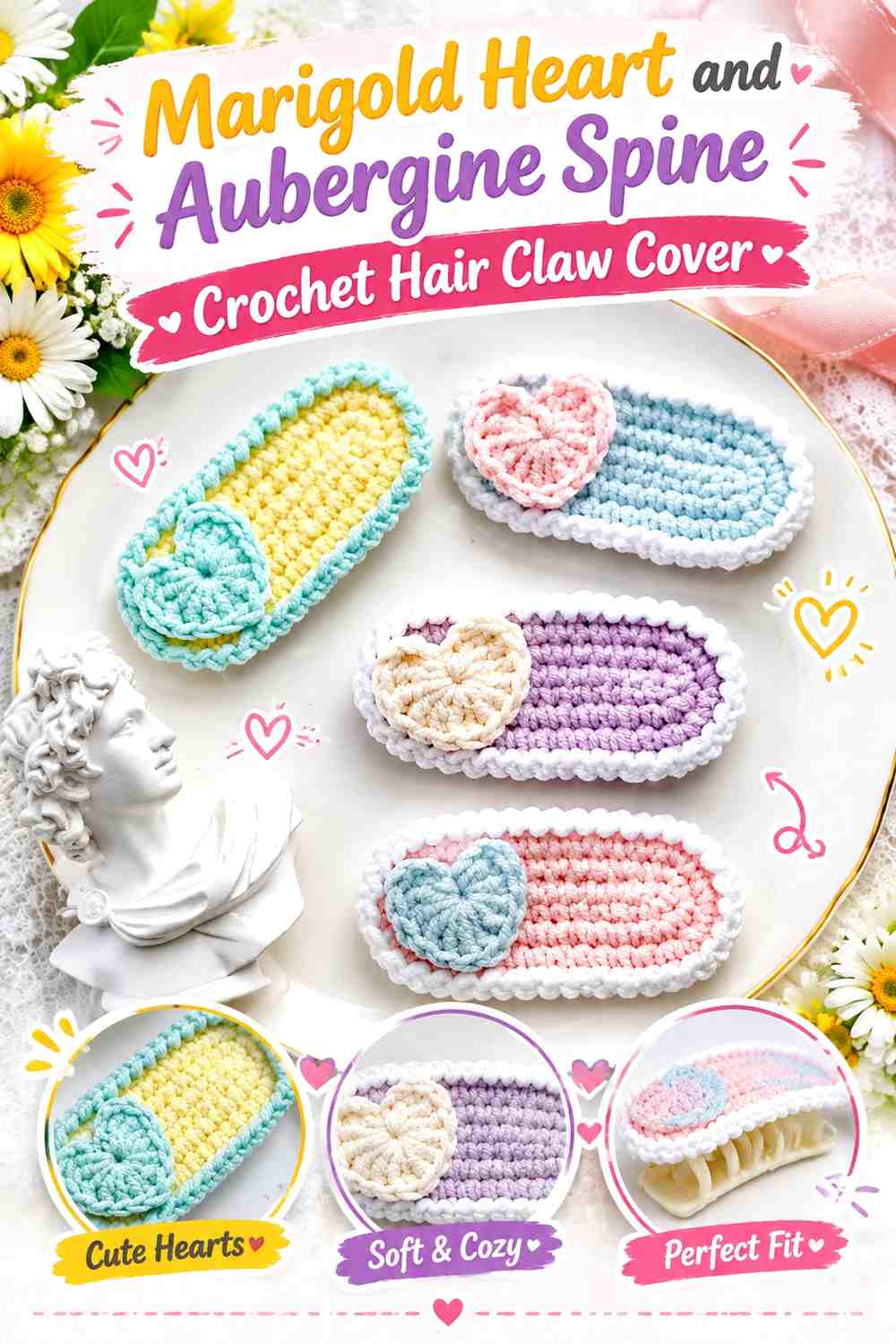
A heart gives the collection a simple nonfloral option. Marigold can fill the complete motif while Aubergine creates a narrow spine covering beneath it. The result works particularly well when you want one central focal point rather than decoration running across the entire claw.
Let Marigold Fill the Crochet Heart
Keep the heart solid Marigold so its familiar outline remains easy to recognize. Splitting a tiny heart between both shades can weaken the silhouette, especially when it is viewed from the side.
Center the Marigold Heart on an Aubergine Crochet Spine
An Aubergine base gives the warm heart enough contrast and extends the color scheme along the clip without requiring more motifs.
If the claw has a strong center curve, position the heart where it lies securely on the outer shell rather than where it would interfere with the hinge.
Creator Credit: Hanabi Amigurumi
8. Marigold Cherry And Aubergine Stem Crochet Hair Claw Cover
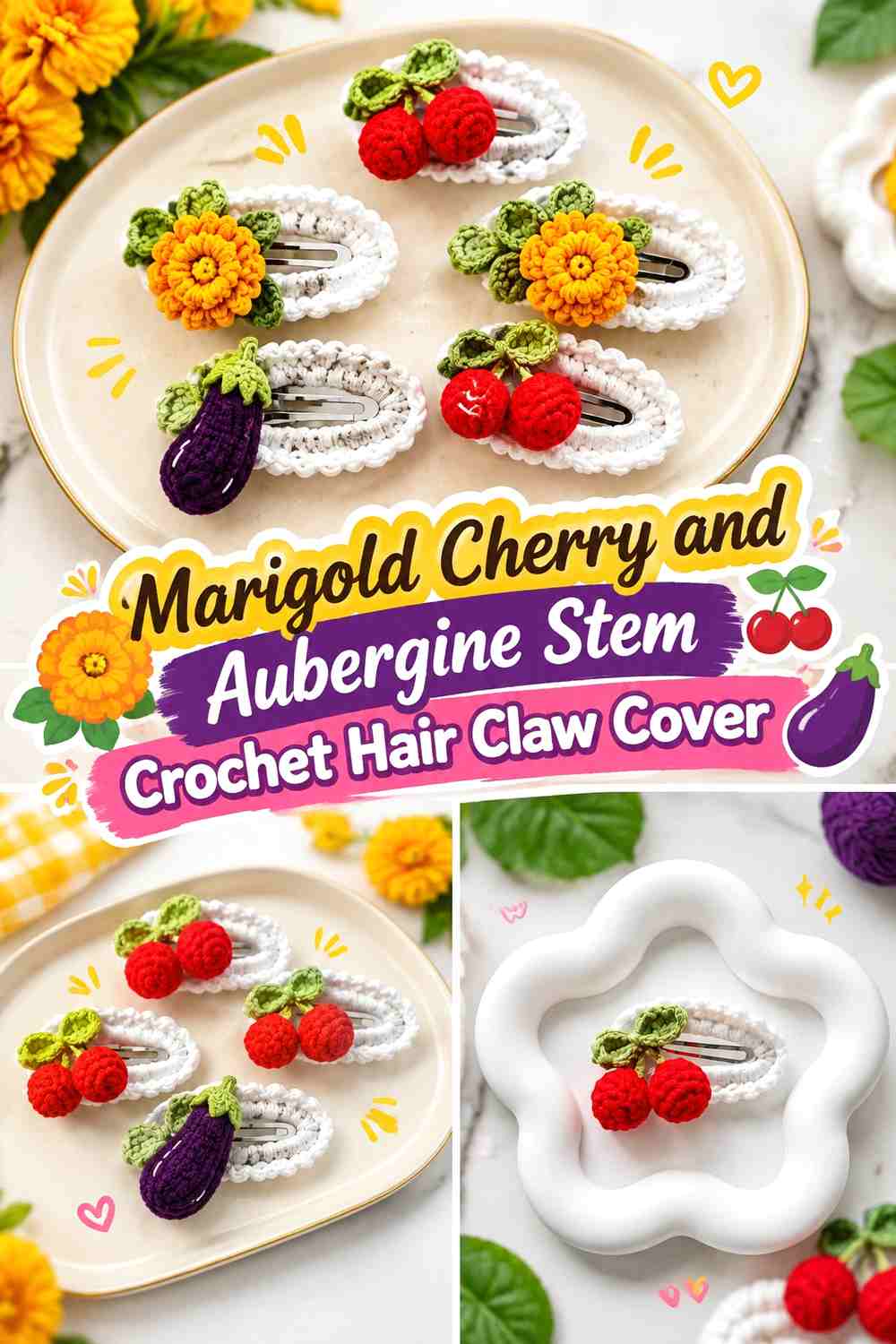
A paired-cherry motif creates a playful way to repeat Marigold twice while Aubergine connects the pair through the stems or covered clip base. The palette is intentionally stylized rather than an attempt to imitate natural fruit colors.
Repeat Marigold Across Both Crochet Cherry Shapes
Keep the paired cherries the same Marigold so they read as one coordinated motif. Their repeated circular forms already supply enough visual interest without reversing the colors from one fruit to the other.
Use Aubergine to Connect the Marigold Crochet Cherries
Aubergine stems or a small connecting section can lead directly into an Aubergine-covered spine. This makes the darker color structural while Marigold remains decorative.
Position hanging or projecting parts so they do not fall between the claw teeth when the clip opens and closes.
Creator Credit: Happi Crochet
9. Aubergine Tulip And Marigold Accent Crochet Hair Claw Cover
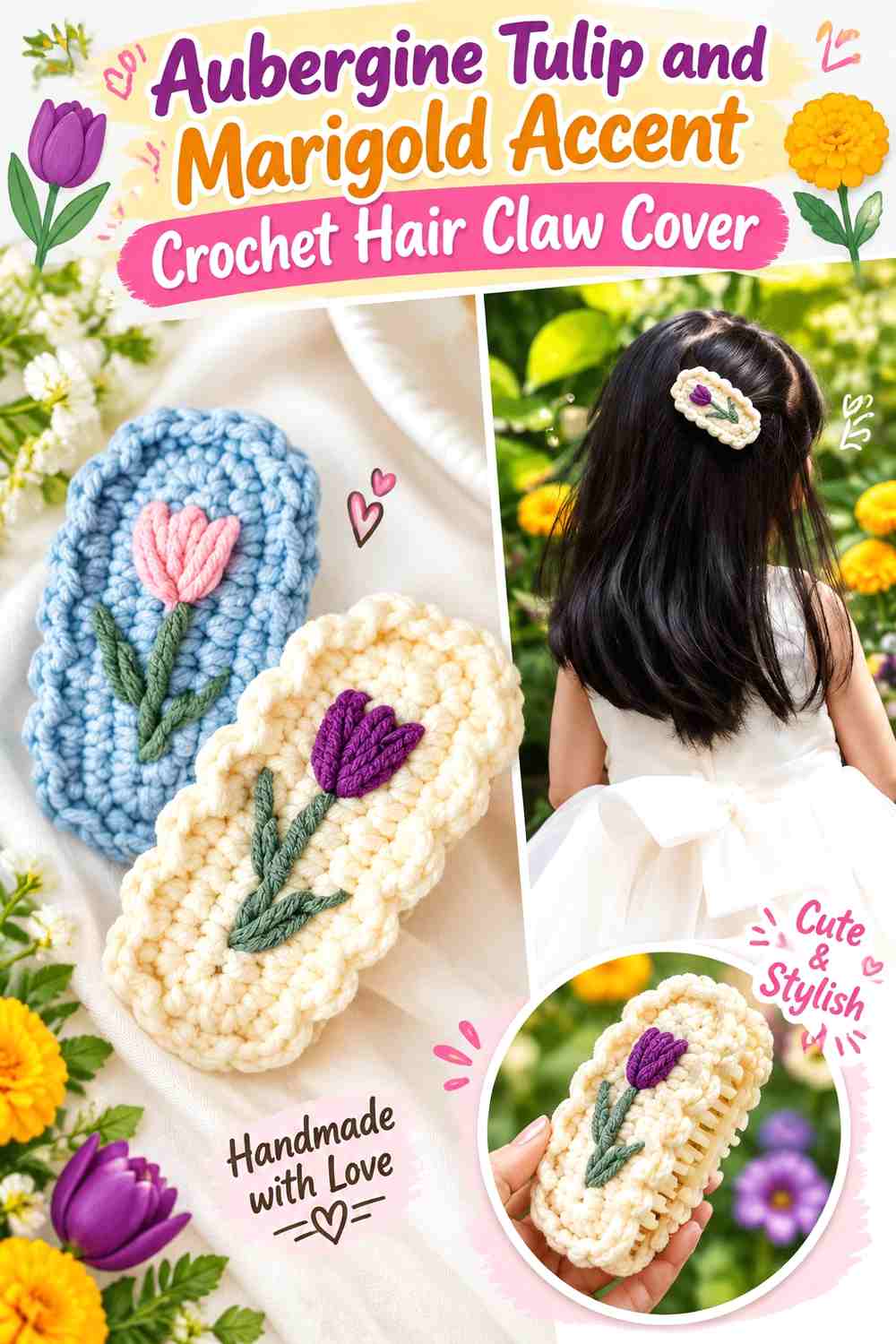
A tulip creates a more elongated motif that can run along the direction of the claw instead of spreading sideways. Aubergine can carry the flower head and covered spine, while Marigold appears in a smaller leaf, center, or edge detail.
Let Aubergine Define the Crochet Tulip Shape
Use Aubergine through the main flower head so the motif remains distinct from the brighter Marigold-led flowers elsewhere in the collection. The deeper shade also works well when the tulip is placed over a Marigold-free section of the claw.
Use Marigold to Break Up the Aubergine Crochet Tulip
Add Marigold in one controlled supporting area instead of striping every petal. A narrow accent at the base or a stylized leaf can keep the warm shade visible while preserving the Aubergine flower silhouette.
If the motif runs lengthwise, check that its tip does not project into the claw’s hinge area.
Creator Credit: Lazy bird crochet
10. Marigold Oversized Bow And Aubergine Edge Crochet Hair Claw Cover
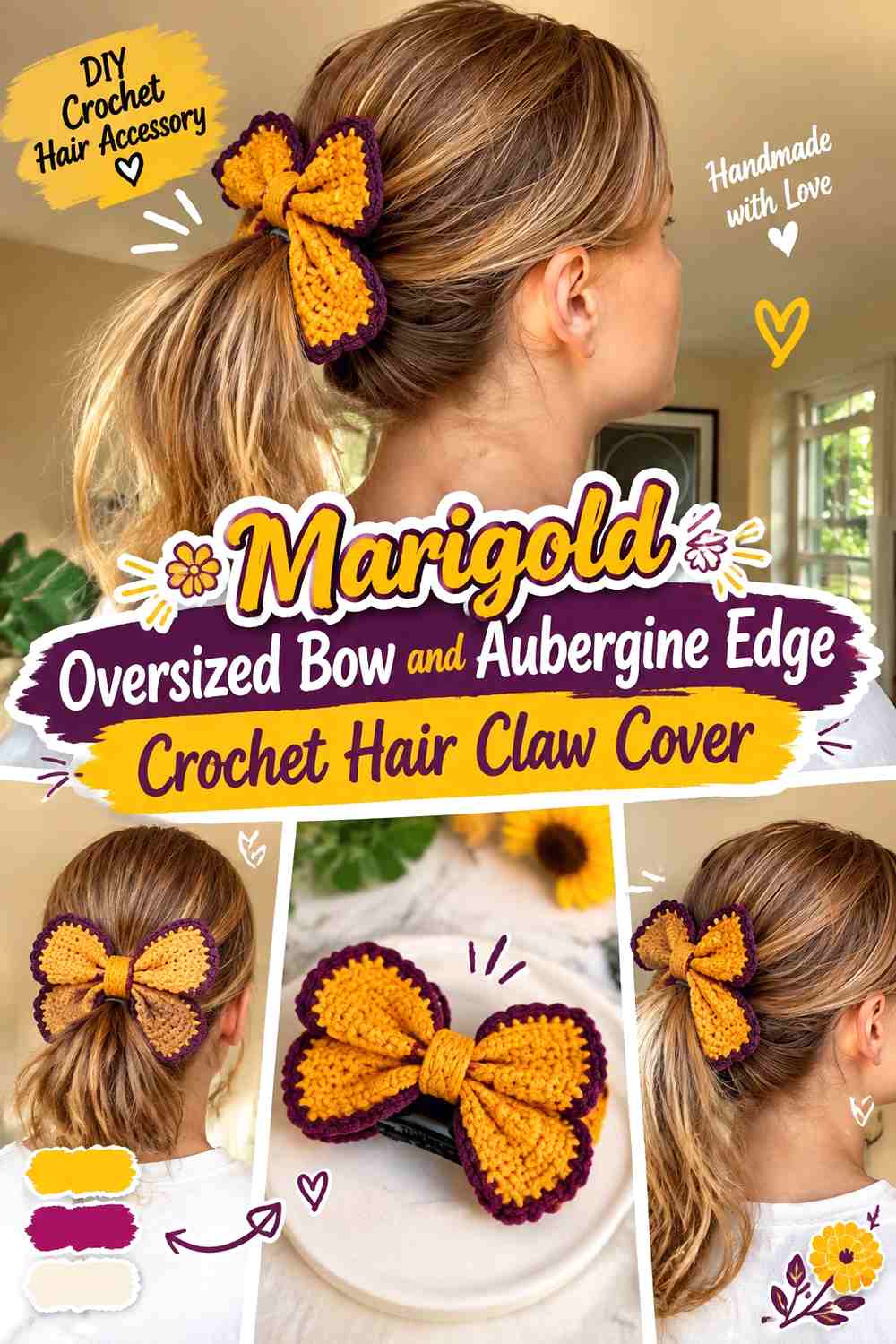
A broader barrette-style bow can be adapted into a statement cover for a larger claw. Marigold can dominate the wide bow surface, while Aubergine traces the edge or appears at the center and spine beneath it.
Give Marigold Enough Space Across the Crochet Statement Bow
Keep the large bow mainly Marigold rather than breaking its broad surface into many stripes. The extra width already makes the motif noticeable, so one dominant shade gives it a cleaner appearance.
Use Aubergine to Contain the Marigold Crochet Bow
Aubergine can appear around a narrow border, center wrap, or underlying claw cover. The darker edge helps define the Marigold silhouette when the bow is wider than the clip beneath it.
Check the bow’s full span against the claw before attaching it; large loops should not prevent the clip from being comfortably opened.
Creator Credit: Kate
11. Aubergine Ribbon Wrap And Marigold Accent Crochet Hair Claw Cover
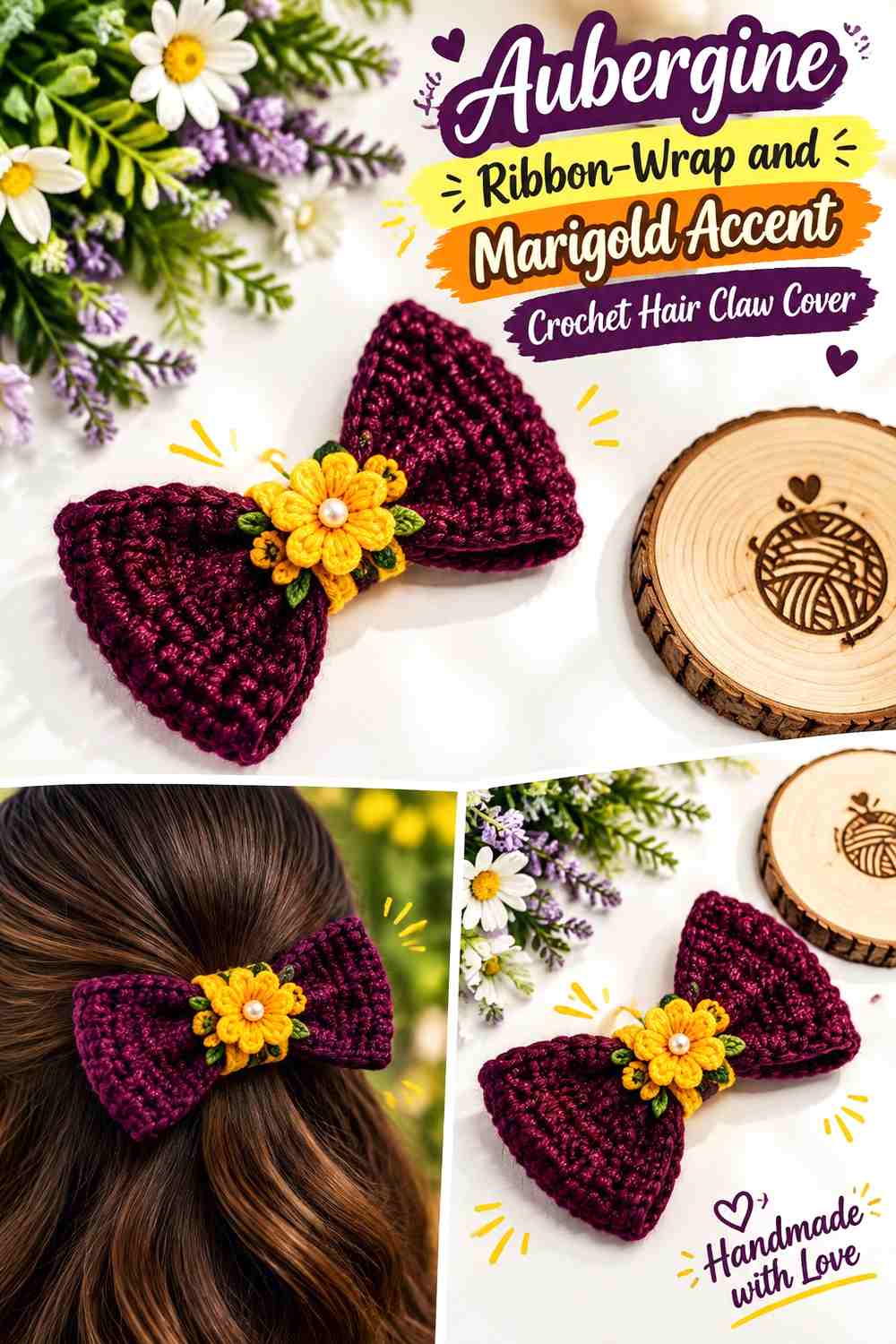
A ribbon-style crochet strip provides a more linear alternative to flowers and large bows. Aubergine can follow the long curve of the claw, while Marigold appears as a center band, small tie, or contrasting endpoint.
Follow the Crochet Hair Claw Curve With Aubergine
Use Aubergine through the long ribbon-like section to emphasize the spine rather than covering the clip with separate motifs. This produces one of the most streamlined designs in the collection.
Add Marigold at One Clear Aubergine Crochet Ribbon Point
A Marigold center wrap or controlled end detail can interrupt the Aubergine strip without making it look striped. Because the accessory is narrow, one warm focal area may be enough.
When adapting a barrette ribbon treatment, reshape the crochet to follow the claw’s curved exterior rather than assuming a flat strip will sit identically.
Creator Credit: Sharon Lee
12. Marigold Star And Aubergine Center Crochet Hair Claw Cover
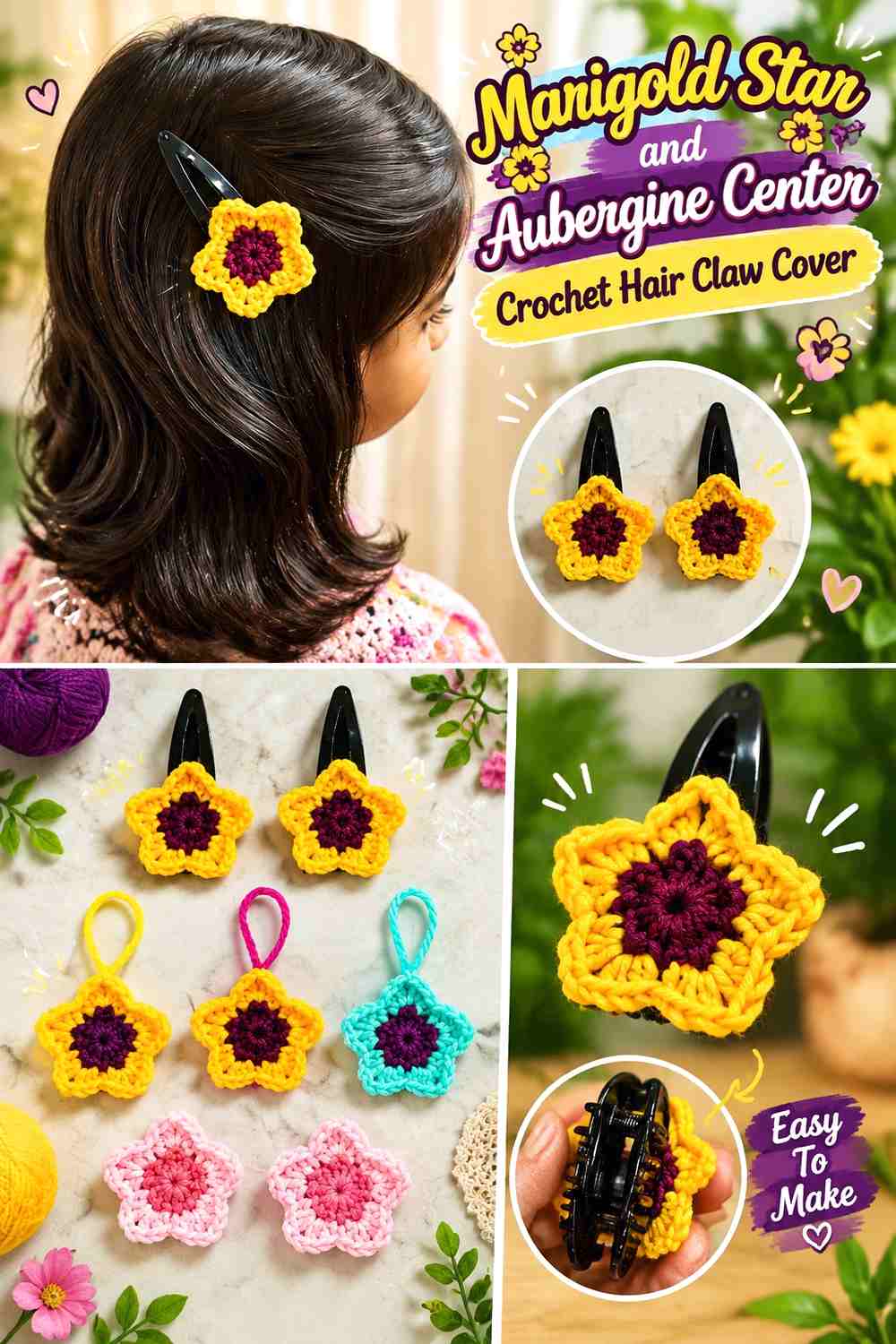
A star creates a crisp geometric alternative to the softer floral shapes. Marigold can cover the points, while Aubergine occupies the center and visible spine beneath the motif. This lets the darker color separate the projecting points visually.
Keep Marigold Consistent Across the Crochet Star Points
Use Marigold through all of the star arms so the geometric outline remains unified. Alternating point colors can make a very small star look more like a collection of separate triangles.
Let Aubergine Ground the Marigold Crochet Star
An Aubergine center gives the Marigold points a dark visual anchor and can transition directly into an Aubergine spine cover.
Place the star on the broadest stable area of the claw so the points do not extend toward moving teeth or the hinge more than necessary.
Creator Credit: Sarita crochet crafts
Comparing the Marigold and Aubergine Crochet Hair Claw Cover Directions
For a Marigold-forward hair claw, the flower cluster, daisy, bows, rose, heart, cherries, and star put the warm shade on the most recognizable decorative shapes. Aubergine then works naturally as the spine cover, center, leaf, or outline.
For a deeper Aubergine-led clip, the butterfly, tulip, ribbon wrap, and covered-band ideas give the purple shade considerably more surface area and use Marigold only where stronger contrast is useful.
If you want a low-profile cover, consider the daisy, butterfly, heart, ribbon, or star. The rose, clustered flowers, and oversized bow create more projection, so check their side profile against the clip and hairstyle before final attachment.
Conclusion
Marigold and Aubergine work especially well on a crochet hair claw cover when the two colors have separate jobs. An Aubergine spine with a Marigold flower or bow creates a strong dark-base/warm-focal relationship, while an Aubergine butterfly or tulip with smaller Marigold details gives the same palette a much moodier direction.
The claw itself should guide the design. Keep crochet away from the teeth, hinge, spring, and other areas needed for normal movement, and use the outside curve as the primary decorating surface. On a small claw, one heart, star, or flower may be enough. On a larger clip, repeated flowers or a broader bow can use more of the available space without crowding the functional parts.
Use the credited tutorials for their original claw-clip, barrette, motif, or hair-accessory construction concepts, then adapt the size and attachment to the claw you actually have.
Frequently Asked Questions
Should Marigold or Aubergine dominate a crochet hair claw cover?
Either can dominate. Marigold works well for flowers, bows, hearts, stars, and other focal motifs, while Aubergine makes an effective darker base across the claw spine. Reverse the relationship when you want the finished clip to look more subdued.
Where should Aubergine go on a Marigold crochet hair claw cover?
Useful placements include the outer spine, flower centers, bow wraps, leaves, motif backing, and narrow edging. These areas can define the warmer Marigold sections without dividing every small motif into two colors.
How can I keep a Marigold crochet flower from looking too large on a hair claw?
Compare the unfinished flower directly with the claw from both the top and side. If the motif covers most of the hinge area or projects much farther than the clip body, use a smaller flower or fewer repeated motifs rather than adding more Aubergine to visually balance an oversized decoration.
Can I cover the whole hair claw in Marigold and Aubergine crochet?
It is better to plan around the claw’s function. Keep the teeth, hinge, spring, and moving or gripping areas clear. Concentrate crochet on the stable outer shell or spine and check that the clip still opens and closes normally after the decoration is positioned.
How do I make Marigold and Aubergine visible on a small crochet claw cover?
Use larger, simpler color zones. A complete Marigold heart against an Aubergine spine is easier to read than many tiny alternating stitches. The same principle works with a Marigold bow, Aubergine butterfly, or two-color flower.
Are flowers or bows better for a Marigold and Aubergine crochet hair claw?
They create different profiles rather than one being universally better. Flat flowers and small bows can keep the clip relatively compact, while roses, flower clusters, and oversized bows add more dimensional decoration. Choose according to the claw size and how much projection you want.
How can I substitute colors without losing the Marigold and Aubergine effect?
Preserve the warm-versus-deep relationship. Replace Marigold with another warm golden or yellow-orange shade if it is serving as the focal color, and replace Aubergine with another deep muted purple when it is providing the base or definition. Make sure the replacements remain distinct enough for small centers, edges, and motifs to stay visible.