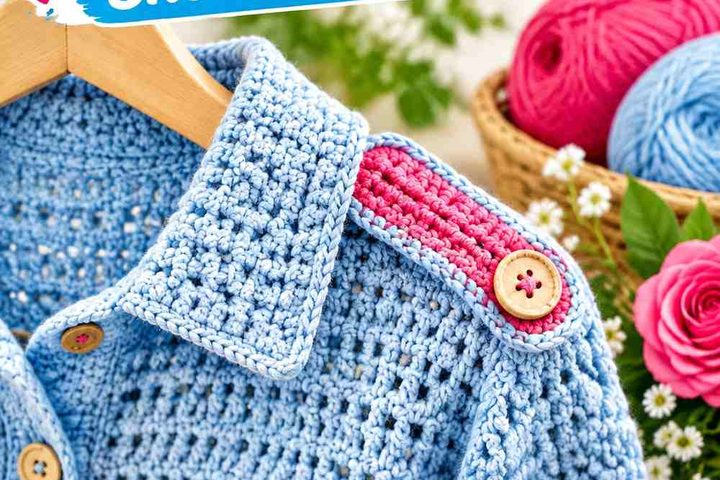
Raven black gives a crochet cardigan a strong, dark foundation, but using black successfully takes more planning than simply making the entire garment one color. Dark yarn can reduce visible separation between stitches, ribs, motifs, and seams, especially when the cardigan has a dense surface. A supporting shade can solve that problem while also directing attention toward cuffs, borders, pockets, sleeves, or motif layouts.

The most useful raven black cardigan palettes give every color a job. Black can dominate the body, a second shade can separate major panels, and a lighter or stronger accent can mark the edges. Other designs can stay deliberately low-contrast, using charcoal, burgundy, plum, or forest green to create subtle changes instead of sharp divisions.
The color schemes below are editorial adaptations for the cardigan concepts. The linked tutorials support the crochet cardigan construction and may use different colors from the palettes suggested here.
Quick List
- Raven Black And Bone Cream Classic Crochet Cardigan
- Raven Black And Oxblood Burgundy Mesh Crochet Cardigan
- Raven Black And Charcoal Gray Panel Crochet Cardigan
- Raven Black And Forest Green Made To Measure Crochet Cardigan
- Raven Black And Mustard Gold Granny Stitch Crochet Cardigan
- Raven Black And Dusty Rose Ribbed Chunky Crochet Cardigan
- Raven Black And Deep Teal Oversized Crochet Cardigan
- Raven Black And Lavender Patchwork Crochet Cardigan
- Raven Black And Rust Patchwork Crochet Cardigan
- Raven Black And Cobalt Blue Lacy Crochet Cardigan
- Raven Black And Silver Gray Hexagon Crochet Cardigan
- Raven Black And Plum Granny Hexagon Crochet Cardigan
- Raven Black And Camel Chunky Crochet Cardigan
- Raven Black And Soft Sage Cropped Crochet Cardigan
How to Keep Raven Black Crochet Texture Visible
Raven black can make a smooth cardigan look clean and uninterrupted, but it can also make subtle ribbing, cables, raised stitches, and panel changes harder to see. Before committing to an entire garment, work enough fabric to judge the texture from normal viewing distance rather than inspecting only individual stitches.
A lighter border is one option, but contrast does not always need to surround the entire cardigan. Cream cuffs, gray ribbing, a colored neckline, or a contrasting pocket can create visual reference points while allowing most of the garment to remain black.
For openwork and mesh, remember that the clothing underneath becomes part of the visible color composition. A raven black mesh cardigan worn over a light layer will show considerably more pattern definition than the same cardigan over another black layer.
Where Accent Colors Work Best on a Raven Black Cardigan
Cardigans have several natural places for controlled contrast: front bands, cuffs, hems, pockets, sleeves, collars, joins, and motif borders. Using an accent in one of these structural areas usually looks more intentional than scattering isolated color changes across the garment.
Think about visual weight as well. A bright mustard cuff occupies little area but can attract considerable attention beside raven black. A dark forest green may need a wider sleeve section or larger panel before the difference becomes obvious.
Repeated placement also helps connect the garment. If camel appears on the pockets, for example, repeating a smaller amount at the cuffs or front edge can keep those pockets from looking detached from the rest of the cardigan.
Test Raven Black Against the Supporting Color First
Different hues can still look almost identical when they have similar lightness. Raven black with burgundy, plum, deep teal, or forest green can produce a sophisticated low-contrast palette, but small details in those colors may disappear into the black.
Place the yarns side by side and view them from several feet away. A grayscale photo can also help reveal whether two colors that look different in hue actually have enough light-and-dark separation for the placement you are planning.
If the supporting shade nearly disappears, you do not necessarily need to replace it. Increasing its visual area—such as changing from a narrow stripe to a full cuff or panel—can make the relationship easier to read.
1. Raven Black And Bone Cream Classic Crochet Cardigan
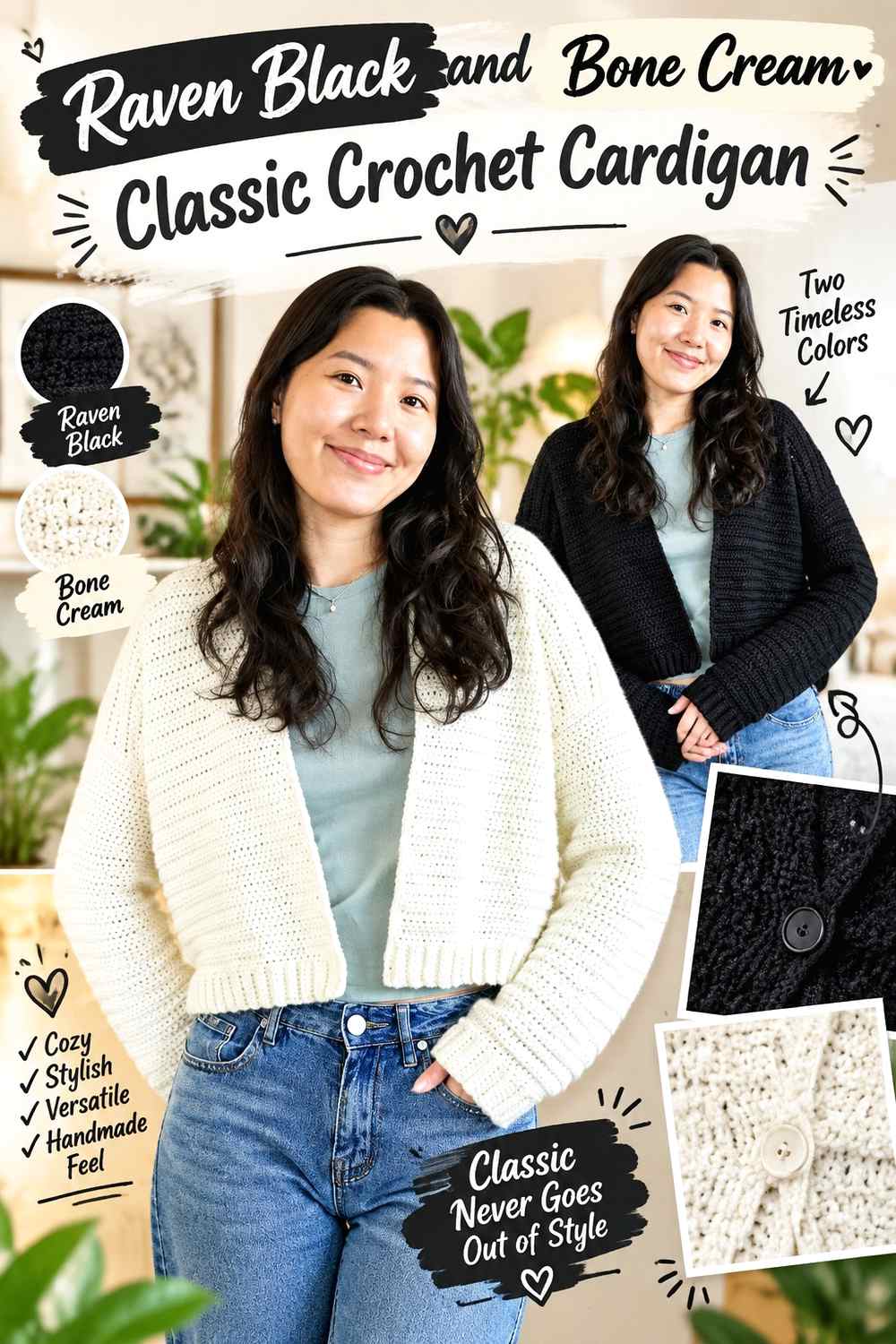
A classic raven black cardigan becomes much easier to read when bone cream is concentrated around the edges rather than divided evenly across the garment. Keep raven black across most of the body and sleeves, then use cream for the front band, cuffs, or lower edging. This gives the cardigan a dark overall identity while outlining the areas that define its silhouette.
The higher value contrast also helps distinguish finishing details that could otherwise disappear against a completely black surface. For an understated version, choose only two cream locations rather than framing every possible edge.
Let Raven Black Control the Main Cardigan Panels
Keeping raven black across the back and front panels creates one continuous dark field. This works particularly well when you want the cardigan to function as a neutral outer layer rather than a visibly striped garment.
If cream is being introduced, decide on its placement before the front edging is finished. Too many small cream details can break the black surface into unrelated sections, while a few repeated accents preserve the larger dark shape.
Use Bone Cream to Separate Raven Black Cuffs and Front Edges
Bone cream is especially useful where one black section meets another. A cream cuff can distinguish the sleeve ending, while a cream front band gives the opening a clearer boundary.
If the cardigan includes pronounced ribbing, the lighter color can also make those vertical or horizontal ridges easier to notice. Keep the cream narrower when you want black to remain visually dominant.
Creator Credit: VivCrochets
2. Raven Black And Oxblood Burgundy Mesh Crochet Cardigan
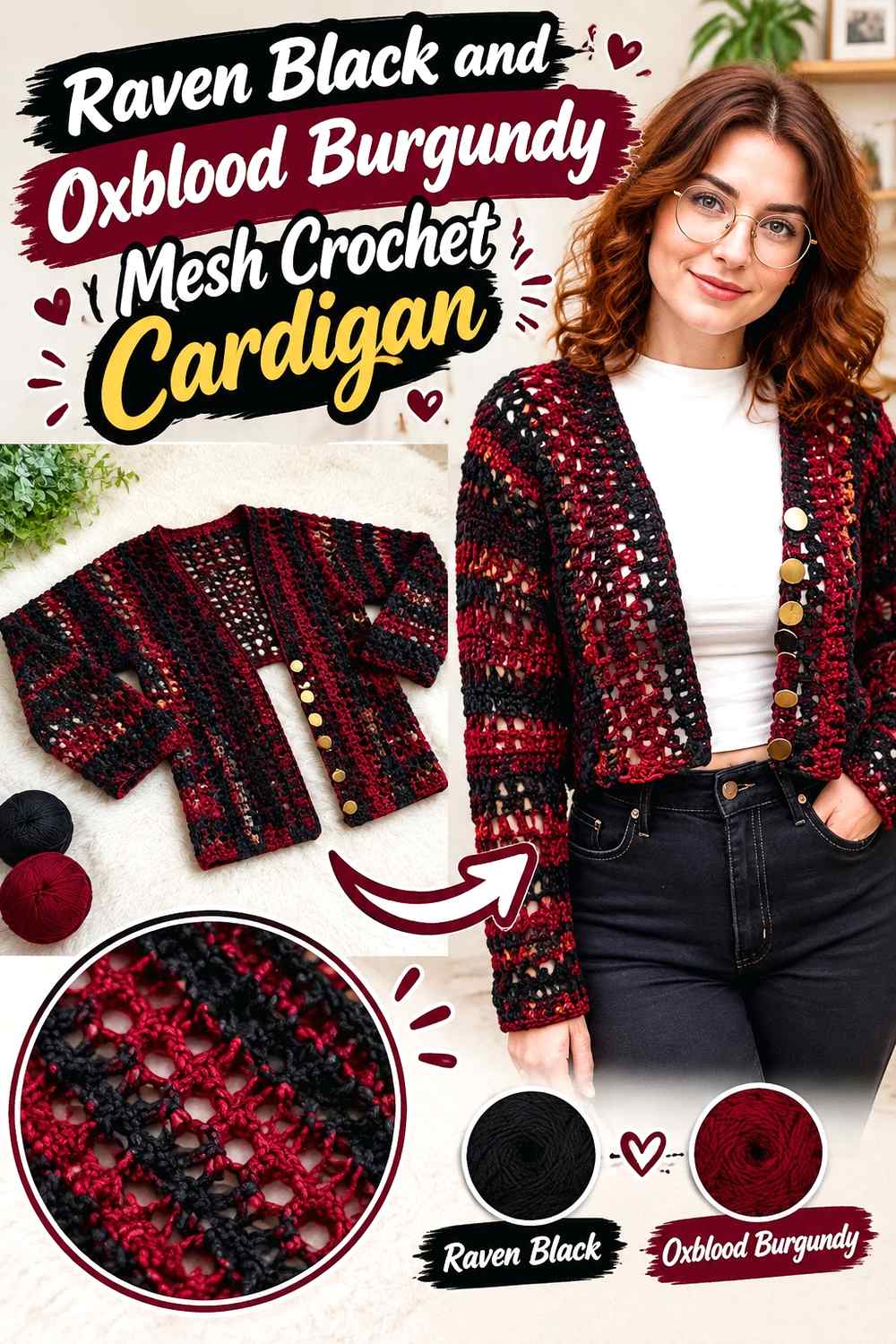
Raven black and oxblood burgundy create a much darker relationship than black and cream. On a mesh cardigan, that subtle difference can be useful when you want color without creating a highly graphic effect. Raven black can cover most of the openwork while burgundy appears in the cuffs, lower section, or broader sleeve bands.
Because both shades are dark, tiny burgundy details may disappear. Give oxblood enough surface area to register as part of the design rather than using it only for a thin line.
Keep Raven Black Dominant Across the Crochet Mesh
A raven black mesh body creates strong continuity across the open spaces. The color of the layer underneath will affect how clearly the stitch pattern appears, so evaluate the cardigan over the kinds of tops you are likely to wear beneath it.
When black covers the body, burgundy can be reserved for structural sections instead of alternating every few rows. That prevents the openwork from becoming visually fragmented.
Give Oxblood Burgundy Enough Space Beside Raven Black
Oxblood and raven black can merge when viewed from a distance. Instead of expecting a narrow burgundy stripe to show clearly, consider a full cuff, a wider lower band, or a noticeable portion of the sleeve.
If your burgundy substitute is lighter than oxblood, the separation will naturally become stronger. If it is nearly black, increase its area rather than forcing additional colors into the palette.
Creator Credit: Brunaticality
3. Raven Black And Charcoal Gray Panel Crochet Cardigan

A raven black and charcoal gray cardigan is useful when you want tonal variation without a conspicuous accent color. Instead of narrow stripes, divide the shades by garment section: raven black across the back and main fronts, with charcoal on sleeves, cuffs, or selected front panels.
The result depends more on placement than hue contrast. Since both colors are neutral and dark, large uninterrupted areas make the difference easier to appreciate.
Separate Raven Black and Charcoal Gray by Full Cardigan Sections
Panel-based placement gives these similar dark neutrals enough room to remain distinct. Charcoal sleeves beside a raven black body, for example, create a clearer intentional division than alternating very narrow dark stripes.
Check the colors under the lighting in which you are likely to wear the cardigan. Some charcoal shades can appear much closer to black indoors than they do in daylight.
Use Raven Black Edging to Reconnect the Charcoal Gray Panels
After dividing the garment into dark tonal sections, repeating raven black at cuffs or the front opening can reconnect those sections. This stops the charcoal sleeves or panels from looking like separate pieces attached to an otherwise black cardigan.
For an even quieter result, keep the edging narrow. The purpose is continuity rather than a bold outline.
Creator Credit: TCDDIY
4. Raven Black And Forest Green Made To Measure Crochet Cardigan

Forest green gives raven black a cool, earthy partner without producing the sharp contrast of a pale neutral. Use raven black across the central body and allow forest green to occupy one or two substantial areas, such as lower sleeves, front bands, or a deep hem section.
This palette benefits from planning around proportion. Since both shades carry significant visual weight, using them in too many equally sized sections can make the cardigan look divided rather than coordinated.
Keep Raven Black Through the Cardigan Center
Using raven black through the back and central front areas gives the garment a stable visual core. Forest green can then move outward toward sleeves or finishing sections without taking over the entire composition.
This arrangement also makes the cardigan easier to layer because the darkest color remains closest to the center of the outfit.
Make Forest Green Large Enough to Separate From Raven Black
A very dark forest green can disappear beside raven black in small amounts. A broad cuff, sleeve section, or hem band gives the green enough area to read as intentional.
When substituting another green, preserve the basic relationship: choose a dark or medium-dark green if you want subtle contrast, or a lighter muted green if clearer separation matters more.
Creator Credit: Kenikse Crochet
5. Raven Black And Mustard Gold Granny Stitch Crochet Cardigan
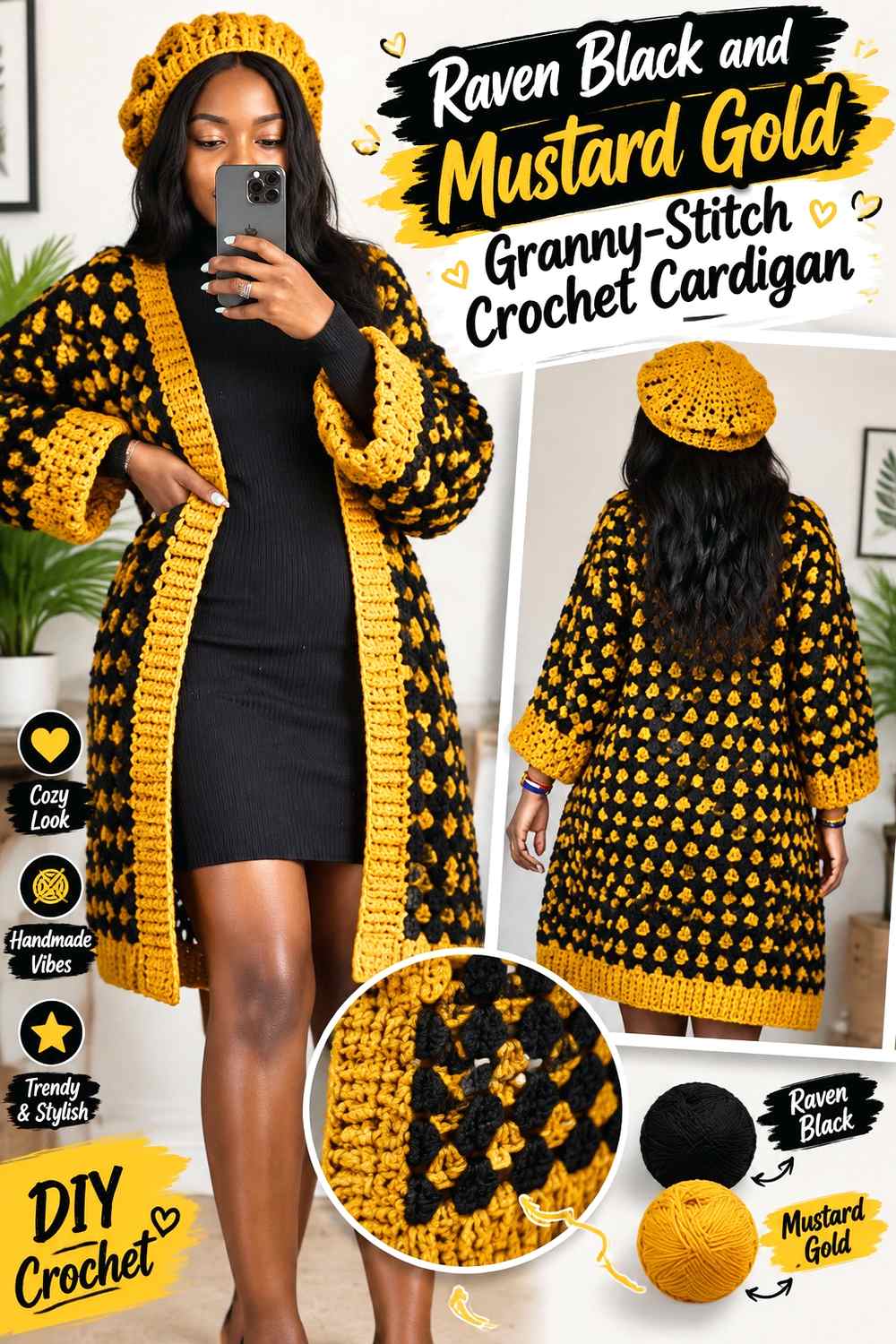
Mustard gold produces one of the stronger contrasts in this collection. On a granny-stitch cardigan, use raven black as the main field and repeat mustard at deliberate intervals rather than allowing both colors to alternate equally throughout the garment.
The open spaces between stitch groups already create visual rhythm, so the color sequence does not need to be complicated. Mustard works particularly well as a repeated band, cuff, or border because the lighter warm shade remains easy to locate against black.
Let Raven Black Calm the Granny-Stitch Surface
Granny-style fabric already contains repeated clusters and openings. Covering most of that structure in raven black creates a calmer base and allows the stitch rhythm to remain consistent without adding constant color changes.
If you want a darker cardigan overall, use mustard only after several black sections rather than alternating the two colors continuously.
Repeat Mustard Gold Against Raven Black Instead of Using It Once
A single mustard cuff or stripe may look disconnected from an otherwise raven black cardigan. Repeat a smaller amount elsewhere—such as the opposite cuff, front border, or hem—to establish a deliberate color relationship.
Because mustard is considerably lighter than black, it does not need equal surface area to have a strong visual effect.
Creator Credit: AC Crochets
6. Raven Black And Dusty Rose Ribbed Chunky Crochet Cardigan

Dusty rose softens a raven black chunky cardigan without making the garment especially bright. The combination works well when the rose is concentrated in ribbed finishing sections, where the color change also emphasizes texture.
Keep the body black and consider dusty rose for cuffs, the front band, or selected hem ribbing. Since chunky crochet already has considerable visual weight, a restrained accent prevents the finishing details from competing with the garment’s heavier surface.
Use Raven Black Across the Thickest Cardigan Areas
Large black body panels keep a chunky cardigan visually coherent. If every ribbed section changes color, the garment can become heavily outlined, so choose the rose placements that matter most.
Cuffs and a front band usually provide enough repetition to establish the second color without turning the cardigan into a two-color block design.
Dusty Rose Makes Raven Black Ribbing Easier to Notice
Ribbing can be difficult to see in very dark yarn. Working a selected ribbed area in dusty rose gives those ridges more visual definition and creates a softer transition than bright white would.
If your substitute pink is much brighter than dusty rose, reduce the amount used so it does not overpower the black body.
Creator Credit: Chenda DIY
7. Raven Black And Deep Teal Oversized Crochet Cardigan
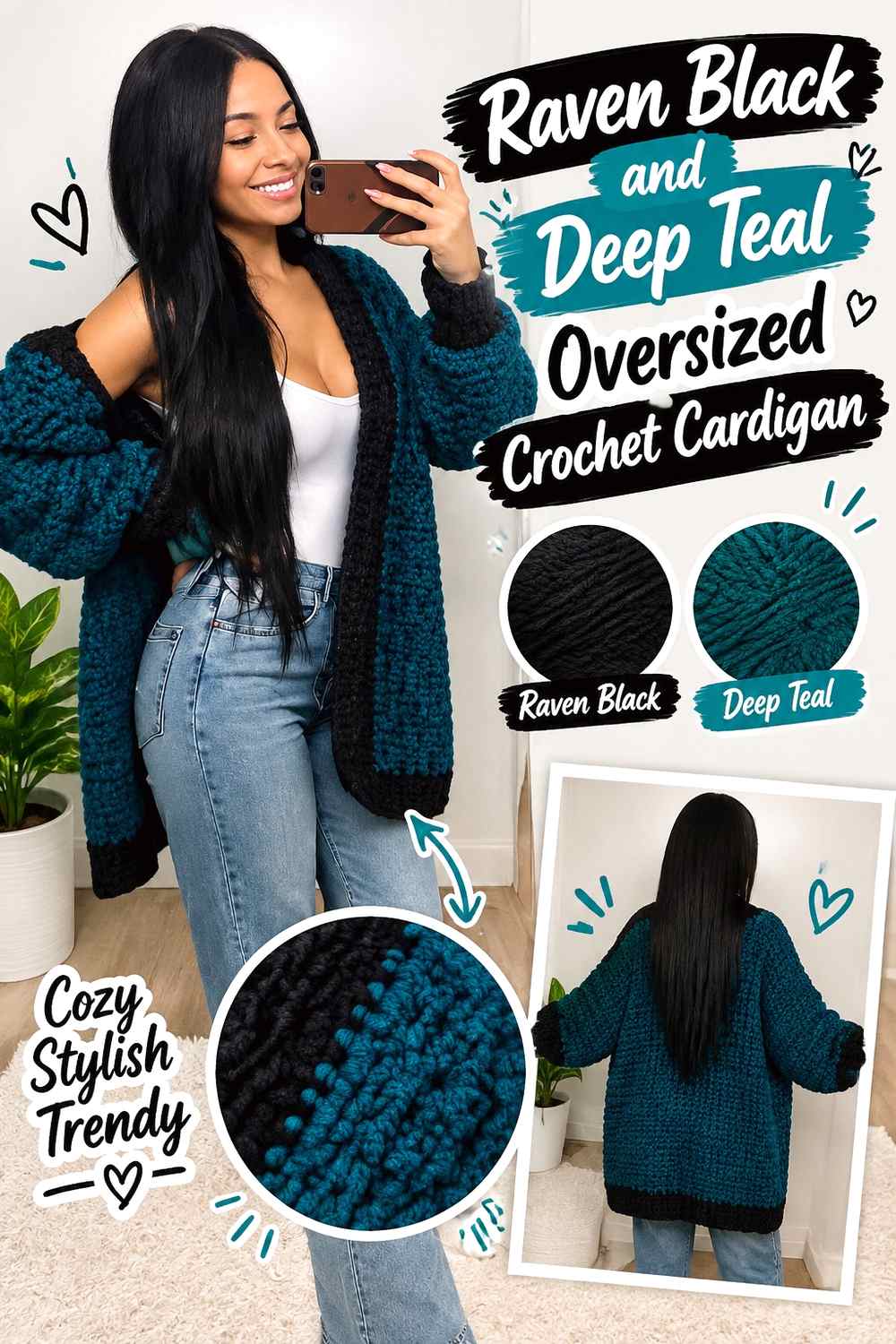
A large cardigan provides enough surface area for a dark accent color to be repeated without making the garment busy. Keep raven black dominant across the body, then use deep teal on pockets, sleeve sections, cuffs, or a lower border.
The key is connection. On an oversized silhouette, two teal pockets alone can look isolated because there is so much black around them. Repeating a smaller teal section higher on the garment helps distribute the accent.
Let Raven Black Carry the Oversized Cardigan Silhouette
An oversized garment already has substantial visual volume. Keeping the broadest areas raven black prevents color blocking from exaggerating every section of the cardigan.
Use teal strategically rather than splitting the entire cardigan into equally dark blocks.
Repeat Deep Teal Across the Raven Black Cardigan
If deep teal appears on pockets, introduce it again on cuffs or a narrow sleeve detail. That repetition makes the accent feel integrated with the black body.
Because teal and raven black can be similar in value, compare the yarns before making small accents. A slightly lighter teal is easier to recognize in narrow areas.
Creator Credit: Dana B
8. Raven Black And Lavender Patchwork Crochet Cardigan

Lavender creates a noticeably lighter interruption within raven black patchwork without becoming as stark as white. Use black for the majority of squares or panels and distribute lavender across the front, sleeves, and back in a repeating arrangement.
Avoid placing every lavender block in one part of the cardigan. Patchwork looks more connected when the secondary color travels across several garment areas.
Make Raven Black the Majority of the Patchwork
A black-dominant layout keeps the cardigan aligned with the raven black theme even when multiple lavender blocks are present. A two-to-one type of visual balance can be more cohesive than a strict checkerboard, although exact proportions can be adjusted to suit your layout.
Plan the placement on a flat surface before joining so one sleeve or front panel does not accidentally receive most of the lavender.
Spread Lavender Across the Raven Black Cardigan
Lavender works well as a repeating light marker. Place some near the upper body, some lower down, and at least one occurrence on each sleeve if you want an evenly distributed palette.
Raven black joins can further connect the squares by outlining both colors with the same dark framework.
Creator Credit: ikoxun
9. Raven Black And Rust Patchwork Crochet Cardigan
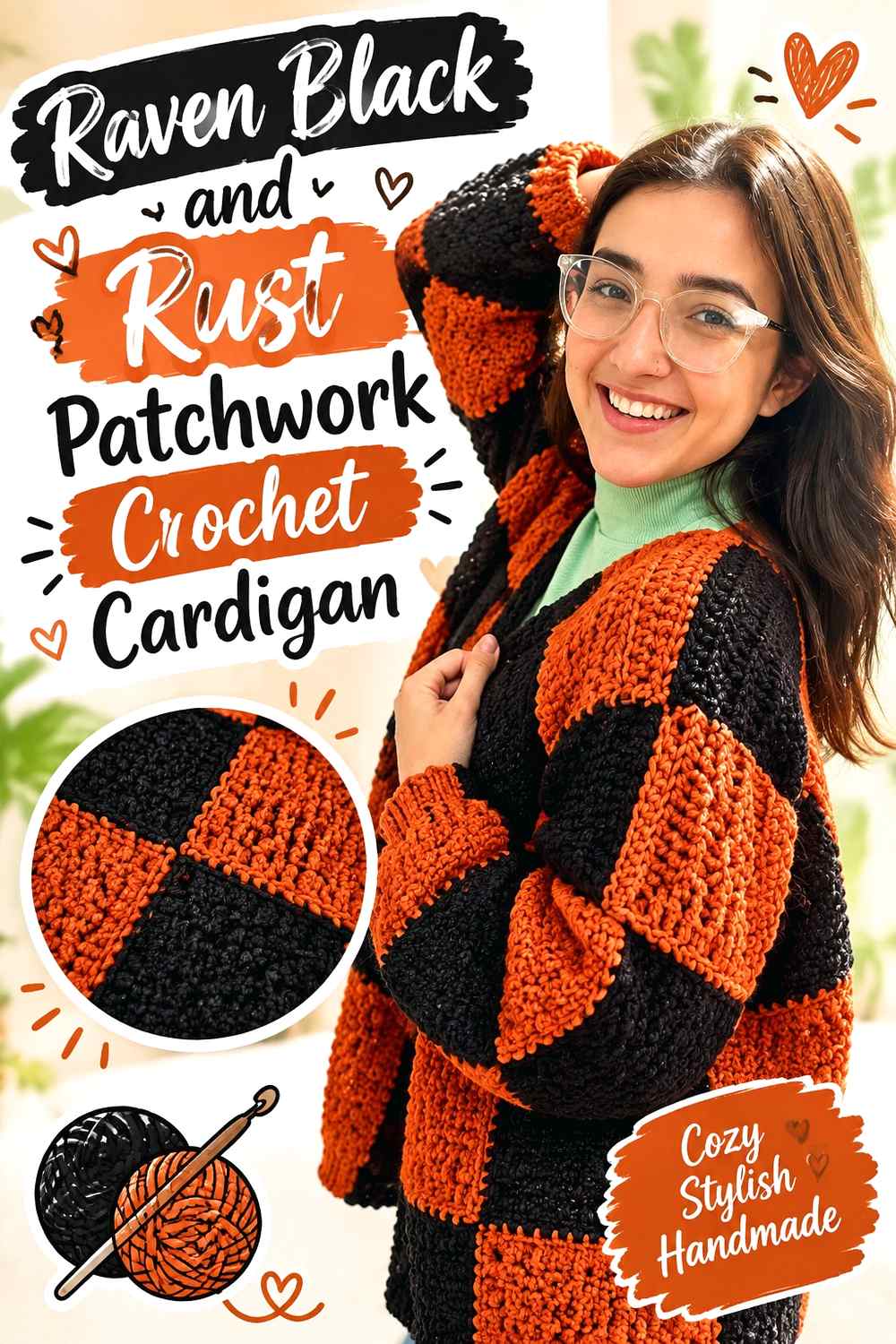
Rust gives black patchwork a warmer, earthier direction than lavender. Use raven black as the joining color and as a recurring square or panel shade, while allowing rust to occupy larger blocks across the body.
Because rust is darker than cream or mustard, the contrast feels less graphic. That makes it suitable for larger areas without creating an overly sharp checkerboard.
Use Raven Black Joins to Organize the Rust Patchwork
When rust occupies several large squares, raven black joins can create one repeated structure around the garment. This helps prevent the warm sections from appearing as unrelated patches.
Black edging around the front opening or cuffs can extend that same framework beyond the square joins.
Keep Rust Repeated Across the Raven Black Sleeves and Body
Do not concentrate rust exclusively on the front. Carrying at least some of the warm color into the sleeves or back helps the cardigan look intentional from more than one angle.
If your rust substitute is closer to orange, use slightly less of it. A brighter warm shade will attract more attention beside raven black.
Creator Credit: Crochet with Karu
10. Raven Black And Cobalt Blue Lacy Crochet Cardigan
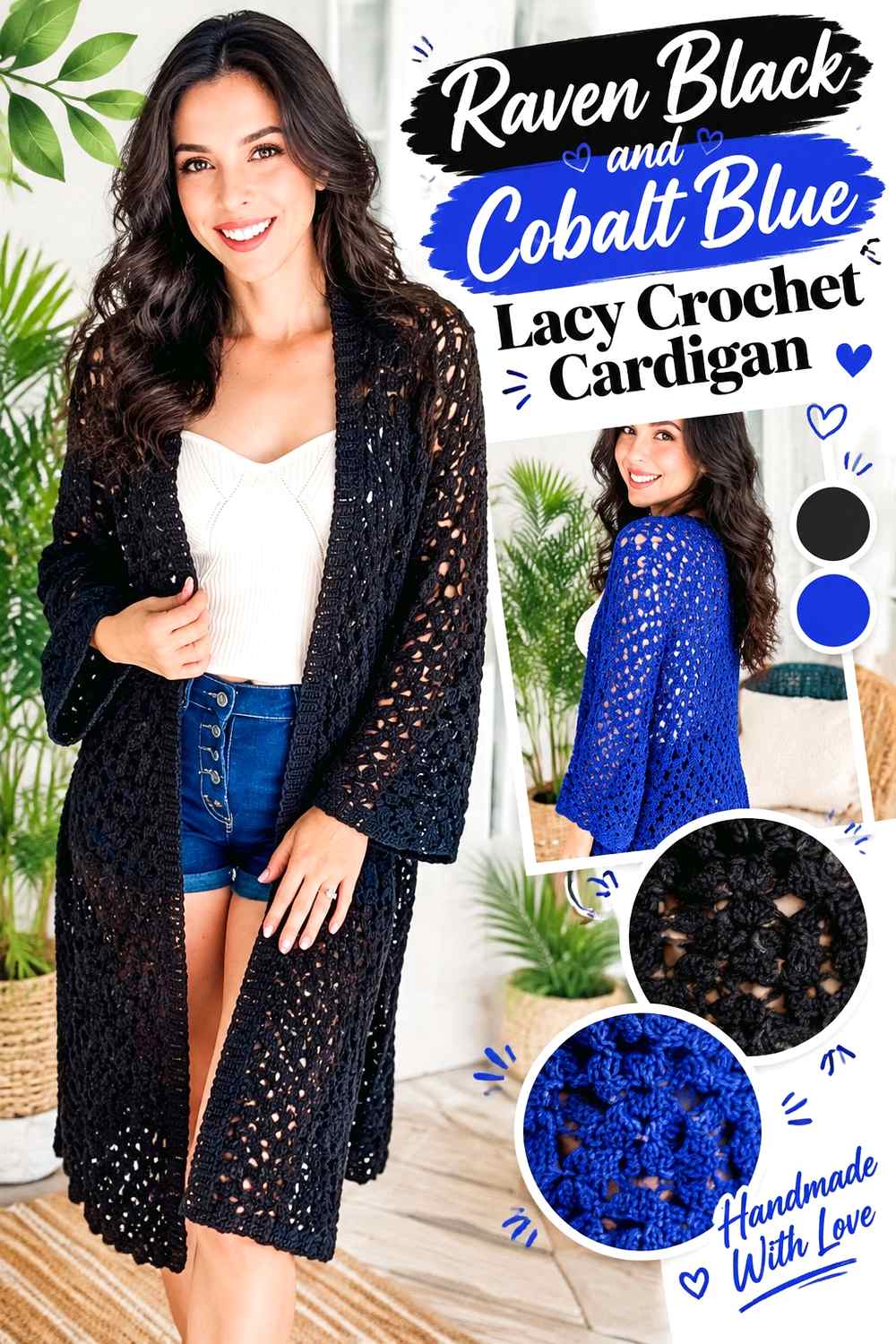
Cobalt blue gives raven black lace a clearer, more saturated accent than the darker teal or forest palettes. Keep most of the openwork black, then place cobalt in areas with enough solid fabric to show the color clearly, such as ribbing, borders, cuffs, or broader sleeve sections.
Tiny cobalt details can get visually interrupted by lace openings. Wider accent zones create a more readable color statement.
Let Raven Black Define the Main Lace Pattern
Raven black can make an open lace structure look especially graphic when worn over a contrasting underlayer. Keeping the lace itself predominantly black avoids mixing several visual effects at once.
Before adding cobalt, look at how the openings distribute across the cardigan and choose sections where the accent will remain visible.
Put Cobalt Blue Beside Solid Raven Black Edges
Cobalt becomes particularly clear beside a black cuff, band, or denser section. You can use the blue for the finishing itself or position it directly next to a black finish to create a strong transition.
If you want a quieter variation, replace cobalt with a deeper medium blue while preserving enough value difference from the raven black.
Creator Credit: Briana K
11. Raven Black And Silver Gray Hexagon Crochet Cardigan

A hexagon cardigan gives you large structural areas in which to divide raven black and silver gray. Rather than changing colors every round, consider making black the dominant section and using silver gray through selected outer rounds, added length, cuffs, or borders.
Silver gray provides enough separation to reveal the geometry of the cardigan without making it as high-contrast as bright white.
Keep Raven Black Across the Largest Hexagon Areas
The expanding hexagon creates a strong visual pattern on its own. Large areas of raven black allow that construction to remain the main feature instead of turning every round into a separate stripe.
Introduce silver after enough black has accumulated to establish the dark base.
Use Silver Gray to Outline Raven Black Hexagon Shaping
Silver gray can help show where sleeves, body extensions, and finishing sections begin. A gray border around predominantly black crochet also gives the garment a defined edge without dramatically warming or cooling the palette.
If your gray is close to charcoal, expect a more tonal result and consider making the band wider.
Creator Credit: PassioKnit Kelsie
12. Raven Black And Plum Granny Hexagon Crochet Cardigan
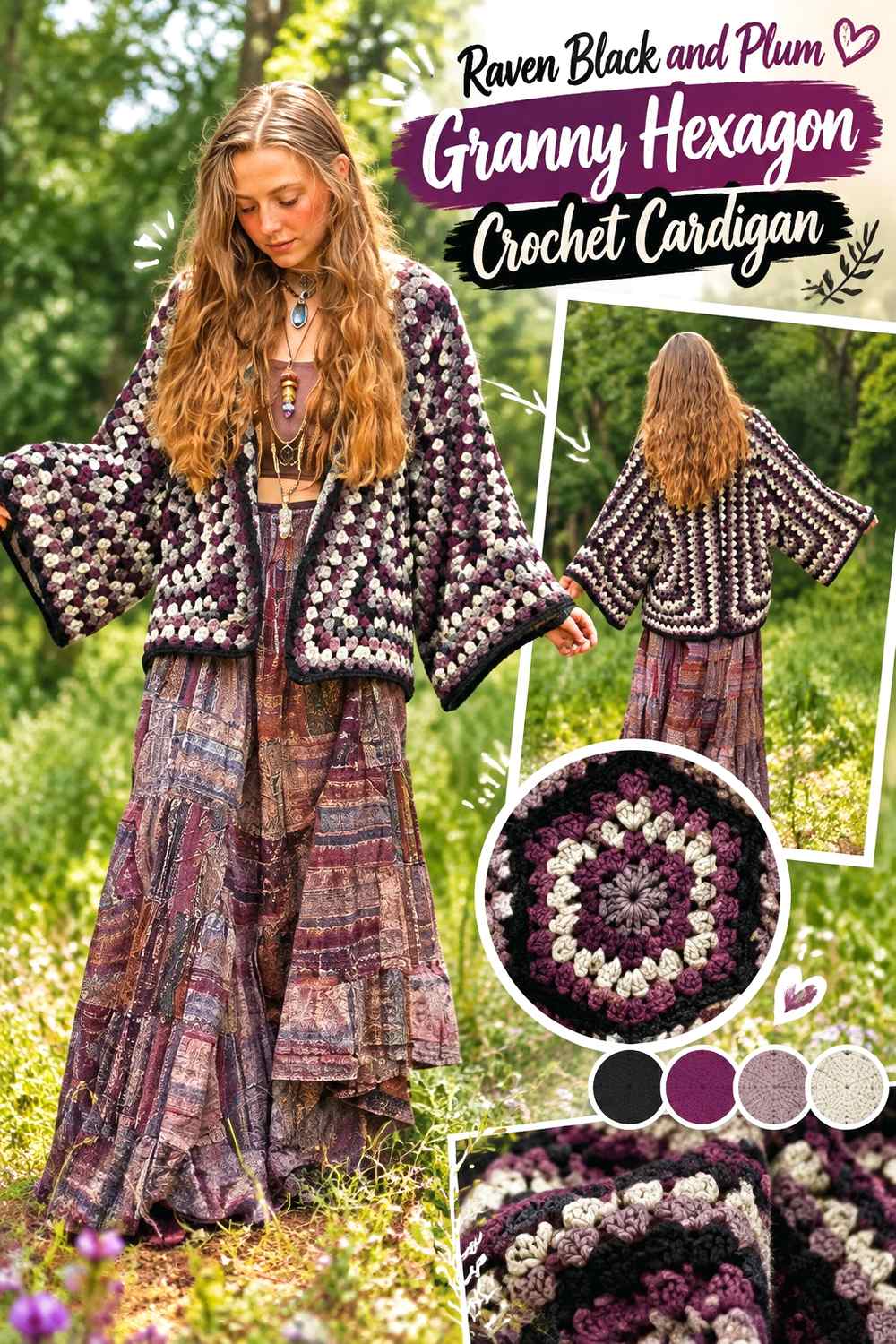
Plum gives a raven black granny hexagon cardigan a dark jewel-toned direction. The two shades can sit close together in value, so use plum in intentional bands or larger sections rather than relying on single narrow rounds.
This is a useful palette when you want a multicolor appearance that still reads as predominantly dark.
Build Wide Plum Sections Into the Raven Black Hexagons
A narrow plum round may disappear between black sections. Grouping the plum into a wider band makes the color shift visible while preserving the repeated granny construction.
Keep the same general color rhythm between both sides of the cardigan if you want visual symmetry.
Bring Raven Black Back at the Plum Cardigan Edges
Finishing cuffs, borders, or the front opening in raven black can reconnect the dark center with the outer garment shape after larger plum sections have been added.
If the plum you choose is much lighter or more saturated, the black finishing becomes even more useful as a visual anchor.
Creator Credit: Hayhay Crochet
13. Raven Black And Camel Chunky Crochet Cardigan
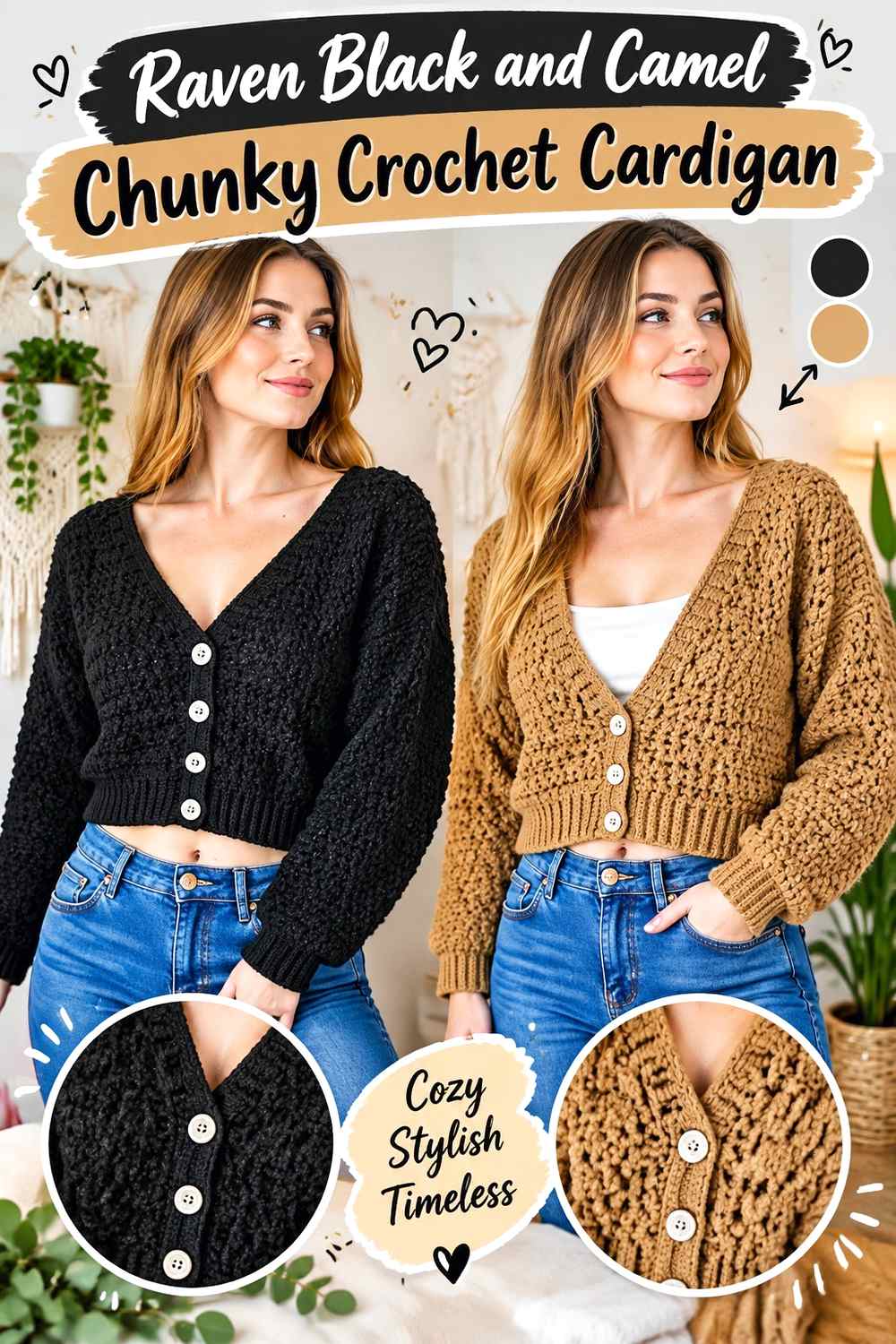
Camel adds a warm neutral contrast to raven black without introducing a bright color. On a chunky cardigan, use black across the broad body panels and reserve camel for substantial finishing details such as pockets, cuffs, a button band, or a deep lower border.
Because chunky stitches already create bold texture, medium-to-large camel sections usually look more deliberate than numerous thin stripes.
Keep Raven Black Across the Chunky Cardigan Body
A solid raven black body prevents the thickness of the fabric and the color layout from competing for attention. It also gives camel details a clean background.
Before adding contrast pockets, position them against the cardigan and check whether their size makes them dominate the front more than you intended.
Repeat Camel Against Raven Black Beyond the Pockets
Camel pockets alone can look like separate attachments on a black cardigan. Repeating camel at the cuffs, lower edge, or front band creates a visual path through the garment.
If you prefer only one camel feature, consider a continuous front band rather than two isolated details.
Creator Credit: Madeleine Shirley
14. Raven Black And Soft Sage Cropped Crochet Cardigan
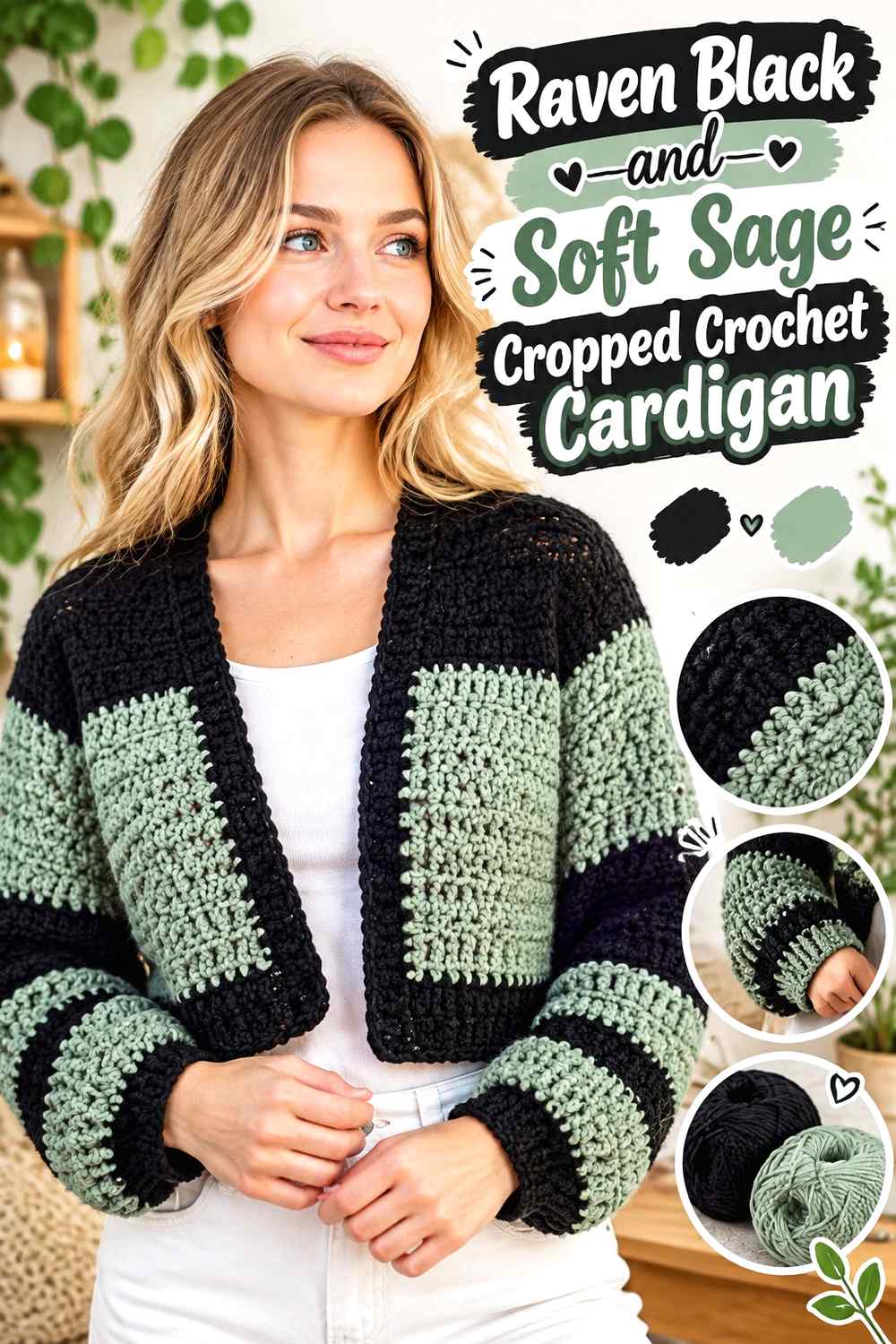
Soft sage provides a muted, lighter counterpoint to raven black and works particularly well on a cropped silhouette because the smaller body area makes every accent placement more noticeable. Keep black across the main torso and use sage around the neckline, cuffs, or lower edge.
Instead of applying sage equally everywhere, decide whether you want the eye drawn upward toward the neckline or outward toward the sleeves. That choice can change the apparent balance of the finished cardigan.
Let Raven Black Hold the Cropped Cardigan Center
Raven black across the torso gives the cropped garment a clear central block. Sage can then be moved toward edges without breaking the body into several short horizontal sections.
This is especially helpful when the cardigan already has noticeable sleeve volume or textured finishing.
Use Soft Sage to Lighten Selected Raven Black Edges
A sage neckline and cuffs can soften the outer edges while leaving the main cardigan dark. If you also add sage at the hem, keep that band proportional to the shorter body so it does not consume too much of the visible black area.
For substitutions, choose another muted medium-light green if you want to preserve the gentle contrast rather than moving toward a vivid green.
Creator Credit: Katieree
Which Raven Black Crochet Cardigan Palette Should You Choose?
For the clearest light-and-dark separation, bone cream, mustard gold, silver gray, camel, and soft sage create noticeable contrast against raven black. These palettes are useful when you want borders, ribbing, or motif placement to remain easy to see.
For a darker, moodier cardigan, oxblood burgundy, charcoal, forest green, deep teal, and plum keep the overall value range closer together. Give these colors larger areas so they do not disappear into black.
Dusty rose and lavender provide softer contrast, while rust introduces more warmth and cobalt creates a stronger saturated accent. The deciding factor is not simply which color you prefer; it is where that color will sit on the cardigan and how much visual area it needs to do its job.
Conclusion
Raven black is flexible enough to support both very subtle and strongly contrasted crochet cardigans. A black-and-charcoal cardigan can stay almost monochromatic, while cream or silver edging can clearly outline texture and finishing. Burgundy, forest green, teal, and plum maintain a darker palette, while mustard, rust, camel, rose, lavender, cobalt, and sage shift the garment in visibly different directions.
Before settling on a scheme, decide which cardigan feature deserves contrast. If the stitch texture is the focus, place the lighter shade near ribbing or detailed sections. If the silhouette matters more, use contrast around cuffs, hems, or front edges. For motifs and patchwork, plan the whole garment layout before joining so the secondary color remains balanced across the front, back, and sleeves.
Use the original tutorials for the exact construction instructions, then adapt the color placement according to the role you want raven black and the supporting shade to play.
Frequently Asked Questions
What colors work well with raven black in a crochet cardigan?
It depends on the contrast you want. Cream, silver gray, mustard, camel, and sage create clearer separation. Burgundy, charcoal, forest green, teal, and plum produce subtler dark-on-dark combinations. Rose, lavender, rust, and cobalt sit between those directions in different ways.
How can I stop raven black crochet stitches from disappearing?
Choose texture with enough relief to remain visible, inspect the fabric under different lighting, and consider placing a contrasting color near important ribbing, borders, motifs, or other detailed areas. Openwork may also become more visible when worn over a lighter underlayer.
Should raven black always be the dominant cardigan color?
Not necessarily, but keeping it dominant is useful when you want the finished cardigan to read primarily as black. A secondary shade can occupy cuffs, borders, sleeves, pockets, motifs, or selected panels without overtaking the main dark field.
Does a raven black crochet cardigan need a light border?
No. A tonal black, charcoal, burgundy, or plum edge can create a more subtle result. A light border is most useful when you specifically want to define the silhouette or make detailed edging easier to see.
What can I substitute if I cannot find a yarn labeled raven black?
Treat raven black as a color direction rather than a required commercial shade name. Choose a deep black that provides the darkness you want. If you prefer a softer tonal look, an extremely dark charcoal can fill a similar visual role, but check it beside the other palette colors before committing.
How many colors should I use in a raven black crochet cardigan?
Two colors are enough for many of these ideas because the placement can create variety without additional shades. If you use three or more, give them clear roles—such as raven black for the body, a supporting shade for larger panels, and a smaller accent for edging—so every color does not compete for equal attention.