Caramel is especially useful on a crochet polo sweater because it can cover a large body panel without making the collar, placket, ribbing, or stitch texture feel overly busy. The warm brown tone can act as the main garment color while lighter, darker, cooler, or richer shades define the details that make a polo recognizable.

The key decision is not simply which color looks good beside caramel. Think about where the second color belongs. A contrasting collar draws attention toward the neckline, dark cuffs add weight at the sleeve ends, and a light placket can make a dense caramel body look more defined. On textured crochet, light-and-dark value differences can also determine whether ribbing and raised details remain visible.
These 13 caramel crochet polo sweater ideas keep caramel central while changing the supporting palette, contrast level, and placement strategy. The linked tutorials support the polo or collared-sweater construction concepts; the caramel color schemes are independent palette ideas you can adapt to the project you choose.
Quick List
- Caramel And Cream Crochet Polo Sweater
- Caramel And Chocolate Brown Crochet Polo Sweater
- Caramel And Black Crochet Polo Sweater
- Caramel And Ivory Crochet Polo Sweater
- Caramel And Sage Green Crochet Polo Sweater
- Caramel And Rust Crochet Polo Sweater
- Caramel And Burgundy Crochet Polo Sweater
- Caramel And Dusty Rose Crochet Polo Sweater
- Caramel And Navy Crochet Polo Sweater
- Caramel And Denim Blue Crochet Polo Sweater
- Caramel And Mustard Crochet Polo Sweater
- Caramel And Charcoal Crochet Polo Sweater
- Caramel And Deep Teal Crochet Polo Sweater
How to Use Caramel as the Dominant Crochet Polo Sweater Color
Caramel works well across the broadest parts of a polo sweater: the front and back body panels and, when you want a particularly cohesive garment, most of the sleeves. Giving caramel that much visual area makes the sweater clearly read as caramel even after a contrasting shade is introduced around the neckline.
Decide how much attention you want the polo details to receive before assigning the second color. A contrast shade used only on the collar creates a concentrated focal point. Repeating it on cuffs or a narrow hem makes the color scheme feel more distributed. Using it across large sleeve sections changes the balance much more dramatically and can make the sweater read as a two-color garment rather than a caramel sweater with accents.
Texture also matters. Caramel shades with substantial tonal depth can make small raised details less obvious when the entire sweater is worked in one color. A lighter or darker trim near ribbing, the collar edge, or the front opening can introduce definition without covering the textured caramel fabric itself.
Plan Contrast Around a Caramel Crochet Polo Collar
The collar and front opening are natural places to test a second color because they already form a visual break in a polo sweater. If caramel covers most of the torso, cream, black, navy, forest green, or another noticeably different value can give the neckline a clear outline. A closer-value shade such as rust or mustard produces a more blended effect.
Do not rely on hue difference alone. Caramel and another color can appear distinct in the skein but merge once crocheted if their lightness is similar. Place the yarns side by side and, when necessary, look at them in grayscale to judge whether there is enough value separation for the effect you want.
For a restrained polo, keep the contrast concentrated around the collar, placket, cuffs, or narrow edging. For a stronger color-blocked result, repeat the supporting shade on larger sleeve areas or a broad hem. The important point is to establish a hierarchy so the collar, body, and accents do not all compete equally.
1. Caramel And Cream Crochet Polo Sweater

Caramel can cover the front, back, and sleeves of this crochet polo sweater while cream defines the collar and selected finishing details. Because cream is considerably lighter, even a relatively narrow cream section can separate the neckline from the caramel body. This is useful when the sweater has visible ribbing or a textured collar that would otherwise blend into a single-color surface.
Keep caramel responsible for most of the garment rather than dividing the two colors evenly. That preserves the warm brown identity of the sweater while allowing cream to clarify the polo structure.
Keep Caramel Dominant and Let Cream Frame the Polo Collar
Use cream where a clear edge matters most, such as the collar, the front neckline opening, or a narrow trim. Against a large caramel body, the light color creates enough separation to make those smaller areas easy to read without requiring complicated color placement.
If the collar itself has noticeable texture, cream can also make its shape more visible from a distance. Check the developing sweater with the collar lying naturally rather than judging the colors only as flat swatches.
Repeat Cream Sparingly So Caramel Texture Stays Visible
Cream can be repeated at the sleeve cuffs or hem if the collar alone feels disconnected, but it does not need equal visual area. A narrow repeat is often enough to connect the neckline with the lower parts of the sweater.
Keeping the larger textured sections caramel also prevents the pale trim from becoming the first thing you notice. If your cream and caramel are closer in value than expected, compare them before committing to all the edging.
Creator Credit: WOWder
2. Caramel And Chocolate Brown Crochet Polo Sweater

A chocolate brown accent takes caramel in the opposite direction from cream. Instead of brightening the neckline, the deeper brown gives the collar, placket, or cuffs additional weight while staying within the same warm brown family.
This is a useful palette when you want the crochet polo sweater to remain tonal rather than introducing an obviously different hue. Let caramel occupy most of the body and sleeves, then use chocolate brown to define selected structural details.
Chocolate Brown Gives Caramel a Darker Polo Collar
A chocolate brown collar can frame a caramel torso without creating the sharp contrast of black. The two colors remain related, but the darker value makes the fold and outer collar edge easier to distinguish.
Consider carrying chocolate brown slightly into the front opening if the polo construction includes a visible placket. That creates a continuous dark line through the neckline rather than leaving the collar as an isolated block.
Keep Caramel Across the Sleeves to Avoid a Heavy Chocolate Brown Block
Because chocolate brown carries more visual weight, large dark sleeves can make the upper garment feel much heavier than a caramel torso. Keeping most of the sleeves caramel gives the color scheme more continuity.
If you want to repeat chocolate brown lower on the sweater, a cuff or controlled hem detail can be sufficient. The goal is to echo the collar without turning the darker shade into a second dominant color.
Creator Credit: FTK Crochet
3. Caramel And Black Crochet Polo Sweater

Black produces one of the strongest contrast options in this collection. A caramel crochet polo sweater with black collar and trim details can have a much more graphic outline than a tonal brown palette, so placement needs restraint.
Caramel should still cover enough of the torso and sleeves that it reads first. Black works particularly well where the polo construction already creates clear lines: the collar, front opening, sleeve edges, or a narrow bottom border.
Black Gives Caramel a Sharp Placket and Collar Outline
Use black when you want the polo neckline to remain unmistakable against the caramel body. A black collar visually separates immediately from warm caramel, while a narrow black treatment around the front opening can reinforce the vertical line through the upper torso.
Because the difference is strong, inspect the collar for symmetry. High contrast makes uneven edges and noticeably different collar sides easier to see.
Keep Black Narrow So Caramel Remains the Sweater Color
Large black sections can quickly overpower caramel. Instead of using black across half the sweater, repeat it in smaller controlled locations such as the cuffs or thin edging.
This also gives you more caramel surface on which crochet texture can remain the main visual interest. If the stitch pattern already creates strong geometry, a limited amount of black may provide all the definition the sweater needs.
Creator Credit: İlmekle Nimet
4. Caramel And Ivory Crochet Polo Sweater

Ivory gives a caramel crochet polo sweater a softer light-dark transition than a very crisp pale accent might. It can define the collar while keeping the palette firmly neutral, making it suitable when you want the construction to stand out more than dramatic color blocking.
Let caramel fill the larger body panels and consider ivory for the collar, a narrow front edge, or selected ribbing. The result depends on having enough value difference for those details to remain visible.
Ivory Softens the Contrast Around a Caramel Polo Collar
If cream feels too distinct for the look you want, ivory can give the neckline a gentler break. It is particularly useful on a sweater where the collar shape is already substantial and does not need an extremely dark or bright outline.
Check the two yarns together under the lighting in which the sweater will usually be seen. Some caramel and ivory combinations are clearly separated, while others become quite tonal.
Caramel Can Carry the Ribbing While Ivory Marks Selected Edges
You do not have to make every ribbed area ivory just because the collar uses it. Keeping the main ribbing caramel can preserve continuity between the body and cuffs, while a slim ivory edge repeats the neckline color.
This is useful when the sweater has several finishing details and you want to avoid outlining every component in the lighter shade.
Creator Credit: TCDDIY
5. Caramel And Sage Green Crochet Polo Sweater

Sage creates a lighter, more muted green direction than olive. Pairing sage with caramel can make a crochet polo sweater feel less dark while still introducing a clear departure from an all-brown neutral palette.
Use caramel over the torso, then consider sage around the collar, cuffs, or selected sleeve detailing. Because sage can be fairly light, it is especially useful when you want the collar to separate gently from a medium or deeper caramel.
Sage Green Lightens a Caramel Crochet Polo Neckline
A sage collar can provide enough contrast to show the polo shape without the visual weight of forest green or black. This makes it a useful option for a sweater with substantial texture around the neckline, where a dark collar might become overly dominant.
Compare the sage with caramel in worked swatches when possible. Muted colors sometimes look more similar after the stitch texture breaks up their solid surfaces.
Caramel Should Separate Repeated Sage Green Details
If sage appears on the collar and cuffs, allow caramel to remain uninterrupted through most of the sleeve. The warm body color then acts as the connecting field, while sage marks the beginning and end of the upper garment.
Avoid adding several additional accent colors unless the sweater is intentionally multicolored. The subtle relationship between caramel and sage can become harder to appreciate when too many competing shades are introduced.
Creator Credit: Ascarcrochets
6. Caramel And Rust Crochet Polo Sweater

Rust and caramel sit close together in a warm palette, so this combination is more about tonal movement than strong separation. Rust can deepen the collar, add warmth around the cuffs, or create restrained bands without breaking the overall brown-orange direction of the sweater.
Because the hues are related, value contrast becomes particularly important. If your rust and caramel are nearly equal in lightness, small details may merge visually.
Rust Gives Caramel a Warmer Tonal Polo Collar
A rust collar is useful when you want a visible color change without moving into a cool or neutral accent. It adds more red-orange character around the neckline while allowing caramel to continue controlling the majority of the sweater.
For a subtle result, keep rust close in value to caramel. For a clearer collar outline, select a rust that is noticeably darker.
Check Caramel and Rust Contrast Before Using Small Crochet Details
Tiny rust accents can disappear against caramel if the two yarns have similar values. This matters around narrow plackets, fine edging, or small bands where there is not enough area for hue difference alone to become obvious.
If the colors merge more than you want, move rust to a larger area such as the collar and keep the smallest details caramel.
Creator Credit: HookedByJessica
7. Caramel And Burgundy Crochet Polo Sweater

Burgundy gives caramel a deeper, richer accent with more red than chocolate brown. It can bring substantial definition to a crochet polo sweater collar while still harmonizing with caramel’s warmth.
Because burgundy is usually visually heavier, it works best in a supporting role when the article’s main goal is a caramel sweater. Consider using it at the collar and cuffs rather than allowing it to take over the entire torso.
Burgundy Creates a Deep Frame Around a Caramel Polo Collar
A burgundy collar immediately separates from caramel while avoiding the neutral starkness of black. The reddish undertone also creates a stronger color relationship than a simple light-dark brown palette.
If the sweater has a noticeable front opening, repeating burgundy along that area can keep the collar and placket visually connected.
Keep Caramel Across the Main Panels When Burgundy Is Dark
Dark burgundy can make even medium caramel appear lighter by comparison. That is useful around the neckline, but using equal amounts of both colors can shift the garment toward a half-and-half color block.
Let caramel cover the front and back panels, then use burgundy strategically. If additional repetition is needed, cuffs usually provide enough area to reconnect the accent with the collar.
Creator Credit: CJ Crochet
8. Caramel And Dusty Rose Crochet Polo Sweater

Dusty rose softens caramel with a muted pink accent rather than a traditional neutral or dark trim. On a crochet polo sweater, the combination can work especially well when caramel remains clearly dominant and dusty rose is restricted to deliberate neckline and finishing details.
Choose a dusty rose that is visibly distinct from caramel. If both shades are muted and medium in value, the transition can become extremely subtle.
Dusty Rose Softens a Caramel Crochet Polo Collar
Using dusty rose on the collar gives the neckline a gentler color shift than burgundy. The contrast can be enough to distinguish the polo shape while preserving an overall muted palette.
If you want even less visual interruption, keep the front opening caramel and use dusty rose only on the collar itself. That concentrates the color around one feature.
Repeat Dusty Rose Carefully Against Caramel Sleeves
A small dusty rose cuff can connect the sleeves with the collar, but broad pink sleeve sections change the identity of the garment more dramatically. Decide whether you want a caramel sweater with rose accents or a balanced caramel-and-rose color-blocked sweater before dividing the sleeve area.
When in doubt, start with the smaller accent plan. More dusty rose can be introduced through finishing details if the collar feels too isolated.
Creator Credit: Creative Hands by SHAY
9. Caramel And Navy Crochet Polo Sweater
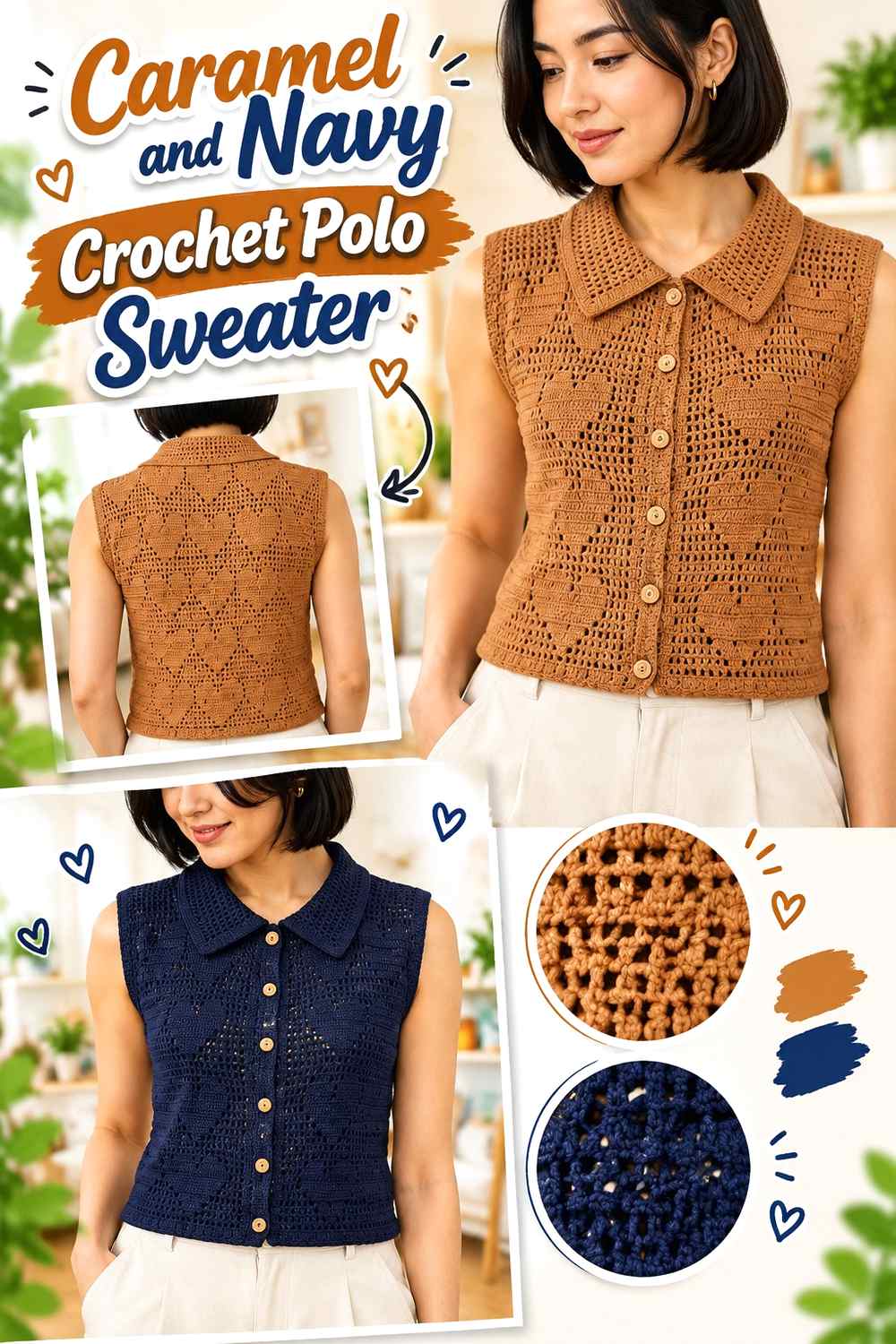
Navy introduces strong cool-dark contrast against warm caramel. The difference is obvious enough that relatively small navy sections can define the collar, cuffs, or hem, making this a useful palette when you want a clearly outlined polo silhouette.
Caramel should remain expansive across the main panels. Navy works best as the structural accent rather than being scattered through many unrelated small details.
Navy Gives Caramel a Strong Cool Polo Collar
A navy collar creates separation through both temperature and value. Against caramel, it can make the neckline one of the strongest features of the sweater even when the collar itself is not especially large.
This strong contrast is also unforgiving of uneven placement, so compare both collar sides and any repeated sleeve accents as you work.
Keep Caramel Between Navy Collar and Cuff Accents
If navy is used at both ends of the sleeve, preserving a large caramel section between the collar area and cuff prevents the upper half of the sweater from becoming too dark.
You can also keep the hem caramel if the collar and cuffs already provide enough navy. Repeating an accent does not mean every edge needs to be outlined.
Creator Credit: Ler Crochet
10. Caramel And Denim Blue Crochet Polo Sweater
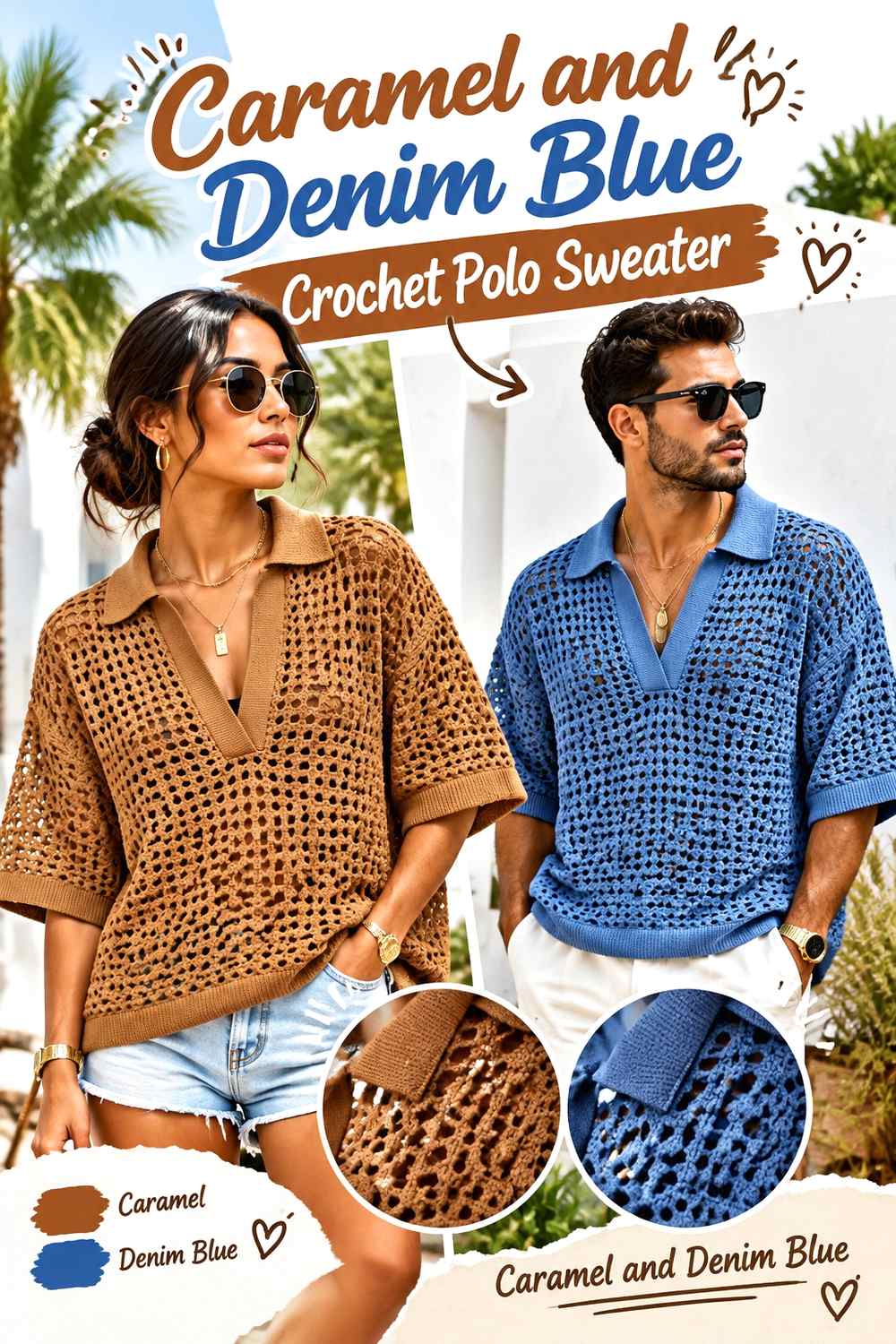
Denim blue gives caramel a cooler accent with less severity than navy. It can suit a crochet polo sweater where you want visible color contrast but still prefer a relaxed, medium-value palette.
Caramel can cover the torso, while denim blue appears at the collar and perhaps in a cuff, hem, or restrained stripe. The two colors should be compared carefully if both sit in a similar middle-value range.
Denim Blue Gives Caramel a Relaxed Polo Collar Contrast
A denim-blue collar moves the palette away from an entirely earthy brown scheme without creating an extremely dark neckline. This can be particularly useful on a short-sleeve polo where the collar is already one of the largest contrasting details.
Keep the caramel body uninterrupted if you want the blue to feel like a deliberate finishing color rather than the start of a multicolor stripe arrangement.
Check Caramel and Denim Blue in Grayscale Before Adding Fine Trim
Medium caramel and medium denim blue may look clearly different in hue while remaining surprisingly close in value. If you intend to use denim blue on a narrow edge, check whether the distinction survives at a distance.
If it does not, reserve denim blue for larger areas such as the collar and let smaller trim remain caramel.
Creator Credit: Honey Loop Stitches
11. Caramel And Mustard Crochet Polo Sweater

Mustard gives caramel a warmer and lighter accent without moving into cream or ivory. Because both shades carry warmth, the finished crochet polo sweater can remain cohesive even when mustard is visibly lighter.
This combination is useful when you want the collar to stand apart but do not want a dark edge around the neckline. Caramel can stay on the body while mustard appears in concentrated bands.
Mustard Brightens a Caramel Crochet Polo Collar
A mustard collar can lift the upper part of a caramel sweater, particularly when the caramel is medium or deep. The contrast is usually more about brightness and hue than an extreme light-dark difference.
Before using mustard on very narrow details, compare the values. Some caramel and mustard pairings are closer than their hue difference initially suggests.
Let Caramel Break Up Mustard Collar and Cuff Repetition
When mustard appears on both the collar and cuffs, the caramel sleeve between them becomes important visual breathing room. It prevents the supporting color from forming several equally strong blocks.
If you want to add mustard at the hem as well, consider reducing its width there. Three large mustard sections may compete more than a collar-led palette needs.
Creator Credit: Laura Cepeda English
12. Caramel And Charcoal Crochet Polo Sweater

Charcoal provides dark neutral definition with less visual sharpness than pure black. On a caramel crochet polo sweater, it can outline the collar, cuffs, or bottom edge while letting the warmth of caramel remain the main color story.
This is particularly useful when you want a clearly structured polo without adding another strong hue. The neutral contrast allows stitch texture and garment shape to carry more of the design.
Charcoal Defines a Caramel Polo Collar Without Pure Black Contrast
A charcoal collar can still create strong value separation against caramel, but the softer dark neutral may integrate more easily with textured crochet than a very stark black.
Consider charcoal around the front opening if that line needs definition. Keeping the rest of the front panel caramel preserves a broad uninterrupted area of warm color.
Caramel Keeps Charcoal Cuffs From Making the Sweater Too Dark
If charcoal is repeated at the cuffs, keep the sleeves predominantly caramel. This preserves the sweater’s main color from shoulder to wrist and makes the dark finish look intentional rather than dominant.
Avoid automatically adding charcoal to every edge. The collar and cuffs may already provide enough repetition for the palette to feel connected.
Creator Credit: BELINA BELLWOOD
13. Caramel And Deep Teal Crochet Polo Sweater

Deep teal creates one of the strongest hue contrasts in the group. Its cool blue-green direction gives caramel a distinctly different partner while its depth can provide clear definition around a crochet polo collar.
Use teal deliberately rather than scattering it across the sweater. Caramel can remain on the body and sleeves, with teal reserved for the collar, selected edging, or another repeated finishing detail.
Deep Teal Makes a Caramel Crochet Polo Collar the Focal Point
A deep teal collar will usually attract attention because it differs from caramel in both hue and, depending on the shades chosen, value. That makes it useful when the polo neckline is the feature you most want to emphasize.
Keep other teal sections smaller if the collar is intended to remain the focal point. Equal teal blocks at the collar, torso, sleeves, and hem can dilute that hierarchy.
Use Caramel to Connect Deep Teal Crochet Details
Caramel should visually connect the teal accents rather than being reduced to isolated panels between them. A caramel torso and caramel sleeves provide a continuous warm field, while teal cuffs can echo the collar at a distance.
If the contrast seems too strong once crocheted, reduce the amount of teal rather than automatically introducing a third bridging color. A simpler two-color distribution may give the polo cleaner definition.
Creator Credit: ZoeCrochetR
How These Caramel Crochet Polo Sweater Palettes Compare
| Color direction | What it does beside caramel | Useful polo placement |
|---|---|---|
| Cream or ivory | Creates a lighter neckline and clearer texture separation | Collar, narrow placket, cuffs |
| Chocolate brown or rust | Keeps the sweater tonal and warm | Collar, cuffs, restrained bands |
| Black or charcoal | Gives the strongest neutral definition | Collar, front opening, narrow edging |
| Olive, sage, or forest green | Adds an earthy green contrast at different depths | Collar, cuffs, controlled sleeve detail |
| Burgundy or dusty rose | Introduces a red/pink family accent | Collar, cuffs, small finishing areas |
| Navy or denim blue | Adds cool contrast without changing caramel’s dominant role | Collar, sleeve trim, placket |
| Mustard | Produces a lighter warm-on-warm direction | Collar, cuff bands, limited edging |
| Deep teal | Creates a stronger cool color focal point | Collar with small repeated accents |
For the softest overall result, look first at ivory, sage, dusty rose, or tonal rust. Cream gives caramel more obvious light contrast, while chocolate brown and charcoal create deeper definition without adding a strong new hue.
Navy, forest green, and deep teal make the collar more prominent. Those darker accents generally need less surface area, so they are useful when you want caramel to remain unmistakably dominant.
Conclusion
The main advantage of caramel on a crochet polo sweater is that it can serve as a substantial, wearable base while giving the collar and finishing details room for meaningful color contrast. The second shade should have a clear job rather than simply being added because it coordinates.
Choose cream or ivory when you want the neckline lighter, chocolate brown or rust for a tonal warm result, and charcoal or black for stronger definition. Olive, sage, and forest green keep the palette earthy at different contrast levels, while navy, denim blue, and deep teal introduce a cooler counterpoint. Burgundy, dusty rose, and mustard offer warmer color shifts without abandoning caramel as the central shade.
Before committing to the entire sweater, compare the yarns together and decide exactly where the supporting color will appear. The collar, front opening, cuffs, hem, and sleeve details each affect the color balance differently, so a simple placement plan can make the finished polo feel considerably more intentional.
Frequently Asked Questions
What colors work with a caramel crochet polo sweater?
Caramel can be paired with light neutrals such as cream and ivory, dark neutrals such as charcoal and black, related warm shades such as chocolate brown and rust, or contrasting colors such as navy, teal, olive, sage, forest green, burgundy, and denim blue. The more useful question is how much contrast you want and where the supporting color will appear on the polo.
Should caramel cover most of the crochet polo sweater?
If the goal is clearly a caramel crochet polo sweater, giving caramel the largest visual area is the simplest approach. Use it across the main body panels and often the sleeves, then assign the supporting shade to the collar, cuffs, front opening, edging, or controlled color blocks.
What is a good collar color for a caramel crochet polo sweater?
Cream or ivory can make the collar lighter, while chocolate brown, forest green, navy, charcoal, or black can give it a darker frame. Rust, mustard, sage, and dusty rose create softer hue changes. Choose based on the amount of light-dark separation you want rather than the color name alone.
How can I tell whether two colors have enough contrast with caramel?
Place the yarns beside each other and look at them from a short distance. You can also view them in grayscale. If they become almost indistinguishable without hue, they are close in value. That can be desirable for a tonal sweater, but it may make narrow collar edging or small crochet details less visible.
Should the collar and cuffs match on a caramel crochet polo sweater?
They can, but they do not have to. Repeating the collar color at the cuffs is an effective way to distribute a supporting shade across the garment. However, if the collar already creates strong contrast, caramel cuffs may keep the sweater quieter and preserve more of the dominant color.
How do I substitute a color in a caramel crochet polo palette?
Preserve the role of the color you are replacing. If you are substituting a dark collar shade, choose another color that remains noticeably darker than caramel. If you are replacing a light accent such as cream, keep enough lightness difference to maintain the intended contrast. Also consider whether the original supporting color was muted, vivid, warm, or cool.
Why can caramel crochet texture look different after adding a contrast color?
Contrast changes what the eye notices. A cream edge can make adjacent caramel stitches appear deeper, while a dark collar can make caramel look lighter by comparison. Crochet texture also breaks colors into areas of light and shadow, so evaluating the shades in worked fabric gives you a better idea of the finished relationship than looking only at untouched yarn.