Turquoise and plum give a crochet beaded anklet a clear cool-and-deep color contrast without requiring a large palette. Turquoise can brighten the crochet band or individual bead stations, while plum adds visual weight around closures, repeated beads, scallops, or secondary wraps.

Because an anklet is narrow, small color decisions become noticeable quickly. A turquoise band with regularly spaced plum beads reads more clearly than an anklet that changes thread color and bead color at every opportunity. Wider lace or wraparound styles can support more complex distribution because there is enough surface for each shade to remain distinct.
The tutorials below include exact crochet anklets and beaded anklets as well as beaded bracelets and barefoot-sandal constructions whose ankle bands or bead-placement techniques can inform an anklet adaptation. Follow each creator for the construction they actually demonstrate. The turquoise-and-plum palettes are independent editorial adaptations rather than claims about the colors used in the original videos.
Quick List
- Turquoise Crochet Beaded Anklet With Plum Bead Stations
- Plum Crochet Beaded Anklet With Turquoise Beads
- Turquoise Crochet Beaded Anklet With A Plum Scalloped Edge
- Plum Crochet Beaded Anklet With Turquoise Center Beads
- Turquoise Wrap Crochet Beaded Anklet With Plum Accents
- Plum Double Wrap Crochet Beaded Anklet With Turquoise Beads
- Turquoise Lace Crochet Beaded Anklet With Plum Bead Points
- Plum Boho Crochet Beaded Anklet With Turquoise Highlights
- Turquoise Crochet Beaded Anklet With Plum Tie Ends
- Plum Crochet Beaded Anklet With Turquoise Border Beads
- Turquoise Crochet Beaded Anklet With A Plum Closure Bead
- Turquoise And Plum Mirrored Crochet Beaded Anklet
Decide Whether Turquoise or Plum Should Lead the Anklet
Turquoise usually creates the brighter visual line, so it can remain noticeable even when plum beads or accents are fairly strong. For a turquoise-led anklet, keep the crochet foundation mostly turquoise and move plum into evenly spaced beads, one edge, or the closure.
A plum-led anklet feels deeper and gives turquoise beads more contrast. In that arrangement, use turquoise repeatedly enough that it looks intentional—one bright bead every few sections, a narrow turquoise border, or a turquoise closing loop can connect the palette without taking over.
Use Turquoise and Plum to Control Bead Spacing
Beads can carry color more strongly than the thread because they create raised points along the anklet. If the crochet band is turquoise, regularly spaced plum beads can establish rhythm without requiring a second yarn color throughout the band.
For mixed turquoise and plum beads, decide on the repetition before stringing or attaching them. Alternating colors creates an even two-color look, while grouping plum beads around the center or closure creates a stronger focal area. Avoid random placement unless an irregular result is intentional.
Keep Turquoise and Plum Comfortable Around the Ankle
A beaded anklet moves against the ankle differently from a bracelet. Large beads, heavy clusters, and prominent knots can become more noticeable when walking, so placement matters as much as appearance.
Check the finished anklet around the actual ankle before finalizing a closure or tie. Crochet jewelry should sit securely without being pulled so tightly that the band loses its intended shape. If a bracelet tutorial is being adapted, adjust length according to the wearer rather than copying wrist proportions.
1. Turquoise Crochet Beaded Anklet With Plum Bead Stations
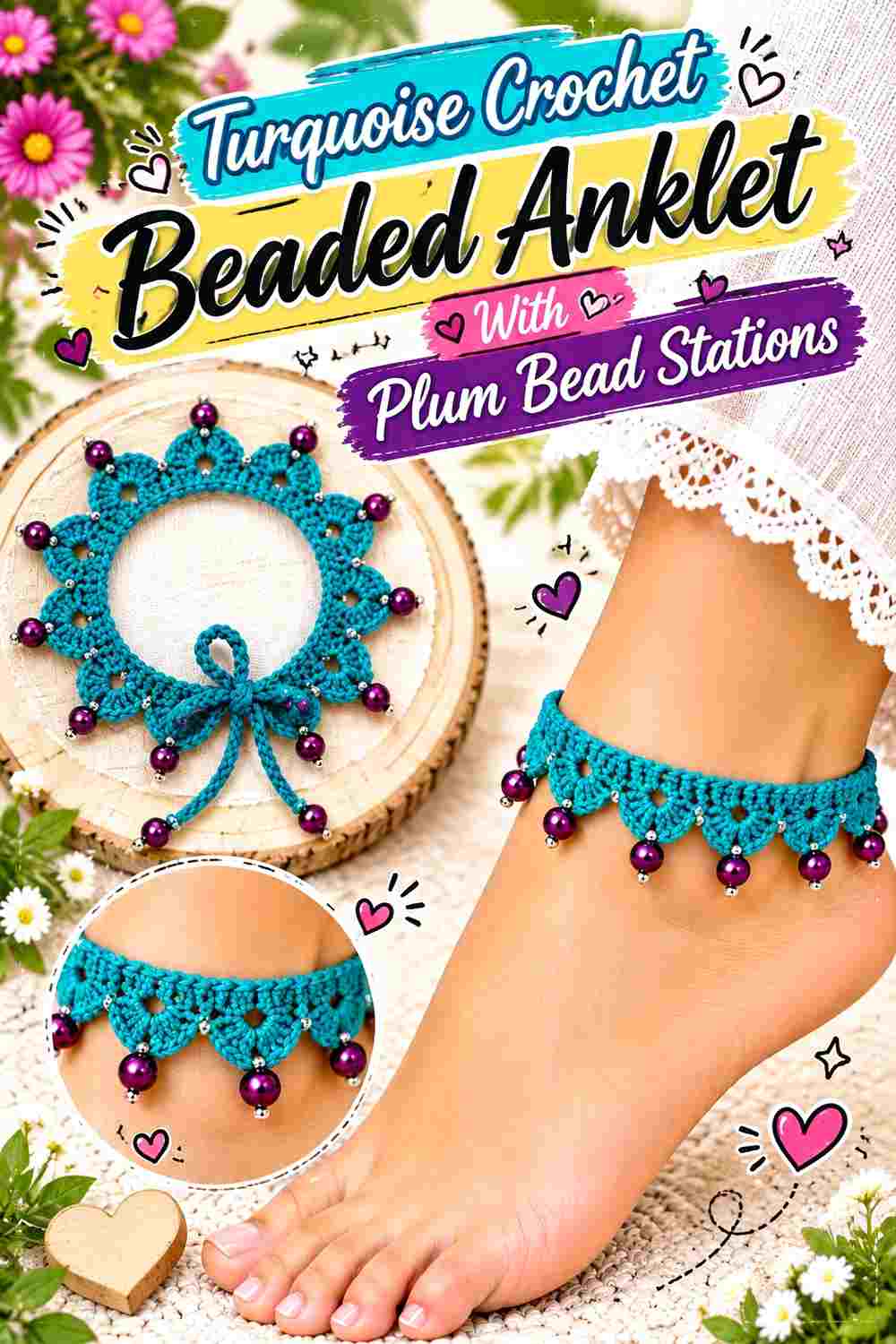
Use turquoise for the main crochet band and repeat plum beads at regular intervals. The bright thread creates one continuous line around the ankle while the deeper bead color provides small, controlled points of contrast.
Plum Beads Should Repeat Predictably Across Turquoise
Choose a consistent spacing pattern so the plum accents feel connected from one end of the anklet to the other. Irregular gaps can make individual beads look like additions rather than part of the original color plan.
Keep enough turquoise visible between beads for the crochet foundation to remain an important part of the design.
Turquoise Should Remain Continuous Around the Plum Beads
Avoid switching to plum thread every time a bead appears. A continuous turquoise foundation lets the beads supply the darker color while the crochet remains visually calm.
This also makes the anklet easier to coordinate if you want the bead color to be the main decorative element.
Creator Credit: Knitting by Wajida Tutorial
2. Plum Crochet Beaded Anklet With Turquoise Beads
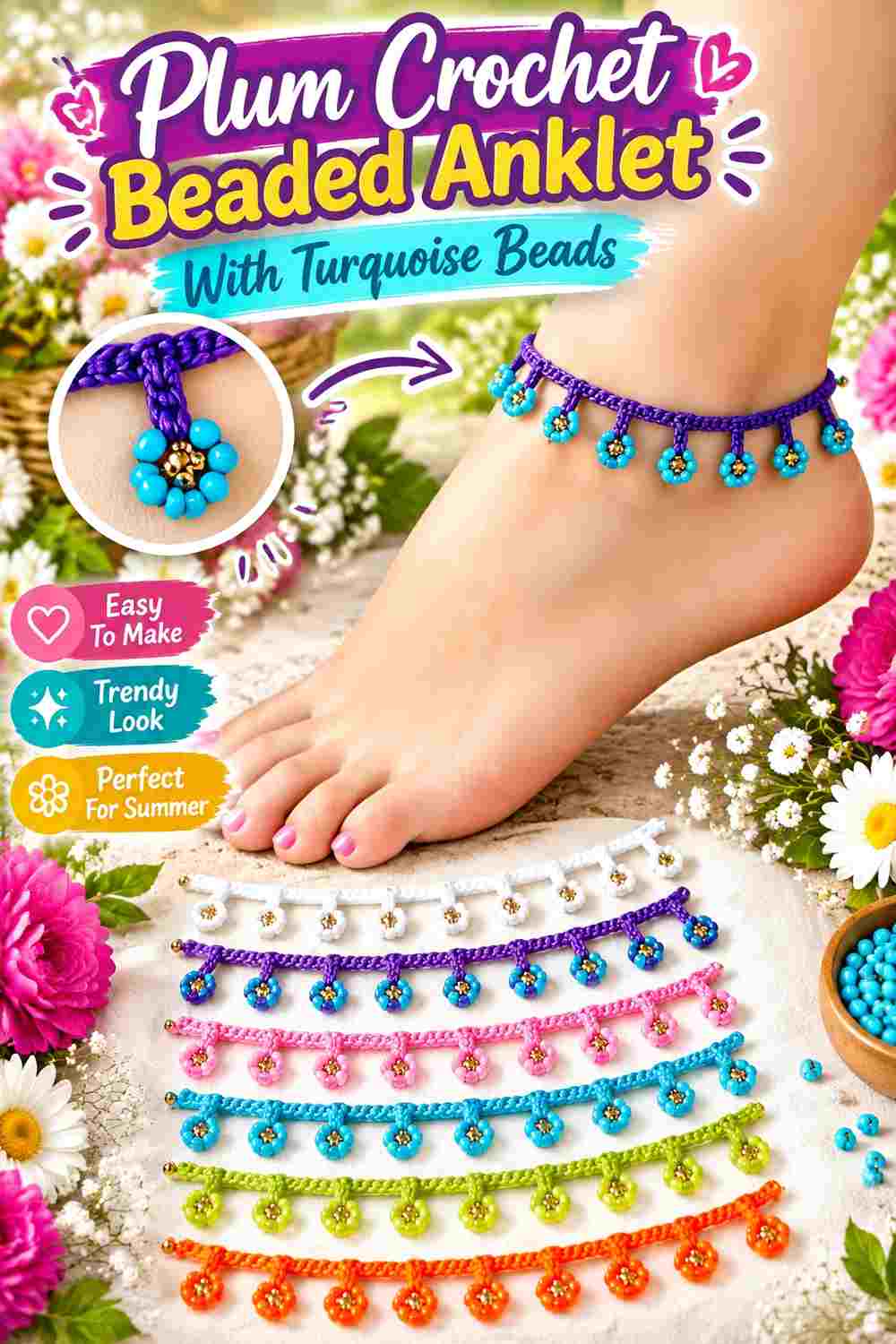
Reverse the first layout by making plum the crochet foundation and turquoise the bead color. The deeper band creates a strong base while turquoise beads become brighter points that can remain visible even when relatively small.
Turquoise Beads Need Plum Space Between Them
Leave enough dark crochet between the turquoise accents for every bead to remain distinct. Packing the bright beads too closely can make the anklet look turquoise-dominant even though the band itself is plum.
Judge the balance from normal standing distance rather than only while holding the anklet close.
Plum Should Carry the Main Crochet Structure Beneath Turquoise
Keep the band, ties, or closing section primarily plum unless another turquoise detail has a clear purpose.
This simple hierarchy is especially useful on a narrow anklet where extra color changes can quickly make the surface look crowded.
Creator Credit: Kiran crochet & craft Tutorial
3. Turquoise Crochet Beaded Anklet With A Plum Scalloped Edge
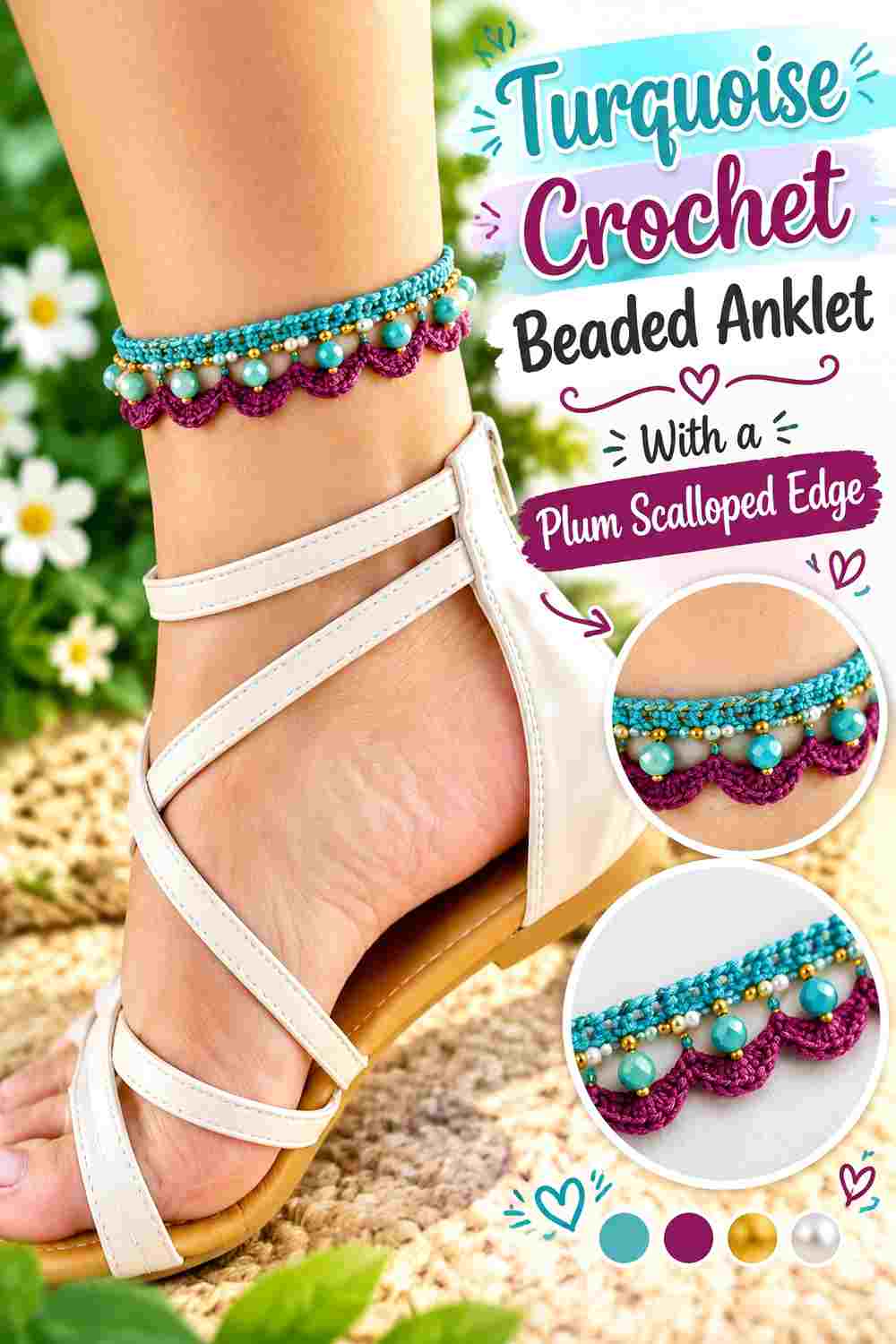
Use turquoise across the upper ankle band and introduce plum along a small scalloped or decorative lower edge. Beads can sit at selected low points so the darker shade emphasizes the anklet’s outline rather than interrupting the main band.
Plum Scallops Can Define the Lower Edge of Turquoise
Keep plum concentrated in the decorative edge so the two colors have separate jobs. The turquoise band carries the fit, while plum creates the visible lower detail.
If beads are added to the scallops, repeat them consistently rather than weighting only one section of the anklet.
Turquoise Should Stay Simple Above the Plum Edge
A relatively plain turquoise upper band gives the decorative plum section enough visual space.
Avoid adding another wide plum line along the top unless you deliberately want a fully framed anklet.
Creator Credit: BonnieBayCrochet Tutorial
4. Plum Crochet Beaded Anklet With Turquoise Center Beads
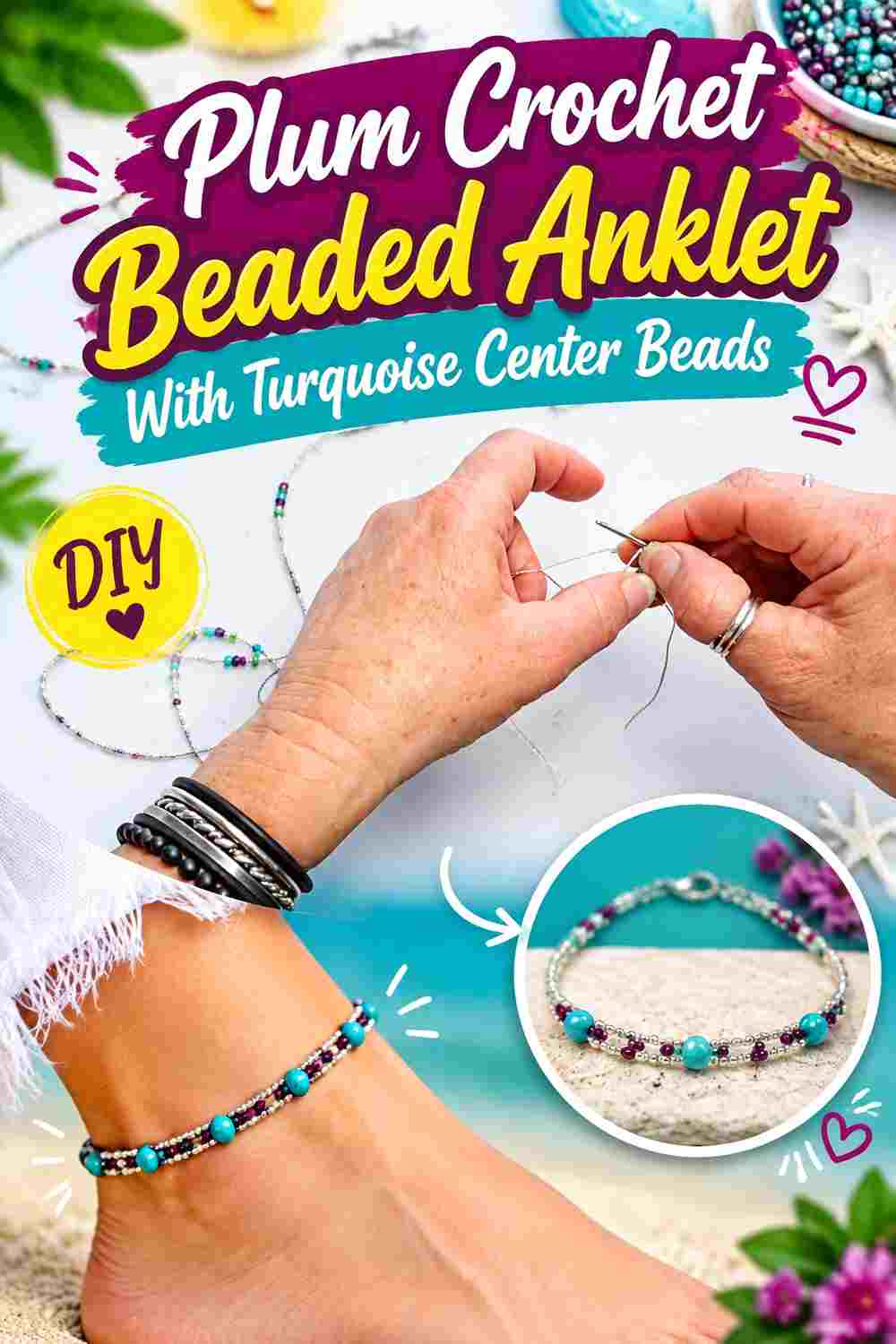
Keep most of the anklet plum but concentrate turquoise beads around the center-front section. This creates a clear focal point instead of distributing equal blue accents all the way around the ankle.
Turquoise Center Beads Need a Clear Plum Background
Group the brighter beads closely enough to read as one intentional feature while keeping plum visible between them.
The concentration should look deliberate rather than like several random turquoise beads happened to meet in the same area.
Plum Should Continue Beyond the Turquoise Center
Use plum across the remaining band and closure so the central bead group retains its focal role.
A second turquoise cluster near the back can weaken the front-centered design unless symmetry is specifically desired.
Creator Credit: San Diego Public Library Tutorial
5. Turquoise Wrap Crochet Beaded Anklet With Plum Accents

A wraparound construction gives turquoise more length and allows plum beads to appear each time the band crosses the ankle. The repeated layers create more color movement than a single-band anklet.
Plum Beads Should Stay Even Across the Turquoise Wrap
Because sections overlap when worn, inconsistent bead placement can produce one heavily decorated area and another nearly empty area.
Lay the wrap out straight before finishing and check that plum repeats through the full length rather than clustering near one end.
Turquoise Needs Enough Unbeaded Space Between Plum Accents
The wrap itself should remain visible. If every small section contains a plum bead, the anklet may read more like a bead strand with turquoise thread hidden between pieces.
Use the crochet as part of the color design rather than only as a support for beads.
Creator Credit: Crochet with Patricia Tutorial
6. Plum Double Wrap Crochet Beaded Anklet With Turquoise Beads
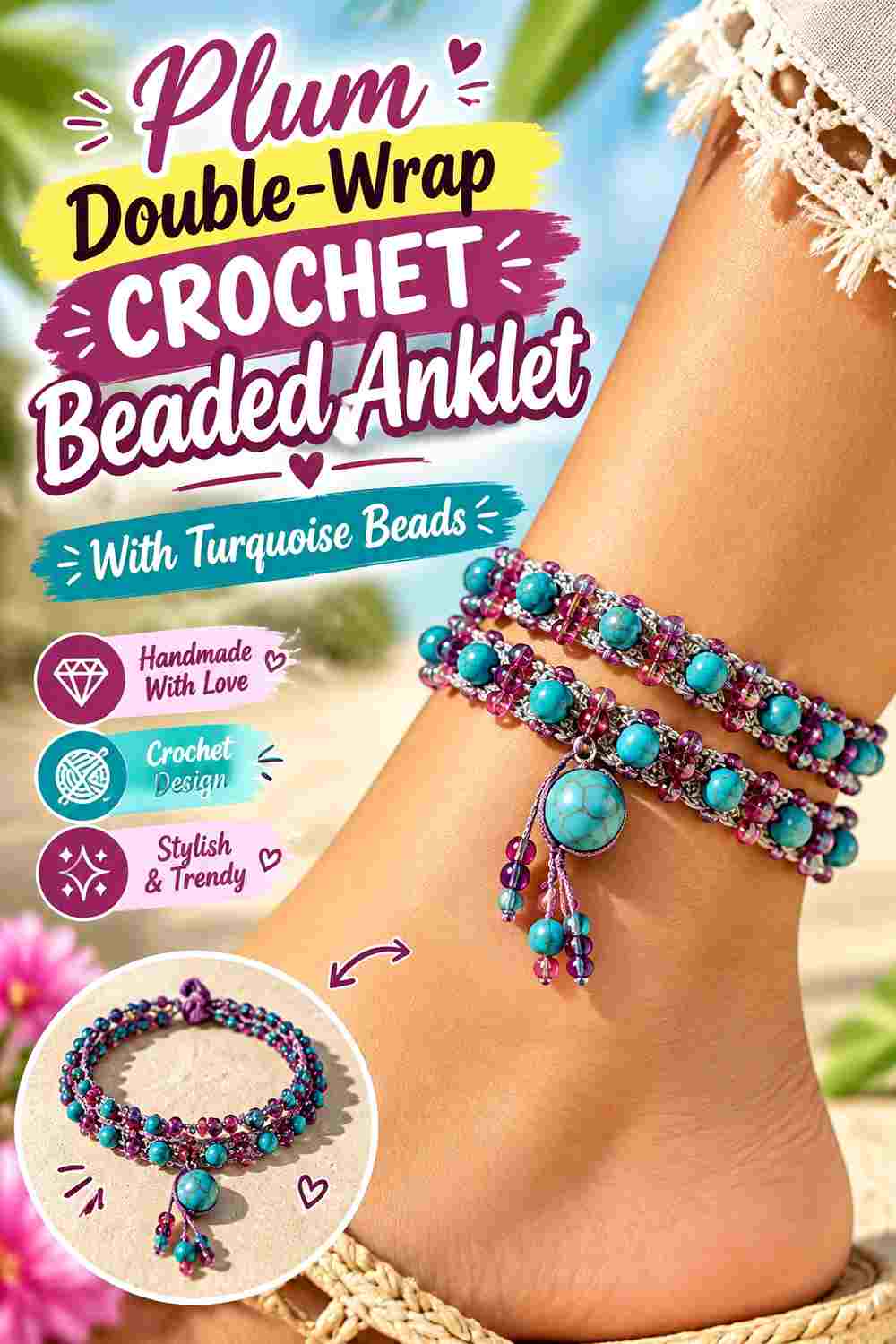
Use a longer plum band that circles the ankle more than once and space turquoise beads across both visible wraps. The layered construction gives the brighter blue repeated presence without requiring two yarn colors in the crochet itself.
Turquoise Beads Need Balanced Placement Across Plum Wraps
Check how the two passes sit beside one another when worn. If all turquoise beads happen to align in one area, the anklet can look unintentionally heavy on that side.
Slightly staggered visible accents can keep both wraps distinct.
Plum Should Connect the Entire Double-Wrap Anklet
Keep the band consistently plum from beginning to end so the repeated loops clearly belong to one piece.
The turquoise beads then create continuity through repetition rather than through a second crochet color.
Creator Credit: Hooked by Robin Tutorial
7. Turquoise Lace Crochet Beaded Anklet With Plum Bead Points
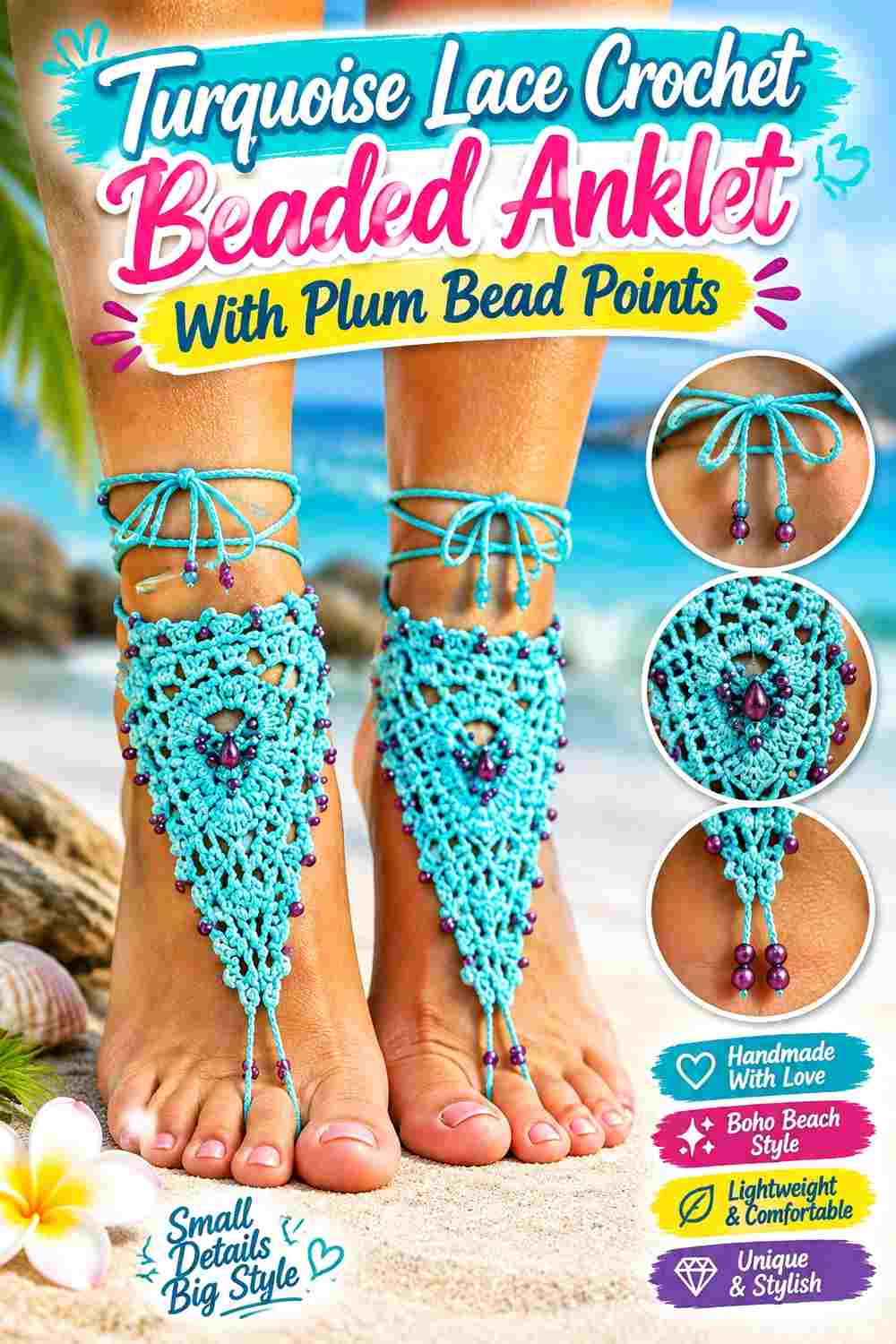
Use turquoise across an open or lace-like ankle section and place plum beads at selected picots, points, or outer details. The deeper beads can make the shape of the lace easier to follow.
Plum Beads Can Mark the Points of Turquoise Lace
Place beads where the decorative crochet already changes direction rather than attaching them randomly through the center.
This lets color and structure reinforce one another and keeps the main lace surface less cluttered.
Turquoise Should Carry the Main Lace Shape Around Plum
Keep the openwork predominantly turquoise so the repeated stitch pattern remains connected.
If plum yarn is also introduced, reserve it for a tie or narrow finish instead of adding it through every lace repeat.
Creator Credit: Kristin Omdahl Tutorial
8. Plum Boho Crochet Beaded Anklet With Turquoise Highlights
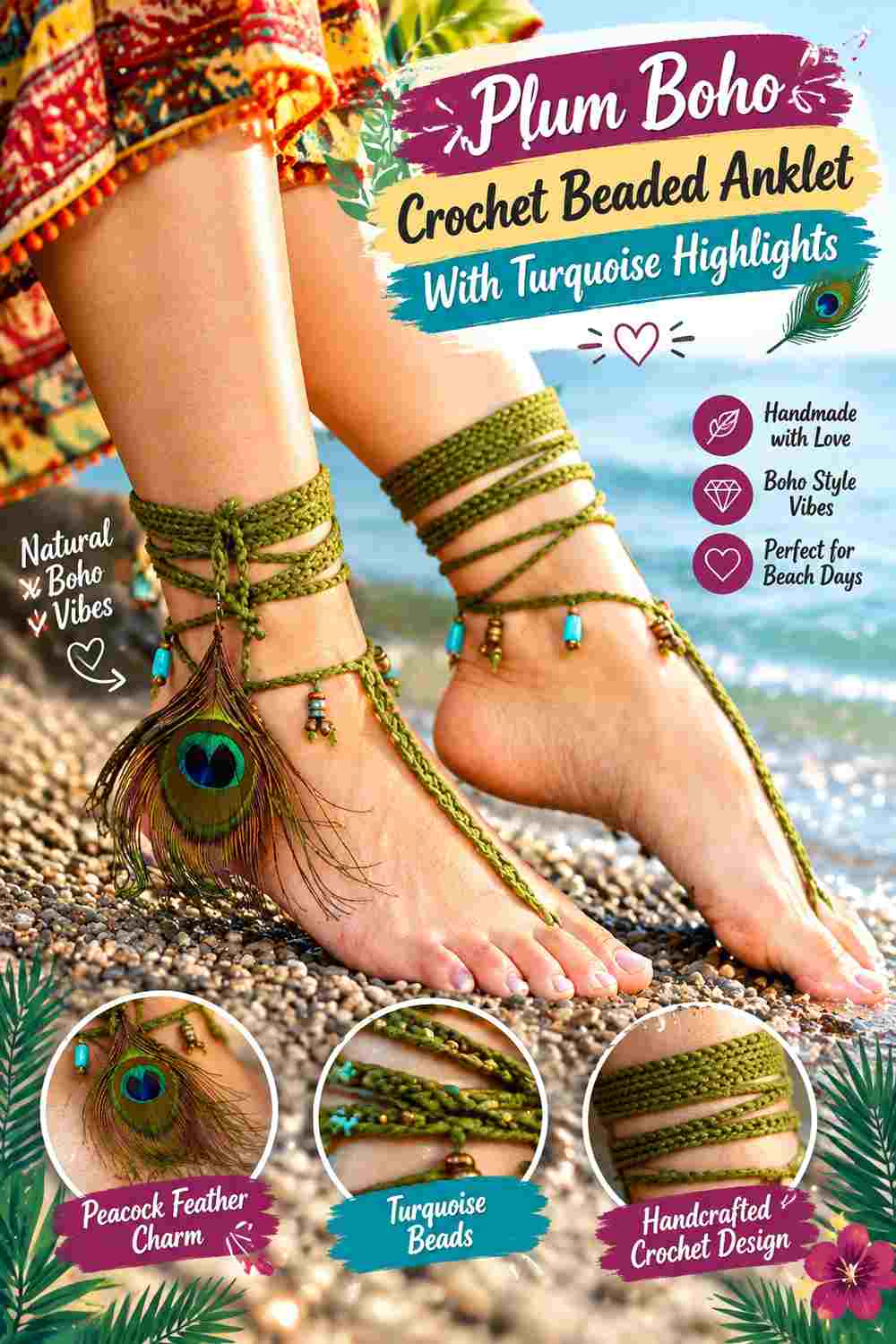
A barefoot-sandal construction can provide useful inspiration for a wider boho-style ankle band with beads and long ties. For an anklet adaptation, keep the ankle-focused section plum and use turquoise in selected beads or tie details rather than assuming the full foot construction transfers unchanged.
Turquoise Highlights Should Stay Visible Against Plum
Use the brighter shade in a few repeated locations that remain visible when the anklet is wrapped and tied.
Beads placed too close to the knot can disappear behind overlapping ties, so evaluate the color arrangement in the worn position.
Plum Can Give the Turquoise Boho Details a Strong Base
Let the main chain or band remain plum so beads and decorative turquoise sections do not compete with another large color field.
Follow the source tutorial for its actual barefoot-sandal construction and treat the standalone anklet concept as an independent adaptation.
Creator Credit: Fuad Azmat / YARNutopia by Nadia Tutorial
9. Turquoise Crochet Beaded Anklet With Plum Tie Ends
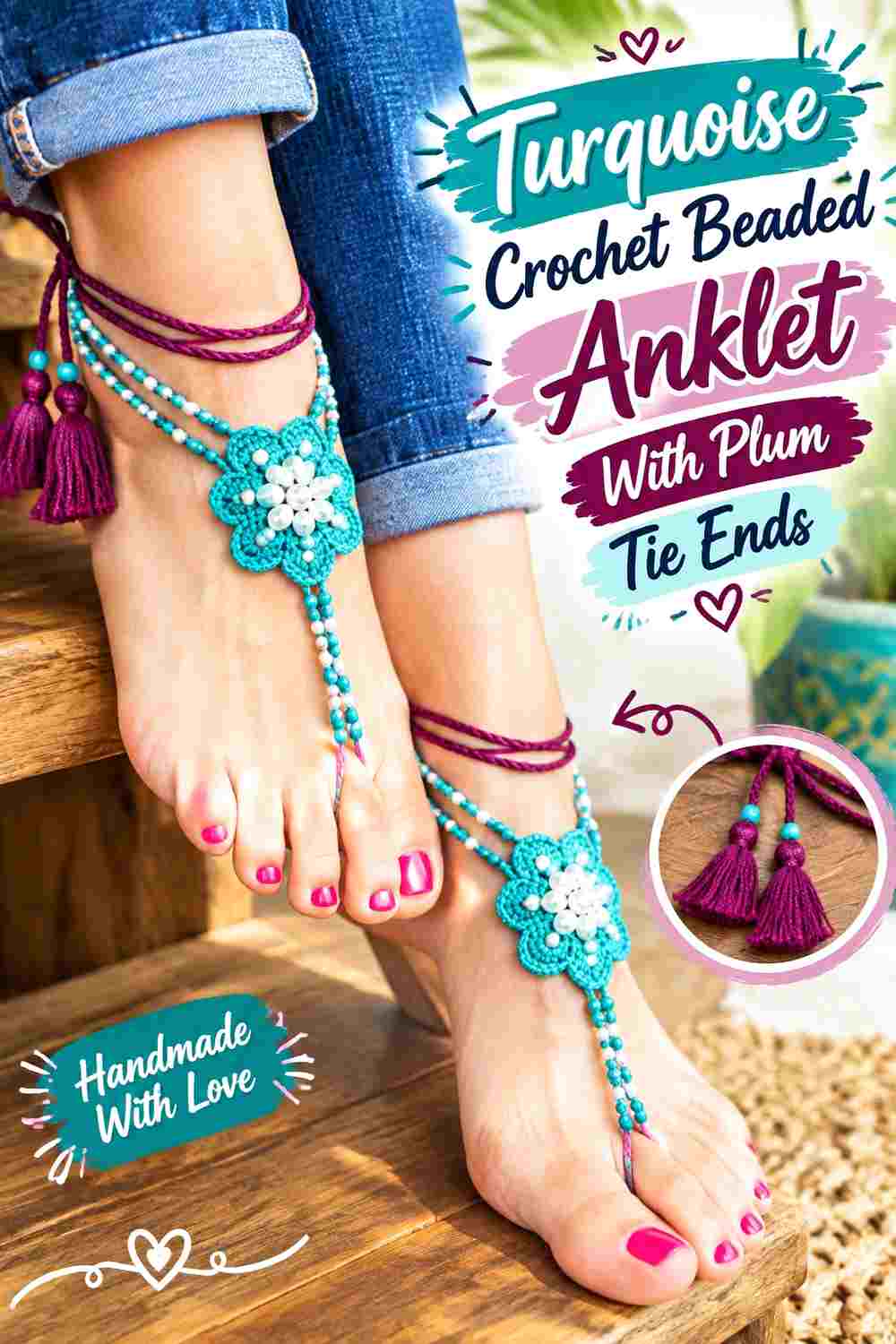
Keep the band turquoise and move plum toward the tied ends. Small plum beads can finish the ties, concentrating the deeper shade at the closure instead of throughout the main ankle section.
Plum Tie Ends Can Finish a Turquoise Anklet Cleanly
Use matching plum treatment on both ends so the closure looks balanced when tied.
If beads are placed near the ends, make sure they do not make the knot unnecessarily bulky.
Turquoise Should Remain Broad Before the Plum Tie Transition
Let the section circling the ankle stay clearly turquoise. The color change should happen near the ends so the darker shade remains associated with fastening.
This approach suits a minimalist anklet where the closure is the main decorative feature.
Creator Credit: Ahuyama Crochet Tutorial
10. Plum Crochet Beaded Anklet With Turquoise Border Beads
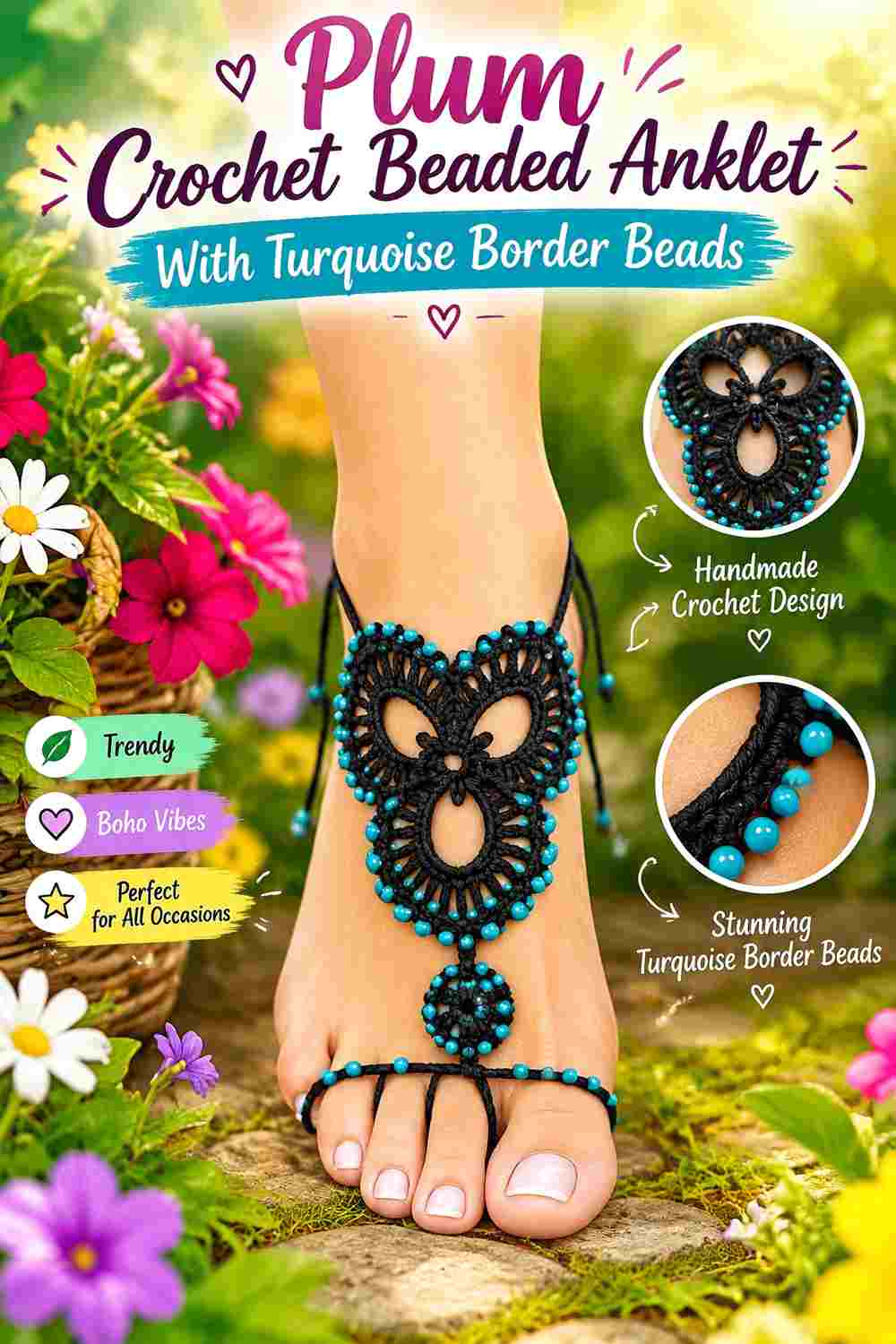
Use plum as the main crochet ankle band and position turquoise beads along one outer edge. The bright row gives the anklet a directional color treatment rather than distributing beads through the middle.
Turquoise Border Beads Should Follow One Plum Edge Consistently
Keep the beads aligned along the same side so the border remains visually clear around the ankle.
Switching between upper and lower edges can make a narrow band look irregular even when the stitch count is correct.
Plum Needs Enough Width Beside the Turquoise Bead Border
Leave a visible plum field next to the bead row so the crochet itself does not disappear.
If the anklet is very narrow, use fewer beads rather than forcing a dense border into limited space.
Creator Credit: Crafting Wheel Tutorial
11. Turquoise Crochet Beaded Anklet With A Plum Closure Bead
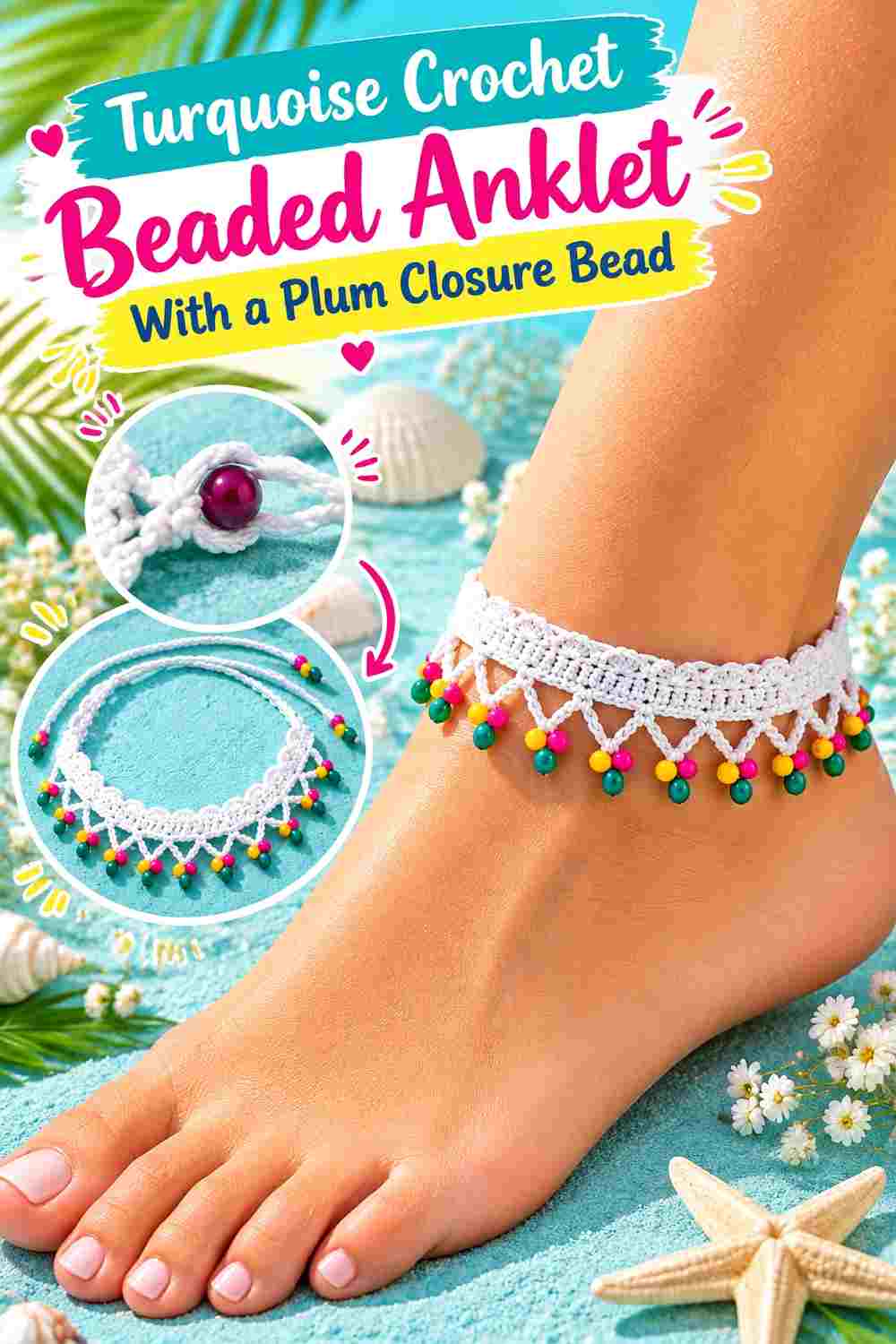
Make turquoise the complete crochet band and reserve plum for one prominent closure bead or a small group at the fastening point. This creates the most restrained two-color direction in the collection.
A Plum Closure Bead Can Become the Focal Point on Turquoise
Use the deeper bead where the fastening method naturally places it rather than adding an unrelated large bead purely for decoration.
A single focal accent works best when the rest of the anklet remains comparatively simple.
Turquoise Should Stay Uninterrupted Around the Plum Closure
Keep the band solid turquoise so the closure remains easy to identify.
If smaller decorative beads are also included, keep them turquoise or very limited so they do not compete with the main plum accent.
Creator Credit: Tuba Crochet Tutorial
12. Turquoise And Plum Mirrored Crochet Beaded Anklet
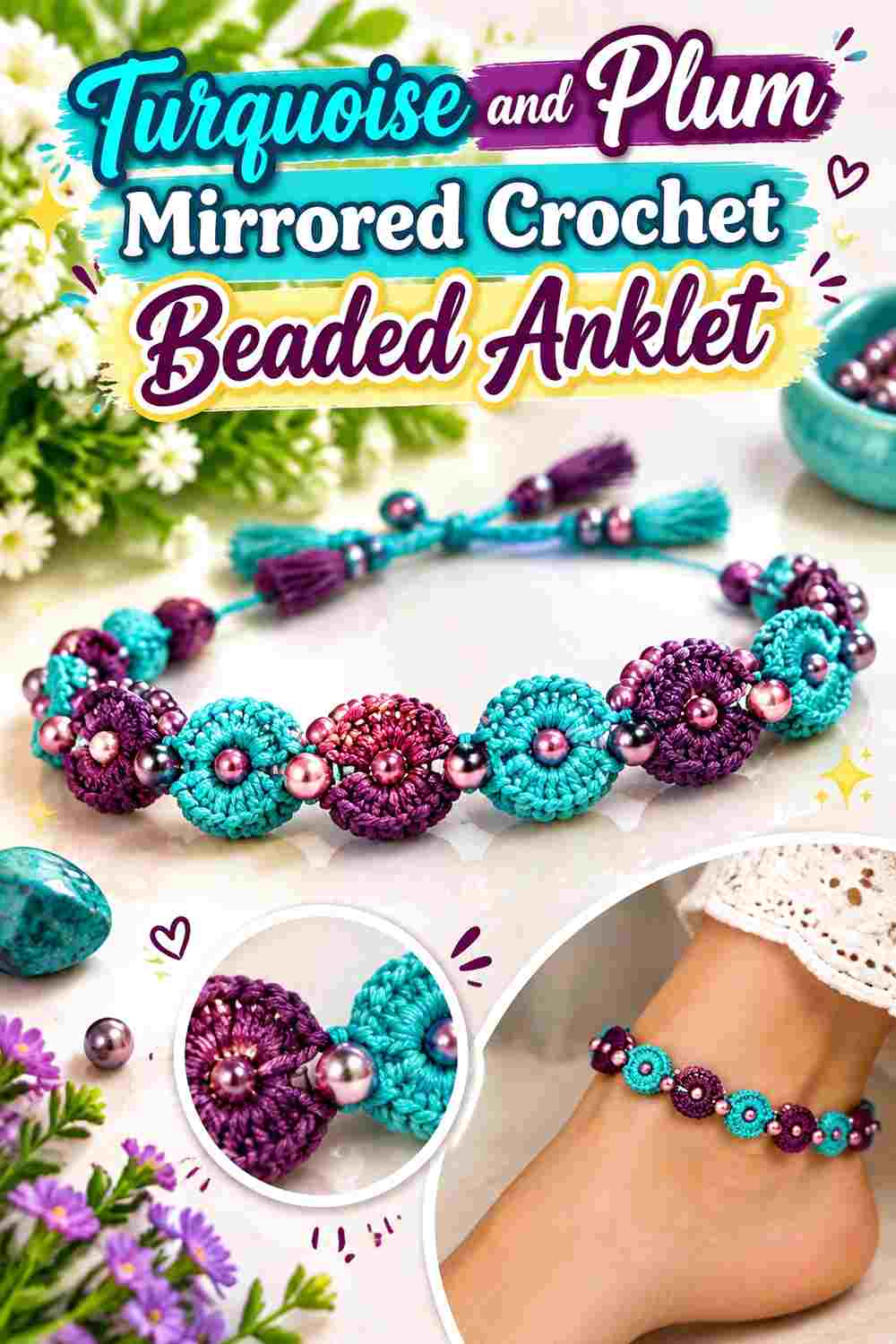
Finish with a mirrored design that gives one side a turquoise crochet field with plum beads and reverses the relationship on the other side. When the anklet closes, the two color directions meet in one piece.
Turquoise and Plum Need a Deliberate Mirrored Transition
Choose a clear midpoint or focal section where the color roles reverse. A planned transition makes the asymmetry look intentional rather than like the yarn changed unexpectedly.
Keep the bead-spacing logic the same on both sides even though the colors switch.
Plum and Turquoise Should Balance Around the Finished Ankle
View the anklet while worn before deciding whether one half needs more visual weight. Cobalt-like bright turquoise can draw more attention than plum even when the sections are equal in length.
If the turquoise half feels too dominant, adjust bead emphasis rather than adding an unrelated third color.
Creator Credit: Randy Craft Tutorial
Comparing the 12 Turquoise and Plum Beaded Anklet Color Directions
For a turquoise-dominant anklet, Ideas 1, 3, 5, 7, 9, and 11 keep the brighter shade across most of the crochet and use plum for beads, edges, ties, or a closure focal point.
For a plum-dominant design, Ideas 2, 4, 6, 8, and 10 create a deeper ankle band and let turquoise beads or highlights provide the contrast.
Idea 12 gives both colors comparable importance by reversing their roles from one side of the anklet to the other.
If you want the beads to be the main feature, use a simple single-color crochet foundation. If lace, scallops, or wraparound structure is more important, reduce the number of bead colors or placements so the stitch shape stays readable.
Conclusion
Turquoise and plum can produce very different crochet beaded anklets depending on whether color is carried mainly by the thread or the beads. A turquoise band with plum accents feels brighter and more open, while a plum band with turquoise beads creates stronger points of cool contrast.
For simple anklets, bead spacing and closure color can provide enough variation on their own. Wider lace, scalloped, and wraparound styles can support more complex placement, but they still benefit from a clear dominant color.
Several credited tutorials demonstrate exact anklets, while others show beaded bracelets or barefoot-sandal ankle constructions that can inform bead placement, ties, and wrap styling. Follow each creator for the project they actually teach, then apply the turquoise-and-plum palette independently to an anklet that fits comfortably around the intended ankle.
Frequently Asked Questions
Should Turquoise or Plum Be the Main Color in a Crochet Beaded Anklet?
Either can lead. Turquoise creates a brighter ankle band, while plum produces a deeper base and makes turquoise beads stand out more strongly.
Choose one dominant shade first, then use the second for beads, edging, or the closure.
Where Should Plum Beads Go on a Turquoise Crochet Anklet?
Plum beads can be spaced evenly through the band, placed along one edge, grouped near the center, or concentrated at the closure.
The strongest choice depends on whether you want an all-around repeating pattern or one focal area.
Can Turquoise and Plum Beads Be Used Together on the Same Anklet?
Yes. Alternating the colors creates a more even two-color design, while grouping one shade gives the anklet a focal section.
Keep the crochet foundation simpler when both bead colors already provide strong visual activity.
Can a Beaded Crochet Bracelet Tutorial Be Adapted Into an Anklet?
Often the bead-in-crochet technique can transfer, but ankle circumference and movement differ from the wrist. Measure the intended ankle and use the creator’s adjustment guidance where provided rather than copying bracelet length.
Treat the bracelet tutorial as a construction reference, not as proof that its original measurements fit an ankle.
Can a Barefoot-Sandal Tutorial Be Used for a Beaded Anklet Idea?
The ankle-band, tie, or bead-placement portion can provide useful inspiration, but a barefoot sandal also includes foot or toe construction that a standalone anklet does not need.
Use the tutorial for the technique it actually demonstrates and make the standalone anklet concept an independent adaptation.
How Can I Keep a Turquoise and Plum Beaded Anklet From Looking Too Busy?
Give one shade a dominant role and repeat the second shade in a predictable way. For example, a solid turquoise band with evenly spaced plum beads creates more visual order than alternating thread and bead colors constantly.
Lace or scalloped anklets generally need fewer bead changes because the crochet already supplies decoration.
How Should I Substitute Different Turquoise or Plum Shades?
Preserve the contrast relationship. Choose a clear blue-green for the turquoise role and a deeper purple-red or muted purple for the plum role.
Compare the yarn and beads together before starting. If their lightness is too similar, use larger color sections or more separated bead placement so the two shades remain easy to distinguish.