Vintage-inspired crochet accessories are especially useful when you want the character of old lace, structured millinery, delicate trims, or small keepsake pieces without committing to a full garment. This collection ranges from a 1940s-inspired hair snood and 1920s-style cloche to lace collars, a kiss-lock evening purse, a decorative parasol, and an Irish lace bonnet.

The projects are not all historical reproductions. Some tutorials explicitly draw from particular periods, while others are modern lace designs that suit an heirloom-inspired wardrobe because of their silhouette, finishing, or ornamental detail. Here, “heirloom” describes that keepsake-oriented design direction rather than guaranteeing historical accuracy or a particular lifespan.
When choosing, look beyond color first. Fit matters most for hats, gloves, collars, and headbands; hardware becomes important for the purse, brooch, jewelry, and parasol; openwork scarves, shawls, and lace trims give you more freedom to focus on drape and visual detail.
Quick List:
- Crochet Lace Collar with Button Closure
- Crochet Lace Fingerless Gloves
- Crochet 1940s-Inspired Hair Snood
- Crochet Edwardian-Inspired Shoulder Capelet
- Crochet Decorative Lace Cuffs
- Crochet 1920s-Inspired Cloche Hat
- Crochet Mid-Century Pillbox Hat
- Crochet Embroidered Vintage-Style Brooch
- Crochet Scalloped Lace Collar Necklace
- Crochet Kiss-Lock Evening Purse
- Crochet Fine Lace Earrings
- Crochet Vintage Tie Headband
- Crochet Floral Mile-a-Minute Lace Scarf
- Crochet Easy Lace Tie Belt
- Crochet Openwork Lace Handkerchief
- Crochet One-Skein Lace Shawl
- Crochet Decorative Lace Parasol
- Crochet Irish Lace Bonnet
Choosing an Heirloom Look Without Overstating the History
A recognizable vintage silhouette usually contributes more than an artificially “old-fashioned” color choice. A cloche gets much of its character from the way the crown and decorative band frame the head, while a pillbox depends on a compact structured profile. A snood creates an entirely different period reference because the crocheted fabric contains and displays the hair rather than covering it like a conventional hat.
For lace accessories, study scale as well as pattern. Fine-looking openwork can feel jewelry-like around the neck or wrist, while the same visual density spread across a shawl becomes a larger textile statement. If you substitute materials, remember that stitch scale, flexibility, and drape may all change together. Treat cream, ivory, black, dusty pastels, or jewel tones as styling choices rather than proof that a project is historically authentic.
Plan for Fit, Hardware, and Finishing Before You Start
The eighteen projects divide naturally into pieces that depend on body fit and pieces that depend on another component. Gloves, hats, collars, headbands, and a capelet deserve an early fit check because adding decorative finishing cannot reliably correct a basic proportion problem later. For a scarf, shawl, or handkerchief, the finished outline may give you more room to adjust how the piece is worn.
Hardware introduces a different constraint. A kiss-lock purse has to cooperate with its frame, a brooch with its backing, earrings with their jewelry components, and a lace parasol with its umbrella framework. Check the dimensions and contact points of any component you plan to substitute before making a large amount of crochet around it. A beautiful vintage clasp or salvaged frame is useful only when the crocheted section and the hardware can actually be joined as intended.
1. Crochet Lace Collar with Button Closure
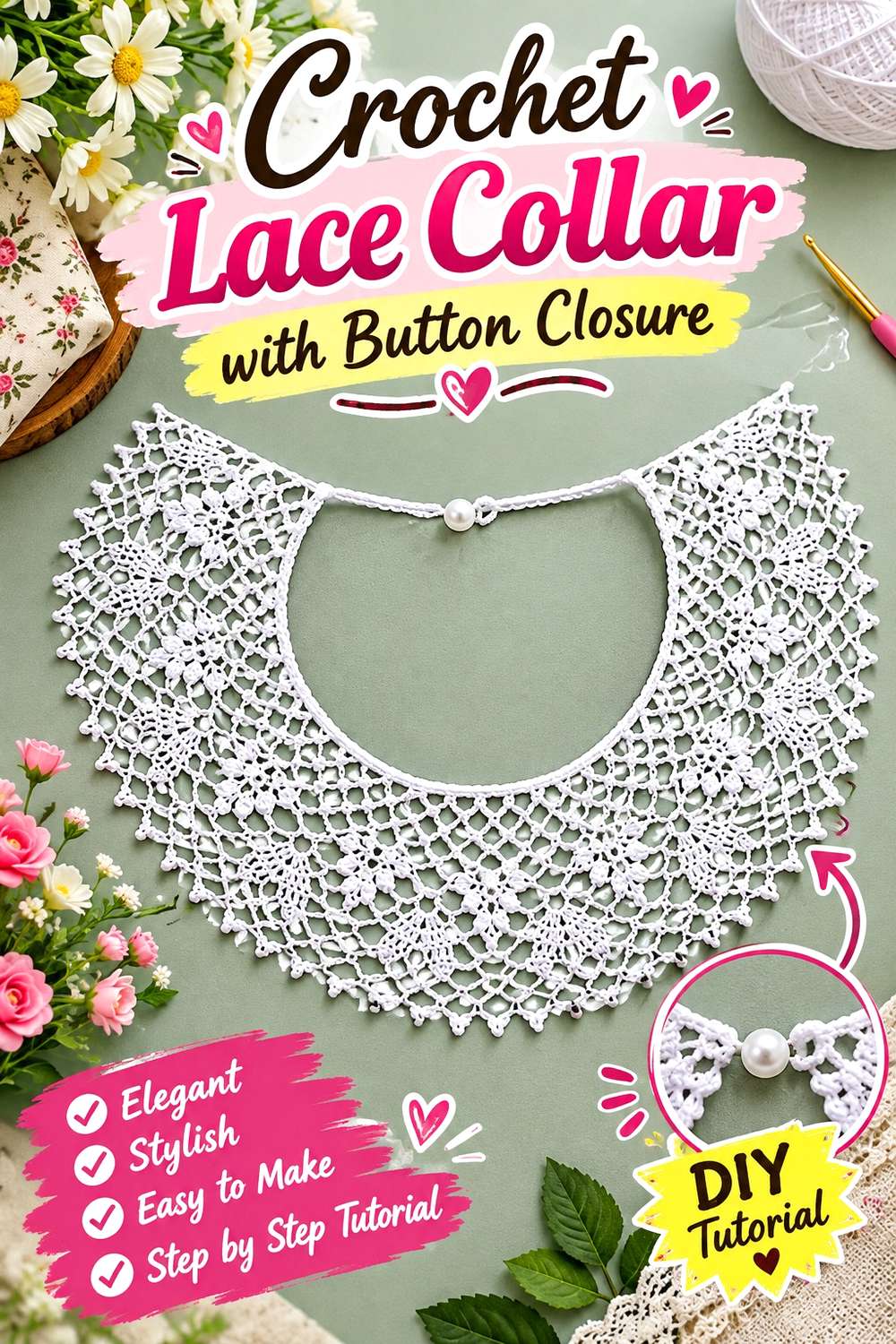
A separate lace collar can bring heirloom detail to a plain neckline without requiring an entire crocheted blouse. The DoilyDreams tutorial works through a complete collar and includes the finishing area and button, making this a true accessory rather than simply an isolated lace edging.
The strongest reason to choose this idea is its portability between garments. Instead of permanently adding trim to one dress, you can treat the collar as its own finished piece and decide which neckline gives it enough visual space. That also makes proportion especially important: the outer lace edge should be noticeable without overwhelming the garment underneath.
For a vintage-inspired wardrobe, this is a useful starting point when you like lace but prefer an accessory that feels quieter than a bonnet, capelet, or large shawl.
Compare the Collar Shape With Your Necklines
Lay a similarly shaped paper or fabric outline over the tops and dresses you intend to pair with the collar. This simple check shows whether the decorative edge will sit on visible fabric or disappear into an existing neckline.
It also helps you decide how much contrast you want. A collar close to the garment color emphasizes texture, while stronger contrast makes the entire outline more graphic. Neither approach requires changing the construction itself.
Treat the Closure as Part of the Design
Because the tutorial includes a button finish, the closure becomes a visible part of the accessory rather than an afterthought. If you plan to substitute a different button, compare its scale with the finished lace before attaching it.
A very large decorative button can pull attention away from delicate edging, while a very small one may not suit the intended fastening. Confirm that any substitute works physically as well as visually.
Creator: DoilyDreams
2. Crochet Lace Fingerless Gloves
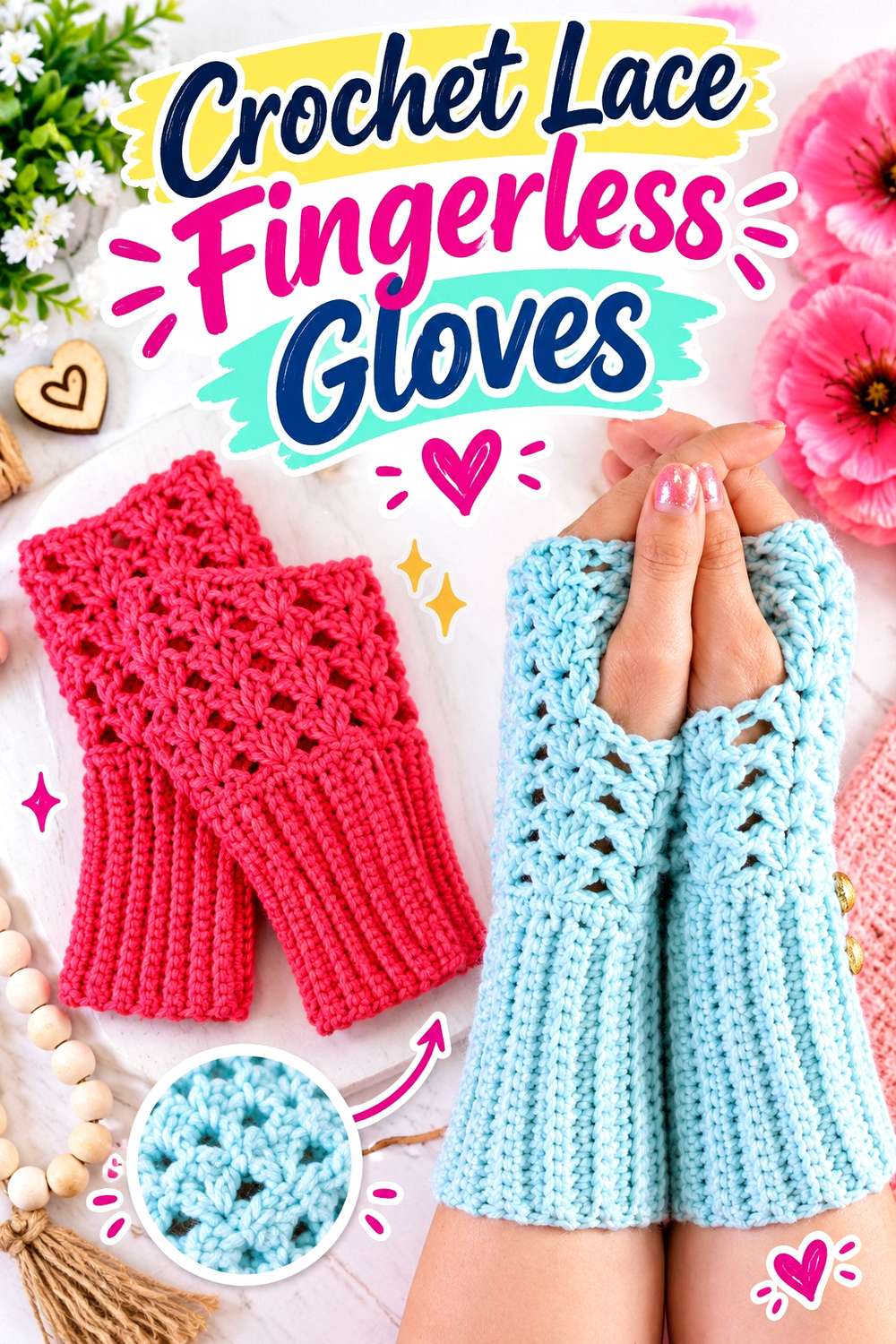
Fingerless gloves combine fitted crochet with visible lace, giving you an accessory that can read as Victorian-inspired, romantic, or simply dressy depending on the rest of the outfit. Treasurie’s project includes a ribbed cuff, a lacy hand section, a thumb opening, and optional decorative buttons, so the visual interest is distributed rather than concentrated at one edge.
Unlike a loose scarf, this project has to negotiate several points at once: wrist fit, hand width, thumb placement, and the openness of the lace. That makes it worth checking the tutorial’s sizing information rather than assuming a yarn substitution will preserve the demonstrated proportions.
These gloves are particularly effective with sleeves that leave the cuff visible. If most of your clothing has tight cuffs or heavy coat sleeves, consider how much of the decorative section will actually be seen before choosing them.
Decide How Much Cuff You Want to Display
The ribbed cuff visually anchors the more open hand section. If you plan to wear the gloves with long sleeves, compare the sleeve opening with the cuff before deciding whether this is the right accessory for that garment.
A sleeve that covers almost the entire cuff changes the balance considerably. With a shorter sleeve or three-quarter-length layer, the transition from ribbing to lace can become part of the overall styling.
Keep Decorative Buttons Optional
The source presents buttons as an optional decorative element rather than the defining structure of the gloves. That gives you a useful choice between a cleaner lace surface and a more ornamented vintage effect.
If you add buttons, consider their weight and position before sewing them permanently. The best choice should complement the lace without twisting the narrow cuff or repeatedly catching against adjacent sleeves.
Creator: Treasurie
3. Crochet 1940s-Inspired Hair Snood
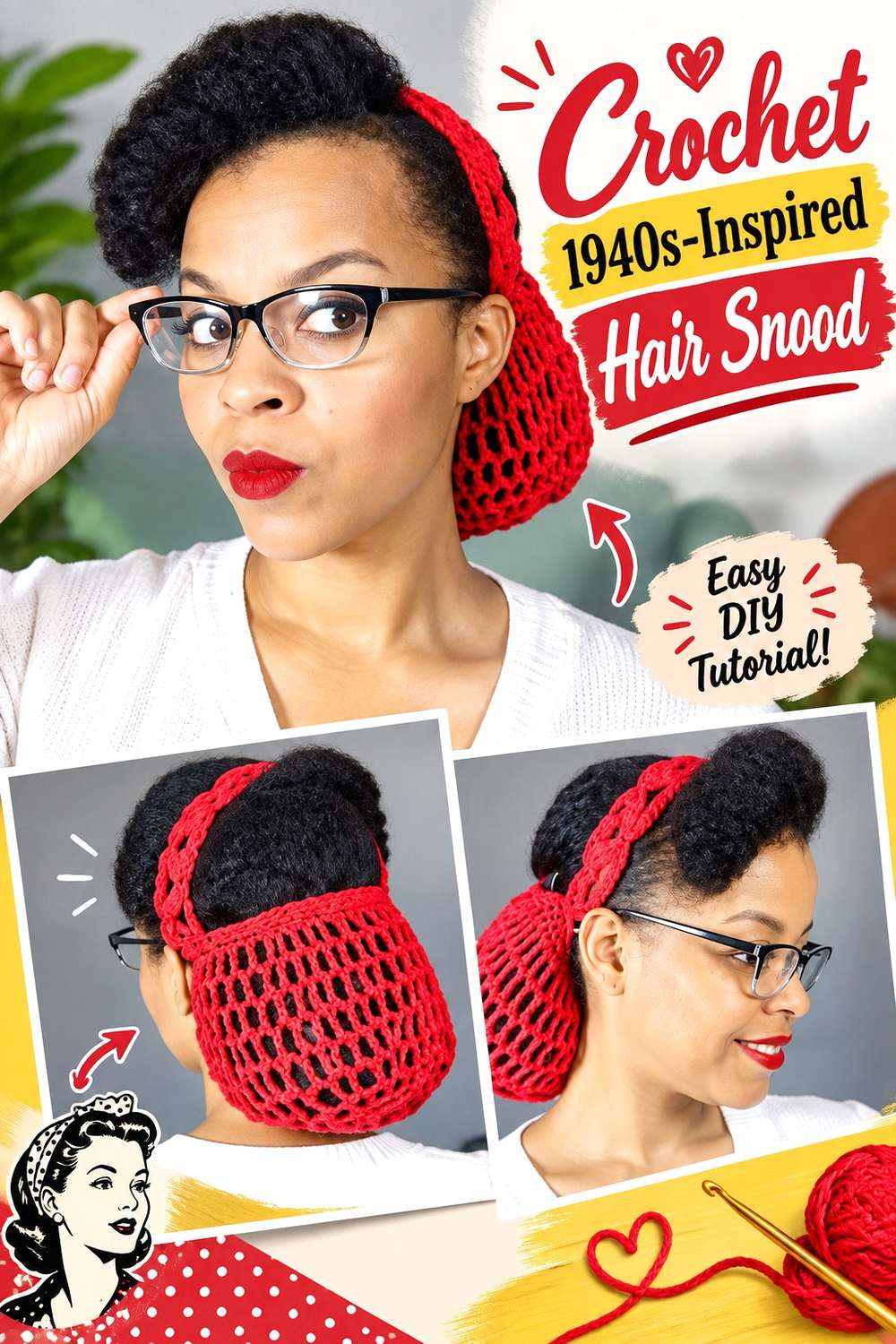
A snood changes the silhouette of a hairstyle rather than simply adding decoration to it. Littlejohn’s Yarn specifically presents this crocheted net hair covering as a vintage design inspired by 1940s styling, making it one of the clearest period references in this collection.
The open net is visually important because the hair remains part of the finished look. That means the accessory will appear different depending on hair volume and how the hair is arranged inside it. Before choosing a snood over a cloche or headband, think about whether you want the hairstyle visible through the crochet or mostly concealed.
It can also provide a useful vintage focal point without requiring elaborate lace across the entire outfit. A simple blouse or dress allows the netted texture and gathered shape at the back of the head to do most of the stylistic work.
Plan Around Hair Volume
A snood that holds a compact hairstyle has a different job from one containing a larger bun or fuller curls. Use the creator’s construction information as the starting point and compare it with the amount of hair you actually intend to enclose.
Avoid assuming that changing hook size alone is an ideal resizing method. Altering scale can also change the openness of the net, which affects the visual character of the finished piece.
Let the Hairline Determine the Front Placement
The front edge influences whether the snood reads as a subtle hair accessory or a more obvious period-style feature. Before finishing your styling, test where the front portion looks balanced relative to your hairline and ears.
This is primarily an appearance decision rather than a reason to force a tighter fit. The netted back should remain the visual focus instead of looking strained merely to keep the front edge in a particular position.
Creator: Littlejohn’s Yarn
4. Crochet Edwardian-Inspired Shoulder Capelet
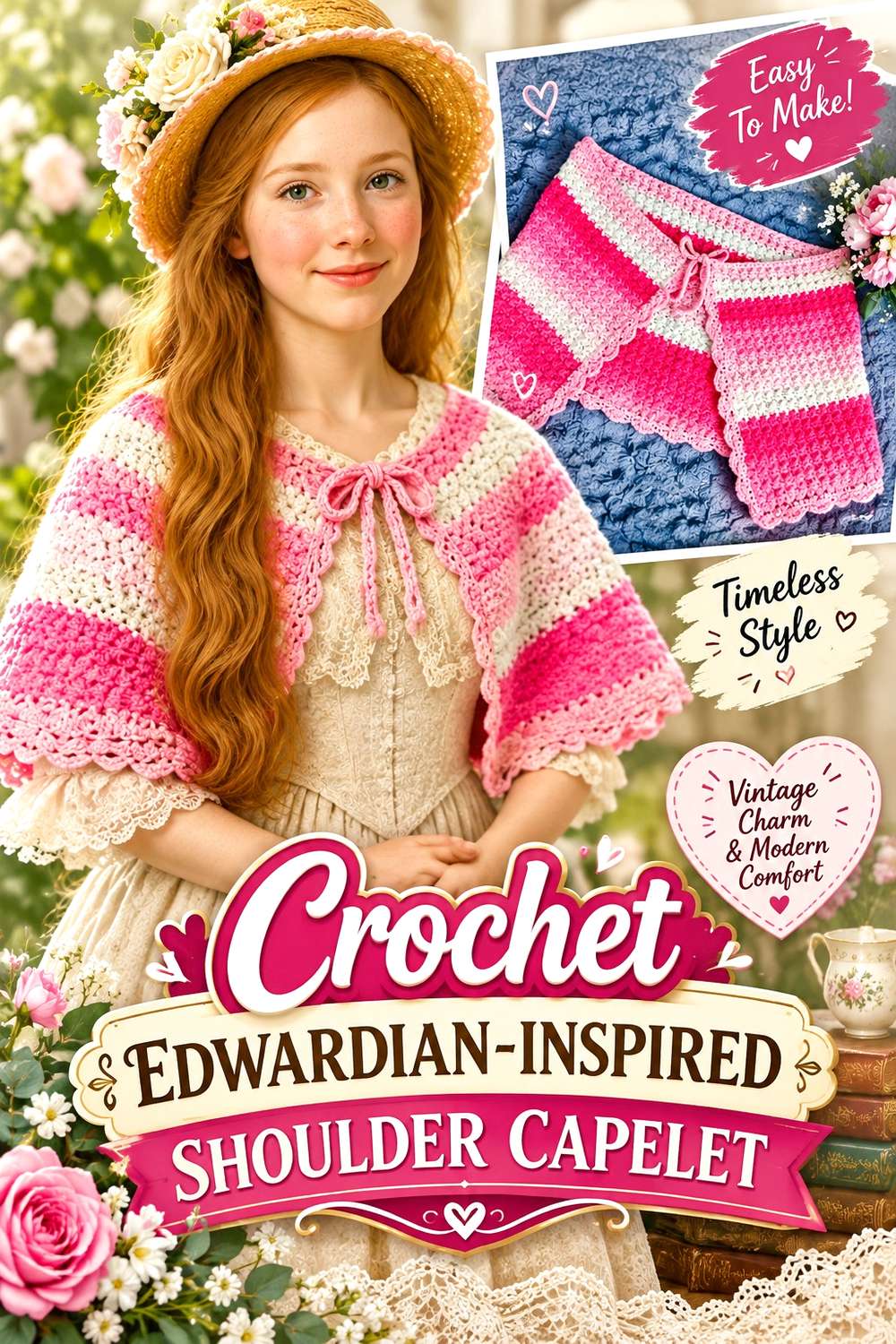
A small capelet occupies the useful space between jewelry-scale accessories and full garments. Selina Veronique Crochet presents this project as part of a vintage series and specifically draws on Edwardian style. The construction uses a rectangular main section, decorative shell edging, and ties, creating a piece that rests around the shoulders rather than fitting like a conventional cardigan.
That shape makes the capelet a strong option when you want visible crochet near the face and neckline but do not want long sleeves or a large shawl. It can sit over a comparatively simple dress or top, where the outer edge and front ties remain easy to see.
Because it covers the shoulder area, compare its proportions with the sleeves underneath. Full or heavily embellished sleeves will interact with the capelet differently from a narrow, plain bodice.
Give the Shell Border Enough Visual Space
Decorative edging works best when it is not fighting another equally busy detail directly underneath it. If the capelet will be worn over lace, ruffles, or a strong print, place the two together before committing to the combination.
A quieter underlayer lets the shell outline become the framing detail. This is an outfit-planning decision, so it can be changed later without altering the tutorial’s actual construction.
Check the Tie Position With the Intended Neckline
Front ties create a natural focal point. On a high-necked garment they may sit entirely over fabric; on a lower neckline they can cross exposed skin or another layer.
Try the approximate position before choosing any extra embellishment for the tie ends. Added weight or bulk can change how the ties hang, so decorative modifications are best considered after you understand the original finish.
Creator: Selina Veronique Crochet
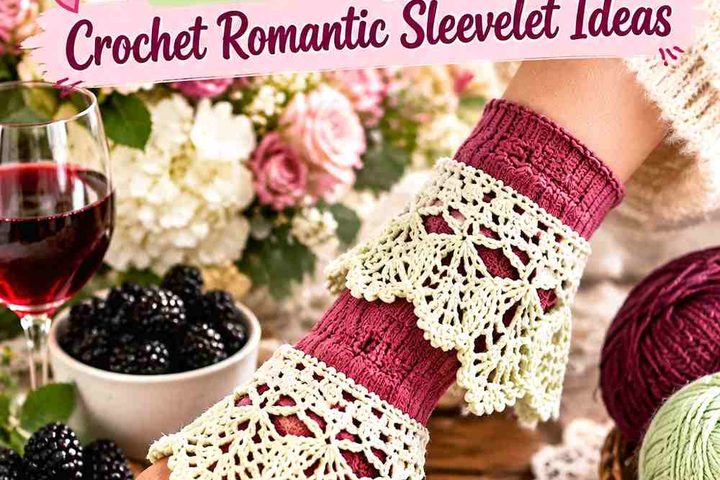
5. Crochet Decorative Lace Cuffs
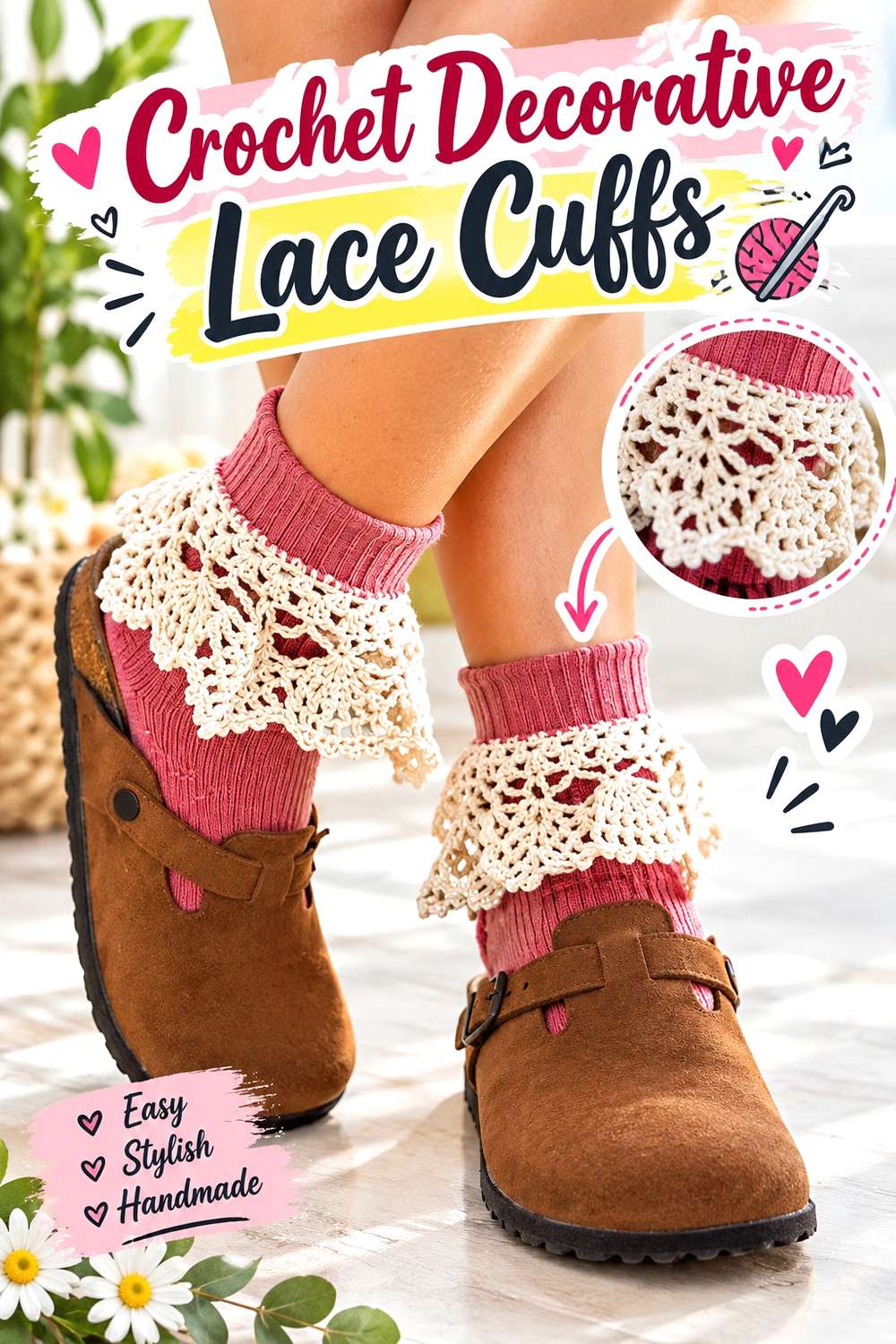
Sirin’s Crochet teaches a lace cuff that can be used with socks, mittens, and even blouse edges, so this idea is best understood as an ornamental finishing component rather than a self-supporting wrist warmer. That distinction makes the project unusually flexible: the same type of lace detail can bring an heirloom touch to an accessory or garment you already own.
A cuff works on a much smaller visual scale than a shawl or collar. Its impact comes from the contrast between a relatively plain base item and a deliberately decorative edge. For that reason, it is worth deciding where the lace will live before you start rather than crocheting an arbitrary length and searching for a use afterward.
This is also a good option when you enjoy vintage detail but want it in a controlled amount. A narrow cuff can suggest old lace without dominating an entire outfit.
Measure the Edge You Actually Plan to Trim
A mitten opening, sock top, and blouse sleeve can have very different circumferences and stretch requirements. Measure the intended base piece and look at how it behaves when worn before adapting the trim.
If the underlying fabric stretches substantially, a decorative crochet edge may respond differently. Do not assume a cuff that fits one object can be transferred unchanged to another merely because both are worn near the wrist or ankle.
Decide Whether the Lace Should Blend or Contrast
Matching the base fabric keeps attention on texture and produces a quieter finish. A contrasting cuff makes the boundary much more obvious and can turn a simple sleeve or mitten into the visual focal point.
This is one of the safer ways to personalize the project because it does not require redesigning the lace itself. Make the color decision with the actual base item nearby rather than judging the yarn in isolation.
Creator: Sirin’s Crochet
6. Crochet 1920s-Inspired Cloche Hat
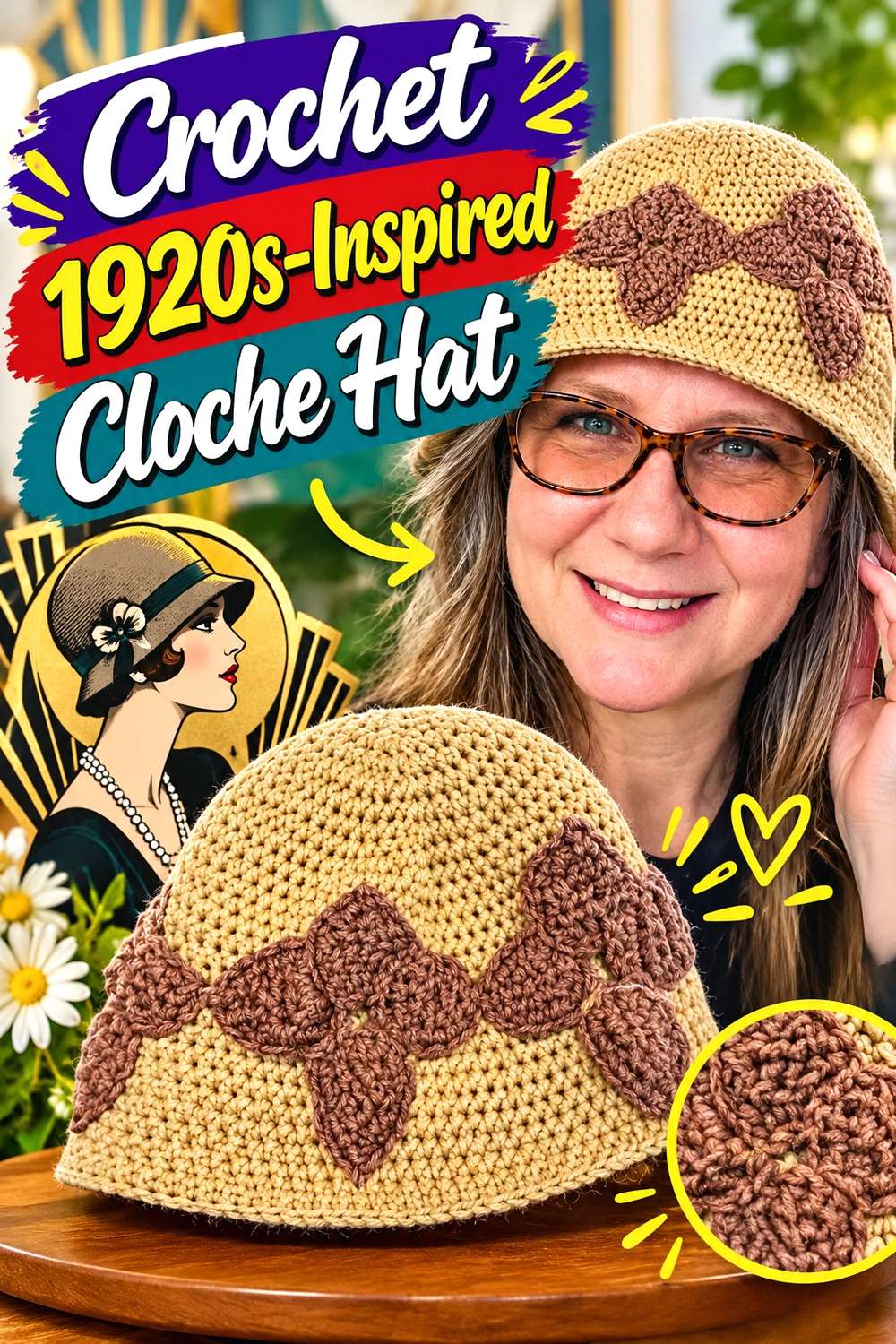
Few accessory shapes signal the 1920s as clearly as a close cloche. Stringsandthreads explicitly presents this tutorial as a 1920s-inspired crochet cloche and includes both the hat shaping and a decorative flower band.
The appeal is not only the flower. The overall relationship between crown, lower edge, and face creates the recognizable silhouette, so it is worth prioritizing fit before considering additional decoration. A cloche that sits at a different depth than the demonstrated version can frame the face very differently.
Compared with the snood, this project conceals more of the hair and creates a stronger continuous shape around the head. Compared with the pillbox later in the list, it extends farther downward. Choose it when you want the hat itself—not the hairstyle—to carry most of the period reference.
Check Depth as Well as Circumference
A hat can match around the head and still feel visually wrong if the crown sits too high or the lower edge drops farther than expected. Compare both dimensions with a hat you already like before making major alterations.
This is especially important with a cloche because its relationship to the forehead, ears, and eyes contributes strongly to the finished silhouette. Follow the tutorial’s sizing guidance rather than scaling blindly.
Keep the Flower Band in Proportion
The source includes a decorative flower band, which gives you an integrated embellishment rather than requiring a separate accessory. If you change the flower or add extra decoration, place it temporarily before attaching anything permanently.
A larger embellishment can make one side of the hat visually dominant. A smaller one leaves the cloche outline as the main feature.
Creator: Stringsandthreads
7. Crochet Mid-Century Pillbox Hat
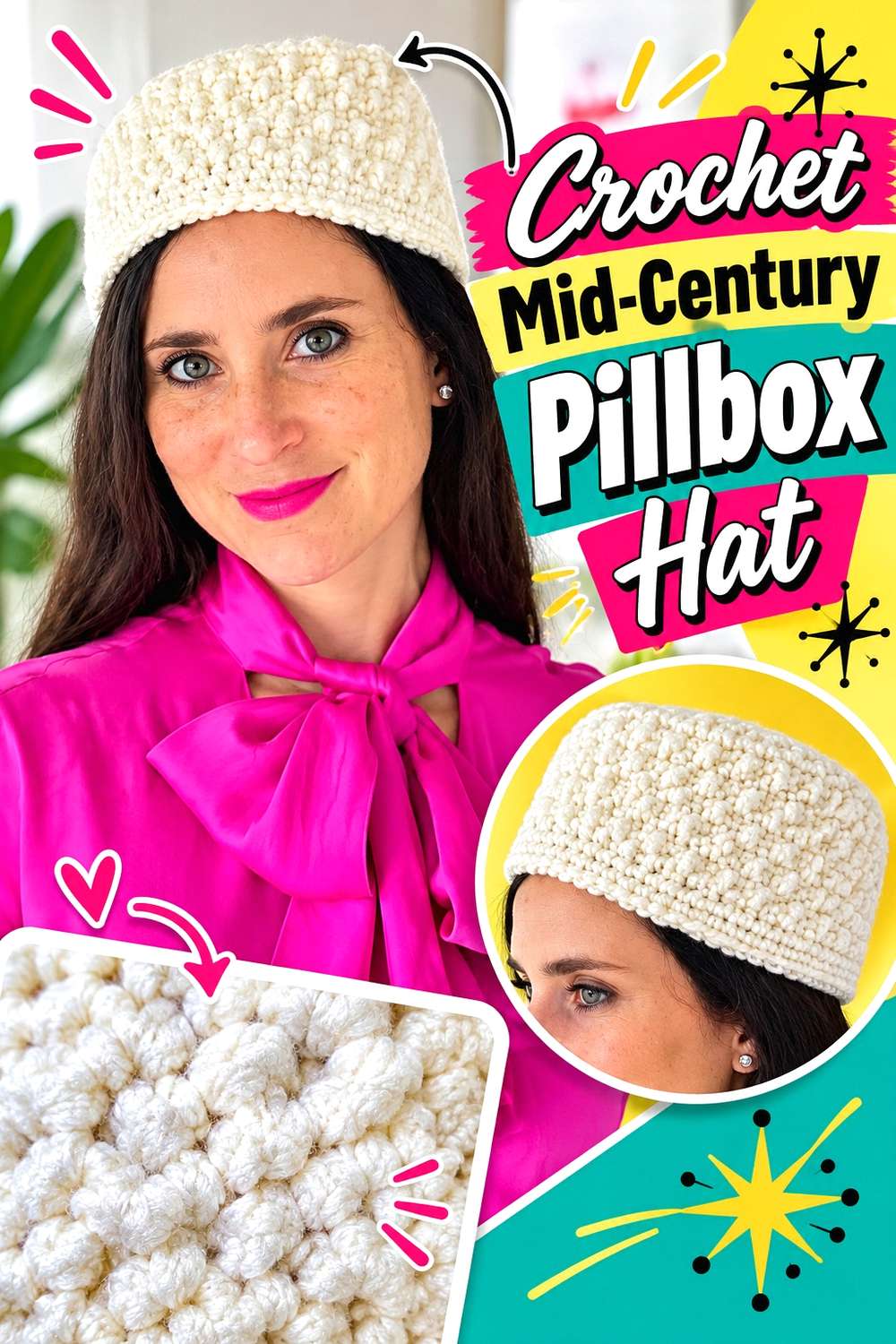
Maison Saint Bonnet’s tutorial takes its inspiration from the classic pillbox hats associated with the 1950s and 1960s, using a compact shape with a deliberately firm-looking structure. That makes this a useful contrast to the cloche: instead of extending downward around much of the head, the pillbox sits as a smaller architectural form.
The clean sidewall is part of the attraction. Because there is less flowing fabric to disguise inconsistencies, the outline deserves close attention while you work. It is also a style where placement can change the impression significantly; centered, slightly angled, or farther back can each produce a different look.
For an heirloom-inspired wardrobe, the pillbox works well when you prefer a concise silhouette rather than expansive lace. It gives you a strong vintage reference without requiring a veil, flowers, or other additions.
Judge the Hat From Several Angles
A pillbox can appear balanced from the front while the side profile tells a different story. During construction, inspect the height and outer line from the front, side, and back rather than relying on one mirror view.
This is especially useful if you substitute yarn, because a material that behaves differently from the source may change how clearly the sidewall holds its visual shape.
Choose Placement Before Adding Decoration
If you intend to personalize the finished hat with a brooch, flower, or veil-like element, first decide where the undecorated pillbox naturally sits on your head. Embellishment placement should respond to that orientation.
Attaching decoration first can unintentionally dictate how the hat must be worn. Keeping those decisions separate gives you more control over both fit and styling.
Creator: Maison Saint Bonnet
8. Crochet Embroidered Vintage-Style Brooch
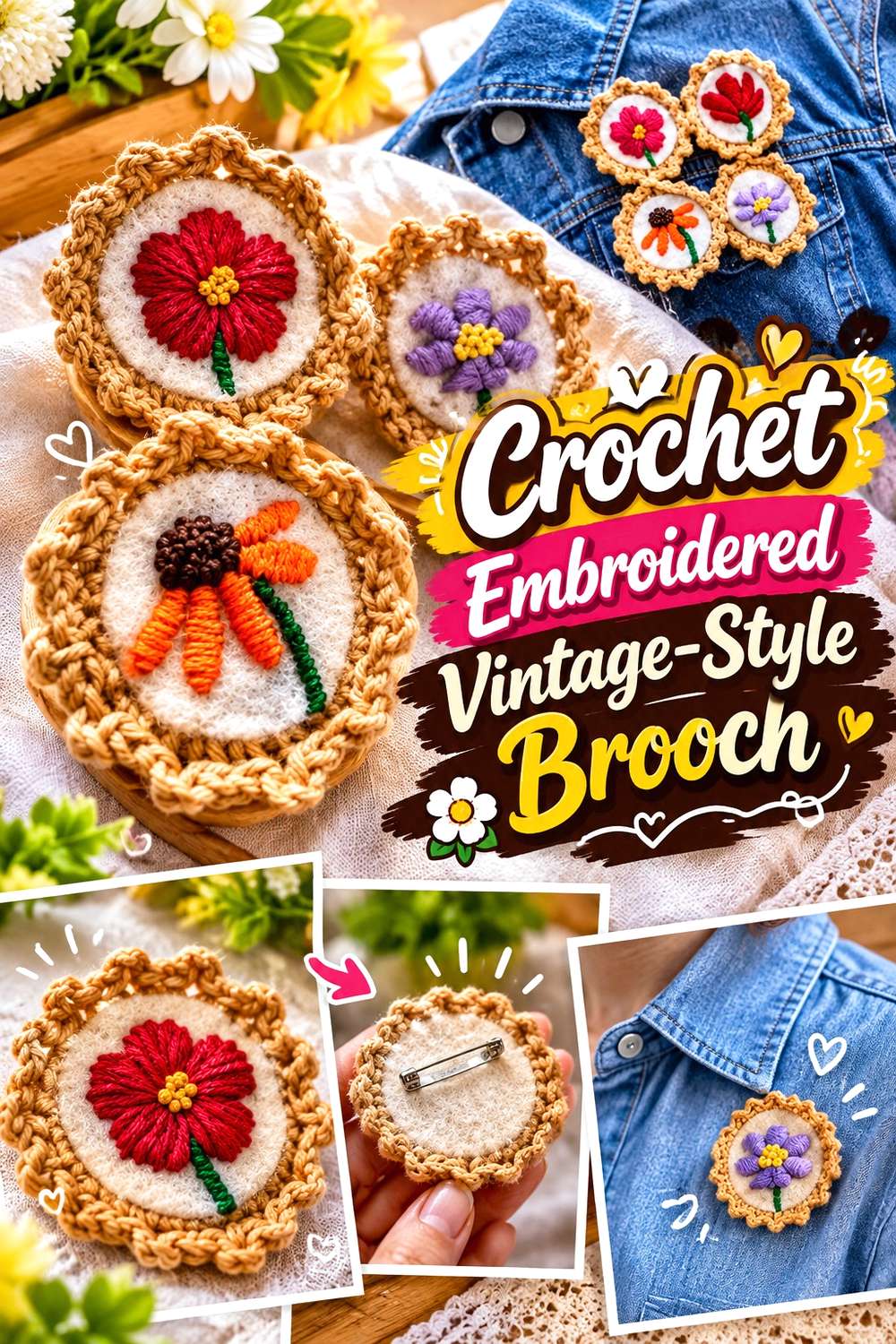
She Makes Whatever combines crochet and embroidery in a vintage-style brooch tutorial, giving this small project more surface detail than a plain crocheted pin. Because the finished accessory is compact, color placement and embroidery can have an outsized effect without requiring a large amount of fabric.
A brooch is also one of the easiest pieces in this collection to move between outfits. It can sit at a collar, on a jacket, on a bag, or on another sturdy textile surface, although the suitability of any particular placement depends on the backing and the fabric being pinned.
This is a useful choice if your idea of “heirloom” is a small keepsake rather than a full lace garment. The mixed handwork gives you two decorative languages—crochet structure and embroidered surface detail—within one object.
Match the Brooch Scale to the Fabric
A compact brooch can disappear on a bulky textured coat yet feel prominent on a fine blouse. Before choosing its eventual position, hold a paper shape of similar size against the intended garment.
That check also helps protect delicate fabrics from unnecessary experimentation. If you intend to pin the finished piece to fine material, consider the backing and fabric together rather than assuming every garment will tolerate the same attachment.
Let Embroidery Add Detail, Not Confusion
The tutorial’s combination of crochet and embroidery already creates visual complexity. If you adapt the palette, decide which element should dominate.
Closely related colors can make the surface detail subtle, while high contrast emphasizes the embroidery. Adding beads, charms, or further ornament would introduce additional weight and attachment points, so such changes should be evaluated separately rather than treated as automatic improvements.
Creator: She Makes Whatever
9. Crochet Scalloped Lace Collar Necklace
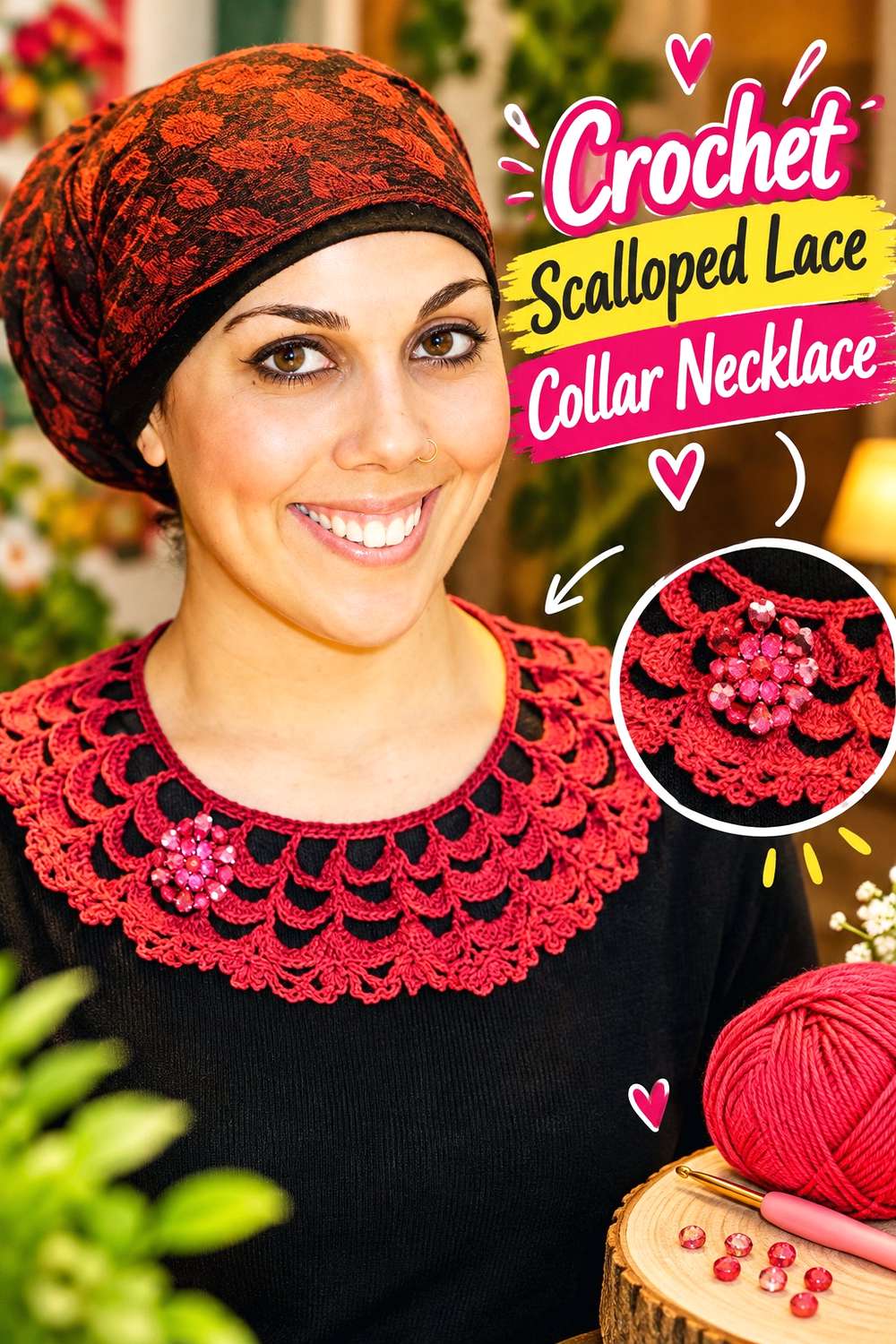
YARNutopia by Nadia presents this as a vintage-inspired lace collar necklace with a scalloped form and jewel-brooch styling. It occupies an interesting middle ground: visually it echoes a detachable collar, but functionally it is treated as jewelry.
That difference separates it from the first lace collar in the collection. You are not primarily trying to extend or finish a garment neckline; instead, the crochet itself becomes the necklace. This makes the piece useful over a very simple top where the scalloped outline has enough empty space to register.
The jewelry scale also means small proportion changes matter. A wider or heavier interpretation can quickly shift the project away from “necklace” and toward a garment collar, so follow the source carefully if that distinction is important to you.
Use the Neckline as a Background
Before choosing a color, place the yarn against several tops you might wear with the necklace. Strong contrast makes every scallop obvious; low contrast creates a subtler relief effect.
Also compare neckline shapes. A plain high neckline can act almost like a display surface, while another ornate collar immediately underneath may compete with the crocheted edge.
Consider the Brooch as Styling, Not a Requirement
The source shows jewel-brooch styling, which can strengthen the vintage jewelry effect. If you prefer a cleaner necklace, keep any extra ornament removable until you have seen the finished crochet on the body.
A brooch or similar accent adds both visual weight and physical weight. Test placement before attaching anything in a way that could distort the central lace.
Creator: Fuad Azmat / YARNutopia by Nadia
10. Crochet Kiss-Lock Evening Purse
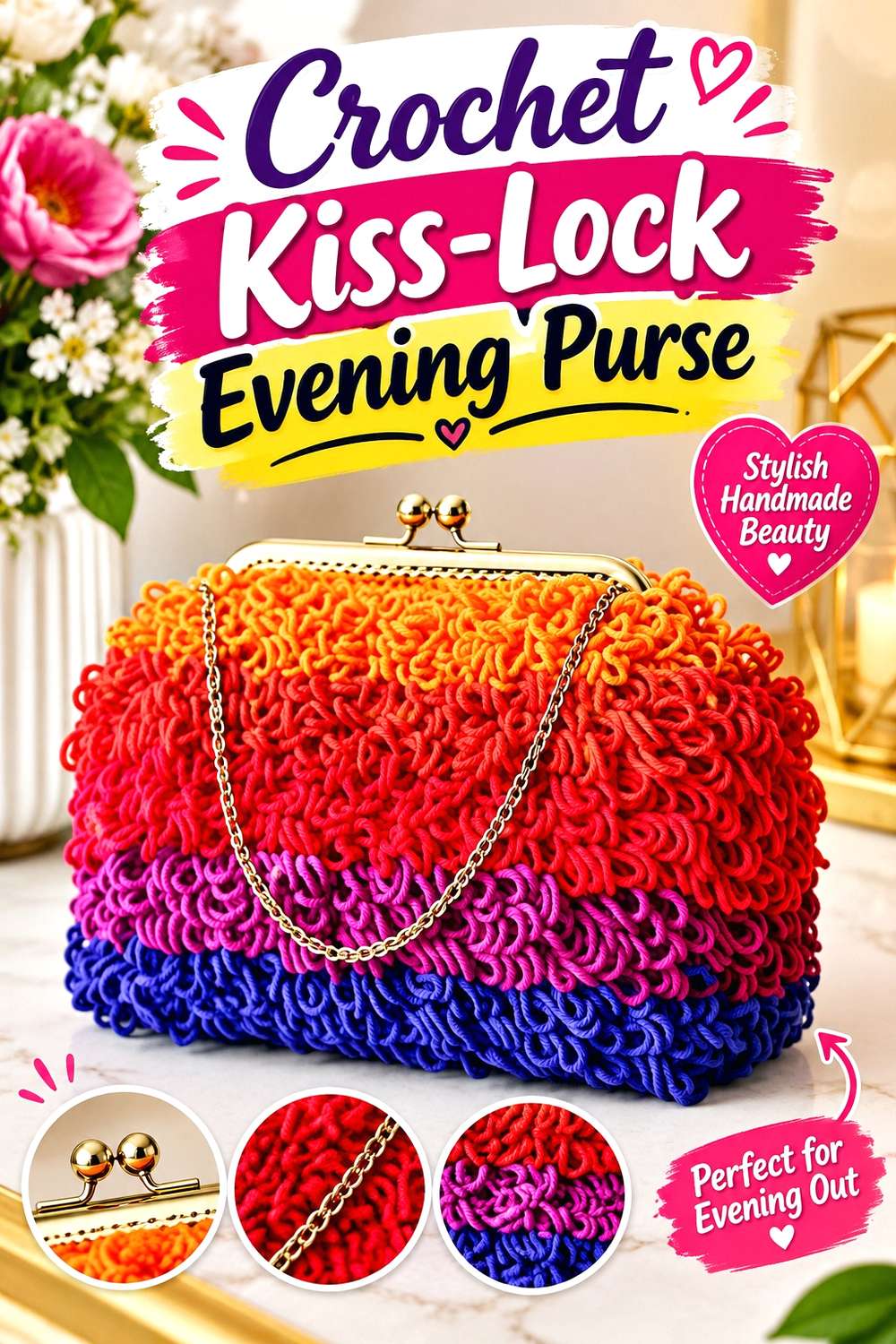
Crochet Mama’s tutorial pairs a crocheted evening bag with a kiss-lock frame, giving the finished piece the unmistakable rigid opening associated with many vintage purses. The demonstrated design also uses loop-stitch texture, so the body has a very different surface from the open lace accessories elsewhere in this collection.
The frame is the crucial decision here. Unlike a drawstring pouch, the crochet has to meet a piece of hardware with fixed dimensions and a specific joining area. If you already own a vintage or salvaged frame, do not assume it can replace the demonstrated one without checking how the tutorial connects the fabric to the hardware.
This is best considered an evening-scale accessory rather than a project whose capacity should be guessed from photographs. Check the creator’s finished dimensions if fitting particular contents matters to you.
Choose the Frame Before Making Assumptions About Size
A kiss-lock frame establishes the width and geometry of the opening. Changing it can affect more than the final appearance; it can change how the crocheted body needs to meet the hardware.
If you want to use a different frame, compare its usable opening and attachment method with the tutorial before beginning. A visually similar clasp is not automatically construction-compatible.
Let the Texture Carry the Decoration
The loop-stitch surface already gives the purse a noticeable tactile identity. Before adding beads, flowers, or tassels, look at the completed texture beside the frame.
Additional ornament can shift attention away from the distinctive closure or catch against neighboring fabric. If you want a more restrained vintage look, the contrast between a textured body and a clean metal frame may already be enough.
Creator: Crochet Mama
11. Crochet Fine Lace Earrings
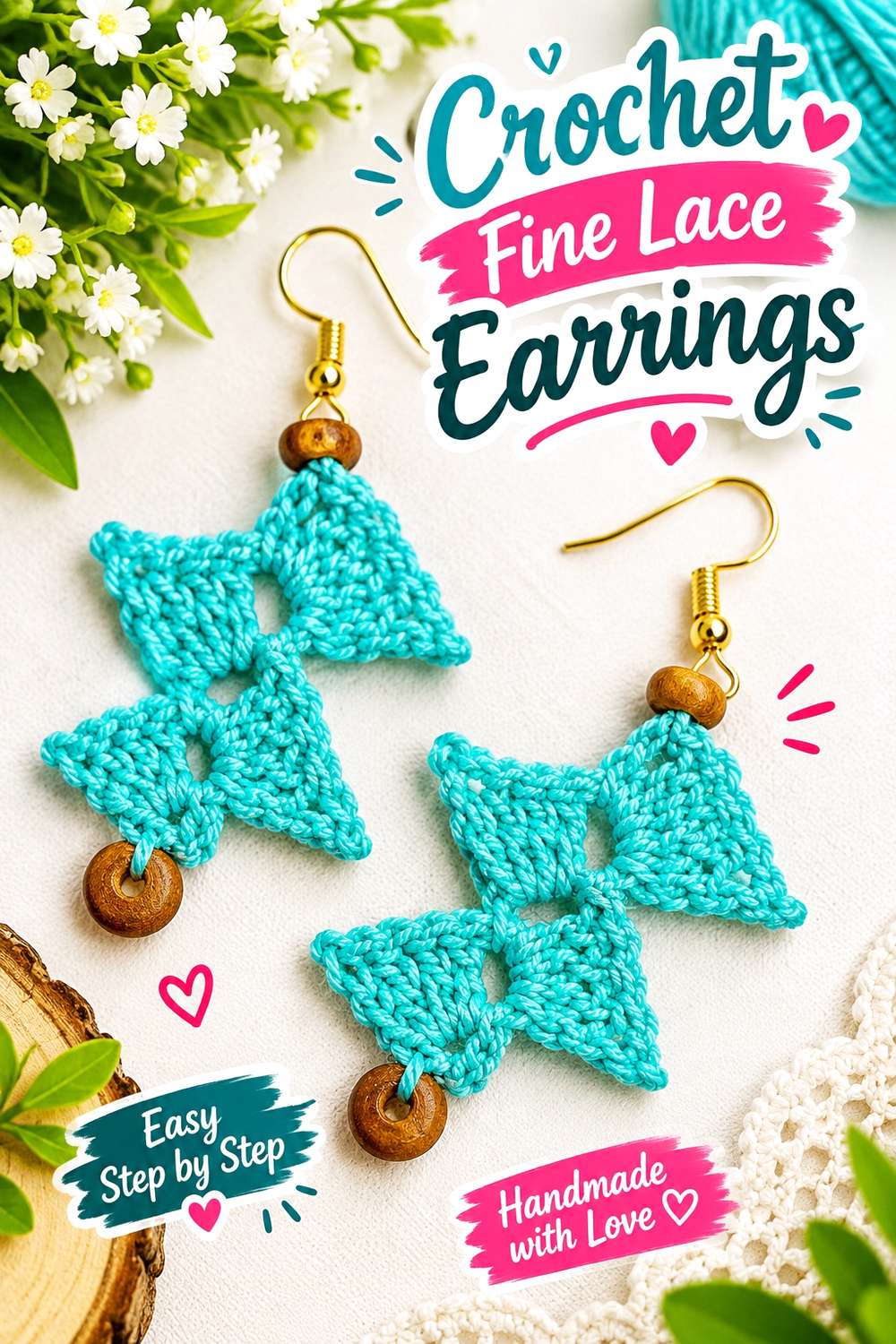
Stitch n Craft’s tutorial turns crochet lace into earrings, reducing openwork to a scale much smaller than a collar or scarf. At that size, the negative spaces inside the motif become as important as the stitches themselves because the finished shape is read against hair, skin, or clothing.
This project suits an heirloom-inspired collection because it borrows the visual language of lace without requiring a large textile. It is also a good choice when you want a handmade accessory that can be paired with non-crocheted clothing rather than becoming the dominant fabric in an outfit.
Jewelry has its own practical considerations, however. Any findings or finishing components should be chosen for their intended use, and changes in yarn or thread can alter the scale and movement of the crocheted portion.
Make the Pair Visually Consistent
With earrings, small differences between two motifs are easier to notice because they are displayed side by side on the body. Compare the first piece with the second while you work instead of waiting until both are fully finished.
If one motif relaxes or stretches differently, investigate that difference before adding the final jewelry components. Matching outline and orientation usually matters more than adding extra embellishment.
Think About Movement Before Adding Weight
A lace earring can move freely because much of its surface is open. Beads or charms may change that behavior as well as the visual style.
If you want an embellished version, attach additional elements provisionally where possible and observe how the piece hangs. The tutorial establishes the crocheted earring; any heavier alteration should be treated as a separate design decision.
Creator: Stitch n Craft
12. Crochet Vintage Tie Headband

Crochet With Julie’s vintage headband uses straightforward shaping and a border, and the creator notes that the finished piece can also be worn as a vintage-style neck scarf. That dual use makes it more flexible than a permanently closed headband.
Visually, the tie ends are important. They allow the accessory to look more scarf-like than an elastic band and give you choices about where the knot or bow appears. When worn in the hair, the ends can be allowed to show or tucked more quietly into the hairstyle.
This is a good option when a snood feels too specifically 1940s and a cloche covers more hair than you want. The headband introduces a vintage note while leaving both the hairstyle and much of the outfit unchanged.
Decide Where the Tie Should Sit
A knot at the nape behaves differently from one placed above or to the side of the head. Test the approximate tie position before deciding whether you want longer visible tails or a compact finish.
The same consideration applies when using the piece as a neck scarf. Follow the creator’s construction for the accessory itself, then experiment with styling rather than altering dimensions blindly.
Avoid Excess Bulk Behind the Ears
A decorative border and tie can create several layers where the fabric overlaps. When trying the headband on, pay attention to where those layers sit rather than tightening it simply to make them stay in place.
If you change yarn, increased thickness may make this more noticeable. A short sample can help you judge bulk before committing to a substitution across the whole project.
Creator: Crochet With Julie
13. Crochet Floral Mile-a-Minute Lace Scarf
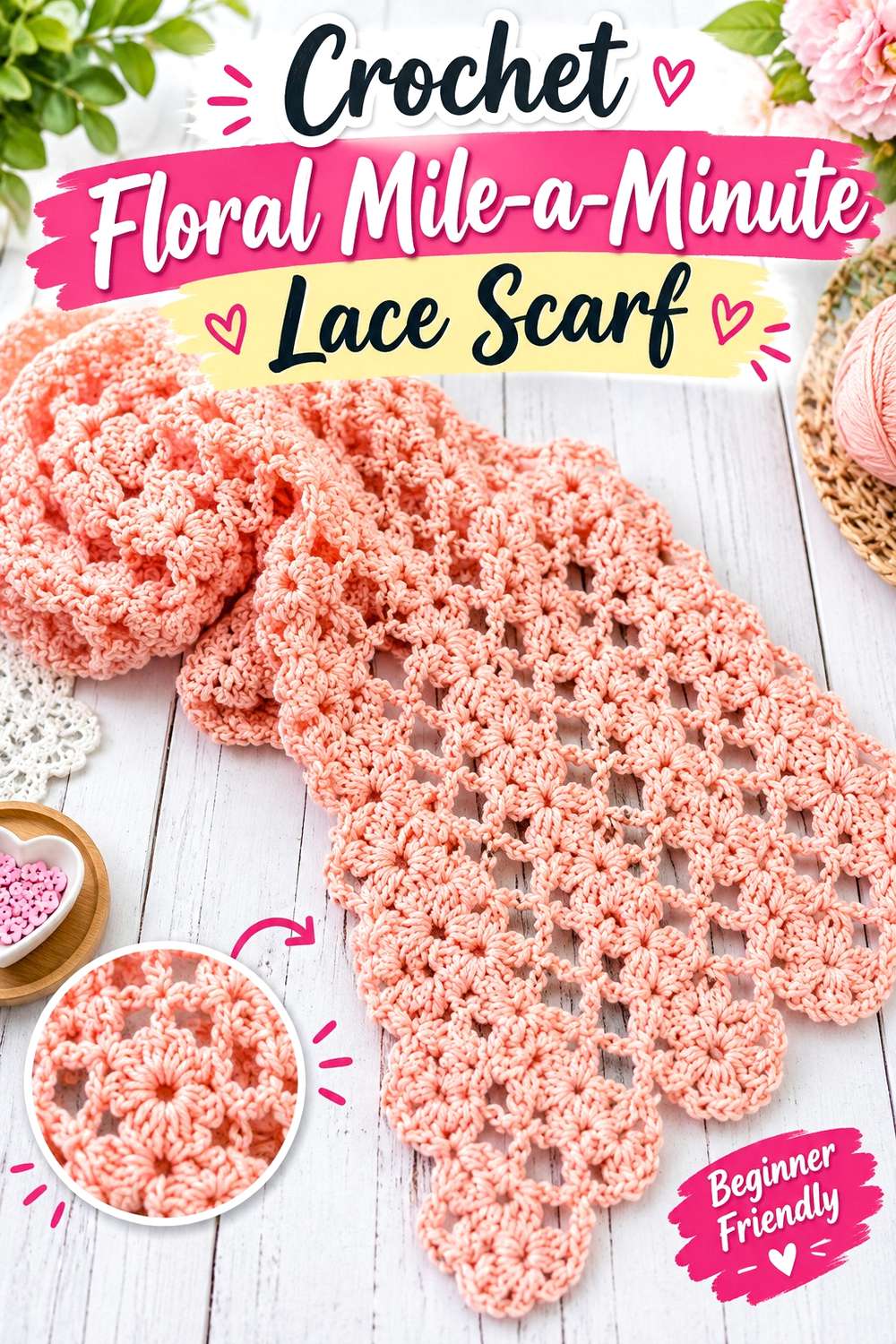
Olga Poltava’s lace scarf uses flower-patterned mile-a-minute strips, giving the finished accessory a lengthwise rhythm quite different from a scarf worked as one broad continuous field. The floral sections create repeated vertical lines that naturally draw the eye along the length of the scarf.
This construction is appealing if you enjoy lace but want more organization than an all-over mesh. The strips also make the project visually compatible with vintage-inspired blouses, coats, and simple dresses because the flower pattern can remain the central ornamental feature.
Avoid assuming that any other strip motif can be substituted without consequence. Width, edge structure, and joining behavior all matter when separate crocheted sections are intended to become one finished scarf.
Let the Strip Layout Determine the Width
When a project is built from long units, each additional strip changes the overall width in a noticeable increment rather than a tiny amount. Follow the tutorial’s layout before deciding that you want a broader wrap.
If you plan an adaptation, compare the finished strip width and joining area first. A scarf widened substantially may begin to behave more like a stole or shawl.
Keep the Flowers Oriented Consistently
Repeated floral elements attract attention to alignment. As the strips are assembled, lay the work out occasionally and look at the direction and spacing of the motifs across the whole scarf.
This is a useful visual check even if the individual strips look correct on their own. Small orientation differences can become much easier to see after several rows of flowers are placed beside one another.
Creator: Olga Poltava
14. Crochet Easy Lace Tie Belt
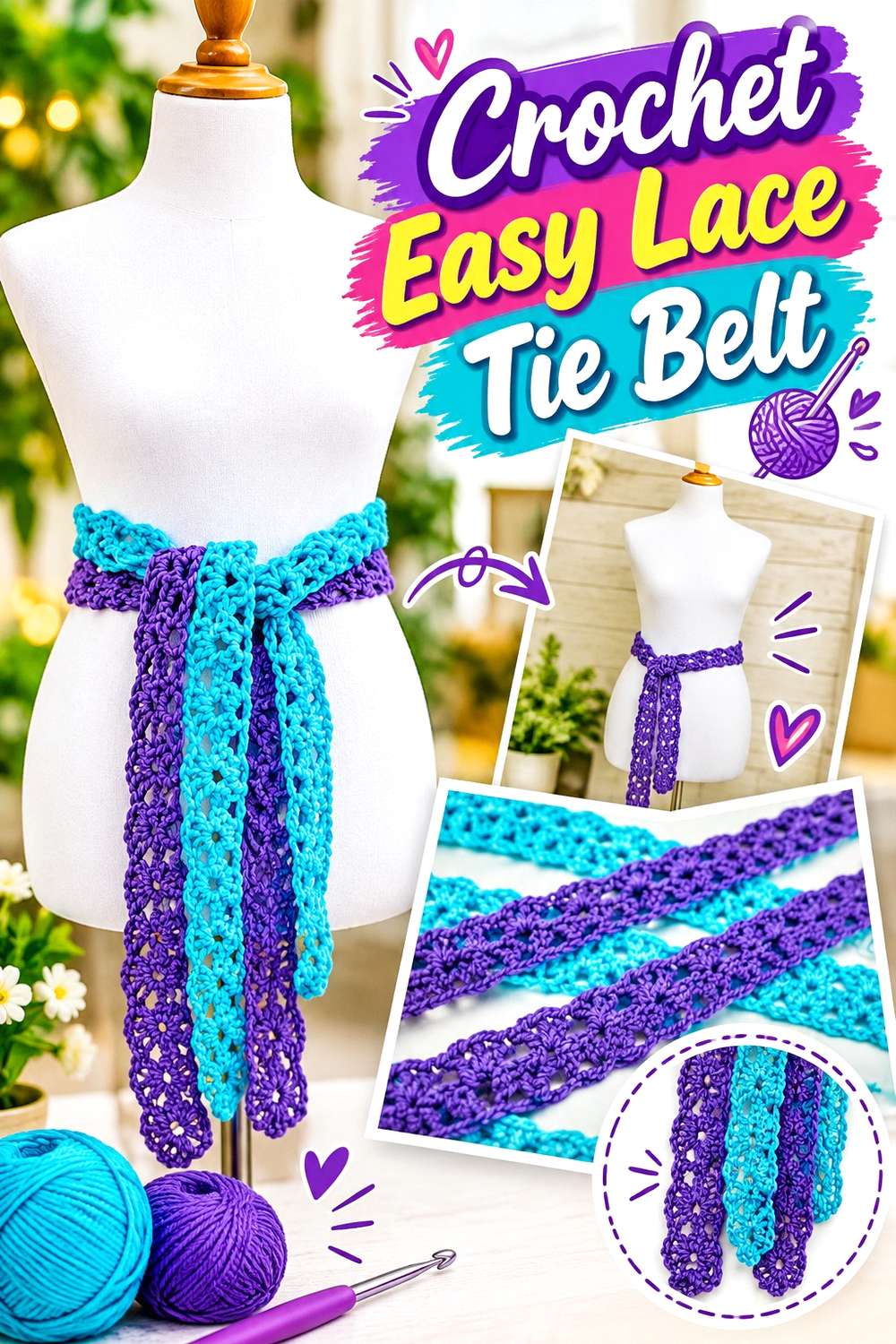
Fiber Flux’s standalone tutorial teaches an easy lace belt, providing a narrow openwork accessory that can be tied around the waist rather than built around a rigid buckle. That simple fastening method makes it a useful contrast to the kiss-lock purse and other hardware-dependent projects in this collection.
A lace tie belt works especially well when you want a vintage-inspired accent without turning the waist into a heavy structured focal point. Over a plain dress, cardigan, or tunic, the open pattern can add definition while still allowing the garment underneath to remain visible.
Because this is a long narrow piece, consistency matters. A small change in width repeated across the full belt becomes more noticeable than the same variation in a small motif. Material substitutions may also change how much the belt stretches when tied.
Test the Belt Where You Plan to Wear It
A belt worn at the natural waist requires a different useful length from one worn lower on the hips or loosely over a bulky cardigan. Decide on the wearing position before making assumptions about how much length you need.
Use the creator’s dimensions and instructions as your construction reference. If you change the length, check how much tie remains at both ends rather than considering only the circumference around the body.
Watch the Edges Over a Longer Section
Do not judge width consistency from only the first few inches. Lay a longer section flat and compare both edges, especially if you are still settling into the stitch rhythm.
A narrow belt can make gradual widening or narrowing particularly easy to see. Catching that change early is preferable to relying on aggressive finishing to correct a substantial shape difference later.
Creator: Fiber Flux
15. Crochet Openwork Lace Handkerchief
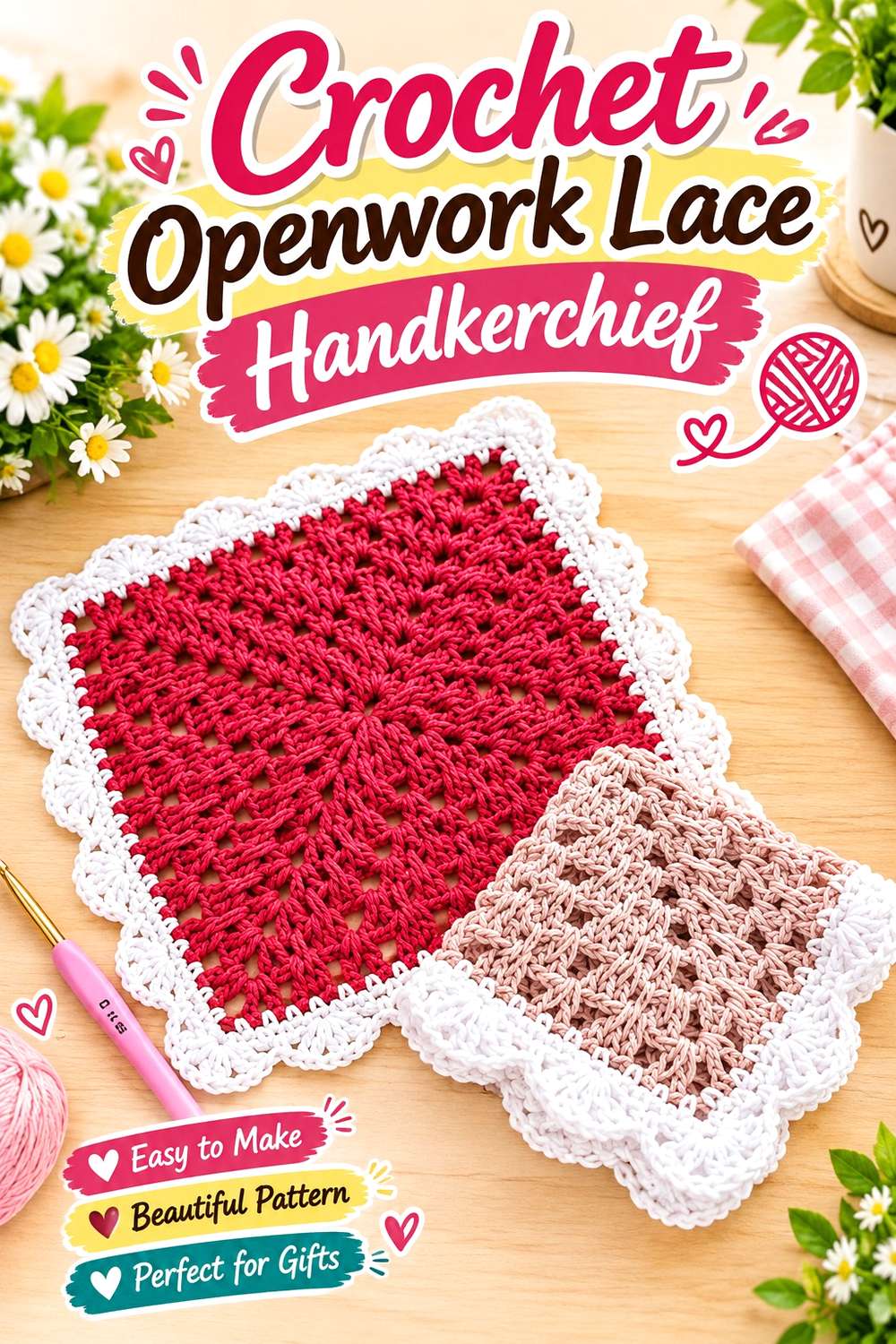
The ちいさな桜 project creates a square crocheted lace handkerchief with an openwork central area and a decorative border. The creator provides supporting written material alongside the YouTube version, making the finished square and its edging easier to examine as a complete project.
This is best approached as a lace accessory or keepsake rather than assigning it an absorbency or practical performance that the crochet structure does not establish. Its appeal is the framed square composition: the center and border are meant to be read together, much like a small piece of traditional household lace.
The source is Japanese, so readers who do not read Japanese should assess whether the visual presentation and any available diagrams provide enough support for the way they prefer to learn. Do not assume English instruction is included unless you can confirm it on the current video.
Give the Corners as Much Attention as the Sides
A decorative border around a square has to negotiate four changes of direction. When laying the piece out, compare the corners with one another rather than examining only the straight sides.
If one corner appears noticeably tighter or looser, review the source before forcing the square into shape. Consistent edge behavior contributes strongly to the formal, heirloom-style appearance of the finished piece.
Treat It as a Small Textile Composition
Unlike earrings or a brooch, the entire square is visible at once when the handkerchief is displayed. That makes the relationship between open center and decorative border especially important.
If you alter color, consider whether you want the center and border to read as one uninterrupted lace field or as two separate zones. A color change is simpler than substituting an unrelated edging with different dimensions.
Creator: ちいさな桜
16. Crochet One-Skein Lace Shawl
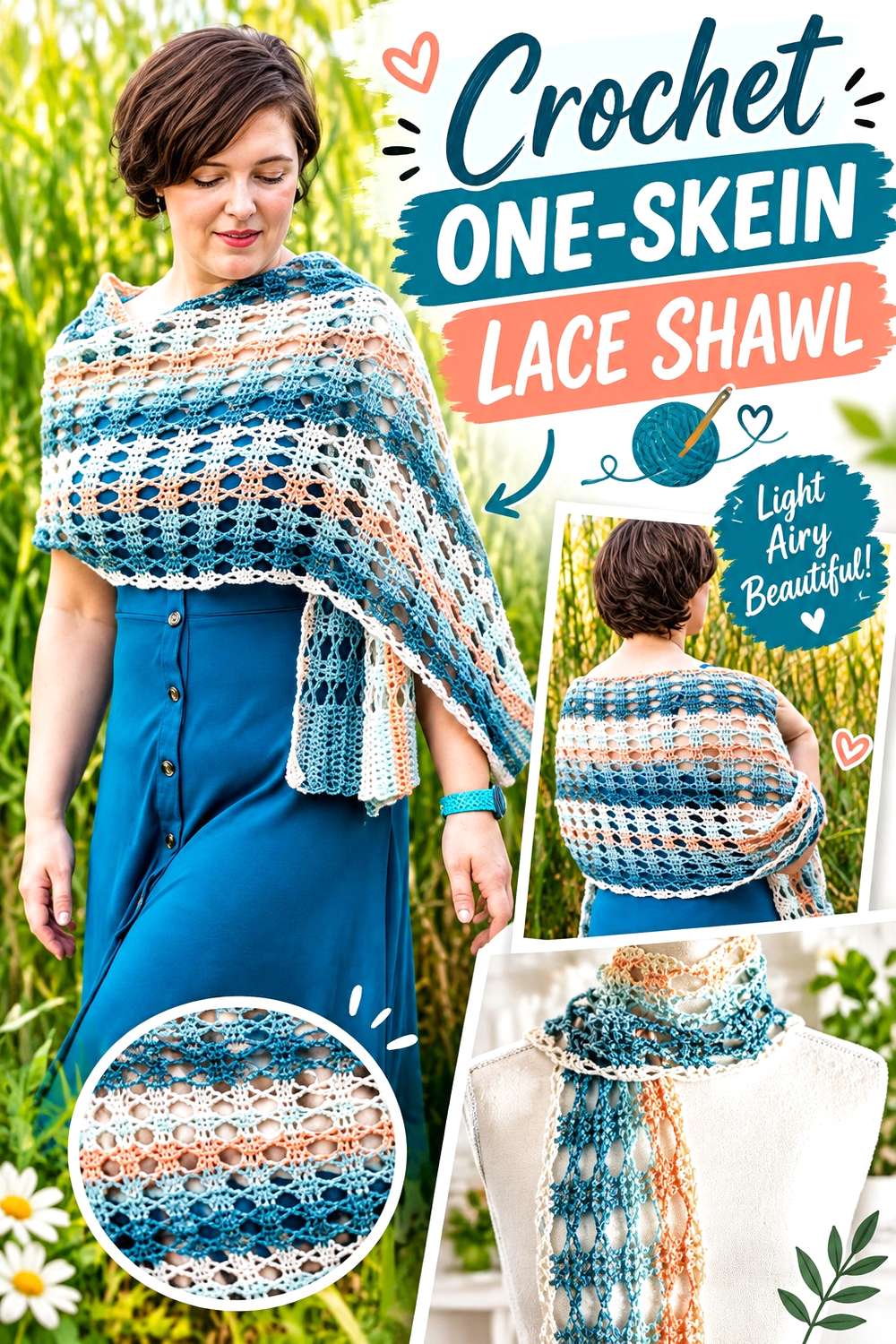
Winding Road Crochet’s tutorial presents a lace shawl designed around a one-skein project and walks through the stitch pattern before the repeated section continues. The result offers substantially more fabric than the collar or scarf entries while retaining an open, decorative surface.
A lace shawl is one of the most adaptable pieces in this collection because the styling changes with the fold and wrap. Worn broadly across the shoulders, it acts almost like a light outer layer; gathered more narrowly, it can function closer to a scarf.
“One skein” belongs to the creator’s demonstrated project, not every possible substitution. A different yarn put-up, fiber, gauge, or desired size can change the quantity required, so verify the original material information before planning solely around the phrase in the title.
Choose Between Width and Concentrated Draping
Think about how much of the lace you want visible when worn. A broad shoulder drape displays the pattern across a larger area, while folding or gathering the shawl produces more texture in a narrower band.
That styling decision can help you determine whether this project suits your wardrobe better than the mile-a-minute scarf. The scarf emphasizes lengthwise floral structure; the shawl provides a broader continuous lace field.
Sample Before Substituting Yarn
Changing yarn can alter openness and drape simultaneously. Work enough of the source pattern to see several repeats rather than making a decision from a tiny swatch.
Hold the sample vertically as well as laying it flat. Lace often looks different under its own weight, and a material that appears crisp on a table may become much softer when worn over the shoulders.
Creator: Winding Road Crochet
17. Crochet Decorative Lace Parasol
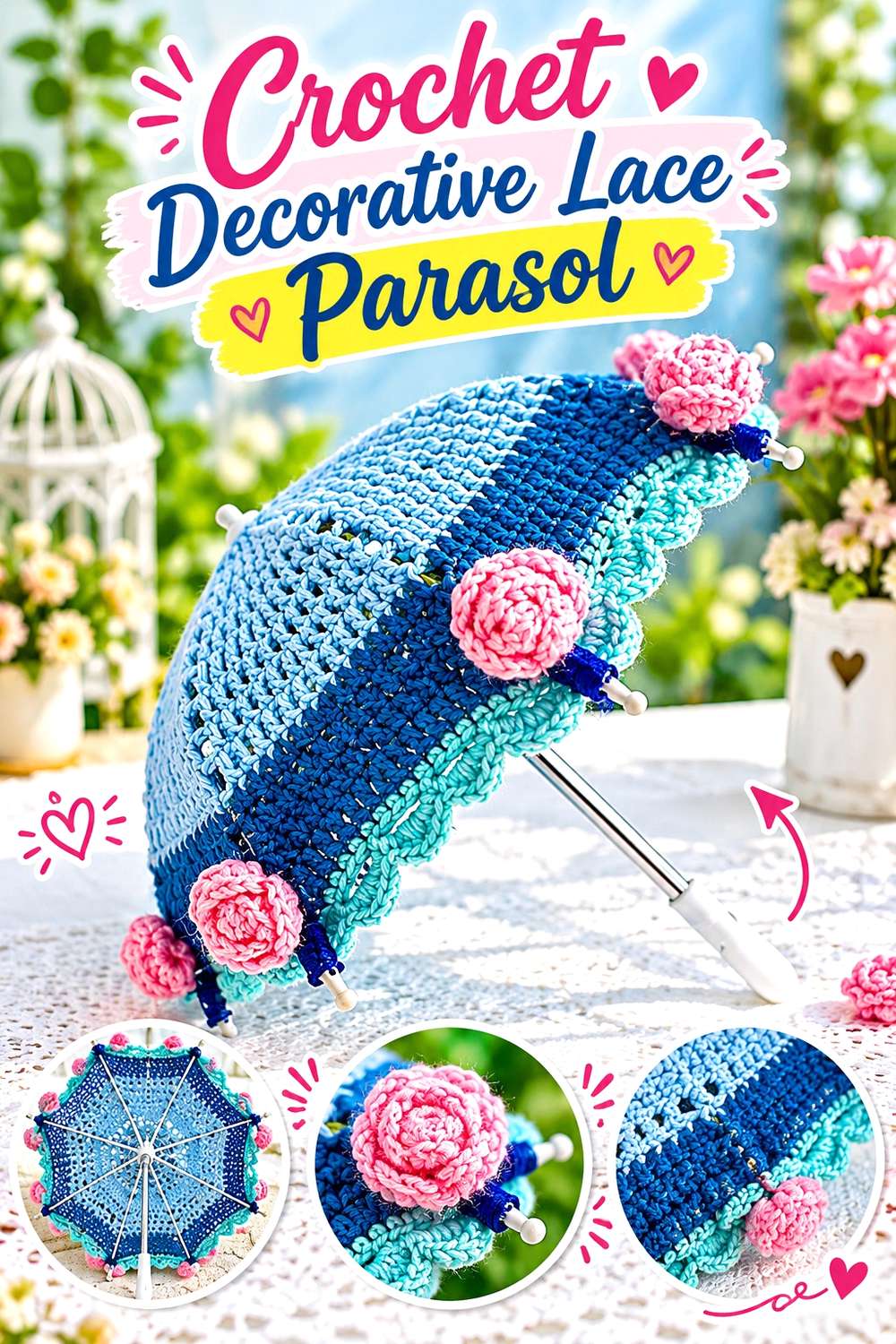
TheHappyHues🍁 teaches a crocheted lace umbrella/parasol intended for decoration and photoshoots, including the stage of attaching the lace to an umbrella frame. The title also identifies English subtitles.
That purpose needs to remain clear. This is an ornamental accessory, not evidence of rain resistance, UV protection, or other weather performance. Its value in an heirloom-inspired collection is visual: a broad circular field of lace stretched over a recognizable parasol structure creates a strong vintage-romantic silhouette.
The frame makes this more structurally constrained than a shawl or scarf. If you plan to use a different umbrella frame, compare the number and arrangement of ribs, the overall shape, and the attachment areas before assuming the crocheted covering can transfer unchanged.
Start With Frame Compatibility
The frame is not simply a display stand added at the end. Its geometry determines where the crocheted lace has to spread and where attachment points will fall.
If you are reusing an old frame, inspect it carefully and compare it with the source before crocheting a full cover. A visually attractive antique-style frame may require a different layout from the one demonstrated.
Keep the Intended Use Decorative
An open lace canopy can be beautiful for styling, photography, or display while still leaving large areas exposed. Do not treat appearance as proof of protective function.
That distinction also helps with material decisions. Choose modifications for the visual result and compatibility with the frame rather than trying to infer weather performance from yarn type alone.
Creator: TheHappyHues🍁
18. Crochet Irish Lace Bonnet
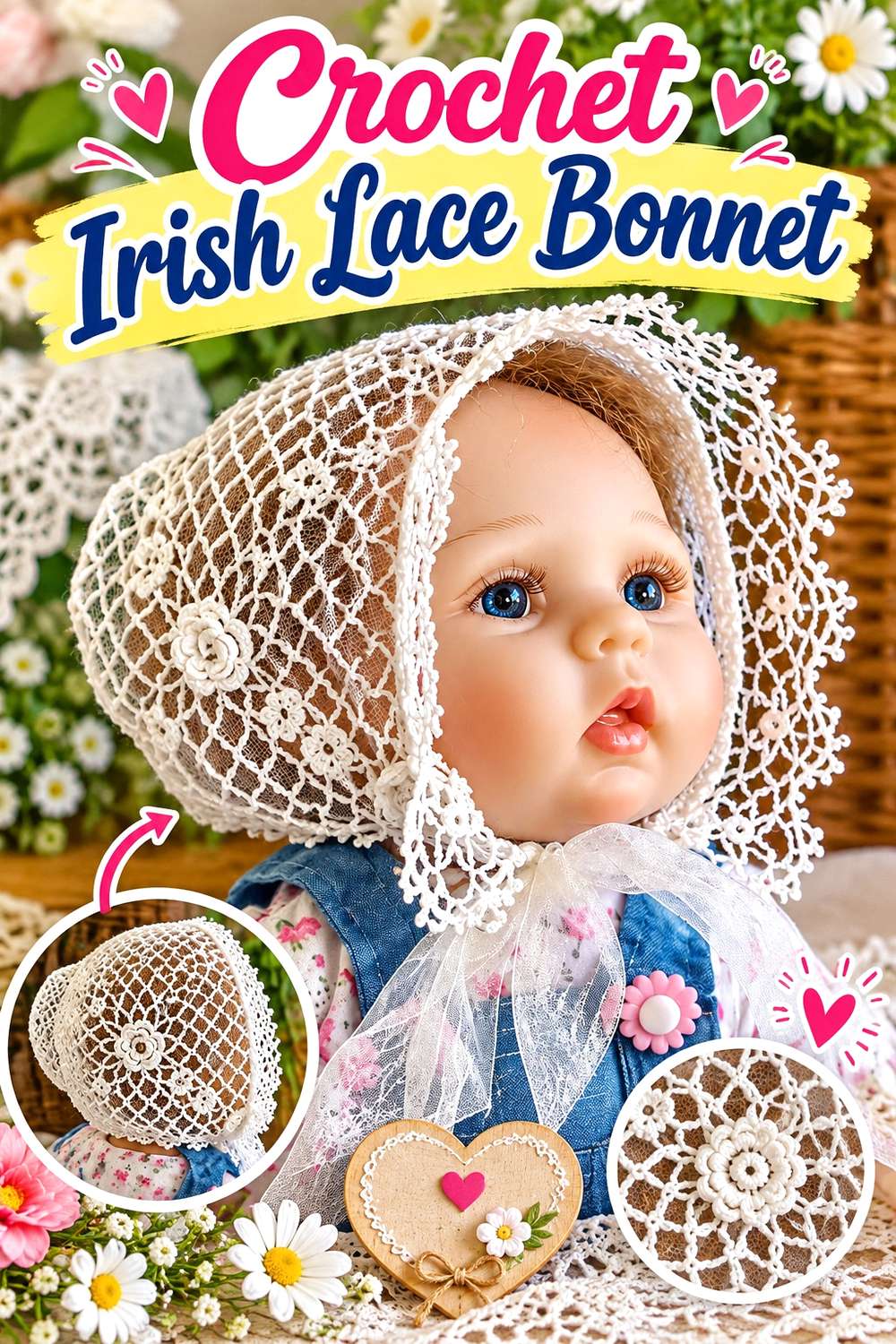
The lacefromireland bonnet is the most involved source in this collection because it is taught as a multipart Irish crochet lace series rather than a single standalone video. The accessible sequence begins with the bonnet project, continues through motifs including a rose square and shamrock, and includes a separate assembly-and-finishing installment.
That structure suits the project itself. Irish crochet lace gains much of its character from the relationship between individual motifs, surrounding spaces, joins, and edging, so the finished bonnet is more than one repeated stitch worked straight through.
Choose this idea when the process of arranging decorative components interests you as much as the final silhouette. Because it is a multipart tutorial, begin from the credited first video and follow the creator’s linked sequence rather than expecting that opening installment to complete the bonnet by itself.
Arrange Motifs Before Committing to Joins
Motif-based lace rewards a full-layout view. As components accumulate, compare their orientation and spacing in the intended bonnet shape instead of deciding each join in isolation.
If you change motif scale, the spaces between pieces will change as well. That can affect the entire composition, so a different yarn or hook is more consequential here than a simple color substitution.
Let the Bonnet Shape Stay Visible
Irish lace can become visually busy because every motif invites close inspection. Step away from the work periodically and look at the outer silhouette as a whole.
The finished object should still read as a bonnet rather than only as a collection of pretty motifs. If you plan extra flowers or decorative elements, test them in the complete layout before deciding that more detail necessarily improves the composition.
Creator: lacefromireland
Conclusion
For the strongest period reference, start with the 1940s-inspired snood, 1920s cloche, mid-century pillbox, or Edwardian-inspired capelet. If you prefer smaller heirloom details that can move between outfits, the lace collar, embroidered brooch, collar necklace, cuffs, or earrings keep the crochet concentrated in one area.
The kiss-lock purse and decorative parasol are better choices when vintage-style hardware and structure appeal to you, while the floral scarf and lace shawl put the textile itself at center stage. For intricate motif work, the multipart Irish lace bonnet is the most composition-focused option.
Whichever project fits your wardrobe or keepsake plans, use the original tutorials for the exact construction details and verify source-specific sizing and materials before making substitutions.
Frequently Asked Questions
What makes a crochet accessory look heirloom-inspired?
An heirloom look usually comes from a combination of silhouette, lace scale, ornamental edges, carefully integrated closures, and restrained finishing rather than from one specific yarn color. A cloche or pillbox can reference a recognizable historical style through shape, while collars, cuffs, handkerchiefs, and Irish lace rely more heavily on decorative textile detail.
“Heirloom-inspired” should not be read as a guarantee that a modern tutorial is an exact historical reproduction or that the finished item will last for a particular number of years.
Which of these crochet accessories need the closest fit?
The fingerless gloves, cloche, pillbox, snood, tie headband, collar, necklace, and capelet have the closest relationship to body dimensions or placement. For those projects, use the creator’s sizing information and compare it with something you already wear comfortably before altering the pattern.
Scarves and shawls generally offer more flexibility in how they are arranged, although changing their dimensions still changes the finished proportions. Hardware-based projects such as the purse and parasol create a different kind of fit problem because the crochet must match a frame.
Can I use crochet thread instead of yarn for a more delicate vintage look?
Only after considering what else will change. A finer material can produce smaller stitches, a different drape, and a different finished scale, so switching to thread is not merely a cosmetic adjustment. This matters especially for fitted hats, gloves, collars, and motif assemblies.
For jewelry or lace accessories, a finer result may suit your goal, but sample the actual stitch pattern first. When the tutorial specifies a material, use that information as the reference point rather than assuming any thin thread will behave the same way.
Which projects require the least added hardware?
The snood, capelet, scarf, shawl, headband, and lace belt keep the focus mainly on the crocheted fabric and their own ties or shaping. By contrast, the kiss-lock purse depends strongly on its frame, the brooch requires an appropriate pin-style finishing solution, earrings involve jewelry components, and the parasol needs a compatible umbrella framework.
If you enjoy working the textile but dislike sourcing specialty components, choosing one of the fabric-led projects can simplify planning before you begin.
Can I make these accessories look more vintage just by changing the color?
Color can change the mood, but it does not create historical character by itself. Cream or muted tones may emphasize lace, yet a bright cloche still retains its distinctive silhouette, and a dark lace collar can still read as ornamental and vintage-inspired.
Start with the shape and construction you actually want, then choose color in relation to the garments or accessories around it. This also avoids forcing every “vintage” project into the same beige or ivory palette when contrast might display the stitchwork more clearly.
How should I approach storing delicate crochet accessories?
Use the yarn or thread manufacturer’s care guidance as the starting point because fiber content and finishing vary between projects. In general, avoid storing delicate openwork where jewelry, rough hardware, or other objects can repeatedly snag it, and support shaped pieces rather than crushing them into tight spaces.
For accessories that combine crochet with metal frames or findings, consider both materials when choosing storage conditions. The textile and hardware may have different care needs, so the tutorial alone should not be treated as universal preservation advice.