Olive and camel suit a structured crochet mini backpack particularly well because each color can be assigned to a visible construction area instead of being scattered across the bag. Olive can carry the main body or darker structural details, while camel can lighten the flap, pocket, side panels, straps, or edging.

The most useful decision is not simply which shade you prefer. It is deciding which color should define the backpack silhouette and which should highlight its separate parts. A camel flap against an olive body makes the closure immediately visible, while an olive base and straps can visually frame a lighter camel bag.
Color cannot make a soft crochet fabric physically rigid, so keep structural decisions separate from palette decisions. Follow the selected tutorial for its construction method, then use the olive-and-camel ideas here to emphasize the finished mini-backpack shape.
Quick List
- Olive Body And Camel Flap Crochet Structured Mini Backpack
- Camel Body And Olive Base Crochet Structured Mini Backpack
- Olive Camel And Cream Panel Crochet Structured Mini Backpack
- Camel Olive And Espresso Trim Crochet Structured Mini Backpack
- Olive Camel And Oatmeal Drawstring Crochet Structured Mini Backpack
- Olive Body And Camel Pocket Crochet Structured Mini Backpack
- Olive Camel And Charcoal Flap Crochet Structured Mini Backpack
- Camel Olive And Rust Accent Crochet Structured Mini Backpack
- Olive And Camel Two Panel Crochet Structured Mini Backpack
- Olive Camel And Cream Zip Detail Crochet Structured Mini Backpack
- Olive And Camel Granny Square Crochet Structured Mini Backpack
- Olive Camel And Oatmeal Sunburst Crochet Structured Mini Backpack
- Camel Olive And Cream Motif Flap Crochet Structured Mini Backpack
- Olive And Camel Checker Granny Crochet Structured Mini Backpack
- Olive Camel And Espresso Patchwork Crochet Structured Mini Backpack
Divide Olive and Camel by Backpack Component
A compact backpack has several natural places to change color: the main body, base, flap, front pocket, sides, straps, handle, drawstring area, and edging. Assigning colors by component usually gives a more organized result than introducing a new shade whenever convenient.
For an olive-led backpack, use olive across most of the front and back while camel identifies the flap or front pocket. For a camel-led version, move olive to the base, sides, straps, or edge. That reversal changes the visual weight substantially even though the same two main colors remain.
Check Olive and Camel for Enough Light-and-Dark Separation
Olive and camel are different hues, but their actual value contrast depends on the yarns you select. A dark olive beside a light camel will produce clearer panel definition than a muted medium olive beside a similarly medium camel.
View the yarns side by side before committing to small checks, granny-square details, or narrow trim. If their values are too similar, cream can create a lighter break, while espresso or charcoal can supply a darker line without replacing the main olive-and-camel identity.
Use Olive and Camel to Emphasize the Structured Backpack Shape
Color placement can make the individual parts of a mini backpack easier to see. A contrasting base visually separates the bottom from the body, a different flap color identifies the closure, and darker straps can frame the back of the bag.
Keep those relationships consistent. If camel marks the flap, repeating camel on the handle or a narrow pocket edge can connect the top of the backpack to another part of the design. If olive defines the base, repeating olive on the straps can make the darker structural areas feel intentional.
1. Olive Body And Camel Flap Crochet Structured Mini Backpack
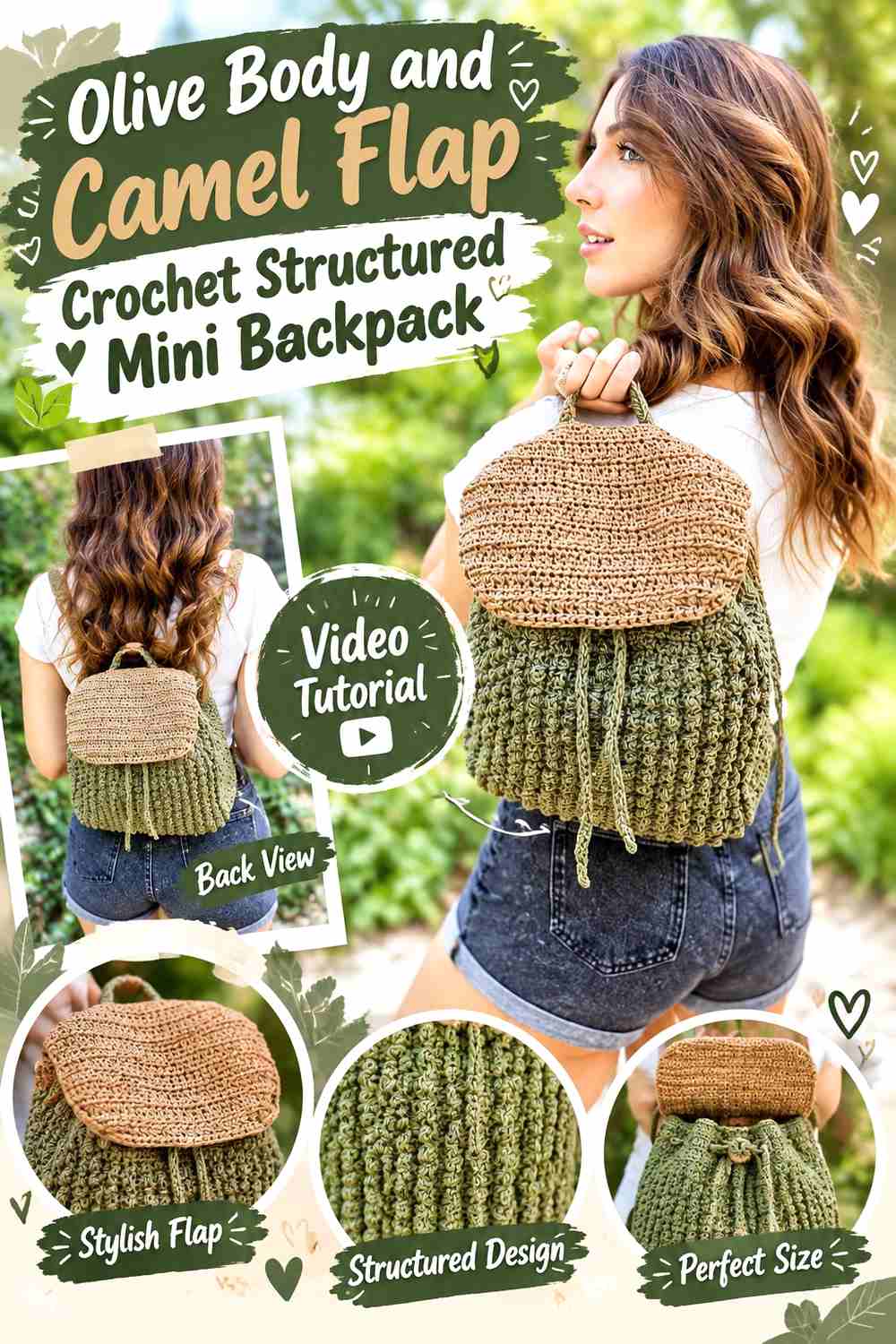
This is the clearest olive-led direction. Let olive cover the front, back, and main side area, then give the flap a solid camel treatment. The color break emphasizes the flap without turning the backpack into equal halves. A small amount of camel can also return at the handle or pocket edge so the top color does not look isolated.
Let Olive Define the Main Mini Backpack Silhouette
Keeping the largest surfaces olive gives the compact backpack a continuous outer shape. This is useful when the bag already has several visible details, because the main color prevents the front, sides, and back from becoming visually fragmented.
If you add camel elsewhere, keep those areas smaller than the olive body. The goal is for olive to remain the first color you notice.
Use Camel to Separate the Flap From the Olive Body
A camel flap creates an obvious transition at the top of the backpack. That separation is especially useful when the flap overlaps the front panel and you want its curved or rectangular outline to remain visible.
For stronger continuity, repeat a little camel on the top handle. Avoid adding camel to every remaining detail, or the flap will lose its role as the main contrast area.
Creator Credit: Evelyn And Peter Crochet
2. Camel Body And Olive Base Crochet Structured Mini Backpack
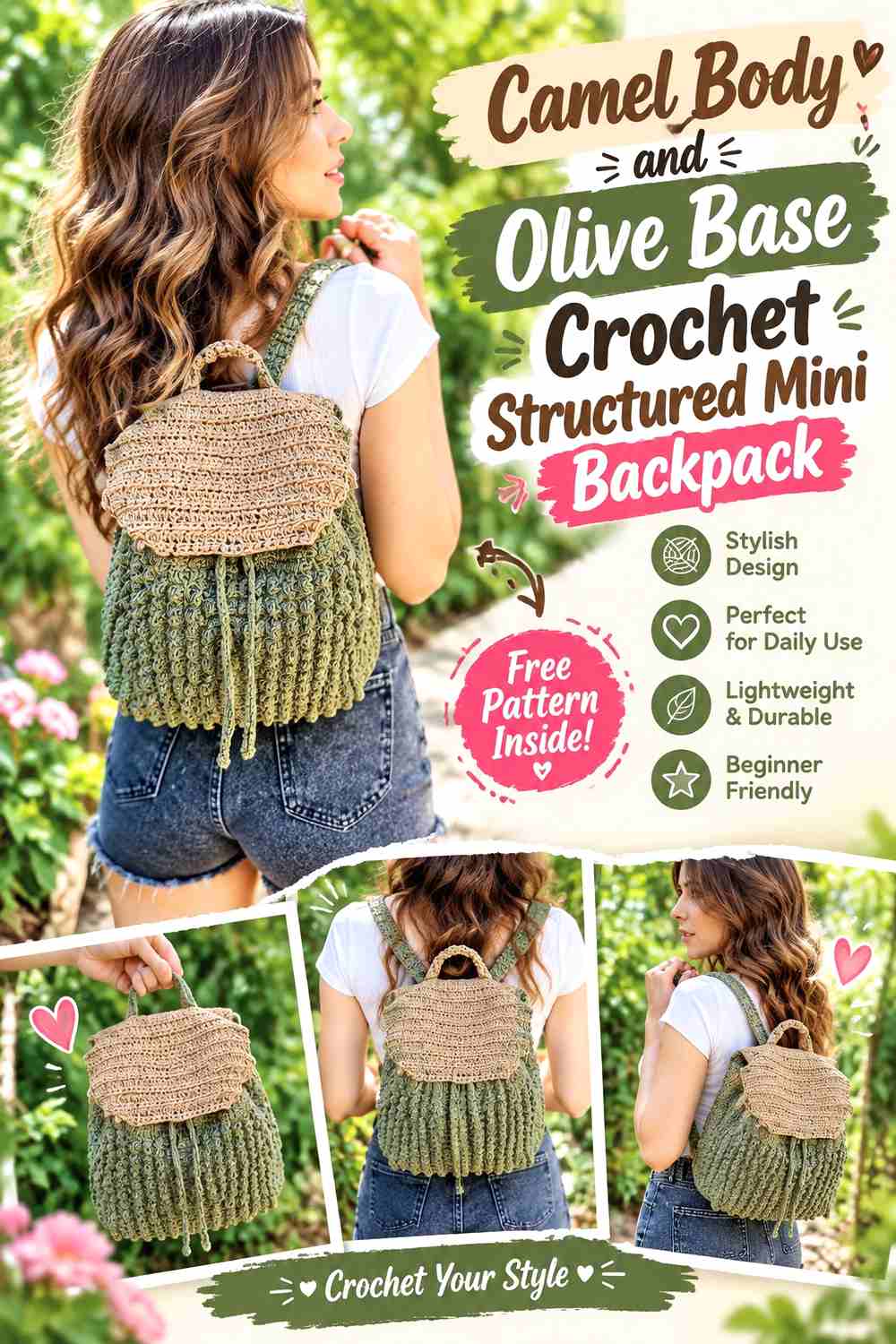
Reverse the previous hierarchy by letting camel occupy most of the backpack while olive sits at the bottom. The darker base visually anchors a light or medium camel body, and olive can continue onto the straps to connect the lower and rear portions of the bag. This palette direction is useful when you want camel to be unmistakably dominant without eliminating olive.
Keep Camel Continuous Across the Main Backpack Body
Large camel front and back sections make the mini backpack look less visually segmented. If the bag includes texture, keeping that broad surface in one color also avoids asking both stitch texture and color changes to compete for attention.
Reserve olive for areas that benefit from stronger definition rather than inserting narrow olive stripes through the camel body.
Carry Olive From the Base Into the Backpack Straps
Using olive for both the base and straps creates a repeated darker framework. The base grounds the front view, while the straps bring the same color to the back.
You can also use a narrow olive edge around the flap if the camel body and camel flap otherwise merge too completely.
Creator Credit: WoolyWondersCrochet
3. Olive Camel And Cream Panel Crochet Structured Mini Backpack
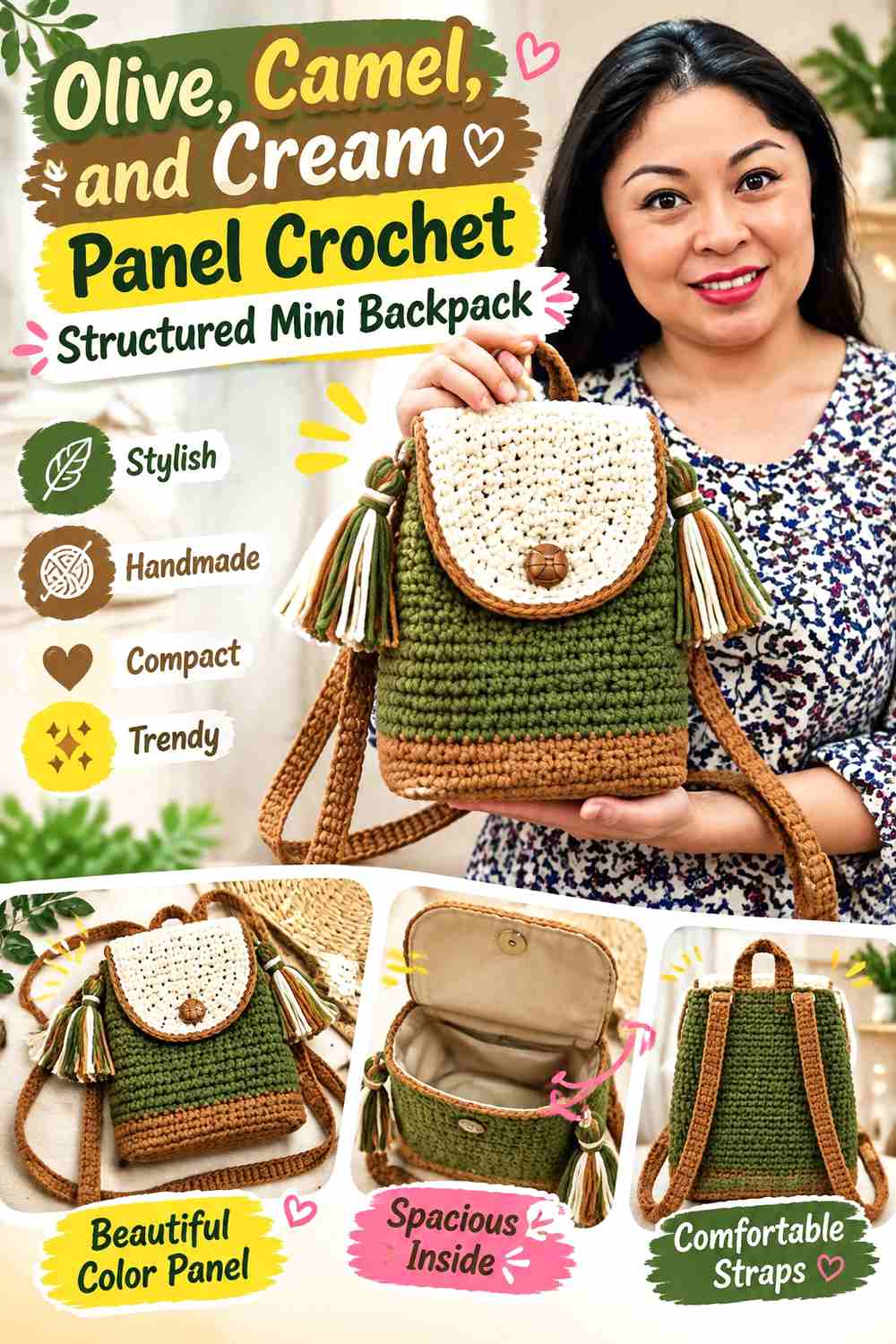
Cream gives this olive-and-camel scheme a clearer three-level hierarchy. Keep olive dominant, use camel for a broad front or flap panel, and reserve cream for narrow separators rather than large areas. On a small backpack, cream is most useful when it clarifies where one colored panel ends and another begins.
Use Olive Around the Outer Backpack Panels
Olive can cover the sides and outer front area, making the backpack read as one darker frame around a camel center.
This placement is particularly useful when the front panel is an important visual feature. The olive outer sections keep the eye focused inward instead of allowing all three colors to receive equal emphasis.
Let Cream Separate Camel From Olive
A thin cream transition between camel and olive creates more value separation than relying on hue alone. Use it around a pocket edge, flap border, or panel boundary rather than filling a large central section.
If cream becomes too prominent, reduce its width before changing the olive or camel. Its job here is separation, not dominance.
Creator Credit: MaríaDCrochet
4. Camel Olive And Espresso Trim Crochet Structured Mini Backpack

Camel leads this scheme, olive provides broad contrast, and espresso supplies the darkest definition. Because three earthy colors can become visually heavy when used equally, keep espresso restricted to outlines, closure details, or a narrow base edge. Olive should remain the clear secondary color.
Give Camel the Largest Uninterrupted Backpack Area
Use camel across most of the body so the darker olive and espresso have something lighter to work against. A broad camel surface also prevents the compact bag from becoming overly divided by dark lines.
If you want a color change on the front, one substantial olive pocket generally creates more impact than several tiny olive details.
Use Espresso to Outline Olive and Camel Details
Espresso can define a camel flap against a camel body or sharpen an olive pocket edge. It works most effectively as a controlled line rather than another large panel.
Check that the espresso is visibly darker than your olive. If the two appear almost identical, simply use olive for the trim instead of forcing a third shade into the backpack.
Creator Credit: MaryJ Handmade
5. Olive Camel And Oatmeal Drawstring Crochet Structured Mini Backpack
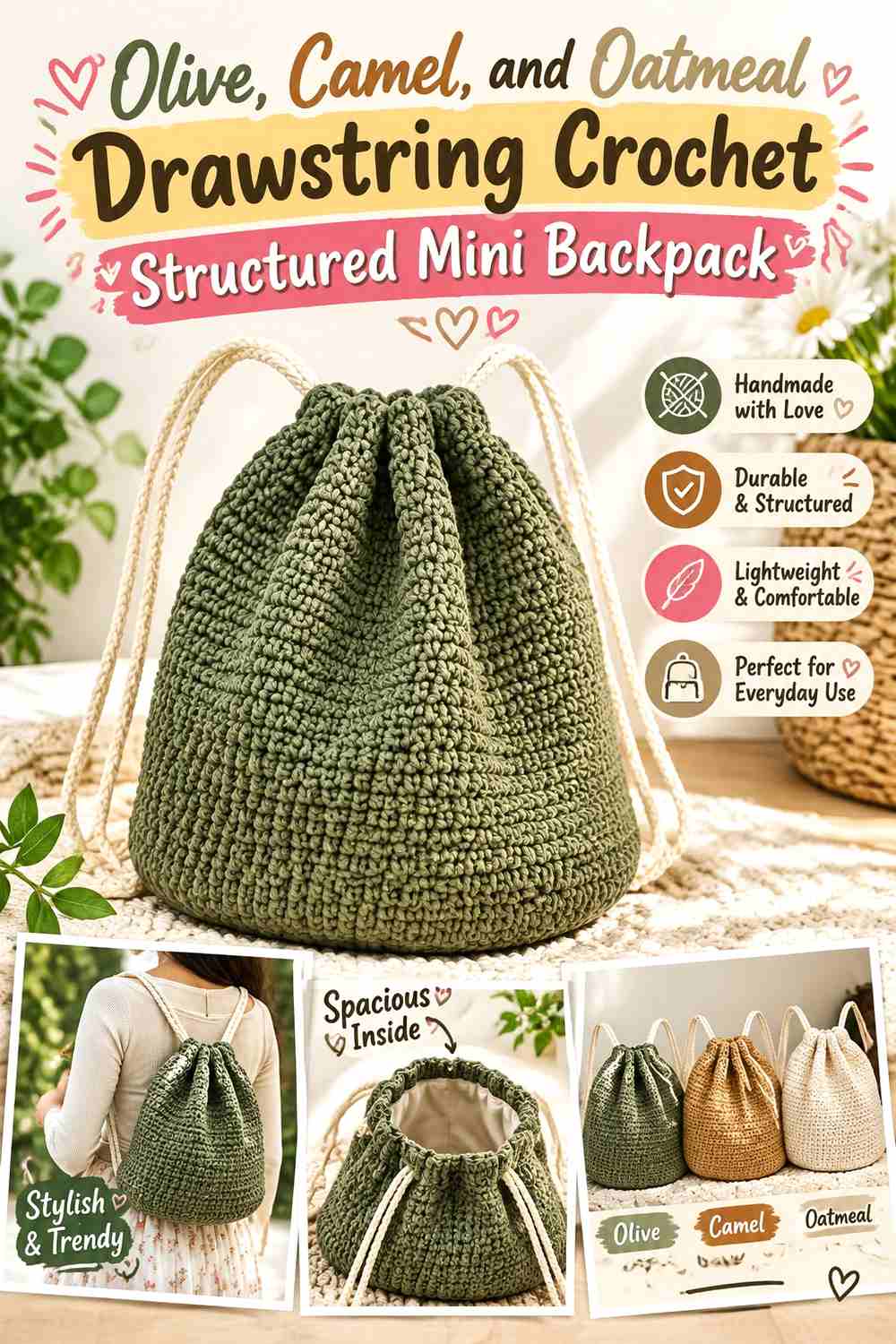
A drawstring opening introduces several narrow visual elements near the top of a backpack. Let olive carry the body, camel mark the upper band or flap area, and use oatmeal sparingly around the drawstring zone. The light neutral prevents camel and olive details near the opening from merging into one dense cluster.
Keep Olive Below the Camel Drawstring Area
A continuous olive lower body keeps the backpack looking grounded even when the top contains several cords, openings, or edge details.
Move the main color break upward rather than dividing the middle of the bag. That preserves a broad olive field and gives camel a logical role around the opening.
Oatmeal Can Clarify Camel and Olive Near the Top
Use oatmeal as a narrow edging or separator where camel and olive meet around the opening. This small light area can help each stronger color remain recognizable.
Avoid making the drawstring, border, handle, and straps all oatmeal. Repeating it everywhere would pull attention away from the intended olive-and-camel pairing.
Creator Credit: Alice’s Crochet Corner
6. Olive Body And Camel Pocket Crochet Structured Mini Backpack
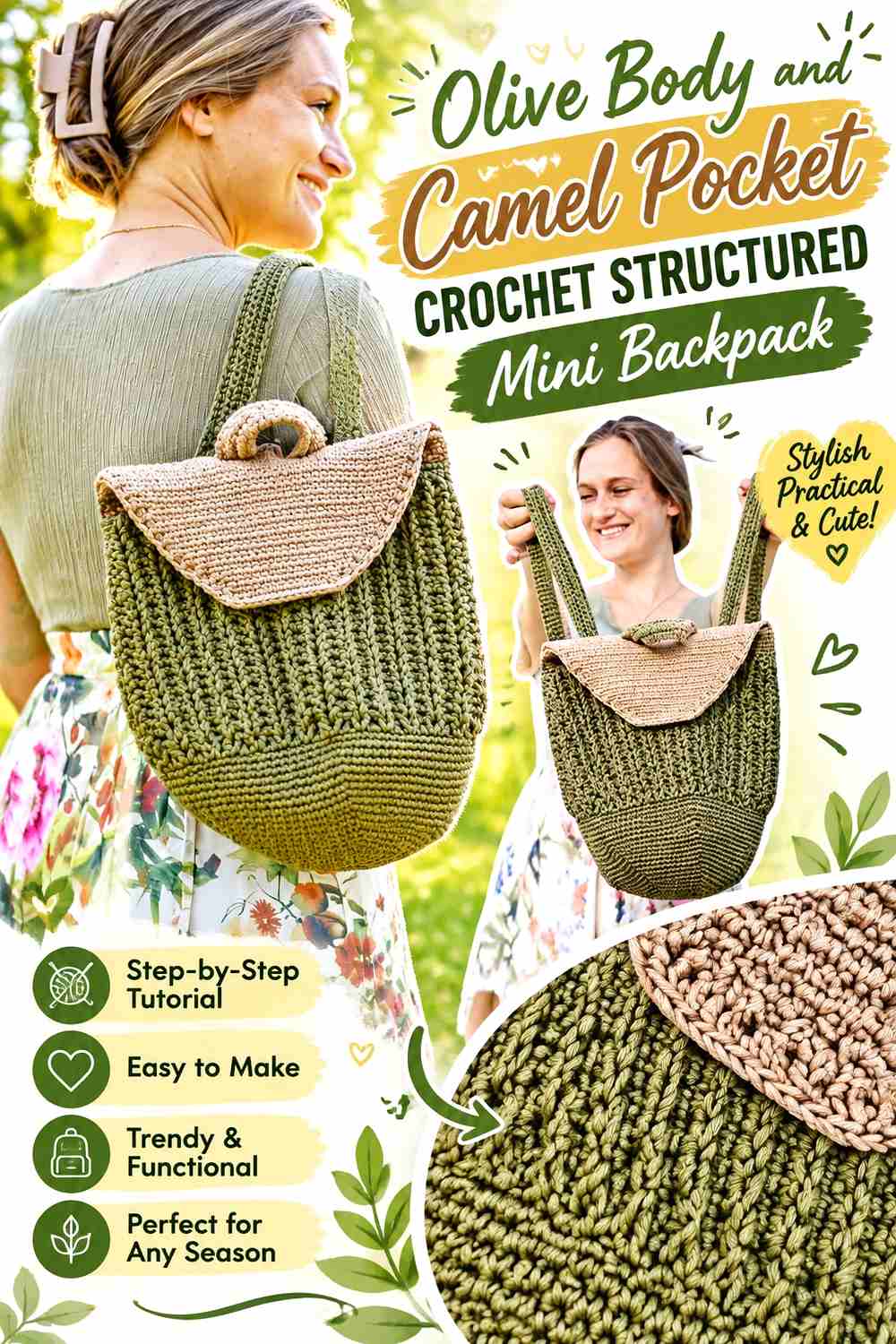
A front pocket provides a natural place to concentrate camel. Keep the body olive and make the pocket camel so its shape is visible immediately. Repeating camel at the flap or top handle can connect the pocket to the rest of the bag without needing additional color blocks.
Let Olive Stay Quiet Behind the Camel Pocket
An uninterrupted olive front allows the camel pocket to become the intentional focal area. If the pocket already includes texture, avoid placing additional stripes or motifs directly behind it.
The same olive can continue onto the side panels so the pocket remains a contained feature rather than one piece of a busier patchwork layout.
Repeat Camel Above the Olive Body
A camel handle, narrow flap edge, or closure-area detail can repeat the front-pocket color higher on the backpack. This stops the camel pocket from appearing visually detached.
Keep the repetition small. The pocket should still contain most of the camel visible from the front.
Creator Credit: Life and Yarn
7. Olive Camel And Charcoal Flap Crochet Structured Mini Backpack

This palette creates a darker, more defined version of the two-color theme. Olive can dominate the body, camel can soften the central flap or front section, and charcoal can appear along the flap edge, base, or straps. Because charcoal carries strong visual weight, it works better as a structural outline than as a third equal body color.
Use Camel Inside an Olive Backpack Frame
Place camel in a contained central area such as the flap or main front pocket. Olive can surround it across the sides and body, creating a clear dark-to-light relationship without relying on a bright neutral.
This placement keeps the backpack earthy while still giving the front a distinct center.
Keep Charcoal Narrow Beside Olive and Camel
Use charcoal where you want a firm visual stop: the bottom edge, a flap border, or selected strap details. A narrow charcoal line can define both olive and camel without taking over the palette.
If your olive is already nearly as dark as charcoal, omit the charcoal rather than creating two dark colors that merge.
Creator Credit: Kane Crochet
8. Camel Olive And Rust Accent Crochet Structured Mini Backpack
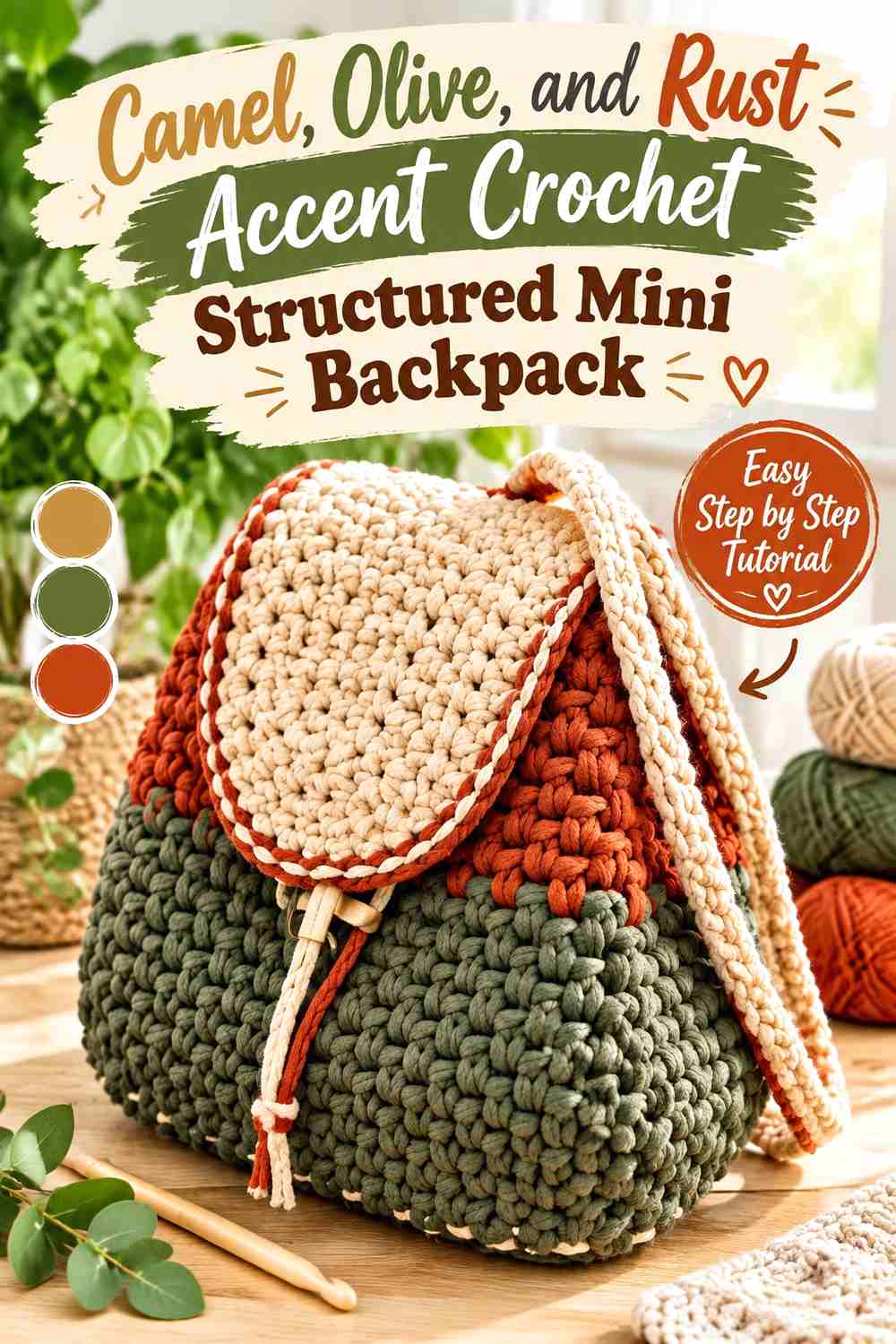
Rust introduces a warm accent that sits close enough to camel to feel related while remaining distinct from olive. Let camel cover most of the body, use olive for the base and flap, and restrict rust to a small repeated feature such as an edge, closure detail, or compact motif.
Let Camel and Olive Control Most of the Backpack
Keep the camel body and olive structural areas responsible for nearly all of the visible surface. That gives the bag a strong two-color identity before rust is introduced.
If olive is used on the flap, repeating it at the bottom keeps the darker green distributed vertically instead of concentrating it only at the top.
Repeat Rust in Small Camel or Olive Details
Rust needs very little area to become noticeable. Use it once near the front and once near the top or edge so the accent feels deliberate rather than accidental.
Do not give rust an entire side panel unless you intentionally want the backpack to become a three-color design rather than an olive-and-camel design.
Creator Credit: Passionate Crafter
9. Olive And Camel Two Panel Crochet Structured Mini Backpack
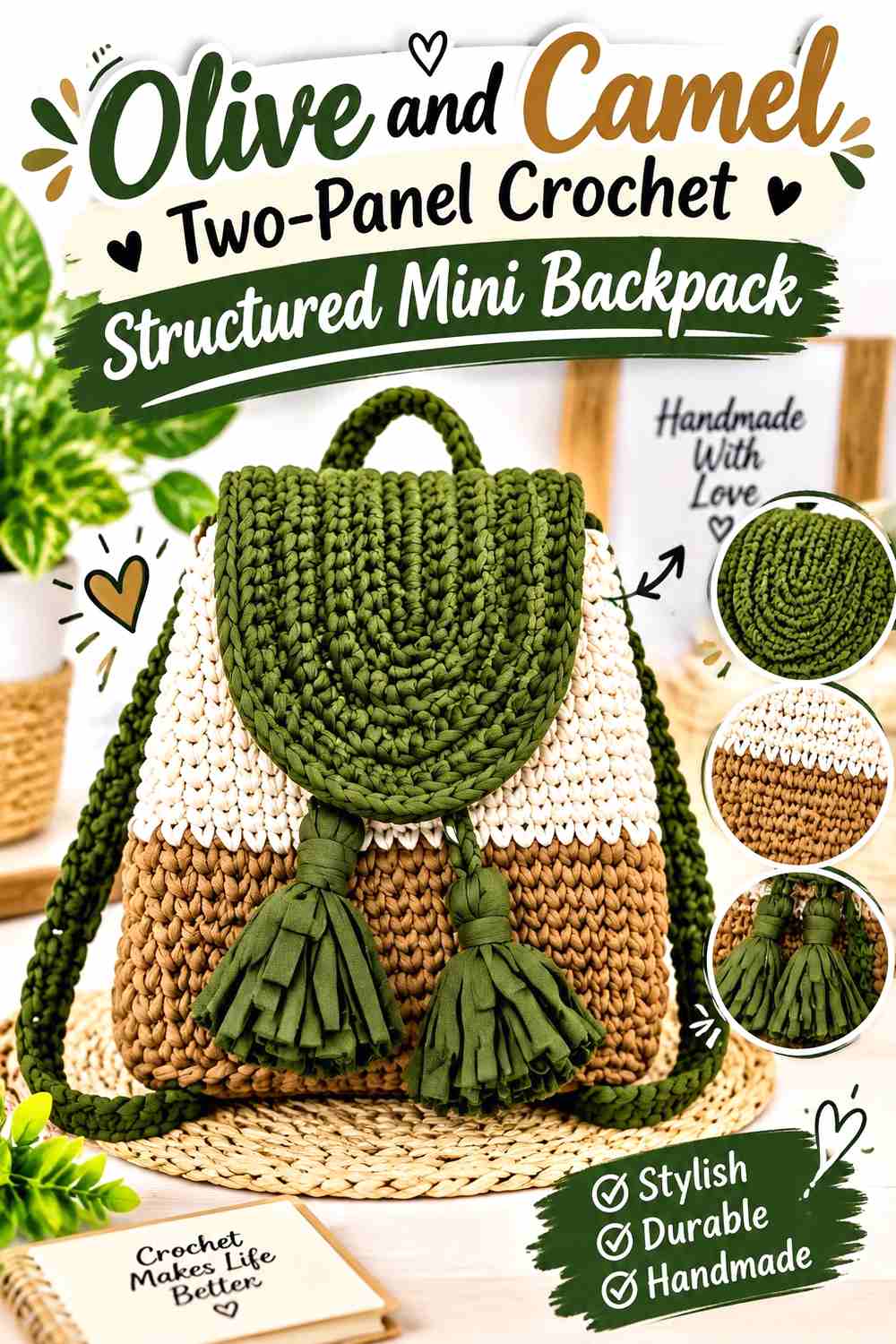
This approach uses only the two requested colors. Divide the visible backpack into substantial areas rather than frequent stripes: an olive front with a camel back, a camel upper panel with an olive lower panel, or two vertical sections. The simplicity makes the placement itself the main design choice.
Give Olive and Camel Unequal Panel Sizes
A 50/50 division can look static on a very small backpack. Giving one color a clearly larger panel creates a more obvious hierarchy.
If olive is the larger panel, allow camel to occupy a meaningful secondary section rather than reducing it to a thin trim. The reverse works just as well when camel is intended to lead.
Repeat Olive or Camel on the Opposite Panel
Use a small olive detail on the camel section and a small camel detail on the olive section. A handle, pocket edge, or flap border is enough.
This cross-repetition connects the two main panels without breaking them into additional stripes.
Creator Credit: Nirvana Crochet
10. Olive Camel And Cream Zip Detail Crochet Structured Mini Backpack
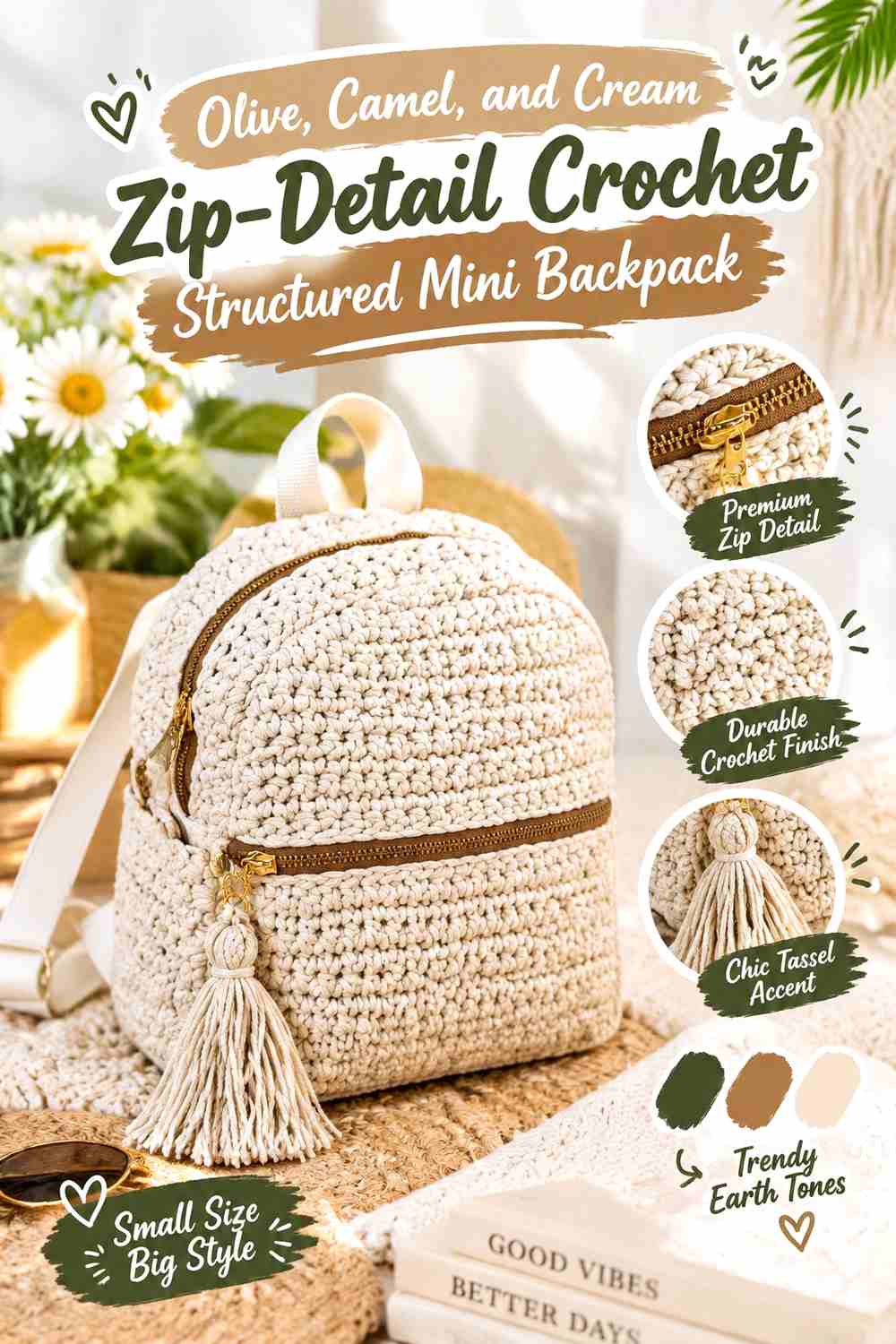
A backpack with visible closure and pocket lines already contains more visual structure than a simple drawstring bag. Use olive for the main panels, camel for one front pocket or upper section, and cream only where a narrow edge needs separation. This keeps the hardware and construction lines from competing with an overly complex palette.
Keep Olive Around the Main Backpack Compartments
Using olive around the larger sections creates continuity between multiple pockets or openings. Camel can then identify the feature you want to emphasize without every compartment receiving a different color.
This is especially useful on a small bag, where several strong color blocks can quickly make the front look crowded.
Place Cream Between Camel and Olive Pocket Areas
A narrow cream edge can distinguish a camel pocket from an olive body when the two yarns are close in value.
Keep cream away from every seam. Choose one or two important boundaries so the lighter shade clarifies the design rather than outlining every construction detail.
Creator Credit: Dana B
11. Olive And Camel Granny Square Crochet Structured Mini Backpack
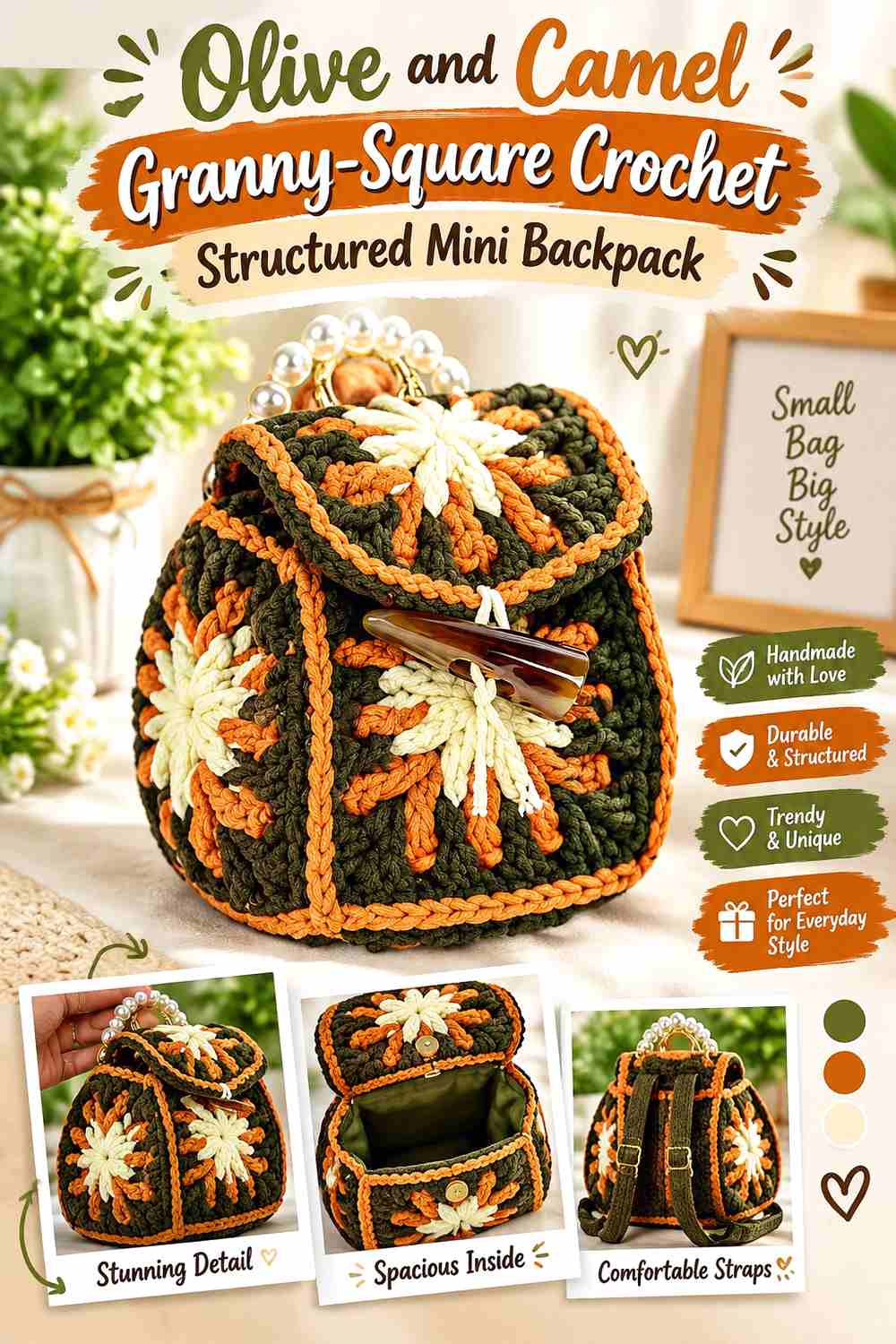
Granny squares let olive and camel trade roles without changing the overall palette. Some squares can have olive centers with camel outer sections, while others reverse the order. The key is repetition: choose a limited number of arrangements and distribute them deliberately across the mini-backpack surface.
Alternate Olive and Camel Granny-Square Centers
Use olive at the center of one repeated square type and camel at the center of another. This creates variation without introducing additional hues.
Arrange the center colors before joining so one side of the backpack does not accidentally receive nearly all of the darker olive motifs.
Keep Olive or Camel Consistent at the Granny-Square Edges
Using the same outer color across many squares can make separate motifs feel more connected. Olive creates a darker framework, while camel produces a lighter overall field.
Choose that outer color according to which shade you want to appear dominant once the squares are assembled, not simply according to which yarn you have left.
Creator Credit: anxin_crochet
12. Olive Camel And Oatmeal Sunburst Crochet Structured Mini Backpack
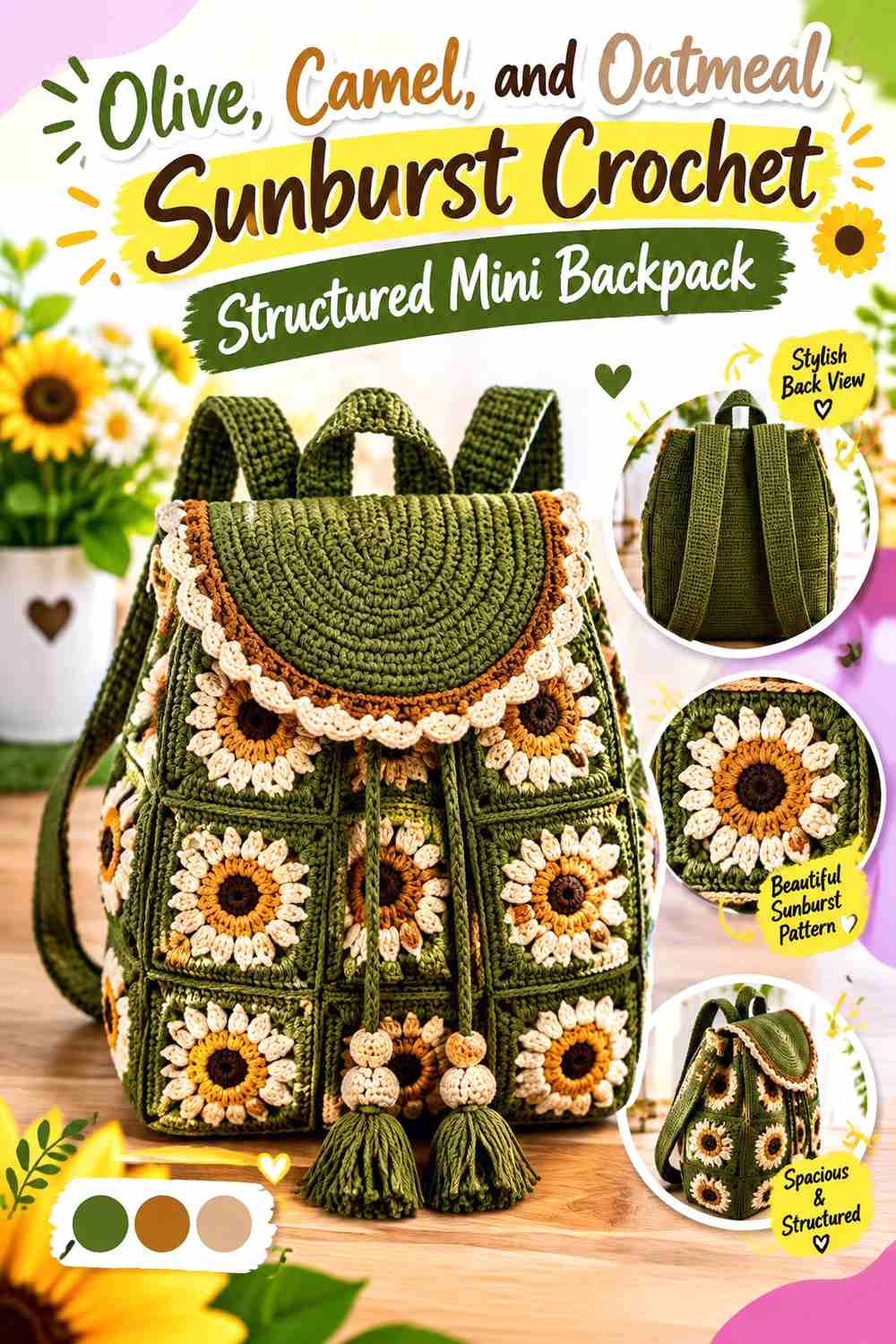
Sunburst motifs create several concentric opportunities for color, so hierarchy matters. Keep olive as the recurring outer color, place camel through the middle portions, and use oatmeal selectively in centers or narrow transitions. A consistent olive perimeter makes multiple motifs read as parts of the same backpack rather than independent color samples.
Use Olive Around the Sunburst Motif Edges
An olive outer section gives adjoining motifs a common visual boundary. Once the motifs meet, those repeated green edges help the backpack surface look more unified.
This is particularly useful when camel and oatmeal shift positions inside individual motifs.
Keep Camel More Visible Than Oatmeal
Camel should retain a substantial share of each motif if the backpack is meant to read as olive and camel. Use oatmeal for smaller centers or separating rings.
If oatmeal becomes the largest light area, the palette can start reading as olive and cream with camel only as an accent.
Creator Credit: Ican_ crochet
13. Camel Olive And Cream Motif Flap Crochet Structured Mini Backpack

Concentrating the multicolor work on the flap allows the rest of the mini backpack to remain visually controlled. Use camel for the body, create the flap motif with olive as its strongest contrasting shade, and bring in cream only for smaller motif details. This makes the closure the decorative center without covering every panel in pattern.
Keep Camel Solid Below the Olive Motif Flap
A mostly solid camel body gives the detailed flap a quiet background. This prevents the motif and body from competing for attention.
You can repeat a narrow olive base or strap detail lower on the bag to connect the patterned top to the rest of the backpack.
Let Olive Lead the Flap Before Adding Cream
Make olive the most visible contrasting shade in the motif, then use cream as a smaller highlight. This preserves the olive-and-camel relationship even when the flap contains three colors.
If cream starts dominating the motif, reduce it to centers, outlines, or selected repeated details.
Creator Credit: Nagu’s Handwork
14. Olive And Camel Checker Granny Crochet Structured Mini Backpack
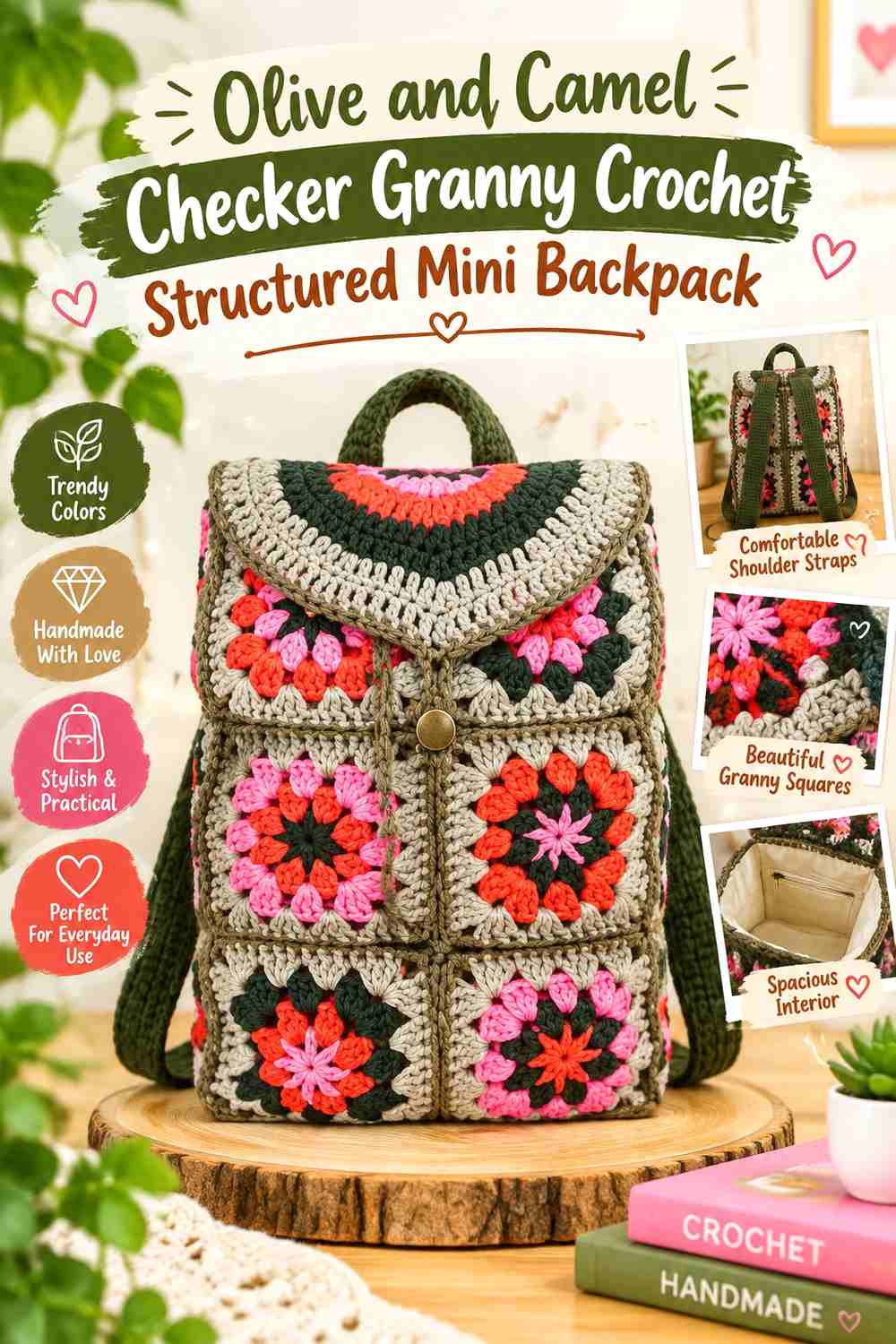
Checker-style color placement can make granny motifs feel more geometric. Use two recurring square arrangements and alternate them across the backpack: olive-led beside camel-led. Keeping the palette to two colors makes the checker effect easier to read and avoids turning the small surface into a multicolor patchwork.
Alternate Olive and Camel Across the Backpack Grid
Plan the motif positions before joining so olive and camel move across the front in a recognizable rhythm.
If two olive-heavy squares end up next to each other unintentionally, the checker effect can disappear. A quick flat layout before assembly helps reveal those clusters.
Use Olive for a Darker Border Around Camel Checks
An olive outer edge can contain a checker front and connect it to olive straps or a base. This is useful when camel occupies many of the central squares.
For a lighter finish, reverse the idea and use camel around olive-heavy motifs, but keep the choice consistent around the entire visible edge.
Creator Credit: Bag-O-Day Crochet
15. Olive Camel And Espresso Patchwork Crochet Structured Mini Backpack
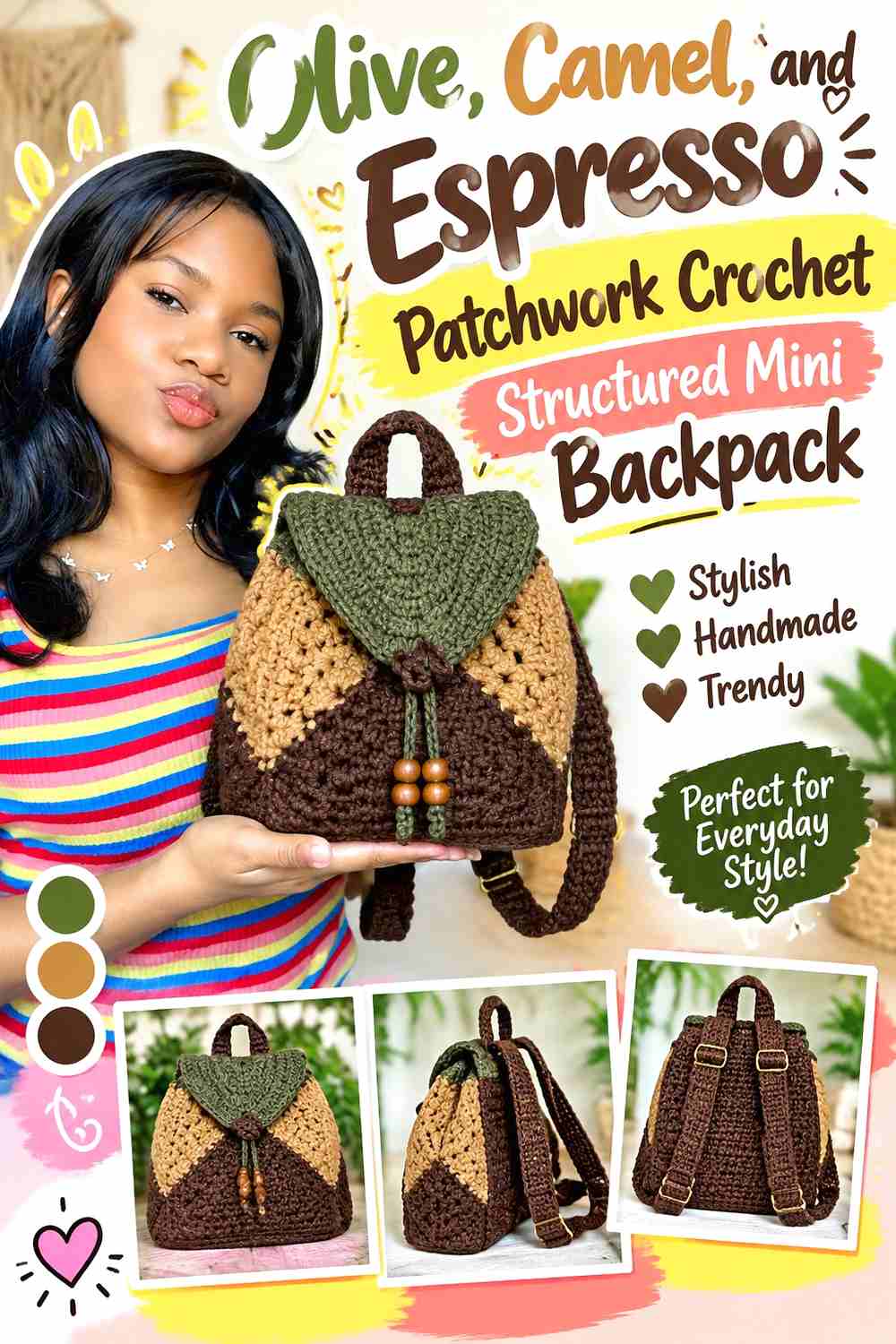
The final palette takes the motif idea in a darker direction. Let olive and camel alternate across the main patchwork while espresso is reserved for joins or the outer frame. The darkest color can make individual blocks easier to distinguish, but too much espresso will visually separate them so strongly that the backpack begins to look like isolated tiles.
Balance Olive and Camel Across the Patchwork Surface
Count visual area rather than simply counting motifs. A square with a large olive outer section can contribute much more green than a square with only an olive center.
Lay the components together before assembly and move motifs around until neither olive nor camel becomes concentrated in one corner of the backpack.
Keep Espresso Joins Narrow Around Olive and Camel
Espresso can define motif boundaries and give the finished patchwork a darker frame. Use it consistently so it reads as part of the design rather than an assembly color introduced at the last moment.
If the joins become too visually dominant, switch some outer edging back to olive or camel instead of adding another shade.
Creator Credit: WildxDandi Crochets
Choosing Between the 16 Olive and Camel Backpack Palettes
For the clearest two-color statement, focus on the olive-body/camel-flap, camel-body/olive-base, two-panel, or checker-granny ideas. They make the relationship between the two requested colors easy to see without relying on another shade.
Cream and oatmeal are useful when your actual olive and camel yarns need more light-value separation. Espresso and charcoal do the opposite by supplying a darker edge. Rust adds warmth but should stay secondary if olive and camel are meant to remain the defining colors.
For a structured-looking backpack, consider where the color changes fall in relation to the flap, base, pocket, sides, and straps. A palette that reinforces those visible components will generally read more clearly than one that changes color in unrelated places.
Conclusion
Olive and camel can create noticeably different crochet mini backpacks simply by changing which shade owns the largest surface and where the contrast appears.
Choose an olive-led body when you want camel to highlight the flap, pocket, or handle. Reverse the balance when you want a lighter camel backpack with olive defining the base, sides, and straps. For motif-based versions, repeat the same few olive-and-camel arrangements so the finished backpack retains a controlled color system rather than becoming random patchwork.
Use the original tutorials for their exact construction instructions, and plan the color distribution separately around the backpack parts you most want to emphasize.
Frequently Asked Questions
Should olive or camel be the dominant color on a crochet mini backpack?
Either can dominate. Olive creates a darker main field that lets camel flaps and pockets stand out, while a camel body gives olive bases, straps, and side panels more visual weight. Choose the dominant color according to which backpack component you want to appear largest.
How can I tell whether olive and camel have enough contrast for crochet?
Place the actual yarns beside each other and look at them from a distance. A grayscale photo can also reveal whether they are similar in lightness. If small color changes disappear, add a lighter cream or a darker espresso only where additional separation is useful.
Where should camel go on an olive crochet backpack?
Camel works particularly well on distinct components such as the flap, front pocket, handle, side panel, or edging. Keeping it concentrated in recognizable areas usually gives a structured mini backpack more definition than scattering tiny camel details throughout the olive body.
Can I make camel the main color and use olive only as an accent?
Yes. Olive can define the base, straps, flap edge, or side panels while camel covers most of the bag. Give olive enough repeated area to look intentional rather than using it for a single isolated detail.
Which neutral works with an olive and camel crochet backpack?
Cream or oatmeal can create a lighter separator between the two main colors. Espresso or charcoal can create a darker outline. Choose according to whether the olive-and-camel combination needs more lightness or more edge definition.
How do I keep an olive-and-camel granny-square backpack from looking too busy?
Limit the number of motif color arrangements and repeat them. For example, alternate olive-centered and camel-centered squares while keeping one outer color consistent. Planning the complete layout before joining also helps prevent one color from clustering on a single side.
Does using olive and camel make a crochet mini backpack more structured?
Color changes can emphasize the base, sides, flap, and panels, but they do not create physical stiffness. Actual structure comes from the construction choices in the selected backpack tutorial, so follow the creator’s directions for the bag itself and use the palette to emphasize that shape.