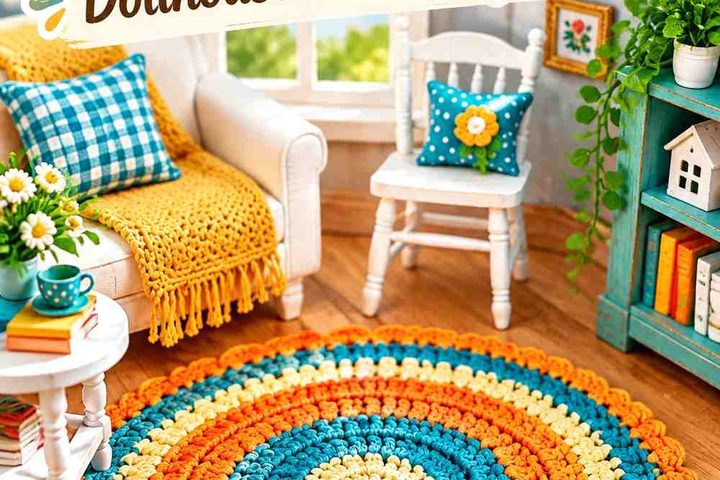
Sangria Plum and Celery Cream can give a miniature room canopy very different personalities depending on where the crochet sits. A flat lace panel stretched across four posts reads as a tiny architectural ceiling, while scalloped side curtains, flower lattice, or cascading vines create a softer draped effect. Circular crochet mounted in a ring shifts the silhouette again, producing a crown-style canopy that can hang above a miniature bed or seating nook.

Scale is the main challenge. Lace that looks delicate at full size can become visually heavy in a dollhouse room if the yarn, motifs, borders, or hanging loops are too large. Color proportion matters for the same reason: Sangria Plum can quickly dominate a tiny scene, while Celery Cream provides useful negative space and lighter visual separation.
The sources below teach curtains, lace panels, valances, hanging motifs, or hoop-mounted crochet. Use each creator’s tutorial for its original construction, then independently resize and mount the concept for your miniature room.
Quick List
- Crochet Sangria Chevron Four-Post Miniature Room Canopy
- Crochet Celery Flower-Lattice Miniature Room Canopy
- Crochet Two-Tone Rosette Valance Miniature Room Canopy
- Crochet Graphical Motif-Screen Miniature Room Canopy
- Crochet Vertical Flower-Lace Miniature Room Canopy
- Crochet Sangria Heart-Filet Miniature Room Canopy
- Crochet Celery Repeating-Lace Ceiling Miniature Room Canopy
- Crochet Celery Petal-Crown Miniature Room Canopy
- Crochet Two-Tone Mini Ring Miniature Room Canopy
- Crochet Hanging Floral-Vine Miniature Room Canopy
Start With the Miniature Scale, Not the Full-Size Tutorial
Most lace and curtain tutorials are designed for real rooms, so their original yarn, hook, and finished dimensions should not be copied automatically into a miniature setting. First establish the scale of your room and the physical area the canopy must occupy. A 1:12 dollhouse bedroom, fashion-doll scene, and tabletop diorama require very different proportions.
Make a paper canopy first. Test its width over the bed or seating area and check how far any side drapes should fall. Then crochet one complete stitch repeat or motif and compare it with that template. A flower that fills nearly half a miniature bed width will behave as a major focal ornament even if it looks modest in the source project.
Avoid forcing scale only by using a dramatically smaller hook. Yarn or thread diameter, stitch definition, and the source motif architecture all affect whether the result still looks convincing.
Use Sangria Plum and Celery Cream to Separate Structure From Drape
The darker Sangria Plum is useful for structural lines: narrow borders, hoop coverings, canopy rails, geometric motif edges, or the upper valance. Celery Cream can occupy larger open areas without making a miniature room feel visually enclosed. Reversing those roles creates a more theatrical canopy in which the plum textile becomes one of the room’s strongest elements.
Color placement can also clarify construction. A cream ceiling panel with plum scallops immediately separates the overhead surface from its decorative edge. Plum flower centers joined by cream lattice make individual motifs easier to read. For a hoop canopy, one shade can define the circular crown while the other forms the hanging strands.
Make the color decision while viewing the entire miniature room. Wall color, bedding, flooring, furniture, and the dark shadows inside a small room all influence how much contrast the crochet actually needs.
Keep Miniature Canopies Light Enough to Hang Naturally
Small-scale crochet has little fabric weight available to pull out wrinkles or straighten hanging sections. A full-size curtain may drape under gravity, while a tiny version of the same stitch can remain stiff or flare outward. This makes blocking, yarn choice, and attachment especially important.
Open stitches generally scale more convincingly than dense fabric when the goal is a lace canopy. Borders and seams should also remain proportionate; several thick finishing rounds can overwhelm a delicate center.
Plan suspension before making the finished piece. Four-post structures need balanced corners, hoop canopies need an even crown, and independent hanging vines need deliberate spacing. If the miniature is intended for child play rather than adult display, avoid unsecured rings, beads, long loose cords, or other detachable small components. Display models and play miniatures have different practical requirements.
1. Crochet Sangria Chevron Four-Post Miniature Room Canopy
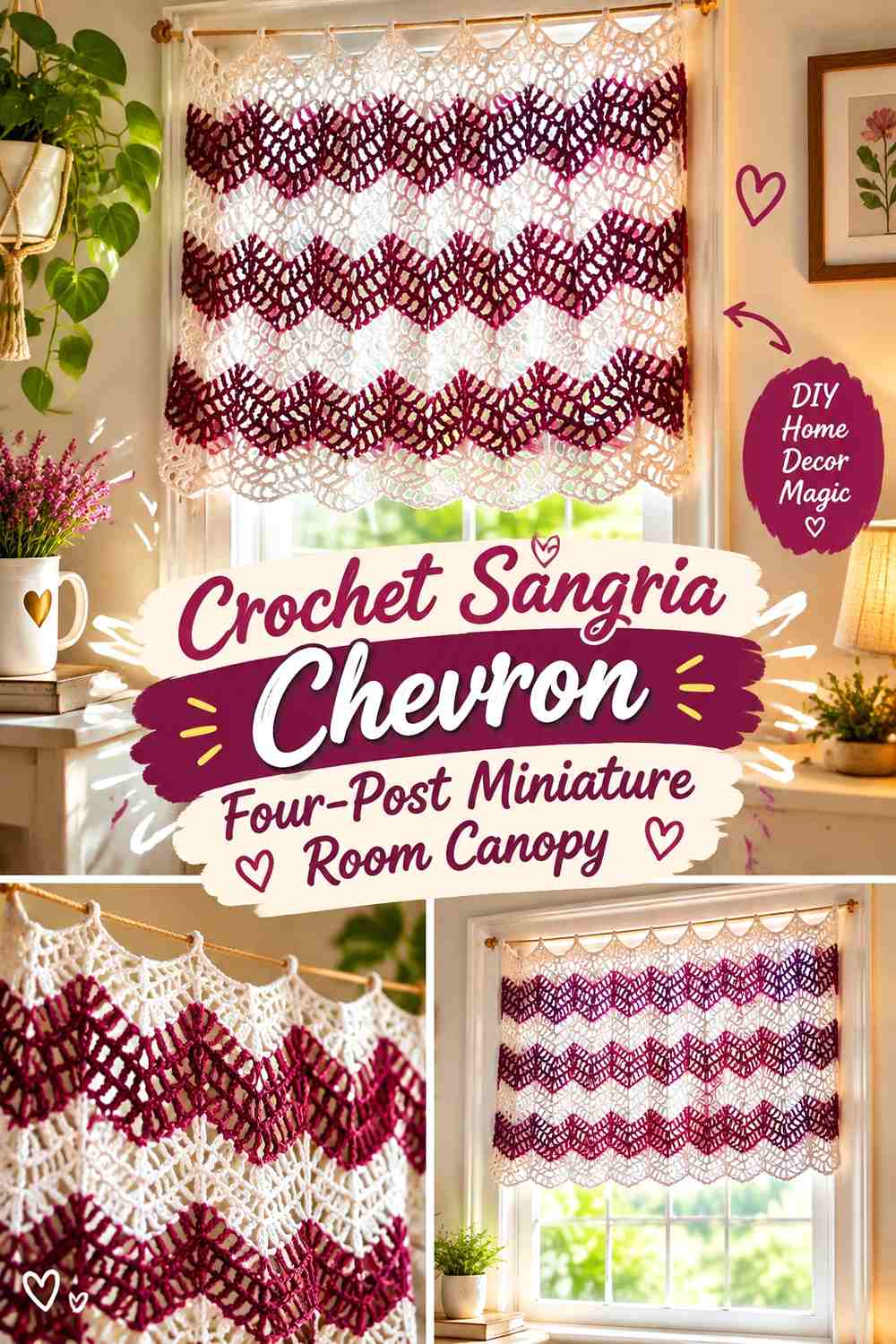
A chevron canopy replaces the expected floral lace with a directional zigzag ceiling. Moogly’s Big Bold Chevron Curtain uses an open chevron structure and alternating color sections, providing a clear reference for turning repeated peaks and valleys into a broad textile panel.
For a miniature room, the idea works best as a shallow rectangular panel stretched between four bed posts rather than as long hanging curtains. Sangria Plum can form the principal chevron lines while Celery Cream occupies the lighter bands between them. This arrangement gives the canopy enough contrast to remain visible from the front of a dollhouse without making the overhead surface look solid. Before choosing it, check how many complete chevron peaks fit across the miniature bed; one awkward partial repeat can make a small canopy appear noticeably off-center.
Center the Chevron Before Fixing the Corners
On a small rectangle, the eye quickly notices whether the central peak lines up with the bed. Establish the center of both the canopy and the furniture before deciding where the side edges should fall.
If the repeat does not fit the required width naturally, a narrow plain border can absorb extra space more gracefully than stretching the crochet. The canopy should fit the frame; the miniature furniture should not be distorted to accommodate the stitch repeat.
Keep the Plum Bands Narrow Enough to Preserve Airiness
Sangria Plum will appear visually heavier than Celery Cream, particularly in a shadowed miniature room. Broad plum chevrons can therefore make an open pattern look denser than it actually is.
Try a sample with cream occupying the larger open areas and plum acting as the directional line. If the miniature walls are already dark, reversing the ratio may reduce the amount of visible space around the bed too much.
Check All Four Suspension Points Together
A rectangular panel can skew if one corner is mounted under noticeably more tension. Before permanently attaching it, support all four corners temporarily and look straight down the length of the miniature bed.
The chevron pattern provides its own alignment grid, so diagonal distortion is easy to spot. Correct the mounting positions rather than relying on extra stretching to straighten the design.
Creator Credit: Moogly
2. Crochet Celery Flower-Lattice Miniature Room Canopy
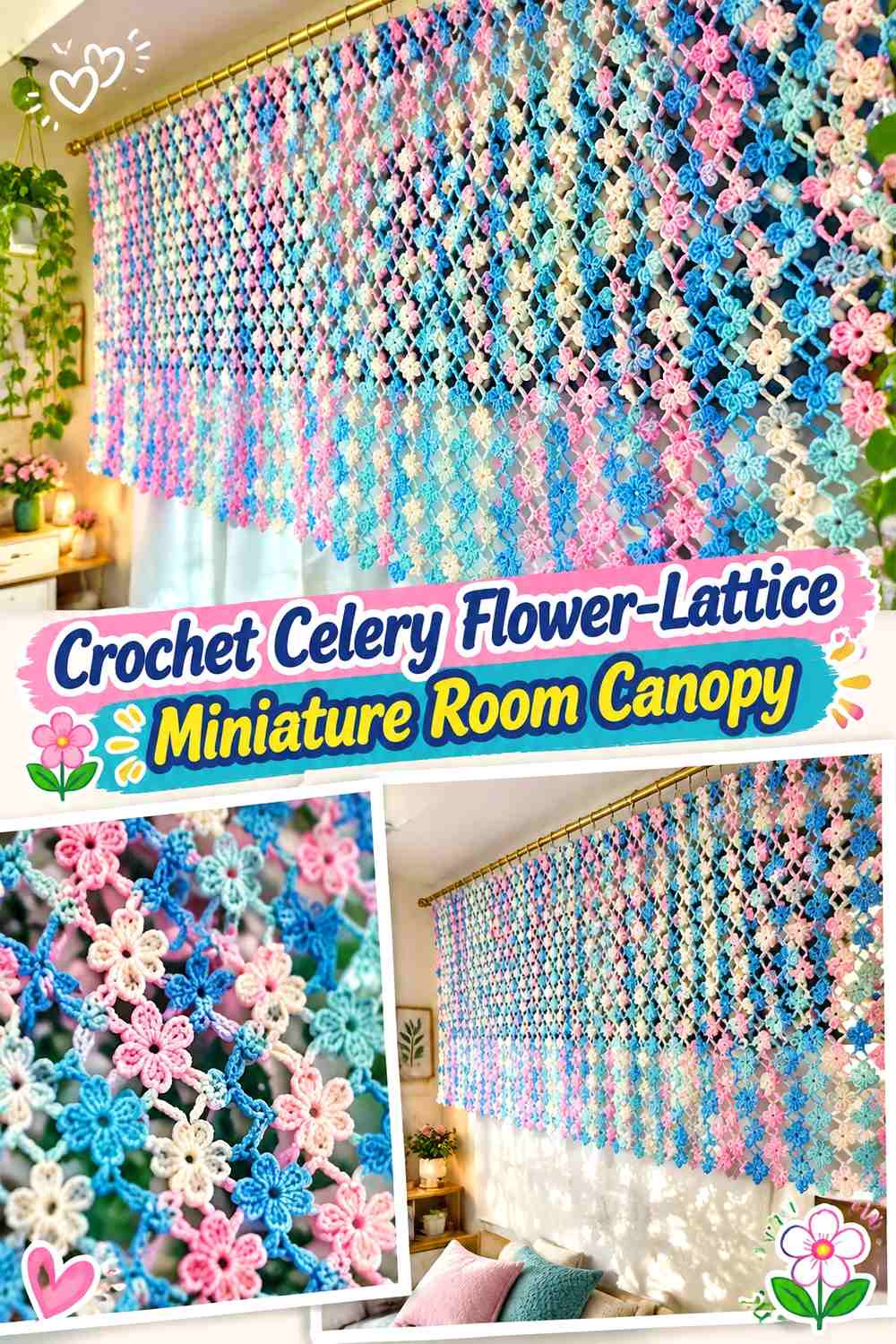
Flower lattice creates a canopy that is visibly floral without requiring separately sewn appliqués. Dearest Debi Patterns’ curtain valance uses interconnected four-petal flower units and specifically discusses how working orientation affects the way the lattice drapes.
For the miniature version, Celery Cream can form most of the floral network while Sangria Plum appears at selected petals or along the canopy edge. The open spaces keep the tiny ceiling from becoming visually heavy, making this treatment particularly useful over a bed with detailed bedding that should remain visible. It can also transition from overhead panel to short side drop without introducing a different stitch family. The main checkpoint is motif scale: if only two or three flowers span the entire miniature bed, the effect will read as oversized florals rather than fine lace.
Decide Which Direction the Lattice Should Hang
A stitch structure that drapes attractively in one orientation may appear stiffer when rotated. That matters when adapting a window valance into both a horizontal canopy top and vertical side sections.
Make a small lattice sample and turn it through both orientations before deciding how to construct the miniature piece. The best-looking direction for the roof may not be the one you want for a hanging side panel.
Use Sangria as an Accent Rather Than Recoloring Every Flower
Coloring every other flower plum can create a strong checker effect that competes with the lattice itself. A handful of Sangria Plum flowers surrounded by cream keeps the flower structure legible while introducing the second shade.
Another option is a completely cream lattice with a plum finishing edge. This provides color separation without adding frequent yarn changes to an already open fabric.
Leave Space Around the Bed Posts
Open floral fabric can catch on projecting miniature hardware more readily than a smooth solid panel. If the canopy frame includes decorative post caps or finials, check that the lattice clears them rather than snagging whenever the room is handled.
For a display scene, a slight inset from the outermost posts can look cleaner than stretching the lace to every possible edge.
Creator Credit: Dearest Debi Patterns
3. Crochet Two-Tone Rosette Valance Miniature Room Canopy
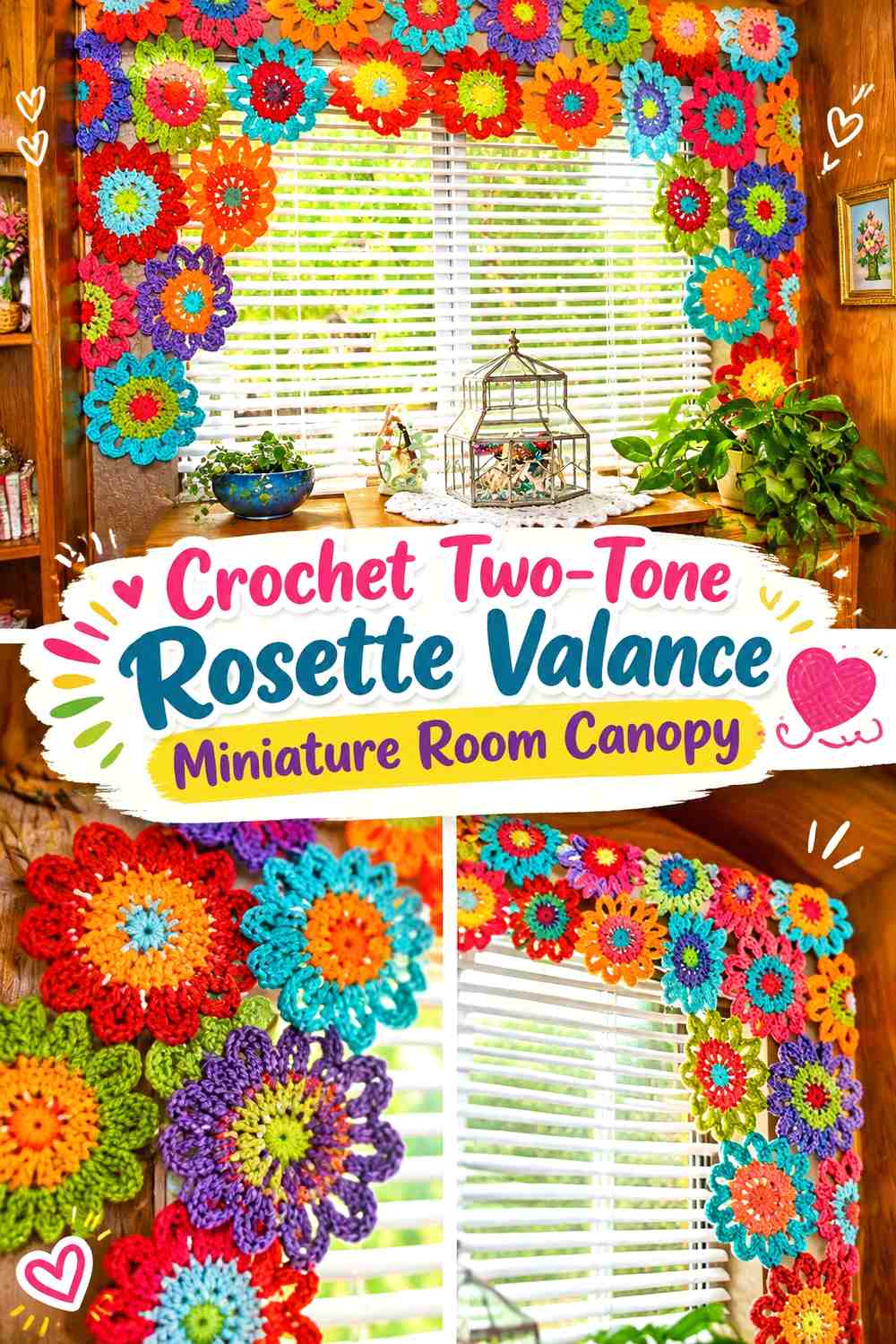
A rosette valance concentrates decoration around the perimeter rather than covering the entire canopy ceiling. Once Upon A Pink Moon’s Flower Power Valance is constructed from full and partial crochet flowers joined into a shaped hanging arrangement, giving this miniature concept a useful modular foundation.
For a tiny canopy, use the flowers along the head of the bed, across one short end, or around the outer rim of a simple cream roof panel. Sangria Plum centers with Celery Cream outer petals make each rosette readable without creating a completely dark floral band. Reversing the colors produces a more pronounced plum canopy edge. This is a better choice for a romantic or maximal miniature room than for a strictly minimal scene, because even small flowers create clear visual volume.
Test One Complete Rosette Against the Bed Width
The individual flower determines whether this adaptation succeeds. If a single motif occupies a large fraction of the headboard width, a repeated valance can quickly look oversized.
Finish and block one flower before calculating how many the canopy should contain. Changing the thread and hook combination may produce a more convincing result than trying to alter the flower’s internal construction.
Use Partial Motifs Only When the Edge Needs Them
The source uses full and half flowers to shape the valance. In a miniature canopy, partial motifs can help turn corners or finish a short side, but they should serve a visible purpose.
If complete flowers already fit the available span, keeping the sequence simple may produce a cleaner tiny-scale result. Small scenes magnify complicated joins because the viewer is physically close to the work.
Keep the Ceiling Quieter Than the Rosette Edge
A flower-heavy valance already establishes the canopy’s focal point. Pairing it with another highly patterned overhead panel can make the miniature bed visually crowded.
A plain open mesh or nearly solid cream ceiling lets the Sangria-and-Celery rosettes become the intended decorative frame. This also makes it easier to distinguish the canopy from patterned bedding below.
Creator Credit: Once Upon A Pink Moon
4. Crochet Graphical Motif-Screen Miniature Room Canopy
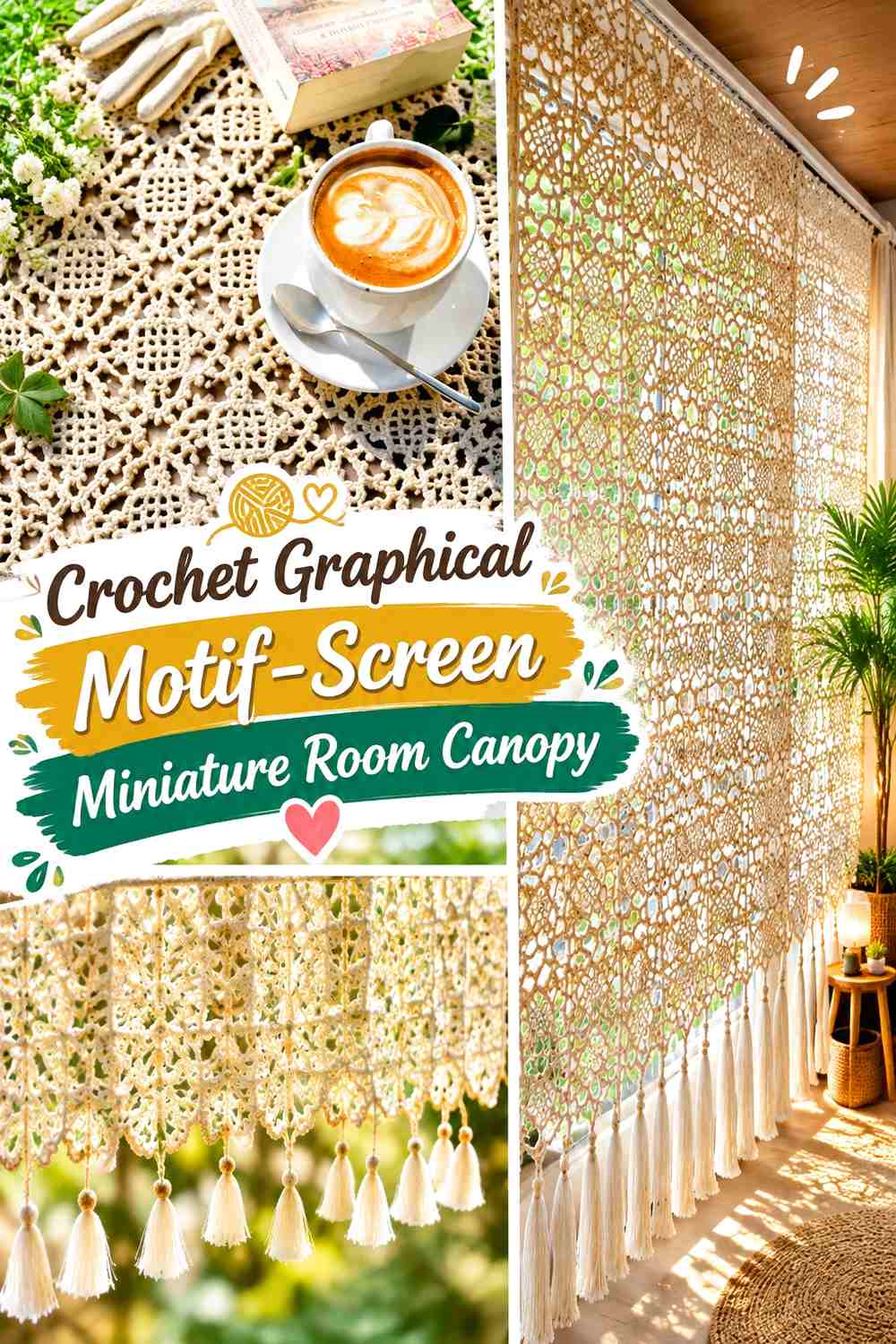
A geometric screen canopy gives the miniature room a more architectural character than flower lace or ruffles. Concept Creative’s Mashrabiya crochet curtain project uses joined ornamental motifs to form a repeating open screen, with the design drawing inspiration from carved geometric architectural screens.
For the miniature version, Sangria Plum can define the motif outlines while Celery Cream occupies selected interior details or connecting areas. The result is particularly effective as a flat rectangular canopy top above a simple platform bed, where the geometric pattern can provide most of the room’s ornament. It could also form a single dramatic backdrop behind the bed rather than surrounding all four sides. Because the motif contains considerable detail, verify that the complete shape remains recognizable after downsizing; shrinking the finished dimensions is useful only if the internal geometry still reads clearly.
Treat the Pattern Like Tiny Architecture
A geometric motif canopy looks strongest when its edges relate to the miniature room. Align major motif centers with the bed centerline or canopy posts instead of positioning the panel arbitrarily.
If two or more panels are used, decide whether the design should continue seamlessly around a corner or restart on each face. That choice changes whether the canopy feels like one structure or several decorative curtains.
Give Sangria Plum a Structural Role
Using plum for the motif skeleton and cream inside the openings helps the darker shade explain the construction. Reversing every small section individually may create too much visual fragmentation at miniature scale.
A consistent dark framework also relates naturally to a dark miniature bed frame or other small accents elsewhere in the room.
Avoid a Competing Decorative Border
The motif field already contains strong geometry. An elaborate scalloped, floral, or heavily picoted edge can introduce a second design language around it.
A restrained rectangular finish usually suits this version better. The objective is to let the open screen pattern remain legible rather than surrounding it with additional ornament that becomes disproportionately large in the tiny setting.
Creator Credit: Concept Creative
5. Crochet Vertical Flower-Lace Miniature Room Canopy
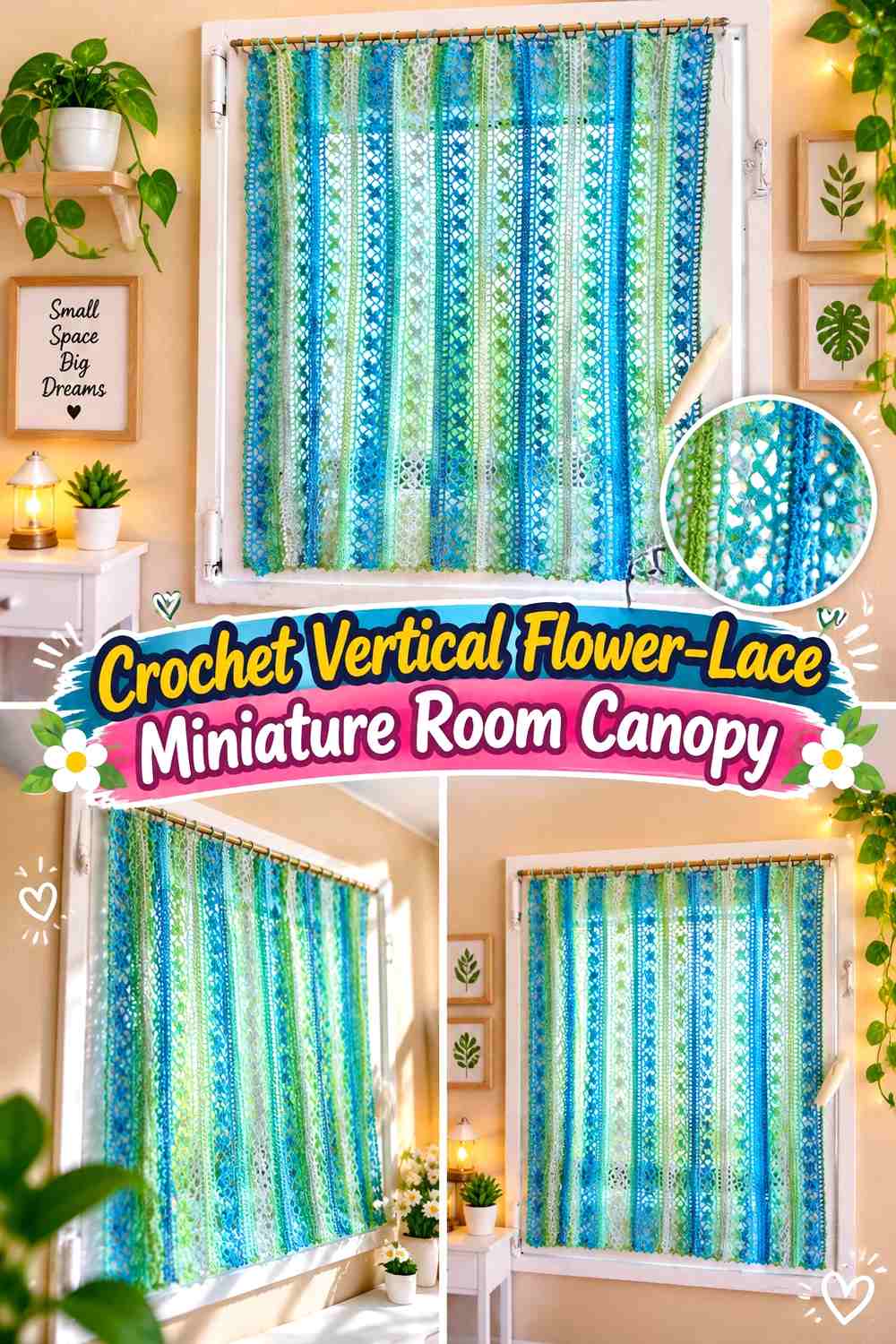
Vertical lace panels create the classic impression of fabric descending from an overhead frame. Silk & Wool’s curtain tutorial uses a flower-based open stitch worked sideways so the finished design and color changes appear as vertical bands when hung.
That construction translates well to miniature canopy sides. Use Celery Cream for broader floral sections and Sangria Plum as narrow vertical accents, then hang two short panels from the head corners or four restrained panels from each canopy post. The open flower stitch leaves the miniature bed visible while still establishing a clear textile enclosure. Because the source fabric is worked sideways, resizing requires careful orientation: adding rows in the original working direction may change a different dimension than you first expect once the piece is turned for hanging.
Use the Vertical Lines to Make the Room Feel Taller
In a small dollhouse bedroom, long vertical stripes can visually connect the canopy top with the floor or bed base. Even short drapes can create this effect when the flower repeats align downward.
Keep the Sangria Plum bands relatively narrow if the room already has a dark wall or bed frame. Wider dark stripes can make a shallow miniature box feel visually narrower.
Decide How Far the Panels Should Drop
A miniature canopy does not need floor-length curtains. Short panels ending near the mattress can suggest drape without hiding the furniture legs or surrounding décor.
Cut a paper strip to each possible length and view the scene from the normal display angle. The most convincing scale often uses less fabric than a full-size canopy would proportionally suggest.
Block the Flower Columns Straight
A vertical lace repeat advertises even minor waviness because the viewer can compare it directly with bed posts and room corners.
Block the panels before mounting and use straight guide lines rather than pulling them into position afterward. If the crochet must be stretched significantly to look straight, the finished miniature will probably remain under uneven tension.
Creator Credit: Silk & Wool
6. Crochet Sangria Heart-Filet Miniature Room Canopy
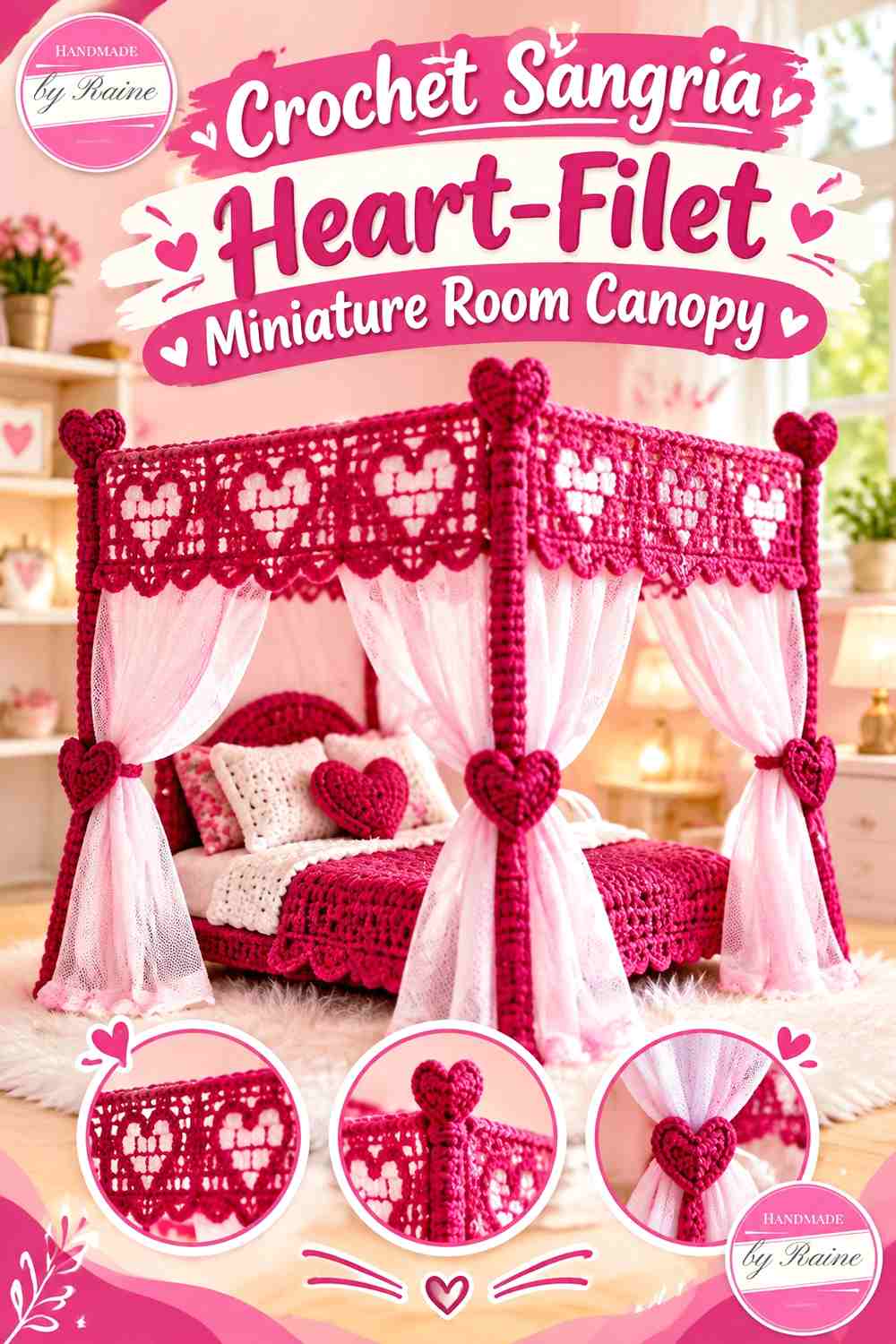
Filet crochet offers a flatter way to introduce recognizable imagery. HandmadebyRaine’s Heartstrings Curtain uses open and filled filet areas to create repeating hearts and includes a shaped lower border, giving this idea both a graphic motif and a decorative hanging edge.
For a miniature canopy, Sangria Plum hearts can appear across a Celery Cream panel suspended at the head of the bed, or the complete filet section can form one short canopy side. The design is less bulky than separately attached hearts because the motif is created inside the fabric itself. That makes it useful when the miniature room has limited depth. The main limitation is motif size: a filet heart needs enough grid cells to remain recognizable, so an extremely tiny room may not accommodate several complete repeats without using very fine thread.
Preserve Complete Hearts Instead of Cropping the Grid
The heart exists because specific open and filled blocks work together. Removing arbitrary columns to force the panel into a smaller space can make the image unclear.
Determine the width of one finished repeat first. If only one or two hearts fit the miniature canopy, use them intentionally rather than attempting to compress a larger sequence.
Let Cream Provide the Negative Space
A cream-dominant filet field with plum hearts keeps the open blocks visually light and makes the darker motifs easier to identify from the front of the room box.
A full Sangria Plum panel can be dramatic, but the small open cells may visually merge against a dark background. Test the swatch against the actual miniature wall color rather than judging it on a white work surface.
Use the Shaped Edge Selectively
The source curtain includes a shaped lower finish. On a miniature canopy, that decorative silhouette can be attractive at the headboard or outer edge but may become excessive on every side.
Choose one face as the focal edge. Keeping the remaining canopy boundaries straight gives the heart panel room to look intentional instead of surrounding the tiny bed with multiple competing points.
Creator Credit: HandmadebyRaine
7. Crochet Celery Repeating-Lace Ceiling Miniature Room Canopy
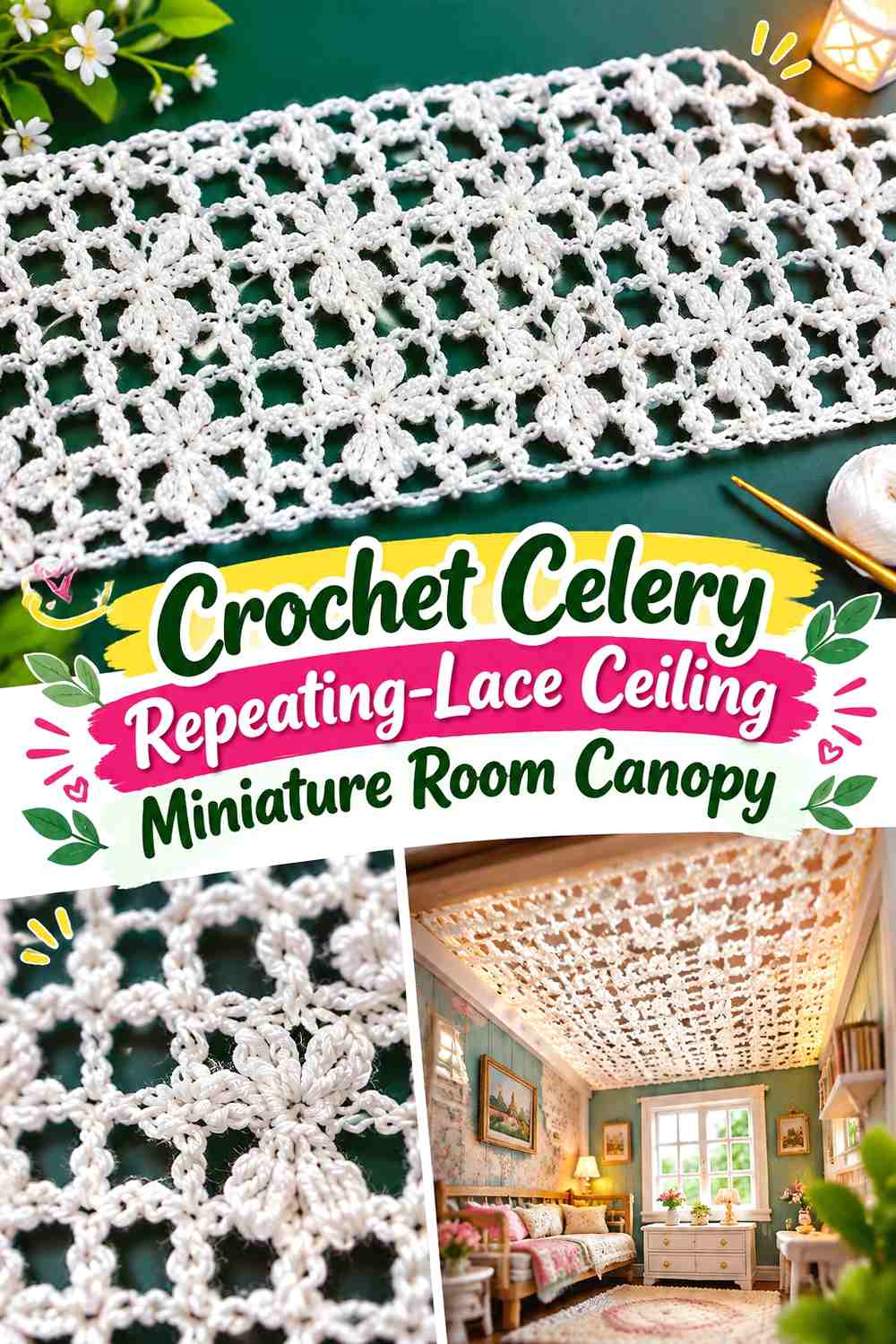
A continuous lace panel is useful when the canopy should read as one coherent textile rather than a grid of obvious motifs. Beautiful Crochet Stuff’s curtain tutorial uses a repeating openwork pattern designed to expand by adding pattern repeats and rows, providing a flexible source for a rectangular miniature canopy ceiling.
Celery Cream is well suited to the main lace because it keeps the overhead surface light, while Sangria Plum can form a narrow outer frame or one restrained central stripe. This concept works particularly well over a detailed miniature bed where flowers, hearts, or geometric motifs would compete with the bedding. Because the stitch repeat itself is the decoration, proportion is determined by the size of each openwork unit. Swatch the complete repeat in your proposed thread before deciding whether the source design can be reduced convincingly.
Let the Lace Repeat Determine the Final Width
Continuous patterns cannot always be stopped at any arbitrary stitch without changing the edge structure. Calculate how many whole repeats fit inside the miniature template.
If a slight gap remains between the panel and canopy rails, a narrow border or small mounting space can be preferable to altering the lace repeat in a way that creates an uneven side.
Keep the Border Visually Thin
A Celery Cream open center can lose its delicate appearance if surrounded by several thick Sangria rounds. The border should define the rectangle rather than become its largest visual component.
Compare border width with the individual lace repeat. If the edging is nearly as wide as one motif unit, it may look disproportionately heavy in the miniature setting.
Check Transparency From the Display Angle
An overhead canopy is often viewed at an angle rather than straight through. Open areas that look generous when held against a window may visually close when seen against a miniature ceiling or dark back wall.
Place the swatch above the actual bed and view the room from its normal display position. This reveals whether the lace still appears open enough.
Creator Credit: Beautiful Crochet Stuff
10. Crochet Celery Petal-Crown Miniature Room Canopy
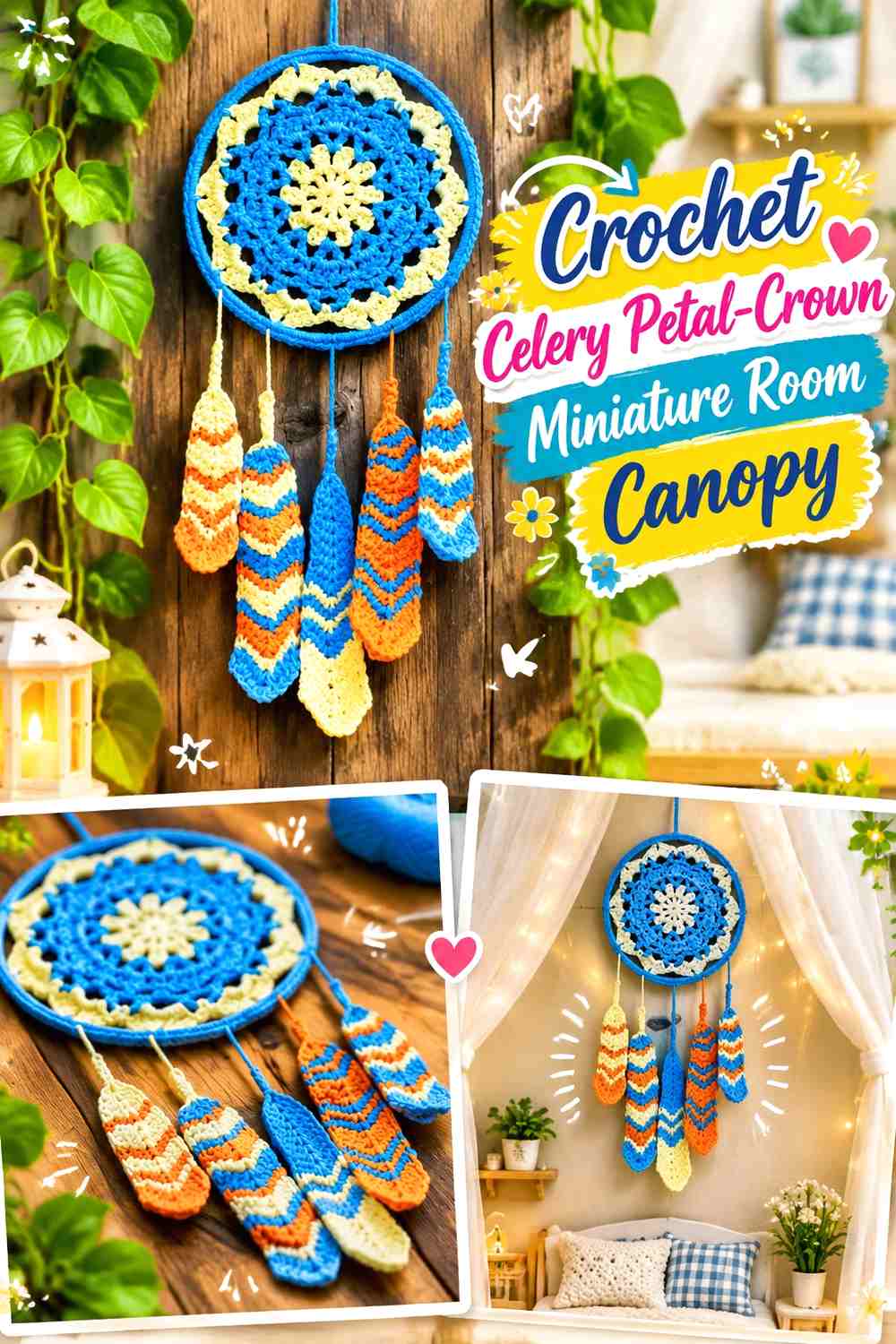
Another ring canopy can emphasize petal shapes rather than a dense mandala. It’s So Corinney’s crochet dream catcher builds a flower-like crochet center and secures its outer points to a metal ring, creating a distinctly petaled radial structure.
Adapted overhead, the Celery Cream petals can form the crown of a miniature bed canopy while Sangria Plum wraps or outlines the ring. This produces a lighter result than a solid ceiling panel and leaves the center of the room visually open. It works particularly well when you want a canopy that reads from above and from the front rather than relying on long curtains. Because the ring construction provides a strong circular boundary, additional hanging details should remain restrained; too many strands can obscure the clean relationship between petals and hoop.
Make the Ring Part of the Color Design
Covering or visually integrating the hoop in Sangria Plum turns it into a deliberate border around the cream crochet rather than an exposed support component.
Keep the covering smooth enough that it does not enlarge the ring disproportionately. At miniature scale, a thick wrapped edge can look more like a padded frame than a delicate canopy crown.
Position the Petals Symmetrically Over the Bed
The petal tips create obvious radial reference points. Align one axis with the length of the miniature bed before fixing the canopy permanently.
A slight rotation may also work if it is clearly intentional, but an almost-centered arrangement can appear accidental. Photograph the mock-up from the front and above to compare both orientations before mounting it.
Resist Filling Every Gap With Decoration
The open spaces between petal points are part of the design. Adding beads, flowers, tassels, and multiple hanging chains to each gap can erase the radial clarity that makes this canopy distinct.
Use perhaps a few cream drops or plum strands at selected positions if additional drape is needed, leaving enough negative space for the crown shape to remain readable.
Creator Credit: It’s So Corinney
11. Crochet Two-Tone Mini Ring Miniature Room Canopy
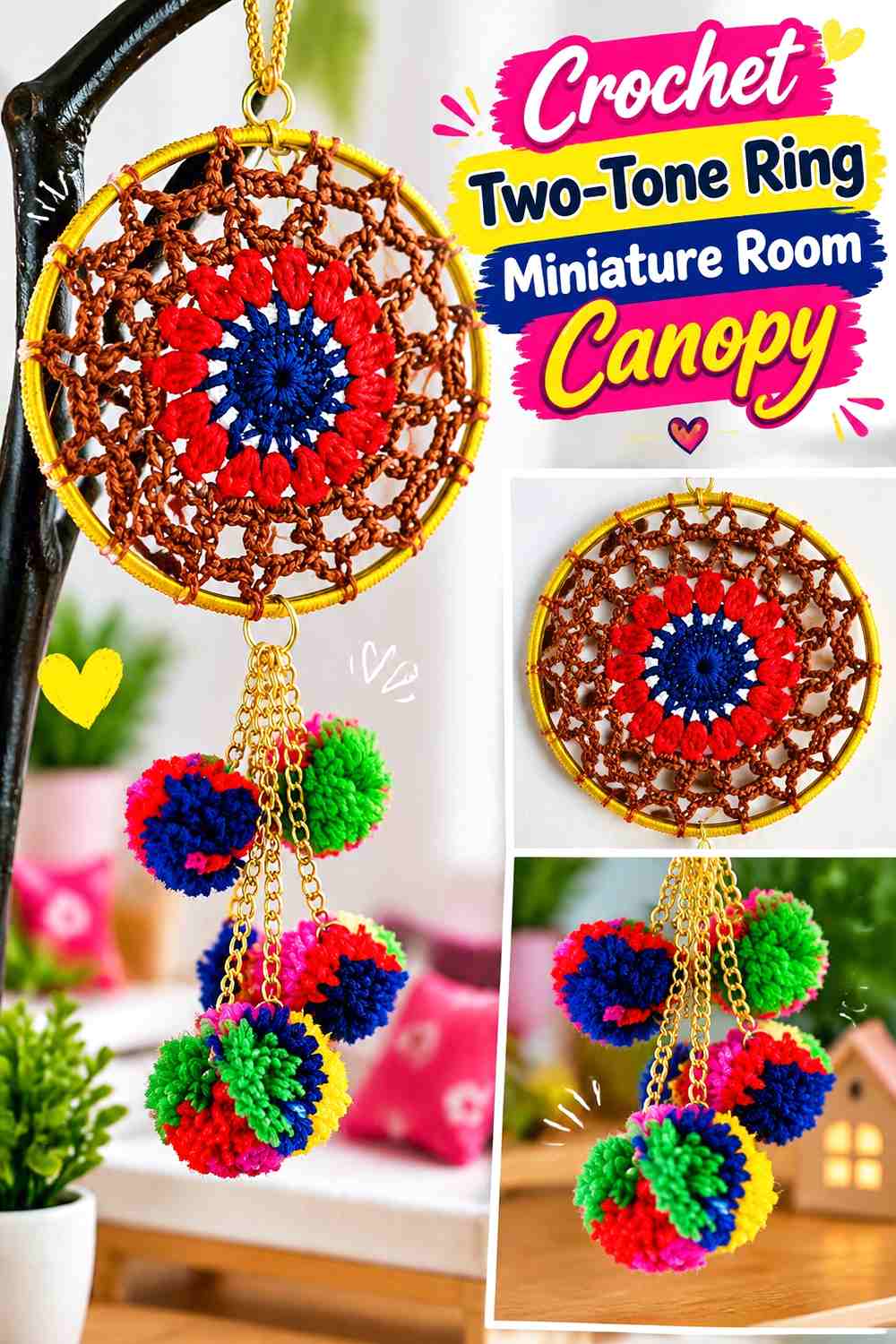
For an especially compact crown, AvyaStore’s mini dream catcher uses fine crochet thread, a small circular support, and a flower-centered motif, making it much closer in spirit to miniature work than most full-size hanging projects.
Use a Celery Cream floral center with Sangria Plum in the outer rounds so the dark color sits near the supporting ring. Suspended horizontally over a tiny chair, bassinet-style doll bed, or miniature reading nook, the ring can suggest a canopy without requiring full curtains. It also offers a useful option for rooms too small to accommodate four tall canopy posts. Because the source includes additional hanging decoration, decide whether those details belong in your room adaptation; a miniature overhead canopy may need only the ring and a few carefully proportioned drops.
Match the Ring Diameter to the Furniture Below
A circular canopy should relate to the footprint of the bed or seating area, not simply to the overall room width. Too small and it looks like a ceiling medallion; too large and it visually swallows neighboring furniture.
Cut several paper circles first and suspend them at the proposed height. This quick comparison is more reliable than choosing a hoop based only on what is readily available.
Use Two Colors Within the Radial Rounds
A circular motif naturally divides color by round. Celery Cream at the center followed by a controlled Sangria outer section creates depth without requiring many scattered color changes.
Avoid alternating every tiny round unless the motif remains clear at viewing distance. In miniature work, frequent narrow stripes can blend into visual noise rather than looking distinctly two-tone.
Limit Loose Hanging Parts in Play Miniatures
Small hoops, pompoms, beads, and suspended strands can be appropriate for an adult display but require additional consideration when the miniature will be handled as a toy.
If the room is intended for play, simplify the canopy and secure every component appropriately for its intended user. Decorative display techniques should not automatically be treated as child-safe construction.
Creator Credit: AvyaStore
12. Crochet Hanging Floral-Vine Miniature Room Canopy
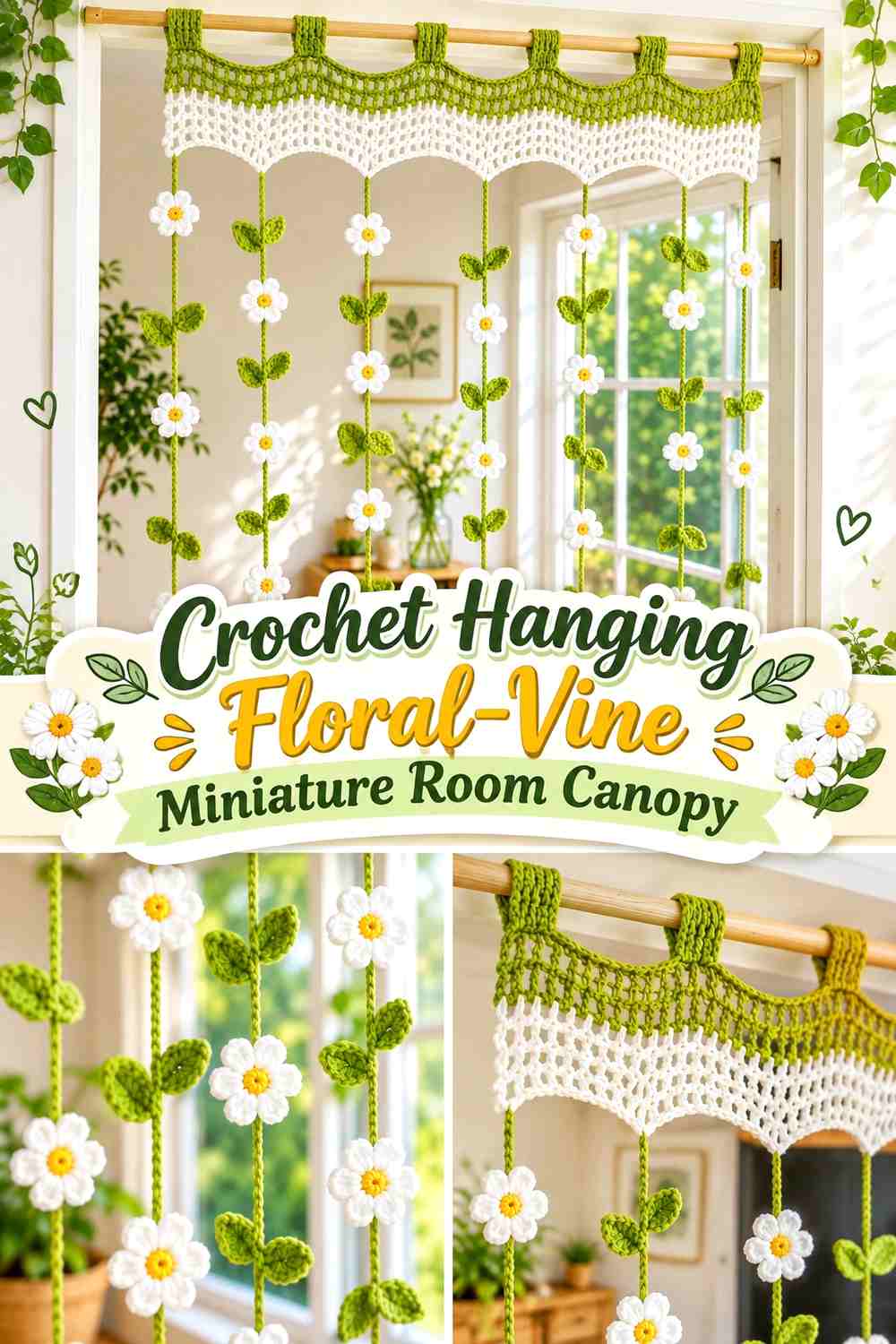
A canopy made from individual hanging strands creates the least solid enclosure in the collection. Yarnimals Crochet’s flower-curtain tutorial combines an open upper valance with independently hanging branches decorated with leaves and flowers, providing a useful structural reference for a miniature botanical canopy.
Scale the idea down by placing a short Celery Cream valance above the head of the bed and suspending several Sangria Plum floral strands or mixed plum-and-cream vines beneath it. Because the branches remain separate, the background wall and furniture stay visible between them. This works especially well for a fantasy, garden, or romantic miniature room where a conventional four-post canopy would feel too formal. The individual strands also allow easy control over density, but too many can tangle or create a dark fringe when packed closely together.
Vary the Strand Lengths Deliberately
Identical hanging lengths create a straight curtain edge, while graduated vines produce a softer arch or cascading effect. Decide which silhouette suits the miniature bed before crocheting multiple strands.
A few length variations usually read more clearly than many tiny differences. At dollhouse scale, subtle changes can disappear once the strands are viewed together.
Keep the Flowers Smaller Than the Vine Spacing
A floral strand should still contain visible open space. If each flower is wider than the gap between neighboring vines, the canopy begins to resemble a dense motif wall.
Make one complete flower first and lay several paper markers at the proposed spacing. This shows whether the flowers will overlap visually before you invest in enough motifs for the full canopy.
Anchor the Upper Valance More Firmly Than the Vines
The hanging strands depend on the top section to keep their spacing. A wavy or unstable valance can cause several vines to bunch together even when each strand is made correctly.
Block the upper piece and establish its final mounting points before attaching the hanging elements. Then distribute the vines across the actual finished width rather than estimating their positions earlier.
Creator Credit: Yarnimals Crochet
Comparing the 12 Miniature Room Canopy Styles
For a traditional four-post appearance, the chevron, repeating lace, or shell-drape versions are the easiest concepts to read immediately as bed canopies. Flower lattice and vertical flower lace create softer enclosure while leaving more of the miniature furniture visible.
The rosette, heart-filet, and geometric screen ideas make the crochet itself a stronger decorative feature. Choose them when the bed area should act as the focal point of the room rather than simply receiving a light textile accent.
The three ring-supported designs use much less wall and floor space because the canopy is suspended from one central crown. They are particularly useful in compact rooms or over small furniture. The hanging floral-vine version creates the most open silhouette, replacing continuous curtains with separated decorative strands.
Conclusion
Sangria Plum and Celery Cream can support miniature room canopies ranging from structured geometric ceilings to soft flower lace and floating circular crowns. The most useful first decision is not the stitch pattern but the canopy architecture: four-post panel, side drape, decorative valance, ring crown, or independent hanging strands.
After choosing the silhouette, make one complete lace repeat, flower, or circular motif in the material you actually intend to use. Compare it with the miniature furniture before producing the remaining pieces. Small-scale crochet magnifies proportion problems, especially oversized borders, heavy motifs, and stiff hanging fabric.
Use the credited tutorials for each creator’s exact crochet construction. Treat the miniature sizing, suspension, frame compatibility, and color distribution as separate adaptation decisions based on the dimensions and purpose of your room.
Frequently Asked Questions
What thread or yarn works best for a crochet miniature room canopy?
There is no single correct weight because miniature scales vary. Fine crochet thread can make lace motifs look more proportionate in a small dollhouse, while larger doll furniture may accommodate lightweight yarn. The important step is to crochet one full motif or repeat and compare it with the miniature bed or room. Follow the source tutorial for its original materials, then swatch before substituting a thinner yarn or smaller hook.
Should Sangria Plum or Celery Cream be the main canopy color?
Use Celery Cream as the larger field when you want a light, airy canopy and Sangria Plum mainly for outlines, borders, flowers, or structural accents. Reverse that balance when the canopy should become one of the room’s strongest focal features. Dark colors often appear visually denser in a miniature interior, particularly in room boxes with limited light, so judge the combination inside the finished scene rather than only under bright work lighting.
How do I resize a full-size crochet curtain pattern for a dollhouse?
Do not simply divide every source measurement by the dollhouse scale. Crochet stitches and yarn thickness do not shrink mathematically in the same way as furniture dimensions. Instead, measure the miniature opening or canopy frame, crochet one complete stitch repeat with finer material, block it, and determine how many repeats fit. If the motif remains too large even with fine thread, choose a different design rather than distorting the original motif.
Is a rectangular or circular canopy better for a small miniature room?
A rectangular canopy relates naturally to a four-post bed and can cover most of the mattress footprint. A circular ring canopy occupies less structural space and can work above a small bed, chair, or reading nook without requiring four posts. The circular version concentrates attention overhead, while rectangular designs create stronger side and corner lines. Choose according to the available room height and how much of the surrounding furniture you want to remain visible.
How can I make miniature crochet drapes hang more naturally?
Start with a flexible, appropriately fine material and avoid overly dense borders. Blocking can help establish the final shape, but tiny crochet may not have enough weight to drape like full-size fabric. Shorter panels, open lace, and gentle gathering are often more convincing than long stiff curtains. Test the panel while suspended rather than evaluating it only on a flat surface, because gravity and attachment spacing determine the final silhouette.
Can miniature crochet canopies be used in dollhouses meant for children?
That depends on the construction and the intended age and use. Display-oriented canopy designs may include small rings, beads, removable rods, long cords, or loosely attached motifs that are inappropriate for some play situations. For a play dollhouse, simplify the construction and avoid unsecured small or dangling components. The decorative tutorials in this article should not be assumed to provide toy-safety certification or child-specific mounting guidance.