Saffron Cream and Aubergine Smoke can turn the waist of a pleated skirt into either a quiet transition or a deliberately decorative focal area. The important distinction is structural. Ribbed elastic casings, folded waistbands, and firm crochet bands can sit close to the skirt and help organize the upper edge, while fan lace, flower squares, leaf motifs, heart links, and O-rings are better treated as decorative inserts layered around an already secure waist.
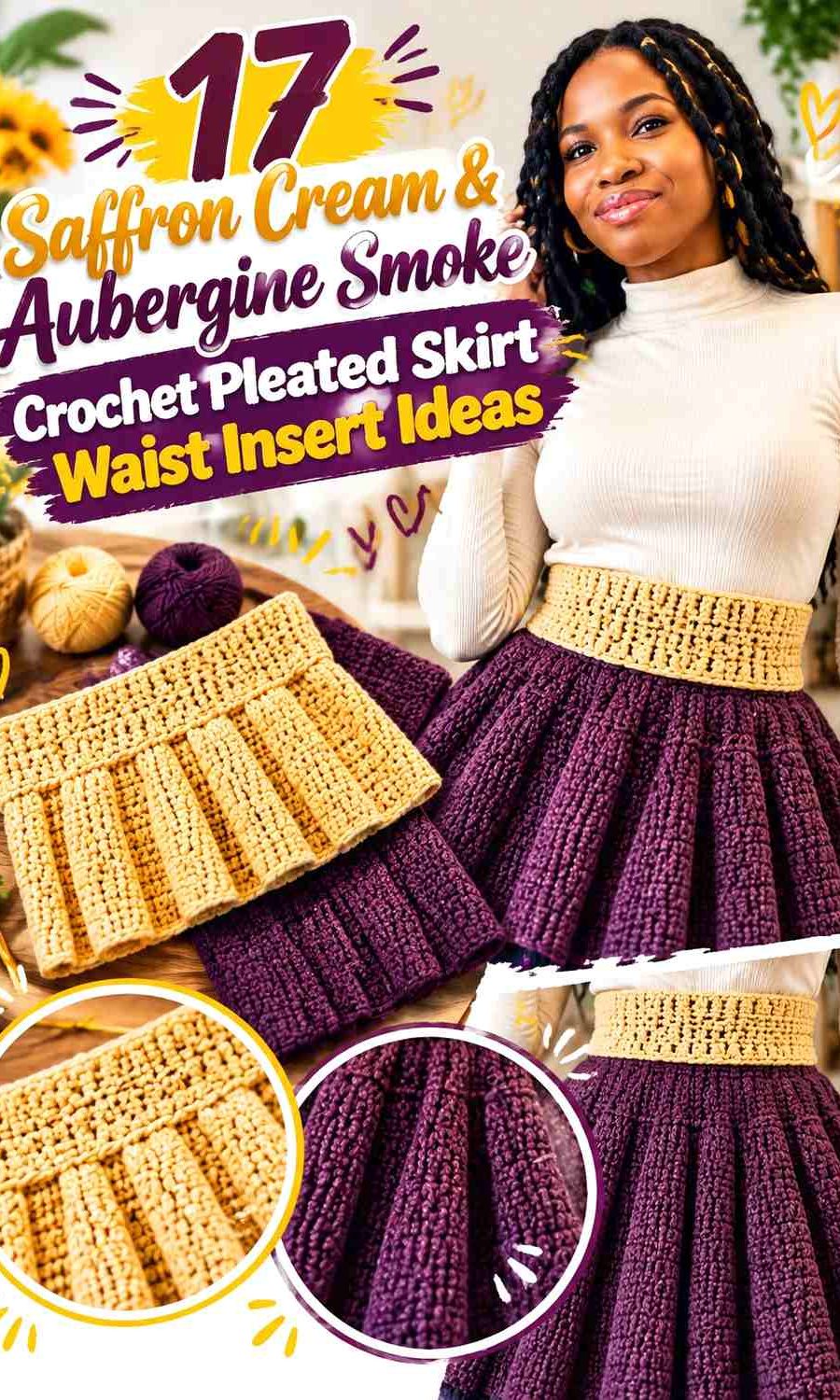
Pleats add another consideration. A waist treatment that is too stiff can flatten the upper folds, while a loose or heavy insert may sag between pleat attachment points. Width, stretch direction, closure, and where the crochet meets the skirt should therefore be planned together.
Several credited sources teach complete skirt waistbands; others teach belts and waist accessories with transferable shapes or closures. Follow each creator for the original crochet construction, then adapt attachment and structural support separately for the pleated skirt you are working with.
Quick List
- Crochet Saffron Pleated-Channel Waist Insert
- Crochet Aubergine Ribbed-Elastic Waist Insert
- Crochet Two-Tone Direct-Elastic Waist Insert
- Crochet Saffron Folded-Casing Waist Insert
- Crochet Aubergine Back-Loop Ring Waist Insert
- Crochet Two-Tone Picot Drawstring Waist Insert
- Crochet Aubergine Low-Profile HDC Waist Insert
- Crochet Saffron Clasped Braided Waist Insert
- Crochet Two-Tone Fan-Lace Waist Insert
- Crochet Saffron Shell-Edge Waist Insert
- Crochet Two-Tone Flower-Square Waist Insert
- Crochet Aubergine Corset-Laced Waist Insert
- Crochet Saffron Leaf-Garland Waist Insert
- Crochet Aubergine Tunisian Buckle Waist Insert
- Crochet Saffron Heart-Link Waist Insert
- Crochet Two-Tone Tassel-Tie Waist Insert
Separate Waist Support From Decorative Crochet
A pleated skirt needs a dependable upper structure because the waistband carries the skirt while also controlling where the pleats begin. Some crochet constructions can be part of that structure, particularly when the original skirt tutorial already includes elastic, a folded casing, or a fitted ribbed waistband. Decorative lace belts and motif strips should be evaluated differently. Their job may be to cover a waist seam or add color rather than carry the weight of the skirt.
Before adapting an idea, identify what currently holds the skirt in place. If elastic, a sewn waistband, lining, or another stable structure already performs that job, a crochet insert can remain primarily decorative. If you are replacing the waistband itself, use a garment-specific construction and verify fit carefully.
Do not expect open hearts, leaf chains, O-rings, or airy fan lace to behave like firm elastic simply because both sit at the waist.
Protect the Pleats From Unwanted Stretch or Compression
Pleats need room to fall away from the waistband. An insert that pulls tightly across their upper edges can flatten them, while a crochet band that stretches substantially during wear can allow the entire pleated section to drop lower than intended.
Look at the point where each pleat is secured. A narrow waist treatment can end above that area, while a deeper insert may overlap the pleat heads and become part of their visual design. Either approach can work, but test the skirt both standing and sitting.
Color placement can help clarify the division. Aubergine Smoke makes an effective darker structural band above Saffron Cream pleats, while a cream insert with aubergine details creates a lighter transition. If the skirt fabric is already patterned, use fewer crochet color changes so the waist does not become visually fragmented.
Plan Closures and Stretch Before Final Attachment
Elastic, drawstrings, clasps, buckles, lacing, and ties create very different fit systems. A waistband with enclosed elastic can expand over the hips and recover at the waist. A fixed clasp requires more exact finished circumference. Lacing provides adjustment but still needs a correctly sized main panel, while long ties tolerate more variation.
This matters particularly with pleated skirts that must pass over the hips unless they also have a zipper or another opening. A beautiful fixed crochet insert that fits the waist but cannot pass over the body is not a practical replacement for the original closure.
Finish and, where appropriate for the selected yarn, block a representative crochet sample before making permanent decisions. Check lengthwise stretch as well as width. A band that looks stable lying flat may lengthen noticeably when it carries the weight of a skirt.
1. Crochet Saffron Pleated-Channel Waist Insert
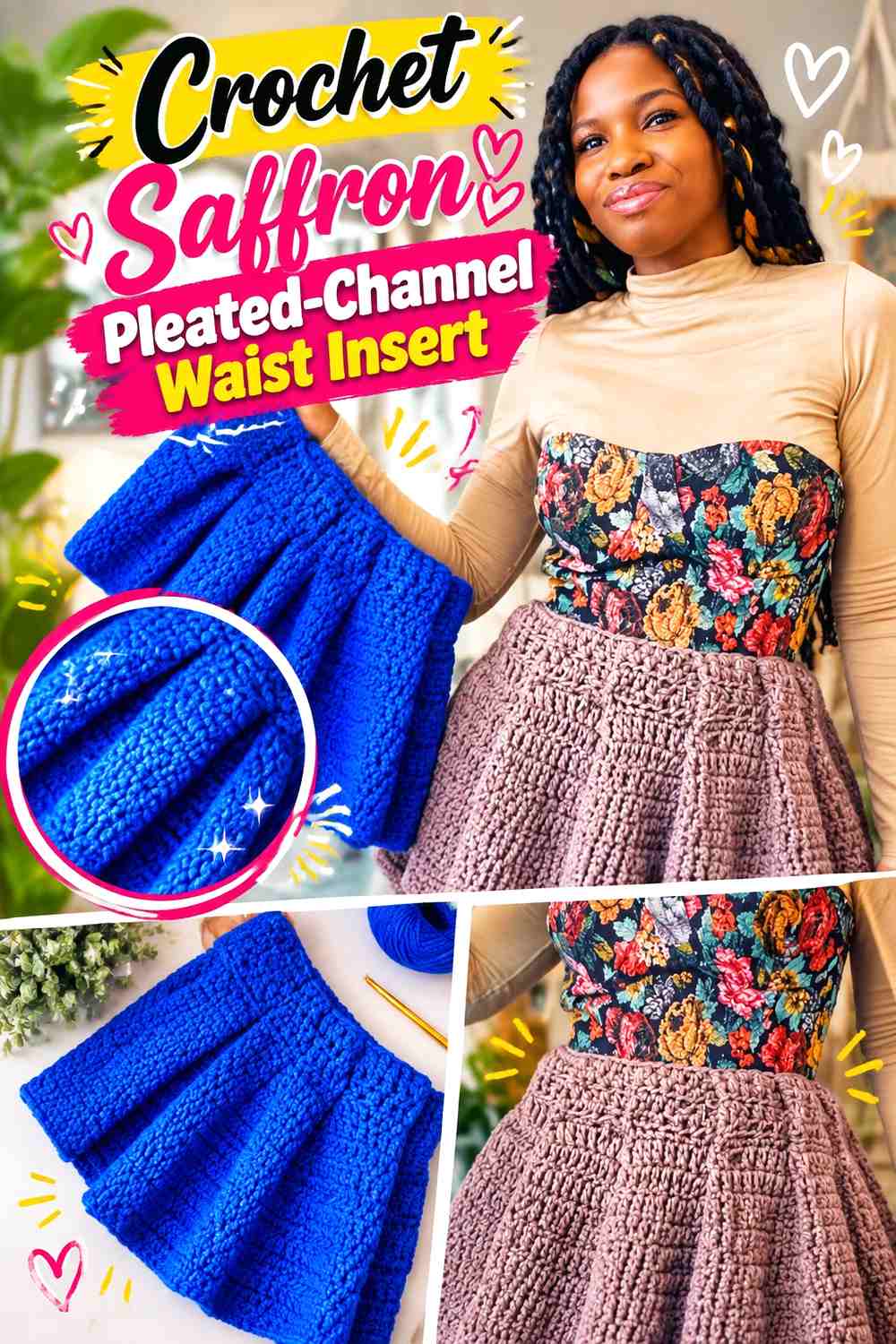
The Dream Crochet Channel teaches a waistband specifically designed around pleating, including measuring a longer crochet section before folding it into the pleated waist treatment and attaching it as the start of a skirt. That makes this the most directly matched source in the collection for a crochet insert that visually continues the pleated construction itself.
For a Saffron Cream and Aubergine Smoke version, use cream as the visible pleated face and reserve aubergine for a narrow upper line or joining area. This lets the folded structure remain easy to read while the darker shade defines the waist. Choose this idea when you want crochet to participate in the pleat architecture rather than simply cover the finished waistband. Because folding changes the effective length of the crochet, use the creator’s measurement method rather than treating a flat strip as the final waist circumference.
Let the Crochet Pleats Match the Skirt Rhythm
The crochet does not need to reproduce every fabric pleat exactly, but the two rhythms should look related. Compare the spacing of the finished crochet folds with the pleat heads directly beneath them before final attachment.
If several small crochet pleats sit over one large skirt pleat, make that relationship consistent across the whole waist. Irregular transitions will be more noticeable in two contrasting colors because each fold casts its own shadow.
Keep Aubergine Smoke at the Stable Edge
A darker narrow upper edge can visually contain the softer cream folds and make the insert look more deliberate. It also avoids breaking every Saffron Cream pleat with repeated color changes.
If the upper edge will carry meaningful tension, judge its stability by construction and yarn behavior rather than color. Decorative contrast should support the structure visually, not be mistaken for structural reinforcement.
Creator Credit: The Dream Crochet Channel
2. Crochet Aubergine Ribbed-Elastic Waist Insert
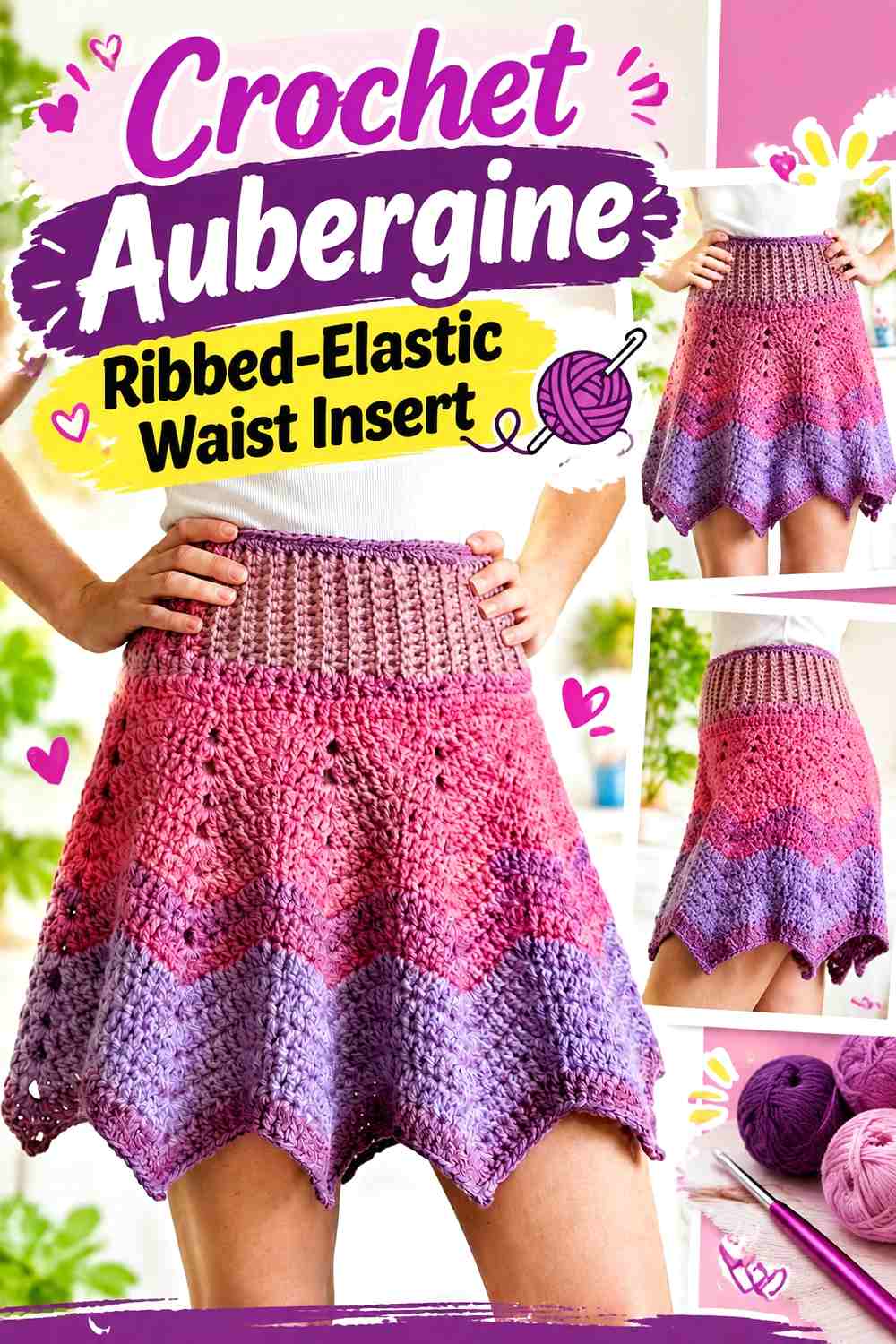
Alextitia Tuto Crochet’s skirt tutorial builds a ribbed waistband in back-loop single crochet, joins the band, and later inserts and secures elastic at the waist. The combination of visible ribbing and hidden elastic provides a useful model when the crochet needs to look handmade while the elastic handles much of the practical fit.
For a pleated skirt, work the ribbed insert primarily in Aubergine Smoke and introduce Saffron Cream as one narrow border or small center stripe. Vertical-looking rib texture can give the upper skirt definition without adding open holes or dimensional motifs. This style is particularly useful when the pleats themselves already create considerable movement and texture. Before adapting it, make sure the waistband depth does not extend so far over the pleat heads that it flattens them.
Check the Rib Direction Under Stretch
A ribbed waistband changes appearance as it expands. Place a sample around the waist position at both relaxed and gently stretched circumferences and look at how widely the ribs separate.
If the Saffron Cream accent sits between ribs, stretching can make that light section far more visible than expected. Color proportions should therefore be judged at wearing tension rather than only when the piece is flat.
Let the Elastic Determine Fit
Crochet ribbing and elastic do not necessarily stretch or recover at identical rates. When the construction includes elastic, let the elastic perform the fit role intended by the tutorial.
Avoid deliberately undersizing the crochet so severely that the yarn remains under constant maximum stretch. That can change the rib texture and put unnecessary stress on joins around the pleated skirt.
Creator Credit: Alextitia Tuto Crochet
3. Crochet Two-Tone Direct-Elastic Waist Insert
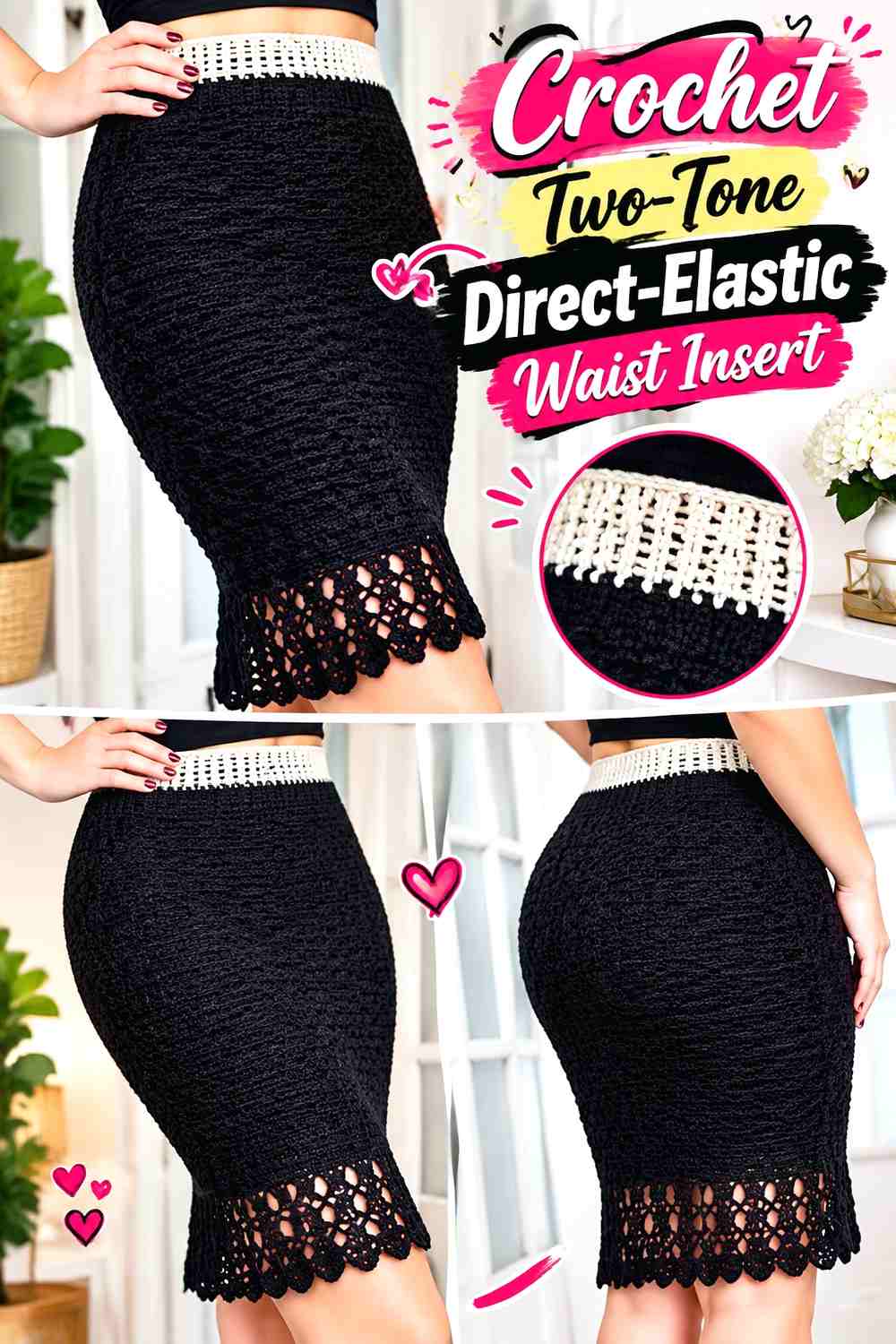
Malu Santarelli Crochê demonstrates a waistband intended for attaching elastic directly to a crochet skirt. The tutorial focuses specifically on the waist treatment rather than using a decorative belt as a substitute, making it a useful reference when the insert should stay close to the body and work with elastic.
A two-tone version can use Aubergine Smoke where the elastic attachment needs to remain visually quiet and Saffron Cream along the visible outer edge. This creates a cleaner color transition than alternating every row. Compared with a folded casing, the direct-elastic concept can keep the waist visually compact, which is helpful when you want the pleats to begin close to the natural waist instead of below a deep band. Use the original tutorial for the elastic integration rather than inventing attachment tension from appearance alone.
Keep the Pleat Heads Evenly Distributed
Elastic naturally gathers excess circumference, but a pleated skirt already has deliberate folds. Make sure the elasticized crochet does not redistribute those pleats unevenly around the body.
Mark key points such as center front, center back, and side positions before joining the waist treatment to the skirt. Balanced landmarks help keep the pleat arrangement intact while the waistband expands and contracts.
Use Color to Hide Functional Areas
Aubergine Smoke can visually recede at joins or elastic-related areas, leaving Saffron Cream as the decorative face. This is particularly useful if the skirt fabric is pale and you want the top edge to remain softly defined.
Do not rely on the darker yarn to conceal poor finishing. Inspect the inside as carefully as the outside, especially if the elastic is visible when the skirt is turned or hung.
Creator Credit: Malu Santarelli Crochê
4. Crochet Saffron Folded-Casing Waist Insert
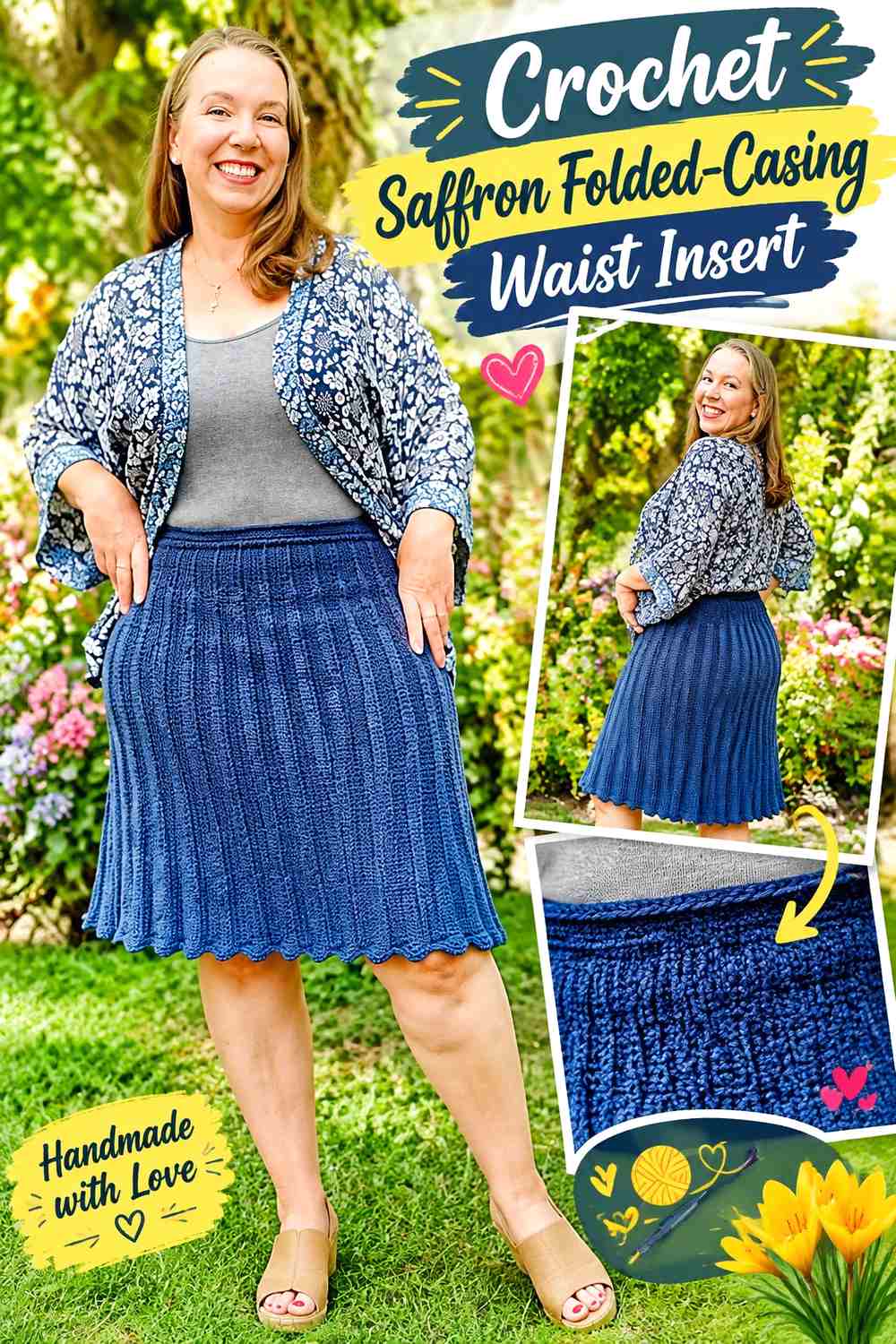
Two Brothers Blankets’ Paz Skirt includes a waistband worked onto the skirt, folded to create a casing, and finished with elastic inside that channel. The construction gives the waist a double layer of crochet while keeping the elastic enclosed.
For this insert, Saffron Cream can form the visible outer waistband while Aubergine Smoke appears only along the fold line or lower transition into the pleats. The result is more substantial than a direct-elastic edge and can create a polished horizontal break above a strongly pleated skirt. The trade-off is thickness: a folded crochet casing contains two layers plus elastic. If the skirt fabric is already heavy or the pleats are bulky at the waist, sample the full layered construction rather than evaluating one thickness of crochet.
Keep the Fold Consistent Around the Waist
A casing looks cleanest when its depth remains even. Small variation can create a wavering lower edge that becomes especially obvious above straight pleat heads.
Use removable markers at regular intervals while positioning the fold. Check the outer side before closing the complete casing so any uneven section can be corrected while it remains accessible.
Avoid an Oversized Double Layer
A deep waistband can be attractive, but doubling thick crochet may make the waist much more rigid than the skirt below it. Test how the band feels while sitting as well as standing.
If the source construction is being adapted with a different yarn, make a full folded sample. A yarn that seems soft in one layer can become surprisingly substantial when doubled around elastic.
Creator Credit: Two Brothers Blankets
5. Crochet Aubergine Back-Loop Ring Waist Insert
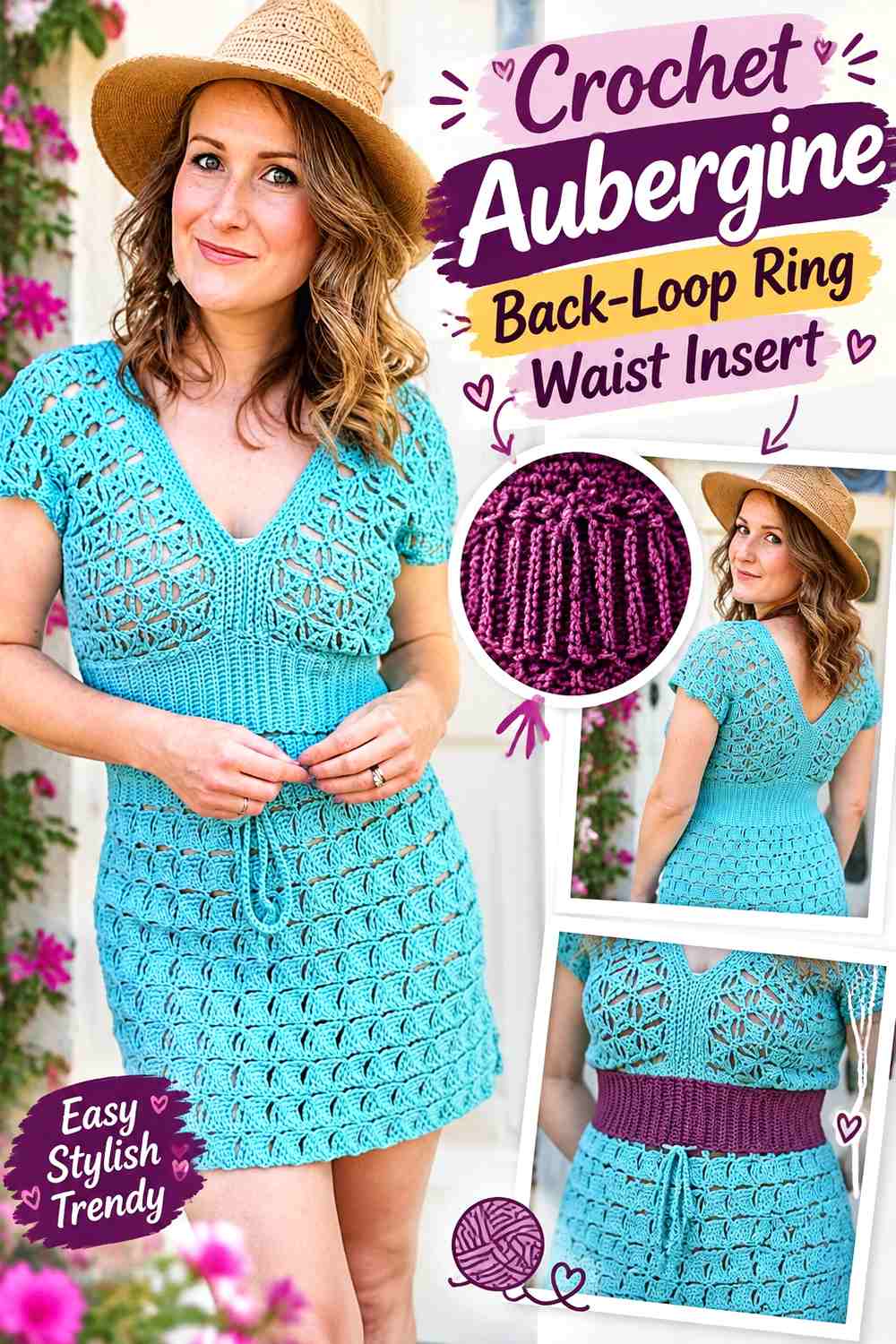
HanJan Crochet’s skirt begins with a waistband worked in back-loop single crochet rows and then joins the first and last rows to form a ring before the skirt continues from it. The source provides a clear example of a separate ribbed waist band functioning as the starting structure for a skirt.
An Aubergine Smoke band can create a strong dark frame above Saffron Cream pleats, especially when the skirt needs a relatively narrow waist treatment. Because the waistband is built lengthwise, its final circumference is controlled through the number of rib rows rather than through a long foundation round. This makes the texture visually different from post-stitch ribbing worked around the body. Before adapting the method, consider how the completed ring will pass over the hips or whether your skirt includes another opening.
Treat the Seam as a Placement Decision
The point where the first and last waistband rows join creates a natural seam. Positioning it at a side or back location can make it less visually prominent.
If the skirt has a zipper, side opening, or particularly important pleat alignment, plan the crochet seam around those existing features rather than placing it automatically at center back.
Use Cream Only Where It Helps Orientation
A narrow Saffron Cream marker stripe can identify center front or another reference point, but too much contrast may interrupt the continuous ribbed look.
If you want the band to feel tailored, keep most of it Aubergine Smoke and let the pleated skirt supply the lighter color below. The transition itself can provide enough contrast.
Creator Credit: HanJan Crochet
6. Crochet Two-Tone Picot Drawstring Waist Insert
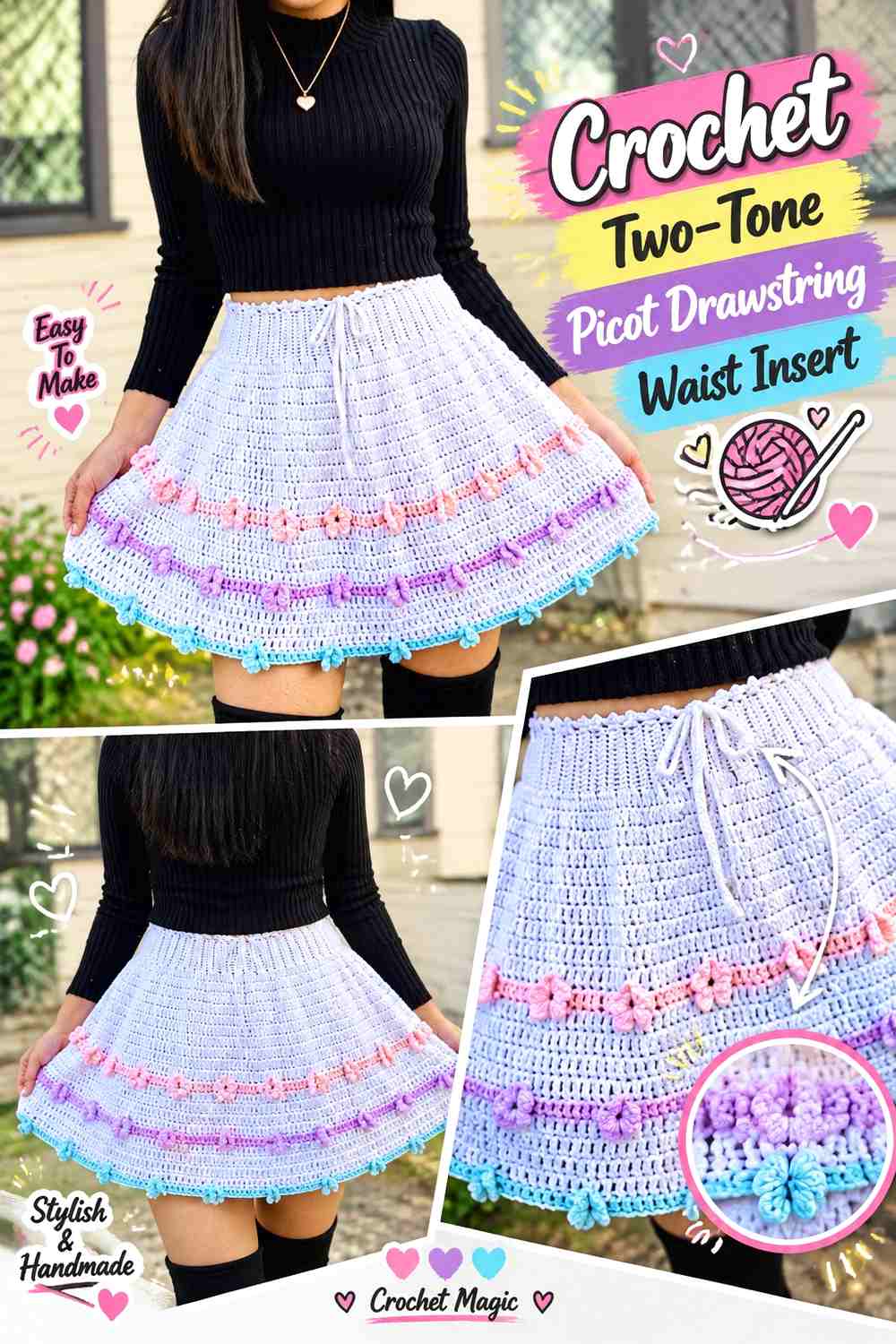
KnitcroAddict’s 3D flower skirt finishes the waistband with a picot-edged treatment and threads a crochet drawstring through chain spaces around the waist. The tie creates adjustability without enclosing conventional waistband elastic.
For a pleated skirt, use Saffron Cream for the main band and Aubergine Smoke for the picot edge and drawstring. That concentrates the darker color at the two most visible details while leaving the waistband light. This approach suits a skirt where some adjustability is useful and a tied bow fits the intended styling. A drawstring, however, gathers differently from elastic and can concentrate fullness toward the tie point. If your pleats need to remain evenly spaced, check how tightening the cord affects their distribution before treating this as the primary fit system.
Keep the Drawstring Channel Clear
The cord should move through its openings without snagging on color-change ends or bulky joins. Finish the inside of the waistband carefully before threading the final tie.
A thicker decorative cord may look attractive but gather the band less smoothly than the construction shown by the creator. Compare appearance and function rather than choosing cord thickness by color alone.
Decide Where the Bow Belongs
A center-front bow emphasizes the waist and becomes part of the skirt’s focal point. Moving it toward one side can keep the front pleats visually cleaner.
Try both positions with the skirt on. The correct location depends on how the pleats, pockets, and any other garment details are arranged, not on a universal rule for drawstring skirts.
Creator Credit: KnitcroAddict
7. Crochet Aubergine Low-Profile HDC Waist Insert
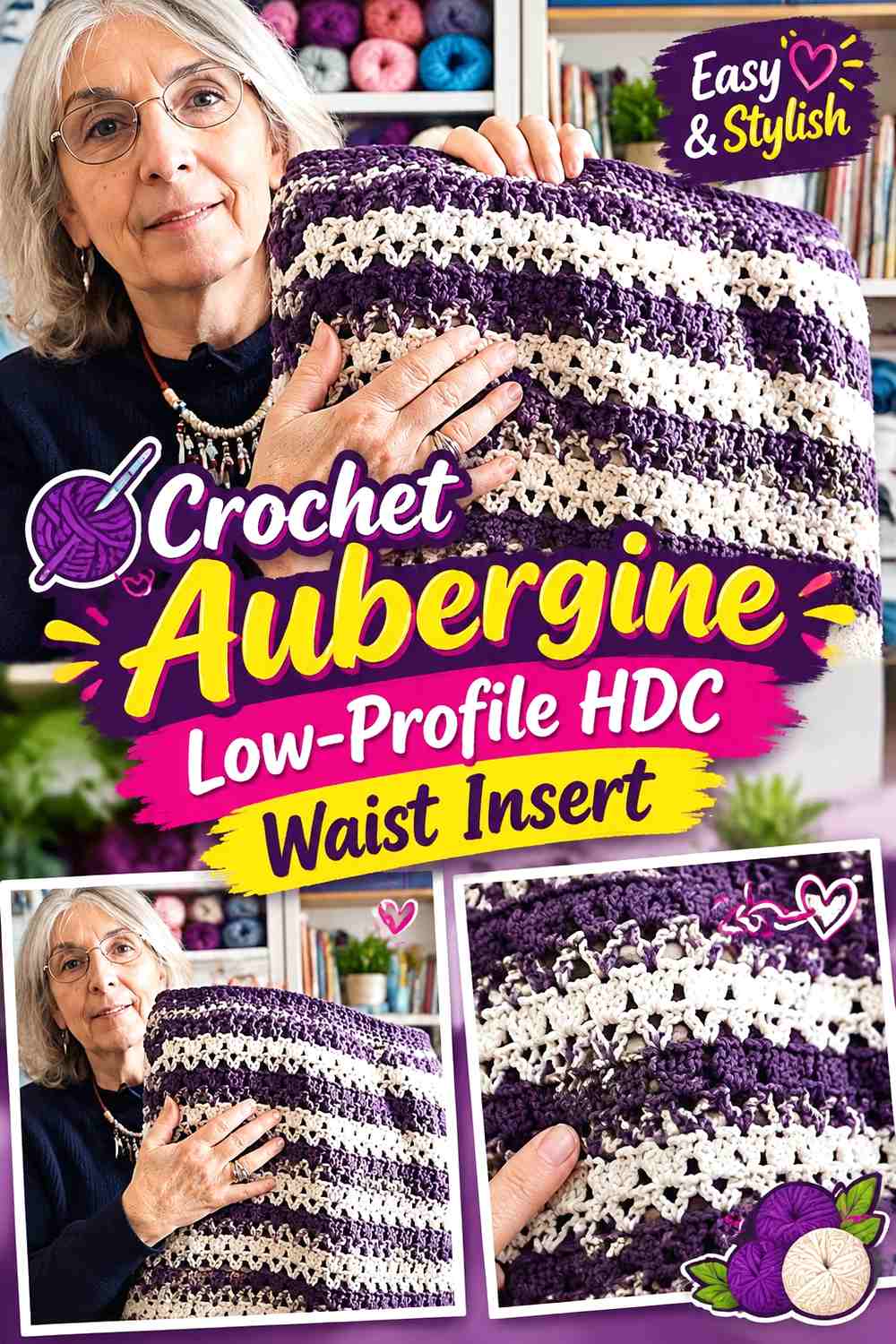
Sandra Stitches’ V-stitch skirt uses a smaller hook for a short waistband worked in half double crochet before transitioning to the more open skirt fabric. The creator specifically separates the firmer waist treatment from the decorative body, which is useful logic for a pleated-skirt adaptation.
For this insert, keep the waistband mainly Aubergine Smoke and place Saffron Cream at the lower edge where it meets the pleats. The shallow depth makes it appropriate when the pleat heads themselves should remain visible rather than disappearing under a broad crochet panel. This style is also a useful contrast to the corset and motif inserts later in the list: it does not need to become the focal point. Instead, it can provide a controlled transition between the skirt’s upper support and the more dimensional folds below.
A Smaller Hook Changes More Than Width
Using a smaller hook can make the waistband fabric firmer and less open than the surrounding crochet. If you substitute yarn, check the resulting hand of the fabric rather than assuming the same hook-size difference will produce the same effect.
The waistband should remain flexible enough to follow the body without becoming a rigid belt above soft pleats.
Keep the Lower Edge From Flaring
A waistband that is substantially tighter than the pleated section beneath it needs a clean transition between the two circumferences.
Distribute the pleat attachment points evenly and inspect the waist from all sides. If one section contains noticeably more fullness, the pleats may fan unevenly below the crochet band.
Creator Credit: Sandra Stitches
8. Crochet Saffron Clasped Braided Waist Insert
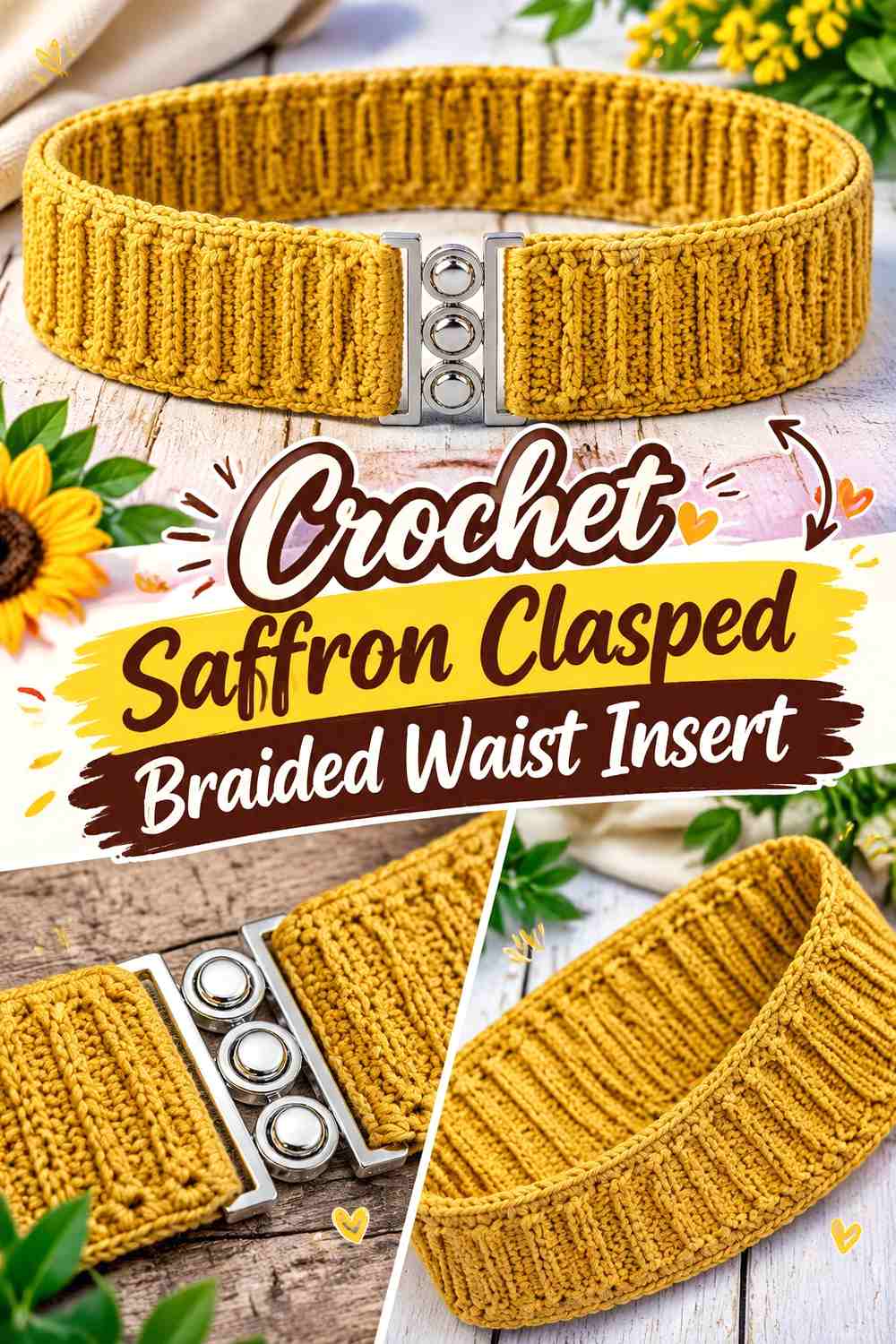
Yarn + Chai’s Crocheted Waist Belt is a broad flat band worked with half double crochet in the third loop, which creates a braided-looking surface, and it closes with a two-part clasp. The pattern is deliberately measured in relation to both the wearer and the chosen hardware.
Adapted as a decorative pleated-skirt waist insert, a Saffron Cream band can sit over an existing secure waistband while Aubergine Smoke is reserved for a narrow border near the clasp. This is a good option when you want crochet to resemble a tailored waist panel rather than lace. Because the clasp closes at a fixed point, it offers less sizing flexibility than a long tie or drawstring. Treat it as a decorative outer insert unless your skirt’s underlying structure is specifically designed around the same closure.
Let the Clasp Determine the Finished Width
Hardware imposes a practical limit on the crochet band. Choose the clasp before deciding that the insert should be wider or narrower than the source concept.
If the band is being placed over pleats, also make sure the clasp does not sit directly on a bulky fold. A smooth section at center front or side can give it a flatter foundation.
Watch Lengthwise Stretch
The source specifically notes that the belt can stretch, so fitting should account for the fabric under tension. A decorative waist insert that gradually lengthens may begin to sag across the pleat heads.
Test the complete strip around the skirt rather than only around the body. The skirt fabric underneath can change how much friction and support the crochet receives.
Creator Credit: Yarn + Chai
9. Crochet Two-Tone Fan-Lace Waist Insert
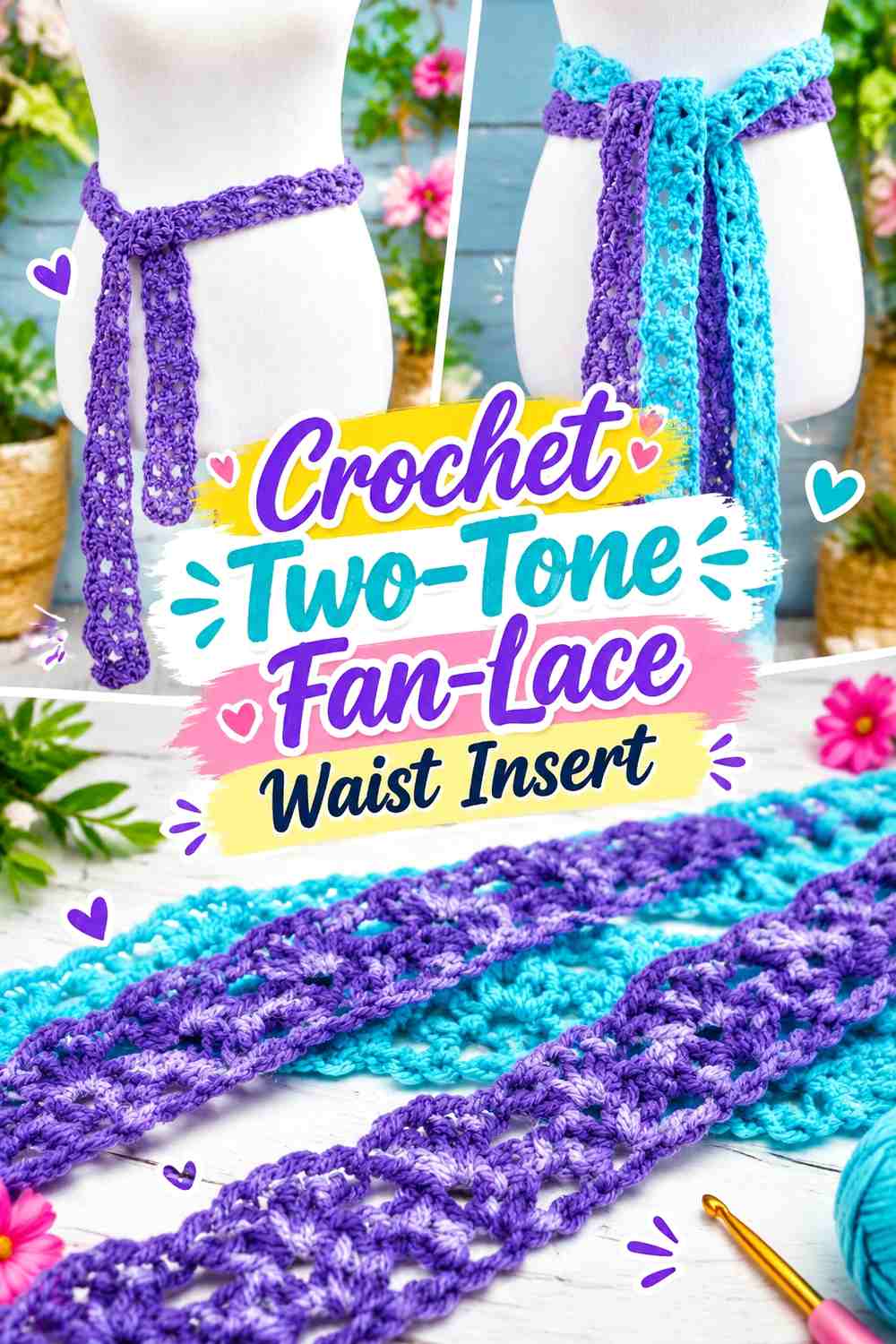
Fiber Flux’s Easy Lace Belt uses a simple repeating two-row fan construction and can be made wider by continuing the repeat. That continuous lace format provides a useful basis for a soft decorative insert positioned over a stable pleated-skirt waistband.
Use Saffron Cream for the larger fan shapes and Aubergine Smoke for a narrow upper or lower line. The open centers allow the skirt fabric to remain visible, helping the insert feel lighter than a solid band. This design is best treated as decorative rather than as the sole support for heavy pleats. Because fan lace repeats are obvious, plan the finished circumference in complete units wherever the source construction requires them. An awkward partial fan at the closure can look more noticeable than a small intentional gap covered by a tie or fastening area.
Keep the Fans From Collapsing Under Tension
Open lace changes shape when pulled lengthwise. Stretching the insert too firmly around the waist can narrow the fans and reduce the negative space that gives the pattern its character.
Pin a sample over the skirt at realistic wearing tension. If the motifs look compressed, use more length rather than depending on stretch to close the waist.
Let the Pleats Show Through
The openings can frame glimpses of the pleated skirt beneath, particularly when the skirt and crochet colors contrast.
Avoid adding an opaque backing automatically. If the goal is a true lace insert, the underlying folds can become part of the visual pattern, provided the lace does not catch on sharp hardware or rough seam allowances.
Creator Credit: Fiber Flux
10. Crochet Saffron Shell-Edge Waist Insert
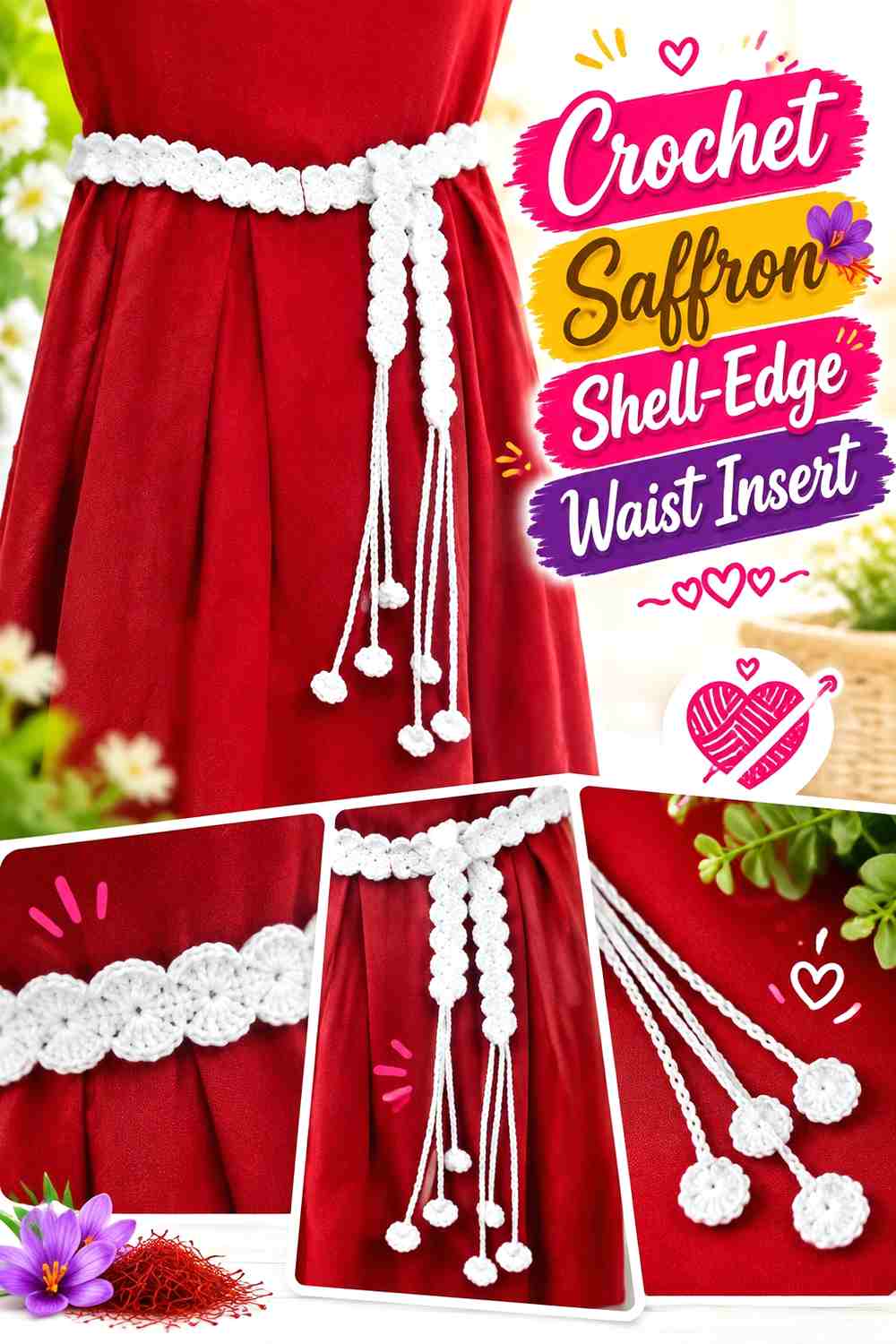
Gloriarte’s crochet belt uses repeated shell forms to create a narrow accessory whose curved stitches define both texture and silhouette. The tutorial is worked as a true belt rather than an unrelated edging sample, so it offers a useful reference for a scalloped waist insert layered around a pleated skirt.
Saffron Cream shells can sit against an Aubergine Smoke skirt waistband, or the colors can be reversed with a cream skirt. Because the shell outline is decorative on both edges, this treatment looks more ornamental than a straight ribbed band. It works best when the pleats begin slightly below the crochet so the scallops remain readable. If the skirt pleats rise directly underneath every shell point, the two repeating rhythms can compete.
Match Shell Scale to Pleat Scale
Large shells over many tiny knife pleats create a different effect from small shells over broad box pleats. Neither is automatically better, but the relationship should look intentional.
Make enough of the belt to show several shell repeats and hold it against the actual skirt. One isolated shell does not reveal how the rhythms will interact around the waist.
Keep the Waist Support Separate
Decorative shells create open areas and curved edges that are attractive precisely because they are not a dense conventional waistband.
If the skirt is heavy, retain an underlying structural waist solution rather than asking the scalloped lace to perform every job. The insert can conceal or decorate that support without replacing it.
Creator Credit: Gloriarte
11. Crochet Two-Tone Flower-Square Waist Insert
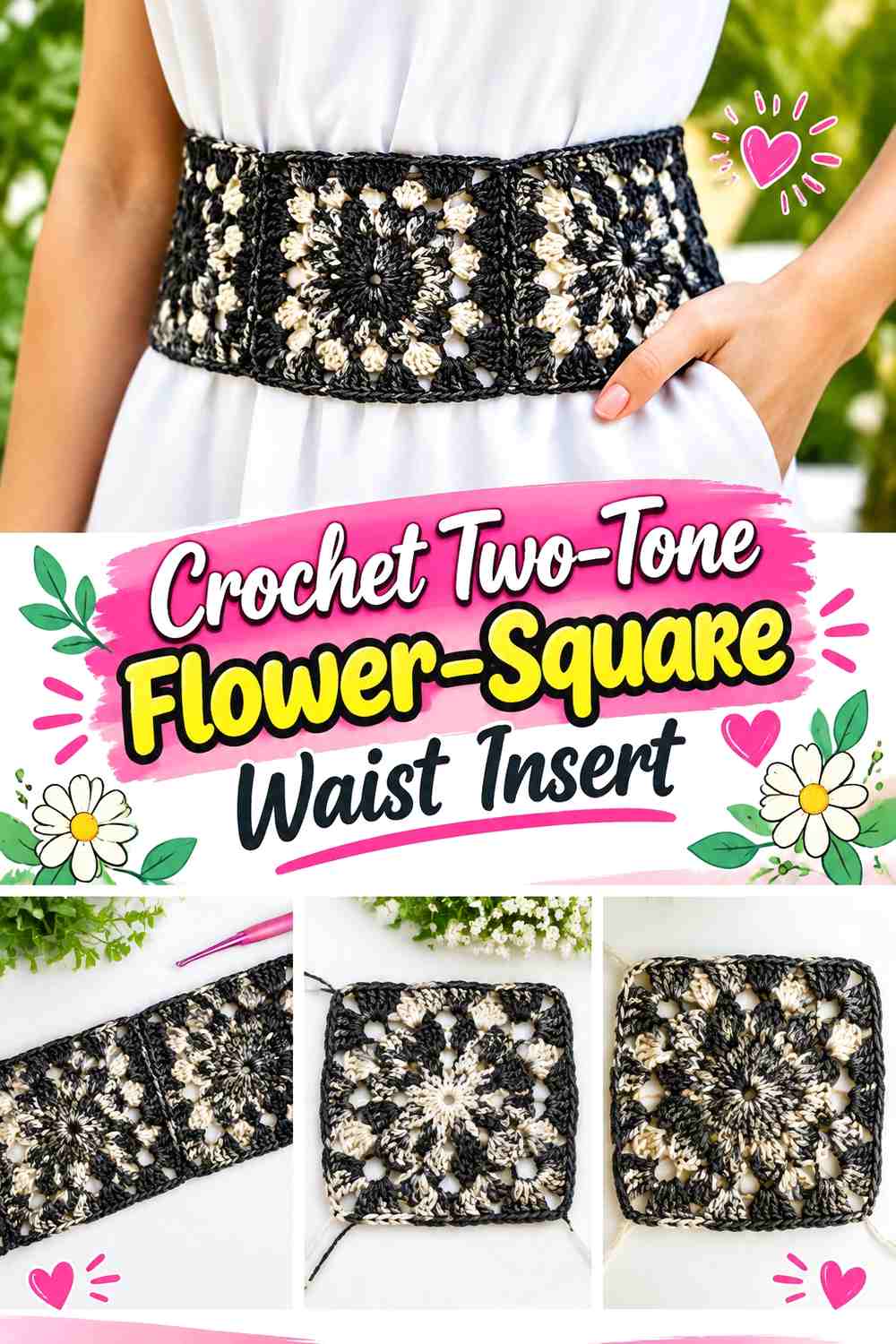
Nebeska Crochet with Love demonstrates a belt made from flower motifs framed inside individual squares, with several possible fastening approaches discussed in the tutorial. The modular structure makes each square a distinct sizing and color unit.
For this waist insert, work Saffron Cream flowers inside Aubergine Smoke square frames. Joined in one horizontal row, the dark outlines can form a strong waistband while the pale flowers provide repeated focal points above the pleats. This concept suits a skirt whose waist is meant to look handcrafted and decorative rather than minimal. Because each additional motif adds a complete block of length, sizing behaves differently from continuous ribbing. Finish and shape representative squares before deciding how many should span the front, back, or complete waist.
Center the Motif Run on the Pleats
A sequence of squares introduces obvious vertical joins. Compare those joins with the pleat centers beneath them.
You do not need one square per pleat, but a consistent relationship will help the two systems look connected. A centered front flower can also establish a useful visual starting point for the rest of the layout.
Keep Joins Flexible
Motif seams can become stiffer than the squares themselves, particularly if several yarn tails accumulate at each connection.
Inspect a joined sample around the curved waist rather than only flat. If every seam forms a hard hinge, the band may look segmented instead of flowing smoothly over the skirt.
Creator Credit: Nebeska Crochet with Love
12. Crochet Aubergine Corset-Laced Waist Insert
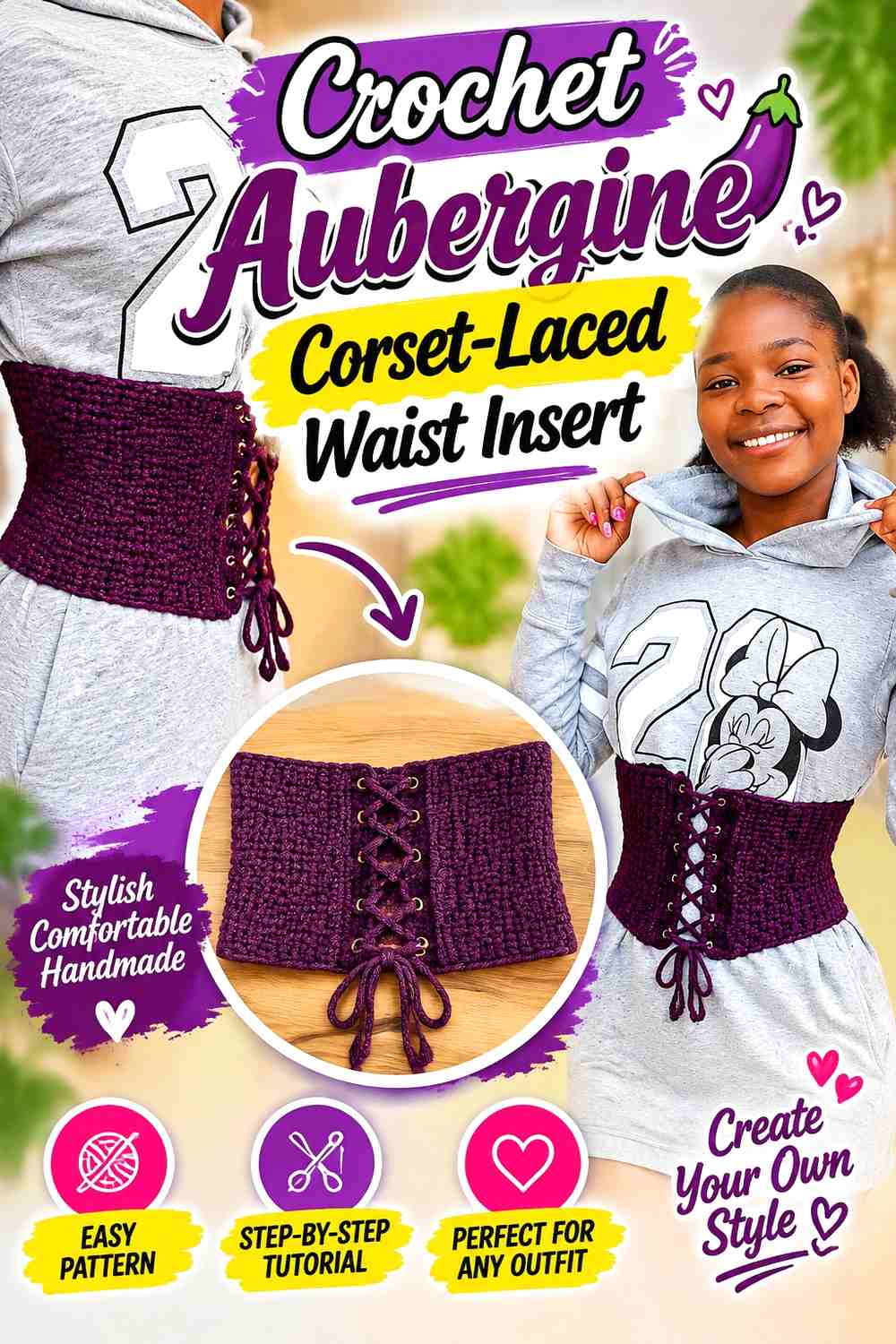
Kemunto crochets teaches a broad corset-style belt with shaped sections, loops, straps, and lacing rather than a simple straight waist strip. That makes it a useful source for a pleated skirt insert intended to become a wide, visible waist panel.
Aubergine Smoke can dominate the body while Saffron Cream is used for the lacing, allowing the lighter cord to emphasize the adjustable opening. Compared with narrow waistband treatments, this idea changes the silhouette more dramatically and can cover the upper part of the pleats. It is therefore better suited to a skirt where the crochet is intended as a statement feature. The source uses shaping within the belt itself, so follow the creator’s construction rather than assuming a wide rectangle will conform to the waist in the same way.
Decide Whether the Lacing Is Front, Side, or Back
Each position changes what the wearer sees and how easy the insert is to adjust. Front lacing makes the crochet an unmistakable focal point, while back lacing preserves a cleaner front over the pleats.
Side placement can work with asymmetrical styling but may add bulk beneath the arm. Mock up the full width before committing to the final orientation.
Do Not Use Lacing to Correct Major Sizing Errors
A laced gap offers adjustment, but excessive pulling can distort the loops and upper or lower edges.
Fit the main Aubergine Smoke panel reasonably close to its intended circumference first. The Saffron Cream lace should fine-tune the fit and supply contrast rather than rescue a severely undersized insert.
Creator Credit: Kemunto crochets
13. Crochet Saffron Leaf-Garland Waist Insert
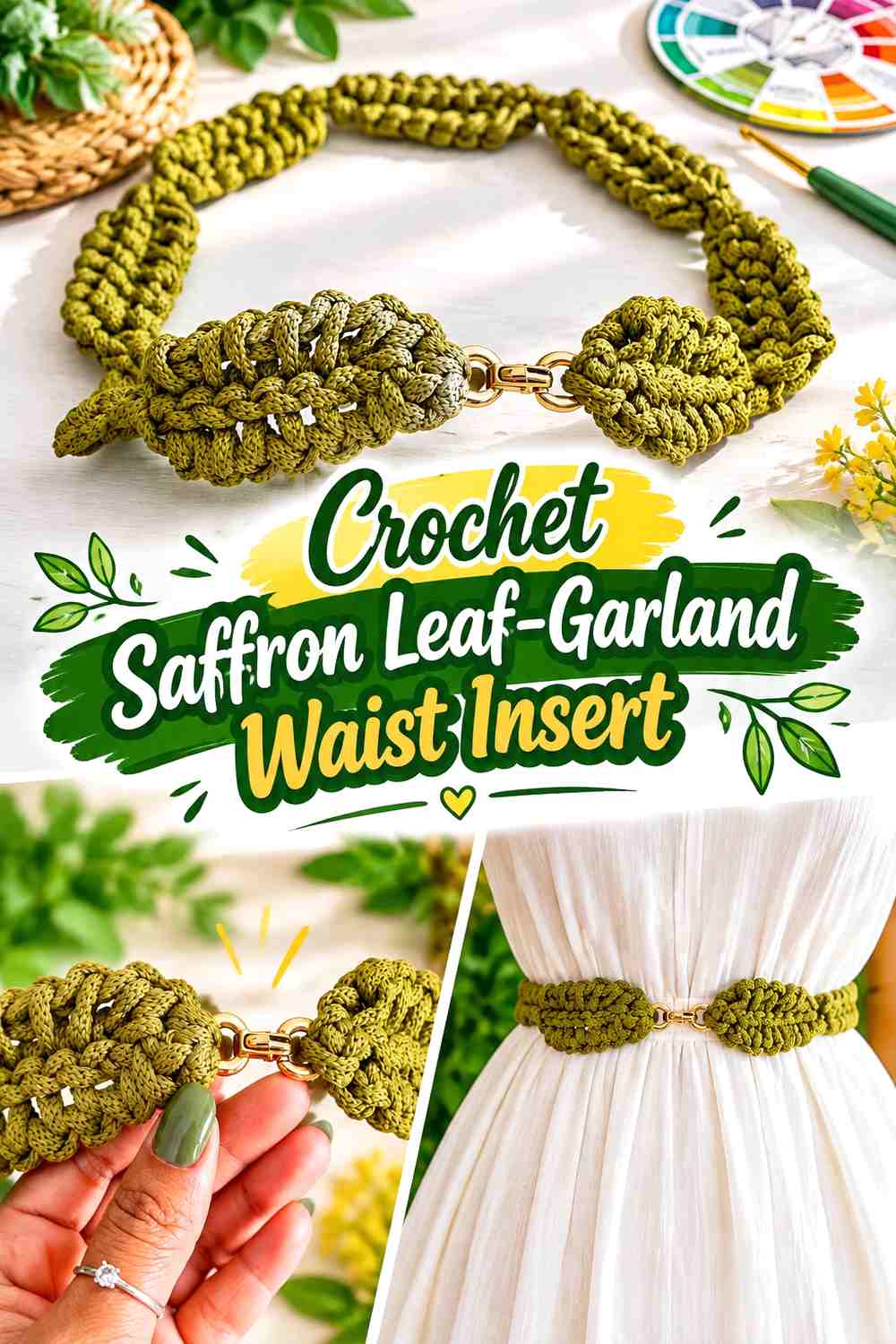
Michelle Duarte Crochê’s belt uses recognizable crochet leaves as the defining body of the accessory, giving it an organic outer edge rather than a straight band. The tutorial is specifically presented as a leaf-design belt and includes its fastening within the finished accessory.
For a pleated skirt, work the leaves in Saffron Cream and use Aubergine Smoke for the connecting or fastening area. The pointed motifs can overlap the top of the pleats without completely hiding them, making this one of the lightest decorative insert concepts. Leaf direction is important because every motif has a clear tip. A mirrored arrangement that meets at center front can look balanced, while leaves all traveling in one direction produce a more continuous garland effect.
Keep Leaf Tips Free of Pleat Creases
A pointed motif may curl or disappear if it lands directly inside a deep fold. Arrange the garland while the skirt hangs naturally so the leaves sit across visible fabric rather than falling into the pleat channels.
This is especially important if the skirt pleats open widely during walking, because their movement can repeatedly push individual motifs backward.
Reinforce the Closure Area Visually and Structurally
The decorative leaf tips should not automatically become the points that carry normal tying tension.
Follow the source’s fastening transition and keep the more delicate foliage focused on appearance. Aubergine Smoke can mark the closure zone so the functional section feels intentionally separate from the Saffron Cream motifs.
Creator Credit: Michelle Duarte Crochê
15. Crochet Aubergine Tunisian Buckle Waist Insert
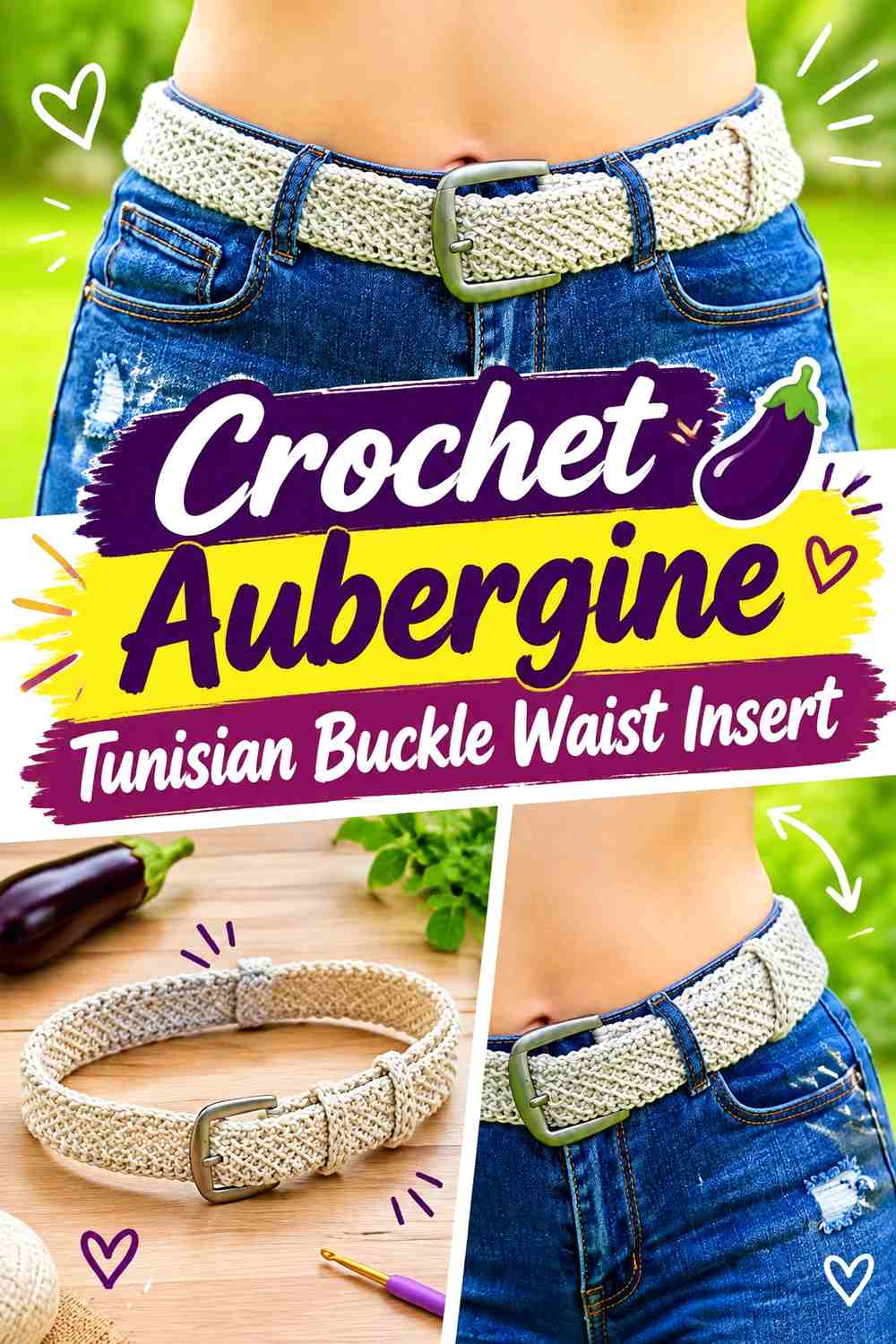
Francesca Uncinettando Crochet&Love teaches a denser belt made with Tunisian crochet and a reused buckle. The project contrasts strongly with lace belts because the fabric forms a more conventional, compact strap designed around fixed hardware.
As a pleated-skirt insert, an Aubergine Smoke Tunisian band can provide a dark tailored waist accent with a Saffron Cream line added only as edging or a secondary detail. This approach is useful when the skirt has dramatic pleats and the waist itself should remain visually controlled. The existing buckle determines practical band proportions, so select the hardware before deciding final crochet width. Treat the source as a belt construction reference; whether it becomes integrated into or simply sits over the skirt depends on the skirt’s original closure and support system.
Test the Buckle With the Actual Crochet
A buckle opening has fixed dimensions, while yarn substitutions can change thickness considerably.
Make a short Aubergine Smoke sample and confirm that it moves through or attaches to the hardware as the source intends. Discovering that the fabric is too thick after completing the entire circumference creates an avoidable problem.
Keep the Pleats Out of the Hardware
The buckle should sit on a relatively flat section of the waist. A thick pleat head trapped beneath it can make the hardware tilt or press unevenly.
If necessary, position the buckle at a location where the pleat arrangement naturally leaves a smoother area rather than insisting on center-front placement.
Creator Credit: Francesca Uncinettando Crochet&Love
16. Crochet Saffron Heart-Link Waist Insert
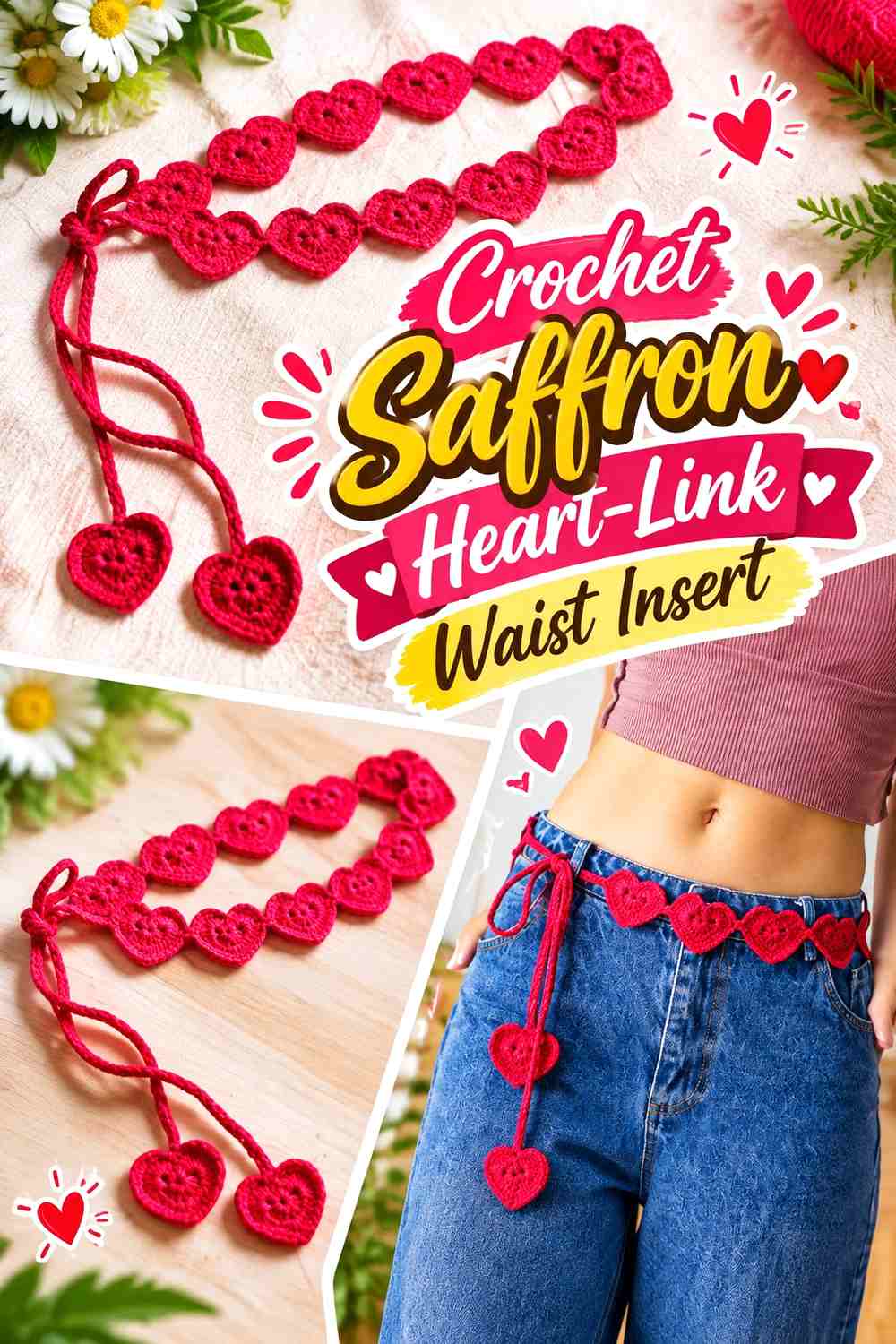
ABoC Studio’s Heart Chain Belt creates the belt from repeating connected heart shapes rather than placing appliqués on a solid strap. The open spaces inside and between the hearts make the entire waist treatment read more like crochet jewelry than a structural waistband.
For a pleated skirt, use Saffron Cream hearts and introduce Aubergine Smoke at the closure or every few links for a restrained two-tone rhythm. This idea works best over an existing secure waistband, where the hearts can simply decorate the transition into the pleats. The link format leaves much of the skirt visible and avoids a broad block of crochet. Because each heart is recognizable, consistency in tension becomes part of the overall appearance; one distorted motif can interrupt the repeating line more noticeably than a small variation in abstract mesh.
Use the Hearts as an Accent, Not the Support System
Open motif links are visually light because relatively little crochet spans the circumference. Preserve that role instead of expecting them to carry a heavy pleated skirt.
Attach or layer the heart chain over a stable waist construction. This keeps the motif shapes from being pulled lengthwise every time the skirt moves.
Plan the Center Motif
A heart centered above the front pleat arrangement creates a deliberate focal point, while a join placed exactly at center produces a slightly different visual rhythm.
Lay the completed chain around the skirt before finalizing the closure. Shifting the whole strip by half a motif can noticeably improve the relationship between crochet and pleats.
Creator Credit: ABoC Studio
17. Crochet Two-Tone Tassel-Tie Waist Insert
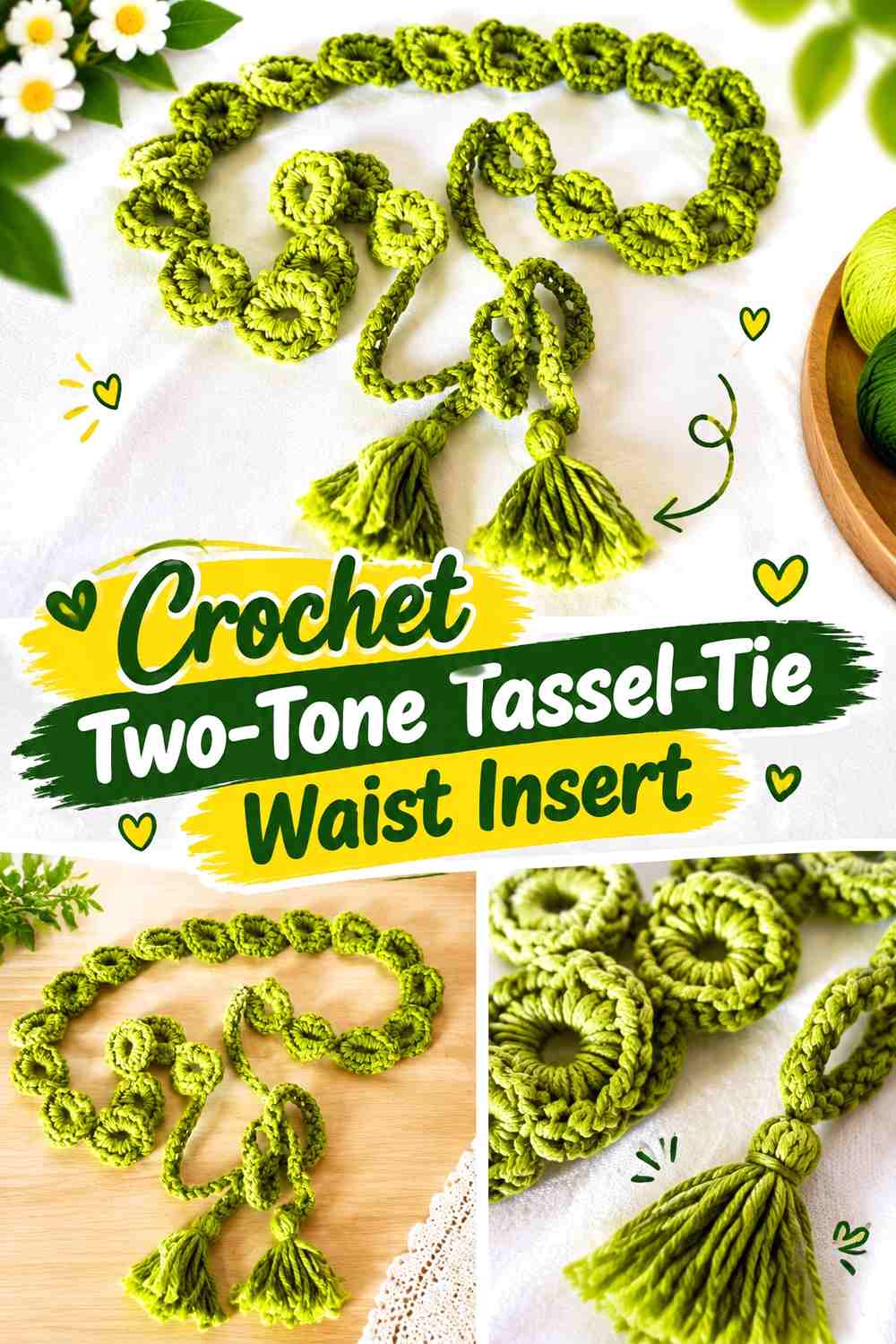
Hook & Loop Crochet Tutorials’ boho belt separates the design into a central crocheted belt section, narrower cords, and tassels at the ends. This gives the waist one width for decoration and another for tying, rather than using the same strip around the full circumference.
For a Saffron Cream and Aubergine Smoke pleated skirt, work the main insert in Aubergine and transition to Saffron Cream cords or tassels. The narrower ties can meet at the side or front without creating the bulk of overlapping two wide bands. This concept is particularly useful when the decorative crochet should cover only the front portion of the waistband, leaving the back freer for elastic or another closure. Tassels add movement, however, so their final length should be considered alongside the skirt’s pleats and any pockets.
Keep the Band-to-Cord Transition Strong
The point where a wide insert narrows into a tie receives concentrated tension each time the skirt is fastened.
Follow the creator’s construction at that junction and inspect both sides after fitting. If changing yarn, make sure the cord does not stretch so much that it pulls the end of the decorative panel into a point.
Position Tassels Away From Busy Pleat Details
Long tassels can disappear into deep folds or compete with other movement at the waist. Side placement may give them more room to hang visibly than a knot centered over dense front pleats.
Before trimming the tassel length permanently, test the skirt while standing and walking. The finishing detail should move with the garment without constantly becoming trapped in the folds.
Creator Credit: Hook & Loop Crochet Tutorials
Comparing the 17 Pleated Skirt Waist Insert Styles
For a waist treatment that participates directly in the skirt’s fit, start with the pleated-channel, ribbed-elastic, direct-elastic, folded-casing, back-loop ring, drawstring, or low-profile HDC options. Their sources are skirt-focused and provide the strongest references for actual waistband construction.
For decoration over an already secure waist, fan lace, shells, flower squares, leaves, O-rings, hearts, and tassel ties offer more negative space and motif detail. The clasped band, corset-laced panel, and Tunisian buckle insert occupy the middle ground: they are structured waist accessories, but integrating them permanently into a skirt requires separate garment planning.
Saffron Cream works particularly well on open motifs and decorative edges, while Aubergine Smoke can visually anchor firmer bands, closures, and wide waist panels.
Conclusion
Saffron Cream and Aubergine Smoke give a pleated skirt waist enough contrast to support both structural and decorative crochet approaches. Elastic casings and ribbed bands keep the waist controlled, while fan lace, shells, flowers, leaves, hearts, and rings allow more of the pleated skirt to remain visible. Corset lacing, buckles, and clasps create stronger waist-focused statements.
Start by deciding whether the crochet must actually help hold the skirt or merely decorate an existing secure waistband. Then compare the finished insert with the skirt while standing, sitting, and moving so you can see how the pleats respond. Use each credited tutorial for its original crochet construction, and handle pleat attachment, skirt closure, lining, and structural alteration as separate garment decisions.
Frequently Asked Questions
Can a decorative crochet insert replace the waistband of a pleated skirt?
Not automatically. Open lace, flower chains, hearts, leaves, and O-ring constructions are primarily decorative unless the overall garment has another system providing waist support. If you need the crochet itself to become the functional waistband, start with a source that actually teaches a skirt waistband, such as a ribbed elastic band, folded casing, or another garment-specific construction. The weight of the skirt and the way it is put on also affect the decision.
Which crochet waist insert is least likely to flatten the pleats?
A relatively narrow band that ends above the main pleat folds usually interferes less than a deep, tight panel extending over the pleat heads. Low-profile HDC, ribbing, narrow shell lace, or a small decorative motif strip can all preserve more visible pleating. Fit still matters: even a narrow insert can flatten the upper folds if it is significantly tighter than the circumference it is attached to.
Should Saffron Cream or Aubergine Smoke be the main waist color?
Use Aubergine Smoke when you want a strong visual anchor and a more defined division between waist and skirt. Saffron Cream creates a lighter transition and makes lace openings, flowers, hearts, and leaf shapes easy to notice against darker fabric. You can also divide their jobs: aubergine for the structural band or closure and saffron for the decorative motifs, edging, drawstring, or lacing.
Is elastic better than a crochet tie for a pleated skirt?
They serve different purposes. Elastic offers continuous recovery around the waist and can be useful when the skirt needs to stretch over the hips. A crochet tie provides adjustable tightening at one point but may gather the waist differently and leave longer decorative ends. Some skirts can successfully combine both systems, with elastic providing support and the crochet tie functioning mainly as a visible detail.
How wide should a crochet waist insert be above pleats?
There is no universal width. A shallow band keeps the pleat heads prominent, while a wider corset or motif panel can intentionally cover them and create a new waist silhouette. Make a paper strip in the proposed depth and wrap it around the finished skirt before crocheting. Check how it looks seated as well as standing, because a wide stiff insert can feel very different when the torso bends.
Do I need to block the crochet before attaching it to the skirt?
For many motifs and lace constructions, finishing the crochet first gives you more reliable dimensions and lets you assess whether edges lie flat. Use a method appropriate to the actual yarn and follow creator or yarn-care guidance rather than assuming every fiber should be treated the same way. Elastic-integrated constructions may require different handling, so do not apply aggressive shaping to a finished waistband simply because a separate lace motif would normally be blocked.