Charcoal Gray and Raspberry Pink give a crochet ribbed winter hood a strong neutral-and-accent relationship. Charcoal Gray can cover large areas without making every rib compete for attention, while Raspberry Pink can bring definition to the face opening, neck edge, crown, or selected rib columns.

Ribbed construction makes color placement especially noticeable because the stitches already create strong directional lines. A Raspberry Pink face band around a Charcoal Gray hood emphasizes the opening, while narrow pink ribs running from crown to neck create a completely different effect. Using the same two colors in different structural zones is enough to produce noticeably different hoods.
The tutorials credited below support balaclava, hood, hooded-cowl, and hooded-scarf construction concepts. The Charcoal Gray and Raspberry Pink palettes are independent adaptations rather than claims that the original creators used these colors.
Quick List
- Charcoal Gray Crochet Ribbed Winter Hood With Raspberry Pink Face Band
- Raspberry Pink Crochet Ribbed Winter Hood With Charcoal Gray Neck Ribbing
- Charcoal Gray Crochet Ribbed Winter Hood With Raspberry Pink Crown
- Charcoal Gray and Raspberry Pink Striped Crochet Ribbed Winter Hood
- Charcoal Gray Crochet Ribbed Winter Hood With Raspberry Pink Drawstring Edge
- Raspberry Pink Crochet Ribbed Winter Hood With Charcoal Gray Face Frame
- Charcoal Gray Crochet Ribbed Winter Hood With Raspberry Pink Vertical Ribs
- Charcoal Gray Crochet Ribbed Winter Hood With Raspberry Pink Turtleneck
- Raspberry Pink Crochet Ribbed Winter Hood With Charcoal Gray Crown Frame
- Charcoal Gray Crochet Ribbed Winter Hood With Raspberry Pink Lower Cowl
- Charcoal Gray Crochet Ribbed Winter Hood With Raspberry Pink Double Edge
- Raspberry Pink Crochet Ribbed Winter Hood With Charcoal Gray Side Panels
- Charcoal Gray and Raspberry Pink Crochet Ribbed Hooded Scarf
Decide Whether Charcoal Gray or Raspberry Pink Should Frame the Face
The face opening is one of the most visually important parts of a winter hood. A Raspberry Pink ribbed border around a Charcoal Gray body creates a strong focal point because the brighter shade forms an uninterrupted outline. Using Charcoal Gray around a Raspberry Pink hood does the reverse, containing the stronger color with a darker neutral frame.
Consider the width of the ribbing before deciding how much contrast you want. A broad Raspberry Pink face band can become almost as visually important as the hood body, while a narrow finishing row leaves Charcoal Gray clearly dominant.
Use Charcoal Gray and Raspberry Pink to Reinforce Rib Direction
Ribbing gives you natural lines for placing color. Horizontal color bands emphasize the circumference of a neck or face opening, while vertical Raspberry Pink ribs inside a Charcoal Gray body can lead the eye from the crown toward the shoulders.
Avoid changing colors at every rib unless you specifically want a highly graphic striped effect. For a quieter winter hood, let one color cover several adjacent ribs and use the second shade only at structural boundaries.
Balance Raspberry Pink Around a Charcoal Gray Hood and Neck
A winter hood often extends beyond the head into a neck warmer, collar, scarf, or cowl. That extra surface gives the accent color another place to repeat.
If Raspberry Pink appears only around the face, adding a small amount at the lower neck edge can connect the palette from top to bottom. If the lower section is already mostly pink, keep the crown more strongly Charcoal Gray so the accessory does not lose its neutral anchor.
1. Charcoal Gray Crochet Ribbed Winter Hood With Raspberry Pink Face Band

Make Charcoal Gray responsible for the crown, sides, and neck while Raspberry Pink forms a ribbed band around the face opening. This is one of the clearest ways to keep the hood neutral-dominant while still making the accent immediately noticeable.
Charcoal Gray Should Cover Most of the Ribbed Winter Hood
Keeping the crown and side panels Charcoal Gray gives the ribs a continuous background and prevents the large hood surface from becoming visually busy. The neutral also gives Raspberry Pink enough contrast to work effectively in a smaller amount.
Raspberry Pink Can Define the Charcoal Gray Face Opening
Use Raspberry Pink continuously around the face rather than adding isolated pink sections. A complete ribbed border creates a deliberate focal area and makes the opening easier to distinguish from the surrounding gray hood.
Keep Raspberry Pink Narrower Than the Charcoal Gray Hood Body
A very broad pink band can shift the color balance toward an equal two-tone look. If Charcoal Gray is intended to dominate, compare the face band with the width of the side panels before committing to additional pink rows.
Creator Credit: Life by Susan | Crochet
2. Raspberry Pink Crochet Ribbed Winter Hood With Charcoal Gray Neck Ribbing

Reverse the hierarchy by giving Raspberry Pink most of the head covering and reserving Charcoal Gray for the lower neck section. The darker neutral helps visually ground the brighter hood where it meets a coat or jacket.
Raspberry Pink Can Carry the Main Ribbed Hood Surface
Keep Raspberry Pink continuous through the crown and face area so the ribbing—not repeated color changes—provides most of the surface variation. This makes the brighter shade feel intentional rather than scattered.
Charcoal Gray Can Anchor the Raspberry Pink Neck Extension
Use Charcoal Gray across the lower ribbed section or turtleneck area. Because this section is visually denser than an open face frame, the dark neutral creates a substantial base even when Raspberry Pink covers more total area.
Creator Credit: Diving Ducks Crochet auf Deutsch
3. Charcoal Gray Crochet Ribbed Winter Hood With Raspberry Pink Crown
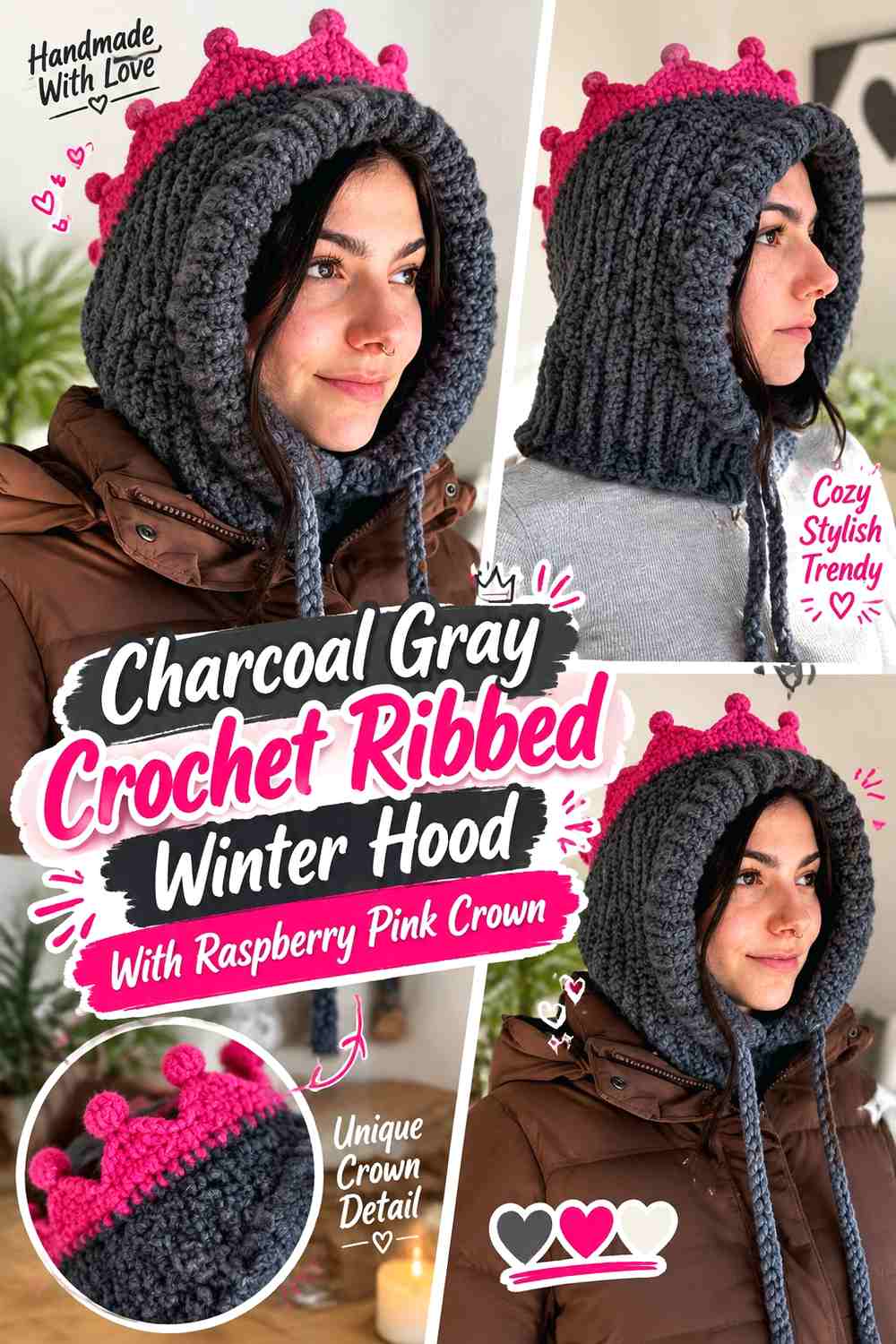
Keep the face opening and lower hood Charcoal Gray, then introduce Raspberry Pink toward the top of the head. This shifts the color contrast away from the face and makes the crown the primary accent zone.
Charcoal Gray Can Keep the Lower Winter Hood Visually Grounded
Use Charcoal Gray from the face frame through most of the sides and neck. A large uninterrupted dark field ensures the hood still reads as charcoal-dominant even when the crown changes color.
Raspberry Pink Can Separate the Charcoal Gray Crown Shaping
Introduce Raspberry Pink where the upper hood begins to narrow or curve. The color change can make the crown section more visually distinct without requiring additional stripes through the sides.
Keep the Raspberry Pink Crown Connected to Charcoal Gray Ribbing
A clean color transition is more useful than small pink patches scattered around the top. Let the crown read as one defined color zone so the rib direction remains easy to follow.
Creator Credit: Natalie
4. Charcoal Gray and Raspberry Pink Striped Crochet Ribbed Winter Hood
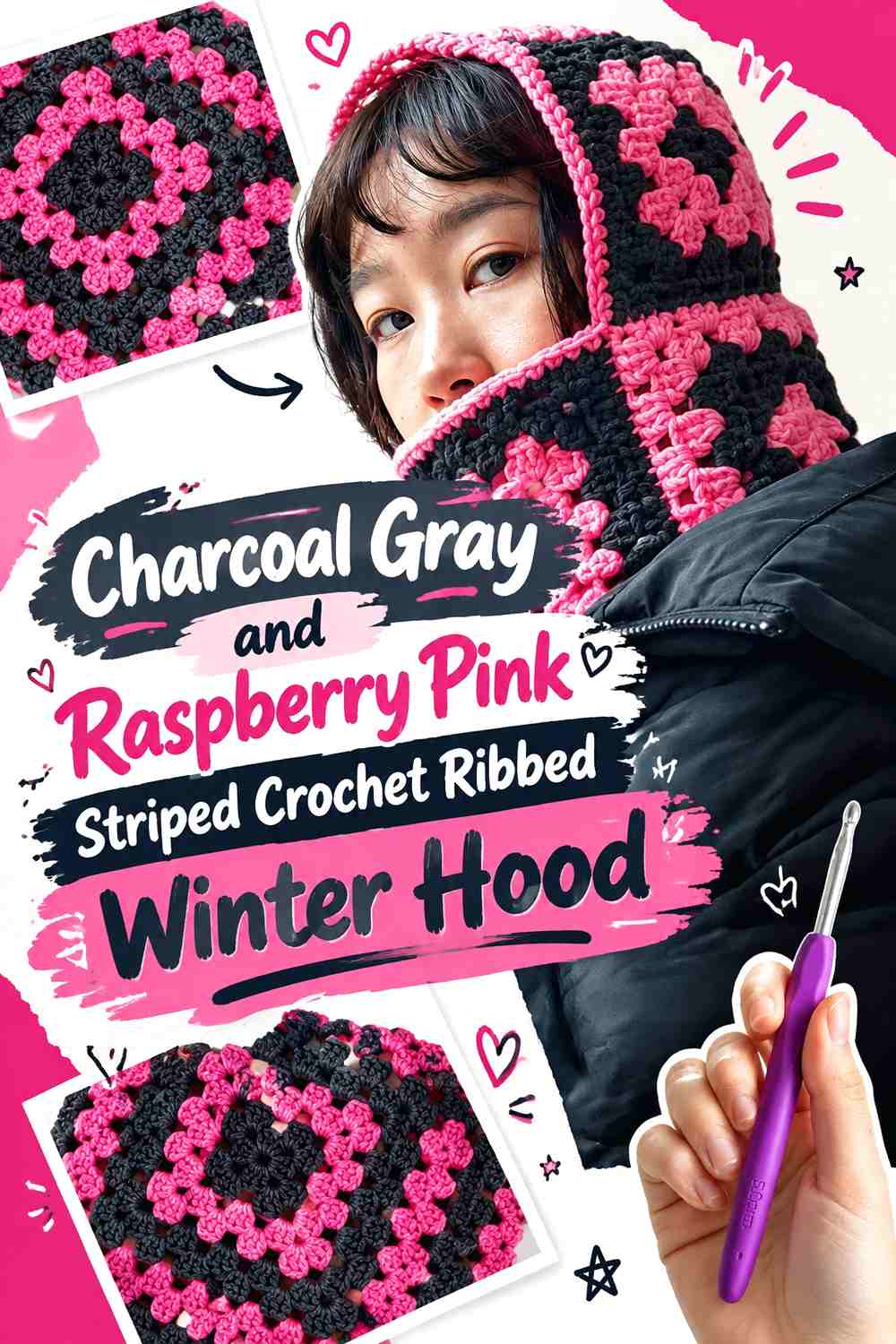
Alternating the two colors across broader ribs or bands creates a much more graphic hood. Because ribbing already produces strong lines, use a consistent repeat so the colors and texture support each other.
Charcoal Gray Needs a Predictable Repeat Beside Raspberry Pink
Keep the dark bands similar in placement throughout the main hood. Randomly changing their width can make the ribbed surface look fragmented instead of intentionally striped.
Raspberry Pink Should Follow the Charcoal Gray Rib Direction
Place Raspberry Pink so its bands align with the existing ribs rather than fighting them. If the construction creates vertical ribs, vertical color sections can preserve that long directional effect.
Use Charcoal Gray Around the Raspberry Pink Stripes When the Hood Feels Busy
A solid Charcoal Gray face or neck border can give the striped section a clear stopping point. This is useful when the central body already contains strong equal-area color changes.
Creator Credit: day la hanh
5. Charcoal Gray Crochet Ribbed Winter Hood With Raspberry Pink Drawstring Edge

Keep almost the entire hood Charcoal Gray and introduce Raspberry Pink around the adjustable face edge or drawstring area. The accent then becomes functional-looking rather than covering a large surface.
Charcoal Gray Can Let Ribbing Carry the Main Hood Design
A largely monochromatic gray body allows raised ribs, shaping, and folds to supply visual detail. This is useful when you want Raspberry Pink present without turning the hood into a strongly color-blocked accessory.
Raspberry Pink Can Highlight the Charcoal Gray Adjustable Face Edge
Use Raspberry Pink along the edge where a drawstring or finishing channel is visually located. The brighter line makes that perimeter distinct from the rest of the gray ribbed surface.
Repeat Raspberry Pink Sparingly Below the Charcoal Gray Hood
If the pink edge feels isolated, a small repeat near the lower neck can connect the palette. Avoid adding several unrelated pink bands simply to use more of the color.
Creator Credit: Hobby Crochet
6. Raspberry Pink Crochet Ribbed Winter Hood With Charcoal Gray Face Frame
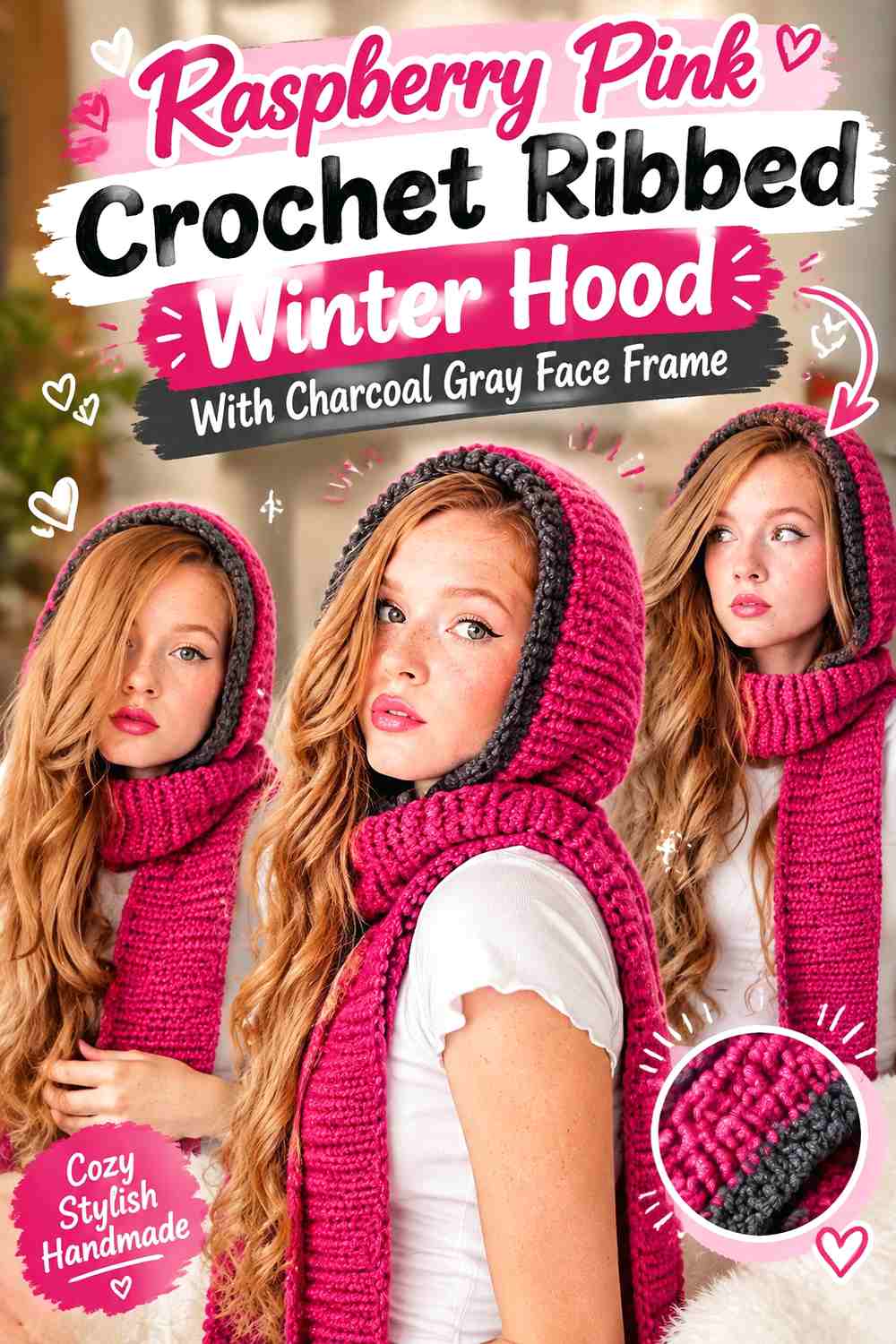
This version makes Raspberry Pink the first color noticed but contains it with a dark face border. Charcoal Gray acts almost like an outline, separating the pink hood from the face and outerwear.
Raspberry Pink Should Remain Continuous Across the Main Hood
Allow the brighter color to cover the side panels and crown without frequent gray interruptions. This keeps the color hierarchy obvious and gives the rib texture room to remain visible.
Charcoal Gray Can Sharpen the Raspberry Pink Face Ribbing
A dark ribbed edge gives the face opening stronger definition. Keep its thickness proportional to the hood; a very wide Charcoal Gray border can quickly become the dominant feature.
Creator Credit: WONDER NETTING
7. Charcoal Gray Crochet Ribbed Winter Hood With Raspberry Pink Vertical Ribs
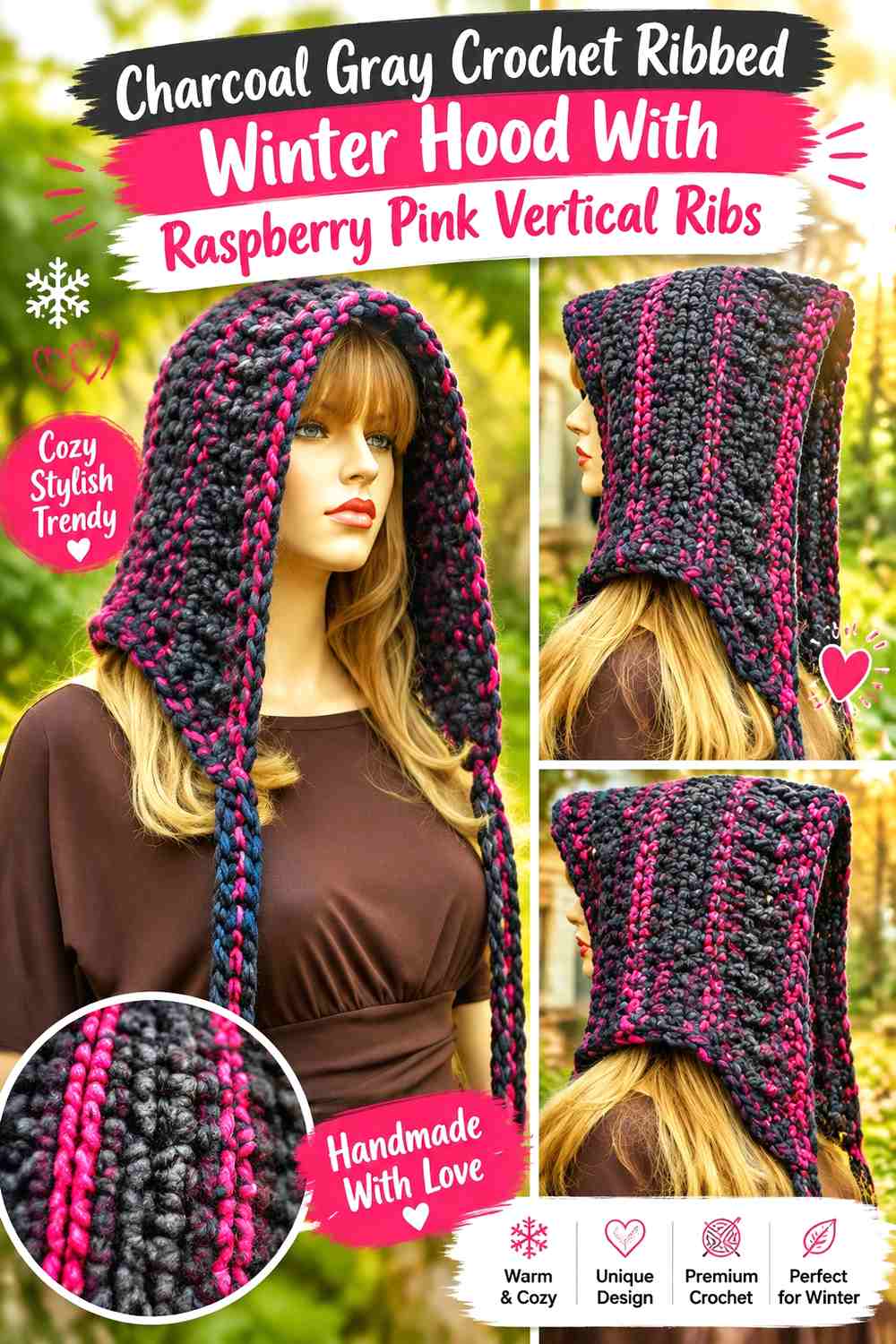
Instead of creating horizontal bands, place Raspberry Pink in selected vertical rib columns. Charcoal Gray remains the background while the brighter lines emphasize the length of the hood.
Charcoal Gray Should Stay Visible Between Raspberry Pink Rib Columns
Leave enough gray space between accent ribs to preserve a clear dominant field. Closely packed Raspberry Pink ribs can visually merge and turn the design into an equal striped pattern.
Raspberry Pink Can Follow the Charcoal Gray Hood From Crown to Neck
Running the accent through corresponding rib lines gives the eye a continuous route down the hood. This works especially well when the rib structure already travels vertically through much of the construction.
Keep Raspberry Pink Symmetrical Across the Charcoal Gray Face
When the hood is viewed from the front, mismatched accent ribs can be conspicuous. Mirror their placement on both sides unless you intentionally want an asymmetric design.
Creator Credit: Bag-O-Day Crochet
8. Charcoal Gray Crochet Ribbed Winter Hood With Raspberry Pink Turtleneck

Concentrate Raspberry Pink below the head rather than around it. The main hood stays Charcoal Gray while the ribbed turtleneck or lower cowl becomes a strong block of pink.
Charcoal Gray Can Keep the Head Section Dark and Cohesive
Use Charcoal Gray around the face, sides, and crown so the head covering remains one continuous neutral section. This also leaves room for a much larger Raspberry Pink accent below.
Raspberry Pink Can Turn the Charcoal Gray Neck Ribbing Into a Focal Block
Use the brighter shade throughout the turtleneck rather than in a few isolated lower rows. The broad pink section clearly separates the neck component from the Charcoal Gray hood.
Repeat a Small Raspberry Pink Detail on the Charcoal Gray Hood if Needed
If the transition feels too abrupt, repeat Raspberry Pink in a narrow face edge or small crown detail. Keep that repeat minor so the turtleneck remains the primary accent.
Creator Credit: Crochet with Clare
9. Raspberry Pink Crochet Ribbed Winter Hood With Charcoal Gray Crown Frame

Let Raspberry Pink fill the central hood while Charcoal Gray appears along the crown seam, upper perimeter, or another framing section. This creates a pink-dominant hood with a darker structural outline.
Raspberry Pink Can Make Ribbed Texture the Main Hood Feature
A continuous pink field keeps attention on the repeated raised lines. Since the color itself is already strong, additional striping through every rib is unnecessary.
Charcoal Gray Can Contain the Raspberry Pink Crown Visually
Use the darker neutral around an upper boundary or crown transition. A Charcoal Gray frame prevents the bright central section from visually expanding into every edge of the hood.
Creator Credit: Serafima Crochet & Knitting
10. Charcoal Gray Crochet Ribbed Winter Hood With Raspberry Pink Lower Cowl

This color-blocked option keeps the hood and face opening Charcoal Gray but changes to Raspberry Pink where the accessory widens over the neck and shoulders. The two colors correspond directly to two different functional zones.
Charcoal Gray Should Define the Main Hood and Face Area
Keep the neutral uninterrupted across the upper portion so crown shaping and face ribbing read as one unit. This makes the later switch to Raspberry Pink clearly intentional.
Raspberry Pink Can Lighten the Charcoal Gray Hood at the Lower Cowl
Use Raspberry Pink across a substantial lower section instead of only one narrow row. A broad color block makes the cowl extension distinct and prevents the pink from looking like an accidental stripe.
Charcoal Gray Can Return at the Raspberry Pink Cowl Edge
A narrow gray finishing line can visually reconnect the lower section to the hood. Use it only if the Raspberry Pink area needs a darker boundary; otherwise, keeping the cowl solid pink provides a cleaner two-block arrangement.
Creator Credit: LisaAuch Crochet
11. Charcoal Gray Crochet Ribbed Winter Hood With Raspberry Pink Double Edge
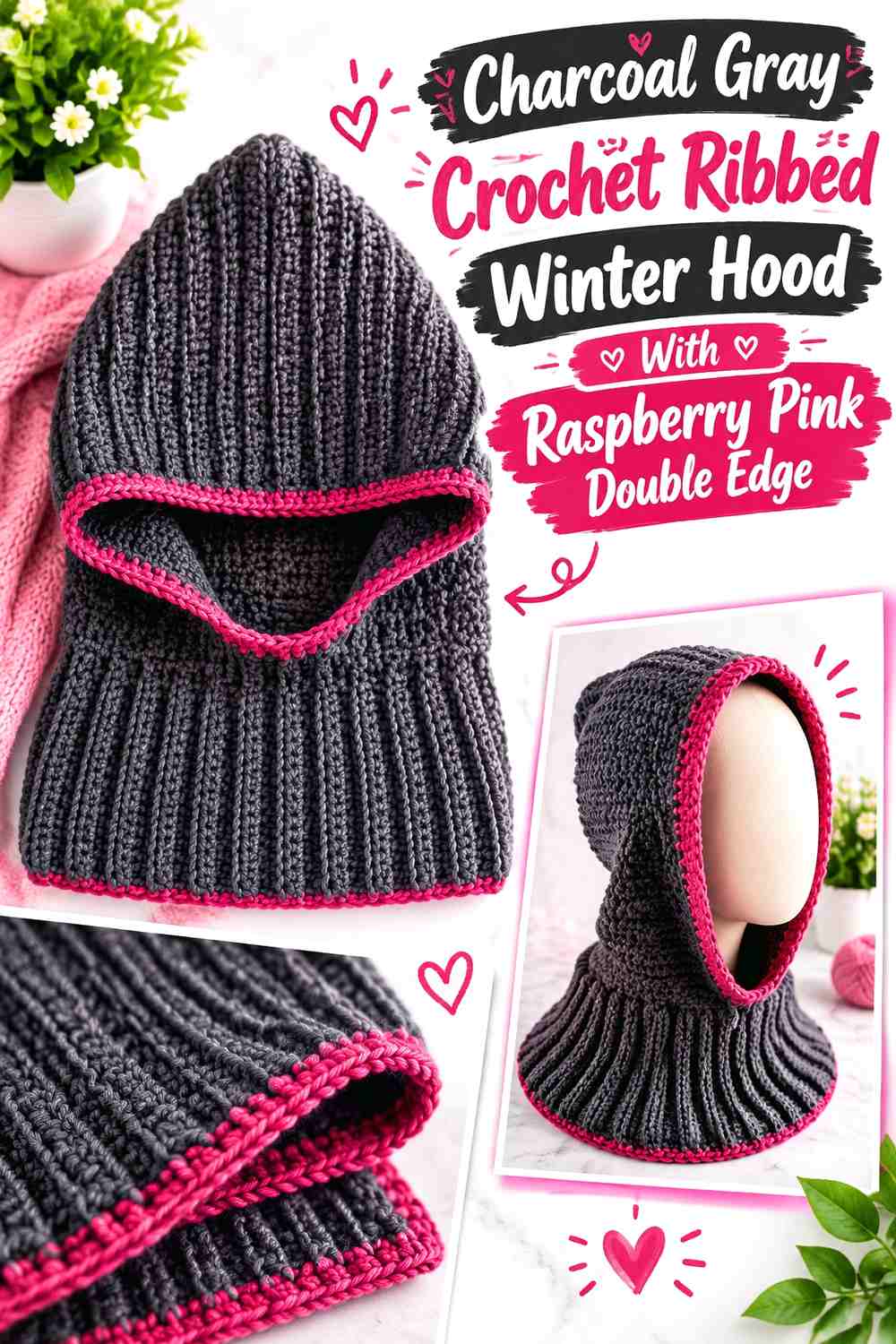
Keep the entire central hood Charcoal Gray and place Raspberry Pink at both the face opening and the lower neck edge. Repeating the accent at two boundaries frames the neutral body without introducing color into the crown.
Charcoal Gray Can Fill the Space Between Raspberry Pink Borders
Use one continuous gray field from the face ribbing to the lower edge. This allows the ribs to visually connect across the full hood and keeps the accent colors from breaking the structure into many sections.
Raspberry Pink Can Frame Charcoal Gray at the Face and Neck
Repeating the same bright shade at both openings creates an intentional top-and-bottom relationship. Keep the border widths similar when you want a balanced frame, or make the face edge slightly more prominent when it should remain the focal point.
Creator Credit: Treasurie
12. Raspberry Pink Crochet Ribbed Winter Hood With Charcoal Gray Side Panels
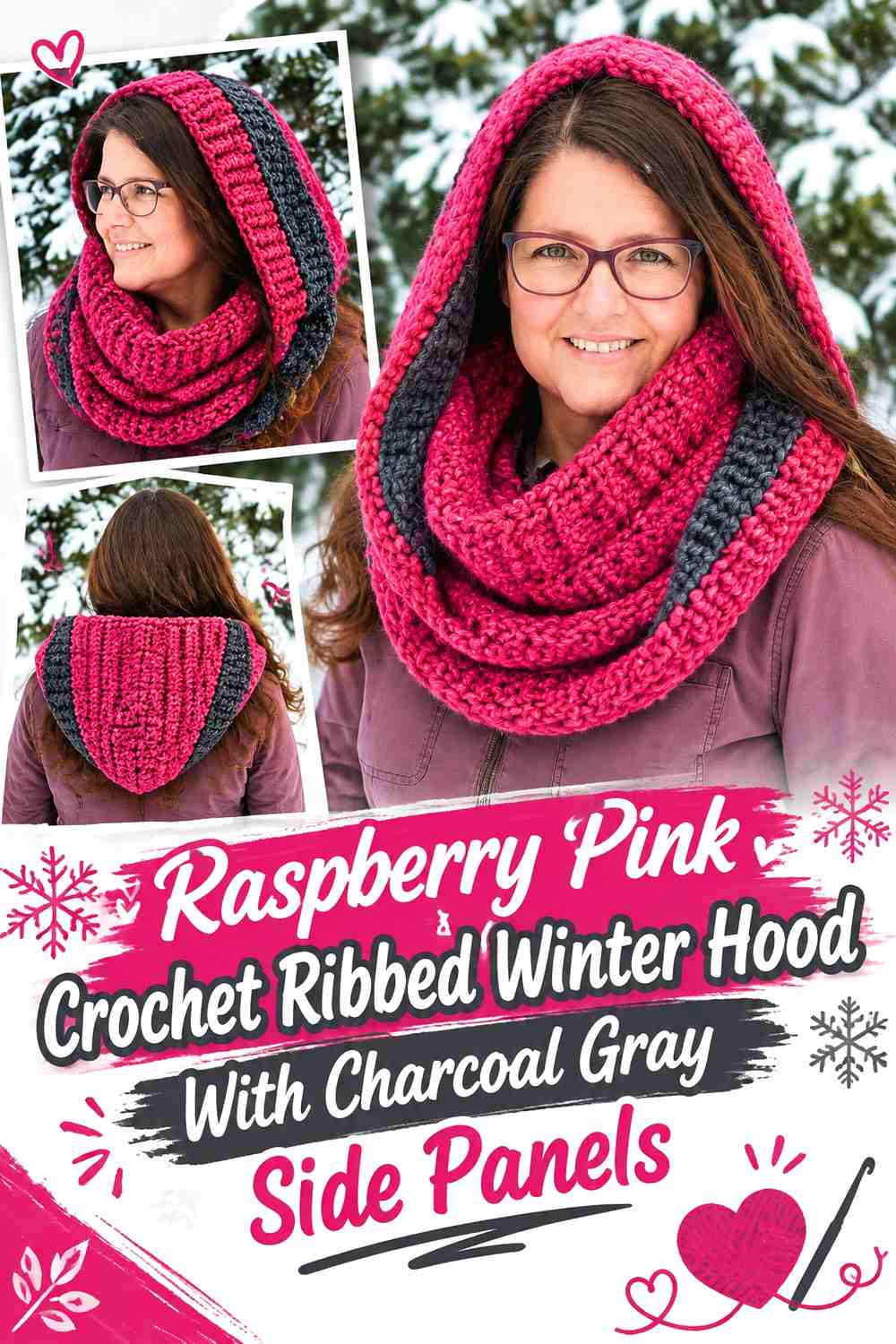
Use Raspberry Pink through the central crown and face area, then place Charcoal Gray along the sides. This turns the darker color into a containment device rather than a simple border.
Raspberry Pink Can Create a Strong Central Hood Panel
Give the pink section enough width to remain a clear surface rather than a narrow stripe. The center can then showcase rib direction while Charcoal Gray provides contrast on either side.
Charcoal Gray Can Reduce the Visual Weight of Raspberry Pink at the Sides
Dark neutral panels keep the brighter shade concentrated toward the center. Maintain similar gray coverage on both sides when you want the hood to appear balanced from the front.
Keep Charcoal Gray Connected Through the Raspberry Pink Neck Area
If possible within the chosen construction, repeat gray toward the lower sides or neck boundary. This visually links the side panels instead of leaving them isolated near the crown.
Creator Credit: A Crocheted Simplicity
13. Charcoal Gray and Raspberry Pink Crochet Ribbed Hooded Scarf
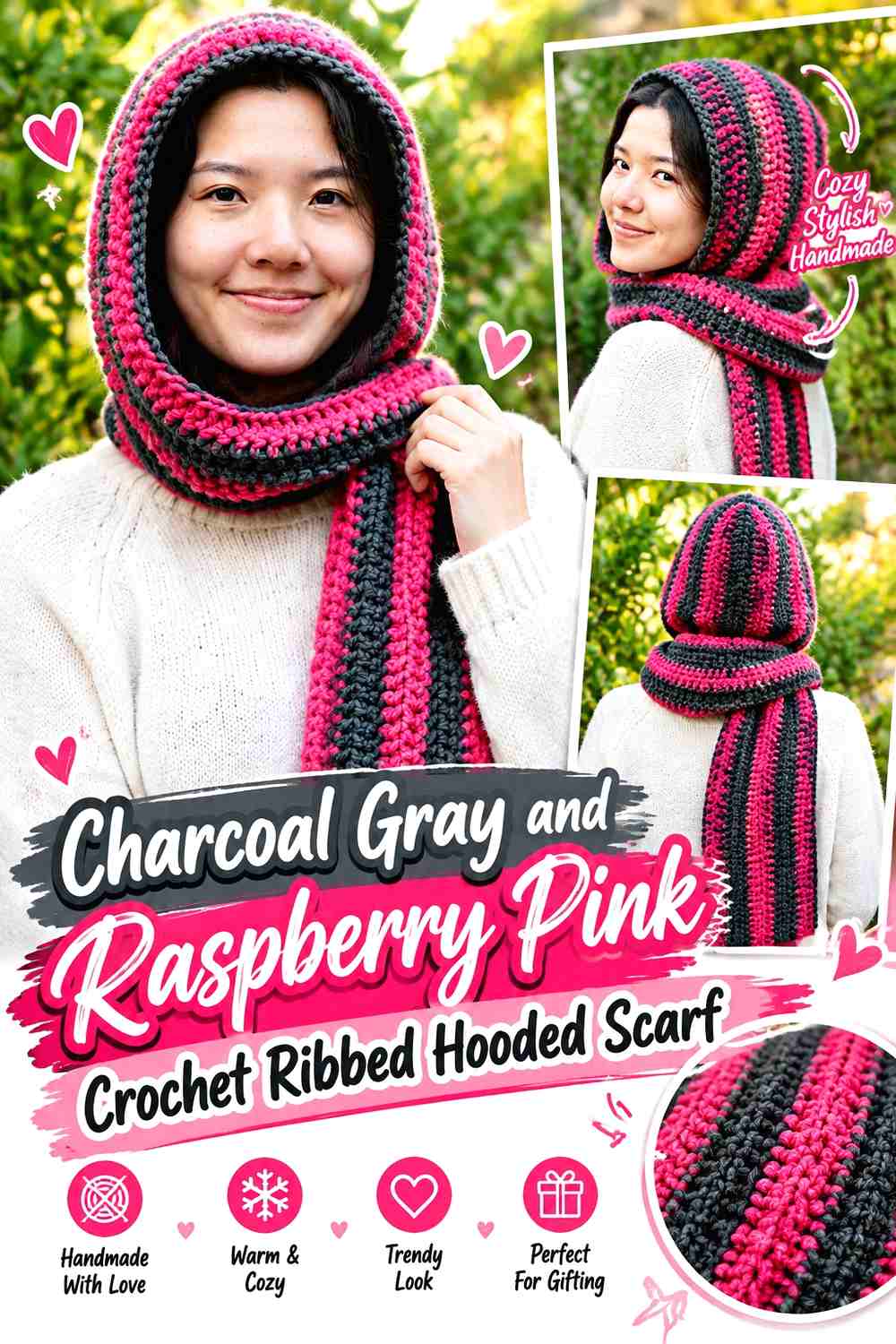
A hooded scarf gives the palette more length than a close-fitting balaclava. Use Charcoal Gray for the main hood and introduce Raspberry Pink through the scarf ends, face edging, or broad repeated sections so the accent travels beyond the head.
Charcoal Gray Can Keep the Crochet Hood Visually Separate From the Scarf
A predominantly gray hood creates a stable central section even when the scarf ends contain more Raspberry Pink. This prevents the entire piece from becoming one long sequence of competing stripes.
Raspberry Pink Can Extend Beyond the Charcoal Gray Hood Into the Scarf
Repeat Raspberry Pink in the scarf portions to distribute the brighter color vertically. Using the same shade at the face edge creates a visual connection between the hood and the ends.
Balance Charcoal Gray and Raspberry Pink Across Both Scarf Sides
If the accessory has two hanging ends, compare the color distribution on both before finishing. Matching or deliberately mirrored Raspberry Pink sections will look more intentional than an accidental imbalance.
Creator Credit: VivCrochets
Comparing Charcoal Gray and Raspberry Pink Ribbed Winter Hood Styles
For the most Charcoal Gray-dominant look, Ideas 1, 3, 5, 7, and 11 keep the neutral across most of the crown and body. Raspberry Pink is used to define the face opening, crown, rib columns, or boundaries without taking over the whole hood.
Ideas 2, 6, 9, and 12 give Raspberry Pink considerably more space. These directions are useful when you want the brighter color to be visible across the main hood while Charcoal Gray frames or grounds it.
Ideas 4, 8, 10, and 13 make the division between colors more structural. Stripes, turtlenecks, lower cowls, and scarf extensions provide enough surface to give both colors substantial roles without crowding a single ribbed panel.
If stitch texture is your priority, keep broader ribbed areas in one color and move the contrast to edges or adjacent structural zones. If color is the main feature, larger blocks or consistent accent ribs make the Charcoal Gray and Raspberry Pink relationship much more obvious.
Conclusion
Charcoal Gray and Raspberry Pink work especially well on ribbed winter hoods because the two shades can reinforce the construction instead of simply decorating it.
For a dark neutral hood with a controlled accent, Ideas 1, 5, and 11 concentrate Raspberry Pink around important edges. Ideas 2, 6, and 12 reverse the relationship and make Raspberry Pink the larger field while Charcoal Gray supplies definition. If you want the color placement to follow the structure more dramatically, Ideas 7, 8, 10, and 13 use ribs, neck extensions, cowls, and scarf sections as distinct color zones.
Before committing to the full hood, crochet enough of both shades to see how they look in the intended ribbing. The depth of the ribs can change how dark Charcoal Gray appears and how strongly Raspberry Pink stands out. Follow the credited creator’s tutorial for exact construction, sizing, and shaping while treating the palette as a separate adaptation.
Frequently Asked Questions
Should Charcoal Gray or Raspberry Pink dominate a crochet ribbed winter hood?
Choose Charcoal Gray as the dominant color when you want a darker, more neutral hood with Raspberry Pink acting as a focal accent. Use Raspberry Pink as the main shade when you want the hood itself to carry more color and Charcoal Gray to define edges or panels.
Where should Raspberry Pink go on a Charcoal Gray ribbed hood?
Useful placements include the face ribbing, crown, selected vertical ribs, drawstring edge, turtleneck, cowl section, or lower border. Choose one or two connected locations rather than scattering pink randomly across the hood.
How can Raspberry Pink emphasize Charcoal Gray ribbing?
Place Raspberry Pink beside or within a repeated rib structure. A lighter or more saturated accent can make individual rib columns or boundary rows easier to distinguish against Charcoal Gray.
Can Charcoal Gray frame a mostly Raspberry Pink winter hood?
Yes. Charcoal Gray works well around the face opening, crown edge, side panels, or neck because it creates a darker boundary around the stronger pink field.
How do I keep a Charcoal Gray and Raspberry Pink hood from looking too striped?
Use larger single-color sections. For example, keep the crown and sides Charcoal Gray and place Raspberry Pink only around the face, or make the hood Raspberry Pink and reserve Charcoal Gray for the neck and side panels.
Should the neck section match the Charcoal Gray hood body?
It can, but it does not have to. A Raspberry Pink neck or cowl section creates stronger color blocking, while a Charcoal Gray neck keeps the hood more neutral and leaves pink for smaller face or crown details.
How can I substitute another shade for Charcoal Gray?
Choose another dark neutral that remains noticeably deeper than Raspberry Pink. Preserving that light/dark and neutral/accent relationship matters more than matching a particular commercial yarn shade.
What can replace Raspberry Pink without losing the contrast?
Choose another medium or bright pink that remains clearly distinct from Charcoal Gray. If the replacement is unusually dark or muted, test the two colors in actual ribbing to make sure the raised texture does not cause them to visually merge.