Midnight navy and silver give a crochet evening shoulder shawl a strong light-and-dark relationship without requiring a complicated palette. Midnight navy can cover the larger shoulder area and provide depth, while silver can highlight lace, borders, center lines, scallops, or selected stitch bands.
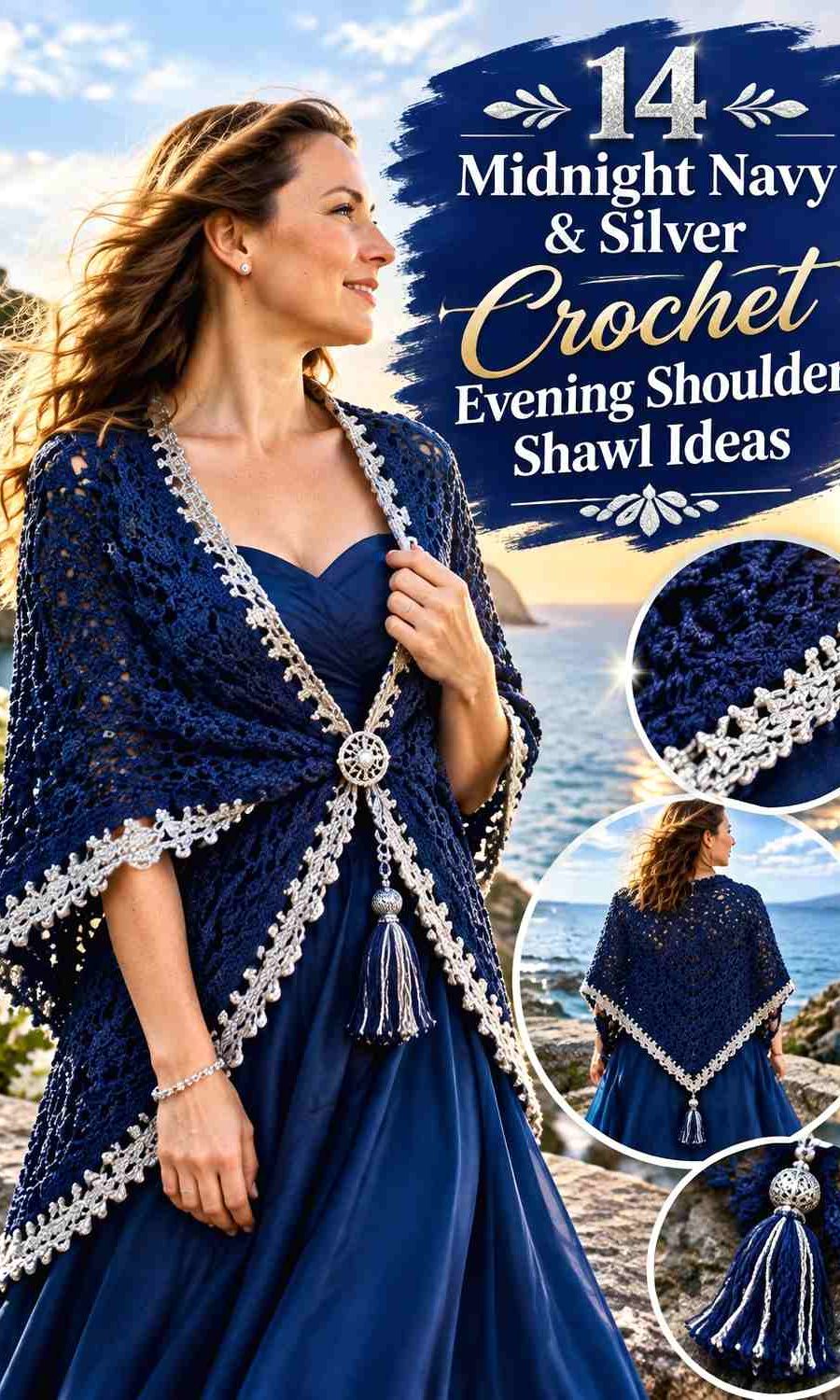
The most important decision is how much silver to introduce. On an evening shawl, a narrow silver border can be more noticeable than expected because it stretches across a long edge. Wider silver sections create a more balanced two-color wrap, while smaller accents allow midnight navy to remain unmistakably dominant.
Quick List
- Midnight Navy Crochet Shell Evening Shoulder Shawl With Silver Border
- Midnight Navy and Silver Granny Crochet Evening Shoulder Shawl
- Midnight Navy Crochet Textured Evening Shoulder Shawl With Silver Bands
- Midnight Navy Crochet Rectangular Evening Shoulder Shawl With Silver Ends
- Midnight Navy Crochet Granny Evening Shoulder Shawl With Silver Scallops
- Midnight Navy Crochet Mesh Evening Shoulder Shawl With Silver Picot Edge
- Midnight Navy and Silver Asymmetrical Crochet Evening Shoulder Shawl
- Midnight Navy Crochet Vintage Lace Evening Shoulder Shawl With Silver Edge
- Midnight Navy Crochet Triangle Evening Shoulder Shawl With Silver Lower Border
- Silver Crochet Triangle Evening Shoulder Shawl With Midnight Navy Frame
- Midnight Navy Crochet Lace Evening Shoulder Shawl With Silver Center Line
- Midnight Navy Crochet Pineapple Evening Shoulder Shawl With Silver Highlights
- Midnight Navy Crochet Crescent Evening Shoulder Shawl With Silver Outer Bands
- Midnight Navy Crochet Textured Triangle Evening Shoulder Shawl With Silver Points
Let Midnight Navy Carry the Main Evening Shawl Surface
Midnight navy works particularly well across the largest uninterrupted areas of a shoulder shawl because it gives lace, shells, granny clusters, and raised texture one consistent visual foundation. Silver can then be reserved for the parts that need definition.
For an evening look that remains navy-led, keep silver to the border, center spine, or selected pattern bands. If silver occupies every openwork section and every edge, the shawl can quickly become an equal two-color piece rather than a midnight navy wrap with silver detailing.
Use Silver Where Midnight Navy Crochet Details Need Separation
Dark yarn can make small stitch changes less obvious from a distance, especially when a shawl is draped rather than viewed flat. Silver is useful around scallops, lace points, center lines, and patterned bands because those areas already form natural structural divisions.
Before adding a second silver section, place the shawl across the shoulders. A narrow accent that seems modest on the work surface can become much more prominent when it runs from one side of the body to the other.
Balance Midnight Navy and Silver Around the Shoulders
Color placement should support the way the shawl is worn. A silver lower border draws attention to the hanging edge, while silver near the neckline moves contrast closer to the face and shoulders. Silver tips or side ends emphasize width instead.
Decide where you want the eye to travel before choosing the accent placement. One clear silver focal area often gives the shawl more definition than several unrelated silver details.
1. Midnight Navy Crochet Shell Evening Shoulder Shawl With Silver Border
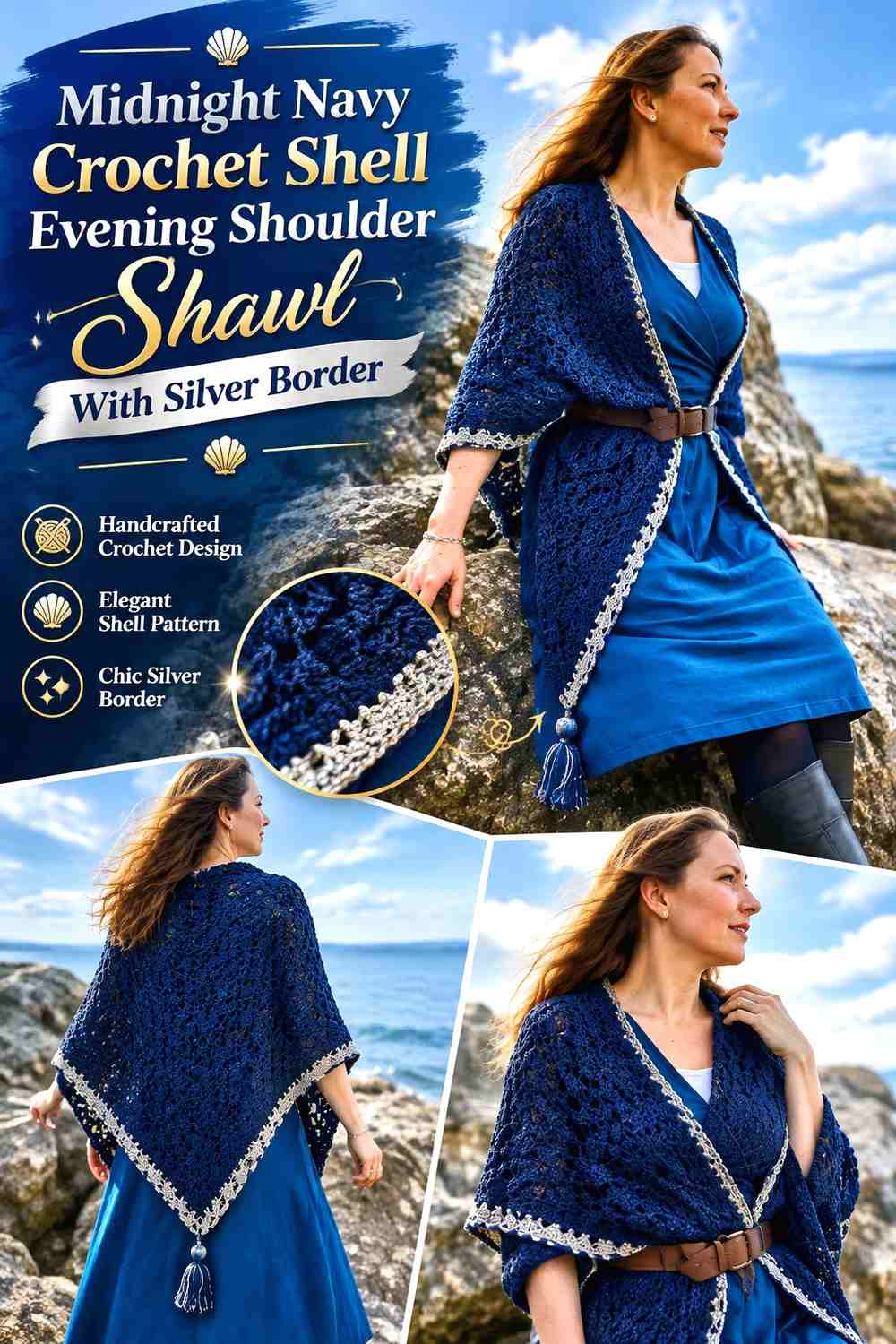
A shell-based triangle gives midnight navy enough continuous surface to remain the clear main shade while silver traces the wide outer edge. The repeating shell texture already creates movement, so the second color can stay concentrated around the perimeter.
Midnight Navy Lets the Crochet Shell Pattern Carry the Shawl Body
Work the broad shoulder section predominantly in midnight navy when you want the shell rhythm to remain uninterrupted. Frequent silver changes within individual shells can make the repeats harder to read across a large triangle.
Silver Can Define the Midnight Navy Shell Shawl Edge
Reserve silver for the final scalloped or shell-shaped boundary. Because this edge spans much of the shawl, even a relatively narrow silver section creates a noticeable finish.
Midnight Navy Should Remain Visible Above the Silver Border
Avoid extending silver through too many pattern bands if the goal is a navy-led evening shawl. A clear strip of midnight navy directly above the silver edge keeps the palette hierarchy intact.
Creator Credit: Ophelia Talks Crochet
2. Midnight Navy and Silver Granny Crochet Evening Shoulder Shawl

Granny-style clusters offer obvious places for controlled color changes. Let midnight navy dominate several consecutive sections and introduce silver at planned intervals instead of alternating the shades equally from the center outward.
Midnight Navy Should Establish the Main Granny Crochet Rhythm
Wider midnight navy areas keep the shawl visually grounded across the shoulders. The repeated cluster structure already creates enough surface variation without needing a color change in every row.
Silver Bands Can Break Up Midnight Navy Granny Sections
Use silver as an occasional horizontal band when you want the construction to remain visible from a distance. Repeating the accent at deliberate intervals looks more cohesive than adding narrow silver stripes randomly.
Silver Can Finish the Midnight Navy Granny Shawl Without Another Color
If several silver bands already appear in the body, repeat silver once at the outer border. This reconnects the edge to the internal accents without adding a third shade.
Creator Credit: Meema Makes
3. Midnight Navy Crochet Textured Evening Shoulder Shawl With Silver Bands
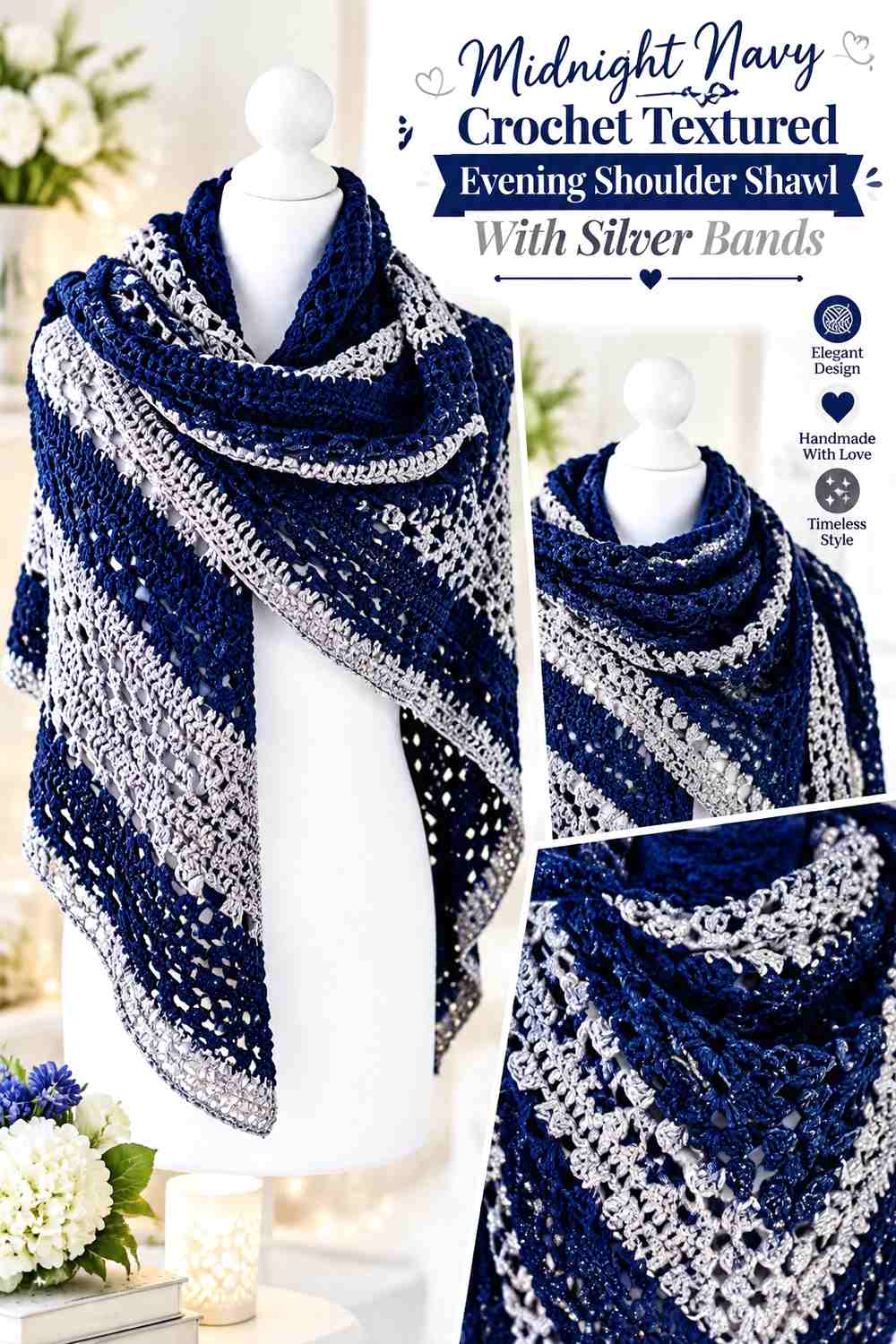
A shawl with several distinct stitch sections already contains strong visual changes. Midnight navy can connect those textures, while silver is used only at selected transitions to separate one surface treatment from the next.
Midnight Navy Keeps Multiple Crochet Textures Visually Connected
Carry navy through most of the pattern sections so open and dense areas still belong to one evening shawl. Changing color every time the texture changes can divide the piece into too many independent bands.
Silver Can Mark Important Midnight Navy Texture Transitions
Place a silver band where two noticeably different stitch sections meet. The lighter line makes the transition deliberate and gives the eye a clear horizontal reference across the shoulders.
Midnight Navy Needs More Surface Area Than Silver Between Bands
Leave enough navy between silver sections for each accent to remain distinct. Closely spaced silver bands can combine visually into a large light area and reduce the dark evening effect.
Creator Credit: Bella Coco
4. Midnight Navy Crochet Rectangular Evening Shoulder Shawl With Silver Ends
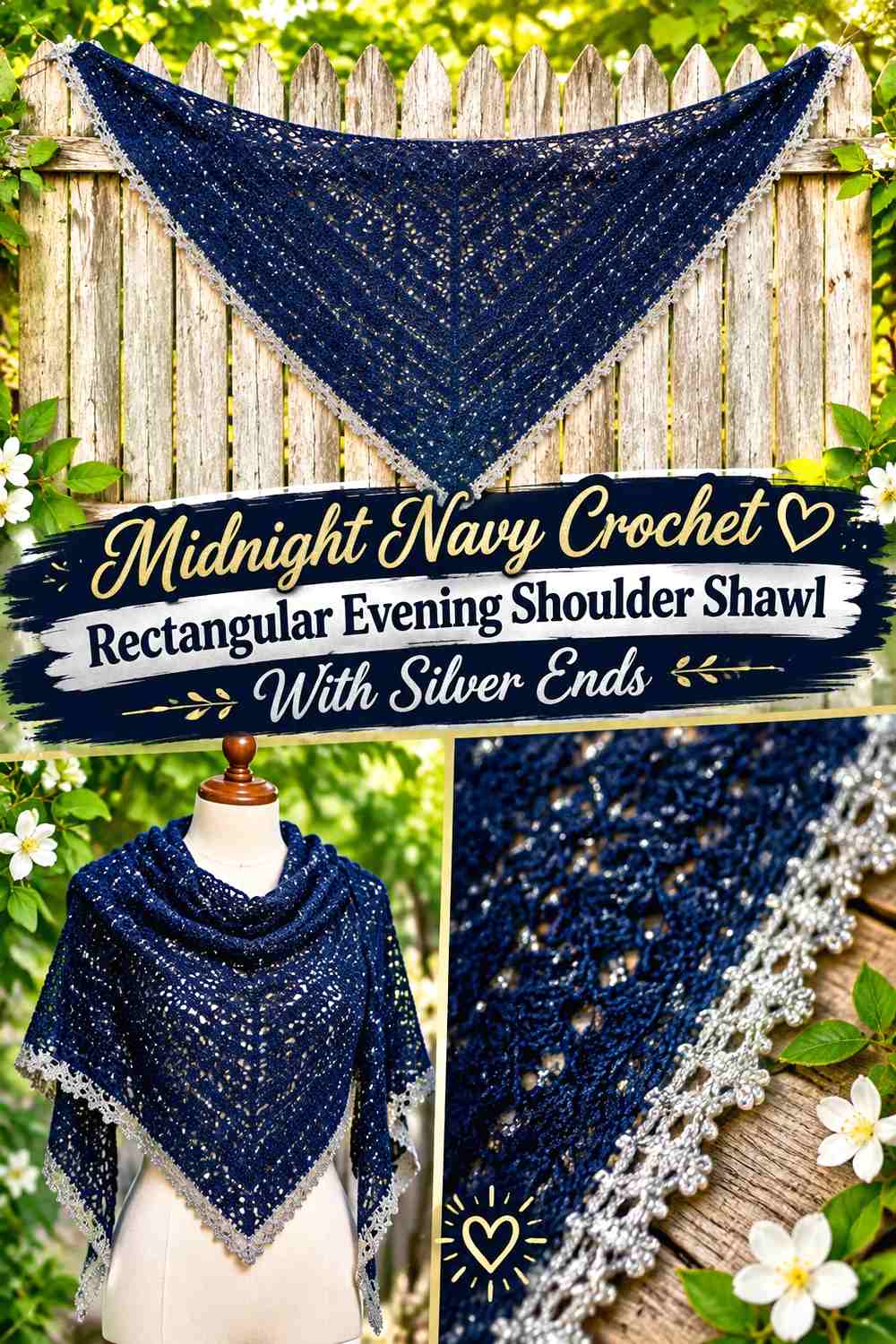
A rectangular wrap creates a different color opportunity because its two ends remain highly visible when hanging from the shoulders. Keep the long center midnight navy and reserve silver for matching end sections.
Midnight Navy Should Dominate the Long Crochet Shoulder Span
Use navy through the section that crosses the back and shoulders. The uninterrupted dark field keeps the wrap cohesive even when the two ends fall at different angles.
Silver Ends Can Frame the Midnight Navy Evening Wrap
Matching silver sections at both ends create balance without interrupting the center. This placement is especially useful when you want the silver to show mainly toward the front.
Silver End Sections Need Similar Visual Weight Against Midnight Navy
Lay the full wrap flat before finishing the second end. Keeping the silver sections comparable prevents one side from appearing noticeably heavier when the shawl is worn open.
Creator Credit: Bag-O-Day Crochet
5. Midnight Navy Crochet Granny Evening Shoulder Shawl With Silver Scallops

This direction keeps the granny body almost entirely midnight navy and concentrates silver in a decorative perimeter. It is useful when you want the familiar cluster pattern to stay dark and let the edge supply the evening contrast.
Midnight Navy Gives the Crochet Granny Body a Continuous Background
Keeping the clusters navy allows open spaces and stitch groupings to provide the internal pattern. The shawl does not need silver inside every repeat to remain visually interesting.
Silver Scallops Can Lighten the Midnight Navy Outer Edge
A silver scalloped or decorative border makes the lower outline easier to see against dark clothing. The edge already repeats around a large area, so keep its width proportionate.
Silver Should Not Overpower the Midnight Navy Granny Center
If the decorative border becomes very deep, it can visually outweigh the navy body. Compare the border depth with the overall triangle before adding another silver finishing section.
Creator Credit: B.Hooked Crochet
6. Midnight Navy Crochet Mesh Evening Shoulder Shawl With Silver Picot Edge
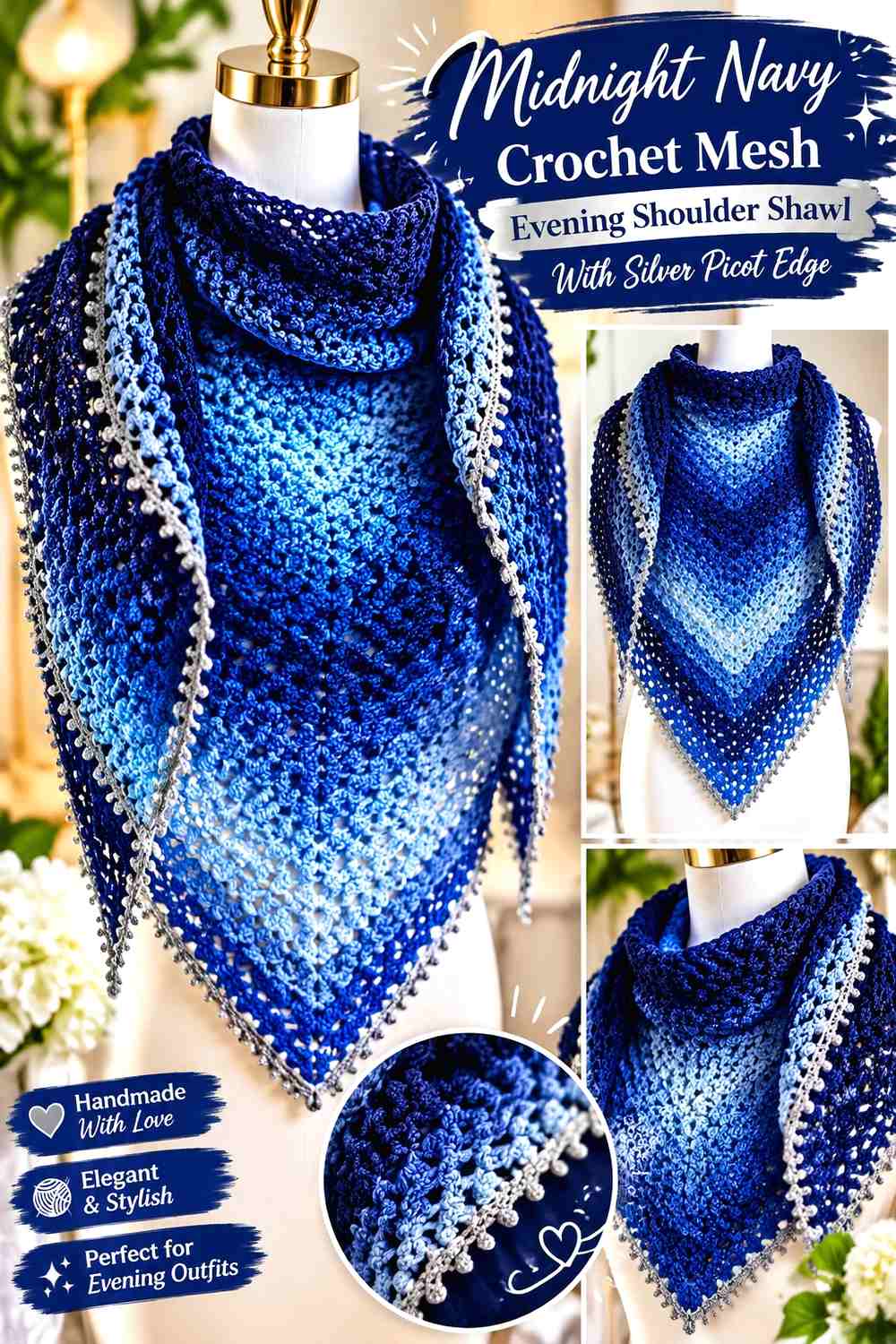
Open mesh creates a lighter-looking fabric even in midnight navy. Silver can therefore stay very narrow and still provide a clear finishing detail around the pointed or picot edge.
Midnight Navy Keeps the Crochet Mesh From Looking Too Fragmented
Use navy continuously through the open sections so the repeated spaces create the primary pattern. Switching between navy and silver in every mesh band can make the shawl appear striped rather than airy.
Silver Picots Can Define Midnight Navy Mesh Points
A silver picot or narrow pointed border draws attention to the individual edge details without covering the larger navy field.
Midnight Navy Needs Space Between Silver Edge Details
Let visible navy remain between repeated silver points when possible. This contrast helps each decorative element stay distinct instead of merging into one broad silver perimeter.
Creator Credit: Hooked by Robin
7. Midnight Navy and Silver Asymmetrical Crochet Evening Shoulder Shawl

An asymmetrical shawl naturally moves the eye from one narrow end toward a broader section. Use color to reinforce that direction, with midnight navy covering most of the body and silver becoming more noticeable toward one edge or point.
Midnight Navy Should Anchor the Largest Crochet Shawl Section
Place navy where the asymmetrical wrap has the greatest visual mass. This prevents a smaller silver section from appearing disconnected from the rest of the piece.
Silver Can Emphasize the Midnight Navy Asymmetrical Direction
Introduce silver along a widening band, outer point, or finishing section. The lighter color can make the changing proportions of the shawl easier to see.
Midnight Navy Can Return After a Silver Accent Band
A final navy section beyond silver can frame the accent rather than allowing the silver to become the entire outer edge. This produces a more layered two-color effect.
Creator Credit: TL Yarn Crafts
8. Midnight Navy Crochet Vintage Lace Evening Shoulder Shawl With Silver Edge

Vintage-style lace already gives an evening shawl substantial visual detail. Midnight navy can carry the complete lace pattern while silver is limited to one finishing line that reveals the outer silhouette.
Midnight Navy Gives Crochet Lace a Dramatic Continuous Field
Keep the lace repeats in navy if the stitch pattern itself is meant to be the main decorative feature. Too many internal silver changes can compete with the openwork.
Silver Can Illuminate the Midnight Navy Vintage Lace Border
A narrow lighter border makes scallops and points easier to distinguish along the lower edge. It is especially useful where several openwork sections converge near the perimeter.
Midnight Navy Should Remain Visible Through the Silver Lace Finish
Avoid covering the final lace section entirely in silver unless you deliberately want a large two-tone border. Leaving navy directly beside the silver helps preserve the dark evening direction.
Creator Credit: Jayda InStitches
9. Midnight Navy Crochet Triangle Evening Shoulder Shawl With Silver Lower Border
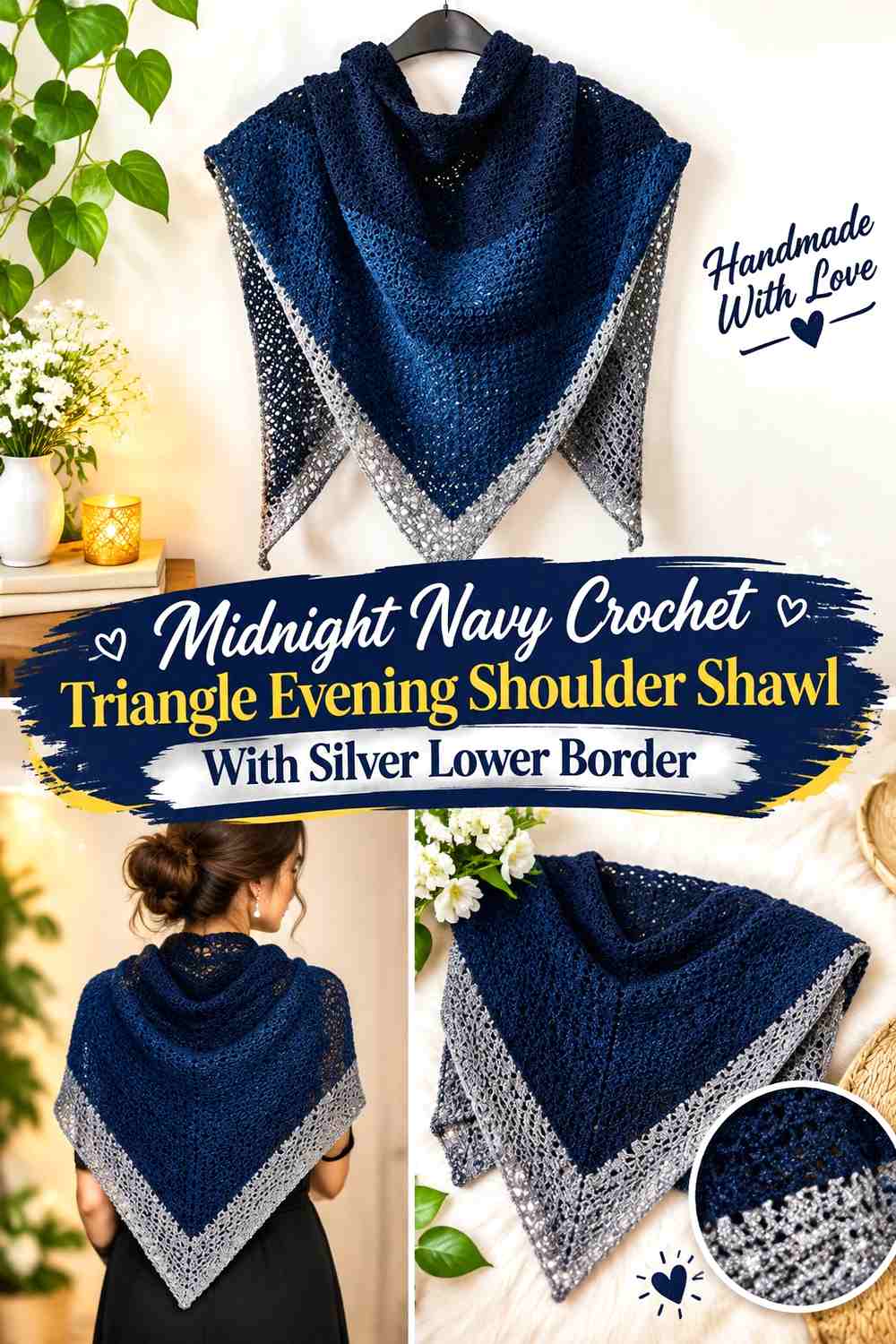
A simple triangle gives color placement more visual influence because the overall construction is restrained. Midnight navy can fill almost the entire piece while silver traces the long lower edges.
Midnight Navy Keeps the Crochet Triangle Clean Across the Shoulders
A continuous navy body provides a strong evening foundation and prevents simple stitch texture from becoming visually segmented.
Silver Can Follow the Midnight Navy Triangle’s Longest Edges
The lower sides are useful locations for silver because the color naturally leads the eye from the center point toward both shoulders.
Silver Should Stay Narrow Against a Midnight Navy Simple Shawl
Without elaborate lace or motifs to compete with it, silver becomes prominent quickly. A controlled edge can be enough to transform the appearance of the entire triangle.
Creator Credit: Wilma Westenberg
10. Silver Crochet Triangle Evening Shoulder Shawl With Midnight Navy Frame
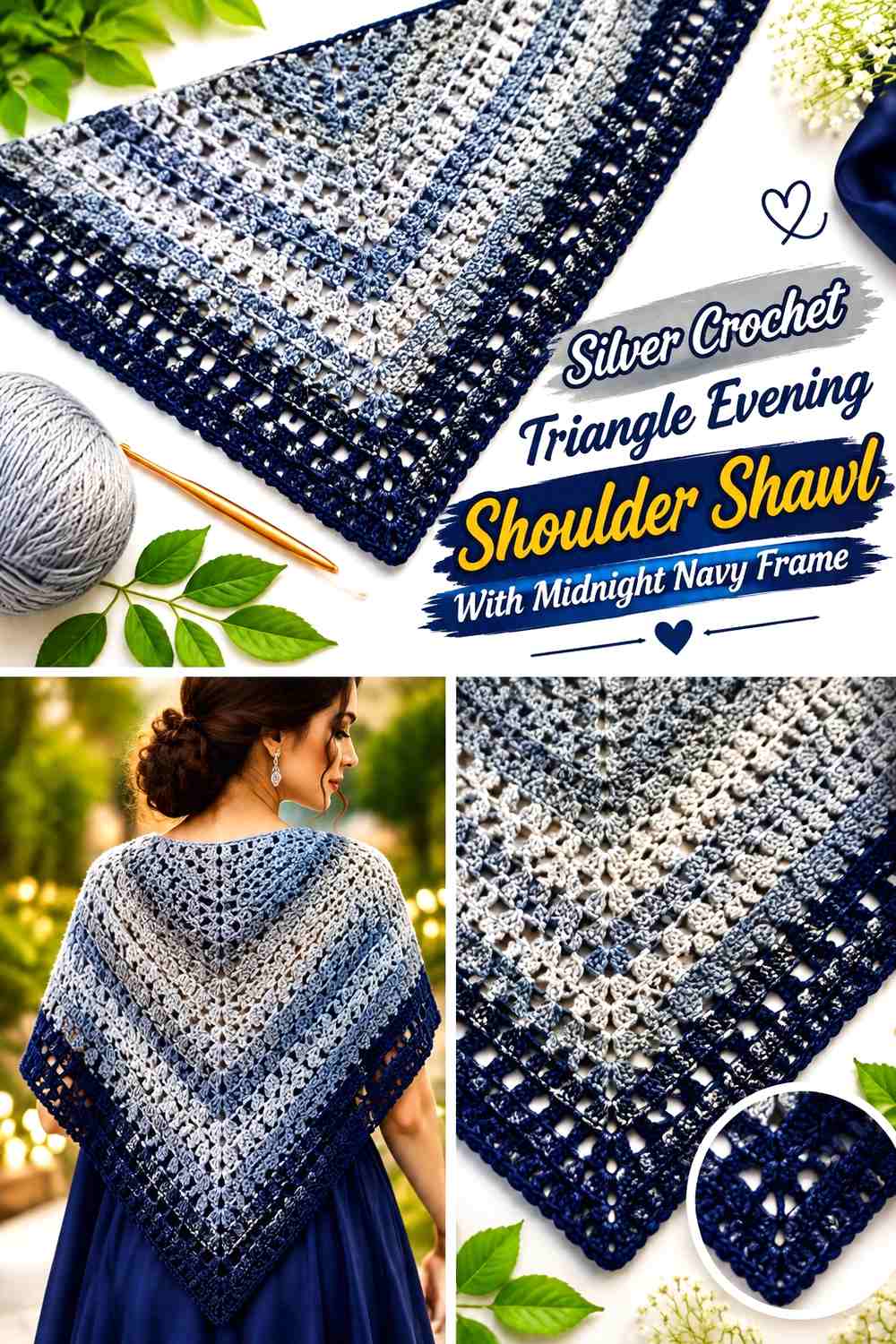
Reverse the usual hierarchy and let silver cover the main triangle while midnight navy defines the outer boundaries. This creates the lightest direction in the collection and makes the dark frame especially important.
Silver Should Remain Broad Across the Crochet Shoulder Shawl
Keep the central area consistently silver so it clearly reads as the dominant field. Scattering large navy bands through the center would weaken the reversed color concept.
Midnight Navy Can Frame the Silver Triangle Clearly
Use navy around the outside edge or along the upper shoulder line to give the lighter center a definite boundary.
Midnight Navy Needs Repetition Around the Silver Shawl
If navy appears only along one side, the palette may feel visually unbalanced. Repeating it along two connected edges or at corresponding points gives the frame a clearer purpose.
Creator Credit: Branda Crochet
11. Midnight Navy Crochet Lace Evening Shoulder Shawl With Silver Center Line
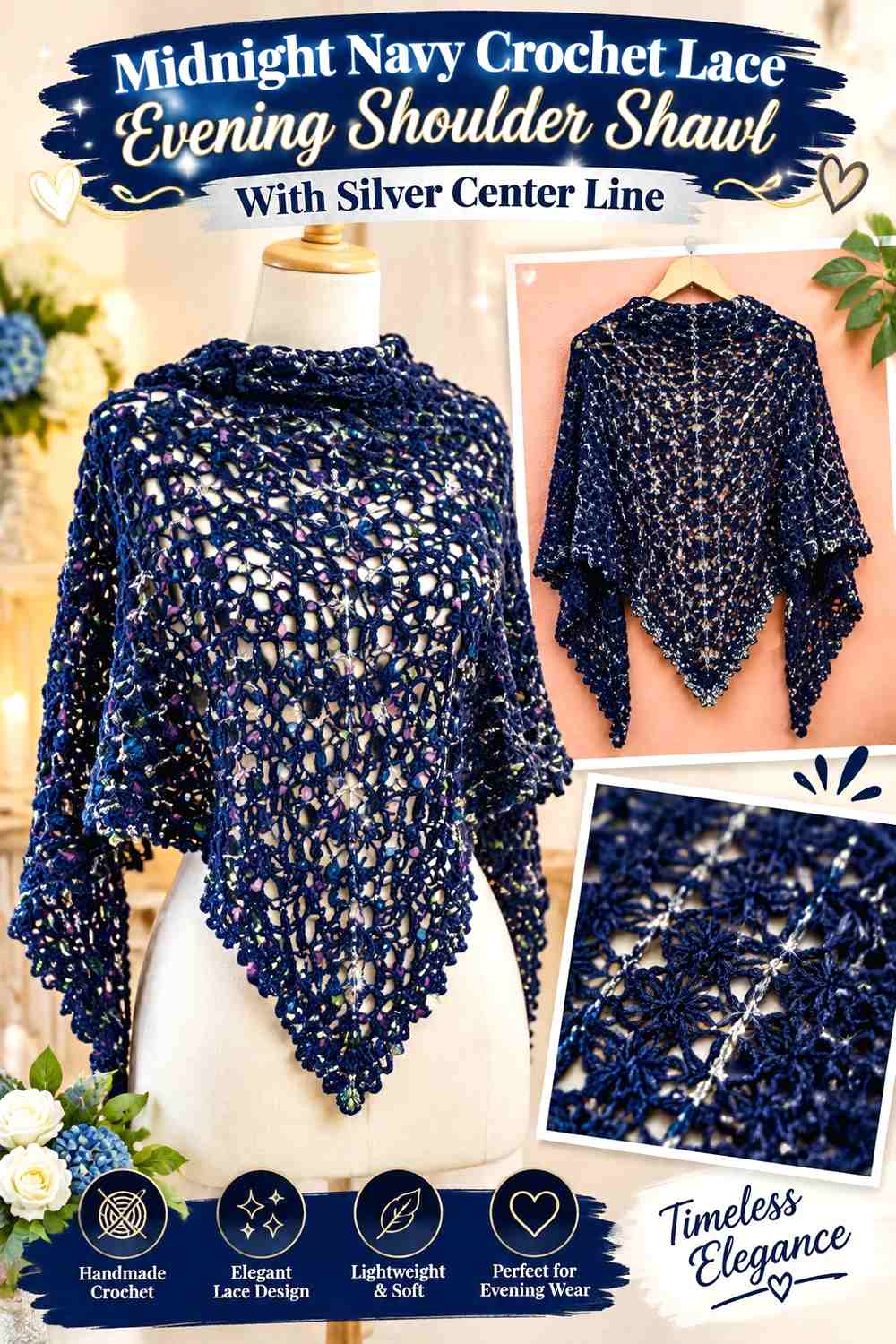
Instead of moving silver to the border, place it along the center of a triangular lace shawl. This draws attention down the middle while leaving both wings predominantly midnight navy.
Midnight Navy Should Carry Both Crochet Lace Wings
Keep the two sides of the shawl navy so the shoulder spread remains visually balanced. This gives the narrow silver center enough contrast to be recognizable.
Silver Can Emphasize the Midnight Navy Triangle Spine
A silver center section naturally directs the eye from the neckline toward the lowest point of the triangle. Keep the placement consistent so it reads as part of the structure rather than an isolated stripe.
Midnight Navy Can Finish the Silver Center at the Outer Border
Returning to navy at the perimeter prevents the center accent from taking over the entire bottom point. Alternatively, repeat a very small amount of silver at the point if you want a stronger focal finish.
Creator Credit: Sirin’s Crochet
12. Midnight Navy Crochet Pineapple Evening Shoulder Shawl With Silver Highlights
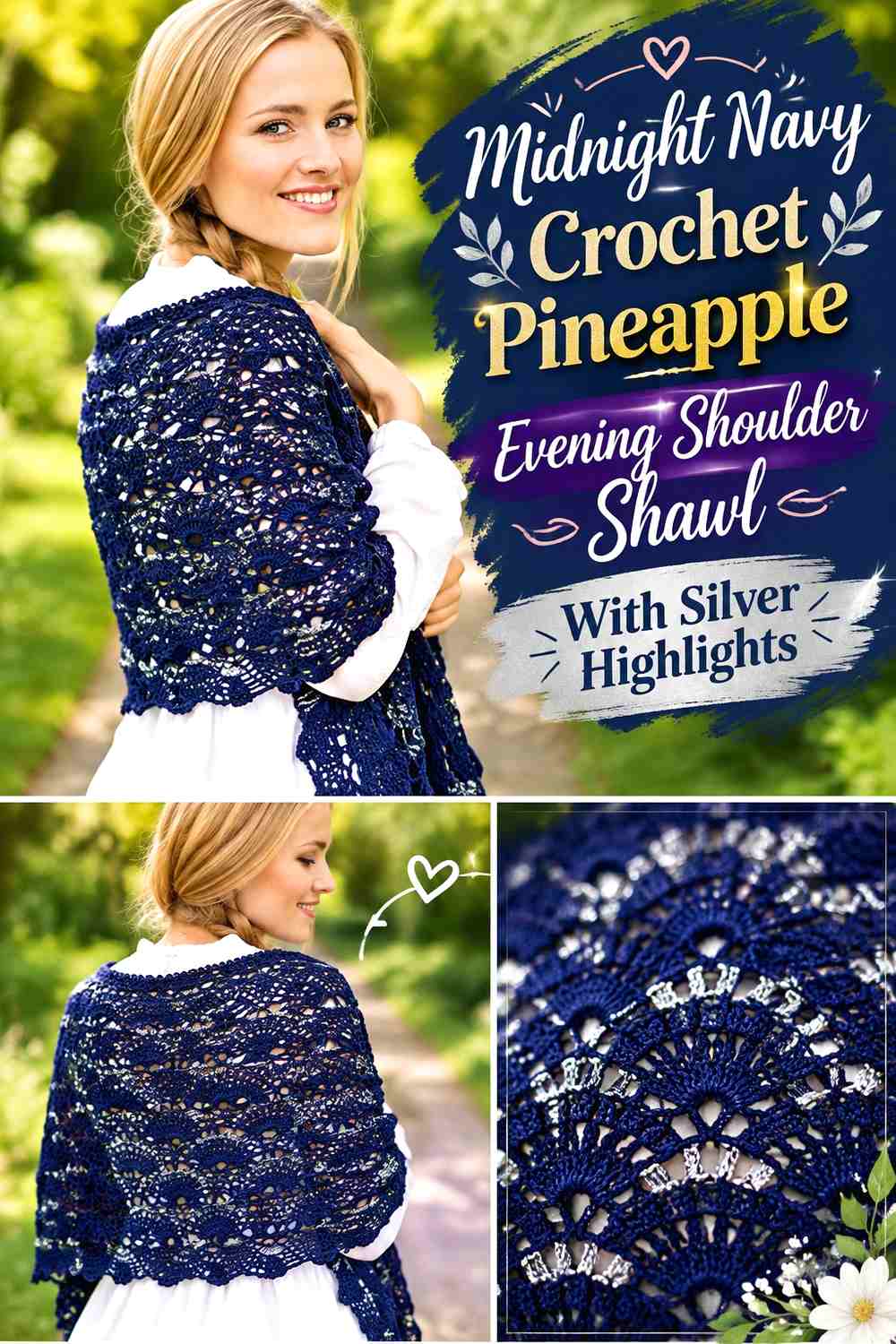
Pineapple-style lace produces large recognizable motifs, so it offers natural locations for silver without requiring every stitch group to change color. Midnight navy can form the motifs while silver identifies selected edges or transitions.
Midnight Navy Should Preserve the Crochet Pineapple Motif Shape
Keep most of each motif navy so its openwork structure stays readable. Dividing a single pineapple repeatedly between the two shades can make the motif harder to recognize.
Silver Can Separate Midnight Navy Pineapple Motifs at the Edge
A silver finishing area beneath or around the final motif row can make each pineapple outline easier to distinguish along the shawl perimeter.
Silver Highlights Need Repetition Across Midnight Navy Lace
If one motif receives silver, repeat the same treatment at regular positions. A consistent accent pattern is more cohesive than highlighting isolated pineapples without an obvious reason.
Creator Credit: The Crochet Crowd
13. Midnight Navy Crochet Crescent Evening Shoulder Shawl With Silver Outer Bands

A crescent curves naturally around the shoulders, making horizontal color bands highly visible. Use midnight navy through the inner curve and most of the body, then introduce silver closer to the sweeping outer edge.
Midnight Navy Should Follow the Crochet Crescent Near the Shoulders
Keeping the upper curve navy gives the shawl one uninterrupted line around the neckline and shoulders.
Silver Can Widen Toward the Midnight Navy Crescent Edge
A narrow silver band followed by a slightly broader one can move attention outward without requiring silver to occupy half the shawl. Keep the progression deliberate rather than changing widths randomly.
Midnight Navy Can Finish Beyond Silver for a Dark Outer Frame
If the silver bands feel too dominant, add a final navy edge. This sandwiches the lighter color between dark sections and produces a more controlled evening contrast.
Creator Credit: Meladora’s Creations for Crochet
14. Midnight Navy Crochet Textured Triangle Evening Shoulder Shawl With Silver Points
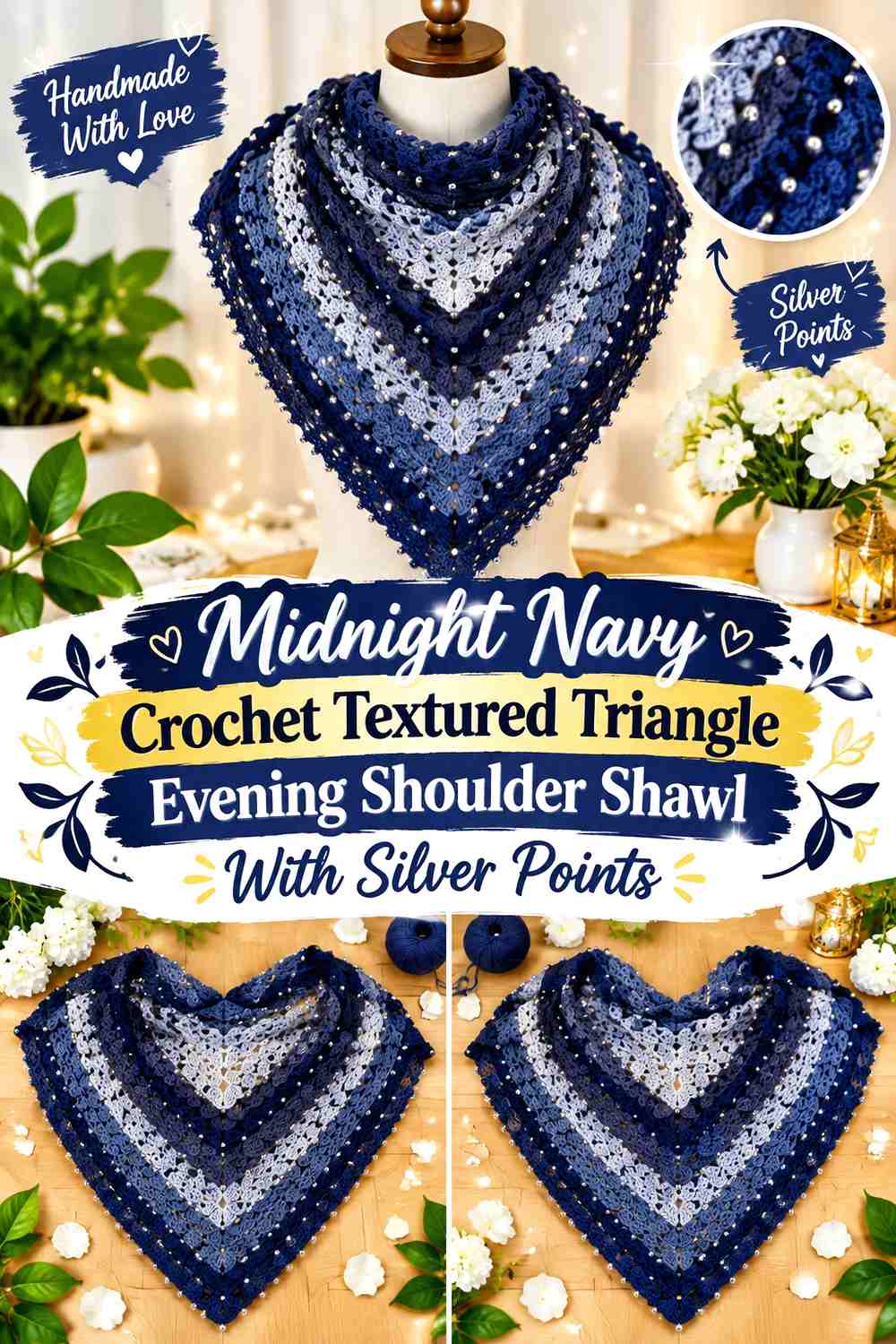
A textured triangle gives silver useful places to appear at repeated points rather than broad bands. Midnight navy can dominate the body while silver highlights selected peaks, center details, or the lower tip.
Midnight Navy Keeps Raised Crochet Texture Visually Unified
Use navy across the majority of the textured stitchwork so shadows and raised areas provide the surface variation. Multiple internal color changes can compete with that texture.
Silver Can Highlight Midnight Navy Crochet Points Selectively
Choose the lowest point, repeated edge peaks, or another consistent structural detail for silver. Small accents become more effective when their location has an obvious pattern.
Silver Should Not Cover Every Midnight Navy Textured Detail
If every raised section changes to silver, the shawl can become visually busy and the main texture may be harder to appreciate. Highlight only the areas you want the viewer to notice first.
Creator Credit: Littlejohn’s Yarn
Comparing the Midnight Navy and Silver Evening Shawl Directions
For the darkest navy-led look, Ideas 1, 5, 6, 8, 9, and 14 reserve silver mainly for borders or small structural details. These keep the broad shoulder area midnight navy and use silver to make finishing details easier to see.
Ideas 2, 3, 7, and 13 bring silver farther into the shawl through bands or larger sections. They work well when you want both colors visible from the front and back without dividing the wrap into equal halves.
Idea 10 reverses the hierarchy entirely with a silver main field and midnight navy frame. Ideas 11 and 12 use more targeted contrast: one focuses attention along the center line, while the other uses silver to clarify decorative lace motifs.
Conclusion
Midnight navy and silver can give a crochet evening shoulder shawl anything from a nearly monochromatic dark finish to a strongly contrasted two-color design. The deciding factor is not simply how much silver you use, but where that silver sits once the shawl is draped.
For a restrained evening look, keep midnight navy across most of the shoulder area and reserve silver for the border, center point, or scallops. For stronger contrast, introduce silver bands through the body or use it as the dominant color with a midnight navy frame.
Before completing the final accent section, drape the shawl over the shoulders and look at the entire outline. Long borders and repeated bands become more visually prominent when worn, so this check can help you decide whether another silver section improves the balance or simply adds more contrast.
Frequently Asked Questions
Should midnight navy or silver dominate a crochet evening shoulder shawl?
Midnight navy is a strong dominant choice when you want a dark evening wrap with silver used for definition. Silver can dominate when you prefer a lighter shawl and want navy to create a clear frame.
Where should silver go on a midnight navy crochet shawl?
Useful locations include the outer border, center spine, scallops, selected pattern bands, motif edges, or shawl tips. Choose the placement according to what needs definition rather than adding silver to every available detail.
How can I keep silver from overpowering midnight navy crochet?
Reduce its surface area and repeat it selectively. One border and one narrow internal accent can create enough connection without turning a navy-led shawl into an equal two-color design.
Does silver work well with midnight navy crochet lace?
Yes. Silver can help define lace edges, motif boundaries, or a center line against the darker field. Keep enough midnight navy uninterrupted so the lace pattern itself remains readable.
Should a silver border run around the entire midnight navy shawl?
It can, but it does not have to. A silver lower edge emphasizes the hanging portion, while keeping the upper neckline navy creates a darker frame around the shoulders. Choose the edge according to where you want the contrast concentrated.
Can midnight navy and silver be used in equal amounts?
Yes, particularly in striped, banded, or color-blocked shawls. Give each color a consistent structural role so the result looks planned rather than alternating shades simply to achieve equal quantities.
How can I check whether midnight navy and silver have enough contrast?
Place the yarns directly beside each other under the lighting in which the shawl is likely to be worn. You can also view them in grayscale to compare light-and-dark separation. If your silver is relatively dark, reserve it for broader sections rather than very small details.
What can I substitute for silver in this crochet shawl palette?
Choose a cool light gray, soft pewter-like gray, pale gray, or another muted light neutral that remains clearly distinguishable from midnight navy. Preserve the light-versus-dark relationship rather than relying on a particular commercial yarn shade.