Dusty Lilac and Dark Chocolate create a crochet wrap scarf palette with a noticeable light-and-dark relationship without relying on harsh contrast. Dusty Lilac brings the lighter, softened color area, while Dark Chocolate can add definition around edges, ends, textured sections, or selected bands.
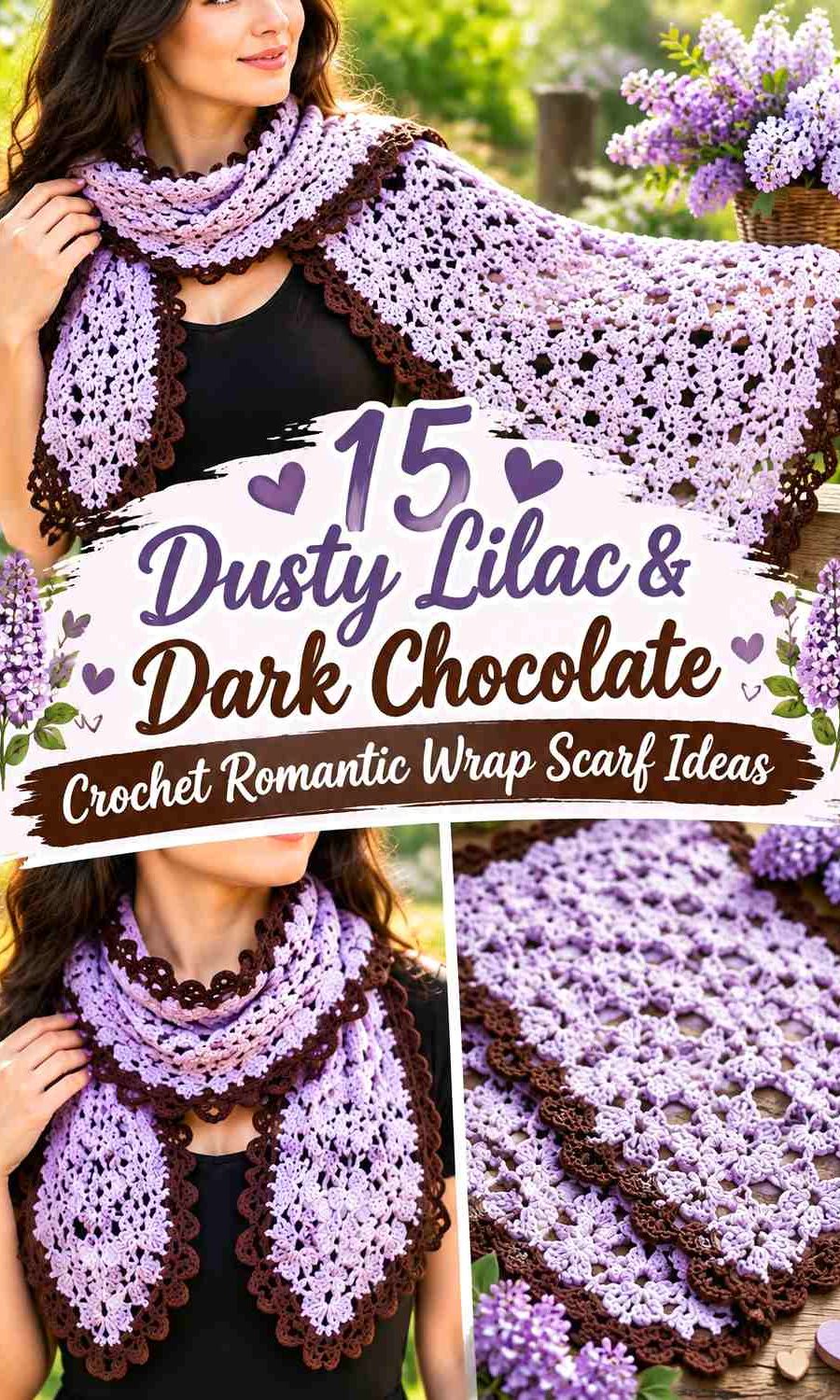
That balance matters on a wrap scarf because much of the finished fabric folds, overlaps, and changes position when worn. A Dark Chocolate border that seems narrow when the scarf is flat can become highly visible along the shoulders, while Dusty Lilac end panels may become the main feature when both ends hang toward the front.
The 15 ideas below approach the same romantic palette differently. Some let Dusty Lilac dominate, others give Dark Chocolate most of the surface, and several divide the colors through lace, stripes, center panels, borders, and ends. The credited tutorials support the crochet scarf, shawl, or wrap construction concepts; the Dusty Lilac and Dark Chocolate color plans are independent adaptations.
Quick List
- Dusty Lilac Crochet Romantic Wrap Scarf With Dark Chocolate Edging
- Dark Chocolate Crochet Stole With Dusty Lilac Ends
- Dusty Lilac Crochet Lace Wrap Scarf With Dark Chocolate Framing
- Dark Chocolate Crochet Openwork Wrap With Dusty Lilac Bands
- Dusty Lilac Crochet Möbius Wrap Scarf With Dark Chocolate Border
- Dark Chocolate Crochet C2C Wrap With Dusty Lilac Blocks
- Dusty Lilac Crochet Vintage Lace Scarf With Dark Chocolate Accents
- Dark Chocolate Crochet Lace Shawl Scarf With Dusty Lilac Edge
- Dusty Lilac Crochet Curved Wrap Scarf With Dark Chocolate Ends
- Dark Chocolate Crochet Textured Wrap Scarf With Dusty Lilac Details
- Dusty Lilac Crochet Long Scarf Wrap With Dark Chocolate Tapered Ends
- Dark Chocolate Crochet Romantic Shawl With Dusty Lilac Lace Border
- Dusty Lilac Crochet Triangle Wrap Scarf With Dark Chocolate Framing
- Dark Chocolate Crochet Relaxed Wrap Scarf With Dusty Lilac Center
- Dusty Lilac Crochet Textured Shawl Wrap With Dark Chocolate Border
Decide Whether Dusty Lilac or Dark Chocolate Should Dominate the Wrap Scarf
Start with the color you want to see across the largest area when the wrap is actually worn. A Dusty Lilac-dominant scarf keeps the overall surface lighter and allows Dark Chocolate to behave as a frame or anchor. A Dark Chocolate-dominant wrap has more visual depth, so relatively small Dusty Lilac sections can become noticeable accents.
For a long rectangular wrap, think separately about the center back, long edges, short ends, and front-hanging sections. For triangular or curved shawl-scarf shapes, consider the upper edge, point, wings, and lower border. Assigning colors to these zones produces a clearer result than switching shades without a placement plan.
Use Dusty Lilac and Dark Chocolate Contrast to Protect Crochet Detail
Different hues do not automatically create strong contrast. Compare the actual lilac and brown yarns side by side because a very muted Dark Chocolate and a deeper Dusty Lilac can be closer in value than expected.
If you want small lace points, picots, textured ridges, or narrow bands to remain obvious, stronger light-and-dark separation helps. A grayscale photo is a simple way to check whether the two yarns still look different when hue is removed.
Plan Dusty Lilac and Dark Chocolate While the Wrap Scarf Is Draped
A wrap scarf changes considerably when it moves from a flat surface to the shoulders. Center stripes can disappear inside folds, while contrasting ends and long borders often stay visible.
Periodically drape the developing scarf rather than evaluating the palette only on a table. This is especially useful before widening a Dark Chocolate border or adding another Dusty Lilac band because the worn position can make small color sections look much larger or smaller.
1. Dusty Lilac Crochet Romantic Wrap Scarf With Dark Chocolate Edging
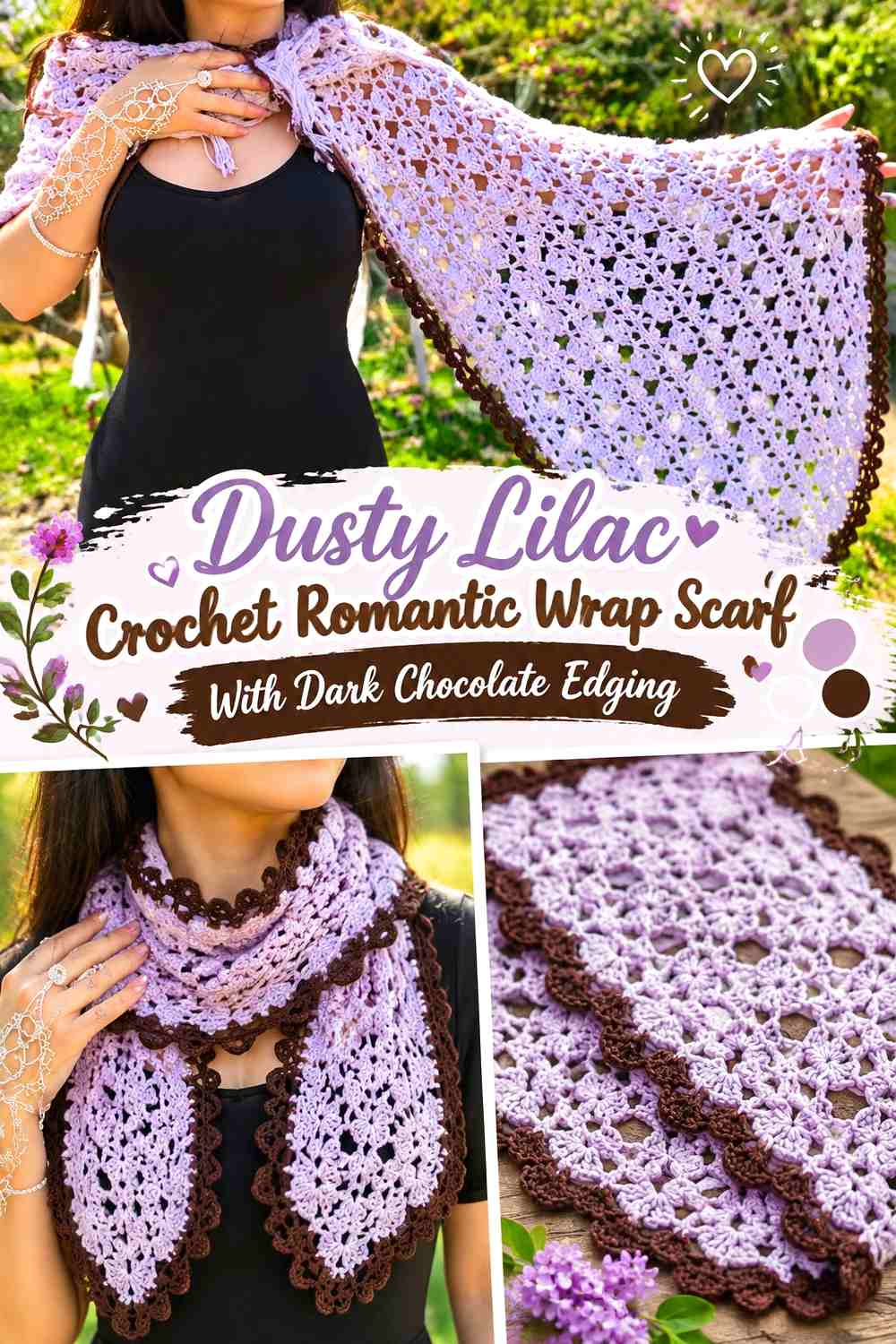
Let Dusty Lilac fill most of the wrap so the softened purple remains the first color readers notice. Dark Chocolate then becomes a controlled outer frame rather than an equal second field. This arrangement works particularly well when the scarf surface already has lace or texture and does not need frequent color changes.
Dusty Lilac Should Carry the Main Crochet Wrap Scarf Surface
Keep the broad central section Dusty Lilac so stitch texture can remain continuous. A single large color field lets openwork, clusters, or repeated rows create visual movement instead of asking both texture and color to compete.
Before widening the brown sections, look at the scarf from several feet away. If Dusty Lilac is no longer clearly dominant, reduce the darker area.
Dark Chocolate Can Define the Dusty Lilac Outer Edge
Use Dark Chocolate around one or both long edges, the short ends, or a narrow finishing border. Its darker value can sharpen the silhouette of a pale wrap and make decorative edging easier to distinguish.
A narrow border is often enough. Very broad Dark Chocolate edging can start to look like a separate panel instead of a frame.
Creator Credit: Bag-O-Day Crochet
2. Dark Chocolate Crochet Stole With Dusty Lilac Ends
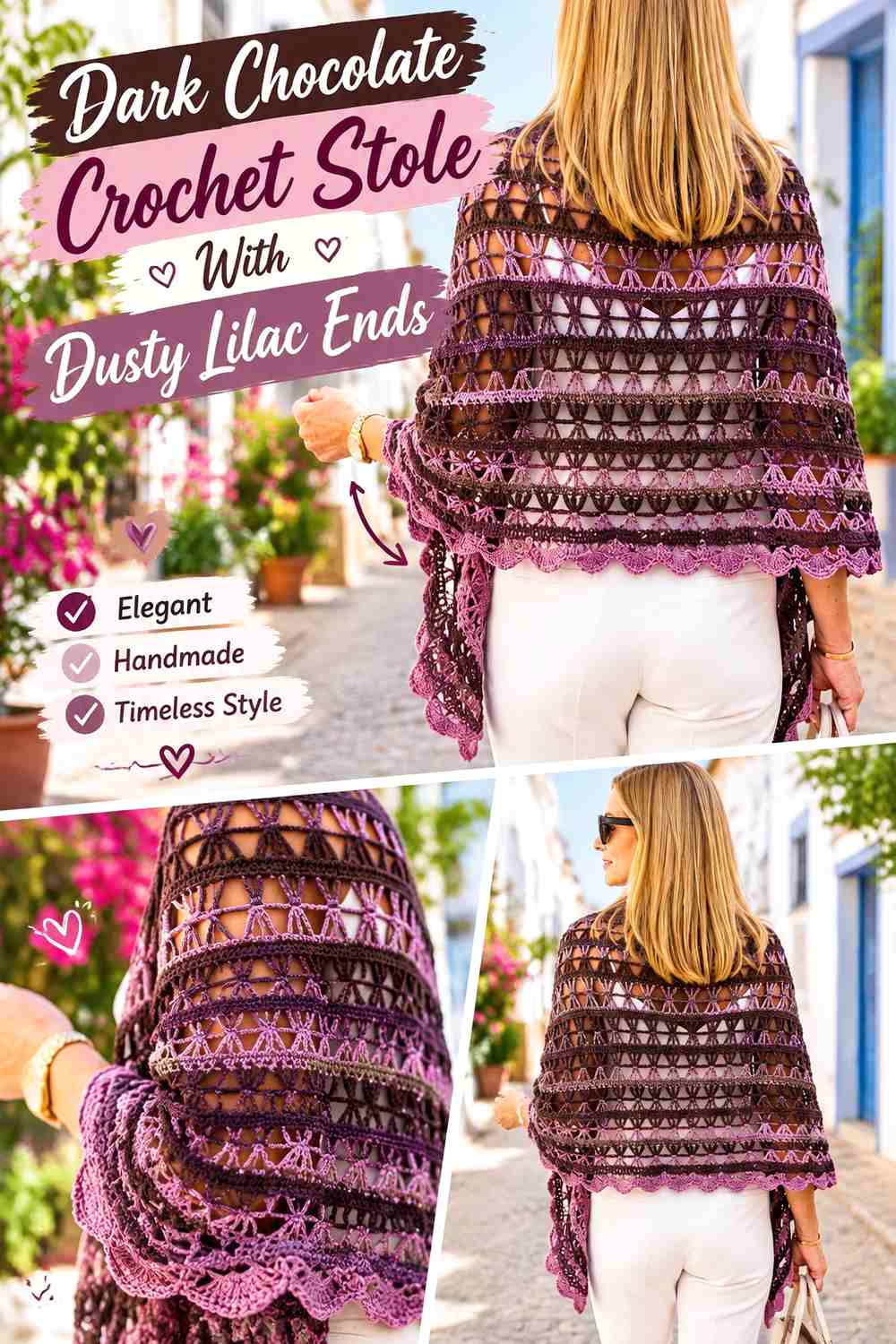
Reverse the hierarchy by covering most of the stole in Dark Chocolate and reserving Dusty Lilac for both short ends. Because wrap ends often hang forward, the lighter color receives plenty of visibility without occupying most of the fabric.
Dark Chocolate Should Connect the Main Crochet Stole
Keep the long center section consistently Dark Chocolate so the stole reads as one continuous dark piece. Repeated brown through the shoulder and back area also prevents the light ends from dividing the scarf into unrelated sections.
If the crochet contains subtle texture, inspect a sample in the lighting where the wrap is likely to be worn. Dark yarn can make low-relief detail quieter.
Dusty Lilac Gives Dark Chocolate Ends a Softer Contrast
Use comparable amounts of Dusty Lilac on both ends when you want visual symmetry. The color change can begin before the very edge so enough lilac remains visible after the ends overlap or hang at different lengths.
Drape the scarf before deciding the final depth of those panels. End sections that look large while flat may appear much smaller once wrapped.
Creator Credit: Handwork diy
3. Dusty Lilac Crochet Lace Wrap Scarf With Dark Chocolate Framing
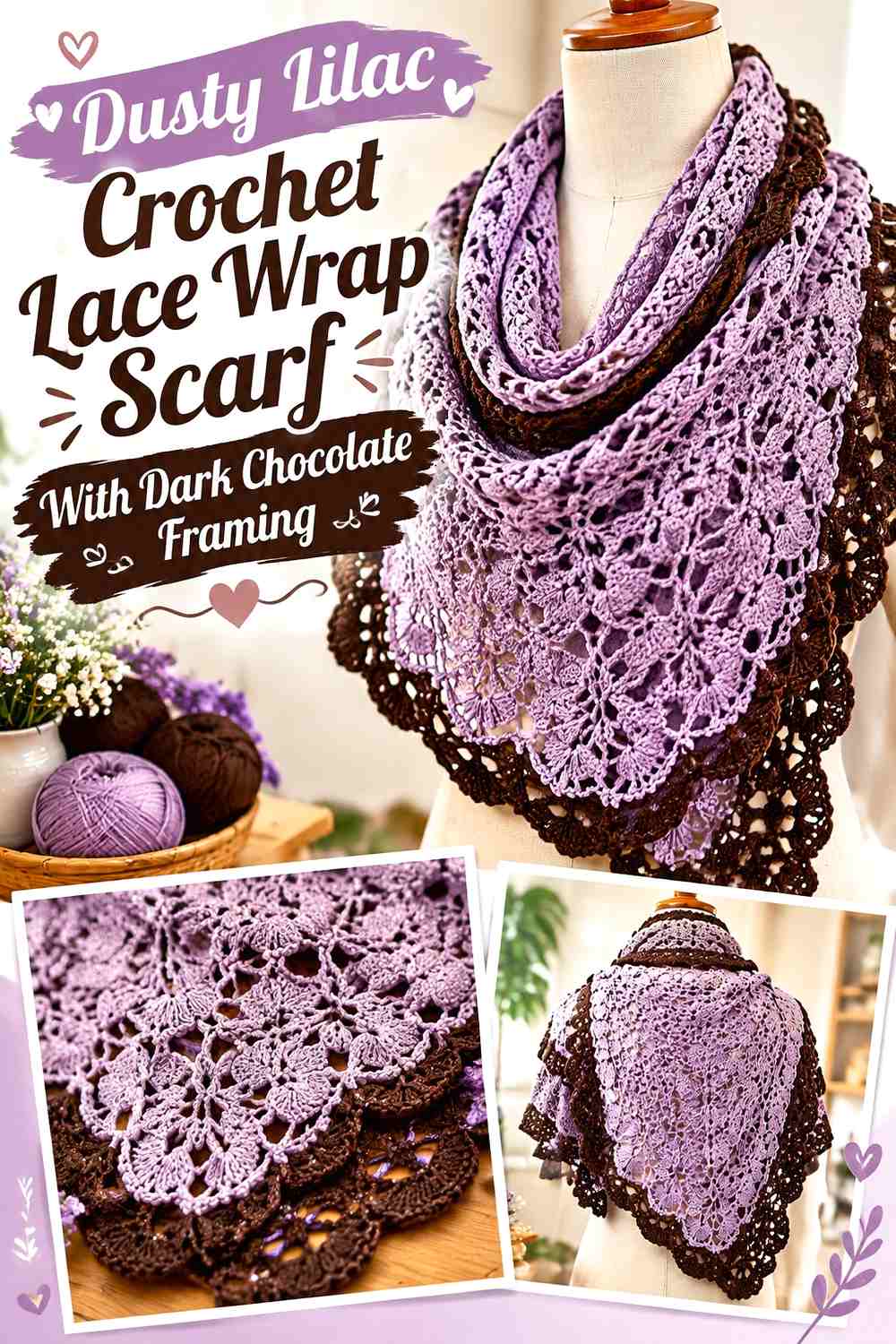
This version keeps the lace itself Dusty Lilac and moves Dark Chocolate away from the internal repeat. That lets the openwork remain uninterrupted while the darker color outlines the finished wrap.
Dusty Lilac Keeps the Crochet Lace Pattern Continuous
Use Dusty Lilac across most lace repeats rather than changing shades within every motif or row. A consistent color gives the negative space and stitch shapes room to establish their own rhythm.
Remember that openwork incorporates the clothing beneath it visually, so test the lilac fabric over likely outfit colors before finalizing the border.
Dark Chocolate Frames Dusty Lilac Lace Without Crowding It
Place Dark Chocolate along the outside edges or short ends. The contrast provides a visual stopping point around the lighter openwork without cutting through the pattern itself.
If the lace already has a decorative outer shape, keep the chocolate section restrained enough that the shape remains visible.
Creator Credit: TEJIENDO CON MERRY CARDIEL
4. Dark Chocolate Crochet Openwork Wrap With Dusty Lilac Bands
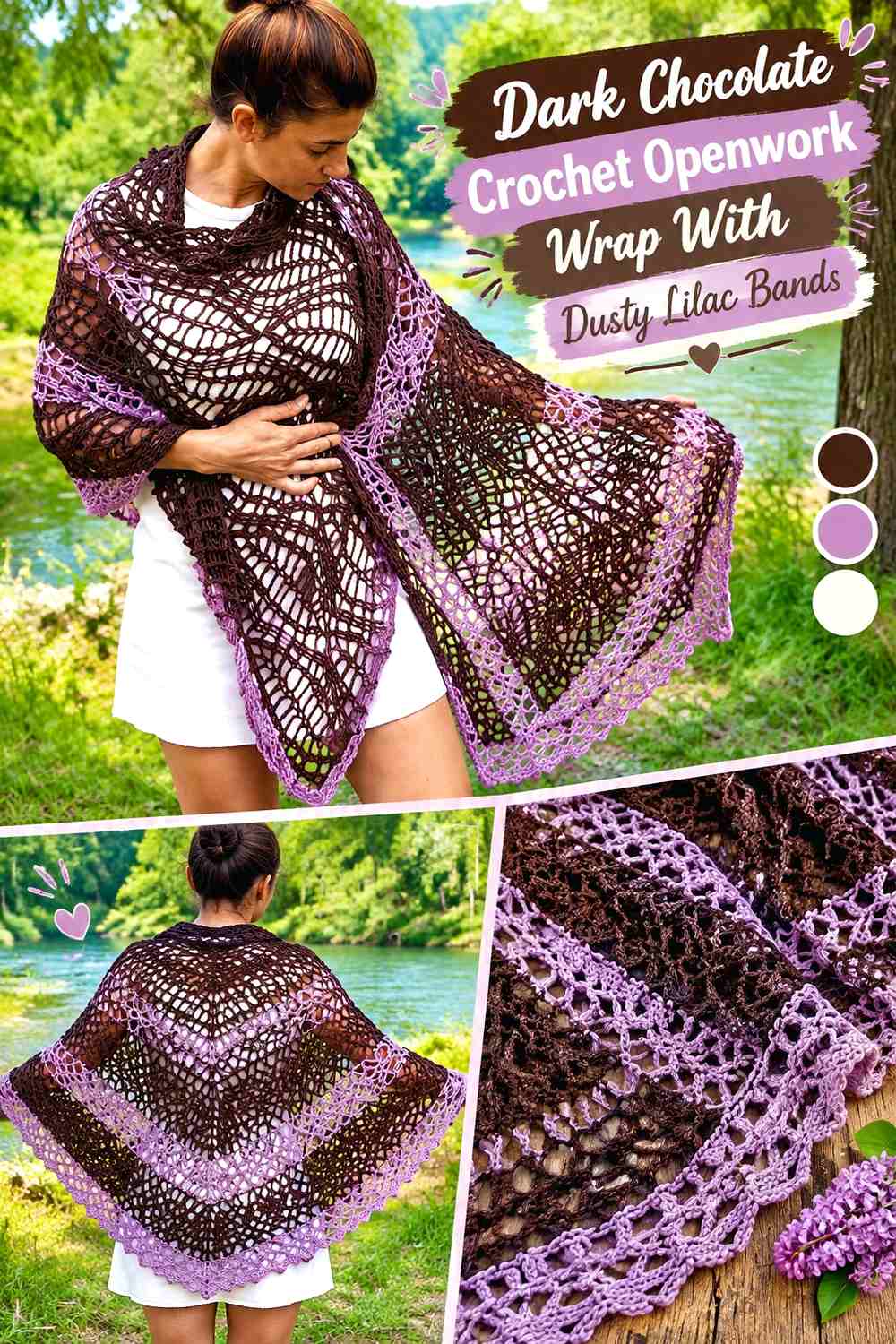
A Dark Chocolate openwork body creates a deeper color base, while Dusty Lilac bands can interrupt it at planned intervals. This gives the wrap more movement than simple edging while still keeping one obvious dominant color.
Dark Chocolate Needs Space Between Dusty Lilac Bands
Leave substantial Dark Chocolate areas between the lighter bands. Wide dark intervals help the eye connect the wrap from one end to the other and stop it from becoming a sequence of equally weighted stripes.
The spacing also lets openwork remain readable without a color change occurring inside every repeat.
Dusty Lilac Bands Should Repeat Predictably Across Dark Chocolate
Choose a simple logic for the Dusty Lilac sections, such as placing them near both ends or repeating them around the outer thirds. Planned repetition looks more cohesive than inserting a pale stripe wherever a color change happens to be convenient.
Check the worn wrap before adding another band because folds can visually compress the spacing.
Creator Credit: Francesca Uncinettando Crochet&Love
5. Dusty Lilac Crochet Möbius Wrap Scarf With Dark Chocolate Border
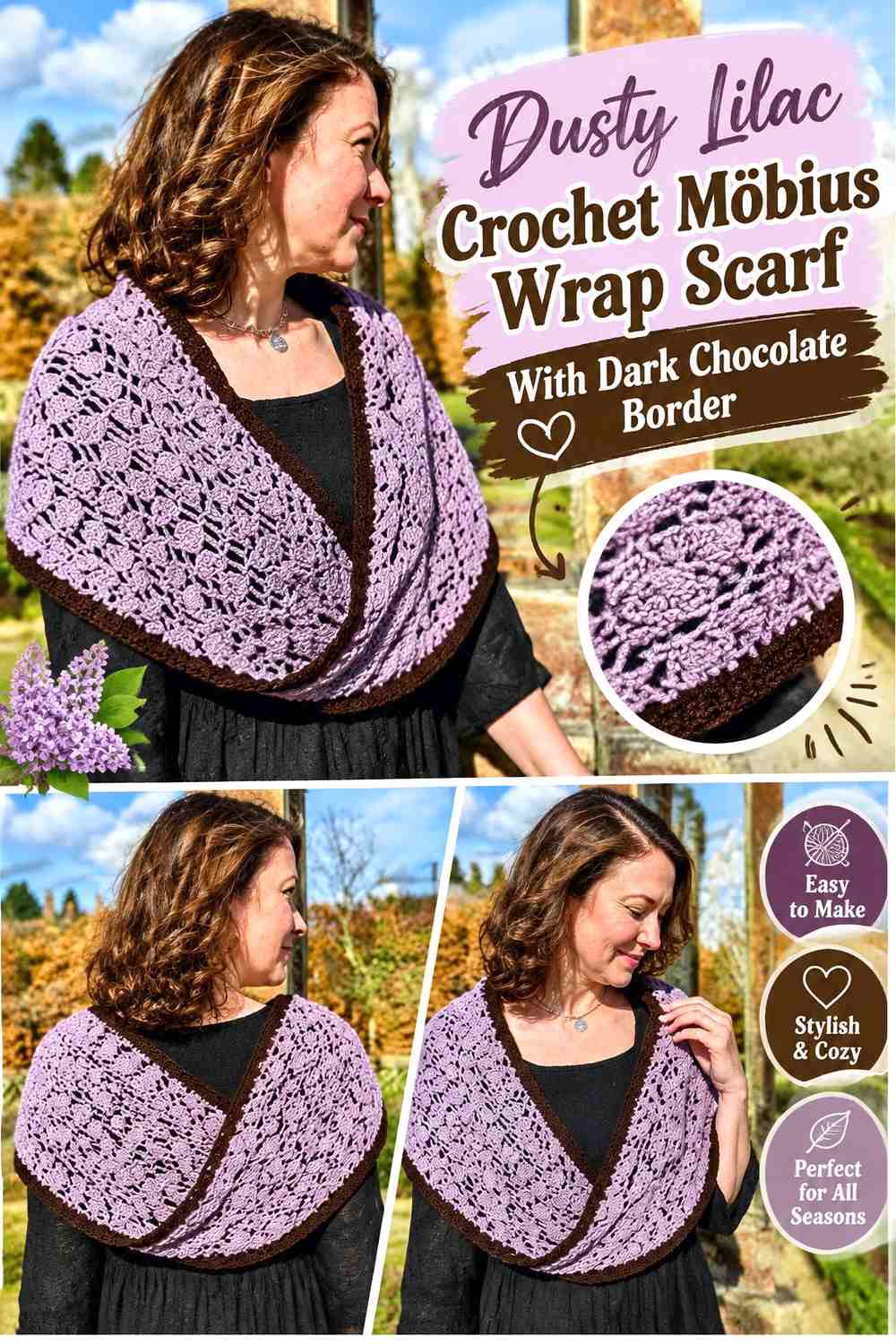
A looped or Möbius-style wrap requires color planning that considers twisting and overlap. Dusty Lilac can cover most of the continuous surface while Dark Chocolate follows an edge that moves around the loop.
Dusty Lilac Keeps the Möbius Crochet Wrap Visually Connected
Use Dusty Lilac through the majority of the fabric so the twist remains easy to read. Too many alternating blocks can make a continuous loop appear visually chopped into sections.
The lighter field also provides space for any repeated stitch texture to remain part of the design.
Dark Chocolate Can Trace the Dusty Lilac Möbius Edge
A Dark Chocolate border is especially useful on a twisted wrap because the edge appears in different positions as the scarf turns. The darker line can help emphasize that changing contour.
Check the entire loop before adding extra brown. Because the edging travels around the scarf, even a narrow strip can have considerable visual presence.
Creator Credit: Ophelia Talks Crochet
6. Dark Chocolate Crochet C2C Wrap With Dusty Lilac Blocks
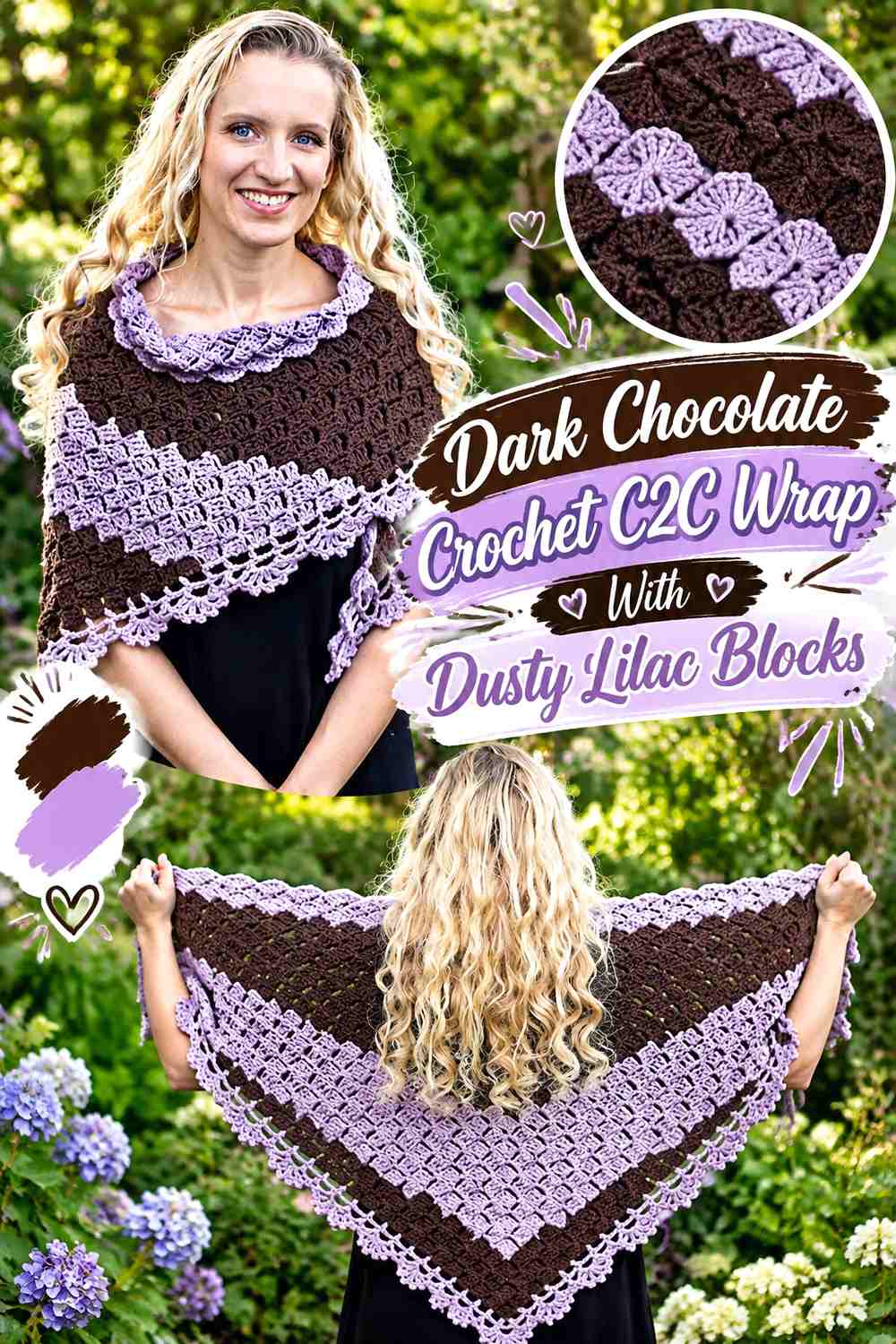
Block-based crochet gives the two colors a natural geometric structure. Keep Dark Chocolate across most sections and use Dusty Lilac in a few larger areas rather than changing colors from block to block.
Dark Chocolate Should Remain the Main C2C Crochet Color
A C2C-style surface already contains many visible units, so frequent color switching can become busy quickly. Keeping most of those units Dark Chocolate provides continuity.
Use the darker shade to connect separate Dusty Lilac sections so the entire wrap still reads as one composition.
Dusty Lilac Blocks Should Be Large Enough Against Dark Chocolate
A few larger lilac areas will generally remain more noticeable after draping than numerous tiny isolated accents. Consider corners, ends, or a planned diagonal zone rather than scattering single blocks.
Lay the scarf around your shoulders periodically to see which Dusty Lilac areas disappear into folds.
Creator Credit: naztazia
7. Dusty Lilac Crochet Vintage Lace Scarf With Dark Chocolate Accents
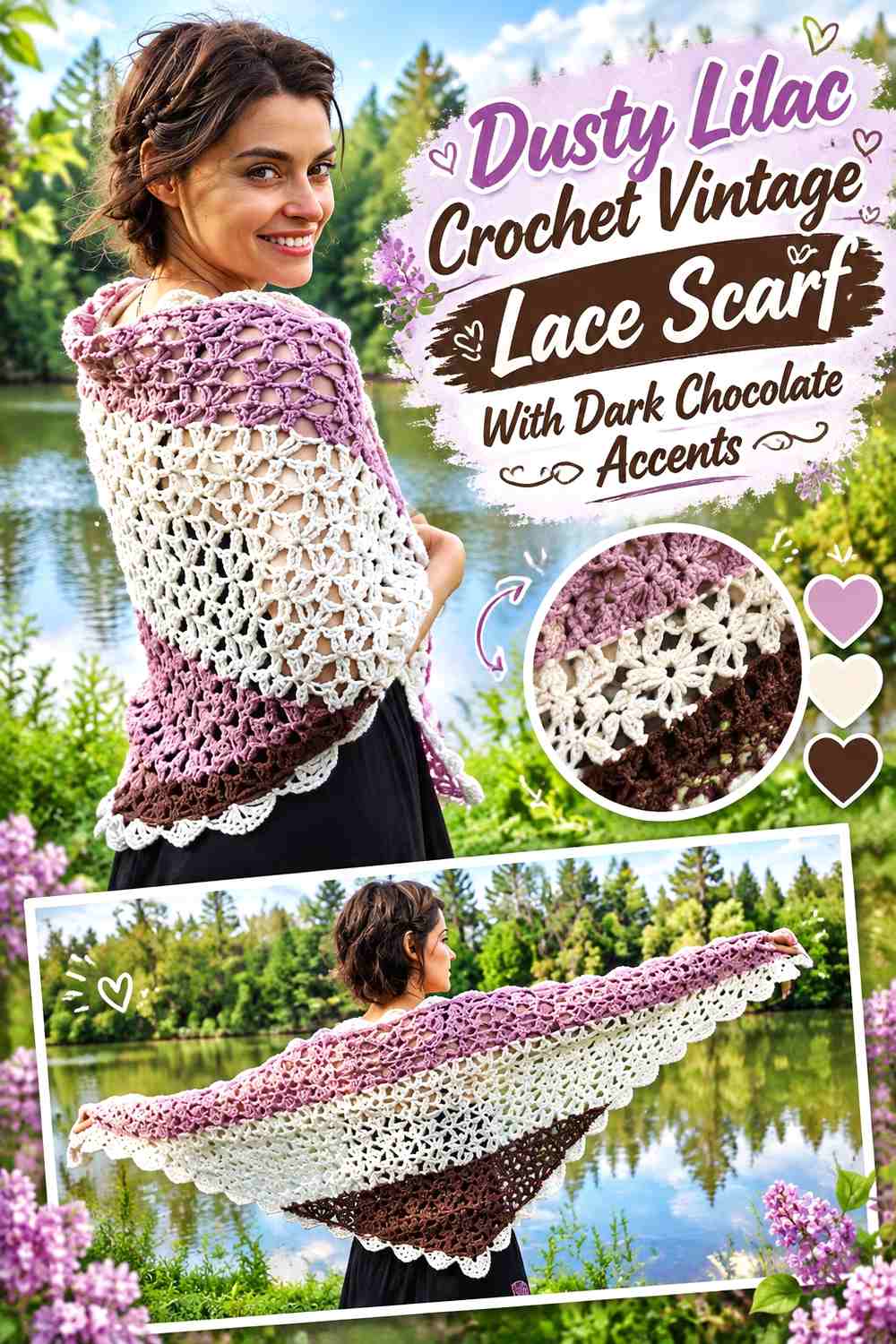
A vintage-style lace surface can carry plenty of detail on its own, so keep Dusty Lilac dominant and use Dark Chocolate selectively. Small controlled brown sections can define the shape without distracting from the lace.
Dusty Lilac Lets Vintage Crochet Lace Stay the Main Feature
Run Dusty Lilac through most of the patterned area so the viewer sees the lace repeat before the color changes. This is particularly useful where several different openings or decorative stitch shapes already occur.
Frequent Dark Chocolate changes inside the lace can make the individual motifs harder to read.
Dark Chocolate Should Accentuate Selected Dusty Lilac Edges
Place Dark Chocolate at the lower border, short ends, or another clearly defined finishing area. A darker edge provides contrast while letting the center remain calm.
If the scarf has several decorative borders already, choose one area for the strongest brown treatment rather than outlining everything equally.
Creator Credit: Jayda InStitches
8. Dark Chocolate Crochet Lace Shawl Scarf With Dusty Lilac Edge
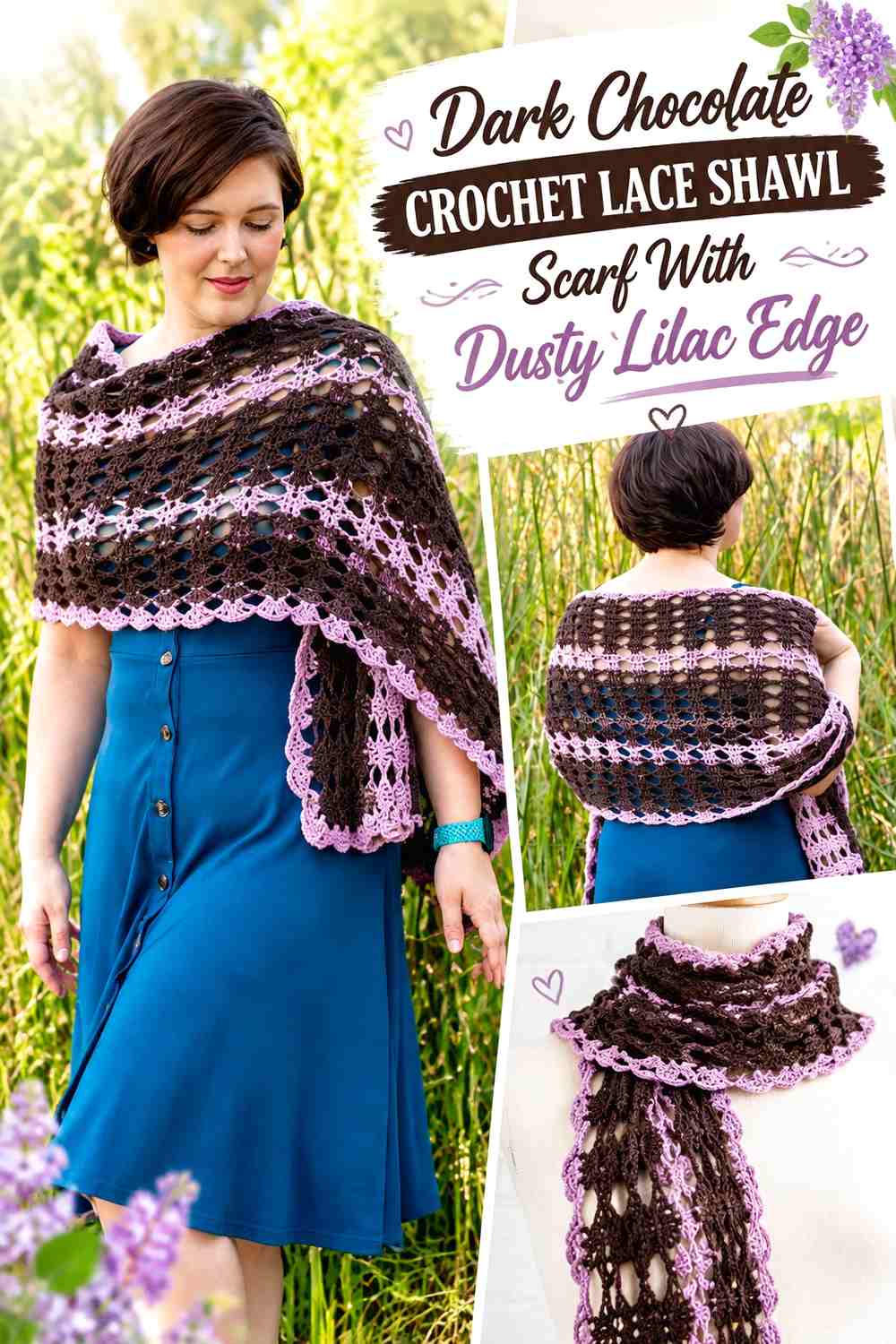
For a darker romantic direction, use Dark Chocolate throughout the lace body and reserve Dusty Lilac for the perimeter. The lighter shade can make the shape of an open border easier to recognize.
Dark Chocolate Gives the Crochet Lace a Deeper Background
Let Dark Chocolate cover enough uninterrupted area that the shawl remains clearly brown-dominant. Because lace contains empty space, the garment underneath will affect how dark that field appears.
Test the crochet over your likely clothing rather than evaluating it only against a work surface.
Dusty Lilac Makes the Dark Chocolate Lace Edge Easier to Follow
Use Dusty Lilac around a lower border or selected outer edge where the lighter value can separate decorative points from the body.
Avoid making the lilac border so broad that the viewer reads two equal color blocks unless that stronger division is intentional.
Creator Credit: Winding Road Crochet
9. Dusty Lilac Crochet Curved Wrap Scarf With Dark Chocolate Ends

A curved scarf places the ends and center differently from a standard rectangle. Keep the sweeping middle Dusty Lilac and use Dark Chocolate where the shape narrows toward each end.
Dusty Lilac Should Follow the Main Crochet Curve
A continuous lilac center emphasizes the scarf’s overall line instead of breaking it with repeated bands. This is useful when the construction itself already creates an unusual silhouette.
Keep Dark Chocolate away from the middle if your goal is to preserve that uninterrupted curve.
Dark Chocolate Gives Dusty Lilac Curved Ends More Weight
Apply Dark Chocolate near both tips or narrowing sections. The darker color can visually emphasize where the wrap tapers while leaving the broad center lighter.
Wear the scarf in several positions before determining how far the brown should extend because curved ends may overlap differently from straight ones.
Creator Credit: B.Hooked Crochet
10. Dark Chocolate Crochet Textured Wrap Scarf With Dusty Lilac Details

Texture becomes the primary surface feature here. Dark Chocolate provides the base while Dusty Lilac appears only where it can clarify selected raised areas or finishing details.
Dark Chocolate Needs Lighting That Shows the Crochet Texture
Before making a large textured section in Dark Chocolate, work enough fabric to see how the stitch relief appears under ordinary lighting. Very subtle raised work can become less obvious in a dark shade.
If the texture already reads well, there is no need to add lilac throughout every raised section.
Dusty Lilac Should Highlight Only Selected Dark Chocolate Texture
Place Dusty Lilac along one repeated textured area, a lower edge, or a deliberate finishing feature. The goal is to direct attention, not outline every stitch.
If the wrap starts appearing spotted, reduce the number of light accents and restore larger uninterrupted Dark Chocolate areas.
Creator Credit: Rich Textures Crochet
11. Dusty Lilac Crochet Long Scarf Wrap With Dark Chocolate Tapered Ends
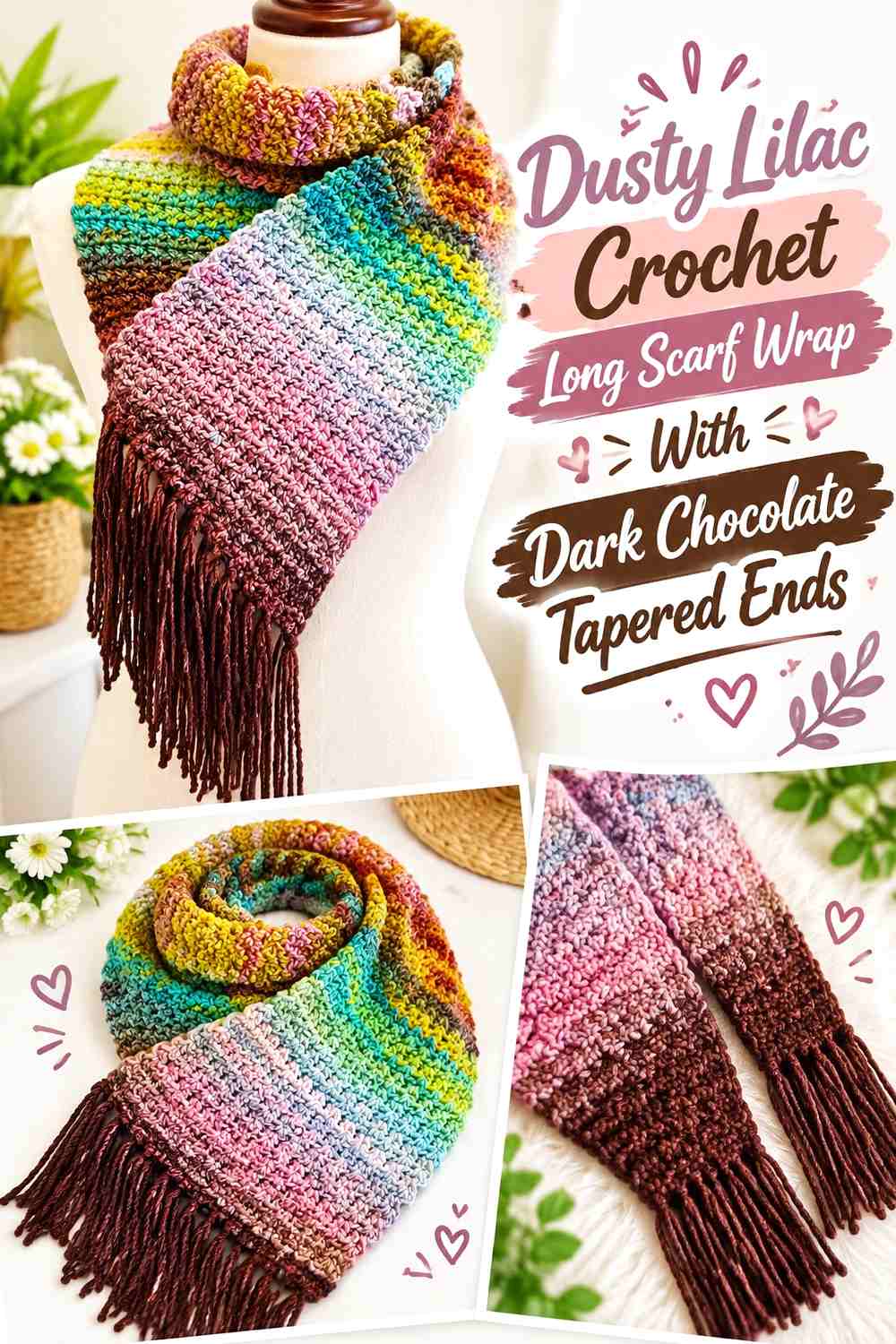
A long scarf that can also be wrapped around the shoulders offers an easy place for two-color division. Keep the center Dusty Lilac and shift gradually or cleanly into Dark Chocolate toward both ends.
Dusty Lilac Should Cover Most of the Long Crochet Scarf
Give Dusty Lilac enough length that it remains visible even after the scarf loops around the neck or shoulders. A short central section can disappear completely once wrapped.
Keeping the center one color also helps a repeated stitch pattern remain consistent.
Dark Chocolate Makes Dusty Lilac Scarf Ends More Distinct
Use Dark Chocolate on the ends where they can remain visible after wrapping. This placement works particularly well with tassels or other finishing details when the construction includes them, because the contrasting area clearly marks the scarf’s termination.
Compare both ends before finishing so one does not become visually much heavier than the other unintentionally.
Creator Credit: Hooked by Robin
12. Dark Chocolate Crochet Romantic Shawl With Dusty Lilac Lace Border
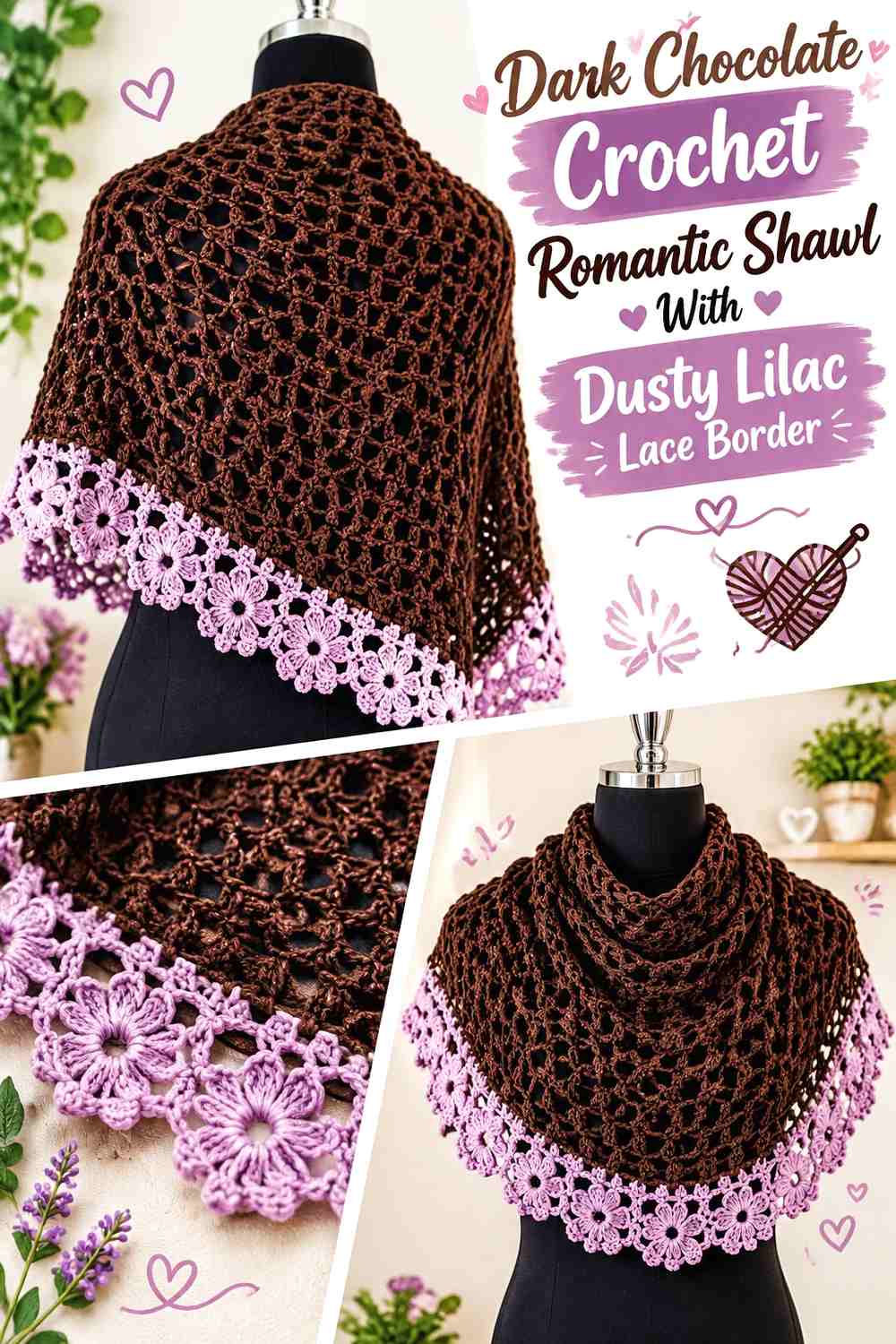
Here, Dark Chocolate provides the broad shawl field while Dusty Lilac is reserved for a more decorative outer section. This creates a dark-to-light progression toward the edge.
Dark Chocolate Keeps the Crochet Shawl Body Visually Grounded
Use Dark Chocolate throughout the central area so the shawl retains a clear dominant color. Large uninterrupted sections also prevent decorative border work from competing with internal stripes.
If the fabric is very open, check whether the outfit beneath changes the apparent depth of the brown.
Dusty Lilac Can Lighten the Dark Chocolate Outer Border
Introduce Dusty Lilac near the edge where lace points, fans, or another decorative finish can benefit from a lighter value. Because the border occupies the perimeter, it will be visible from several directions even if it is relatively narrow.
Stop adding lilac once the edge has enough contrast to remain distinct.
Creator Credit: Crochet with Clare
13. Dusty Lilac Crochet Triangle Wrap Scarf With Dark Chocolate Framing
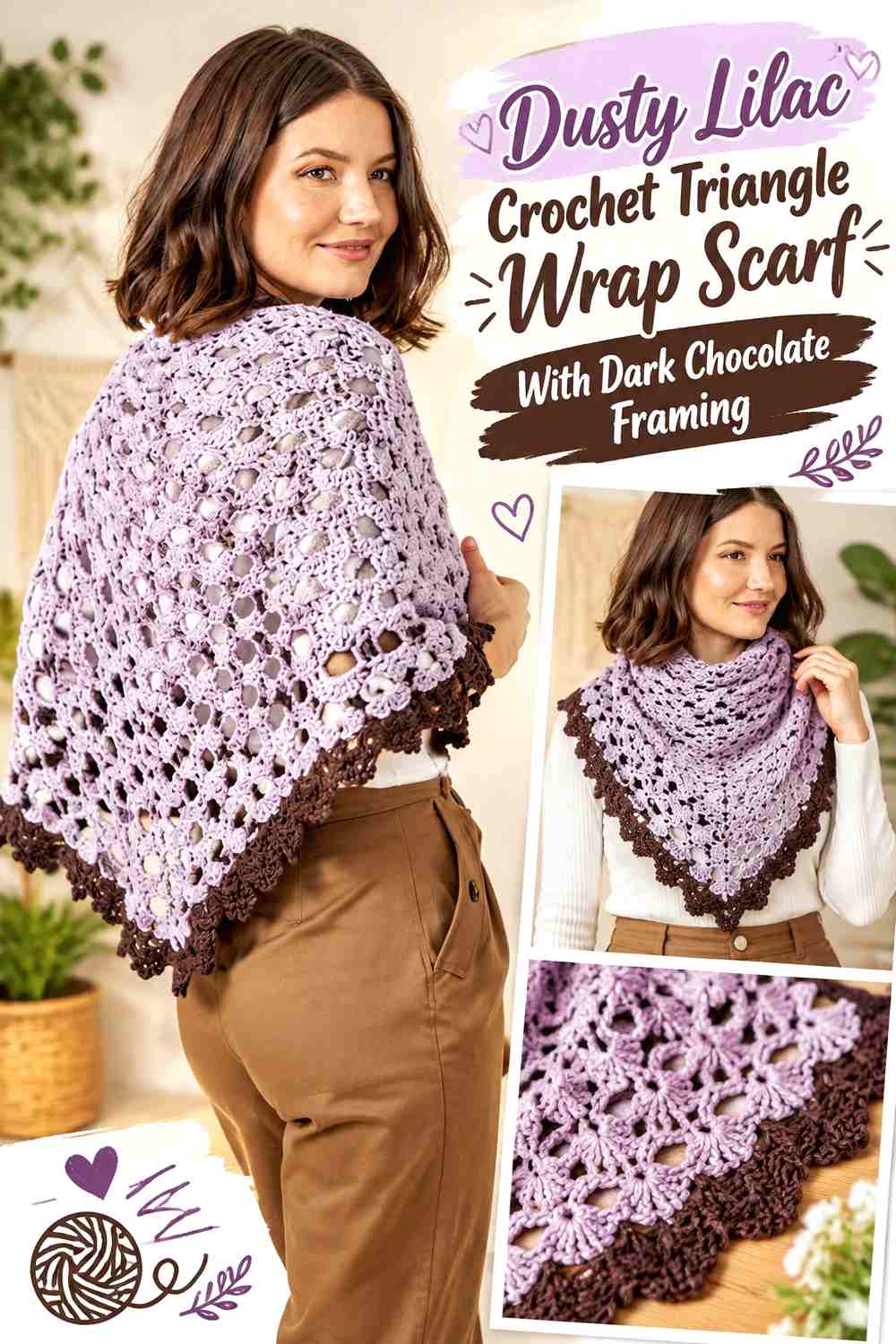
A triangle changes where each color attracts attention. Dusty Lilac can cover the central field, while Dark Chocolate follows the angled lower edges or concentrates near the point.
Dusty Lilac Should Fill the Main Crochet Triangle
A broad lilac field keeps the wrap lighter and prevents horizontal color changes from cutting the triangular shape into layers.
If there is a decorative stitch repeat, maintaining Dusty Lilac throughout the center also keeps that pattern visually connected from top to point.
Dark Chocolate Can Define the Dusty Lilac Triangle Shape
Use Dark Chocolate along the two lower angled sides, at the point, or around an outer border. The dark shade helps trace the silhouette of the shawl.
A complete dark frame creates a stronger effect than a small point accent, so choose based on how much Dark Chocolate you want visible from the back.
Creator Credit: Yarnspirations
14. Dark Chocolate Crochet Relaxed Wrap Scarf With Dusty Lilac Center
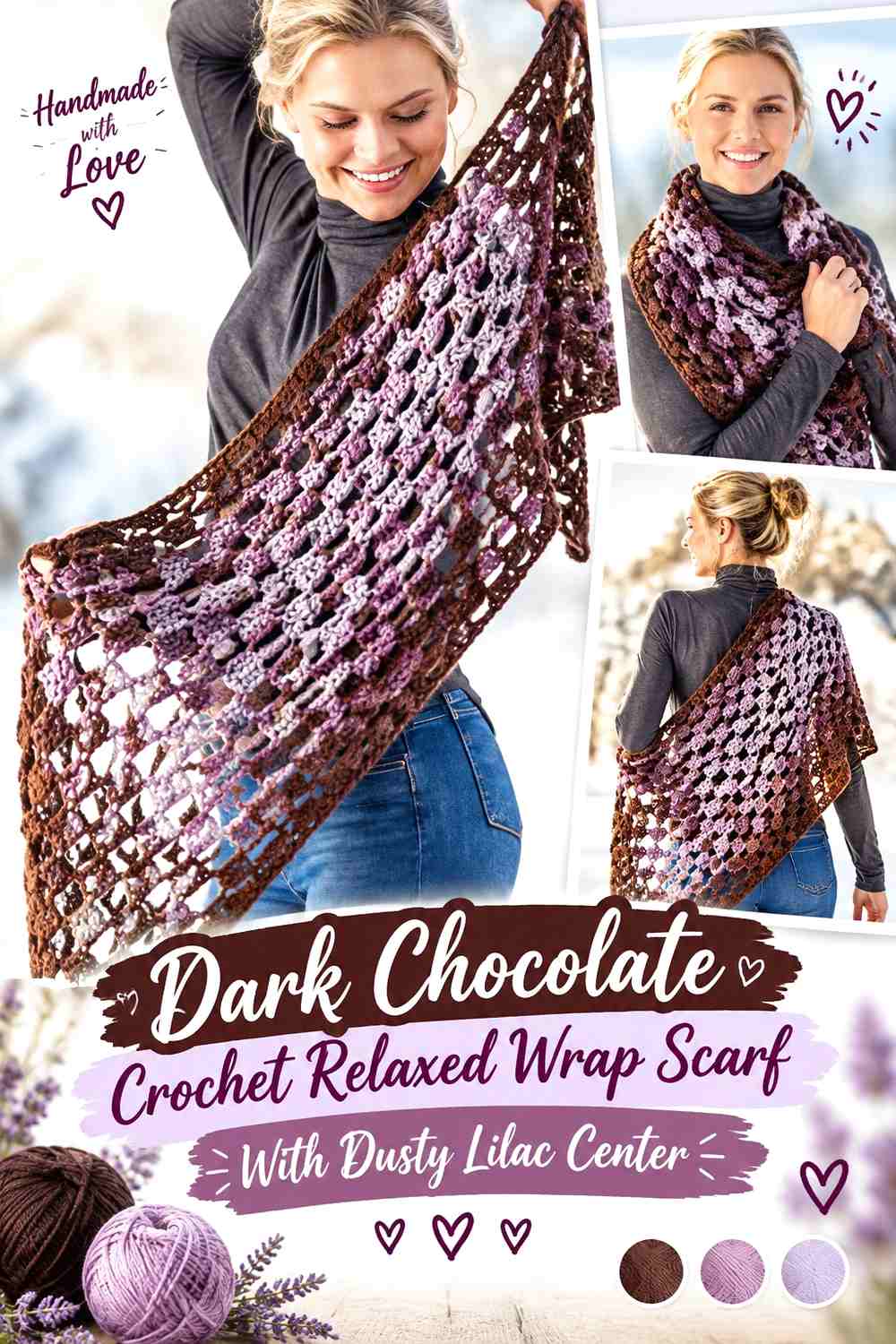
Instead of placing the lighter color at the perimeter, run a Dusty Lilac section through the center of a Dark Chocolate wrap. This shifts attention toward the back and shoulder area.
Dark Chocolate Should Remain Visible on Both Sides of Dusty Lilac
Use substantial Dark Chocolate areas beside the lilac center so the darker shade still reads as dominant. If the side sections are too narrow, the palette will effectively become lilac-dominant once the scarf is spread across the shoulders.
The dark side areas also remain visible when the ends are brought toward the front.
Dusty Lilac Draws Attention to the Dark Chocolate Wrap Center
A central Dusty Lilac section is a useful place for texture or openwork you want to emphasize. The lighter color can separate that feature from the brown sections on either side.
Check the center width while worn. A panel that seems restrained on a flat surface can appear much wider across the upper back.
Creator Credit: The Crochet Crowd
15. Dusty Lilac Crochet Textured Shawl Wrap With Dark Chocolate Border
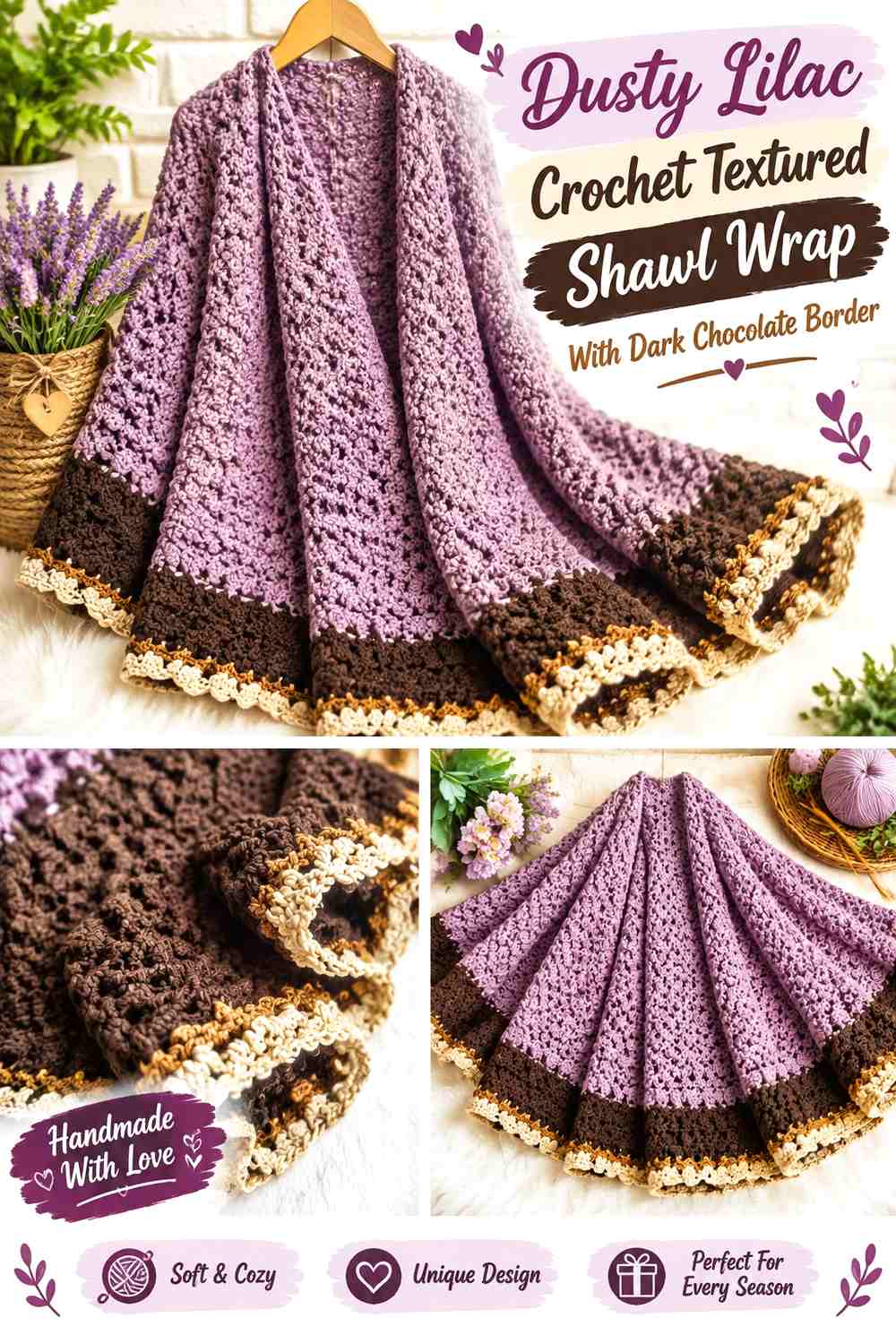
The final scheme combines a Dusty Lilac textured field with a defined Dark Chocolate finishing area. Instead of scattering the brown throughout the texture, keep it around the perimeter so the stitch relief and color contrast perform separate jobs.
Dusty Lilac Helps the Crochet Texture Remain Uninterrupted
Use Dusty Lilac throughout the main textured section and allow the changing stitch surface to provide its own variation. This avoids turning every raised line or textured repeat into a separate color decision.
Step back occasionally to make sure the texture remains visible at normal viewing distance rather than only close up.
Dark Chocolate Gives the Dusty Lilac Textured Wrap a Clear Edge
A Dark Chocolate border creates a definite stopping point around the lighter textured field. It can be especially effective along a lower shawl edge where the silhouette remains visible while worn.
If the brown begins visually competing with the Dusty Lilac texture, reduce its width rather than adding additional lilac decoration to compensate.
Creator Credit: Meladora’s Creations for Crochet
Comparing Dusty Lilac and Dark Chocolate Romantic Wrap Scarf Directions
For a lighter overall wrap scarf, ideas 1, 3, 5, 7, 9, 11, 13, and 15 keep Dusty Lilac across most of the visible fabric. Dark Chocolate then works as edging, framing, tapered ends, or another controlled accent.
For a deeper brown-dominant direction, ideas 2, 4, 6, 8, 10, 12, and 14 give Dark Chocolate more surface area and let Dusty Lilac create contrast through ends, bands, blocks, borders, or a center panel.
If the crochet construction already contains intricate lace or pronounced texture, use fewer color changes so the surface remains readable. Plainer fabrics can support larger bands, panels, or blocks because color can take on more of the visual work.
For a romantic but restrained result, the simplest options are Dusty Lilac with Dark Chocolate edging or Dark Chocolate with Dusty Lilac ends. For greater contrast and movement, consider repeated bands, a central panel, or larger geometric blocks.
Conclusion
Dusty Lilac and Dark Chocolate can create very different crochet romantic wrap scarves depending on which shade leads and where the contrast appears.
Choose Dusty Lilac across the main body when you want a lighter wrap with Dark Chocolate defining the silhouette. Make Dark Chocolate dominant when you want more visual depth and use lilac to reveal lace, textured sections, ends, or selected bands. For the most understated color plan, limit the second shade to the border. For a more graphic look, divide the scarf into panels or repeated sections.
The final check should happen with the wrap on the shoulders rather than only laid flat. Look at which colors remain visible at the center back, along the outer edges, and on the hanging ends. Follow the credited tutorials for their exact crochet construction while using these Dusty Lilac and Dark Chocolate arrangements as independent color-placement plans.
Frequently Asked Questions
Should Dusty Lilac or Dark Chocolate dominate a romantic crochet wrap scarf?
Either can lead. Dusty Lilac creates a lighter overall field and gives Dark Chocolate a strong framing role. Dark Chocolate creates a deeper overall wrap and makes relatively small Dusty Lilac accents more noticeable. Choose the dominant shade according to what you want covering the shoulders and back.
Where should Dark Chocolate go on a Dusty Lilac crochet wrap scarf?
Dark Chocolate works particularly well on outer borders, tapered ends, the point of a triangle shawl, selected bands, or narrow framing sections. Keeping it in defined areas prevents the darker color from visually overpowering Dusty Lilac.
Where should Dusty Lilac go on a Dark Chocolate crochet wrap?
Use Dusty Lilac where you want to reveal or separate a feature: lace edging, end panels, textured sections, center panels, blocks, or repeated bands. Because it is the lighter part of the palette, a modest amount may provide enough contrast.
How can I tell whether Dusty Lilac and Dark Chocolate have enough contrast?
Place the actual yarns next to each other and view them from a distance. You can also take a grayscale photograph. If they remain clearly different in gray, narrow borders and small decorative details are more likely to stay visually distinct.
Do Dusty Lilac and Dark Chocolate need to be used in equal amounts?
No. A dominant-and-supporting relationship is often useful on a wrap scarf because the large fabric area gives even a narrow contrasting border considerable visibility. Equal proportions are better reserved for a deliberately divided or strongly striped design.
Is Dusty Lilac better for lace than Dark Chocolate?
Not universally. A lighter color can make some stitch shapes easier to see, but lace also reveals the clothing beneath it. Test both colors over the outfit or background you expect to use before deciding which gives the amount of definition you want.
How can I substitute another Dusty Lilac or Dark Chocolate yarn color?
Preserve each shade’s role rather than trying to match an exact commercial color. For Dusty Lilac, choose a softened purple that remains clearly lighter than the brown. For Dark Chocolate, choose a deep brown that still creates enough value separation from the lilac for your planned borders, stripes, or lace details.