Powder Blue and Soft Gray give a crochet winter hooded collar a quiet two-color contrast that works especially well across the hood, face opening, neck band, and shoulder-level sections. Powder Blue can keep the accessory visually light, while Soft Gray provides definition without creating an extremely dark frame.

A hooded collar needs different color planning from a standard scarf. When the hood is up, the face opening and crown become the most visible areas. When the hood is down, much of that fabric gathers around the neck, making the collar band and outer edging more important. The same palette can therefore look quite different depending on where the second color is placed.
The supporting tutorials include hooded cowls and hooded scarves with integrated neck coverage. For scarf-based references, use the tutorial for its hood and neck-construction concept rather than assuming the long scarf portions must be retained in a shorter hooded-collar adaptation.
Quick List
- Powder Blue Crochet Winter Hooded Collar With Soft Gray Ribbing
- Soft Gray Crochet Hooded Collar With Powder Blue Face Framing
- Powder Blue Crochet Textured Hooded Collar With Soft Gray Neck Band
- Soft Gray Crochet Snood Hooded Collar With Powder Blue Crown
- Powder Blue Crochet Striped Hooded Collar With Soft Gray Lower Edge
- Soft Gray Crochet Winter Hooded Collar With Powder Blue Cowl Section
- Powder Blue Crochet Hooded Collar With Soft Gray Face Edge
- Soft Gray Crochet Hooded Collar With Powder Blue Hood Panel
- Powder Blue Crochet Granny Hooded Collar With Soft Gray Joins
- Soft Gray Crochet Hooded Collar With Powder Blue Shoulder Band
- Powder Blue Crochet Two-Tone Hooded Collar With Soft Gray Side Panels
- Soft Gray Crochet Turtleneck Hooded Collar With Powder Blue Hood
- Powder Blue Crochet Chevron Hooded Collar With Soft Gray Accents
- Soft Gray Crochet Hooded Collar With Powder Blue Outer Edging
- Powder Blue Crochet Minimal Hooded Collar With Soft Gray Folded Ribbing
Decide Whether Powder Blue or Soft Gray Should Lead the Hood
The dominant hood color usually controls the accessory when it is worn up because the crown and sides occupy more visible area than the neck band. A Powder Blue hood creates a lighter overall result and leaves Soft Gray free to define the face or collar. A Soft Gray hood gives the accessory more neutral visual weight, making relatively small Powder Blue sections easier to notice.
Consider the hood and collar separately before assigning colors. They do not have to match. A blue hood with a gray neck band creates a clear top-to-bottom division, while a gray hood with blue face edging keeps the contrast closer to the face.
Use Powder Blue and Soft Gray Contrast Around the Face and Neck
These colors may be fairly close in lightness depending on the exact yarns chosen. Two visibly different hues can still merge when their values are similar, especially in textured crochet.
Place the yarns side by side and check them from a short distance. A grayscale photo can also show whether there is enough light-and-dark separation for narrow edging or small details. If Powder Blue and Soft Gray look almost identical in gray, use them in larger panels rather than relying on very thin contrast lines.
Check Powder Blue and Soft Gray With the Hood Up and Down
A color arrangement should work in both positions. Powder Blue placed across the crown may dominate while the hood is up but disappear almost completely when the fabric gathers at the neck. Soft Gray ribbing around the collar can do the opposite, becoming much more noticeable when the hood is down.
Try the developing piece in both positions before adding another contrast section. That helps prevent too much of one color from accumulating around the neck once the hood folds.
1. Powder Blue Crochet Winter Hooded Collar With Soft Gray Ribbing

Let Powder Blue cover most of the hood while Soft Gray forms the lower ribbed collar. This creates a clean vertical division: the lighter color surrounds the head, and the neutral gray gives the neck section a more defined base.
Powder Blue Should Stay Continuous Across the Crochet Hood
Use Powder Blue through the crown and sides so the hood reads as one uninterrupted section. This is especially useful when the stitch pattern already creates enough texture without additional striping.
Check the hood when it is down as well. A large Powder Blue section will gather around the back of the neck, so make sure it still relates comfortably to the gray collar below it.
Soft Gray Ribbing Can Ground the Powder Blue Collar
Place Soft Gray on the existing ribbed or folded neck section where the change in both color and texture can clearly separate hood from collar.
Keep the gray band proportionate to the accessory. A very deep Soft Gray collar can occupy enough surface to change the piece from blue-dominant to nearly equal in color.
Creator Credit: Diving Ducks Crochet
2. Soft Gray Crochet Hooded Collar With Powder Blue Face Framing
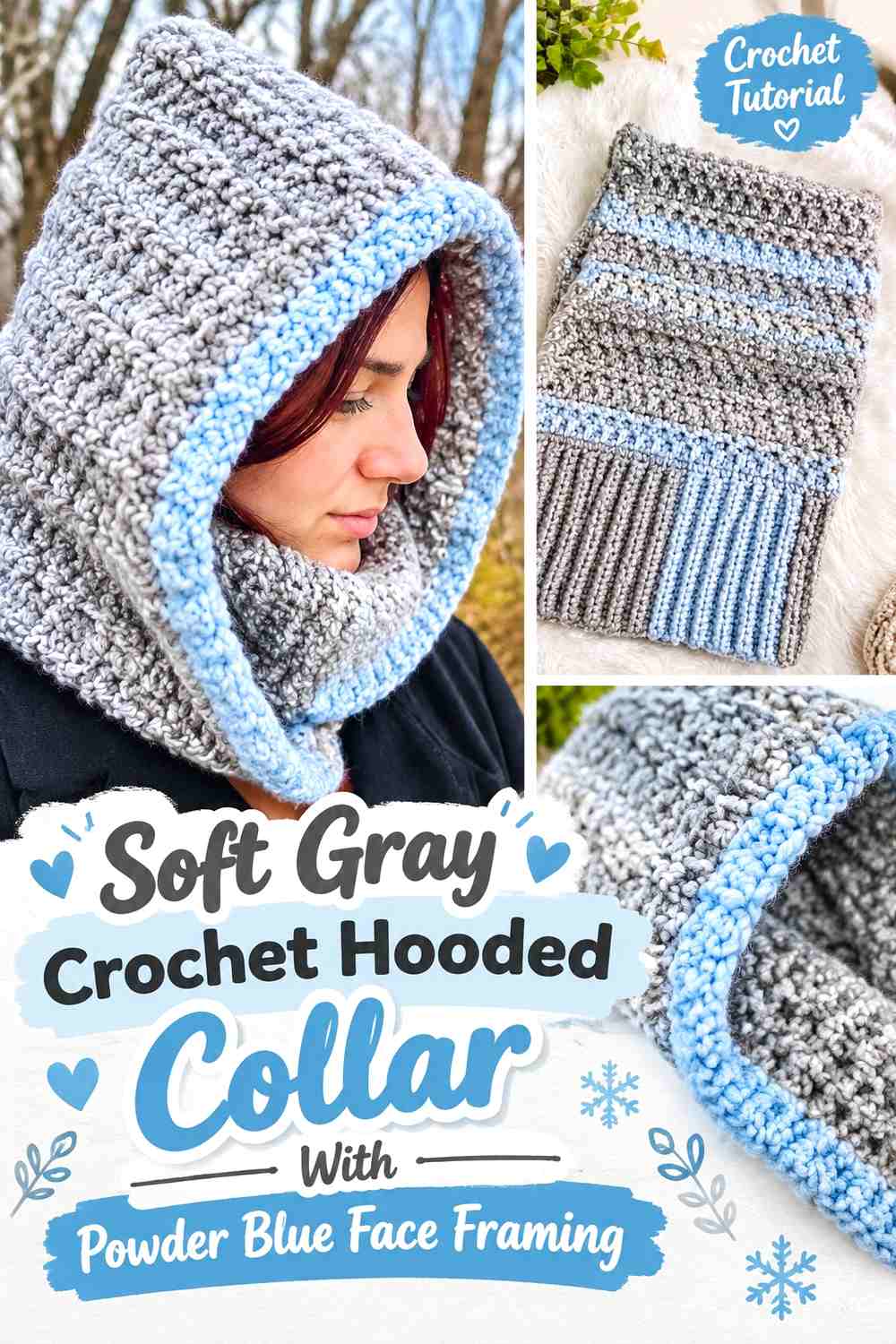
Use Soft Gray across most of the hood and collar, then trace the face opening with Powder Blue. This keeps the overall accessory neutral while placing the lighter blue exactly where the hood is most visible from the front.
Soft Gray Should Connect the Hood and Crochet Collar
Carry Soft Gray continuously from the hood into the neck section when you want a cohesive neutral base. Avoid adding unrelated Powder Blue bands elsewhere if the face border is intended to be the main contrast.
The continuous gray also lets texture remain visible without repeated color breaks.
Powder Blue Can Define the Soft Gray Face Opening
A Powder Blue border around the opening can separate the hood edge from the rest of the Soft Gray surface. This placement works best when the blue follows an existing finishing edge rather than creating a new structural band.
Check the width on both sides of the face. Uneven Powder Blue edging can become noticeable once the hood is worn.
Creator Credit: Nana’s Crafty Home | Tonya Bush
3. Powder Blue Crochet Textured Hooded Collar With Soft Gray Neck Band

This version keeps the textured hood Powder Blue and moves Soft Gray entirely to the neck. The contrast helps distinguish the part that frames the head from the section that sits around the collarbone.
Powder Blue Lets Hood Texture Stay Uninterrupted
Use Powder Blue across the textured surface instead of changing colors inside every raised or recessed section. A single color gives the stitch texture more room to remain readable.
Before committing to a full hood, look at a small Powder Blue sample under normal winter lighting. Subtle texture can behave differently in very pale yarns than it does in stronger colors.
Soft Gray Separates the Powder Blue Hood From the Neck
Use Soft Gray around the lower cowl or collar band where the construction already changes direction. This creates a deliberate transition rather than inserting gray randomly into the hood.
If the collar folds over, check both the folded and unfolded positions because the visible amount of gray may change substantially.
Creator Credit: Hobby Crochet
4. Soft Gray Crochet Snood Hooded Collar With Powder Blue Crown

A snood-style construction gives Soft Gray plenty of surface around the lower hood and neck. Powder Blue can then be concentrated toward the crown to lighten the upper section.
Soft Gray Should Remain Visible Around the Lower Hood
Keep Soft Gray through the sides and neck so the accessory retains a connected neutral base. This is important when the hood can collapse into a cowl, because the gray sections may overlap heavily around the neck.
Avoid adding several additional blue bands lower down if the crown is meant to be the focal area.
Powder Blue Can Lighten the Soft Gray Crown
Place Powder Blue across a defined upper hood section instead of scattering small blue patches throughout the gray. A larger crown panel remains easier to recognize after the hood curves over the head.
When the hood is down, check where that Powder Blue section folds so it does not create an unexpected isolated patch at the back.
Creator Credit: Treasurie
5. Powder Blue Crochet Striped Hooded Collar With Soft Gray Lower Edge

Use Powder Blue as the primary stripe color while Soft Gray appears occasionally through the hood and then more decisively at the collar edge. This creates movement without making both colors compete equally.
Powder Blue Stripes Need Enough Width to Stay Dominant
Give Powder Blue more visual space than Soft Gray if the finished piece should still read as blue-led. Closely alternating equal stripes will produce a much more balanced two-color effect.
Remember that stripes compress visually when the hood is gathered down around the neck.
Soft Gray Should Repeat Predictably Against Powder Blue
Use Soft Gray at consistent intervals and echo it at the lower collar edge. Repetition connects the hood stripes to the neck rather than leaving the collar as an unrelated gray section.
Stop adding stripes once the repeat is clear. The hood shape already creates movement without needing constant color changes.
Creator Credit: Meladora’s Creations for Crochet
6. Soft Gray Crochet Winter Hooded Collar With Powder Blue Cowl Section
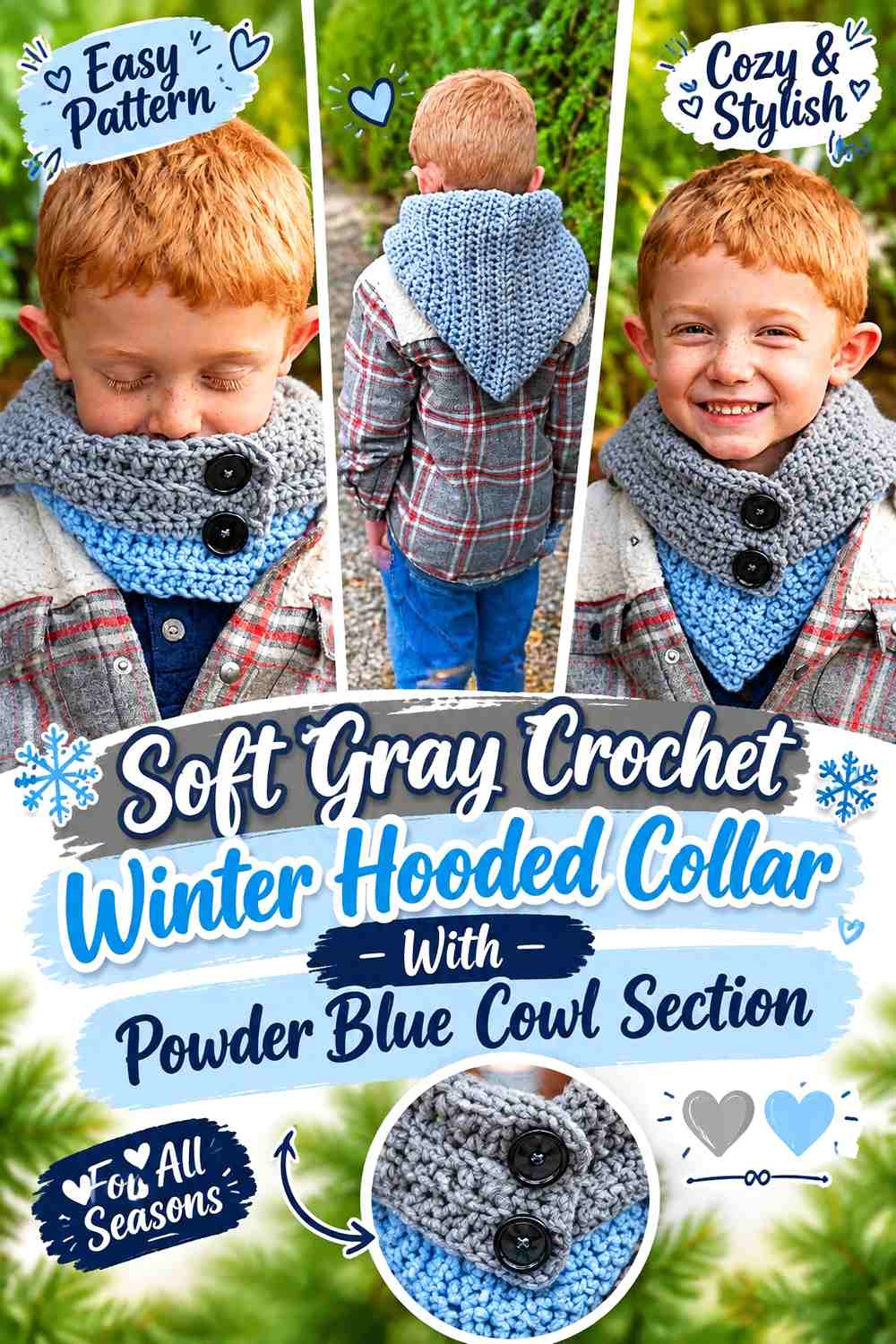
Keep the hood Soft Gray and make the lower neck or cowl portion Powder Blue. This places the brighter color lower on the accessory, where it becomes particularly visible when the hood is worn down.
Soft Gray Gives the Crochet Hood a Quiet Main Field
Use Soft Gray through the crown and sides so the hood stays visually unified. If the construction includes strong texture, the neutral color can let that surface variation provide most of the detail.
Avoid introducing another large blue hood section unless you want a stronger color-block effect.
Powder Blue Can Make the Soft Gray Collar More Distinct
Use Powder Blue across the full cowl or neck band instead of only one narrow stripe. The larger section creates a clear division between head and neck coverage.
Check the transition around the entire circumference so the blue begins at a consistent level.
Creator Credit: Winding Road Crochet
7. Powder Blue Crochet Hooded Collar With Soft Gray Face Edge

This is one of the most restrained two-color treatments: Powder Blue covers nearly everything, while Soft Gray appears only around the face opening.
Powder Blue Can Cover the Full Hooded Collar Body
Keep Powder Blue across the hood and neck if you want the accessory to remain strongly blue-dominant. The uninterrupted field also works well when the crochet fabric contains noticeable ribbing or other texture.
Because there is little Soft Gray elsewhere, the face edge becomes the clear finishing detail.
Soft Gray Gives the Powder Blue Hood a Controlled Frame
Use Soft Gray on a narrow existing border around the opening. The neutral shade defines the silhouette without dividing the hood into large blocks.
Do not automatically repeat gray on every other edge. Leaving it concentrated around the face keeps the color plan simple.
Creator Credit: ABoC Studio
8. Soft Gray Crochet Hooded Collar With Powder Blue Hood Panel
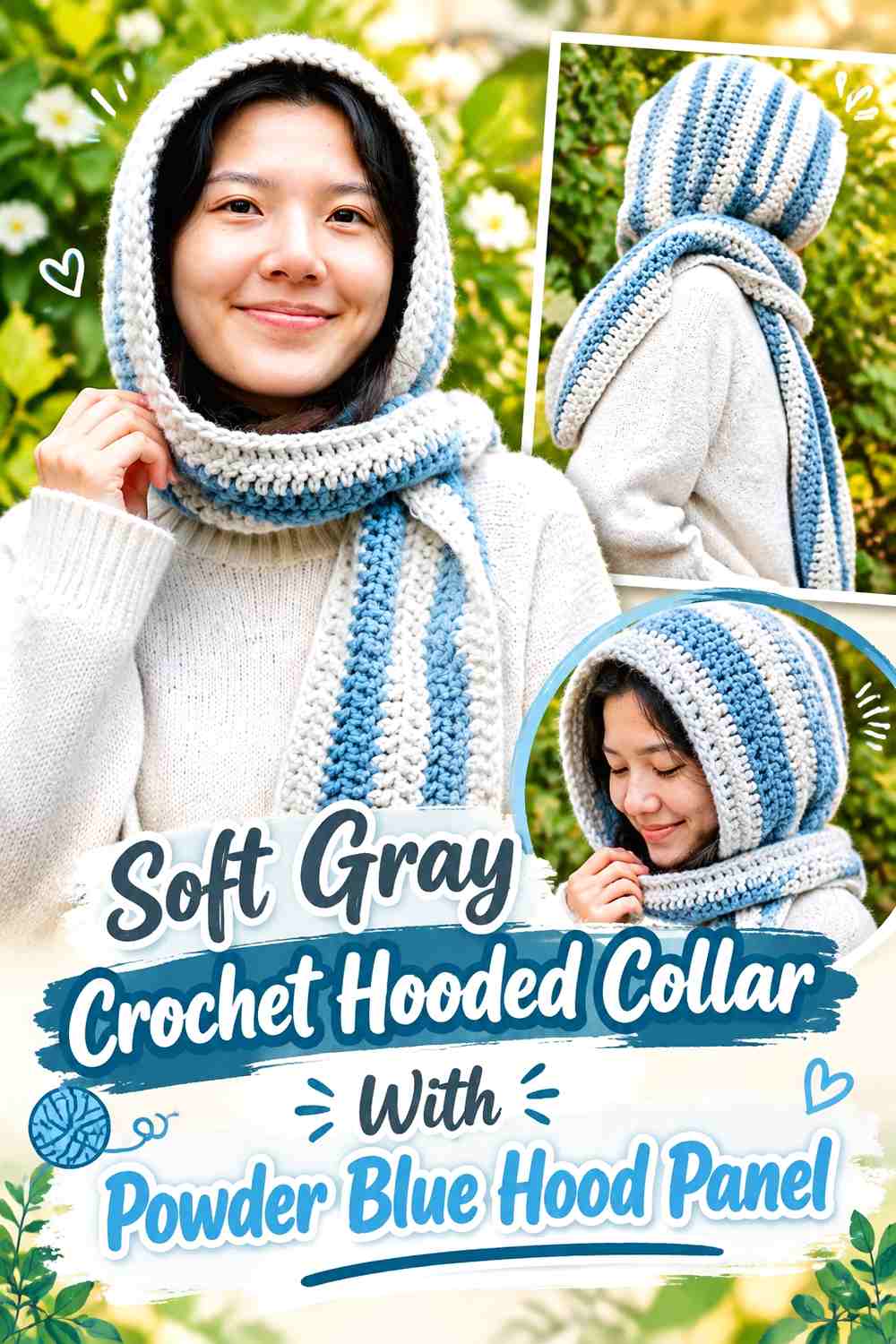
Instead of outlining the hood, create one larger Powder Blue panel within a Soft Gray construction. The blue can run through the center or another clearly defined hood zone while gray remains on the sides and neck.
Soft Gray Should Surround the Powder Blue Hood Panel
Keep enough Soft Gray on both sides that the blue reads as an intentional inset rather than the beginning of a full color change.
This works best when the panel aligns with existing construction lines rather than forcing a new seam solely for color.
Powder Blue Can Create a Focal Area Inside Soft Gray
A larger Powder Blue panel is useful when the two yarns are close in value because it relies on area rather than a narrow contrast line.
Check the panel with the hood up and down. Centered color placement can shift visually when the hood gathers behind the neck.
Creator Credit: VivCrochets
9. Powder Blue Crochet Granny Hooded Collar With Soft Gray Joins

A granny-based hood offers natural spaces for color separation. Keep most motif or cluster areas Powder Blue and use Soft Gray where sections join or where the collar is assembled.
Powder Blue Should Remain the Main Granny Crochet Color
Repeat Powder Blue consistently through the larger motifs or cluster areas so the hood does not become visually fragmented.
If adapting a motif-based hooded scarf to a shorter collar format, lay the sections out before joining and check how much blue will remain visible around the neck.
Soft Gray Joins Can Organize the Powder Blue Hood
Soft Gray joining lines create a visible framework around blue motifs. This can be especially useful when several squares or modular sections form the hood itself.
Keep the gray joining treatment consistent. Adding a very wide Soft Gray border as well can make the neutral color much more dominant than expected.
Creator Credit: Crochet Musings
10. Soft Gray Crochet Hooded Collar With Powder Blue Shoulder Band

Move Powder Blue away from the face and concentrate it around the lower edge where the hooded collar meets the shoulders. Soft Gray can then remain uninterrupted through the hood.
Soft Gray Should Carry the Hood From Crown to Neck
A continuous gray hood gives this version a more neutral front view. That makes the Powder Blue lower section more noticeable when viewed from the side or back.
Let the Soft Gray texture create variation instead of introducing additional blue higher on the hood.
Powder Blue Can Define the Soft Gray Shoulder Edge
Use Powder Blue around the lowest existing band or cowl edge where the accessory spreads toward the shoulders.
Because this line circles much of the neck, even a narrow blue band can contribute substantial visible color. Check the effect from the front and side before making it wider.
Creator Credit: naztazia
11. Powder Blue Crochet Two-Tone Hooded Collar With Soft Gray Side Panels
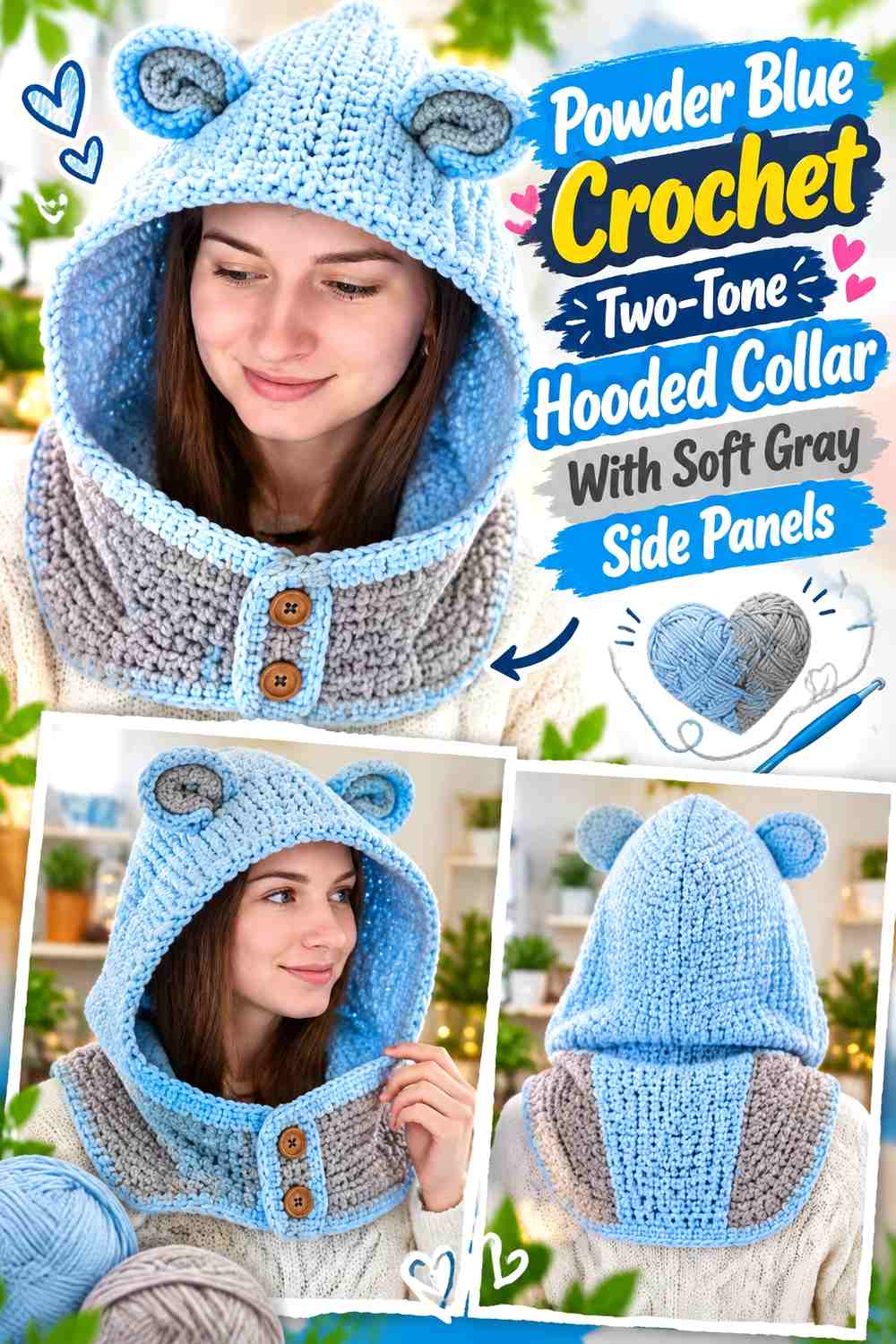
Give the center and crown to Powder Blue while using Soft Gray along both sides of the hood. The vertical color division can emphasize the face opening without relying on a narrow border.
Powder Blue Should Stay Connected Through the Hood Center
Use one continuous Powder Blue zone over the crown so the light color remains easy to follow. Breaking the center into multiple stripes would weaken the clean panel effect.
Keep the collar color simple so the hood remains the main focus.
Soft Gray Side Panels Can Shape the Powder Blue Face Area
Place matching Soft Gray sections on either side of the face. Their darker neutral tone can visually contain the Powder Blue center and make the hood opening easier to distinguish.
Compare both panels while wearing the hood to make sure they appear balanced after the fabric curves.
Creator Credit: Crochet with Clare
12. Soft Gray Crochet Turtleneck Hooded Collar With Powder Blue Hood
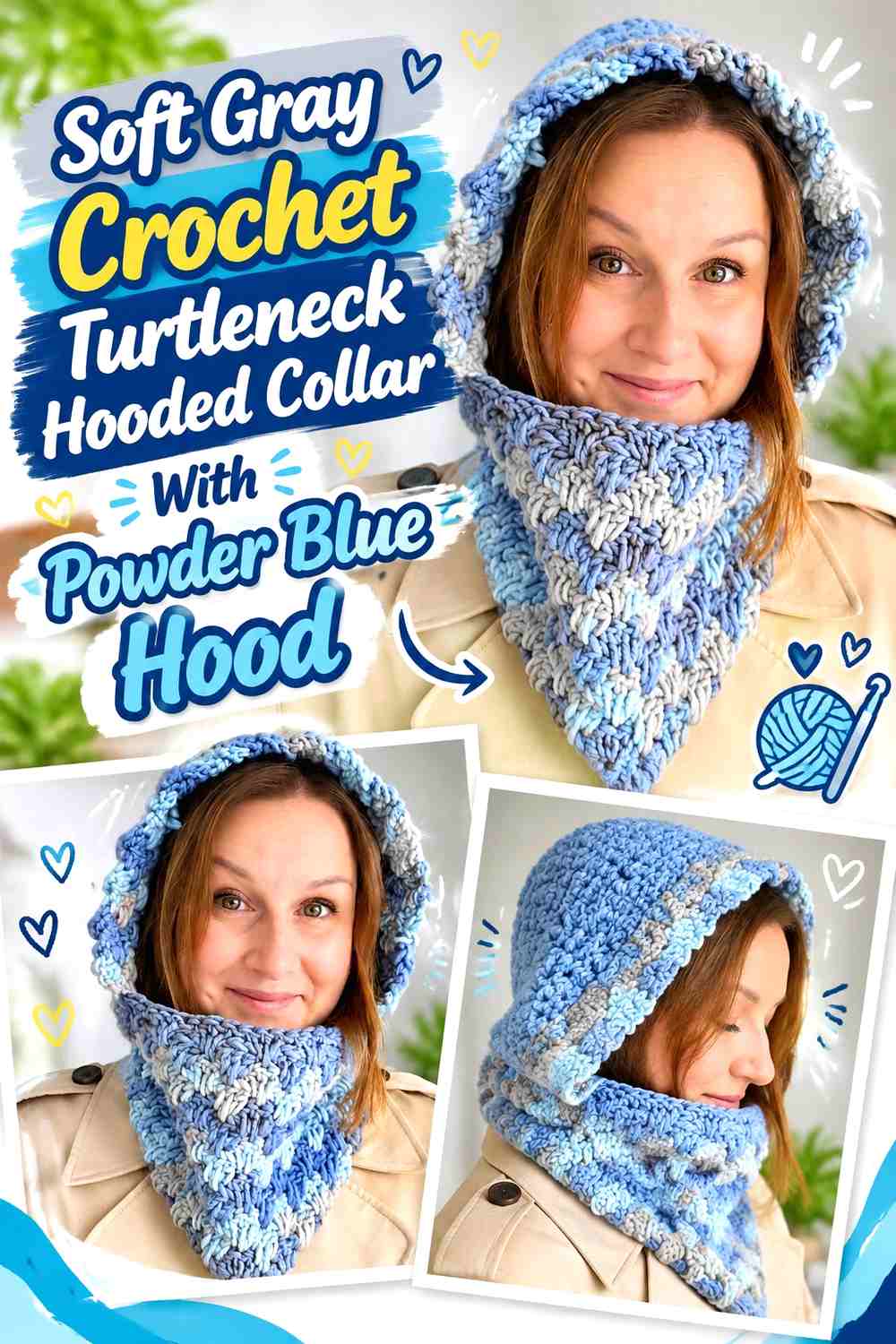
This scheme separates the two major functions almost completely: Powder Blue covers the hood while Soft Gray forms the taller neck section. It creates a clear color change exactly where head coverage becomes collar coverage.
Powder Blue Should Carry the Full Crochet Hood
Keep Powder Blue consistent across the crown, sides, and face area when you want the top section to read as one complete unit.
If you add Soft Gray edging to the face as well, keep it narrow enough that the main hood remains unmistakably blue.
Soft Gray Gives the Powder Blue Hood a Defined Turtleneck Base
Use Soft Gray across the entire raised neck section. A continuous neutral collar provides a strong base without introducing additional blue stripes.
Pay attention to the hood-down position. A substantial Powder Blue hood may rest directly on top of the Soft Gray neck section, increasing the visible contrast at the back.
Creator Credit: Blue Star Crochet | Veronika Cromwell
13. Powder Blue Crochet Chevron Hooded Collar With Soft Gray Accents
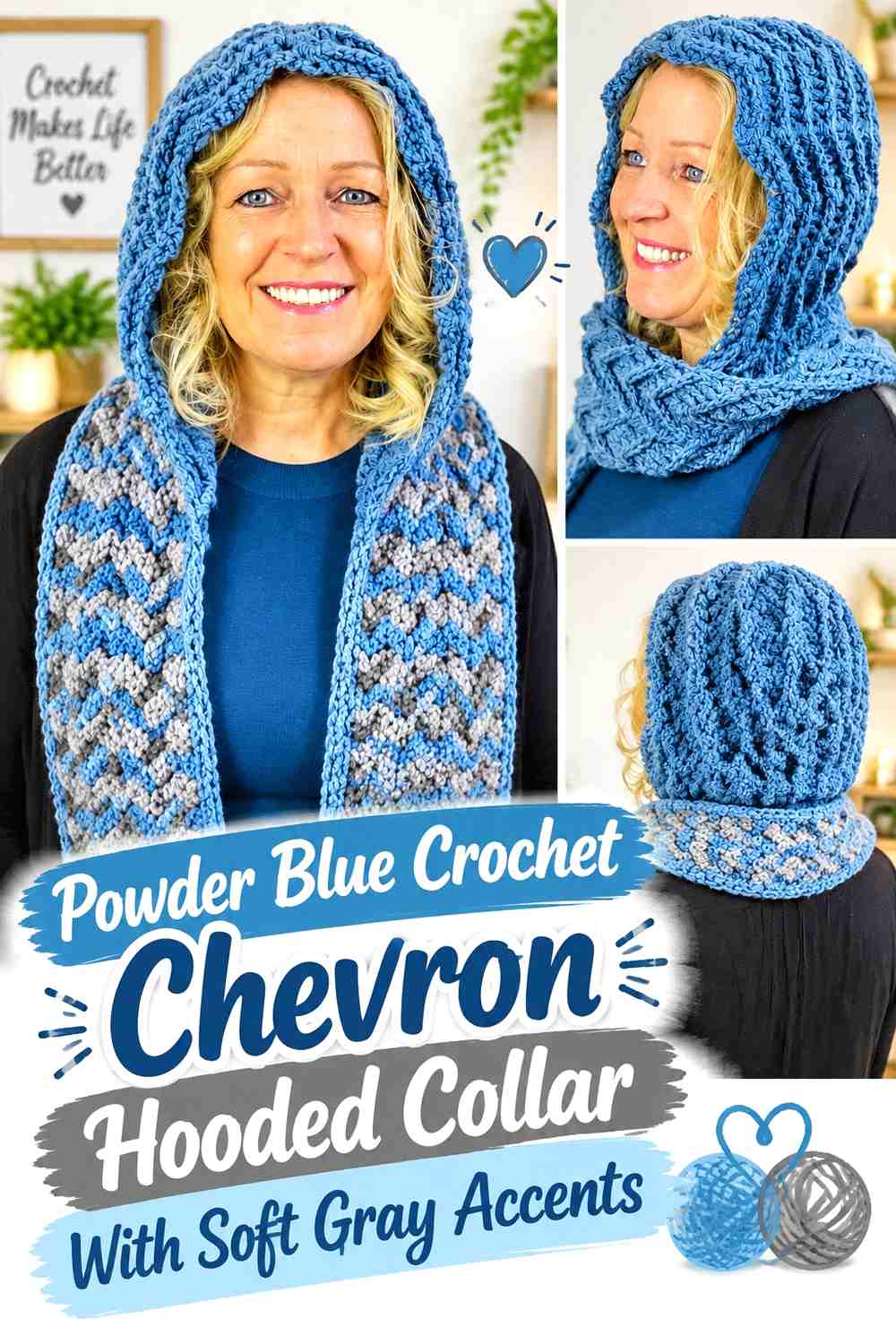
Chevron construction already creates strong directional lines, so color should reinforce those lines rather than compete with them. Use Powder Blue for most of the fabric and reserve Soft Gray for selected chevron bands or the lower edge.
Powder Blue Should Connect the Main Chevron Sections
Keep several neighboring sections Powder Blue so the zigzag pattern remains readable as stitch structure rather than only as colorwork.
If every chevron changes color, the hood can become much busier when gathered around the neck.
Soft Gray Can Emphasize Selected Powder Blue Chevron Lines
Use Soft Gray sparingly on one repeated chevron area or on the collar edge. A limited neutral accent lets the directional pattern remain clear without creating equal striping.
Look at the hood from the side as well as the front because chevrons may change apparent direction once curved around the head.
Creator Credit: Crochething
14. Soft Gray Crochet Hooded Collar With Powder Blue Outer Edging

Keep the entire hood-and-neck construction Soft Gray, then use Powder Blue only on the visible perimeter. This is useful when you want the palest color to behave as finishing rather than as a structural panel.
Soft Gray Should Provide the Main Hooded Collar Surface
Use Soft Gray through the hood and neck so texture and shape become the main design features.
A single neutral field also makes this palette easy to evaluate while working because every Powder Blue section has a clear purpose.
Powder Blue Can Trace the Soft Gray Hood and Collar Edges
Use Powder Blue around the face opening, lower neck edge, or both if the construction already includes finishing rows there.
Avoid adding blue to unrelated internal rows. A perimeter treatment is strongest when the contrast stays visibly connected.
Creator Credit: Wilma Westenberg
15. Powder Blue Crochet Minimal Hooded Collar With Soft Gray Folded Ribbing
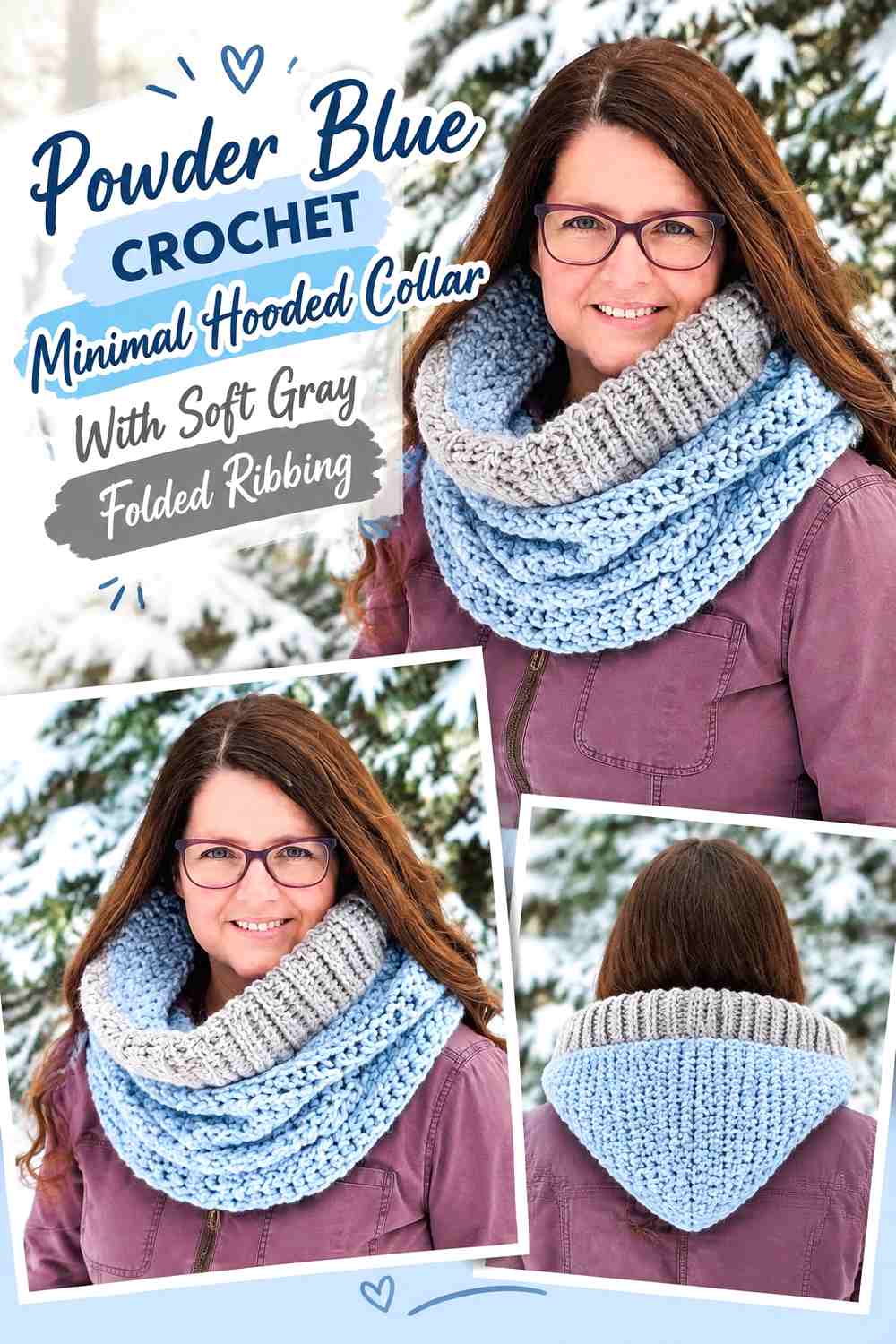
The final idea keeps Powder Blue across nearly the entire accessory and gives Soft Gray only the folded or ribbed finishing section. This creates the quietest color division in the collection.
Powder Blue Should Remain Uninterrupted Across the Minimal Hood
Use Powder Blue from crown through the main neck fabric so there is one clear field. This puts the emphasis on hood shape and drape rather than on color blocking.
The restrained palette also works well when the crochet stitch itself has a visible alternating texture.
Soft Gray Folded Ribbing Can Finish the Powder Blue Collar
Reserve Soft Gray for the fold-over ribbing or existing cuff-style edge. Because ribbing introduces a textural change as well as a color change, even a relatively narrow gray section can feel substantial.
Check how much Soft Gray remains exposed after folding. Plan the visible proportion rather than judging the band only while it is lying flat.
Creator Credit: A Crocheted Simplicity
Comparing Powder Blue and Soft Gray Hooded Collar Directions
For a Powder Blue-dominant hooded collar, ideas 1, 3, 5, 7, 9, 11, 13, and 15 let blue control most of the hood while Soft Gray defines ribbing, the face opening, joins, side panels, chevrons, or finishing sections.
For a Soft Gray-dominant hooded collar, ideas 2, 4, 6, 8, 10, 12, and 14 use gray across most of the accessory while Powder Blue appears in face edging, crown sections, collar bands, inset panels, shoulder edges, or outer trim.
If you want the contrast to remain visible with the hood up, put the secondary color around the face, crown, or hood panels. If you want the contrast to become stronger when the hood is down, concentrate it around the neck band, ribbing, or lower edge.
For the most restrained result, choose one dominant color and use the other only on edging or ribbing. For a stronger two-tone look, separate complete hood and collar sections or use larger center and side panels.
Conclusion
Powder Blue and Soft Gray can produce many distinct crochet winter hooded collars without requiring extra colors. The most important decision is where the contrast needs to remain visible as the accessory changes position.
Use Powder Blue across the hood with Soft Gray ribbing when you want a light upper section and a neutral neck anchor. Reverse the hierarchy when you want the hood itself to stay understated and the blue to highlight the face, crown, or lower collar. Larger panels work better when your two yarns have similar value, while narrow edging benefits from clearer light-and-dark separation.
Before finishing, check the hood both up and down. Look at the crown, face opening, back of the neck, and collar edge separately because each area becomes more or less visible as the fabric moves. Follow the credited tutorials for their exact construction and sizing while treating these Powder Blue and Soft Gray arrangements as independent color plans.
Frequently Asked Questions
Should Powder Blue or Soft Gray dominate a crochet winter hooded collar?
Either can dominate. Powder Blue produces a lighter overall hood, while Soft Gray creates a more neutral foundation. Decide which shade you want covering the crown first, then give the other color a specific role around the face, neck, ribbing, or panels.
Where should Soft Gray go on a Powder Blue hooded collar?
Soft Gray works well around ribbing, the neck band, face opening, joining lines, side panels, or the lower shoulder edge. These existing construction zones give the neutral color a clear purpose without breaking up the Powder Blue hood randomly.
Where should Powder Blue go on a Soft Gray hooded collar?
Powder Blue can highlight the crown, face edge, collar band, center hood panel, shoulder edge, or other clearly bounded sections. Larger blue areas are especially useful when the exact blue and gray yarns are close in value.
How can I check whether Powder Blue and Soft Gray have enough contrast?
Place the yarns directly beside each other and view them from a few feet away. You can also photograph them in grayscale. If they become almost identical in gray, use larger blocks instead of tiny contrasting details.
Should the face border match the crochet collar band?
It can, but matching is not required. Using Soft Gray in both places can frame a Powder Blue hood from top and bottom. Keeping the second color only around the face creates a simpler and more focused contrast.
Why does the color balance change when a crochet hood is worn down?
The hood fabric gathers and overlaps around the back and sides of the neck. Colors placed across the crown can therefore become compressed into a smaller visible area, while collar bands and lower edging become more prominent. Check both positions while planning.
What should I preserve if I substitute Powder Blue or Soft Gray?
Preserve their visual relationship. Choose a light, softened blue for the Powder Blue role and a neutral light-to-medium gray for the Soft Gray role. More importantly, maintain enough separation for whatever feature you want the second color to define.