A vintage button-up shirt already has useful lines for crochet decoration: the collar, button placket, cuffs, pocket edges, back yoke, sleeve vents, and hem. Instead of covering the entire shirt, a crochet makeover can emphasize one of those details and allow the original fabric to remain the largest part of the design.
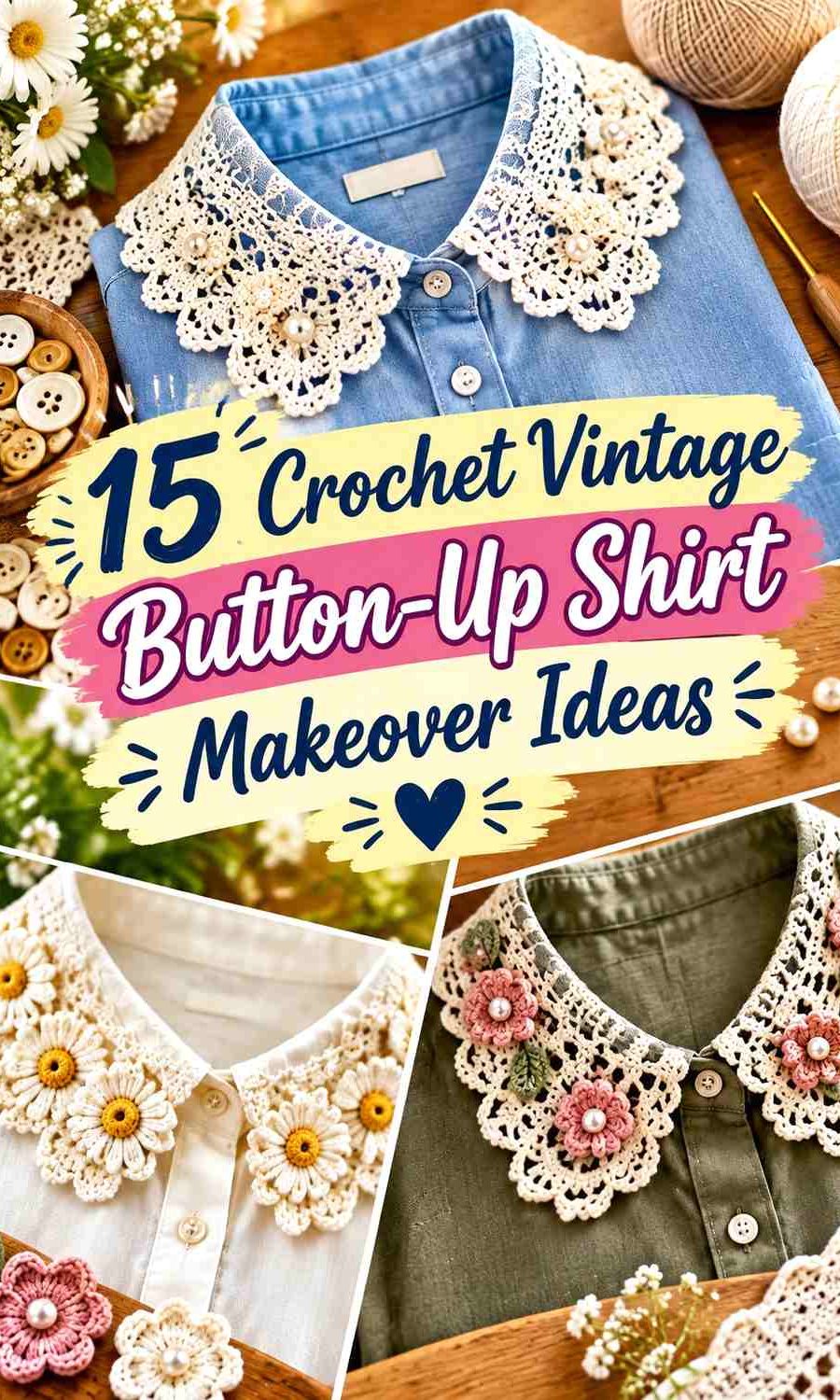
Color determines whether that crochet looks integrated or simply added afterward. Antique ivory can sharpen the collar of a dark navy shirt, rust can warm faded denim, and sage or dusty rose can soften cream cotton. The shirt itself should usually remain the dominant color, with crochet acting as the supporting or accent layer.
The tutorials credited below support the individual collars, borders, flowers, leaves, lace trims, or granny-square motifs used as construction references. The button-up shirt placements and palettes are independent adaptations rather than claims that the creators demonstrated these exact shirt makeovers.
Quick List
- Navy and Antique Ivory Crochet Lace Collar Button-Up Shirt
- Faded Denim, Rust, and Cream Crochet Flower Pocket Button-Up Shirt
- Olive and Oatmeal Crochet Picot Cuff Button-Up Shirt
- White, Dusty Rose, and Mustard Crochet Daisy Placket Button-Up Shirt
- Washed Black and Ecru Crochet Scalloped Hem Button-Up Shirt
- Chambray, Mustard, and Brown Crochet Sunflower Pocket-Corner Button-Up Shirt
- Chocolate Brown, Sage, and Cream Crochet Leaf Collar-Point Button-Up Shirt
- Burgundy, Blush, and Antique Ivory Crochet Rose Yoke Button-Up Shirt
- Cream, Deep Teal, and Rust Crochet Flower-Square Back-Yoke Button-Up Shirt
- Sage, Terracotta, and Oatmeal Crochet Tulip Sleeve Button-Up Shirt
- Charcoal and Cream Crochet Floral-Edge Placket Button-Up Shirt
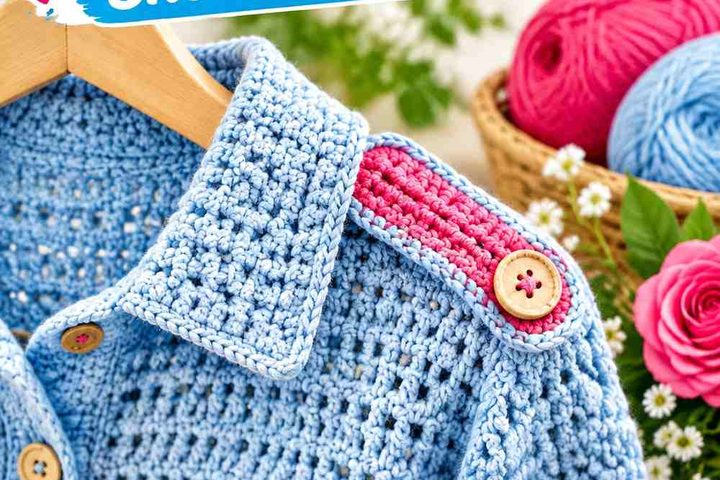
- Dusty Blue, Mauve, and Cream Crochet Flower Shoulder-Patch Button-Up Shirt
- Faded Indigo and Antique White Crochet Pointed-Lace Sleeve-Vent Button-Up Shirt
- Rust and Ecru Crochet Coronet-Lace Cuff Button-Up Shirt
- Forest Green, Ivory, and Burgundy Crochet Floral Collar-and-Cuff Button-Up Shirt
Let the Button-Up Shirt Remain the Largest Color Field
A makeover usually needs less crochet than it first appears. If the shirt is navy, olive, denim blue, brown, or burgundy, that fabric already controls most of the visual result. One pale edging and one smaller accent may be enough to create a complete palette.
Place the yarn directly against the shirt before choosing the final combination. Vintage fabric is often faded, washed, or uneven, so the actual shirt color may behave differently from a new fabric swatch with the same general shade name.
Follow Existing Shirt Seams With Crochet Color
Collars, pocket tops, cuffs, yokes, sleeve vents, and hems already divide the garment into clear sections. Following those lines usually makes crochet look intentional and keeps the shirt recognizable.
A floral trim can run along a pocket edge, while a larger granny motif can occupy part of a back yoke. These should not be treated as interchangeable placements: a dimensional flower that works on a flat back panel may be awkward directly beside the buttonholes.
Check Vintage Shirt Fabric Before Adding Crochet
Inspect thin collars, worn cuffs, loose pocket corners, and weakened shoulder seams before attaching decorative crochet. A pretty border does not automatically reinforce fabric that is already failing.
If an area is fragile, move the decorative element to a more stable nearby panel or repair the garment appropriately before adding crochet.
1. Navy and Antique Ivory Crochet Lace Collar Button-Up Shirt
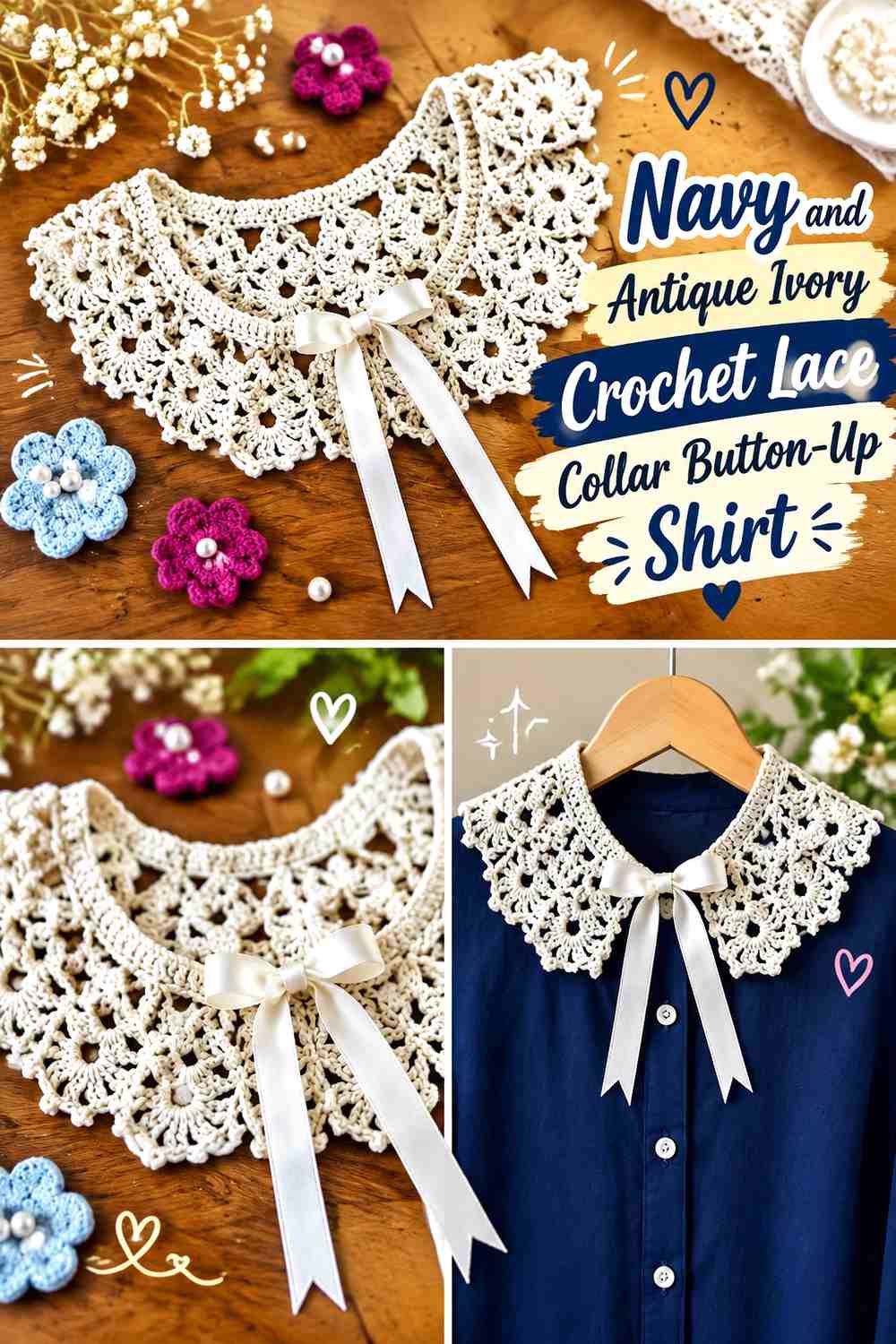
Navy gives antique-ivory crochet enough contrast to make a delicate collar immediately visible. Keep the shirt body untouched and concentrate the crochet along the existing collar shape. A tiny amount of warm beige or aged brass-colored button detail can stay in the background without needing another yarn color.
Antique Ivory Should Follow the Navy Crochet Shirt Collar Closely
Use antique ivory along the existing collar perimeter rather than expanding far across the shoulders. The narrow pale line can redefine a worn collar while keeping the shirt’s original tailoring visible.
If the shirt has a pointed collar, let the crochet follow those points instead of rounding them into a completely different neckline.
Navy Should Remain Visible Between Antique Ivory Crochet Details
Do not cover every piece of collar fabric with lace. Leaving a navy field around the crochet keeps the contrast clean and prevents the neckline from becoming visually heavy.
Creator Credit: Ideamente
2. Faded Denim, Rust, and Cream Crochet Flower Pocket Button-Up Shirt
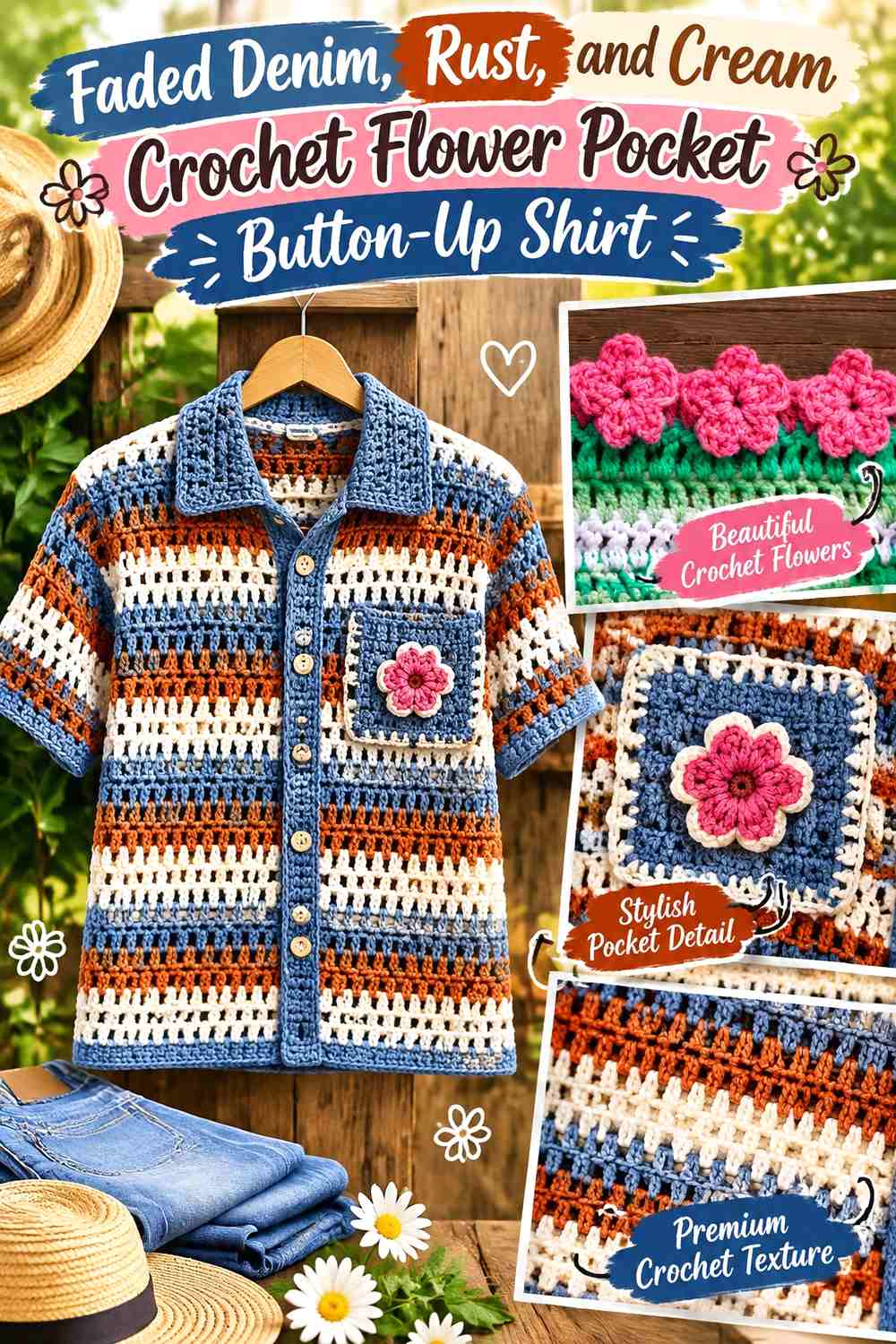
A faded denim shirt gives rust flowers a warm vintage backdrop, while cream can lighten centers or small connecting details. Focus the crochet on one chest pocket or balance smaller flower clusters across two pockets.
Rust Flowers Can Warm the Faded Denim Crochet Pocket Edge
Place rust flowers along the top edge or one upper corner rather than around the full pocket perimeter. This keeps the functional pocket shape clear and gives the warm color a focused role.
Cream Should Clarify Rust Crochet Flowers Against Faded Denim
Use cream in small flower centers or one narrow connecting detail. Too much cream can make the pocket look primarily pale rather than rust-led.
Creator Credit: naztazia
3. Olive and Oatmeal Crochet Picot Cuff Button-Up Shirt
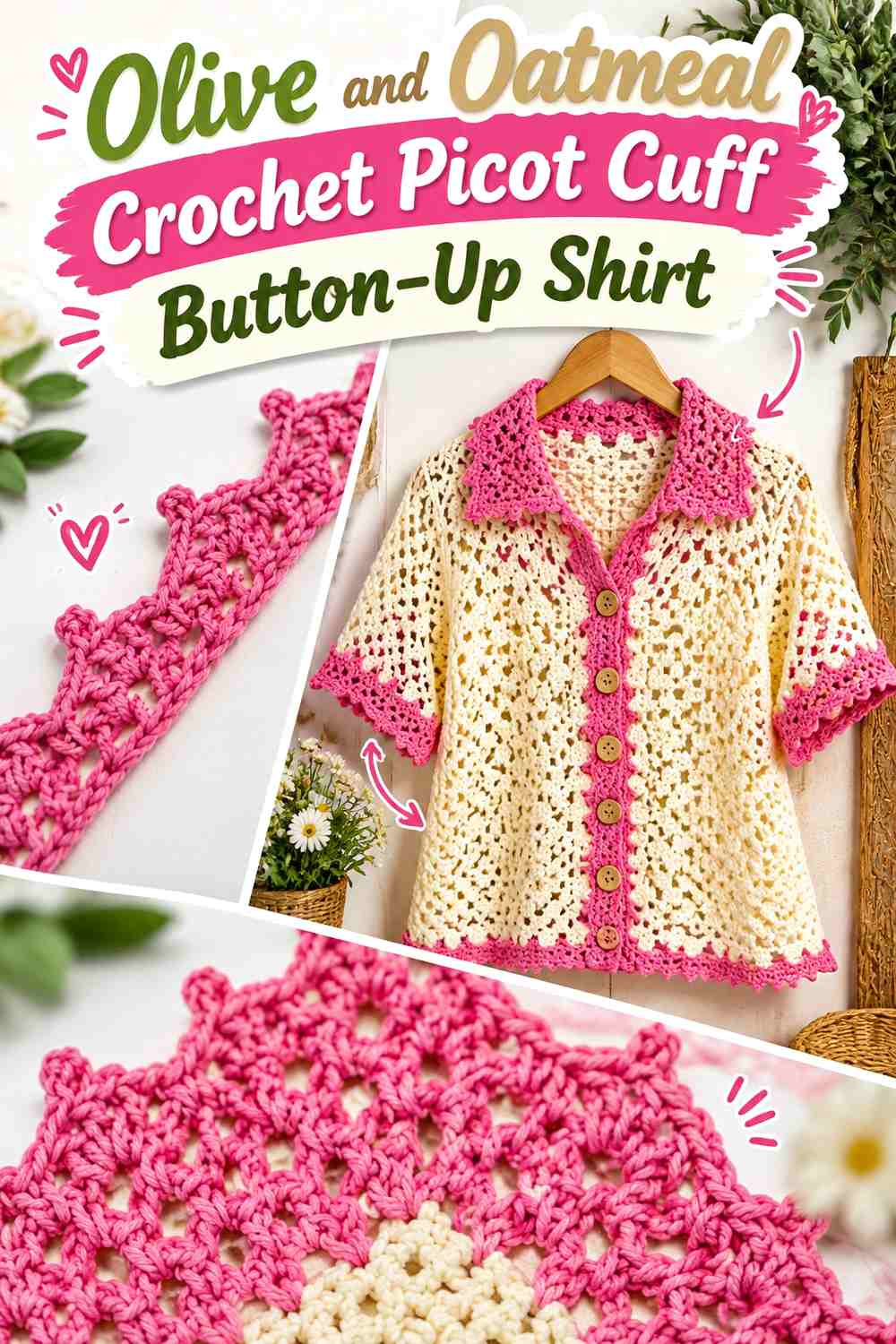
Olive and oatmeal create a restrained earthy combination that works particularly well on cuffs. The cuff already creates a strong horizontal finish at the wrist, so a narrow picot line can add texture without changing the sleeve shape.
Oatmeal Should Keep the Olive Crochet Cuff Edge Visible
Use oatmeal around the lowest cuff edge where it can separate clearly from the green fabric. A very narrow border is enough because each picot already adds shape.
Olive Should Remain the Main Color Around the Oatmeal Crochet Cuffs
Avoid adding another large light trim up the sleeve. Keeping olive visible above the cuff makes the crochet look like a finish rather than an entirely new sleeve section.
Creator Credit: Hectanooga1
4. White, Dusty Rose, and Mustard Crochet Daisy Placket Button-Up Shirt
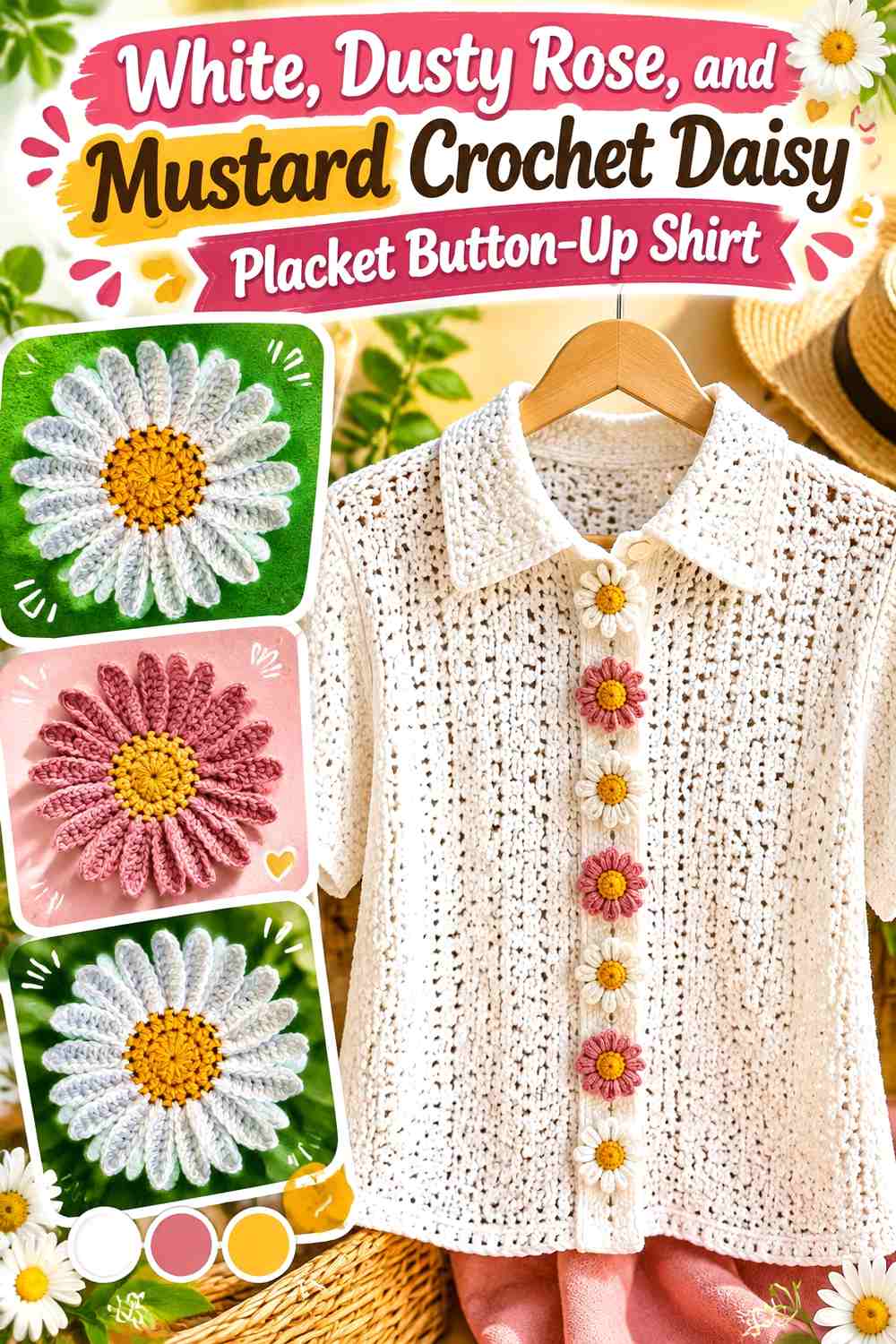
A white button-up gives small dusty-rose daisies a clean background, while mustard can provide compact centers. Instead of filling both sides of the placket, place flowers at controlled intervals so buttons and buttonholes remain visually separate.
Dusty Rose Daisies Should Stay Small on the White Crochet Shirt Placket
Use repeated small flowers rather than several oversized blooms. The placket is narrow, and large motifs can interfere visually with the button line.
Mustard Centers Can Give Dusty Rose Crochet Daisies More Definition
Keep mustard concentrated in the flower centers. Because the white shirt is already light, the warmer center provides a useful visual anchor without requiring darker outlining.
Creator Credit: Kerri’s Crochet
5. Washed Black and Ecru Crochet Scalloped Hem Button-Up Shirt
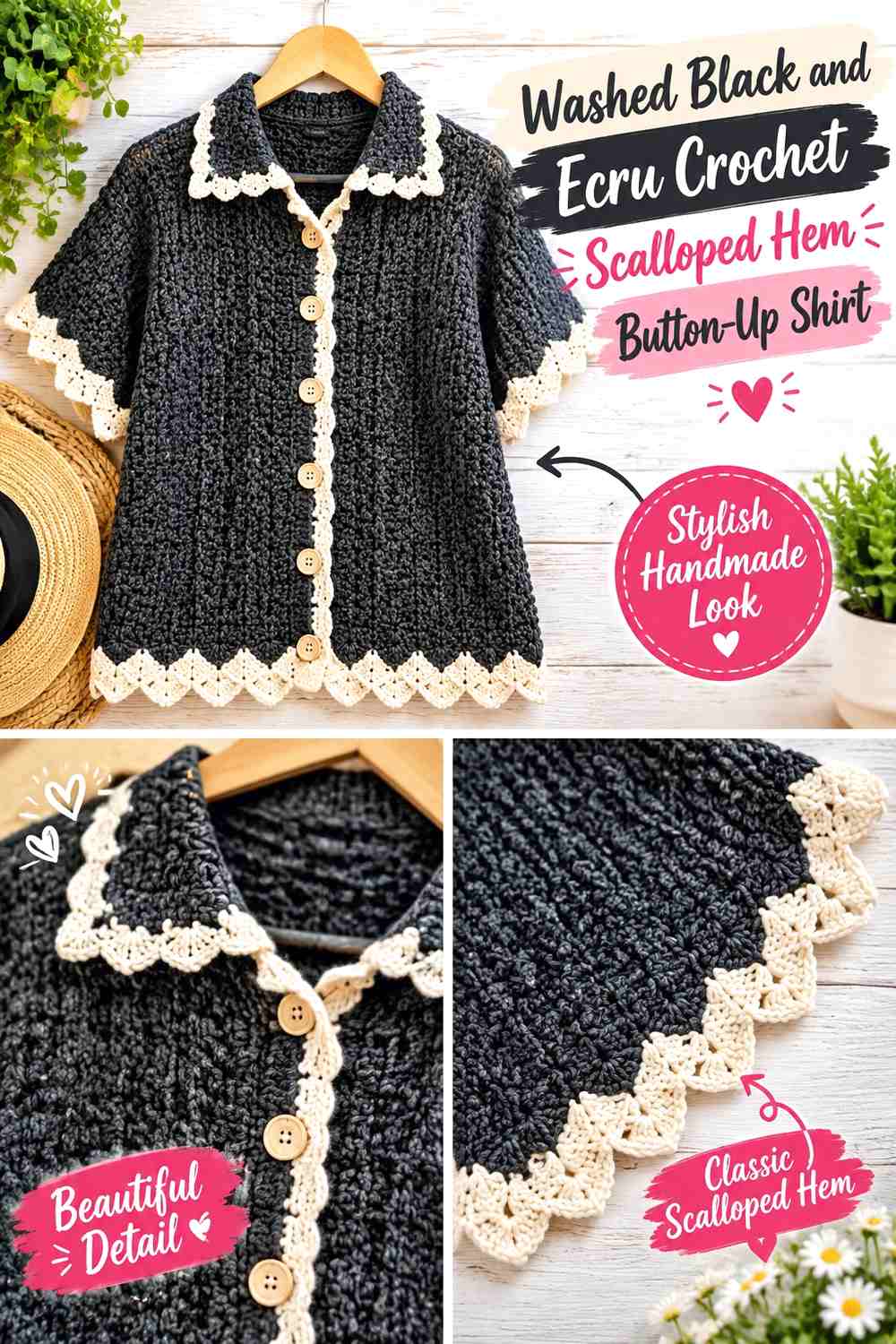
Washed black creates strong contrast with ecru, making a scalloped hem visible even when the edging itself is narrow. This works particularly well on a longer shirt where the bottom edge has enough uninterrupted space for a repeating crochet rhythm.
Ecru Should Create a Continuous Crochet Scallop Along Washed Black
Use ecru consistently from one side of the hem to the other rather than switching colors at every curve. The repeated shape already provides enough variation.
Washed Black Should Frame the Ecru Crochet Hem From Above
Keep the final rows of shirt fabric plain so the scallops have a dark field behind them. Additional appliqués immediately above the hem can reduce the clarity of the repeated edge.
Creator Credit: Crafting Happiness Crochet
6. Chambray, Mustard, and Brown Crochet Sunflower Pocket-Corner Button-Up Shirt
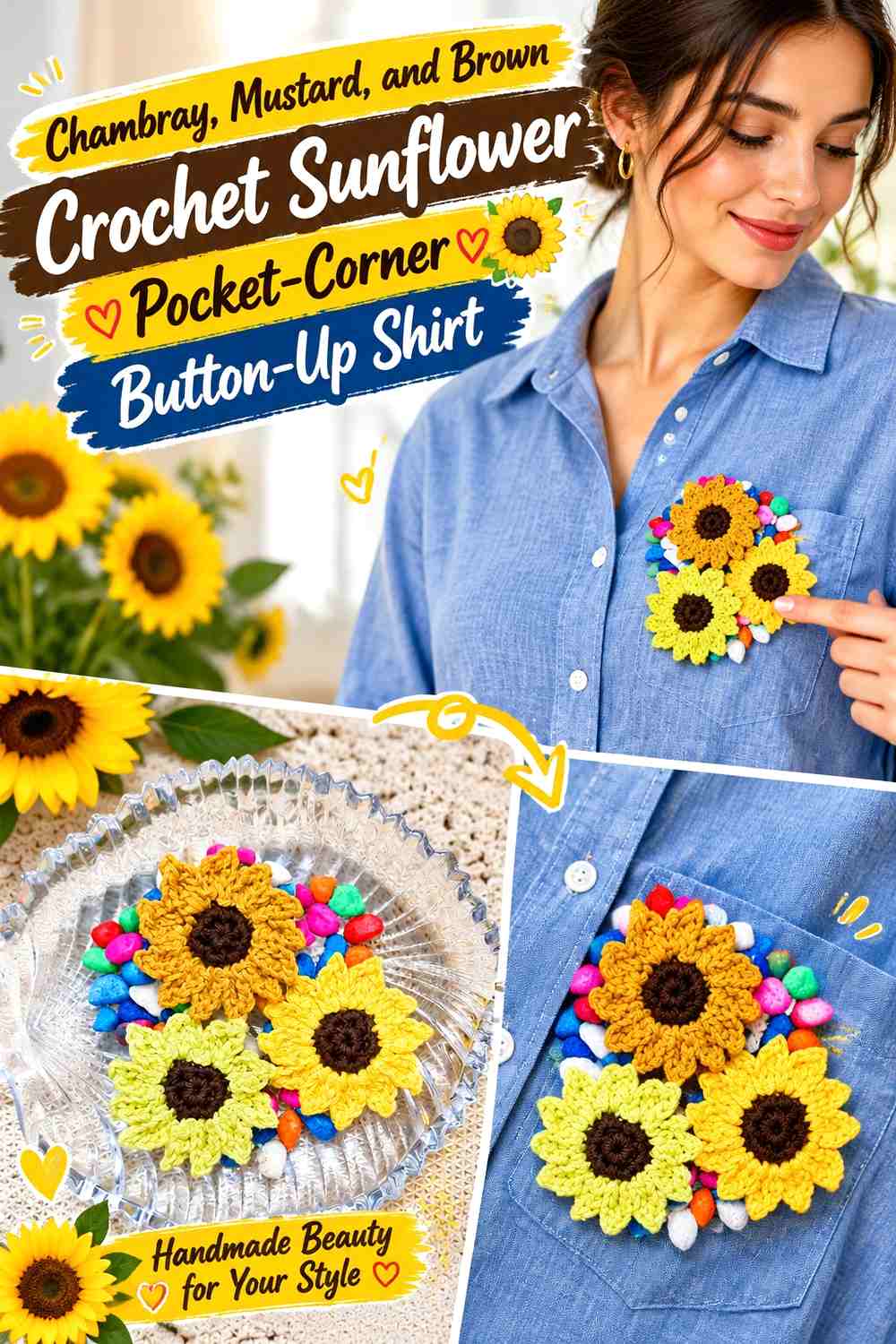
Chambray blue gives mustard petals clear separation without the heavy contrast of dark denim. Brown can stay in the flower center, creating a small three-color detail at the pocket corner.
Mustard Should Carry the Crochet Sunflower on the Chambray Pocket
Let mustard cover the petal area and keep the sunflower concentrated on one corner. A single defined flower can be more effective than several motifs covering the pocket face.
Brown Should Stay Central to the Mustard Crochet Sunflower
Use brown only where the flower needs its darkest focal point. Spreading brown around the pocket edge would compete with the softer blue-and-mustard relationship.
Creator Credit: rajiscraft hobby
7. Chocolate Brown, Sage, and Cream Crochet Leaf Collar-Point Button-Up Shirt
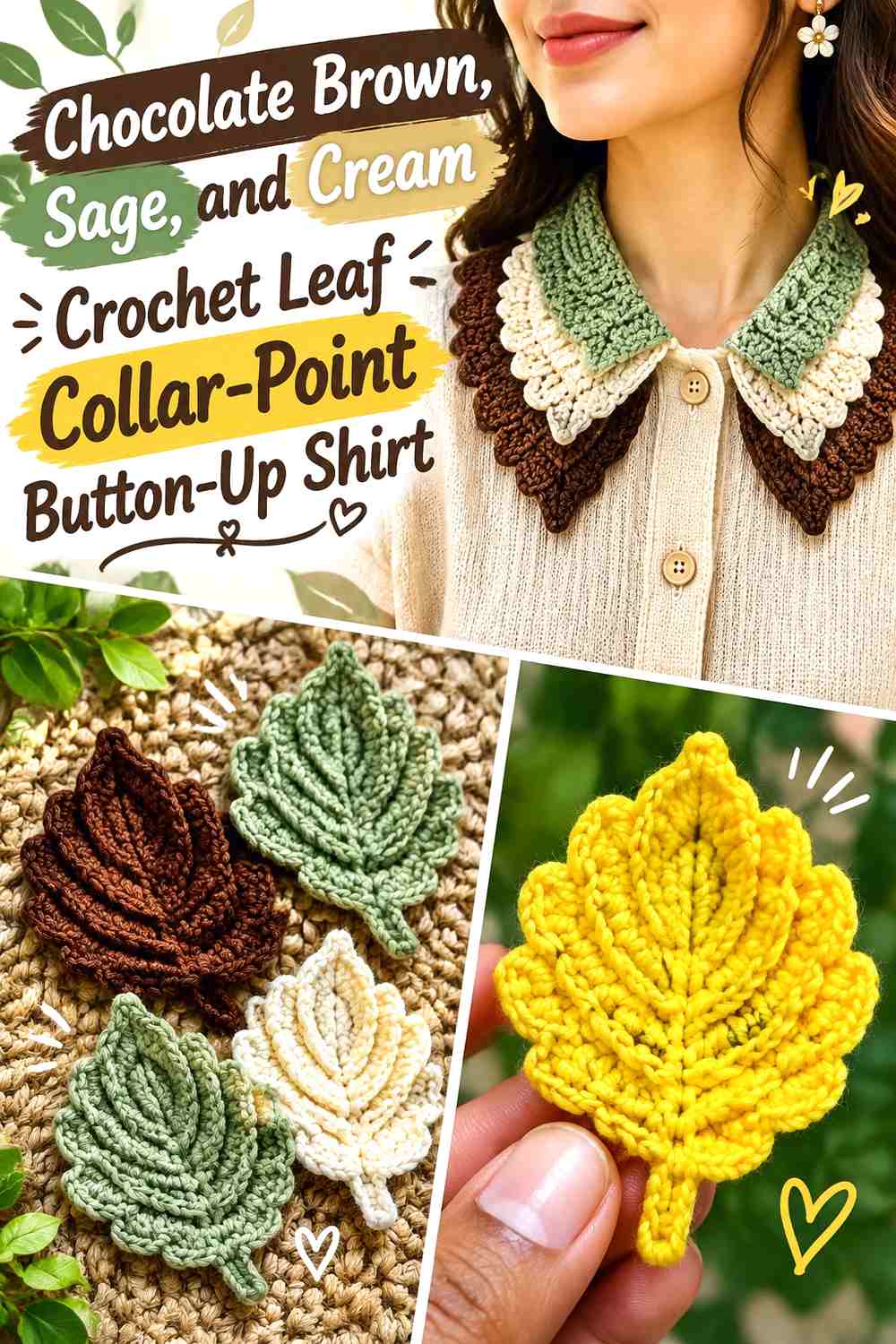
Chocolate brown provides a rich base for sage leaves, while cream can create a small center or stem accent. Position the leaves near the collar points so their directional shapes strengthen the shirt’s existing angles.
Sage Leaves Should Follow the Chocolate Brown Crochet Collar Points
Angle each leaf toward or along the collar tip instead of placing them sideways. This keeps the appliqué connected to the garment structure.
Cream Should Highlight Sage Crochet Leaves Without Covering Chocolate Brown
Use cream sparingly along a stem or small vein detail. The brown fabric should remain visible around every leaf so the collar retains a clean outline.
Creator Credit: Made by Yuma
8. Burgundy, Blush, and Antique Ivory Crochet Rose Yoke Button-Up Shirt
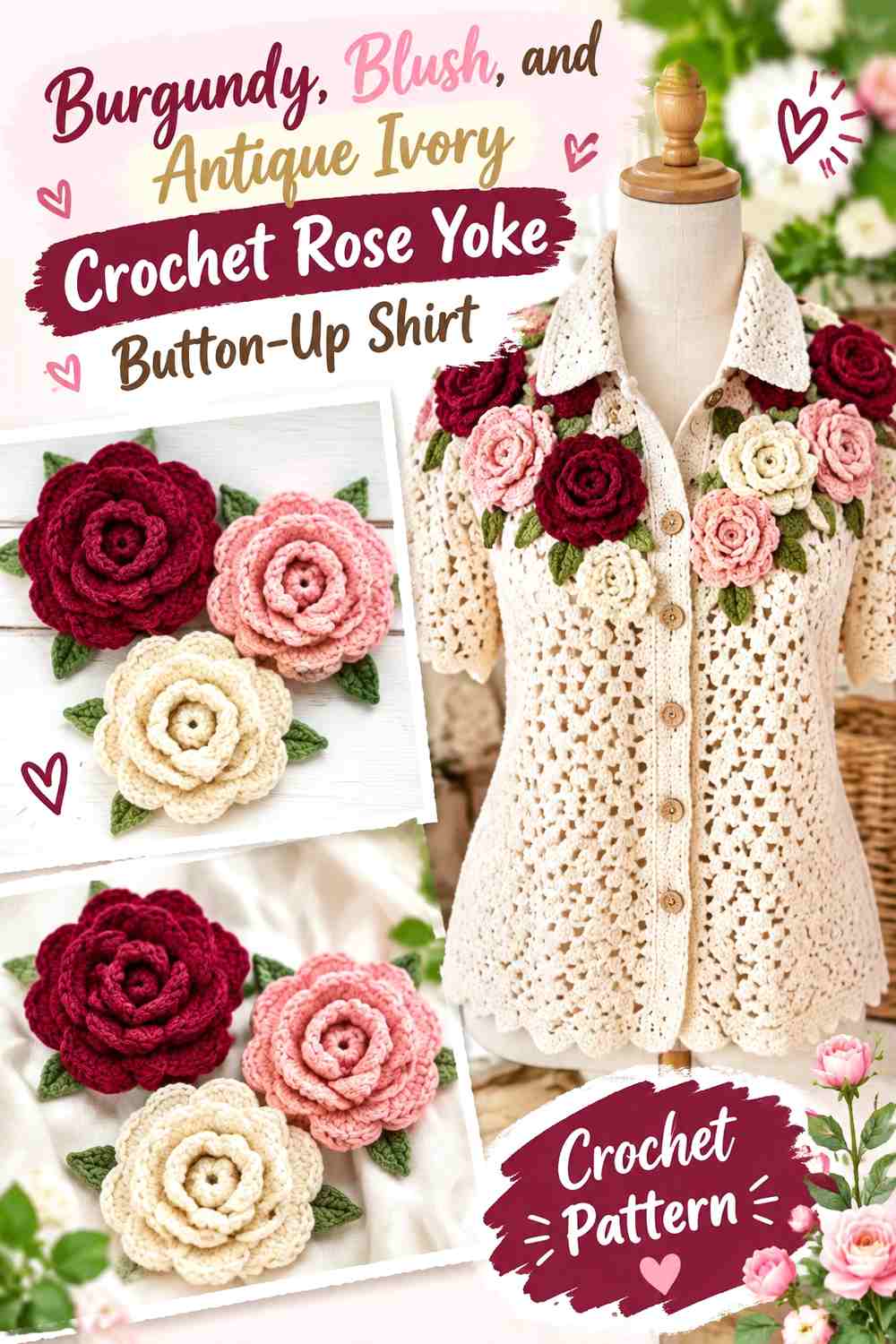
Burgundy can remain the dominant shirt color while blush roses sit near the outer edge of the back yoke. Antique ivory can appear in a few smaller flowers or leaf joins to keep the arrangement from becoming one dark red-pink block.
Blush Roses Should Sit Inside the Burgundy Crochet Back-Yoke Area
Keep the flowers close to the existing horizontal yoke seam instead of scattering them down the entire back. This makes the update feel tied to the shirt construction.
Antique Ivory Can Separate Blush Crochet Roses From Burgundy
Use ivory between selected roses or in small centers. Because it is much lighter, a small amount is enough to create space within the floral grouping.
Creator Credit: Happy Patty Crochet
9. Cream, Deep Teal, and Rust Crochet Flower-Square Back-Yoke Button-Up Shirt
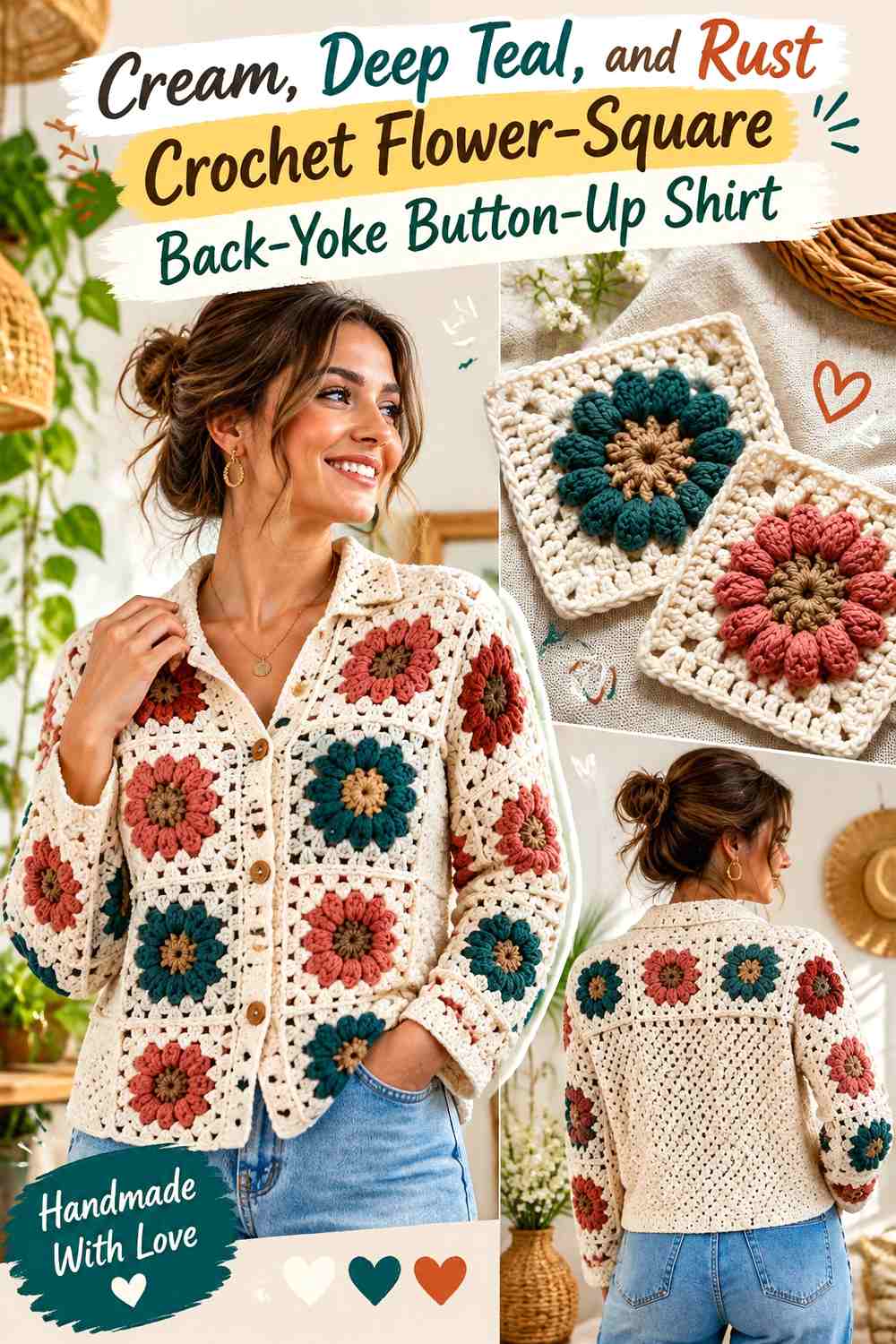
A cream shirt can support a more substantial crochet insert because the base color is visually quiet. Deep teal can form the square framework, while rust carries the flower center or petals. Use the motif as a back-yoke accent rather than automatically replacing the entire panel.
Deep Teal Should Frame the Crochet Flower Square on the Cream Shirt
Give teal the structural role around the square so the motif remains distinct from the pale fabric. This makes the insert easy to read even if rust occupies only a small central area.
Rust Should Stay Focused Inside the Deep Teal Crochet Flower Square
Concentrate rust within the floral center rather than continuing it around the full square. That gives the back one strong warm focal point without turning the entire yoke orange-red.
Creator Credit: VivCrochets
10. Sage, Terracotta, and Oatmeal Crochet Tulip Sleeve Button-Up Shirt
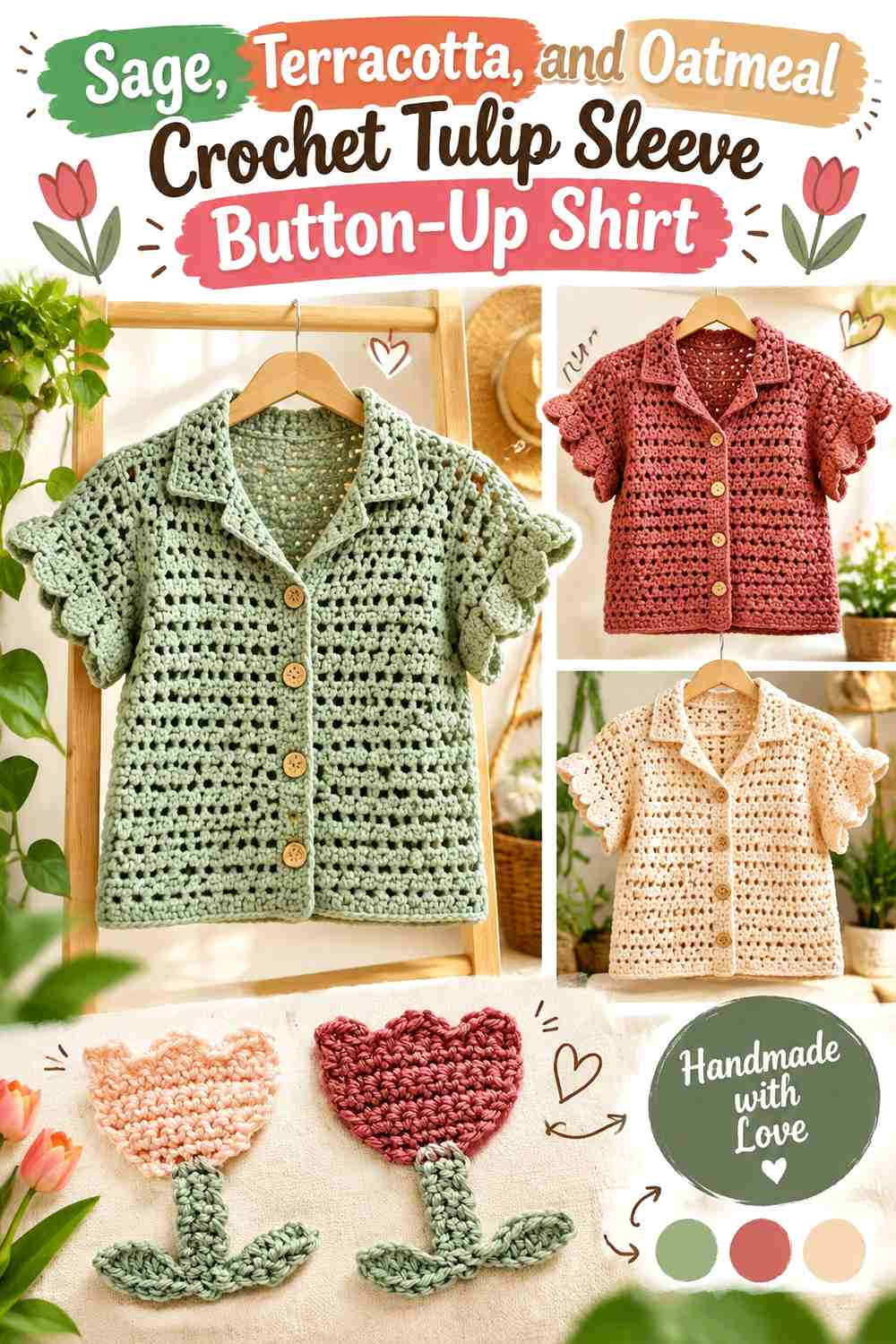
Sage fabric creates a natural background for terracotta tulip appliqués. Oatmeal can lighten the stems or a narrow sleeve detail. Position the tulips near the lower sleeve or above the cuff where their upright shape can follow the arm.
Terracotta Tulips Should Rise Along the Sage Crochet Shirt Sleeve
Arrange the flowers vertically rather than circling the sleeve completely. Their directional shape is more effective when it follows the length of the garment.
Oatmeal Can Separate Terracotta Crochet Tulips From Sage
Use oatmeal only where a stem, edge, or small joining detail needs more contrast. The palette should still read primarily as sage and terracotta.
Creator Credit: E’Claire Makery
11. Charcoal and Cream Crochet Floral-Edge Placket Button-Up Shirt
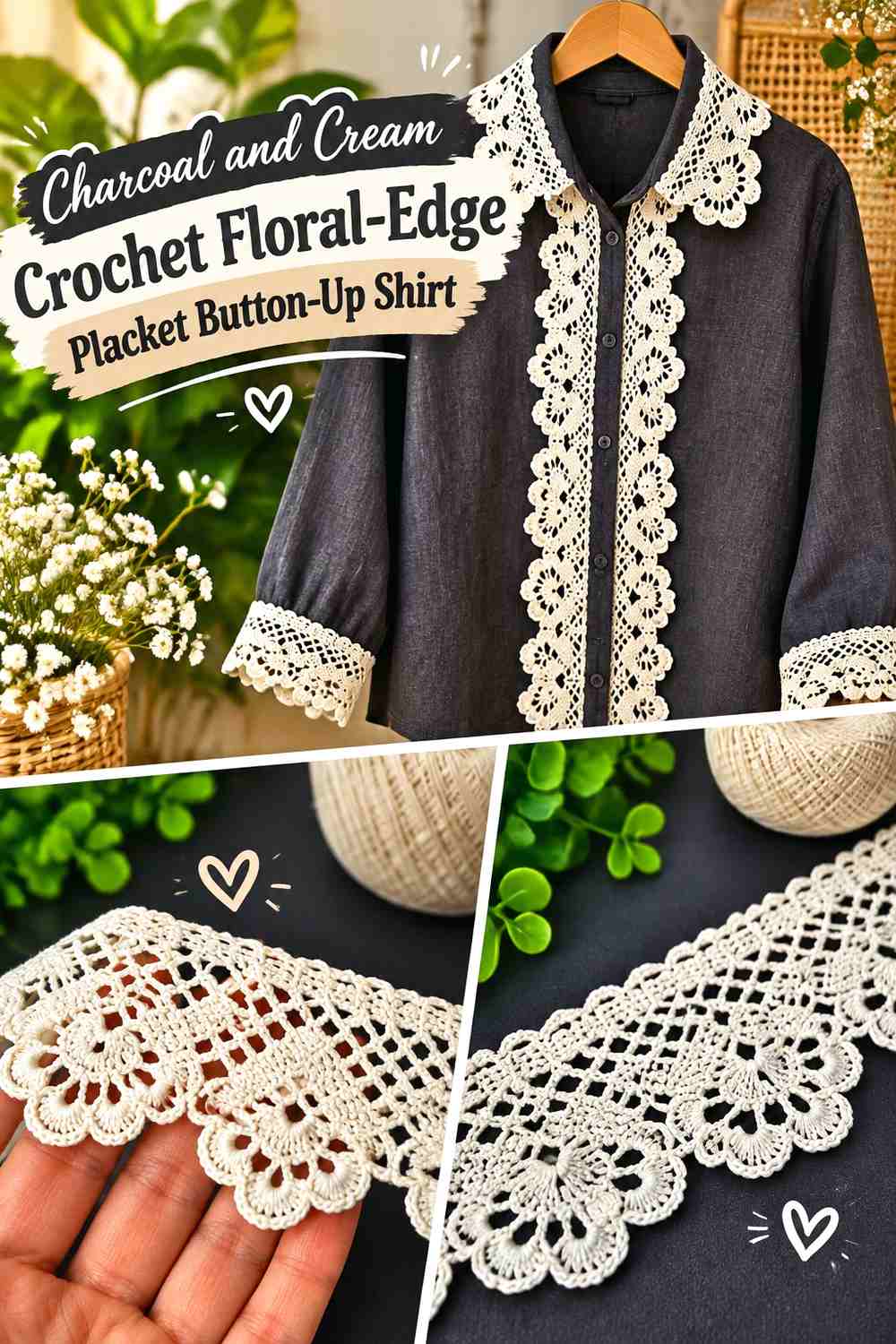
Charcoal and cream create a strong two-color makeover for a shirt with a clean central button line. A narrow floral edging can sit beside the placket rather than directly over the buttons, leaving the fastening visually clear.
Cream Should Form a Narrow Crochet Floral Line Against Charcoal
Keep the edging slim and continuous down one or both sides of the button area. The contrast is already strong enough that the crochet does not need extra colors.
Charcoal Should Remain Visible Around the Cream Crochet Placket Edge
Leave plain fabric between the edging and nearby pockets or seams. This negative space prevents the center front from becoming overly decorated.
Creator Credit: Knitting Love 💗
12. Dusty Blue, Mauve, and Cream Crochet Flower Shoulder-Patch Button-Up Shirt
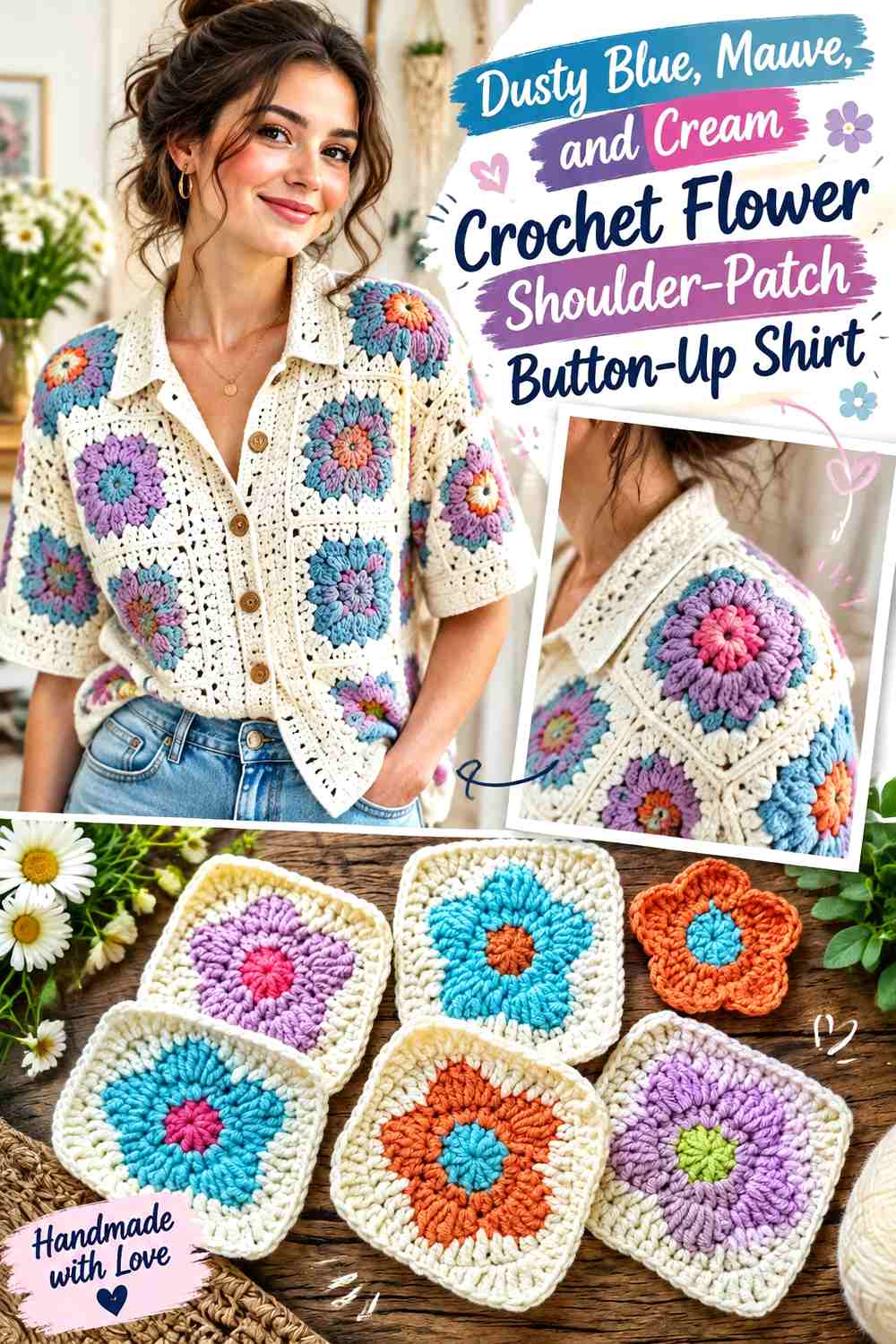
Dusty blue fabric can support a compact mauve flower square or floral appliqué near one shoulder. Cream should function as the background or edge so the darker flower remains separated from the shirt.
Mauve Should Give the Dusty Blue Crochet Shoulder Patch Its Focal Color
Use mauve in the flower itself rather than splitting the motif evenly between several pastels. One clear bloom makes the patch easier to read.
Cream Should Frame the Mauve Crochet Flower Against Dusty Blue
Keep cream around the outside or in a narrow joining section. If cream covers most of the patch, the mauve flower may appear too small for the shoulder area.
Creator Credit: Crochet & Crafts Therapy by Chompu
13. Faded Indigo and Antique White Crochet Pointed-Lace Sleeve-Vent Button-Up Shirt

A sleeve vent is a small but useful place for narrow lace. Faded indigo can remain untouched across the sleeve, while antique white runs along the vent edge or beneath the cuff opening. Pointed lace adds detail without requiring a large appliqué.
Antique White Should Follow the Faded Indigo Crochet Sleeve Vent
Keep the lace aligned with the existing opening rather than extending randomly across the sleeve. This strengthens a feature already built into the shirt.
Faded Indigo Should Surround the Antique White Crochet Points
Allow visible blue around every pointed section so the lace shape remains clear. If the cuff itself is also covered with white crochet, the smaller sleeve-vent detail may lose its distinction.
Creator Credit: Strommer Crafts
14. Rust and Ecru Crochet Coronet-Lace Cuff Button-Up Shirt
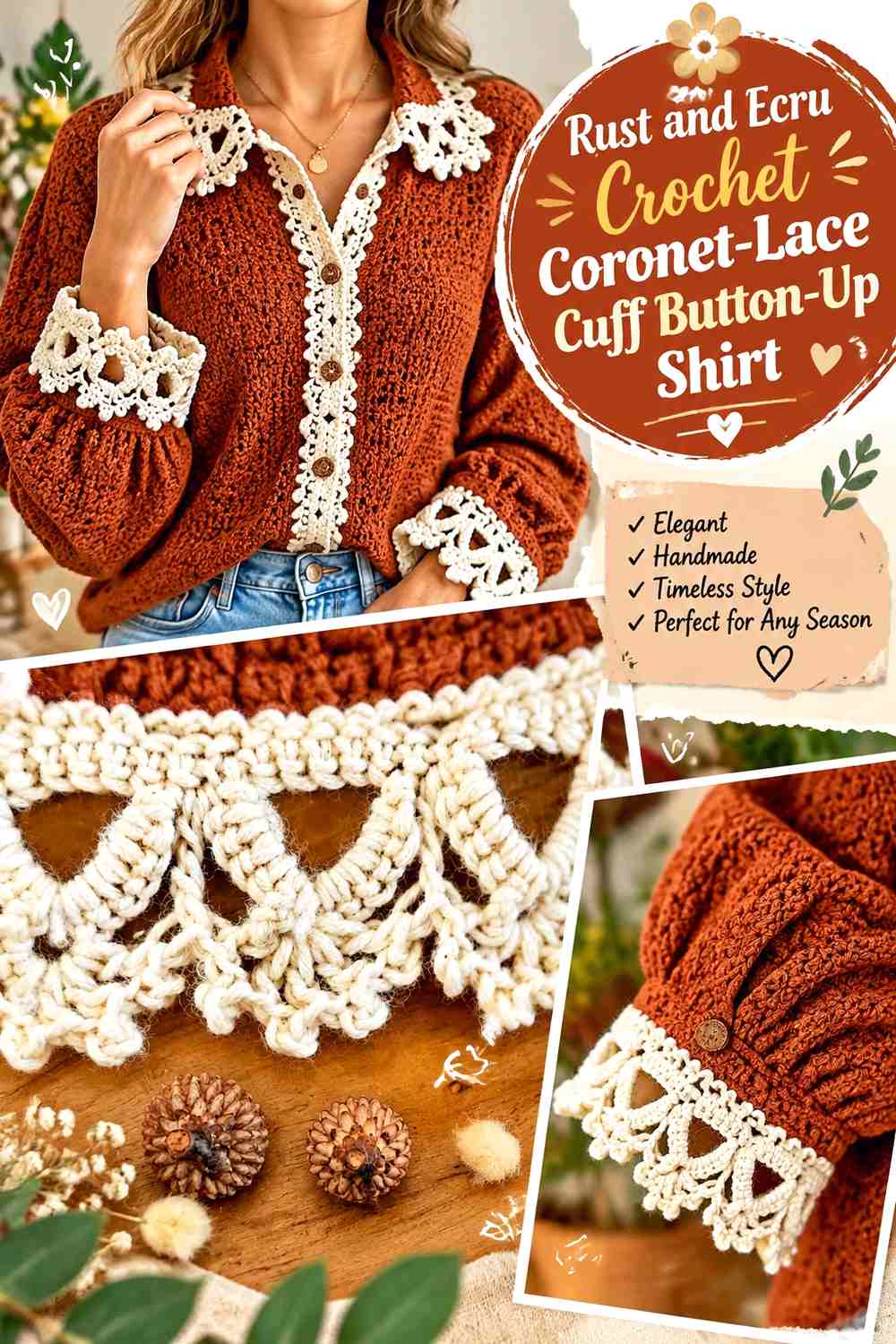
Rust fabric gives ecru coronet-style lace a warm vintage contrast. Because the lace contains pronounced peaks and open areas, use it on a cuff or lower sleeve where those details have enough room to be seen.
Ecru Should Create the Main Crochet Coronet Detail on Rust Cuffs
Keep the lace one pale color so its repeated peaks remain easy to follow. A multicolor lace trim would add complexity to an already decorative edge.
Rust Should Remain Visible Above the Ecru Crochet Cuff Trim
Leave plain rust fabric between the lace and any sleeve appliqués. The darker field makes the pale openwork more visible and keeps the cuff from appearing oversized.
Creator Credit: Stardust Gold Crochet
15. Forest Green, Ivory, and Burgundy Crochet Floral Collar-and-Cuff Button-Up Shirt

This makeover repeats the same crochet palette in two separate areas. Forest green remains the shirt color, ivory defines the collar and cuffs, and burgundy appears in a few floral details. Repetition at the neckline and wrists can make the shirt feel coordinated without requiring crochet down the full placket.
Ivory Should Connect the Forest Green Crochet Collar and Cuffs
Use the same ivory edging style in both places so the two areas clearly belong together. The collar can support slightly more detail, while the cuffs can stay narrower.
Burgundy Should Accent the Ivory Crochet Flowers on Forest Green
Place burgundy in small centers or occasional blossoms rather than turning every floral repeat dark red. The limited warm accent gives the shirt a vintage color shift while ivory remains the main crochet shade.
Creator Credit: Jewelry & Crochet Items
Which Crochet Button-Up Shirt Makeover Should You Choose?
For the smallest change, focus on the collar, cuffs, pocket edge, or sleeve vent. Navy with antique ivory, olive with oatmeal, or faded indigo with pointed white lace can add a clear handmade detail without changing the overall shirt silhouette.
For a stronger focal point, use a flower square on the back yoke, roses across an existing seam, or a sunflower at a pocket corner. These placements give the crochet enough plain fabric around it to remain visible.
If you want the shirt to feel coordinated from several angles, repeat one crochet color in two places. A matching collar and cuff treatment works particularly well because the eye naturally connects the neckline and wrists without requiring decoration on every seam.
Conclusion
A vintage button-up shirt provides more useful crochet placement opportunities than a plain fabric panel because its construction already divides the garment into collars, cuffs, pockets, plackets, yokes, vents, and hems. The strongest makeovers use those existing boundaries instead of covering the shirt indiscriminately.
Treat the fabric as the dominant color, assign one crochet shade to the main border or flower, and use a second only where it adds contrast or botanical detail. Dark shirts usually need less pale crochet because the contrast is already strong, while cream, chambray, and faded pastel shirts may benefit from deeper flower centers, leaves, or borders.
Use the credited tutorials for their collar, edging, flower, leaf, lace, and motif constructions, then adapt the placement and palette independently for the particular vintage shirt you are updating.
Frequently Asked Questions
Where can I add crochet to a vintage button-up shirt?
Collars, cuffs, pocket edges, pocket corners, button plackets, back yokes, sleeve vents, shoulders, and hems all provide useful existing boundaries. Choose the location according to the condition of the shirt and the amount of decoration you want.
What colors work well on a faded denim button-up shirt?
Rust, cream, mustard, burgundy, sage, oatmeal, and antique ivory can all work with faded denim. Warm colors create stronger contrast, while muted neutrals produce a quieter vintage effect.
How can I keep crochet edging from making a shirt look too busy?
Decorate one or two related areas and leave plenty of plain fabric visible. A collar and cuffs can coordinate naturally, while a flower-covered collar, placket, pockets, sleeves, and hem may compete with one another.
Should crochet trim match the shirt buttons?
It does not have to. Button color can simply become part of the existing shirt palette. Choose crochet according to the fabric first, then decide whether repeating the button tone adds useful cohesion.
Can I put crochet flowers on a shirt pocket?
Yes. Pocket corners and upper edges are good locations because the flower can remain visible without covering the complete pocket. Keep bulky motifs away from areas where they interfere with normal pocket use.
How do I choose between lace edging and crochet appliqués?
Use edging when you want to emphasize an existing line such as a collar, cuff, vent, or hem. Use appliqués when you want a more concentrated focal point on a pocket, shoulder, sleeve, or yoke.
What should I check before altering an older button-up shirt?
Inspect the fabric, seam strength, cuffs, collar, pocket corners, and any areas that are already thinning or fraying. Plan decorative crochet on stable fabric, and treat structural repairs separately from embellishment.