Victorian-inspired detachable crochet sleeves can add lace, volume, or dramatic cuffs to an outfit without permanently changing the dress or blouse underneath. Some designs can sit close to the forearm like elongated wrist warmers, while others use open mesh, flared cuffs, or a connected shrug structure to create much more visual volume.
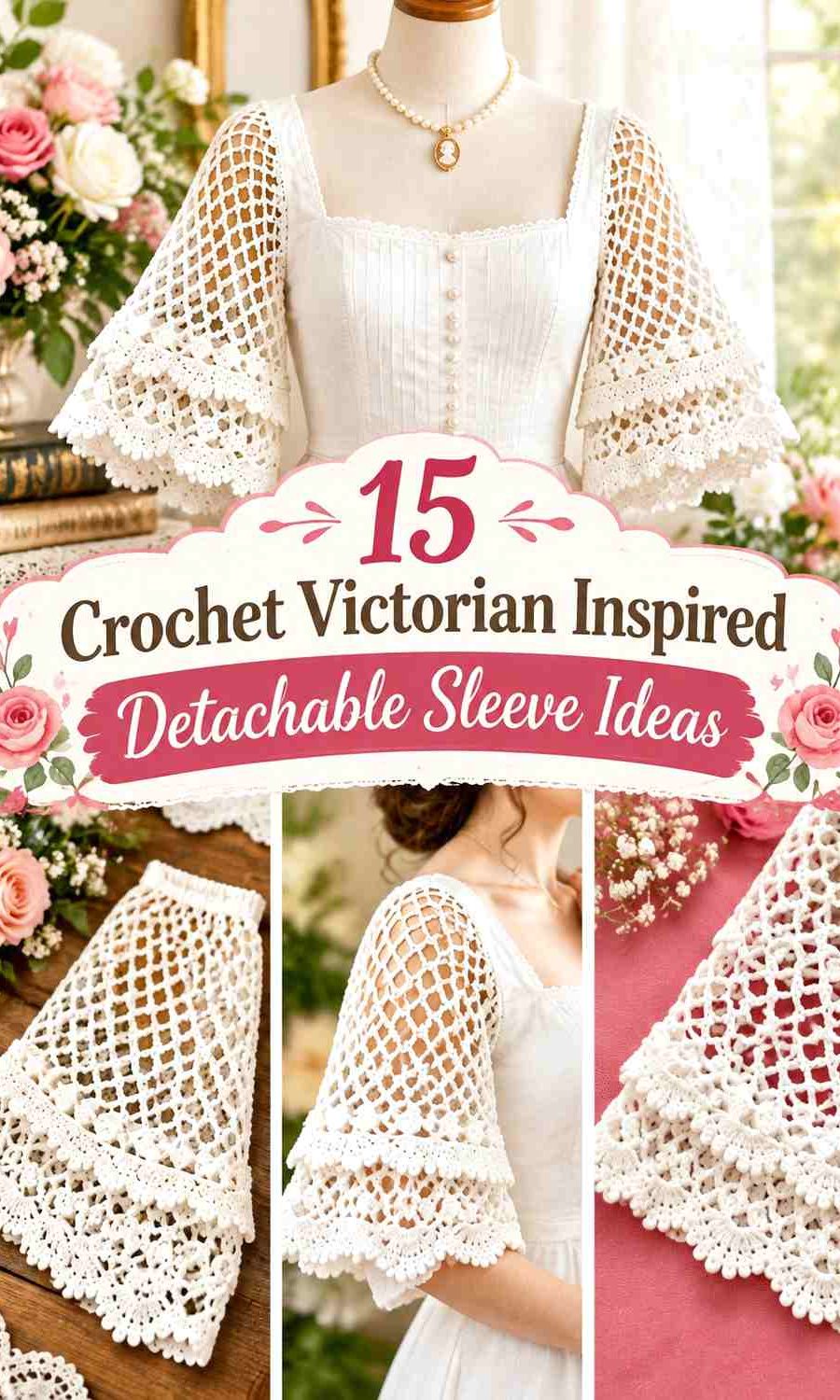
Color changes the character of those shapes considerably. Antique ivory lace gives a dark dress a pale romantic frame, burgundy creates a richer evening direction, and black or charcoal can make openwork look more graphic. Muted sage, dusty rose, plum, navy, and tea beige offer softer alternatives when stark black-and-white contrast feels too strong.
These ideas are Victorian inspired rather than claims of exact historical reconstruction. The credited tutorials support sleeve, shrug, glove, or wrist-warmer construction concepts; the palettes and styling adaptations below are independent editorial directions.
Quick List
- Antique Ivory and Dusty Rose Crochet Victorian Lace Detachable Sleeves
- Black and Ecru Crochet Victorian Mesh Detachable Sleeves
- Burgundy and Antique Cream Crochet Victorian Fishnet Detachable Sleeves
- Plum and Dove Gray Crochet Victorian Bolero-Style Detachable Sleeves
- Tea Beige and Burgundy Crochet Victorian Lace Wrist Sleeves
- Black and Antique Ivory Crochet Victorian Long Lace Glove Sleeves
- Forest Green and Cream Crochet Victorian Ribbed Detachable Sleeves
- Dusty Mauve and Charcoal Crochet Victorian Fitted Wrist Sleeves
- Deep Navy and Soft White Crochet Victorian Mesh Detachable Sleeves
- Antique Rose and Ecru Crochet Victorian Cropped Mesh Sleeves
- Wine Red and Black Crochet Victorian Long Fingerless Sleeves
- Powder Blue and Antique White Crochet Victorian Lightweight Arm Sleeves
- Chocolate Brown and Camel Crochet Victorian Arm Warmers
- Sage Green and Oatmeal Crochet Victorian High-Neck Sleeve Shrug
- Burgundy, Black, and Cream Crochet Victorian Bell Detachable Sleeves
Decide Where the Victorian Crochet Sleeve Should Carry Its Detail
Detachable sleeves can concentrate decoration at very different points. A fitted forearm sleeve can save its lace for the wrist, while a bell sleeve can stay relatively plain above the elbow and expand into a much deeper decorative cuff.
That distribution affects color too. The lightest shade usually draws the eye first, so antique ivory placed only at the cuff makes the wrist the focal point. Using the same ivory all the way to the upper arm creates a much broader lace statement.
Keep Victorian-Inspired Lace Visible Against the Clothing Underneath
Open crochet does not have a solid background of its own. The dress, blouse, or camisole underneath becomes part of the color scheme through the holes in the lace.
Pin or hold a sample against the actual outfit before settling on the palette. Burgundy mesh may read richly against cream but blend into a similarly dark dress, while ecru or antique white can become much more prominent over black, navy, or forest green.
1. Antique Ivory and Dusty Rose Crochet Victorian Lace Detachable Sleeves
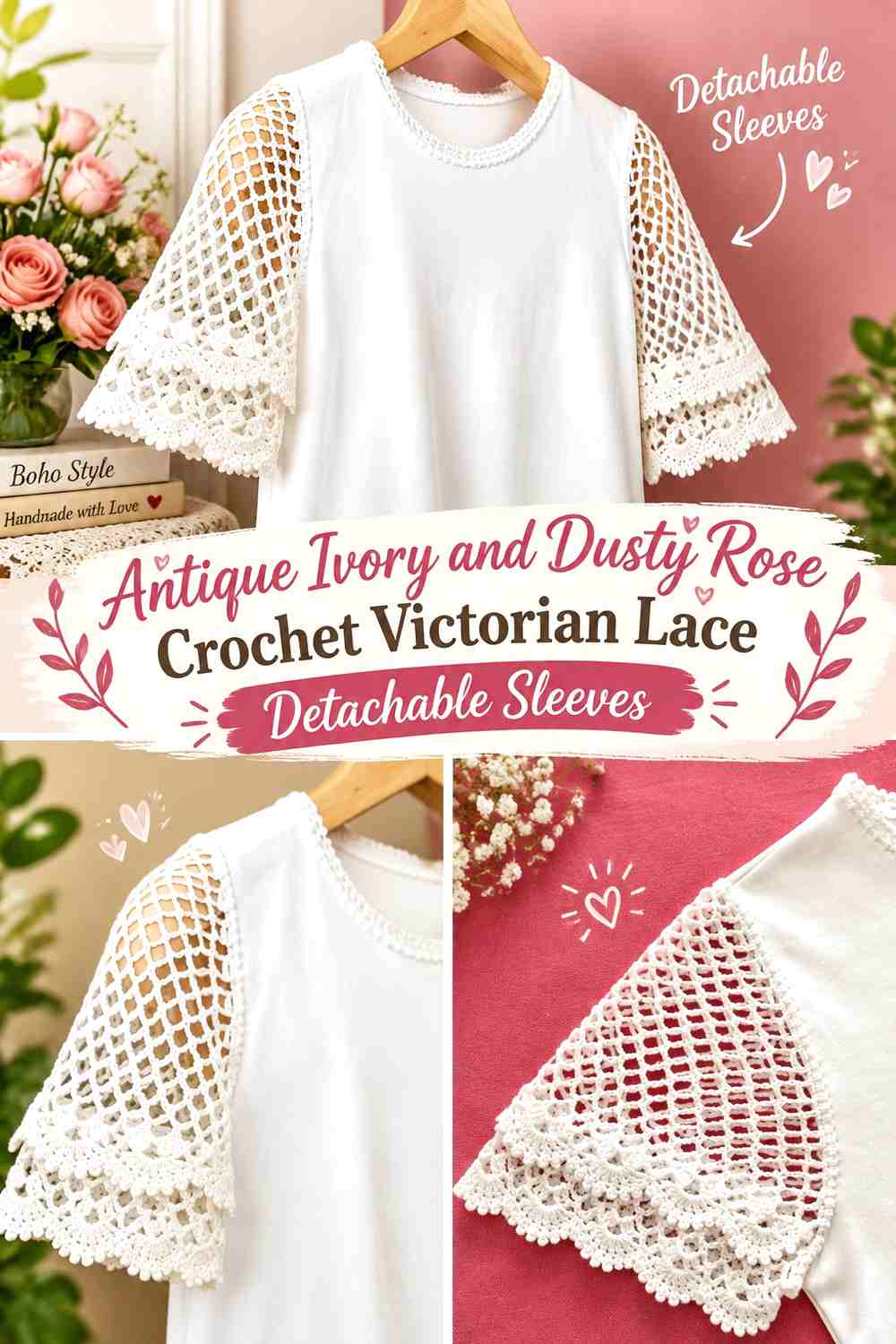
Antique ivory can dominate these fitted lace sleeves while dusty rose appears near the wrist or along selected openwork details. This palette works particularly well when the sleeve is worn over a dark or muted dress, because the ivory immediately reveals the lace pattern while dusty rose adds color without becoming the main field.
Antique Ivory Should Carry Most of the Crochet Victorian Sleeve Lace
Use antique ivory through the upper arm and forearm so the sleeve reads as one continuous piece instead of several decorative bands. If the construction includes an especially intricate lower section, keep that section ivory too and let the change in texture—not another color—create most of the interest.
Dusty Rose Can Focus Attention on Antique Ivory Victorian Cuffs
Reserve dusty rose for a narrow cuff border, floral-looking detail, or repeated lower accent. Concentrating the color near the wrist gives the detachable sleeve a visual endpoint and keeps the romantic pink from competing with the full ivory lace field.
Creator Credit: Füsun ARIKAN Tutorial
2. Black and Ecru Crochet Victorian Mesh Detachable Sleeves

Black mesh gives these detachable sleeves a darker dramatic foundation, while ecru can lighten the wrist edge or another selected boundary. This pairing works especially well when the garment underneath is burgundy, ivory, dusty pink, or another color that can show clearly through the black openwork.
Black Should Keep the Crochet Victorian Mesh Sleeves Visually Continuous
Use black through most of the mesh so the open squares or lace spaces read as one uninterrupted sleeve. Alternating black and ecru frequently would create strong striping that could compete with the mesh itself.
Ecru Can Define the Black Victorian Sleeve Cuffs
Add ecru around the lowest edge when you want the wrist silhouette to remain visible against a black dress or dark skirt. A narrow pale boundary is usually enough; allowing ecru to take over large areas would shift the sleeve away from its darker Victorian-inspired direction.
Creator Credit: DIY FROM HOME CROCHET Tutorial
3. Burgundy and Antique Cream Crochet Victorian Fishnet Detachable Sleeves
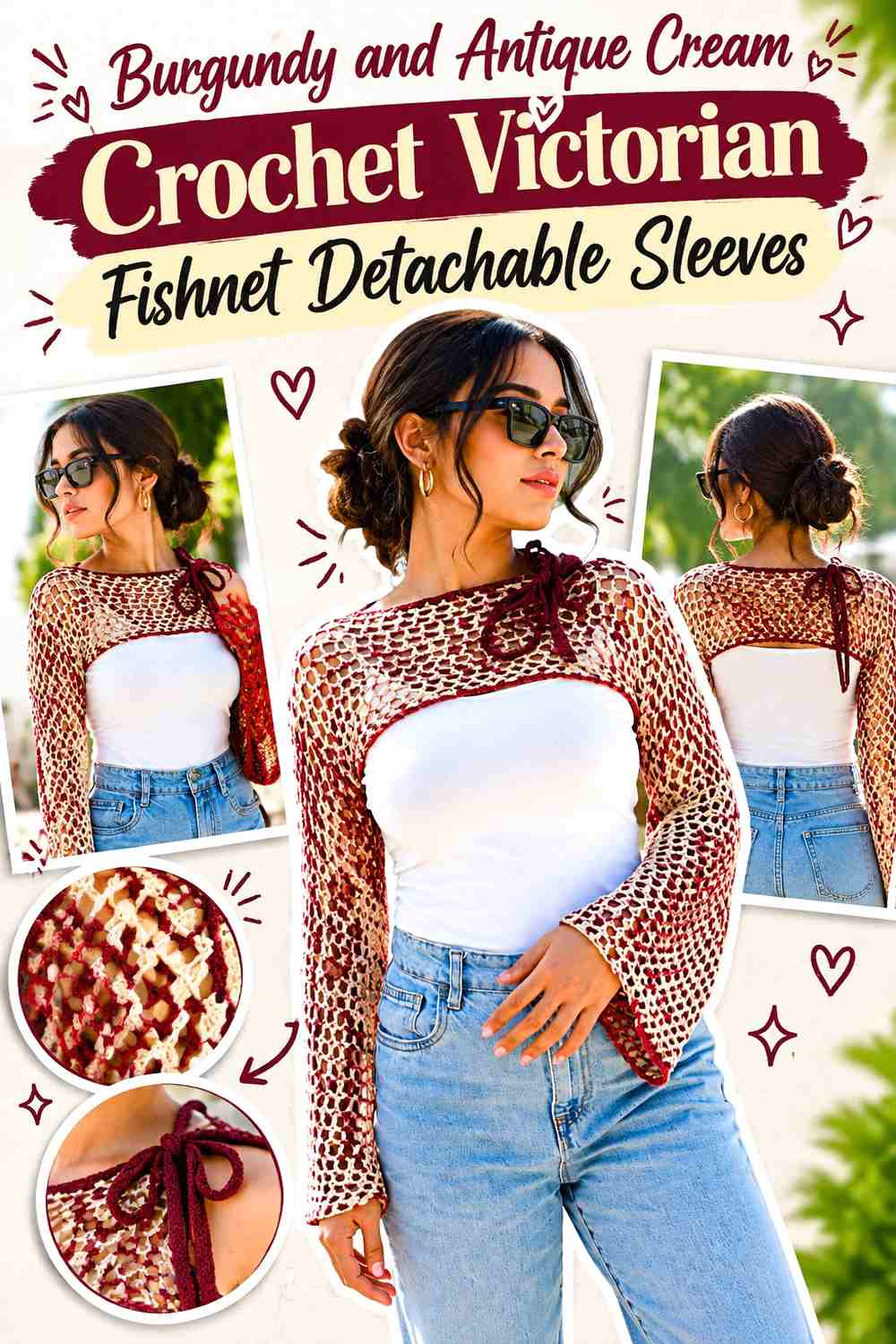
Burgundy gives open sleeves a rich jewel-toned look, while antique cream creates strategic light contrast around the wrists or upper edges. Because an open fishnet-like texture already creates strong patterning, keep the color arrangement simpler than the stitch structure.
Burgundy Should Dominate the Crochet Victorian Fishnet Sleeves
Let burgundy run continuously along most of the arm. This gives the sleeve a clear color identity even when skin or a contrasting blouse shows extensively through the open crochet.
Antique Cream Should Highlight Burgundy Victorian Sleeve Edges
Use cream around the cuff or a narrow upper border when the burgundy needs separation from a similarly dark outfit. The light shade can also visually frame the mesh without requiring additional ornament throughout the sleeve body.
Creator Credit: Jennyandteddy crochet. Tutorial
4. Plum and Dove Gray Crochet Victorian Bolero-Style Detachable Sleeves
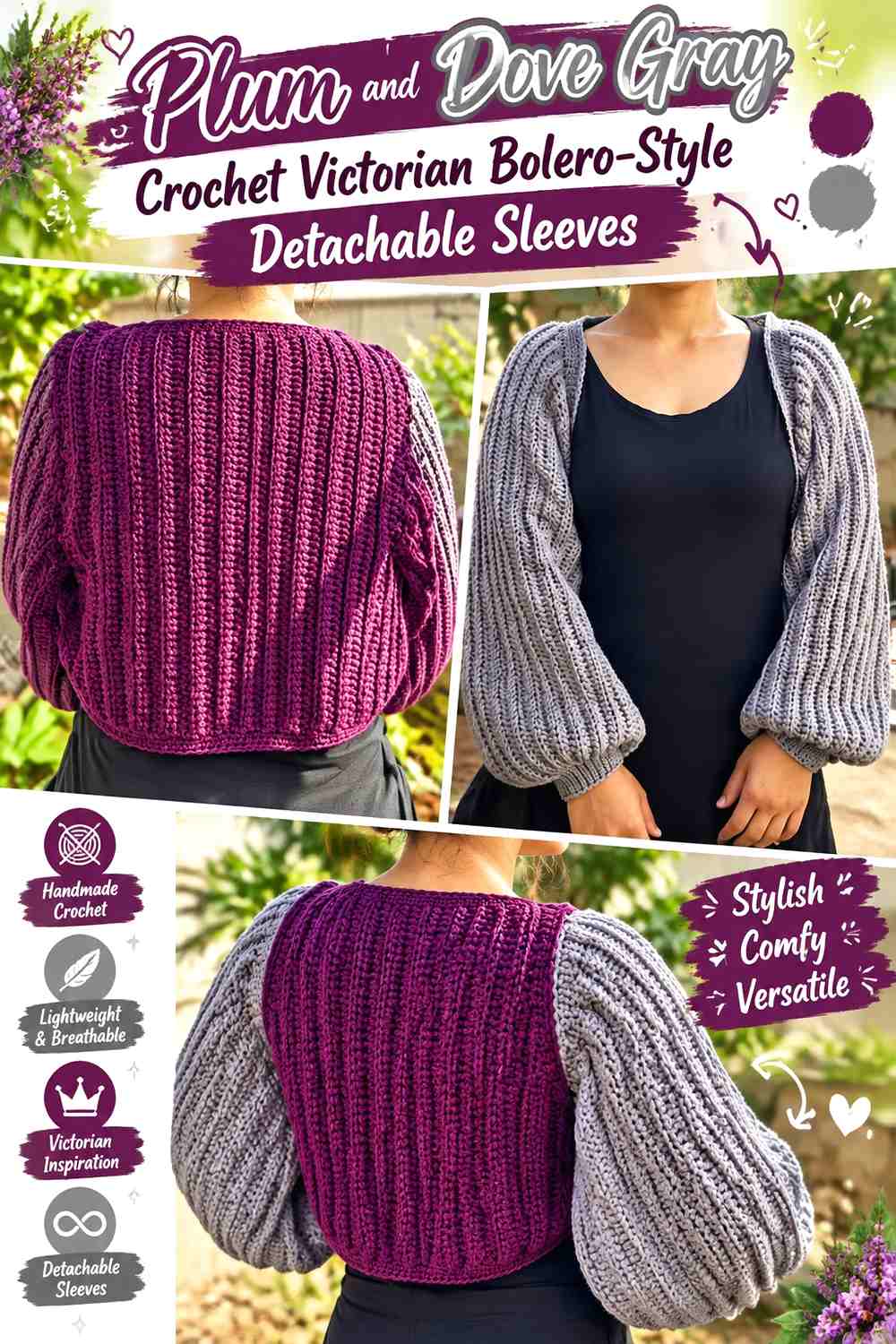
A connected bolero-style construction can function as a detachable sleeve layer when you want both arms to stay aligned. Plum provides the richer main color, while dove gray can soften the edges around the neckline, shoulder connection, or cuffs.
Plum Should Lead the Crochet Victorian Bolero Sleeves
Use plum across the sleeves and most of the connecting section so the garment feels cohesive rather than like two separate arm warmers attached to a different-colored bridge. The deeper purple also works well over cream, gray, black, or muted floral dresses.
Dove Gray Can Soften Plum Around the Victorian Sleeve Boundaries
Place gray at cuffs or around the narrow central connection if the plum feels visually heavy. Because gray is quieter than white, it reduces the contrast without introducing another strongly romantic color.
Creator Credit: Wanda M C crochet Tutorial
5. Tea Beige and Burgundy Crochet Victorian Lace Wrist Sleeves
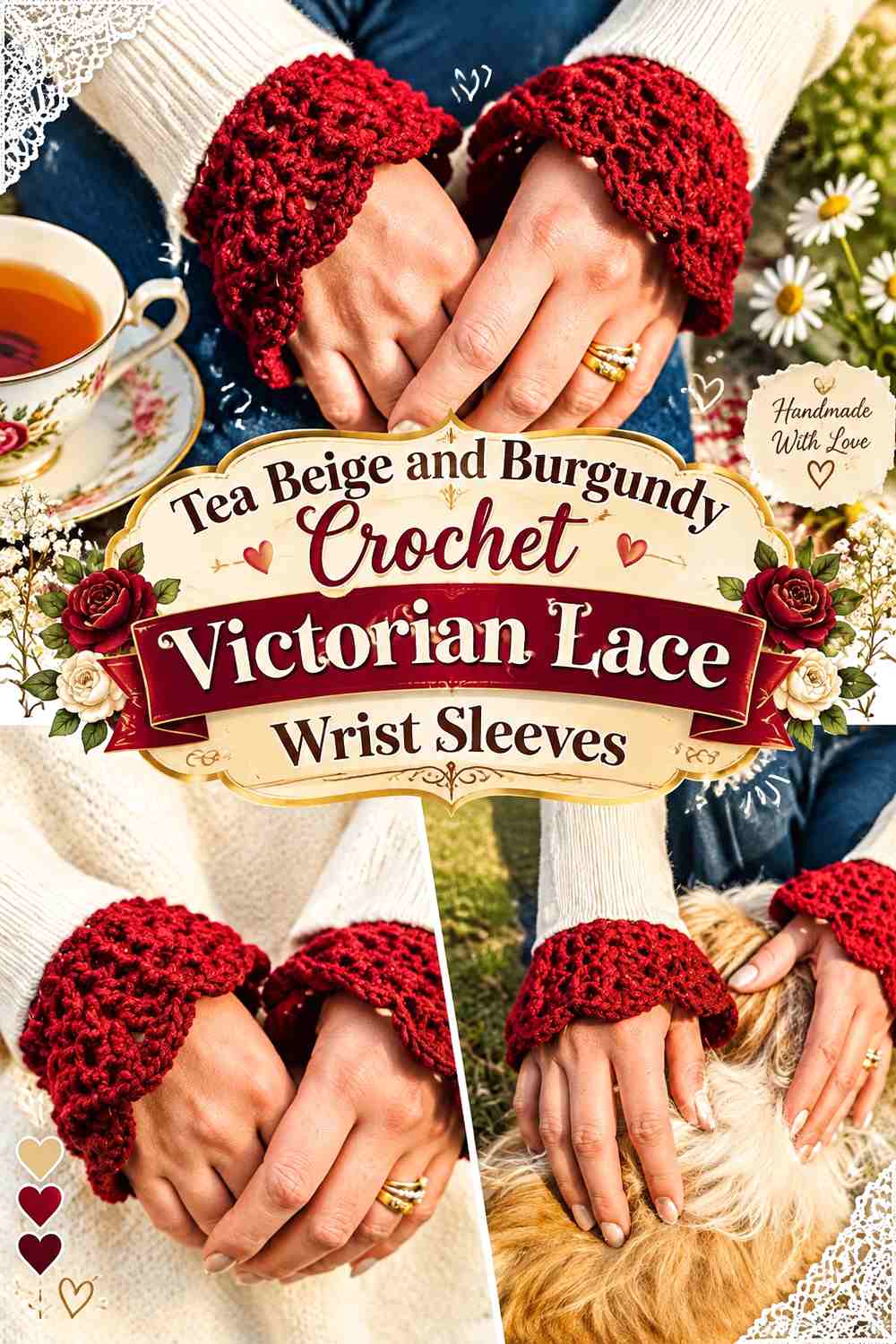
This idea keeps most of the decoration around the wrist and lower forearm, making it useful when you want the effect of a detachable sleeve without covering the whole arm. Tea beige can form the lace, while burgundy provides a darker finishing detail.
Tea Beige Should Keep the Crochet Victorian Wrist Sleeves Delicate
Use tea beige throughout the openwork so the lace texture stays visible and light. The warmer neutral creates a softer aged effect than bright white and coordinates naturally with brown, burgundy, olive, or black clothing.
Burgundy Can Ground Tea Beige Victorian Wrist Lace
Use burgundy around the upper band or narrow cuff edge. The darker accent visually anchors the lace and creates a clear boundary where the detachable piece meets the bare arm or underlying sleeve.
Creator Credit: Sonam’s craft corner Tutorial
6. Black and Antique Ivory Crochet Victorian Long Lace Glove Sleeves

Long lace gloves can inspire a more fitted detachable sleeve that extends from the forearm toward the hand. Black can form the main lace field, while antique ivory creates a controlled lower accent or selected motif detail.
Black Should Give the Crochet Victorian Glove Sleeves Their Main Drama
Keep black through most of the sleeve so the openwork remains graphic and continuous. Against pale skin or an ivory blouse, even fairly fine black lace can become a strong visual feature.
Antique Ivory Can Clarify Black Victorian Lace Near the Wrist
Place antique ivory around a small cuff, tie, or motif transition rather than alternating it through the entire sleeve. That limited light accent prevents the black from looking flat while preserving the darker overall palette.
Creator Credit: Jewelry & Crochet Items Tutorial
7. Forest Green and Cream Crochet Victorian Ribbed Detachable Sleeves

Forest green gives ribbed sleeves a less expected Victorian-inspired direction, while cream can bring a pale accent to the wrist. The denser texture makes these sleeves more substantial visually than open lace, so restrained color placement is useful.
Forest Green Should Carry the Crochet Victorian Ribbed Sleeve Body
Use green continuously from the upper edge down most of the forearm so the ribs create the main surface interest. Breaking every rib with color changes would distract from the strong vertical texture.
Cream Can Lighten the Forest Green Victorian Sleeve Cuff
A cream cuff or narrow wrist edge gives the dark green a clean stopping point. This also makes the sleeve easier to coordinate with cream lace collars, blouses, or dress details without turning the entire arm covering pale.
Creator Credit: Cherilyn Q Tutorial
8. Dusty Mauve and Charcoal Crochet Victorian Fitted Wrist Sleeves

Dusty mauve can provide the softer romantic color while charcoal gives the narrow fitted sleeve structure a darker frame. This works well for detachable pieces that sit close to the hand and wrist instead of using dramatic open bell cuffs.
Dusty Mauve Should Cover Most of the Crochet Victorian Fitted Sleeve
Use mauve across the visible body so the accessory remains soft rather than predominantly gray. A continuous muted color also makes a close-fitting construction look longer and less visually segmented.
Charcoal Can Define Dusty Mauve Victorian Sleeve Openings
Place charcoal around the upper edge, wrist, or thumb-area boundary when you need sharper definition. Because it is considerably darker, keep the amount small enough that mauve remains the first color noticed.
Creator Credit: Pospolit Atelier Tutorial
9. Deep Navy and Soft White Crochet Victorian Mesh Detachable Sleeves
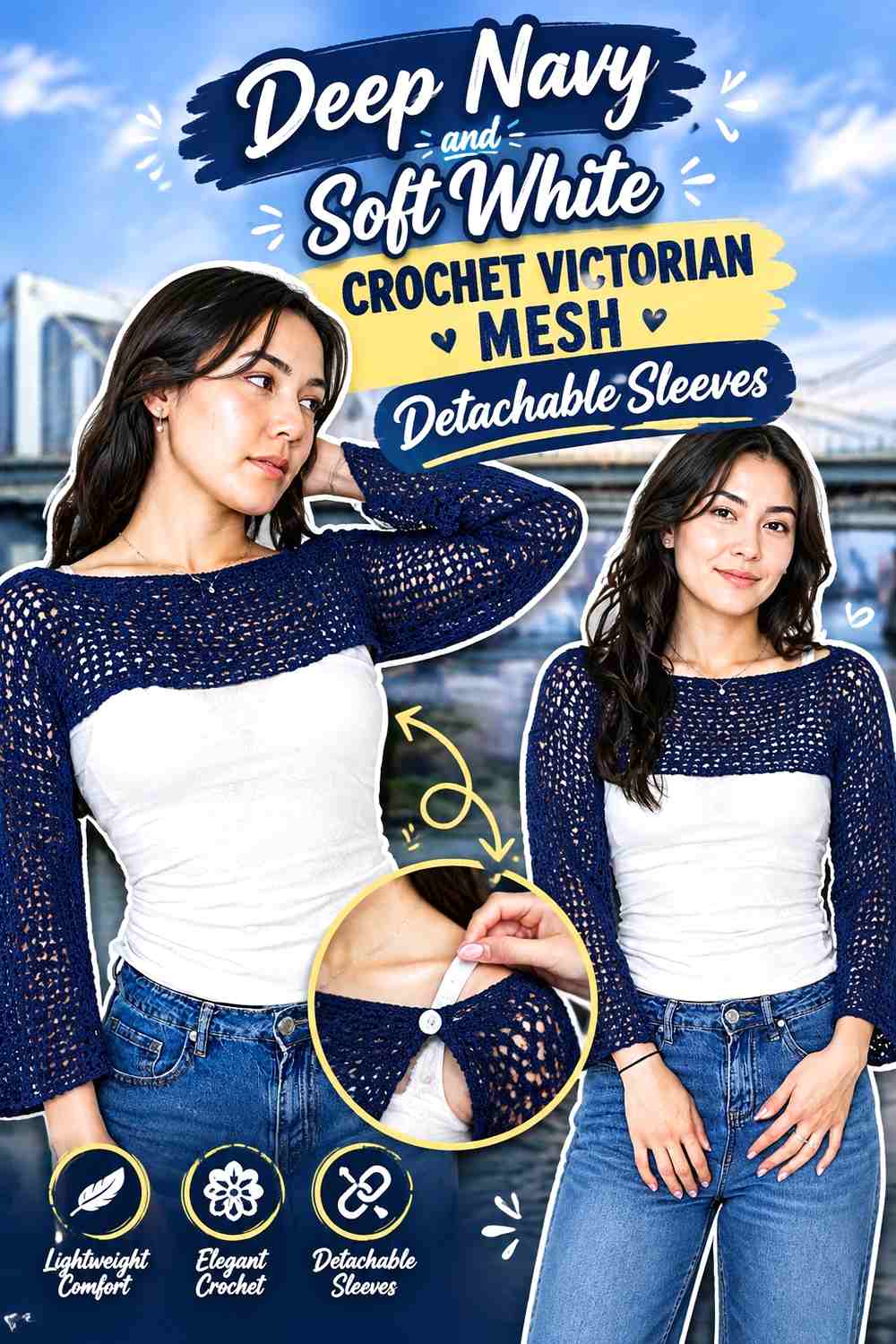
Deep navy gives mesh sleeves almost the drama of black while remaining slightly softer. Soft white can highlight the cuffs or neckline connection and is especially useful when the detachable sleeve layer is worn over gray, cream, or dusty blue.
Deep Navy Should Keep the Crochet Victorian Mesh Unified
Use navy along both sleeves and the connecting section if the construction includes one. This creates a single detachable layer rather than visually dividing the shoulders from the arms.
Soft White Can Sharpen Deep Navy Victorian Sleeve Edges
Use white on a narrow cuff or another small perimeter detail. The high value contrast draws attention to the sleeve outline, so there is little need to introduce white repeatedly through the navy mesh itself.
Creator Credit: VivCrochets Tutorial
10. Antique Rose and Ecru Crochet Victorian Cropped Mesh Sleeves

Antique rose gives a cropped sleeve layer a muted romantic appearance, while ecru provides lighter boundaries around the wrists or shoulder connection. This palette suits ivory, cocoa, charcoal, olive, and faded denim-colored clothing especially well.
Antique Rose Should Lead the Crochet Victorian Cropped Sleeves
Let the muted pink occupy most of the mesh. Because the construction is already abbreviated around the torso, a consistent sleeve color keeps the arm line visually long rather than breaking it into several bands.
Ecru Can Keep Antique Rose Victorian Mesh From Blending Into Pale Clothing
If the underlying blouse is blush or cream, use ecru selectively where the sleeve edge needs clearer definition. Against dark garments, the antique rose may already have enough contrast and the ecru can remain limited to the cuff.
Creator Credit: Shyler crochets Tutorial
11. Wine Red and Black Crochet Victorian Long Fingerless Sleeves

Wine red creates a strong romantic color for long fitted sleeves, while black can frame the wrist and upper opening. Keeping the pieces fingerless preserves hand movement while still extending the color almost to the knuckles.
Wine Red Should Run Through Most of the Crochet Victorian Long Sleeve
Use wine red continuously along the forearm so the accessory has a long uninterrupted line. Frequent black bands can shorten that visual length and make the fitted sleeve look more segmented.
Black Should Frame Wine Red Victorian Sleeve Openings
Reserve black for the smallest structural boundaries, such as the top edge or hand opening. Its darker value gives wine red enough definition without turning the overall sleeve into a red-and-black stripe pattern.
Creator Credit: Chenda DIY Tutorial
12. Powder Blue and Antique White Crochet Victorian Lightweight Arm Sleeves

Powder blue gives lightweight arm sleeves a pale romantic look that differs from the more familiar ivory, burgundy, and black palettes. Antique white can clarify the cuff and keep the blue from disappearing against equally pale clothing.
Powder Blue Should Dominate the Crochet Victorian Arm Sleeves
Use blue across the sleeve body and allow the shape or stitch texture to provide most of the variation. This keeps the accessory soft and makes it easier to layer over cream, gray, navy, or dusty floral dresses.
Antique White Can Define Powder Blue Victorian Sleeve Cuffs
A narrow white edge gives the palest blue a visible boundary. If the dress underneath is also white, keep enough powder blue at the outermost edge so the detachable sleeve remains distinguishable.
Creator Credit: Annie Ahmed 🧸 Tutorial
13. Chocolate Brown and Camel Crochet Victorian Arm Warmers

Chocolate brown and camel create a warm tonal alternative to pale lace. Brown can dominate the body while camel brings a slightly lighter edge to the wrist or upper band.
Chocolate Brown Should Anchor the Crochet Victorian Arm Warmers
Use the deeper brown across most of the arm so the detachable pieces look intentional beside cream, rust, olive, beige, or floral garments. The single dark field also lets stitch texture remain visible without extra color changes.
Camel Can Lighten Chocolate Brown Victorian Sleeve Edges
Use camel around the cuff or as one controlled band. Because both shades are warm, the contrast remains subtle, making this suitable when you want Victorian-inspired layering without a highly theatrical black-and-white palette.
Creator Credit: Gabrielle McAuley Tutorial
14. Sage Green and Oatmeal Crochet Victorian High-Neck Sleeve Shrug
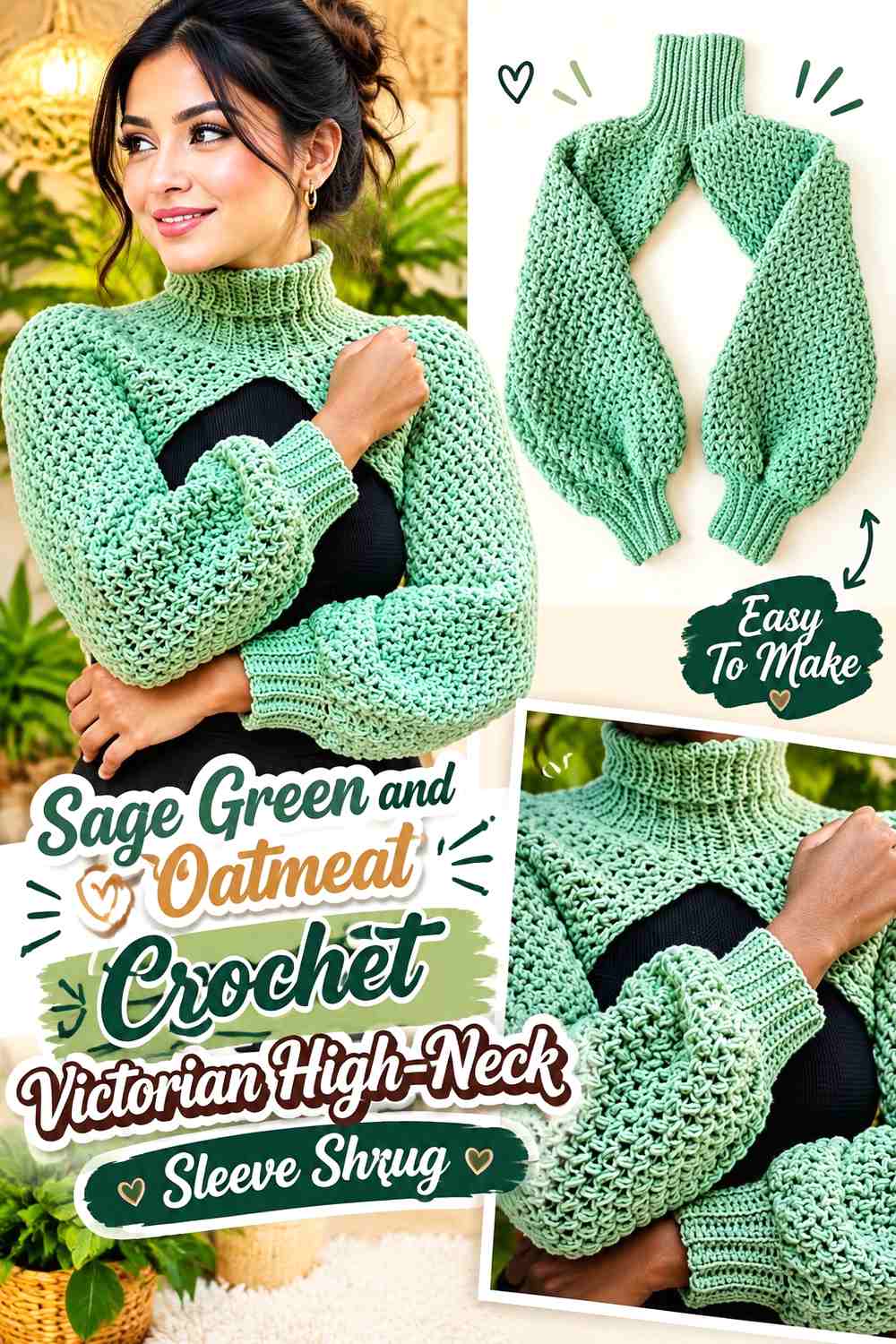
A connected arm-warmer or shrug construction can create detachable coverage across the shoulders as well as the arms. Sage green keeps the larger surface muted, while oatmeal can lighten the neckline and cuffs.
Sage Green Should Unite the Crochet Victorian Sleeves and Shoulder Section
Keep sage continuous across the connecting area so both sleeves feel like one garment. A consistent green field also makes the silhouette easier to understand when layered over a patterned blouse.
Oatmeal Can Frame Sage Green at the Victorian Neckline and Cuffs
Use oatmeal on the smaller borders where you want the detachable layer to separate from the clothing underneath. Repeating the same pale neutral at the neck and wrists creates balance without requiring additional accent colors.
Creator Credit: Zx Crochets Tutorial
15. Burgundy, Black, and Cream Crochet Victorian Bell Detachable Sleeves

Bell sleeves provide the most dramatic silhouette in the collection. Burgundy can cover most of the sleeve, black can stabilize the narrower upper portion, and cream can appear only near the flared lower edge where the shape needs additional emphasis.
Burgundy Should Carry the Main Crochet Victorian Bell Sleeve
Use burgundy from the fitted upper arm through most of the flare so the sleeve reads as one continuous dramatic shape. If the bell section becomes mostly cream or black, the color break can make the lower cuff look detached from the rest of the sleeve.
Cream Should Highlight Burgundy Bell Cuffs While Black Grounds the Upper Sleeve
Place cream near the widest lower edge where even a narrow accent will attract attention to the flare. Keep black nearer the upper arm or connecting section so it visually anchors the sleeve instead of weighing down the bell-shaped cuff.
Creator Credit: Priya Crochets Tutorial
Which Victorian-Inspired Detachable Sleeve Palette Should You Choose?
For the lightest romantic direction, antique ivory with dusty rose, powder blue with antique white, or tea beige with burgundy keeps the lace visually delicate. These palettes work especially well when openwork or scalloped wrist detail should be noticed first.
For darker drama, black with ecru, wine red with black, deep navy with white, or burgundy with black and cream gives the sleeve silhouette much stronger contrast. Bell sleeves and long lace gloves can carry these deeper palettes particularly well.
If you prefer muted color, forest green with cream, dusty mauve with charcoal, sage with oatmeal, or plum with gray creates a softer vintage direction. These combinations make the texture and shape important without relying entirely on pale bridal-style lace.
Conclusion
Victorian-inspired detachable sleeves work best when color reinforces their silhouette. Fitted arm warmers benefit from a continuous dominant shade, while bell sleeves can reserve their lightest color for the flared cuff. Open mesh needs to be evaluated against the garment underneath because that clothing color remains visible through the crochet.
Start by choosing whether the sleeves should be pale, dark, or muted. Then give one color most of the arm, use a second around cuffs or boundaries, and introduce a third shade only when it adds useful definition.
The credited tutorials provide construction references for sleeves, shrugs, gloves, and wrist warmers. Adapt those concepts independently to achieve the detachable Victorian-inspired silhouette and color treatment you want.
Frequently Asked Questions
What colors work well for Victorian-inspired crochet detachable sleeves?
Antique ivory, ecru, black, burgundy, wine red, plum, navy, dusty rose, sage, tea beige, and muted gray all work well. The strongest palette is one that gives the lace enough contrast against the garment underneath.
Should Victorian-inspired detachable sleeves match the dress?
They do not need to match exactly. A related neutral can create a subtle effect, while a pale sleeve over a dark dress produces stronger lace definition. Treat the clothing underneath as part of the complete palette.
How can I make crochet detachable sleeves look more Victorian inspired?
Use romantic openwork, longer wrist coverage, scalloped or flared cuffs, restrained jewel tones, aged neutrals, or connected shrug-like shapes. These are stylistic cues rather than guarantees of historical accuracy.
Are bell sleeves or fitted sleeves better for a Victorian-inspired look?
Both can work. Bell sleeves create more dramatic volume, while fitted wrist sleeves emphasize lace and layering. Choose according to whether you want the silhouette or the stitch detail to carry more visual weight.
How can I keep black crochet lace visible over dark clothing?
Add a lighter cuff or border, or layer the black lace over a noticeably lighter blouse or dress. Ecru, cream, muted gold, dusty rose, and pale gray can all provide useful edge contrast.
Can fingerless gloves be adapted into detachable sleeve ideas?
Yes, especially longer glove and wrist-warmer constructions. They can provide a useful fitted lower-arm concept, while additional cuff or upper-arm styling can create a more sleeve-like appearance without reconstructing the creator’s pattern.
How should I substitute colors in Victorian-inspired detachable sleeves?
Preserve each shade’s role. Replace antique ivory with another warm pale neutral, burgundy with another deep muted red, or charcoal with another dark neutral while maintaining the intended contrast between the main sleeve, cuff, and garment underneath.