Crochet leaf bookmarks are a natural fit for autumn color because the shape already connects with pressed leaves, woodland walks, and seasonal reading. A slim rust leaf can stay understated between novel pages, while a crimson maple or golden ginkgo creates a much more visible decorative finish at the top of a book.

Color also affects how well small botanical details show. Dark brown edging can sharpen a golden oak leaf, cream can separate an olive center vein, and related shades such as mustard and rust can create a softer tonal bookmark when strong contrast is not needed.
The tutorials linked under these ideas support either bookmark construction or the botanical leaf motif itself. When a source teaches a leaf rather than a complete bookmark, use it as the motif reference and keep any bookmark adaptation flat and practical for the pages rather than assuming the creator demonstrated that exact format.
Quick List
- Rust and Muted Gold Crochet Slim Veined Leaf Bookmark
- Olive Green and Oatmeal Crochet Rounded Leaf Bookmark
- Terracotta and Cream Crochet Single Leaf Bookmark
- Burnt Orange and Deep Brown Crochet Autumn Leaf Bookmark
- Mustard, Olive, and Rust Crochet Paired Leaf Bookmark
- Burgundy and Camel Crochet Soft-Stem Leaf Bookmark
- Acorn Brown, Ochre, and Cream Crochet Oak Leaf Bookmark
- Moss Green and Mustard Crochet Leaf Sprout Bookmark
- Maple Red, Burnt Orange, and Muted Gold Crochet Maple Leaf Bookmark
- Birch Gold, Cocoa, and Cream Crochet Birch Leaf Bookmark
- Sage, Rust, and Parchment Crochet Delicate Leaf Branch Bookmark
- Cinnamon, Olive, and Muted Gold Crochet Leaf Bunch Bookmark
- Deep Olive, Copper, and Oatmeal Crochet Long Leaf Branch Bookmark
- Caramel and Moss Crochet Mini Sprout Bookmark
- Crimson, Ochre, and Olive Crochet Maple Leaf Bookmark
- Forest Green, Rust, and Cream Crochet Tapestry Leaf Bookmark
- Golden Ochre and Burgundy Crochet Ginkgo Leaf Bookmark
- Fern Green, Bronze, and Camel Crochet Fern Leaf Bookmark
- Deep Teal, Copper, and Parchment Crochet Monstera Leaf Bookmark
Give Autumn Bookmark Colors Clear Roles
A small bookmark rarely needs several colors competing across the same leaf. Start with one dominant shade for the leaf surface, then decide whether a second color is needed to clarify a center vein, stem, edge, or companion leaf.
For multileaf bookmarks, color can also distinguish separate botanical shapes. Two related autumn tones such as mustard and rust create gentle variation, while olive beside cream gives much stronger value contrast.
Keep Autumn Crochet Leaves Practical Between Pages
A decorative leaf still needs to function as a bookmark. Wide clusters, raised details, and bulky edges can be attractive outside the book but less convenient between pages, so consider which part of the design should remain outside the book and which part needs to stay flat.
Color placement can help here. Put your strongest or most detailed color on the portion meant to remain visible, while a simpler stem or narrow cord handles the page-marking section.
Use Autumn Contrast to Protect Leaf Veins and Lobes
Maple points, oak lobes, fern leaflets, and center veins can disappear when neighboring colors have similar values. Lay the yarns together or view them in grayscale before committing to a multicolor leaf.
Strong contrast is not mandatory throughout the whole bookmark. Often one darker stem, lighter edge, or contrasting center is enough to keep the botanical structure visible.
1. Rust and Muted Gold Crochet Slim Veined Leaf Bookmark
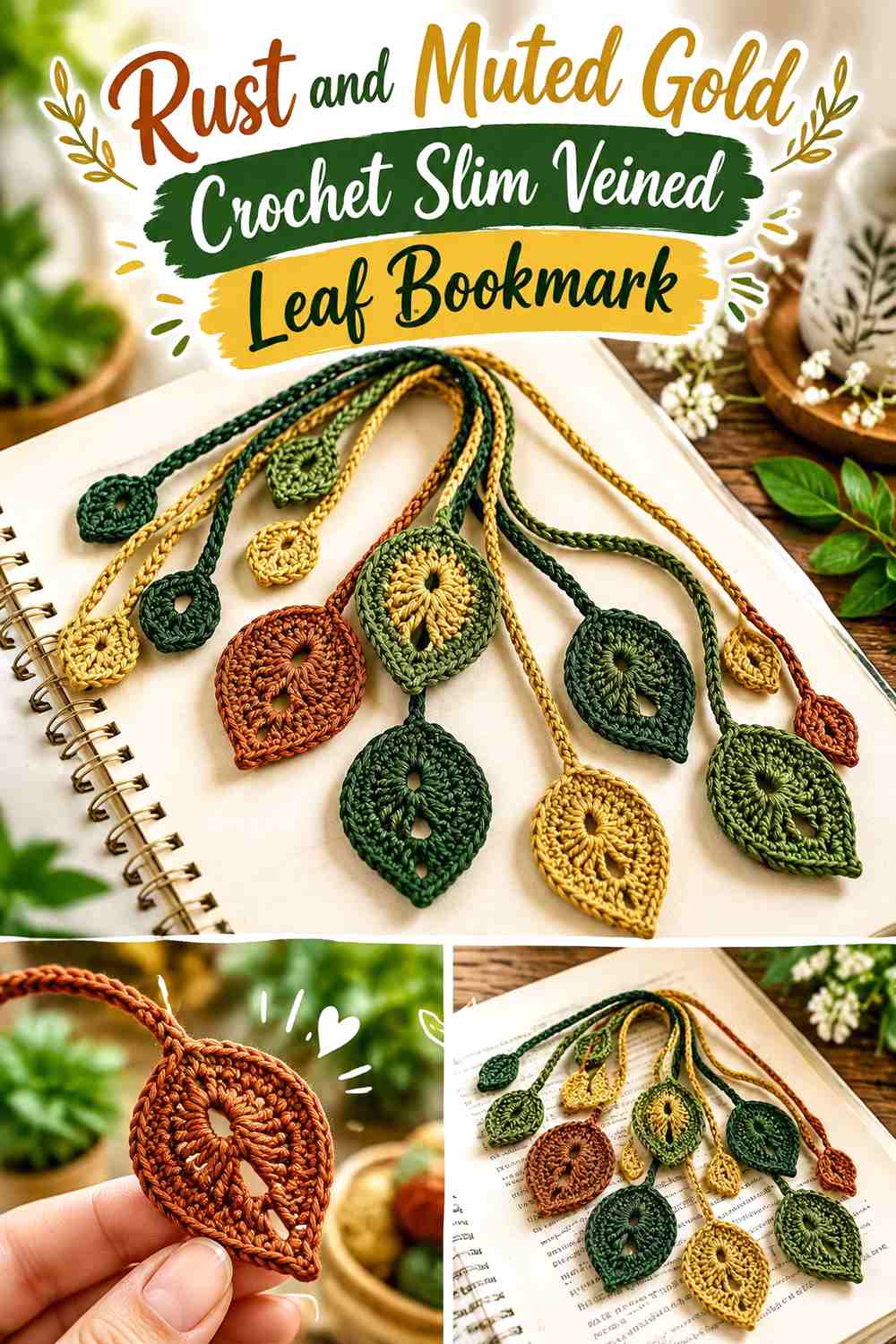
Rust can cover the slim leaf body while muted gold picks out the center vein or narrow stem. The two colors remain closely related enough for a soft autumn effect, but the lighter gold can stop the long, narrow leaf from looking like one flat block. This palette works particularly well when most of the leaf stays inside the book and only the stem or tip remains visible.
Rust Should Dominate the Slim Crochet Leaf Bookmark
Keep rust continuous across most of the leaf surface so the narrow silhouette remains easy to follow. Frequent color changes would interrupt the pressed-leaf quality that makes a slim bookmark appealing.
Muted Gold Can Clarify the Rust Crochet Leaf Vein
Use muted gold where the central line or stem needs separation. Because it is lighter than rust, a small amount can define the leaf without turning the bookmark into equal bands of two colors.
Creator Credit: Olga Poltava
2. Olive Green and Oatmeal Crochet Rounded Leaf Bookmark
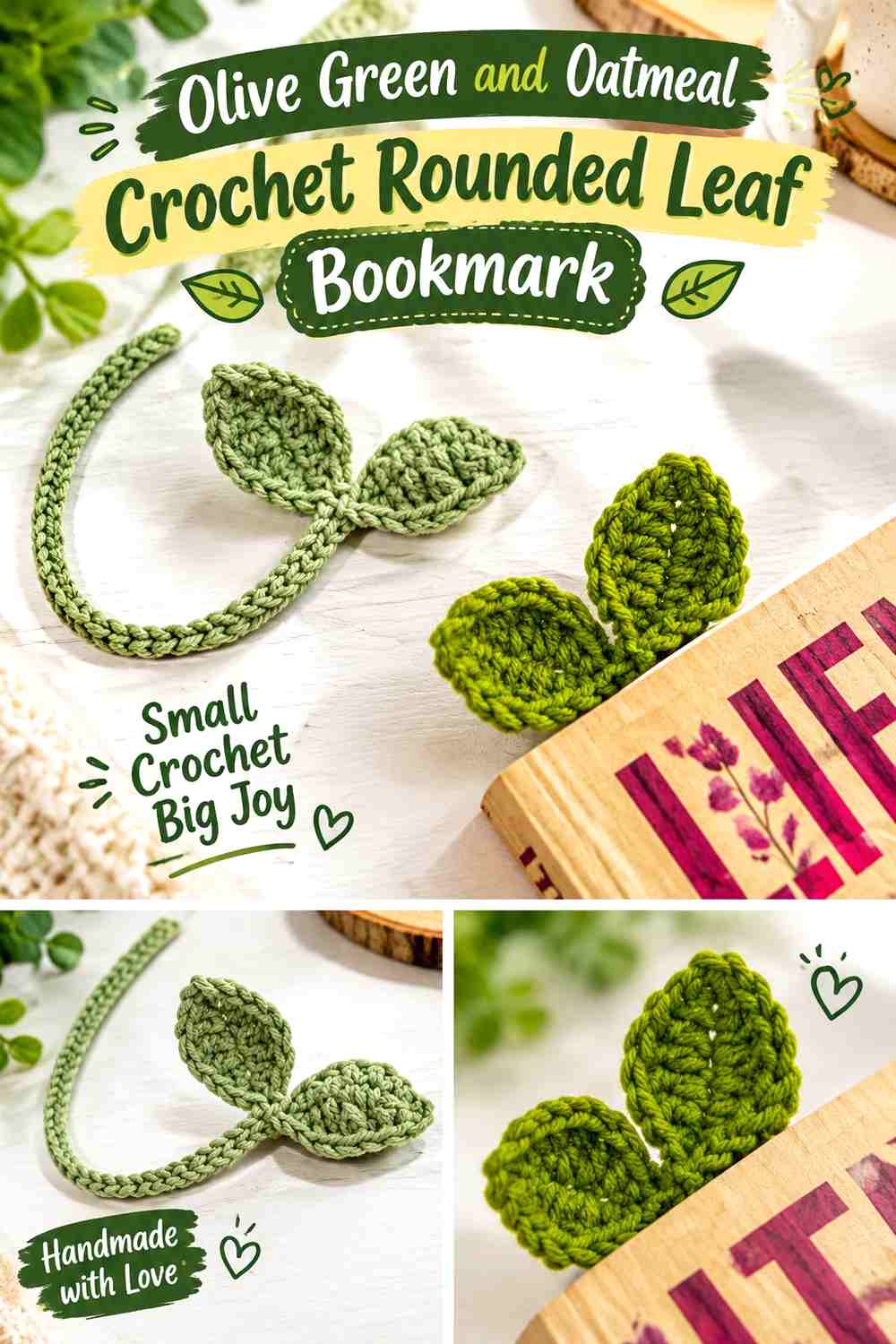
Olive keeps this rounded leaf botanical while moving it away from bright spring green. Oatmeal can lighten the stem, vein, or a restrained edge. Since the leaf shape is simpler than an oak or maple, the color relationship carries more of the autumn character.
Olive Green Should Cover Most of the Rounded Crochet Leaf
Use olive across the broad body so the curved outline reads as one complete leaf. A muted green can also coordinate easily with brown, tan, rust, or burgundy book covers.
Oatmeal Can Keep Olive Green Crochet Details Visible
Place oatmeal around a center detail or narrow stem if the olive fabric appears too uniform. Keep the neutral secondary so the bookmark still reads first as an autumn olive leaf.
Creator Credit: Crochet with Mai
3. Terracotta and Cream Crochet Single Leaf Bookmark
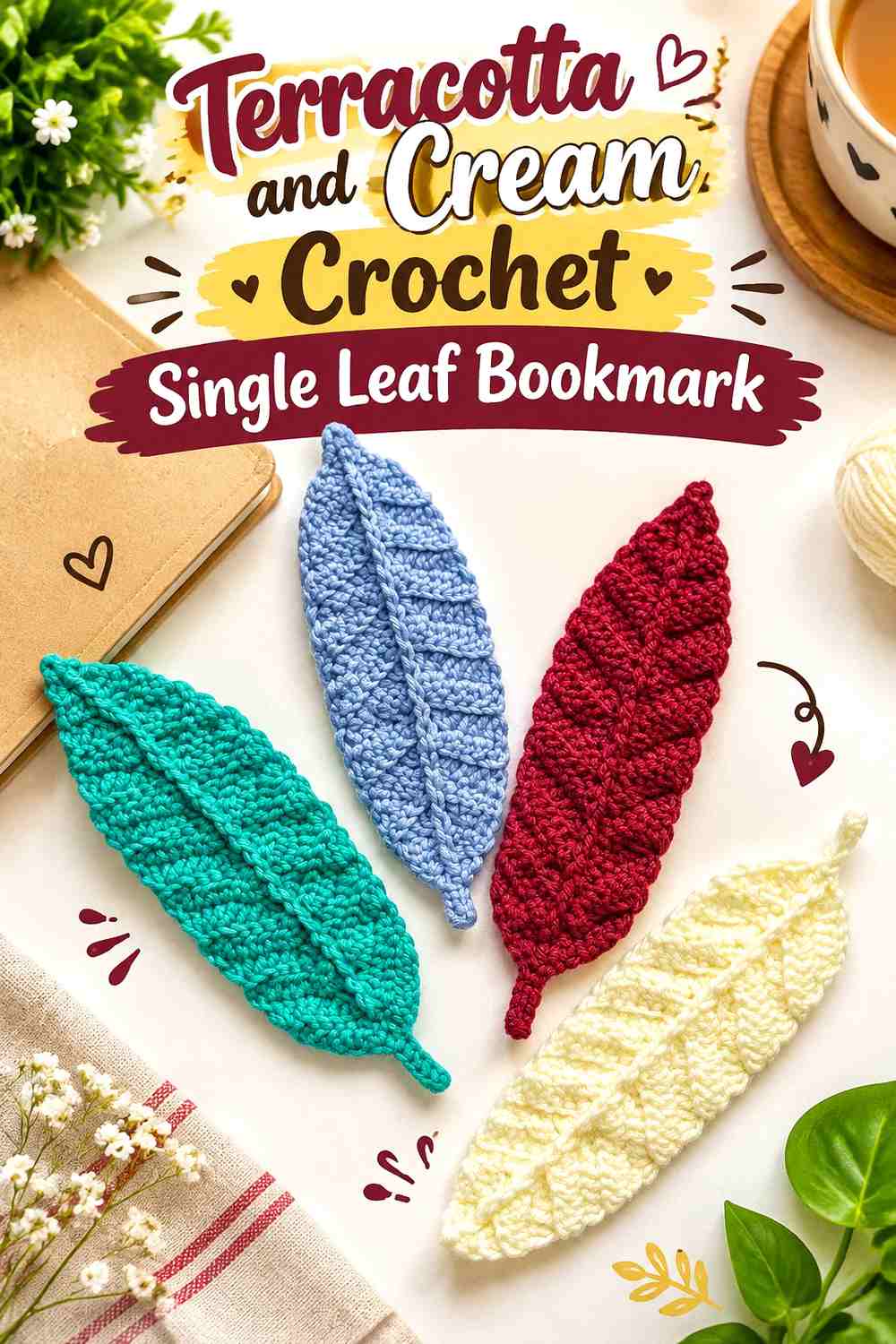
Terracotta gives a classic single-leaf shape an unmistakably warm autumn direction. Cream can be reserved for the center vein or visible bookmark tail, creating a stronger light-dark relationship than two neighboring orange tones would provide.
Terracotta Can Give the Single Crochet Leaf a Clear Autumn Identity
Keep the main leaf terracotta instead of dividing its small surface between several warm shades. The simple silhouette benefits from a strong uninterrupted field of color.
Cream Can Separate Terracotta Crochet Leaf Details From Book Pages
A cream vein or stem can remain visible against the darker leaf, particularly when the bookmark rests on off-white pages. Limit the cream to structural details rather than outlining the entire leaf if you want terracotta to stay dominant.
Creator Credit: Anutha – The Crochet World
4. Burnt Orange and Deep Brown Crochet Autumn Leaf Bookmark

Burnt orange can lead this explicitly autumnal leaf, while deep brown gives the stem and selected edges extra definition. The darker accent is especially useful if the leaf has several curves or points that could otherwise merge visually.
Burnt Orange Should Carry the Crochet Autumn Leaf Surface
Let orange fill most of the visible leaf so its seasonal color is immediately recognizable. A darker edge can help, but too much brown may visually shrink the brighter center.
Deep Brown Can Ground the Burnt Orange Crochet Leaf Stem
Use brown at the stem or a narrow structural line. This creates a natural transition from the leaf into the bookmark extension without covering the orange silhouette.
Creator Credit: Dream9Design
5. Mustard, Olive, and Rust Crochet Paired Leaf Bookmark
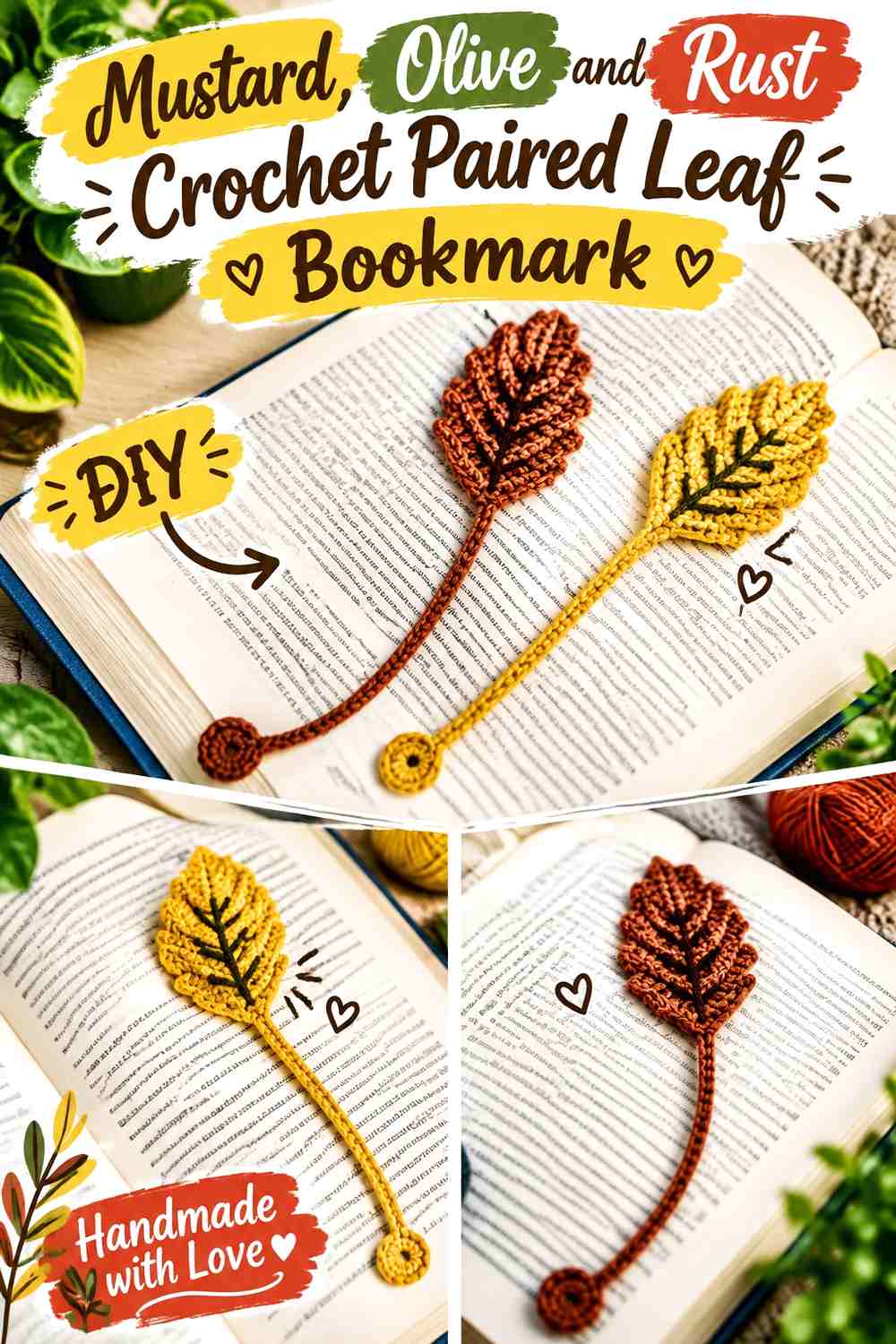
A paired-leaf bookmark gives three autumn colors enough room to work without crowding one small motif. Mustard can cover one leaf, olive the second, and rust can connect them through the stem or another repeated detail. Keeping each leaf mostly one color makes the pair easier to distinguish.
Mustard and Olive Should Keep the Paired Crochet Leaves Distinct
Let each leaf carry a clear main color rather than mixing mustard and olive throughout both. The separate tones emphasize the two-leaf arrangement and keep the botanical movement visible.
Rust Can Connect Mustard and Olive Crochet Leaf Details
Use rust through the shared stem or another small repeated point. Its warmer, deeper value links the pair without forcing both leaves into matching colorwork.
Creator Credit: Erfin R. Tangdilintin
6. Burgundy and Camel Crochet Soft-Stem Leaf Bookmark
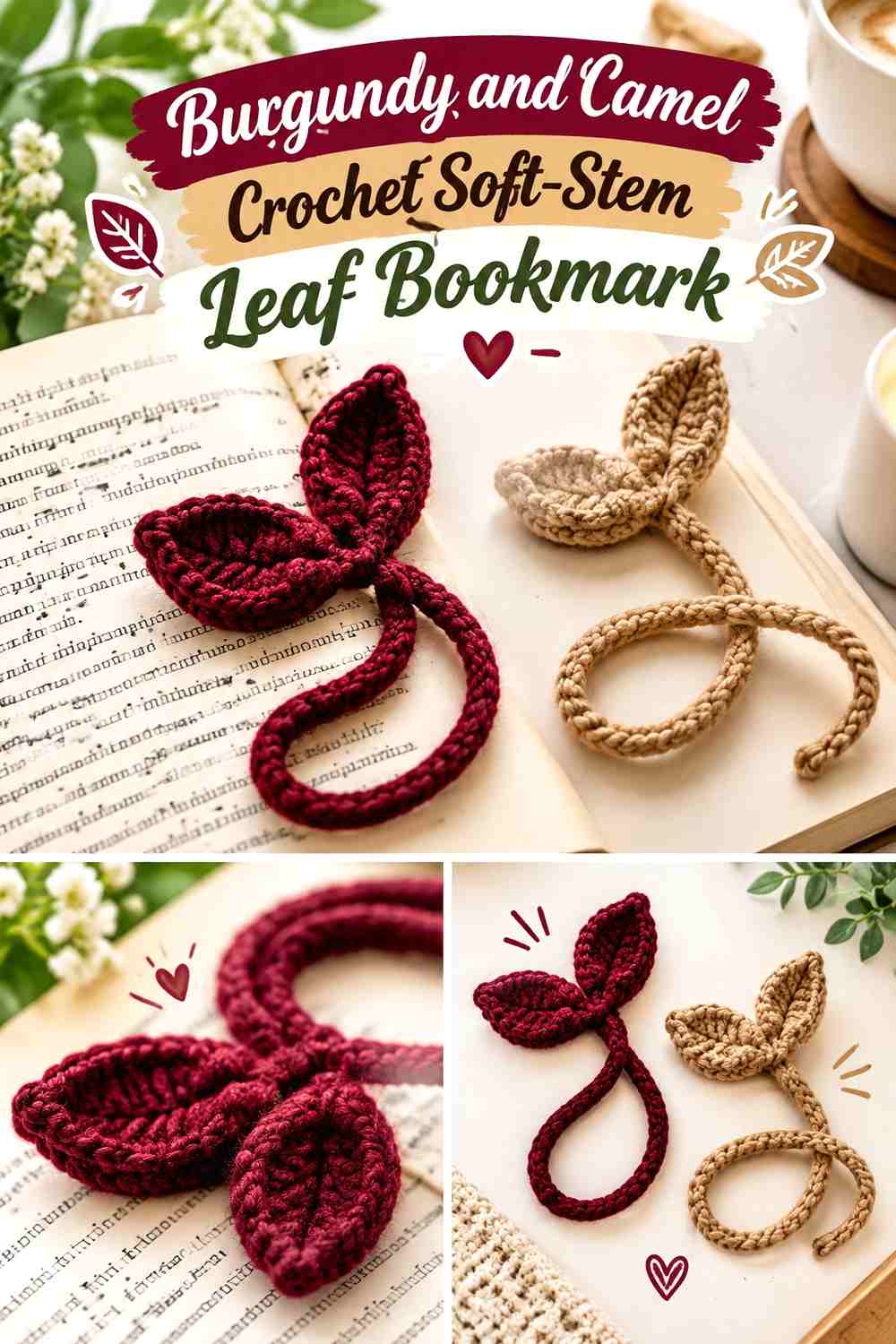
Burgundy gives the visible leaf a deep autumn color, while camel can keep the long stem lighter and easier to follow against book pages. This is a useful arrangement when the leaf itself remains outside the closed book and the narrow stem does most of the page marking.
Burgundy Should Make the Crochet Leaf the Bookmark Focal Point
Concentrate burgundy on the leaf rather than spreading it equally along the full stem. The darker color then becomes a clear decorative endpoint.
Camel Can Keep the Burgundy Crochet Bookmark Stem Visually Light
A camel stem introduces warmth without the stronger contrast of cream. It also prevents a dark burgundy cord from disappearing against darker book covers when part of the bookmark remains visible.
Creator Credit: yarnivora
7. Acorn Brown, Ochre, and Cream Crochet Oak Leaf Bookmark

Oak leaves already have distinctive lobed edges, so the palette should support rather than obscure that outline. Acorn brown can define the outer shape, ochre can cover the broad central areas, and cream can be limited to a small vein or stem.
Ochre Should Keep the Crochet Oak Leaf Lobes Visible
Give ochre enough uninterrupted surface that each rounded lobe remains easy to distinguish. If every lobe changes color, the oak outline can become visually fragmented.
Acorn Brown Can Frame Ochre and Cream Crochet Oak Details
Use acorn brown along the stem or selected darker boundaries. Cream should remain the smallest accent so the bookmark stays earthy rather than shifting into a pale neutral design.
Creator Credit: Pora Pora Crochet
8. Moss Green and Mustard Crochet Leaf Sprout Bookmark

Moss green gives a tiny sprout a mature autumn look, while mustard adds warmth without requiring another full leaf color. Because a sprout bookmark is small, keep the palette simple so the leaf proportions remain clear.
Moss Green Should Dominate the Crochet Sprout Leaves
Use moss across the leaves and allow the stem to remain the same color if you want one continuous botanical line. This restrained approach works well for small notebooks and planners where large decorative color blocks could feel oversized.
Mustard Can Highlight the Moss Green Crochet Sprout Tip
A mustard leaf tip, companion leaf, or small stem detail can create a warm focal point. Keep the accent compact so the sprout still reads as moss green overall.
Creator Credit: Once Upon a Cheerio
9. Maple Red, Burnt Orange, and Muted Gold Crochet Maple Leaf Bookmark
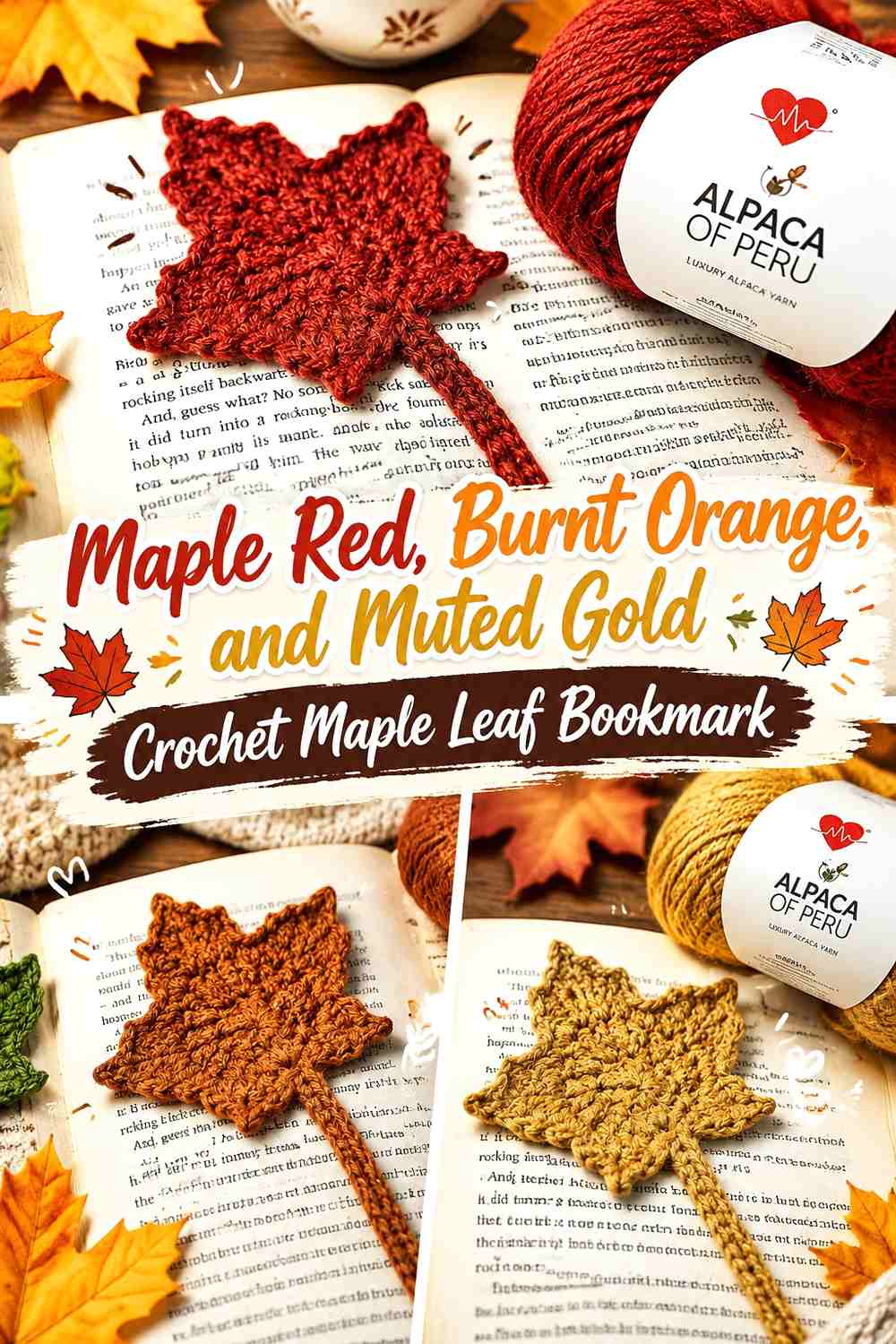
A maple silhouette can support a richer three-color autumn palette because its broad points provide more visual structure. Maple red can dominate the center, burnt orange can appear toward selected lobes, and muted gold can stay near the stem or smallest points.
Maple Red Should Anchor the Crochet Maple Leaf Center
Keep the deepest red near the central body so all of the pointed sections remain connected to one visual anchor. This prevents the leaf from turning into separate orange and gold fragments.
Burnt Orange and Muted Gold Can Lighten Maple Red Points
Use the lighter warm colors toward the outer lobes when you want a falling-leaf effect. Maintain red repetition across more than one section so the center does not feel detached from the tips.
Creator Credit: Ganga Acrowools Limited
10. Birch Gold, Cocoa, and Cream Crochet Birch Leaf Bookmark
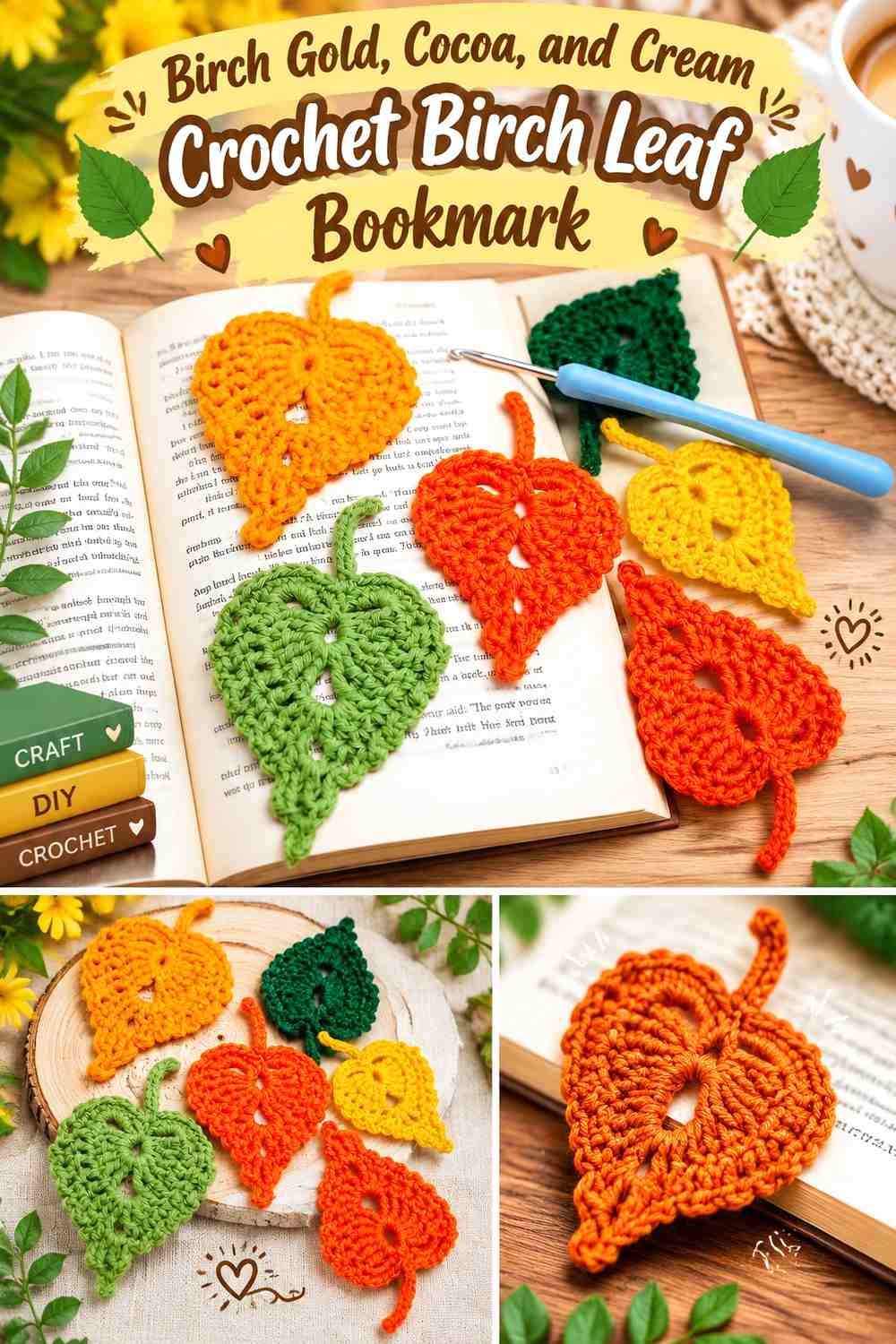
Birch gold gives a tapered leaf enough autumn warmth without making it as bold as crimson maple. Cocoa can define the stem or pointed edge, while cream adds a restrained highlight around the vein.
Birch Gold Should Carry the Tapered Crochet Leaf Shape
Use gold across most of the leaf so its smaller edge points remain part of one continuous surface. Too many alternating colors can distract from the lighter birch-style outline.
Cocoa Can Define Birch Gold While Cream Lightens the Crochet Vein
Put cocoa where the leaf needs its darkest boundary and cream where a fine central detail needs separation. The two accents should remain narrow so the golden leaf still controls the overall palette.
Creator Credit: Mei Crafts
11. Sage, Rust, and Parchment Crochet Delicate Leaf Branch Bookmark
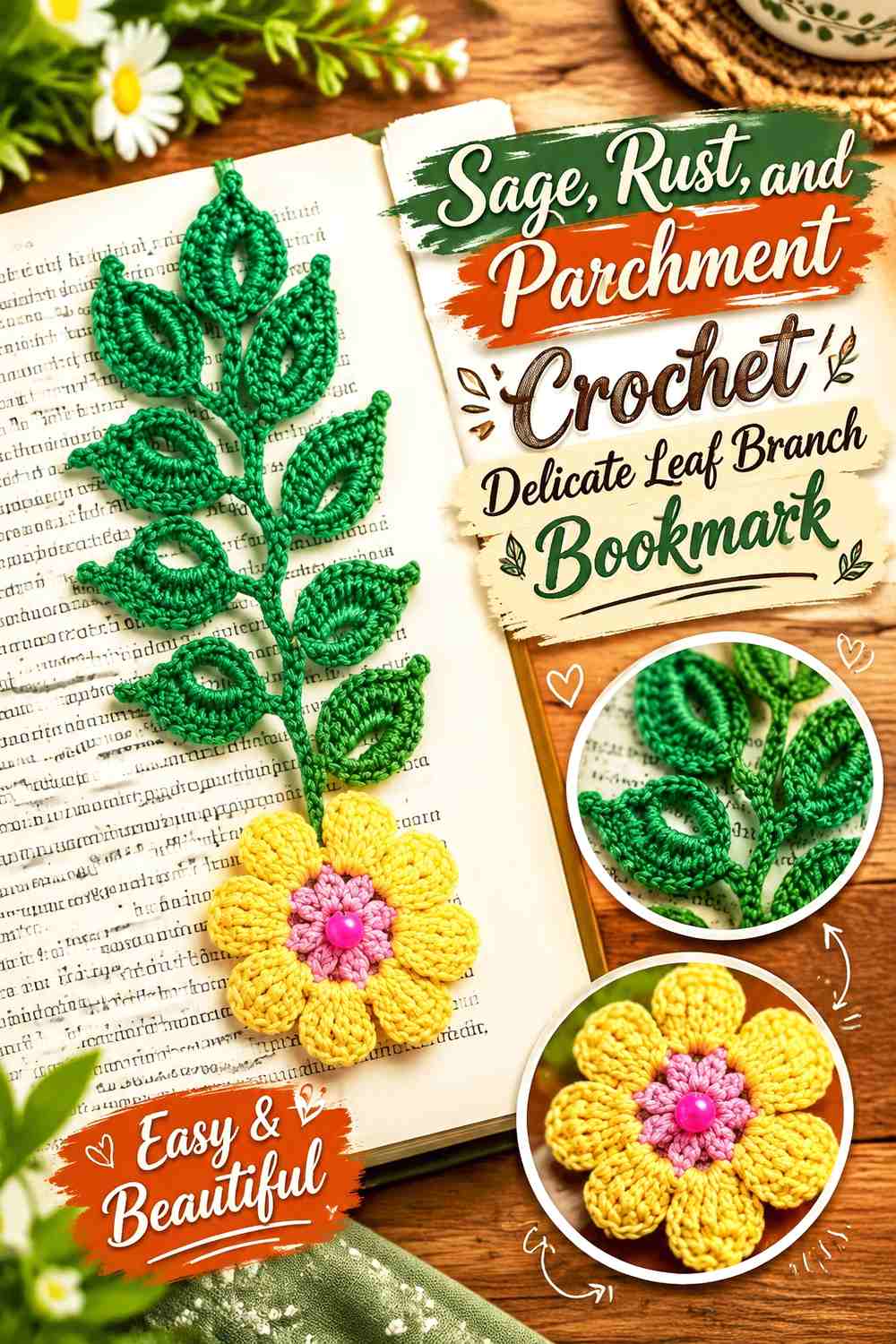
A branch-style bookmark can use different colors along its length more naturally than a single leaf can. Sage can form the main stem and some leaves, rust can mark selected autumn leaves, and parchment can provide occasional light contrast.
Sage Should Keep the Crochet Leaf Branch Connected
Use sage repeatedly along the central branch so separate rust and parchment leaves still belong to one botanical cutting. The continuous green-gray line prevents the bookmark from looking like unrelated motifs joined together.
Rust and Parchment Can Create Autumn Variation Along Sage Leaves
Space the warmer rust and lighter parchment details rather than clustering them at one end. Balanced repetition helps the decorative portion remain visually even when it extends beyond the book.
Creator Credit: Make It Yourself By Papari
12. Cinnamon, Olive, and Muted Gold Crochet Leaf Bunch Bookmark

A leaf bunch has more visual weight than a single motif, so color hierarchy is especially useful. Cinnamon can dominate the cluster, olive can introduce botanical contrast, and muted gold can highlight one or two outer leaves.
Cinnamon Should Lead the Crochet Leaf Bunch
Use cinnamon on the largest share of leaves so the cluster has a clear warm autumn direction. Equal numbers of cinnamon, olive, and gold leaves can make a compact bunch feel overly patterned.
Muted Gold Can Brighten Cinnamon and Olive Crochet Leaves
Place gold toward visible outer leaves where it can catch attention outside the book. Keep olive repeated nearer the stem so the cluster still reads as botanical rather than simply multicolored.
Creator Credit: Raji’s Craft Hobby
13. Deep Olive, Copper, and Oatmeal Crochet Long Leaf Branch Bookmark
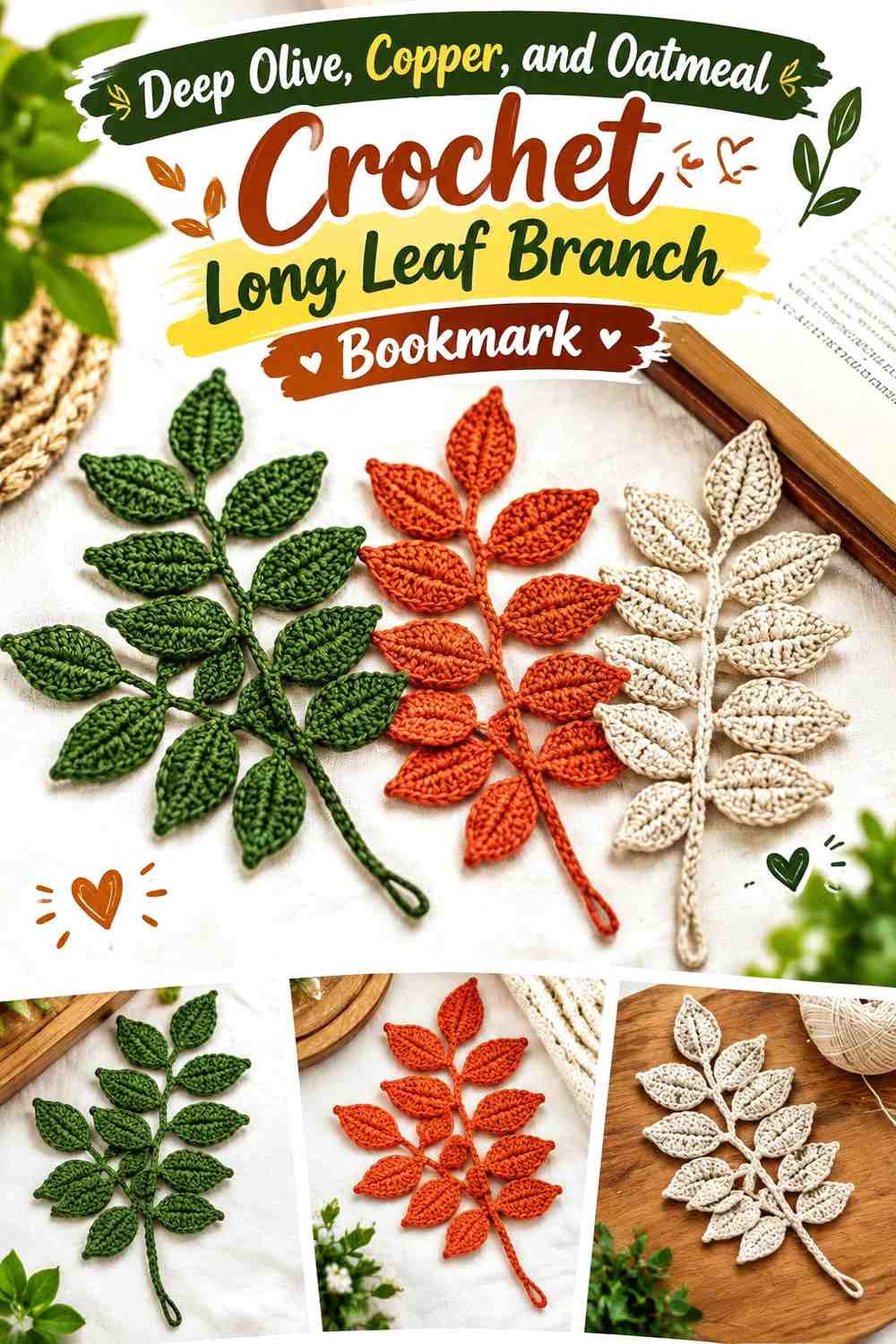
A long branch offers room for a gradual autumn progression. Deep olive can provide the continuous stem, copper can appear across several leaves, and oatmeal can be restricted to a few lighter points that break up the darker sequence.
Deep Olive Should Run Through the Long Crochet Leaf Branch
Keep olive along the central line so the bookmark has one continuous direction from top to bottom. This matters on a longer design where separate leaves can otherwise look disconnected.
Copper Can Lead the Autumn Leaves While Oatmeal Adds Light Contrast
Use copper on more leaves than oatmeal to preserve the warm seasonal emphasis. A few oatmeal leaves or tips can keep the longer branch from becoming one uniformly dark strip.
Creator Credit: Crochetwithsumi
14. Caramel and Moss Crochet Mini Sprout Bookmark
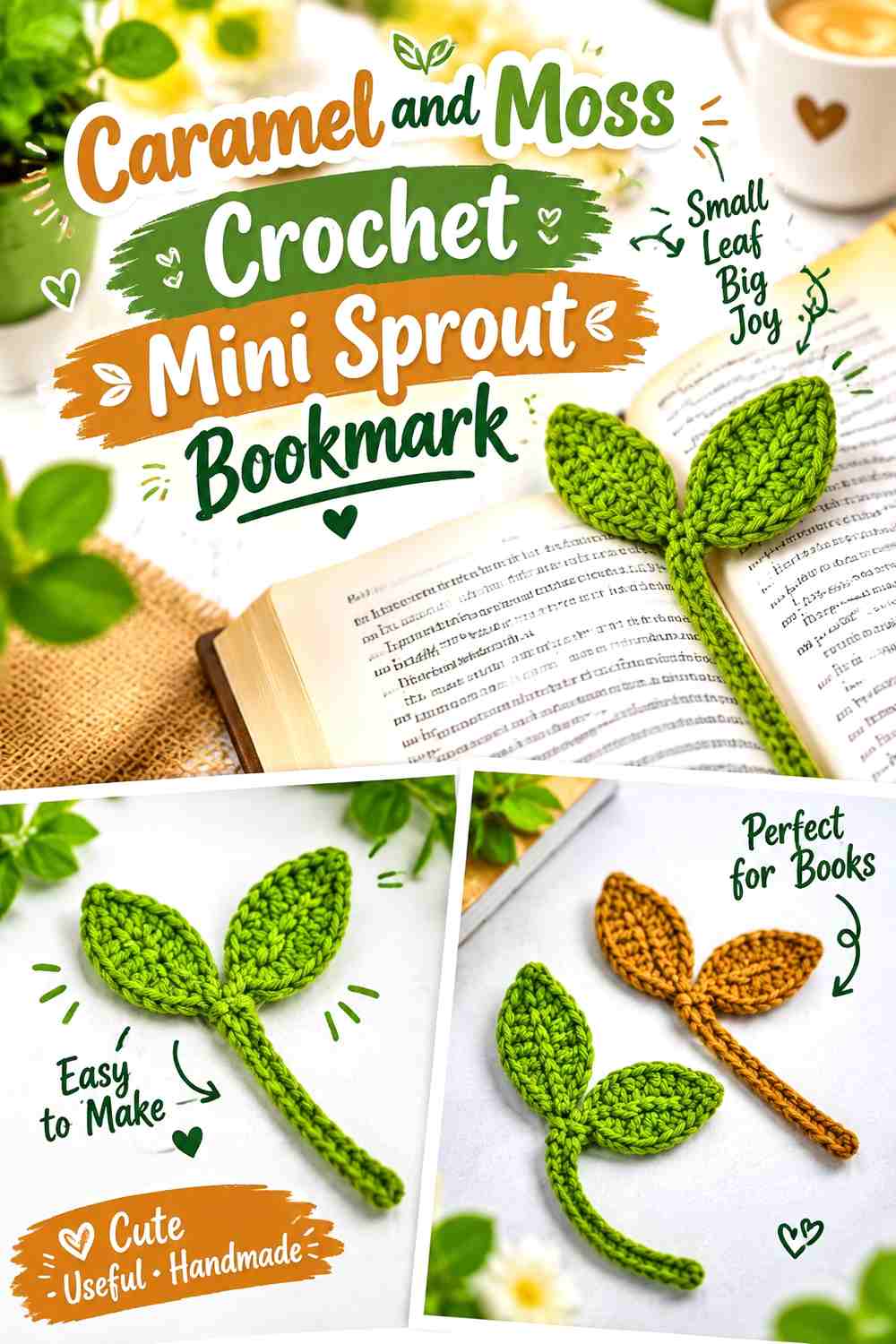
Caramel creates an unusual but autumn-friendly main color for a tiny sprout, while moss keeps the botanical connection. Since the project is compact, two colors are enough to create distinction without overwhelming the little leaf shapes.
Caramel Can Give the Crochet Mini Sprout an Autumn Shift
Use caramel on the most visible leaf or pair of leaves to move the sprout away from a spring palette. The warm brown tone works especially well when the bookmark is paired with kraft paper, brown journals, or autumn gift packaging.
Moss Should Support the Caramel Crochet Sprout Stem
Keep moss along the narrow stem or companion leaf so the design still looks botanical. Avoid giving both colors equal stripes along the cord, where the tiny proportions could become visually cluttered.
Creator Credit: Hopeful Turns
15. Crimson, Ochre, and Olive Crochet Maple Leaf Bookmark

This second maple direction is darker and more dramatic. Crimson can fill most of the leaf, ochre can lift selected points, and olive can provide the stem or one subdued lobe. The palette works best when crimson remains clearly dominant.
Crimson Should Control the Crochet Maple Leaf Silhouette
Keep red across the central body and several major points so the full maple outline remains visually connected. A wide pointed leaf already has substantial detail, so color changes should reinforce its structure rather than divide it.
Ochre and Olive Should Stay Secondary to Crimson Maple Details
Use ochre where you want light and olive where you need a quieter botanical break. Avoid giving both accents the same surface area as crimson, or the maple leaf may lose its strong red identity.
Creator Credit: 희야희야
16. Forest Green, Rust, and Cream Crochet Tapestry Leaf Bookmark
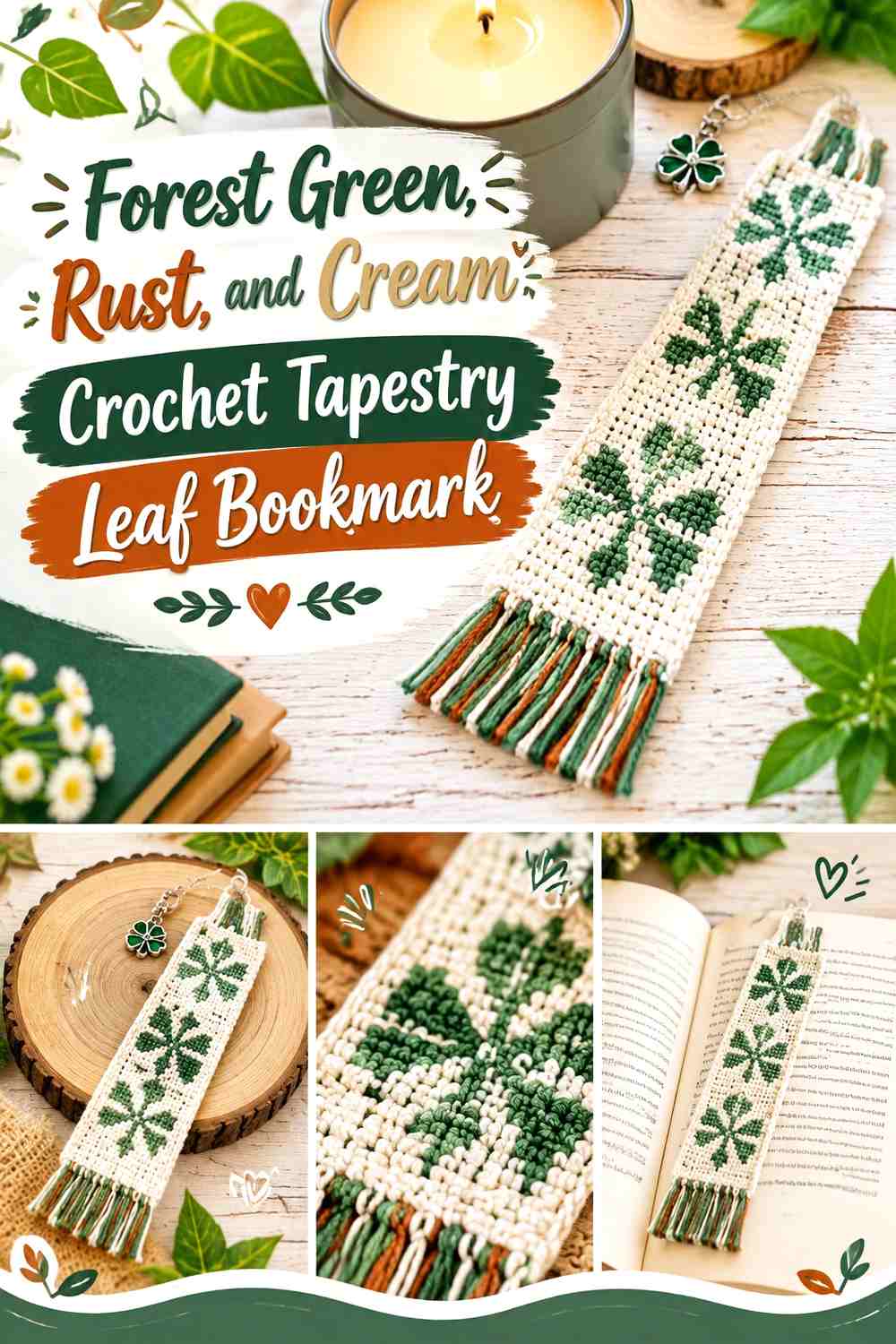
A rectangular tapestry bookmark gives color a different job: the leaf sits inside a straight-edged background rather than forming the entire outline. Forest green can define the leaf motif, cream can create the main field, and rust can provide an autumn border or second motif accent.
Forest Green Should Keep the Crochet Tapestry Leaf Easy to Read
Give the green leaf enough contrast against the cream background that its shape remains visible from the top of the book. A muted forest shade can still feel autumnal when paired with warmer rust.
Rust Can Frame Forest Green and Cream Crochet Colorwork
Use rust around a border or another controlled section instead of inserting it repeatedly inside the leaf. That keeps the botanical motif clear while giving the rectangular bookmark a stronger seasonal palette.
Creator Credit: HandmadebyRaine
17. Golden Ochre and Burgundy Crochet Ginkgo Leaf Bookmark
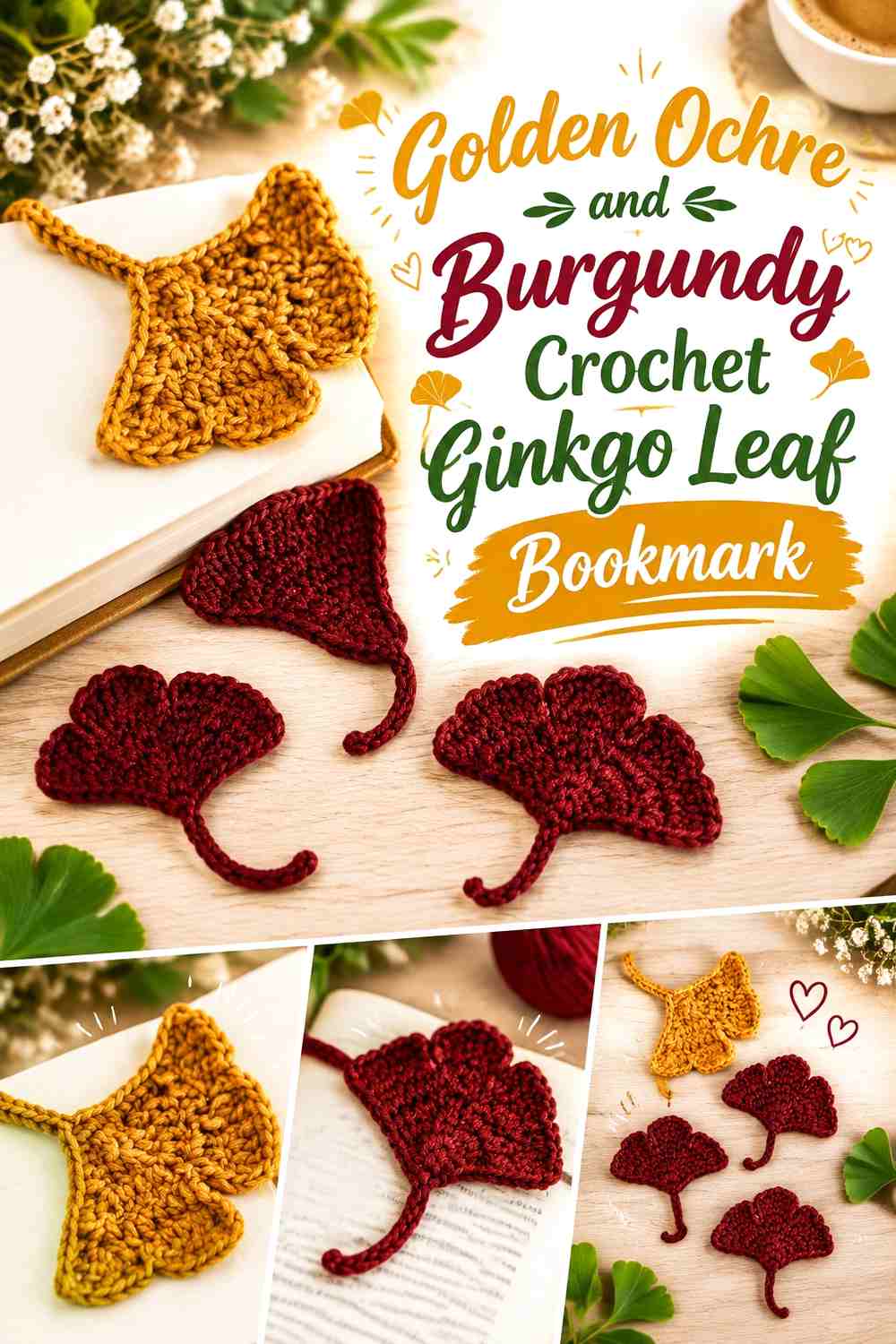
A ginkgo leaf has a distinctive fan shape, so two strong autumn colors are enough. Golden ochre can cover the fan surface while burgundy gives the stem or lower edge a deeper anchor. If adapting the leaf motif as a bookmark, keep any added page-marking section visually lighter than the broad fan.
Golden Ochre Should Highlight the Crochet Ginkgo Fan Shape
Use ochre continuously across the broad leaf so the fan silhouette stays immediately recognizable. The shape provides plenty of interest without needing several extra colors.
Burgundy Can Ground the Golden Ochre Crochet Ginkgo Stem
Place burgundy near the stem or a restrained lower detail. The dark red gives the pale gold enough value contrast while keeping the bookmark firmly within an autumn palette.
Creator Credit: Moara Crochet
18. Fern Green, Bronze, and Camel Crochet Fern Leaf Bookmark

A fern naturally creates repeated leaflets along a central stem, making it suitable for a more tonal autumn palette. Fern green can keep the botanical identity, bronze can mark selected leaflets, and camel can provide a lighter stem or companion detail. When adapting a fern motif for bookmark use, prioritize a flat result and consider which portion should remain outside the pages.
Fern Green Should Keep the Crochet Fern Leaflets Connected
Repeat green along most of the frond so its long feathered silhouette remains clear. If every leaflet changes color, the structure can become difficult to read at bookmark scale.
Bronze Can Add Autumn Color While Camel Lightens the Fern Green Stem
Use bronze on only a few leaflets or along one section of the frond. Camel can give the central line a lighter contrast without replacing the natural green that makes the fern identifiable.
Creator Credit: Mdays
19. Deep Teal, Copper, and Parchment Crochet Monstera Leaf Bookmark
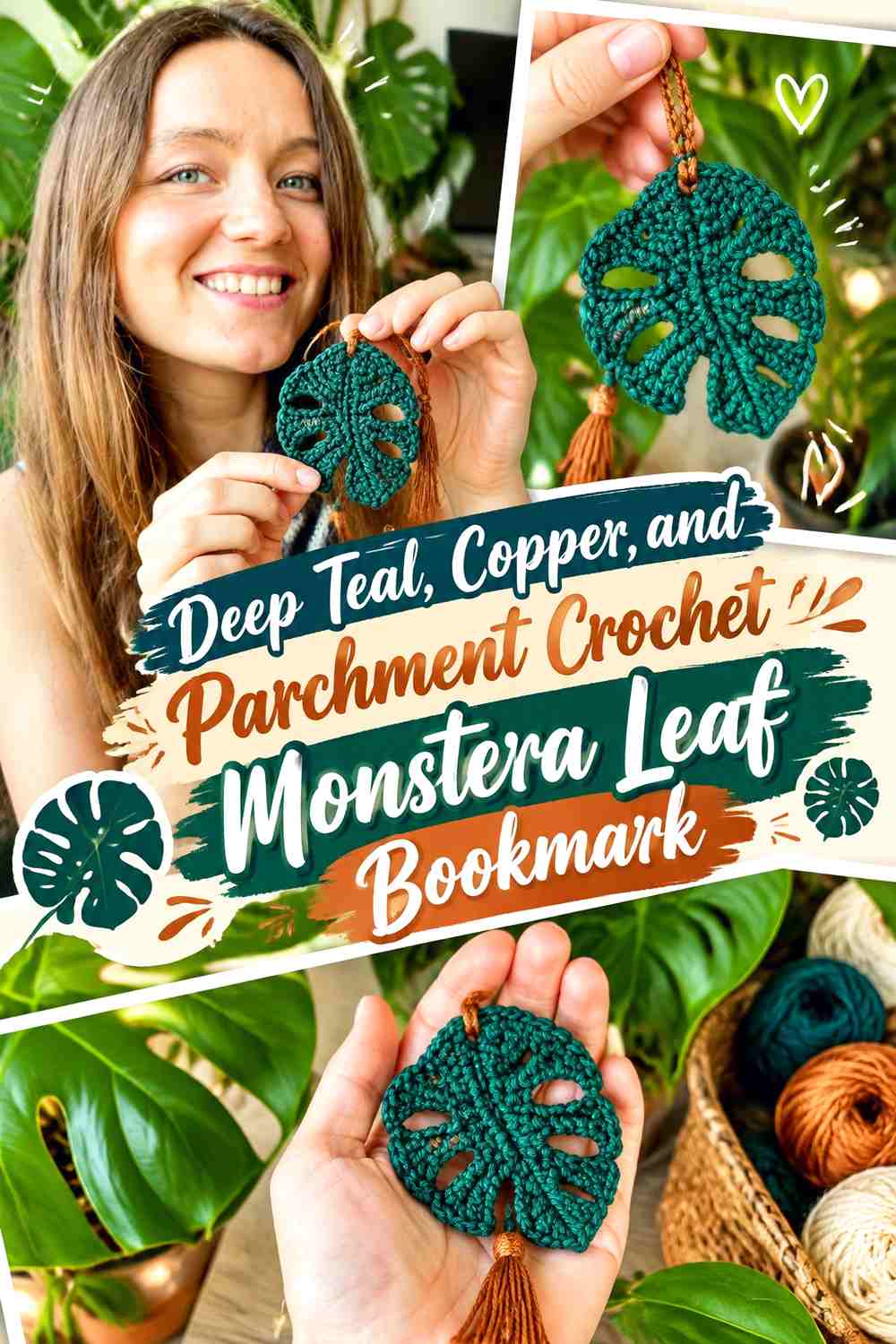
A monstera-inspired leaf offers the most unusual silhouette in this collection. Deep teal can dominate the cut-leaf shape, copper adds an autumn shift, and parchment can clarify selected openings or the stem. Because a full-size leaf motif may be broader than a typical bookmark, treat the tutorial as a leaf-construction reference and keep any bookmark adaptation appropriately flat and unobtrusive between pages.
Deep Teal Should Preserve the Crochet Monstera Leaf Shape
Keep teal across most of the leaf so the cut sections remain part of one recognizable silhouette. Multiple alternating colors around every opening could make the negative spaces harder to understand.
Copper and Parchment Can Give Deep Teal Monstera Details an Autumn Finish
Use copper as the warm accent and parchment only where extra value separation is needed. Keeping both accents secondary lets the strong botanical outline remain the main feature.
Creator Credit: by Kristine
Which Autumn Crochet Leaf Bookmark Palette Should You Choose?
For a traditional fall look, rust, burnt orange, maple red, cinnamon, ochre, and burgundy create the clearest seasonal direction. Maple, oak, birch, and ginkgo shapes strengthen that autumn effect even when the palette stays simple.
For a quieter botanical bookmark, use olive, moss, sage, forest green, or deep teal with one warm supporting shade. These combinations keep more of the living-leaf character while still coordinating with autumn books and decor.
If you want stronger contrast, add cream, oatmeal, parchment, or muted gold strategically. Use the lightest shade around a vein, stem, border, or selected leaf instead of automatically outlining every motif.
Conclusion
A botanical crochet bookmark becomes more useful when the leaf shape and color placement work together. Maple and oak bookmarks can carry stronger reds and ochres because their outlines are already visually complex, while a slim leaf or sprout often benefits from a simpler two-color palette.
Also consider how the bookmark will actually sit in a book. Keep the section between the pages relatively flat, and place the strongest color or more decorative leaf arrangement where it can remain visible outside the book when appropriate.
Start with one dominant autumn shade, choose a supporting color that either clarifies the leaf structure or adds tonal variation, and add a third shade only when it solves a real contrast or placement problem.
Frequently Asked Questions
Which autumn colors work well for crochet leaf bookmarks?
Rust, mustard, burnt orange, burgundy, olive, moss, ochre, cinnamon, brown, cream, camel, and muted gold all work well. The most useful palette is one that keeps the leaf outline and important veins visible.
How many colors should I use in one crochet botanical bookmark?
One or two colors are enough for many single-leaf bookmarks. Branches, bunches, tapestry bookmarks, and large maple shapes can handle three colors more comfortably because they provide more separate areas for color placement.
How can I keep a dark autumn crochet leaf visible against book pages?
Use a lighter stem, vein, edge, or companion leaf. Cream, oatmeal, camel, parchment, or muted gold can provide enough value contrast without changing the dominant dark palette.
Are maple and oak crochet leaves practical as bookmarks?
They can be, provided the finished leaf remains reasonably flat and does not create excessive bulk between pages. Wider leaves can also be positioned so the decorative motif stays partly outside the book while a narrower section marks the page.
Can a crochet leaf appliqué tutorial be adapted into a bookmark?
Yes, when the finished motif is suitable for a flat page marker or can be paired with a simple stem or cord. Check the leaf’s thickness and scale first rather than assuming every decorative leaf will be comfortable inside a book.
How do I make a green crochet leaf bookmark feel more autumnal?
Replace bright spring green with olive, moss, sage, forest green, or deep teal, then add rust, mustard, copper, camel, or brown. Even one warm accent can change the seasonal direction.
How do I choose colors for a multileaf crochet bookmark?
Give the branch or stem one repeating color first. Then distribute one or two autumn shades among the leaves, keeping the strongest accent spaced across the design rather than concentrated entirely at one end.