A floral crochet corset back can change the entire look of a shirt, dress, jacket, or sweater while still leaving much of the original garment visible. The most successful makeovers treat the back opening, lacing area, and flowers as one composition rather than adding unrelated crochet decorations after the garment has already been altered.

Color is especially important because a corset back creates several narrow visual lines at once. The garment forms the largest color field, the lacing crosses the open section, and flowers may sit along loops, edges, or a central crochet panel. Giving those elements different color roles keeps the back from becoming visually crowded.
The tutorials credited below support corset construction, garment refashioning, flower motifs, floral borders, or crochet clothing concepts. The exact corset-back placements and palettes are independent adaptations, so the credited creators are not being presented as using these specific upcycles or color schemes.
Quick List
- Indigo, Antique Ivory, and Rust Crochet Floral Corset Back Denim Top
- Black, Ecru, and Burgundy Crochet Floral Corset Back Dress
- Sage, Cream, and Dusty Rose Crochet Floral Corset Back Blouse
- Faded Blue, Mustard, and Ivory Crochet Flower-Square Corset Back Tee
- Chocolate Brown, Peach, and Olive Crochet Daisy Corset Back Cardigan
- Plum, Lilac, and Cream Crochet Forget-Me-Not Corset Back Tank
- Rust, Mustard, and Forest Green Crochet Sunflower Corset Back Sundress
- Cream, Rose Pink, and Cocoa Crochet Rose Corset Back Blouse
- Charcoal, Blush, and Cream Crochet Puffy-Flower Corset Back Jacket
- Powder Blue, White, and Cherry Red Crochet Mini-Flower Corset Back Tee
- Olive, Terracotta, and Oatmeal Crochet Tulip Corset Back Shirt
- Burgundy, Antique Ivory, and Sage Crochet Floral-Edged Corset Back Cami
- Navy, Lavender, and Cream Crochet Pansy Corset Back Sweater Vest
Let the Original Clothing Color Lead the Corset Back Palette
The existing garment should count as the dominant color unless most of its back panel is being replaced. On an indigo denim top, for example, antique-ivory crochet can stay relatively narrow because the dark fabric already gives every pale flower strong contrast.
When working with a pale shirt or dress, the opposite problem appears. Cream flowers may blend into the garment, so a darker lacing cord, flower center, or crochet border can define the new back opening without requiring an entirely different palette.
Keep Crochet Flowers Clear of the Main Lacing Path
A corset back needs visual space around the crossed ties. If large dimensional flowers occupy every loop and intersection, the lacing pattern can become difficult to see and the back may look heavier than intended.
Use flowers to frame the opening, mark the upper and lower ends, or interrupt the border at controlled intervals. Smaller motifs can handle narrower side sections, while one larger floral element can work at the upper back where there is more room.
Check the Clothing Fabric Before Planning a Crochet Corset Back
Examine the back panel and nearby seams before deciding how much of the garment to alter. Worn, thin, or highly stretchy fabric may not be a good place to concentrate repeated lacing tension without suitable structural planning.
Decorative flowers also should not be expected to stabilize a weakened cut edge. Decide separately which elements provide the visual treatment and which parts of the garment need secure finishing before the floral crochet is attached.
1. Indigo, Antique Ivory, and Rust Crochet Floral Corset Back Denim Top

Indigo denim can remain the largest field while antique ivory forms the corset-back edging and rust introduces small floral accents. This palette works especially well when the open back is relatively narrow, because pale crochet against dark denim already creates enough contrast to make loops and flowers noticeable.
Antique Ivory Should Define the Indigo Crochet Corset Back Edges
Run antique ivory along the two sides of the opening rather than spreading it across the entire denim back. The pale edging can make the corset shape immediately visible while preserving enough indigo around it to keep the garment recognizably denim.
If the opening is wide, leave some uninterrupted ivory between flower motifs so the lacing still has a clear visual boundary.
Rust Can Warm Antique Ivory Flowers Against Indigo Denim
Use rust in flower centers, a few small blossoms, or selected lacing details. Because the dark blue garment already supplies substantial visual weight, rust works better as a compact warm accent than as a second broad border.
Creator Credit: Rebecca Sarah
2. Black, Ecru, and Burgundy Crochet Floral Corset Back Dress

Black fabric gives ecru crochet extremely clear separation, while burgundy can soften the stark dark-light contrast. Let ecru define the sides of the opening and use burgundy around selected floral motifs or the central lacing.
Ecru Can Frame a Black Crochet Corset Back Without Covering the Dress
Keep the ecru treatment close to the back opening so the original black dress remains the largest visual field. A pale border on both sides is enough to show the corset shape without adding crochet across the entire bodice.
Burgundy Should Connect Black and Ecru Corset Back Details
Burgundy flowers or ties can sit visually between the darkest and lightest colors. Repeat the red in at least two places—such as upper flowers and lower lacing—to keep it from looking like one isolated addition.
Creator Credit: Tia Hrubala
3. Sage, Cream, and Dusty Rose Crochet Floral Corset Back Blouse

A sage blouse provides a soft botanical base, cream can form the lacing framework, and dusty rose can carry the main flower color. This is a useful palette for a blouse where the corset treatment should look integrated rather than sharply outlined.
Cream Should Keep the Sage Crochet Corset Back Easy to Read
Use cream on the edge loops or narrow border so the back opening remains visible against muted green fabric. If the blouse is a very pale sage, increase the dusty-rose flower area rather than adding several more neutrals.
Dusty Rose Can Lead the Sage and Cream Corset Back Flowers
Place dusty rose along the upper back, at selected edge intervals, or near the lower point of the opening. Keeping the flowers primarily one color gives the corset back a clearer botanical rhythm than making each blossom a different shade.
Creator Credit: AC Crochets
4. Faded Blue, Mustard, and Ivory Crochet Flower-Square Corset Back Tee

A flower-square panel can replace some of the visual emptiness created by a wider corset back. Faded blue can remain the garment color, mustard can lead the flowers, and ivory can form the square backgrounds or joining areas.
Mustard Flowers Should Stand Out Against the Faded Blue Corset Back
Give mustard the center or petal role in repeated floral squares so the panel has one recognizable motif color. A faded-blue garment already feels visually soft, so the warmer yellow can provide the necessary focal contrast.
Ivory Should Separate Mustard Crochet Squares From Faded Blue Fabric
Use ivory around the flower motifs rather than introducing several additional square colors. The neutral border gives the mustard flowers space and helps the crochet panel remain distinct from the surrounding tee.
Creator Credit: Swool Nordic Design
5. Chocolate Brown, Peach, and Olive Crochet Daisy Corset Back Cardigan
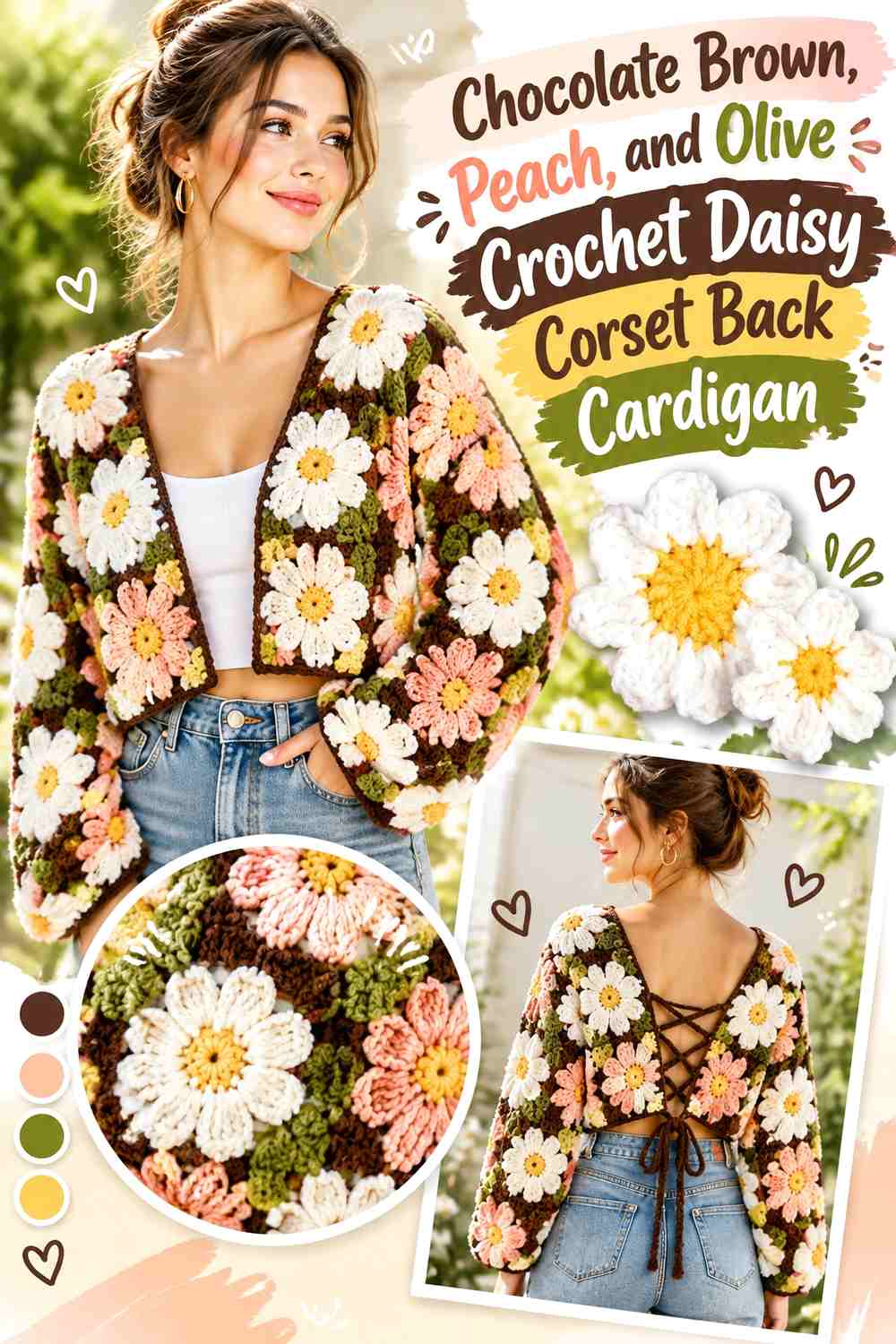
Chocolate brown creates a rich neutral field, while peach daisies soften the back and olive introduces a restrained leaf or center accent. This palette is especially useful for a cardigan where the corset treatment should feel warm without relying on bright white flowers.
Peach Daisies Should Stay Visible on the Chocolate Brown Corset Back
Use peach for most of the petal surface so each flower remains clear against the dark garment. If several daisies run down both sides of the opening, leave brown fabric between them rather than creating one continuous peach stripe.
Olive Can Connect Peach Crochet Daisies Across Chocolate Brown
Use olive in centers, small leaves, or connecting crochet sections. Keeping the green secondary lets the flowers remain the focal elements while still giving the arrangement a botanical connection.
Creator Credit: Just Be Crafty
6. Plum, Lilac, and Cream Crochet Forget-Me-Not Corset Back Tank
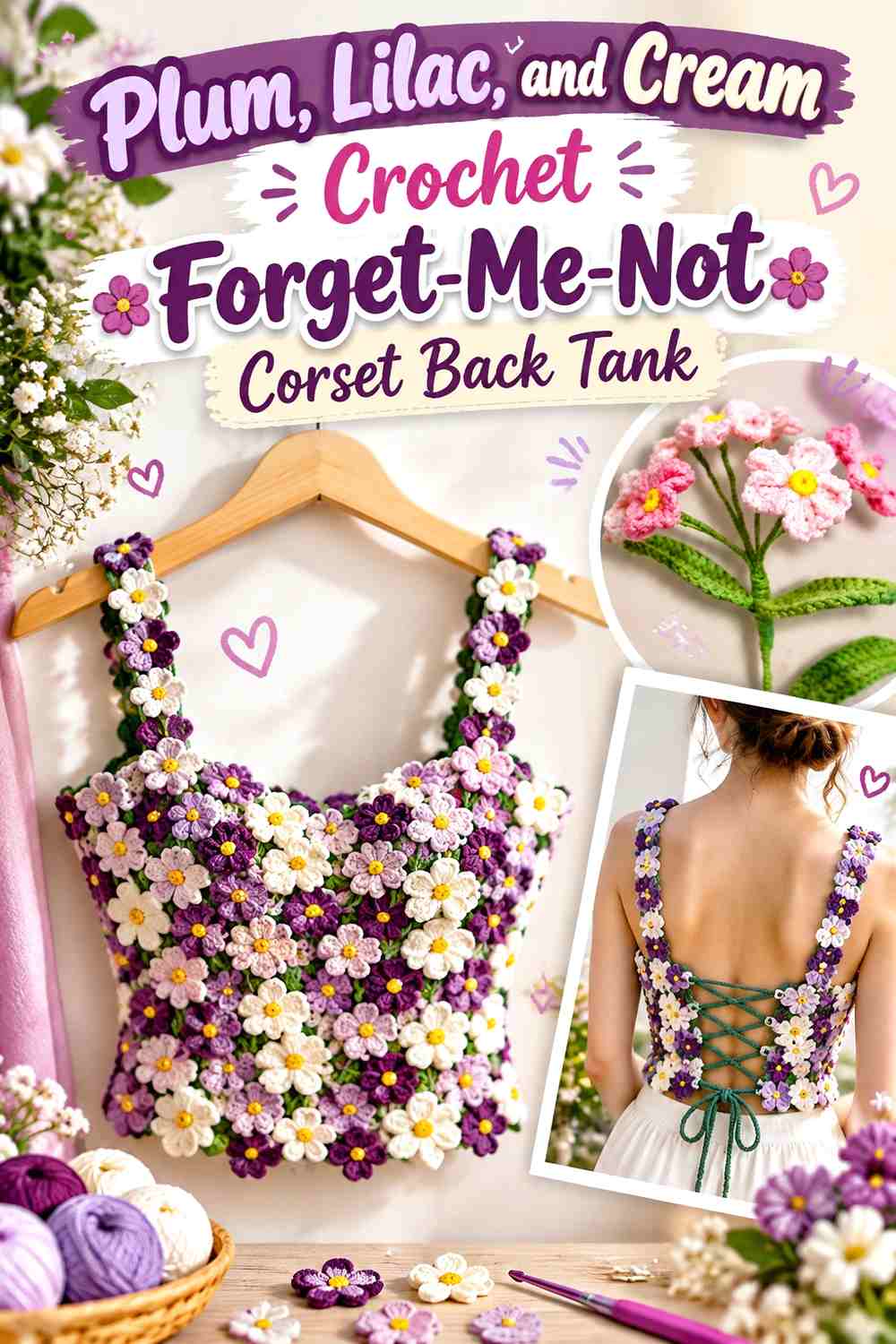
Plum can create the deepest border or lacing color, lilac can dominate the small flowers, and cream can separate the two around the opening. Small floral motifs are useful on a tank because there may be less fabric between the arm openings and the corset treatment.
Lilac Forget-Me-Nots Should Repeat Along the Plum Corset Back
Use several small lilac flowers rather than one oversized motif. Their repeated scale suits a narrower garment back and keeps the floral treatment from competing with the lacing.
Cream Can Keep Plum and Lilac Crochet Corset Details Separate
Place cream on edge loops or a narrow underlying border. Since plum and lilac belong to the same color family, the lighter neutral can stop them from blending into one purple area.
Creator Credit: Unithread Crochet
7. Rust, Mustard, and Forest Green Crochet Sunflower Corset Back Sundress

Rust fabric gives mustard flowers a warm but still noticeable background, while forest green can handle leaves, narrow edging, or lacing accents. Large sunflower-style motifs are best used selectively because the corset back already contains strong geometric lines.
Mustard Sunflowers Need Rust Fabric Around the Crochet Corset Back
Leave visible rust between large flowers so each bloom maintains its own silhouette. Crowding several sunflower motifs against one another can hide both the lacing and the shape of the back opening.
Forest Green Should Support Mustard Flowers on the Rust Corset Back
Use forest green around centers, leaves, or a few structural details rather than forming an equally wide green border. The goal is to connect the flowers while allowing mustard to remain the principal decorative color.
Creator Credit: Geovana Artes em Crochê
8. Cream, Rose Pink, and Cocoa Crochet Rose Corset Back Blouse
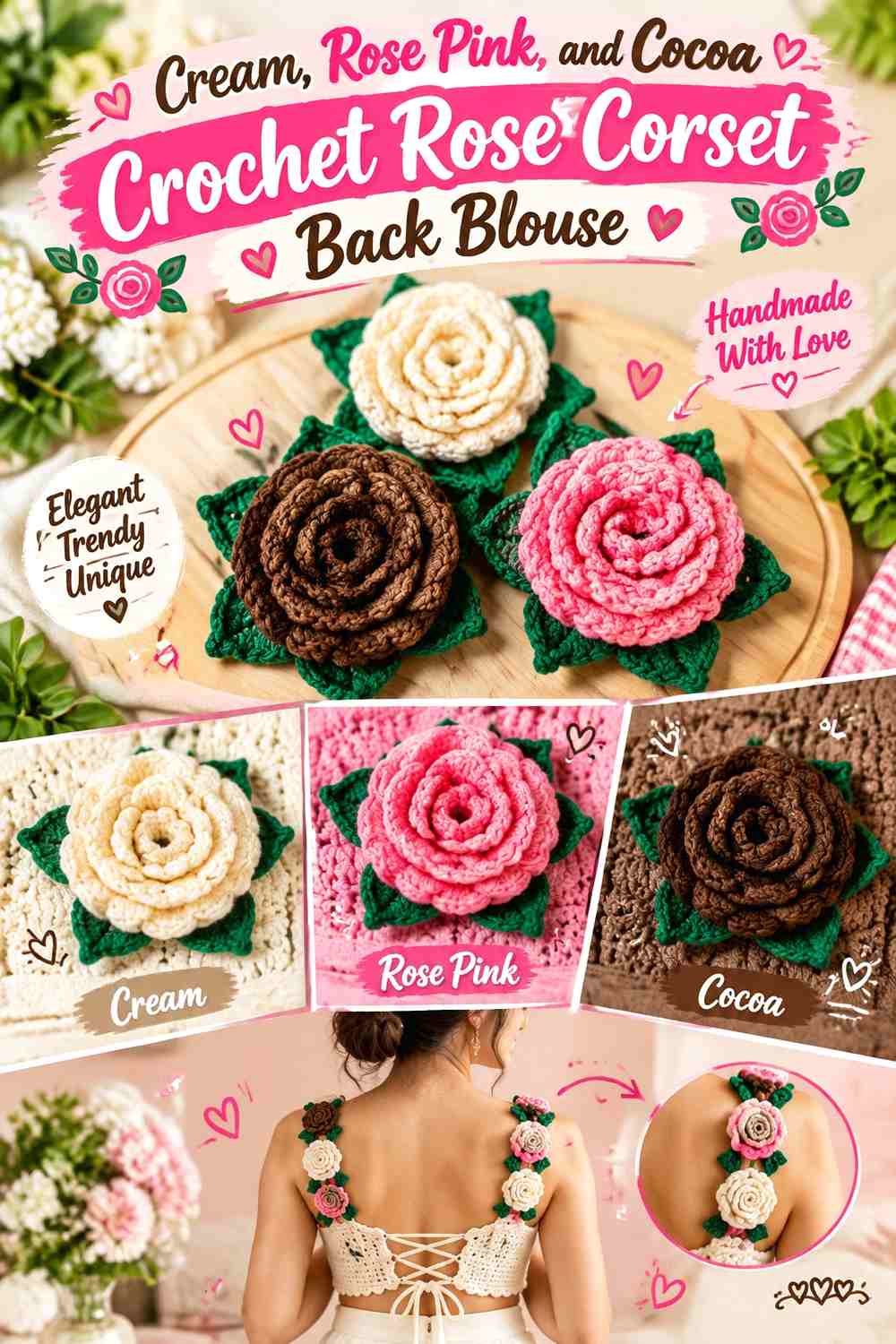
A cream blouse creates a pale foundation, so rose pink needs enough surface area to make the flowers visible. Cocoa can supply the darker contrast around lacing or flower centers without making the back as stark as black would.
Rose Pink Should Lead the Crochet Corset Back on a Cream Blouse
Use rose pink on the actual flower forms rather than limiting it to tiny centers. Pale fabric and pale edging can disappear together, so recognizable pink petals give the back treatment a clear focal feature.
Cocoa Can Define Rose Pink and Cream Corset Back Details
Use cocoa along a narrow lacing cord, selected loops, or small rose centers. The darker color should clarify the construction rather than outlining every petal, which could make the flowers look heavier.
Creator Credit: Niggie Yarns
9. Charcoal, Blush, and Cream Crochet Puffy-Flower Corset Back Jacket
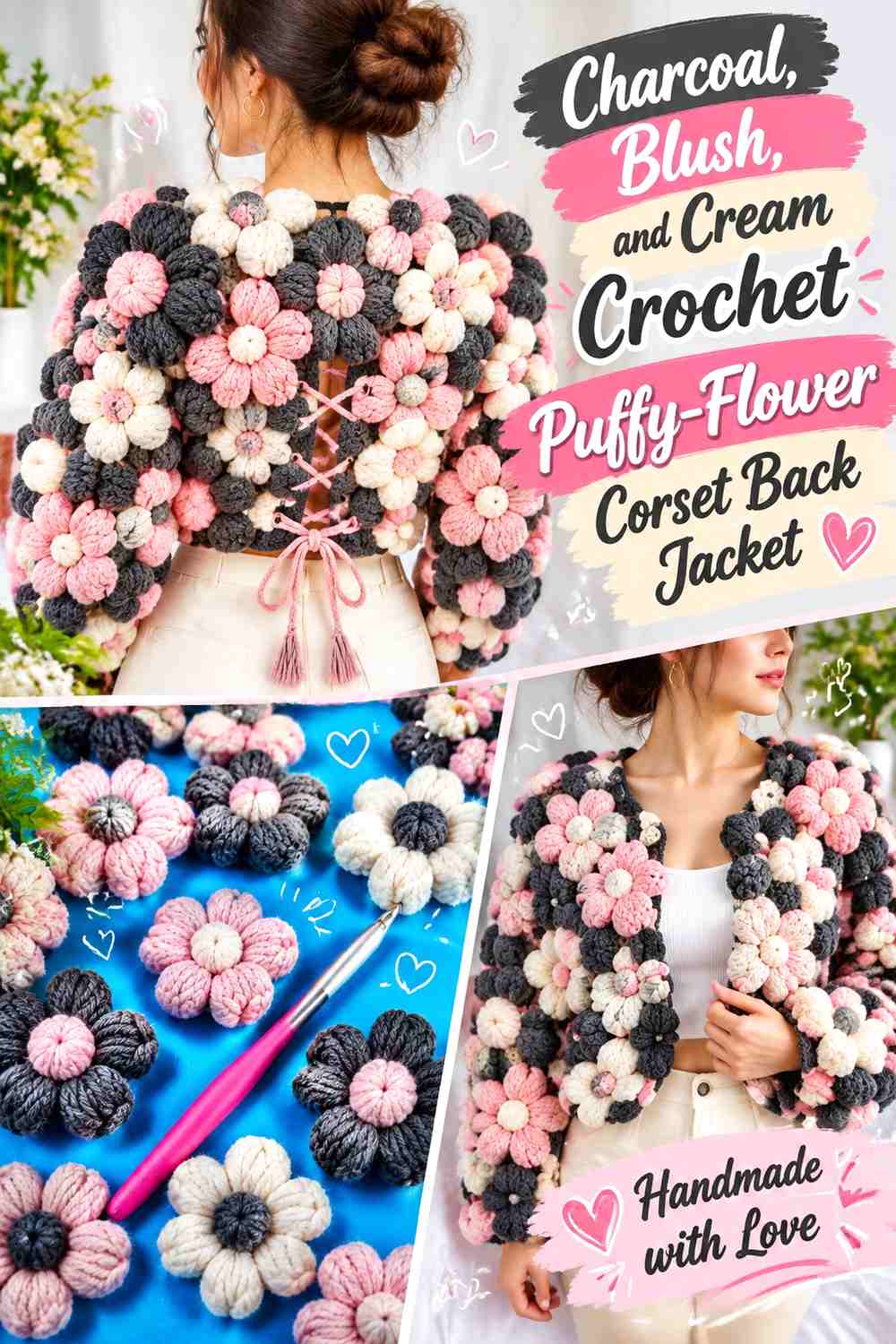
Charcoal gives dimensional blush flowers a strong background, while cream can lighten selected centers or edge loops. Puffy flowers already have visual depth, so color placement should remain restrained around the corset opening.
Blush Puffy Flowers Need Plain Charcoal Space Around the Corset Back
Place the dimensional flowers at the upper back, lower point, or spaced intervals instead of lining every inch of the opening. The charcoal fabric between motifs helps both the flowers and the lacing remain identifiable.
Cream Should Highlight Blush Crochet Flowers Against Charcoal
Use cream in selected centers or small companion motifs. Because it is substantially lighter than both main colors, only a little is needed to brighten the back treatment.
Creator Credit: Hooked by Robin
10. Powder Blue, White, and Cherry Red Crochet Mini-Flower Corset Back Tee
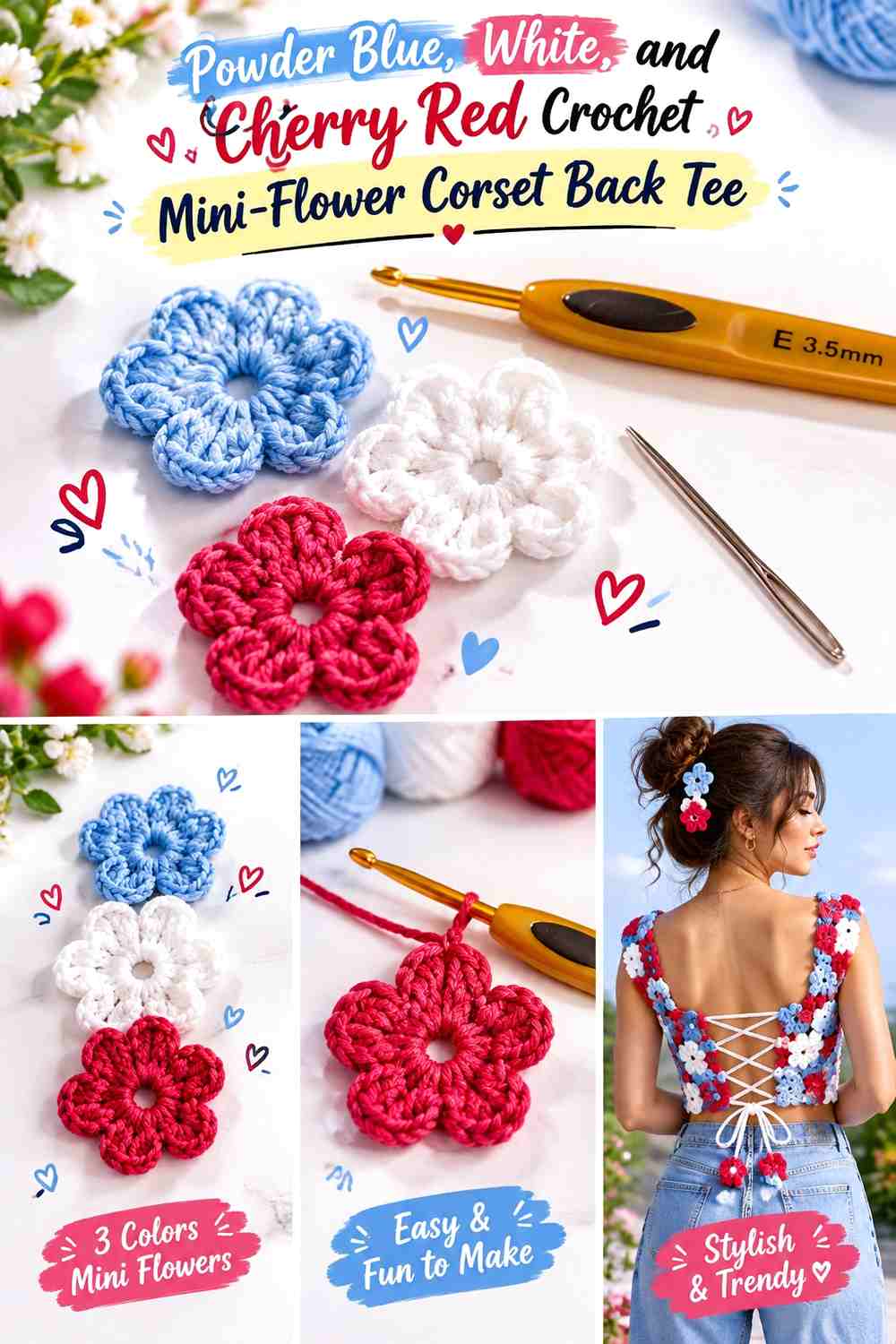
A powder-blue tee can handle a playful row of small white flowers, while cherry red adds a more graphic center or lacing accent. Mini flowers are especially practical when the back opening is narrow or the tee has little room between the opening and side seams.
White Mini Flowers Should Create a Clear Pattern on the Powder Blue Corset Back
Repeat white at consistent-looking intervals along both edges rather than clustering all of the flowers near the shoulders. The pale flowers will remain visible against blue without covering too much of the original shirt.
Cherry Red Should Punctuate Powder Blue and White Corset Back Details
Use red in small centers or one lacing element. Its stronger saturation means it does not need much surface area to affect the entire palette.
Creator Credit: HappyBerry Crochet
11. Olive, Terracotta, and Oatmeal Crochet Tulip Corset Back Shirt

Olive gives this shirt a natural base for terracotta tulip motifs, while oatmeal can keep the lacing and flower edges light. Tulips have a directional shape, so they can be arranged to follow the vertical sides of the corset opening.
Terracotta Tulips Can Follow the Olive Crochet Corset Back Vertically
Place the flower heads at intervals down the opening rather than rotating each motif in a different direction. Repetition strengthens the vertical corset line and gives the warm color a deliberate pathway.
Oatmeal Can Separate Terracotta Flowers From Olive Fabric
Use oatmeal around small stems, borders, or lacing where extra contrast is needed. It should remain the light supporting shade rather than replacing terracotta as the primary floral color.
Creator Credit: Maria’s Blue Crayon
12. Burgundy, Antique Ivory, and Sage Crochet Floral-Edged Corset Back Cami

A continuous flower border can work well on a camisole because the garment back provides less space for scattered large appliqués. Burgundy can remain the clothing color, antique ivory can form the floral edging, and sage can add tiny botanical accents.
Antique Ivory Should Form a Narrow Floral Border on the Burgundy Corset Back
Keep the flower edging close to the opening so the burgundy fabric still frames it from both sides. A deep border can visually consume a small camisole back and leave too little room for the crossed lacing.
Sage Can Add Small Botanical Breaks to Antique Ivory and Burgundy
Use sage around occasional leaves or flower centers instead of introducing green into every repeat. This keeps the continuous edging readable while adding a third color in controlled amounts.
Creator Credit: Querido Tejido
13. Navy, Lavender, and Cream Crochet Pansy Corset Back Sweater Vest
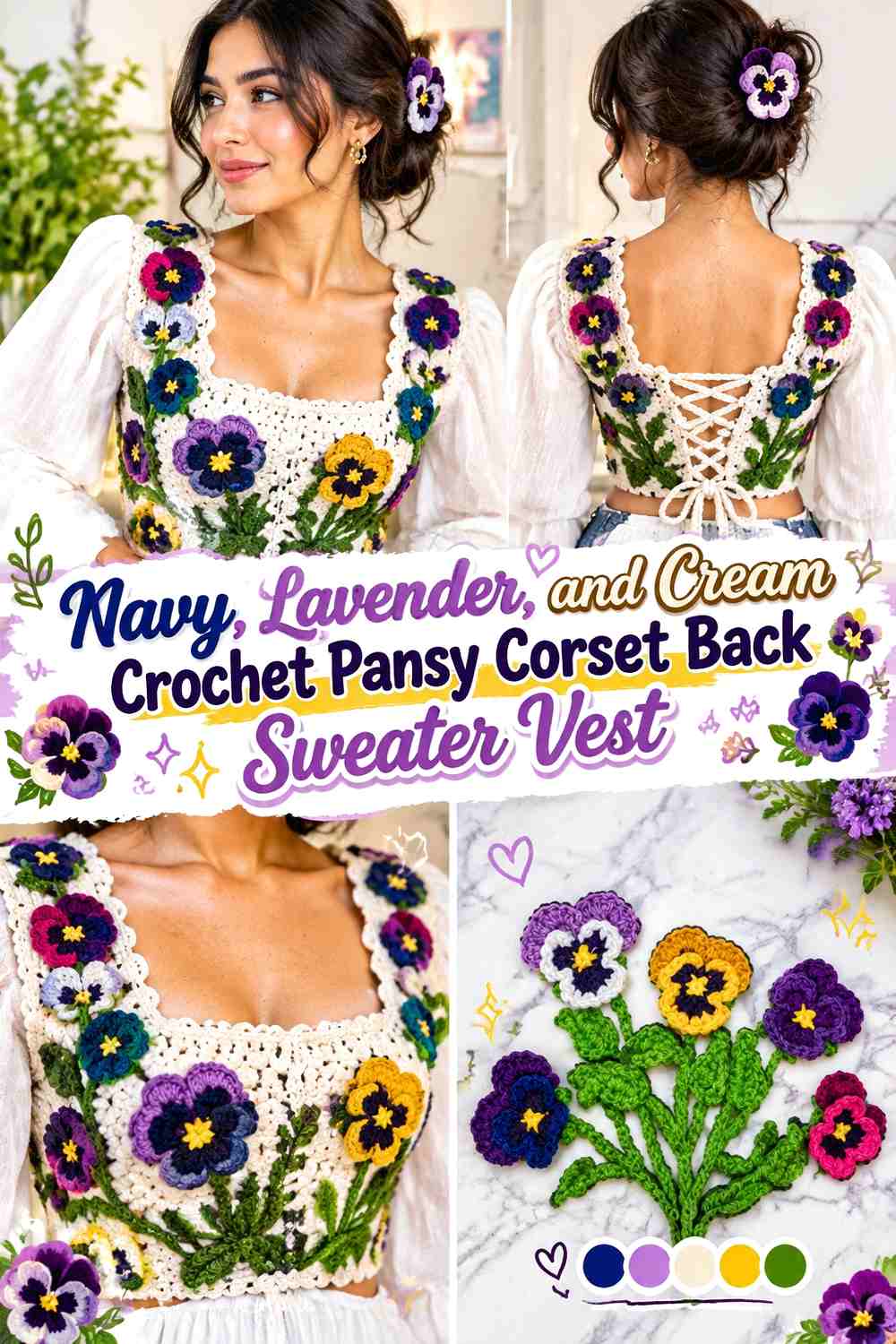
Navy creates a dark base for lavender pansies, while cream gives the flower centers and lacing enough light contrast. A sweater vest offers a broad back panel, so several floral motifs can frame the corset opening without extending onto sleeves.
Lavender Pansies Should Stay Distinct Against the Navy Corset Back
Use lavender across most of each flower and leave plain navy between motifs. Pansies already contain a visually complex petal shape, so giving every flower several additional colors would make the back unnecessarily busy.
Cream Can Define Lavender Pansies and Navy Crochet Lacing
Reserve cream for flower centers, narrow ties, or a small border. The lighter color can connect the floral motifs to the corset construction while allowing lavender to remain the main decorative shade.
Creator Credit: Lizfaerie Crafts
Which Floral Corset Back Upcycle Works Best for Different Garments?
For sturdy garments such as denim tops and jackets, high-contrast flowers can stand up visually to the heavier fabric. Indigo with antique ivory and rust or charcoal with blush and cream makes the crochet immediately noticeable without requiring a very wide decorative panel.
Lighter blouses, tanks, and camisoles benefit from more controlled contrast. Sage with dusty rose, cream with rose pink, or burgundy with ivory edging lets the corset opening remain the main construction feature while the flowers frame it.
For a larger back area, a floral square panel or repeated pansies can fill more space without forcing one oversized appliqué into the center. Whatever arrangement you choose, preserve enough open area for the crossed lacing to remain visible.
Conclusion
A floral crochet corset back works best when the clothing, lacing, and flowers have separate visual roles. Let the garment remain the dominant color, choose one crochet shade to define the opening, and reserve the strongest accent for flowers, centers, or selected lacing details.
Match the scale of the flowers to the garment as well. Tiny blossoms suit tanks and narrow back openings, while larger daisies, sunflowers, pansies, or floral squares need more uninterrupted fabric around them.
Before attaching the crochet, check the condition of the base garment and arrange the complete floral layout around the opening. This makes it easier to catch uneven color distribution, crowded lacing, or flowers that are too large for the available back panel.
Frequently Asked Questions
What clothing works well for a crochet floral corset back upcycle?
Shirts, blouses, dresses, cardigans, tees, camisoles, sweater vests, denim tops, and some jackets can all provide useful back panels. The important consideration is whether the garment structure and fabric are suitable for the intended alteration.
How many colors should I use around a floral crochet corset back?
Two crochet colors are often enough because the garment itself supplies another large color field. A third crochet shade can be useful for flower centers, leaves, or a narrow accent when it has a clear purpose.
Where should crochet flowers go around a corset back?
Useful placements include the two side edges, the upper back, the lower point of the opening, or controlled intervals between lacing loops. Leave enough open space for the lacing pattern itself to remain visible.
How can I keep pale crochet flowers visible on a light shirt?
Introduce a darker flower center, border, or lacing color. Dusty rose, cocoa, burgundy, olive, or another deeper palette shade can provide definition without requiring every flower to become dark.
Can I use several different crochet flower types on one corset back?
Yes, but repeat the same color family or another shared element so the motifs feel related. Mixing many flower shapes and unrelated colors at the same time can make a relatively narrow back panel look crowded.
Should the corset lacing match the crochet flowers?
It can, but it does not have to. Matching the edging often creates a quieter result, while using one of the flower colors can make the crossed lacing more prominent. Decide which element should receive the stronger contrast before choosing the tie color.
What should I check before cutting or altering a garment for a corset back?
Inspect the fabric, seams, fit, and condition of the intended back area first. Plan how the altered edge will remain structurally secure separately from any decorative crochet flowers or appliqués.