A worn barn jacket already has useful visual structure: a sturdy collar, oversized pockets, cuffs, front placket, yoke seams, and a straight hem. Crochet floral edging can emphasize those existing lines instead of covering the jacket with decoration. A narrow flower border around one collar looks very different from a row of blossoms above the pockets or a deeper crochet treatment running across the back hem.
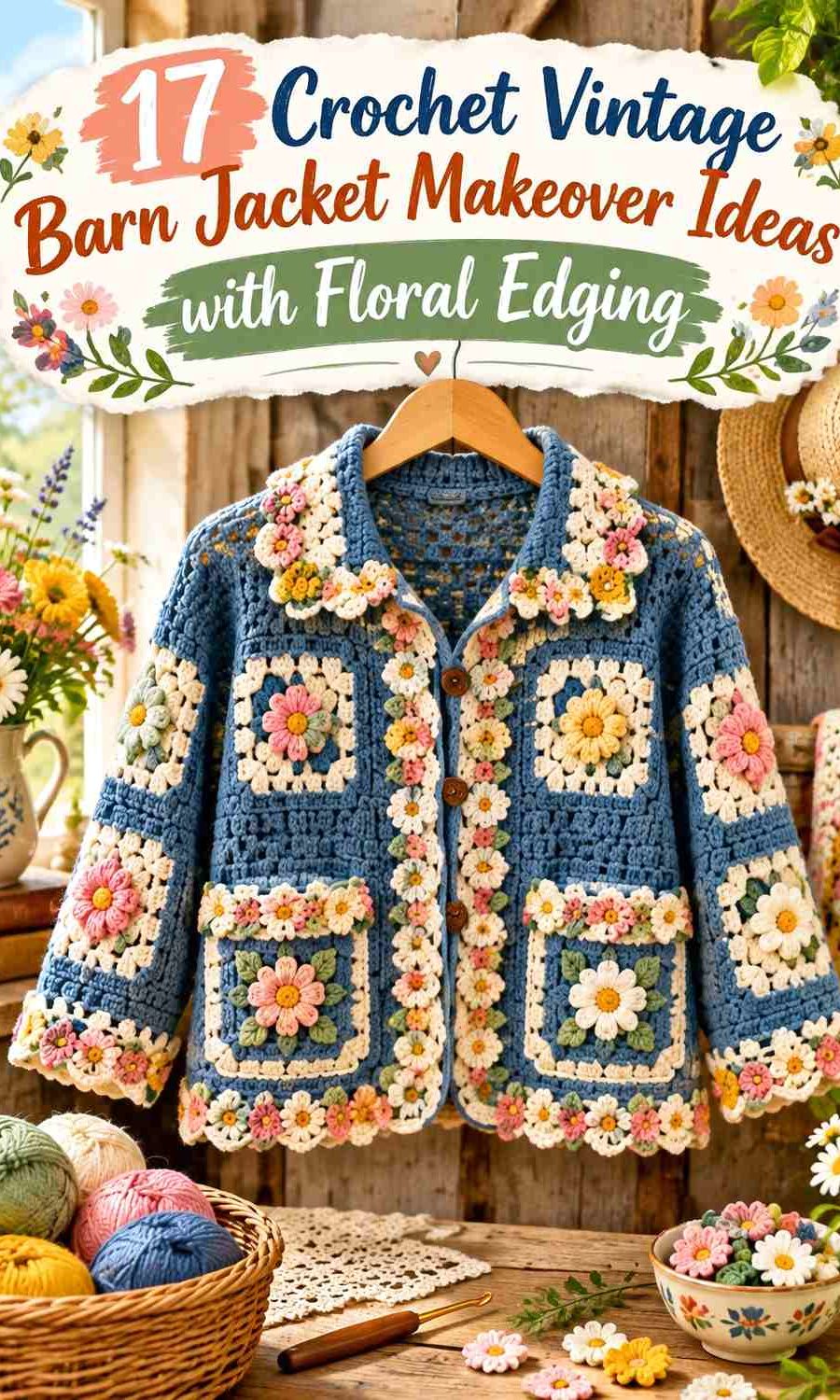
Color determines whether the crochet feels integrated with the jacket or simply attached to it. Antique ivory can brighten dark brown canvas, dusty rose can soften faded olive, and rust or mustard can connect naturally with warm khaki and weathered tan. The jacket itself should always be counted as the largest color in the palette.
The tutorials credited below support floral borders, crochet edging, flowers, or appliqué construction. The barn-jacket placements and palettes are independent adaptations, so the credited creators are not being presented as users of these exact colors or jacket designs.
Quick List
- Indigo, Antique Ivory, and Rust Crochet Barn Jacket Collar Edging
- Faded Olive, Cream, and Mustard Crochet Barn Jacket Cuff Edging
- Chocolate Brown, Dusty Rose, and Sage Crochet Barn Jacket Pocket Edging
- Washed Black, Ecru, and Burgundy Crochet Barn Jacket Hem Edging
- Weathered Tan, Cornflower Blue, and Oatmeal Crochet Barn Jacket Yoke Flowers
- Faded Navy, Terracotta, and Cream Crochet Barn Jacket Elbow Patch Edging
- Moss Green, Blush, and Ivory Crochet Barn Jacket Placket Edging
- Rust, Ochre, and Forest Green Crochet Barn Jacket Back-Yoke Flowers
- Stone Gray, Lavender, and Cream Crochet Barn Jacket Shoulder Flowers
- Weathered Khaki, Cranberry, and Oatmeal Crochet Barn Jacket Cuff and Pocket Edging
- Charcoal, Antique Gold, and Cream Crochet Barn Jacket Collar-Point Edging
- Deep Brown, Faded Teal, and Beige Crochet Barn Jacket Side-Seam Flowers
- Faded Blue, Coral, and Cream Crochet Barn Jacket Pocket-Corner Flowers
- Sage, Burgundy, and Camel Crochet Barn Jacket Undercollar Edging
- Brick Red, Ivory, and Olive Crochet Barn Jacket Placket Flowers
- Oatmeal, Dark Green, and Rust Crochet Barn Jacket Back-Hem Edging
- Black, Muted Mauve, and Old Gold Crochet Barn Jacket Chest-Pocket Flowers
Use the Barn Jacket Color as the Largest Part of the Palette
The crochet does not need to contain every color in the finished makeover. If the jacket is olive, brown, navy, black, or tan, that fabric already occupies most of the visible surface. Two carefully selected crochet shades may be enough to create a complete three-color arrangement.
Put the yarn directly against the jacket before committing to a border. Colors that appear strongly different in a yarn basket can become surprisingly close once placed over faded workwear fabric.
Match Floral Edging to the Jacket’s Existing Lines
Collars, cuffs, pocket flaps, yokes, and hems already create natural boundaries. Following those lines generally makes floral crochet look more intentional than scattering flowers across every empty area.
You can also use different visual weights in different locations. A tiny flower trim can work along a pocket opening, while a deeper border may have enough room to develop across the back hem. Arrange finished samples on the jacket before attaching them so the crochet does not unintentionally overpower the garment’s original structure.
Check Worn Barn Jacket Areas Before Adding Crochet
Vintage and well-used jackets can have weak fabric around cuffs, pocket corners, elbows, or old seams. Examine the intended attachment area before deciding where a decorative edging should go.
If one part of the jacket is already fragile, consider moving the crochet to a nearby stable panel instead of assuming the decorative trim should also function as a structural repair.
1. Indigo, Antique Ivory, and Rust Crochet Barn Jacket Collar Edging
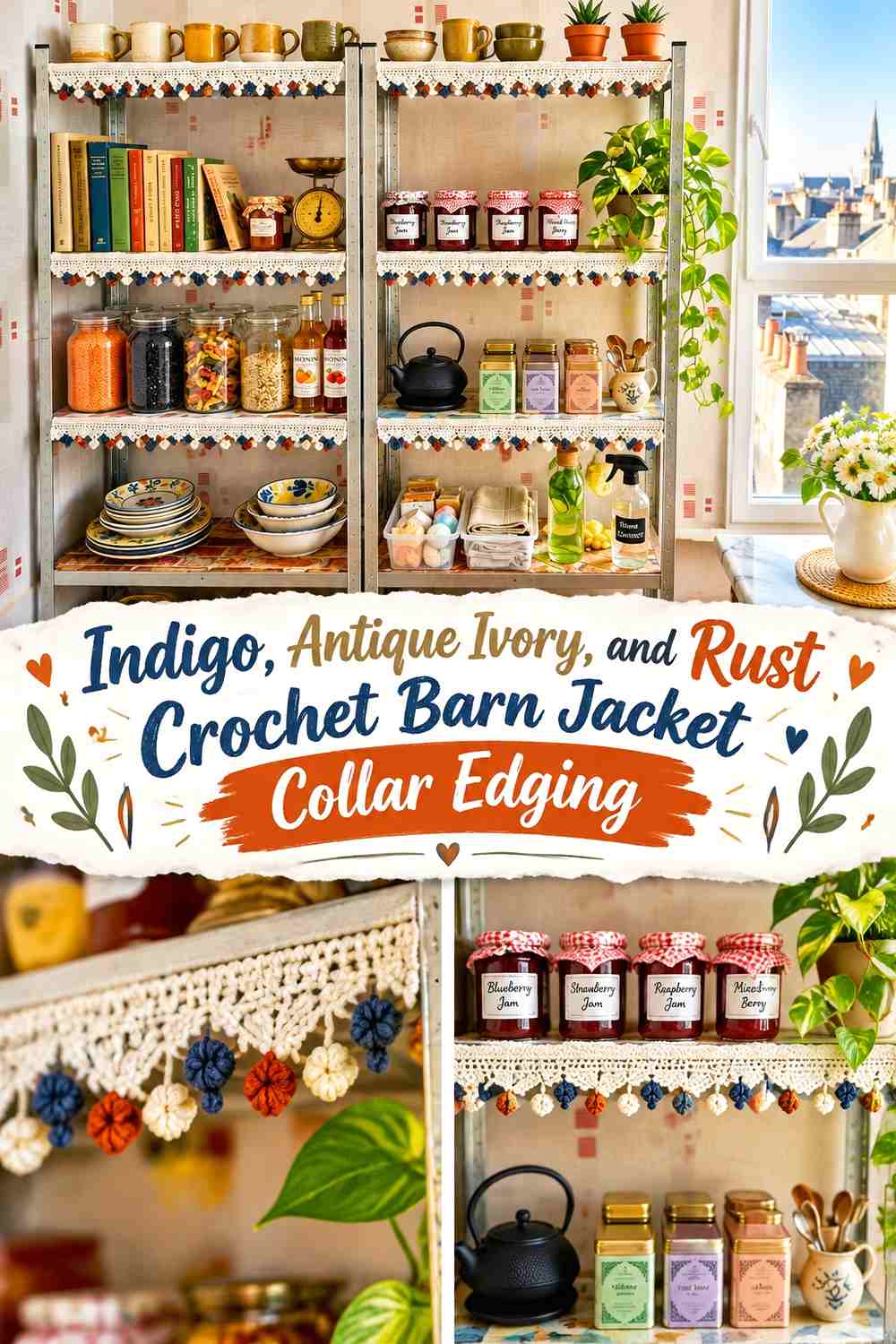
Indigo can remain the dominant jacket color while antique ivory forms the main floral edging around the collar. Rust works as a smaller warm accent in flower centers or occasional leaves. This palette gives a dark workwear jacket enough contrast to reveal delicate crochet without turning the entire neckline pale.
Antique Ivory Can Define an Indigo Crochet Barn Jacket Collar
Run antique ivory along the outer collar edge so the flowers follow a line already present in the garment. Leaving indigo visible between the collar seam and the crochet helps preserve the original jacket shape.
If the ivory flowers are relatively detailed, avoid adding another wide border beneath them. The dark denim-like or canvas background already supplies the contrast they need.
Rust Can Warm Antique Ivory Flowers on an Indigo Barn Jacket
Use rust in small repeated centers or selected companion flowers. A few warm accents can connect the crochet to aged buttons, brown stitching, or other warm jacket details without requiring every flower to contain rust.
Creator Credit: Alextitia Tuto Crochet
2. Faded Olive, Cream, and Mustard Crochet Barn Jacket Cuff Edging
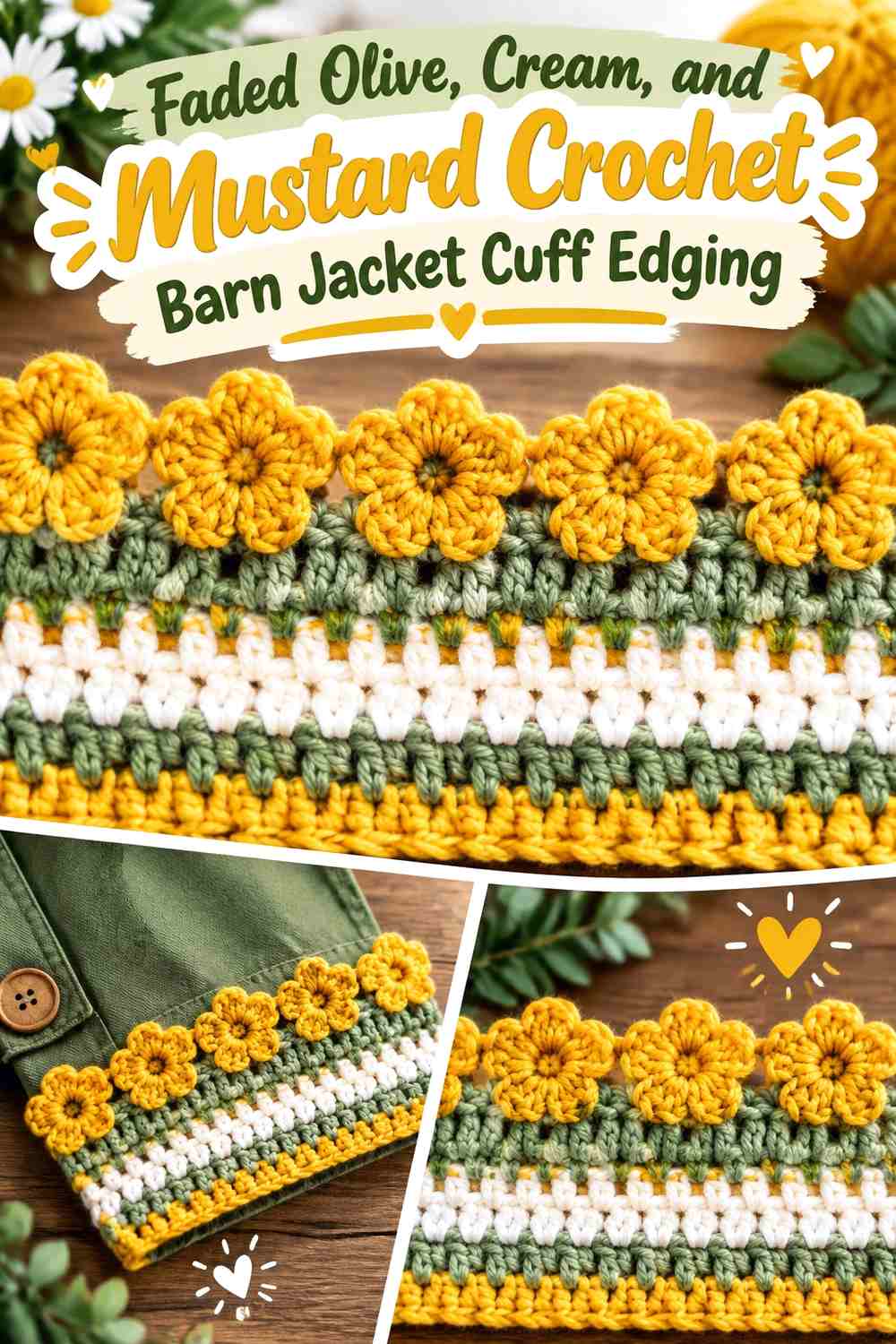
Faded olive makes a useful earthy base for a narrow cream flower border, while mustard introduces a warmer accent around the wrist. Because cuffs are relatively small, keep the hierarchy simple: olive jacket first, cream edging second, mustard detail third.
Cream Keeps Faded Olive Crochet Cuffs Light Enough to Read
Use cream through the main flower petals or scalloped portion of the cuff edging. The pale neutral gives the crochet enough separation from olive fabric without creating the sharper effect of bright white.
Repeat the same cream width on both sleeves so one cuff does not look visually heavier than the other.
Mustard Should Accent Cream Flowers on a Faded Olive Barn Jacket
Place mustard in centers or a narrow connecting section rather than making every second flower completely yellow. The stronger warm color can become dominant quickly on a small cuff.
Creator Credit: naztazia
3. Chocolate Brown, Dusty Rose, and Sage Crochet Barn Jacket Pocket Edging
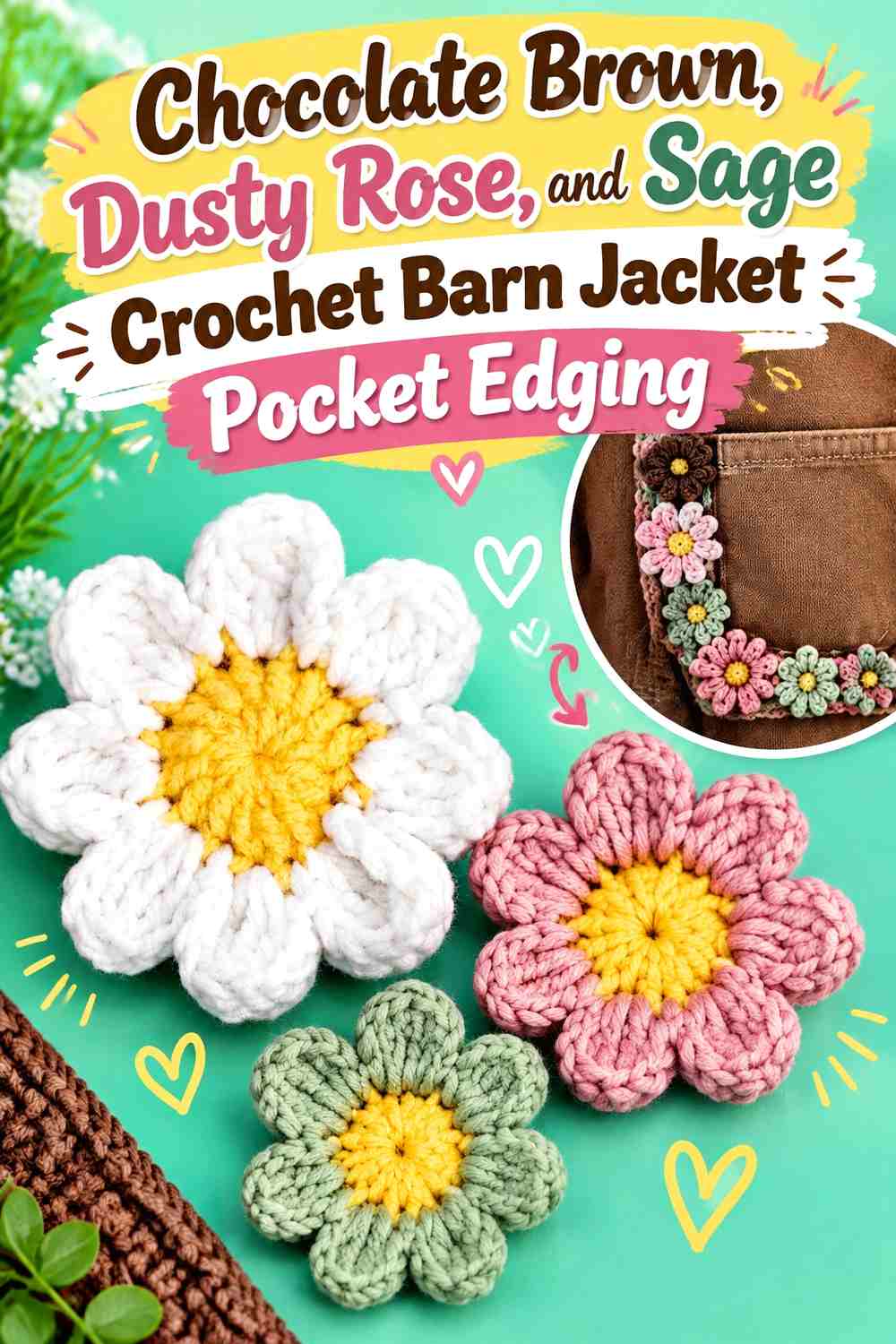
Chocolate brown gives dusty rose and sage a dark, warm background. Let rose lead across the flower edging on the upper pocket line, while sage appears primarily as leaves or short connecting details. This placement makes the pockets decorative without hiding their overall shape.
Dusty Rose Can Soften Chocolate Brown Crochet Pocket Edges
Use dusty rose along the top of both pockets or around carefully selected pocket-flap edges. A repeated horizontal flower line can bring color to the front of the jacket without covering the entire chest.
Sage Can Connect Dusty Rose Flowers on a Chocolate Brown Barn Jacket
Keep sage between blossoms or around small leaves so it performs a structural color role. If sage occupies the same area as rose, the pocket edging can start to look like two competing borders instead of one floral trim.
Creator Credit: Just Be Crafty
4. Washed Black, Ecru, and Burgundy Crochet Barn Jacket Hem Edging
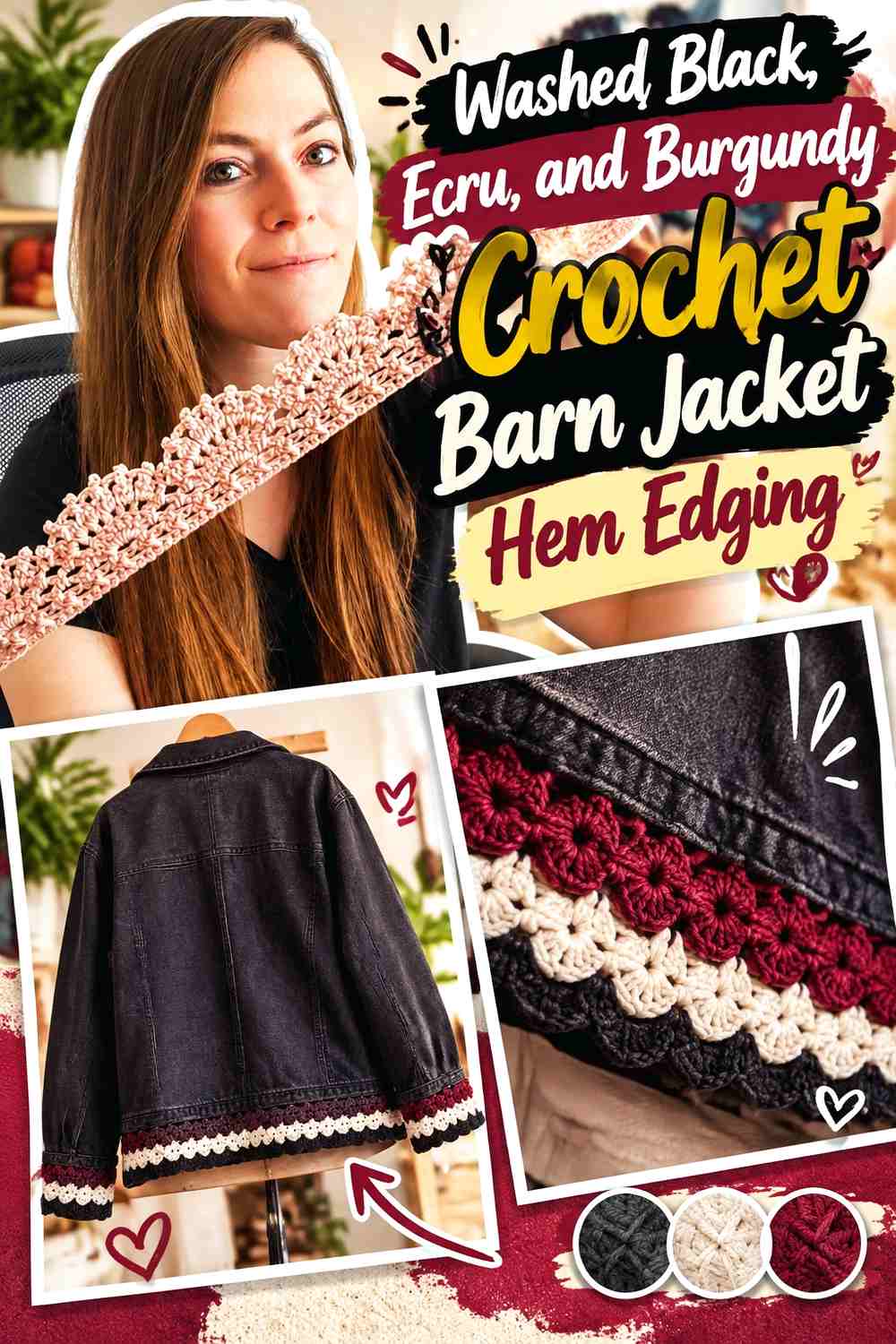
Washed black provides a dramatic but softened background for ecru lace edging. Burgundy can be repeated through selected flowers to keep the hem from becoming a stark black-and-cream contrast. A bottom-edge placement also lets a slightly deeper floral border breathe without crowding pockets or the collar.
Ecru Can Lighten a Washed Black Crochet Barn Jacket Hem
Let ecru form the continuous edge so the bottom of the jacket has a clearly readable decorative boundary. The washed black above it gives even open crochet flowers enough contrast to remain visible.
Burgundy Can Break Up an Ecru Border on a Washed Black Barn Jacket
Use burgundy every few flowers rather than alternating every motif. This creates warm focal points while preserving ecru as the main edging color.
Creator Credit: Strommer Crafts
5. Weathered Tan, Cornflower Blue, and Oatmeal Crochet Barn Jacket Yoke Flowers

Weathered tan gives cornflower blue an unexpectedly fresh background, while oatmeal keeps the palette connected to the jacket’s warm neutral base. A row of modest flowers along the back yoke works especially well because the seam itself provides a natural placement guide.
Cornflower Blue Can Create a Clear Floral Line on a Weathered Tan Barn Jacket
Use blue on the main blossoms and allow visible tan between them. Spacing matters here; individual flowers should remain recognizable rather than forming one continuous blue strip.
Oatmeal Can Soften Cornflower Blue Crochet Flowers Against Weathered Tan
Add oatmeal in centers or smaller companion flowers. Its value should remain sufficiently different from tan to show the crochet, especially if the jacket is heavily faded.
Creator Credit: HappyBerry Crochet
6. Faded Navy, Terracotta, and Cream Crochet Barn Jacket Elbow Patch Edging
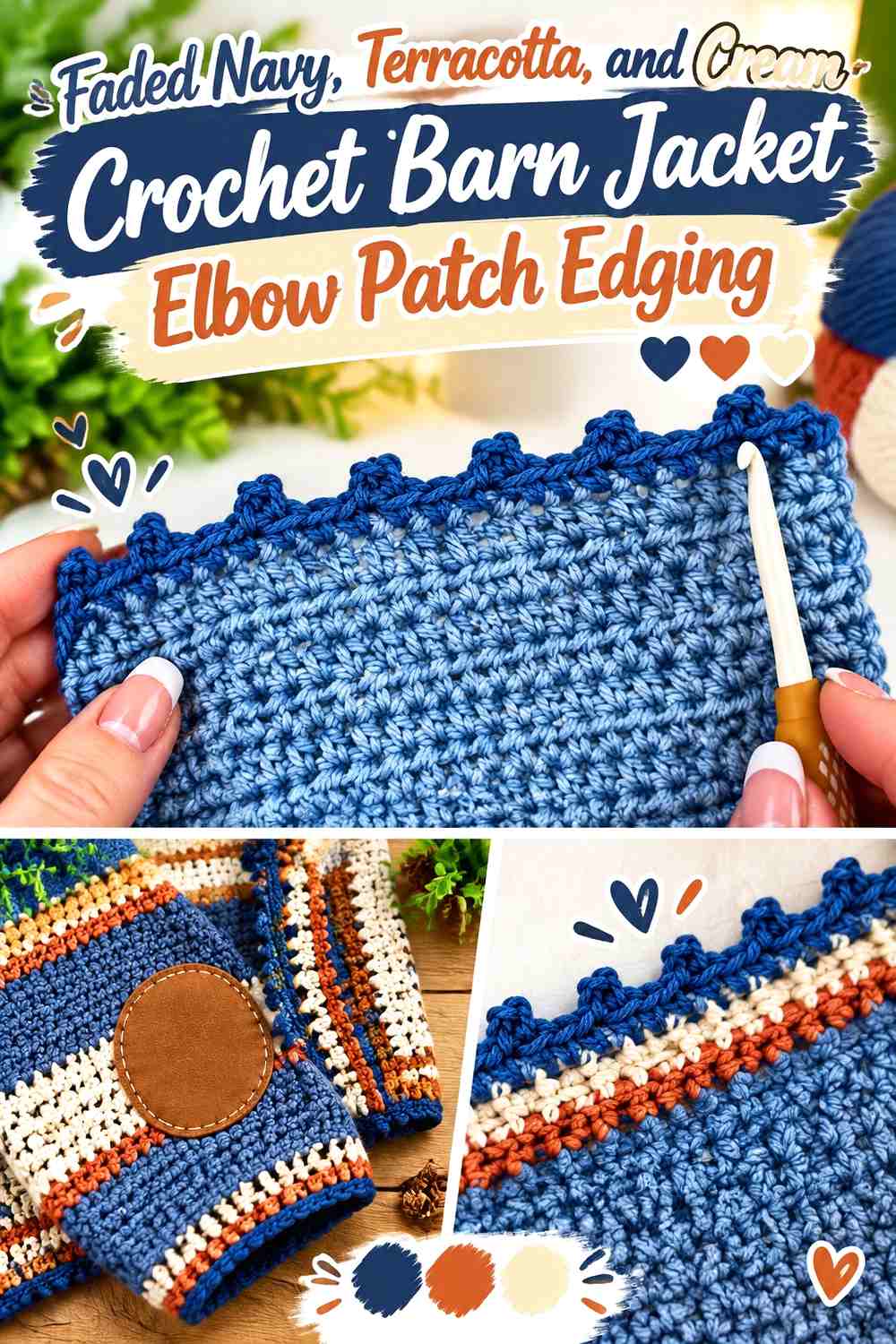
Faded navy works well with terracotta because the colors separate clearly without relying on a bright primary combination. Cream can be used sparingly around an elbow-patch border where smaller crochet details need extra visibility.
Terracotta Can Frame a Faded Navy Crochet Elbow Patch
Use terracotta around the perimeter rather than filling the whole elbow area with flowers. The narrow decorative boundary lets the patch or original fabric remain visible in the middle.
Check both sleeves together before attachment so the floral edging sits at a visually similar level.
Cream Can Separate Terracotta Flowers From a Faded Navy Barn Jacket
Small cream centers can sharpen the terracotta flowers against the navy base. Keep cream restrained so the repair area does not become much lighter than the rest of the sleeve.
Creator Credit: Yarndrasil
7. Moss Green, Blush, and Ivory Crochet Barn Jacket Placket Edging
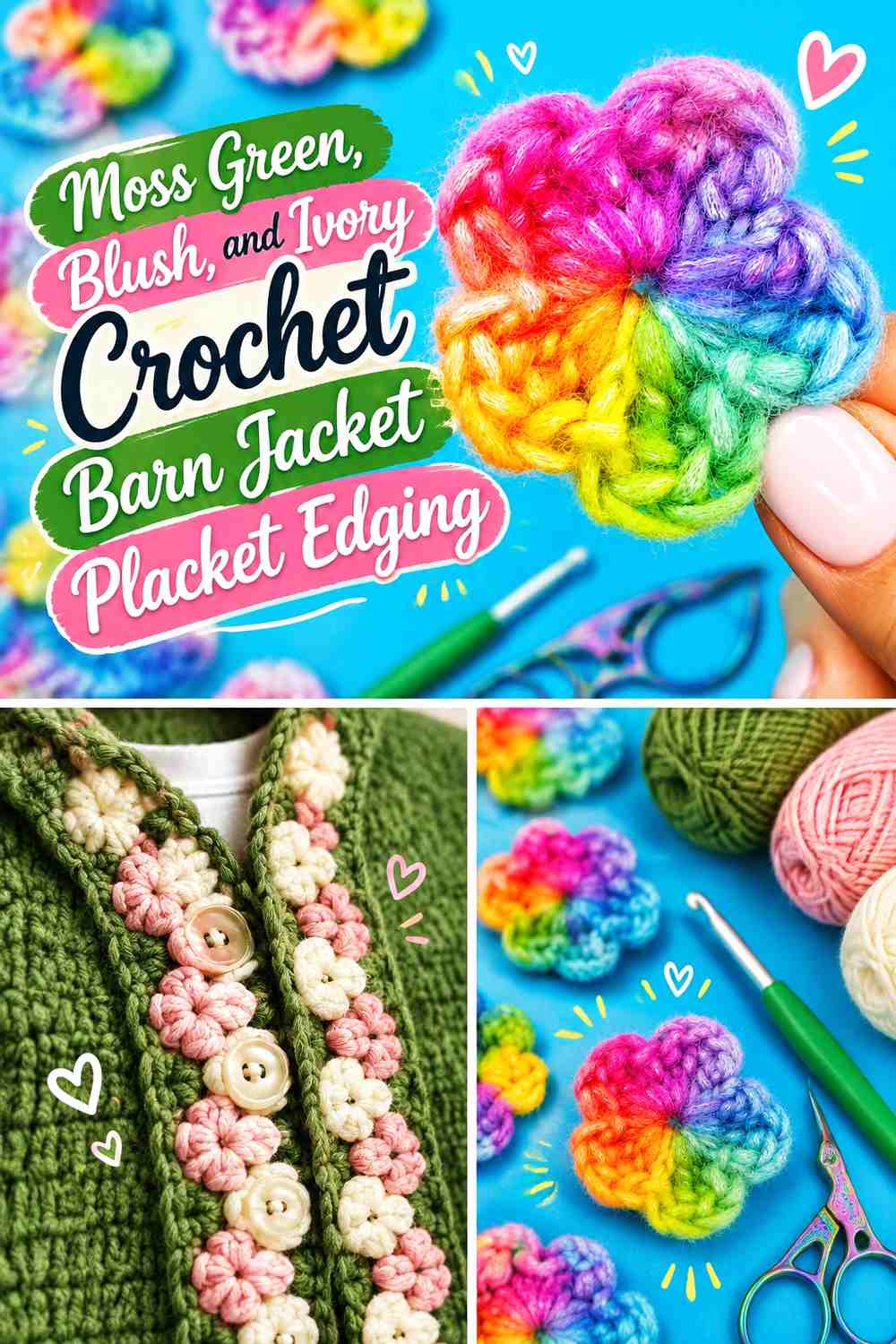
A moss-green jacket can take a narrow blush floral treatment beside the front placket, with ivory used to keep small flowers distinct. Because the front opening is a long vertical line, the floral edging should stay relatively slim.
Blush Can Add a Vertical Crochet Accent to a Moss Green Barn Jacket
Repeat blush flowers at measured-looking intervals beside the buttons or fastening area rather than filling the full strip with uninterrupted petals. Visible green between motifs prevents the jacket front from looking overly decorative.
Ivory Can Clarify Blush Flowers Against Moss Green
Use ivory in centers or occasional small blossoms. The lighter color can help the flower sequence remain visible from farther away while blush stays the main romantic accent.
Creator Credit: Hooked by Robin
8. Rust, Ochre, and Forest Green Crochet Barn Jacket Back-Yoke Flowers
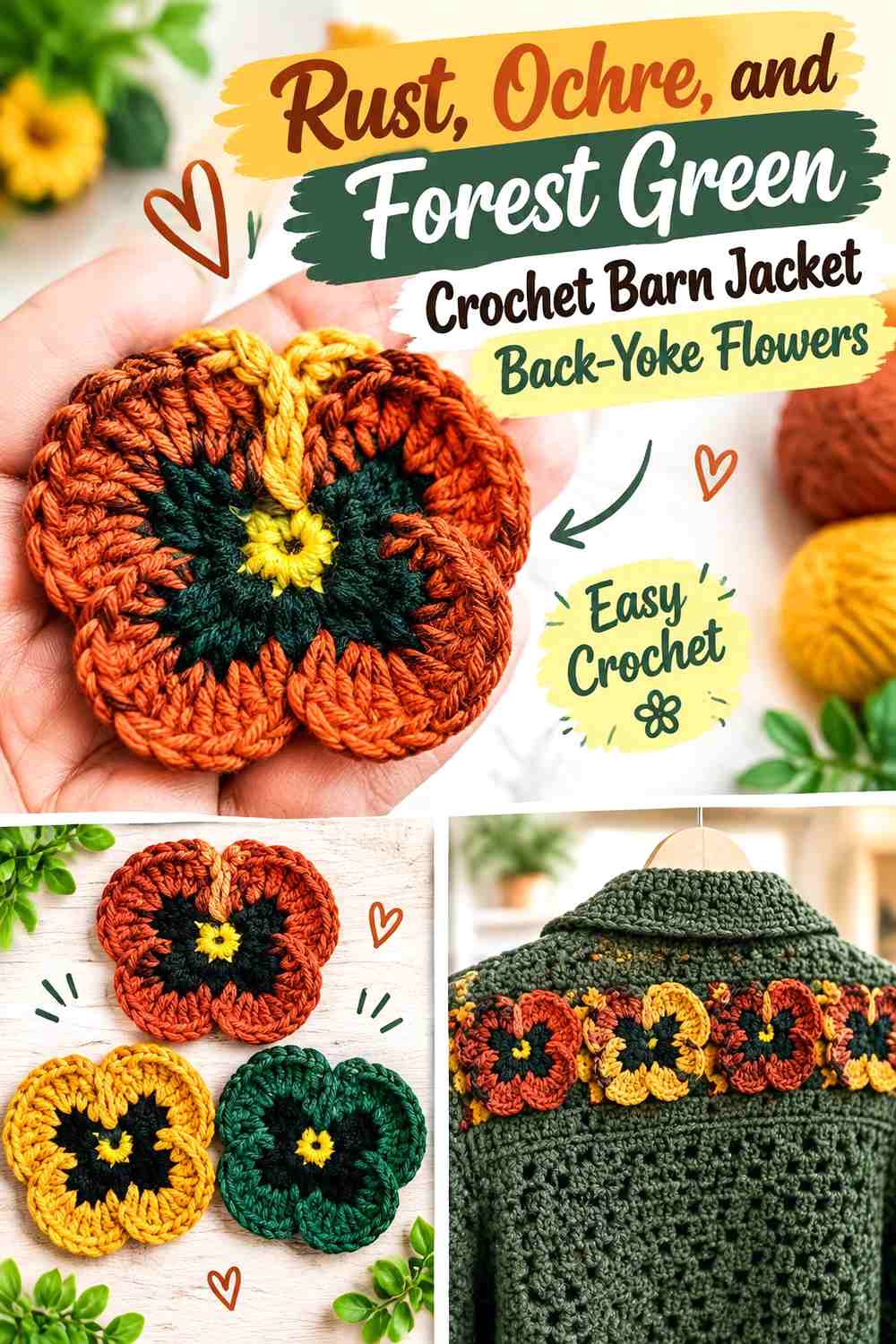
A rust jacket already supplies a strong warm base, so forest green can handle leaves and connections while ochre brightens selected flower centers. This gives the back yoke a floral treatment that remains earthy rather than pastel.
Forest Green Can Give Rust Crochet Yoke Flowers a Botanical Framework
Use green along short stems, leaves, or the yoke seam itself. The cooler dark color provides structure against rust without needing black.
Ochre Should Highlight Rust and Forest Green Crochet Details
Reserve ochre for smaller centers or a few blossoms. Because ochre and rust are both warm, keeping the yellow-brown accent lighter helps the colors remain distinguishable.
Creator Credit: Ahuyama Crochet
9. Stone Gray, Lavender, and Cream Crochet Barn Jacket Shoulder Flowers

Stone gray creates a quiet base that allows lavender to become the main floral color. Cream can lighten selected petals or centers. A shoulder placement is useful when you want decoration visible from the front and back without running crochet across the entire jacket.
Lavender Can Soften a Stone Gray Crochet Barn Jacket Shoulder
Cluster several lavender flowers near the shoulder seam, then reduce their number as they move toward the sleeve. That tapered placement keeps the accent focused instead of turning into a full sleeve border.
Cream Can Give Lavender Flowers Definition on Stone Gray
Use cream in smaller flowers or centers where lavender and gray are close in value. A few strategically pale details can provide enough contrast without turning the shoulder mostly cream.
Creator Credit: Unithread Crochet
10. Weathered Khaki, Cranberry, and Oatmeal Crochet Barn Jacket Cuff and Pocket Edging

This makeover repeats the same floral colors in two separated areas. Cranberry can become the main accent around pocket corners and cuffs, while oatmeal provides a light supporting shade. Repetition helps the jacket look planned rather than patched with unrelated crochet pieces.
Cranberry Can Connect Weathered Khaki Pockets and Cuffs
Use cranberry flowers in both locations but change the amount according to available space. The pockets can support a slightly broader cluster, while the cuffs may need only one narrow line.
Oatmeal Keeps Cranberry Crochet Edging From Overpowering Khaki
Use oatmeal around selected petals or centers to break up the dark red. The warm neutral relates naturally to khaki while still giving cranberry enough surrounding contrast.
Creator Credit: The Crochet Crowd
11. Charcoal, Antique Gold, and Cream Crochet Barn Jacket Collar-Point Edging
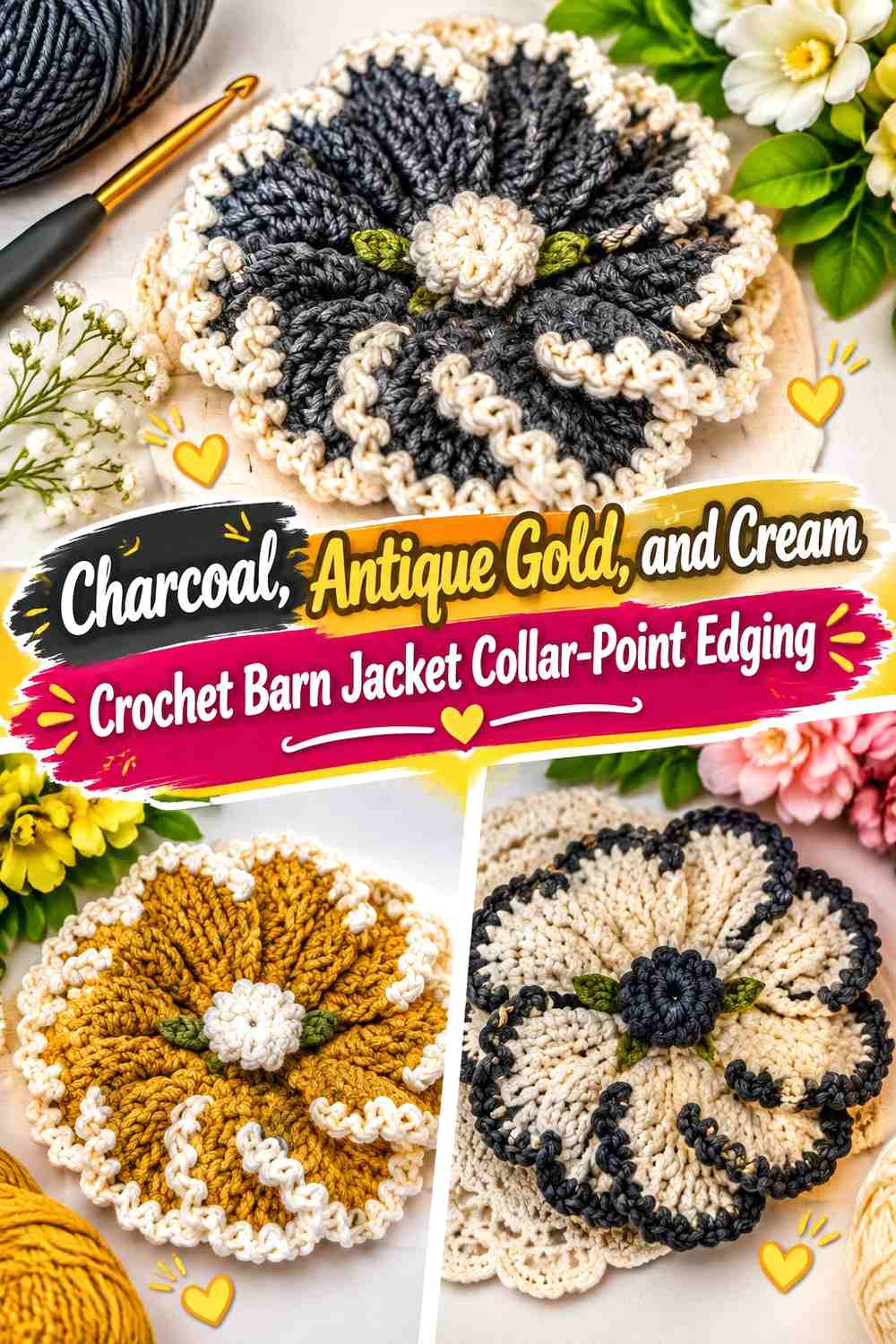
Charcoal provides a dark neutral field, antique-gold color can emphasize the collar points, and cream can lighten the floral centers. This is a more graphic treatment than an all-around lace collar because the decoration concentrates near two strong garment angles.
Antique Gold Can Emphasize Charcoal Barn Jacket Collar Points
Place the strongest gold-colored flowers near the tips and reduce the decoration toward the neck. This directs attention to the collar shape rather than creating an even band of color around the entire neckline.
Cream Can Lighten Antique Gold Flowers Against Charcoal
Small cream centers give the gold-toned flowers another level of contrast. Keep the pale shade inside the floral area so charcoal remains clearly visible around each point.
Creator Credit: Creative Grandma
12. Deep Brown, Faded Teal, and Beige Crochet Barn Jacket Side-Seam Flowers
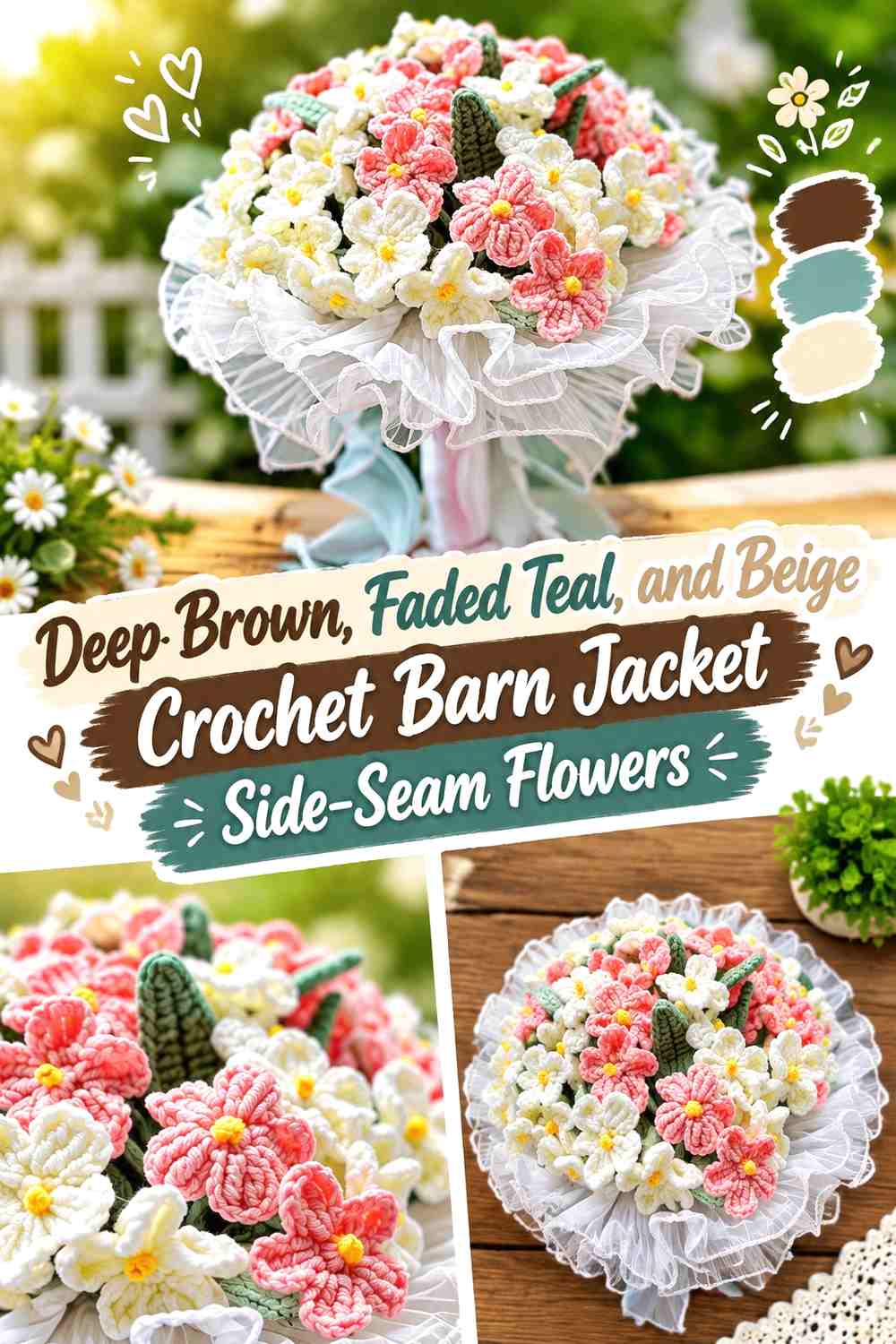
Deep brown jackets can support cooler faded teal without losing their vintage workwear character. Beige should remain the quietest shade, separating teal flowers from the dark fabric where needed. A side-seam placement offers decoration that becomes more noticeable as the wearer moves.
Faded Teal Can Follow a Deep Brown Crochet Barn Jacket Side Seam
Arrange teal flowers or small motifs along a limited section rather than running them from underarm to hem. A shorter trail keeps the treatment intentional and leaves plenty of brown fabric visible.
Beige Can Separate Faded Teal From Deep Brown
Use beige on small centers or connecting leaves if teal becomes too dark against the jacket. The neutral should support the contrast rather than become a second full floral border.
Creator Credit: Tammy crochet & art
13. Faded Blue, Coral, and Cream Crochet Barn Jacket Pocket-Corner Flowers
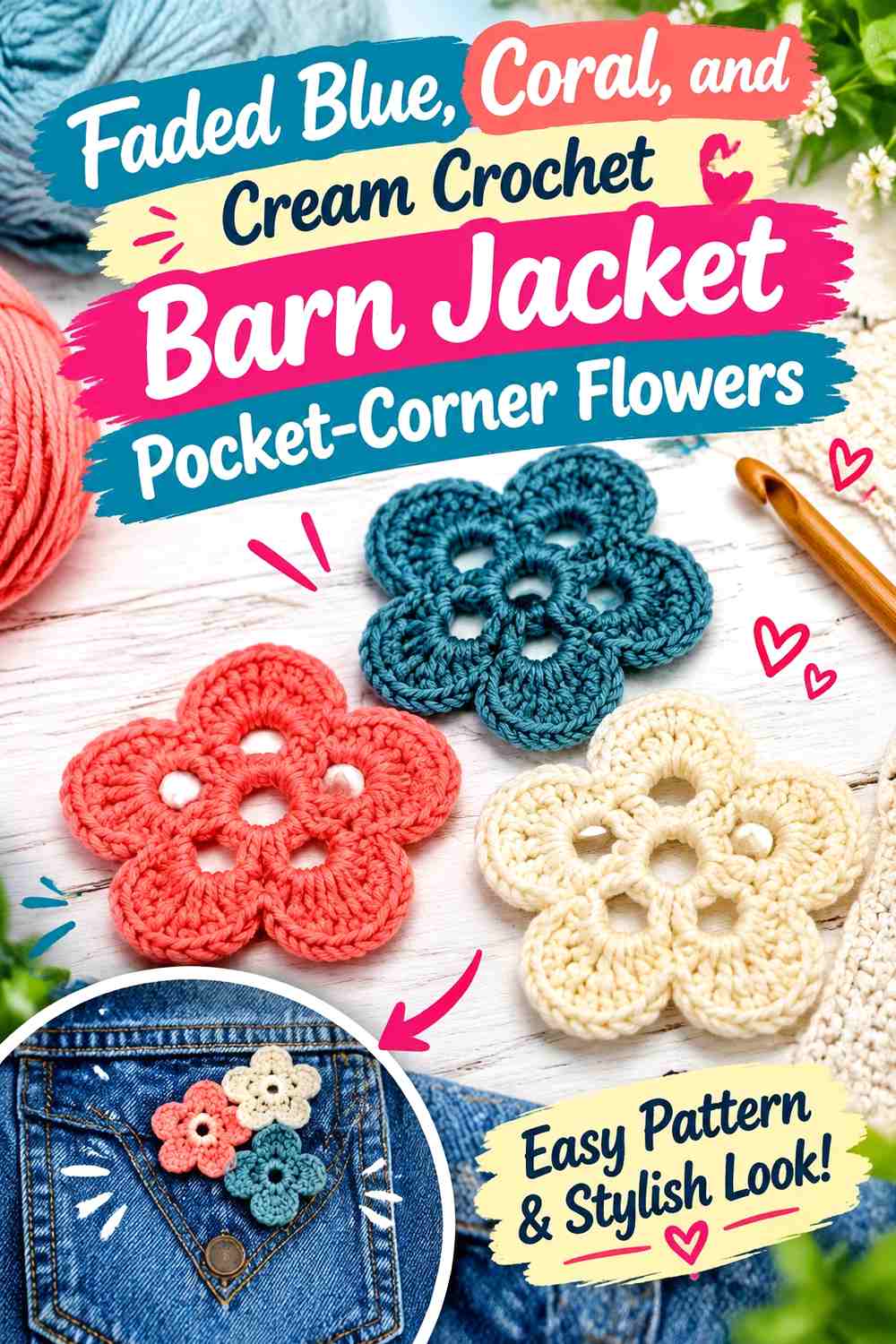
Faded blue gives coral a clear but softer contrast than dark navy would. Instead of edging the full pocket, concentrate flowers at the upper corners and use cream for the smallest highlights. This keeps the pocket function visually obvious while still giving the jacket a floral makeover.
Coral Can Create Small Focal Points on Faded Blue Barn Jacket Pockets
Place coral flowers in matching or intentionally balanced corners. Because each cluster is compact, a strong warm color can carry the design without needing many motifs.
Cream Can Keep Coral Crochet Pocket Flowers Clear on Faded Blue
Use cream in centers or one companion blossom per cluster. If the jacket is extremely faded, check whether cream still separates from the blue before repeating it across both pockets.
Creator Credit: Crochet Guru
14. Sage, Burgundy, and Camel Crochet Barn Jacket Undercollar Edging
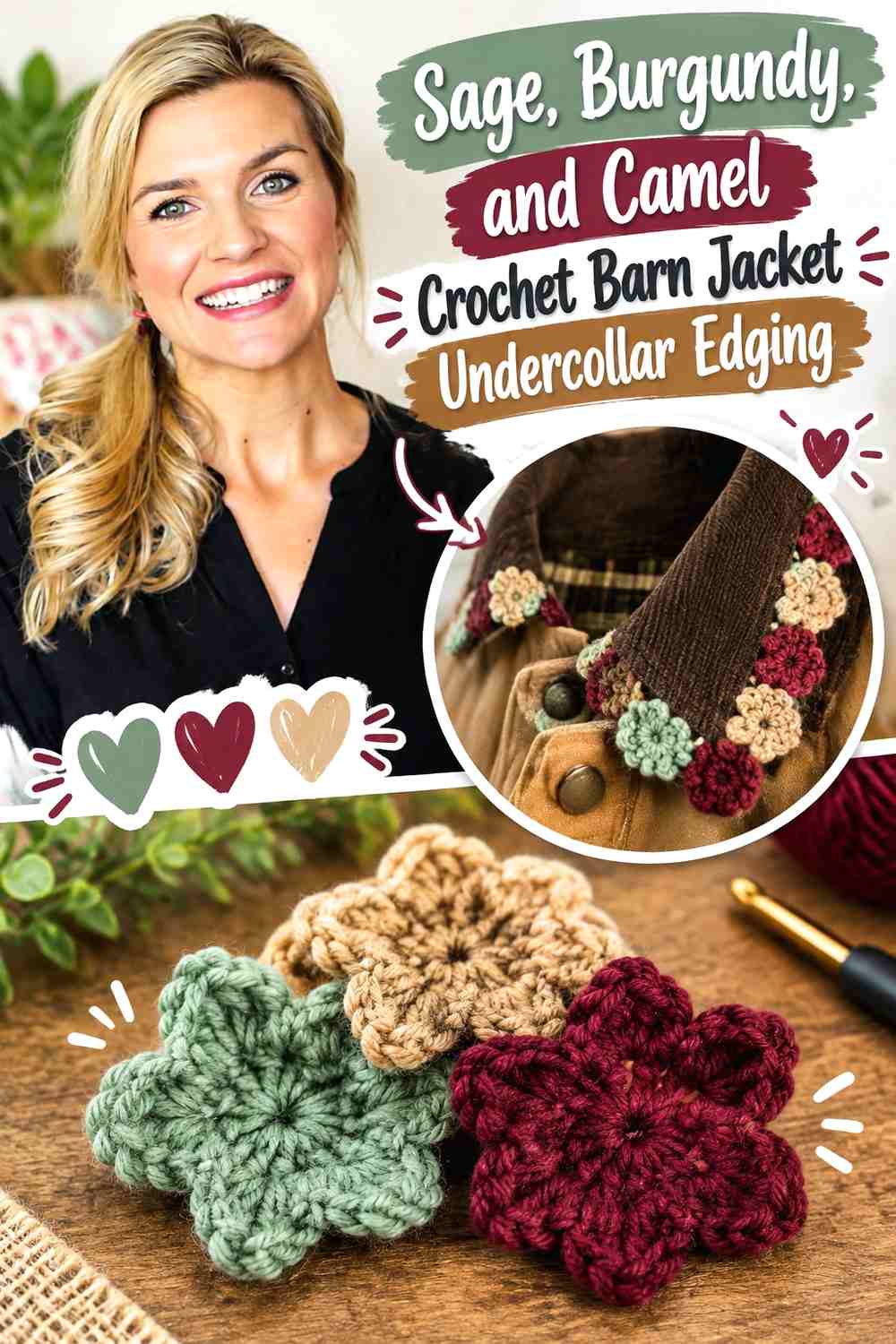
Sage provides the largest garment field, burgundy adds a hidden richer color, and camel connects the palette to warm vintage neutrals. Putting much of the crochet beneath the collar makes the detail more subtle when the collar lies flat and more visible when it is turned up.
Burgundy Can Give a Sage Barn Jacket Undercollar a Hidden Floral Accent
Use burgundy as the main flower color underneath the collar rather than repeating it heavily across the jacket body. The placement creates a concentrated reveal without requiring a large amount of red.
Camel Can Soften Burgundy Crochet Flowers Against Sage
Camel centers or small connecting motifs keep the green-and-burgundy relationship from feeling overly sharp. It also gives the undercollar a warm neutral that can transition back toward the jacket fabric.
Creator Credit: Melanie Ham
15. Brick Red, Ivory, and Olive Crochet Barn Jacket Placket Flowers
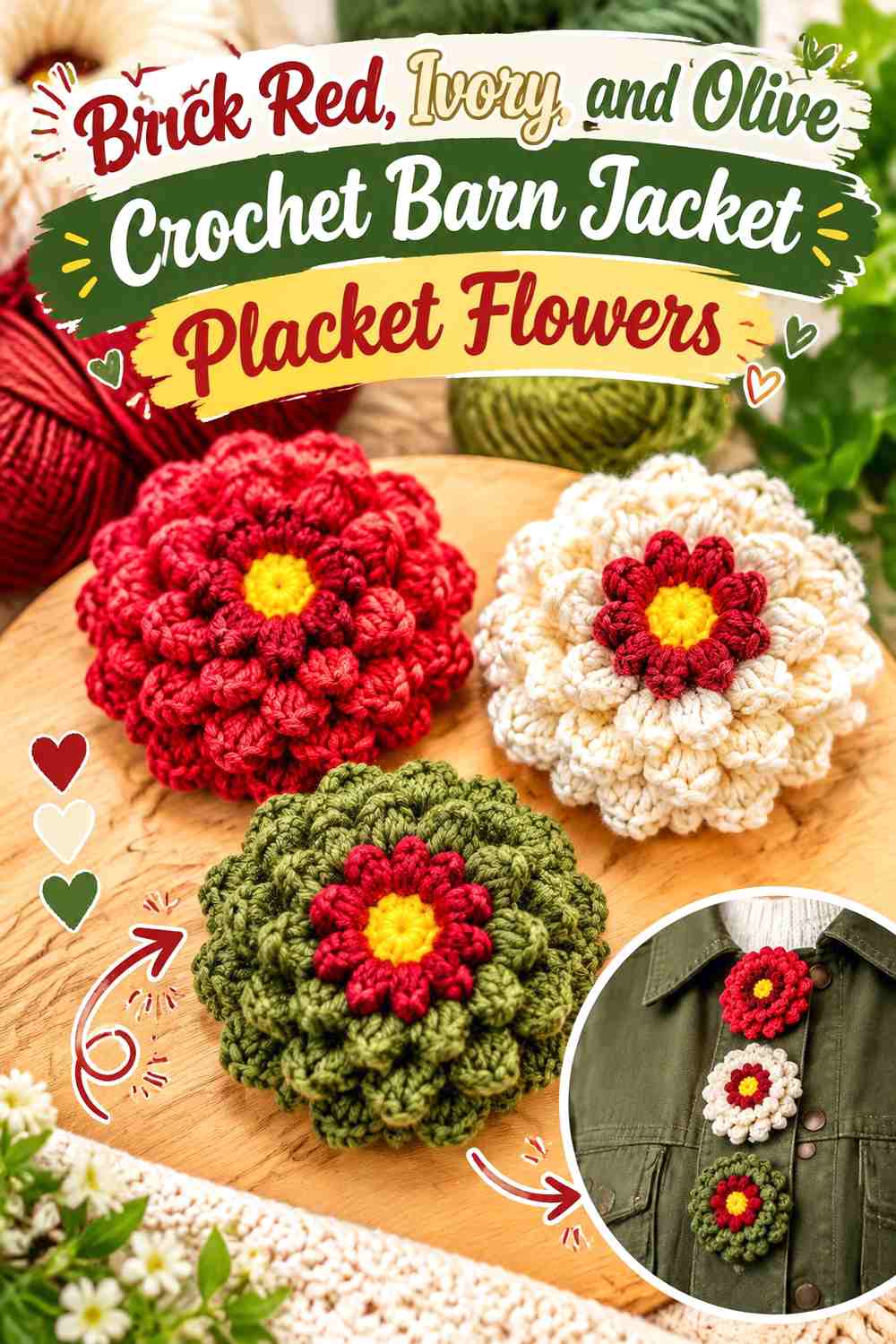
Brick red works as a strong vintage garment color, while ivory and olive can create a flower-and-leaf trail beside the front opening. Keep ivory as the flower color and olive as the connector so the red jacket remains the dominant field.
Ivory Flowers Can Brighten a Brick Red Crochet Barn Jacket Front
Space the flowers along the placket rather than forming one solid lace strip. The exposed brick red between motifs helps the individual blooms stay readable.
Olive Can Connect Ivory Crochet Flowers on Brick Red
Use olive as stems, leaves, or small joins. This gives the vertical flower trail continuity while keeping the two lighter crochet roles clearly separated.
Creator Credit: Moara Crochet
16. Oatmeal, Dark Green, and Rust Crochet Barn Jacket Back-Hem Edging
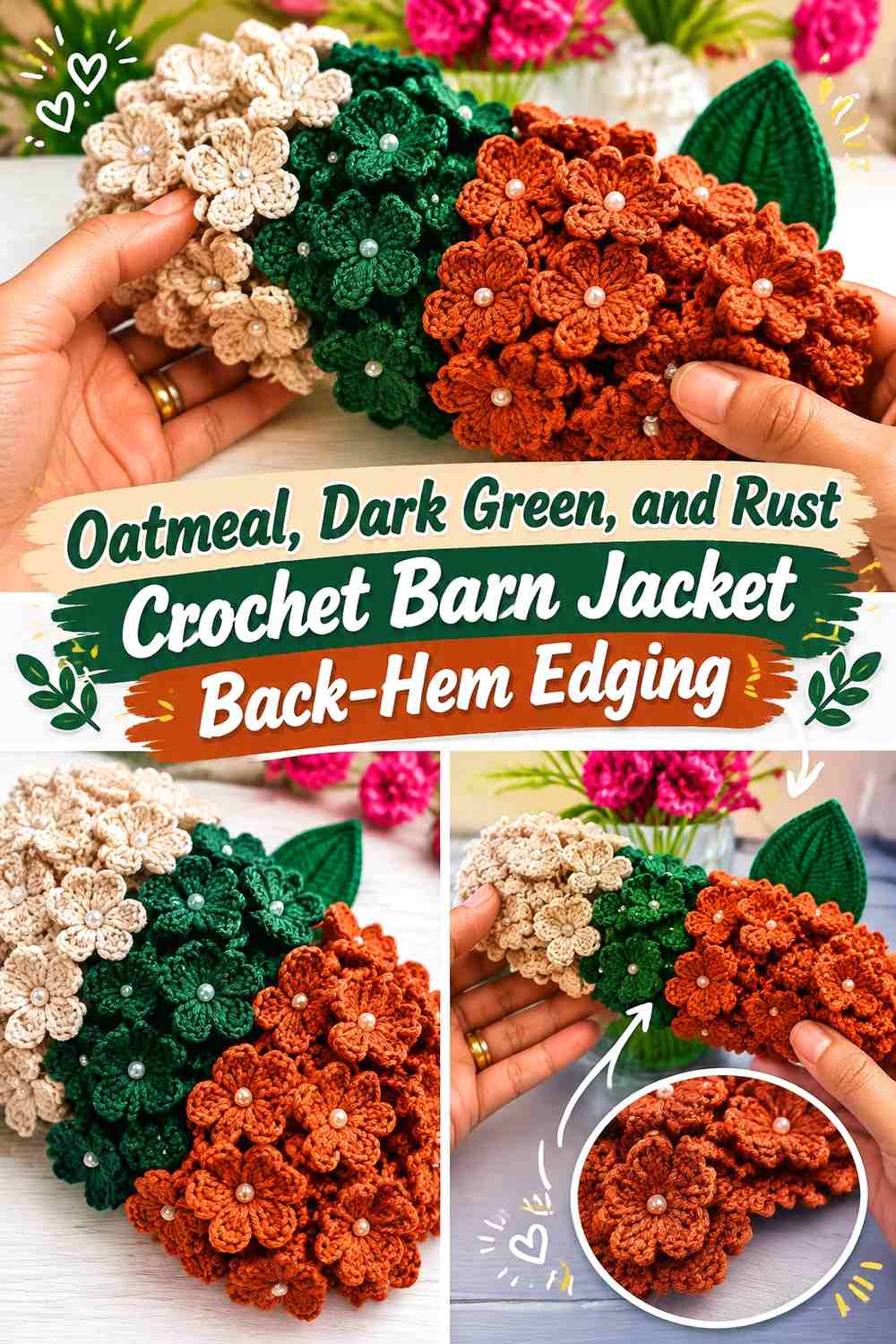
An oatmeal jacket creates a lighter base than most classic workwear shades, so the edging needs enough depth to remain visible. Dark green can provide the main floral border while rust appears in selected centers or alternating flowers.
Dark Green Should Define the Oatmeal Crochet Barn Jacket Hem
Run green through enough of the edge that the floral border stays visible against the pale garment. This darker line can visually ground a jacket that otherwise has very little contrast.
Rust Can Warm Dark Green Flowers on an Oatmeal Barn Jacket
Use rust every few motifs or inside flower centers. Keeping it less frequent than green allows the dark border to remain continuous while adding warmer focal points along the back.
Creator Credit: Natagor Finlayson
17. Black, Muted Mauve, and Old Gold Crochet Barn Jacket Chest-Pocket Flowers
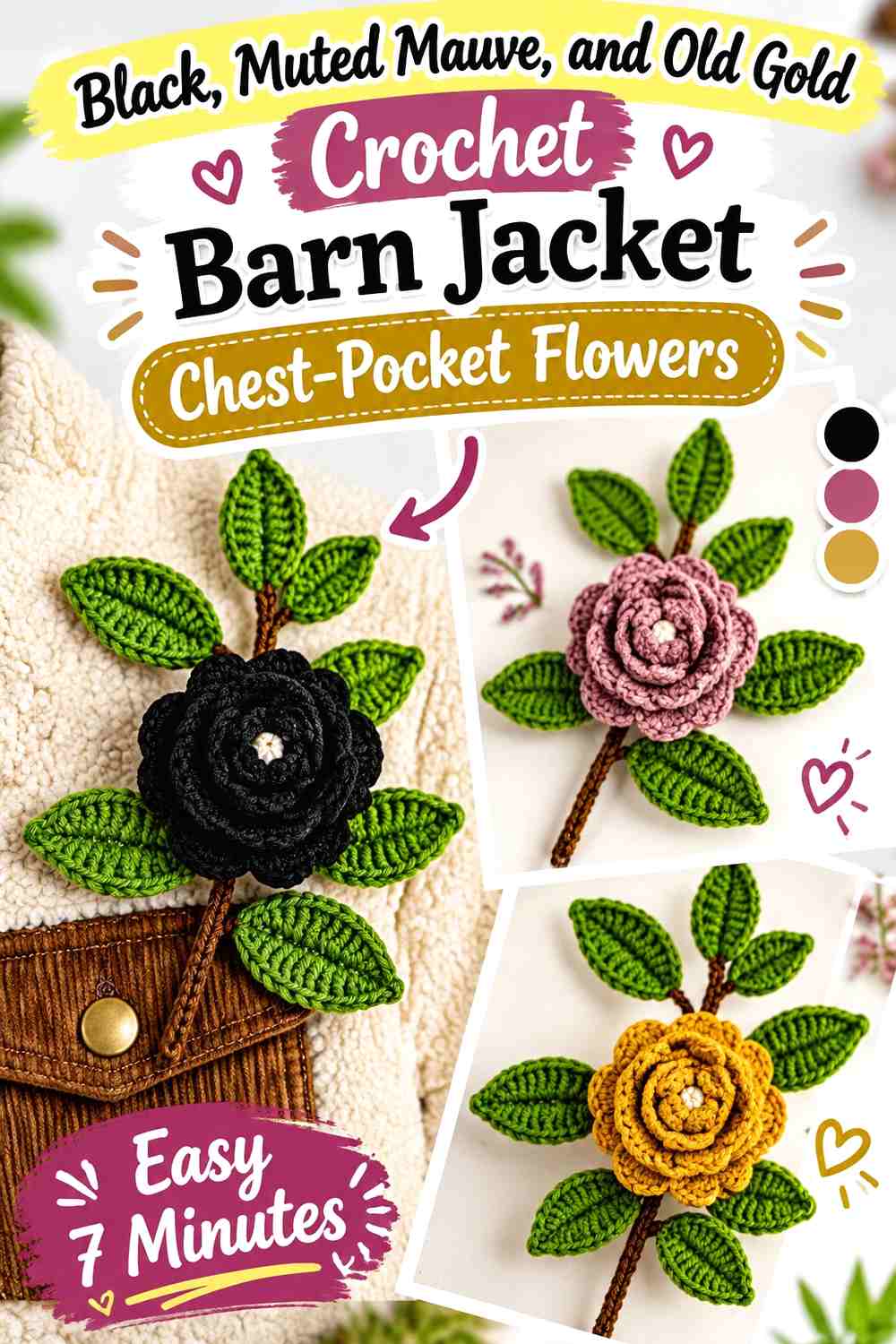
Black creates a strong base for muted mauve, while old-gold color can bring light to the flower centers. Instead of edging the full chest pocket, use one dimensional floral cluster or a short line across part of the pocket flap for a more concentrated final makeover.
Muted Mauve Can Become the Main Crochet Flower on a Black Barn Jacket
Give mauve the broadest petal area so the flower does not disappear into the dark jacket. Plain black space around the cluster will make the color appear stronger than it would inside a crowded multi-flower border.
Old Gold Should Highlight Muted Mauve Against Black
Use old gold only in centers or tiny repeated accents. The lighter warm shade naturally attracts attention, so a small amount can define the flower without replacing mauve as the primary crochet color.
Creator Credit: Crochet Everyday
Which Floral Edging Works Best for a Vintage Barn Jacket?
For a subtle makeover, concentrate crochet around existing edges: indigo with antique ivory at the collar, faded olive with cream at the cuffs, or sage with burgundy underneath the collar changes the jacket without covering large panels.
Pocket and yoke treatments work well when you want the flowers to become more visible. Dusty rose against chocolate brown, cornflower blue against weathered tan, or rust and forest green across a warm-toned back yoke can create a stronger focal point while still respecting the jacket’s original seam layout.
For the most noticeable border, use the hem. Washed black with ecru or oatmeal with dark green gives floral crochet enough horizontal space to repeat without crowding pockets, buttons, or the neckline.
Conclusion
A successful crochet barn jacket makeover starts with the garment rather than the flowers. Look at the jacket’s color, faded areas, seams, pockets, collar, and cuffs, then choose one location where floral edging can strengthen an existing line.
Use the jacket fabric as the dominant color. One crochet shade can carry the flowers, another can handle centers, leaves, or a narrow border, and the untouched fabric can provide the space that keeps the decoration readable. Dark jackets usually give pale flowers immediate definition, while oatmeal, khaki, and faded tan may benefit from deeper green, burgundy, rust, or teal accents.
Use the credited tutorials for their individual flower and edging constructions, then adapt the placement and palette independently to the barn jacket you are updating.
Frequently Asked Questions
What crochet colors work well on a vintage brown barn jacket?
Antique ivory, dusty rose, sage, faded teal, oatmeal, rust, and mustard can all work with brown. Decide whether you want a lighter floral contrast or a deeper earthy palette before choosing the exact placement.
Where should I put floral crochet edging on a barn jacket?
Collars, cuffs, pocket flaps, front plackets, yokes, hems, and selected seam lines all offer clear existing boundaries. Choose one or two related areas rather than automatically decorating every edge.
How can I keep floral edging from making a barn jacket look too busy?
Leave plenty of the original jacket visible. Give one crochet color the dominant floral role and restrict the supporting shades to centers, leaves, or occasional motifs. Spacing individual flowers can also preserve more of the workwear character.
Should crochet flower colors match the barn jacket exactly?
No. Contrast is often useful because it keeps small petals and leaves visible. A supporting color can relate to the jacket while the primary flower shade is noticeably lighter, darker, warmer, or cooler.
Can I use different flower designs on the same barn jacket?
Yes, but repeat the palette or one recurring color so the motifs remain visually connected. For example, several flower shapes can all share cream centers or sage leaves without needing to be identical.
How do I choose floral edging for a faded barn jacket?
Judge the yarn against the faded areas rather than the jacket’s original color. If the crochet and fabric have similar lightness, increase the value contrast with a lighter petal, darker leaf, or more defined center.
What should I check before attaching crochet to an older barn jacket?
Inspect the fabric and seams where the crochet will be attached, particularly around worn cuffs, elbows, and pocket corners. If the fabric is weak, move decorative edging to a more stable nearby area rather than assuming the crochet should reinforce damaged material.