Medieval-inspired crochet hair accessories can draw on deep jewel tones, aged neutrals, botanical motifs, netted shapes, decorative bands, and long ties without pretending to be exact historical reproductions. A burgundy snood creates a very different effect from an ivory floral circlet, even when both are worn with braids or an updo.

Color placement matters because many of these accessories expose plenty of hair through openwork. A dark net can nearly disappear against dark hair unless its edging contrasts, while antique ivory, gold, sage, or rust can make individual motifs easier to see. Headbands and flower pieces have the opposite challenge: their colors remain concentrated in a narrow band, so one bright shade can quickly dominate.
The tutorials credited below support hair nets, headbands, hair ties, bows, flower accessories, or headscarves. The medieval-inspired styling and palettes are independent adaptations rather than claims that the creators used these exact colors or intended their designs as historical reconstructions.
Quick List
- Burgundy, Antique Gold, and Black Crochet Medieval-Inspired Hair Snood
- Forest Green, Oatmeal, and Bronze Crochet Medieval-Inspired Bun Hair Net
- Wine Red and Old Gold Crochet Medieval-Inspired Crown Headband
- Dusty Rose, Sage, and Ivory Crochet Medieval-Inspired Flower Crown
- Moss Green, Rust, and Cream Crochet Medieval-Inspired Leaf Circlet
- Navy, Camel, and Antique White Crochet Medieval-Inspired Hair Bow
- Plum, Blush, and Charcoal Crochet Medieval-Inspired Floral Barrette
- Crimson, Deep Green, and Cream Crochet Medieval-Inspired Rose Hair Tie
- Charcoal, Burgundy, and Antique Gold Crochet Medieval-Inspired Scrunchie
- Deep Teal, Oatmeal, and Brown Crochet Medieval-Inspired Hair Bandana
- Maroon, Mustard, and Cream Crochet Medieval-Inspired Hair Kerchief
- Indigo, Silver Gray, and Ivory Crochet Medieval-Inspired Headscarf
- Terracotta, Sage, and Cream Crochet Medieval-Inspired Flower Headband
- Black, Wine Red, and Dusty Mauve Crochet Medieval-Inspired Lace Headband
- Copper, Forest Green, and Parchment Crochet Medieval-Inspired Floral Headband
- Chestnut, Rust, and Antique Gold Crochet Medieval-Inspired Granny Kerchief
- Deep Purple, Antique Gold, and Black Crochet Medieval-Inspired Floral Hair Piece
Let Hair Color Participate in the Medieval-Inspired Palette
Open hair nets, snoods, narrow circlets, and lace bands reveal the hair underneath, so hair becomes part of the finished color composition. Dark burgundy yarn may create strong contrast against pale hair but a much quieter outline over very dark hair. Antique ivory or muted gold can reverse that relationship.
Test a finished motif or yarn strand beside the hairstyle you plan to wear. If the main crochet color blends into the hair, concentrate a lighter or warmer shade around the accessory’s visible perimeter rather than adding unrelated colors throughout the entire piece.
Give Jewel Tones and Antique Neutrals Different Jobs
Rich red, green, blue, purple, and deep teal can carry large areas such as hair nets, kerchiefs, and headbands. Antique-looking neutrals such as cream, oatmeal, camel, and warm ivory are often more useful around borders, flower centers, leaf veins, ties, or other smaller sections where extra definition is needed.
The result usually looks more controlled when one shade clearly leads. Three strong colors occupying identical amounts can make a narrow hair accessory visually fragmented.
Keep Medieval-Inspired Crochet Styling Separate From Historical Accuracy
A pointed crown band, botanical circlet, richly colored snood, or lace kerchief can create a medieval-inspired or fantasy-medieval direction without being a documented reconstruction of a specific historical accessory.
If historical accuracy matters for a costume or reenactment, verify the period, region, materials, and form separately. For an inspiration piece, focus instead on color hierarchy, openwork visibility, hairstyle compatibility, and secure placement.
1. Burgundy, Antique Gold, and Black Crochet Medieval-Inspired Hair Snood
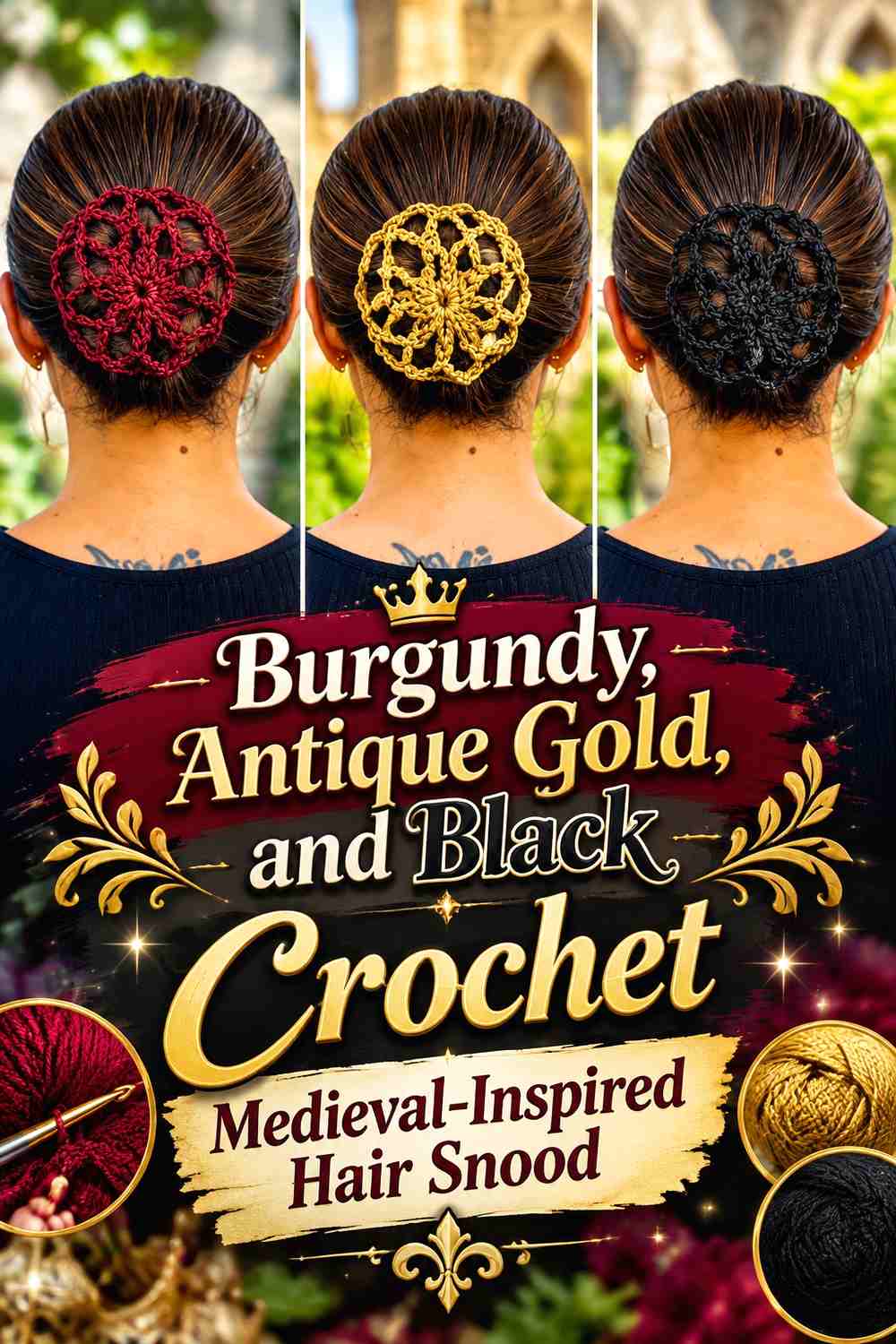
Burgundy can dominate this crochet hair snood, creating a rich netted field around the back of the hair. Black can define the opening or tie area, while antique gold works best in a much smaller quantity around the border or selected joining details. The combination is especially effective when you want the net itself to remain dark but still need the perimeter to show clearly.
Burgundy Should Cover Most of the Crochet Hair Snood
Keep burgundy continuous through the main net rather than alternating colors in every open section. A consistent field lets the snood shape remain clear and avoids breaking the gathered hair into several competing color zones.
If burgundy blends too closely with the hair, strengthen the antique-gold outer edge instead of changing the whole net.
Antique Gold Can Define the Burgundy Snood Opening
A narrow antique-gold border can make the opening easier to see while preserving burgundy as the dominant shade. Repeat a little gold near the tie or lower gathering point so the accent does not appear only in one isolated area.
Black Should Ground Burgundy and Antique Gold Near the Hairline
Use black around ties, a narrow band, or selected connecting sections. Because black can disappear against dark hair, it works better as structure than as the only decorative border in that situation.
Creator Credit: Michelle Duarte Crochê
2. Forest Green, Oatmeal, and Bronze Crochet Medieval-Inspired Bun Hair Net
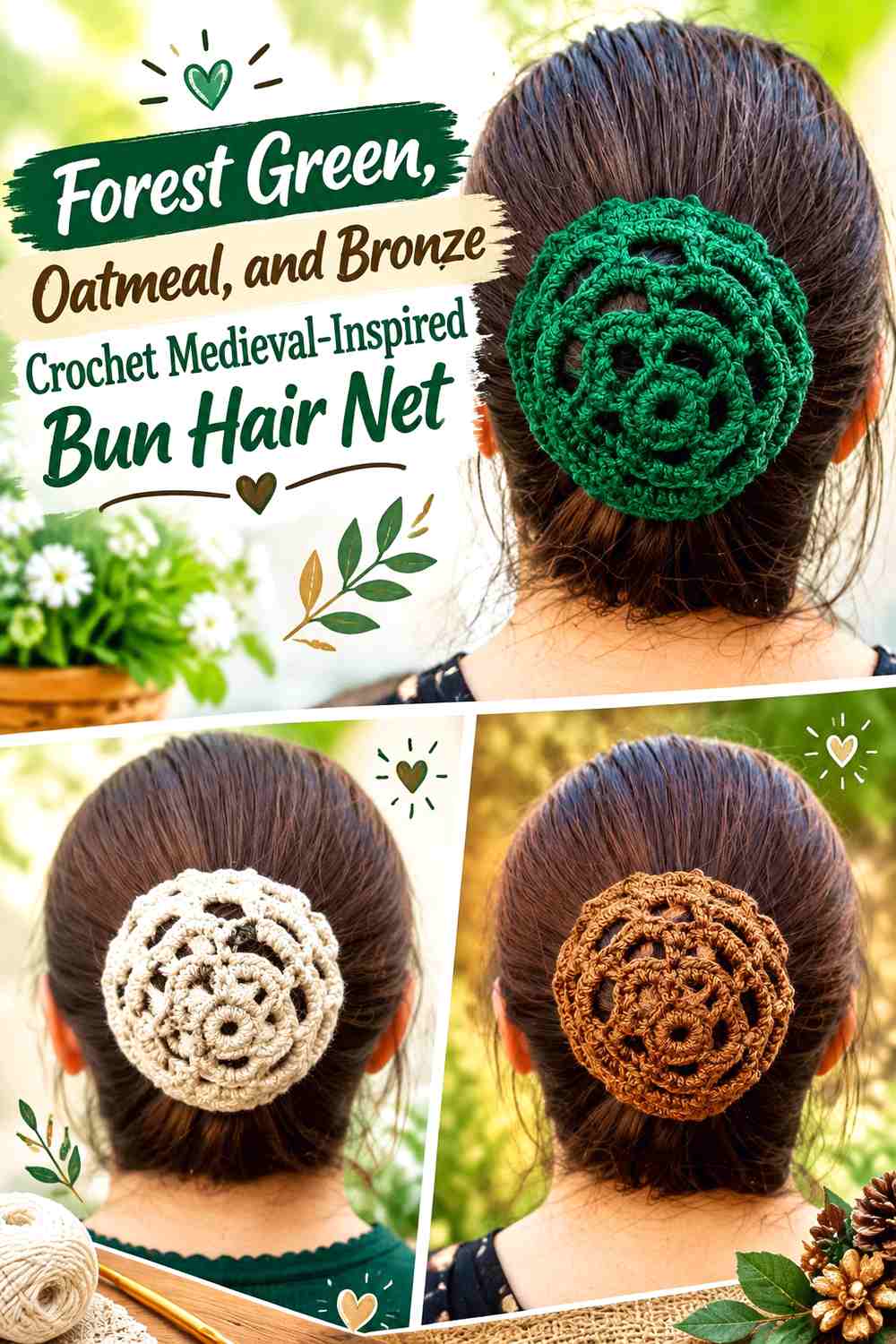
Forest green gives a crochet bun net a deep botanical base, while oatmeal offers light contrast through the outer edge. A bronze-colored yarn can be reserved for a narrow accent, allowing the accessory to suggest aged decorative trim without covering the openwork.
Forest Green Should Keep the Crochet Bun Net Visually Continuous
Use forest green through most of the net so the circular shape around the bun remains easy to follow. Frequent color changes inside a small hair net can distract from the open structure.
If green disappears against the hairstyle, let oatmeal occupy more of the perimeter rather than expanding the bronze accent.
Oatmeal Makes Forest Green Openwork Easier to See
Place oatmeal around the bun-net opening or a small central feature. The lighter neutral can reveal the accessory’s edge without creating the sharper contrast of bright white.
Bronze Works Best as a Small Accent Beside Forest Green
Reserve bronze-colored yarn for a border detail or repeated point along the edge. Keeping it secondary allows the green-and-oatmeal relationship to control the finished look.
Creator Credit: Moda a Crochet
3. Wine Red and Old Gold Crochet Medieval-Inspired Crown Headband

A crown-shaped headband already has a strong silhouette, so it does not need many colors. Wine red can form the main band and raised points, while old gold can emphasize only the outer tips or lower edge.
Wine Red Should Lead the Crochet Crown Headband
Keeping the main structure wine red helps the pointed outline read as one continuous accessory. Alternating every point between colors can make the crown edge look busier and reduce the strength of the silhouette.
Old Gold Can Emphasize Wine Red Crown Points
Use old gold along selected tips or as a restrained border. Because it is lighter and warmer, relatively little is needed to attract attention to the raised crown shape.
On very light hair, consider keeping more wine red around the outermost edge so the accessory does not lose definition.
Creator Credit: Diving Ducks Crochet
4. Dusty Rose, Sage, and Ivory Crochet Medieval-Inspired Flower Crown
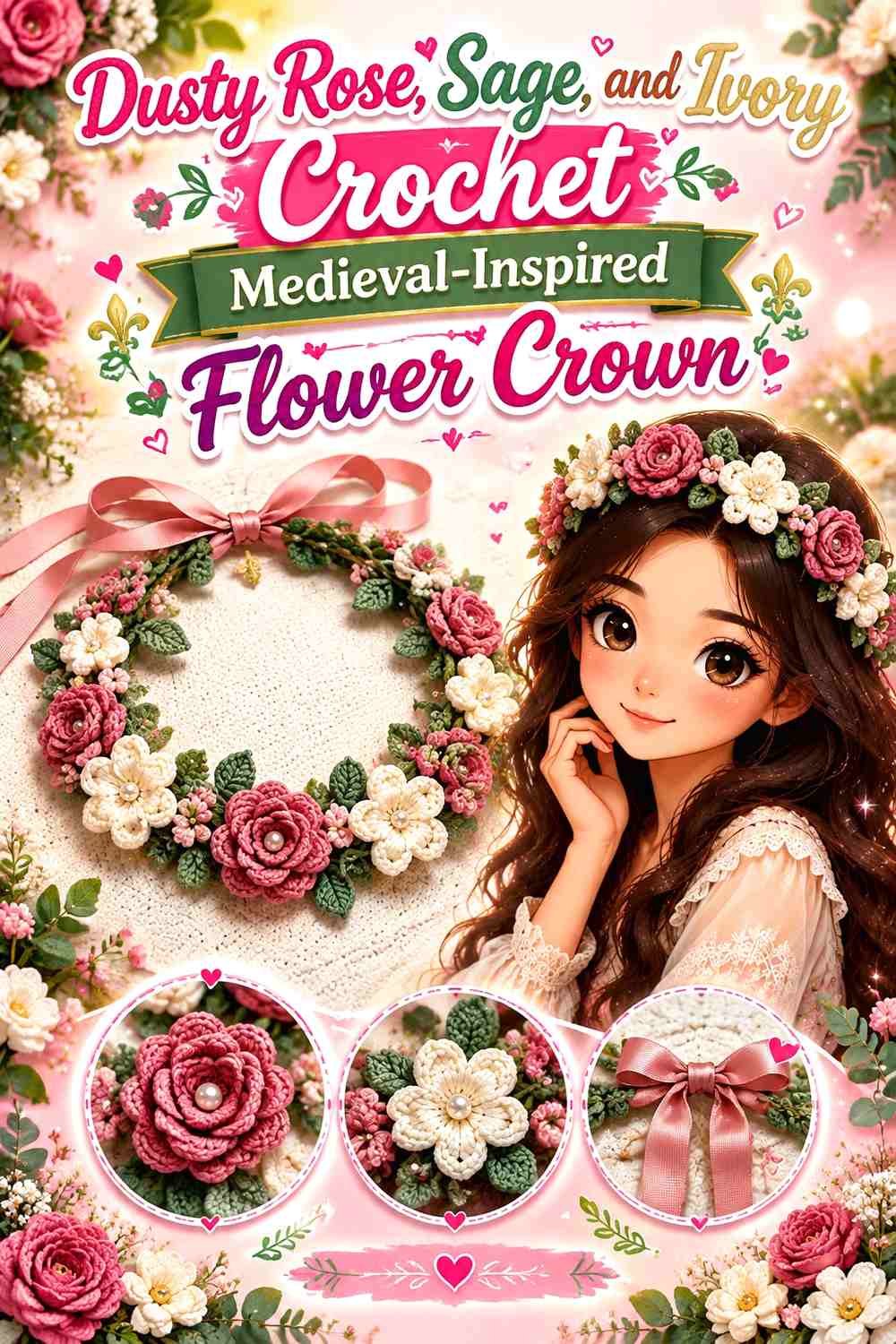
Dusty rose can dominate the flowers, sage can connect them through leaves or a narrow band, and ivory can brighten selected centers. This softer palette works well for a romantic medieval-fantasy direction where the botanical motifs matter more than strong jewel-tone contrast.
Dusty Rose Should Carry Most of the Crochet Flower Crown
Use dusty rose on the largest blossoms or on more flowers than any other color. That establishes the crown’s main color before sage foliage and ivory highlights are introduced.
Sage Can Connect Separate Dusty Rose Flowers
Repeat sage between flower groups rather than using it only once. Leaves, narrow connecting sections, or the base band are useful places for the green because they create visual continuity around the head.
Ivory Should Highlight Dusty Rose and Sage Sparingly
Use ivory in centers or a few smaller flowers. Its lighter value can become surprisingly prominent, so it does not need the same surface area as dusty rose.
Creator Credit: Crochet With Manu
5. Moss Green, Rust, and Cream Crochet Medieval-Inspired Leaf Circlet
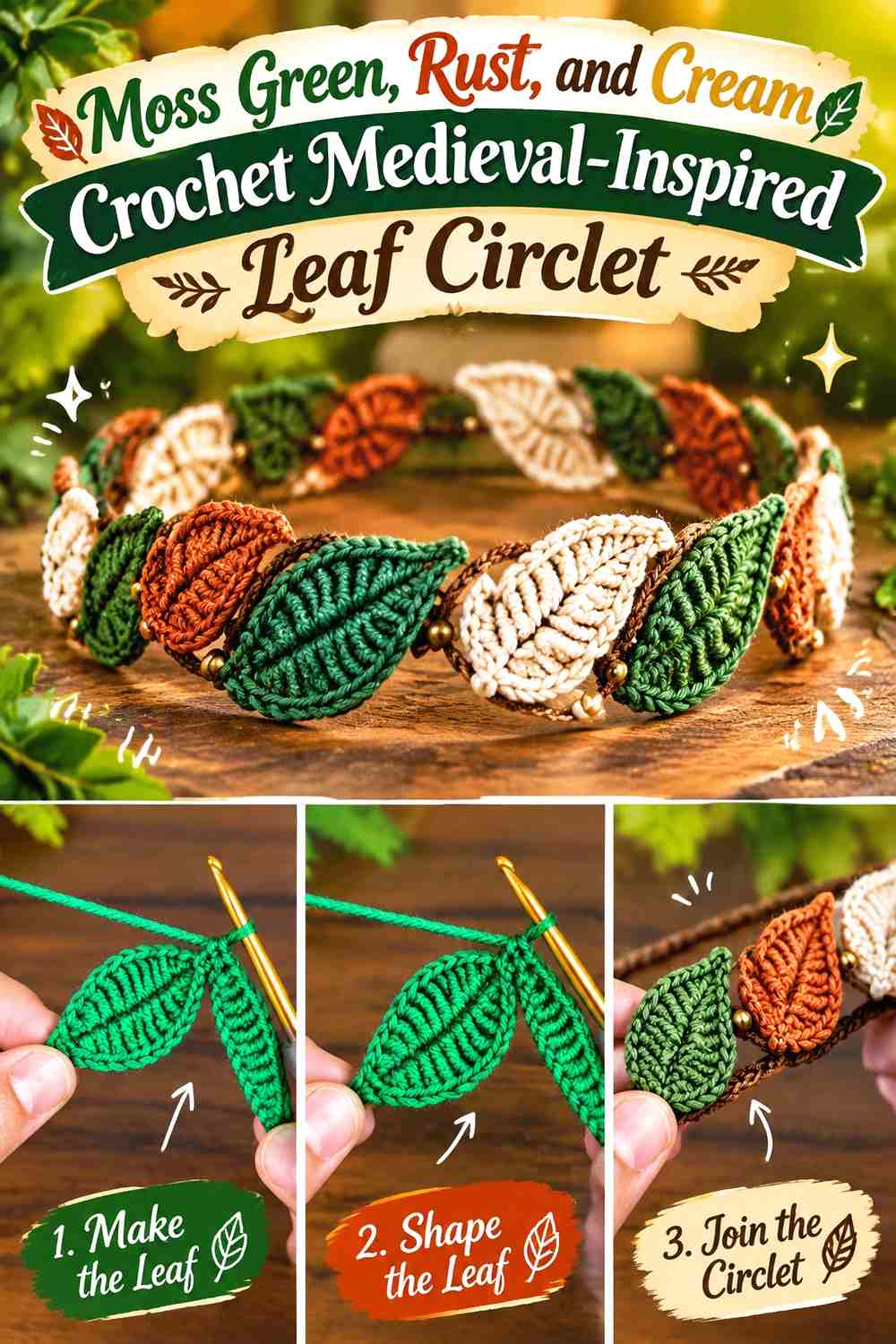
Moss green can lead the leaf structure, rust can supply a few warmer botanical accents, and cream can mark small connecting details. This creates a woodland-inspired circlet that works particularly well with braids because its elongated leaf shapes can visually follow the hairstyle.
Moss Green Should Form the Main Crochet Leaf Circlet
Give moss green the continuous path around the head. The accessory will feel more coherent when the majority of connected leaves share one dominant shade.
Rust Can Break Up Moss Green Leaves Without Taking Over
Insert rust at controlled intervals rather than alternating every green leaf with an orange one. A few warmer leaves can create variation while allowing the circlet to stay predominantly green.
Cream Can Separate Moss Green and Rust in Small Details
A cream tie, center, or connecting section is useful if the moss and rust have similar lightness. Keep the cream narrow so the botanical colors remain the main feature.
Creator Credit: knitting workshop
6. Navy, Camel, and Antique White Crochet Medieval-Inspired Hair Bow

A crochet bow can take on a medieval-fantasy direction through deeper colors and longer trailing ends rather than pastel or highly modern brights. Navy can dominate the loops, camel can define the center, and antique white can appear sparingly along tails or edging.
Navy Should Give the Crochet Hair Bow Its Main Shape
Use navy throughout both loops so the bow reads clearly as one form. Changing colors across each half can make the center look visually disconnected.
Camel Can Define the Navy Crochet Bow Center
A camel center wrap gives the dark loops a clear focal point and introduces warmth without needing metallic yarn or bright yellow.
Antique White Should Stay Secondary to Navy and Camel
Use antique white on narrow edging or a small tail detail if more contrast is needed. Too much pale yarn can shift attention away from the bow shape and toward the border.
Creator Credit: Artsy Maki
7. Plum, Blush, and Charcoal Crochet Medieval-Inspired Floral Barrette

Plum gives this barrette a rich floral base, blush lightens the petals, and charcoal can ground the flower against the clip or hair. Because a barrette occupies a small area, each color should have a specific role.
Plum Should Anchor the Crochet Floral Barrette
Use plum through the flower center or the deeper petal layer so the accessory maintains enough visual weight against the hairstyle.
Blush Can Lighten Plum Crochet Petals
Place blush on an outer petal layer or smaller companion bloom. Its lighter value helps the flower shape remain legible without requiring bright white.
Charcoal Should Define Plum and Blush Near the Barrette Base
Keep charcoal close to the clip or along a narrow backing area. On dark hair, it can nearly disappear, leaving the plum and blush flower to appear as the main visible element.
Creator Credit: Kress Krochet
8. Crimson, Deep Green, and Cream Crochet Medieval-Inspired Rose Hair Tie
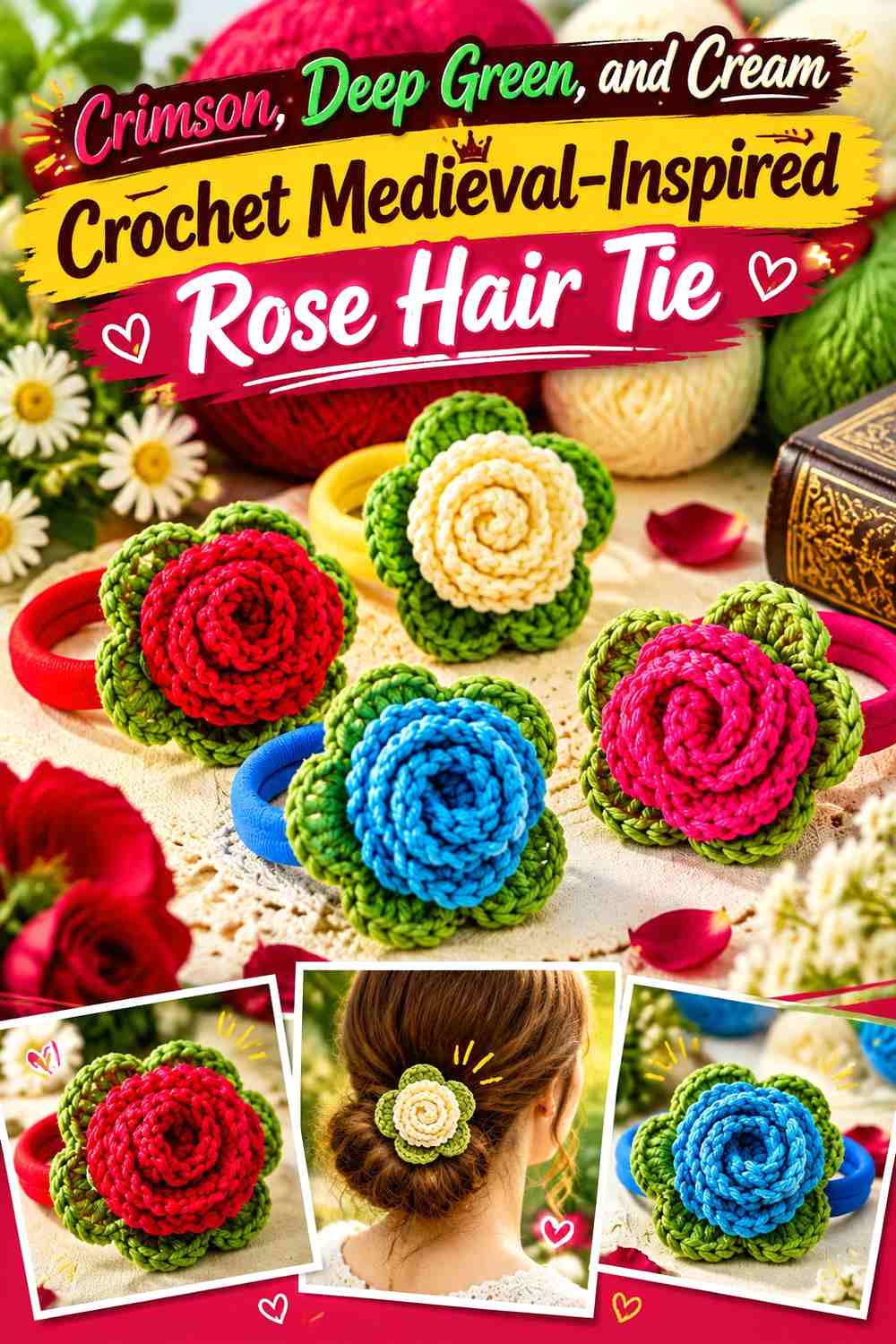
Crimson can turn a rose hair tie into a stronger statement piece, especially when worn around a braid end or gathered low ponytail. Deep green works for leaves, while cream provides a small point of separation.
Crimson Should Dominate the Crochet Rose Hair Tie
Let crimson cover the full rose rather than inserting many contrasting petal colors. A solid red bloom creates a clearer focal point against braided or gathered hair.
Deep Green Leaves Can Frame the Crimson Rose
Keep the green close to the base of the flower so it supports rather than competes with the rose. One or two visible leaf shapes can be enough to establish the botanical relationship.
Cream Can Highlight Crimson and Deep Green at the Center
If the red and green are both dark, a small cream center or connecting detail can prevent them from merging visually. Do not expand cream across the petals if crimson is meant to remain dominant.
Creator Credit: Crochet Craftsman
9. Charcoal, Burgundy, and Antique Gold Crochet Medieval-Inspired Scrunchie
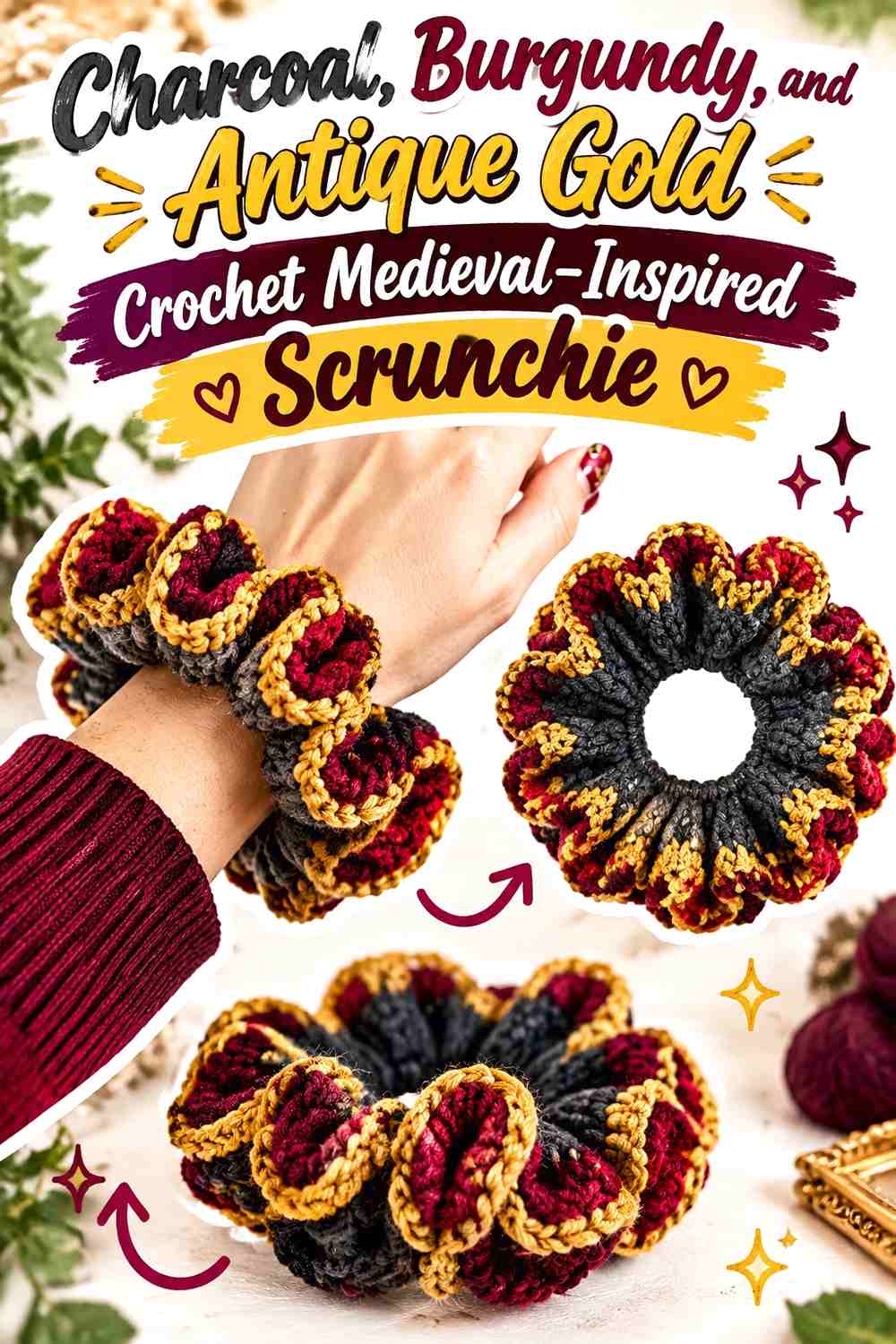
A scrunchie can fit a medieval-inspired hairstyle when its colors coordinate with braids or a low bun rather than becoming a brightly ruffled modern accent. Charcoal can cover most of the band, burgundy can form a secondary ruffle, and antique gold can remain a narrow highlight.
Charcoal Can Keep the Crochet Scrunchie Visually Close to the Hair
Use charcoal as the largest section when you want the accessory to support the hairstyle rather than dominate it. This is especially effective on dark hair, where burgundy can become the more visible color.
Burgundy Gives the Charcoal Scrunchie a Richer Outer Edge
Place burgundy where the ruffle is most visible. The dark red will show more clearly than charcoal without creating a large light-colored ring around the bun.
Antique Gold Should Punctuate Charcoal and Burgundy
Use a narrow gold-colored accent only where extra separation is needed. A small amount can define the transition between the two dark colors.
Creator Credit: ElyseCrochets 💌
10. Deep Teal, Oatmeal, and Brown Crochet Medieval-Inspired Hair Bandana
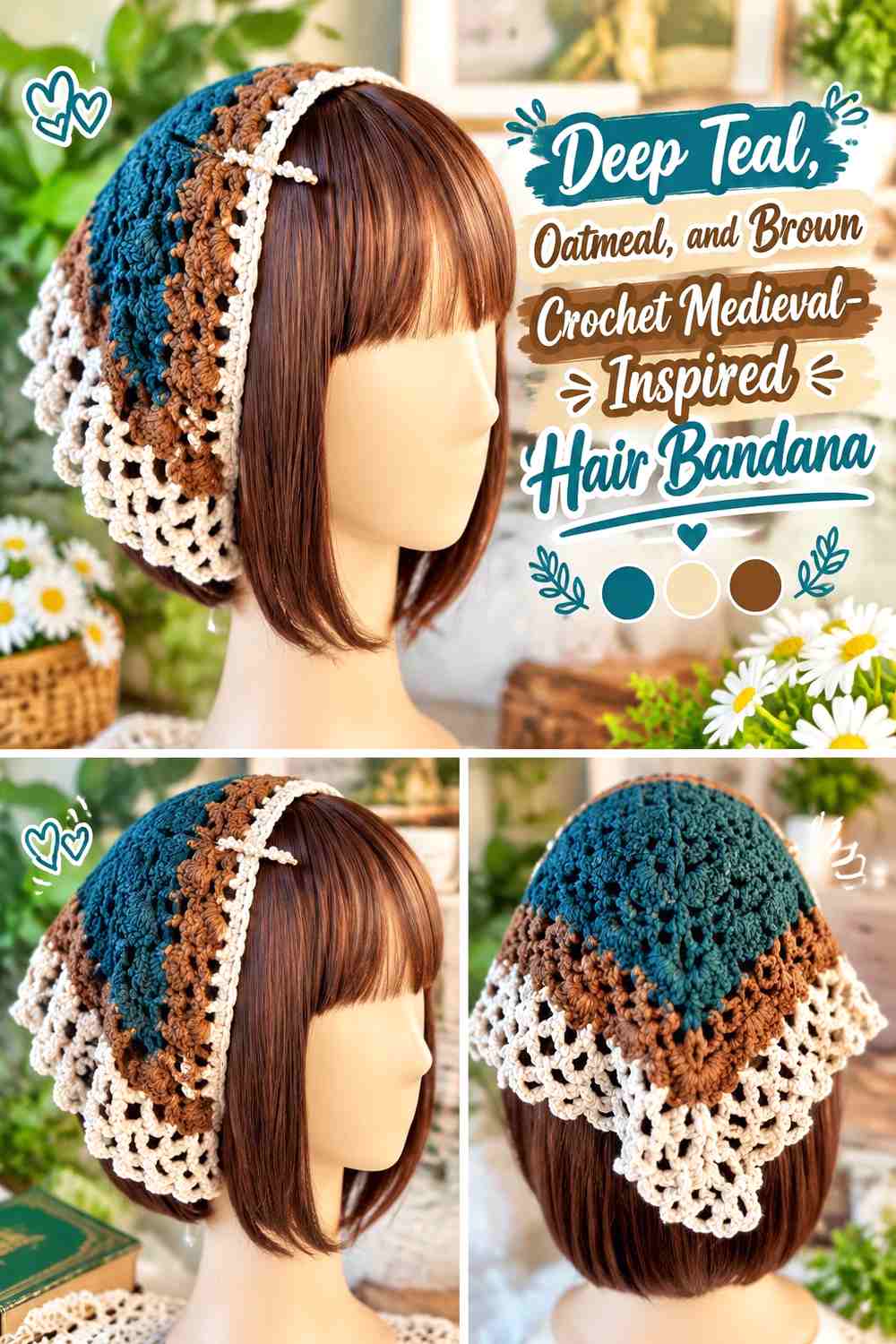
A triangular crochet bandana can become a medieval-inspired head covering when the palette is subdued and the openwork is allowed to remain visible. Deep teal can dominate, oatmeal can lighten the border, and brown can reinforce the ties.
Deep Teal Should Cover Most of the Crochet Hair Bandana
Keep the triangle predominantly teal so it reads as a single head covering rather than a patchwork of equally strong colors. Open crochet will allow the hair underneath to contribute its own darker or lighter background.
Oatmeal Can Define the Deep Teal Bandana Edge
Use oatmeal around the outer border where the triangular shape needs to remain clear. This is especially useful when teal is close to the hair color.
Brown Ties Can Ground Deep Teal and Oatmeal at the Nape
Brown works well on the fastening area because it is visually quieter than the oatmeal border. Repeat a touch of brown elsewhere only if the ties otherwise look disconnected.
Creator Credit: Vivi Crochet 🌷
11. Maroon, Mustard, and Cream Crochet Medieval-Inspired Hair Kerchief

Maroon gives a granny-style hair kerchief a deeper foundation, while mustard adds warmth and cream keeps the open pattern from becoming too dark. The three colors work best when maroon clearly occupies the largest visual area.
Maroon Should Dominate the Crochet Hair Kerchief
Use maroon across most of the triangle or through the repeated background sections. That creates a continuous field behind smaller mustard and cream details.
Mustard Can Mark the Maroon Kerchief Border or Motifs
Mustard is effective around selected motifs or the lower point where you want the eye to travel. Because it is visually stronger than cream in many combinations, avoid giving it equal area across every repeat.
Cream Keeps Maroon and Mustard Crochet Details Distinct
Use cream between the two warmer colors when motif edges begin to merge. A narrow cream section can provide enough separation without making the kerchief predominantly pale.
Creator Credit: kkomjii
12. Indigo, Silver Gray, and Ivory Crochet Medieval-Inspired Headscarf
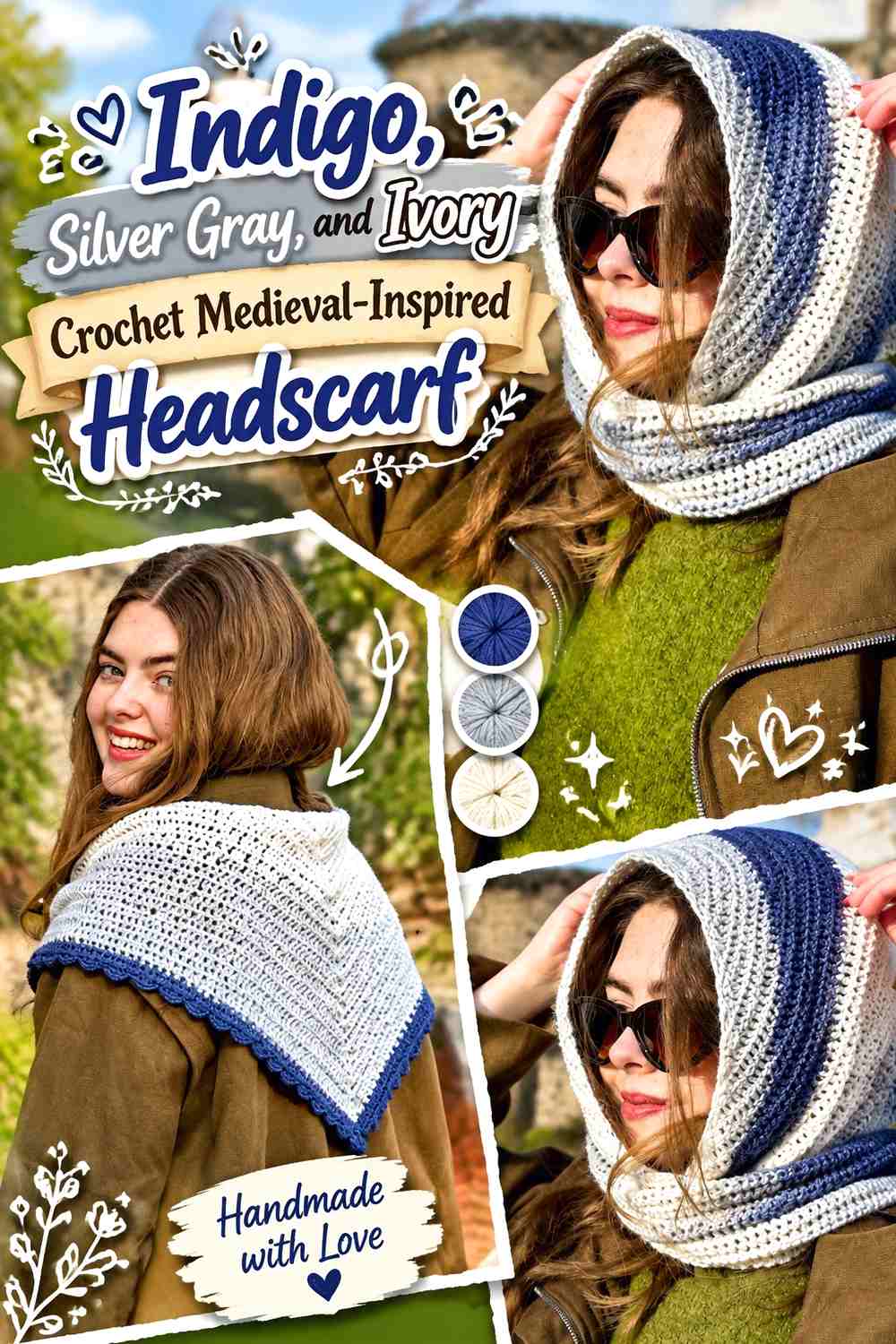
Indigo can carry the triangular body of this headscarf, silver gray can form a transitional border, and ivory can highlight a scalloped outer edge. The result is cooler and more restrained than the red, gold, and green palettes elsewhere in the collection.
Indigo Should Give the Crochet Headscarf Its Main Color Field
Keep indigo through the broad center so the accessory retains enough depth against the hair. This is particularly useful when the scarf is worn farther back on the head rather than over the forehead.
Silver Gray Can Transition From Indigo to an Ivory Edge
Use gray between the dark body and the lightest border when a direct indigo-to-ivory contrast feels too sharp. The middle value creates a more gradual progression toward the outer edge.
Ivory Should Emphasize the Indigo Headscarf Scallops
Reserve ivory for the decorative perimeter if that is the feature you most want visible. Concentrating the lightest shade along one boundary keeps the scarf visually organized.
Creator Credit: Crochet with Linni
13. Terracotta, Sage, and Cream Crochet Medieval-Inspired Flower Headband
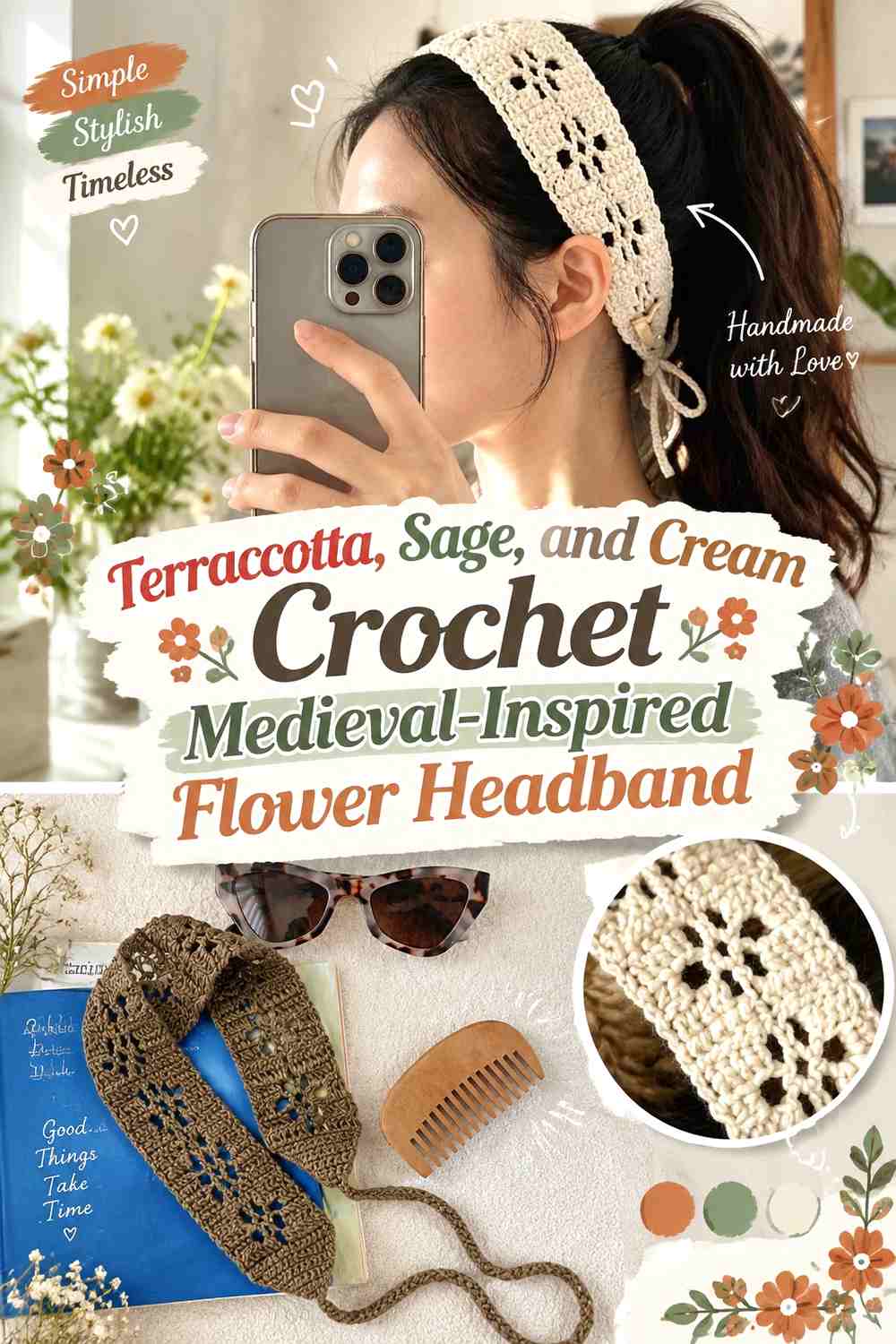
Terracotta creates the warm floral focal points, sage can form the connecting band or leaves, and cream can appear in selected centers. This palette works well when the headband sits over braids and you want the flowers to remain distinct without using very bright colors.
Terracotta Should Lead the Crochet Flower Headband
Use terracotta on the largest or most frequently repeated blossoms. This establishes the warm color direction before sage foliage is added.
Sage Can Connect Terracotta Flowers Across the Headband
A sage band or leaf sequence gives separate flowers one continuous framework. Keep enough green visible between blooms so the headband does not become one uninterrupted terracotta cluster.
Cream Can Highlight Terracotta and Sage Flower Centers
Use cream only where the smallest features need additional value contrast. Several tiny cream centers can create repetition without changing the dominant terracotta-and-sage balance.
Creator Credit: 하우스 오브 지원 house of Jiwon
14. Black, Wine Red, and Dusty Mauve Crochet Medieval-Inspired Lace Headband
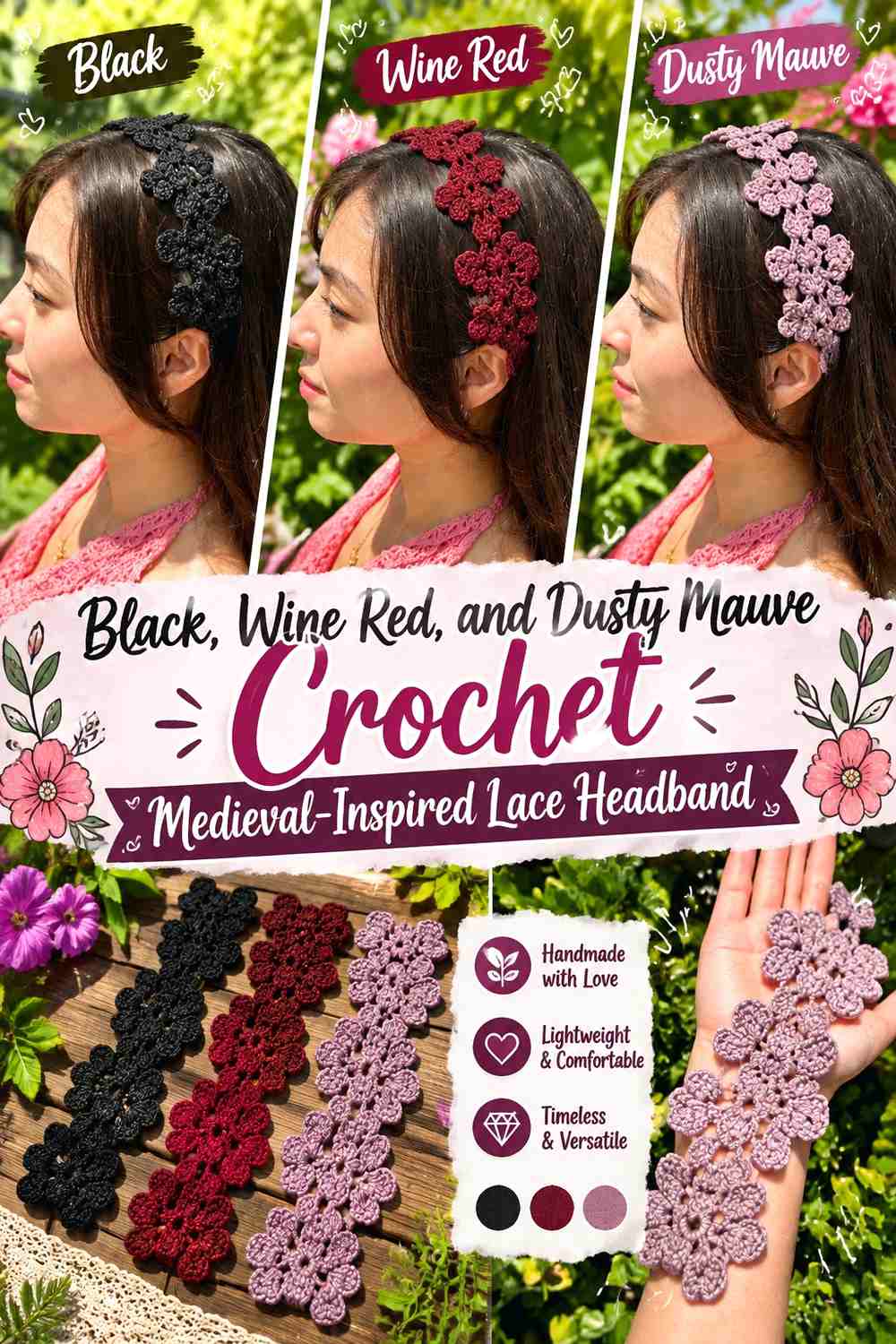
Black creates the darkest framework, wine red brings richness to the openwork, and dusty mauve gives selected sections a softer transition. This palette suits a narrow floral or lace band where high contrast would otherwise make every small opening equally prominent.
Wine Red Should Remain Visible Against the Black Crochet Headband
Give wine red enough of the lace repeat that it does not disappear between black sections. On dark hair, the black may recede visually, making the wine red the effective main color.
Dusty Mauve Can Lighten Wine Red Crochet Lace Details
Use mauve in selected flowers or repeated centers instead of alternating every section. A limited lighter color protects the lace pattern from becoming an uninterrupted dark strip.
Black Should Frame Wine Red and Mauve Rather Than Fill Every Motif
Keep black along the base or edge when possible. This lets the colored openwork remain the focus while still providing a strong medieval-fantasy dark foundation.
Creator Credit: petpetcrochets
15. Copper, Forest Green, and Parchment Crochet Medieval-Inspired Floral Headband
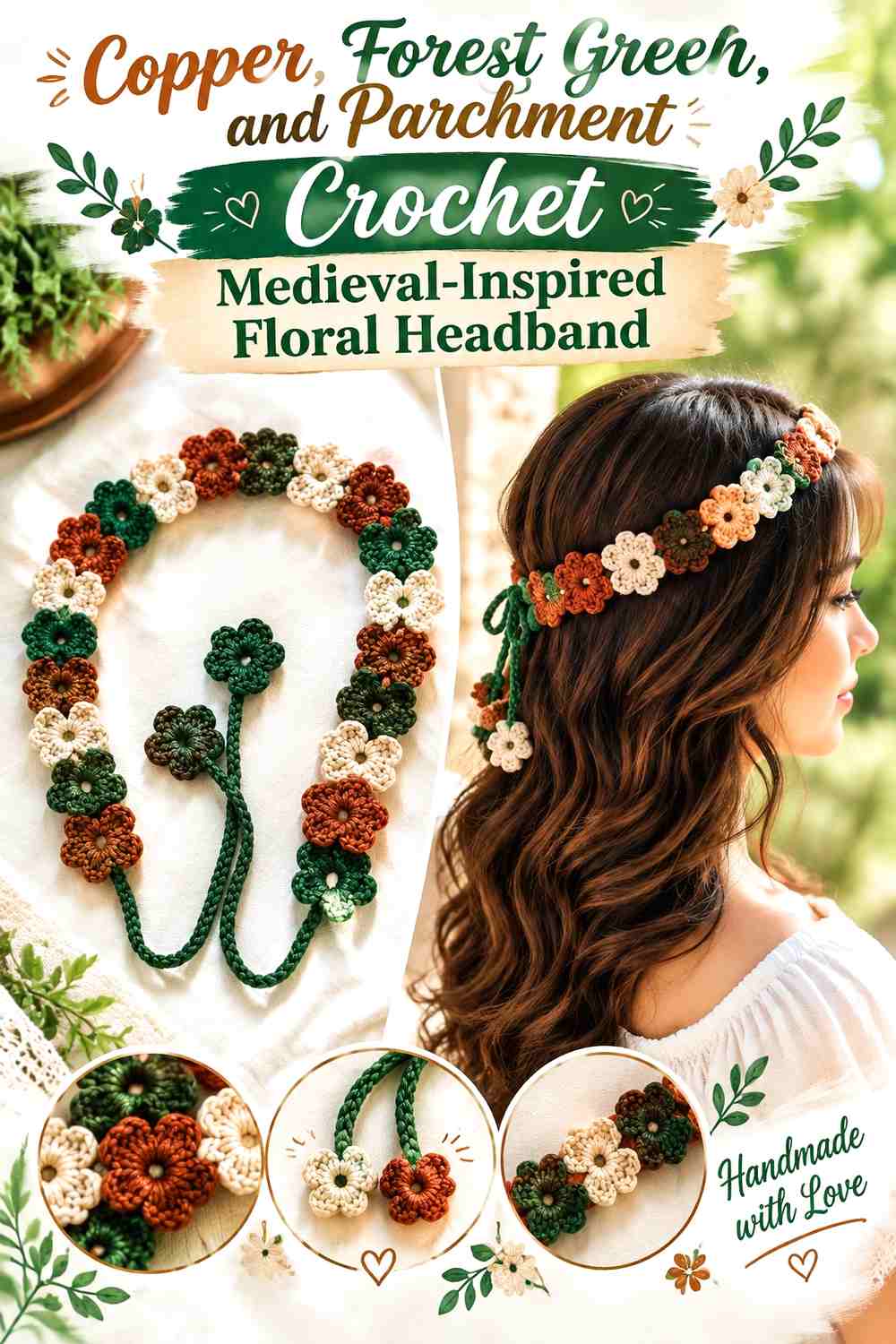
Copper-colored flowers and forest-green connections create a richer botanical direction, while parchment provides a light neutral for small blossoms. This works well for a headband intended to sit across loose waves, a braided crown, or a low updo.
Copper Should Create the Main Crochet Floral Headband Focal Points
Place copper on the largest flowers or repeat it through the most visible section of the band. Its warm color will attract attention quickly, so the flowers do not need to cover the entire accessory.
Forest Green Can Carry Copper Flowers Around the Head
Use green between copper blooms to establish a continuous botanical path. This also gives the brighter flowers plain space around their edges.
Parchment Can Break Up Copper and Forest Green Without Bright White
A warm light neutral keeps the palette aged-looking rather than sharply graphic. Use parchment on a few small flowers or centers rather than as an equal third of the band.
Creator Credit: Crochet & Crafts Therapy by Chompu
16. Chestnut, Rust, and Antique Gold Crochet Medieval-Inspired Granny Kerchief
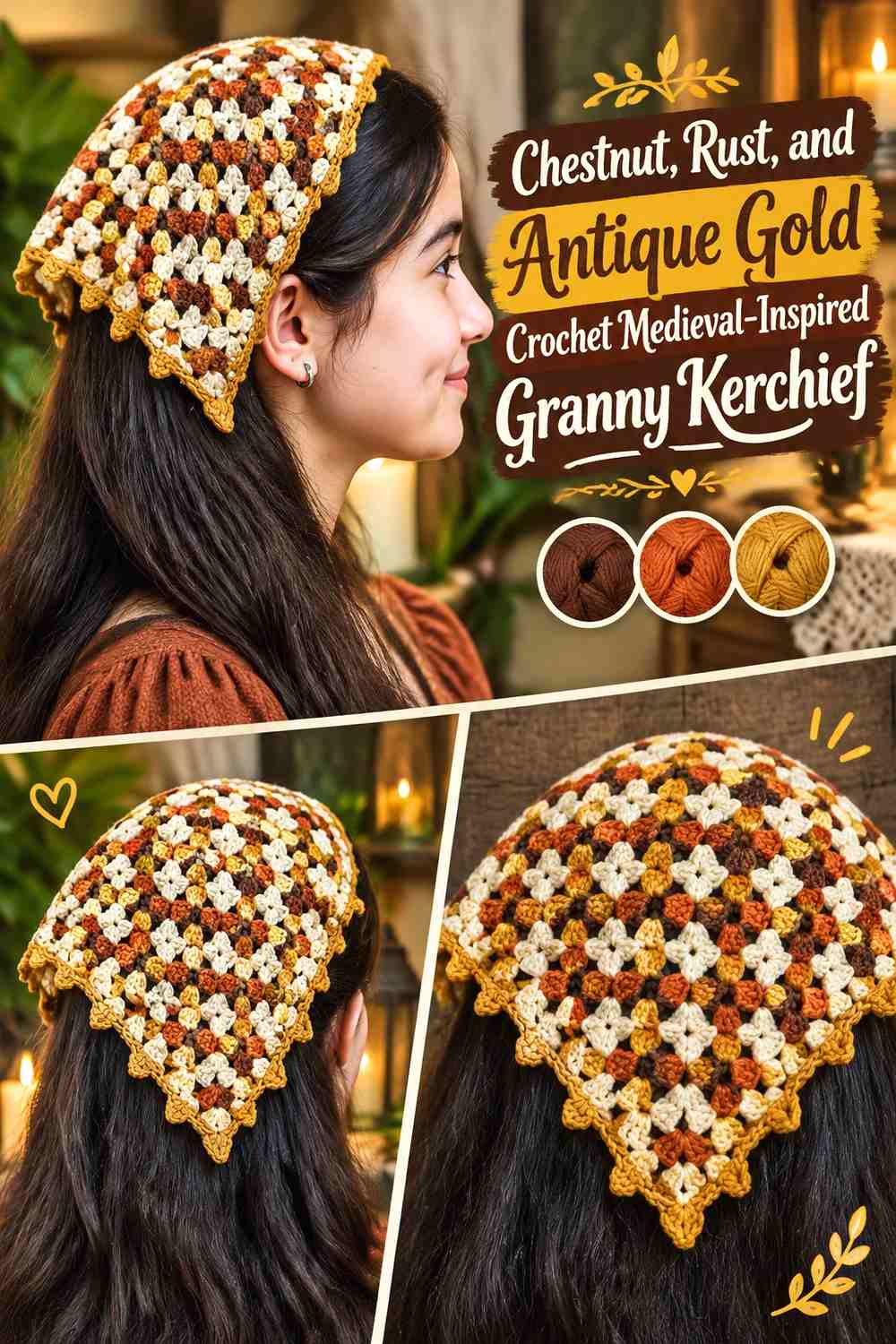
Chestnut can dominate this kerchief, rust can bring warmer motifs into the triangle, and antique gold can define selected edges. The result is earthy rather than jewel-toned, making it useful when you want a more subdued medieval-inspired palette.
Chestnut Should Anchor the Crochet Granny Kerchief
Keep chestnut across the largest sections so the repeated motif structure remains visually connected. Brown is particularly effective where the openwork reveals lighter hair underneath.
Rust Can Warm the Chestnut Crochet Kerchief Motifs
Use rust through selected rows or motif areas rather than distributing it in tiny pieces everywhere. Larger repeated rust sections are easier to recognize at normal viewing distance.
Antique Gold Can Define Chestnut and Rust at the Kerchief Edge
Place antique gold along a narrow border or tie detail. Because it is lighter than both earthy main colors, relatively little is needed to separate the kerchief from the hairstyle.
Creator Credit: Crochet con Sole
17. Deep Purple, Antique Gold, and Black Crochet Medieval-Inspired Floral Hair Piece
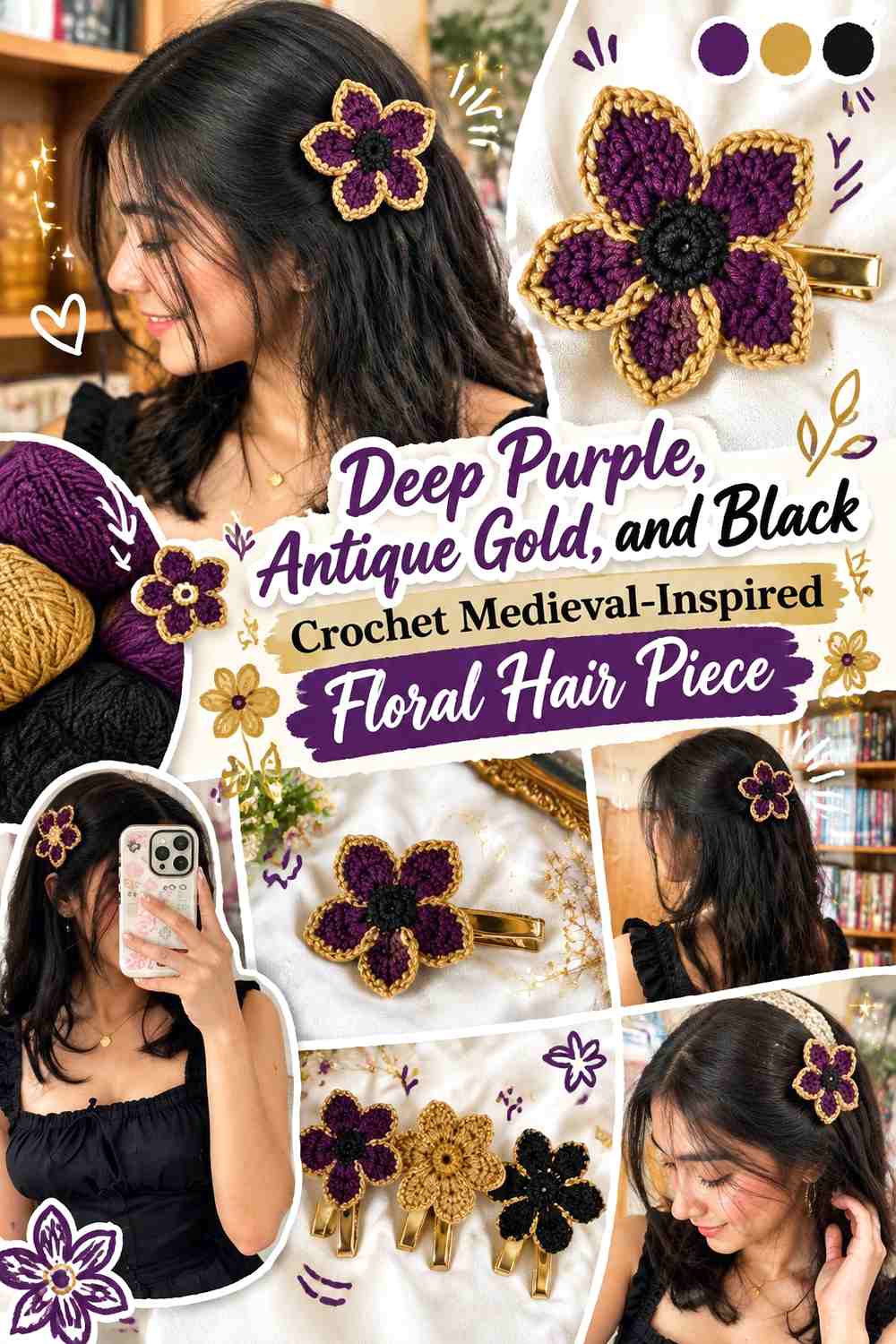
Deep purple can carry the flowers, black can ground the attachment or headband section, and antique gold can pick out selected centers. This is the most dramatic palette in the collection and works best when the gold remains controlled.
Deep Purple Should Dominate the Crochet Floral Hair Piece
Use purple on the largest flower surfaces so the piece remains clearly colored rather than reading as a black accessory with small accents.
Antique Gold Can Focus Attention on Deep Purple Flower Centers
A little old-gold color in the center of each major flower can connect several motifs without outlining every petal. This creates repetition while preserving the deep purple surface.
Black Should Support Deep Purple and Antique Gold Near the Hair
Keep black around the clip, band, or connecting section. Against dark hair it may visually recede, allowing the purple flowers and gold centers to appear almost suspended over the hairstyle.
Creator Credit: mahum 🎀
Which Medieval-Inspired Crochet Hair Accessory Palette Should You Choose?
For rich jewel tones, burgundy with antique gold, wine red with old gold, crimson with deep green, or deep purple with black creates the strongest dramatic direction. These combinations suit snoods, crowns, rose pieces, and other accessories where relatively concentrated color can support the silhouette.
For a woodland or botanical look, forest green with oatmeal, moss with rust, sage with terracotta, or copper with forest green keeps the emphasis on leaves and flowers. These palettes work particularly well around braids because repeated botanical motifs can follow the direction of the hairstyle.
For a quieter head covering, deep teal with oatmeal, indigo with gray and ivory, or chestnut with rust and gold gives kerchiefs and scarves enough contrast without turning every open section into a focal point.
Conclusion
Medieval-inspired crochet hair accessories become more convincing when their color placement supports the accessory’s form. A snood benefits from one continuous net color and a clearly defined opening. A circlet needs repeated leaf or flower shades that travel around the head, while a kerchief usually looks more organized when its border and ties relate back to the dominant triangle color.
Include the hair itself when planning contrast. Dark openwork may recede against dark hair, while pale edging can reveal the silhouette; light hair can create the opposite effect. Start with one dominant color, assign a supporting shade to repeated motifs or borders, and use the strongest accent only where it adds definition.
Use the credited tutorials for their individual construction concepts, then adapt the color, embellishment, and styling independently for the medieval-inspired direction you want.
Frequently Asked Questions
What colors work well for medieval-inspired crochet hair accessories?
Deep burgundy, wine red, forest green, indigo, plum, brown, rust, cream, oatmeal, muted gold, and other rich or aged-looking colors can create a medieval-inspired direction. The relationship among the colors matters more than any single shade.
How can I make a crochet hair snood look more medieval-inspired?
A deeper jewel or earthy main color, an open net structure, and a restrained contrasting border can create the visual direction without adding many decorative colors. Treat this as historical inspiration unless you have separately verified a period-accurate form.
Which colors work well for a medieval-inspired crochet flower crown?
Muted botanical combinations such as dusty rose with sage, terracotta with green, or copper with forest green can work well. Give the largest flowers one dominant shade and use green primarily to connect them.
How can I keep a dark crochet hair net visible on dark hair?
Use a lighter or warmer contrasting shade around the opening, ties, or outer edge. Antique ivory, oatmeal, muted gold, camel, or another noticeably lighter palette color can define the silhouette without changing the entire net.
Can I wear a crochet kerchief with braids for a medieval-inspired hairstyle?
Yes. A kerchief can sit behind the hairline, over part of the hair, or with braids remaining visible around it. Check the ties and border against the completed hairstyle so important crochet details do not disappear.
How many colors should I use in a medieval-inspired crochet hair accessory?
Two or three are enough for many designs. One can dominate the net, band, scarf, or flowers; another can support borders or foliage; and a third can be reserved for centers, ties, or other small accents.
Are medieval-inspired crochet hair accessories historically accurate?
Not automatically. A crochet snood, flower crown, bandana, or crown-shaped headband can create a medieval or fantasy-medieval aesthetic without documenting a historically accurate object. For reenactment or historically specific costuming, verify the accessory type, materials, period, and region separately.