Black Cherry and Pearl Gray create a strong dark-and-light palette for crochet lace shoulder epaulets. Black Cherry can establish the main shoulder shape and give the accessory enough visual weight to stand apart from a garment, while Pearl Gray can clarify openwork, outer points, floral motifs, and smaller decorative edges.
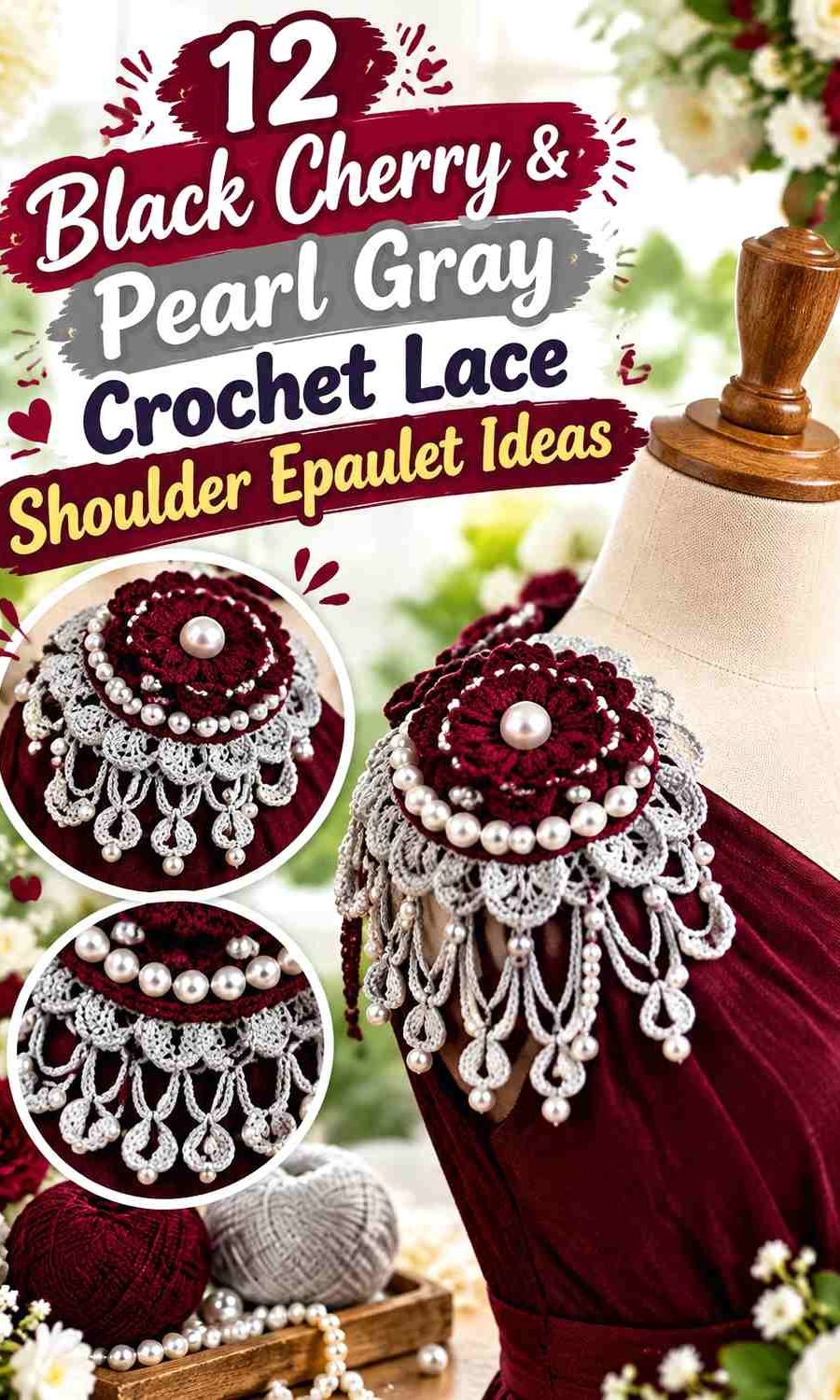
Shoulder epaulets need a different color strategy from a full collar. The visible crochet is concentrated over or immediately beside the shoulder, so even a narrow Pearl Gray edge can become prominent. Color can also help control where the eye lands: Black Cherry near the neckline creates a darker anchor, while Pearl Gray toward the outer shoulder can make the epaulet appear lighter and more extended.
Some credited tutorials demonstrate collars, capelet-style pieces, or closely related lace constructions rather than this exact shoulder-only format. Their construction concepts can inform shaping and decorative crochet, while the Black Cherry and Pearl Gray shoulder placement below is an independent adaptation.
Quick List
- Black Cherry Crochet Lace Shoulder Epaulets With Pearl Gray Fringe
- Black Cherry Floral Crochet Lace Shoulder Epaulets With Pearl Gray Centers
- Black Cherry Leaf Crochet Lace Shoulder Epaulets With Pearl Gray Tips
- Pearl Gray Crochet Lace Shoulder Epaulets With Black Cherry Borders
- Black Cherry Crochet Lace Shoulder Epaulets With Pearl Gray Inner Bands
- Black Cherry Thread-Lace Crochet Shoulder Epaulets With Pearl Gray Edging
- Pearl Gray Narrow-Lace Crochet Shoulder Epaulets With Black Cherry Anchors
- Black Cherry Bib-Lace Crochet Shoulder Epaulets With Pearl Gray Outer Points
- Black Cherry Capelet-Inspired Crochet Lace Shoulder Epaulets With Pearl Gray Panels
- Black Cherry Gothic Crochet Lace Shoulder Epaulets With Pearl Gray Points
- Pearl Gray Scalloped Crochet Lace Shoulder Epaulets With Black Cherry Frames
- Black Cherry Victorian Crochet Lace Shoulder Epaulets With Pearl Gray Layering
Decide Whether Black Cherry or Pearl Gray Should Define the Shoulder Line
Black Cherry works well as the dominant shade when you want the epaulet to read as a dark statement accessory. Using it through the shoulder cap or main lace panel gives Pearl Gray enough contrast to function as a controlled highlight.
A Pearl Gray-dominant epaulet creates a lighter result and can make small lace openings easier to distinguish. In that arrangement, Black Cherry is especially useful along the inner shoulder edge or border because a darker line can keep pale crochet from visually disappearing into a light garment.
Use Pearl Gray to Keep Black Cherry Lace Motifs Visible
Shoulder pieces are often viewed from several angles rather than straight on. Small Black Cherry leaves, fans, or floral sections can visually merge when they overlap or curve over the shoulder.
Pearl Gray can separate those elements by appearing at motif centers, outer points, joins, or a narrow perimeter. Keep the lighter shade in a predictable structural location so it clarifies the lace instead of making the epaulet look randomly speckled.
Balance Black Cherry and Pearl Gray Around the Attachment Edge
An epaulet needs a visually stable area where it sits against the garment. Whether your chosen construction is removable or incorporated into another crocheted piece, keep the most decorative lace away from any location that must stay flat for attachment.
A Black Cherry inner band can provide a darker visual anchor beneath Pearl Gray lace, while a Pearl Gray inner band can separate a Black Cherry epaulet from a dark top. Test the complete color placement on the actual garment before deciding that the outer edge needs additional contrast.
1. Black Cherry Crochet Lace Shoulder Epaulets With Pearl Gray Fringe
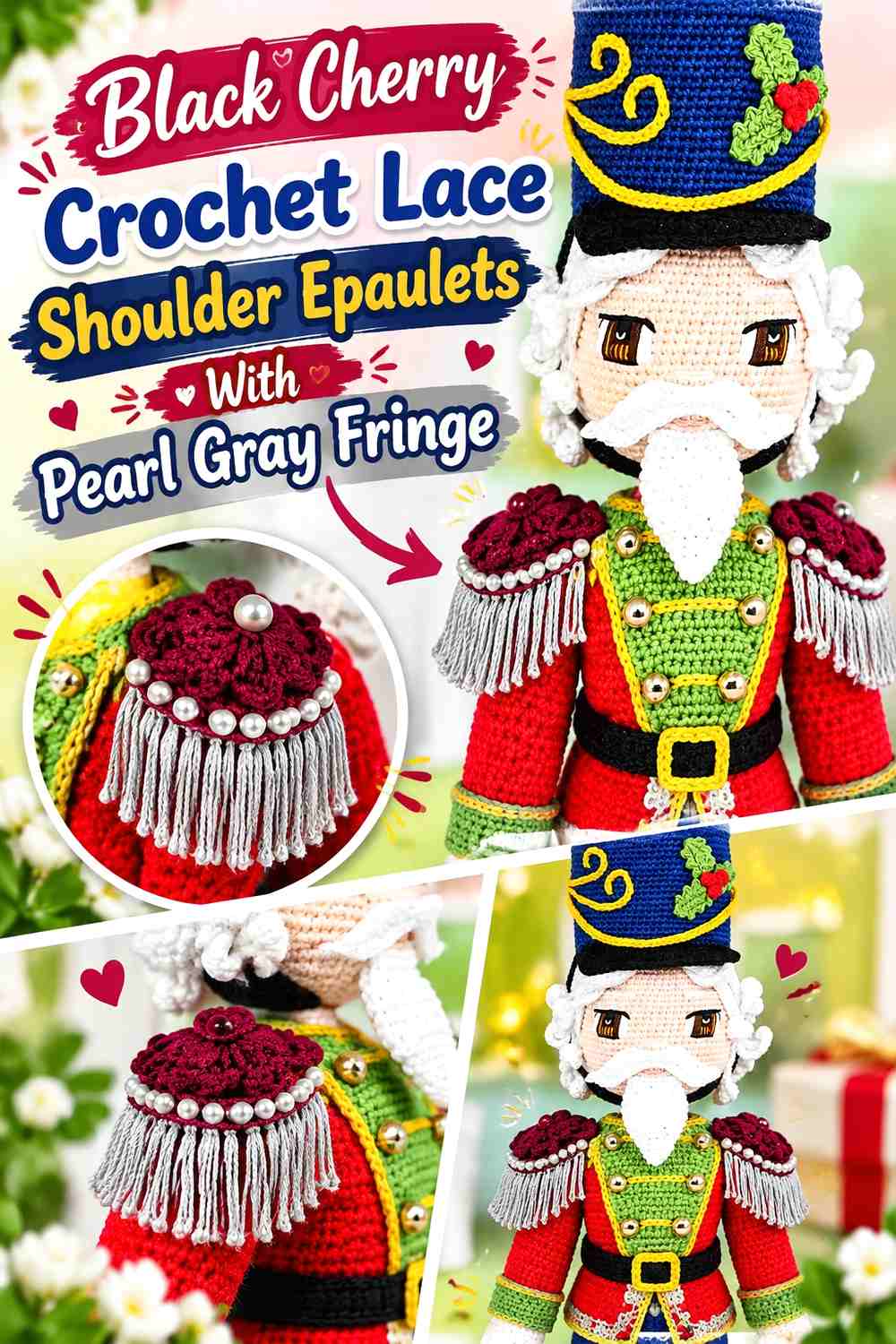
Use Black Cherry through the shaped shoulder section and reserve Pearl Gray for the hanging or fringed outer detail. This gives the epaulet a strong dark base while allowing the lighter color to emphasize movement beyond the shoulder.
Black Cherry Should Anchor the Main Crochet Shoulder Epaulet
Keep Black Cherry concentrated across the section that actually sits on the shoulder. A continuous dark base makes the shape easier to recognize and prevents the fringe from becoming the only noticeable part of the accessory.
Pearl Gray Can Lighten the Black Cherry Fringe Edge
Use Pearl Gray consistently through the hanging outer detail rather than mixing it randomly with Black Cherry. The lighter strands create a clear visual transition from structured shoulder piece to softer moving edge.
Keep Pearl Gray Secondary to the Black Cherry Shoulder Cap
Long fringe can occupy more visual space than expected. Compare the epaulet while worn and reduce the amount of Pearl Gray if the fringe starts dominating the Black Cherry foundation.
Creator Credit: Crochetree by Ticiana Larocca and Adriana Dull
2. Black Cherry Floral Crochet Lace Shoulder Epaulets With Pearl Gray Centers
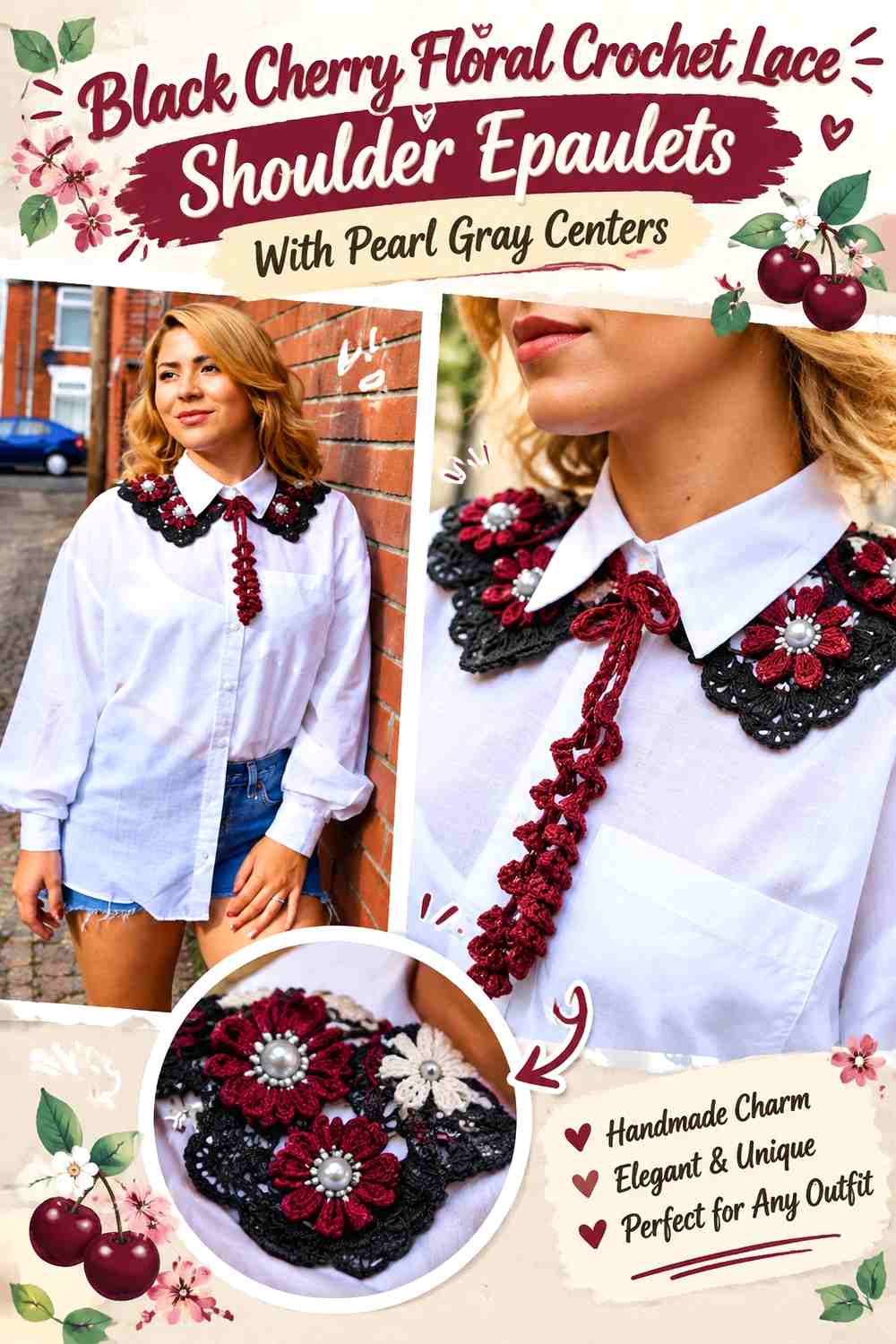
Use Black Cherry for the major petals or flower-square sections and repeat Pearl Gray in each center. Small light focal points help individual motifs stay distinguishable when they are arranged closely across the shoulder.
Black Cherry Flowers Should Form the Main Epaulet Surface
Keep the largest petal areas Black Cherry so neighboring motifs connect into one dark shoulder accessory. Alternating complete flowers between the two colors would create a much more graphic result.
Pearl Gray Centers Can Separate Black Cherry Floral Motifs
Repeat Pearl Gray in the same central location on every flower. That consistent light point makes each Black Cherry motif easier to recognize without reducing the darker shade’s overall dominance.
Keep Pearl Gray Joins Narrow Between Black Cherry Flowers
If Pearl Gray also appears in the connecting areas, keep those joins restrained. Wide pale joins can visually separate the flowers so strongly that the epaulet begins to look like disconnected motifs.
Creator Credit: Brunaticality
3. Black Cherry Leaf Crochet Lace Shoulder Epaulets With Pearl Gray Tips

A leaf-inspired outer edge gives the shoulder piece a directional shape. Keep each leaf primarily Black Cherry and use Pearl Gray only at the pointed ends, where the contrast can sharpen the silhouette.
Black Cherry Should Keep the Leaf Epaulet Visually Connected
Use Black Cherry from the inner shoulder area through most of every leaf. A shared dark color helps multiple botanical elements read as one epaulet rather than a collection of separate appliqués.
Pearl Gray Can Sharpen Black Cherry Leaf Tips
Place Pearl Gray at corresponding outer points. Because the light shade sits at the farthest part of each motif, even a small amount can make the shoulder edge more distinct.
Avoid Extending Pearl Gray Too Far Into Black Cherry Leaves
If half of every leaf becomes gray, the botanical repeat changes from dark lace with highlights to an evenly split palette. Keep the Pearl Gray near the tips when Black Cherry should remain dominant.
Creator Credit: Mariie Crochet
4. Pearl Gray Crochet Lace Shoulder Epaulets With Black Cherry Borders

Reverse the hierarchy by making Pearl Gray responsible for most of the lace and Black Cherry responsible for the outline. The darker frame gives a pale epaulet enough definition to remain visible against light clothing.
Pearl Gray Can Keep the Shoulder Lace Visually Light
Use Pearl Gray continuously through the openwork panel so chain spaces, scallops, or repeated motifs remain easy to see. Avoid inserting dark color into every opening if lace clarity is the priority.
Black Cherry Can Frame the Pearl Gray Epaulet Shape
Place Black Cherry along the inner and outer boundaries where a stronger line helps define the accessory. A narrow continuous frame usually creates a cleaner result than isolated dark patches.
Keep Black Cherry Proportional Around Pearl Gray Lace
A broad Black Cherry outline can quickly become the dominant visual feature. Keep enough Pearl Gray exposed through the center for the original light-led concept to remain obvious.
Creator Credit: Francesca Uncinettando Crochet&Love
5. Black Cherry Crochet Lace Shoulder Epaulets With Pearl Gray Inner Bands

Move the light accent toward the neckline rather than the outer edge. Black Cherry can cover the main shoulder lace while Pearl Gray forms the narrow inner band that connects visually to the garment.
Black Cherry Can Control the Outer Shoulder Spread
Use Black Cherry through the widest part of the epaulet so the dark color establishes the accessory’s overall shape. This keeps the shoulder visually grounded even when the neckline edge is much lighter.
Pearl Gray Can Separate Black Cherry From the Garment Neckline
A pale inner band can create useful contrast between the epaulet and a dark dress, sweater, or top. Keep the line smooth because irregularity is particularly noticeable where the accessory meets the neckline.
Repeat Pearl Gray Sparingly Beyond the Black Cherry Inner Band
If more color connection is needed, add Pearl Gray at one small outer detail rather than outlining the entire epaulet. This preserves the strong inner-versus-outer hierarchy.
Creator Credit: Fios Cruzados por Joana Gouveia
6. Black Cherry Thread-Lace Crochet Shoulder Epaulets With Pearl Gray Edging
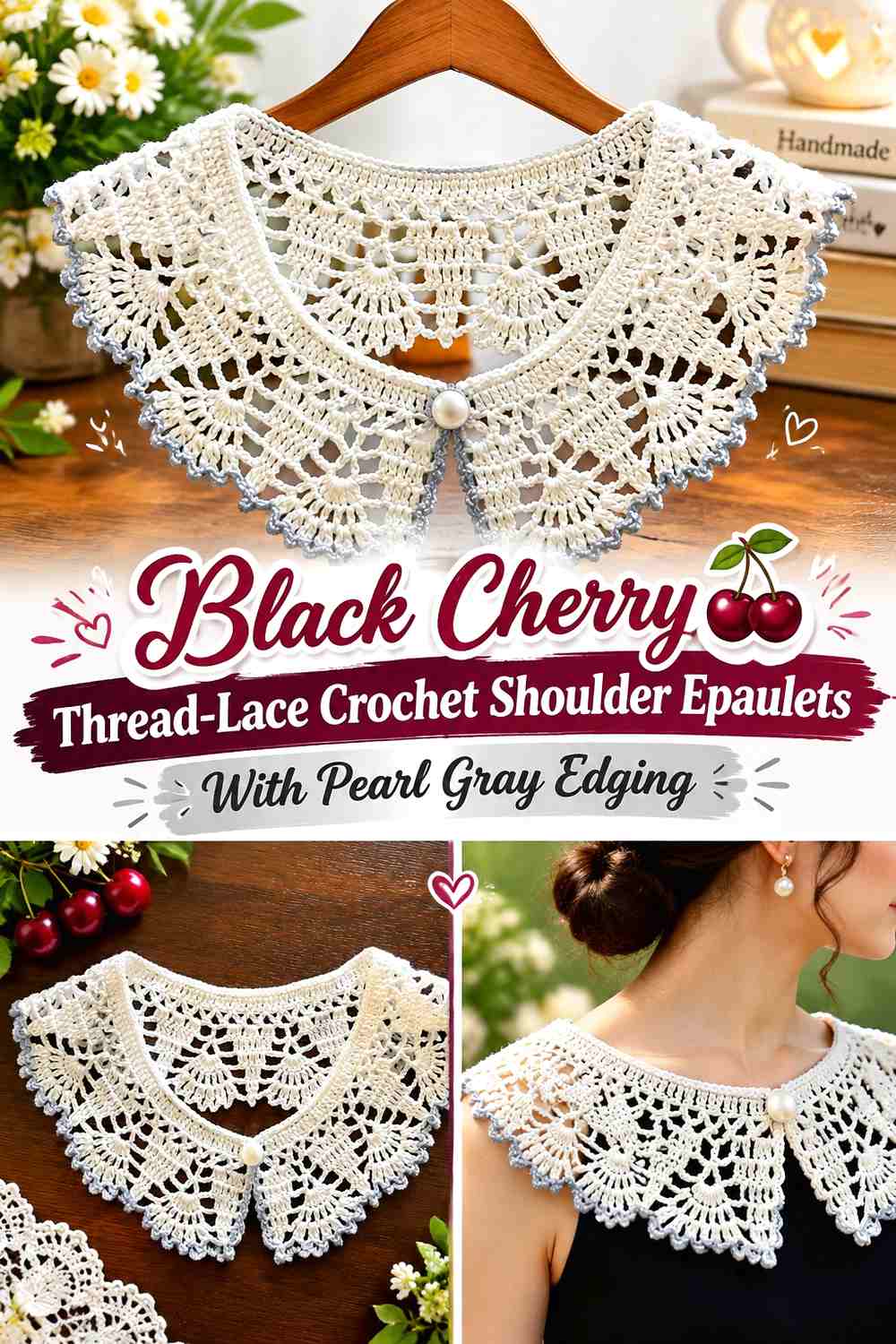
Fine thread-style lace can support a highly detailed shoulder accessory without requiring large color blocks. Keep most of the intricate work Black Cherry and use Pearl Gray only on the finishing edge.
Black Cherry Can Keep Fine Shoulder Lace Cohesive
Use Black Cherry through the repeated openwork so small chains, loops, and spaces form one continuous dark textile. Frequent color changes can make fine lace harder to read at normal viewing distance.
Pearl Gray Can Reveal the Black Cherry Thread-Lace Perimeter
A narrow Pearl Gray finish separates the outer edge from the dark interior. It is especially useful around small points where Black Cherry details could otherwise visually merge.
Keep Pearl Gray Finishing Even Around Black Cherry Lace
Fine crochet makes changes in tension more obvious. Maintain a consistent Pearl Gray border width so one side does not appear heavier than the other when both epaulets are worn together.
Creator Credit: Crochet Around the Globe in English
7. Pearl Gray Narrow-Lace Crochet Shoulder Epaulets With Black Cherry Anchors

For a more restrained shoulder detail, use Pearl Gray through a narrow lace panel and Black Cherry only where the epaulet connects near the neckline or shoulder seam. The result is lighter and less cape-like than a broad shoulder covering.
Pearl Gray Should Carry the Narrow Lace Epaulet
Keep the visible decorative strip mostly Pearl Gray so the accessory stays light and delicate. Because the surface is small, too many Black Cherry sections can divide it into several short blocks.
Black Cherry Can Anchor the Pearl Gray Shoulder Attachment Area
Use Black Cherry at the inner end or another stable attachment zone. The darker color gives the small epaulet a clear starting point before Pearl Gray extends outward.
Repeat Black Cherry Carefully Along the Pearl Gray Outer Edge
A tiny outer point or finishing detail can echo the anchor color, but it is optional. Leave the remainder Pearl Gray when a clean, light shoulder line is more important.
Creator Credit: Maariyah Creative Arts
8. Black Cherry Bib-Lace Crochet Shoulder Epaulets With Pearl Gray Outer Points
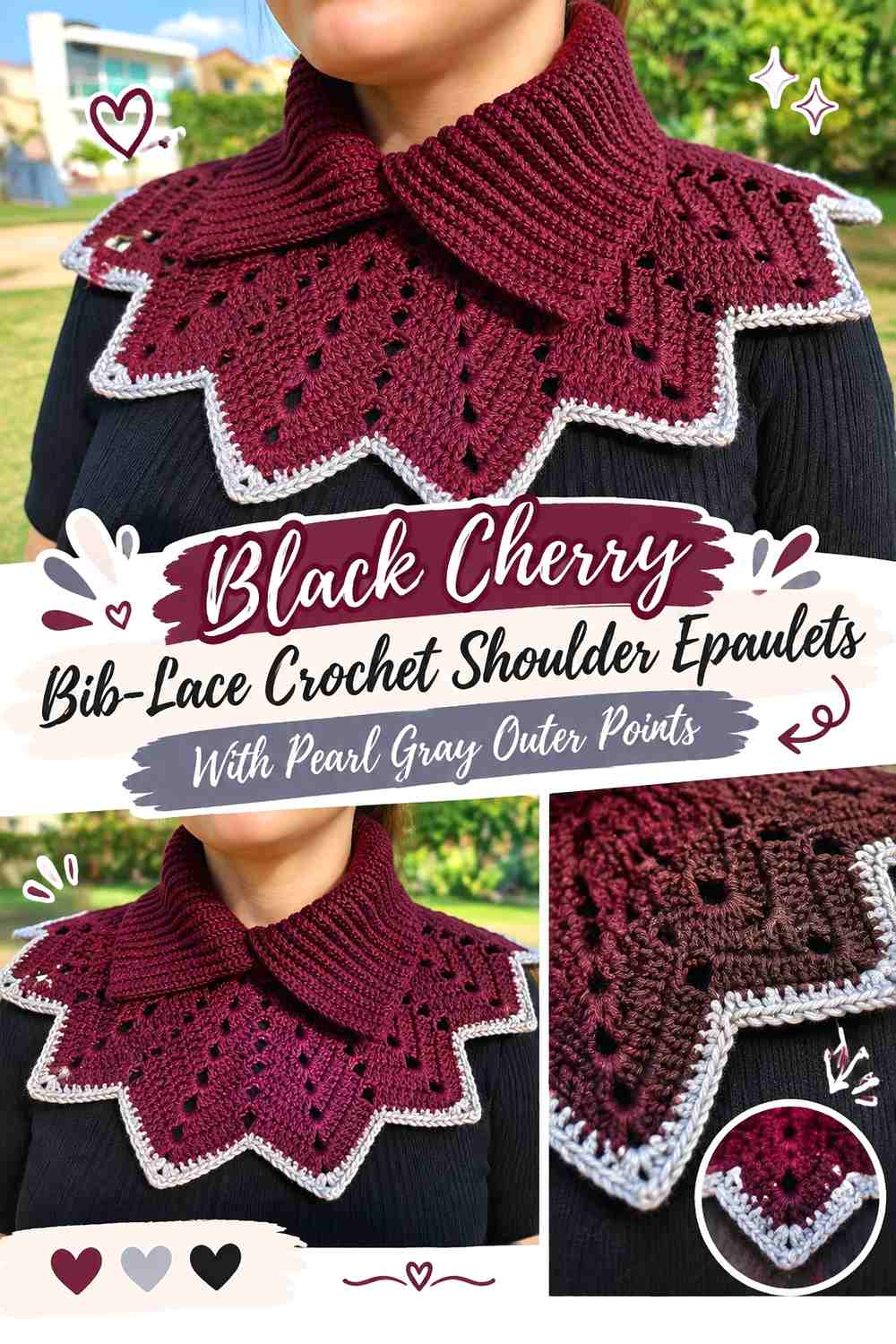
A bib-style lace construction can be reinterpreted as a broader shoulder panel by concentrating the main Black Cherry area near the top and using Pearl Gray around the farthest decorative points.
Black Cherry Can Give a Broad Shoulder Panel Enough Visual Weight
Use the darker shade through the larger central section. Broad lace already occupies significant surface area, so keeping its interior mostly one color prevents the shoulder from becoming too busy.
Pearl Gray Can Define the Black Cherry Outer Points
Place Pearl Gray on the sections that extend farthest toward the upper arm. The light tips help individual points stay readable and emphasize the spreading shape.
Balance Pearl Gray Symmetrically Across Both Black Cherry Epaulets
Because shoulder pieces are worn as a pair, unequal Pearl Gray coverage becomes noticeable quickly. Compare both panels side by side before permanently attaching or finishing them.
Creator Credit: TEJIENDO CON MERRY CARDIEL
9. Black Cherry Capelet-Inspired Crochet Lace Shoulder Epaulets With Pearl Gray Panels
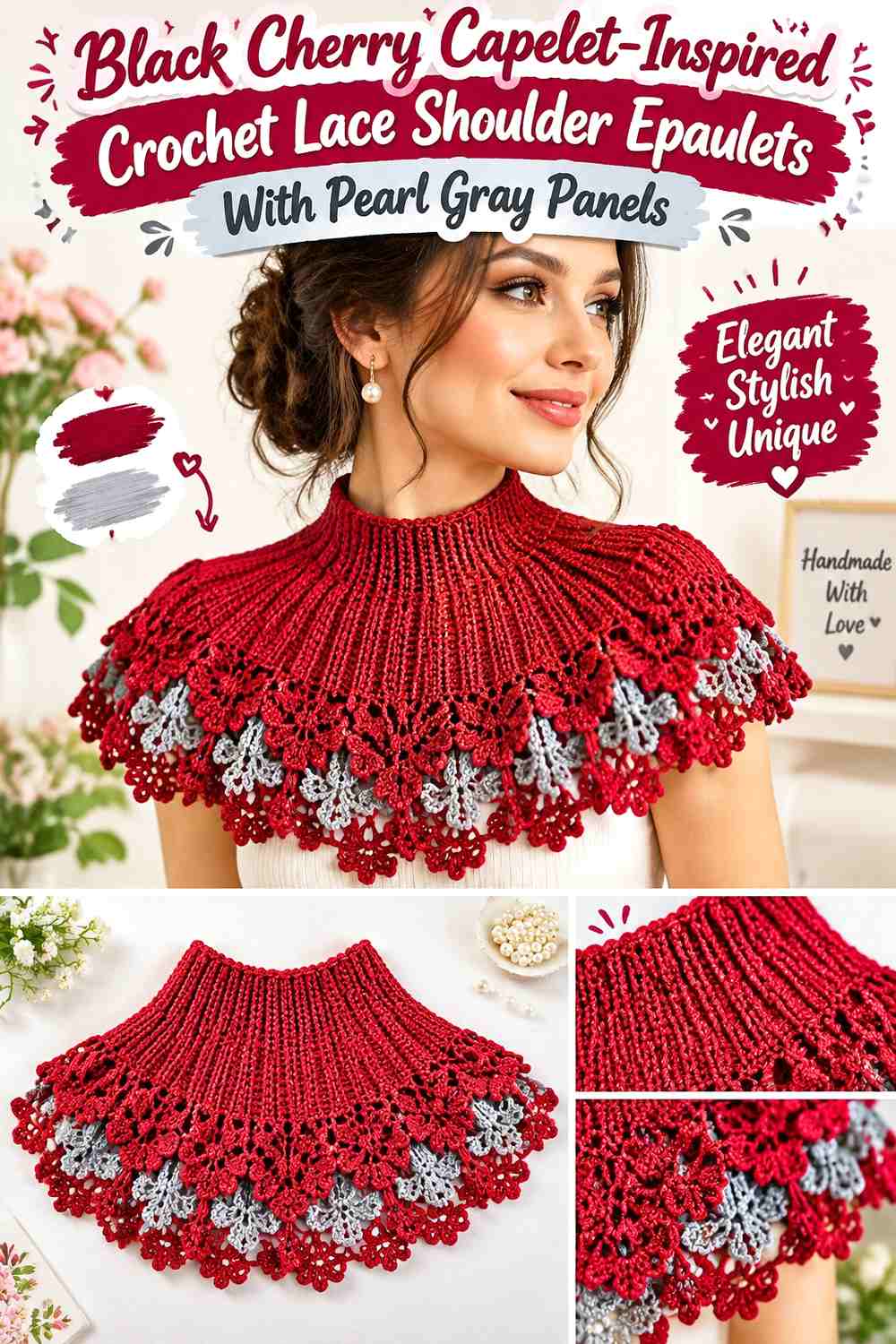
Use a wider capelet-style lace concept as the starting point but concentrate the finished visual emphasis over each shoulder. Black Cherry can connect the main structure while Pearl Gray creates isolated lace panels across the upper shoulder.
Black Cherry Should Keep the Shoulder Spread Connected
Use Black Cherry across the stable upper portion so the piece follows the shoulder line as one coherent form. This is particularly useful when the lace spreads farther outward than a compact epaulet.
Pearl Gray Can Break Up a Broad Black Cherry Shoulder Surface
Insert Pearl Gray as one defined panel or repeated section rather than many small stripes. A larger pale area gives the openwork room to show and prevents the broad epaulet from appearing uniformly dark.
Keep Pearl Gray Away From Every Black Cherry Edge
If the inner, outer, and lower boundaries all become Pearl Gray, the light shade may start framing the entire piece rather than functioning as a panel. Preserve some uninterrupted Black Cherry boundaries.
Creator Credit: KnittingwiththeHearth
10. Black Cherry Gothic Crochet Lace Shoulder Epaulets With Pearl Gray Points
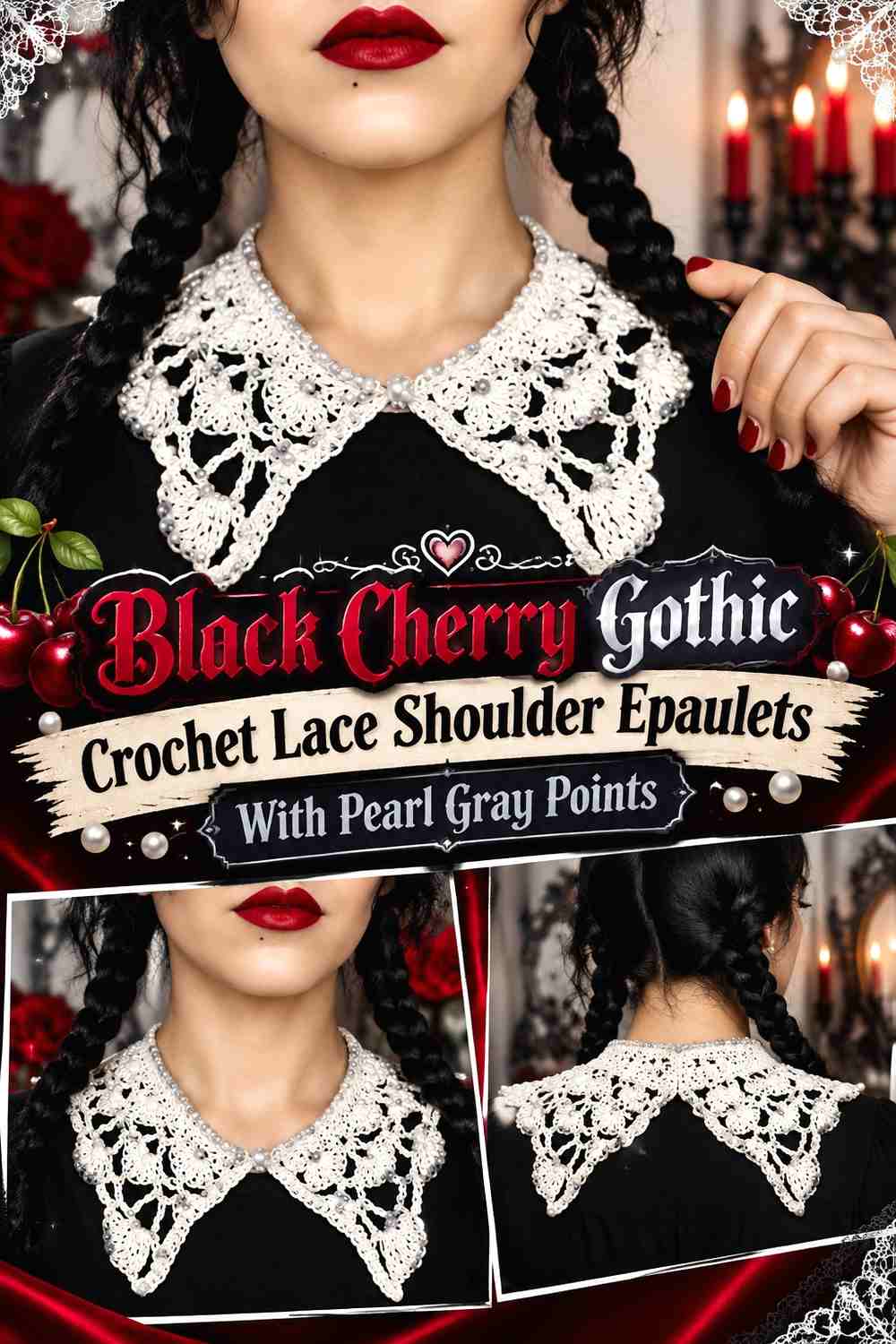
This version keeps the palette darkest and uses Pearl Gray only to sharpen pointed gothic lace details. Black Cherry can cover nearly the complete shoulder piece, including the inner band and main motif field.
Black Cherry Can Keep the Gothic Epaulet Dramatic
Use Black Cherry continuously across most of the lace so the silhouette, rather than multiple colors, provides the statement. This is particularly effective with sharply pointed or highly decorative outer edges.
Pearl Gray Can Make Black Cherry Gothic Points Easier to See
Apply Pearl Gray to selected tips or a narrow final line. The lighter value reveals the geometry of the edge without changing the dark direction of the accessory.
Keep Pearl Gray Repetition Consistent Across Black Cherry Points
Choose one type of point to highlight and repeat that decision on both shoulders. Randomly emphasizing some tips more heavily than others can make the lace appear uneven.
Creator Credit: Littlejohn’s Yarn
11. Pearl Gray Scalloped Crochet Lace Shoulder Epaulets With Black Cherry Frames

Let Pearl Gray create the scalloped or rounded lace and use Black Cherry to frame the section nearest the shoulder seam. This gives the outer edge a softer appearance while maintaining a dark structural anchor.
Pearl Gray Can Keep the Scalloped Shoulder Edge Visible
Use Pearl Gray continuously through the curves so each scallop remains part of one light decorative line. A lighter edge is especially useful when the epaulet will be worn over dark clothing.
Black Cherry Can Frame the Pearl Gray Lace Near the Shoulder
Place Black Cherry where the epaulet sits most firmly on the garment. The dark band gives the soft scallops a clear base and visually separates decorative lace from attachment structure.
Keep Black Cherry From Overrunning the Pearl Gray Scallops
A wide dark frame can reduce the amount of visible Pearl Gray enough to reverse the color hierarchy. Compare the piece on the shoulder rather than judging proportions only while it lies flat.
Creator Credit: HanJan Crochet
12. Black Cherry Victorian Crochet Lace Shoulder Epaulets With Pearl Gray Layering

For the final idea, combine a Black Cherry ornamental front layer with Pearl Gray visible beneath selected openings or outer curves. The colors are separated by physical layers instead of frequent stitch-by-stitch changes.
Black Cherry Should Remain the Main Victorian Epaulet Layer
Use Black Cherry across the visible top lace so the accessory retains a strong ornamental silhouette. Keeping that layer one color lets the repeated curves and openings supply most of the decoration.
Pearl Gray Can Show Through Black Cherry Lace Openings
Position Pearl Gray beneath selected sections where a second crochet layer is compatible with the chosen construction. The lighter backing can make dark lace easier to distinguish and create depth without outlining every motif.
Keep Pearl Gray Inside the Black Cherry Shoulder Outline
If the pale layer projects too far beyond the main epaulet, it becomes a separate border. Keep it mostly contained when the goal is layered internal contrast rather than a two-tone perimeter.
Creator Credit: Bag-O-Day Crochet
Comparing Black Cherry and Pearl Gray Crochet Lace Shoulder Epaulets
Ideas 1, 2, 3, 6, and 10 keep Black Cherry strongly dominant. Pearl Gray mainly clarifies fringe, floral centers, leaf tips, edging, or gothic points, making these good directions when you want a darker statement shoulder piece.
Ideas 4, 7, and 11 make Pearl Gray the larger visible field. These versions emphasize lighter openwork while Black Cherry controls borders, attachment points, or structural framing.
Ideas 5, 8, 9, and 12 distribute color according to different physical zones: inner bands, outer points, broad panels, or layered backing. These approaches are useful when you want both colors clearly represented without turning the lace into narrow alternating stripes.
For compact epaulets, simple color hierarchy usually makes the shoulder silhouette easier to understand. Broader pieces can support a larger Pearl Gray panel or layered treatment because there is more surface area for the colors to remain distinct.
Conclusion
Black Cherry and Pearl Gray can change a crochet lace shoulder epaulet substantially depending on whether the contrast sits at the center, neckline, outer shoulder, motif details, or a second layer.
For a dark statement piece, Ideas 1, 3, and 10 keep Pearl Gray concentrated around smaller details. Ideas 4, 7, and 11 reverse the hierarchy and use Black Cherry to contain lighter lace. If dimensional separation is the main goal, Ideas 9 and 12 give the colors larger structural or layered roles.
Before completing the second epaulet, place the first one on the actual garment you intend to use. Shoulder slope, neckline width, seams, and fabric thickness can change how far the lace spreads and which color appears most prominent. Use the credited tutorials for their original construction concepts and treat Black Cherry, Pearl Gray, shoulder shaping, and attachment as separate adaptation decisions.
Frequently Asked Questions
Should Black Cherry or Pearl Gray dominate crochet lace shoulder epaulets?
Choose Black Cherry when you want a darker statement shoulder with Pearl Gray defining lace details. Choose Pearl Gray when you want openwork to look lighter and use Black Cherry around attachment areas, borders, or motif frames.
Where should Pearl Gray go on a Black Cherry shoulder epaulet?
Useful placements include floral centers, leaf tips, outer points, fringe, narrow edging, lace panels, or a supporting layer visible through openwork. Give Pearl Gray a consistent structural role rather than scattering it randomly.
How can I keep Black Cherry lace visible on a dark garment?
Use Pearl Gray directly along selected boundaries or important motifs. A lighter outer edge, center detail, or backing layer can create enough separation without changing the complete epaulet to gray.
Can Black Cherry and Pearl Gray be used equally on shoulder epaulets?
Yes, particularly on broader shoulder pieces with defined panels or layered motifs. Equal coverage needs clear organization because several narrow alternating sections can make a small epaulet look fragmented.
Should Pearl Gray go on the neckline side or outer shoulder edge?
Either works, but the visual effect differs. Pearl Gray near the neckline separates the epaulet from a dark garment, while Pearl Gray at the outer edge emphasizes width, points, and fringe.
How can I make two Black Cherry and Pearl Gray epaulets look balanced?
Compare them side by side throughout construction and before attachment. Keep motif orientation, accent placement, and border width corresponding across both shoulders unless deliberate asymmetry is part of the design.
Can floral or leaf motifs work on a crochet lace shoulder epaulet?
Yes, especially when their placement follows the shoulder direction. Use Black Cherry and Pearl Gray consistently within each repeated motif so the botanical details remain connected rather than appearing as unrelated appliqués.
How do I substitute another shade for Black Cherry?
Choose another deep wine-red, burgundy, or muted red-purple that remains clearly darker than Pearl Gray. Preserve the dark structural role rather than trying to match an exact commercial shade name.
What can replace Pearl Gray without changing the palette balance?
Choose another light or medium softened gray that remains noticeably lighter and quieter than Black Cherry. Test the replacement inside the intended lace because open spaces and garment color can change the apparent contrast.