Emerald green and antique gold can turn a crochet neckpiece into a strong focal accessory without requiring a complicated multicolor palette. Emerald green provides the deep visual field, while antique gold can trace edges, highlight motifs, separate layers, or create concentrated points of contrast.
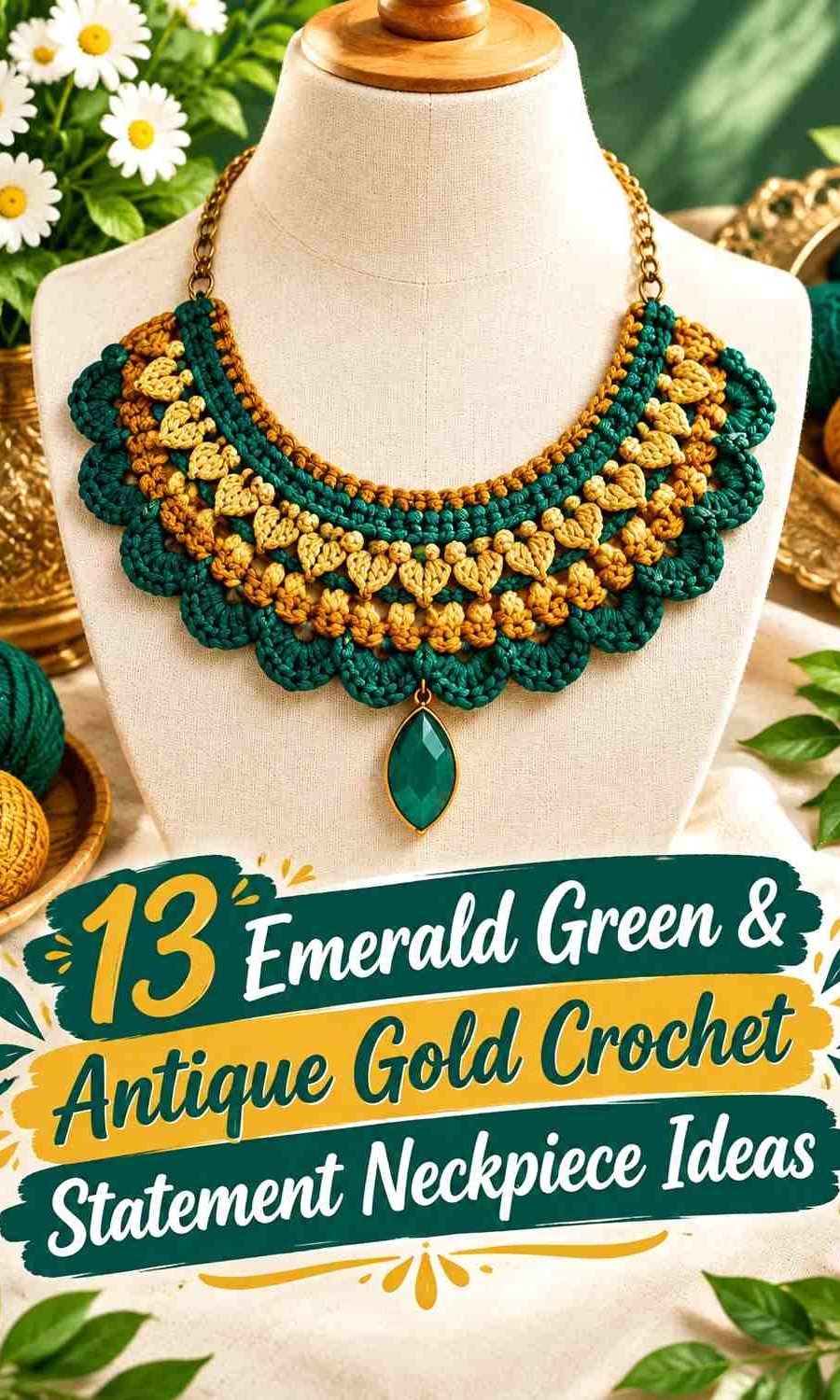
The main decision is how much gold to use. On a statement neckpiece, antique gold attracts attention quickly, so it often works better as a controlled supporting color than as an equal partner across every stitch. Emerald green can occupy the broader collar, floral strand, cord, or medallion structure while gold identifies the parts you want the eye to follow.
Quick List
- Emerald Green and Antique Gold Layered Crochet Statement Collar
- Emerald Green Crochet Ruffle Neckpiece With Antique Gold Edge
- Emerald Green and Antique Gold Crochet Flower Statement Necklace
- Emerald Green Crochet Floral Choker With Antique Gold Centers
- Antique Gold Crochet Necklace With Emerald Green Statement Motifs
- Emerald Green Crochet Circle Neckpiece With Antique Gold Joining
- Emerald Green Crochet Flower Garland With Antique Gold Highlights
- Emerald Green and Antique Gold Boho Crochet Statement Necklace
- Emerald Green Crochet Floral Strand With Antique Gold Motif Centers
- Antique Gold Crochet Chain Neckpiece With Emerald Green Focal Details
- Emerald Green Crochet Choker With Antique Gold Lower Edge
- Emerald Green Crochet Textured Loop Necklace With Antique Gold Accents
- Emerald Green Crochet Pendant Cord With Antique Gold Statement Center
Let Emerald Green Carry the Main Neckline Shape
Emerald green is especially useful across the largest continuous areas of a statement neckpiece. On a wide collar, repeated motif strand, or dimensional necklace, a green foundation gives the design continuity before smaller antique gold details are introduced.
This matters because statement jewelry already contains considerable visual information through shape and texture. When every section changes color, the crochet construction can become harder to read. A continuous emerald green foundation lets antique gold identify specific features instead of competing with the entire silhouette.
Use Antique Gold Where the Crochet Neckpiece Needs Definition
Antique gold can be particularly effective along scalloped edges, motif centers, lower points, joining areas, or a central medallion. These placements make the second color functional: it explains the structure of the neckpiece.
Before repeating gold around every boundary, look at the piece while it curves around the neckline. A detail that seems small when laid flat can become much more noticeable when repeated across the full width of a collar. If gold begins to overpower the green, reduce its frequency rather than introducing another neutral.
Check Emerald Green and Antique Gold Against the Clothing Below
A statement neckpiece is seen against fabric, not in isolation. Emerald green motifs can disappear against a similarly dark top, while antique gold edges may become much more noticeable against black, cream, or another plain background.
Evaluate the finished color arrangement against the type of neckline you expect to wear beneath it. You do not need to match the clothing exactly; the useful test is whether the main crochet shapes, open spaces, and gold accents remain distinct once the neckpiece is worn.
1. Emerald Green and Antique Gold Layered Crochet Statement Collar
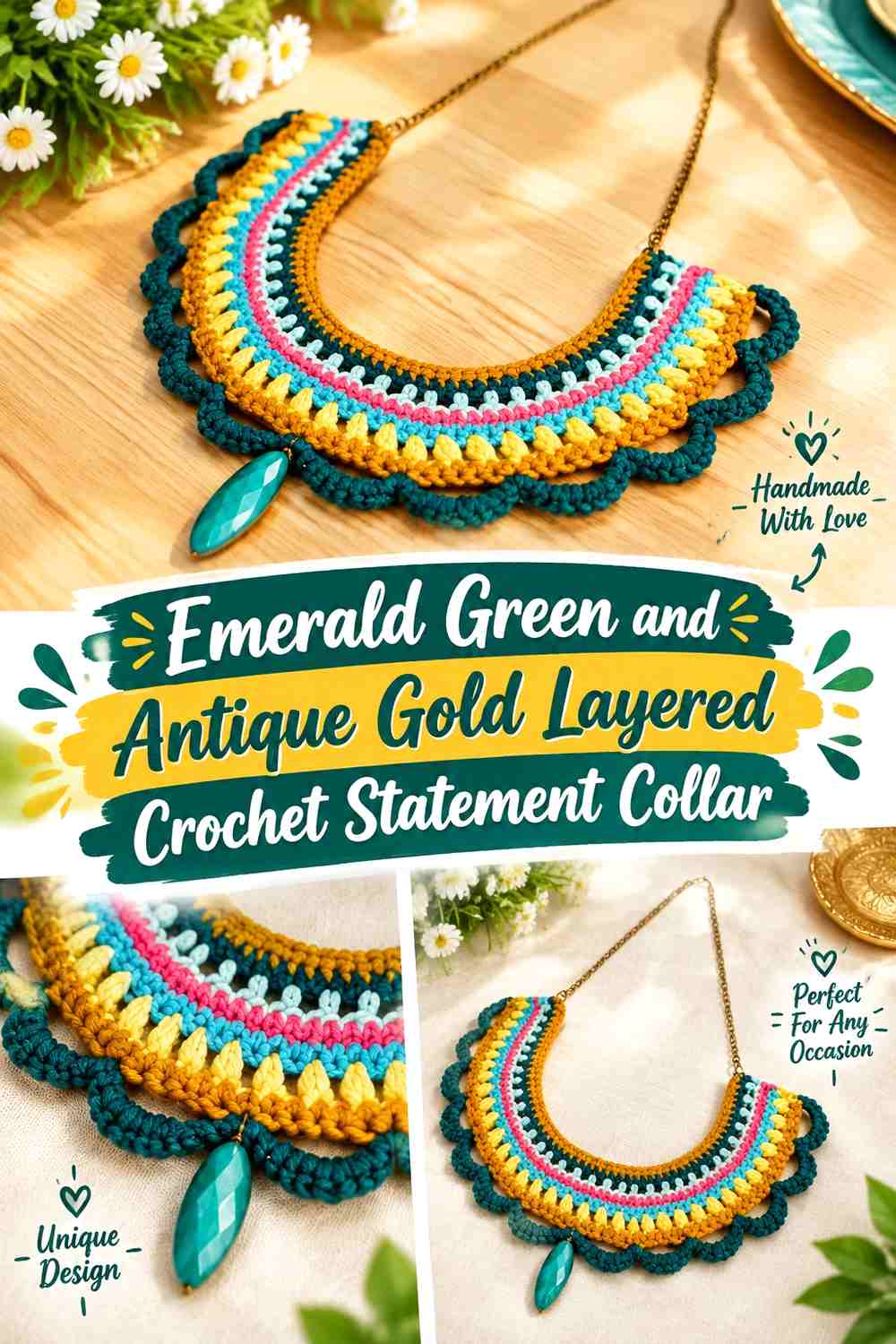
A broad layered collar gives both colors enough space to have distinct jobs. Use emerald green for most of the crochet fabric and introduce antique gold through one lower tier, selected motif edges, or repeated narrow bands. The green preserves a unified collar shape while the gold makes the layers easier to distinguish.
Emerald Green Should Form the Main Collar Structure
Keep emerald green around the neckline and through most of the wider crochet sections. A continuous dark foundation helps the individual layers read as one neckpiece instead of separate decorative strips.
Antique Gold Can Separate Emerald Green Collar Layers
A slim gold line between green sections can clarify where one layer ends and another begins. This is particularly useful when adjacent sections contain similar stitch texture and would otherwise visually merge.
Antique Gold Needs Restraint Along an Emerald Green Statement Edge
If the lower edge already has pronounced points or scallops, gold does not need to fill the entire final layer. Highlighting only the edge can preserve the shape while keeping emerald green dominant.
Creator Credit: كروشيه كروشيتو – Crocheto Crochet
2. Emerald Green Crochet Ruffle Neckpiece With Antique Gold Edge
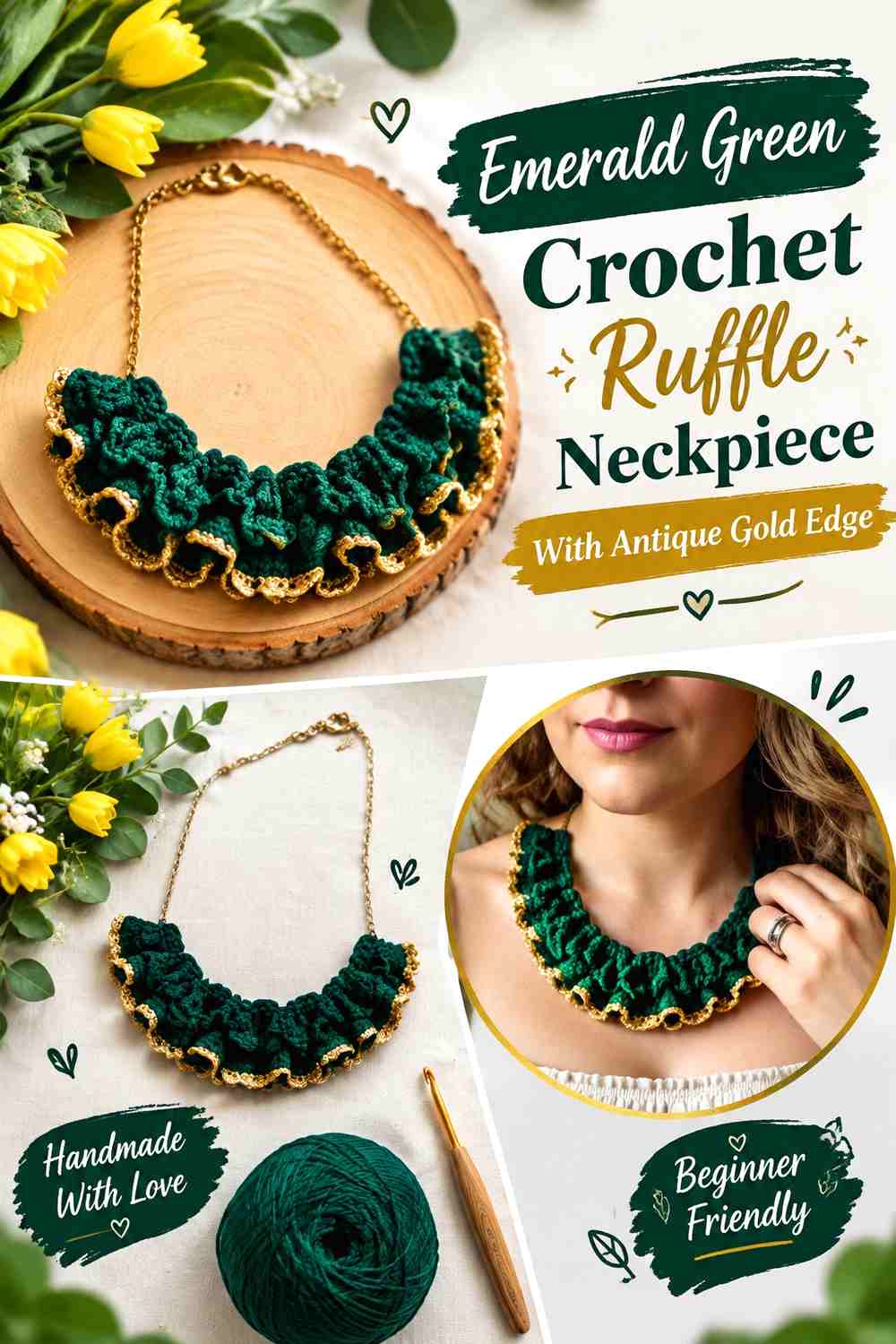
A ruffled neckpiece gains its statement effect from texture and movement, so the palette should clarify that texture rather than compete with it. Emerald green can cover the ruffle itself, while antique gold defines the outermost line.
Emerald Green Keeps the Crochet Ruffle Visually Continuous
Use green through the main ruffled section so the folds and curves remain readable as one piece. Alternating green and gold too frequently inside the ruffle can break that continuous movement into small color blocks.
Antique Gold Can Trace the Emerald Green Ruffle Peaks
A gold outer edge brings attention to the changing outline without covering the textured green surface. It is particularly effective when you want the lower edge to remain visible against dark clothing.
Emerald Green Should Remain Visible Between Antique Gold Highlights
If gold is added to several ruffle sections, keep enough uninterrupted green between them. The contrast works because antique gold is selective; repeating it too densely reduces the visual advantage of having a dominant emerald field.
Creator Credit: HanJan Crochet
3. Emerald Green and Antique Gold Crochet Flower Statement Necklace

A flower necklace offers natural places for a two-color hierarchy. Emerald green can form the petals or connecting strand, while antique gold identifies flower centers. This keeps the floral repetition clear without making every petal compete through color.
Emerald Green Gives Repeated Crochet Flowers One Identity
When several flowers sit around the neckline, using emerald green consistently across their larger surfaces helps them behave like a coordinated necklace rather than a collection of unrelated motifs.
Antique Gold Centers Give Emerald Green Flowers Clear Focal Points
Small gold centers are enough to distinguish individual blooms. Because the antique gold repeats at regular intervals, it can connect the floral sequence without occupying much surface area.
Antique Gold Should Not Erase the Emerald Green Petal Shape
If gold expands too far beyond the center, the flowers may lose the green petal outline that makes the motif readable. Keep the stronger secondary color concentrated where it adds definition.
Creator Credit: Naztazia
4. Emerald Green Crochet Floral Choker With Antique Gold Centers
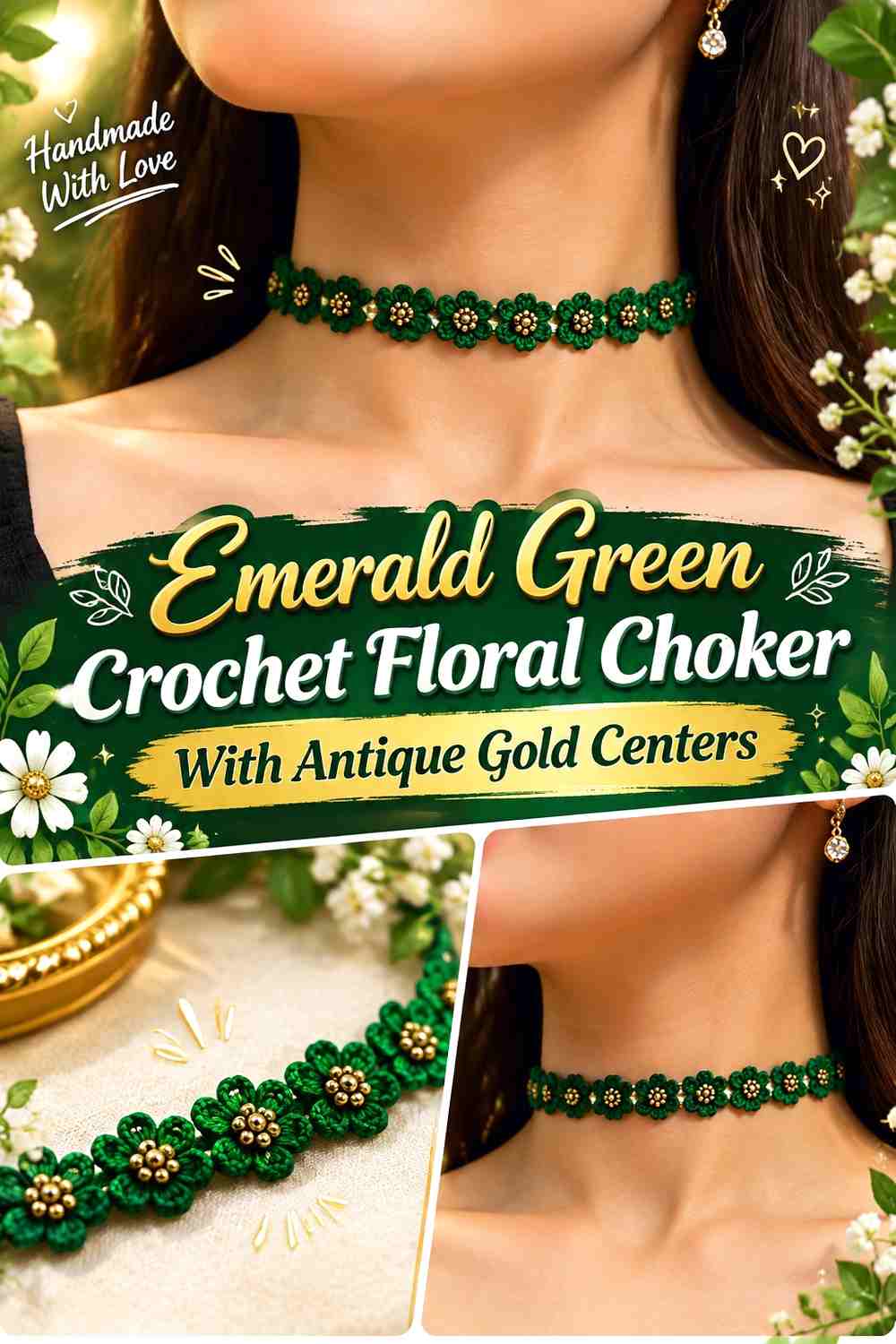
A close-fitting floral choker puts every motif near the neckline, making small color changes more noticeable. Emerald green can carry the repeating flowers while antique gold punctuates their centers or selected joining points.
Emerald Green Keeps the Crochet Choker From Looking Fragmented
Use the same green throughout the connected floral line when you want the choker to form a clear continuous band. Frequent color changes between flowers can interrupt the neckline.
Antique Gold Adds Rhythm Between Emerald Green Flowers
Gold centers repeated from motif to motif create a visual beat around the neck. If every flower receives the same amount, the effect feels deliberate without requiring a large gold section.
Emerald Green Joining Can Control Antique Gold Competition
If the flower centers already contain gold, keep the connecting crochet green. Gold joins plus gold centers may make the secondary color occupy more of the choker than expected.
Creator Credit: VivCrochets
5. Antique Gold Crochet Necklace With Emerald Green Statement Motifs
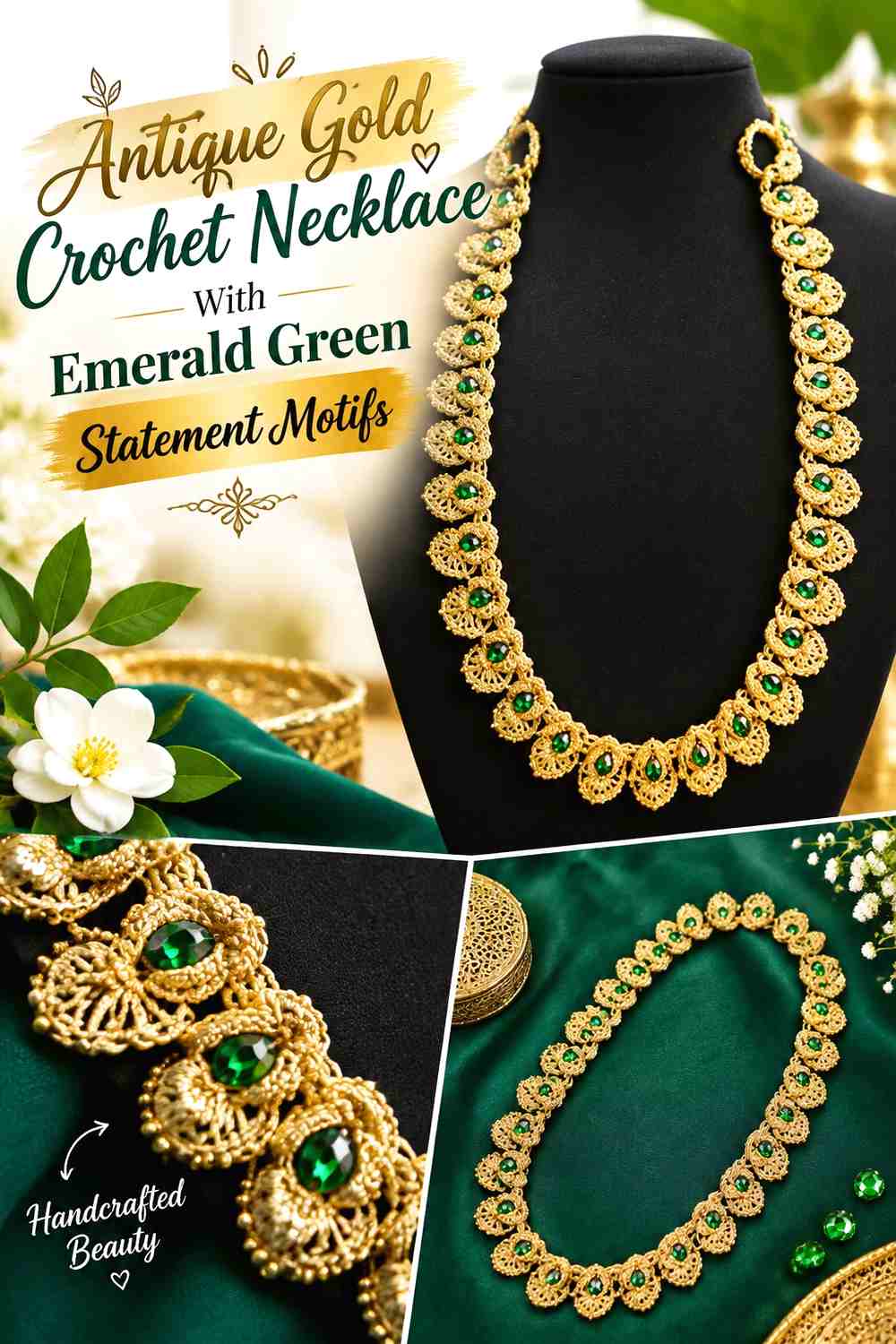
Reversing the hierarchy creates a lighter, more metallic-looking direction. Antique gold can become the necklace foundation while emerald green is concentrated into larger motifs or repeated focal sections.
Antique Gold Can Carry the Narrow Crochet Foundation
Gold works well on a slim base because it remains visible without covering a large area. This leaves room for emerald green to supply the major statement shapes below the neckline.
Emerald Green Should Be Concentrated in the Largest Motifs
Place green where the crochet has the greatest visual mass. A central motif, repeated lower points, or larger decorative sections can carry enough green to balance the antique gold foundation.
Antique Gold Should Frame Rather Than Divide Emerald Green Motifs
If gold is used around the green shapes, keep the framing consistent. Random gold interruptions inside a strong green motif can make the shape harder to recognize.
Creator Credit: Gemma Crochet
6. Emerald Green Crochet Circle Neckpiece With Antique Gold Joining
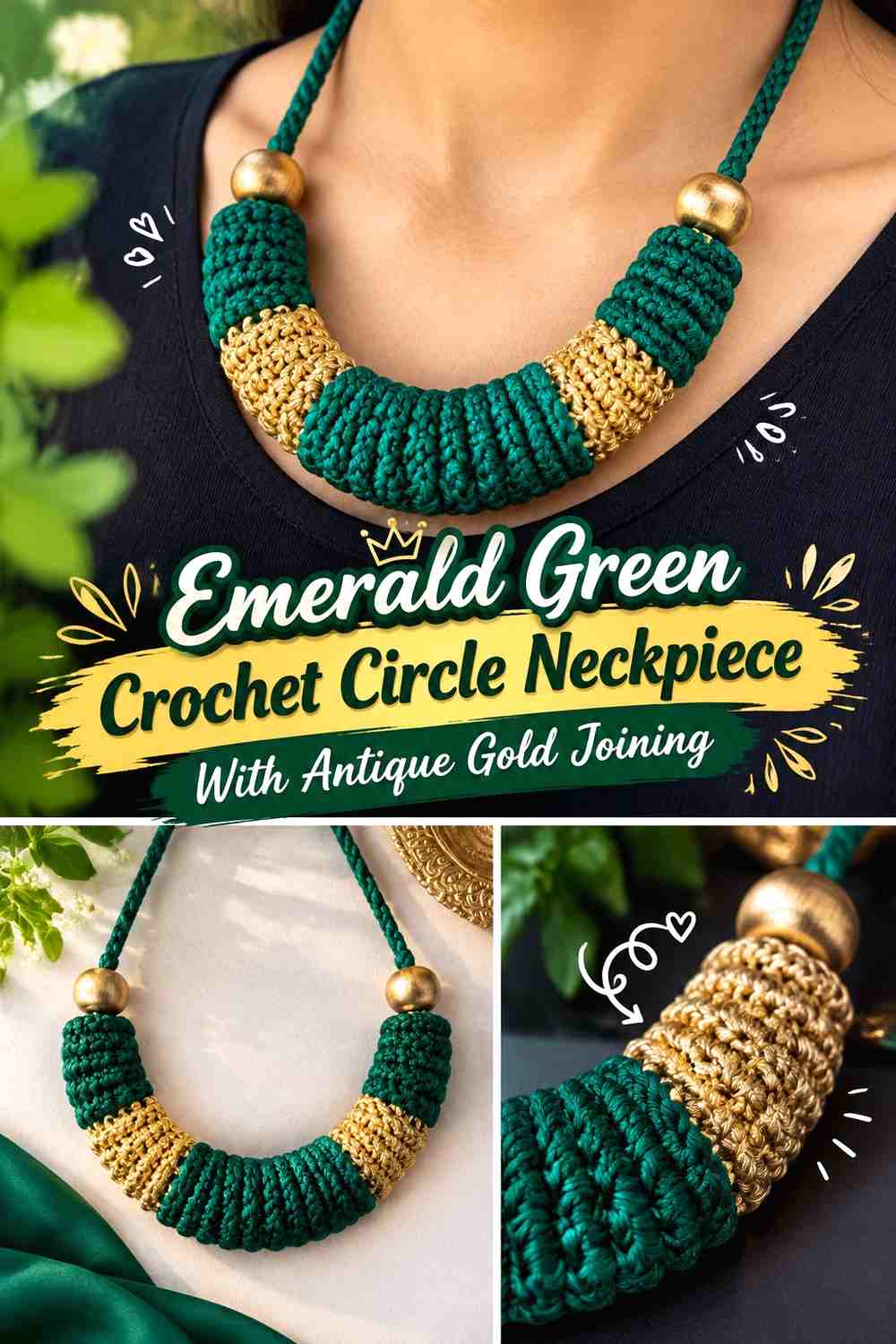
Repeated crochet circles create a naturally graphic necklace. Emerald green can fill the motifs while antique gold is reserved for joining or perimeter details, allowing each circle to stay visually distinct.
Emerald Green Makes Repeated Crochet Circles Feel Connected
Keeping all major circles green establishes a clear motif family. The statement effect then comes from repetition and scale rather than constant color switching.
Antique Gold Joining Separates Adjacent Emerald Green Circles
When green motifs touch or overlap visually, a gold connector can prevent their boundaries from disappearing. The second color becomes especially useful at narrow spaces between motifs.
Antique Gold Edges Can Define Selected Emerald Green Circles
You do not have to outline every motif. Highlighting the central or largest circles can establish a focal zone while the remaining motifs stay primarily green.
Creator Credit: Hopeful Turns
7. Emerald Green Crochet Flower Garland With Antique Gold Highlights

A garland-style neckpiece spreads floral motifs across more of the neckline. Emerald green can maintain continuity through the flowers and connectors, while antique gold is repeated in small areas that lead the eye across the piece.
Emerald Green Should Link the Entire Crochet Flower Garland
Using green for both flowers and connecting sections creates a visible path from one side of the neckpiece to the other. That continuity becomes particularly important when dimensional flowers point in different directions.
Antique Gold Can Highlight Selected Emerald Green Flower Centers
Not every flower must receive an equally prominent gold treatment. Giving the center or larger motifs more antique gold can create a visual center without altering the necklace construction.
Emerald Green Space Keeps Antique Gold From Crowding the Floral Texture
Dimensional crochet already produces shadows and raised areas. Leave enough green-only sections that the texture remains visible rather than filling every petal edge with gold.
Creator Credit: Ophelia Talks Crochet
8. Emerald Green and Antique Gold Boho Crochet Statement Necklace
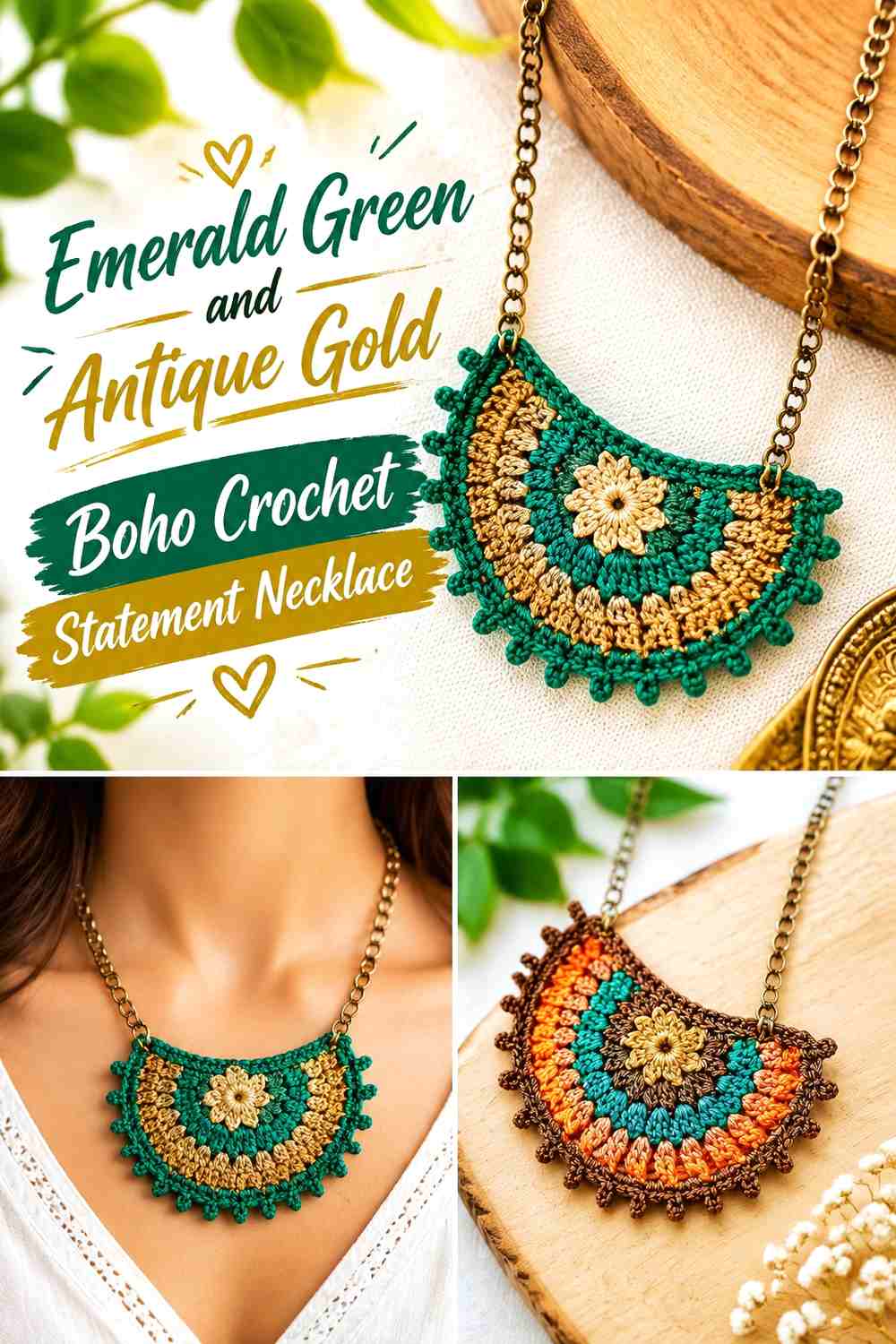
A boho-style necklace often relies on repeated points, loops, or dangling shapes for its silhouette. Emerald green can dominate the main crochet band while antique gold is concentrated at the tips or selected lower details.
Emerald Green Creates a Stable Base Above Dangling Details
Keep the section closest to the neck predominantly green. This gives the lower decorative elements a visual anchor and prevents the top of the necklace from becoming as busy as the bottom.
Antique Gold Works Well at Emerald Green Crochet Points
A gold tip or small lower accent emphasizes downward movement. Repeating that detail selectively can make the lower silhouette easier to follow against clothing.
Antique Gold Should Not Fill Every Emerald Green Boho Element
When loops, points, and texture are already present, too much secondary color can overwhelm their shape. Decide whether gold should emphasize tips, edges, or centers rather than trying to use all three.
Creator Credit: Handwork diy
9. Emerald Green Crochet Floral Strand With Antique Gold Motif Centers
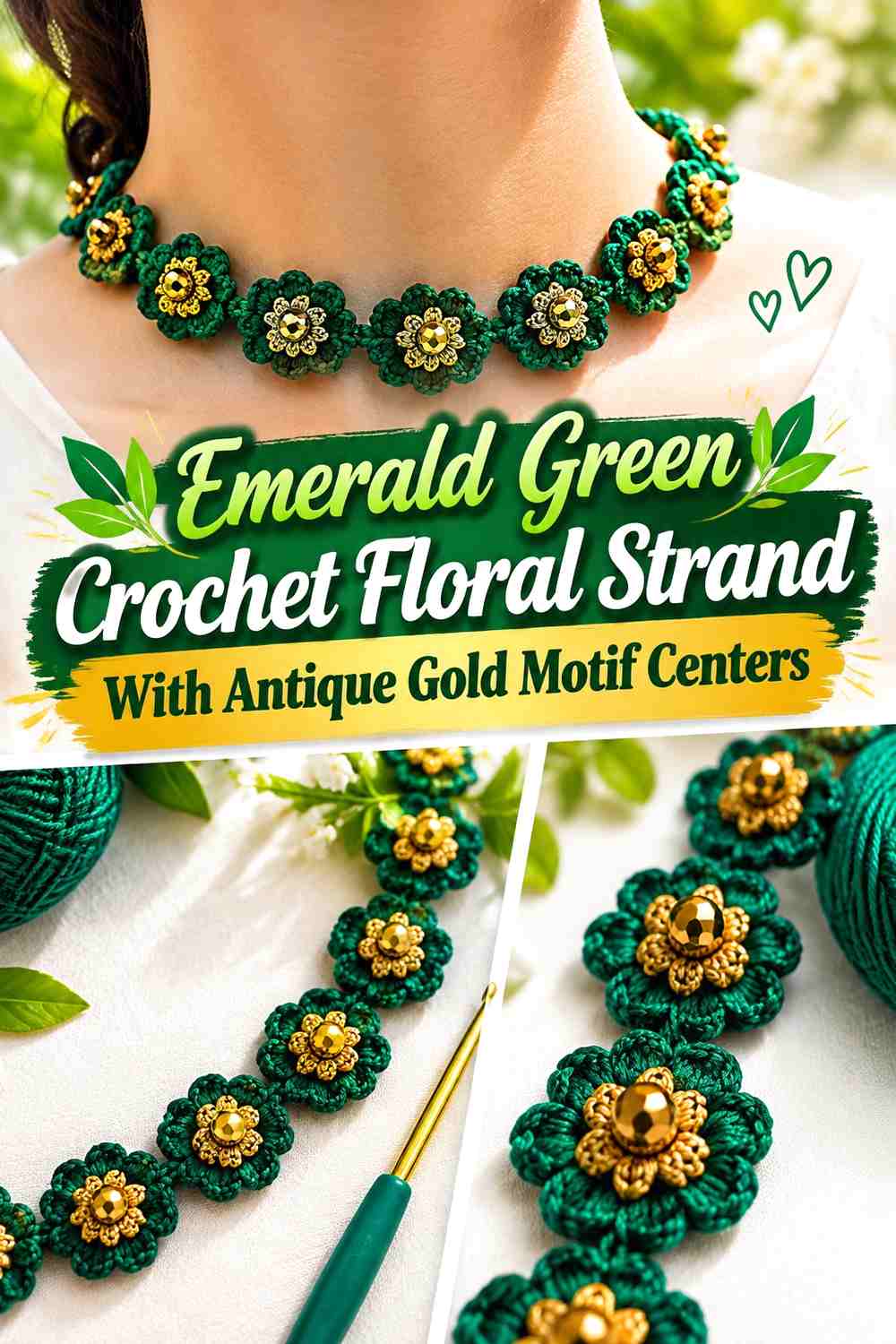
This palette direction is useful when you want a longer floral necklace rather than a compact collar. Keep the connecting strand and most petals green, then use antique gold to mark each floral center as the motifs continue around the neckline.
Emerald Green Gives a Long Floral Strand Visual Continuity
A longer necklace needs repeated elements to feel connected over a greater distance. Keeping the main crochet green prevents individual motifs from looking visually detached from the strand.
Antique Gold Centers Can Guide the Eye Along Emerald Green Motifs
Small gold centers create repeating checkpoints from one flower to the next. This is more controlled than alternating entire flowers between green and gold.
Antique Gold Should Remain Smaller as Emerald Green Motifs Multiply
The more flowers you add, the more often gold repeats. Even tiny accents can accumulate into a strong secondary presence, so assess the whole strand rather than one motif in isolation.
Creator Credit: Banoris Crafts
10. Antique Gold Crochet Chain Neckpiece With Emerald Green Focal Details

A chain-based necklace lets antique gold take the lead without requiring a broad gold collar. Emerald green can then appear in beads, crocheted focal elements, or another concentrated decorative feature.
Antique Gold Works Naturally Across a Narrow Crochet Chain
Because the foundation is slim, a full antique gold treatment does not necessarily overpower the necklace. It creates a consistent supporting line for stronger green features.
Emerald Green Should Supply the Main Visual Weight
Use emerald green in the areas you want noticed first. A group of focal details near the center creates a stronger statement than spreading tiny green marks evenly across the entire chain.
Antique Gold Can Connect Separate Emerald Green Features
When several green focal elements are used, the gold chain provides continuity between them. This allows the green sections to vary in shape without making the neckpiece look disconnected.
Creator Credit: Kristin Omdahl
11. Emerald Green Crochet Choker With Antique Gold Lower Edge

A structured choker gives the palette a compact horizontal format. Emerald green can cover the band closest to the neck, while antique gold defines the lower edge where the eye naturally follows the silhouette.
Emerald Green Keeps the Crochet Choker Visually Grounded
Use green through the main width of the choker so the band reads as one solid statement element. This is especially useful when the lower edge already contains decorative shaping.
Antique Gold Can Define the Emerald Green Choker Silhouette
A narrow gold lower edge highlights scallops, points, or another shaped boundary without interrupting the green band above.
Antique Gold Should Stay Secondary to the Emerald Green Choker Width
If the gold section becomes almost as wide as the green section, the necklace changes from a green choker with gold definition into a roughly equal two-color band. Keep the proportion deliberate.
Creator Credit: Littlejohn’s Yarn
12. Emerald Green Crochet Textured Loop Necklace With Antique Gold Accents
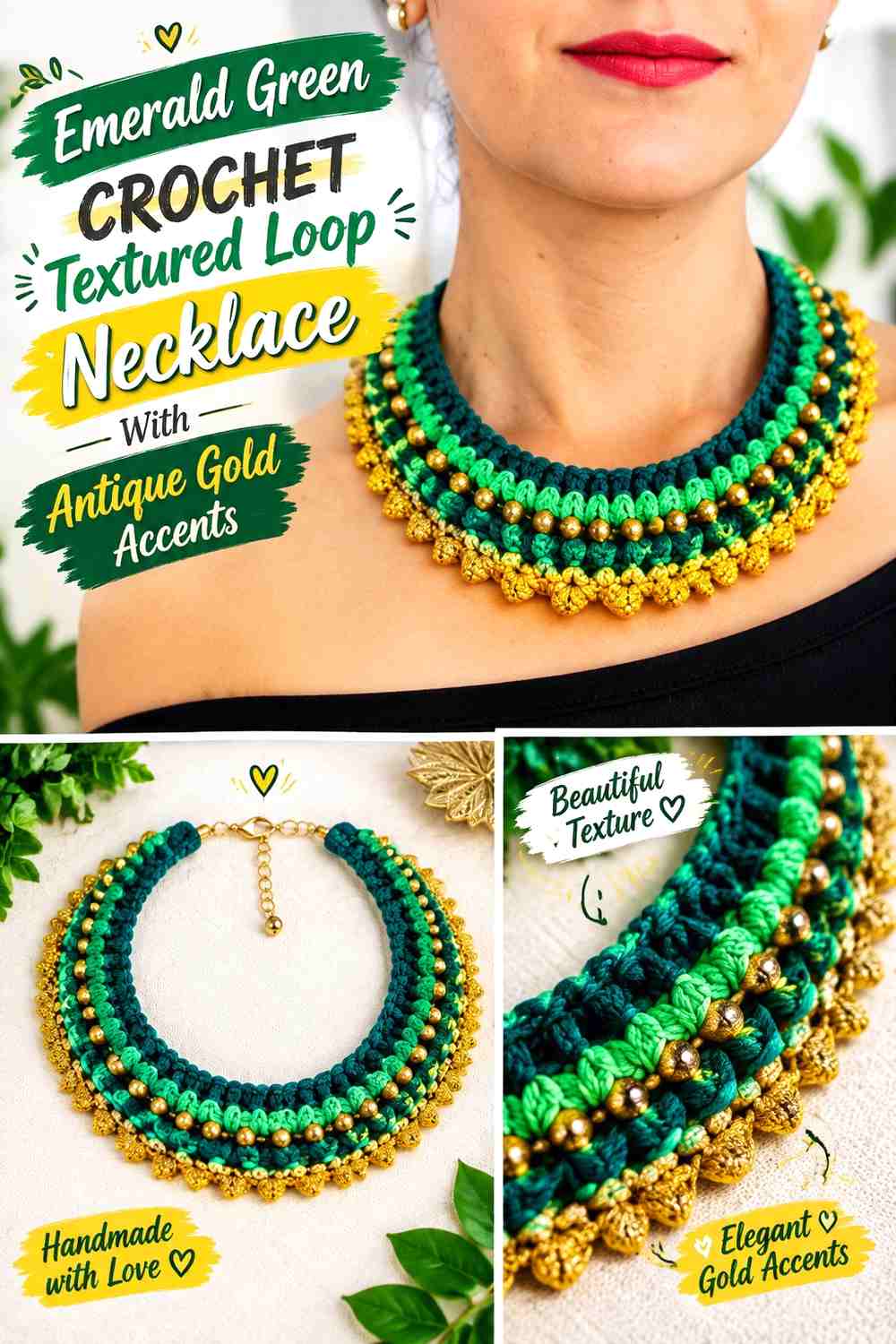
Looped or dimensional crochet creates natural highlights and shadows before color is added. Emerald green can carry that texture, while antique gold is used only where it helps separate overlapping or repeated sections.
Emerald Green Lets Crochet Loops Provide the Main Statement Effect
Keep the majority of the dimensional work green so the viewer can see how the loops relate to one another. Alternating every loop between colors can make the structure harder to understand.
Antique Gold Can Separate Overlapping Emerald Green Sections
Use gold near connections, centers, or selected outer loops when green shapes sit close together. The secondary color can create visual separation without requiring a full outline.
Emerald Green Should Remain Visible at the Necklace Center
The middle of the neckpiece usually draws the most attention. If antique gold accents gradually increase toward the center, leave enough green visible that the intended dominant color is not lost.
Creator Credit: Crochet MC
13. Emerald Green Crochet Pendant Cord With Antique Gold Statement Center
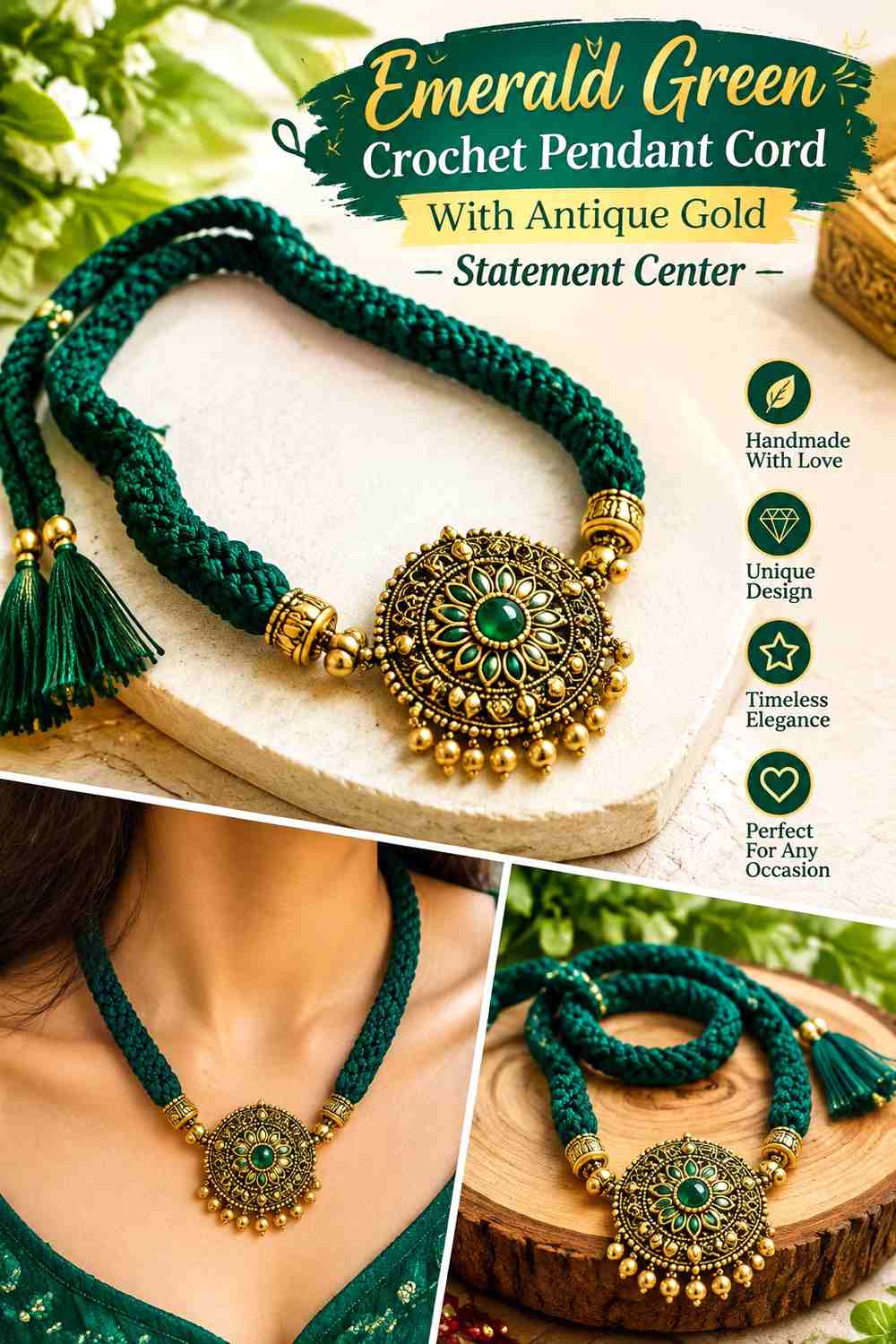
A pendant-style neckpiece puts nearly all the visual emphasis at one central point. Emerald green can form the crocheted cord, while antique gold becomes the pendant, medallion edge, or concentrated central crochet feature.
Emerald Green Gives the Statement Pendant a Quiet Support Line
A consistent green cord directs attention toward the center without adding another complex motif around the entire neckline. It is a useful arrangement when the pendant itself has significant texture.
Antique Gold Can Become the Main Centerpiece Against Emerald Green
This is one of the few versions where antique gold can occupy the strongest focal area while green still remains the dominant structural color. The distinction between structural dominance and focal dominance keeps the palette balanced.
Emerald Green Can Reappear Inside the Antique Gold Center
If the center feels disconnected from the cord, repeat a small amount of emerald green within or immediately around the focal element. That visual echo ties the pendant back to the necklace foundation without requiring additional colors.
Creator Credit: YarnNecklaces
Comparing the Emerald Green and Antique Gold Neckpiece Directions
Choose Ideas 1, 2, or 11 if you want the crochet itself to create a broad collar-like statement. Emerald green takes up most of the neckline area in these versions, while antique gold explains edges and layers.
Ideas 3, 4, 7, and 9 are stronger choices when floral repetition should define the neckpiece. Keep emerald green consistent through petals or connecting sections and use antique gold mainly to organize the flower centers.
Ideas 5 and 10 reverse the hierarchy and give antique gold more structural presence. These are useful when you want the gold tone to be immediately noticeable but still want emerald green to create the strongest focal motifs.
For a neckpiece that concentrates attention at the center rather than all around the neckline, Idea 13 provides the clearest direction. Idea 12 sits between these approaches by creating statement impact through dimensional crochet texture rather than a single pendant.
Conclusion
Emerald green and antique gold work particularly well for statement crochet neckpieces when the colors are given separate visual jobs. Emerald green can carry broad collars, chains, petals, loops, and connecting structures, while antique gold can identify motif centers, edges, lower points, joins, or a central focal feature.
For the greenest result, start with a wide emerald collar or floral necklace and keep gold narrow. For more noticeable antique gold, use it through the foundation chain or central pendant while concentrating emerald green into the largest motifs.
Whichever direction you choose, assess the whole neckpiece while it follows a curved neckline. Repeated gold accents often appear stronger when worn than when a single motif is viewed flat, so make your final color decision after several elements are arranged together. Refer to each creator’s tutorial for the original necklace construction and use the emerald green and antique gold palette as your own color adaptation.
Frequently Asked Questions
Should emerald green or antique gold dominate a crochet statement neckpiece?
Emerald green is a practical dominant color when you want the crochet texture, collar shape, or motifs to remain the main feature. Antique gold can dominate smaller focal areas such as a pendant or motif centers without needing to cover most of the neckpiece.
Where should antique gold go on an emerald green crochet collar?
Useful placements include the lower edge, scallop tips, motif centers, joins, or one narrow band between green sections. Choose the location according to what needs definition instead of outlining every part automatically.
How can I keep antique gold from overwhelming emerald green crochet?
Reduce the surface area rather than eliminating the gold completely. Small repeated centers, thin edging, or occasional lower accents can provide strong contrast because the gold is surrounded by a larger emerald green field.
Can I make the crochet neckpiece mostly antique gold instead?
Yes. Keep antique gold across the narrower structural parts and use emerald green for larger focal motifs or a central section. This preserves the two-color identity while giving the palette a lighter overall balance.
How can I tell if emerald green and antique gold have enough contrast?
Compare the yarns directly and also view them against the clothing you plan to wear below the neckpiece. If motif boundaries disappear, reserve the lighter-looking shade for outlines, centers, or small sections where clearer separation is needed.
Should every flower in an emerald green neckpiece have an antique gold center?
Not necessarily. Repeating gold in every flower creates a regular rhythm, while highlighting only selected flowers produces a stronger focal hierarchy. Lay the full motif sequence in a neckline curve before deciding.
What can I substitute for antique gold yarn?
Choose a muted warm gold, ochre-gold, bronze-like neutral, or another warm golden shade that preserves the intended contrast with emerald green. The important quality is its role as a warmer, lighter or otherwise distinguishable supporting color—not an exact commercial shade name.