Chestnut Brown and Powder Blue can change the balance of a crochet balloon sleeve sweater dramatically because the sleeves occupy so much visible surface. Chestnut Brown can ground the torso, cuffs, and neckline, while Powder Blue can make oversized sleeves, ribbing, or textured panels easier to distinguish.

The main decision is whether the balloon sleeves should blend into the sweater body or become the primary color feature. A Chestnut Brown body with Powder Blue sleeves emphasizes their volume immediately. Keeping the sleeves brown and moving Powder Blue into cuffs, hems, or a center panel creates a quieter sweater where silhouette matters more than color blocking.
Some credited tutorials use cardigans, puff sleeves, bishop sleeves, or closely related sweater constructions. Use them for their original garment and sleeve methods rather than assuming every construction transfers directly to a pullover.
Quick List
- Chestnut Brown Crochet Balloon Sleeve Sweater With Powder Blue Cuffs
- Powder Blue Crochet Balloon Sleeve Sweater With Chestnut Brown Sleeves
- Chestnut Brown Crochet Balloon Sleeve Sweater With Powder Blue Body Panel
- Chestnut Brown Crochet Balloon Sleeve Sweater With Powder Blue Yoke
- Powder Blue Crochet Balloon Sleeve Sweater With Chestnut Brown Ribbing
- Chestnut Brown Cropped Crochet Balloon Sleeve Sweater With Powder Blue Hem
- Chestnut Brown Crochet Balloon Sleeve Sweater With Powder Blue Forearms
- Powder Blue Textured Crochet Balloon Sleeve Sweater With Chestnut Brown Cuffs
- Chestnut Brown Crochet Balloon Sleeve Sweater With Powder Blue Vertical Sleeve Panels
- Chestnut Brown Openwork Crochet Balloon Sleeve Sweater With Powder Blue Ribbing
- Powder Blue Crochet Balloon Sleeve Sweater With Chestnut Brown Side Panels
- Chestnut Brown Crochet Balloon Sleeve Sweater With Powder Blue Neckline and Cuffs
- Chestnut Brown and Powder Blue Split-Color Crochet Balloon Sleeve Sweater
- Powder Blue Crochet Balloon Sleeve Sweater With Chestnut Brown Shoulder Frame
Let Chestnut Brown or Powder Blue Decide Where the Sleeve Volume Shows
Balloon sleeves already attract attention through shape. Putting Powder Blue on the sleeves and Chestnut Brown on the torso increases that separation because the lighter sleeves become distinct blocks on both sides of the body.
For a more integrated look, keep the body and sleeves Chestnut Brown and use Powder Blue only where the sleeves contract into their cuffs. The silhouette still reads clearly, but the color change reinforces the narrow wrist instead of exaggerating the entire sleeve.
Use Powder Blue to Keep Chestnut Brown Sweater Texture Visible
Chestnut Brown can make small ribbed or raised details appear more unified from a distance. Powder Blue works well beside those sections when you want cuffs, neck ribbing, panel boundaries, or sleeve transitions to remain obvious.
You do not need to outline every textured area. One repeated Powder Blue feature at the cuffs, hem, or center panel can provide enough contrast without turning the sweater into a heavily striped garment.
Repeat Chestnut Brown and Powder Blue Across Cuffs, Hem, and Neckline
Sweater edges are useful places to repeat an accent. Powder Blue cuffs can connect to a Powder Blue neckline or hem, while Chestnut Brown cuffs on a Powder Blue body can connect visually to brown ribbing at the waist.
Keep the repetition intentional rather than identical. A narrow neckline can echo wide cuffs without needing the same number of rows or the same visual area.
1. Chestnut Brown Crochet Balloon Sleeve Sweater With Powder Blue Cuffs

Keep the torso and full balloon sleeve body Chestnut Brown, then change to Powder Blue only where each sleeve narrows at the wrist. The lighter cuff makes the balloon shape easier to read without dividing the large sleeve into multiple color sections.
Chestnut Brown Should Carry the Full Balloon Sleeve Volume
Let Chestnut Brown continue from the shoulder through the widest part of the sleeve. A continuous dark field allows the rounded silhouette and folds of the sleeve to provide most of the visual movement.
Powder Blue Can Emphasize the Chestnut Brown Wrist Transition
Use Powder Blue through the fitted cuff so the change from wide sleeve to narrow wrist is immediately visible. Repeating the blue at both wrists also creates symmetry without requiring another large blue section on the torso.
Keep Powder Blue Smaller Than the Chestnut Brown Sleeve Surface
A very long Powder Blue cuff can start to behave like a forearm color block. Keep it controlled when the goal is simply to define the gathered end of the Chestnut Brown balloon sleeve.
Creator Credit: Joy of Motion Crochet
2. Powder Blue Crochet Balloon Sleeve Sweater With Chestnut Brown Sleeves
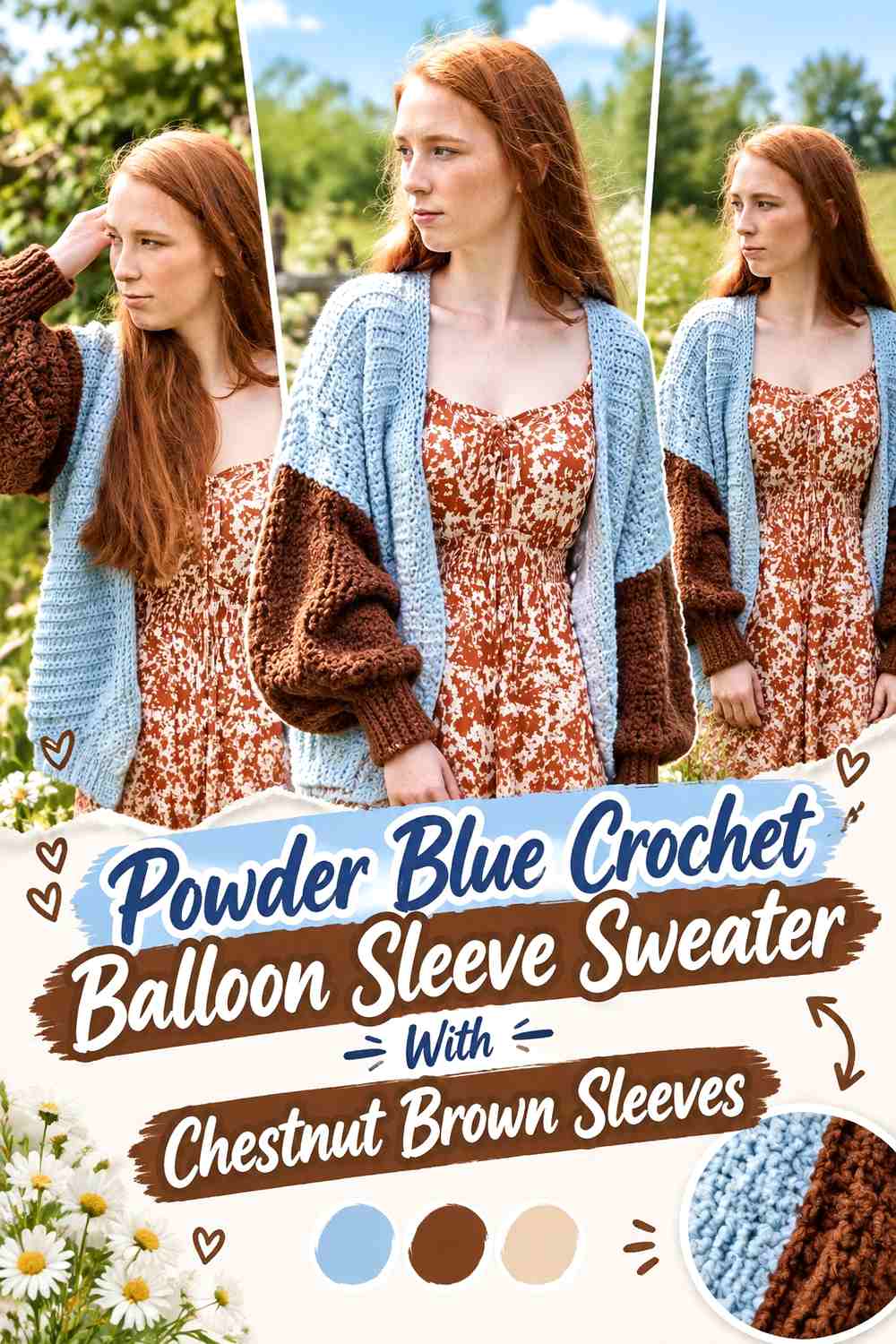
Use Powder Blue across the front and back body panels and let Chestnut Brown cover both balloon sleeves. The darker sleeves become the strongest visual elements, making their volume appear even more deliberate against the lighter torso.
Chestnut Brown Makes the Powder Blue Balloon Sleeves Look More Substantial
Because Chestnut Brown is darker, full brown sleeves can visually carry more weight than the Powder Blue body. Keep both sleeves the same color from shoulder to cuff if the oversized silhouette is intended to be the main feature.
Powder Blue Can Keep the Chestnut Brown Sleeves From Overwhelming the Torso
A broad uninterrupted Powder Blue body provides enough light surface to balance the two dark sleeves. Avoid adding large Chestnut Brown torso blocks unless you deliberately want the sweater to become brown-dominant.
Creator Credit: Crochet with Carrie
3. Chestnut Brown Crochet Balloon Sleeve Sweater With Powder Blue Body Panel
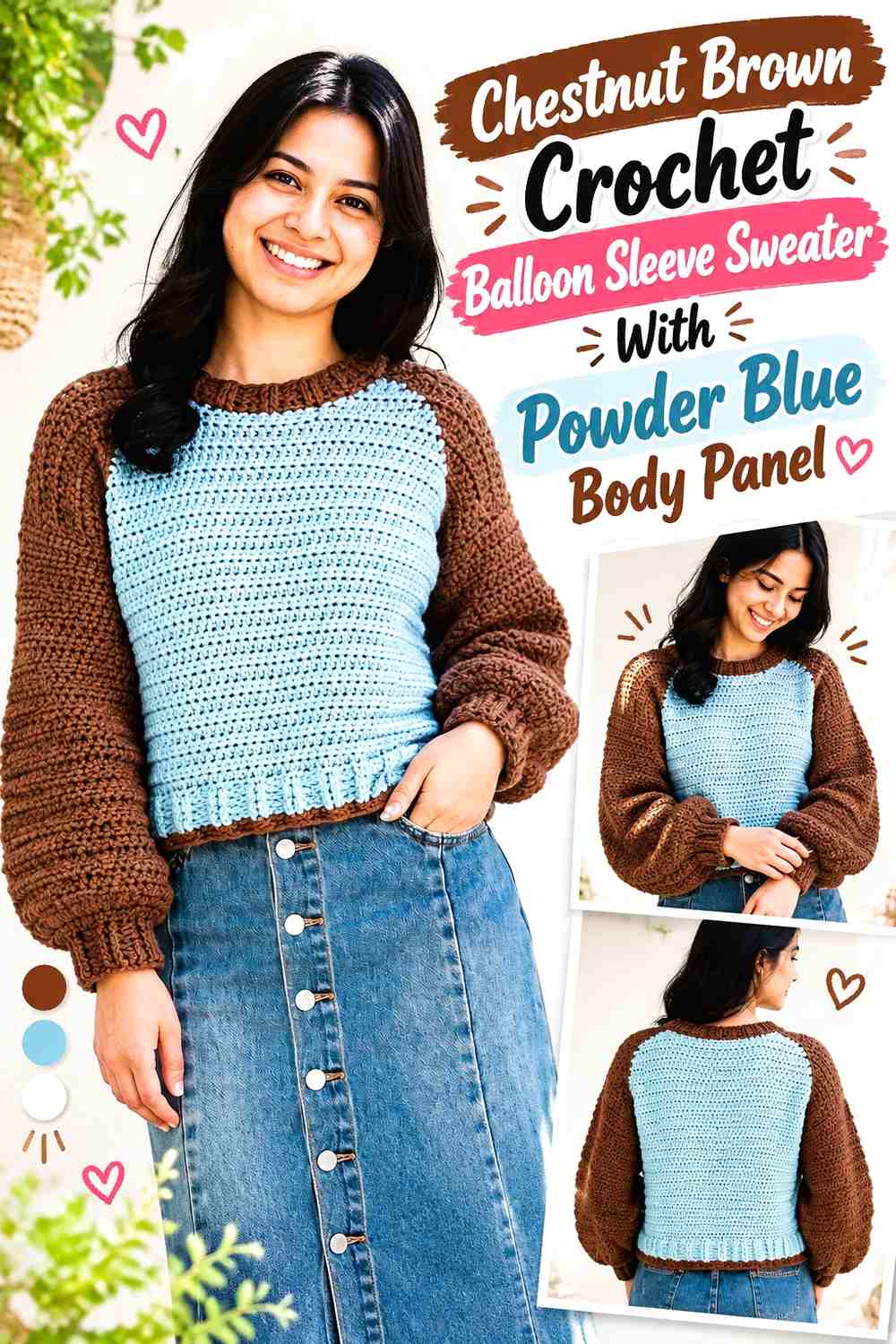
Keep the sweater primarily Chestnut Brown but introduce one substantial Powder Blue panel through the front. The lighter center gives the torso a clear focal area while the Chestnut Brown balloon sleeves remain visually connected to the sides and back.
Chestnut Brown Can Frame the Powder Blue Sweater Panel
Use Chestnut Brown around both sides of the front panel so Powder Blue remains contained rather than spreading into an irregular color block. This framing also connects the torso directly to the brown sleeves.
Powder Blue Should Be Wide Enough to Read as a True Chestnut Brown Panel Contrast
A very narrow stripe may look like piping instead of a deliberate body section. Give Powder Blue enough visual area to show the sweater’s stitch texture while leaving Chestnut Brown dominant overall.
Creator Credit: forthefrills
4. Chestnut Brown Crochet Balloon Sleeve Sweater With Powder Blue Yoke
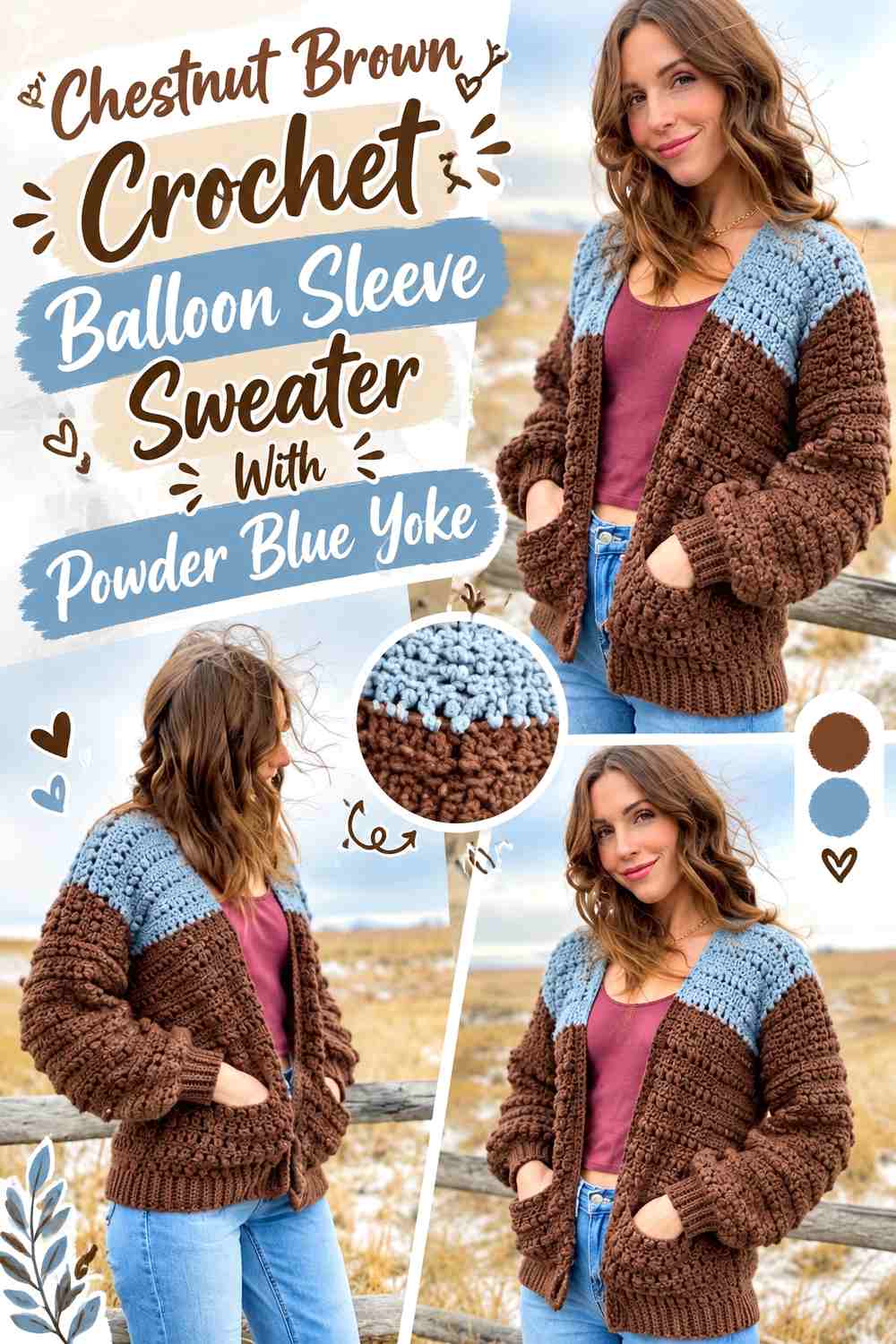
Concentrate Powder Blue around the upper chest and shoulders, then change to Chestnut Brown for the lower body and balloon sleeves. This moves the lightest color upward and creates a different balance from cuff- or hem-focused designs.
Powder Blue Can Separate the Chestnut Brown Shoulder Area
A Powder Blue yoke creates a clear upper frame and makes the transition into darker sleeves noticeable. Keep the color boundary consistent around the front and back when the construction allows it.
Chestnut Brown Should Continue Strongly Through the Powder Blue Yoke Transition
Let Chestnut Brown take over most of each balloon sleeve and the lower body. That large darker field prevents the yoke from making the sweater feel evenly divided between the two shades.
Repeat Powder Blue Sparingly Against the Chestnut Brown Sleeves
If the yoke feels disconnected, a small Powder Blue cuff or neckline detail can echo it. Avoid adding several unrelated pale stripes that compete with the clean upper color block.
Creator Credit: Evelyn And Peter Crochet
5. Powder Blue Crochet Balloon Sleeve Sweater With Chestnut Brown Ribbing
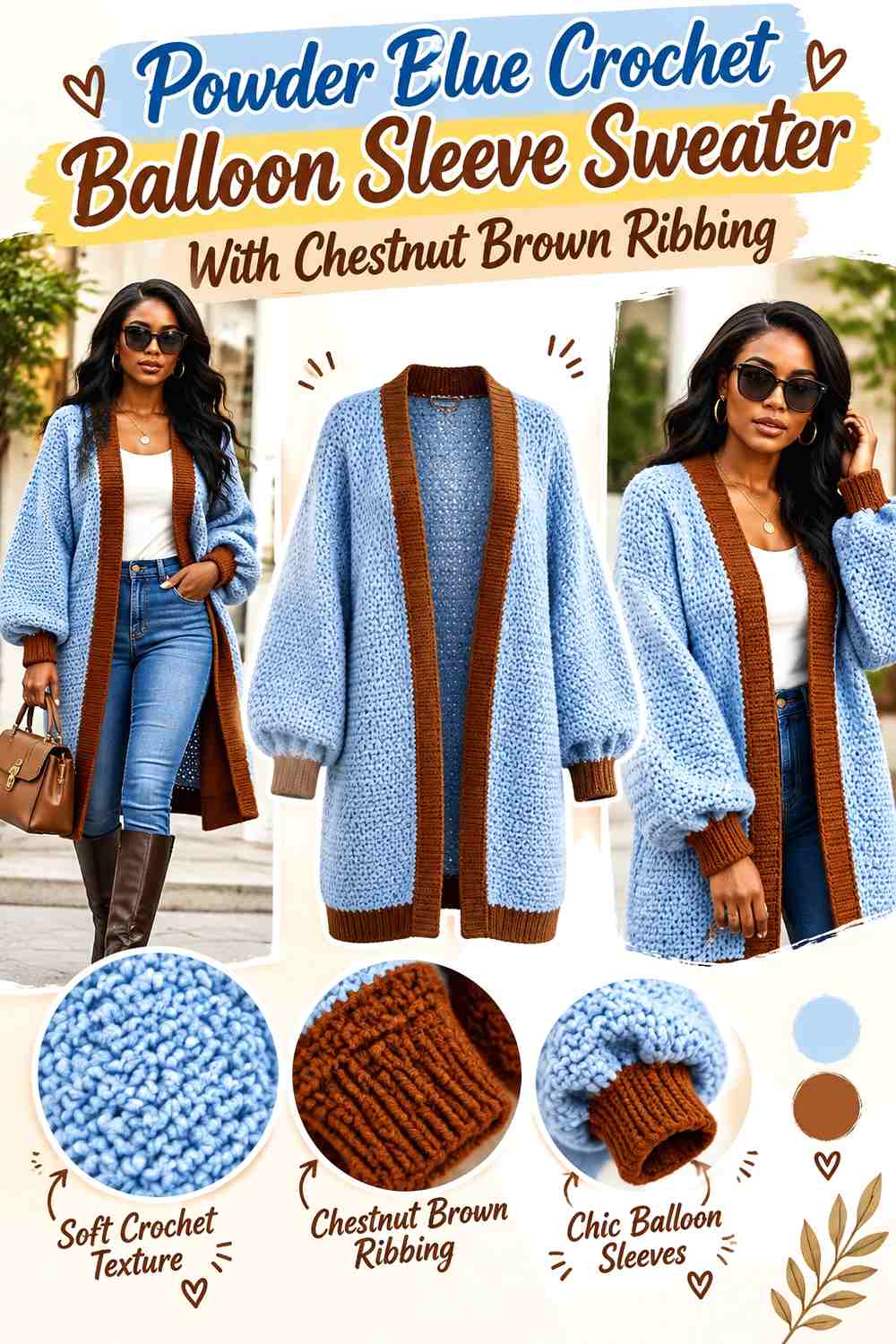
Let Powder Blue cover the broad body and sleeve surfaces, then use Chestnut Brown consistently in the cuffs, hem, and neckline ribbing. The dark borders frame the lighter sweater without interrupting the balloon sleeve fabric itself.
Powder Blue Can Keep Large Balloon Sleeves Visually Light
A continuous Powder Blue sleeve allows folds, texture, and sleeve volume to remain easy to see. This is useful when the sweater already has substantial sleeve width and does not need extra internal color changes.
Chestnut Brown Can Frame the Powder Blue Sweater at Every Ribbed Edge
Repeat Chestnut Brown at the cuffs, hem, and neckline if those ribbed areas are structurally compatible. The repetition links separate parts of the garment and gives Powder Blue a clear perimeter.
Creator Credit: Shyler crochets
6. Chestnut Brown Cropped Crochet Balloon Sleeve Sweater With Powder Blue Hem
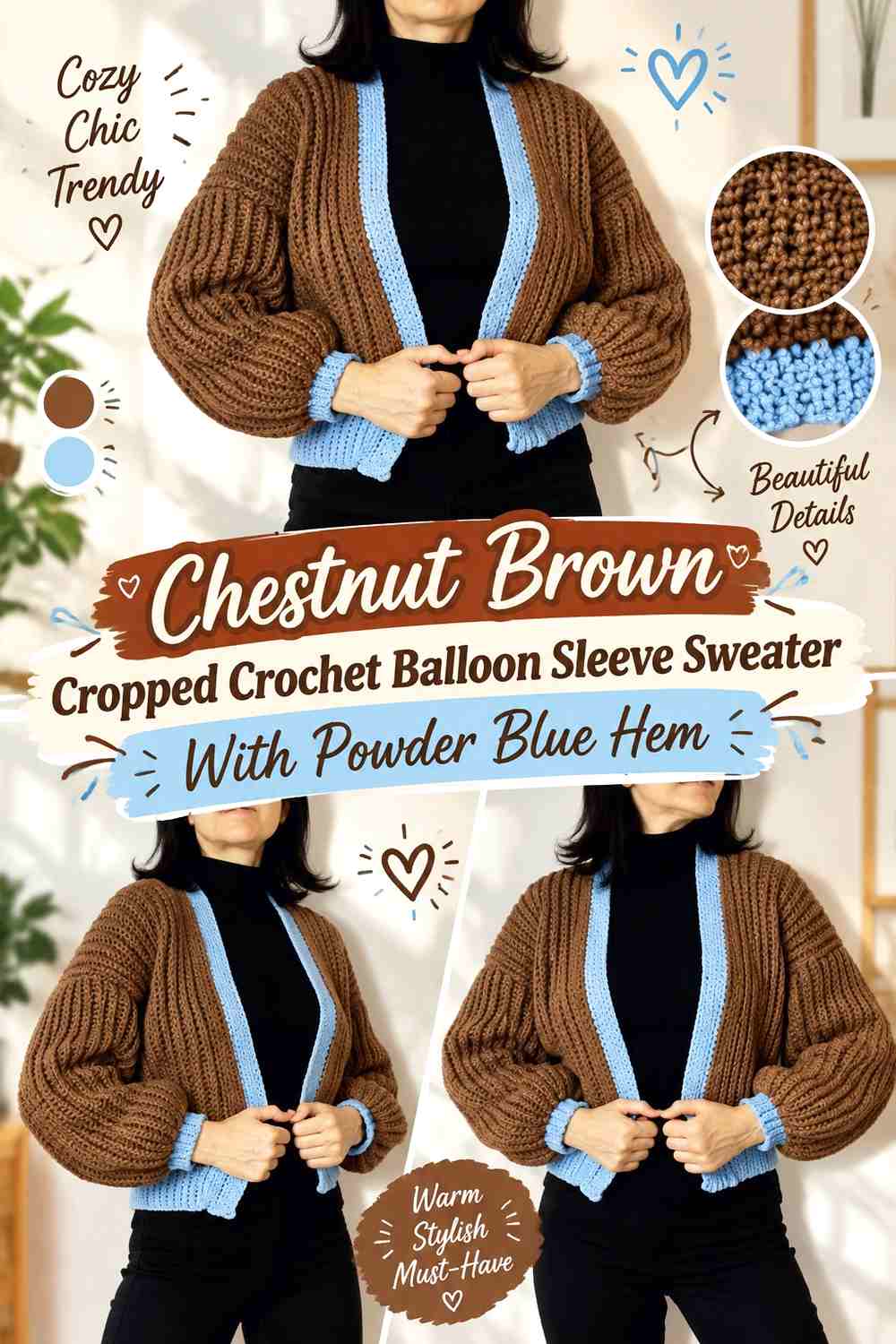
A cropped sweater puts the lower hem close to the widest part of the sleeves, so a Powder Blue waistband can become an important balancing feature. Keep the body and sleeves Chestnut Brown and let the light hem form a defined horizontal endpoint.
Chestnut Brown Can Keep the Cropped Balloon Sleeve Sweater Cohesive
Using one dark shade through both torso and sleeves allows the cropped proportion to remain the primary structural feature. The color does not need to change across every panel.
Powder Blue Can Give the Chestnut Brown Cropped Hem More Definition
A Powder Blue hem creates a visible stop beneath the brown torso. Keep the blue border relatively compact if you want the cropped body to remain primarily Chestnut Brown.
Creator Credit: By StellaM
7. Chestnut Brown Crochet Balloon Sleeve Sweater With Powder Blue Forearms
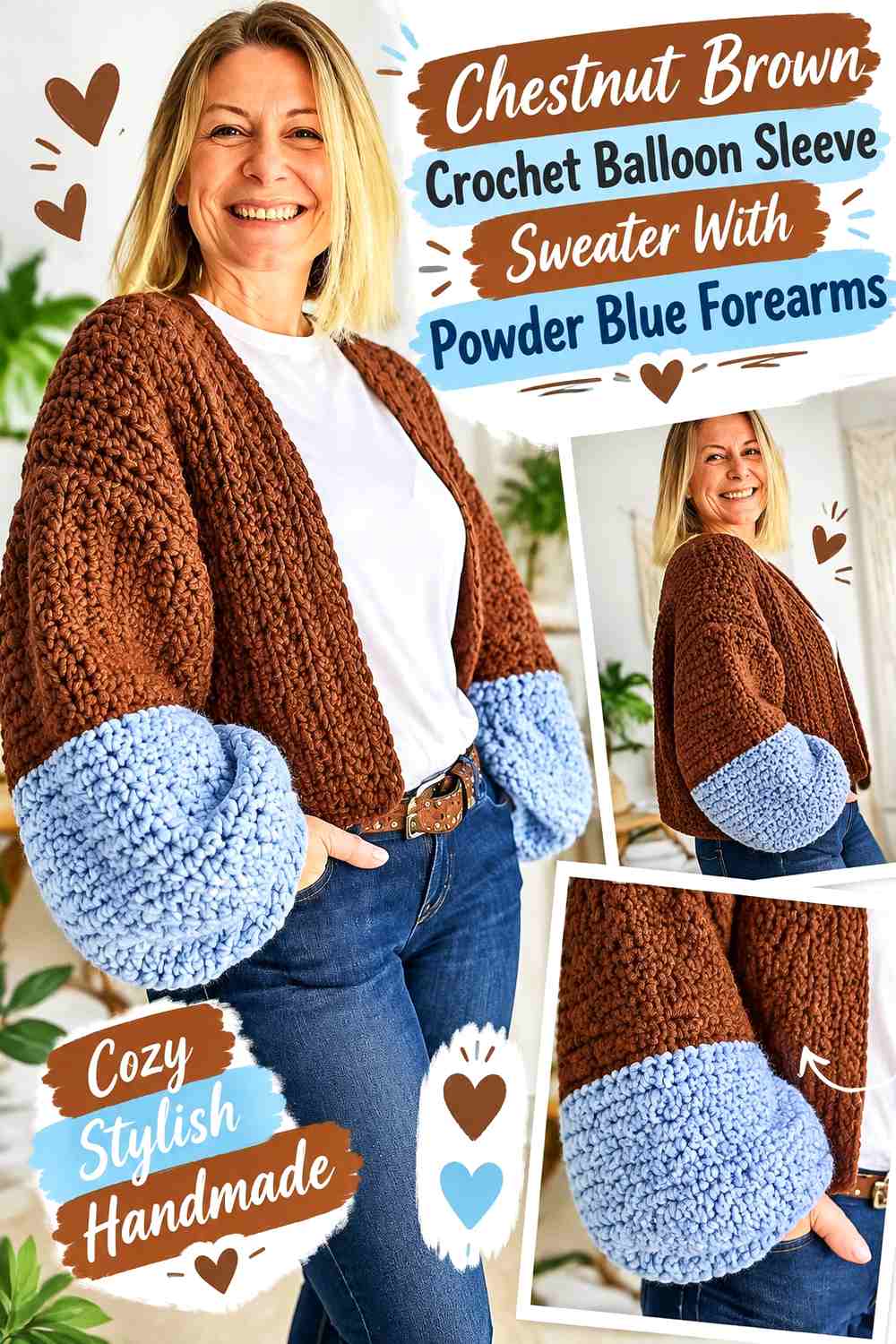
Use Chestnut Brown from the shoulders through most of each balloon sleeve, then move into Powder Blue before the final cuff. This gives the sleeves a larger two-color treatment than a simple cuff while keeping their upper volume grounded.
Chestnut Brown Should Control the Widest Sleeve Area
Keep the most expanded part of each sleeve Chestnut Brown so the sweater remains dark-dominant. This also creates a clear visual distinction between balloon volume and the narrower Powder Blue section below.
Powder Blue Can Mark the Chestnut Brown Sleeve Taper
Introduce Powder Blue where the sleeve begins moving toward the wrist. The light block makes the narrowing process visible and gives the cuffs a natural color connection if they also remain blue.
Keep Powder Blue Forearms Symmetrical Against Chestnut Brown
Because both arms sit on either side of the torso, mismatched color-change heights become noticeable. Compare the sleeves side by side before finishing.
Creator Credit: Learn To Knit And Crochet with KingAndEye
8. Powder Blue Textured Crochet Balloon Sleeve Sweater With Chestnut Brown Cuffs
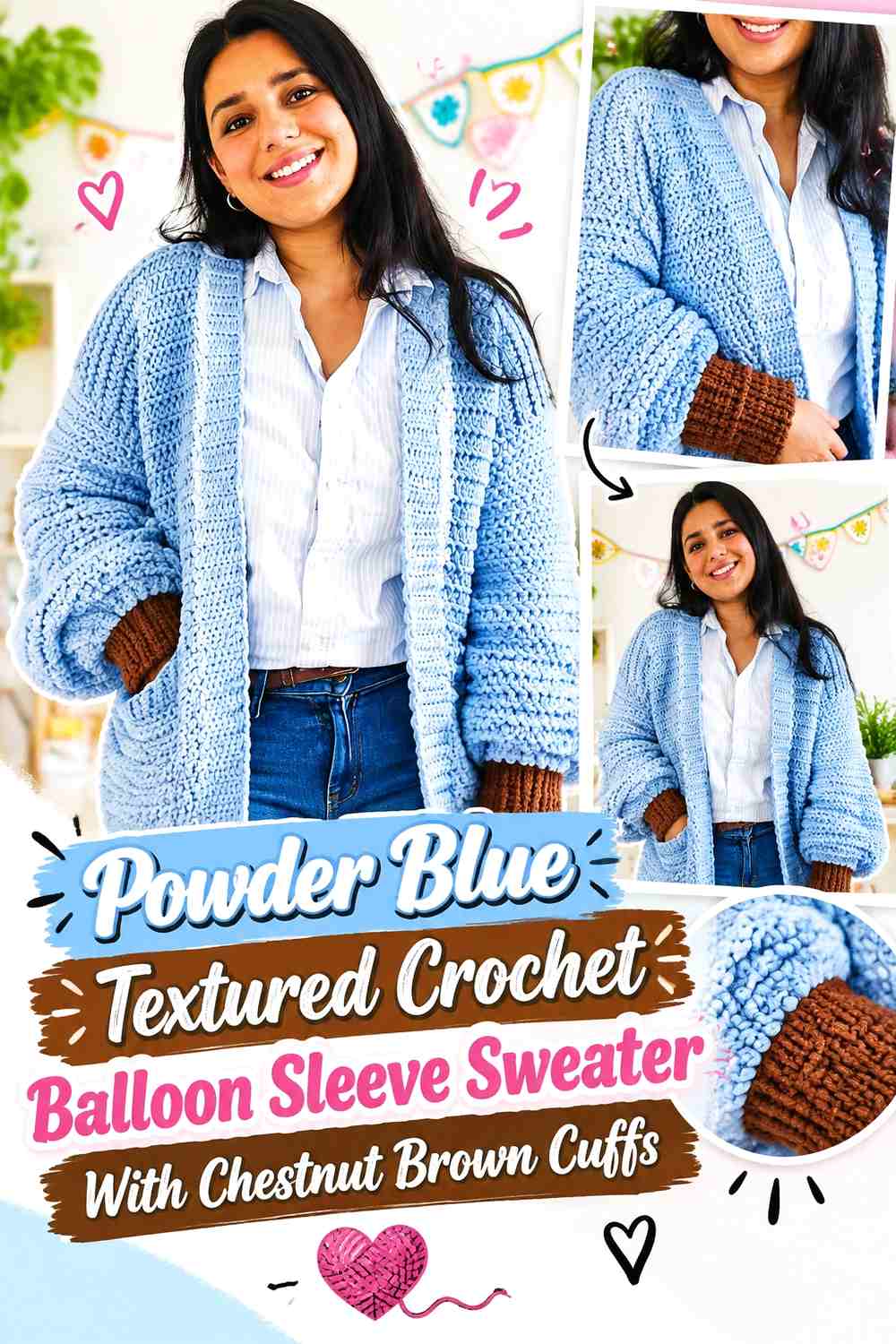
Use Powder Blue for raised or textured sweater fabric and reserve Chestnut Brown for the cuff. The lighter main shade gives dimensional stitches room to show, while the darker wrist provides a strong endpoint for each balloon sleeve.
Powder Blue Can Keep Sweater Texture Visible Across the Balloon Sleeves
Let the blue cover the complete textured repeat rather than changing color inside every raised section. Shadows created by the crochet already provide enough internal variation.
Chestnut Brown Can Ground the Powder Blue Balloon Cuffs
Use Chestnut Brown through the complete fitted cuff. The dark band visually contracts the wrist and gives the much lighter sleeve a firm ending.
Creator Credit: Dublin Bay Crochet
9. Chestnut Brown Crochet Balloon Sleeve Sweater With Powder Blue Vertical Sleeve Panels

Instead of horizontal blocks, introduce Powder Blue as a vertical line or panel running through each Chestnut Brown balloon sleeve. The accent follows the sleeve length and can make the large silhouette feel more directional.
Chestnut Brown Should Remain Visible on Both Sides of the Powder Blue Sleeve Panel
Keep enough brown surface around the lighter section for Chestnut Brown to stay dominant. A very wide Powder Blue panel would effectively reverse the sleeve hierarchy.
Powder Blue Can Lengthen the Visual Line of Chestnut Brown Balloon Sleeves
Run the blue detail along an existing stitch column or panel boundary where possible. Color placement works better when it reinforces the crochet construction rather than crossing its texture arbitrarily.
Keep Powder Blue Aligned Across Both Chestnut Brown Sleeves
Check the panel position from the front and back before assembly. Symmetry matters because the vertical contrast becomes more noticeable than a small cuff accent.
Creator Credit: Loops Only
10. Chestnut Brown Openwork Crochet Balloon Sleeve Sweater With Powder Blue Ribbing
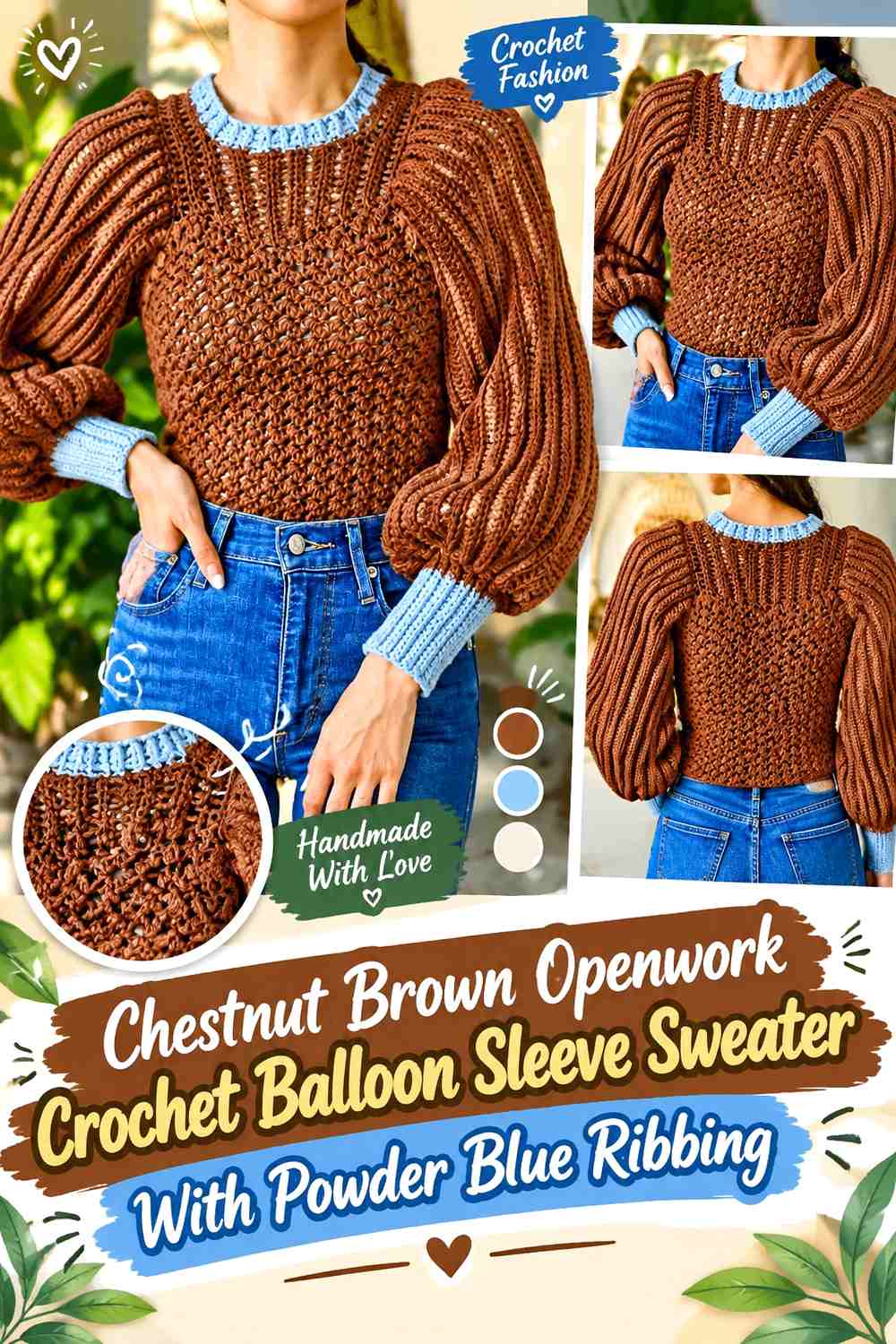
Use Chestnut Brown through an airy or openwork sweater body and balloon sleeves, then introduce Powder Blue only through solid ribbed finishes. The contrast in both color and stitch density creates clear structural boundaries.
Chestnut Brown Can Keep the Openwork Sweater Unified
Let one brown shade travel through the main open stitch so negative space remains the primary surface detail. Frequent Powder Blue changes inside every opening would make the sweater considerably busier.
Powder Blue Can Separate Chestnut Brown Openwork From the Cuffs
A solid Powder Blue cuff provides a strong contrast to the more open Chestnut Brown sleeve above it. The same pale ribbing can be repeated at the hem or neck when you want the finishes to coordinate.
Creator Credit: TCDDIY
11. Powder Blue Crochet Balloon Sleeve Sweater With Chestnut Brown Side Panels

Keep the central front and back areas Powder Blue while placing Chestnut Brown through side sections that continue toward the underarm. This concentrates the darker shade around the outer torso instead of at horizontal edges.
Powder Blue Should Stay Broad Through the Center of the Sweater
Give Powder Blue enough width to remain the main visual field. A narrow center would make the sweater read as Chestnut Brown with a blue stripe rather than a blue sweater with brown side definition.
Chestnut Brown Can Connect Powder Blue Side Panels to the Balloon Sleeves
Carry the darker color near the underarm or sleeve attachment when compatible with the construction. This makes the brown side sections feel related to the sleeve structure instead of isolated on the torso.
Creator Credit: Hannah Drapinski
12. Chestnut Brown Crochet Balloon Sleeve Sweater With Powder Blue Neckline and Cuffs

This is one of the most restrained uses of Powder Blue. Keep the sweater completely Chestnut Brown through the torso and balloon sleeves, then repeat the lighter shade at the neck and wrists.
Chestnut Brown Can Let the Balloon Sleeve Silhouette Do Most of the Work
A nearly solid brown sweater focuses attention on sleeve volume, body proportion, and stitch texture. It is useful when you want a two-color palette without obvious body color blocking.
Powder Blue Can Connect the Chestnut Brown Neckline to the Cuffs
Using Powder Blue at all three openings creates a repeated finishing language. The neckline does not need to be as wide as the cuffs; matching color alone can create enough connection.
Avoid Adding Powder Blue to Every Chestnut Brown Edge
If neck and cuffs already provide visible contrast, keeping the hem brown may preserve a cleaner hierarchy and stop the accent from becoming too evenly distributed.
Creator Credit: Jennyandteddy crochet.
13. Chestnut Brown and Powder Blue Split-Color Crochet Balloon Sleeve Sweater
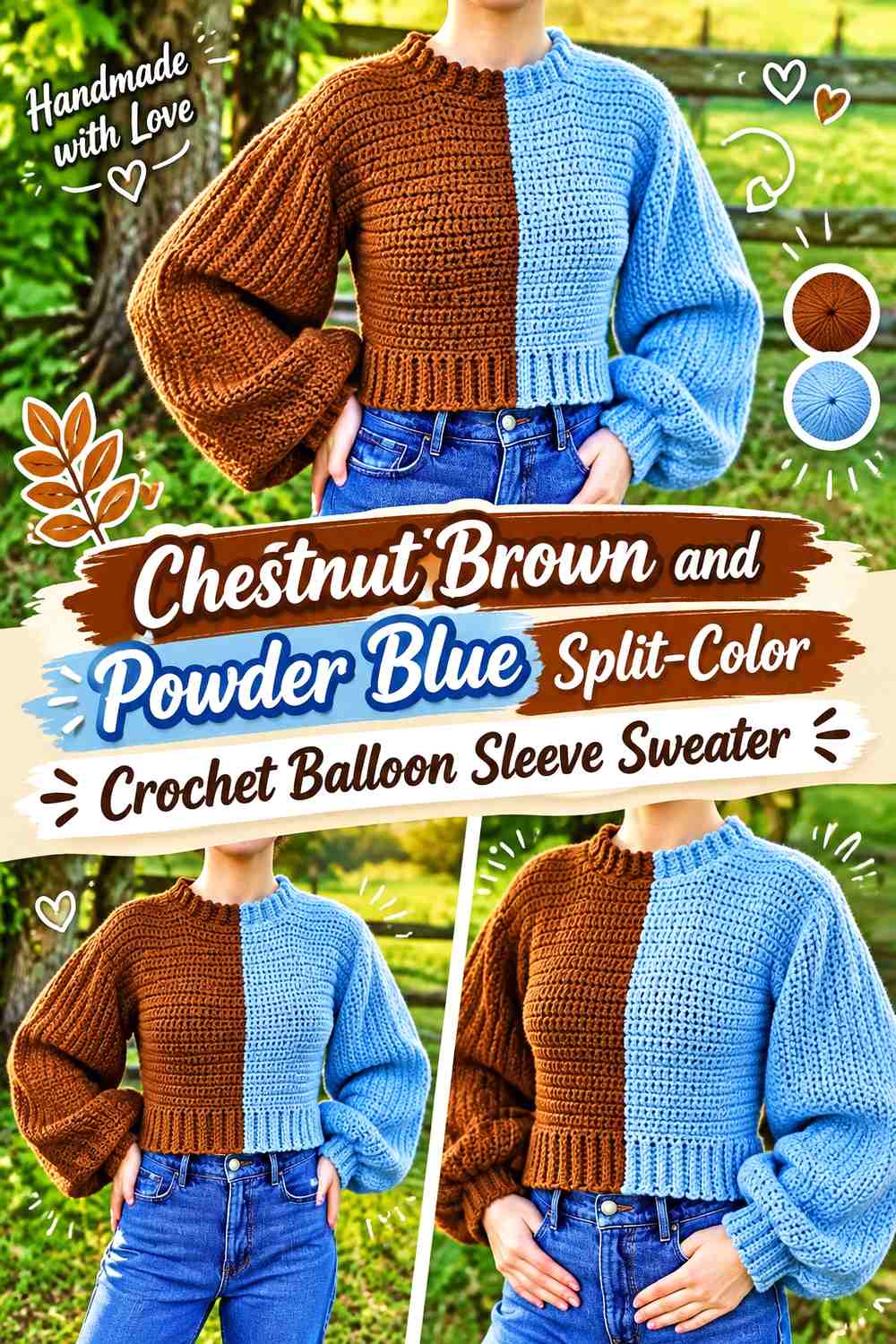
Divide the sweater into two substantial color fields rather than stripes. One side can emphasize Chestnut Brown while the other carries Powder Blue, with the sleeve colors following the corresponding torso sections.
Chestnut Brown and Powder Blue Need a Clean Split Across the Sweater
Keep the division aligned through the major body panels so the concept remains obvious. Uneven patches around the center can weaken the intended graphic effect.
Powder Blue Sleeves Should Relate Directly to the Chestnut Brown Body Split
If one sleeve is Powder Blue and the other Chestnut Brown, connect each sleeve to the corresponding torso color. That structural relationship makes the asymmetry intentional.
Balance Chestnut Brown and Powder Blue at the Ribbed Edges
Choose whether ribbing follows the color directly above it or deliberately reverses the shades. Use one rule consistently across cuffs and hem rather than making each edge independent.
Creator Credit: Anne Claire’s Crocheting Club
14. Powder Blue Crochet Balloon Sleeve Sweater With Chestnut Brown Shoulder Frame
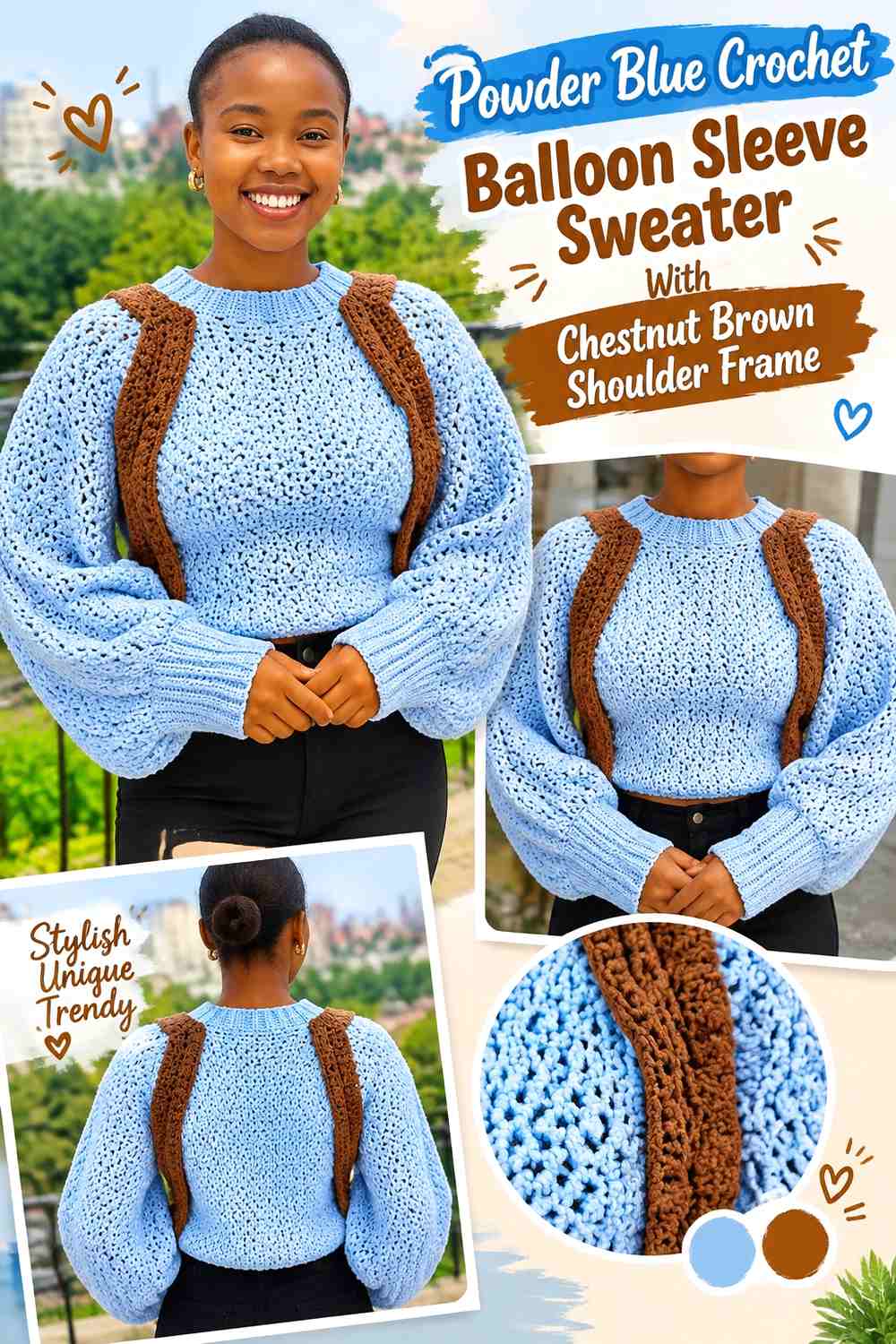
For the final direction, make Powder Blue responsible for most of the body and sleeve fabric while Chestnut Brown defines the upper shoulder and neckline area. The dark upper frame balances the large pale balloon sleeves without covering their volume.
Powder Blue Can Carry Both the Sweater Body and Balloon Sleeves
Using one lighter shade over most of the garment makes the silhouette feel connected from torso to wrist. It also allows shadows in the oversized sleeves to provide natural variation.
Chestnut Brown Can Frame the Powder Blue Shoulders and Neckline
Place Chestnut Brown around a yoke, shoulder boundary, or neckline section rather than scattering it through the lower body. Concentrating the dark color near the top creates a clear visual anchor.
Repeat Chestnut Brown Lightly Against the Powder Blue Cuffs
A small cuff detail can echo the shoulder frame if the sweater needs more balance. Keep it narrower than the upper brown section so the shoulders remain the main dark focal area.
Creator Credit: KnotKisses
Comparing Chestnut Brown and Powder Blue Balloon Sleeve Sweater Directions
For a strongly Chestnut Brown sweater, Ideas 1, 3, 4, 6, 7, 9, 10, and 12 keep the darker shade across most of the body or sleeves. Powder Blue is used mainly for cuffs, panels, hems, yokes, or finishing details.
Ideas 2, 5, 8, 11, and 14 give Powder Blue more visual territory. These work when you want the oversized sleeve shape or textured body to appear lighter while Chestnut Brown provides framing and weight.
Idea 13 gives the colors the most equal importance. The split-color arrangement makes the palette itself a primary design feature rather than using one shade mainly as an accent.
If balloon sleeve volume is the feature you want noticed first, give the sleeves a different color from the torso or use contrast at the fitted cuff. If you want the sweater to feel calmer, keep body and sleeves in the same shade and move the second color to the neckline, hem, or other ribbed boundaries.
Conclusion
Chestnut Brown and Powder Blue can make the same balloon sleeve concept feel grounded, light, graphic, or softly contrasted depending on where the colors meet.
For a Chestnut Brown-dominant sweater, Ideas 1, 6, and 12 keep Powder Blue around carefully controlled edges. Ideas 2, 5, and 14 make Powder Blue the broader field while Chestnut Brown creates definition. If the sleeves themselves should become the main color feature, Ideas 2, 7, and 9 place the strongest contrast directly on the arms.
Before committing to a complete sweater, compare the two shades in the actual body stitch and ribbing you plan to use. Balloon sleeves create folds and shadows, so the apparent contrast can differ between a flat torso panel and a gathered sleeve. Follow each credited tutorial for its original construction and use the Chestnut Brown and Powder Blue placement as a separate adaptation.
Frequently Asked Questions
Should Chestnut Brown or Powder Blue dominate a crochet balloon sleeve sweater?
Choose Chestnut Brown when you want a deeper, grounded sweater with Powder Blue highlighting cuffs, hems, or panels. Choose Powder Blue when you want the larger body or balloon sleeves to appear lighter and use Chestnut Brown for structural definition.
Where should Powder Blue go on a Chestnut Brown balloon sleeve sweater?
Useful placements include fitted cuffs, a yoke, center panel, neckline, hem, or lower forearm section. Choose areas that connect to the sweater’s construction rather than scattering blue accents randomly.
How can Powder Blue make Chestnut Brown balloon sleeves easier to see?
Place Powder Blue where the sleeve changes shape, especially at the fitted wrist or where a panel follows the sleeve length. The lighter color can make the change from wide sleeve to narrow cuff more obvious.
Can the balloon sleeves be Powder Blue while the sweater body is Chestnut Brown?
Yes. This produces one of the strongest two-color layouts because each large sleeve becomes a light block beside the darker torso. Keep the neckline and hem simpler if you want the sleeves to remain the main focus.
Should Chestnut Brown cuffs match a Powder Blue sweater hem?
They can. Repeating Chestnut Brown at cuffs, hem, and neckline gives a Powder Blue sweater a coordinated dark frame. You can also limit brown to only one or two edges for a lighter overall result.
How can I keep a Chestnut Brown and Powder Blue sweater from looking too color-blocked?
Use one shade continuously through both the torso and sleeves, then place the second shade only at cuffs, neckline, or hem. This keeps the palette visible without dividing the garment into several large sections.
Which shade works better for textured crochet sweater panels?
Powder Blue can make smaller raised or ribbed details easier to see, while Chestnut Brown can give larger texture a deeper, more unified appearance. Test the exact stitch because texture and shadow can change how strongly the two shades contrast.
How can I substitute colors while preserving the Chestnut Brown and Powder Blue balance?
For Chestnut Brown, choose another medium-to-dark warm brown that remains visually deeper than the blue. For Powder Blue, choose a softened pale blue that still provides clear light/dark separation from the brown. Preserve the color roles rather than relying on exact shade names.