A wasabi-and-ivory cardigan already has strong graphic potential, but adding both a pug motif and checker trim means the details need clear roles. The most successful versions do not scatter every feature everywhere. Instead, one element leads: perhaps a pug portrait across the back, a checkerboard front border, pug pockets, or checkered cuffs.

The 12 ideas below use different cardigan tutorials as construction references. The wasabi-and-ivory palette, checker placement, and pug details are adaptation ideas rather than claims that the tutorial creators made these exact designs. Keep each creator’s instructions available for the actual garment construction, sizing, and finishing.
Quick List
- Wasabi and Ivory Allover Checker Pug Crochet Cardigan
- Cropped Pug Crochet Cardigan With Checker Button Band
- Oversized Pug Pocket Crochet Cardigan With Checker Cuffs
- Ivory Mesh Pug Crochet Cardigan With Wasabi Checker Border
- Structured Collar Pug Crochet Cardigan With Checker Placket
- Lace Pug Crochet Cardigan With Checker Hem
- Zippered Granny Square Pug Crochet Cardigan
- Cocoon Pug Back-Motif Crochet Cardigan With Checker Edging
- Granny-Stitch Pug Crochet Cardigan With Checker Sleeve Bands
- Pug Portrait Patchwork Crochet Cardigan
- Classic Collar Pug Crochet Cardigan With Checker Pockets
- Balloon-Sleeve Pug Crochet Cardigan With Checker Cuffs
Decide Where the Pug Motif Belongs Before Planning the Checks
A pug motif can function as a focal point or as a repeated accent. Those are very different design directions. One substantial motif across the back leaves room for checker trim around the cardigan edges, while several small pug squares make the garment much busier and usually call for quieter finishing.
Placement also affects construction. A motif incorporated into a modular square cardigan can become part of the garment layout. On a solid paneled cardigan, a separately made appliqué or planned colorwork panel may be more practical. Open mesh needs another approach because a detailed animal face can lose definition when worked directly into widely spaced stitches.
Sketch the whole cardigan before making decorative pieces. Mark the front opening, shoulders, pockets, cuffs, and back center. That quickly shows whether the checker trim and pug motif are competing for the same visual space.
Plan Wasabi and Ivory Around the Cardigan’s Structure
Wasabi can vary from bright yellow-green to a more muted botanical green depending on the yarn, so judge the actual skein rather than relying on its color name. Ivory provides a useful light contrast, but the difference between the two colors should still be clear enough for individual checks to remain readable.
For a quieter cardigan, use one color across most of the body and reserve the other for checker borders. For a graphic version, alternate the colors through larger blocks or modular squares. You do not need a 50/50 split.
Checker scale matters too. Tiny checks repeated around every cuff, hem, pocket, neckline, and placket can overwhelm a pug focal motif. A broader checker band in two or three intentional locations usually gives the eye more room.
Check Fit Before Adding Decorative Weight
Decorative crochet changes more than appearance. Dense checker borders can behave differently from a softer body stitch, while appliqués and layered motifs add localized thickness. Pockets add another layer to the fronts.
Measure or try on the basic cardigan at the checkpoints provided by the tutorial before committing to extensive decoration. Pay particular attention to shoulder width, sleeve length, front opening, and finished body length. If you substitute yarn, compare your fabric with the tutorial’s gauge and intended drape instead of assuming yarns of a similar color will behave alike.
1. Wasabi and Ivory Allover Checker Pug Crochet Cardigan
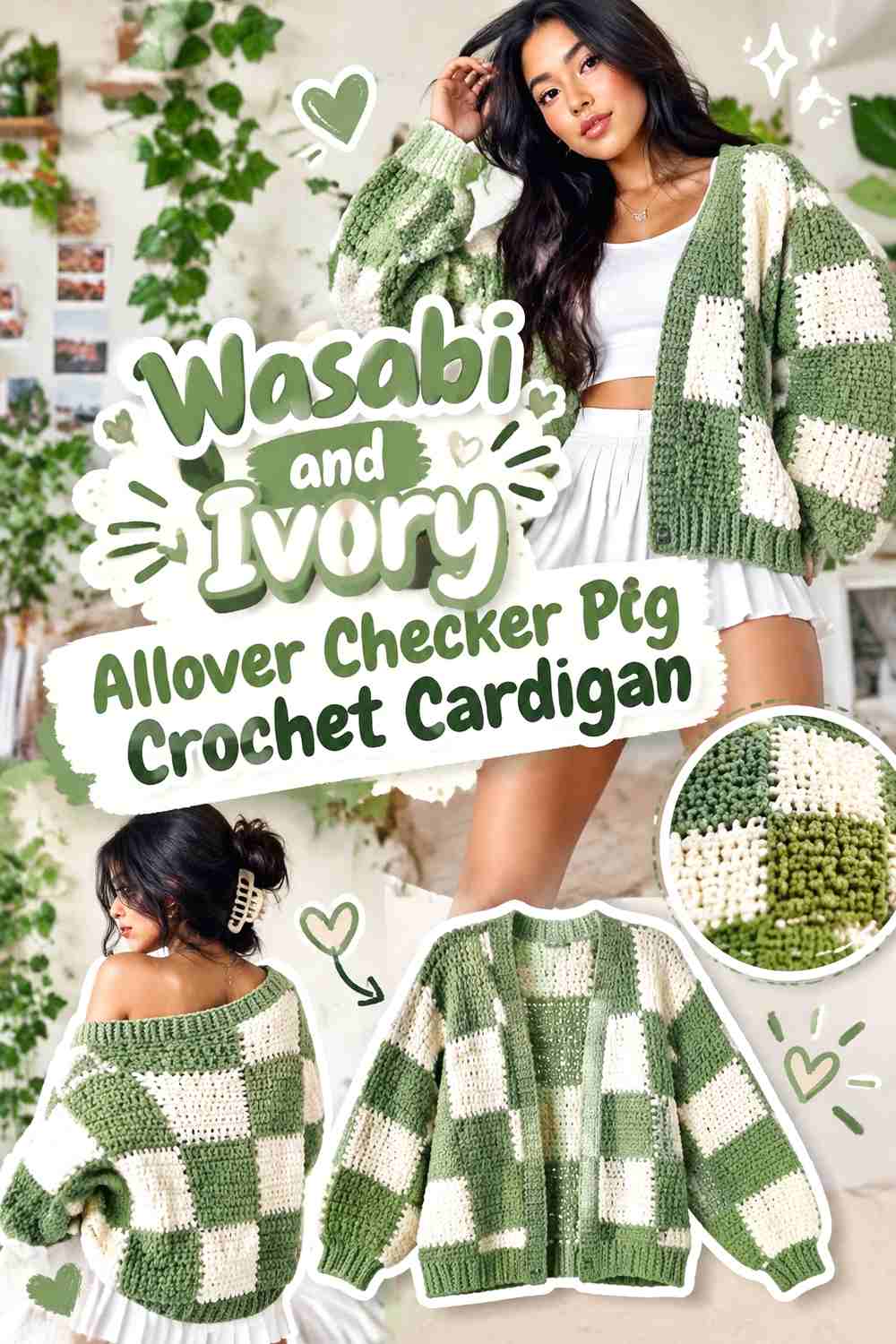
For the strongest checkerboard interpretation, use alternating wasabi and ivory blocks across the body and sleeves, then give the pug motif one prominent position rather than repeating it everywhere. A centered back motif or one chest motif can interrupt the grid deliberately while allowing the checkerboard to remain the main design language.
The ikoxun tutorial is a particularly relevant construction reference because it develops a patchwork cardigan from planned squares and includes the garment’s joining and finished cardigan structure. YouTube
Keep Every Crochet Checker Compatible in Size
A color change should not produce a dimensional change. Compare the finished dimensions of wasabi and ivory blocks periodically, especially if the two yarns feel slightly different in the hand.
A modular checkerboard becomes unforgiving once several small discrepancies accumulate across a front or back panel. Correcting individual blocks before assembly is much easier than trying to straighten an entire joined panel.
Give the Pug One Clear Focal Zone
The back offers the most uninterrupted space for a statement pug motif. Another option is to replace only one or two checker blocks on the front with pug-themed squares.
Avoid putting a detailed pug face into every available block unless an intentionally busy novelty cardigan is the goal. Leaving most checks plain gives the animal motif a reason to attract attention.
Preview the Checker Rhythm Around the Seams
Lay the front, back, and sleeve sections in approximate wearing position before joining. A perfect checker layout on separate flat pieces can produce unexpected same-color blocks where those pieces meet.
Decide whether you want the pattern to continue across seams or deliberately break there. Either can work; an accidental near-match tends to look less resolved.
Creator Credit: ikoxun
2. Cropped Pug Crochet Cardigan With Checker Button Band
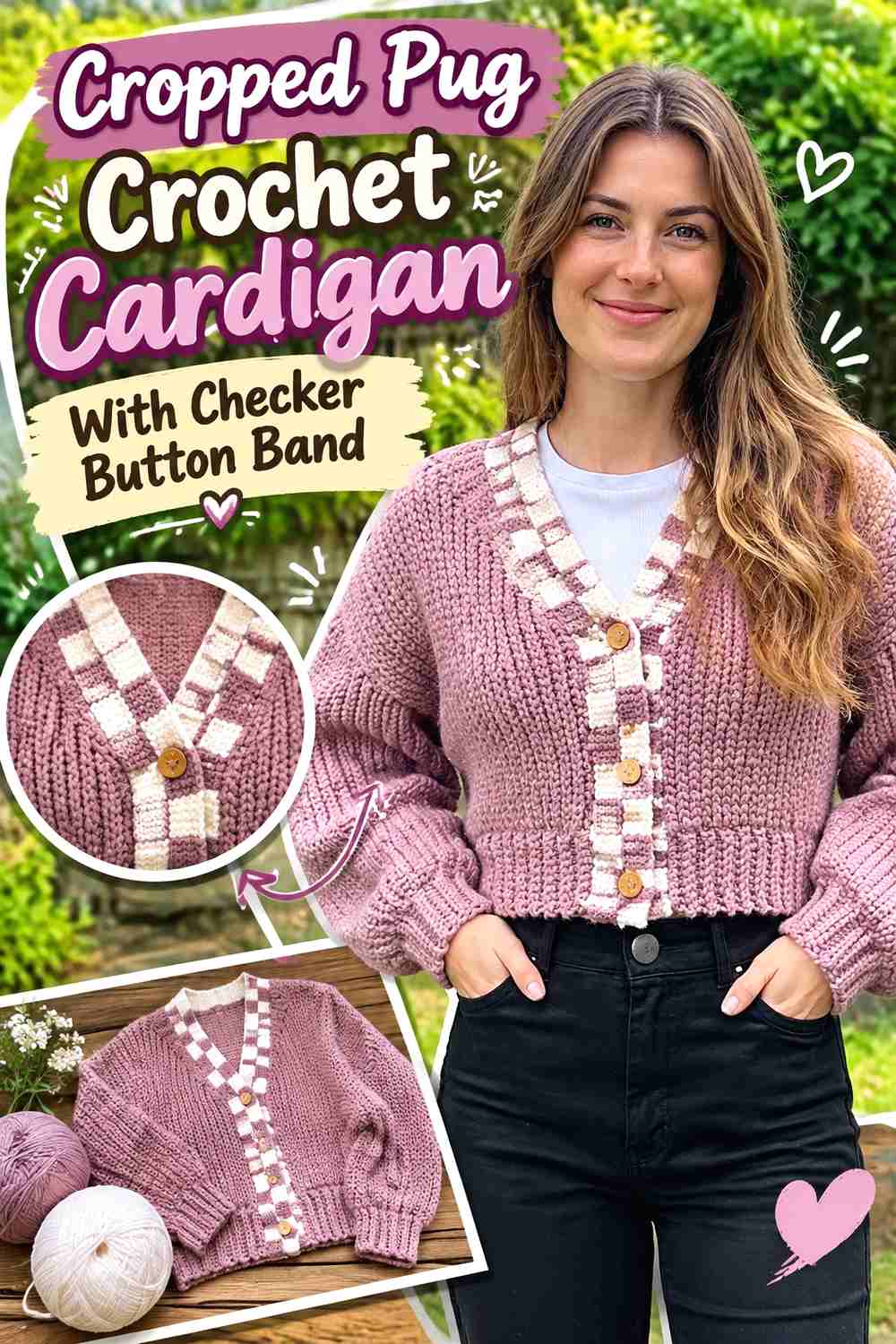
A cropped button cardigan gives the theme a more concentrated silhouette. Keep the main body mostly wasabi, use ivory through the checker button band and hem, and place a small pug motif on one upper front so it does not compete with the closure.
Stephanie Tashi’s tutorial demonstrates a cropped button-up cardigan with substantial ribbed finishing, sleeves, buttonholes, and a compact body shape, making it a useful base for this direction. YouTube
Choose the Crop Point Before Designing the Hem
The checker hem will add another visually strong horizontal line. Compare the underlying cardigan length with high-waisted pants, skirts, or dresses you expect to wear before deciding how much attention the lower border should receive.
Extending the body later may also change the proportion between the pug motif and the checker trim.
Let the Button Band Control the Checker Scale
A front band is narrow compared with a body panel. Large blocks may not fit gracefully, while extremely tiny checks can make the edge look fussy.
Plan the checker repeat according to the actual finished width of the band rather than choosing a square size in isolation.
Keep the Pug Away From a Crowded Closure
A small pug face or silhouette can sit above the bust or toward one side. Check its position with the cardigan buttoned, not only while the front panel lies flat.
Buttons, buttonholes, checker blocks, and an animal motif all create focal points. Giving them a little separation keeps the front readable.
Creator Credit: Stephanie Tashi
3. Oversized Pug Pocket Crochet Cardigan With Checker Cuffs
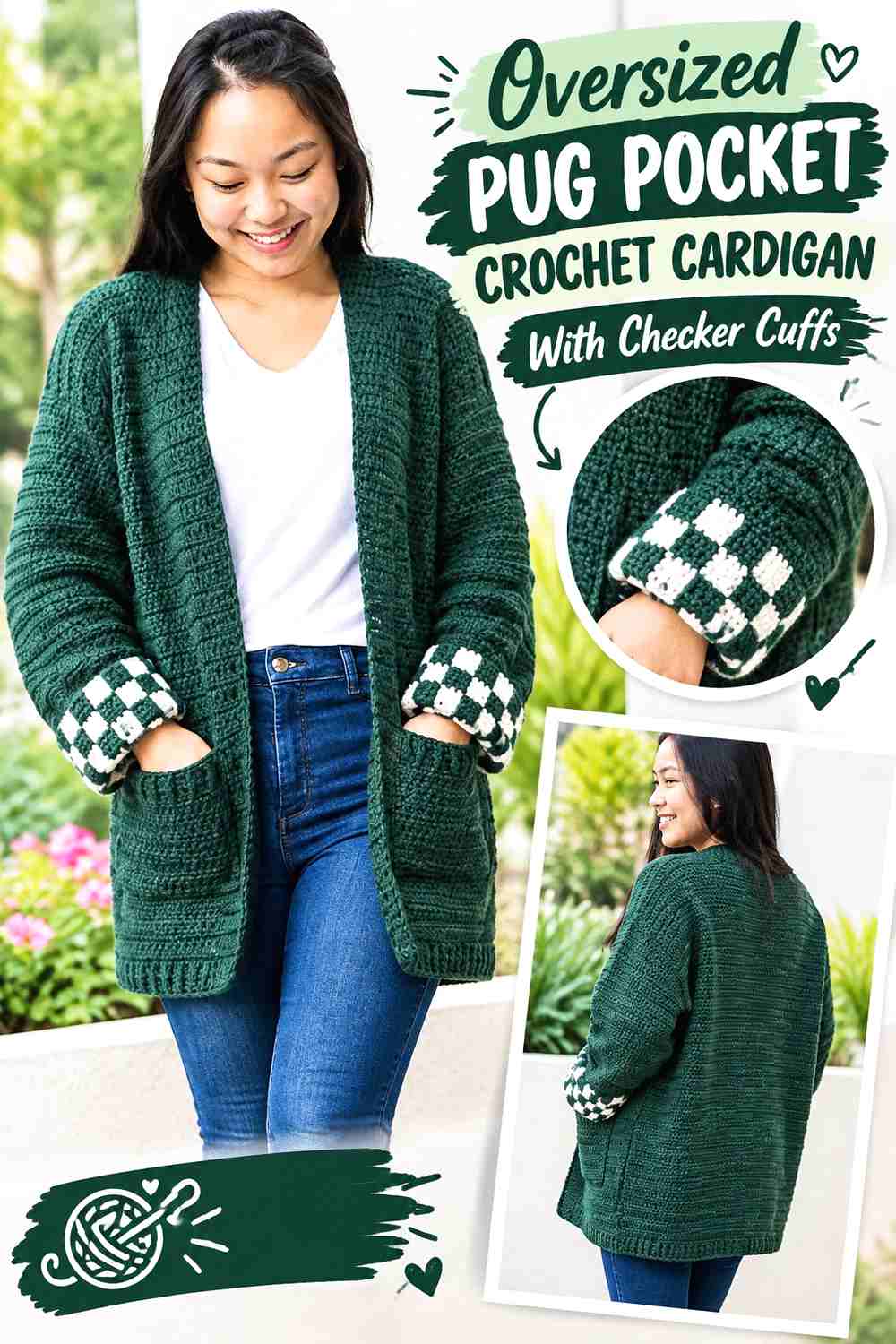
This version puts function and character at the front. Use an ivory or mostly ivory oversized body, make the cuffs in wasabi-and-ivory checks, and turn the two patch pockets into the main pug feature. One pocket could carry a face motif while the other uses a simpler paw or checker treatment.
The forthefrills tutorial provides an oversized cardigan construction with loose sleeves, ribbed finishing, and two prominent front pockets. YouTube
Treat the Crochet Pockets as Part of the Composition
Pocket position affects more than convenience when the pockets contain motifs. Pin or temporarily place them on the finished fronts and try the cardigan on before permanent attachment.
A perfectly centered pug on a loose pocket may shift visually once the cardigan drapes around the body.
Checker Cuffs Can Contain the Strongest Repetition
Repeated checks work naturally at paired cuffs because they give both sleeves a clear endpoint. This also keeps the rest of an oversized garment calmer.
If the pug pockets are already detailed, consider leaving the hem and front opening solid rather than surrounding every edge with more checks.
Extra Layers Can Change the Front Drape
A roomy cardigan has fabric designed to hang loosely. Dense pockets or heavily layered appliqués add localized weight to that fabric.
Use the tutorial’s pocket construction as your starting point and assess the fronts while the cardigan is hanging or being worn rather than judging them entirely on a table.
Creator Credit: forthefrills
4. Ivory Mesh Pug Crochet Cardigan With Wasabi Checker Border
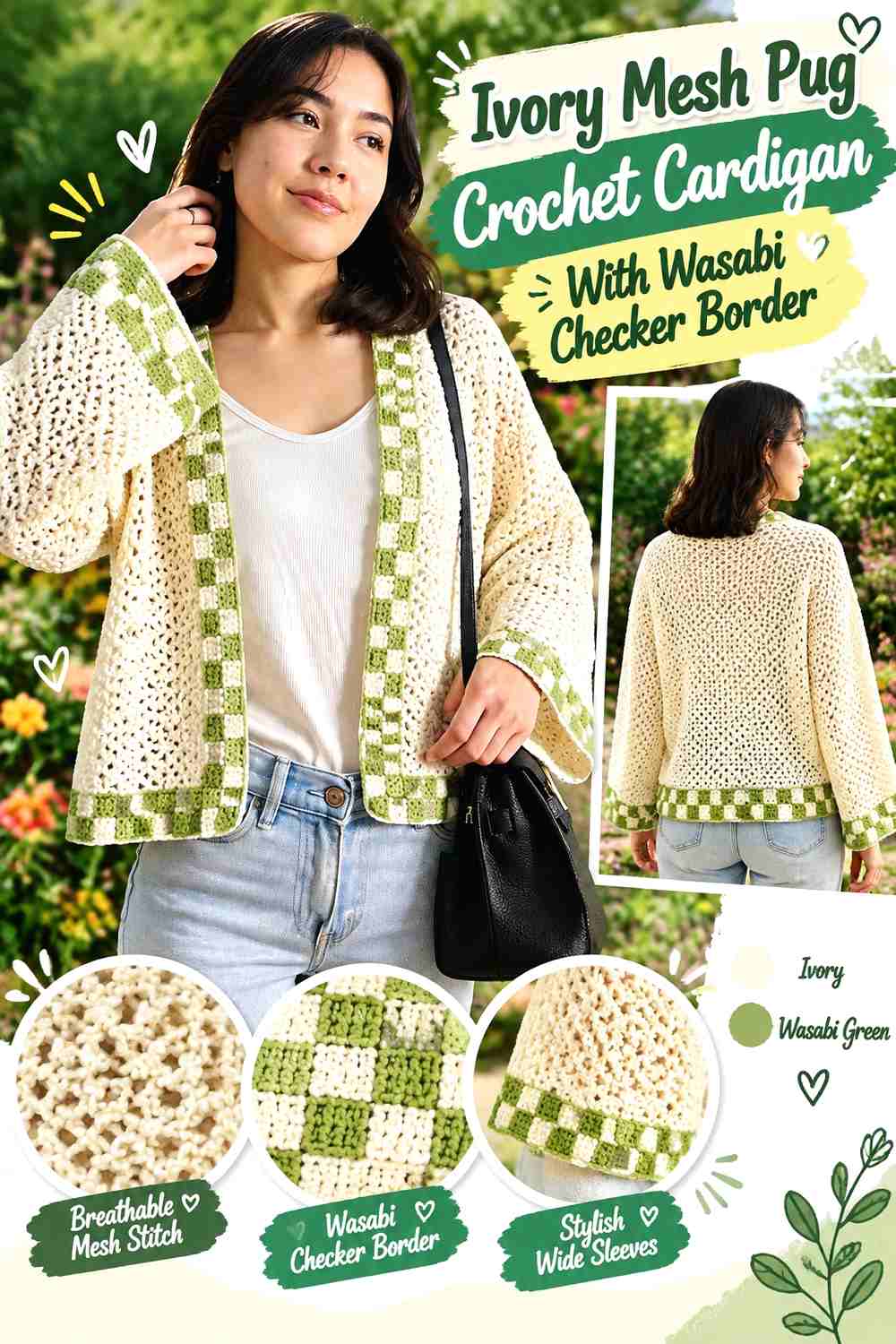
An openwork cardigan provides the lightest-looking interpretation in this collection. Let ivory dominate the mesh body and concentrate wasabi-and-ivory checks along a denser border. A separate pug appliqué or solid patch can provide the motif without forcing intricate picture colorwork into an open fabric.
VivCrochets’ mesh cardigan tutorial creates an airy three-piece layer and includes finishing around the edges. YouTube
Do Not Expect Detailed Pug Colorwork to Read Clearly in Mesh
Negative space is part of mesh fabric. Fine facial details that would be legible on dense crochet can disappear when surrounded by large openings.
If a recognizable pug is important, use a separate solid motif area and evaluate how it sits on the open fabric before attaching it permanently.
A Dense Checker Border Changes the Edge Behavior
Mesh stretches and drapes differently from compact colorwork. A firm checker band attached too tightly can pull the opening inward, while an overly loose one can ripple.
Lay the cardigan flat frequently as the border develops and follow the source tutorial’s edge-finishing logic rather than forcing a predetermined number of checks into the available space.
Ivory Gives the Wasabi Details More Breathing Room
Keeping most of the body ivory allows a relatively small amount of wasabi to be noticeable. Checker edging can appear at the front opening and cuffs without needing to cover the whole garment.
That restrained placement also leaves the pug motif visually separate from the border.
Creator Credit: VivCrochets
5. Structured Collar Pug Crochet Cardigan With Checker Placket
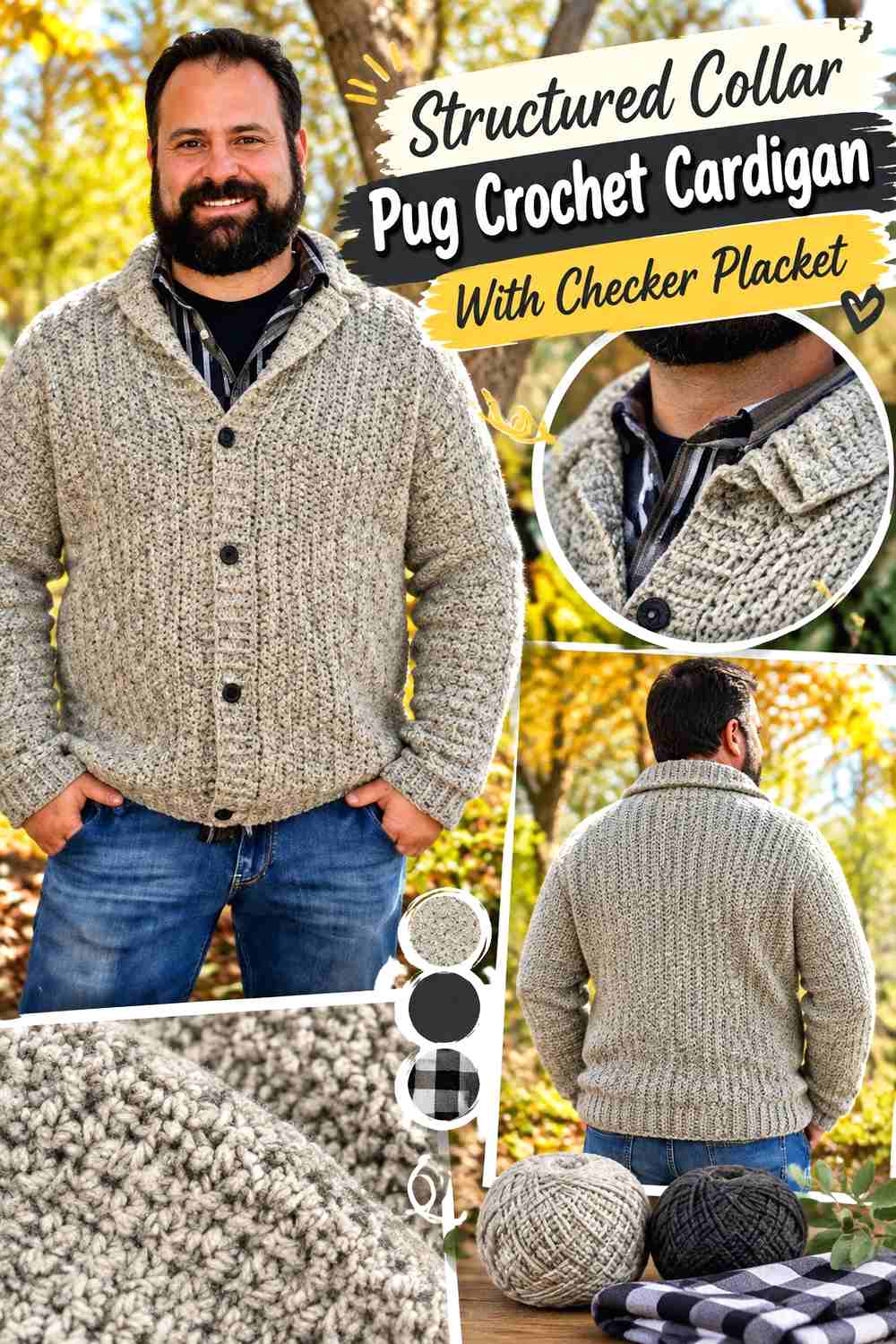
A defined collar moves this theme away from playful patchwork and toward a more jacket-like cardigan. Use wasabi for the broad body, ivory around the collar, and a controlled checker sequence down the front opening. A small pug emblem on the chest can then behave almost like a badge.
Heart Hook Home’s companion tutorial covers a structured cardigan with body, sleeves, collar, and finishing, supported by its separate written pattern. YouTube
Keep the Crochet Collar Simpler Than the Placket
A checker collar plus checker placket plus pug motif can crowd the upper body. One option is an ivory collar connected to a two-color checker front band.
The solid collar then creates a visual pause between the face and the busier front edge.
Match the Two Front Edges Before Adding Checks
A vertical checker treatment acts like a measuring line. Unequal front lengths or inconsistent edging tension become easier to notice once contrasting blocks are added.
Compare the two fronts after the main cardigan is assembled and before committing to decorative finishing.
A Small Pug Emblem Suits the Structured Shape
Instead of a full-width portrait, consider a compact motif positioned like a crest. Its scale should relate to the chest area rather than to the entire back panel.
Place it after you understand where the collar and front border sit when worn so it does not disappear underneath those features.
Creator Credit: Heart Hook Home
6. Lace Pug Crochet Cardigan With Checker Hem
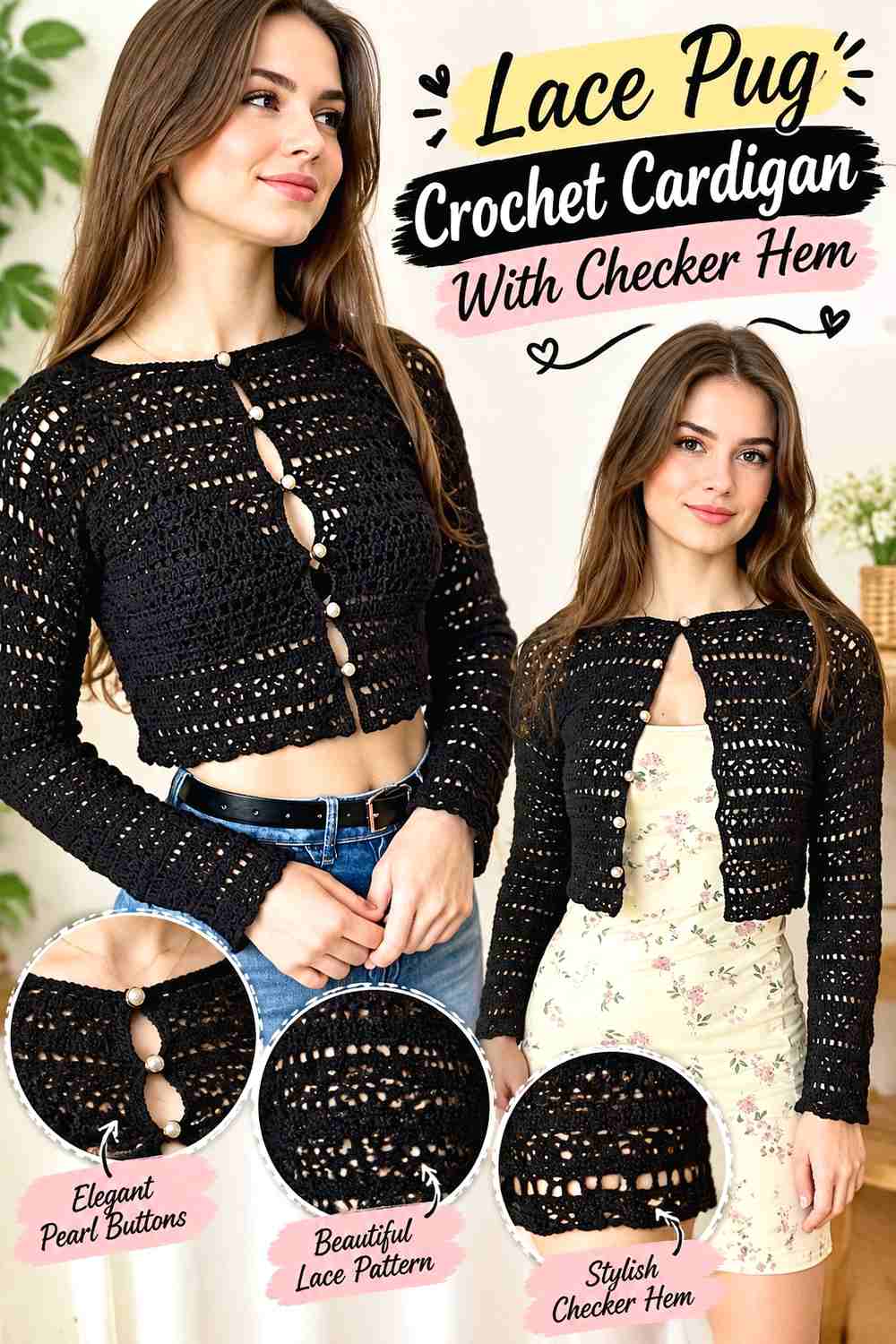
Lace creates an interesting contrast with a graphic dog theme. Keep the body predominantly ivory so the openwork remains visible, use wasabi-and-ivory checks as a comparatively solid lower edge, and place the pug detail in one small opaque area rather than throughout the lace.
Alona crochets demonstrates a full lace cardigan with separate garment construction, sleeves, borders, buttonholes, and buttons. YouTube
Let the Lace Remain the Main Surface Texture
Checker colorwork and lace both create strong visual patterns. Covering every lace section with alternating color can make the stitch structure difficult to appreciate.
A solid ivory lace body with checker finishing gives each type of pattern its own territory.
Test the Hem Against the Open Fabric
A compact border may feel heavier or less elastic than the lace above it. Make a small sample of the planned combination if you are substantially changing the tutorial’s yarn or finishing concept.
The goal is a hem that frames the lace rather than forcing it into a different width.
Put the Pug Where There Is Enough Visual Density
A chest patch, sleeve appliqué, or compact lower-front motif is easier to read than detailed imagery floating through open lace.
Hold the completed motif against the cardigan while wearing a typical base layer underneath. Background clothing will show through the lace and can change how the motif appears.
Creator Credit: Alona crochets
7. Zippered Granny Square Pug Crochet Cardigan
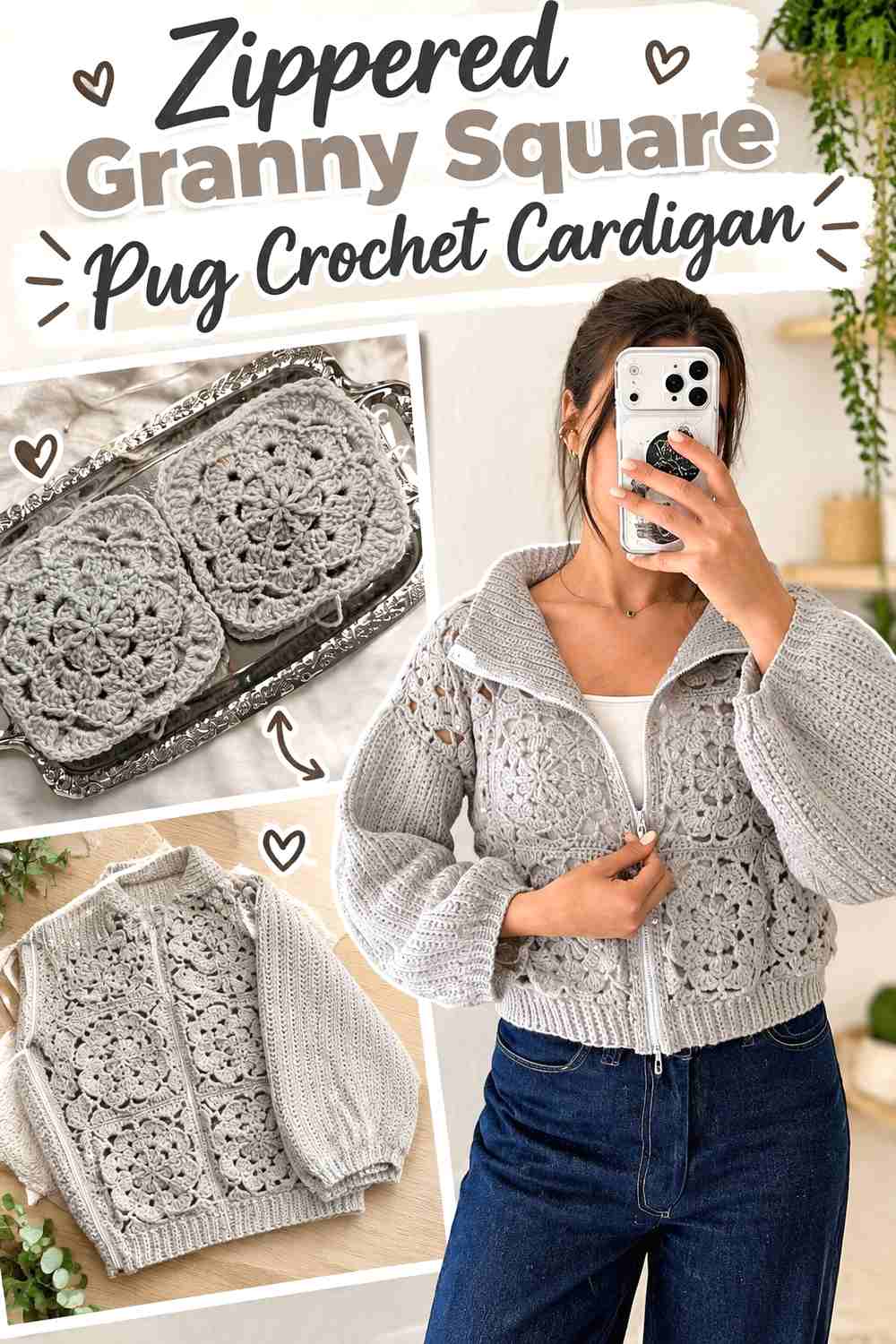
A zipper supplies a strong center line that can organize an otherwise playful modular cardigan. Use wasabi and ivory granny squares through the body, reserve selected squares for pug imagery, and make the areas immediately beside the zipper comparatively restrained.
Nora Moon’s tutorial demonstrates a granny-square cardigan with square and triangular components, sleeves, ribbing, and a zipper, with buttons presented as an alternative closure. YouTube
Keep the Zipper Zone Visually Straight
Checker blocks can exaggerate tiny irregularities along the center fronts. Before installing the closure, compare the two sides and make sure the motif joins have not created noticeably different lengths.
Avoid placing your most detailed pug square directly against an edge that already contains zipper hardware.
Check Replacement Motifs Before Joining
A pug square and a standard granny square are not automatically interchangeable merely because both are called squares. Their blocked dimensions and edge structure must be compatible with the garment layout.
Make and measure a sample pug motif before producing several replacements.
Use the Zipper to Divide the Color Story
One interesting layout is to reverse the dominant color across the center: a wasabi-heavy section on one side and an ivory-heavy section on the other, while repeating enough color across both halves to keep them connected.
A few carefully positioned pug motifs can bridge the two halves without making every square pictorial.
Creator Credit: Nora Moon – handmade clothes with love
8. Cocoon Pug Back-Motif Crochet Cardigan With Checker Edging
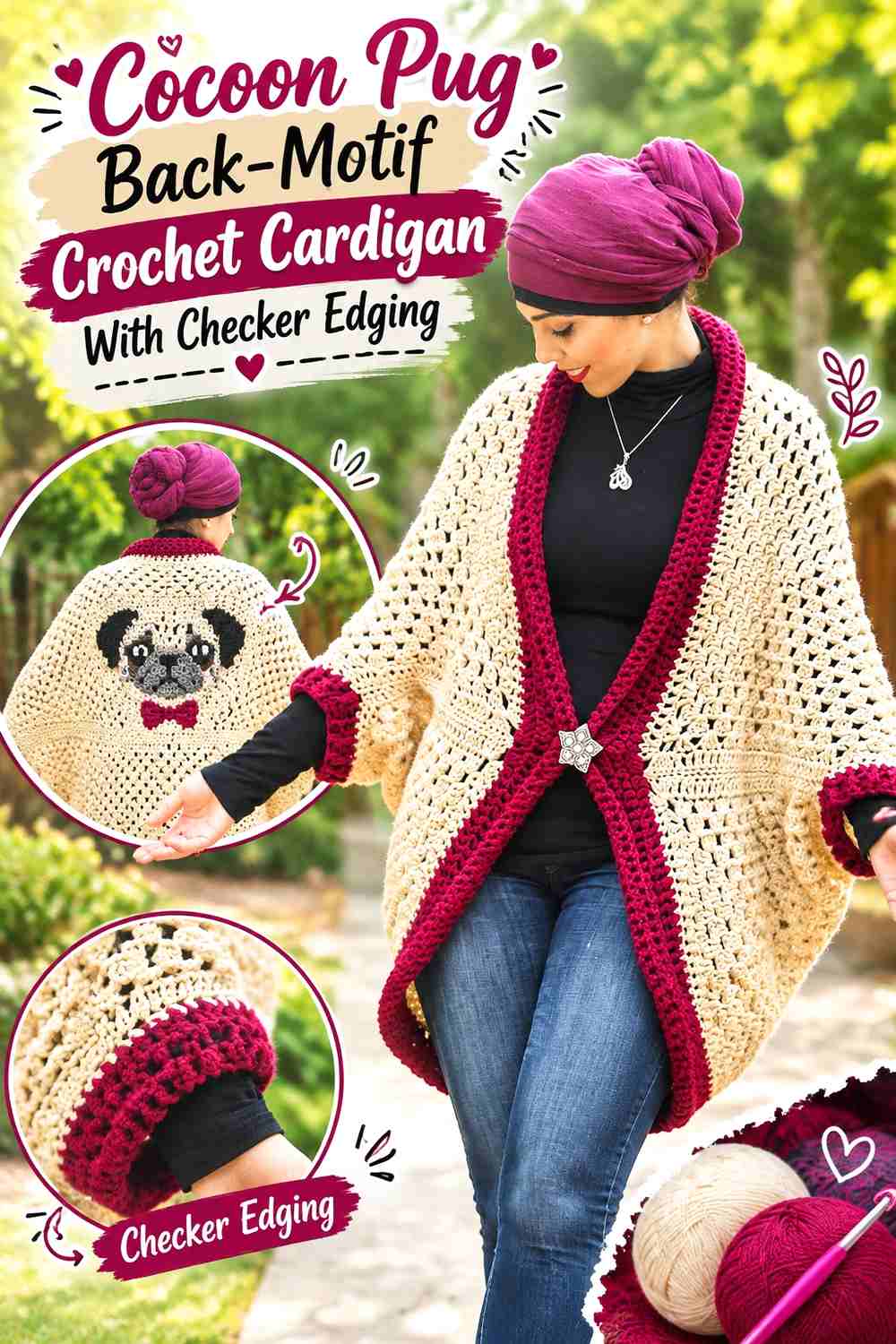
The cocoon silhouette shifts attention toward the back. That makes it an excellent candidate for one large pug focal point surrounded by a simpler wasabi-and-ivory field. Instead of conventional front panels, a checker edge can follow the broad opening and visually frame the wearer.
Fuad Azmat / YARNutopia by Nadia demonstrates a cocoon sweater cardigan formed from a large granny structure that becomes a loose, enveloping layer. YouTube
Design the Crochet Pug for the Back View
A cocoon does not display its fabric in the same orientation as a standard rectangular back panel. Understand how the large crocheted section folds into the finished garment before deciding where the pug should face.
Temporarily mark the intended top and center while the piece is developing so a directional motif does not end up unexpectedly tilted.
Checker Edging Can Frame the Whole Opening
This silhouette naturally offers one continuous opening rather than two conventional button bands. Repeating wasabi and ivory along that boundary can emphasize the cocoon shape.
Keep the checker width proportional to the garment; an extremely deep border can consume much of the front-facing fabric.
Do Not Force a Tailored Closure Onto a Cocoon
The relaxed opening is part of this construction’s identity. If a neat buttoned center front is essential to your vision, one of the paneled cardigan options will provide a more natural foundation.
Choose the cocoon version when the pug back motif and draped outline matter more than a traditional closure.
Creator Credit: Fuad Azmat / YARNutopia by Nadia
9. Granny-Stitch Pug Crochet Cardigan With Checker Sleeve Bands
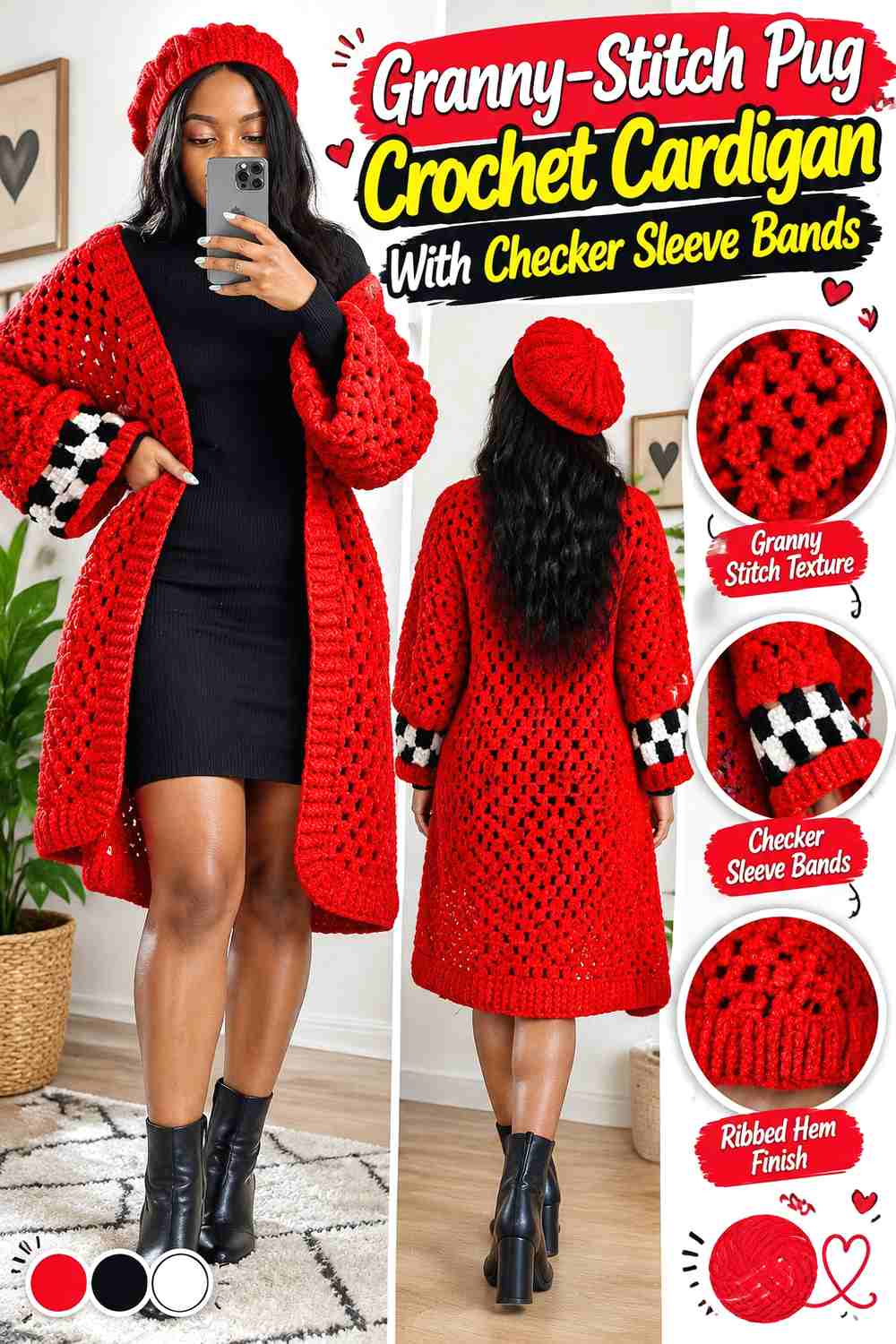
This idea uses a relaxed granny-stitch cardigan as a broad wasabi field, then interrupts each sleeve with ivory-and-wasabi checker bands. A single pug patch near the lower front or upper back gives the cardigan a graphic accent without turning every section into colorwork.
AC Crochets demonstrates an oversized throw-on cardigan built around granny stitch, offering a substantially different surface from dense paneled or square-by-square cardigans. YouTube
Put the Checks Where the Sleeves Can Display Them
Checker bands around the sleeves create repeatable color zones that remain noticeable from several viewing angles. Plan both sleeves together so corresponding bands land at intentional positions.
If you prefer asymmetry, make the difference obvious rather than shifting one band only slightly.
Granny Stitch Already Creates a Strong Rhythm
The clustered surface has its own pattern, so checker placement does not need to be extensive. Solid wasabi sections between checker bands give the eye a break and keep ivory from fragmenting the sleeves into too many small pieces.
A pug motif will also read more clearly against one of these calmer sections.
Compare Sleeve Length Before Adding the Final Cuff
Decorative bands and cuffs contribute to the total sleeve proportion. Check the developing sleeve against the tutorial’s fit before adding extra finishing depth.
That is particularly important on a roomy cardigan where dropped shoulders can make sleeve length feel different from a fitted garment.
Creator Credit: AC Crochets
10. Pug Portrait Patchwork Crochet Cardigan
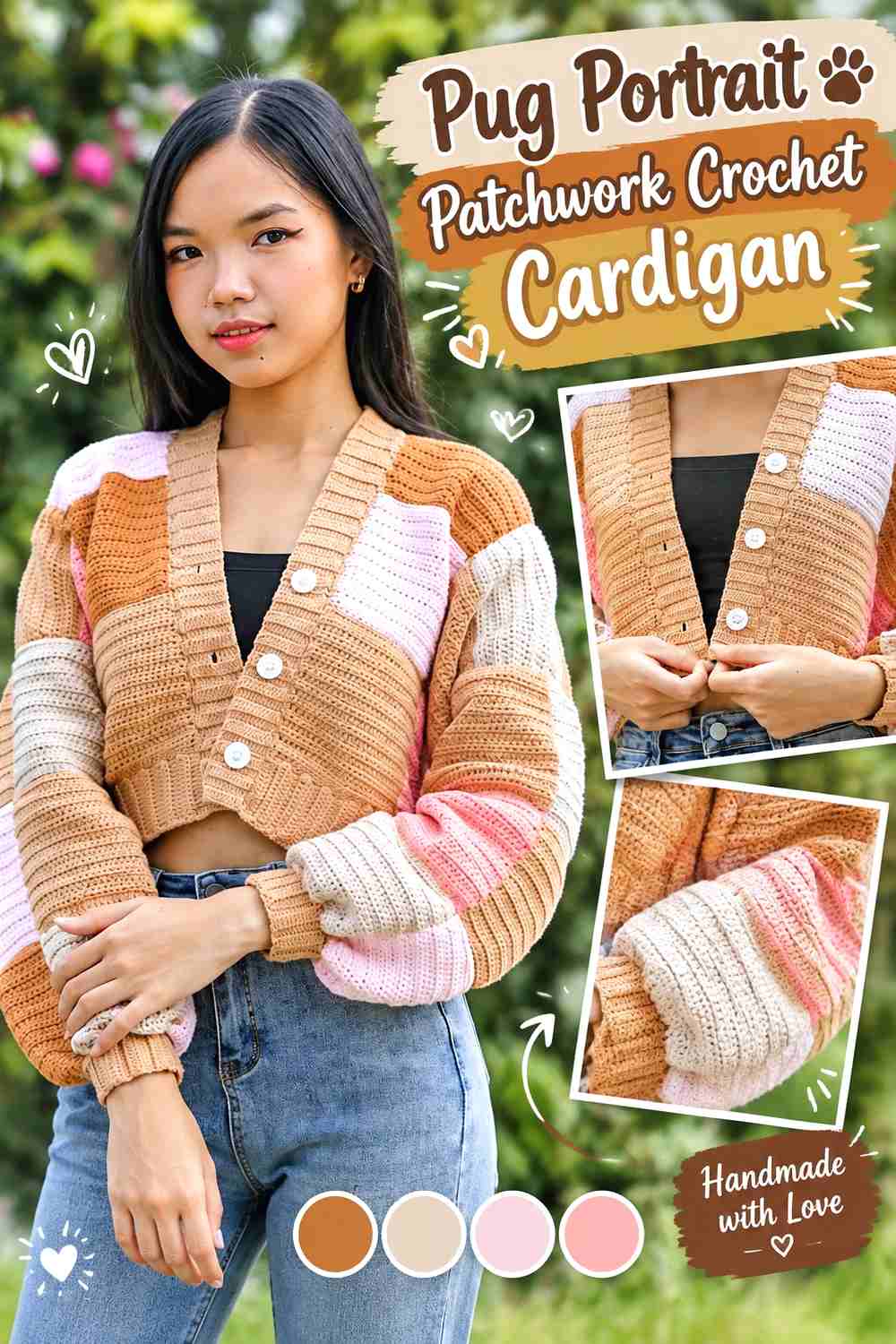
Instead of a strict two-color checkerboard, turn the cardigan into a larger-scale patchwork composition. Use wasabi blocks, ivory blocks, a few half-and-half blocks, and selected pug portrait squares. Checker trim can then be limited to the cuffs or waist so it acts as a finishing detail rather than another full layer of pattern.
Chenda DIY’s patchwork cardigan tutorial demonstrates square construction, assembly, edge treatment, ribbing, buttons, and wrist finishing. YouTube
Make the Pug Squares Rare Enough to Feel Special
One back portrait with two smaller front references creates a very different effect from repeating the same face across every panel.
Lay all motifs out before joining and assess the cardigan as a whole. An individual pug square can look charming alone yet make the full garment visually crowded when surrounded by other detailed blocks.
Use Plain Blocks to Control the Composition
Solid wasabi and ivory squares are not empty space; they give the pictorial motifs room to register.
Place some of the quietest blocks near the neckline and button area if those zones already have substantial finishing.
Checker Trim Should Connect, Not Compete
A small two-color cuff or hem can echo the square geometry without turning the entire border into another dominant motif.
Test the width visually against one sleeve and the lower edge before committing to all of the trim. Large patchwork pieces can make a narrow checker finish look too delicate, while a very deep one can shorten the apparent body.
Creator Credit: Chenda DIY
11. Classic Collar Pug Crochet Cardigan With Checker Pockets
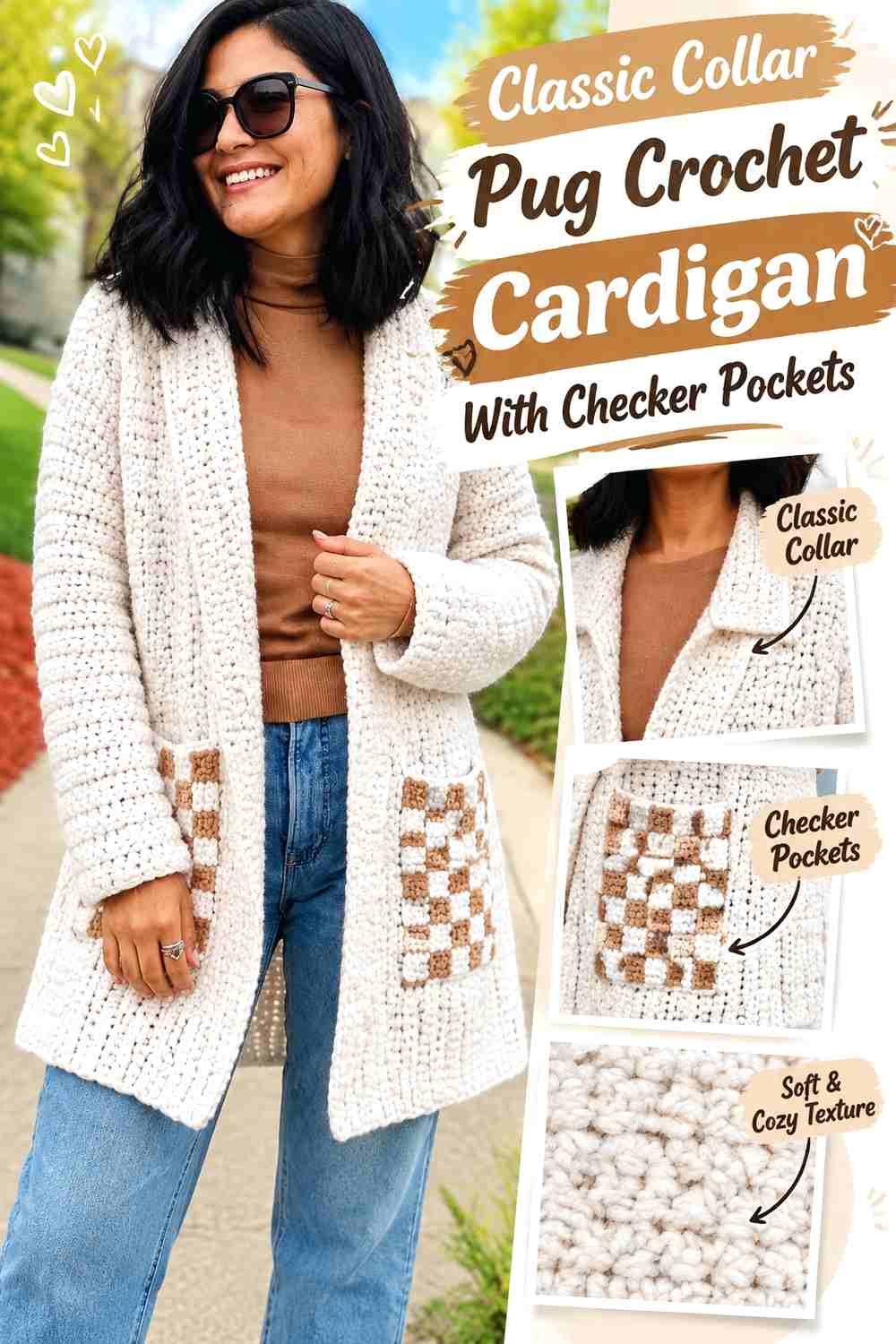
A traditional five-piece cardigan provides a calm base for more playful pockets. Work the main garment in wasabi, keep the collar and opening largely ivory, and turn the pockets into wasabi-and-ivory checks with a small pug motif incorporated into or positioned above one pocket.
KnitcroAddict’s cardigan tutorial uses separate garment pieces followed by assembly and a defined collar, giving this option a distinctly classic construction. YouTube
Match the Paired Pieces Before Assembly
Separate fronts and sleeves give you useful checkpoints. Lay each pair together before seaming and compare their dimensions.
This matters even more when decorative pocket placement will later draw attention to horizontal and vertical alignment on the fronts.
Checker Pockets Can Carry Most of the Novelty
Using checks only on the pockets makes the concept much quieter than an allover checkerboard cardigan. The pockets become obvious accent panels against the solid wasabi body.
A small ivory pug silhouette or face detail can connect the pocket design to the animal theme without requiring another large motif elsewhere.
Keep the Collar Visually Separate
A defined collar already creates a strong outline around the neck. Keeping it ivory or another simple two-color arrangement lets it frame the cardigan rather than compete with the checker pockets.
Judge the pocket and collar proportions while wearing the cardigan because their apparent distance changes once the fronts curve around the body.
Creator Credit: KnitcroAddict
12. Balloon-Sleeve Pug Crochet Cardigan With Checker Cuffs
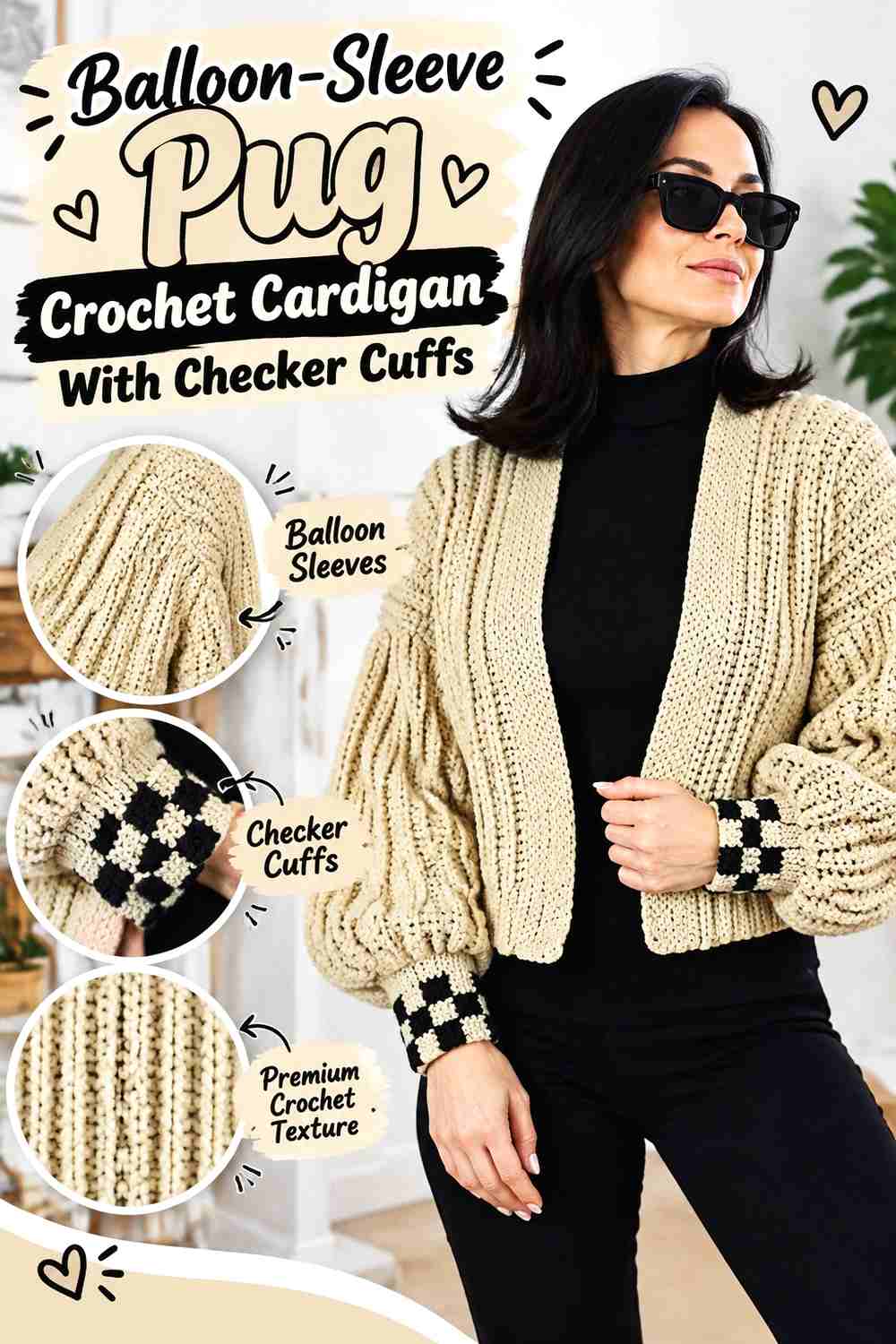
The final idea shifts the attention to sleeve volume. Use a mostly ivory body, wasabi balloon sleeves, and sharply defined wasabi-and-ivory checker cuffs. A single pug motif on the back or one front panel keeps the animal detail separate from the dramatic sleeves.
By StellaM’s cardigan tutorial specifically centers balloon sleeves, making it useful when sleeve silhouette is the primary feature. YouTube
Let the Crochet Checker Cuffs Finish the Sleeve Volume
A patterned cuff creates a visual stopping point beneath a fuller sleeve. Keep the checker sequence consistent between both cuffs so the strong sleeve shape feels balanced.
When evaluating sleeve length, include the planned cuff rather than treating it as an unrelated decoration added afterward.
Avoid Filling the Balloon Sleeve With Too Many Motifs
Volume already makes the sleeve conspicuous. An allover mix of checks, pug faces, and additional color changes can obscure its shape.
A broad wasabi sleeve flowing into a compact checker cuff offers a clearer silhouette.
Move the Pug to a Quieter Surface
The center back or a relatively plain front panel gives a pug motif enough surrounding space. This separates the two main statements: silhouette at the sleeves, motif on the body.
Pin a completed appliqué or sample motif temporarily before attachment and look at the cardigan from several angles. A motif that appears centered on a flat panel may sit differently when the balloon sleeves change the overall visual width.
Creator Credit: By StellaM
Comparing the 12 Crochet Cardigan Directions
IdeaMain visual featureGood choice when you wantMain checkpoint1Allover checker gridMaximum wasabi-and-ivory impactBlock consistency2Cropped button shapeA compact, graphic cardiganCrop and band proportion3Pug pocketsFunctional front detailsPocket placement4Mesh bodyA lighter-looking layerBorder tension5Structured collarA cleaner, jacket-like resultFront-edge symmetry6Lace bodyDelicate texture plus graphic trimLace-to-border behavior7Granny squares and zipperModular colorwork with a firm closureCenter-front alignment8Cocoon constructionA large back pug focal pointMotif orientation9Granny-stitch bodyRelaxed fabric with sleeve accentsSleeve-band placement10Pug patchworkSeveral pictorial motif squaresOverall layout balance11Classic collar and pocketsA restrained novelty cardiganPocket/collar proportion12Balloon sleevesDramatic sleeve shapeFinished sleeve length
Conclusion
For the closest interpretation of a wasabi-and-ivory pug checker cardigan, the allover checker and patchwork versions give you the most room to integrate both colors throughout the garment. If you want the pug to be the main feature, the cocoon back-motif or pug portrait patchwork approaches provide larger uninterrupted areas.
For something quieter, use a solid cardigan and confine the checker pattern to cuffs, pockets, a hem, or a front band. The cropped, classic-collar, and balloon-sleeve versions are especially suited to that approach. Mesh and lace options work better when the pug motif is placed on a separate denser section instead of being forced into openwork.
Whichever direction you choose, settle the fit and basic cardigan structure first. Then evaluate the checker scale and pug placement on the actual garment. Use the original creator tutorial for exact construction details and sizing rather than transferring measurements from one cardigan style to another.
Frequently Asked Questions
How can I add a pug motif to a crochet cardigan without making it too busy?
Choose one main motif zone first. A large back pug, two pug pockets, or a few modular pug squares usually creates a clearer result than repeating detailed faces across the body, sleeves, trim, and pockets simultaneously. Let simpler wasabi and ivory sections surround the detailed motif.
Should the wasabi and ivory checker pattern cover the whole crochet cardigan?
Not necessarily. Checker cuffs, pockets, a button band, or a hem can communicate the same two-color theme with much less visual density. An allover checkerboard is most appropriate when the grid itself is meant to dominate the design.
Can I replace ordinary granny squares with pug crochet squares?
Only after comparing the finished dimensions and edges. Two motifs described as granny squares may have different stitch structures, densities, or blocked sizes. Make a sample pug square and compare it with the structural square required by the cardigan before changing the full layout.
Where is the easiest place to position a pug motif on a crochet cardigan?
From a design-planning standpoint, a broad back panel usually gives the most uninterrupted space. Pockets and larger modular squares are other clearly defined locations. The practical choice depends on the cardigan construction, so establish the garment’s actual panel and seam positions before final placement.
How do I keep crochet checker trim from becoming wavy?
The trim and cardigan body need compatible dimensions and tension. Do not stretch one edge to force a predetermined checker repeat to fit. Work according to the garment tutorial’s finishing method, pause to lay the edge flat, and correct pulling or flaring before completing the entire border.
Should I block the cardigan before deciding where the pug motif goes?
For a motif that will be attached after the garment is made, it is useful to evaluate the cardigan at its intended finished dimensions before permanent placement. Modular motifs that form part of the cardigan construction should instead be prepared and measured according to the source pattern before joining so their dimensions remain compatible.
What if my wasabi yarn looks much brighter than the color I expected?
Treat “wasabi” as a color direction rather than an exact universal shade. Put the actual wasabi and ivory yarns together and make a small sample before committing to a full checker layout. If the contrast feels too intense, increasing the amount of ivory or reserving wasabi for trim can produce a calmer cardigan.