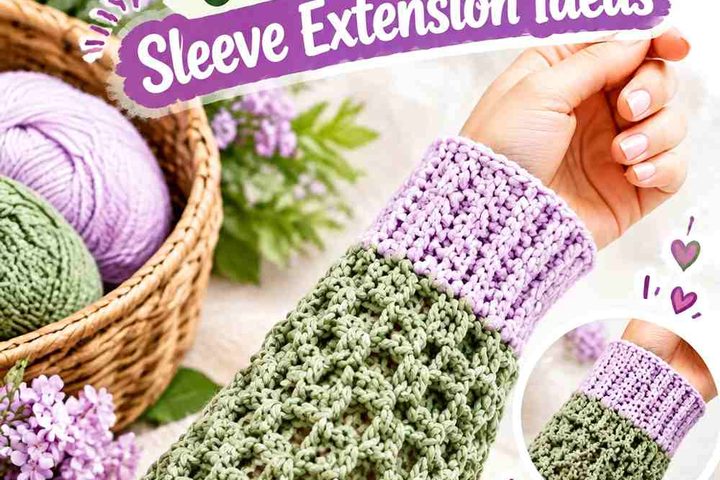
Glacier Blue gives a crochet beret an immediate winter direction without requiring literal snowflake motifs. Its cool, pale-to-medium blue character works especially well across a broad beret crown, where crochet texture, puff stitches, ridges, openwork, or subtle color changes can create the snowy effect.
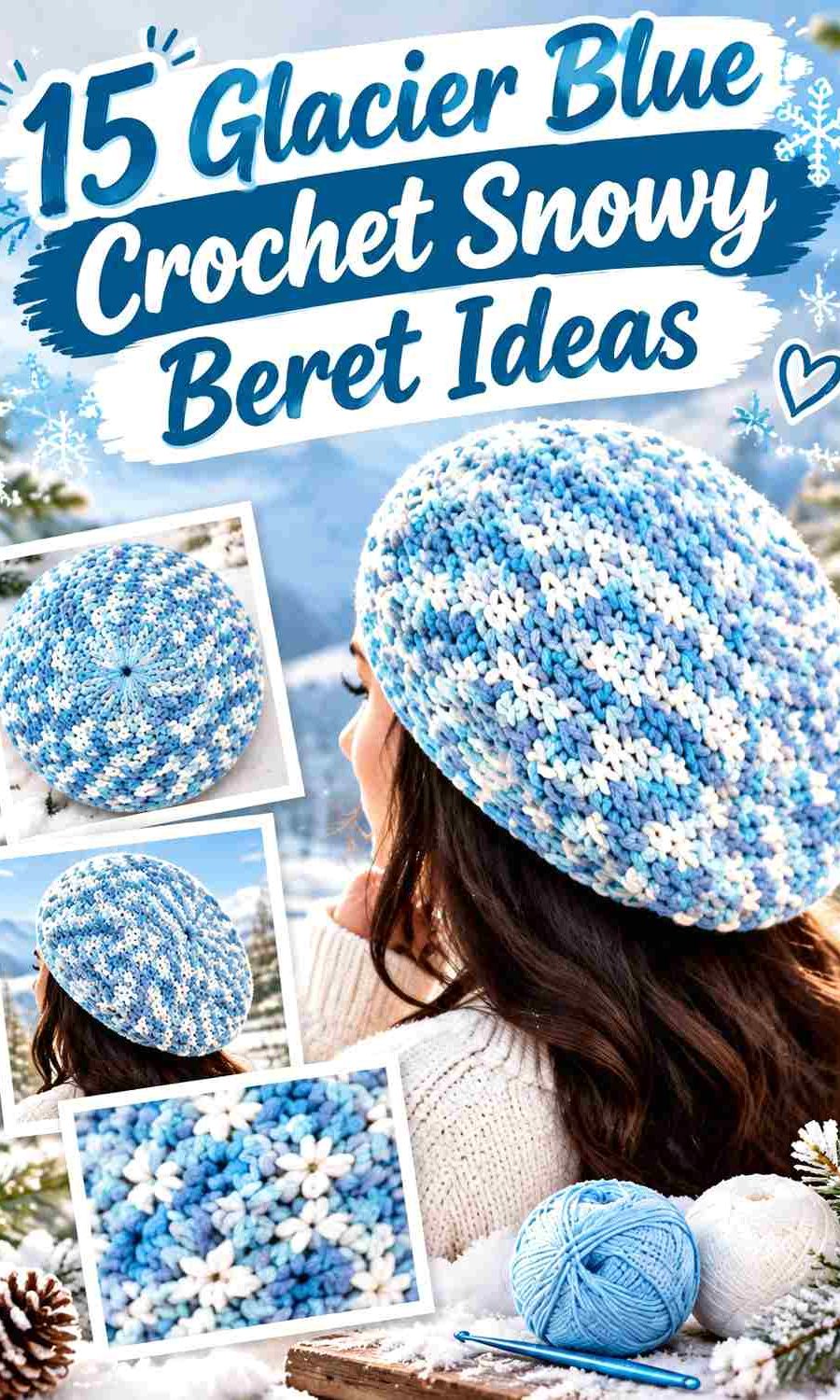
The supporting color determines how crisp or blended that effect becomes. Snow white and pearl white provide strong light highlights, while silver gray and oatmeal soften the contrast. Midnight navy, charcoal, plum, and steel blue can define the brim or crown edge without taking over the entire hat. Muted lavender, ice mint, dusty rose, and teal introduce color while keeping Glacier Blue as the visual anchor.
A beret also gives you several useful color zones: the crown center, expanding crown, decrease section, fitted band, ribbed brim, textured motifs, and any optional decorative detail. Keeping Glacier Blue across enough of the crown helps the classic beret shape remain clear instead of breaking it into too many narrow color rings.
The credited tutorials below support crochet beret or tam constructions. The Glacier Blue palettes and snowy color placements are independent adaptations, so the creators are not being represented as using these exact combinations.
Quick List
- Glacier Blue And Snow White Crochet Snowy Beret
- Glacier Blue And Silver Gray Crochet Snowy Beret
- Glacier Blue And Midnight Navy Crochet Snowy Beret
- Glacier Blue And Frosted Lavender Crochet Snowy Beret
- Glacier Blue And Charcoal Crochet Snowy Beret
- Glacier Blue And Icy Teal Crochet Snowy Beret
- Glacier Blue And Dusty Rose Crochet Snowy Beret
- Glacier Blue And Oatmeal Crochet Snowy Beret
- Glacier Blue And Ice Mint Crochet Snowy Beret
- Glacier Blue And Cranberry Crochet Snowy Beret
- Glacier Blue And Deep Plum Crochet Snowy Beret
- Glacier Blue Cream And Silver Gray Crochet Snowy Beret
- Glacier Blue Midnight Navy And Snow White Crochet Snowy Beret
- Tonal Glacier Blue Steel Blue And Pearl Crochet Snowy Beret
Keep Glacier Blue Broad Across the Crochet Beret Crown
The crown is the largest visible surface on a beret, so it is the strongest place to establish Glacier Blue. A broad uninterrupted blue area also allows increases, decreases, ridges, puff stitches, or other texture to create natural light and shadow without competing with frequent color changes.
If you want a snowy effect, you do not need to alternate white and blue through every round. A few pale accents near the crown center, textured sections, or outer edge can suggest frost while leaving enough Glacier Blue for the beret silhouette to remain cohesive.
For a slouchier tam, consider how the crown falls when worn. A color ring that looks prominent while the beret lies flat may move toward the side or back of the head once the hat is tilted.
Use Glacier Blue Brims to Balance Snowy Contrast
The brim visually anchors the wider crown. Keeping the brim Glacier Blue creates a continuous monochromatic foundation, while using a darker navy, charcoal, plum, or steel blue can give the pale crown a stronger boundary.
A white or cream brim creates the opposite effect. It brightens the face-side edge and can make the hat appear lighter overall, but it may compete with pale Glacier Blue if both yarns have similar lightness.
When the tutorial includes ribbing, consider keeping one color through the complete ribbed section. Frequent color changes across narrow ribs can make the band busier than the crown.
Let Glacier Blue Texture Create Part of the Snowy Effect
Raised crochet texture can contribute as much to a snowy beret as color. Puff stitches, ridges, clusters, flowers, or other dimensional details catch light differently across the crown, which can make one Glacier Blue yarn look more varied than it does in the skein.
If texture is already pronounced, use the supporting shade selectively. Snow white might mark only a few raised details, while silver or pearl could appear in the crown center or brim.
For smoother berets, stronger color contrast can carry more of the winter effect. The goal is to let color and texture support each other rather than making both equally complicated.
1. Glacier Blue And Snow White Crochet Snowy Beret
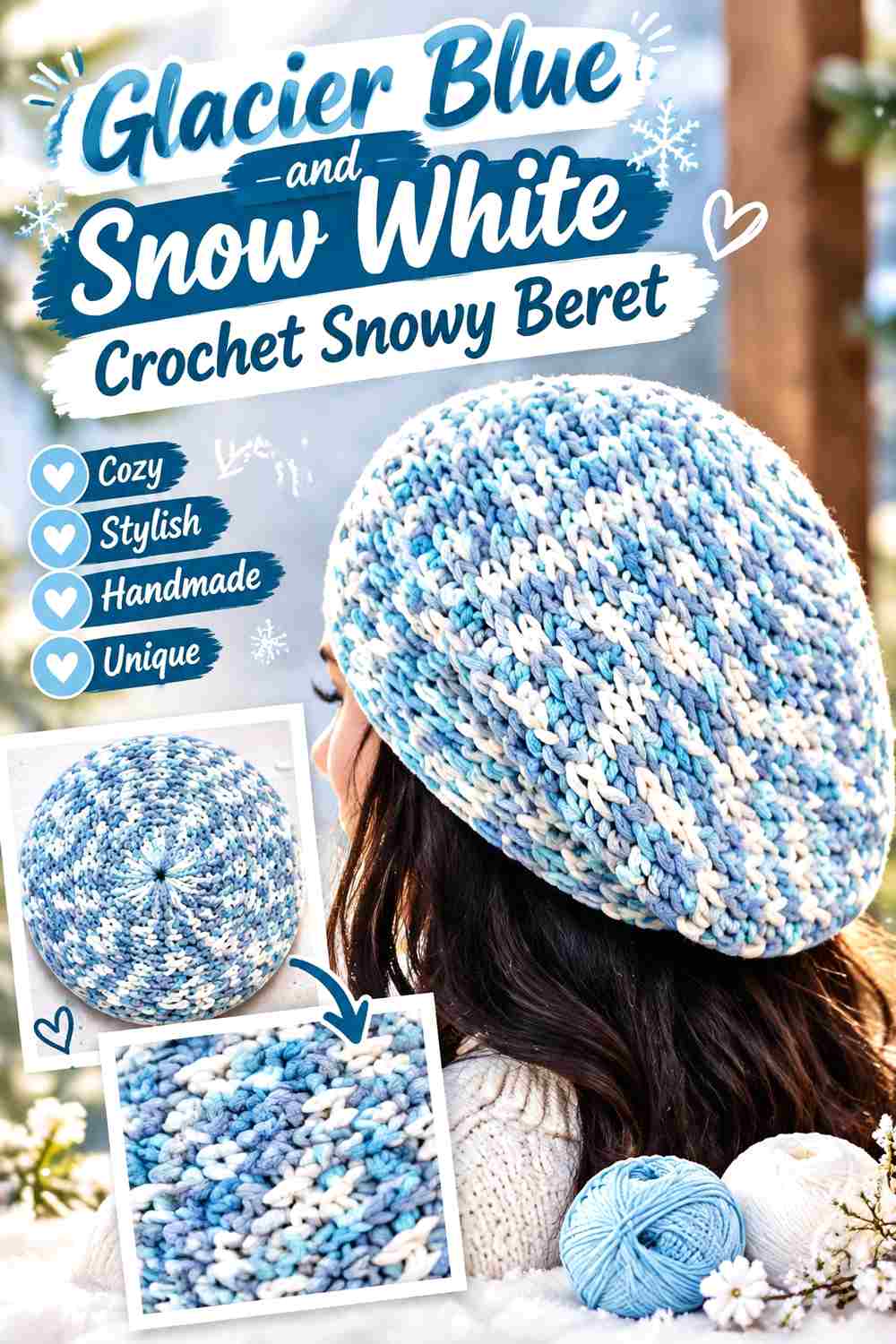
Glacier Blue and snow white create the clearest icy palette in the collection. Use Glacier Blue across most of the crown, then place white where it can mimic frost visually: the crown center, selected textured ridges, or a narrow finishing edge. Keeping the majority of the crown blue stops the beret from becoming a conventional blue-and-white striped hat.
Keep Glacier Blue Across the Main Snowy Beret Crown
Let Glacier Blue cover the broad expanding portion of the beret. A continuous blue field gives the round silhouette room to develop and keeps any white accents from dividing the crown into several separate rings.
If the construction already has strong texture, the Glacier Blue section can remain completely solid and let the stitches provide the visual variation.
Use Snow White Sparingly Against Glacier Blue Texture
Place snow white around one or two clearly defined features rather than every textured section. A white crown center or narrow outer detail can create enough winter contrast while leaving Glacier Blue responsible for most of the hat.
Creator Credit: Crochet con Sole Crochet con Sole tutorial
2. Glacier Blue And Silver Gray Crochet Snowy Beret

Silver gray gives Glacier Blue a softer winter-neutral partner than white. The combination works well on a classic rounded beret where the crown texture should stay more noticeable than the color blocking. Glacier Blue can lead across the crown while silver gray defines the band or one broad secondary section.
Keep Glacier Blue Dominant Above a Silver Gray Brim
A silver-gray band creates a subtle endpoint beneath the larger Glacier Blue crown. Because the colors are both cool and muted, make sure they differ enough in value for the brim to remain visible.
If they blend too closely, widen the silver section rather than adding multiple new colors.
Let Silver Gray Support Glacier Blue Without Hiding Crown Shaping
Avoid switching repeatedly between gray and Glacier Blue during increases and decreases. Larger uninterrupted areas make the beret shaping easier to see and give the neutral accent a deliberate structural role.
Creator Credit: Francesca Uncinettando Crochet&Love Francesca Uncinettando Crochet&Love tutorial
3. Glacier Blue And Midnight Navy Crochet Snowy Beret
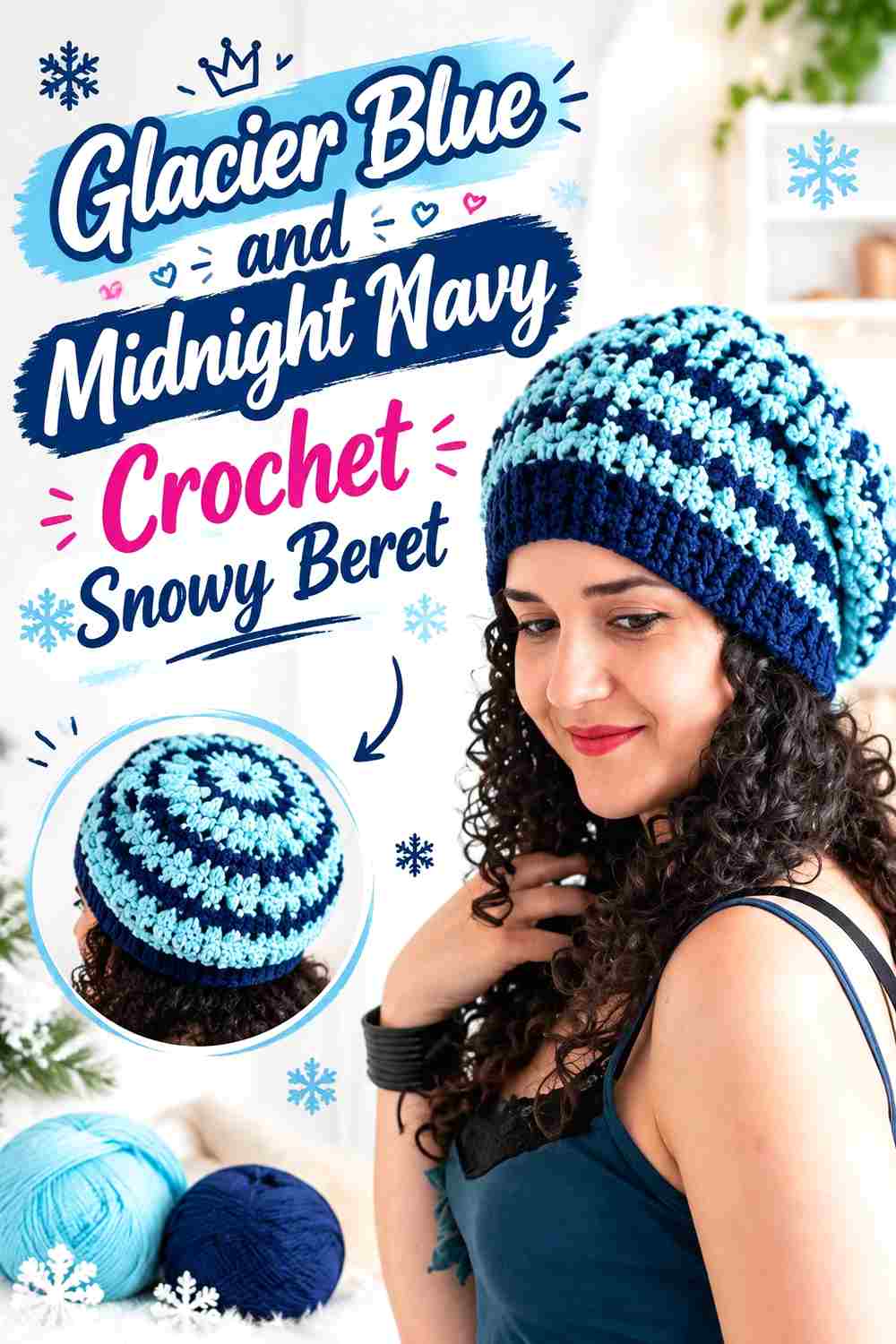
Midnight navy creates one of the strongest dark contrasts with Glacier Blue. Use the pale blue across the beret crown and concentrate navy around the fitted band or a small crown accent. The darker shade can visually anchor the hat without requiring a large amount.
Let Glacier Blue Cover More of the Beret Than Midnight Navy
Keep Glacier Blue over the broadest visible section so navy remains a framing color. An equal blue-and-navy split would make the hat feel darker and reduce the icy quality of the lighter shade.
Use Midnight Navy to Define the Glacier Blue Beret Band
A navy band can clearly separate the wide crown from the face-side edge. If the tutorial uses a textured or ribbed brim, keep navy continuous through that section so the color reinforces the structure rather than interrupting it.
Creator Credit: Crochet MC Crochet MC tutorial
4. Glacier Blue And Frosted Lavender Crochet Snowy Beret
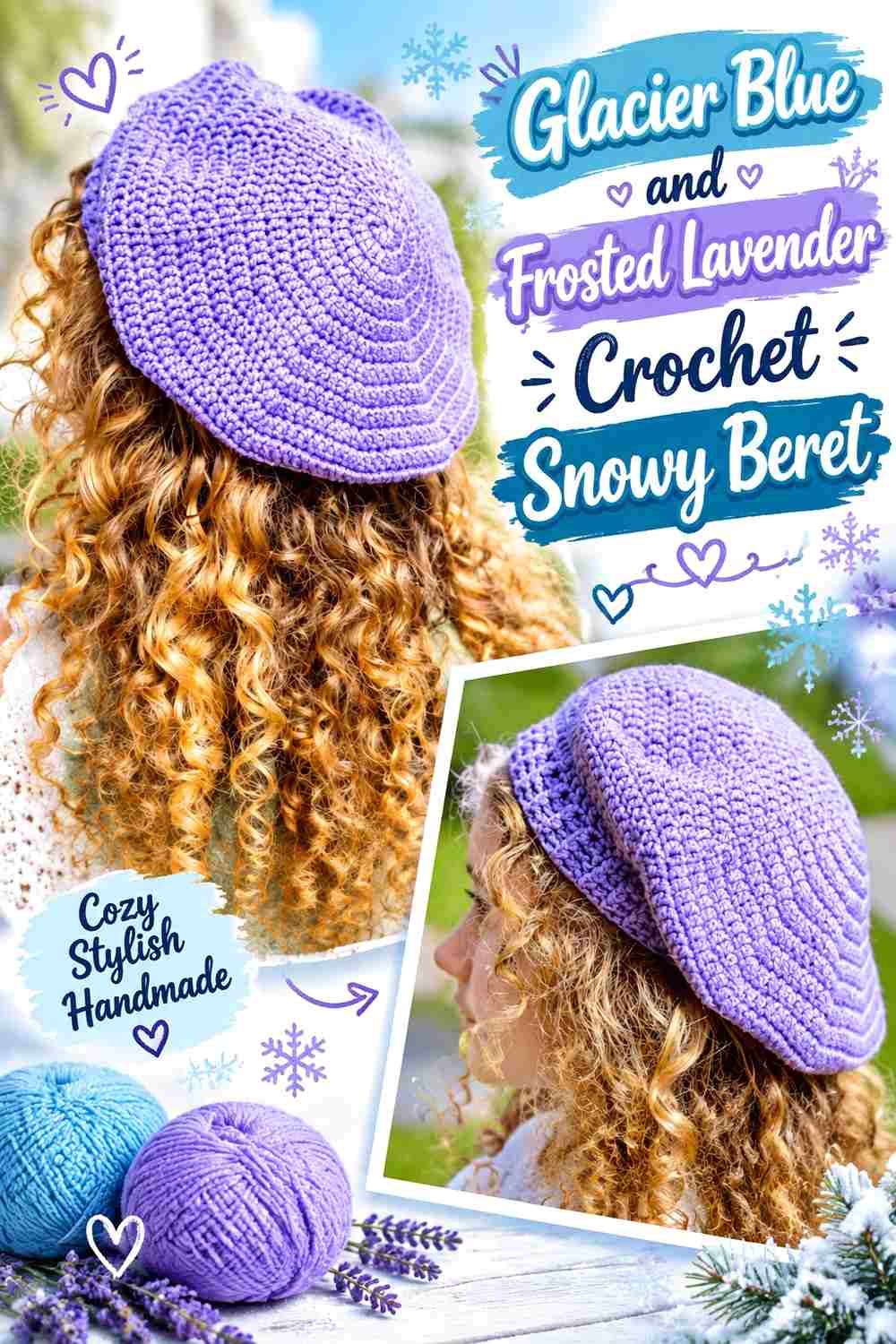
Frosted lavender adds a muted purple direction without moving far from the icy palette. Glacier Blue should remain the dominant crown color, with lavender appearing around a narrow brim, crown center, or selected textured bands.
Keep Glacier Blue Central Beside Frosted Lavender
Use Glacier Blue over the largest crown area and keep lavender in one or two secondary locations. This gives the colors enough space to remain distinguishable instead of turning into a sequence of similar pastel rings.
Check Frosted Lavender Against Glacier Blue Before Using Fine Details
Muted lavender and pale blue can be close in value. If they visually merge from a few feet away, use lavender in a broader band rather than expecting a narrow line to remain visible.
Creator Credit: Winding Road Crochet Winding Road Crochet tutorial
5. Glacier Blue And Charcoal Crochet Snowy Beret

Charcoal provides a dark neutral frame without the sharper appearance of pure black. This palette works particularly well on a tam or relaxed beret because the deep brim can stabilize a larger Glacier Blue crown.
Keep Glacier Blue Across the Full Slouchy Crown
Use Glacier Blue through the main round or slouching area so the beret stays visually light. Charcoal needs much less area to create a strong endpoint.
Put Charcoal Beneath Glacier Blue for a Defined Beret Band
A charcoal brim makes the transition from crown to head opening immediately visible. If you want a second charcoal repeat, use a small crown-center detail instead of introducing another wide dark stripe.
Creator Credit: Crochet with Clare Crochet with Clare tutorial
6. Glacier Blue And Icy Teal Crochet Snowy Beret

Icy teal gives Glacier Blue a related blue-green partner. Because the colors are close, this idea works best when they occupy clear sections rather than alternating through small stitches. Glacier Blue can dominate the main crown while teal sits around floral or decorative portions.
Keep Glacier Blue Broader Than Icy Teal on Decorative Beret Sections
Use Glacier Blue as the repeated foundation and reserve teal for clearly identifiable details. This is especially important on a more decorative beret where the texture already creates several visual divisions.
Let Icy Teal Deepen Glacier Blue Without Creating Hard Contrast
A teal section near the outer crown can make Glacier Blue appear lighter by comparison while maintaining a tonal winter direction. Check the yarns together to make sure the teal remains visibly deeper.
Creator Credit: Marifu6a Marifu6a tutorial
7. Glacier Blue And Dusty Rose Crochet Snowy Beret

Dusty rose introduces a gentle warm contrast. Keep Glacier Blue across most of the crown and use rose for the brim, crown center, or one helix-like or structural accent. The small temperature shift is enough to make the palette distinct without turning the beret brightly multicolored.
Keep Glacier Blue as the Main Color Beside Dusty Rose
A broad blue crown preserves the snowy character. Dusty rose works better as a supporting band or feature than as an equal half of the beret.
Use Dusty Rose to Warm a Glacier Blue Brim or Crown Detail
Place dusty rose where the construction naturally creates a visual boundary. A complete brim or clearly defined crown accent is easier to read than tiny rose stitches scattered through Glacier Blue.
Creator Credit: Bag-O-Day Crochet Bag-O-Day Crochet tutorial
8. Glacier Blue And Oatmeal Crochet Snowy Beret
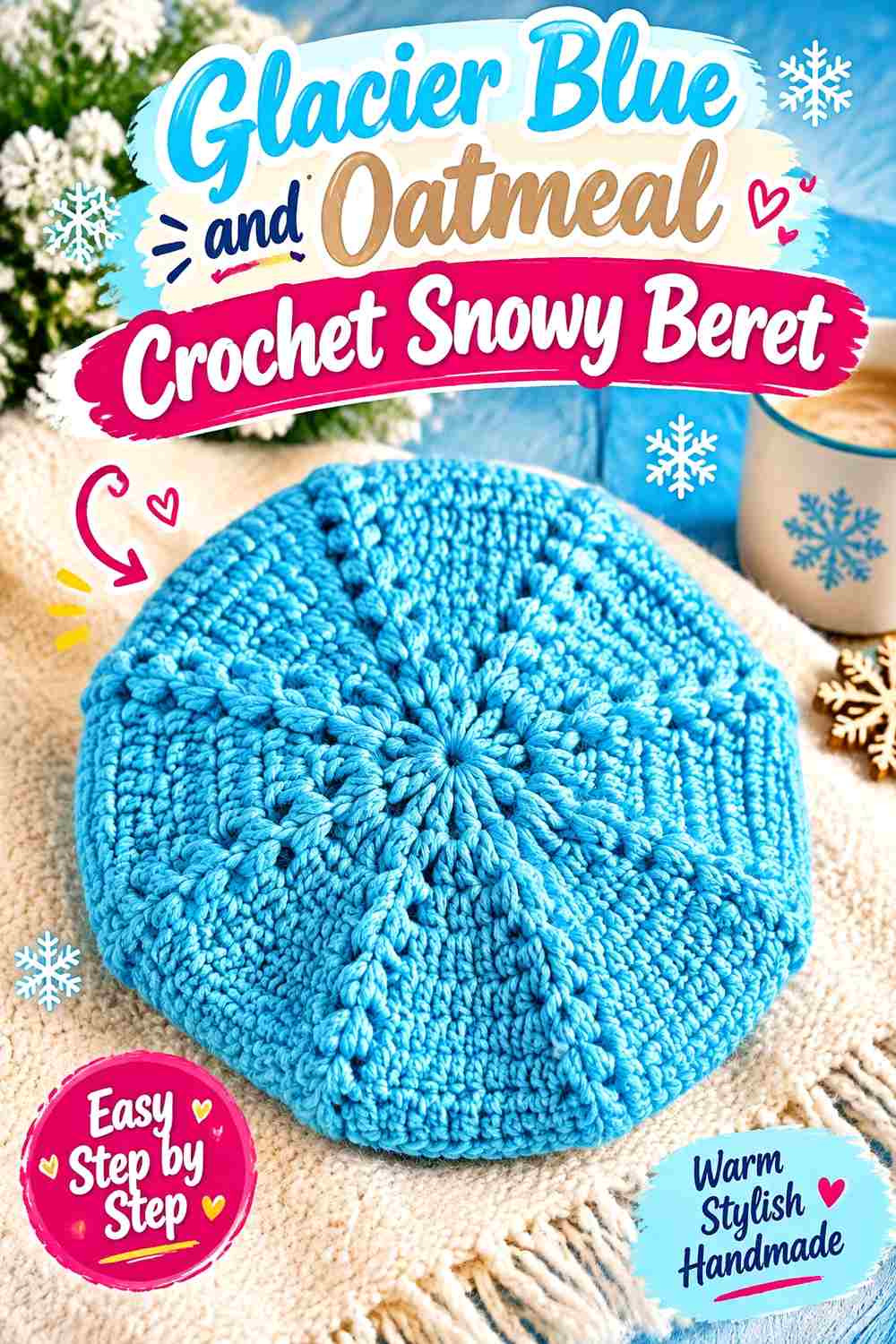
Oatmeal gives Glacier Blue a warm neutral contrast that is softer than white and less cool than gray. This works well on a ribbed or puff-textured beret where the stitch pattern already contributes plenty of visual detail.
Keep Glacier Blue Across Puff Texture for a Cohesive Beret Crown
Use Glacier Blue through the main textured area rather than changing colors inside every raised section. A continuous shade helps individual puffs or ridges form a larger crown pattern.
Put Oatmeal Around the Glacier Blue Ribbed Band
An oatmeal band can lighten the base of the beret without competing strongly with the blue crown. If the oatmeal is close in value to Glacier Blue, keep the complete band one color so the larger section makes the difference easier to recognize.
Creator Credit: crochet-crosia hindi-urdu crochet-crosia hindi-urdu tutorial
9. Glacier Blue And Ice Mint Crochet Snowy Beret

Ice mint keeps the palette pale while introducing a subtle green shift. Glacier Blue should stay across the largest crown area, with mint used in the brim, crown center, or an isolated decorative band.
Keep Glacier Blue Visually Stronger Than Ice Mint
Because both colors may be light, establish hierarchy through area. Let Glacier Blue cover most of the hat and give mint one clear secondary zone instead of alternating them evenly.
Use Ice Mint Where Glacier Blue Crown Shaping Changes Direction
A mint band can mark the move from the broad crown into the decrease or brim area. This uses the color change to support the beret construction visually rather than adding it only for decoration.
Creator Credit: anxin_crochet anxin_crochet tutorial
10. Glacier Blue And Cranberry Crochet Snowy Beret
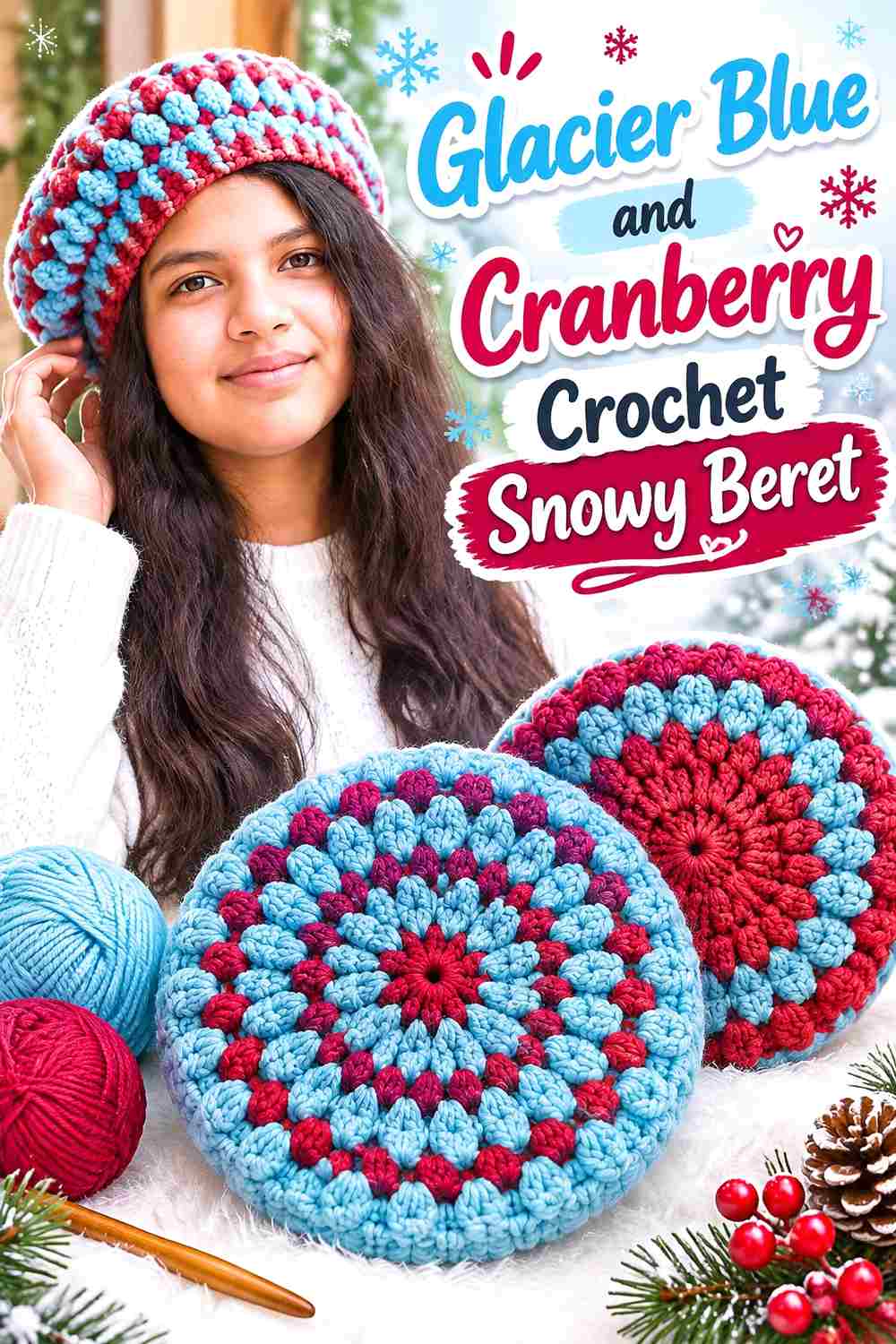
Cranberry creates the strongest warm winter accent in the collection. A small amount can have substantial impact against Glacier Blue, so keep the crown predominantly blue and limit cranberry to a brim, center detail, or selected puff texture.
Let Glacier Blue Balance the Visual Weight of Cranberry
Cranberry is darker and more saturated than pale Glacier Blue, so it does not need equal coverage. A Glacier Blue crown with a narrower cranberry section keeps the hat icy rather than red-led.
Use Cranberry Around Glacier Blue Puff Texture Sparingly
If the beret has raised puff stitches, cranberry can mark a limited number of them or the surrounding band. Avoid coloring every raised detail differently because the texture itself already creates a strong repeating pattern.
Creator Credit: Esperanza y Ana Celia Rosas (Tejiendo Perú) Tejiendo Perú tutorial
11. Glacier Blue And Deep Plum Crochet Snowy Beret
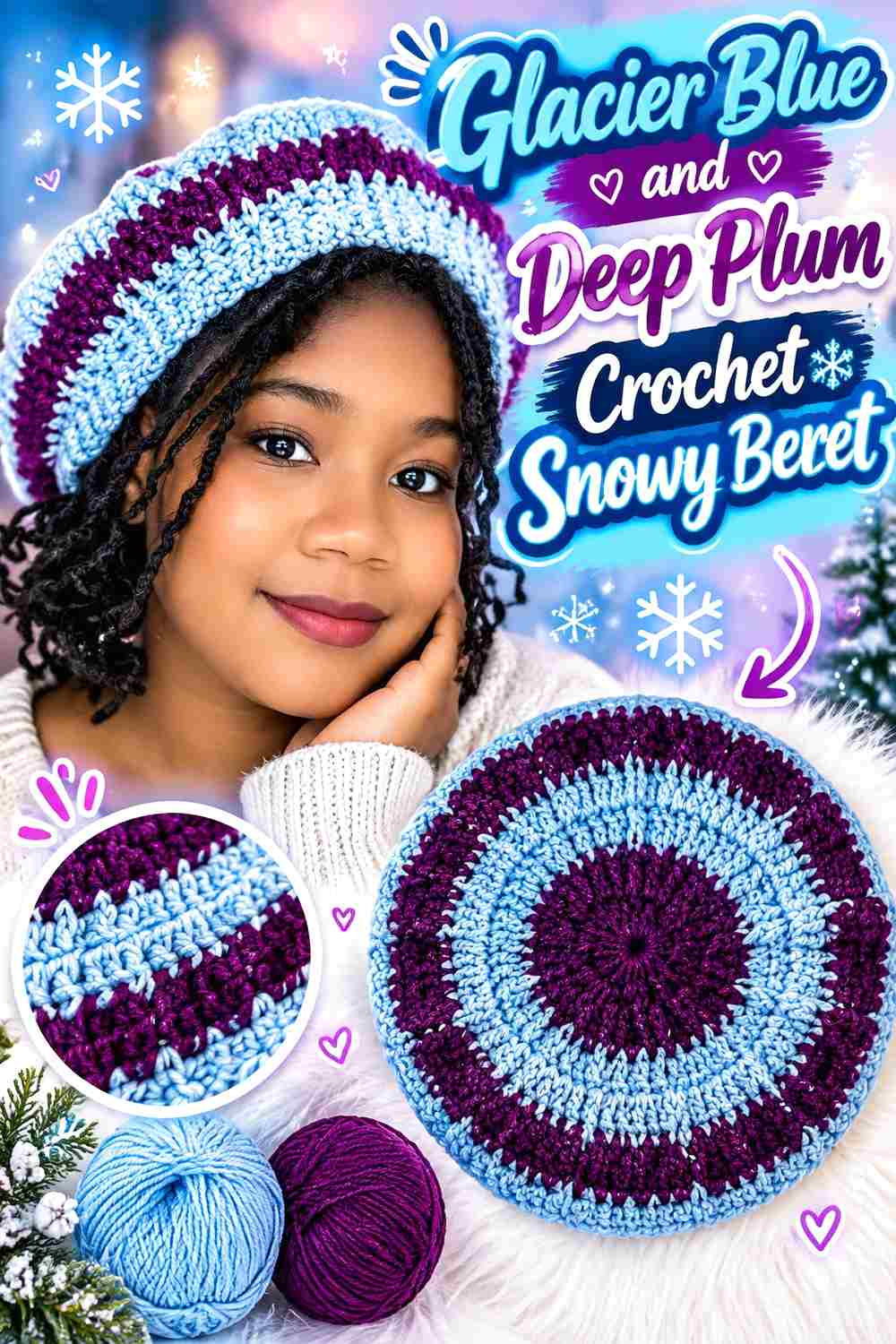
Deep plum gives Glacier Blue a rich dark accent while remaining more colorful than charcoal or navy. Use the blue across the crown and keep plum around the brim or a clearly defined lower section.
Keep Glacier Blue Dominant Above a Deep Plum Brim
A Glacier Blue crown preserves the winter-light appearance while plum gives the hat a strong lower anchor. The difference is most effective when the plum remains noticeably darker.
Limit Deep Plum So Glacier Blue Still Defines the Beret Shape
Because plum has considerable visual weight, avoid carrying it through several wide rings. One substantial band generally provides enough contrast for the entire hat.
Creator Credit: Crafting In Neptune Crafting In Neptune tutorial
12. Glacier Blue Cream And Silver Gray Crochet Snowy Beret

This three-color palette keeps the entire beret within a light winter range. Glacier Blue should cover most of the crown, cream can provide the brightest snowy detail, and silver gray can define the brim or intermediate section. Clear roles prevent three pale colors from turning into an indistinct pastel blend.
Keep Glacier Blue Between Cream and Silver Gray
Use Glacier Blue as the central and dominant color, with cream in the lightest accents and gray in the more structural sections. This gives the palette a clearer visual hierarchy.
Use Cream to Highlight Glacier Blue Textured Sections
Cream can appear around a small number of raised areas, the crown center, or one decorative ring. Keep enough Glacier Blue between cream sections for the light accent to remain noticeable.
Let Silver Gray Ground Glacier Blue at the Beret Band
Silver gray can finish the lower section without introducing a dark boundary. A complete gray band is easier to read than scattered gray stitches among cream and blue.
Creator Credit: Meladora’s Creations for Crochet Meladora’s Creations for Crochet tutorial
13. Glacier Blue Midnight Navy And Snow White Crochet Snowy Beret

This palette offers the widest light-dark range: snow white as the lightest highlight, Glacier Blue as the dominant middle color, and midnight navy as the deepest anchor. The three shades work best when each occupies a different structural area.
Make Glacier Blue the Main Color Between Midnight Navy and Snow White
Keep Glacier Blue across most of the crown, navy around the fitted lower edge, and white in smaller snowy highlights. Equal areas would make the three colors compete and reduce the clarity of the beret silhouette.
Use Snow White as a Glacier Blue Crown Highlight
A small white center or carefully repeated accent can suggest a frosted surface. Keep it away from every crown round so the Glacier Blue field remains continuous.
Let Midnight Navy Anchor the Glacier Blue Beret Edge
Use navy at the brim or another narrow lower section. Its strong contrast can frame both Glacier Blue and snow white without requiring additional dark details throughout the crown.
Creator Credit: Ажурный магазинчик Olga Rich Olga Rich crochet beret tutorial
14. Tonal Glacier Blue Steel Blue And Pearl Crochet Snowy Beret
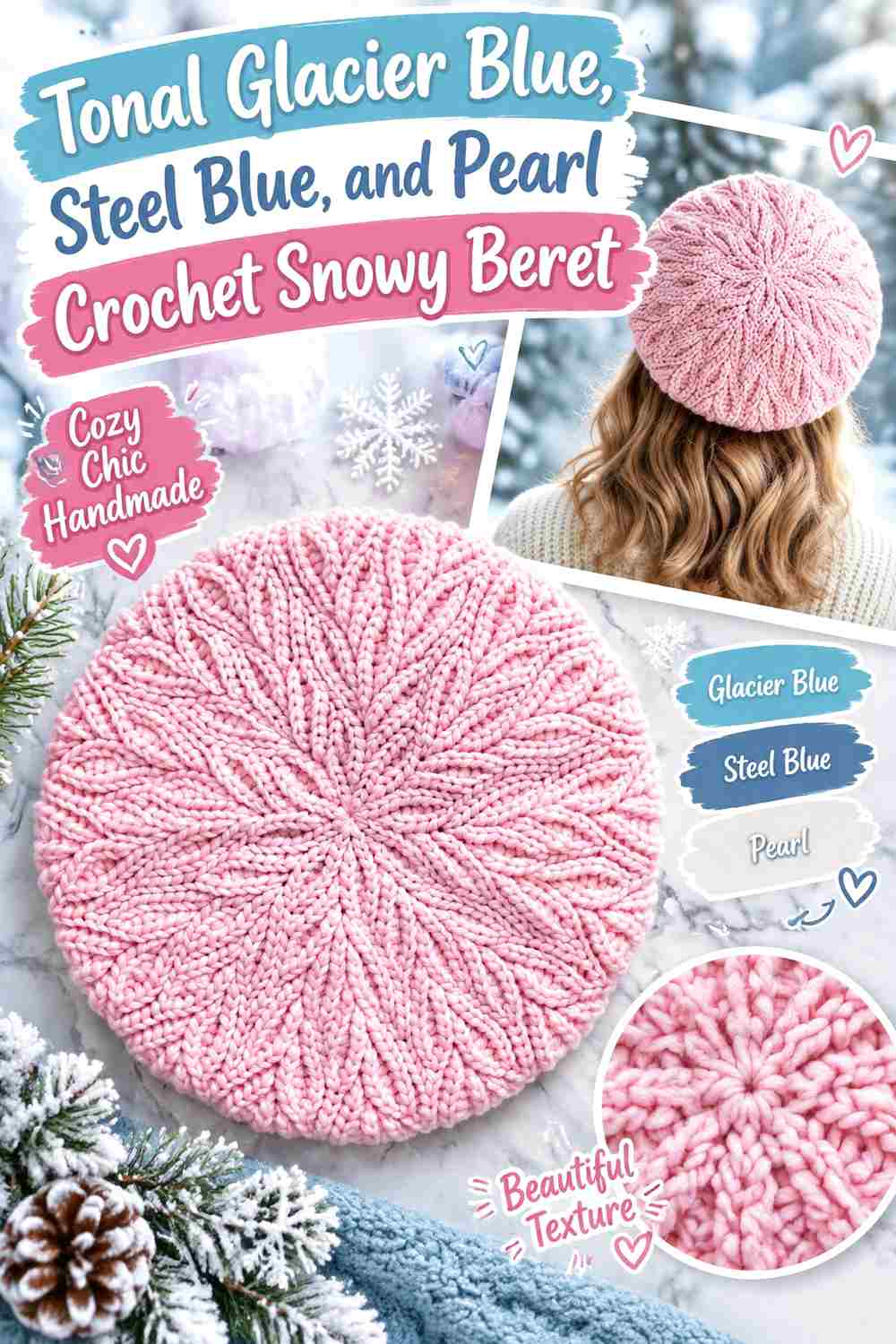
The final idea keeps the beret primarily blue. Glacier Blue forms the main crown, steel blue adds a deeper blue layer, and pearl-colored accents provide the lightest snowy point. This creates variation without moving into a strongly contrasting multicolor palette.
Keep Glacier Blue as the Middle Tone Across the Beret Crown
Use Glacier Blue for most of the hat, steel blue around the outer or lower crown, and pearl in only a few small details. Keeping the middle blue dominant helps the tonal transitions remain smooth.
Use Steel Blue to Deepen Glacier Blue Toward the Beret Edge
A steel-blue section near the brim can create a gradual visual transition from pale crown to darker base. If the two blues are similar, give steel blue a broader area so the distinction remains visible.
Add Pearl Sparingly to Glacier Blue and Steel Blue Details
Pearl-colored yarn can brighten a crown center, narrow ring, or small textural feature. Its role is to provide a pale endpoint rather than becoming a third equal color block.
Creator Credit: MimosdaMalu MimosdaMalu crochet beret tutorial
Comparing the Glacier Blue Snowy Beret Palettes
For the clearest snowy appearance, Glacier Blue with snow white or pearl white gives the crown a strong light winter contrast. Silver gray, oatmeal, and cream create softer transitions when you want the crochet texture to do more of the visual work.
Midnight navy, charcoal, deep plum, and steel blue provide stronger definition around the brim. These darker shades are particularly useful when the crown is pale because a relatively small amount can give the beret a clear lower boundary.
Frosted lavender, ice mint, icy teal, and dusty rose introduce color without abandoning the cool winter direction. Cranberry creates the strongest warm contrast and therefore benefits from more restrained placement.
For three-color berets, assign each shade a role before beginning. Glacier Blue can dominate the crown, the lightest color can mark snowy details, and the darkest shade can define the brim. This is usually clearer than alternating all three colors through every round.
Conclusion
Glacier Blue can create a snowy crochet beret through color, texture, or a combination of both. Pair it with snow white, pearl, cream, or silver gray when the goal is a lighter frosted look. Charcoal, navy, plum, and steel blue create stronger brim definition, while lavender, mint, teal, rose, and cranberry introduce more visible color contrast.
The beret crown should usually receive the largest share of Glacier Blue because it is the broadest part of the finished hat. Supporting colors can then emphasize the center, textured details, decrease area, or fitted band without fragmenting the round silhouette.
Before completing the full color sequence, view the developing beret both flat and worn. Crown rings shift position when a beret is tilted or allowed to slouch, so the final balance can look different on the head. Follow the credited tutorials for their original shaping, fit, and construction guidance, then adapt the snowy palette without reconstructing or changing the creator’s pattern instructions.
Frequently Asked Questions
What colors make Glacier Blue crochet look snowy?
Snow white, pearl white, cream, silver gray, oatmeal, ice mint, and pale lavender can all support a snowy direction. Darker shades such as navy or charcoal can also help by providing contrast around the lighter Glacier Blue crown.
Should Glacier Blue cover the entire crochet beret crown?
It can, and a solid Glacier Blue crown is useful when the stitch texture already provides enough variation. Supporting colors can then be limited to the brim, crown center, or a small decorative section.
What color works well for the brim of a Glacier Blue beret?
Midnight navy, charcoal, steel blue, silver gray, cream, and pearl white can all work. A dark brim creates stronger definition, while a light brim keeps the beret softer and more tonal.
How can I make a Glacier Blue beret look snowy without adding snowflakes?
Use light accents around raised texture, a pale crown center, or a white or silver-gray edge. Puff stitches, ridges, and other existing crochet texture can also create the visual variation, so literal snowflake motifs are not necessary.
Can Glacier Blue and lavender work together in a crochet beret?
Yes. Frosted or muted lavender can create a subtle cool-color contrast. Check the two yarns together because very pale lavender and Glacier Blue may have similar value and work better in broad sections than in tiny alternating details.
How do I keep a three-color Glacier Blue beret from looking striped?
Give each shade a different role instead of switching colors at regular intervals. For example, use Glacier Blue across the crown, a light shade for one snowy accent, and a darker shade for the fitted band.
Can I substitute another blue for Glacier Blue?
Yes. Choose a cool pale-to-medium blue that preserves the intended contrast with the supporting colors. If the replacement is significantly darker, recheck white, gray, navy, and other accents before completing the whole beret.