Jade gives a granny square sweater enough color depth to anchor repeated motifs without forcing every square to look identical. It can dominate motif centers, form consistent outer rounds, define joins, or return at regular intervals across the sleeves and body. The supporting color determines whether those jade motifs look light and open, dark and graphic, softly tonal, or deliberately multicolored.
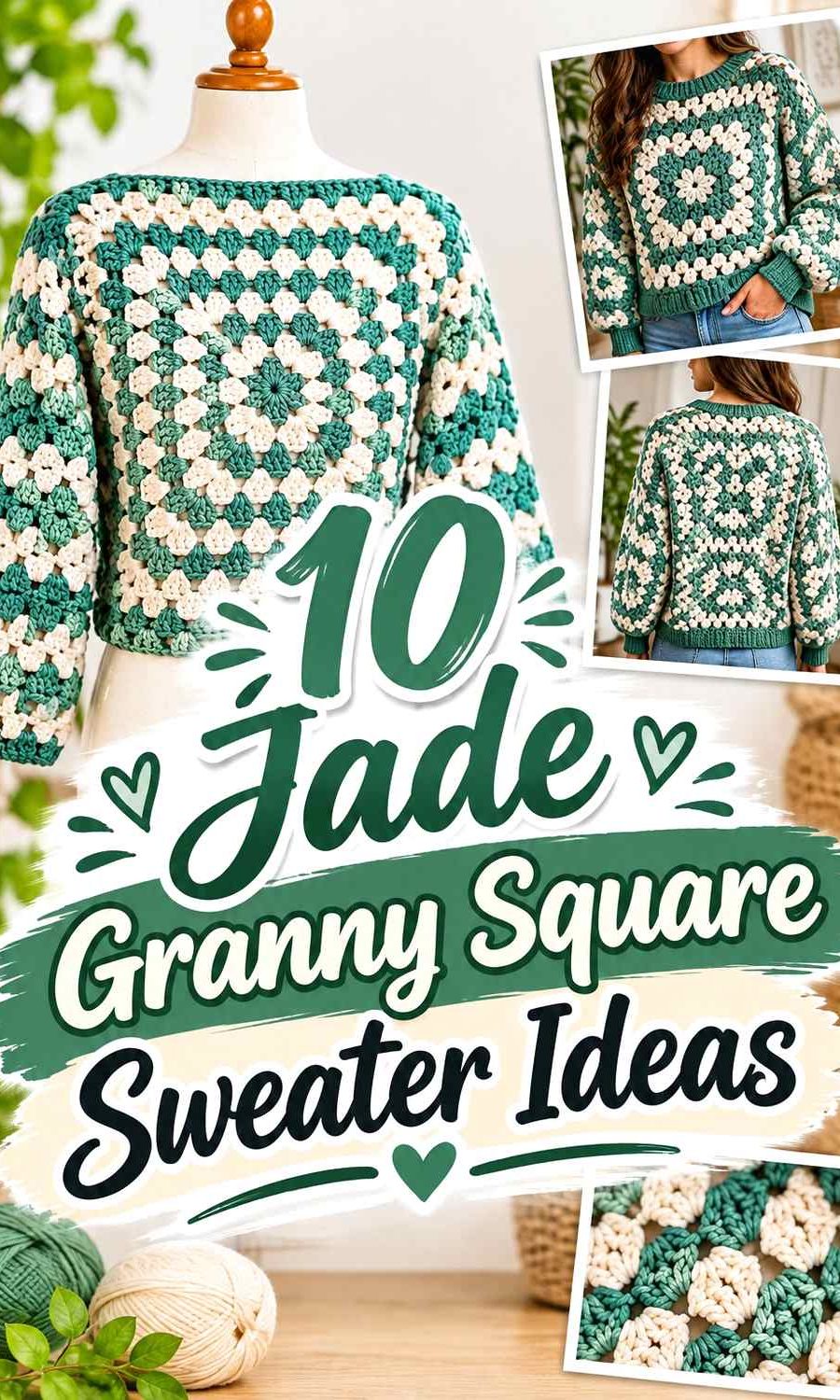
Granny square construction makes color distribution especially important. A combination that looks balanced in one square may become overwhelmingly jade—or barely jade at all—after dozens of motifs are assembled. Planning the whole front, back, shoulder, and sleeve arrangement before joining helps keep the sweater connected rather than producing separate color-heavy zones.
The tutorials credited below support different granny square sweater and cardigan constructions. The jade palettes are independent editorial adaptations rather than claims about the colors used in those tutorials.
Quick List
- Jade And Cream Four Granny Square Crochet Sweater
- Jade And Oatmeal Cropped Granny Square Crochet Sweater
- Jade And Navy Classic Granny Square Crochet Sweater
- Jade And Blush Long Granny Square Crochet Sweater
- Jade And Mustard Oversized Granny Square Crochet Sweater
- Jade And Terracotta Tie Front Granny Square Crochet Sweater
- Jade Lavender And Cream Patchwork Granny Square Crochet Sweater
- Jade And Black Graphic Granny Square Crochet Sweater
- Jade And Dusty Rose Relaxed Granny Square Crochet Sweater
- Jade And Ivory Ribbed Trim Granny Square Crochet Sweater
Decide Where Jade Should Repeat Before Joining Granny Squares
With granny square garments, dominant color is not only about how much yarn is used. Placement matters just as much. Jade repeated in every motif center may control the overall sweater even when cream, pink, or another shade occupies wider outer rounds. Jade used in only a few complete squares can have the opposite problem: those motifs may look unusually heavy compared with the rest.
Arrange enough completed motifs to represent a meaningful section of the garment before committing to the full color plan. Check how jade moves across the shoulders, front, back, and sleeves rather than judging each square independently.
Use Jade Contrast to Keep Granny Square Shapes Visible
Cream, ivory, oatmeal, pale pink, and other light shades give jade clear value separation and can make individual granny clusters easier to distinguish. Navy, black, and other dark colors create stronger visual weight and may work better as controlled outlines, joins, cuffs, or occasional motif rounds.
When jade is paired with another medium-value color such as mustard, terracotta, lavender, or dusty rose, hue contrast may be obvious even if the two shades are similar in lightness. A grayscale check can help determine whether the actual square pattern will remain visible from a distance.
1. Jade And Cream Four Granny Square Crochet Sweater
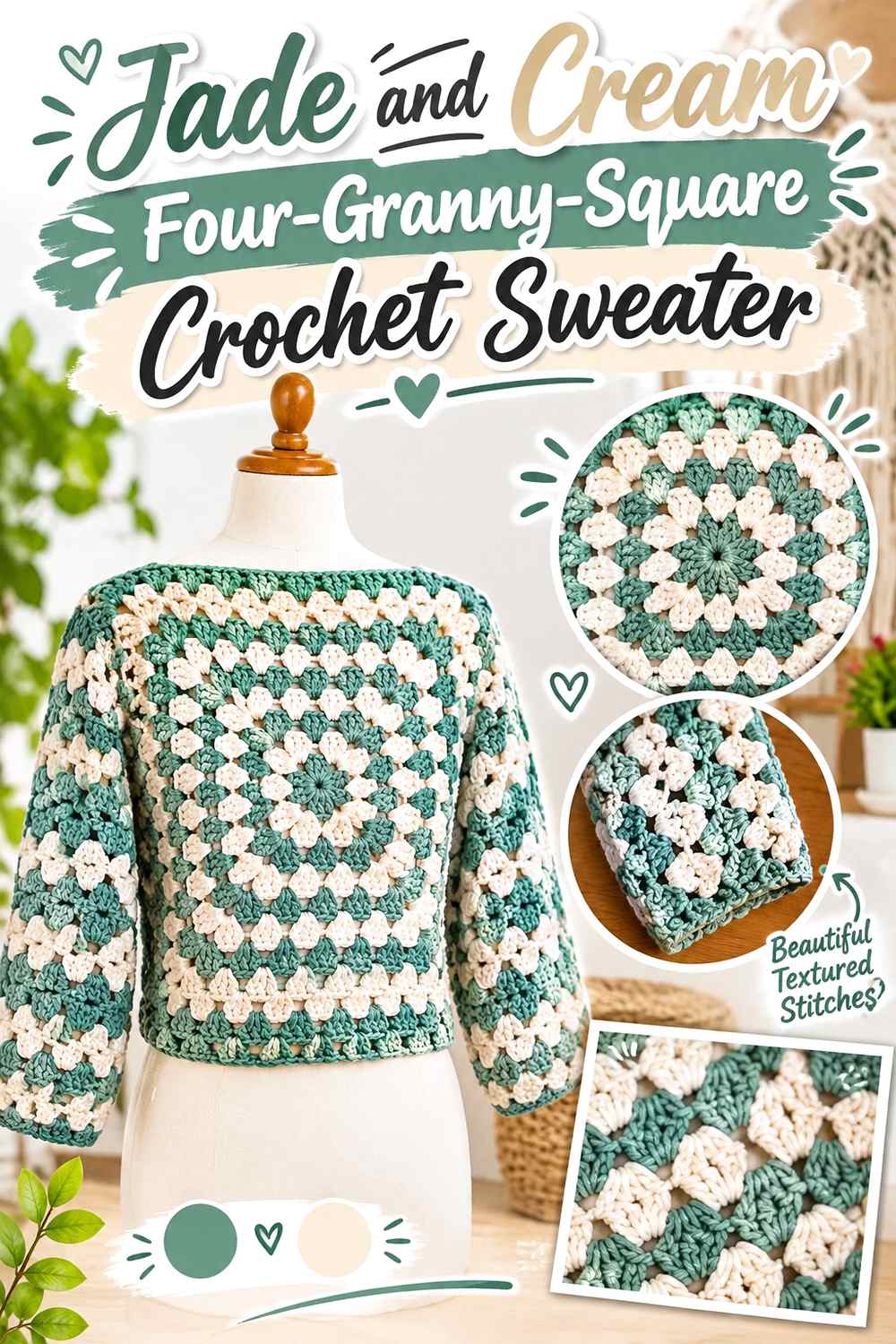
A sweater made from a small number of very large granny squares gives every color round significant visual weight. Jade can lead the front, back, and sleeves through broad sections, while cream creates deliberate breaks between expanding jade areas. Because later rounds occupy increasingly more surface, color balance should be judged by area rather than simply counting rounds.
Keep Jade Prominent as the Granny Squares Grow Larger
A cream round added near the outer edge of a large square covers much more area than a cream round near the center. If jade should remain the sweater’s defining color, return to jade in substantial later sections rather than placing all the green near small motif centers.
Lay the front and back squares together as they grow. This makes it easier to see whether cream is gradually overtaking the jade even though fewer cream rounds were planned.
Use Cream to Separate Jade Across the Sweater Seams
Cream placed near the outer portions of the large squares can create a lighter transition where the pieces meet. That helps prevent several broad jade sections from joining into one visually dense block at the shoulders or sides.
If cream already occupies a major part of each square, keep any final cream edging restrained so the finished sweater still reads primarily as jade.
Creator Credit: Fiber Flux
2. Jade And Oatmeal Cropped Granny Square Crochet Sweater
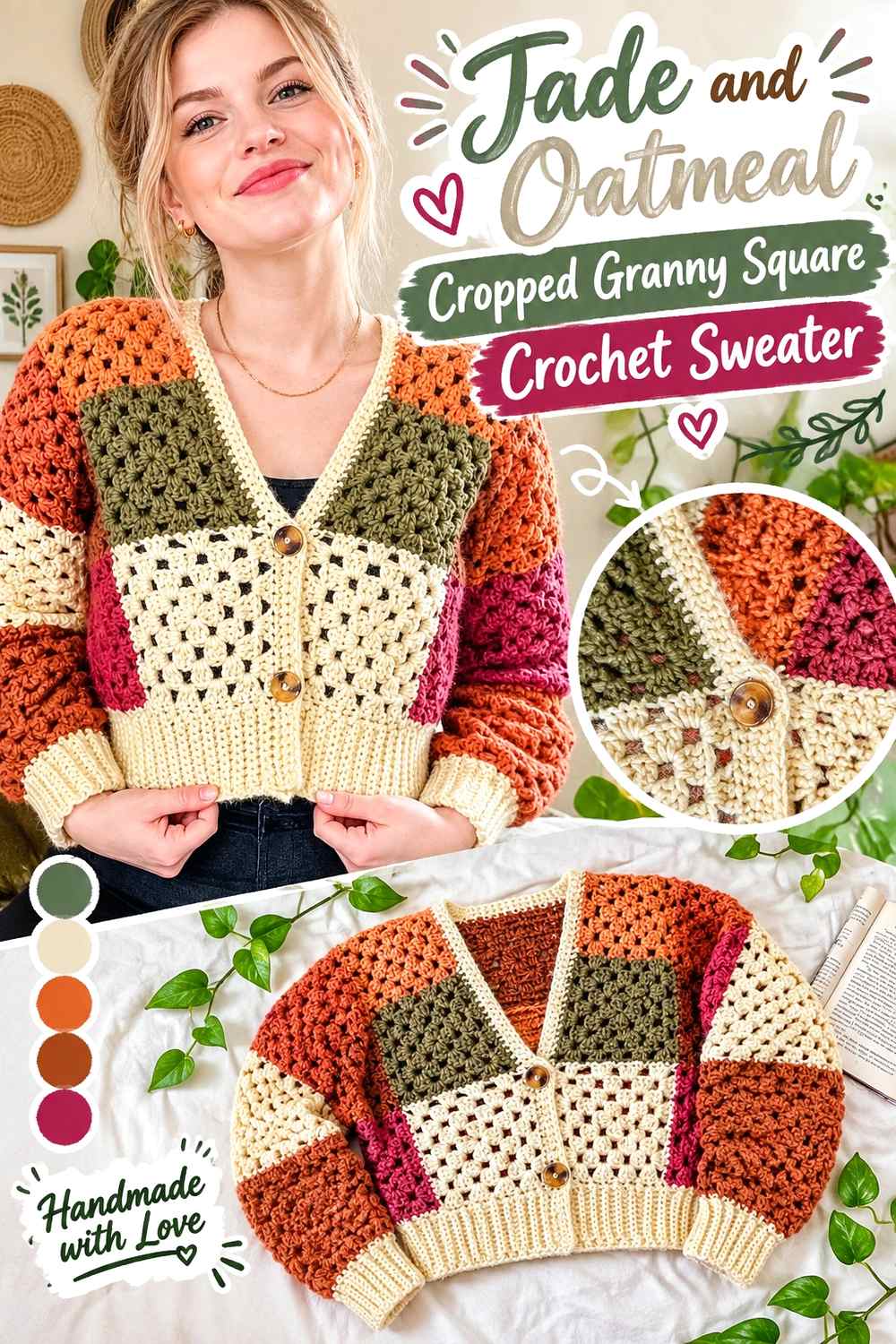
A cropped granny square sweater has less torso space, so each row of motifs contributes a larger share of the finished look. Jade can repeat through centers or outer rounds while oatmeal provides warm, light separation. Keeping oatmeal softer than bright white prevents the motif grid from becoming excessively sharp.
Distribute Jade Evenly Across the Cropped Granny Square Sweater
Avoid putting most jade motifs in the bottom row while leaving the shoulder area largely oatmeal. On a short sweater, that creates a noticeable horizontal division.
Arrange the motifs in their cropped garment layout before joining and look at the amount of jade on each front section, across the back, and near both shoulders.
Let Oatmeal Separate Jade Without Taking Over the Granny Grid
Using oatmeal as a common outer round can connect squares with different jade placements. It creates visual consistency and gives neighboring green sections some breathing room.
Watch the width of those oatmeal rounds, however. A broad light border on every motif can make the completed sweater look oatmeal-led even when jade occupies the centers.
Creator Credit: HayHay Crochet
3. Jade And Navy Classic Granny Square Crochet Sweater
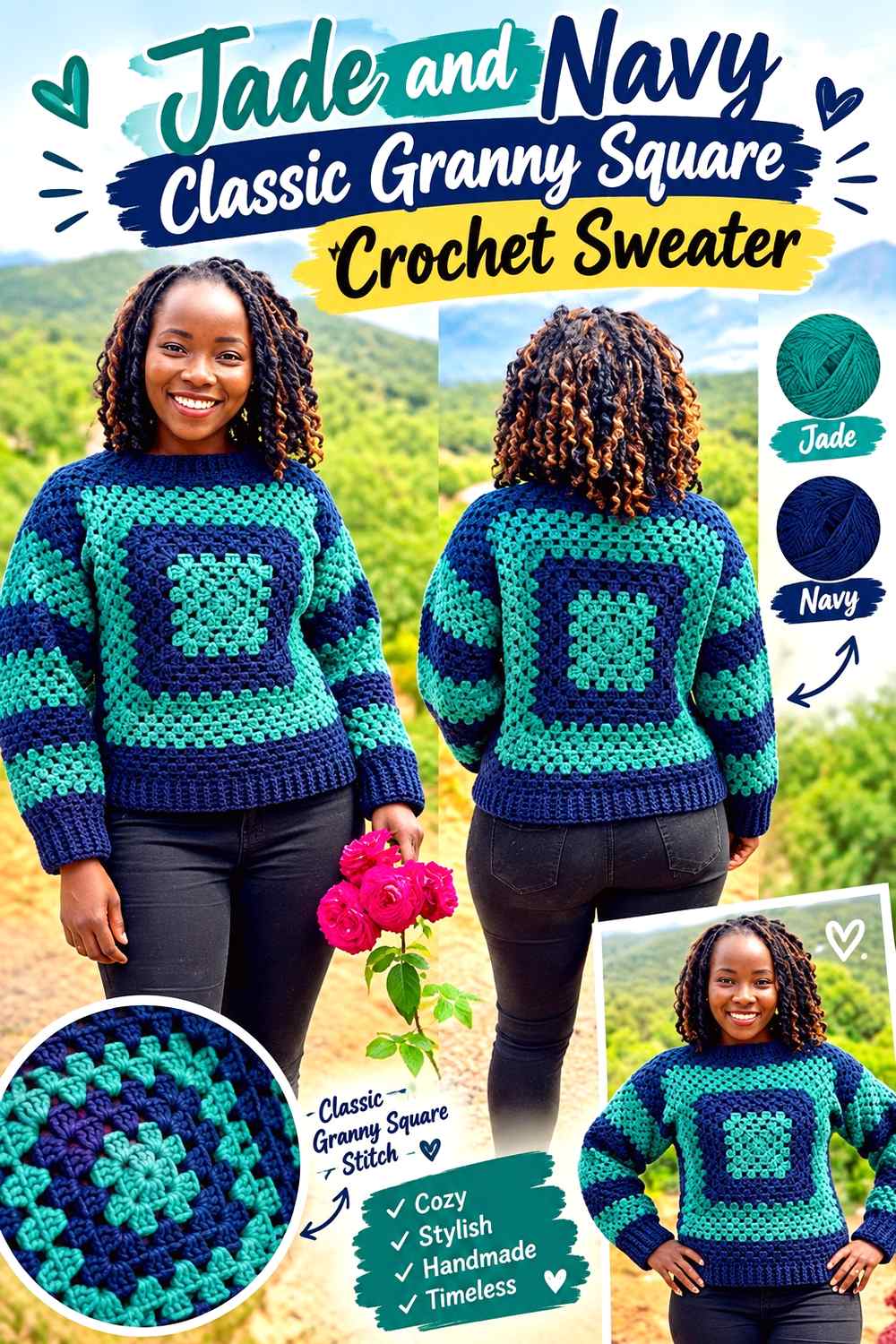
Jade and navy create a deeper granny square palette than jade and cream. Because both colors carry substantial visual weight, a lighter third shade is not necessary if the goal is a restrained two-color sweater, but placement needs enough contrast for the motifs to remain readable.
Keep Jade Brighter Than Navy Across the Granny Square Sweater
Use jade where you want the motif pattern to remain most visible and navy for the darker supporting areas. Jade centers surrounded by navy outer rounds can work well when you want each green section to appear framed.
Compare the two yarns in grayscale before committing. If jade and navy are nearly identical in value, expect the sweater to look more tonal and less clearly segmented.
Use Jade More Often Than Navy if the Sweater Should Read Green
A perfectly alternating jade-and-navy arrangement can create an evenly balanced two-color garment. For a jade-led sweater, give green more motif centers, more rounds, or more prominent placement across the front.
Navy can then concentrate around selected outer rounds, cuffs, or joins where a dark accent has a clear purpose.
Creator Credit: Simply Angel Tiah
4. Jade And Blush Long Granny Square Crochet Sweater
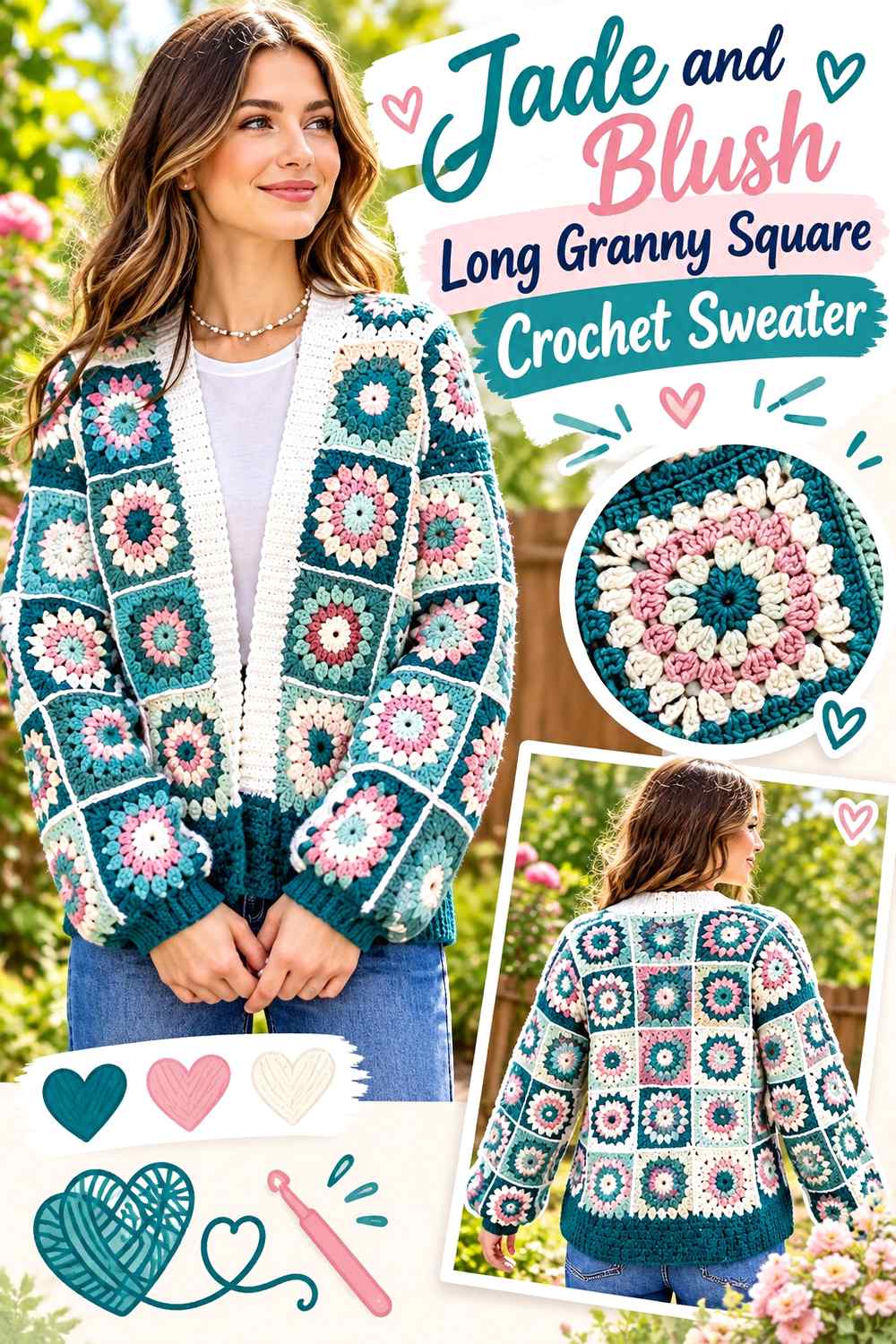
A longer granny square cardigan-style sweater provides enough vertical space for jade and blush to repeat several times without making the arrangement feel cramped. Jade can act as the stronger anchor while blush lightens selected motif centers, outer rounds, or lower sections.
Repeat Jade Down the Full Length of the Granny Square Sweater
Do not concentrate jade only around the upper body. A long garment can look visually disconnected if the lower rows shift almost entirely to blush.
Carry jade through several levels of the layout so the eye can follow the main color from shoulder to hem. The pattern does not need to be perfectly symmetrical as long as the color continues intentionally.
Use Blush to Break Up Large Jade Areas in the Long Sweater
Blush can prevent multiple adjacent jade squares from creating a large uninterrupted dark section. It is especially useful through the lower body and sleeves, where several motifs may be visible at once.
Keep some jade inside or around the blush-heavy motifs so they still belong to the same sweater rather than appearing as a separate pink section.
Creator Credit: Lallaulab
5. Jade And Mustard Oversized Granny Square Crochet Sweater
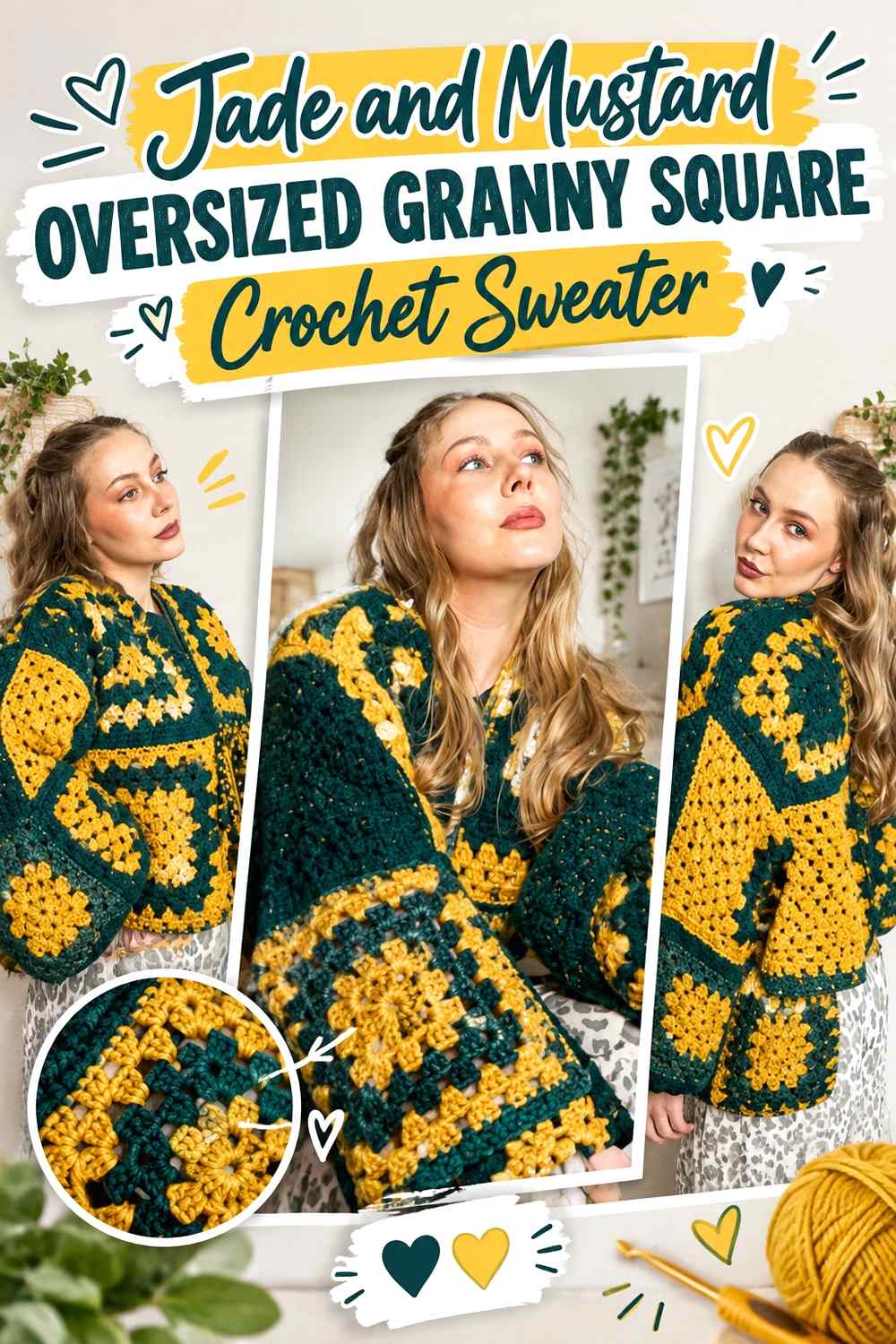
Jade and mustard create a more energetic color relationship, so an oversized granny square sweater benefits from a clear hierarchy. Use jade across more motifs or broader rounds, then allow mustard to appear periodically rather than dividing the large garment equally between both strong colors.
Give Jade More Visual Area Than Mustard on the Oversized Sweater
Oversized construction magnifies every color block. A mustard square that seems like a modest accent while lying on a table can occupy a substantial part of the front or sleeve once the garment is assembled.
Keep jade present in the largest uninterrupted or most frequently repeated areas if you want the oversized sweater to retain a green anchor.
Space Mustard Between Jade Granny Squares Instead of Clustering It
Several mustard motifs placed together can form one dominant warm block. Distribute them among jade-heavy squares so the color appears as a repeated accent rather than one isolated panel.
Check the sleeves separately from the torso. Wide oversized sleeves can display enough motifs that they need their own balanced jade-to-mustard rhythm.
Creator Credit: DIYGuru
6. Jade And Terracotta Tie Front Granny Square Crochet Sweater
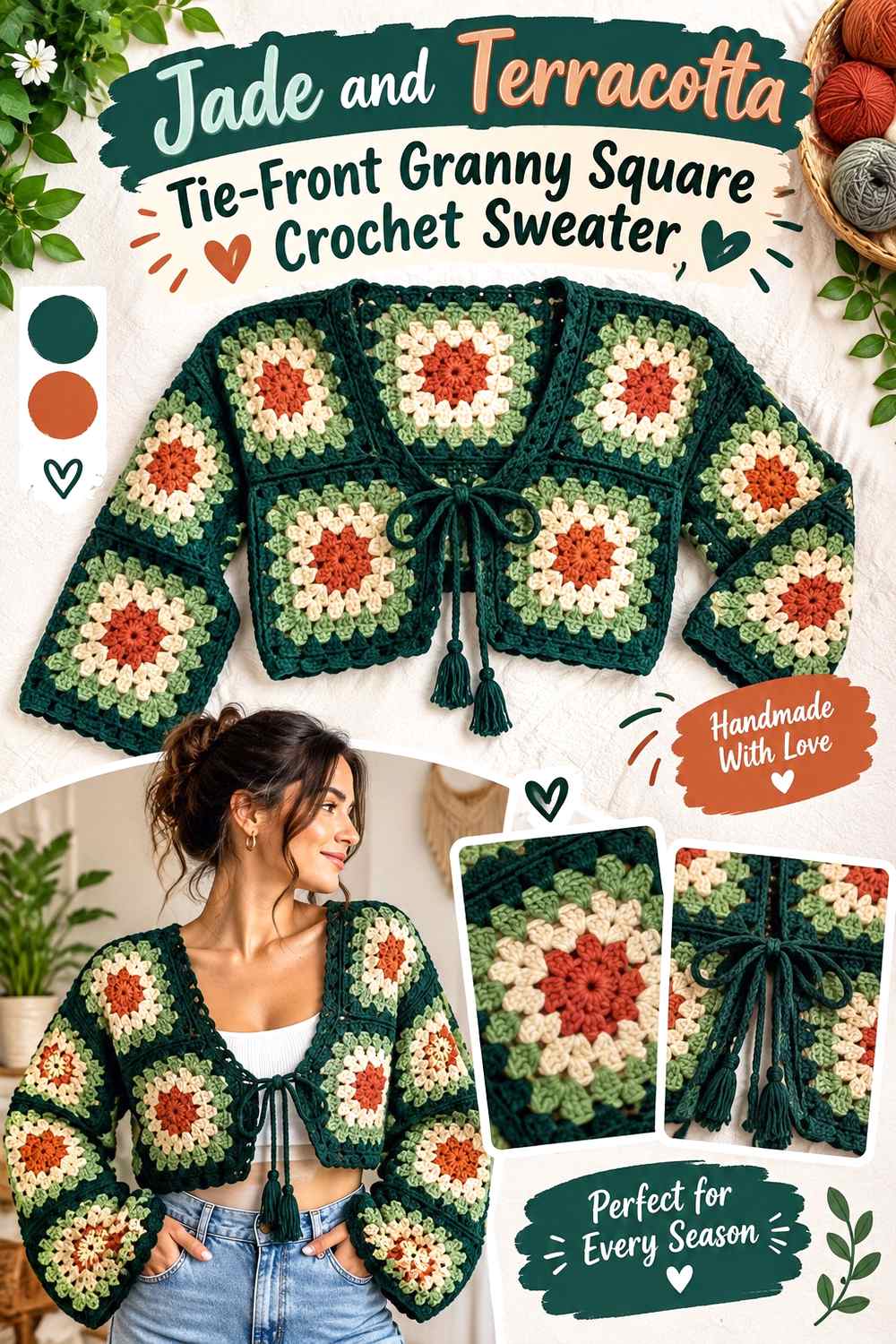
A tie-front granny square cardigan puts extra attention on the center opening, making color placement around those edges particularly important. Jade can dominate the motifs while terracotta appears in selected rounds or the ties themselves for a warm contrast.
Keep Jade Balanced Along Both Tie-Front Sweater Edges
Arrange the left and right fronts together before joining. If one side contains several jade-heavy motifs and the other contains mostly terracotta, the difference becomes especially obvious because the two edges meet at the center.
Perfect mirroring is not necessary, but comparable visual weight helps the open sweater look intentionally composed.
Use Terracotta to Accent Jade Ties Without Spreading It Everywhere
Terracotta ties can provide enough warm color near the center front without requiring a terracotta border around the entire sweater. Repeat a smaller amount in a few granny-square rounds so the tie color has a connection to the garment.
Keeping most motifs jade-led prevents the small front closure detail from dictating the whole palette.
Creator Credit: Danielle Villanueva
7. Jade Lavender And Cream Patchwork Granny Square Crochet Sweater
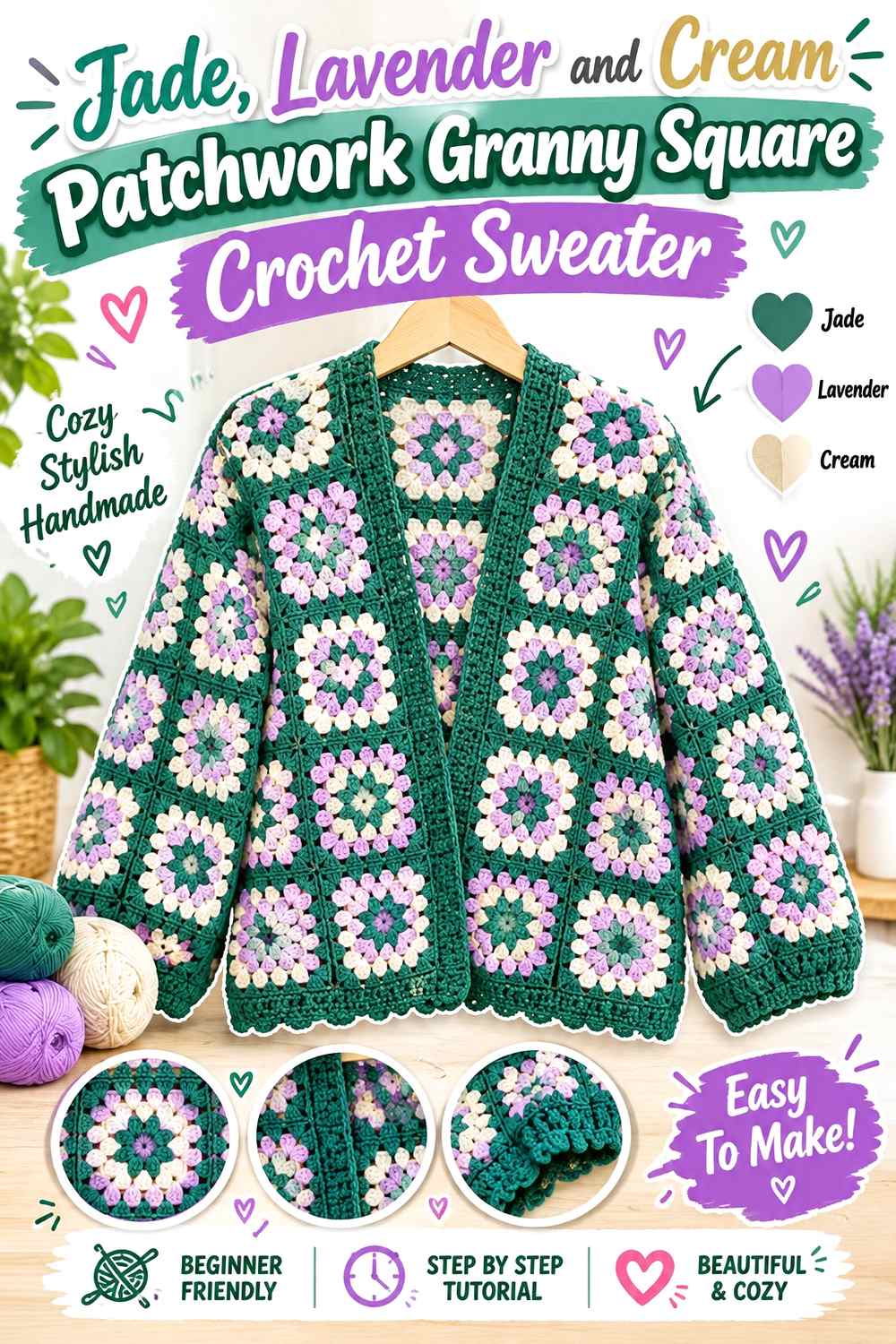
A three-color patchwork gives jade a different role from a simple two-tone granny square. Use jade as the repeated anchor, lavender as the neighboring color, and cream as a separator when the two medium-value hues need more distinction.
Repeat Jade Across Every Major Patchwork Sweater Section
Jade should appear somewhere across the front, back, and sleeves instead of occupying only one part of the garment. Repetition creates continuity even if every individual square uses the three colors differently.
Lay out the entire patchwork before joining whenever possible. A balanced pile of motifs can become an unbalanced sweater once particular squares are assigned to sleeves and shoulders.
Use Cream Around Jade and Lavender When the Granny Motifs Blend
Jade and lavender can look clearly different in hue while sitting close together in value. A cream round between them can preserve the internal structure of the granny square.
Avoid making cream the default outer round on every motif without checking the result. Too much cream can create a dominant pale grid and reduce jade to a collection of small inserts.
Creator Credit: DiMar DiMax Crochet
8. Jade And Black Graphic Granny Square Crochet Sweater
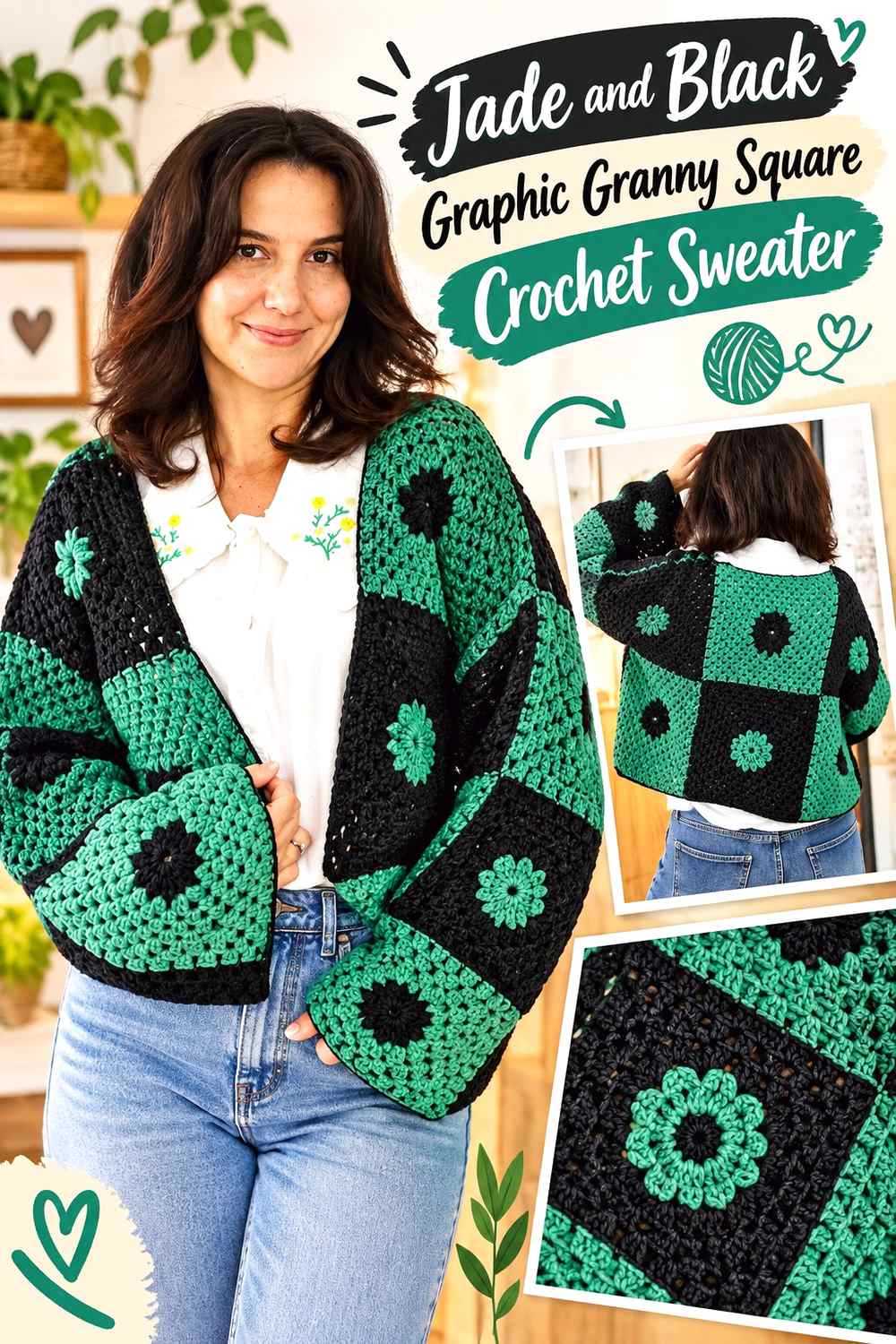
Black gives jade a strong, graphic boundary and works best when used deliberately. Jade can fill motif centers and broader middle rounds while black appears on outer rounds, joins, cuffs, or selected complete squares.
Keep Jade Large Enough Inside Black Granny Square Frames
A black outer round around every motif creates an obvious grid. If those dark frames are wide, they can collectively cover more of the sweater than expected.
Preserve generous jade interiors so the eye reads green motifs divided by black rather than a black sweater filled with small jade centers.
Use Jade to Break Up Black Sweater Joins and Cuffs
If the joins and cuffs are both black, keep the areas between them strongly jade-led. This prevents the dark structural details from joining visually into one continuous frame around the sweater.
You can also return to jade along a narrow finishing edge when the black border feels heavier than intended.
Creator Credit: Sirin’s Crochet
9. Jade And Dusty Rose Relaxed Granny Square Crochet Sweater
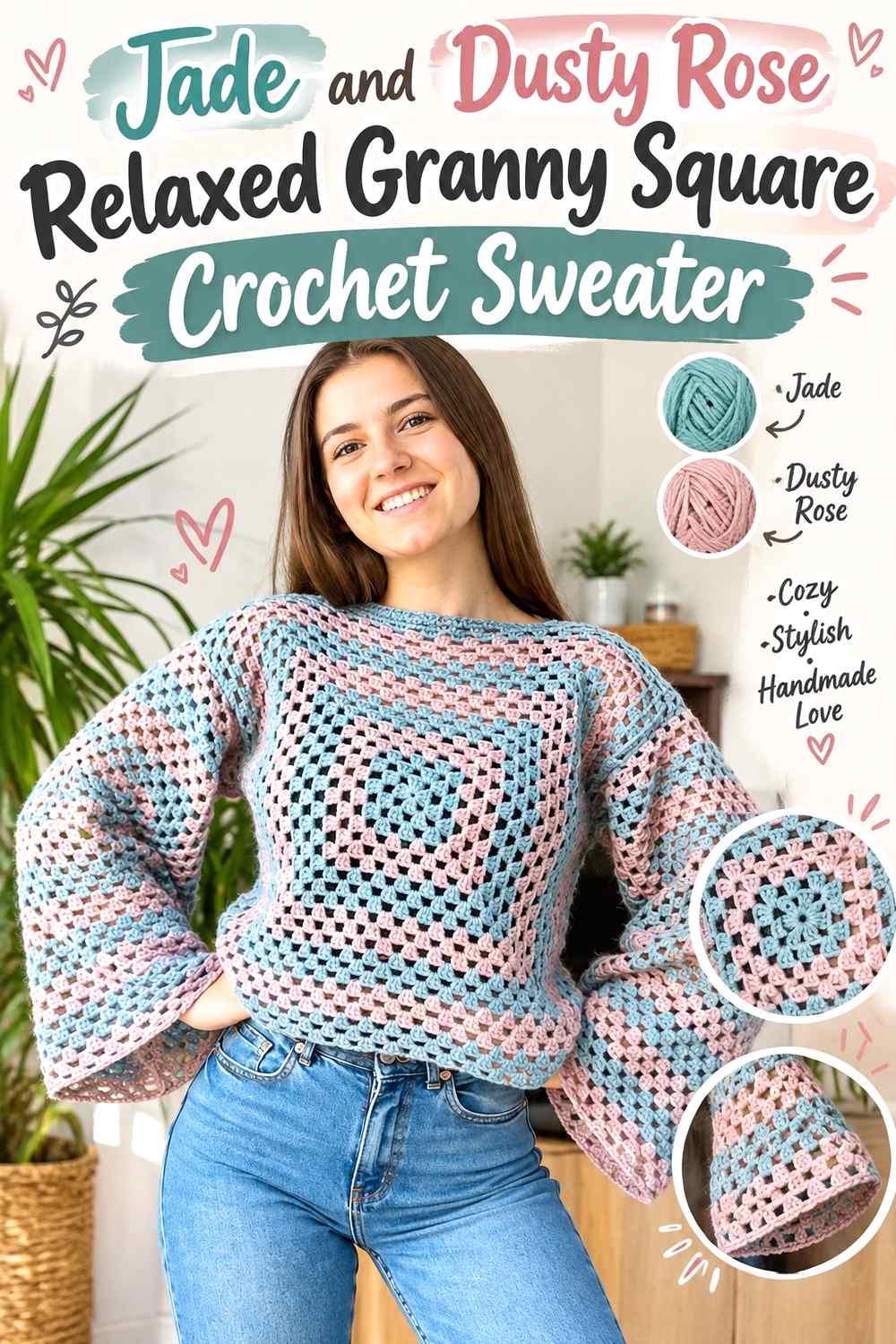
Dusty rose creates a muted partner for jade that is less stark than cream and less saturated-looking than a brighter pink. On a relaxed granny square sweater, use jade as the repeating main shade and let dusty rose soften selected motifs or alternate sections.
Keep Jade Repeating Across the Relaxed Sweater Body
Relaxed construction can display many granny squares at once, so repetition is more important than making every motif identical. Place jade through several rows and across both sides of the garment.
If one side of the front becomes unusually rose-heavy, move a jade-dominant motif into that area before joining instead of trying to correct the balance later with edging.
Check Jade and Dusty Rose Value Before Using Small Motif Details
Jade and dusty rose can have similar lightness even though the hues differ. If small centers or narrow rounds are supposed to stand out, test the yarns together before producing the complete set of motifs.
For a softer blended sweater, similar values can be an advantage. For more distinct granny geometry, deepen one shade or introduce more cream-colored negative space.
Creator Credit: by Kristine
10. Jade And Ivory Ribbed Trim Granny Square Crochet Sweater
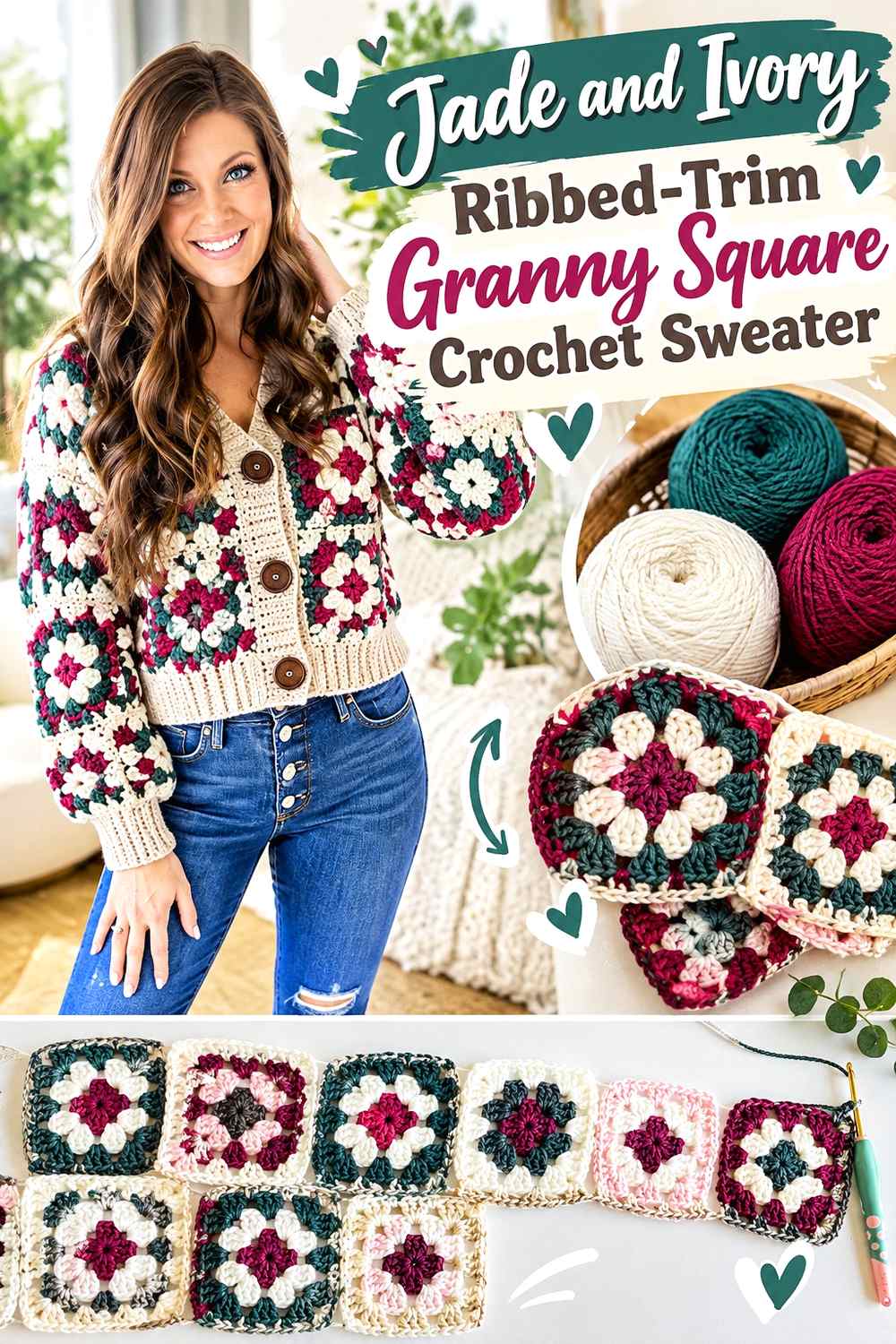
Ivory gives jade a light but slightly softer contrast than bright white. It is especially useful when the sweater includes prominent ribbed cuffs, a button band, or neckline finishing because the solid texture separates naturally from the more open granny-square surface.
Let Jade Lead the Granny Squares Before Adding Ivory Ribbing
Keep jade clearly present across the motifs before considering how much ivory the trim should occupy. Thick cuffs and a wide front or neckline band can add more light color than expected.
View the assembled sweater without the final edging first. That makes it easier to determine how much ivory is actually needed to frame the jade motifs.
Use Ivory to Separate Jade Motifs From the Sweater Edges
Ivory ribbing can give jade squares a clean stopping point at the wrists, neckline, and hem. This is particularly helpful if the outer motif rounds are jade and would otherwise run directly into matching green finishing.
Avoid making every ribbed area equally broad. A substantial cuff can be balanced with a narrower neckline or hem so the ivory does not become the garment’s dominant color.
Creator Credit: MJ’s Off The Hook Designs
How the Jade Granny Square Sweater Palettes Compare
Jade with cream, oatmeal, or ivory gives granny motifs the clearest light separation. These palettes are useful when square boundaries, joins, ribbing, or individual cluster shapes should remain obvious.
Jade with navy or black creates a darker, more graphic result. These shades work well around outer motif rounds and structural finishing, but large amounts can overpower jade because the dark joins repeat across the entire sweater.
Blush, dusty rose, lavender, mustard, and terracotta create more obvious hue relationships. Blush and dusty rose keep the result softer, lavender gives the sweater a cool multicolor direction, and mustard or terracotta produces a warmer contrast. For these combinations, check both color and value; two very different hues can still merge when viewed from a distance if their lightness is similar.
Conclusion
The easiest way to keep a granny square sweater clearly jade-led is to decide on jade’s repeating role before making the full set of motifs. It can occupy every center, return in important outer rounds, dominate the majority of individual squares, or connect the garment through matching joins and finishing.
Choose cream, oatmeal, or ivory when the priority is clear motif separation. Navy and black give jade stronger boundaries, while blush, dusty rose, lavender, mustard, and terracotta change the sweater through hue contrast rather than relying only on light and dark.
Most importantly, judge the palette in garment layout rather than one square at a time. Motifs that seem balanced individually can create unexpected blocks of color across the chest, back, or sleeves after assembly. Use the credited tutorials for their construction details while treating the jade distribution as a separate color-planning decision.
Frequently Asked Questions
What colors work well with jade in a granny square sweater?
Cream, ivory, oatmeal, navy, black, blush, dusty rose, lavender, mustard, and terracotta can all create useful combinations with jade. Light neutrals emphasize motif separation, dark shades create stronger framing, and pink, purple, or warm earthy shades introduce more noticeable hue contrast.
How do I keep jade as the main color in a multicolor granny square sweater?
Give jade a consistent repeating role. It can appear in every motif center, in more squares than the other colors, or across broader rounds. Evaluate the complete garment layout because repetition can make jade dominant even when it is not the largest color area inside every individual square.
Should jade be used in the center or outer round of a granny square?
Either placement can work. Jade centers create repeated green focal points, while jade outer rounds visually expand the color and can make neighboring squares feel more connected. Choose according to how much jade you want visible after the motifs are joined.
What joining color works with jade granny squares?
Cream and ivory create lighter separation, while black or navy forms a more obvious grid. Jade itself can also be used when you want the joins to blend into the dominant color. Preview several motifs together because joining yarn repeats across the whole sweater and can become more visually important than expected.
How can I tell whether jade and another color have enough contrast?
Compare the worked colors side by side and view them from a distance. A grayscale photo can help reveal their relative lightness. This is particularly useful with dusty rose, lavender, mustard, or terracotta, which may differ clearly in hue but still sit at similar values.
How should I arrange jade granny squares before making a sweater?
Lay the motifs in an approximate front, back, and sleeve arrangement before joining. Check whether jade is distributed through every major garment area and whether one shoulder, sleeve, or front panel has become noticeably darker or greener than the others.
Can I make a mostly jade granny square sweater without it looking flat?
Yes. Variation can come from motif texture, changes in where cream or another supporting color appears, contrasting joins, ribbed finishing, or different jade-to-accent proportions. You do not need many unrelated colors if the square arrangement and edge treatment already provide enough visual structure.