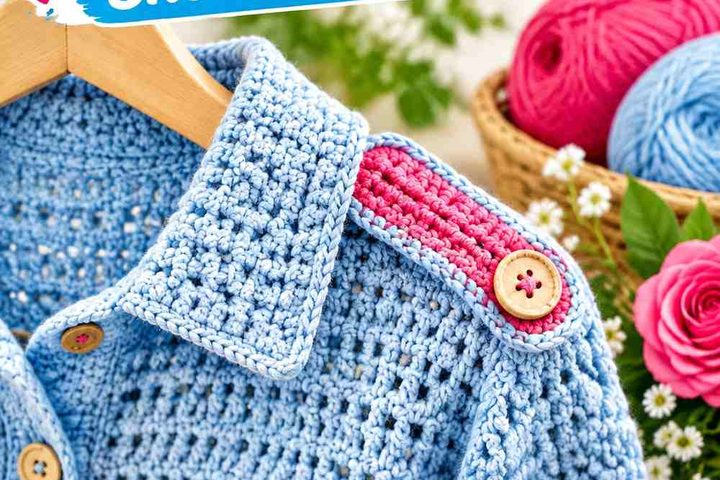
Mushroom Taupe gives a crochet cardigan a muted neutral base that can move warmer, cooler, lighter, or darker depending on the colors placed beside it. That makes it especially useful for cardigans, where the palette can be divided across body panels, sleeves, cuffs, front bands, granny motifs, pockets, or textured details instead of being spread evenly everywhere.

The 16 ideas below use Mushroom Taupe as the common thread while changing its supporting colors and placement. Some keep the cardigan quiet and tonal, while others use darker borders, botanical greens, warm autumn accents, or cooler contrast. The linked tutorials support the cardigan construction concepts; the proposed Mushroom Taupe palettes are color adaptations rather than claims about the colors used by the creators.
Quick List
- Mushroom Taupe And Cream Crochet Pocket Cardigan
- Mushroom Taupe And Charcoal Crochet Ribbed Cardigan
- Mushroom Taupe And Sage Green Crochet Hexagon Cardigan
- Mushroom Taupe And Dusty Rose Crochet Patchwork Cardigan
- Mushroom Taupe And Rust Crochet Patchwork Cardigan
- Mushroom Taupe And Oatmeal Crochet Cocoon Cardigan
- Mushroom Taupe And Burgundy Crochet Raglan Cardigan
- Mushroom Taupe And Denim Blue Crochet Lace Cardigan
- Mushroom Taupe And Black Crochet Banded Cardigan
- Mushroom Taupe And Mustard Crochet Granny Cardigan
- Mushroom Taupe And Forest Green Crochet Balloon Sleeve Cardigan
- Mushroom Taupe And Soft Lilac Crochet Flower Cardigan
- Mushroom Taupe Terracotta And Cream Crochet Hexagon Cardigan
- Mushroom Taupe Navy And Ivory Crochet Patchwork Cardigan
- Mushroom Taupe And Teal Crochet Mesh Cardigan
- Mushroom Taupe And Camel Crochet Everyday Cardigan
How to Keep Mushroom Taupe Distinct on a Crochet Cardigan
Because Mushroom Taupe is a muted neutral, neighboring colors can change how strongly it reads. A light cream can make it look deeper, while charcoal or black can make it appear comparatively soft. Sage, rust, burgundy, and blue accents shift attention toward different undertones without requiring Mushroom Taupe to stop being the dominant cardigan color.
Check light-and-dark value as well as hue before committing to a large garment. Two yarns can look obviously different in the skein yet merge once worked into textured crochet. Place them beside each other, photograph them in grayscale if useful, and pay particular attention to cuffs, motif borders, joins, and narrow front bands where limited space makes contrast more important.
Plan Mushroom Taupe Around Cardigan Panels, Cuffs, and Edging
A cardigan offers more useful color-placement zones than simply “body” and “accent.” Mushroom Taupe can cover the main back and front panels while another color defines cuffs and edging, or it can alternate with supporting shades in granny squares and patchwork blocks.
Try to decide the hierarchy before beginning assembly. If Mushroom Taupe is supposed to lead, it should usually appear across enough major garment areas to remain visually connected from front to back. Repeating it on sleeves, the neckline, cuffs, or edging can keep a multicolor cardigan from looking like unrelated color sections sewn together.
1. Mushroom Taupe And Cream Crochet Pocket Cardigan
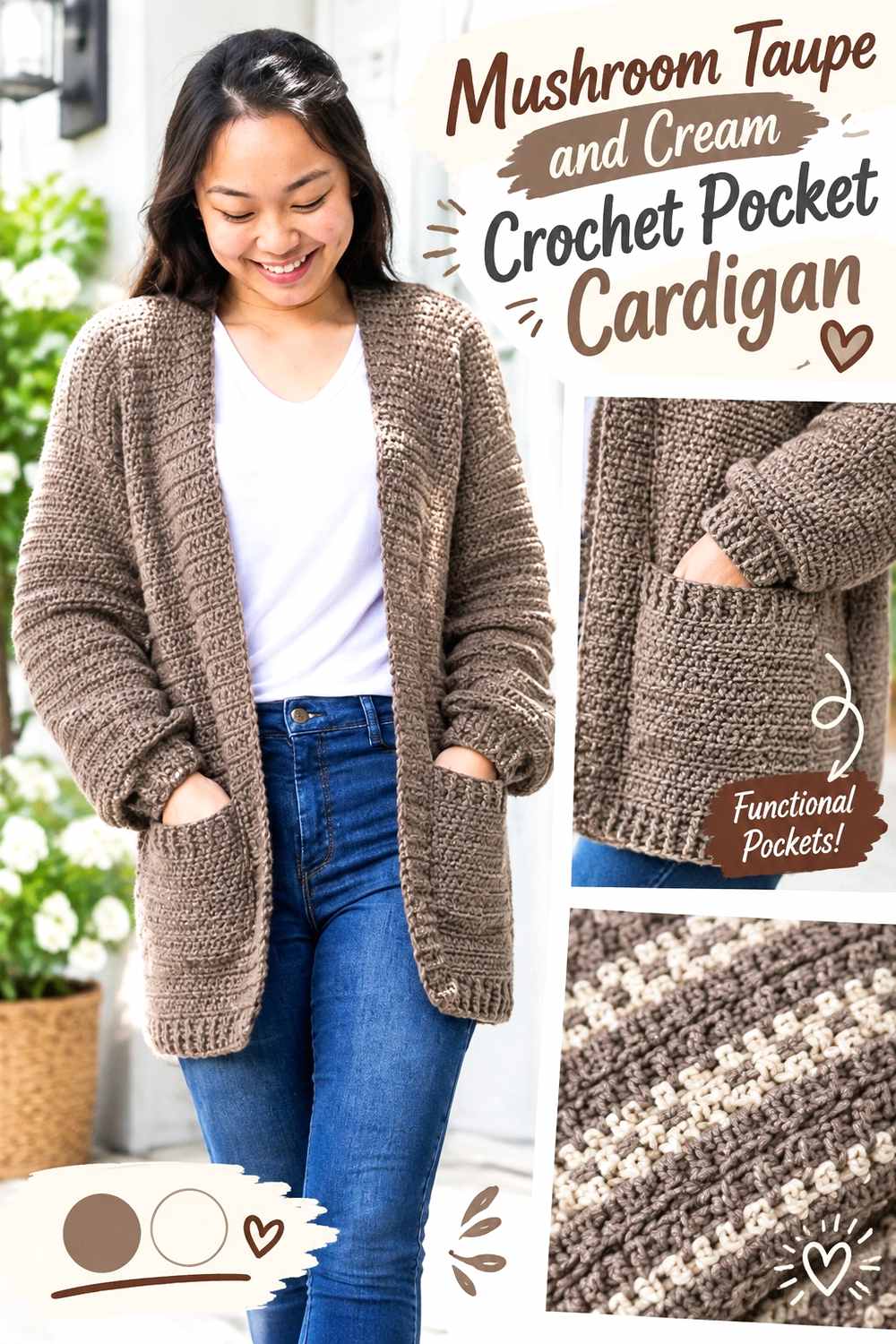
This palette works especially well on a cardigan with large body panels and visible pockets because the color roles can stay clear. Let Mushroom Taupe cover most of the body and sleeves, then use cream selectively on the ribbed edges, pocket tops, or front opening. The lighter neutral gives the cardigan definition without turning the pockets into disconnected blocks.
Let Mushroom Taupe Cover the Main Cardigan Panels
Keeping Mushroom Taupe across the back, fronts, and most of the sleeves establishes one uninterrupted neutral field. That gives the cardigan a calmer appearance and lets the pockets function as part of the garment rather than becoming the main color event.
Use Cream to Separate Mushroom Taupe Pockets and Ribbing
Cream is most useful where the cardigan needs visual separation. A cream pocket edge, cuff, or narrow border can define those sections against Mushroom Taupe without requiring a strongly contrasting dark shade.
Keep Mushroom Taupe Repeated Around the Cream Details
If cream appears on several finishing areas, retain Mushroom Taupe somewhere between them. For example, cream cuffs and pocket trim can work with a Mushroom Taupe sleeve and body so the lighter accents do not visually divide the cardigan into separate sections.
Creator Credit: forthefrills
2. Mushroom Taupe And Charcoal Crochet Ribbed Cardigan
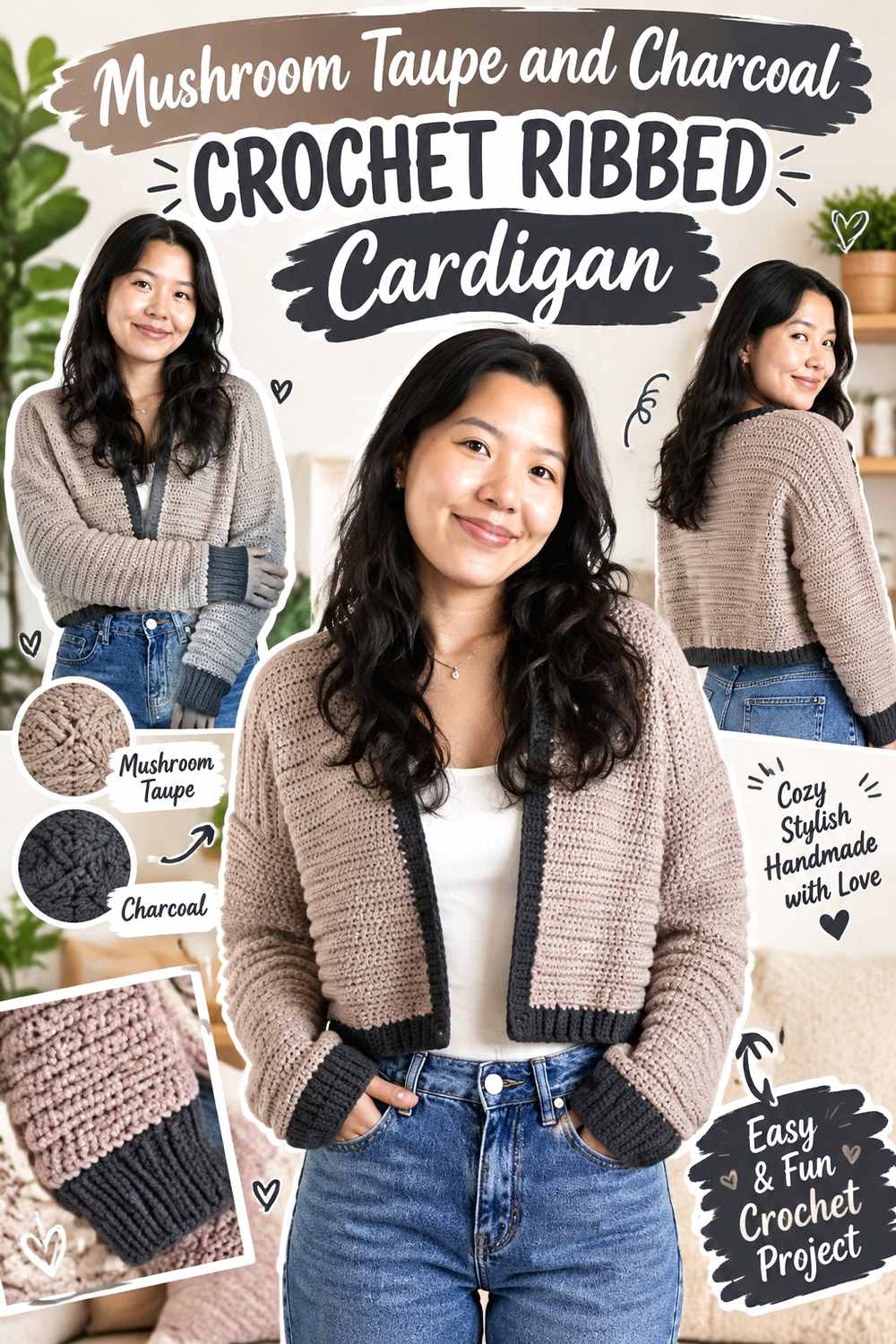
Charcoal gives Mushroom Taupe a noticeably darker partner, making this palette useful for a simple cardigan where ribbing and clean edges provide most of the visual structure. Mushroom Taupe can dominate the body while charcoal defines cuffs, hem details, or the neckline. Keep the darker shade controlled if you want the taupe rather than the trim to remain the first color noticed.
Keep Mushroom Taupe Dominant Across the Cardigan Body
Use Mushroom Taupe across the largest uninterrupted sections, particularly the fronts and back. On a minimalist cardigan, this gives the stitch surface enough room to show without being repeatedly interrupted by color changes.
Charcoal Can Frame Mushroom Taupe at the Cardigan Edges
Charcoal can create a distinct boundary around Mushroom Taupe when used for cuffs or a front band. This is particularly effective when the main crochet fabric and ribbing have different textures because both the color and surface change help define the finishing.
Avoid Letting Charcoal Overpower Mushroom Taupe Sleeves
A very large charcoal sleeve section may make the cardigan feel dark from the sides even when the torso is mostly Mushroom Taupe. If you want stronger sleeve contrast, consider reserving charcoal for the cuffs or a narrower sleeve section instead.
Creator Credit: VivCrochets
3. Mushroom Taupe And Sage Green Crochet Hexagon Cardigan
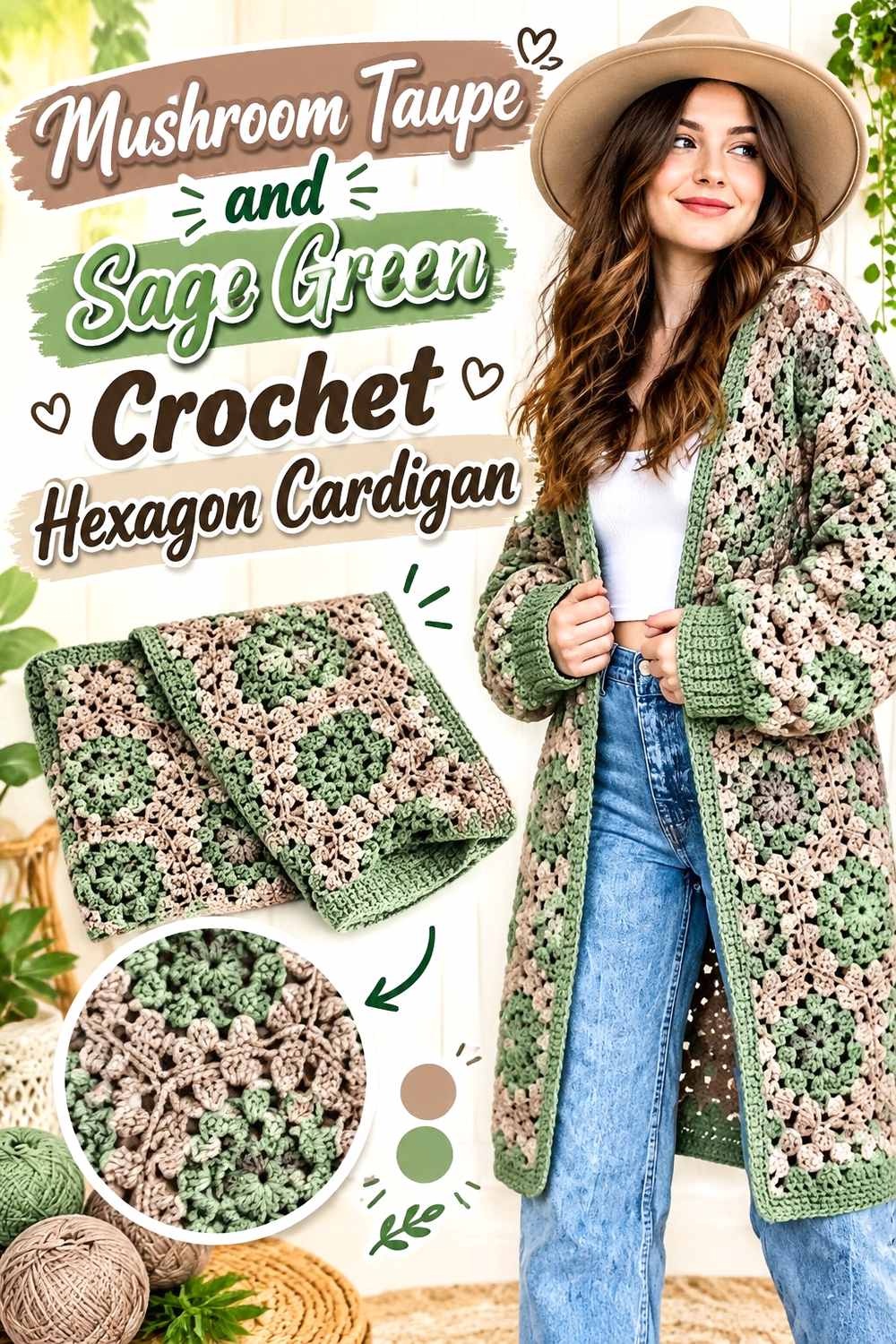
Mushroom Taupe and sage suit a granny-style hexagon cardigan because both colors can repeat around the expanding crochet structure without creating severe contrast. Let Mushroom Taupe occupy more of the visible rounds or extensions and use sage as a recurring secondary band. The result stays earthy while still making the granny construction visible.
Repeat Mushroom Taupe Through the Hexagon Cardigan
Rather than placing Mushroom Taupe in only one large section, repeat it throughout the hexagon. Repetition helps the neutral travel from the upper body into the sleeve and prevents sage from looking like a separate color block created accidentally by the fold.
Sage Can Break Up Mushroom Taupe Granny Texture
A sage band placed between Mushroom Taupe sections gives the eye a checkpoint within the repeated granny fabric. This can make the large-scale hexagon structure easier to read without requiring a very light or very dark contrast color.
Check Mushroom Taupe and Sage Before Enlarging the Hexagons
If the chosen Mushroom Taupe and sage are similar in value, the stripes may blend more than expected once the motifs become garment-sized. Compare a small worked sample from several feet away before repeating the same relationship across both cardigan halves.
Creator Credit: PassioKnit Kelsie
4. Mushroom Taupe And Dusty Rose Crochet Patchwork Cardigan

Dusty rose introduces muted color without pulling the patchwork cardigan away from a soft neutral direction. Mushroom Taupe can form the largest group of blocks, while dusty rose appears regularly across the fronts, back, and sleeves. Avoid placing nearly all of the pink blocks in one garment area unless an intentionally asymmetrical layout is the goal.
Give Mushroom Taupe More Patchwork Blocks Than Dusty Rose
A larger share of Mushroom Taupe squares keeps the cardigan connected to its neutral base. Dusty rose can then function as a softer recurring accent instead of competing for equal visual weight.
Scatter Dusty Rose Between Mushroom Taupe Cardigan Blocks
Preview the entire layout before joining. Repeating dusty rose across both sleeves and body panels can keep one side from appearing noticeably warmer or more colorful than the other.
Use Mushroom Taupe Around the Patchwork Cardigan Edging
A Mushroom Taupe hem, cuff, or front band can visually collect the separate dusty rose and taupe blocks inside one frame. This is especially useful when the patchwork grid already creates plenty of internal lines.
Creator Credit: Chenda DIY
5. Mushroom Taupe And Rust Crochet Patchwork Cardigan
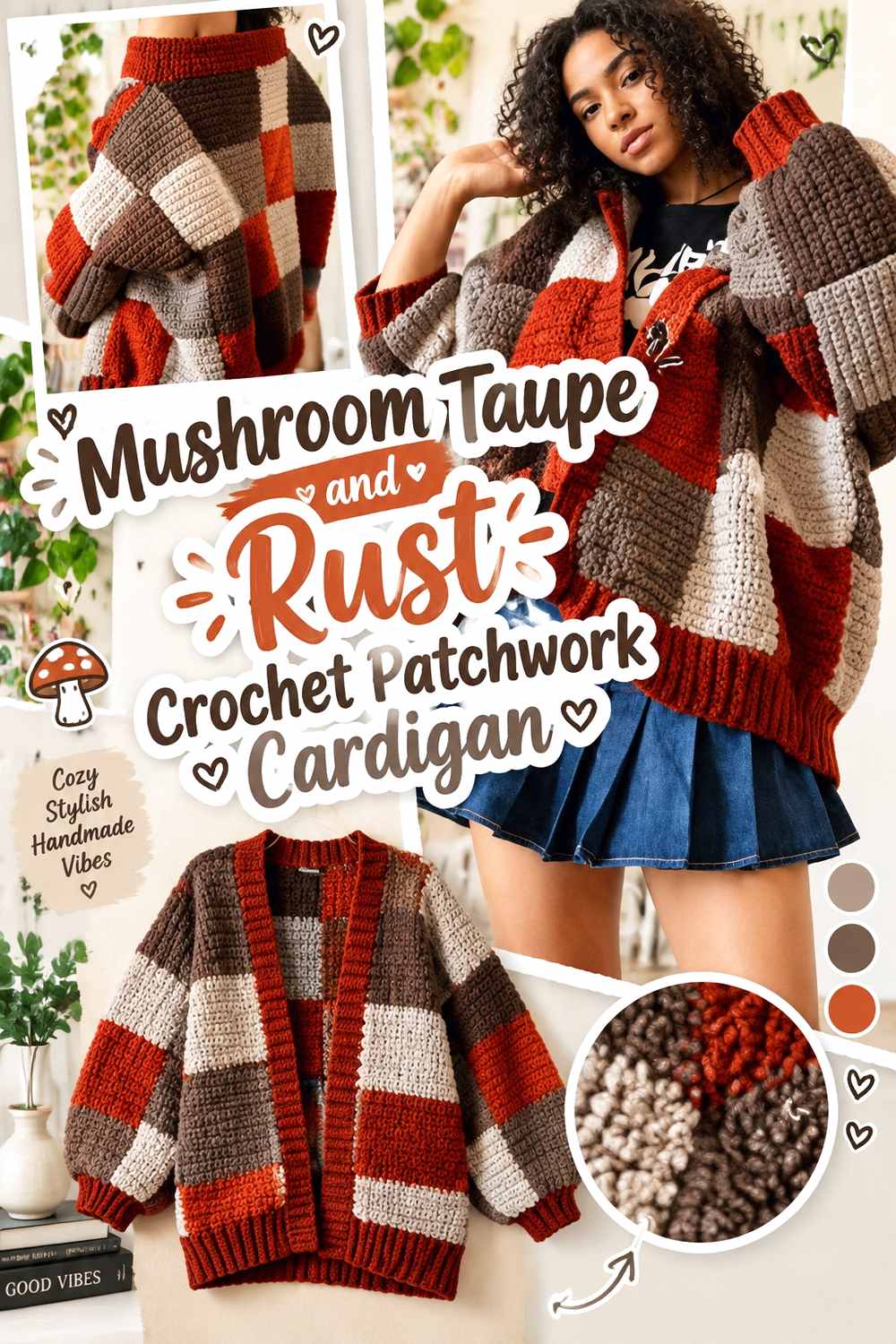
Rust creates a warmer and more noticeable contrast than dusty rose, so it benefits from a more controlled role. Use Mushroom Taupe for the majority of the patchwork surface and distribute rust as repeated statement blocks. A small amount of cream or another light neutral is unnecessary unless you specifically want a third level of contrast.
Let Mushroom Taupe Control the Patchwork Cardigan Balance
When rust is saturated or considerably warmer than Mushroom Taupe, equal quantities can make the two colors compete. Increasing the share of Mushroom Taupe gives the stronger accent more room to stand out without taking over the entire cardigan.
Place Rust Beside Mushroom Taupe Where the Cardigan Needs Emphasis
Rust can work well on selected sleeve blocks, shoulder-adjacent squares, or repeated sections of the front. Test the arrangement as a complete garment layout rather than deciding one square at a time.
Keep Mushroom Taupe in the Cuffs and Front Band
Finishing the patchwork with Mushroom Taupe gives the colorful blocks a consistent boundary. It also keeps rust away from every garment edge, which can otherwise make the cardigan appear more rust-dominant than the actual block count suggests.
Creator Credit: ikoxun
6. Mushroom Taupe And Oatmeal Crochet Cocoon Cardigan
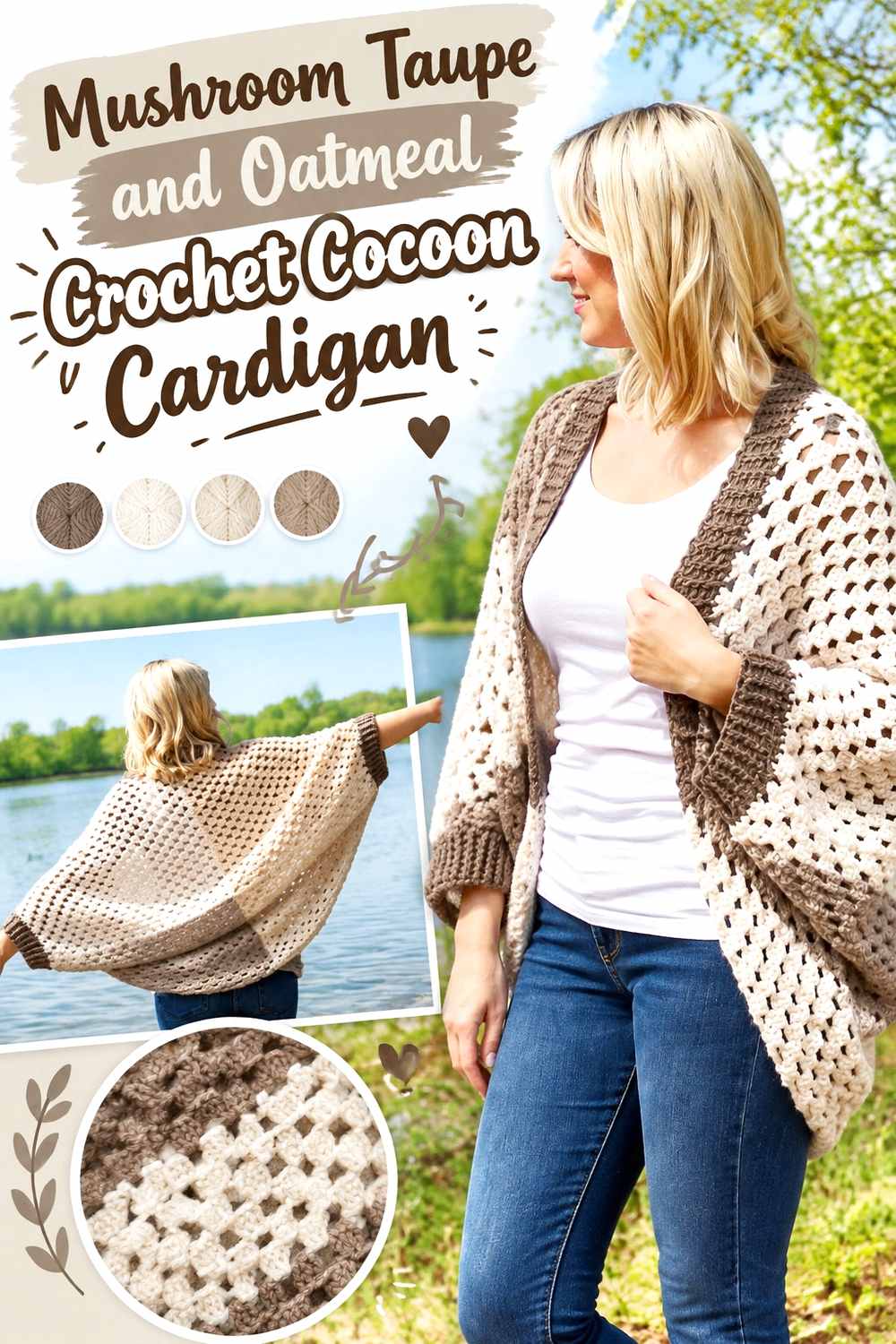
This is one of the lowest-contrast directions in the collection. Mushroom Taupe provides the deeper neutral, while oatmeal can lighten broad ribbed edges or selected fabric sections without sharply dividing the relaxed cocoon shape. Because the shades are close, texture and value difference matter more than dramatic hue contrast.
Keep Mushroom Taupe Across the Main Cocoon Cardigan Fabric
A large Mushroom Taupe field works well with the broad drape of a cocoon silhouette. The uninterrupted neutral also prevents the loose body from becoming visually segmented.
Oatmeal Can Lighten Mushroom Taupe Ribbed Edges
Use oatmeal where the cocoon cardigan already changes texture, such as cuffs or perimeter ribbing. The structural change helps distinguish the similar neutrals even when their value contrast is modest.
Compare Mushroom Taupe and Oatmeal in the Actual Crochet Texture
Two neutral skeins that look different on a table may appear much closer once stitches cast shadows across them. Work a small sample before relying on oatmeal to outline Mushroom Taupe details clearly.
Creator Credit: Bella Coco
7. Mushroom Taupe And Burgundy Crochet Raglan Cardigan

Burgundy gives Mushroom Taupe a deep, warm accent that can emphasize the upper-body structure of a raglan cardigan. Mushroom Taupe can remain the main body and sleeve color, while burgundy appears as narrower bands, cuffs, button-area details, or controlled striping. Keeping the darker color repeated in more than one area prevents it from looking attached as an afterthought.
Keep Mushroom Taupe Across the Raglan Cardigan Body
Use Mushroom Taupe through most of the yoke and lower body if you want the raglan shaping to read as part of one continuous garment. Burgundy can then highlight selected transitions without breaking the upper body into too many competing bands.
Burgundy Can Define Mushroom Taupe Cuffs and Button Details
The stronger value difference makes burgundy useful on smaller finishing sections. Cuffs or narrow front details gain definition while Mushroom Taupe still occupies most of the visual area.
Repeat Mushroom Taupe Between Burgundy Cardigan Accents
When using burgundy in stripes or multiple trims, place enough Mushroom Taupe between those sections to maintain hierarchy. Too many narrow burgundy interruptions can make the cardigan read as evenly striped rather than taupe-led.
Creator Credit: MJ’s Off The Hook Designs
8. Mushroom Taupe And Denim Blue Crochet Lace Cardigan

Denim blue gives Mushroom Taupe a cooler companion while staying softer than a very dark navy. On a lace cardigan, it is useful to keep most openwork in one main shade so the stitch pattern remains readable. Mushroom Taupe can cover the long body panels, while denim blue marks edging, sleeve sections, or carefully spaced bands.
Let Mushroom Taupe Carry the Lace Cardigan Pattern
Large Mushroom Taupe sections allow the negative space in open crochet to remain the main texture. Frequent color changes can compete with lace, particularly when the repeat already creates a lot of visual movement.
Use Denim Blue Around Mushroom Taupe Cardigan Edges
A denim-blue edge can make the long Mushroom Taupe fronts easier to distinguish when the cardigan is worn open. It also gives the palette a cooler boundary without requiring black or charcoal.
Check Mushroom Taupe Contrast Through the Lace Openings
The layer worn underneath a lace cardigan becomes part of the visible color composition. Test Mushroom Taupe and denim blue over the kinds of tops you are likely to wear so you can see whether the openwork retains the contrast you expect.
Creator Credit: KnitcroAddict
9. Mushroom Taupe And Black Crochet Banded Cardigan

Black creates the sharpest neutral contrast in this group. It works particularly well when Mushroom Taupe covers the main cardigan panels and black is limited to a deliberate front band, cuffs, or other narrow structural edges. That placement turns black into a frame rather than a second dominant field.
Keep Mushroom Taupe Broad and Black Narrow on the Cardigan
The contrast is strong enough that black does not need much surface area to register. A predominantly Mushroom Taupe cardigan can therefore use relatively small black sections without losing the graphic effect.
Black Can Sharpen the Mushroom Taupe Front Opening
A dark band along the neckline and fronts clearly outlines an open cardigan. Check that both sides lie evenly because the black line will make differences in edge length or tension more noticeable.
Repeat Mushroom Taupe Between Black Cuffs and Edging
Avoid connecting every black finishing detail into one large dark area unless that is intentional. Mushroom Taupe sleeves leading into black cuffs, for example, preserve the main shade while still giving the garment a defined finish.
Creator Credit: TCDDIY
10. Mushroom Taupe And Mustard Crochet Granny Cardigan
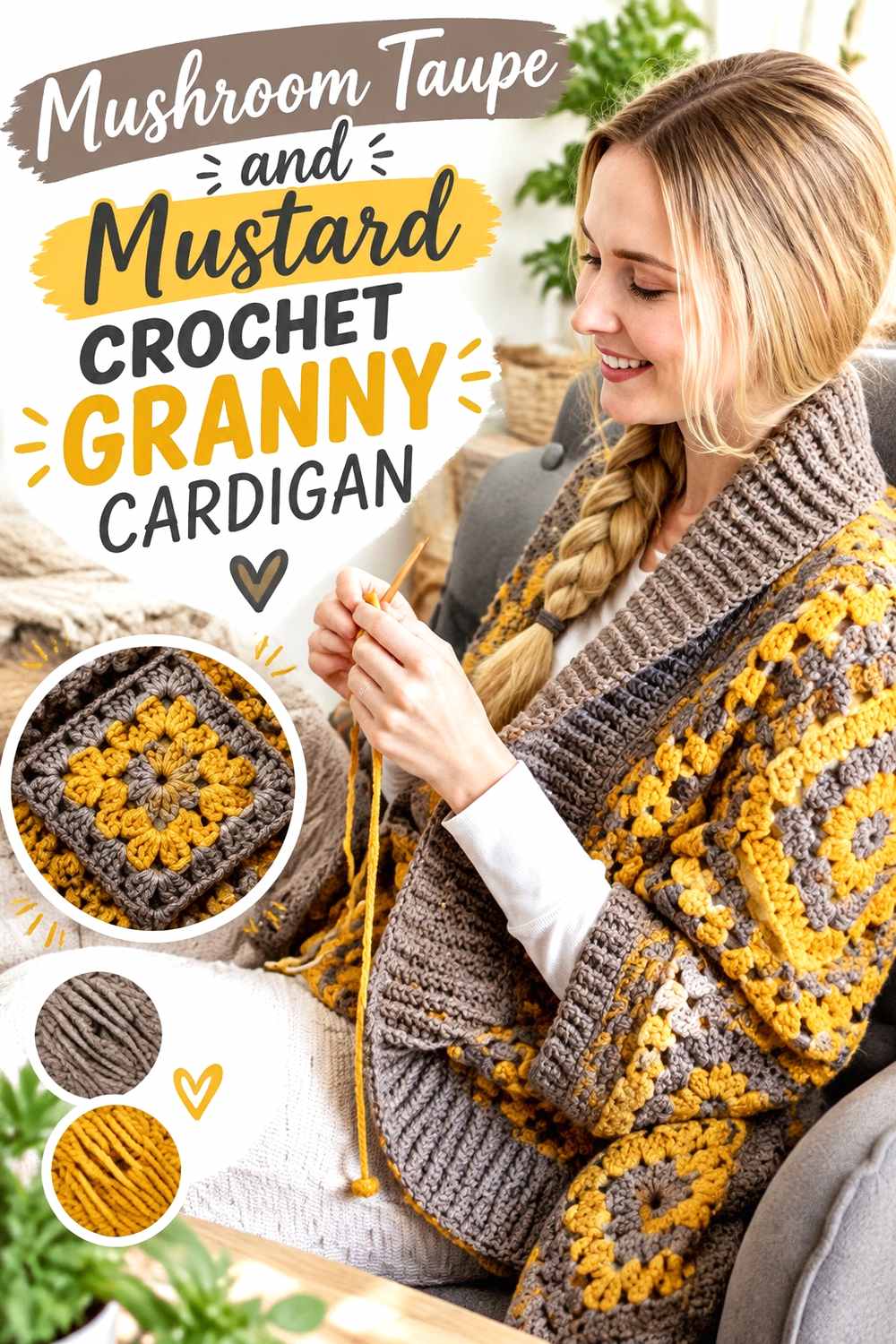
Mustard brings warm, vintage-leaning contrast to Mushroom Taupe and becomes especially noticeable when repeated in large granny sections. Let Mushroom Taupe occupy more of each motif or use it as the joining and finishing shade. Mustard can then appear rhythmically without controlling the overall cardigan.
Use Mushroom Taupe to Connect the Granny Cardigan Motifs
Whether the cardigan uses large motifs or repeated granny sections, Mushroom Taupe can serve as the color that appears consistently from one component to another. That repetition helps the garment feel unified even when mustard occupies prominent bands.
Keep Mustard Smaller Than Mushroom Taupe for a Neutral-Led Cardigan
Mustard attracts attention quickly against a muted taupe. If the goal is still a Mushroom Taupe cardigan, give the warmer color less visual area or place it at wider intervals.
Check Mushroom Taupe and Mustard at Full Motif Scale
A narrow mustard round can look restrained on a small sample but become a major stripe once the granny motif expands. Preview the sequence before repeating it across every large cardigan component.
Creator Credit: Yarnspirations
11. Mushroom Taupe And Forest Green Crochet Balloon Sleeve Cardigan
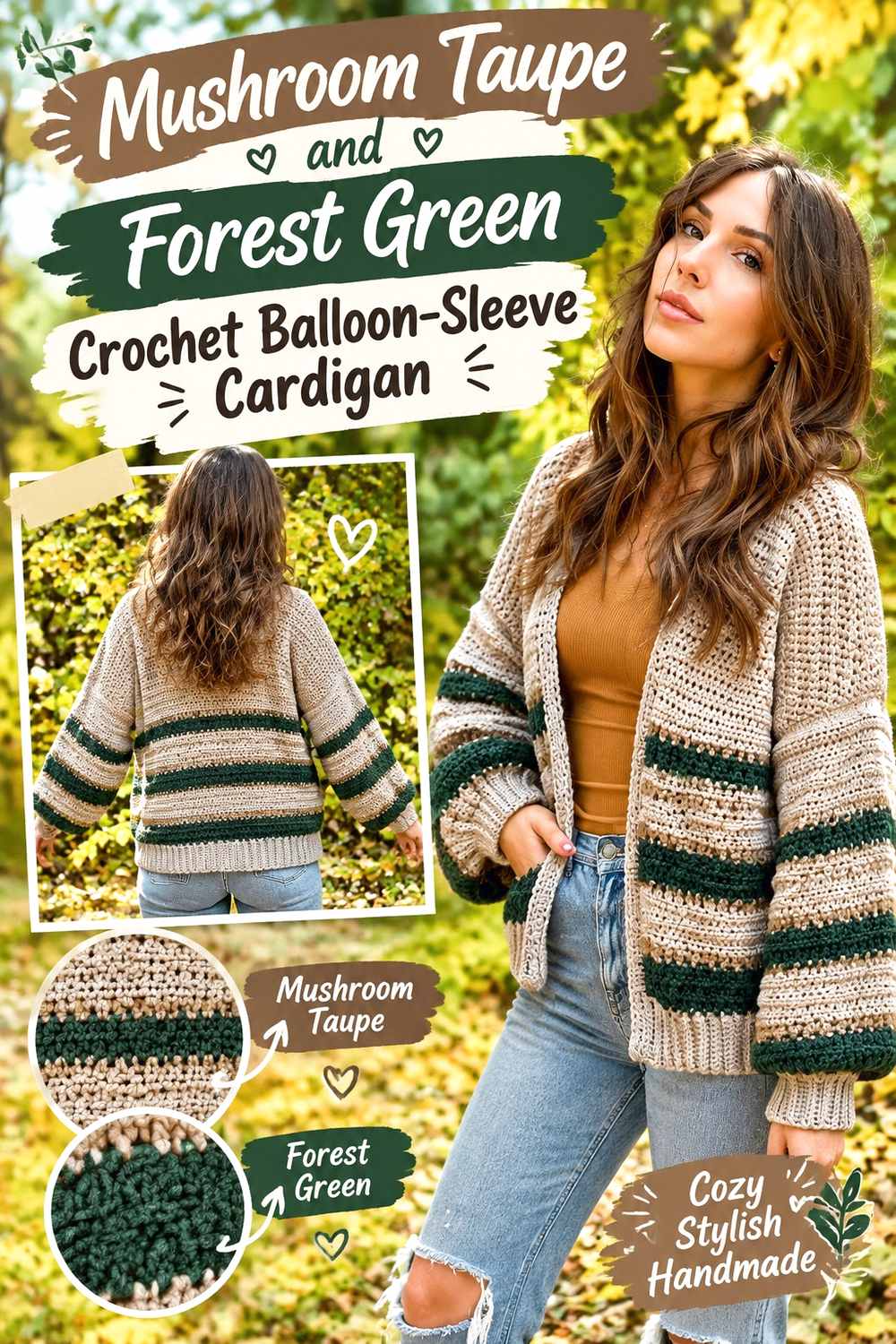
Forest green adds depth without being another brown-based neutral. On a cardigan with fuller sleeves, placement matters because the sleeves already occupy considerable visual area. Mushroom Taupe can dominate the torso and much of the sleeves, while forest green marks selected bands, cuffs, or lower sleeve sections.
Keep Mushroom Taupe Visible Across the Balloon Sleeves
Do not reserve Mushroom Taupe only for the body if it is supposed to lead the palette. Carrying it into the sleeves keeps the fuller sleeve shape connected to the rest of the cardigan.
Forest Green Can Anchor Mushroom Taupe at the Cuffs
A dark green cuff gives the wider sleeve a defined endpoint. Because the cuff occupies much less area than the balloon section, Mushroom Taupe remains visually dominant.
Space Forest Green Carefully Through Mushroom Taupe Stripes
If the cardigan includes striping, sketch the order before crocheting both sleeves. Repeating forest green at corresponding points can keep the Mushroom Taupe sections balanced from one side of the cardigan to the other.
Creator Credit: Evelyn And Peter Crochet
12. Mushroom Taupe And Soft Lilac Crochet Flower Cardigan
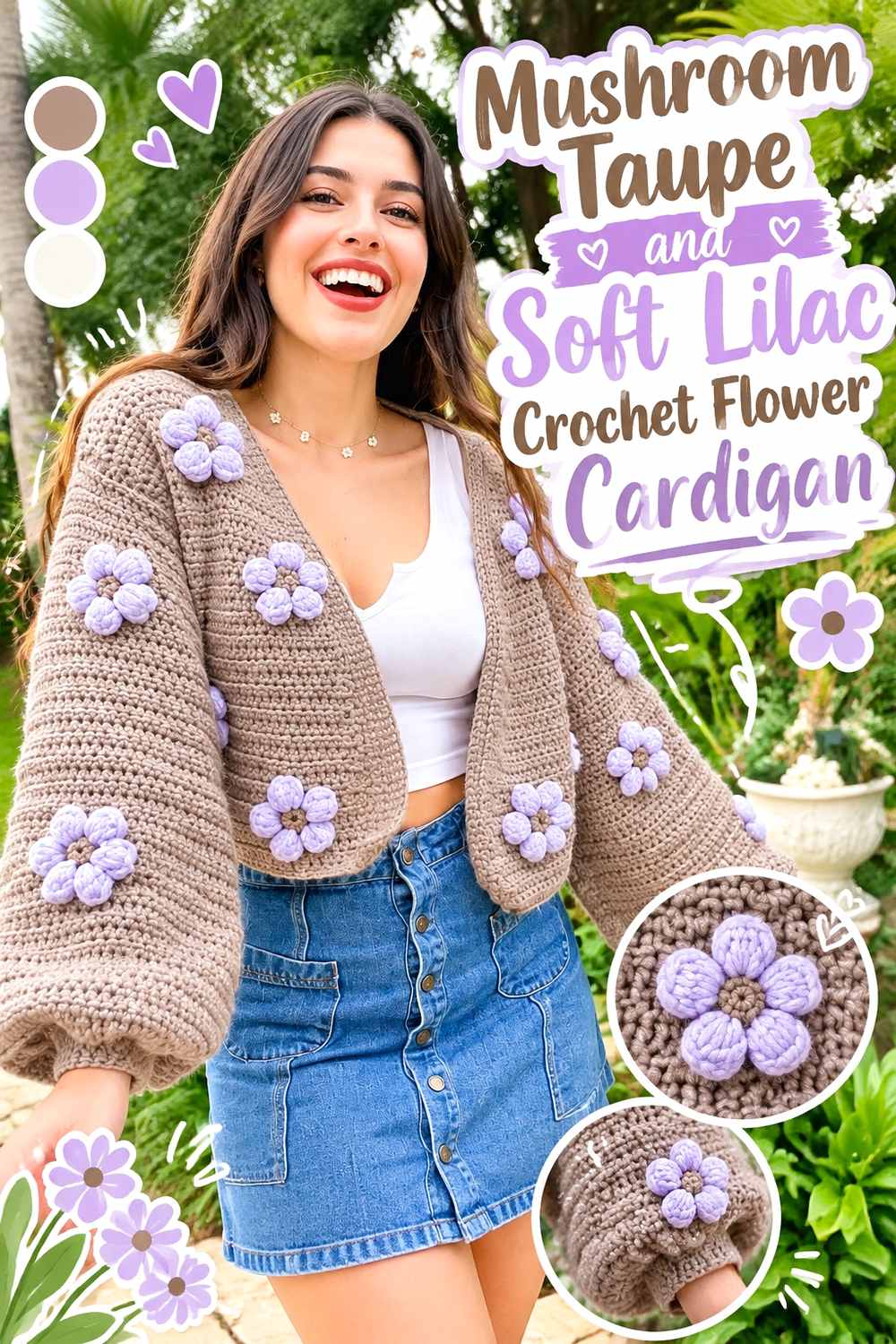
Soft lilac creates a cooler, gentle accent against Mushroom Taupe and works particularly well when the color appears in dimensional flower details rather than large body panels. A Mushroom Taupe cardigan base gives the motifs a consistent background. Varying the amount of lilac lets you choose between scattered embellishment and a much more decorative surface.
Make Mushroom Taupe the Background for Lilac Cardigan Flowers
Keeping the main fabric Mushroom Taupe gives every flower the same visual setting. This makes motif distribution easier to judge than placing lilac flowers over several unrelated cardigan colors.
Test Soft Lilac Against Mushroom Taupe Before Making Every Flower
A very muted lilac may sit close to Mushroom Taupe in value even though the hues differ. Make one complete motif and view it on the actual cardigan fabric before committing to dozens of accents.
Leave Enough Mushroom Taupe Visible Between Cardigan Motifs
Spacing affects the color balance as much as the number of flowers. Areas of uninterrupted Mushroom Taupe keep the surface from becoming visually crowded and allow individual lilac motifs to remain recognizable.
Creator Credit: Krystal Everdeen
13. Mushroom Taupe Terracotta And Cream Crochet Hexagon Cardigan
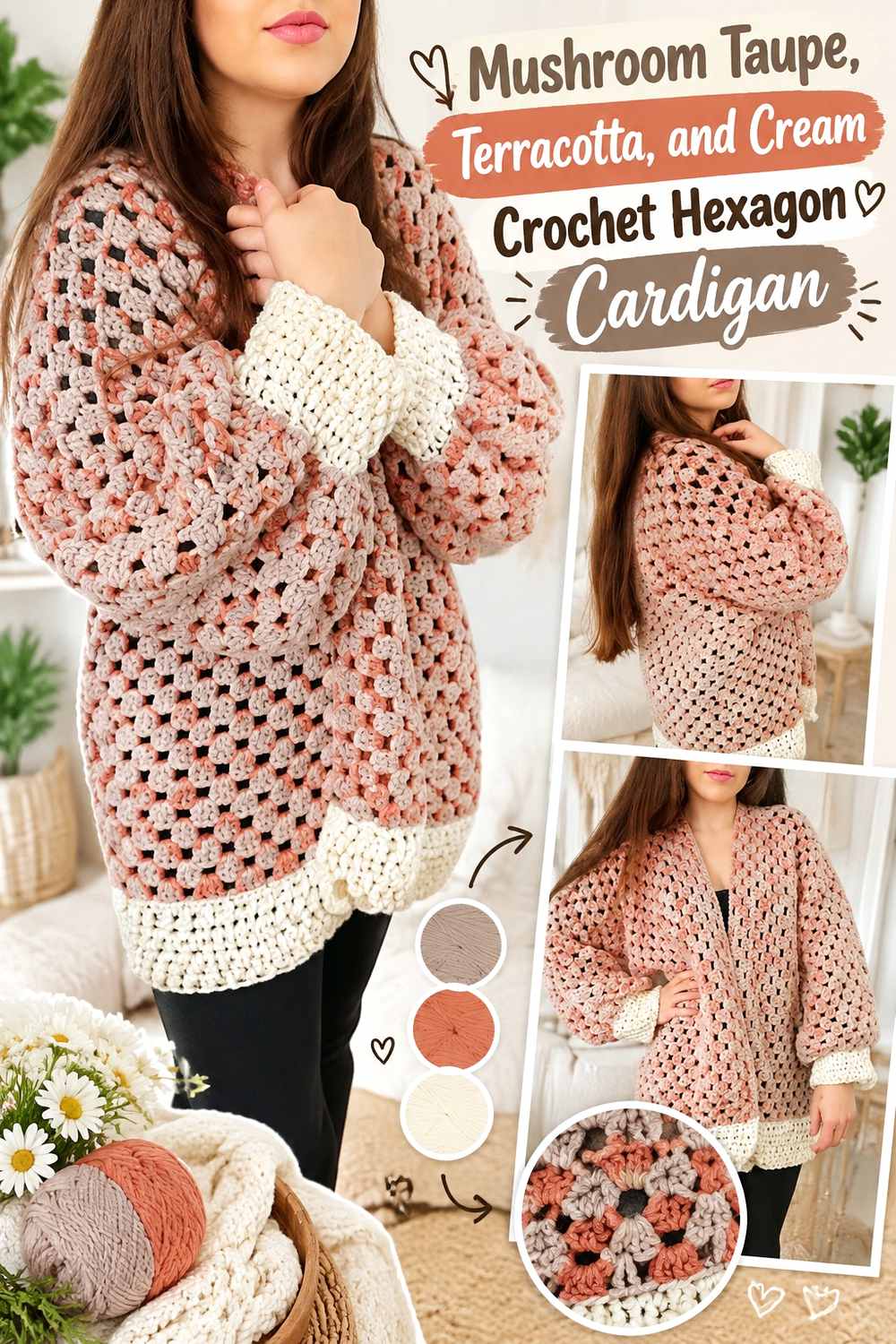
This three-color palette gives Mushroom Taupe two different partners: terracotta adds warmth, while cream adds lightness. Mushroom Taupe should remain the repeated anchor through both hexagon halves so the cardigan does not split into separate warm and light sections. Use cream sparingly around areas where greater value separation helps the granny texture remain visible.
Repeat Mushroom Taupe Between Terracotta and Cream Cardigan Bands
Instead of arranging terracotta directly beside cream every time, use Mushroom Taupe as a recurring transition. That creates a clearer hierarchy and prevents the two supporting shades from turning into their own dominant stripe sequence.
Terracotta Adds Warmth Without Replacing Mushroom Taupe
Keep terracotta to selected granny rounds or extensions. Because it has a stronger warm direction, even moderate repetition can influence the entire cardigan without requiring equal coverage.
Cream Can Clarify Mushroom Taupe Hexagon Details
Use cream where you want the greatest light-and-dark break, such as selected motif rounds or narrow finishing sections. Too much cream may shift the cardigan toward a light neutral overall, so check the full folded hexagons before settling on the final sequence.
Creator Credit: Selina Veronique Crochet
14. Mushroom Taupe Navy And Ivory Crochet Patchwork Cardigan

Navy and ivory give Mushroom Taupe both a darker and lighter neighbor, which makes this one of the most clearly structured patchwork palettes. Mushroom Taupe can cover the largest number of blocks, navy can create visual anchors, and ivory can stop darker sections from clustering into one heavy area.
Give Mushroom Taupe the Largest Share of Patchwork Blocks
A three-color patchwork layout benefits from a clear leader. Using Mushroom Taupe most often keeps navy and ivory in supporting roles rather than allowing all three colors to compete equally.
Place Navy Beside Mushroom Taupe for Stronger Cardigan Definition
Navy can be concentrated in selected blocks near cuffs, lower fronts, or repeated sleeve positions. Distribute those dark blocks across the entire layout instead of allowing one cardigan panel to collect most of them.
Use Ivory to Separate Mushroom Taupe and Navy Cardigan Areas
Ivory can act as breathing room between darker blocks, particularly if Mushroom Taupe itself is fairly deep. Preview the full arrangement before joining so the ivory repeats intentionally across the front, back, and sleeves.
Creator Credit: Crochet with Karu
15. Mushroom Taupe And Teal Crochet Mesh Cardigan

Teal gives Mushroom Taupe a stronger cool accent and works well with an open mesh surface because a modest amount of color can remain visible through a lightweight-looking structure. Use Mushroom Taupe for most panels and bring teal into edging, cuffs, lower borders, or selected sections rather than alternating every row.
Keep Mushroom Taupe Across the Main Mesh Cardigan Panels
A broad Mushroom Taupe mesh field allows the open stitch structure to remain visible instead of turning every opening into part of a busy stripe pattern. This also gives the teal accents a clearer purpose.
Teal Can Define Mushroom Taupe Cuffs and Lower Edges
Because teal is more saturated than Mushroom Taupe, small sections can provide enough contrast. Cuffs and lower borders are useful locations because they repeat across the cardigan without covering its entire surface.
Test Mushroom Taupe and Teal Over Your Usual Layers
Mesh allows the clothing underneath to influence the finished appearance. Place your swatch over dark and light tops to see whether Mushroom Taupe still reads as the dominant cardigan shade and whether teal remains distinct.
Creator Credit: Brunaticality
16. Mushroom Taupe And Camel Crochet Everyday Cardigan

Mushroom Taupe and camel create a warm tonal palette rather than obvious contrast. The most useful way to distinguish them is through placement and visible value difference: Mushroom Taupe can cover the main panels while camel appears on cuffs, a collar, front trim, or controlled stripes. If the chosen shades are too close, the finished color changes may disappear into the crochet texture.
Keep Mushroom Taupe as the Everyday Cardigan Base
Use Mushroom Taupe across the torso and most of the sleeves for a continuous neutral foundation. Camel can then warm selected areas without turning the cardigan into an equal two-color split.
Camel Can Warm Mushroom Taupe Cardigan Edging
A camel front border or cuff creates a gentle transition rather than a graphic outline. This is useful when you want the finishing to be visible mainly through tonal difference and texture instead of sharp contrast.
Compare Mushroom Taupe and Camel Before Committing to Tonal Stripes
Place the yarns together in natural and indoor light, then work a small sample. If the stripe boundary nearly disappears, either embrace the blended result or choose a camel that is noticeably lighter, darker, or warmer than the Mushroom Taupe.
Creator Credit: CROCHET BY BEV
Comparing the 16 Mushroom Taupe Crochet Cardigan Palettes
For the softest neutral direction, compare Mushroom Taupe with oatmeal, cream, or camel. Those combinations rely more on subtle value changes, ribbing, and texture than obvious color contrast.
Charcoal, black, navy, burgundy, and forest green give Mushroom Taupe clearer definition and work well when you want cuffs, bands, motifs, or patchwork blocks to read distinctly. Sage and dusty rose keep the palette muted while adding recognizable color. Rust, terracotta, mustard, teal, denim blue, and lilac create stronger color shifts and make placement more important because a relatively small area can noticeably change the cardigan’s overall direction.
For multicolor construction, decide whether Mushroom Taupe will dominate by quantity, placement, or both. Patchwork and granny cardigans are easiest to evaluate when all major components are arranged together before final joining, because color balance that looks reasonable in one square can become uneven across a whole garment.
Conclusion
Mushroom Taupe can support very different crochet cardigan styles without losing its muted neutral character. Cream, oatmeal, and camel keep the palette tonal, while sage and dusty rose add softer color. Charcoal, black, navy, burgundy, and forest green provide deeper definition, and rust, mustard, terracotta, teal, denim blue, or lilac create more noticeable accents.
Choose the palette according to where you want the eye to go. Keep Mushroom Taupe across large body panels for a neutral-led cardigan, repeat it through granny or patchwork motifs for continuity, or use a darker supporting color specifically on cuffs and front bands when the edges need more definition. Once the color hierarchy is settled, use the original tutorial for the exact construction and project-specific instructions.
Frequently Asked Questions
What colors work with Mushroom Taupe in a crochet cardigan?
Mushroom Taupe can be paired with light neutrals such as cream and oatmeal, darker neutrals such as charcoal or black, earthy colors such as sage and rust, and deeper accents such as burgundy, navy, forest green, or teal. The useful choice depends on whether you want tonal blending or stronger contrast.
Should Mushroom Taupe be the dominant cardigan color?
It does not have to be, but making Mushroom Taupe dominant creates the clearest connection to this color theme. On a panel cardigan, it can cover most of the body. On granny or patchwork cardigans, it can appear in the greatest number of motifs or be repeated through borders, joins, sleeves, and edging.
How can I keep Mushroom Taupe crochet texture from looking flat?
Compare the value of neighboring colors and consider where texture changes occur. A lighter or darker cuff, border, pocket edge, or motif round can make Mushroom Taupe texture easier to distinguish. Directional lighting and the yarn’s own surface can also affect how strongly stitch relief shows, so checking a swatch is useful.
Is cream or bright white better with Mushroom Taupe?
Cream usually creates a softer transition, while a much brighter white can produce a sharper light-and-dark break. Neither is universally preferable. Put the actual yarns beside your Mushroom Taupe and choose according to how much separation you want around borders, motifs, or ribbing.
How do I check whether Mushroom Taupe has enough contrast with another yarn?
Place the yarns side by side and also work a small sample because crochet texture can change how colors interact. Viewing a photo in grayscale is another simple way to compare light-and-dark value. This is particularly useful for granny motifs, patchwork squares, edging, and small decorative details.
Can Mushroom Taupe work in a granny-square or hexagon cardigan?
Yes. Repeat Mushroom Taupe often enough that it remains connected across the garment rather than appearing in one isolated section. If the secondary color is stronger, use Mushroom Taupe for more rounds, larger extensions, edging, or finishing so the overall cardigan still reads as taupe-led.