Olive Green and Dusty Rose give a crochet patchwork shacket enough contrast to make individual panels noticeable without requiring a large multicolor palette. Olive Green can ground the larger body sections, while Dusty Rose can soften the arrangement through sleeves, pockets, joins, cuffs, or selected patches.

Patchwork makes color balance especially important because every square or panel creates another opportunity to switch shades. Using Olive Green and Dusty Rose in equal amounts can produce a deliberate checkerboard effect, but it is not the only option. A shacket can stay strongly olive-led with a few rose pockets and cuffs, or Dusty Rose can dominate the body while Olive Green provides the darker framework.
The supporting tutorials include patchwork cardigans, granny-square cardigans, and cardigan/jacket constructions that can serve as garment bases for this shacket direction. Not every tutorial is a literal shirt-style shacket with a collar and patch pockets, so those features should be treated as independent adaptations where appropriate rather than assumed to be part of the creator’s original construction.
Quick List
- Olive Green Crochet Patchwork Shacket With Dusty Rose Pockets
- Dusty Rose Crochet Patchwork Shacket With Olive Green Front Edging
- Olive Green and Dusty Rose Crochet Checkerboard Patchwork Shacket
- Olive Green Crochet Patchwork Shacket With Dusty Rose Sleeves
- Dusty Rose Crochet Patchwork Shacket With Olive Green Pockets
- Olive Green Crochet Granny Patchwork Shacket With Dusty Rose Joins
- Olive Green Crochet Patchwork Shacket With a Dusty Rose Back Panel
- Dusty Rose Crochet Patchwork Shacket With Olive Green Lower Panels
- Olive Green Crochet Patchwork Shacket With Dusty Rose Motif Centers
- Dusty Rose Crochet Chunky Patchwork Shacket With Olive Green Cuffs
- Olive Green Crochet Granny Shacket With Dusty Rose Front Bands
- Olive Green and Dusty Rose Crochet Split-Panel Patchwork Shacket
Give Olive Green and Dusty Rose Clear Roles Across the Shacket
Patchwork does not require every panel to have equal color importance. If Olive Green is meant to dominate, repeat it across the back, major front panels, and enough sleeve sections to create a continuous visual foundation. Dusty Rose can then interrupt that field through pockets, cuffs, isolated blocks, or one sleeve section.
For a Dusty Rose-dominant shacket, reverse that logic. Keep large connected areas rose and place Olive Green where a darker line can help define the front opening, lower edge, cuffs, or selected patchwork panels.
Plan Olive Green and Dusty Rose Before Joining the Patchwork
Lay the front sections, back, and sleeves in their approximate garment positions before joining them. A balanced stack of individual squares can look uneven once two dark Olive Green panels accidentally meet at one shoulder while several Dusty Rose blocks collect on the opposite side.
Also inspect the back separately. Patchwork garments are often planned primarily from the front, but a large uninterrupted back panel or repeated grid can carry more color area than either front section.
Use Olive Green and Dusty Rose Around Shacket Details Carefully
A shirt-jacket adaptation may include patch pockets, a collar, cuffs, front edging, or a button band. These features are useful places to repeat the supporting color because they already have clear visual boundaries.
Avoid adding contrast to every possible feature at once. Dusty Rose pockets, collar, cuffs, joins, and hem on an Olive Green body may collectively make rose feel dominant even though each detail is individually small.
1. Olive Green Crochet Patchwork Shacket With Dusty Rose Pockets
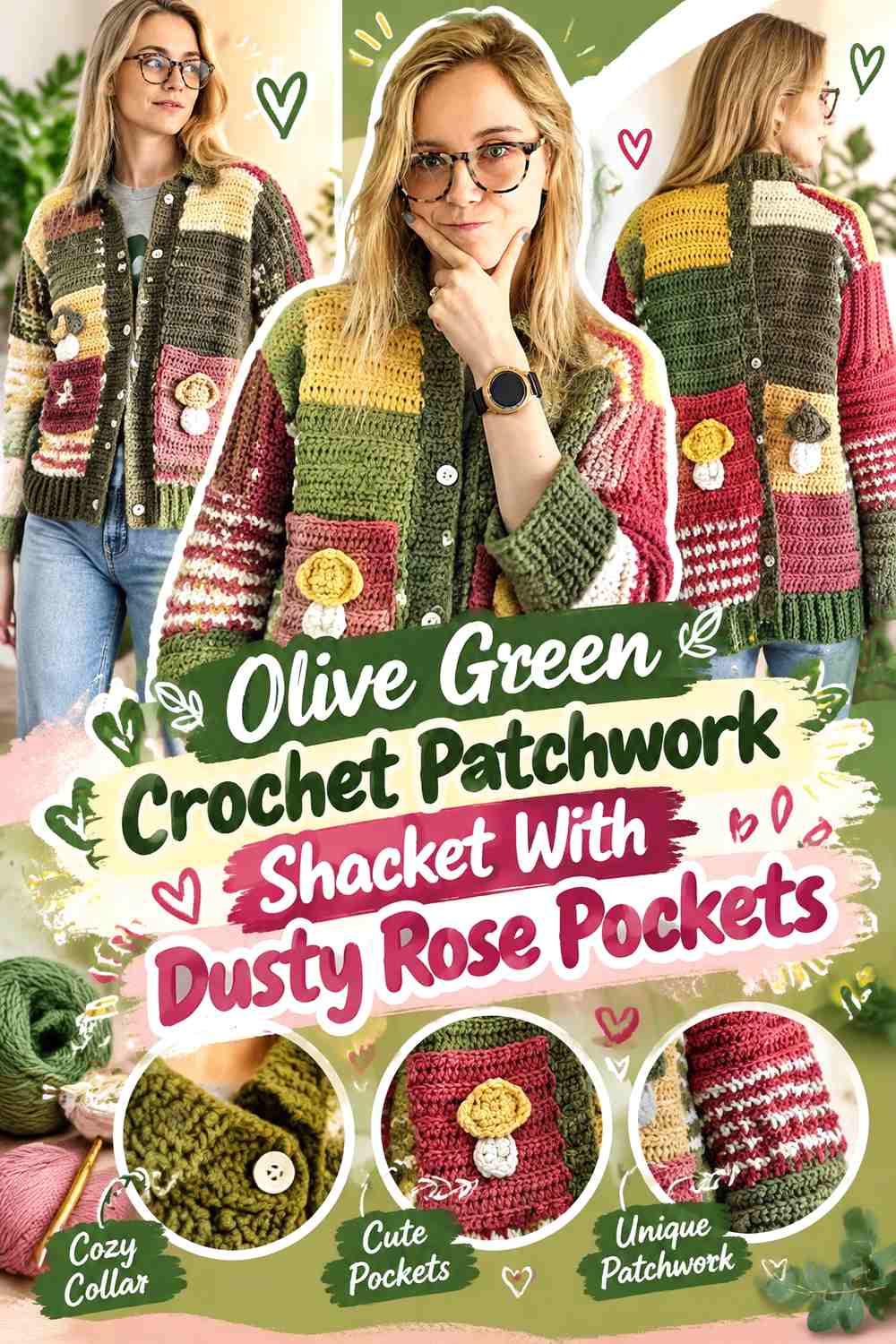
Let Olive Green carry most of the body and sleeves while Dusty Rose appears on the front pockets. This keeps the shacket visually grounded and gives the softer color a functional-looking focal point rather than scattering it throughout every patch.
Olive Green Should Connect the Main Patchwork Shacket Panels
Repeat Olive Green across the back and major front sections so the garment reads as olive-led even when the panels use different stitch textures or motifs.
If additional Dusty Rose blocks are included, separate them with enough Olive Green that the pockets remain one of the clearest rose features.
Dusty Rose Pockets Need Contrast Against Olive Green
Use Dusty Rose across the complete visible pocket surface rather than introducing several tiny olive details inside it. A clean color block makes the pocket shape easier to distinguish from the patchwork behind it.
Before attaching pockets, pin or position them temporarily and check that both sit over enough Olive Green to maintain contrast.
Creator Credit: Olive Crochet YouTube tutorial
2. Dusty Rose Crochet Patchwork Shacket With Olive Green Front Edging

Make Dusty Rose the main patchwork color and reserve Olive Green for the front opening and related finishing edges. This provides a darker vertical line that can visually organize several separate rose panels.
Dusty Rose Should Remain Broad Between Olive Green Edges
Use Dusty Rose across most front, back, and sleeve sections so the darker framing does not overtake the garment.
A connected rose field is particularly useful when individual panels already contain different crochet textures.
Olive Green Can Frame the Dusty Rose Shacket Opening
Use Olive Green on an existing front band, edging, or independently planned shacket placket. The vertical contrast can help unify mismatched patch sizes along the opening.
If you also repeat Olive Green at the hem, keep the lower band relatively restrained so the front edge remains the main dark structural line.
Creator Credit: ikoxun YouTube tutorial
3. Olive Green and Dusty Rose Crochet Checkerboard Patchwork Shacket

This is the most evenly divided palette in the collection. Alternate Olive Green and Dusty Rose across broad patchwork blocks, but plan the sequence before assembly so identical colors do not unintentionally cluster.
Olive Green Blocks Need a Planned Relationship With Dusty Rose
Arrange the Olive Green patches so they travel across the garment rather than collecting entirely on one front panel or sleeve. A loose diagonal or alternating distribution can help both colors appear throughout the shacket.
Step back from the layout before joining; individual blocks are easier to balance from a distance.
Dusty Rose Should Break Up Olive Green Without Creating Random Patches
Repeat Dusty Rose according to the same placement logic used for Olive Green. Equal color quantity looks more intentional when the arrangement also has recognizable rhythm.
If the cuffs or edging need a single color, choose whichever shade is slightly less represented through the main patchwork.
Creator Credit: Emma Warrender YouTube tutorial
4. Olive Green Crochet Patchwork Shacket With Dusty Rose Sleeves

Keep the main torso Olive Green and move the strongest Dusty Rose areas to the sleeves. This creates a clear body-versus-sleeve division without breaking the front and back into many equally strong color blocks.
Olive Green Should Hold the Patchwork Shacket Torso Together
Use Olive Green across enough front and back panels that the center of the garment remains visually connected. Small Dusty Rose torso blocks can be added, but they should not compete with the sleeve treatment.
An Olive Green lower edge can further connect the two front panels to the back.
Dusty Rose Sleeves Need Balance Against the Olive Green Body
Use Dusty Rose across comparable areas of both sleeves. Because sleeves occupy substantial surface area, they can make the palette feel much more evenly divided than the torso layout alone suggests.
Olive Green cuffs are a useful way to reconnect the rose sleeves to the central body without introducing more torso patches.
Creator Credit: Selina Veronique Crochet YouTube tutorial
5. Dusty Rose Crochet Patchwork Shacket With Olive Green Pockets
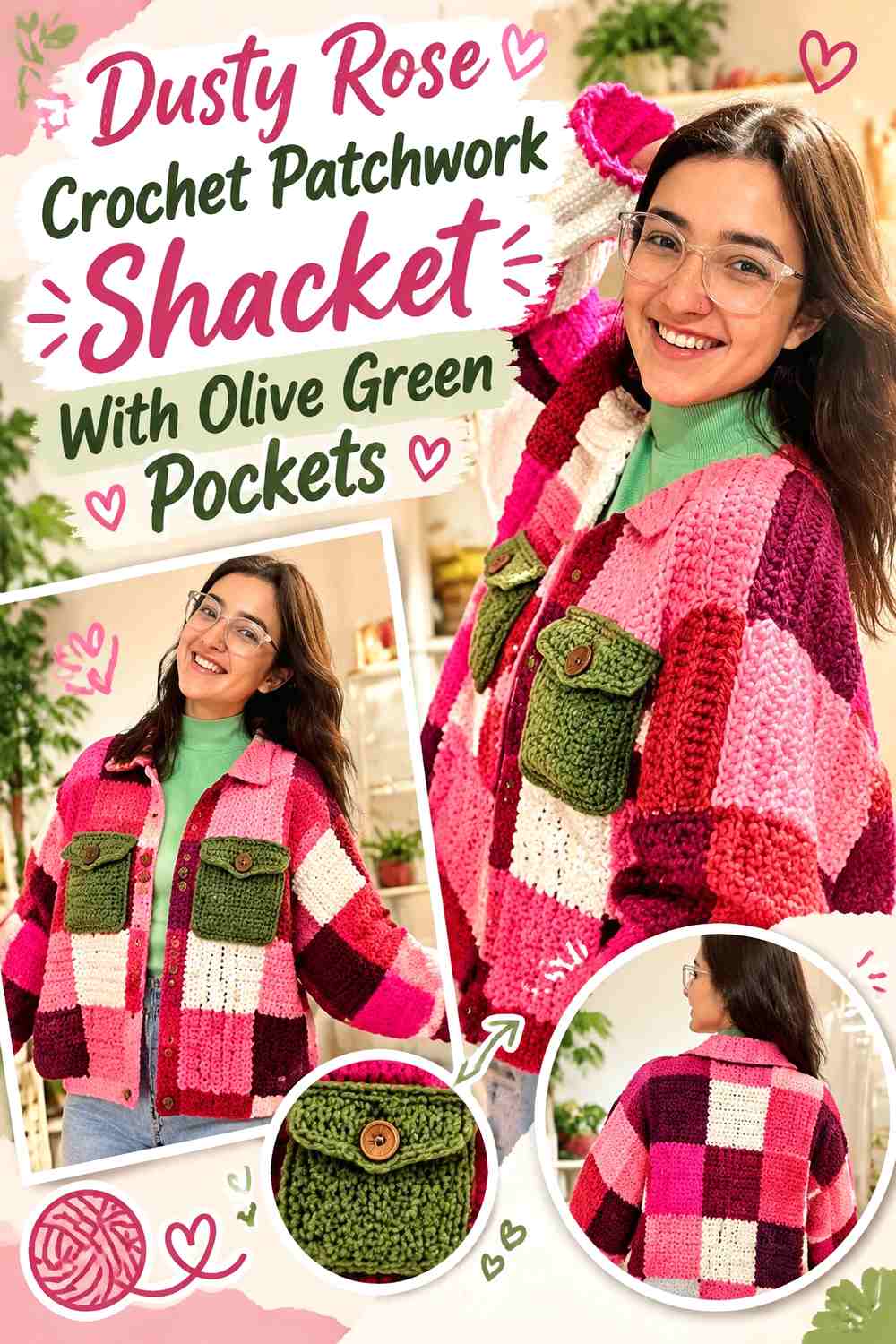
This reverses the first idea. Dusty Rose becomes the soft main field, while Olive Green is concentrated on patch pockets or pocket-like front blocks for stronger definition.
Dusty Rose Should Stay Continuous Around Olive Green Pockets
Keep enough Dusty Rose directly around each pocket that the dark feature has a clear boundary. If Olive Green body panels meet the pockets on several sides, the pocket shape can visually disappear.
A mostly rose front also gives patchwork stitch variation room to remain visible.
Olive Green Pockets Can Anchor the Dusty Rose Front
Use Olive Green for complete pocket panels rather than small decorative marks. The darker shade naturally adds visual weight toward the lower front of the shacket.
Check both pockets together before attaching them so their color placement, height, and relationship to surrounding patches feel balanced.
Creator Credit: Crochet with Karu YouTube tutorial
6. Olive Green Crochet Granny Patchwork Shacket With Dusty Rose Joins
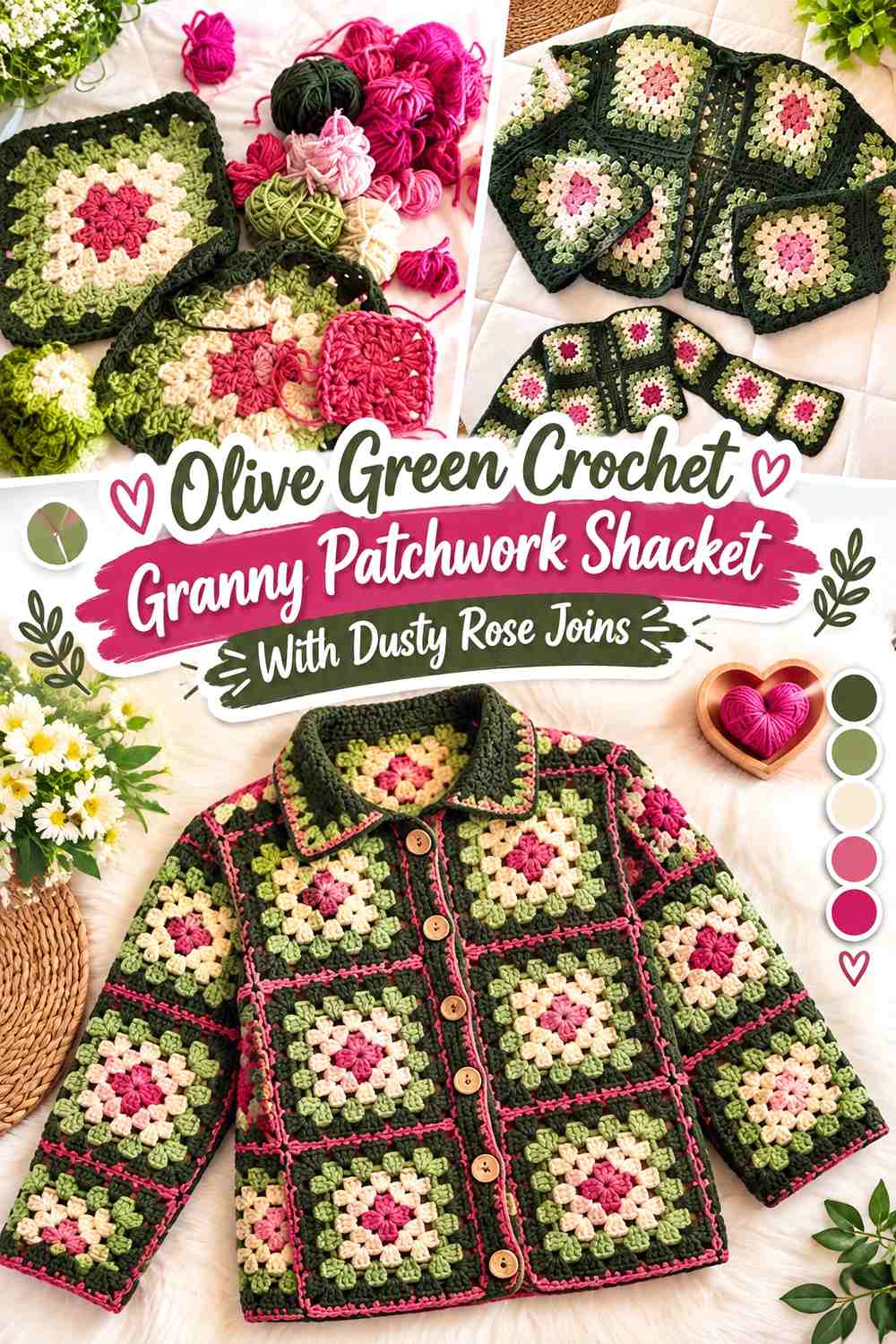
Instead of coloring complete panels Dusty Rose, keep most granny-style sections Olive Green and use rose between them. The joining color becomes a visible grid that organizes the garment.
Olive Green Should Remain the Main Granny Patchwork Color
Repeat Olive Green across motif faces so the front, back, and sleeves share one clear foundation. If individual motifs contain extra color variation, keep that variation secondary to the overall olive field.
Arrange the motifs before joining to make sure several dark centers do not cluster unintentionally.
Dusty Rose Joins Can Separate Olive Green Granny Panels
Use Dusty Rose consistently along the joining network when you want the patch boundaries clearly visible. Because the join repeats everywhere, even a narrow rose line can contribute significant color.
Avoid adding an equally broad Dusty Rose border unless you intentionally want the softer shade to become almost as prominent as Olive Green.
Creator Credit: Danielle Villanueva YouTube tutorial
7. Olive Green Crochet Patchwork Shacket With a Dusty Rose Back Panel

Keep the front primarily Olive Green but give Dusty Rose a larger role across the back. This creates a quieter front view and a more noticeable color change when the garment is seen from behind.
Olive Green Should Keep the Front of the Patchwork Shacket Cohesive
Use Olive Green across most front panels, front edging, or pocket areas so the garment has a recognizable main color from the front.
This restraint prevents the larger Dusty Rose back section from competing with multiple rose focal points elsewhere.
Dusty Rose Can Turn the Olive Green Back Into a Focal Area
Use Dusty Rose on a broad center-back panel or a clearly organized group of patches rather than several unrelated blocks.
Check the back with the sleeves positioned beside it. Large rose sleeve sections can merge visually with the Dusty Rose panel and create more pale color than expected.
Creator Credit: DIYGuru YouTube tutorial
8. Dusty Rose Crochet Patchwork Shacket With Olive Green Lower Panels

Concentrate Olive Green toward the bottom of a Dusty Rose shacket. The darker lower patches create a grounded effect while the upper torso and shoulders remain softer.
Dusty Rose Should Lead Across the Upper Patchwork Shacket
Use Dusty Rose around the shoulders, upper fronts, and upper back so the garment establishes its lighter main field before transitioning downward.
Keep the color changes broad enough that the shacket does not become a series of narrow horizontal stripes.
Olive Green Lower Panels Can Ground the Dusty Rose Body
Place Olive Green across selected lower front and back patches. Repeating the darker shade around the lower garment creates a connected base rather than isolated blocks.
If you add patch pockets, decide whether they should blend into the Olive Green lower field or contrast in Dusty Rose before attaching them.
Creator Credit: ElyseCrochets 💌 YouTube tutorial
9. Olive Green Crochet Patchwork Shacket With Dusty Rose Motif Centers
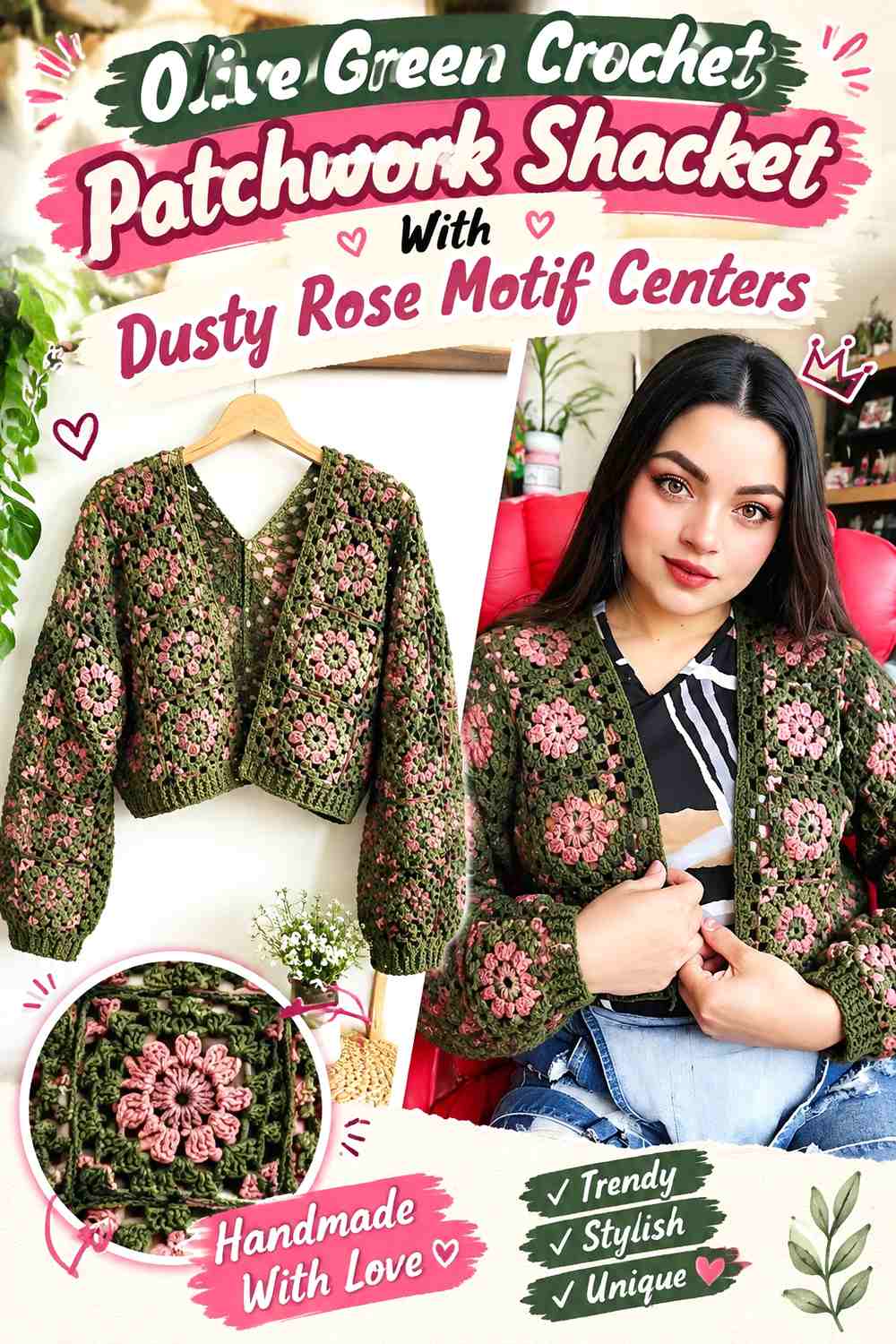
Use Olive Green around most outer motif rounds or panels and concentrate Dusty Rose inside repeated centers. This distributes the lighter color throughout the garment without turning it into large rose blocks.
Dusty Rose Centers Need Consistent Placement Inside Olive Green
Place Dusty Rose at the same visual stage of repeated motifs so the centers create rhythm across front, sleeves, and back.
Before joining the garment, spread all pieces out and make sure too many rose centers do not collect in one shoulder or sleeve area.
Olive Green Outer Sections Should Connect the Dusty Rose Centers
Use Olive Green around the motif edges so neighboring patches share a common dominant color. Once joined, those outer sections can visually blend into a more unified shacket surface.
If the joins also use Olive Green, the Dusty Rose centers become the clear repeated accent.
Creator Credit: Maritza Crochetera YouTube tutorial
10. Dusty Rose Crochet Chunky Patchwork Shacket With Olive Green Cuffs
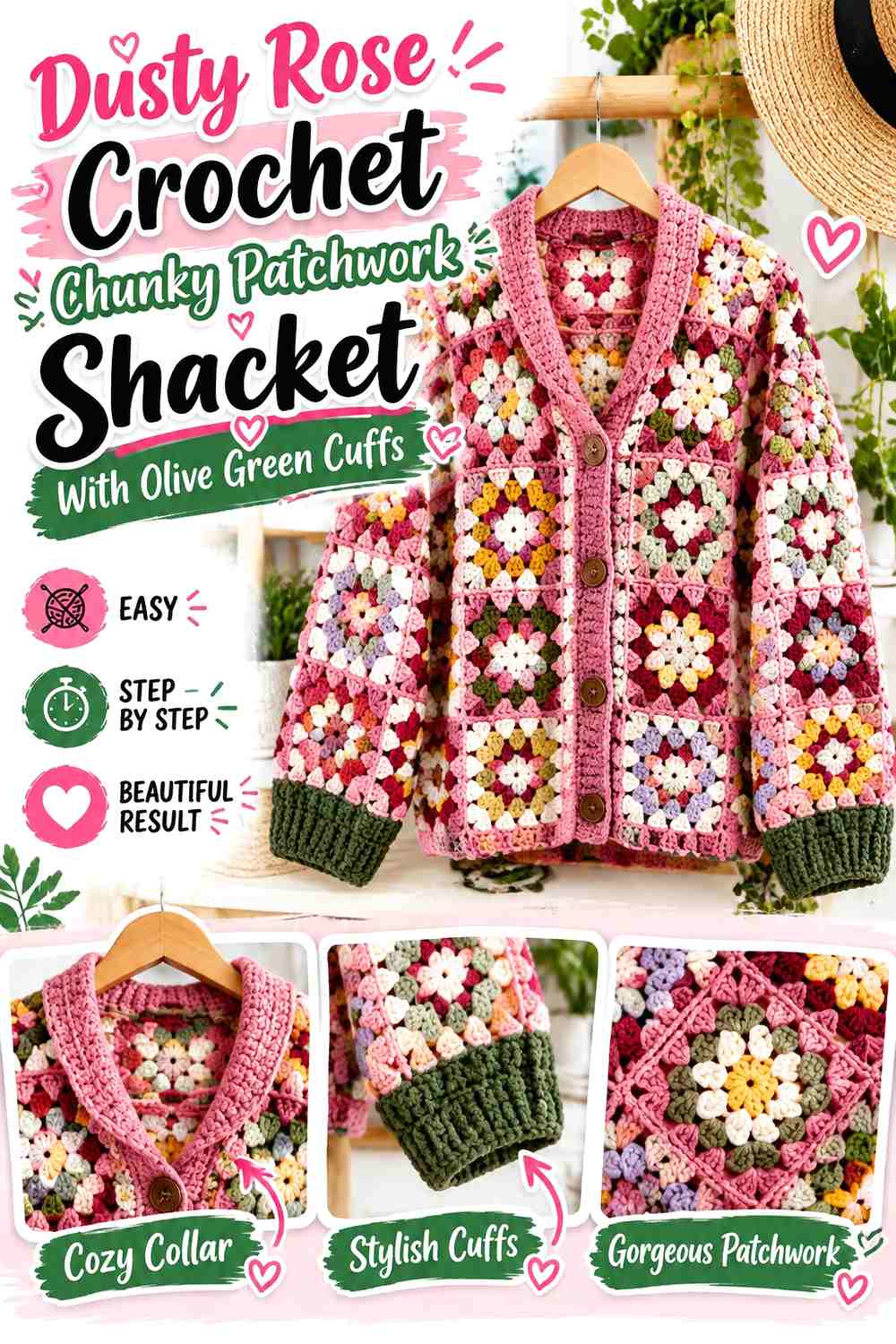
Chunkier patchwork gives each block more visual weight, so keep the body mostly Dusty Rose and use Olive Green at the sleeve ends. This creates contrast without inserting another dark block into every patch.
Dusty Rose Needs Large Connected Areas on a Chunky Shacket
Use Dusty Rose repeatedly through the broad torso and sleeve patches so the thicker fabric does not become visually fragmented.
If stitch textures vary between patches, one dominant shade helps those textures remain the primary variation.
Olive Green Cuffs Give Dusty Rose Sleeves a Strong Finish
Use Olive Green at both wrists so the dark shade repeats symmetrically. Chunky cuffs can occupy considerable visual space, so assess their depth before adding Olive Green elsewhere.
A matching narrow lower edge can connect the cuffs to the body if more green repetition is wanted.
Creator Credit: DiMar DiMax Crochet YouTube tutorial
11. Olive Green Crochet Granny Shacket With Dusty Rose Front Bands
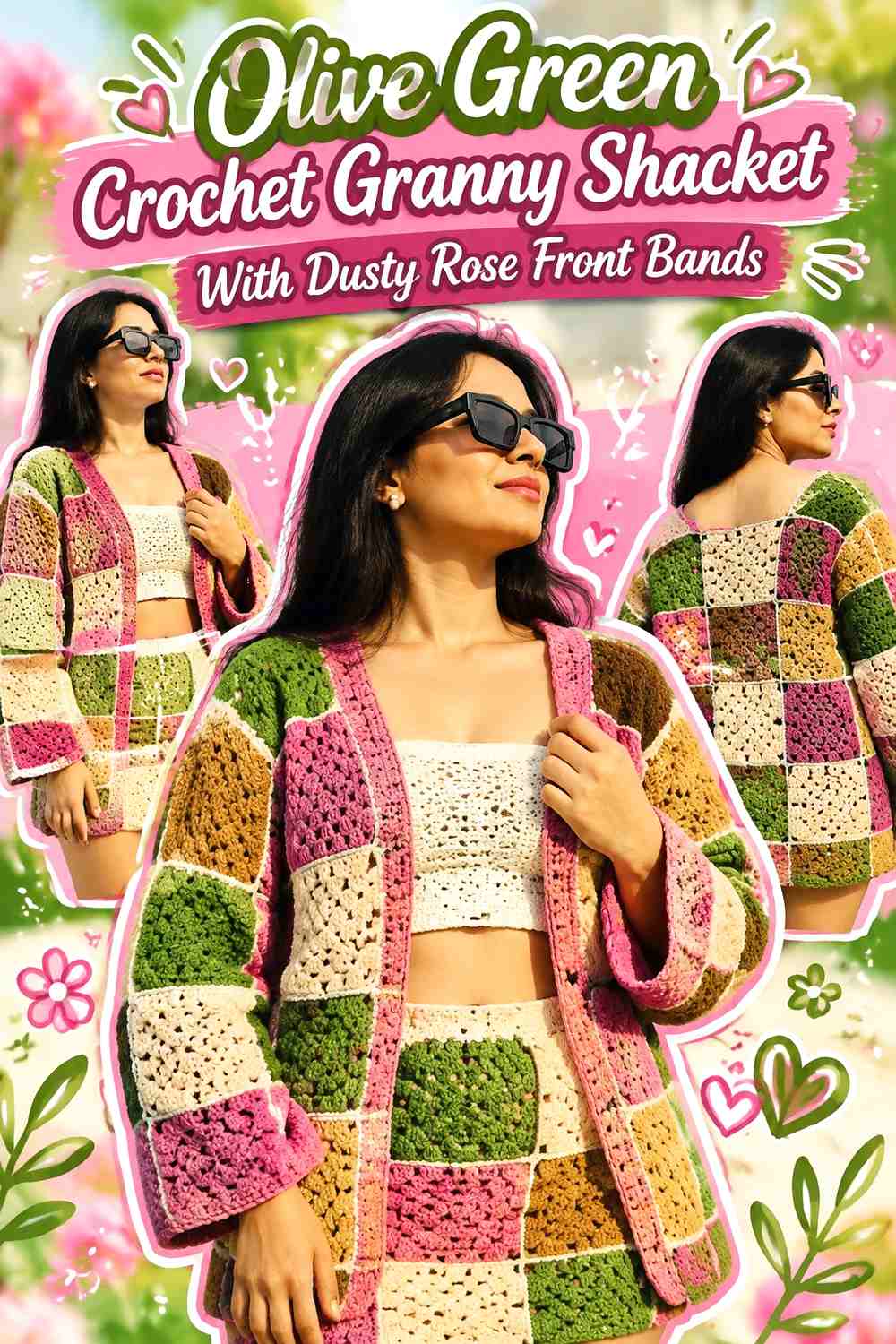
Let Olive Green dominate the granny-square body while Dusty Rose follows the front opening. This is useful when you want a patchwork surface but also want a clearer shirt-jacket style vertical structure.
Olive Green Should Connect the Granny Shacket Body
Repeat Olive Green across enough squares that the garment retains a clear dominant shade even if individual motifs vary.
Keeping the back substantially olive can also balance the strong Dusty Rose lines that appear along both front edges.
Dusty Rose Front Bands Can Organize Olive Green Patchwork
Use Dusty Rose on the existing cardigan front finish or an independently planned shacket-style band. A connected vertical line can visually tidy a patchwork edge where several different panels meet.
If adding a collar as part of your adaptation, repeating Dusty Rose there can connect the neckline to the front bands without introducing a third color.
Creator Credit: Yarns and Fins YouTube tutorial
12. Olive Green and Dusty Rose Crochet Split-Panel Patchwork Shacket

The final idea uses both shades in large, asymmetric construction zones rather than alternating every square. One front, sleeve section, or group of panels can lean Olive Green while another substantial area uses Dusty Rose.
Olive Green Needs One Connected Zone Beside Dusty Rose
Give Olive Green several touching panels so the darker shade forms a recognizable section rather than scattered patches. A front panel flowing into part of the sleeve, for example, creates stronger continuity than isolated blocks.
Keep the placement deliberate enough that asymmetry looks planned rather than accidental.
Dusty Rose Should Balance Olive Green Through Broad Shacket Panels
Use Dusty Rose in another substantial zone and avoid breaking it into numerous tiny areas. Large color blocks suit a shacket silhouette because they let the patchwork construction remain clear from a distance.
Lay all major pieces together before assembly. Asymmetric color blocking depends heavily on the relationship between front, back, and sleeves once they are worn as one garment.
Creator Credit: crochet-crosia YouTube tutorial
Comparing Olive Green and Dusty Rose Patchwork Shacket Directions
Choose an Olive Green-dominant shacket when you want the earthy darker shade to connect most of the garment. Ideas 1, 4, 6, 7, 9, and 11 use Dusty Rose on pockets, sleeves, joins, a back panel, motif centers, or front bands while keeping Olive Green visually in control.
Choose a Dusty Rose-dominant shacket when you want a softer overall garment with Olive Green providing structural definition. Ideas 2, 5, 8, and 10 place green around edging, pockets, lower panels, or cuffs.
Ideas 3 and 12 give both colors more comparable visual importance. The checkerboard option creates regular repetition, while split-panel color blocking produces broader and more directional sections.
For a shacket with prominent pockets, collar, front bands, and cuffs, keep the main patchwork relatively simple. Those shirt-jacket details already create multiple focal areas, and assigning every one a contrasting color can make a two-shade palette feel unnecessarily busy.
Conclusion
Olive Green and Dusty Rose can create 12 distinct crochet patchwork shacket directions without adding more colors. The useful difference comes from deciding whether the contrast belongs inside the patchwork, between the patches, or on the garment details surrounding them.
Choose Olive Green across most panels with Dusty Rose pockets or joins for an earthy dominant look with softer accents. Reverse the palette when you want Dusty Rose to cover most of the garment and Olive Green to provide darker definition. For a stronger patchwork effect, alternate complete panels; for a calmer shacket, keep the body mostly one color and move the second shade to cuffs, front bands, or pockets.
Before joining the garment, arrange the front, back, and sleeves together and inspect the complete color distribution. Use the credited tutorials for their original cardigan or jacket construction, and treat any added shacket-specific collar, pocket, or shirt-style finishing as a separate adaptation unless the chosen tutorial explicitly includes it.
Frequently Asked Questions
Should Olive Green or Dusty Rose dominate a crochet patchwork shacket?
Either can lead. Olive Green creates a darker earthy foundation and makes Dusty Rose pockets, joins, or cuffs easy to notice. Dusty Rose produces a softer body while Olive Green can define front bands, lower panels, pockets, or sleeve finishes.
How can I keep an Olive Green and Dusty Rose patchwork shacket from looking too busy?
Give one color more surface area and repeat the second shade in a limited number of construction zones. For example, keep most panels Olive Green and reserve Dusty Rose for pockets and cuffs instead of alternating every patch.
Should Olive Green and Dusty Rose patchwork panels alternate evenly?
Only if you want a checkerboard-style result. An uneven but planned distribution can look more relaxed. The important point is to lay out the complete garment before joining so one color does not accidentally cluster on one side.
Where does Dusty Rose work best on an Olive Green crochet shacket?
Useful placements include patch pockets, sleeve panels, motif centers, joins, cuffs, front bands, or one larger back section. Choose areas with clear boundaries so Dusty Rose looks intentionally placed.
Where should Olive Green go on a Dusty Rose patchwork shacket?
Olive Green can anchor pockets, lower body panels, cuffs, front edging, selected sleeve blocks, or other larger construction zones. A small amount of deeper green can have substantial visual weight against Dusty Rose.
Should the crochet shacket pockets match the body or contrast with it?
Both approaches work. Matching pockets creates a quieter front and lets patchwork texture lead. Contrasting pockets make them obvious design features. Position them against the finished panel layout before attaching them so enough color contrast remains around their edges.
What should I preserve when substituting Olive Green or Dusty Rose?
Preserve their relationship rather than searching for an exact commercial shade. Choose a muted medium-to-deep green for the Olive Green role and a softened, lighter rose for Dusty Rose. Maintain enough value separation for joins, pockets, edging, or patch boundaries that you want to remain visible.