Dusty Rose and Cocoa Brown give a crochet cropped cardigan a useful soft-and-dark contrast. Dusty Rose can keep the garment lighter across the torso and sleeves, while Cocoa Brown can define cuffs, hemlines, neckbands, button bands, or selected motifs. Reverse those roles, and Dusty Rose becomes a lighter accent against a much deeper cardigan body.

The cropped length makes color placement especially important. There is less body fabric between the neckline and hem than on a long cardigan, so a wide Cocoa Brown ribbed band can take up a significant share of the visible garment. Sleeve color matters too, because cuffs, upper sleeves, shoulders, and front panels remain visible even when the cardigan is layered over another top.
The tutorial references below cover cropped cardigans and closely related cardigan or bolero constructions that can support the design concepts. Check each creator’s finished length, sizing, and construction before adapting it. The Dusty Rose and Cocoa Brown palettes are independent editorial color plans rather than claims about colors used by the creators.
Quick List
- Dusty Rose Crochet Cropped Cardigan With Cocoa Brown Ribbing
- Cocoa Brown Crochet Cropped Cardigan With Dusty Rose Front Panels
- Dusty Rose Crochet Hexagon Cropped Cardigan With Cocoa Brown Edging
- Cocoa Brown Crochet Bolero Cardigan With Dusty Rose Sleeves
- Dusty Rose Crochet Cropped Cardigan With Cocoa Brown Cuffs
- Cocoa Brown Crochet Buttoned Cropped Cardigan With Dusty Rose Bands
- Dusty Rose Crochet Granny Cropped Cardigan With Cocoa Brown Joins
- Cocoa Brown Crochet Cropped Cardigan With Dusty Rose Collar
- Dusty Rose Crochet Textured Cropped Cardigan With Cocoa Brown Hem
- Cocoa Brown Crochet Lace Cropped Cardigan With Dusty Rose Borders
- Dusty Rose Crochet Mesh Cropped Cardigan With Cocoa Brown Framing
- Cocoa Brown Crochet Ribbed Cropped Cardigan With Dusty Rose Sleeves
- Dusty Rose Crochet Granny Cropped Cardigan With Cocoa Brown Motif Centers
- Cocoa Brown Crochet Cropped Cardigan With a Dusty Rose Center Back
- Dusty Rose Crochet Minimal Cropped Cardigan With Cocoa Brown Trim
Decide Whether Dusty Rose or Cocoa Brown Should Lead the Cropped Cardigan
Start with the area that will cover most of the torso. When Dusty Rose fills the body panels, the cardigan stays visually lighter and Cocoa Brown can provide structure around the hem, neckline, cuffs, or front opening. A Cocoa Brown body produces a deeper overall garment, so smaller Dusty Rose areas can carry more visual emphasis.
Do not judge the balance using yarn quantities alone. A narrow front band may run from hem to neckline and therefore remain highly visible, while a larger patch hidden beneath the arm may contribute very little to the worn color balance.
Use Dusty Rose and Cocoa Brown to Separate Cardigan Construction Lines
Cropped cardigans contain several places where color can reinforce construction: sleeve cuffs, lower ribbing, neckbands, button bands, granny-square joins, shoulder sections, and sleeve openings. Using the darker shade along one of those existing lines usually creates a cleaner result than scattering isolated Cocoa Brown accents over a Dusty Rose garment.
The same idea works in reverse. On a Cocoa Brown cardigan, Dusty Rose can identify a collar, selected motifs, sleeves, or front bands without needing to occupy half the garment.
Check Dusty Rose and Cocoa Brown Placement Before Joining Cardigan Panels
Panel-based and motif-based cardigans are easier to recolor before final assembly. Lay front panels, the back, and sleeves in their approximate worn positions and compare how much Dusty Rose and Cocoa Brown appears on each side.
Pay particular attention to the cropped hem. A contrast band that seems narrow by itself can become visually dominant once it extends across the entire front and back.
1. Dusty Rose Crochet Cropped Cardigan With Cocoa Brown Ribbing
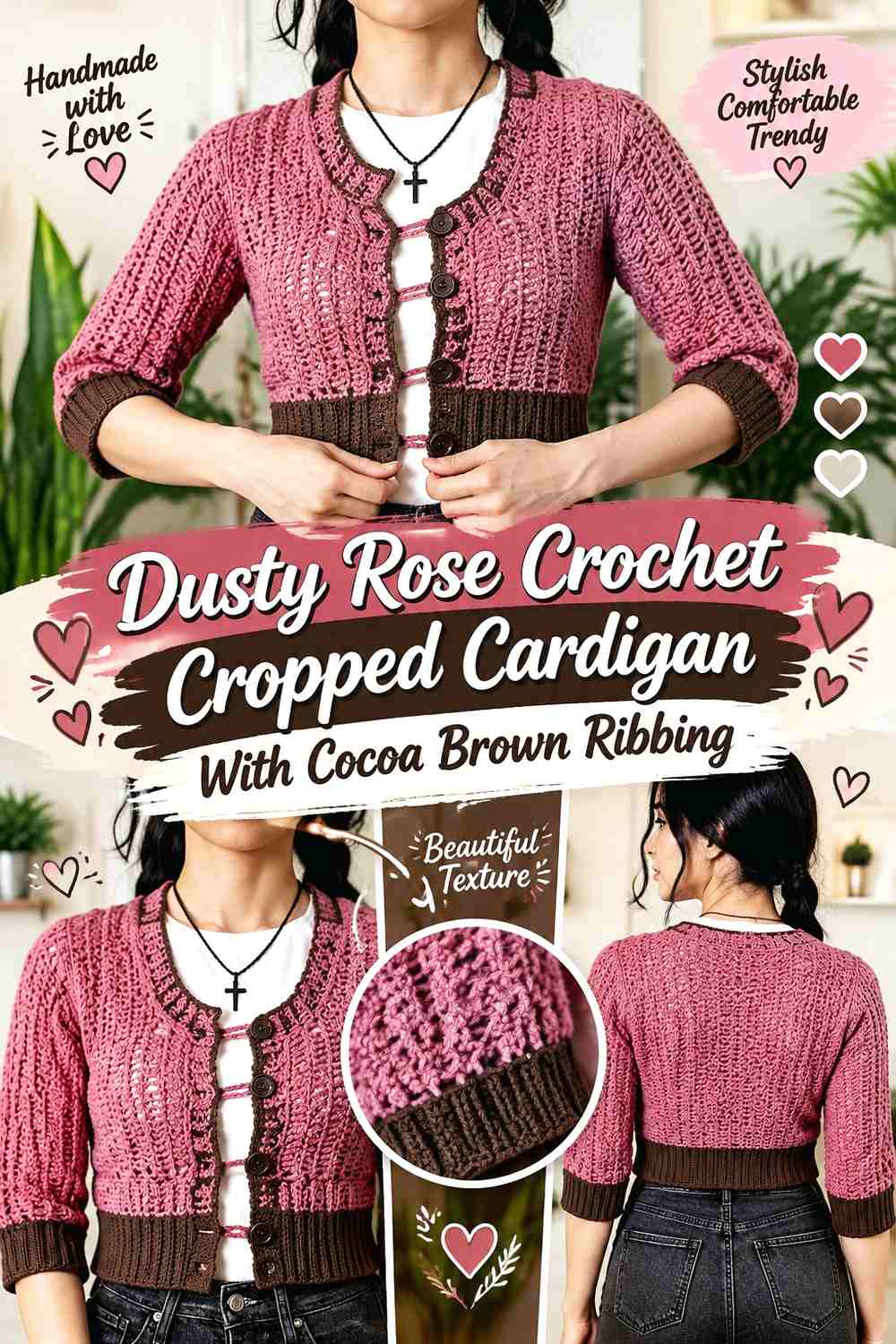
Let Dusty Rose cover the front panels, back, and main sleeve areas while Cocoa Brown defines the ribbing. This gives the lighter shade most of the wearable surface but places the darker color at the cardigan’s strongest finishing points.
Dusty Rose Should Connect the Cropped Cardigan Body and Sleeves
Carry Dusty Rose across enough of the torso and sleeves that the garment reads as one continuous rose-colored cardigan. This is especially helpful on a cropped silhouette because the body already contains less vertical space than a longer cardigan.
Keeping the main fabric one color also allows stitch texture to remain visible without repeated color breaks.
Cocoa Brown Ribbing Can Anchor the Dusty Rose Cropped Hem
Use Cocoa Brown at the cuffs and lower band when you want the contrast to emphasize the cardigan’s boundaries. Repeating brown at both locations connects the sleeves visually to the cropped hem.
Watch the band width. A very deep Cocoa Brown hem can occupy a large share of a short body and change the cardigan from rose-dominant to nearly two-tone.
Creator Credit: TCDDIY
2. Cocoa Brown Crochet Cropped Cardigan With Dusty Rose Front Panels
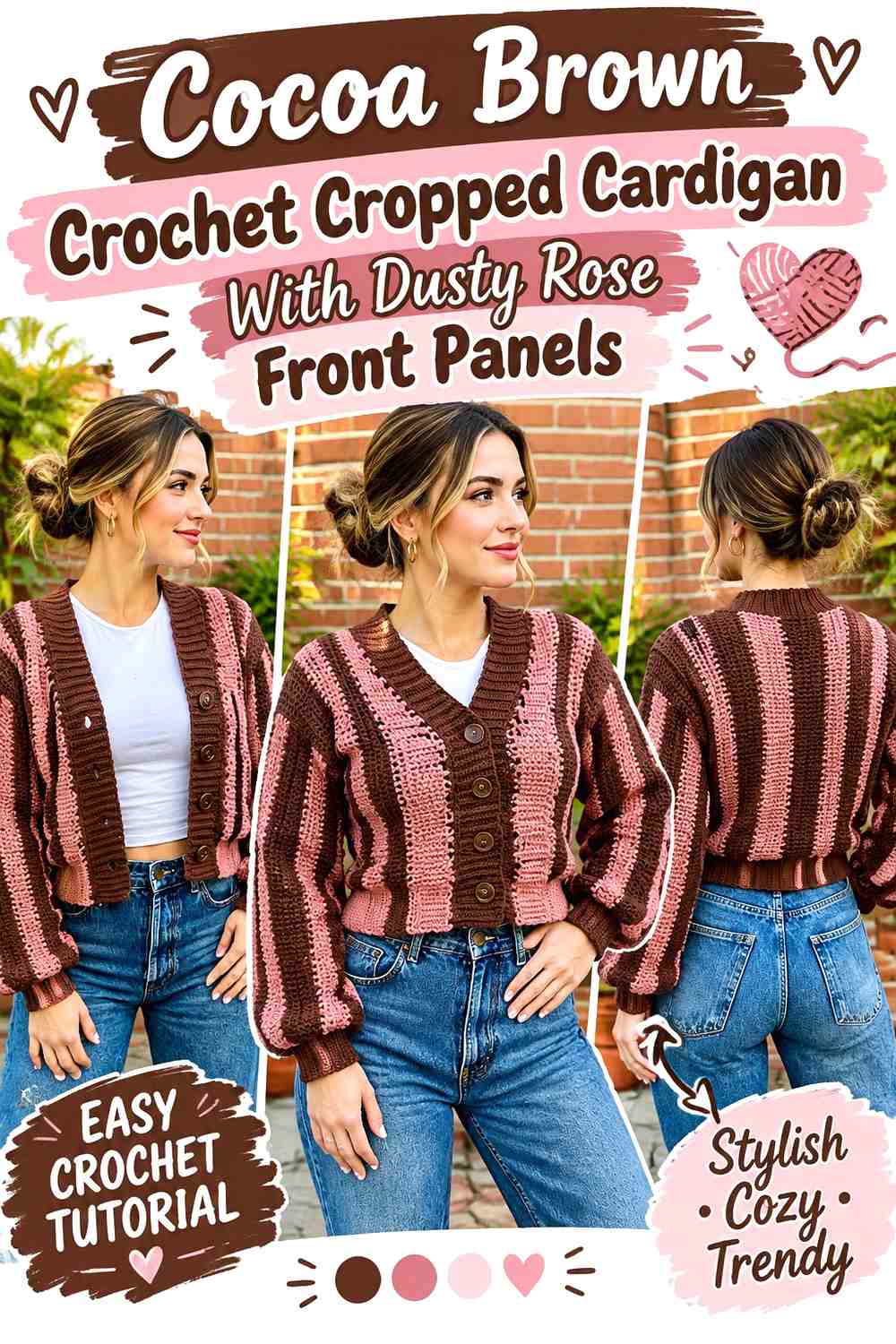
This arrangement gives Cocoa Brown the back, sleeves, and outer body while reserving Dusty Rose for both front panels. The lighter fronts become more visible when the cardigan is worn open.
Cocoa Brown Should Surround the Dusty Rose Front Panels
Keep Cocoa Brown connected through the back and sleeves so the cardigan retains a strong dark foundation. That continuity helps the Dusty Rose fronts feel intentionally inserted rather than randomly color-blocked.
If the cardigan has a separate hem band, keeping it brown can further connect both sides.
Dusty Rose Front Panels Can Lighten the Cocoa Brown Cardigan Opening
Use comparable Dusty Rose areas on the left and right fronts when symmetry is part of the construction. Because these panels sit beside the opening, they also frame whatever layer is worn underneath.
Check the color distribution with the cardigan open rather than judging only the flat pieces.
Creator Credit: Kenikse Crochet
3. Dusty Rose Crochet Hexagon Cropped Cardigan With Cocoa Brown Edging
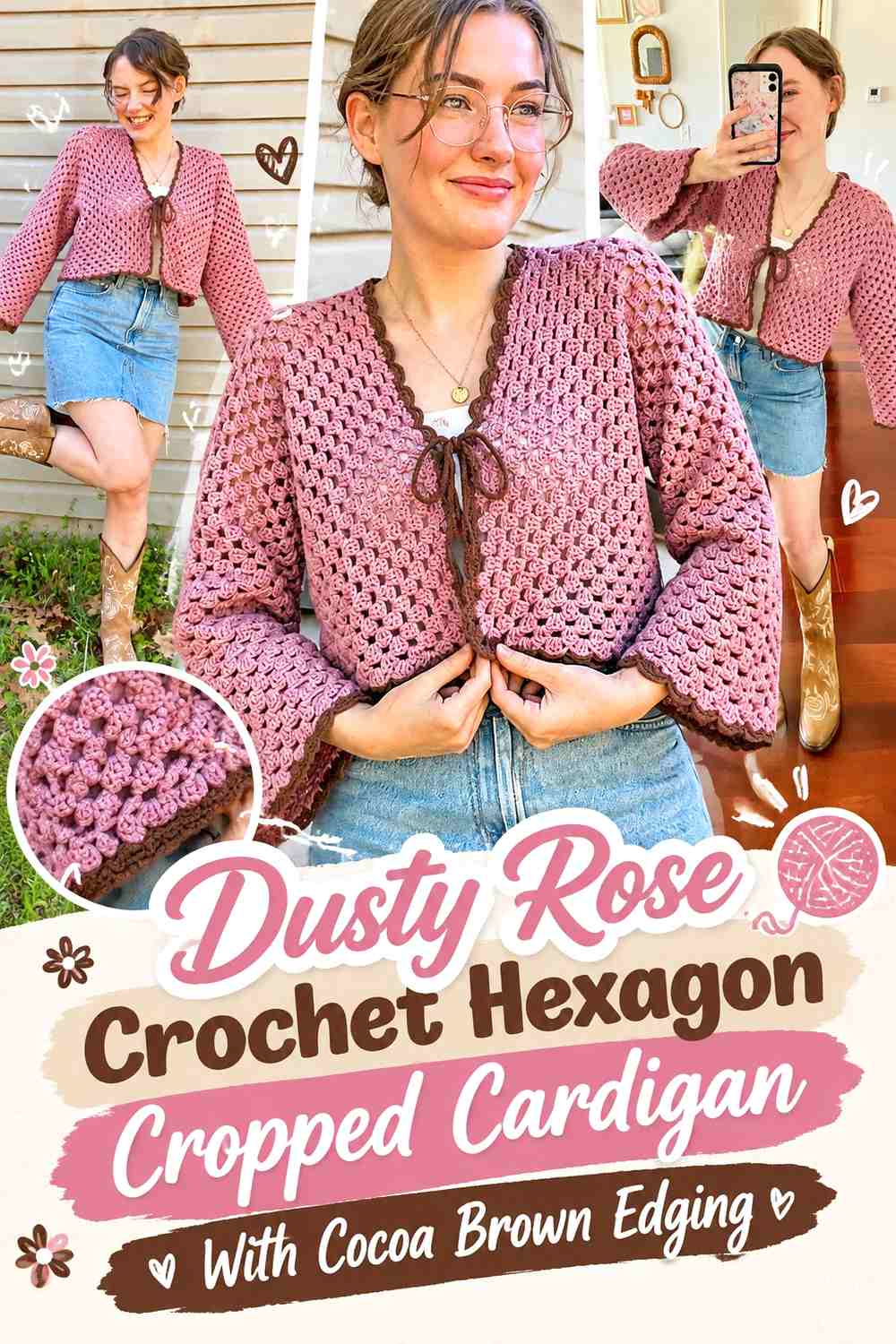
A hexagon cardigan already contains strong construction lines, so keep most rounds Dusty Rose and move Cocoa Brown to the final edging and finishing details. That allows the geometry to remain visible without turning every round into a new color decision.
Dusty Rose Keeps the Crochet Hexagon Cardigan Visually Unified
Use Dusty Rose through most of both hexagon sections so the folded pieces relate clearly to one another. Repeating the same main shade also prevents the sleeves and body from looking like separate garments after assembly.
If you introduce Cocoa Brown inside the hexagons, use it sparingly enough that Dusty Rose still controls the surface.
Cocoa Brown Can Trace the Dusty Rose Hexagon Cardigan Edges
Place Cocoa Brown along the cuffs, front opening, hem, or another existing finish. Dark edging can make the outline of a light hexagon cardigan easier to follow, especially around the cropped lower edge.
Try the cardigan on before making the brown border wider; edge colors become more noticeable once the fronts hang vertically.
Creator Credit: HayHay Crochet
4. Cocoa Brown Crochet Bolero Cardigan With Dusty Rose Sleeves

A cropped bolero gives the sleeves considerable visual importance because the body section is relatively small. Make Cocoa Brown the central body color and give Dusty Rose more room across the sleeves.
Cocoa Brown Should Keep the Crochet Bolero Body Compact
Use Cocoa Brown across the back and central body sections to emphasize the short silhouette. Keeping this area one color avoids introducing unnecessary divisions into an already compact garment.
The deeper shade also gives the Dusty Rose sleeves a clear background at the shoulder line.
Dusty Rose Sleeves Can Soften the Cocoa Brown Bolero
Carry Dusty Rose through enough sleeve length to make the color change deliberate. Tiny rose sections at the wrists will read more like cuffs than true color-blocked sleeves.
If the sleeves are voluminous, remember that Dusty Rose will occupy a large visual area even though the Cocoa Brown torso remains central.
Creator Credit: Stefanie Aurelia
5. Dusty Rose Crochet Cropped Cardigan With Cocoa Brown Cuffs
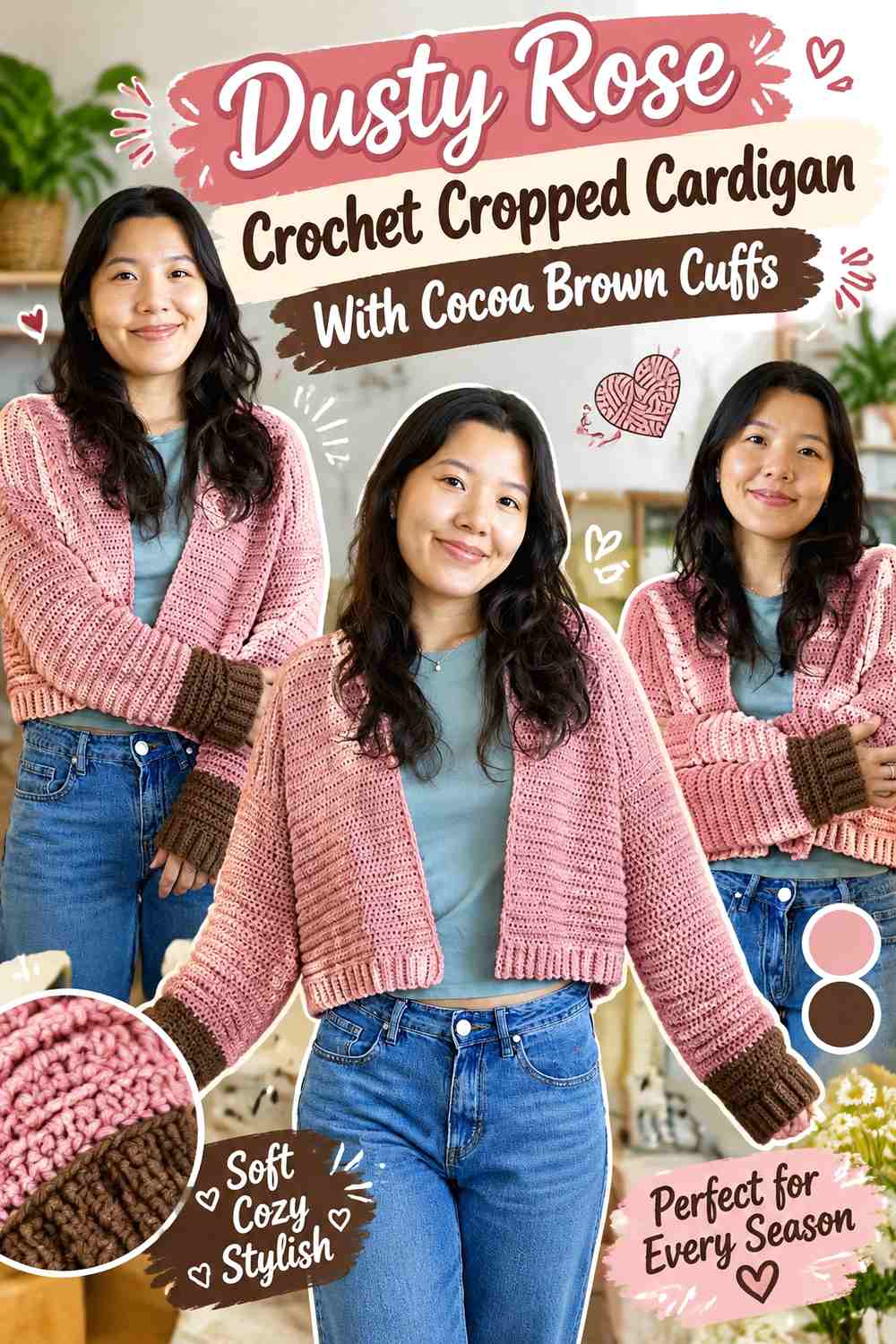
This version keeps nearly the entire cardigan Dusty Rose and concentrates Cocoa Brown at the wrists. It is one of the most restrained ways to use the two-color palette.
Dusty Rose Can Cover the Full Cropped Cardigan Surface
Let Dusty Rose continue from the body into the sleeves so the cardigan maintains a soft, uninterrupted field. This works particularly well when the crochet construction already contains noticeable texture or shaping.
Without other Cocoa Brown sections competing for attention, the stitch pattern remains an important part of the garment’s appearance.
Cocoa Brown Cuffs Give Dusty Rose Sleeves a Defined Finish
Use Cocoa Brown only for the cuff or last existing sleeve section. The darker ending can make sleeve length and shape easier to distinguish without dividing the entire arm into blocks.
Compare both cuffs before finishing because even a small difference in brown width can be obvious on a matched garment.
Creator Credit: VivCrochets
6. Cocoa Brown Crochet Buttoned Cropped Cardigan With Dusty Rose Bands
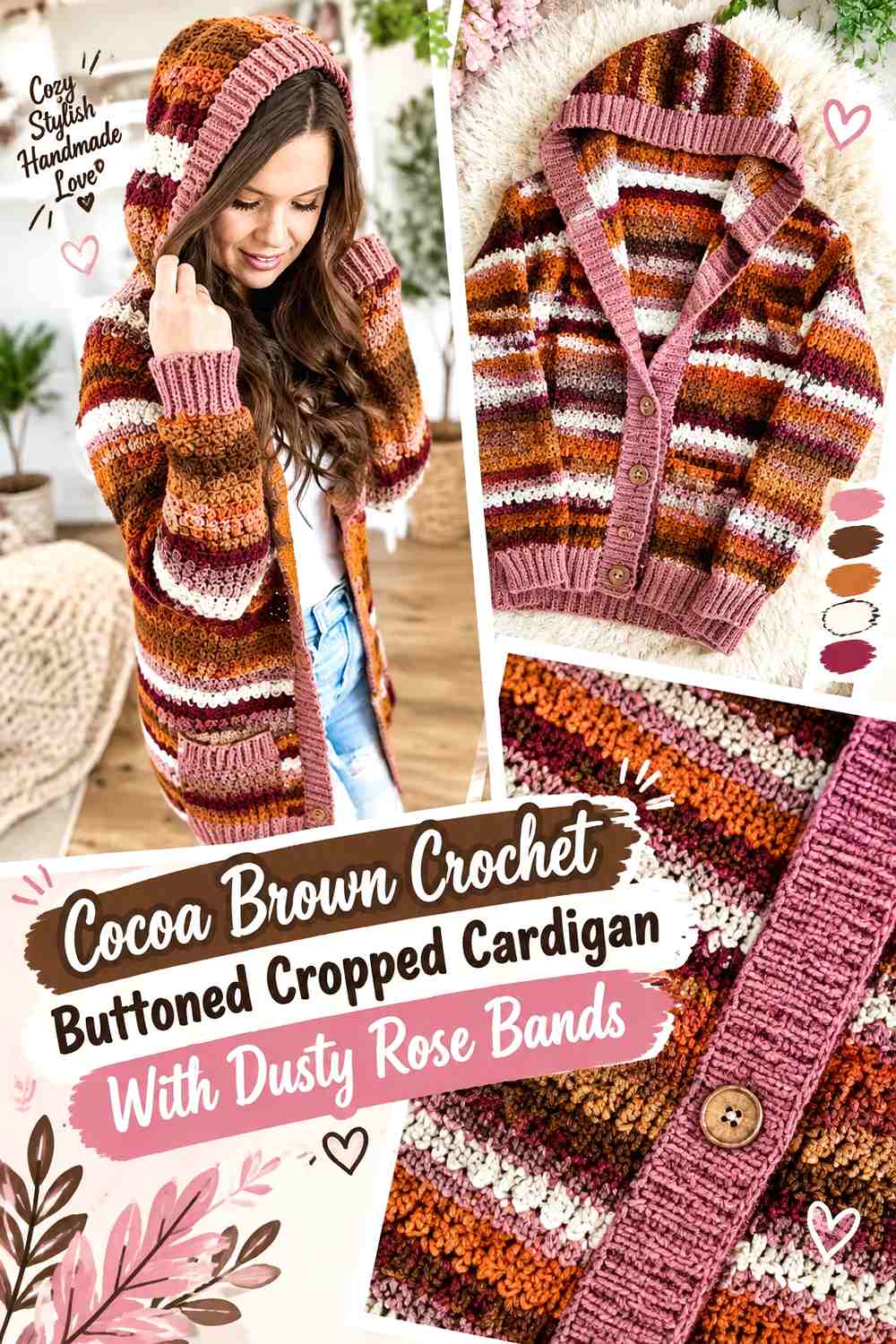
A buttoned cardigan provides several vertical and horizontal finishing lines. Use Cocoa Brown through the main body and sleeves while Dusty Rose marks the front bands and lower edge.
Cocoa Brown Should Remain Dominant Behind Dusty Rose Button Bands
Keep the broad torso panels Cocoa Brown so the lighter front bands stand apart clearly. This creates a frame around the cardigan opening without requiring color changes throughout the main stitch pattern.
If the cardigan includes buttons, assess their appearance against the actual yarn rather than assuming one color will automatically provide sufficient definition.
Dusty Rose Can Connect the Cocoa Brown Front and Hem
Repeating Dusty Rose from the front bands into the lower ribbing creates an L-shaped or continuous frame around the garment opening and cropped edge.
Keep the band proportions controlled. On a short cardigan, wide Dusty Rose ribbing can quickly become one of the largest visible areas.
Creator Credit: MJ’s Off The Hook Designs
7. Dusty Rose Crochet Granny Cropped Cardigan With Cocoa Brown Joins

For a motif cardigan, use Dusty Rose across most square centers and outer rounds while reserving Cocoa Brown for the joins. The dark network can organize separate motifs into a clearer garment shape.
Dusty Rose Should Remain Visible Across Most Granny Squares
Repeat Dusty Rose consistently enough that the front, back, and sleeves relate to one another. If every motif uses a different balance, the cardigan may become visually busy before the Cocoa Brown joins are even added.
Lay the squares in their planned garment positions before joining so you can check overall distribution.
Cocoa Brown Joins Can Organize Dusty Rose Granny Squares
A darker joining color can create visible lines between Dusty Rose motifs and emphasize the cardigan’s grid. This is especially noticeable across the cropped torso, where fewer rows of motifs may be present.
If the join begins overpowering small squares, consider keeping Cocoa Brown to the joins and avoiding an equally wide brown border.
Creator Credit: Off the Beaten Hook
8. Cocoa Brown Crochet Cropped Cardigan With Dusty Rose Collar
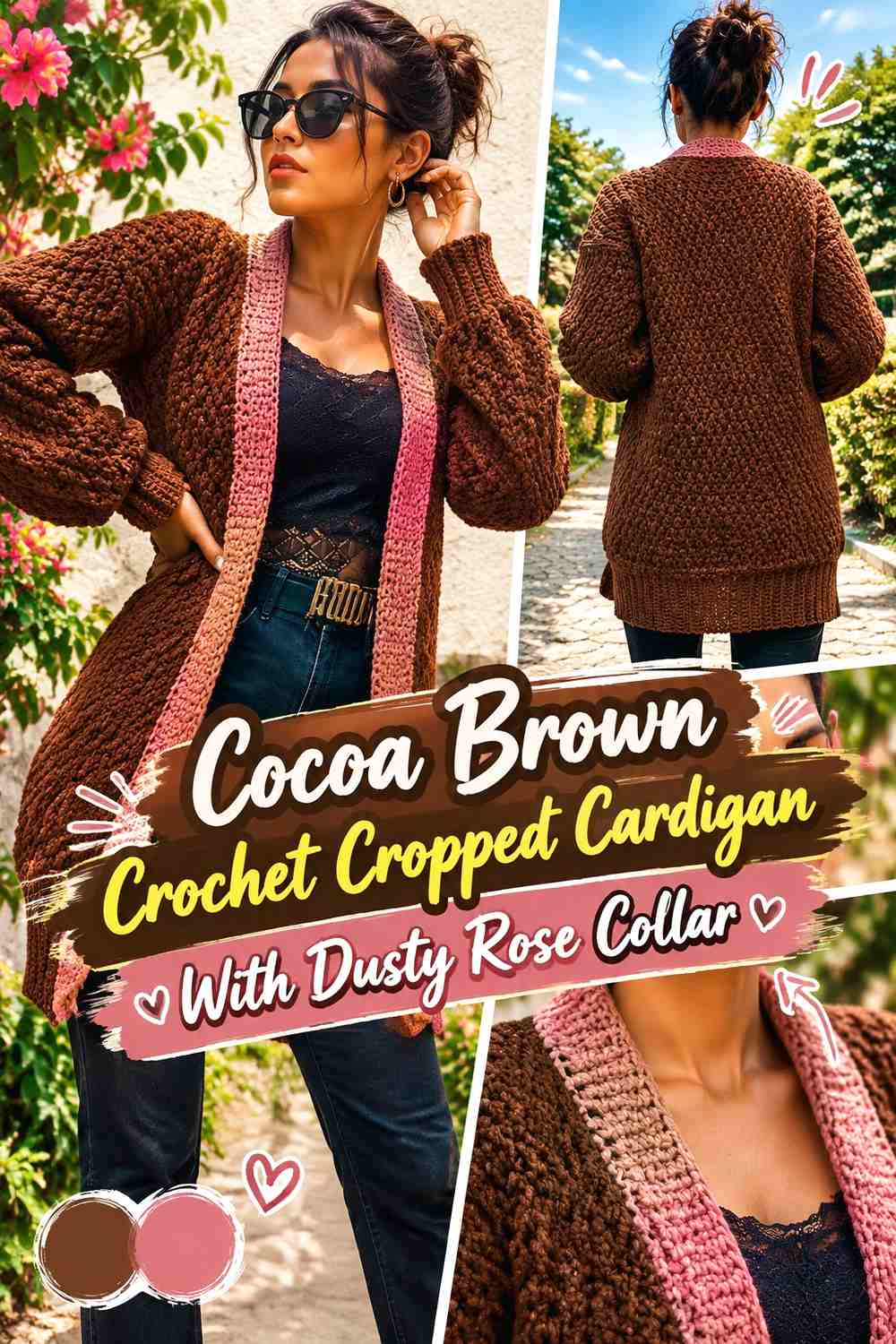
Give Cocoa Brown the body, sleeves, and cropped hem, then place Dusty Rose around the neckline and front opening. The lighter color draws attention upward rather than toward the waist.
Cocoa Brown Keeps the Cropped Cardigan Body Visually Grounded
Use Cocoa Brown across the largest panels so the lighter neckline does not compete with additional rose blocks elsewhere. A continuous brown torso also makes an open-front silhouette easy to read.
If the cardigan has pronounced stitch texture, check whether enough of it remains visible in the dark shade.
Dusty Rose Can Brighten the Cocoa Brown Neckline
A Dusty Rose collar or neckband creates contrast close to the face and continues naturally toward the front opening if the construction uses a continuous border.
Keep the rose section proportionate to the crop. A very deep collar can visually dominate a cardigan with little body length.
Creator Credit: AC Crochets
9. Dusty Rose Crochet Textured Cropped Cardigan With Cocoa Brown Hem

Make the textured fabric Dusty Rose so the stitch surface remains continuous, then use Cocoa Brown only at the lower edge. The contrast brings attention to the cropped silhouette without interrupting the main texture.
Dusty Rose Lets Crochet Texture Cover the Main Cardigan Panels
Keep Dusty Rose through the front, back, and most of the sleeves. Repeated color changes inside textured stitchwork can make the surface harder to read, so one main color gives texture more visual room.
Step back from the fabric occasionally; texture that is obvious close up may appear subtler at normal viewing distance.
Cocoa Brown Emphasizes the Dusty Rose Cropped Hemline
Place Cocoa Brown around the existing bottom band or finishing rows. This draws a dark horizontal line exactly where the cardigan ends.
Because the hem runs around much of the torso, it can create plenty of contrast without needing additional brown stripes higher on the body.
Creator Credit: RosaFerns
10. Cocoa Brown Crochet Lace Cropped Cardigan With Dusty Rose Borders

This scheme uses Cocoa Brown through the openwork body and reserves Dusty Rose for framing. The lighter border can help the front opening and lower edge remain visible against a dark lace field.
Cocoa Brown Lace Needs a Clear Dusty Rose Boundary
Openwork includes the clothing underneath as part of the visual result, so a Cocoa Brown lace pattern may appear different over light and dark layers. A Dusty Rose border gives the cardigan a consistent outer boundary regardless of some of that background variation.
Check the cardigan over likely layering tops before finalizing the palette.
Dusty Rose Borders Can Frame the Cocoa Brown Crochet Lace
Use Dusty Rose on the front edges, neckline, or hem rather than inserting it throughout every lace repeat. Keeping the pale shade outside the main pattern protects the continuity of the openwork.
A narrow border may be sufficient if the value contrast between the two yarns is strong.
Creator Credit: Chenda DIY
11. Dusty Rose Crochet Mesh Cropped Cardigan With Cocoa Brown Framing

A Dusty Rose mesh body creates a lighter, more open cardigan while Cocoa Brown can outline the garment at the cuffs and front edges. The two colors serve different jobs rather than competing inside every mesh section.
Dusty Rose Should Keep the Crochet Mesh Continuous
Use Dusty Rose through the broad mesh areas so the negative space remains the main surface feature. Frequent Cocoa Brown stripes could make a cropped mesh body look more segmented than intended.
Remember that the layer worn beneath the cardigan will show through and influence the apparent color balance.
Cocoa Brown Can Frame the Dusty Rose Mesh Cardigan
Add Cocoa Brown to solid finishing areas such as cuffs, neckline edging, or the front opening. The darker solid sections can visually contain the airy Dusty Rose body.
If several borders meet near the lower front corners, check that Cocoa Brown does not accumulate there more heavily than expected.
Creator Credit: Jac in the Attic
12. Cocoa Brown Crochet Ribbed Cropped Cardigan With Dusty Rose Sleeves
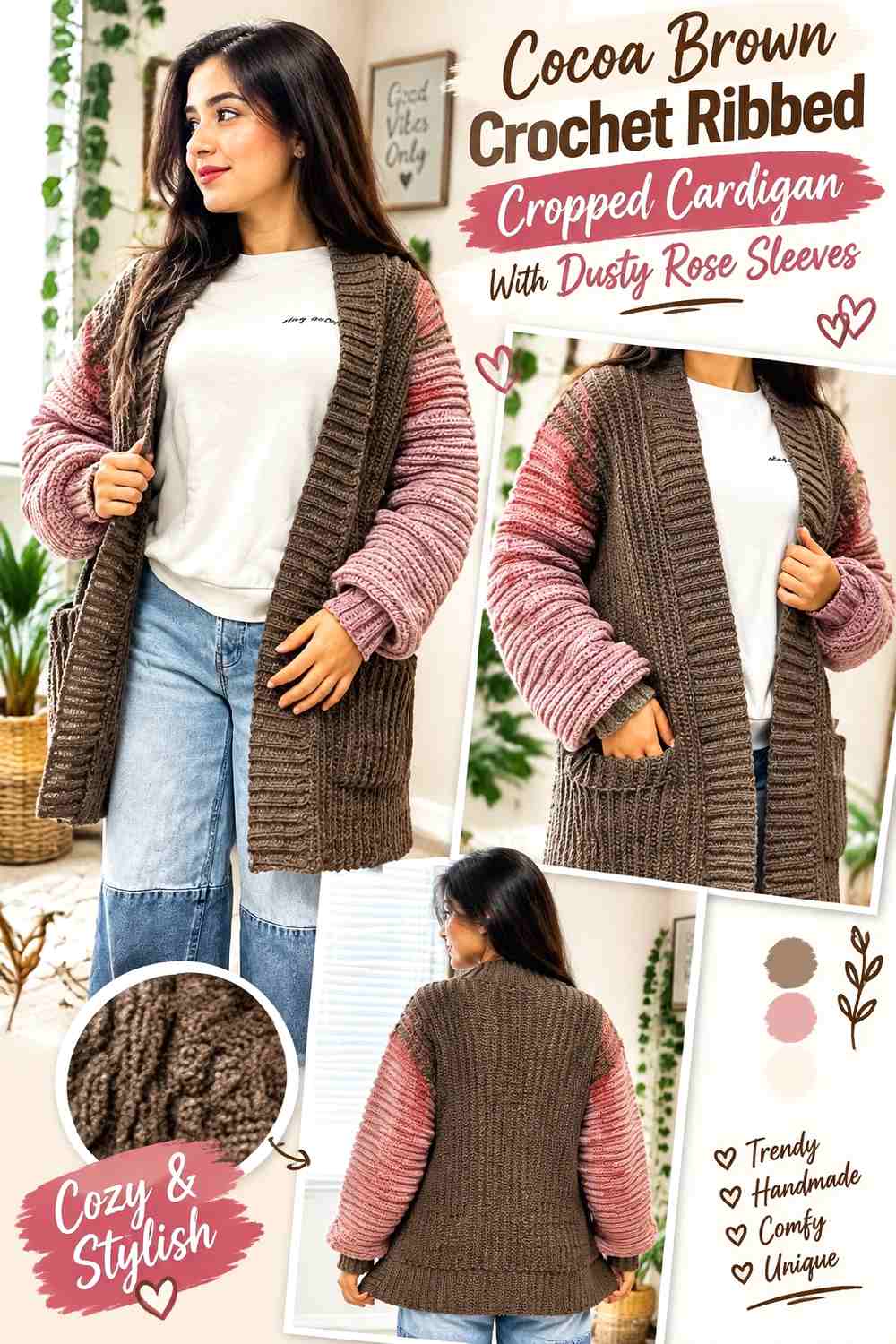
Make Cocoa Brown the ribbed torso color and use Dusty Rose across most of both sleeves. The separation places the softer shade on moving parts of the garment while keeping the body visually darker.
Cocoa Brown Ribbing Gives the Cropped Cardigan a Strong Body
Repeated rib texture already creates strong vertical or horizontal lines, so a single Cocoa Brown field can be enough visual detail for the torso. Avoid introducing frequent Dusty Rose stripes into the ribbing unless you specifically want a more graphic garment.
A dark body also makes the sleeve transition more obvious at the armhole.
Dusty Rose Sleeves Need Balance Against the Cocoa Brown Torso
Use Dusty Rose on both sleeves in comparable proportions. Since sleeves occupy substantial surface area, they can make the cardigan feel closer to a 50/50 palette even when the body remains entirely brown.
Cocoa Brown cuffs can be added if you want to reconnect the sleeves to the torso without adding another large brown section.
Creator Credit: Yarnalina
13. Dusty Rose Crochet Granny Cropped Cardigan With Cocoa Brown Motif Centers
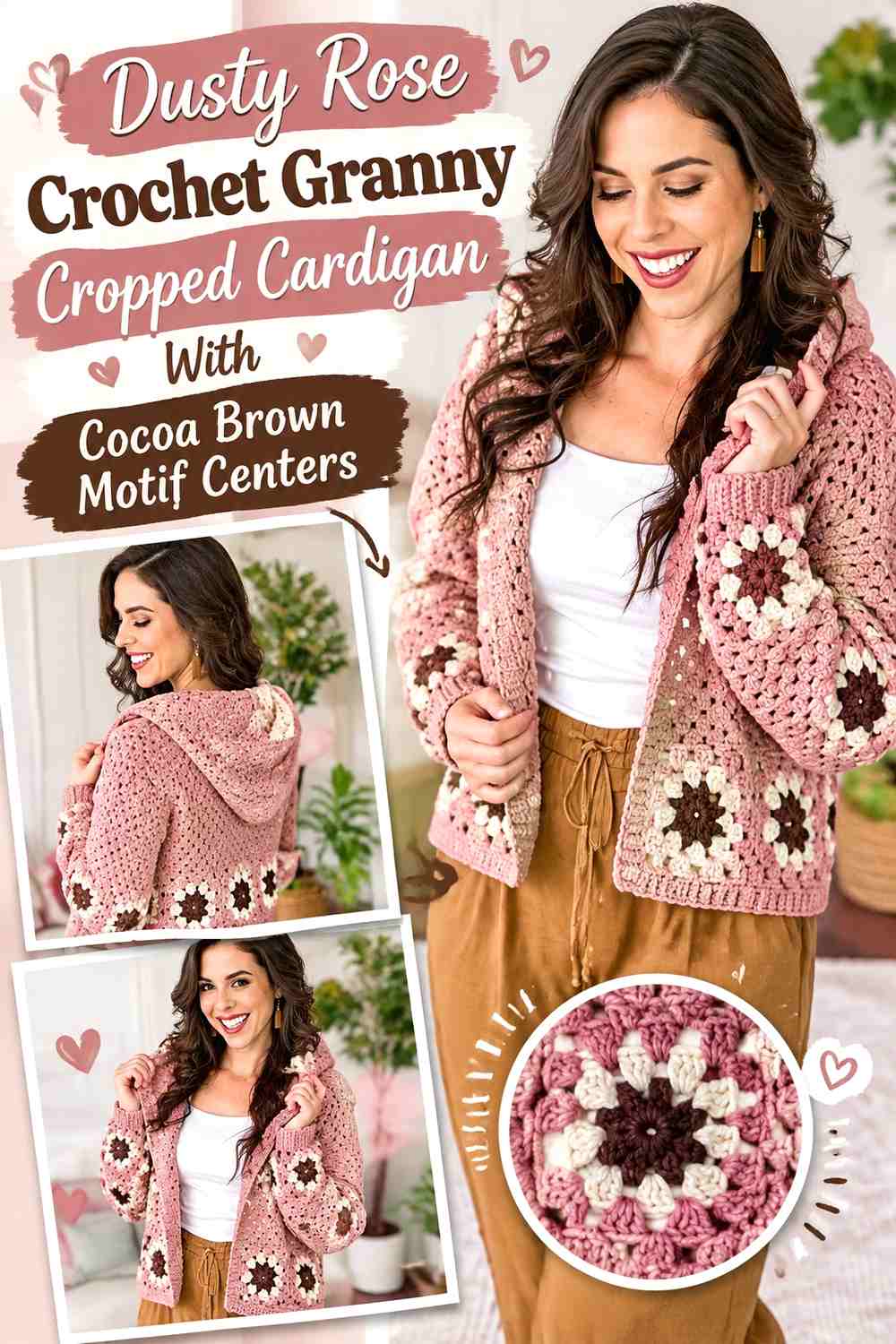
Instead of using Cocoa Brown for joins, place it inside selected granny motifs while Dusty Rose controls most outer rounds. This produces a softer grid and distributes the dark color inside the cardigan surface.
Cocoa Brown Centers Can Anchor Dusty Rose Granny Motifs
Start selected motifs with Cocoa Brown so each dark center becomes a small repeated focal point. Consistent placement matters more than using brown in every possible round.
Arrange the motifs before joining and make sure too many Cocoa Brown centers do not cluster on one front panel or sleeve.
Dusty Rose Outer Rounds Should Connect the Cocoa Brown Centers
Use Dusty Rose around the darker centers so the motifs share a common outer field. Once joined, those rose edges help neighboring squares blend into a more continuous cardigan surface.
This treatment is useful when you want motif variation without a strong dark joining grid.
Creator Credit: Briana K Designs
14. Cocoa Brown Crochet Cropped Cardigan With a Dusty Rose Center Back

Put Cocoa Brown across the front panels and sleeves, then introduce one Dusty Rose section down the center back. This moves the main contrast away from the cardigan opening.
Cocoa Brown Should Continue Across Both Cropped Cardigan Fronts
Keep the two front panels Cocoa Brown so the cardigan appears dark and cohesive from the front. Matching sleeves can extend that continuity around the sides.
This also prevents the Dusty Rose back panel from competing with additional large rose areas elsewhere.
Dusty Rose Can Turn the Cocoa Brown Center Back Into a Focal Area
Use Dusty Rose in a clearly defined center panel or motif column rather than scattered patches. A centered lighter section provides an intentional back view without changing the overall brown-dominant direction.
Check its width on the assembled garment. A panel that looks narrow alone can occupy a substantial share of a cropped back.
Creator Credit: Nora Moon
15. Dusty Rose Crochet Minimal Cropped Cardigan With Cocoa Brown Trim
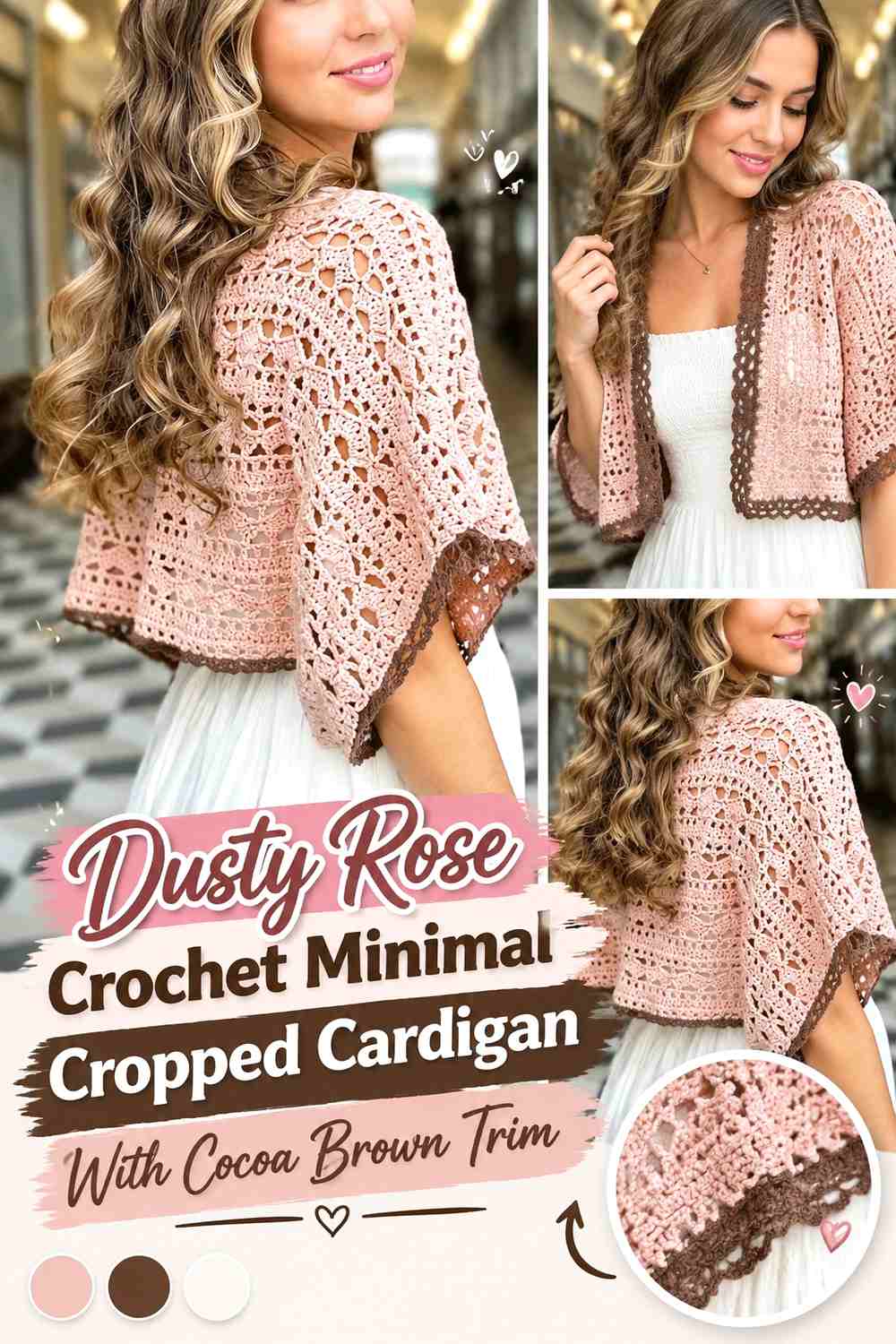
For the final idea, keep the palette extremely controlled: Dusty Rose throughout the body and sleeves, with Cocoa Brown used only for trim around existing edges. This allows silhouette and fit to remain more prominent than color blocking.
Dusty Rose Should Remain Uninterrupted Across the Minimal Cardigan
Use Dusty Rose consistently through all major panels. This gives the cropped silhouette a clean surface and makes small construction details easier to notice.
It is also a useful direction when you like the two-color palette but do not want the cardigan to appear strongly color-blocked.
Cocoa Brown Trim Can Finish Dusty Rose Without Dividing It
Add Cocoa Brown around the neckline, front opening, or a very narrow hem. Repeating the same trim color on sleeve cuffs can connect the whole garment without creating large dark sections.
Stop once the Cocoa Brown establishes a visible outline. Adding extra stripes or panels would change the restrained character of this version.
Creator Credit: Ophelia Talks Crochet
Comparing Dusty Rose and Cocoa Brown Cropped Cardigan Directions
Choose a Dusty Rose-dominant cardigan if you want the softer color across most of the body and Cocoa Brown mainly providing structure. Ideas 1, 3, 5, 7, 9, 11, 13, and 15 use brown through ribbing, joins, cuffs, hems, framing, motif centers, or trim rather than giving it most of the garment.
Choose a Cocoa Brown-dominant cardigan if you want more visual depth across the torso. Ideas 2, 4, 6, 8, 10, 12, and 14 move Dusty Rose into front panels, sleeves, bands, collars, borders, or a center-back feature.
For the least color blocking, use Cocoa Brown only at cuffs, edging, or trim. For a stronger two-tone effect, divide complete garment components such as front panels, sleeves, or the back.
Granny and motif cardigans need an additional choice: contrast can sit inside the motifs or between them at the joins. Cocoa Brown centers produce scattered dark focal points, while Cocoa Brown joining creates a more obvious structural grid.
Conclusion
Dusty Rose and Cocoa Brown can produce very different crochet cropped cardigans even when the garment construction stays similar. The strongest distinction comes from assigning the colors to actual cardigan components rather than simply alternating yarn.
Keep Dusty Rose across the body when you want Cocoa Brown to define cuffs, ribbing, joins, or the cropped hem. Use Cocoa Brown as the dominant shade when you want Dusty Rose to highlight sleeves, front panels, collars, or another deliberate focal area.
Before joining panels or motifs, arrange the pieces in their approximate worn positions and check the entire cardigan rather than evaluating one section at a time. Pay particular attention to the cropped hem, cuffs, and front opening because contrast placed there can occupy more visual space than expected. Use the credited tutorials for their exact construction and sizing guidance while treating these Dusty Rose and Cocoa Brown combinations as independent color plans.
Frequently Asked Questions
Should Dusty Rose or Cocoa Brown dominate a crochet cropped cardigan?
Either can lead. Dusty Rose gives the cardigan a lighter overall surface and lets Cocoa Brown define structural areas such as cuffs, ribbing, and edging. Cocoa Brown creates a deeper main field and allows smaller Dusty Rose sections to become noticeable accents.
Where does Cocoa Brown work best on a Dusty Rose cropped cardigan?
Cuffs, lower ribbing, front bands, neckline edging, granny-square joins, and selected motif centers are useful choices. These areas already have clear construction boundaries, so Cocoa Brown can emphasize them without making the main Dusty Rose panels look fragmented.
Where should Dusty Rose go on a Cocoa Brown crochet cardigan?
Try Dusty Rose on sleeves, front panels, a collar, contrast ribbing, selected granny motifs, or a center-back section. Using the lighter color on a complete garment component usually produces a clearer result than scattering small rose accents.
Should Cocoa Brown cuffs match the cropped cardigan hem?
They can. Repeating Cocoa Brown at the wrists and hem visually connects the sleeves to a Dusty Rose body. However, matching is not required; keeping brown only at the hem creates a simpler color arrangement.
How should I color a Dusty Rose and Cocoa Brown granny-square cardigan?
First decide whether Cocoa Brown should appear inside the motifs or between them. Brown centers create repeated focal points, while brown joins create a visible grid. Avoid using both heavily unless you intentionally want Cocoa Brown to become a major part of the cardigan.
How can I check Dusty Rose and Cocoa Brown contrast before crocheting the whole cardigan?
Place the yarns together and look at them from a distance. A grayscale photograph can help you compare their light-and-dark values. If they look very similar in gray, use the shades in larger areas such as sleeves or panels rather than relying on tiny contrast details.
What should I preserve if I substitute Dusty Rose or Cocoa Brown?
Preserve the relationship between the two shades. Choose a softened rose that remains visibly lighter than the brown, and choose a medium-to-deep warm brown for the Cocoa Brown role. Maintaining that contrast is more important than matching an exact commercial shade.