A vamp-romantic crochet shrug does not need elaborate costume details to make an impact. The strongest versions combine a cropped shoulder line with deliberate negative space, dramatic sleeves, delicate edging, or a softly tied front. Depending on the construction, the result can feel more Victorian-inspired, gothic, fairy-like, or understated enough for everyday layering.

These eight ideas use different shrug and bolero tutorials as their construction references. Some already feature bell sleeves, scalloped borders, or ties, while others provide a cleaner mesh foundation that can take on a darker romantic mood through yarn, proportion, and styling. The comparisons below focus on what changes the finished silhouette, where fit problems can appear, and which tutorial makes the most sense for the kind of lace shrug you actually want to wear.
Quick List
- Crochet Scalloped Tie-Front Bell-Sleeve Shrug
- Crochet Swan-Flare Lace Sleeve Shrug
- Crochet Dark Bell-Sleeve Shoulder Shrug
- Crochet Layered Mesh Lace Shrug Top
- Crochet Pixie-Drape Lace Bolero
- Crochet Minimal Mesh Bolero Shrug
- Crochet Close-Cropped Mesh Bolero
- Crochet Mohair-Stripe Lace Sleeve Shrug
What Makes a Crochet Shrug Feel Vamp Romantic?
Color helps, but silhouette usually does more of the work. A plain black mesh shrug can read casual or festival-inspired, while the same basic idea becomes more romantic when it has elongated sleeves, a narrow tie front, scalloped edging, or lace that creates smaller decorative openings. Deep wine, black cherry, aubergine, charcoal, and antique cream can also reveal stitch texture more clearly than flat black under low lighting.
Think about contrast with the clothing underneath. Open lace becomes much more visible over a solid camisole or slip dress, while an extremely open fishnet structure can disappear against patterned clothing. A dramatic cuff creates a different effect from an all-over loose silhouette, too. If you want the shrug to feel refined rather than bulky, decide where the visual volume should live—the sleeves, neckline, hem, or lace itself—instead of enlarging every feature at once.
Fit, Stretch, and Drape Matter More in Open Lace
Open crochet can change noticeably once it hangs from the shoulders. A shrug that looks compact when laid flat may relax vertically on the body, especially when the sleeves are long or heavily flared. Before committing to the full garment, look at how your chosen yarn behaves in the same open stitch structure and check the fit while the fabric is carrying its own weight.
Shoulder span is particularly important. Too little width can pull the neckline backward or make the armholes feel restrictive; excessive width can cause the shrug to slide or collapse around the upper back. Bell sleeves add another variable because a wider cuff places more fabric below the elbow. For a vamp-romantic version, dramatic length can be appealing, but the cuff still needs to stay practical around bags, jewelry, candles, food, and other objects that can catch loose crochet.
Crochet Scalloped Tie Front Bell Sleeve Shrug
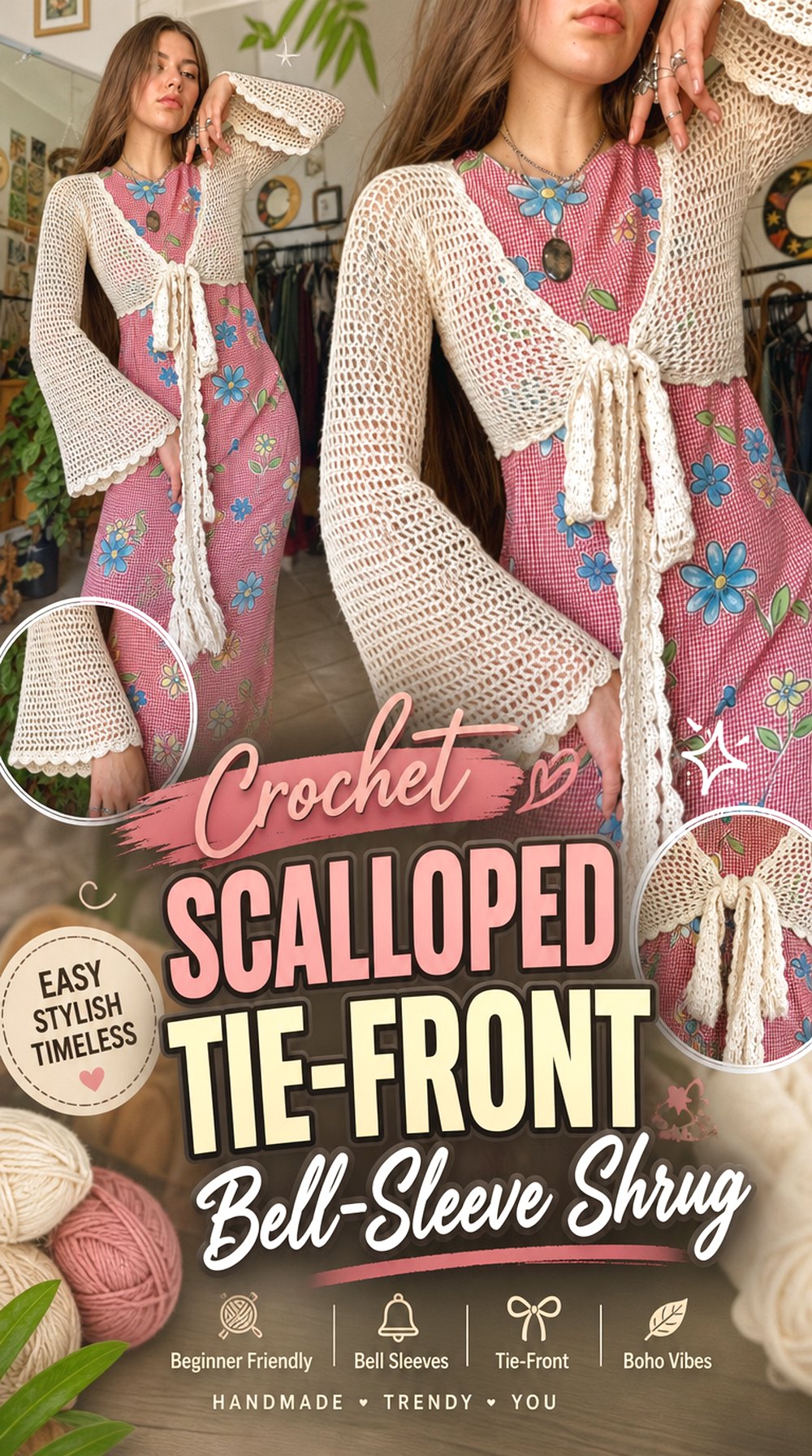
This version puts several romantic details into one silhouette: a cropped body, defined front ties, decorative edging, and long statement sleeves. Hannah Drapinski’s tutorial includes separate body sections, ties, a border, a scalloped border, and sleeves, making it a useful foundation when the front of the shrug should contribute as much to the look as the arms.
For a darker interpretation, the tie front can become the focal point over a plain dress or camisole instead of adding extra embellishment everywhere else. The scalloped edge also helps soften what could otherwise be a very geometric cropped shape. This option suits readers who want visible romantic detail rather than a minimalist fishnet layer.
The Tie Front Gives the Neckline a Defined Center
A shrug with no closure tends to frame the upper torso broadly, while ties draw attention toward the center front. That difference matters when layering over square necklines, corset-inspired tops, or simple slip dresses. Before changing tie length or placement, check how the fronts naturally sit on your body. Pulling them together too aggressively can distort the shoulder line or make a decorative border curl inward.
Scallops Add Detail Without Covering the Lace
Scalloped edging works especially well in this aesthetic because it introduces a softer, ornamental outline without turning the shrug into a heavy cardigan. The effect is easiest to see when the border has enough definition to remain distinct from the main fabric. If you substitute yarn, make a small sample of the edge first; a very fuzzy yarn can blur small scallops, while a smoother yarn can make their outline more obvious.
Sleeve Drama Needs to Stay Balanced With the Cropped Body
Long bell sleeves make a strong statement because most of the garment volume sits below the elbow while the torso remains short. Check sleeve length while your arms are relaxed rather than judging it only on a flat surface. If the cuffs extend farther than you want, changing that proportion can make the shrug easier to wear without losing its romantic character.
Crochet Swan Flare Lace Sleeve Shrug
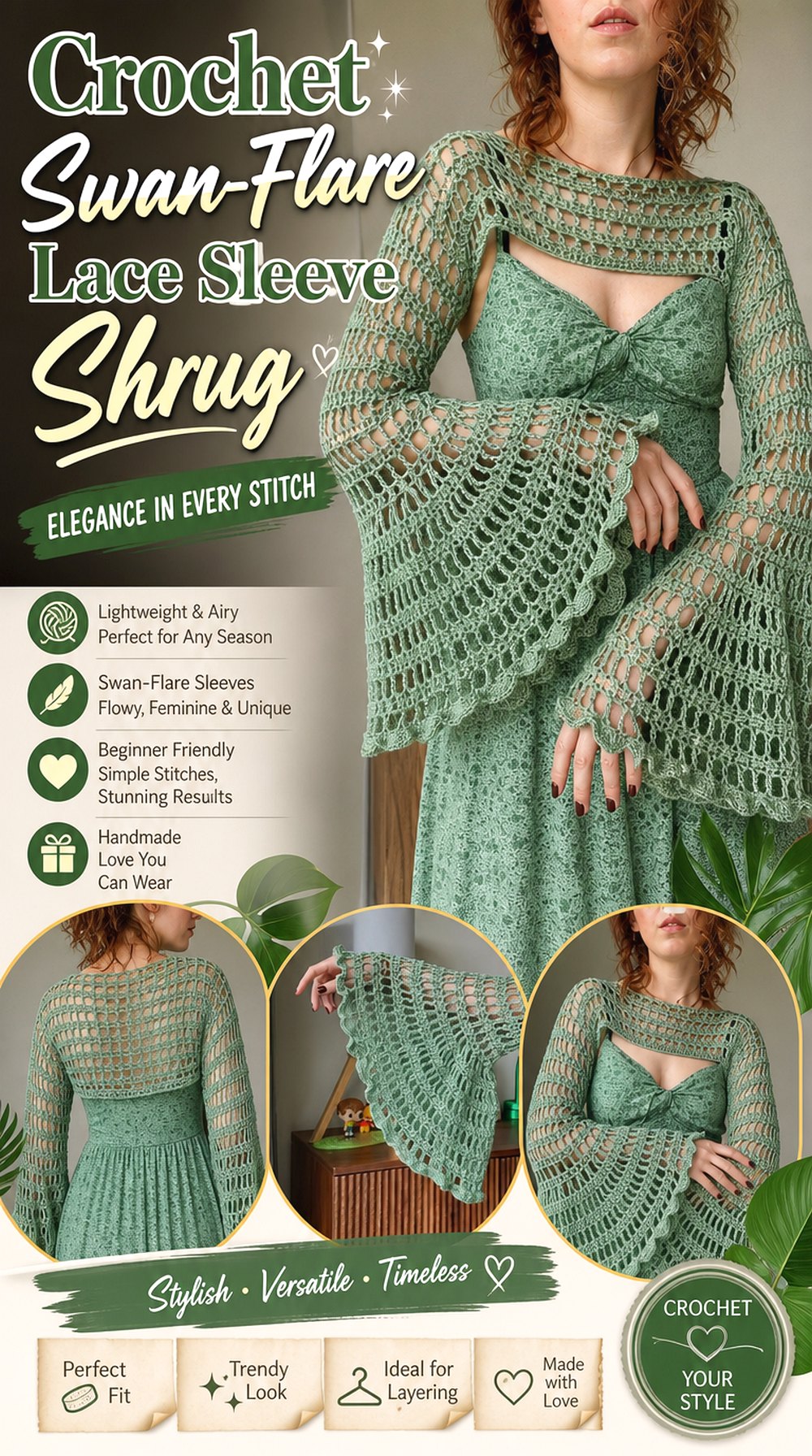
The Olivia shrug from sunflowerandcrochet centers the silhouette around pronounced flared sleeves. That makes it a strong option when you want the vamp-romantic effect to come from movement rather than a complicated front closure. The finished form keeps the upper body relatively compact while allowing the sleeve shape to open outward.
In black, dark plum, or muted red, that contrast can feel theatrical without requiring appliqués or added motifs. In antique ivory or dusty rose, the same outline can move closer to vintage romance. Because the flare is such a dominant feature, this idea works particularly well over simple fitted clothing where the sleeve shape will not compete with another large silhouette.
The Neck Opening Controls How the Shrug Sits
A shoulder shrug has relatively little fabric anchoring it below the chest, so the neckline deserves attention. Check that the opening feels comfortable when you turn your head and move your arms. A neckline that is too loose can shift backward, while one that feels too confined can make the whole garment seem smaller than intended even when the sleeves fit correctly.
A Gradual Flare Looks Different From a Sudden Ruffle
When evaluating dramatic sleeves, notice where the width starts increasing. A longer gradual flare creates a sweeping line, while a concentrated expansion near the cuff reads more like a ruffle. Neither is automatically better for romantic styling. Choose according to whether you want the entire lower sleeve to move dramatically or prefer a closer forearm with emphasis only near the hand.
Keep Jewelry and Openwork From Competing
Large rings, charm bracelets, chain jewelry, and lace cuffs can all occupy the same visual space. If the sleeve opening is highly textured or very open, test it with the accessories you actually plan to wear. Crochet loops can catch protruding hardware more easily than compact fabric. A simpler bracelet or jewelry-free wrist can sometimes make an elaborate sleeve look more intentional.
Original Tutorial and Creator Credit
Creator: sunflowerandcrochet
Crochet Dark Bell Sleeve Shoulder Shrug
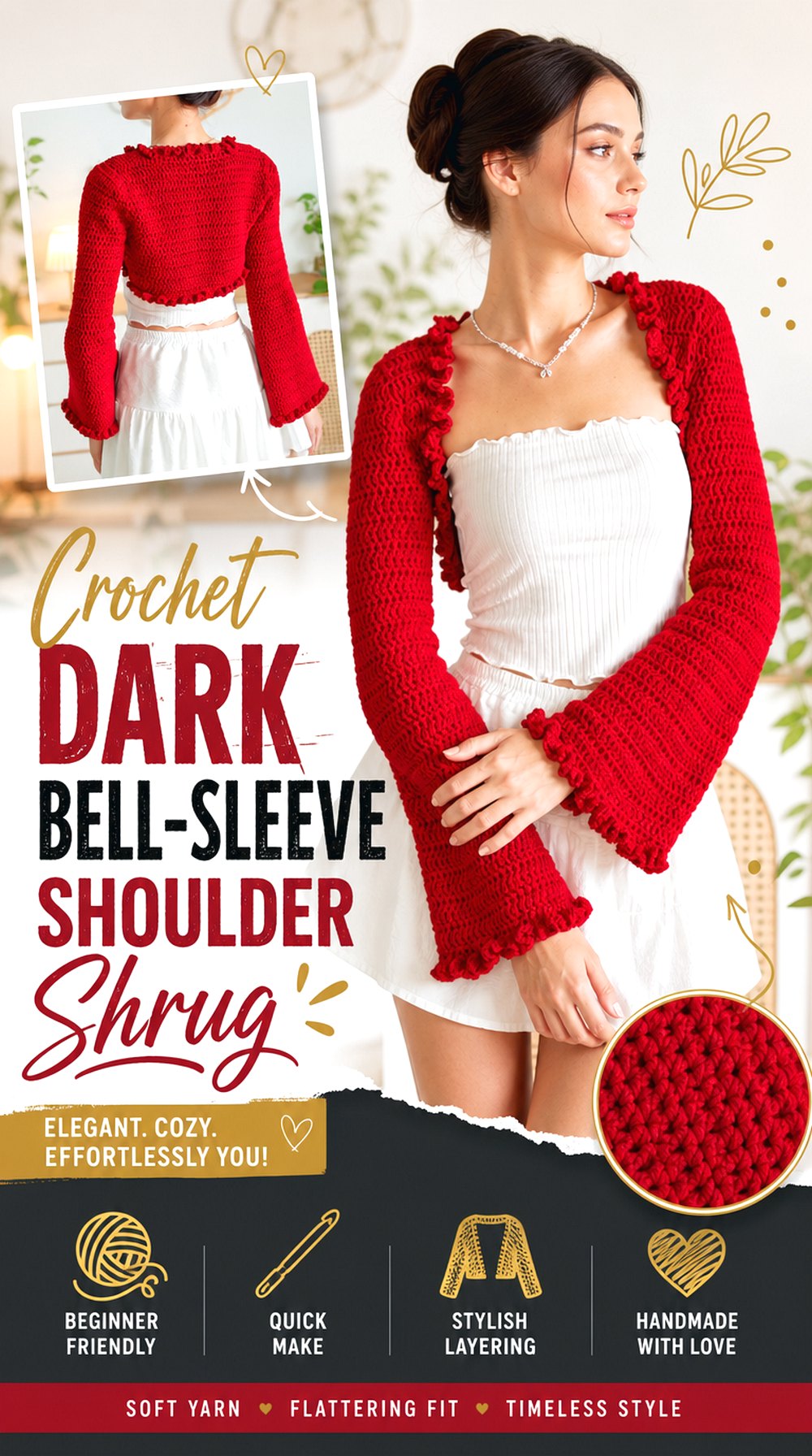
Chenda DIY’s bell-sleeve shrug gives you a clear shoulder-covering shape paired with long flared sleeves. The tutorial identifies the project specifically as a bell-sleeve shrug and shows a finished wearable rather than using a general sweater as the reference.
That makes this a practical base for a restrained gothic-romantic version. Instead of adding several embellishments, you can let a dark color, visible openwork, and the widening sleeve silhouette carry the design. This approach is useful when you want something dramatic enough to change a simple outfit but still visually cleaner than a lace-up or heavily scalloped bolero.
Shoulder Coverage Changes the Layering Effect
Compare how far the shrug extends down the front and back before deciding what to wear underneath it. A very short shoulder piece keeps the base garment highly visible and makes the sleeves appear almost separate. Slightly more upper-back coverage gives the crochet a stronger presence and can make the transition into the sleeves feel more continuous.
Dark Yarn Can Hide More Than It Reveals
Black is an obvious vamp-romantic choice, but it can make openwork difficult to see both while crocheting and in dim indoor lighting. Deep burgundy, blackberry, charcoal, or very dark violet can preserve the mood while revealing more stitch definition. If you do choose black, bright task lighting while working can make it easier to monitor spaces, joins, and tension.
Check the Cuff at Real Arm Length
A bell sleeve may look balanced when the garment is hanging but behave differently once you bend your elbows or reach forward. Try the developing sleeve on before deciding the final proportion. The goal is not necessarily to shorten a dramatic cuff; it is to understand where the edge falls during normal movement so the final silhouette matches how you intend to wear it.
Original Tutorial and Creator Credit
Creator: Chenda DIY
Crochet Layered Mesh Lace Shrug Top
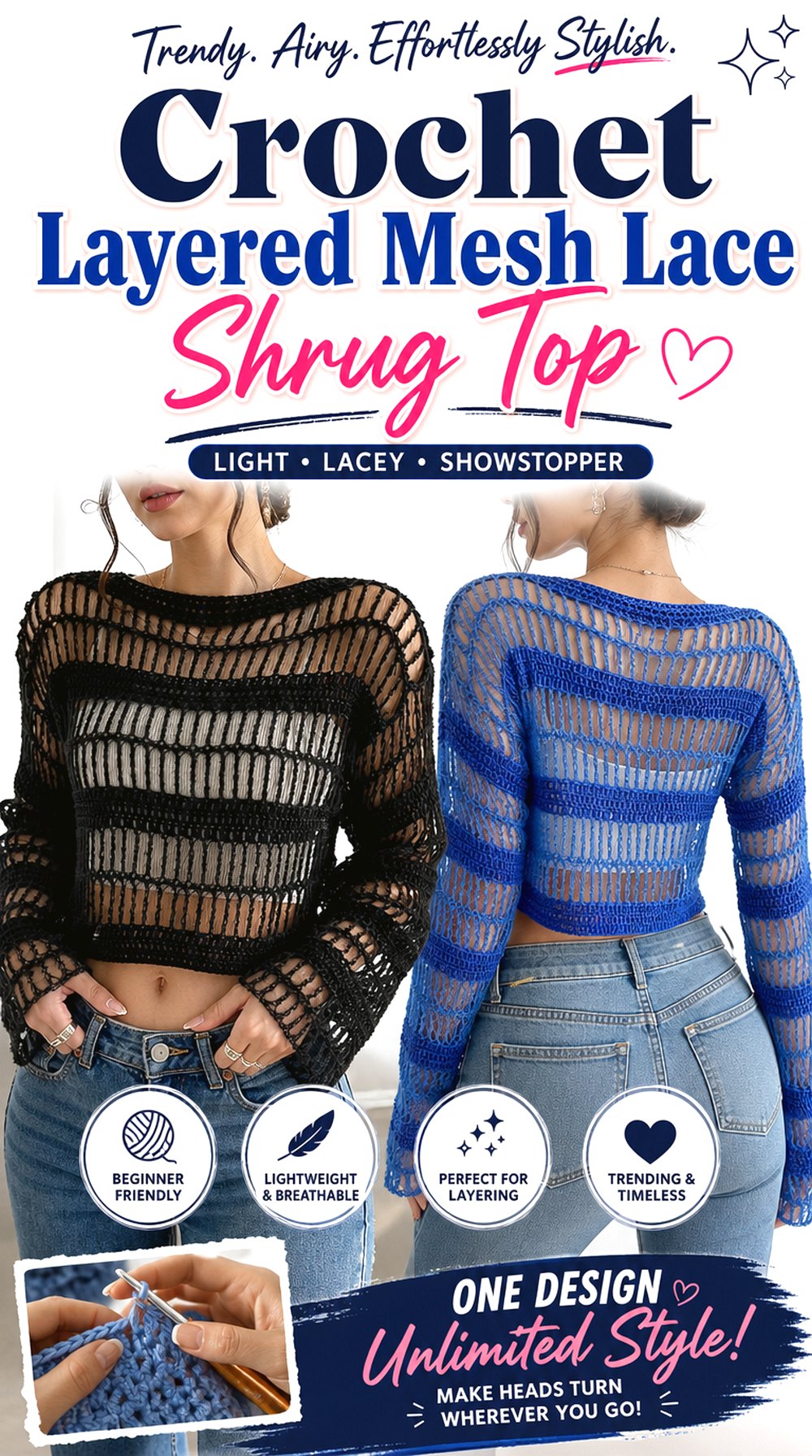
Kenikse Crochet’s tutorial sits between a lace top and shrug, giving this idea more torso presence than ultra-cropped sleeve-only versions. The source uses an open mesh fabric with separate front/back and sleeve construction, and the creator discusses the sample’s materials and measurements in the video description.
That extra coverage can be useful for romantic layering because the open fabric becomes a visible surface across more of the upper body. Worn over a contrasting solid layer, the mesh creates a deliberate lace effect instead of looking like isolated sleeves. This is a better direction for someone who wants the crochet itself to occupy more of the outfit.
More Torso Coverage Makes Contrast More Important
When openwork extends across the chest and back, the color beneath it becomes part of the design. Black mesh over oxblood produces a different effect from black over bare skin or black over black. Before choosing yarn solely by itself, hold it over the clothing colors you expect to wear underneath. Strong contrast makes the lace pattern easier to read; low contrast creates a subtler texture.
Panel Length Can Shift the Style Category
A few inches of additional or reduced torso coverage can change the visual impression from shoulder shrug to cropped mesh top. Rather than assuming one proportion is universally more flattering, decide which garment underneath should remain visible. If your base layer has a decorative neckline, corset seam, or lace trim of its own, a shorter overlay may preserve that feature more effectively.
Mixed Texture Needs a Consistent Finished Fabric
The tutorial’s material list includes more than one yarn type, which is a useful reminder that combining textures changes more than color. If you substitute fibers, compare how they stretch and recover before committing to a large section. A very airy strand paired with a denser yarn can produce attractive contrast, but uneven behavior after washing may alter the garment’s drape.
Original Tutorial and Creator Credit
Creator: Kenikse Crochet
Crochet Pixie Drape Lace Bolero
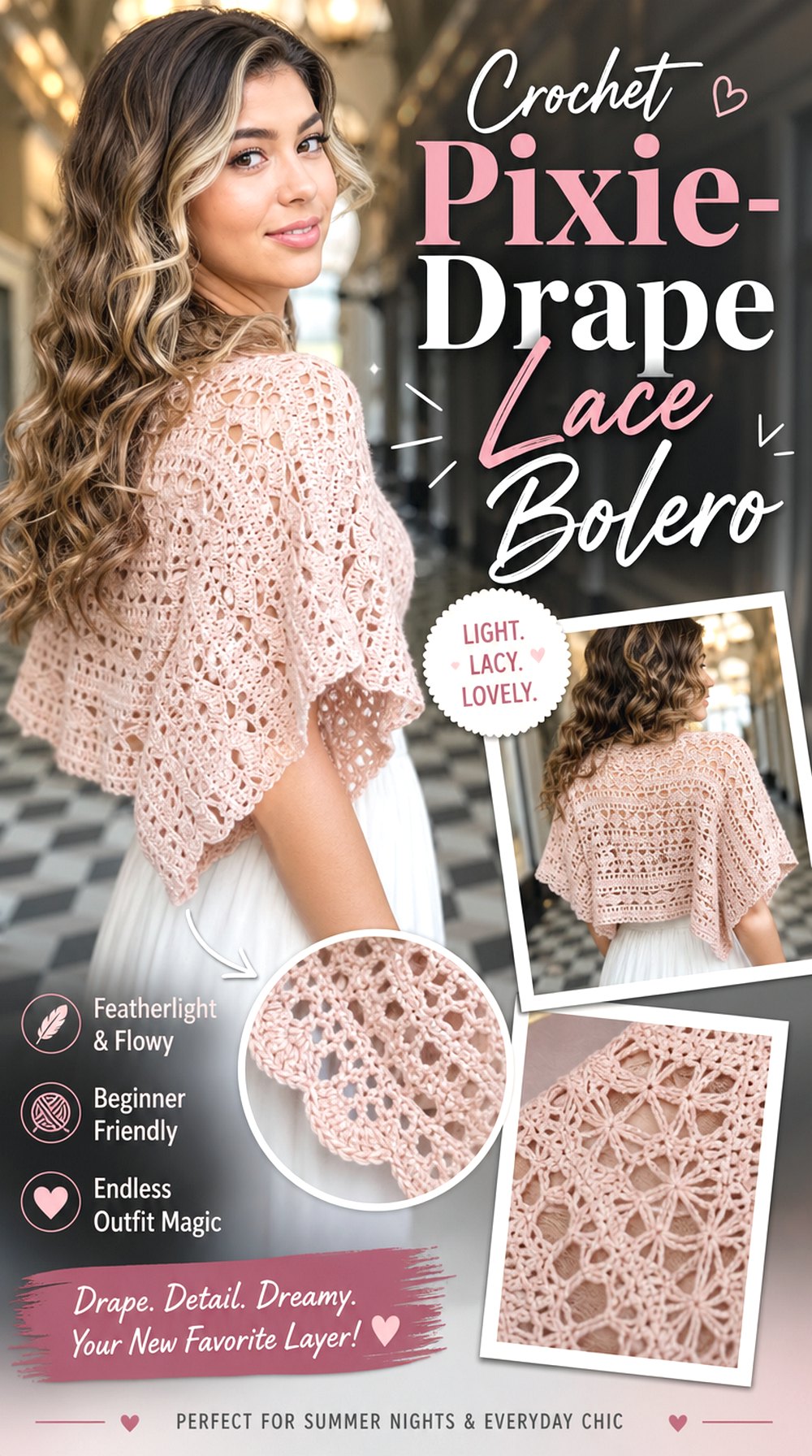
The Pixie Bolero from Ophelia Talks Crochet offers a roomier, softer alternative to closely fitted shrug sleeves. The tutorial covers the repeat, assembly, and measurements, and the finished concept is intentionally bolero-like rather than a full cardigan.
For vamp-romantic styling, this is a useful choice when you prefer drape and decorative openwork over tight body shaping. A deep jewel tone can push it darker, while black or antique cream can make it easier to combine with an existing wardrobe. The looser form also works differently from the sharply cropped tie-front projects elsewhere in this list, giving the shoulders and upper arms a softer outline.
Drape Is the Main Feature to Protect
A loose bolero depends on fabric movement. Substituting a much stiffer yarn can preserve the stitch pattern but change the entire silhouette. Before working a full garment, let a swatch hang vertically for a while rather than judging it only on a table. If it remains rigid, the finished bolero may stand away from the body instead of falling into the softer folds you expected.
Oversized Does Not Mean Unmeasured
A relaxed fit still has important checkpoints. Pay attention to sleeve opening, upper-back width, and how far the bolero falls when your arms are at your sides. Too much fabric can overwhelm a cropped base layer, while too little can remove the draped character that made this construction appealing in the first place.
Let the Lace Replace Extra Embellishment
This is one of the ideas where additional ribbons, roses, beads, and chains may be unnecessary. If the openwork already creates a decorative surface, a restrained color palette can look more sophisticated. For a romantic-gothic outfit, consider allowing the crochet texture to be the ornament and using jewelry or the base garment for any metallic or floral accent.
Original Tutorial and Creator Credit
Creator: Ophelia Talks Crochet
Crochet Minimal Mesh Bolero Shrug
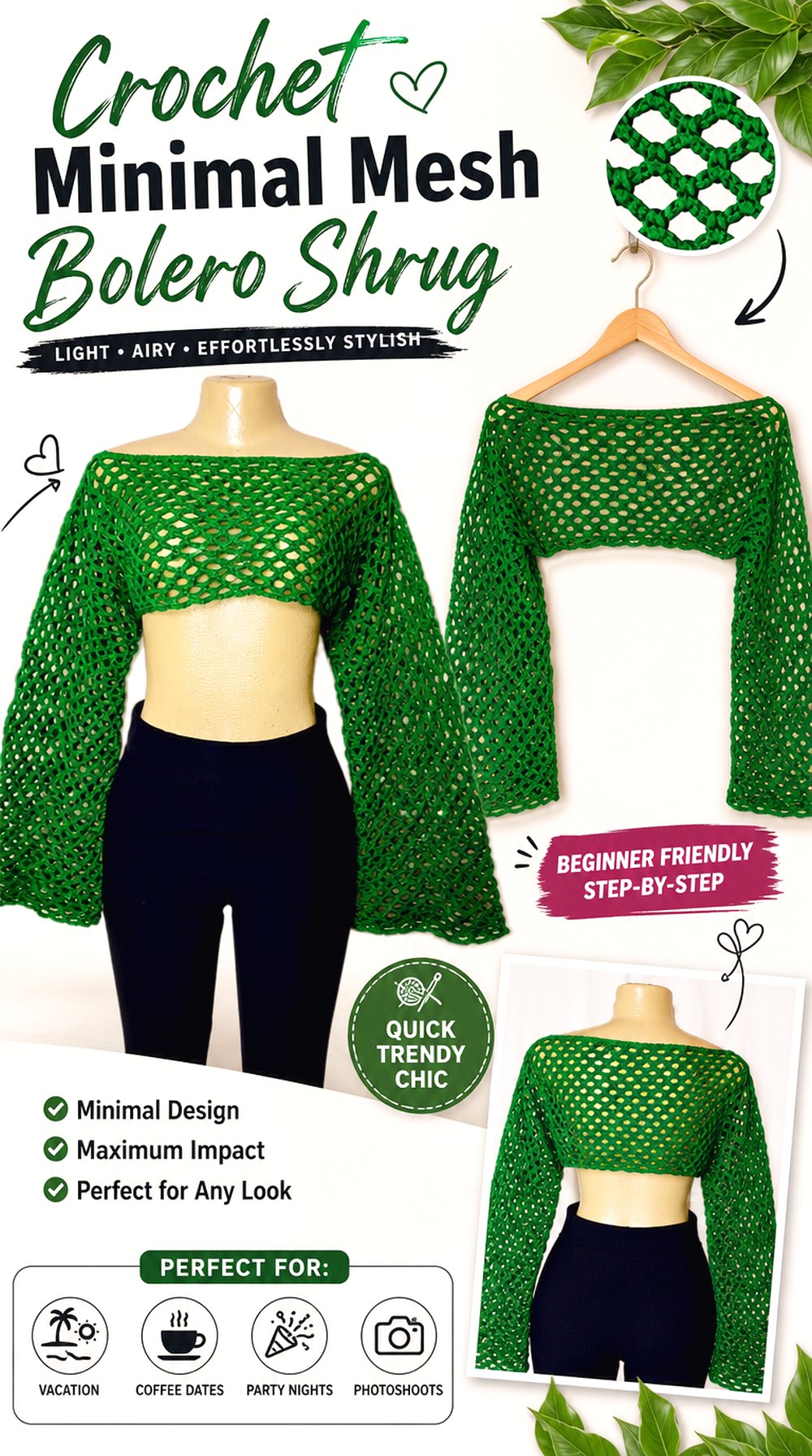
Ascarcrochets’ mesh shrug tutorial gives this collection a stripped-back option. The finished concept is an airy bolero/shrug without needing an elaborate motif to define it, making it a useful base for someone who wants the dark romantic effect to come primarily from styling and proportion.
A simple mesh construction also makes the differences between yarn choices more visible. Smooth dark yarn can create crisp repeated openings, while halo or fuzzy texture can soften the grid. Pairing this kind of shrug with an ornate camisole, lace dress, velvet skirt, or statement necklace lets the crochet frame other details rather than competing with them.
Minimal Mesh Leaves Less Room to Hide Uneven Tension
Regular openings form a visible grid, so inconsistent tension can become more noticeable than it would in a heavily textured stitch pattern. Pause periodically and look at the fabric from a distance. If some openings are dramatically larger, correcting the issue earlier is generally easier than trying to make irregular mesh appear uniform through finishing alone.
Stretch Should Be Checked Across the Shoulders
Open mesh can expand considerably in use. Check the shoulder area while wearing the developing piece rather than relying only on its flat width. If it stretches too far, the neckline may shift and the sleeves can hang lower than intended. The amount of change depends on yarn, stitch structure, garment weight, and tension, so use the actual fabric as your guide.
A Simple Base Supports Stronger Styling Choices
Because the crochet surface is visually restrained, this version can handle a more elaborate outfit underneath. It can frame lace necklines, chokers, velvet, layered necklaces, or a dark floral print without adding another dense decorative element. If you prefer a quieter vamp-romantic look, use tonal layering instead—such as charcoal over black—to emphasize texture rather than contrast.
Original Tutorial and Creator Credit
Creator: Ascarcrochets
Crochet Close Cropped Mesh Bolero
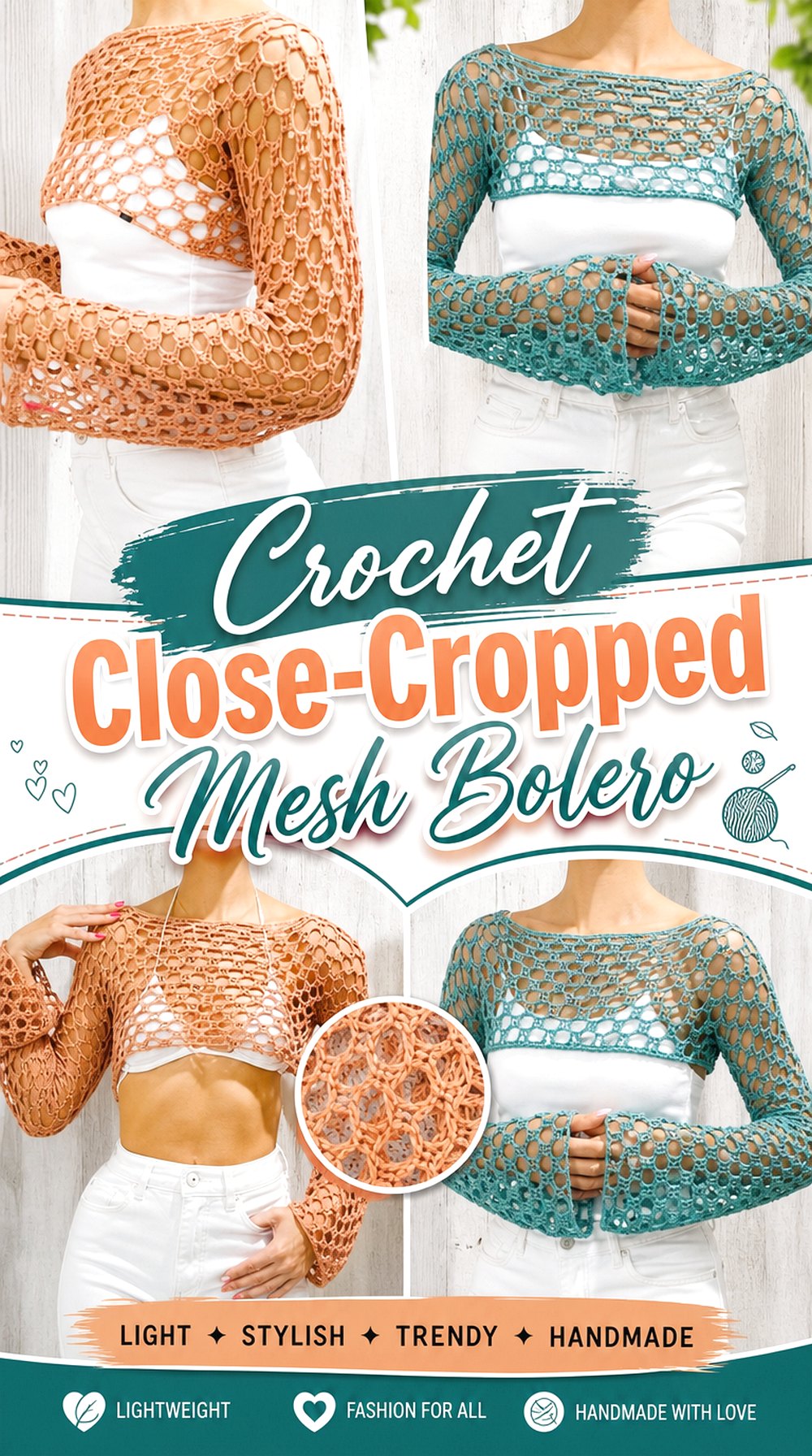
D3 Crochet’s mesh shrug tutorial provides another compact bolero reference, but its value in this list is as a close-cropped option rather than a heavily embellished statement garment. The project is presented specifically as a crochet bolero/mesh shrug, giving readers a direct source when the goal is shoulder and arm coverage without a full sweater body.
For vamp-romantic styling, a short mesh layer works particularly well when the garment underneath has details worth leaving exposed. Think of the shrug as a frame around a square neckline, lace camisole, fitted dress, or contrasting high-neck layer rather than the complete outfit.
Cropped Proportion Keeps the Base Garment Visible
Before choosing this direction, decide what you want the shrug to cover. Very short boleros deliberately leave the waist and much of the torso uncovered, which can preserve the shape of a dress or top underneath. If you actually want more warmth or chest coverage, a fuller bolero from another idea in this list will be more suitable than trying to force a minimal shrug to perform like a cardigan.
Shoulder Span Is the Critical Visual Line
With little fabric below the bust, the shoulder line becomes one of the most noticeable proportions. Check whether the shrug lies smoothly from one arm to the other without pulling tightly across the upper back. If it bunches at the neck or drifts toward the elbows, review the fit before investing additional time in sleeve length or decorative finishing.
Choose Yarn According to the Lace Effect You Want
A smoother strand tends to show repeated mesh openings clearly, while fuzzier yarn softens their boundaries. That distinction matters with very dark colors, where stitch detail is already less obvious. If your goal is graphic gothic mesh, definition may be useful; if you want a hazier, ghostlike surface, a softer halo can support that effect provided the finished fabric still behaves as needed.
Original Tutorial and Creator Credit
Creator: D3 Crochet
Crochet Mohair Stripe Lace Sleeve Shrug
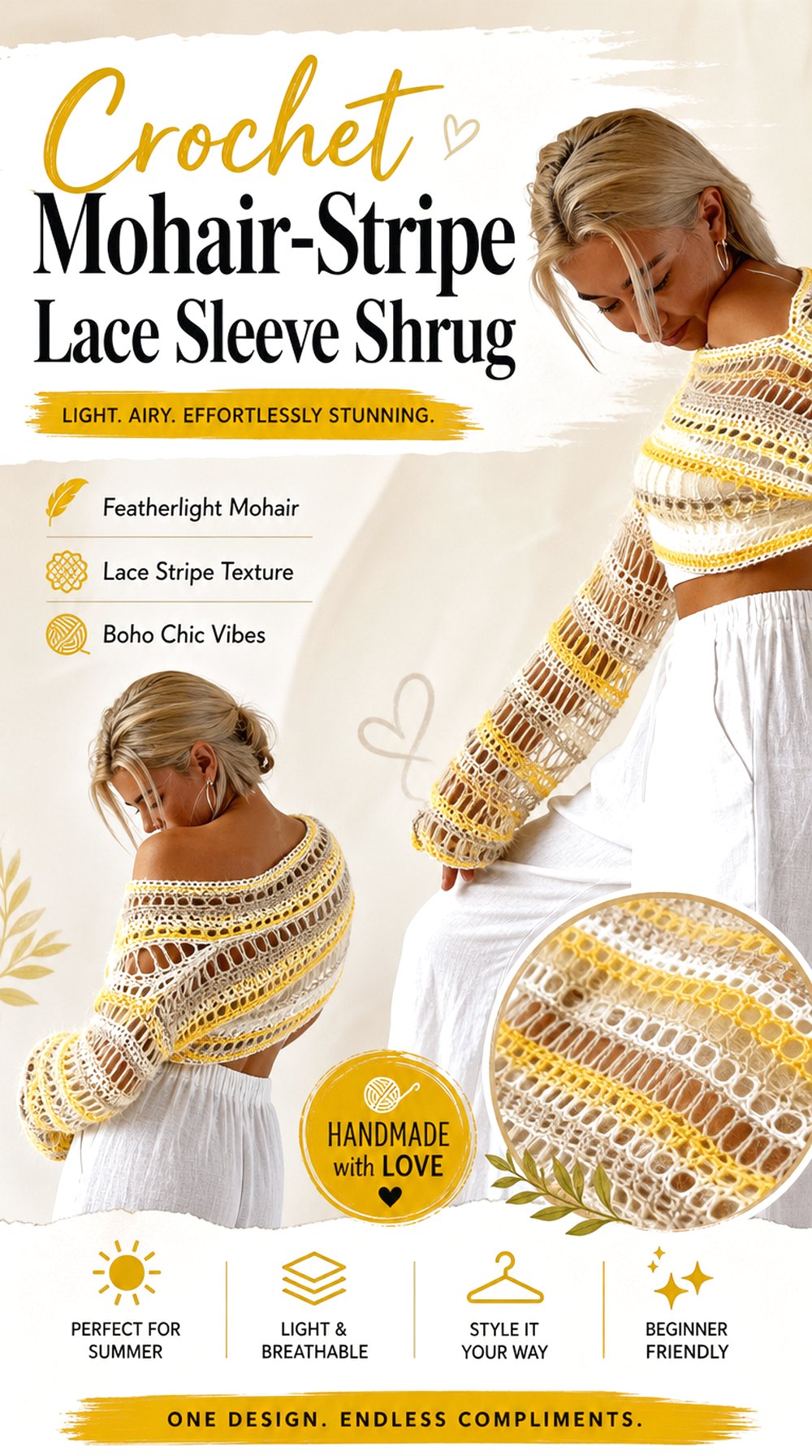
BELINA BELLWOOD’s tutorial combines a summer sweater/sleeve/shrug concept with multiple stitch patterns and mohair, creating a different kind of romantic texture from the cleaner mesh pieces above. Instead of relying on one repeated lace grid, this direction can create visual interest through changes in transparency and surface.
For a vamp-romantic interpretation, you do not have to reproduce a bright multicolor palette. Tonal combinations such as black, smoke, plum, wine, and muted mauve can preserve the layered texture while creating a darker mood. This choice is especially appealing if uniformly repeated mesh feels too sporty or minimal for the look you want.
Alternating Textures Can Create a More Antique Feel
Bands of different openness break up the surface in a way that can suggest layered lace or worn vintage textiles. Keep the palette controlled if you want texture to remain the main feature. Too many strongly contrasting colors can shift attention away from the openwork itself, while closely related shades let differences in stitch density and fiber halo become more visible.
Mohair-Like Halo Changes Both Look and Handling
A fuzzy strand can soften hard mesh lines and give the finished garment a misty appearance, but it can also make stitches harder to see and unravel. If you are unfamiliar with a highly brushed yarn, test a small section before committing to the full project. Also check the fiber label for care instructions rather than assuming a delicate-looking yarn requires or tolerates a particular washing method.
Multiple Patterns Need a Consistent Overall Drape
When one garment combines denser and more open sections, compare their widths as the fabric develops. Different stitch structures can relax differently even when worked with the same hook. The goal is not to force every section to look identical; it is to make sure the transitions do not unintentionally pull, flare, or distort the shoulder and sleeve silhouette.
Which Crochet Vamp Romantic Lace Shrug Shape Should You Choose?
Choose the Scalloped Tie-Front Shrug when you want the front closure and edging to be obvious design features. The Swan-Flare and Dark Bell-Sleeve options put more emphasis on dramatic arm movement, while the Layered Mesh Lace Shrug Top gives you noticeably more torso coverage.
The Pixie-Drape Bolero is the softer, roomier choice. For a cleaner dark layer, the Minimal Mesh Bolero and Close-Cropped Mesh Bolero keep the construction visually restrained and let the outfit underneath do more of the work. The Mohair-Stripe Lace Sleeve Shrug stands apart when you want shifting texture and transparency rather than one uniform lace repeat.
Whichever shape you choose, compare the actual shoulder coverage, sleeve volume, and fabric behavior rather than choosing solely by color.
Conclusion
The strongest crochet vamp romantic lace shrug depends on where you want the drama. A scalloped tie front gives the neckline more presence, bell sleeves make movement the focal point, and a minimal mesh bolero creates a lighter frame around an existing outfit. Softer draped lace and mixed mohair textures move the look toward vintage or ethereal romance rather than sharp gothic mesh.
Before committing to one style, decide how much torso coverage you want and how much sleeve volume is practical for your wardrobe. Dark yarn can establish the mood, but proportion, openwork density, and edging will determine the finished character. Use the original tutorials for exact construction details, then make any styling choices without losing sight of fit and fabric behavior.
Frequently Asked Questions
What colors work besides black for a vamp-romantic crochet shrug?
Very dark red, wine, aubergine, blackberry, charcoal, and deep brown can all create a dark romantic direction while making crochet texture easier to see than pure black sometimes does. Antique ivory, faded rose, or parchment tones can create a more Victorian-romantic version. Consider the garment underneath as well: high contrast reveals lace openings more strongly, while tonal layering creates a quieter, shadowed texture.
Should a romantic lace shrug be fitted or oversized?
Either can work, but they produce different results. A fitted shrug emphasizes the arms and shoulder line and can frame a structured top cleanly. A looser bolero creates softer folds and tends to feel more relaxed or vintage. Pay particular attention to the upper back and neckline. An intentionally oversized body should still stay on the shoulders comfortably rather than sliding because the fit was never checked.
How can I make black crochet lace easier to see while working?
Use strong, even task lighting and place a contrasting light surface behind the work when you need to inspect openings or joins. Periodically spread the fabric out rather than checking only the active row. Black yarn can conceal small irregularities and individual loops, particularly with fuzzy fibers, so a smooth yarn may be easier to manage if clear stitch visibility matters to you.
Which shrug style works best over a dress?
That depends on what part of the dress you want visible. A minimal cropped bolero preserves the bodice and waistline, while a tie-front shrug creates another focal point across the chest. A draped bolero adds more upper-body coverage. For dresses with elaborate lace or embroidery, a simpler mesh shrug may prevent the two garments from competing visually.
How do I keep long lace sleeves from becoming inconvenient?
Check sleeve length and cuff width while moving naturally, not only while standing still. Reach forward, bend your elbows, and consider how the sleeves interact with bags, jewelry, food, and work surfaces. Very long or open cuffs can also catch on hardware. If practicality matters, keep the dramatic flare while adjusting where it begins or how far the final edge extends.
Do I need to block a crochet lace shrug?
That depends on the yarn and construction. Blocking can help open lace and even the finished fabric, but the appropriate method must suit the fiber. Check the yarn manufacturer’s care guidance and the tutorial’s finishing information before applying heat, steam, or aggressive stretching. It is also useful to observe a swatch after washing because open crochet may relax differently once wet and dried.